Can the Subaltern Draw?: The Spectre of Orientalism in Craig Thompson’s Habibi

“Edward Said talks about Orientalism in very negative terms because it reflects the prejudices of the west towards the exotic east. But I was also having fun thinking of Orientalism as a genre like Cowboys and Indians is a genre – they’re not an accurate representation of the American west, they’re like a fairy tale genre.” – Craig Thompson, PopTones Interview, September 1, 2011

It’s easy to inventory my feelings about Craig Thompson’s Habibi. For well over a year, I approached its release with equal parts excitement and fear. The fear sprang from the 2010 Stumptown Comics Festival — held in Thompson’s hometown of Portland, OR near the completion of Habibi — as I sat in the audience of a Q&A session with him about the processes of publishing and creation. There he explained (as he has in many venues since) that Habibi was going to be an expansive book about Islam and the idea was birthed out a place of post-9/11 guilt he felt in reaction to America’s Islamophobic tendencies. Had he traveled much in the Middle East? No, except Morocco. Did he know Arabic? No, but he had learned the alphabet. At one point he actively said he was playing “fast and loose with culture” picking from here and there in order to tell his story as he saw fit. As I sat in the audience I saw red flags going up. I was about the spend a year abroad studying how The Adventures of Tintin is a Orientalist text precisely because Hergé rarely left the confines of Belgium while drawing the far off landscapes of India, Egypt, China, or made-up Arab lands like Khemed. And here was Craig Thompson some 80 odd years later, well intentioned, proposing a very similar project of creating a made-up Arab land of Wanatolia for the purposes of quelling his own guilt. What he called “fast and loose,” I called cultural appropriation.
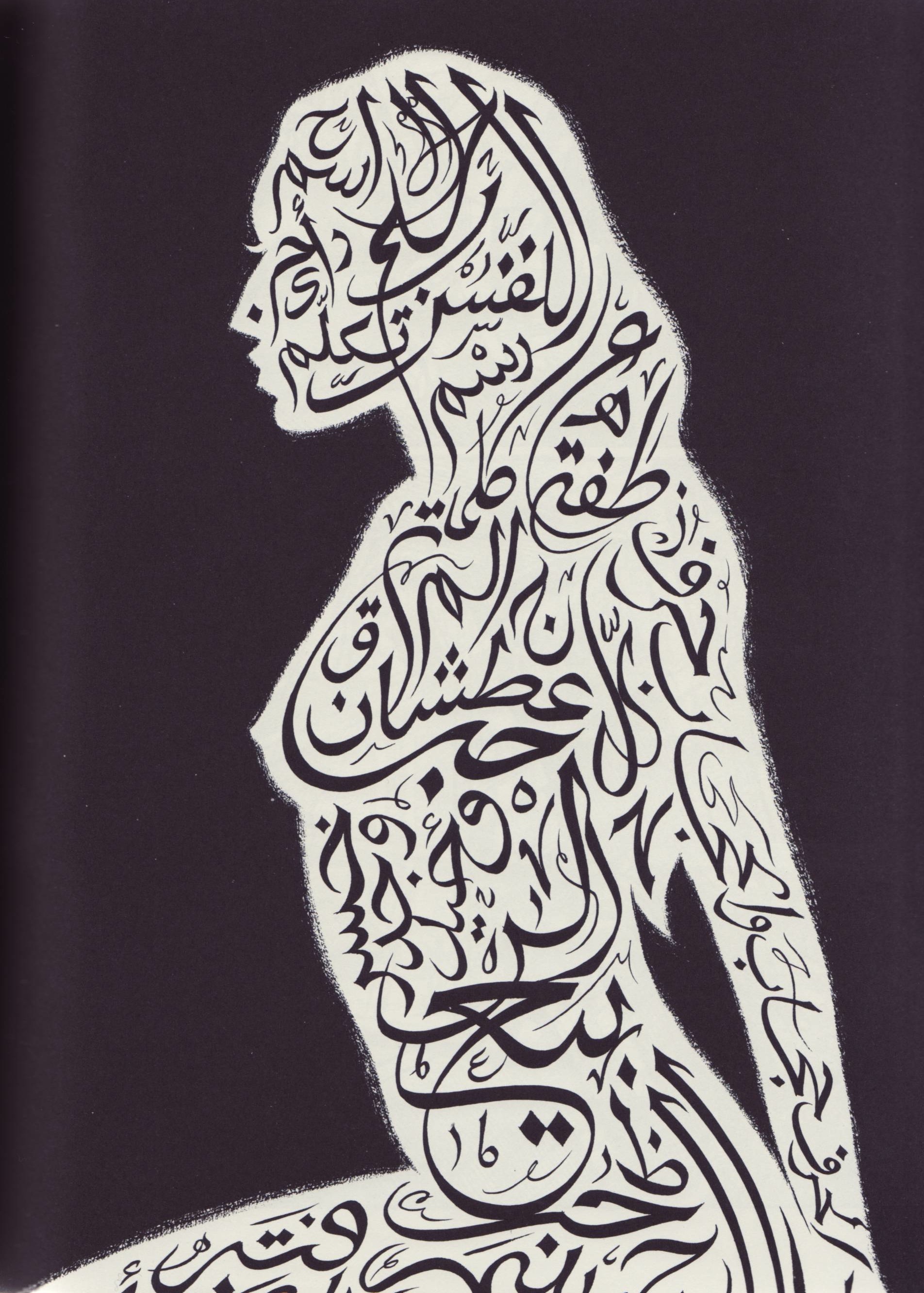
Habibi at its best and worst.

Now that the tome is here and I’ve had a chance to read it I feel no less nauseous or enthusiastic about the work that Thompson has produced. To be clear, Habibi is a success on many levels, but it also contains elements that are strikingly problematic through the lens of Orientalism. There are three key components to Habibi: Calligraphy and Islamic patterns, illustrated Suras from the Qur’an and Haddith, and a love story between the characters Dodola and Zam. On the first two counts, Thompson has more than excelled in creating a beautiful rarity for U.S. bookshelves. On the last count of the decades-spanning love story that Thompson has chosen to tell and the setting he has chosen to tell it in, I find that Habibi is a tragically familiar Orientalist tale that a reader can find in books by Kipling or many a French painter.
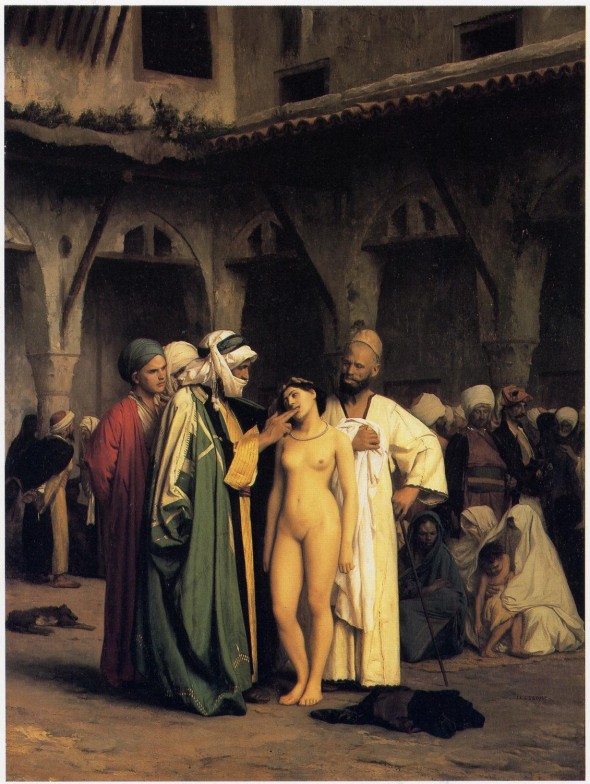
The Slave Market by Jean-Leon Gerome (1866)

I will get to how the book fails to escape many classic Orientalist trappings soon, but first let’s discuss what Habibi gets right. The good is found foremost in the calligraphy and geometric patterns Thompson employs throughout Habibi. Given the technical skill and confidence Thompson uses when writing in Arabic, it is really unbelievable that he doesn’t actually know the language. Here is a prime example from early in the text:

From any perspective this is stunning artwork. Through Dodola’s first husband, a scribe, Thompson creates a space to explore the beauty of calligraphy in the larger narrative. Therefore, on a meta-level, Habibi is a format for Thompson to practice calligraphy: an art form that lends itself well to the loose expressive brush line he made iconic in Blankets. As a reader, Thompson’s joy in learning the Arabic alphabet and how it can work simultaneously as a symbolic and literal art form comes across. His perspective as a non-native speaker with a strong artistic background works towards him making interesting connections about Arabic in Habibi:
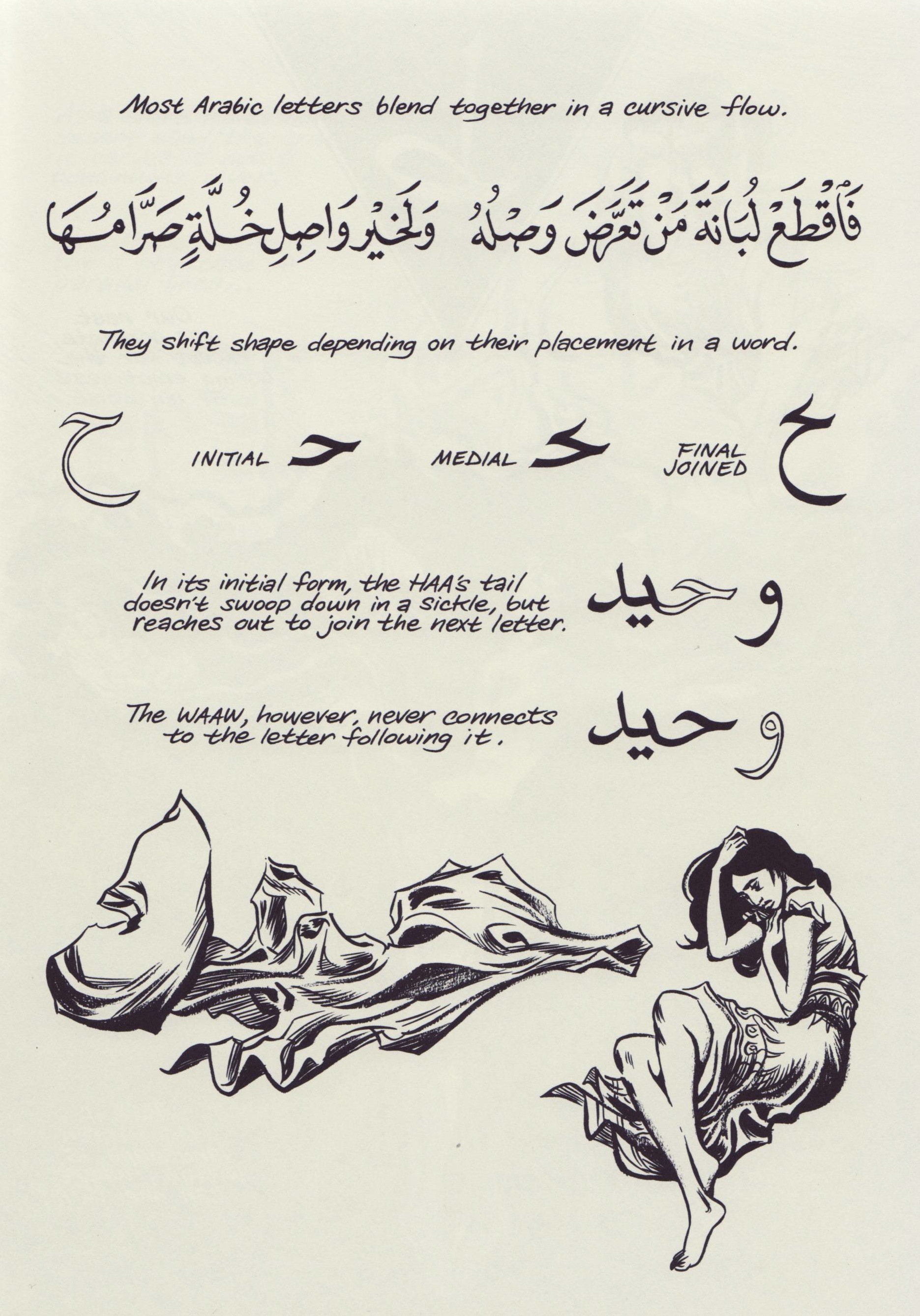
Along these lines, Thompson explores the geometric shapes of Islamic art to great success. The heavily detailed patterns he often uses in borders are the work of a talented, and slightly obsessive-compulsive, artist. The finely detailed explorations of Islamic patterns are a key part of what makes reading Habibi such a treat. As a reader I was often forced to pause in a page in praise of Thompson’s technical skill. While over-relying on this ornate style as shorthand for “Arab setting” made me raise a cautionary eyebrow beforehand, it is clear that Thompson is thoughtful in a way that escapes the pitfall. Here is a late in the text explanation of patterns that offers a glimpse into how thorough the cartoonist was in his research:
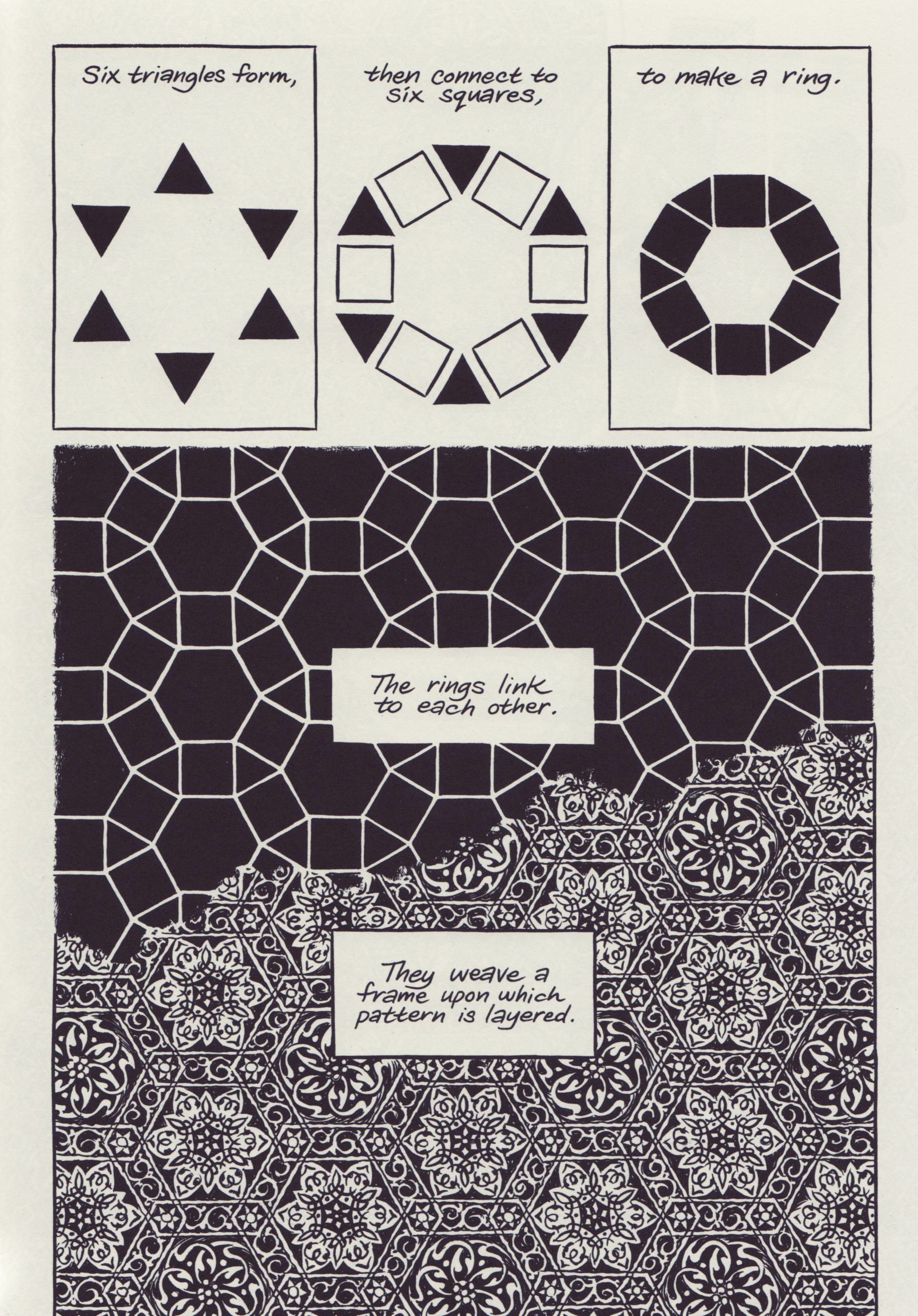
The second thematic triumph of Habibi is the manner which Thompson explores Islam. This clearly and heavily researched portion of the text contains the most exciting and memorable sections of Habibi by far. Thompson has mentioned the influence of Joe Sacco during the book making process and it is clear this is where Sacco’s research and report approach has influenced Thompson the most. Just as Sacco’s work lives in the footnotes of Gaza, here we get the product of Thompson diving deep into Islamic Hadith (the reported statements and actions of the Prophet Muhammad during his life), specific suras (chapters) of the Qur’an, and pre-Qur’anic mysticism. The threads he pulls out of his research are fascinating on their own right. His act of discovery is shared with the reader and it is clear he was excited to make it.
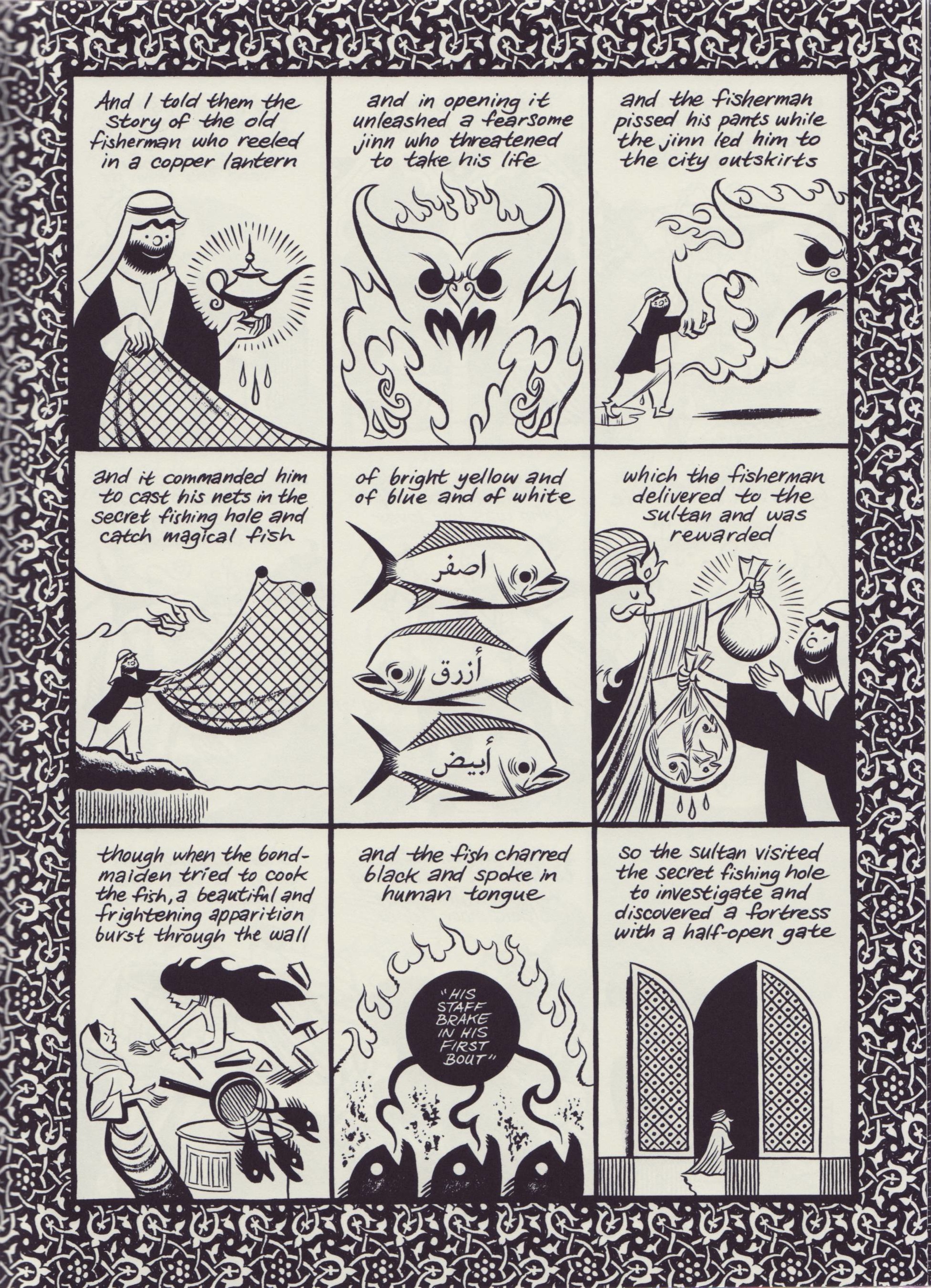
After reading the book it is evident that these are the sections Thompson refers to in his press when he talks about the book coming from a place of post-9/11 guilt. In the aftermath of September 11th, American Islamaphobia was predicated on understanding the attack by a few extremists as representative of an entire faith. Realizing this, Thompson uses Habibi to perform the due diligence of going into the Qur’an to reveal the large venn diagrams in between faiths. The question Thompson puts out there is: How can so many Christians and Jewish people be so against Islam when there are so many similarities between the faiths?
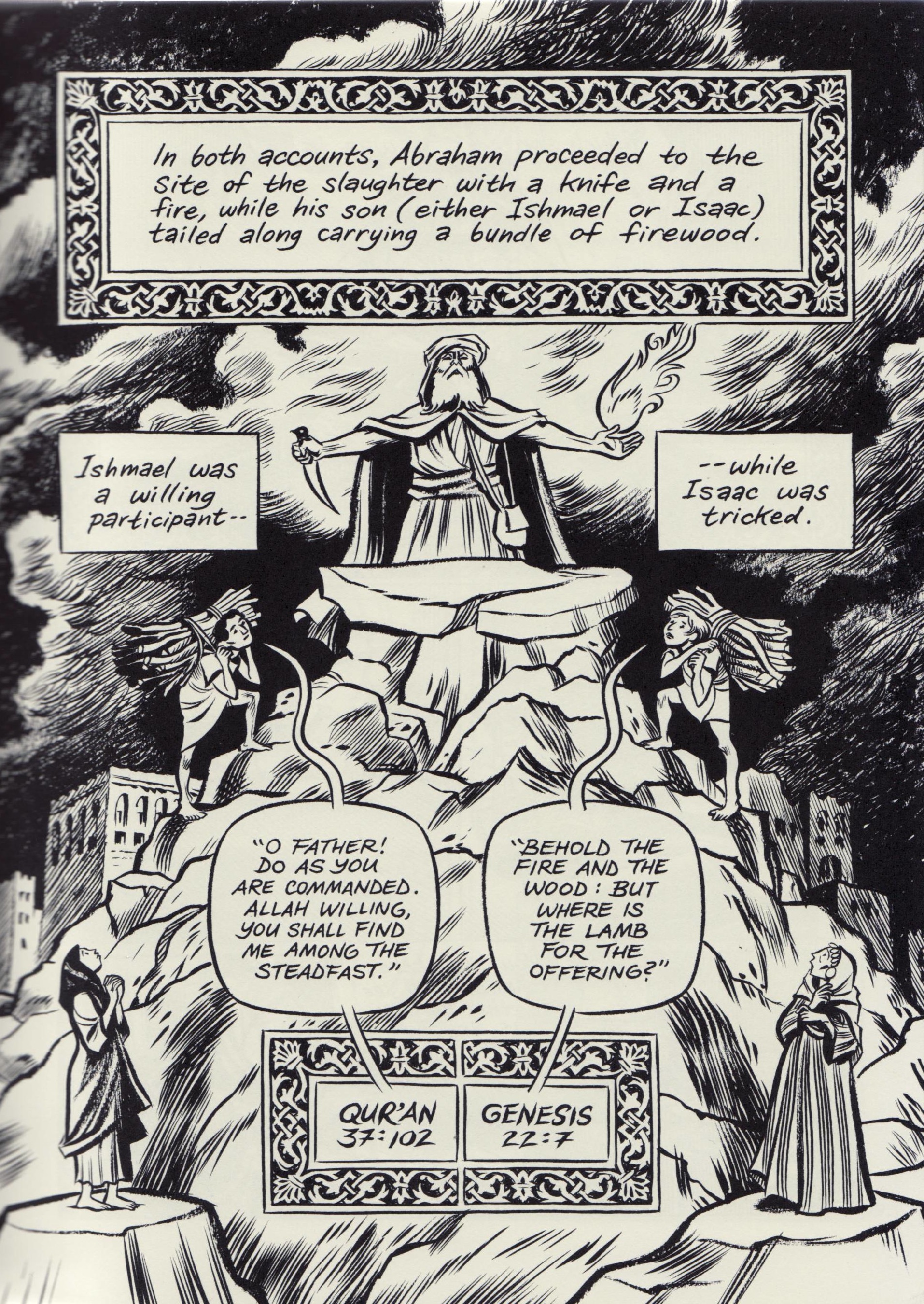
This exploration of the slight differences of the Abraham story between the Old Testament and the Qur’an — namely which son he takes to sacrifice — is one of the more successful uses of the Qur’an in Habibi. Thompson returns to this story of sacrifice multiple times in the narrative to increasing success, even when it simply used as a visual cue. By the end we get Thompson resolving the story by noting that in both versions what matters is that God spared the son, and from them the lineages of both faiths became deeply intertwined.
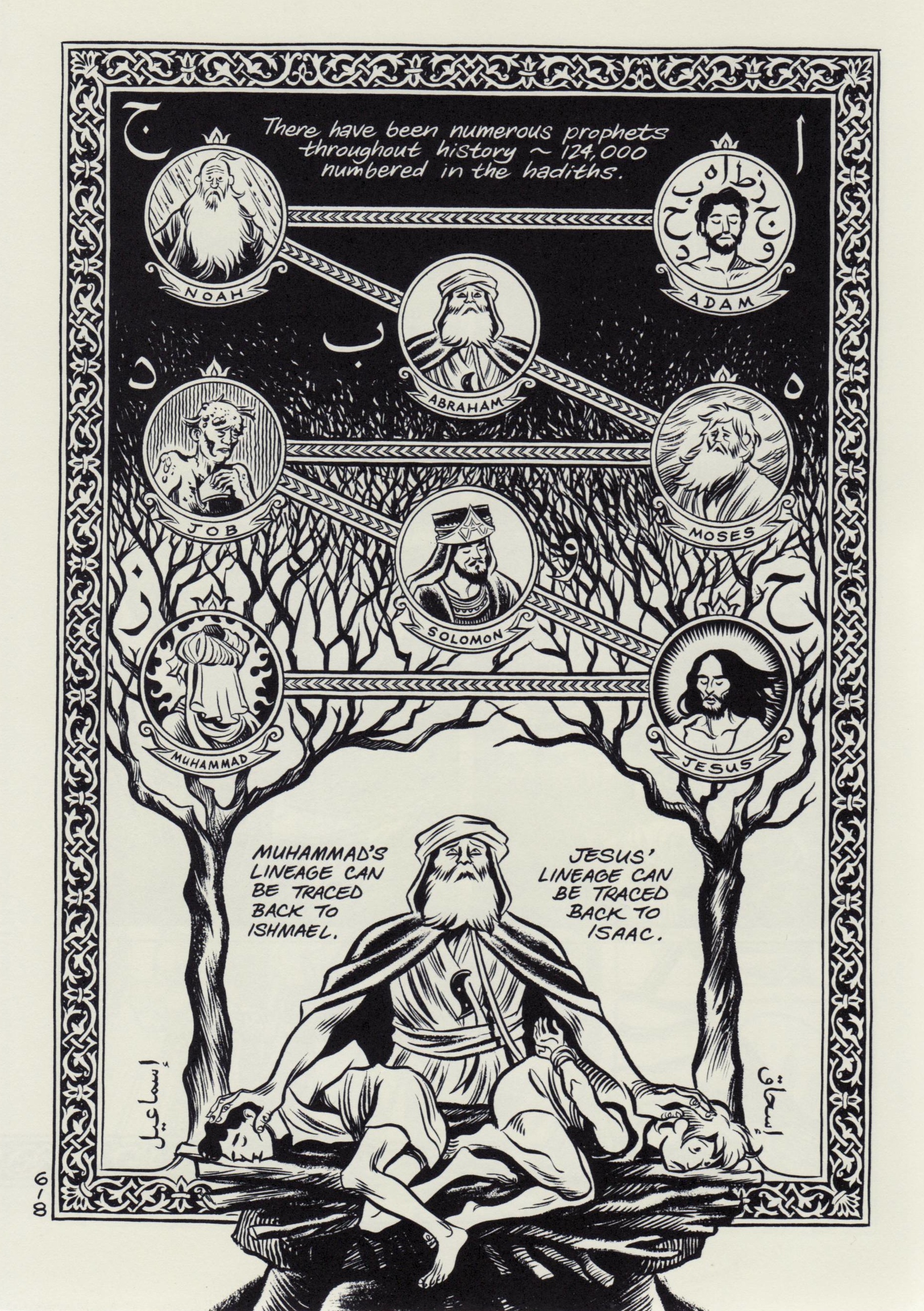
Thompson uses Habibi as a venue to argue that Islam and Christianity are not at odds with each other, but interconnected to one another. On this mark, Habibi is a well-done and original contribution to the canon of contemporary Western comics literature. I applaud Thompson for humanizing a religion that many have been quick to vilify, and for managing to do it in a non-preachy way. In fact, because he approaches Islam with a clear compassion and level-headedness, I suspect many readers let Thompson off the hook for the Orientalist elements of the text.

Which brings us to the bulk of the book: the love story between Dodola and Zam spanning multiple decades, set predominately in the land of Wanatolia. While this story is drawn with the same detail-attentive pen that Thompson uses at the service of calligraphy and geometric patterns, here it predominantly captures the vagueness of stereotypes. Thompson contributes to (instead of resisting) Orientalist discourse by overly sexualizing women, littering the text with an abundance of savage Arabs, and dually constructing the city of Wanatolia as modern and timeless.

One of the biggest missteps that Habibi makes is relying heavily on unrequited sex as a main narrative thrust. In John Acocella’s critique of Stieg Larsson’s popular Girl With The Dragon Tattoo series from earlier this year, he notes that some charge Larsson of “having his feminism and eating it too” based on the blunt manner in which he uses rape as a plot device. I think a similar charge can be laid against Thompson, who uses the repeated rape (and sometimes consensual sex by circumstance) of Dodola as an emotional tool that never feels wholly earned.
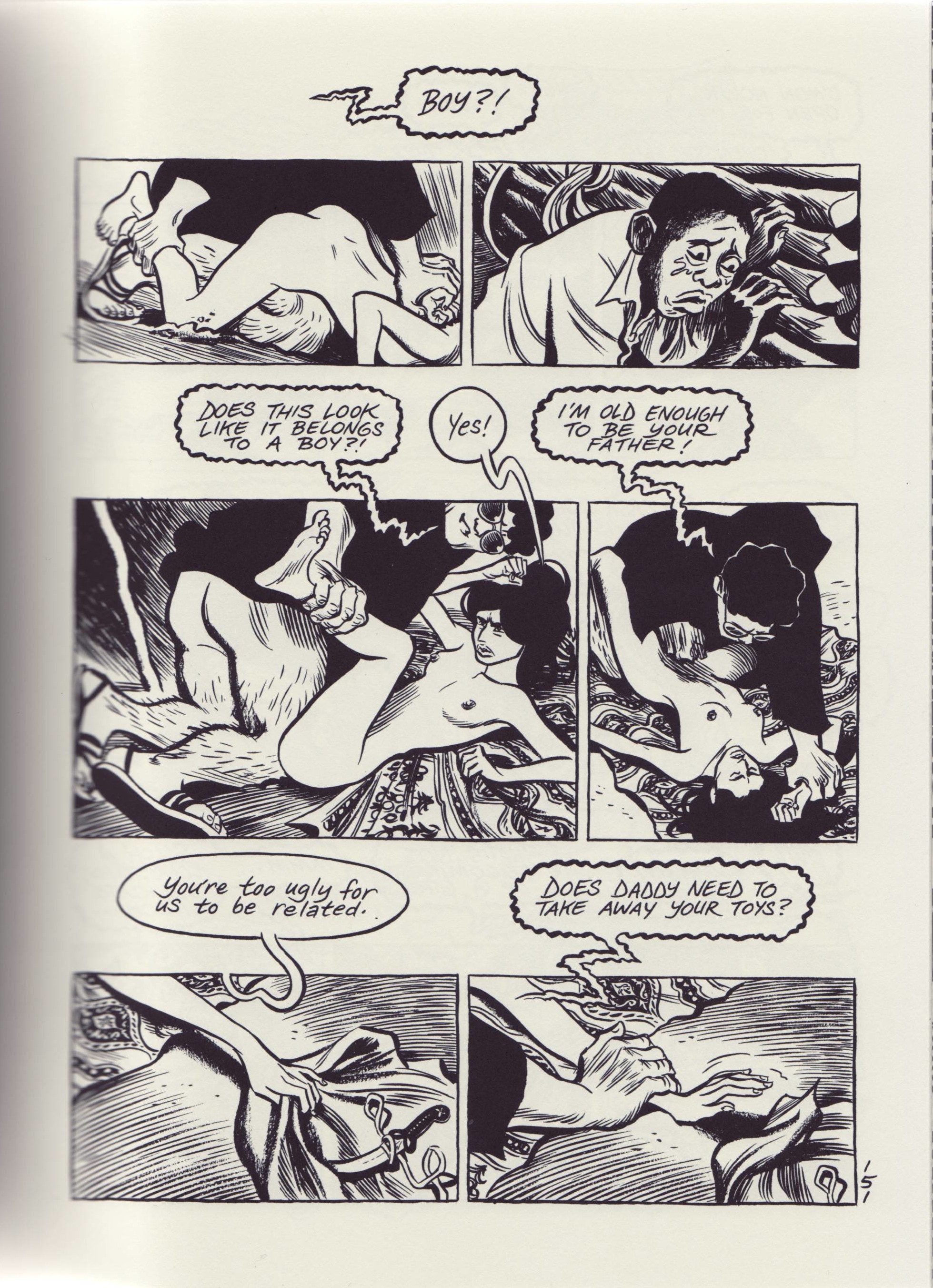
The rape of Dodola

What Thompson makes repeatedly explicit throughout Habibi is implicit in the classic Orientalist painting “The Slave Market” by Jean-Leon Gerome pictured earlier. In that painting, as with many more from the same era, the savagery of Orientals is imagined by European artists and portrayed for European audiences. What is reflected in these paintings is the White Man’s Burden: the felt need among those in the West to save Arab women from Arab men. By imitating the style of French Orientalist paintings as a vessel for his story, Thompson also transfers the message those paintings are loaded with. It is the same White Man’s Burden that drives readers to register Dodola as a damsel in distress (a position she inhabits for the majority of the book). She needs saving from the savage Arab men that over-populate the book.

Furthermore, Thompson creates a world where Dodola’s chief asset is her sexed body. She sacrifices herself to men to feed Zam, gain a version of “freedom” with the Sultan, and save herself from jail. Thompson crafts a societal position for the main character of the book where she must always be exotic and sexualized. Proof of our empowered heroin:
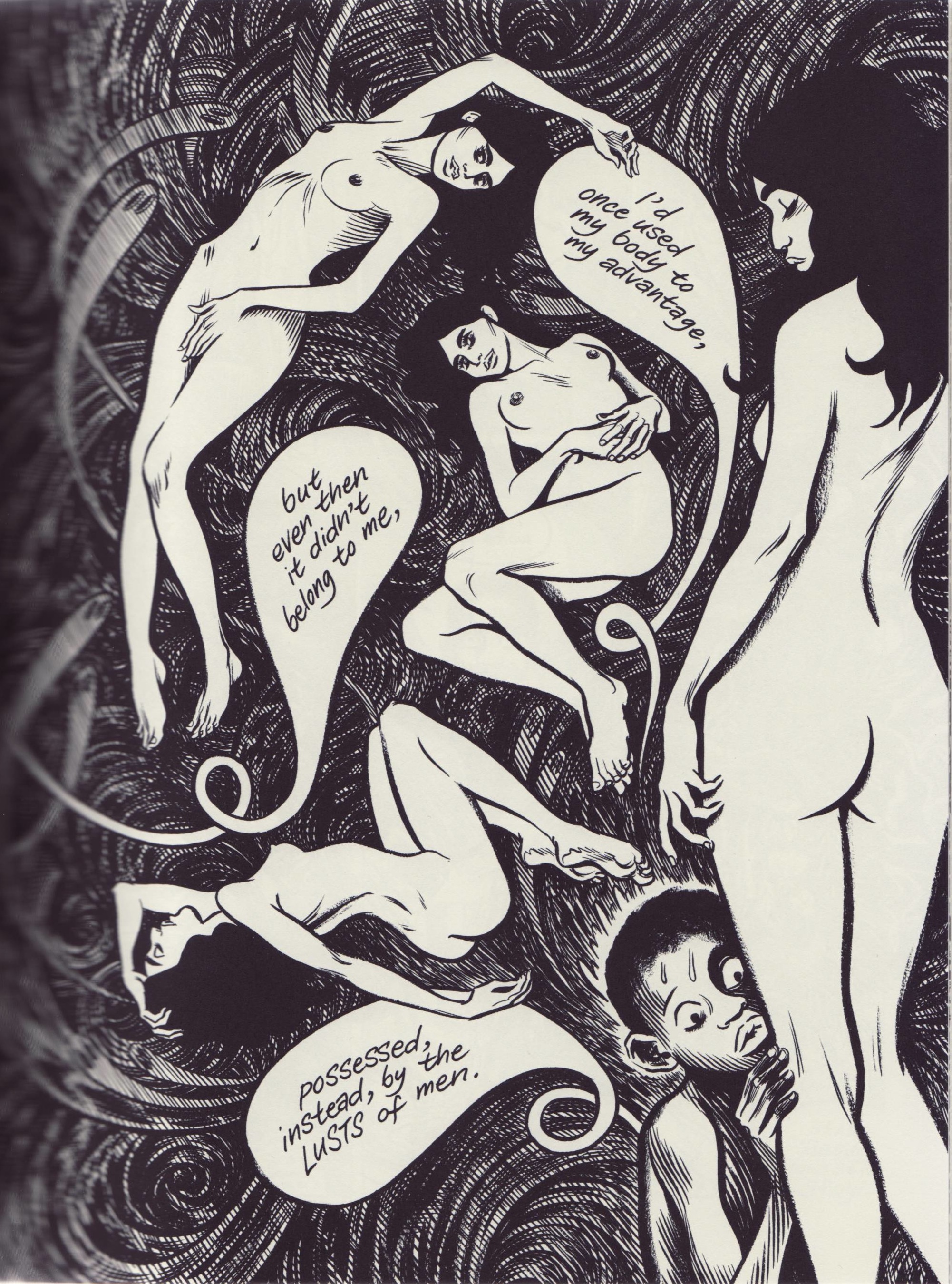
The thing about this version of empowerment (as Acocella argues with The Girl With The Dragon Tattoo) is that while readers do feel solidarity with Dodola, they are also given a space to live out a version of their own sexual fantasies via the text. It’s hard to make the distinction between a character being overly sexualized as a necessity for a larger feminist narrative and the reality that the product of this narrative is a book with a nude exotic Arab woman in panel after panel.
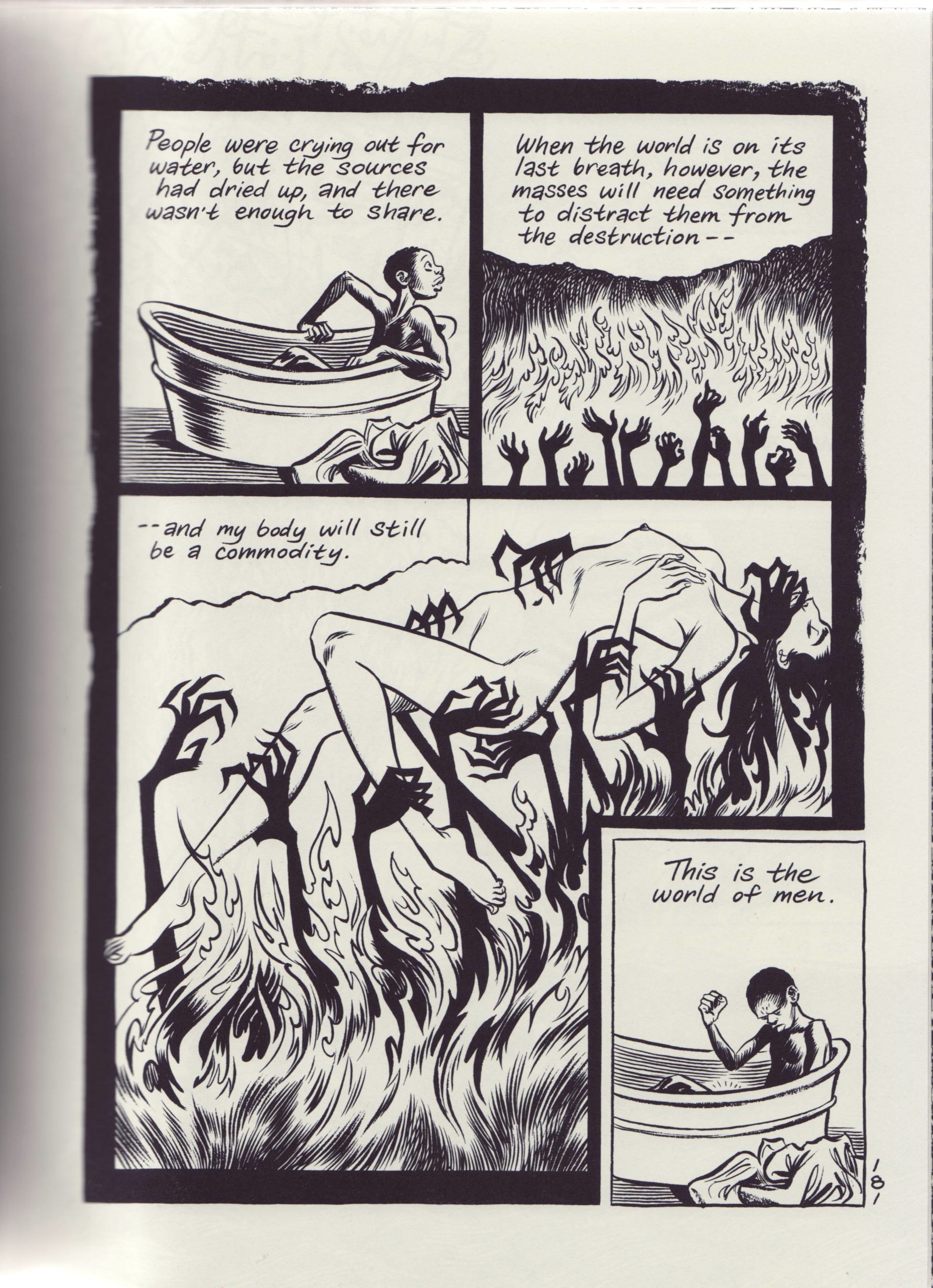
The question, then, is if Thompson so badly wanted to tell a story about what sex means in the context of love (familial to sexual), survival, and sacrifice, why did he choose this vessel? The answer I come to is that because this was the easy context. The artistic playground he chose of barbaric Arabs devoid of history but not savagery is a well-trod environment in Western literature, and one that is consistently reinforced in the pages of Habibi. In too many panels, Thompson conjures up familiar and lazy stereotypes of Arabs. From the greedy Sultan in his palace, to the Opium dazed harem, to the overly crowded streets of beggars, and the general status of women as property, Thompson layers the book with the hollow caricatures from other literature. These settings are easy to imagine because they have been passed down and recycled throughout much of Western media, so we immediately register these vague settings as natural:
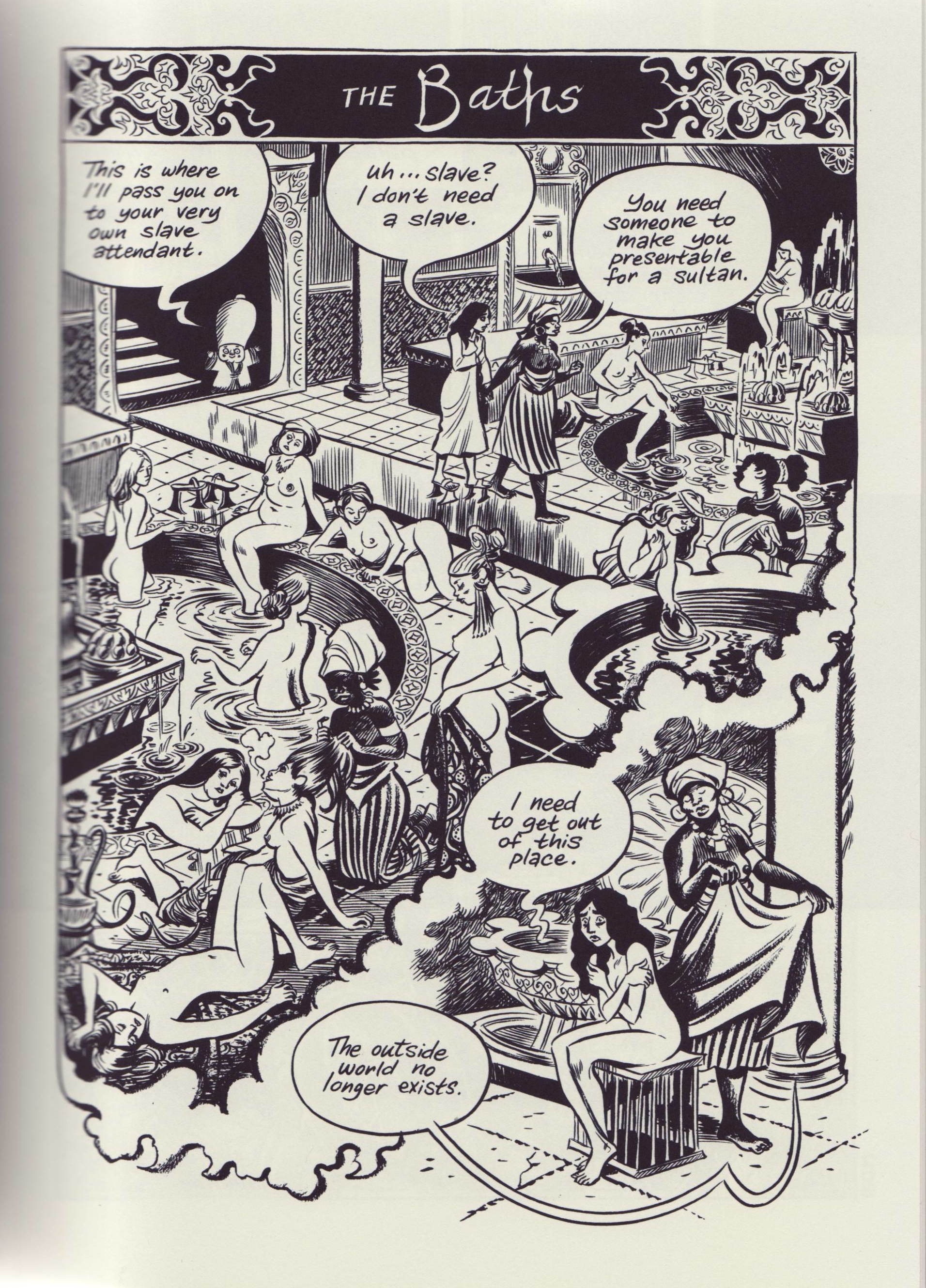
Nudity in Sultan’s Harem

Thompson constructs a version of the Orient that is filled with savage Arab men and sexualized Arab women, all at the service of penning a humanizing love story between slaves. The thing about humanizing, the way that Thompson does it here, is that while Dodola and Zam arrive as three-dimensional characters, they are made so by comparison to a cast of extremely dehumanized Arabs. While reading Habibi you can count the characters of depth on one hand with fingers to spare, but the amount of shallow stereotypes embodied in the supporting cast is staggering. The Sultan’s palace perhaps contains the most abundant examples of Thompson’s Orientalism. For the majority of the comic that takes place in the palace, the dialogue is so cliché-ridden that one could take out the words from the panels and the flow of the story would not be disrupted.
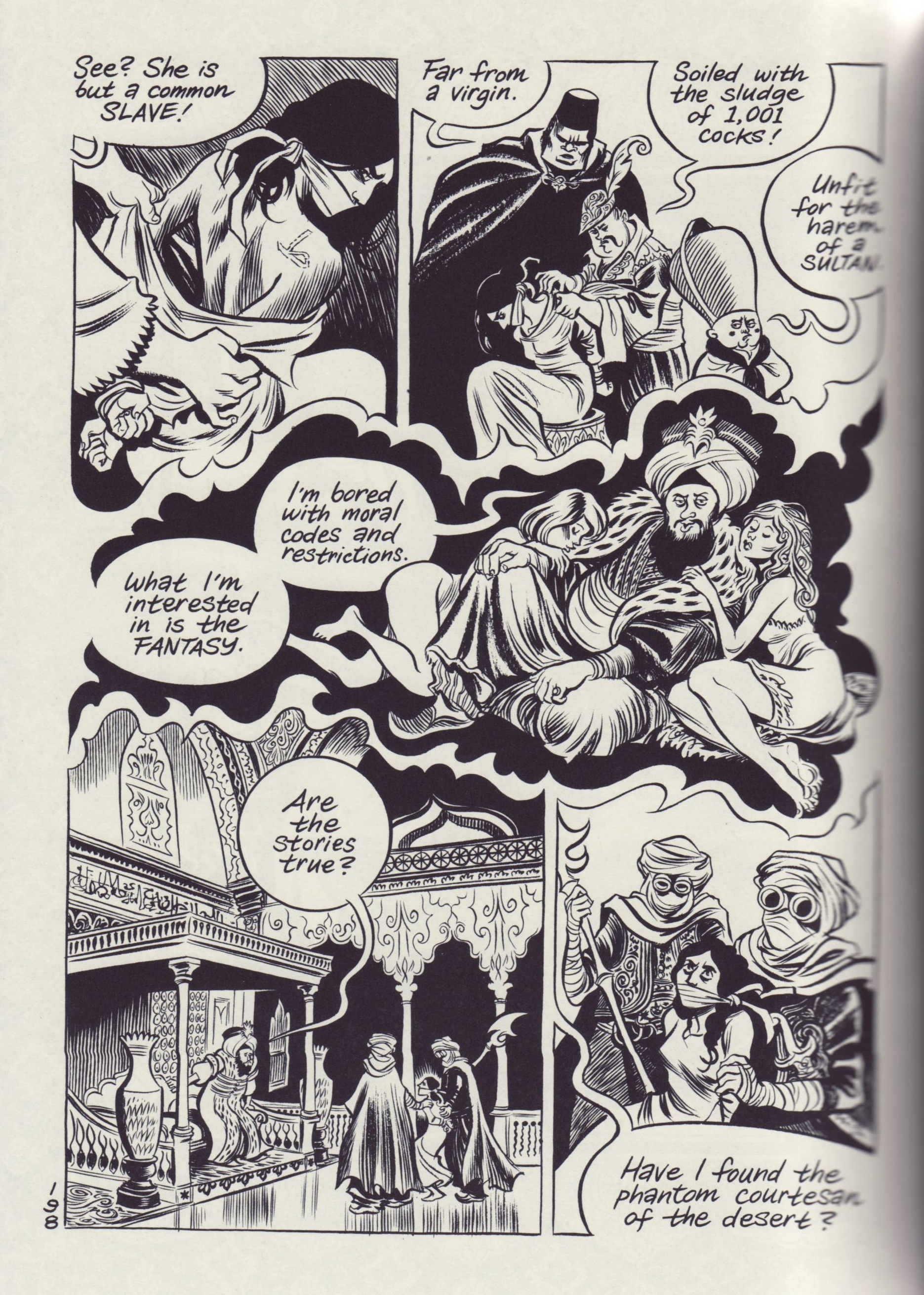
The Tusken Raiders present “the phantom courtesan of the desert”

Thompson has often mentioned the influence of 1001 Arabian Nights on him when creating the setting for Habibi. It’s easy to see this connection through Dodola’s status in the palace, but I think Thompson may be understating the influence of a more contemporary take on one of those tales: Disney’s Aladdin. In the same way that this Gulf War children’s classic is a prime contemporary example of Orientalism in America, Habibi repeats many of the moves in a more highbrow setting. As Aladdin opens, a nameless desert merchant sets the tone for viewers in a song about the Arabian Nights we are entering:

Oh I come from a land, from a faraway place

Where the caravan camels roam

Where they cut off your ear

If they don’t like your face

It’s barbaric, but hey, it’s home*

I thought of these lyrics repeatedly while reading through Habibi, as I could easily imagine the same desert merchant popping up in panels of Habibi to chime in: “It’s barbaric, but hey, it’s home!” In Habibi, Dodola and Zam are struggling for a better life in a fixed system of backwardness. What is ultimately most frustrating about the brutality of Habibi‘s Arabs is it is a brutality that is never justified or made to face consequences: it just sits there as normalcy. Dodola being raped, the harsh way the city treats Zam when he is on his own, the Sultan’s ruthlessness, the caravan camels roaming: these are all just acceptable facets of Wanatolia being a faraway place. Like Arguba in Aladdin, Wanatolia is a made-up and timeless setting for love to spring in spite of Arabness.

Wanatolia represents the heart of Habibi’s most problematic elements. In the sense that Habibi is a fairy tale (which Thompson has stated he was intending to create) it is understandable that the city is constructed as “timeless.” In other words, the majority of Dodola and Zam’s story isn’t tied to an analogous timeline. The problem arises when in the latter chapters of the book Thompson reveals that the same backward setting of Wanatolia (which houses the harem filled palace of the Sultan) dually houses a modern urban city. When Dodola and Zam return to Wanatolia after escaping the palace and recouping with a fisherman, we see the city in a completely new light: it is now a vibrant bustling city with billboards for Coca-Cola and Pepsi, SUVs, and free women pushing strollers.
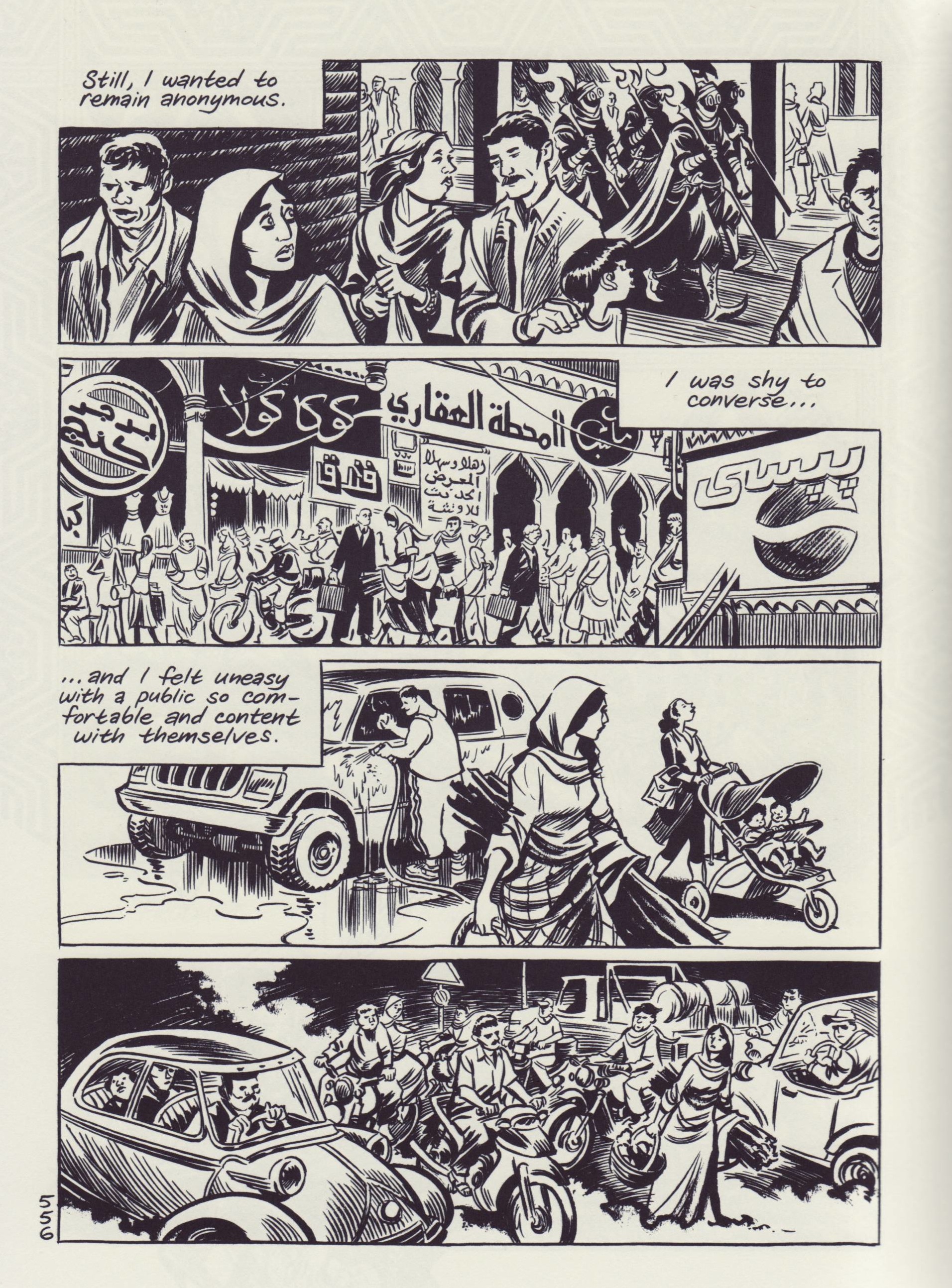
The reveal means that readers now have to reconcile that the same city of Wanatolia houses in a small proximity a site of forced sexual slavery and a site of Western-style modernity; a city where an Arguba-like brutality lives in tandem with a KFC. Therefore, Thompson presents a version of modernization for Arabs that is fueled by backwardness. The entire events of the book are retroactively a modern reality in the wake of an urban Wanatolia.
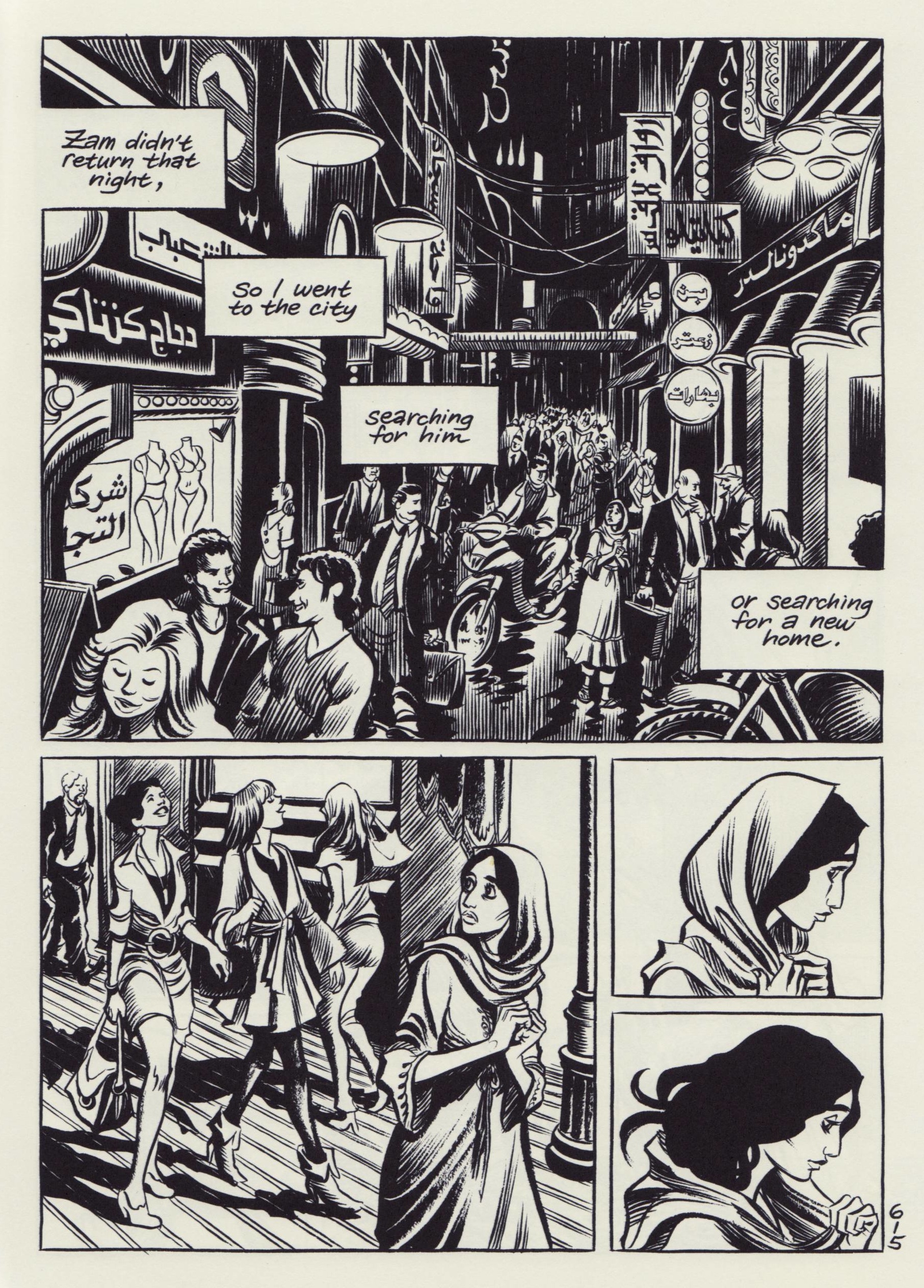
Dodola flirts with “being modern,” where “being modern” means taking off the hijab.

Wanatolia represents the poignant identity crisis at the heart of Habibi: it wants to be a fairytale and commentary on capitalism at the same time. The problem is that in sampling both genres so fluidly, Thompson breaks down the boundaries that keep the Oriental elements in the realm of make-believe. In other words, the way in which Wanatolia is portrayed as simultaneously savage and “modern” reinforces how readers conceive of the whole of the Middle East. Although Thompson is coming from a very different place, he is presenting the same logic here that stifles discourse in the United States on issues like the right to Palestinian statehood. If we are able to understand Arabs in a perpetual version of Arabian Nights, then we are able to deny them a seat at the table of “civilized discourse.”

Ultimately, when looking at Habibi we are left with the value of intention. Thompson has argued rather convincingly in recent talks that the book is knowingly Orientalist and he wanted to engage with these stereotypes to simply play within the genre. As he claims in the quote that leads this review, he intended to use Orientalism as a genre to tell a tale about Arabs the same way that stories in the genre of Cowboys and Indians are both fun and inaccurate. The problem in making something knowingly racist is that the final product can still be read as racist.

I know that Craig Thompson is a great guy who would probably win an award for thoughtfulness if such an award existed, but the issue remains that Habibi reproduces many of the Orientalist stereotypes already abundant in Western literature and popular culture. Although Thompson set out to play with these stereotypes, he never does a good enough job distinguishing what separates play from his own belief.

Habibi is an imperfect attempt to humanize Arabs for an American audience. There are definitely large technical and thematic triumphs to note, some of which I’ve mentioned here (from calligraphy to Qur’an) and others of which I didn’t get to (particularly the role of water/environmental concerns in the narrative). On an aesthetic level, Habibi is a wonderful experience that I recommend to anyone with spare time and the ability to lift heavy objects. Thompson is one of the most talented comic artists and writers working today, and that he took seven years working on Habibi is evident in the ink on display throughout the book. Yet, between the eroticized women, the savage men, and the presentation of these elements as constituents of Arab modernity, it is unfortunate Thompson’s skills are being used at the service of a mostly Orientalist narrative.
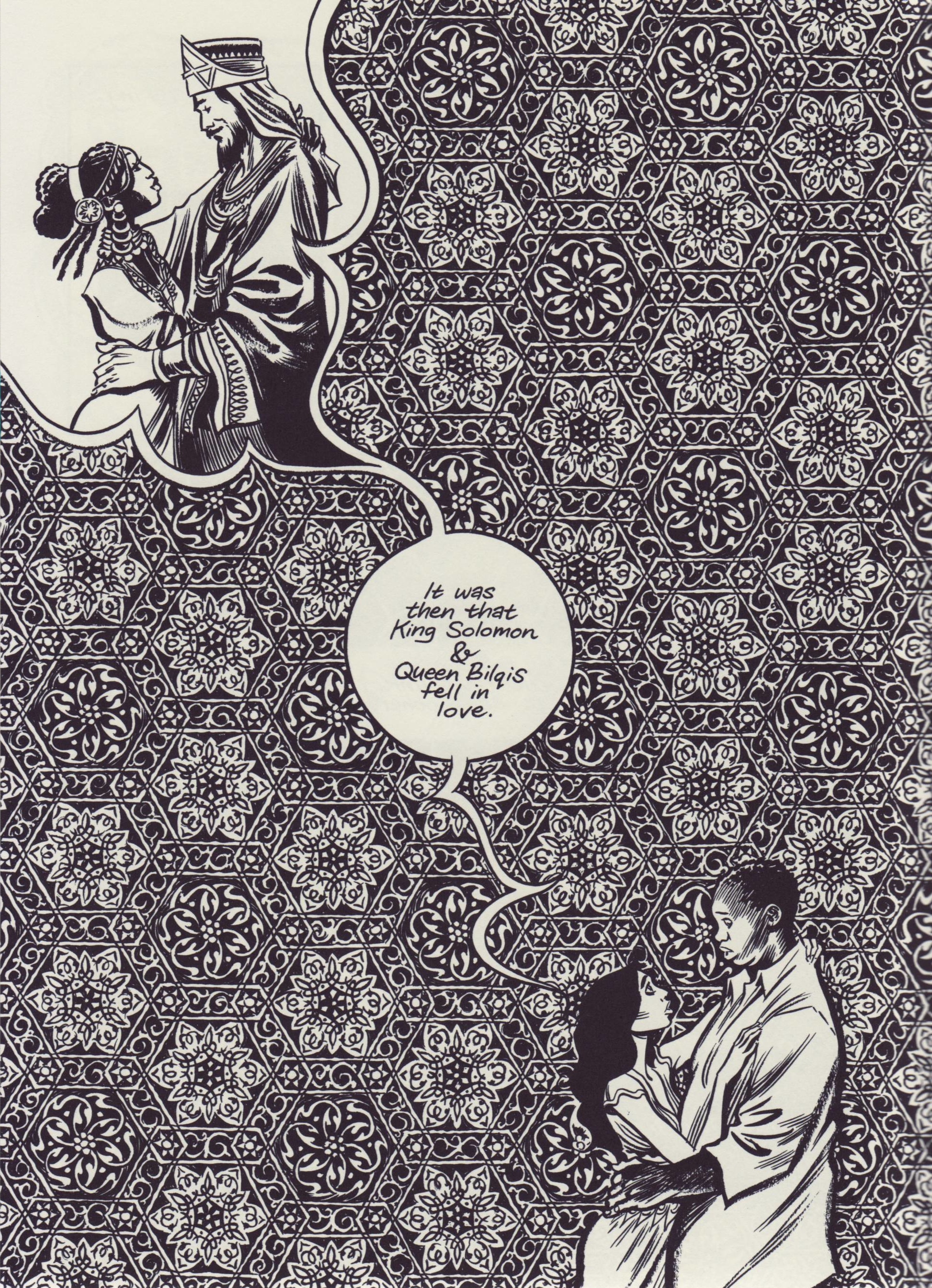
* The lyric “they cut off your ear if they don’t like your face” was removed in subsequent versions of Aladdin due to a complaint by the Arab-American Anti-Discrimination Committee (ADC). I recommend reading the ADC’s explanation of the situation.
_____________
Update by Noah: Nadim’s thoughts have inspired an impromptu roundtable on Orientalism. which can be read here as it develops.
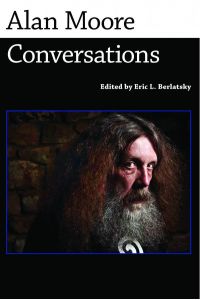
Alan Moore: Conversations Hype

Thanks to Noah and HU for agreeing to shill my new book, Alan Moore: Conversations, now available in paperback (and hardcover) from The University Press of Mississippi. As the name suggests, it’s an edited collection of previous Alan Moore interviews, spanning from 1981 to 2009. I tried to collect the interviews that were most enlightening in terms of Moore’s creative practices, and/or most revealing about the meaning and significance of his oeuvre. The book contains lengthy discussions of most of his major works and many of the minor ones as well. There is also an introduction be me and a chronology of Moore’s career. My goal was to make the book an indispensable one for Moore scholars, critics, and readers. You can only judge my relative success by buying a copy at retailer!

Below, I’ve included a series of quotes (one from each interview) to whet your appetite and make you ache desperately to have the book in your sweaty palms, now driven mad by the spirit of capitalism, and the wisdom of Alan Moore, who speaks at length on comics, sex, drugs, brain science and bad movies.

On the struggle of writing comics: “I find writing comics to be staggeringly easy.” (from David Lloyd’s 1981 interview in the SSI Newsletter)

On the complexity of Marvel characterization: “That’s characterization the Marvel way. They’re neurotic . They worry a lot. If they haven’t got anything wrong with them like that, something physically wrong will do— perhaps a bad leg or dodgy kidneys, or something like that. To Marvel, that’s characterization.

…[Chris Claremont’s] thing with characterization is that he makes all his X-Men foreign. One’s a Russian. One’s a German. Russian! They’re incredibly Russian. They sort of sit there and let you know how Russian they are by thinking:

“How I long for my Ukrainian homeland. How I miss my poor dead brother Thiodore.”

And then:

“How I miss the happy camaraderie of the bread queues and the surprise purges.”

(from David Roach’s 1983 interview in Hellfire fanzine)

On the social function of comics: “Comics, when I was growing up, were part of the working class tradition. Mothers gave them to their kids to pacify them. Instead of a Valium, it would be a copy of The Topper or The Beezer.” (from Guy Lawley and Steve Whitaker’s 1984 interview in Comics Interview)

On influences: “If I had to single out one major influence on my work, it would probably be [William] Burroughs. I would never attempt to duplicate his style of writing….I do admire his style, but I suppose the biggest influence is his thinking, his theoretical work, some of which has been wild and extreme, but the relationship he draws between the word and the image and the importance of both, I think, is significant. Burroughs tends to see the word and the image as the basis for our inner, and thus outer, realities. He suggests that the person who controls the word and the image controls reality.” (from Christopher Sharrett’s 1988 interview in Comics Interview)

On paranormal experiences: “I have only met about four gods…a couple of other classes of entity as well. I’m quite prepared to admit this might have been a hallucination. On most of the instances, I was on hallucinogenic drugs. That’s the logical explanation — that it was purely an hallucinatory experience. I can only talk about my subjective experience, however, and the fact that having had some experience of hallucinations over the last 25 years or so, I’d have to say that it seemed to me a different class of hallucination. It seemed to me to be outside of me. It seemed to be real. It is a terrifying experience, and a wonderful one, all at once. It is everything you’d imagine it to be. As a result of this, there is one particular entity that I feel a particular affinity with. There is [a] late Roman snake god, called Glycon. He was an invention of the False Prophet Alexander. Which is a lousy name to go into business under. He had an image problem. He could have done with a spin doctor there. “ (from Matthew de Abaitua’s 1998 interview in The Idler)

On brain science and comics: “They found that comics was far and away the best way for people to take in information and retain it. I think people would remember the picture and that would cue the words they had read going along with that picture. I think that this might be because comics engage both halves of the brain simultaneously. One half is concerned with words. One half is concerned with images. With comics, you do have single static images, single clumps of words. Maybe the two halves are engaged in a different way than they are with other art forms, and this accounts for the kind of imprinting that comics are capable of. This is only speculation. I try to keep up with science and neurology, and how the brain works, but at the end of the day, I am largely a comic writer, so you probably shouldn’t trust me to perform extensive brain surgery or anything like that.” (from the edits of Tasha Robinson’s 2001 interview in The Onion)

Looking back at Watchmen: “Watchmen was kind of clever. I was going through one of my clever periods— probably emotional insecurity. I thought: ‘People will laugh at me ‘cos I’m doing superhero comics. I’d better make ‘em really clever, then no-one will laugh’ [laughter]. So, we’ve got all this sort of thing with the metaphor of the clock face, and yes, it is a kind of clockwork-like construction— a swiss watch construction— where you can see all the works of it. Different areas where the text reflects itself, different levels— I was showing off…I kind of decided after Watchmen that there was no point ever doing anything like that ever again…” (from Daniel Whiston’s 2002 interview in Zarjaz)

On sex and censorship: “Sex—we all got here because of sex. We all do it, if we’re lucky. We’ve been doing it for millions of years. It’s perhaps time we got over it and moved on. A couple of million years, that should be time for us to have gotten over our understandable panic at the idea of sexual reproduction.” (from Jess Nevins’ 2004 interview in A Blazing World)

On the mainstream comics industry: “…I think that the comics industry, really, if it wants to attract, if it wants to be talked about as a grown-up medium, then it ought to be a medium that will attract grown-ups, in terms of [the] rights of the artist.

It ought to be a grown-up medium. It ought to grow up its business practices, rather than have them all rooted in the prohibition-era gangsterism of the 1930’s. If it really wants to be an industry that’s proud of itself, then it really shouldn’t go around alienating the talent that has actually lifted it up our of the quagmire.

That is obviously something that is not in my control. It is purely in the industry’s control. I think that having spent 25 years laboring within the comics industry, that has probably reflected better on the comics industry than it did on me. Probably the comics industry got more out of the association than I did. (from Chris Mautner’s 2006 interview in The Patriot-News [Harrisburg])

On the Watchmen film: “Sure, I’ve heard it’s great seeing Dave Gibbons’s images reproduced on the big screen. ‘They’re exactly the same as in the comics, but they’re bigger, moving, and making noise!’ Well, putting it cruelly, I guess it’s good that there’s a children’s version for those who couldn’t manage to follow a superhero comic from the 1980s.” (from Alex Musson’s 2009 interview in Mustard)

Monthly Stumblings # 12: Shannon Gerard

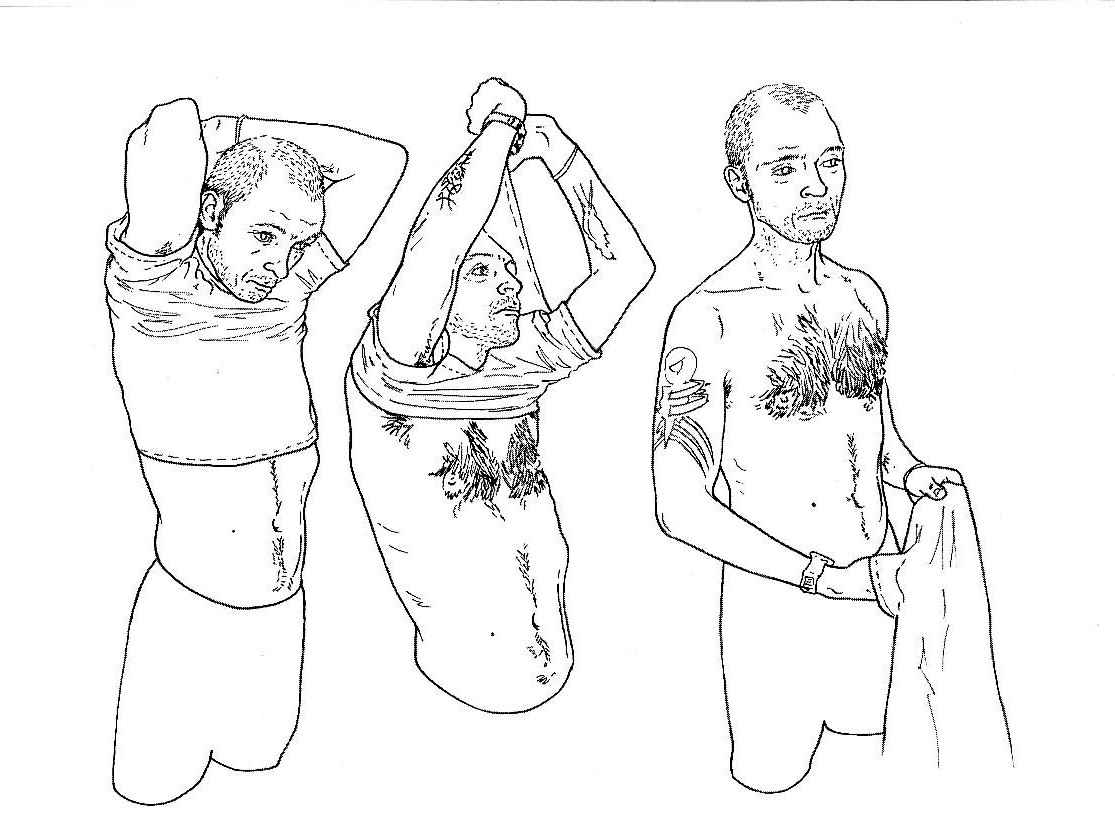
Unspent Love or, Things I Wish I Told You by Shannon Gerard

Shannon Gerard is a Canadian multimedia artist (aren’t they all these days?) based in Toronto. She presented her book / webcomic Unspent Love as follows:

Originally drawn and written as a series of online vignettes for the comics publisher Top Shelf Productions, Unspent Love addresses themes such as hope, fear, and human frailty. The project was later produced as a multi-media bookwork with the support of Open Studio’s Nick Novak Fellowship (2010).

A third iteration at YYZ Artist’s Outlet in Toronto will evolve the project in a series of narrative images, unfolding between November 2010 and October 2011. The experimental space of the wall allows imaginative storytelling possibilities to develop through layering, time-lapsed animation and wheat pasting.

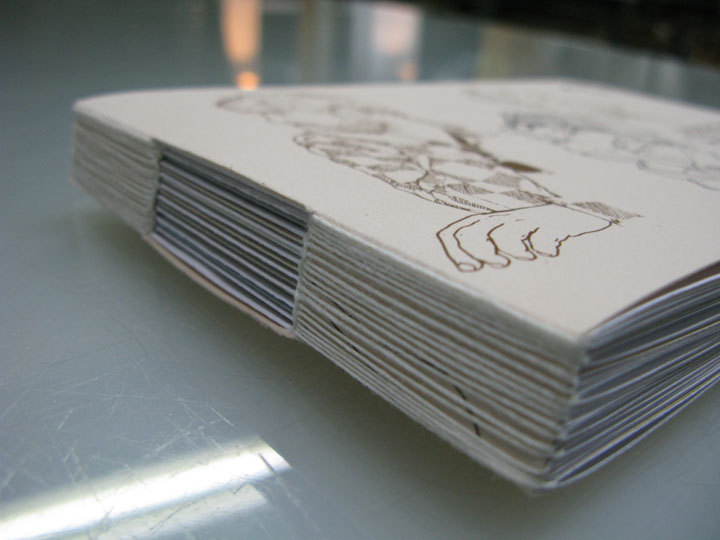
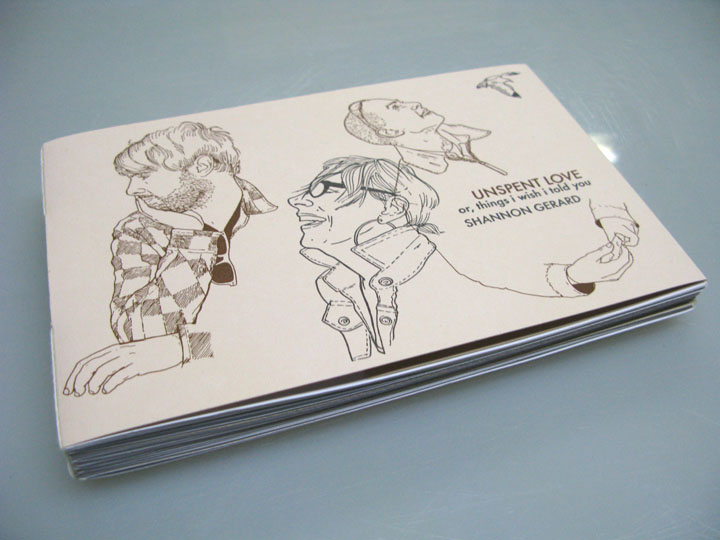
The Open Studio hand-bound artist’s book that Shannon mentions above is gorgeous, as you can see below:

Unspent Love, or Things I Wish I Told You, Open Studio, 2010.

In an interview Shannon Gerard said;

I am just telling pretty simple stories from my life — anyone can do that. And I am using materials and methods that a lot of people can understand and recognize. Also the stories are personal, so I want the books to have definite evidence of the hand of the artist all over them [in the lettering, for instance].

[M]ost of my books so far have been about all of the love and fear and losses and hope and fragility of relationships either beginning, ending or never totally materializing.

In another interview Shannon Gerard quotes Lynda Barry saying that what she does is “autobifictionalography.” This means that her autobiography has some fiction mixed just like every fictional narrative has some autobiographical subtext.

Shannon Gerard’s drawing method relies exclusively on photos of family and friends acting. This has some advantages, but also some disadvantages. As she puts it in her Inkstuds interview (she disclaimed correctly that she’s not one – a stud, I mean):

In a lot of cases I trace right over top of photographs. That is really limiting in terms of like line quality an’ there’s definitely limitations to it in that way.

Watch also Women in Comics.

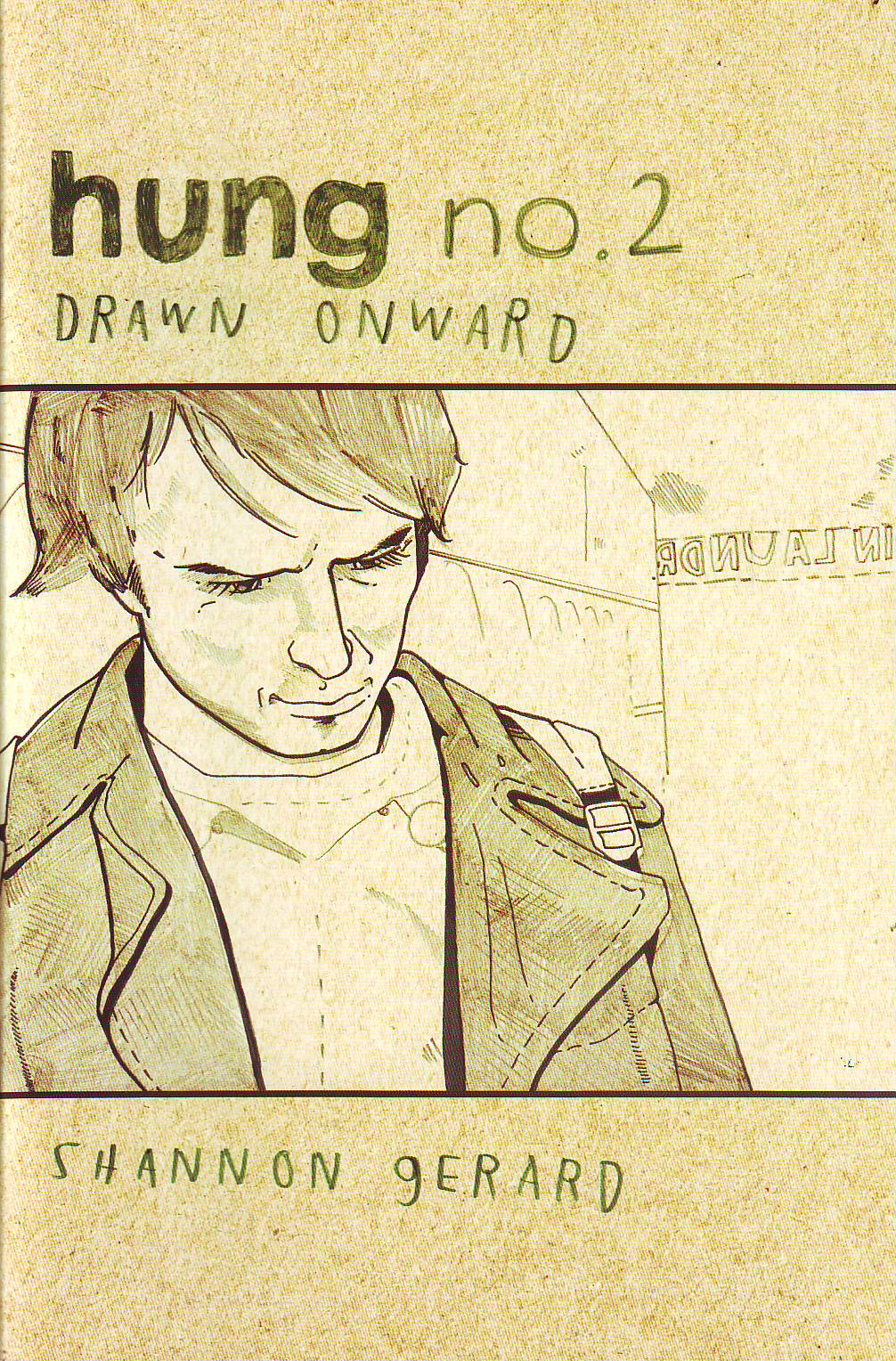
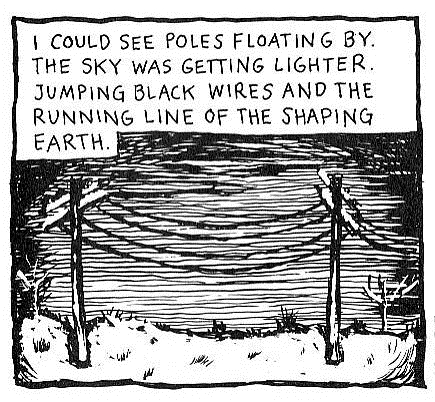
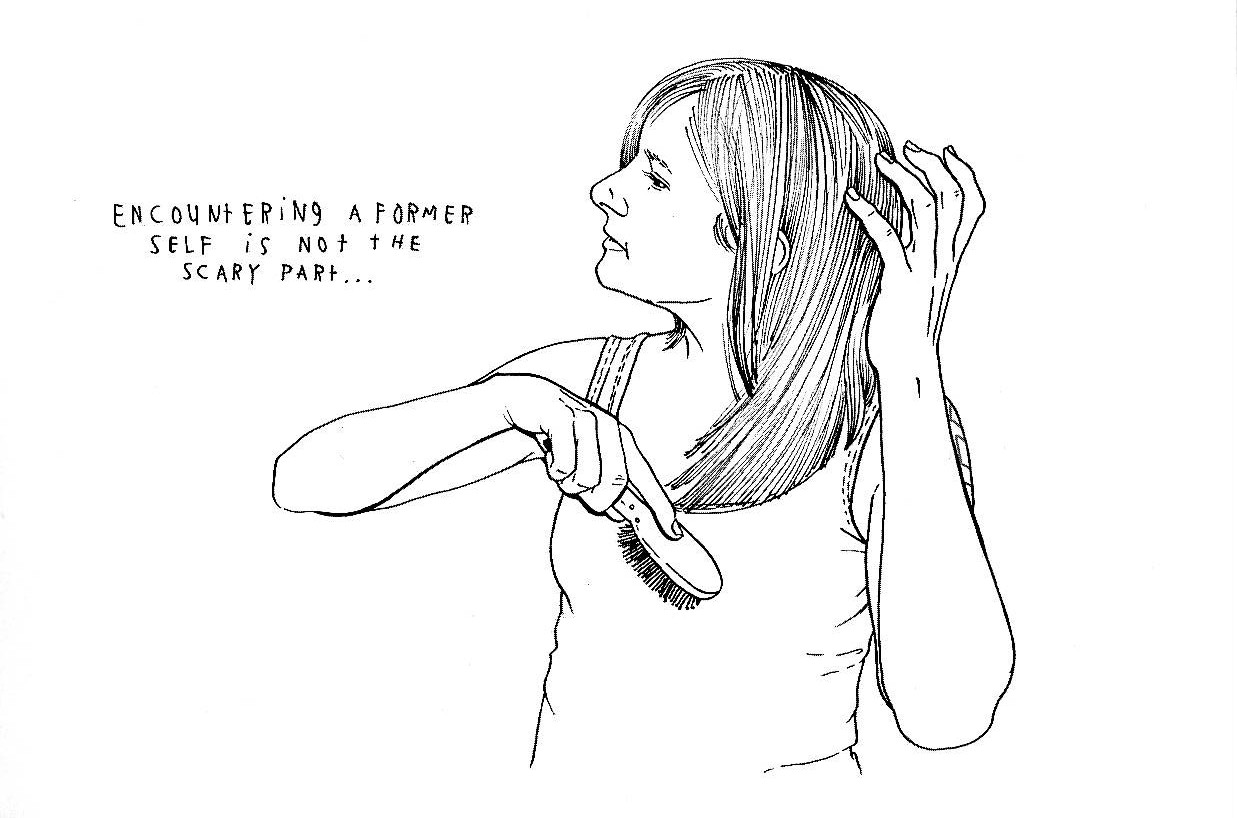
The characters in Unspent Love have an individuality that is rarely seen in comics, but the drawings have something of a mechanical feel to them. The regularity of the lines, the absence of shading, remind me of the clear line. Even so during the last half decade a progress can be detected in Shannon Gerard’s drawing abilities: the tracing look vanished replaced by a more fluid naturalism:

Hung # 2, Drawn Onward, Self-Published, 2006.

Unspent Love, or Things I Wish I Told You, Open Studio, 2010.

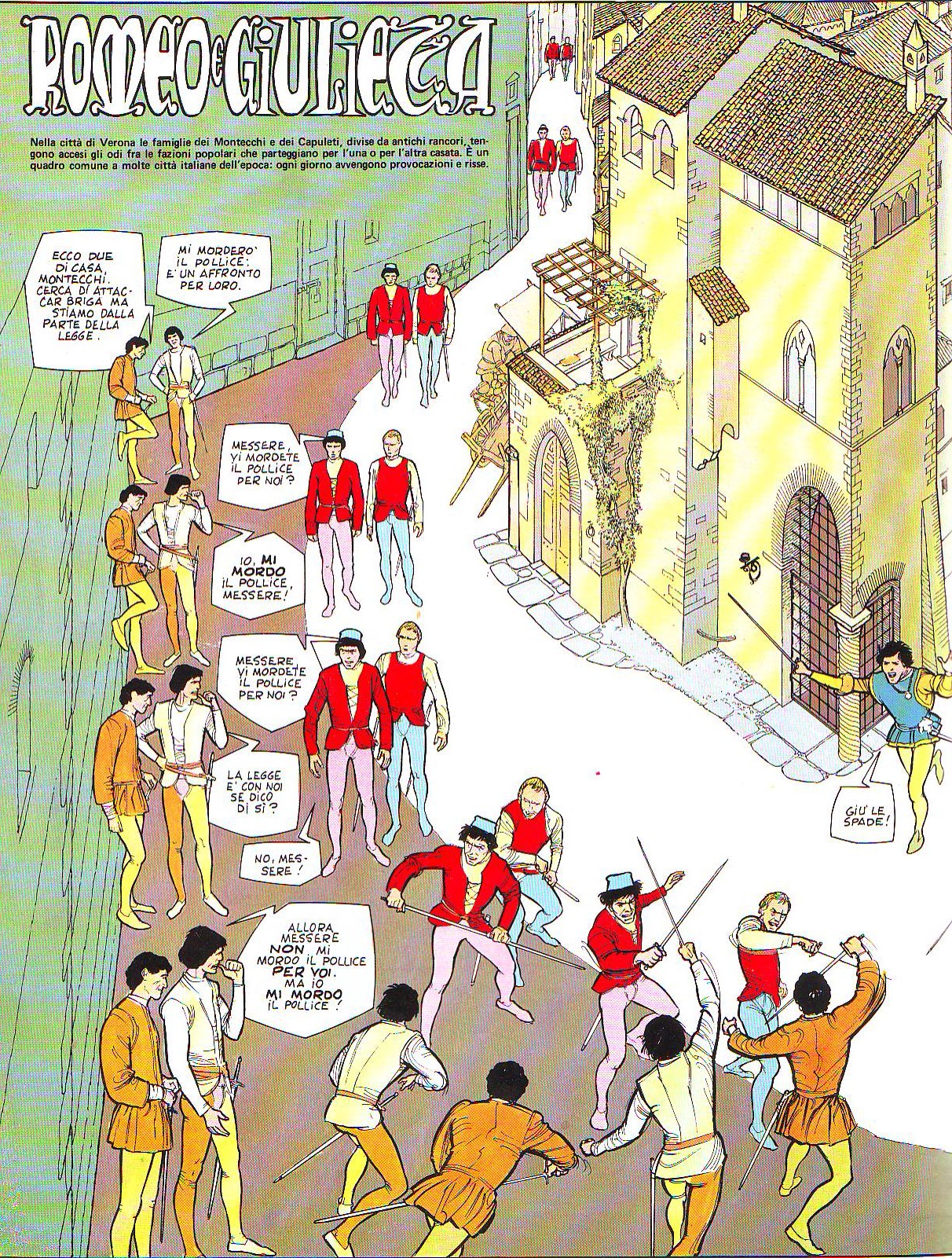
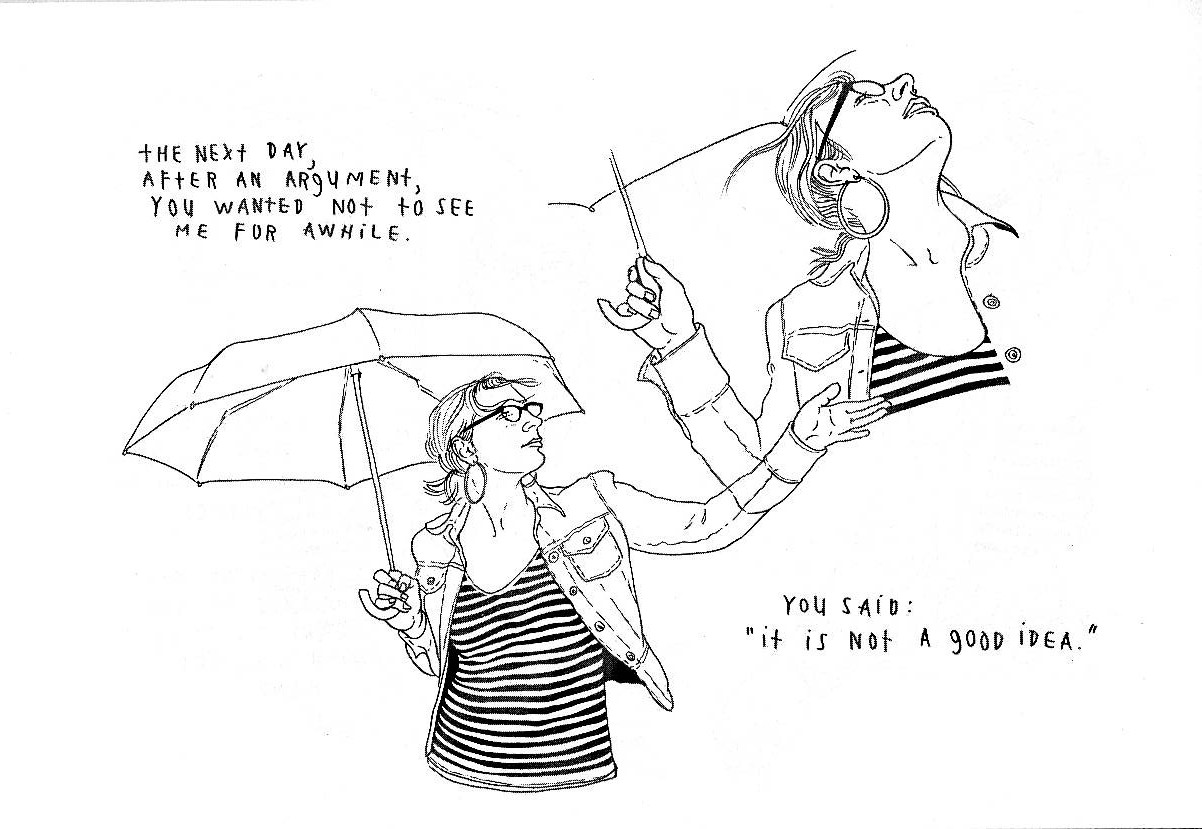
If I understood correctly (and I really don’t know if I did), Shannon Gerard, says in her Inkstuds interview that she compensates the lack of spontaneity of her drawings with a creative approach to page layout. In fact one of her trademarks is the depiction of the same character in various positions in fictional and reading time and fictional and page space. This is the same effect that gave Italian comics artist Gianni de Luca his place in the pantheon:

“Romeo e Giulietta”‘s first page (Romeo and Juliet) by William Shakespeare and Gianni de Luca, Epipress, 1977.

Unspent Love, or Things I Wish I Told You, Open Studio, 2010.

One of the most interesting aspects in Unspent Love are the image-text relations. Mostly the image shows a character and the words describe a situation. This leads to the problem of focalization. Being autobiographical (or, you know… autobifictionalographical…) the narrator is a fictional character (s/he always is) somewhat related to the artist-writer, but that’s not what I read-see in other instances: what I read is an interior monologue uttered by the character that I’m seeing. There’s a complex creative system at play because the actors play Shannon Gerard’s own stories: her interior voice mixes with their bodies in an oblique relation. In one particular case (my favorite section of the book, the wedding) the images and the words don’t describe the same point in time creating a lapse that is quite jarring.  

An interior voice and an exterior image of the world in one of Shannon Gerard’s (and mine) favorite cartoonists’ stories.

Panel from “The most Obvious Question” by Lynda Barry, Raw, High Culture For Lowbrows, Vol. 2 # 3.

Reading Unspent Love we may think that the text leads the narration (if we can call it that) while the images are just illos. Nothing is further from the truth: if we know how to decode them the drawings give us crucial information about the characters (did I mention already that the characterization in Unspent Love is exquisite?): I’m talking about their mood: dreamy, absent minded, loving, joyful, etc… but also their taste in clothes, mannerisms… etc… In her Inkstuds interview Shannon Gerard says that the drawings interpret the narrative. I say that the drawings are part of the narrative.

A disjunction between image and text, or is it?

Unspent Love, or Things I Wish I Told You, Open Studio, 2010.

As part of trash culture comics in the restrict field have been poorly written, with some exceptions, of course, throughout their history. Words fail me to express how much I admire Shannon Gerard for bringing adult themes and great writing to comics (and I don’t mean the usual adolescent tripe that passes for adult in the comicsverse). Unspent Love has strengths precisely where your average comic fails miserably. Shannon Gerard’s writing is not only beautifully poetic (she doesn’t like the word because it’s too pretentious; what kind of a world is this, in which an artist feels embarrassed for being a poet?), it’s also full of great ideas. Discover those ideas yourselves, if you didn’t already, because revealing them here would mean spoiling your fun…

I don’t want to finish this post without mentioning Sword of My Mouth, a Post-Rapture Graphic Novel (a post-apocalyptic story written by Jim Munroe and drawn by Shannon Gerard, No Media Kings / IDW, 2010) and Hung (a self-published comic book miniseries to go along with her thesis – see below – the cover of issue number two is reproduced above: Hung # 1, Never Odd Or Even, 2005; Hung # 2, Drawn Onward, 2006; Hung # 3, Lonely Tylenol, 2007).

Shannon Gerard wrote a thesis about autobiography in comics (Drawn Onward, Representing the Autobiographical Self In the Field of Comic Book Production, York University, 2006). Here’s how she presents her book:

The recent proliferation of once underground comic books in the popular media has spawned a vibrant body of critical work about the form and its cultural meanings. Perhaps owing to its relative infancy, the field of comics 1 scholarship, while enthusiastic, has been inconsistent. The current debate seems to be over exactly which analytical approach to take. The search for a suitable critical template has led some scholars to consider comics from the perspective of literary criticism. Other academics use the lexicon of the art critic to focus on the formal design concerns of cartoonists, or attempt to locate the format 2 within an art historical context. Due to the sequential narrative element of comics, many film studies majors have embraced the genre. Given that the reading of comics bears much in common with other fan-based and emotionally resonant sub-cultures like alternative music, a cultural studies perspective seems to provide another piece to the puzzle. However, as comic books represent a unique hybrid of various literary traditions, visual art movements and cultural perspectives, not one of these approaches works in isolation.

Since comics are resistant to conventional analysis, the resulting limited academic work can be frustrating, but I believe the inherent tensions in the field of comic book production are its greatest strength. As with any field of study, these intersections provide dynamic places for various existing ideas to pool together and for new ideas to crystallize. The pronounced interdisciplinary anxieties of comics scholarship make it one of the most exciting areas of inquiry to recently emerge in the academy. Broadly, my thesis attempts to highlight some of the frictions between these varied fields so that a better vocabulary for talking and writing about comic books can develop.

More specifically, my interest is in considering comic books as a form of life writing. I am focused on the autobiographical work of several artists currently working in North America, namely Lynda Barry, Chester Brown, Seth, Matt Blackett, and Shary Boyle. As this paper shall set out, the work of these five artists further demonstrates the complex narrative possibilities presented by the particular conventions of comic book design.

In the context of examining the life writing practices of other comic book artists, I aim not only to expand my academic engagement with comic books but also to develop my own visual art practice. Together with this paper, my thesis takes the shape of three short autobiographical comic books. The union of creative and academic work represented by my thesis is meant to echo the various cultural discourses which meet in the comic book format.

1 A letter S is used at the end of the word “comics” in terms such as “comics history” or “comics scholarship” to specify that a field of study is being discussed. The singular word “comic” sounds too much like an adjective. The term “comic history” might be misread to indicate a historical account of something quite hilarious.

2 Where possible, I have tried to avoid the use of the word “format” as it implies a limited view of comic books as a series of design choices. On the other hand, the word “genre” does not indicate the wide range of creative sub-categories within the field of production. In some ways, the inclusion of such flattening terms is problematic to my aims, but in others, it highlights the basic tension of my struggle for a suitable vocabulary.

To read the book’s first thirteen pages: click on “Preview” on the right.

The World With Roaches

This first ran on Splice Today.
__________________

For reasons which remain largely a mystery to me, I’ve been obsessively watching episodes of the godawful Heroes television series. You’d think I’d have known to stop right away when first episode, opening scene is of some earnest scientist nattering away about how cockroaches, not humans, are the pinnacle of evolution, and how these nasty little crawling critters are deterred by neither sleet nor snow nor nuclear fallout, like some sort of post-apocalyptic six-legged egg-laying postmen.

Sci-fi writers love the cockroach, and the cockroach loves them back. In fact, the cockroach loves us all, because the fact is that the roach will not survive long after we’re gone. On the contrary, the truth is that the cockroach will flip over on its back, put its legs in the air and expire a week or two after we turn off the central heat. Roaches are human parasites; they thrive in such numbers because we kill their predators and provide them with food and climate control. They’re not even resistant to radiation; we’d survive a nuclear holocaust far better than they would. It’s true they’re a triumph of evolution, but that triumph isn’t durability. That triumph is us.

I learned about the roach’s limitations in Alan Weisman’s 2007 ecological thought-experiment The World Without Us. The book imagines what would happen if humans suddenly disappeared, examining how long it would take for the sea to reclaim Manhattan, or for elephants to repopulate Africa, or for cats, dogs, and roaches to go the way of the dodo.

Weisman’s title is, coincidentally, a central concept in Eugene Thacker’s In The Dust of This Planet. For Thacker, the “world without us” is still thought experiment, though one of a different kind than Weisman’s. In Weisman’s book, the world without us is a future in which human beings are extinct. In Thacker’s, the world without us is a “spectral and speculative world,” a way of trying to think the non-thinking of human non-existence.

Thacker defines the world without us in contrast to the world for us (which is the world that we “interpret or give meaning to”) and also in distinction to the world in itself (which is “the world in some inaccessible, already given state.”) For Thacker, the world in itself can never be thought or reached; as soon as it is conceived (through geology, or theology, or cosmology, or other forms of human thought) it becomes part of the world for us. The world without us, on the other hand, is the world that we cannot conceive. It is not opposed to us, it is not neutral to us; it is “somewhere in between, in a nebulous zone that is at once impersonal and horrific.” If you think of a cockroach as an irritating pest, you’re thinking about the world for us. If you think about a cockroach that isn’t being thought about, you’re imagining the world in itself. But if you think about the cockroach as the cockroach failing to think about itself, you’re thinking about the world without us — which, Thacker argues, is creepy.

The subtitle of Thacker’s book is, in fact, The Horror of Philosophy, Part 1, and what he is trying to do in part is to use ideas from horror to construct a philosophical vision of the “world without us.” He references a dizzying array of texts, from pulp horror to black metal to medieval mysticism, to approach these ideas, but one writer he returns to repeatedly is H.P. Lovecraft. Lovecraft is infamous for his lumbering prose and cosmic pessimism; his conceptualization of a universe in which heavy, nameless adjectives slither across vast, hideous paragraphs in pursuit of nameless and inhuman dooms. Lovecraft’s also particularly interested in a kind of world without us — his stories focus on vast forces with unknowable motivations and unspeakable corporalities, great cyclopean blanknesses that humans cannot see without going completely mad.

As the above suggests, it’s very difficult to talk about Lovecraft without putting your tongue at least a little in your cheek. Thacker manages it, though, which is both impressive and somewhat off-putting. Indeed, Thacker’s tone throughout is hard to parse. With his welter of eclectic sources (Marlowe’s Faust, Keiji Haino, J.G. Ballard, anonymous internet poetry) he’s clearly being an eccentric philosophical genius in the Slavoj Zizek mode. But where Zizek makes his personal investments very obvious (Lacan, Marx, Hitchcock, St. Paul), Thacker’s are considerably less evident. He doesn’t seem to want a revolution, and though he raises ecological issues, he doesn’t exactly have an ecological program. Nor is he interested in a Freudian reading of horror to understand human beings — he doesn’t even reference Kristeva or abjection. So if we’re not changing society and we’re not changing the plaent and we’re not changing ourselves, what exactly is the point?

The point is, somewhat disappointingly, no point. In his summation, Thacker insists that he is making mysticism “relevant”. He then goes on:

But the differences between this contemporary mysticism and historical mysticism are all-important. If mysticism historically speaking aims for a total union of the division between self and world, then mysticism today would have to devolve upon the radical disjunction and indifference of self and world. If historical mysticism still had as its aim the subject’s experience, and as its highest principle that of God, then mysticism today — after the death of God —would be about the impossibility of experience, it would be about that which in shadows withdraws from any possible experience, and yet still makes its presence felt, through the periodic upheavals of weather, land and matter. If historical mysticism is, in the last instance, theological, then mysticism today, a mysticism of the unhuman, would have to be, in the last instance, climatological. It is a kind of mysticism that can only be expressed in the dust of this planet.

There are echoes of Nietzsche here in the death of God, and of paganism in the gesture towards the climatological, and of Lovecraft in the unhuman, and even of Zen in the paradox of the experience which is no experience. But despite Thacker’s insistence, it’s not really clear to me why mixing together all these different nihilisms adds up to a different, more contemporary zero. Nor does this amalgamation of nothing seem particularly terrifying.

The truth is that a nothing, even if (especially if?) it references multiple philosophical traditions, just is not especially scary. This is why Weisman’s World Without Us isn’t horrible at all. While Weisman’s world from which humans vanish is certainly inspired by apocalyptic and doomsday narratives, his book ends up devoid of anything like terror precisely because he refuses to talk about people. The world without us, as a world actually, truly, without us, is a peaceful, even beautiful place. There’s nothing worrisome about the rainforests regenerating. There’s nothing frightening about roaches dying out. Nuclear reactors melting down kind of sucks for the biosphere, and you certainly feel bad for the animals stuck with our waste, but it doesn’t give you a sense of cosmic dread.

Which is why the thing in Lovecraft that is The Thing, the terror that has no name, is not a world without us. Rather, it’s a world without us that is still us. As Roethke says, “something is amiss or out of place/When mice with wings can wear a human face.” The vampire, the ghost, the zombie, the crawling thing that says our name…. When you’re here, you’re here and that’s okay; when you’re gone, you’re gone and you don’t care; but if you’re stuck halfway in between, you’ve got a campfire tale to keep the kids awake.

Erasing God does not leave a world without us. It leaves a world in which there is nothing but us, in forms we can neither entirely recognize nor entirely disavow — our arbitrary cruelty, our indifference, our amorphous fluids leaking out to stain the stars. We say the roach is our alien successor, but in fact it’s our familiar image, scuttling out across the planet in its numberless hordes. In Lovecraft’s “The Shadow Over Innsmouth,” the human narrator sloughs off his mortality and wades into the ocean to join his monstrous, alien kin. “We shall swim out to that brooding reef in the sea and dive down through black abysses to Cyclopean and many-columned Y’ha-nthlei, and in that lair of the Deep Ones we shall dwell amidst wonder and glory for ever.” That’s the horror; not that the depths of the world don’t care about us, but that they do; not that someday, somehow, somewhere, the planet may be free of us, but that it never will — that we, and the roaches, will be here intertwined forever.

Overthinking Things 10/03/2011

This article began its life as an answer to  a question on Quora, where I answer a lot of random questions about things. Publishing is one of those things. The question was, “Are Small Indie Presses Taking the Place of Literary Agents?

TL;DR Answer – Yes.

Here’s the longer answer:

While so many people write about the death of publishing, there has been a very quiet revolution going on in the publishing industry. Webcomics, Print On Demand and other creator-driven technologies are changing the face of comics publishing. While webcomics have not yet developed into a sustainable business model for comics as a whole, they have radically altered distribution, fundraising and relationship-building for many independent comic artists.

For manga artists in Japan, printing one’s own work, or developing other’s work as a small press, is a well-established subculture and farm league for mainstream comics publishing. Larger publishers comb the halls of the major Comic Market events in Japan to discover talent already nurtured and trained by these doujinshi (which my mechanical translation tool delightfully translates  as “literary coterie magazine”) circles.

In the book publishing world, as large publishing companies pull their resources tighter and tighter, focusing on proven names and mass media tie-ins, small presses are stepping into the space willfully abandoned by literary agents; finding, nurturing and publishing young talent.

I can think of a dozen or more writers and artists I know that have had success dealing directly with small presses where agents wouldn’t give them the time of day.  It’s almost unbelievable when you see how poorly some agents do their job.

The other side of this, of course, is that many young/new writers are woefully, horribly, inconceivably ill-prepared for approaching any agent or publisher. I do my very best to write gentle, sensitive rejection letters when I have to. This does not help. People get angry and often tank any chance of ever working with me by writing enraged, irrational, sometimes incoherent replies, explaining how much I suck for not seeing their brilliance.  I’m glad to provide guidance and advice for creators, but it’s still up to a creator to get their part of the process right.

The advantage for a writer with some few publishing credits (this would be things like magazines and anthology credits, not “I have a blog” credits) under their belt is that a contract with a smaller publisher can, over time, become an entree’ to a larger audience. (Presuming one doesn’t burn bridges, which is easy in a niche field with only a few potential publishers.) The money and the promotional support is going to be minimal, so basically all a writer is getting is editorial and printing assistance – which is worth a great deal. Unfortunately most authors don’t realize that. They just see the small advance and small sales and get pissed that the company isn’t doing more. In reality, a first-time contract with a larger publisher is also unlikely to include much in the way of promotional support. The reality for first-time authors is that they are going to be almost completely responsible for their own book promotion.

Literary agents rarely have any energy or ability to take risks. Driven by market pressures, they have  to produce best sellers as quickly as possible. In the meantime, indie publishers, driven primarily by passion, have interest in and ability to develop new talent. Small indie publishers have fewer resources, but can take more risks.

Small presses, like creator-driven publishing, are definitely changing the publishing landscape.

And, no matter how I look at it, I think it’s about time that was changed.

Utilitarian Review 10/1/11

On HU

Caroline Small talks about SPX and expanding the audience for comics.

Ng Suat Tong discusses Anders Nilsens’ Big Questions.

Robert Stanley Martin on D.B. Echo’s Paul Krugman joke.

Anne Ishii on continues her Elfquest re-read.

Utilitarians Everywhere

At the Atlantic I discuss the sublime irrelevance of the Bangles.

Also at the Atlantic I talk about superhero sexism and a bunch of non-superhero comics that you should read instead of DC and Marvel.

At Splice Today I review the assassin movie Killer Elite.

Other Links

Alyssia Rosenberg on whether feminists should give up on comics.

Deb Aoki on DC’s sexism.

A 7-year-old reviews the new Starfire.

A review of Michael Kupperman’s Mark Twain.

Women in Marvel Comics.

Alyssa Rosenberg on Frank Miller’s Holy Terror.