Magicians and Architects

I recently visited my grandmother in Iowa. Now over ninety years old, her and my grandfather have finally moved out of their home of thirty years and into a transitional assisted care facility. Part apartment complex, part hotel and part hospital, the center provides a kind of gradated care, simply preparing meals and cleaning house for some residence, with more substantial help for others.

Before heading down for breakfast, I visited with my grandmother in her room and looked over some of her watercolors, which were hanging on the walls of her living space. Talking about her painting led to a brief discussion about technique, which in turn led her to voice the very familiar argument that art is something that can’t be taught, is in fact something inherent in someone. When I pointed out that she herself had learned from a teacher of some skill, she modified the statement somewhat, essentially saying that there was some kind of spark that could not be acquired like some techniques might be, and that it was this spark that was missing from most art.

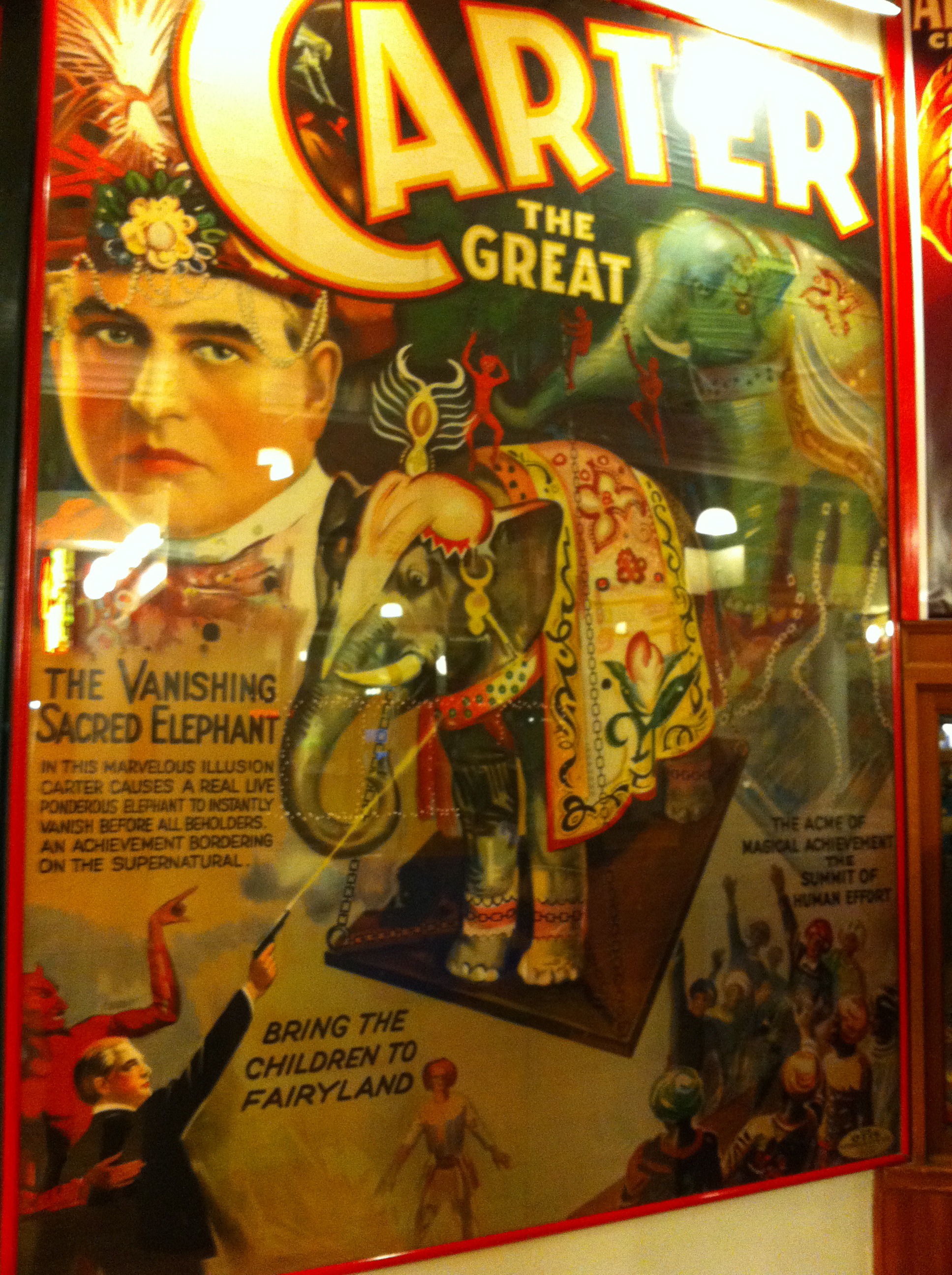
She warmed to the topic over our breakfast of rice crispies and room temperature eggs. “It’s magic that there’s not enough of,” she said and then gestured to the room around us. “Take whoever designed this place.” I looked around at the off-white room, saw the bland color, the plastic trim, the perfunctory decoration, complete with obligatory fake oil painting landscapes and little plastic flowers. “This place was designed by an architect.” She said the word with a disapproving shake of her head. “We need less architects, and more magicians.”
Instead of debating it any further, we ate our eggs and drank our watery grapefruit juice and moved on to other activities. But the division she suggested—and her judgment on the room where we ate—stuck with me for the rest of the day.

There’s something to that idea, I thought. But she has it exactly backwards.


She’s right in the sense that many, many things in our world are needlessly, almost willfully, functional alone, when there’s no compelling reason for them to be so. The room we sat in was oppressively dreary, oppressively utilitarian, with nothing but the most casual thought given to the look of the space itself. It doesn’t cost any more to build a beautiful, functional room than it does to build a dreary functional one. Similarly, a plate of eggs cost the same regardless of what temperature they’ve been served at, or whether or not they’ve been seasoned with a little bit of salt, onions, some paprika, and a hint of vinegar. I would indeed consider the eggs that my sweetheart is capable of making a kind of magic, especially when compared to what we shoveled in our mouths that morning.

But there are two things that significantly undercut the argument for magic, and the magician, or at least the magic metaphor. First, as you might have heard, magic is all about illusion, is in fact only presentation. A good magician is literally a presenter, a salesman, his creation content-less save the verve of his presentation alone. It’s a bit like non-representational painting in a way—when the subject of painting has been removed completely, the attributes of art themselves are the content, and these attributes themselves must be compelling for the painting to be successful by itself.

Secondly, the illusion of magic is, like any other technical skill, eminently teachable. Want to learn sleight-of-hand? It’ll take reading a page of directions, practicing in front of a mirror for a few hours, and more time to hone your patter. Of course, there’s aptitudes involved, and even physical limitations—dexterity, verbal skill, etc, and some magicians with only rudimentary technical skills will at the very beginning have a more convincing act than other magicians with a wider range of technical skill. But the basic skills themselves are accessible to almost anyone.

Compare this to the architect who designed the room in which we ate that dreary breakfast. Though the man may have lacked a certain surface charm or presentation to his work, his task was ultimately much more difficult than the task of virtually any fine artist. Specifically, his work had to be functional, in specific, demonstrable ways. The template that the room was most likely adapted from had to literally hold up the weight of the ceiling, had to protect the inhabitants from fire and earthquake and flooding, had to be open and spacious, had to freely circulate air, had to be easily cleanable, had to be built primarily with affordable materials and readily available modular parts.

What visual artists are ever tasked with so many requirements? Only designers of various stripes will ever have to deal with so many potentially competing requirements for their work, and certainly they will never have to deal with such heavy consequences to failure. An incompetently designed poster is unreadable, doesn’t impart information clearly, or at worst drives its potential audience away from the product it endorses. An incompetently designed building can mean discomfort or death.

In certain divisions of both North American comics and popular music there is a mistrust of the crafted, of the purposeful, a search for the authentic that manifests in a variety of ways. A comic might tell us of its authenticity by gritty subject matter that challenges some kind of conventions or taste, or by an appeal to truthfulness, or actuality (most common in autobiographical comics or even semi-memoir). Or it might manifest itself in a visual crudity, which is its own kind of claim to the authentic. Even more common is the appeal that reaches beyond the art itself, into the biography of the artist.

There is, in short, an overabundance of preciousness in much of the arts world. I can’t say that this is a recent trend, or even what may have caused it—but I can point to the anonymous nature of much of the great art of previous centuries, and the cult of celebrity that has sprung up to embrace the artist in recent history. Regardless of the cause, there’s no doubt in my mind that preciousness actively works against the ruthlessness necessary to create art as an architect—to create with a high level of function and intention. In my time teaching songwriting, it was one of my chief pieces of advice to novices—if you really want to improve, write about something you don’t care about at all. It’s harder to be ruthless, to acknowledge when something just isn’t functioning the way it was intended, when its something you feel strongly about emotionally. The same is just as true for a cartoonist—self-expression is a fine goal if a comic is literally intended only for one’s self, but the moment it has an audience other than the creator of the work, the function has radically changed.

On the other side of this divide lies the ultimate expression of the architect’s art alone, no magic and only function—pornography, romance novels, the action movie. Stripped of any artistry, or magic, these categories exist with clear functions, clear outcomes in mind. Did her heart race? Did he come? My grandmother would possibly find the comparison between her dining room and Pool Studs 4 less than useful, but for me the metaphor holds, and brings the argument back to her side of the divide. How much more interesting would a piece of pornography be if it were carried out with the artistry, with the presentation and verve, of a Melville or a Pynchon? What would a romance novel look like that violated that strict, stultifying formula, that dared interject a kind of artistry into the romantic recipe? What would an action movie look like that had all of the skill of its competitors, but had equal parts message and purpose, and even guts?
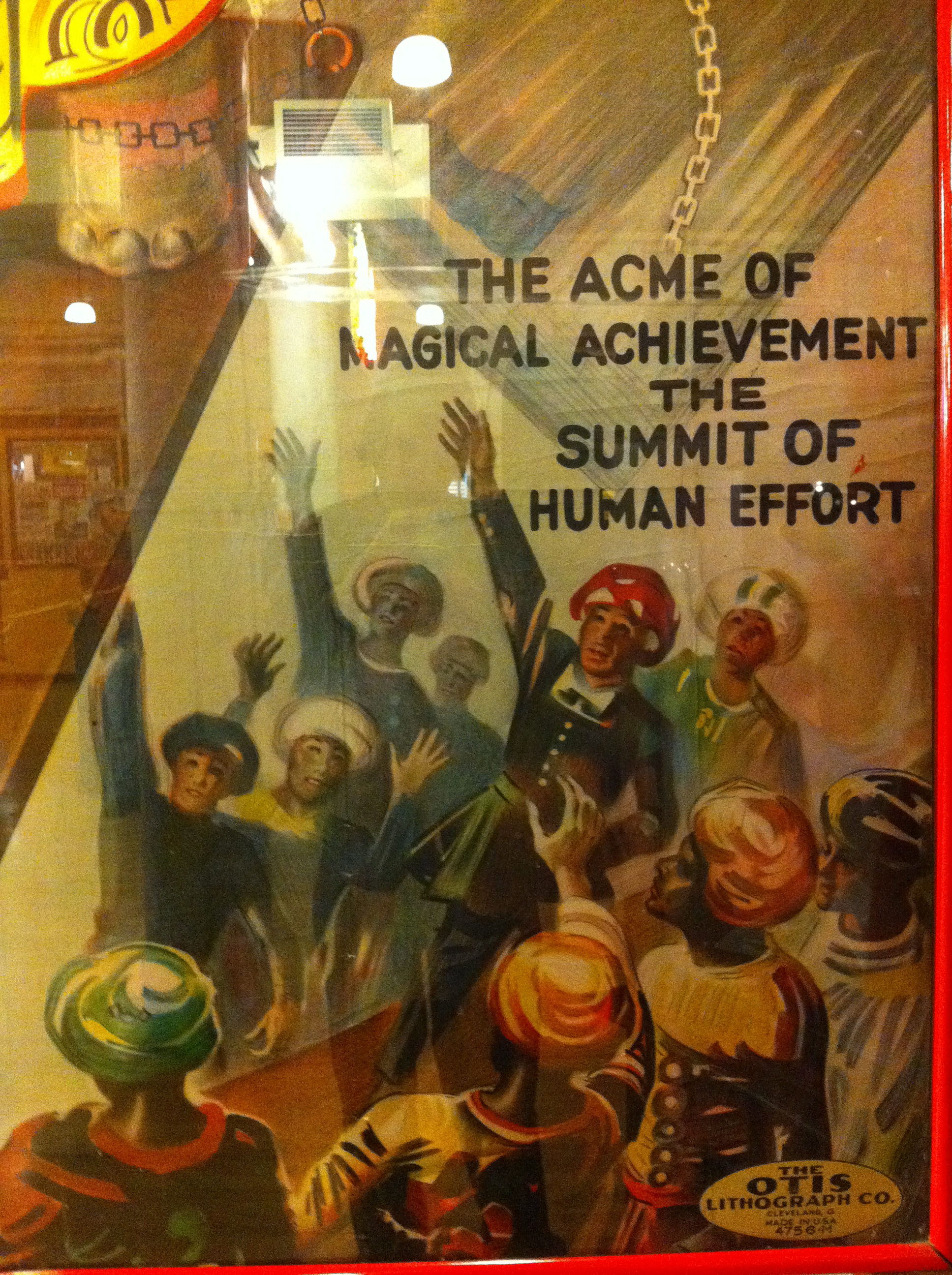
I recently re-watched Bridge on the River Kwai, David Lean’s 1957 Hollywood classic, and while it’s far from a perfect movie, it does an incredible job balancing these seemingly competing objectives. Here is a movie that performs its functions very well—it causes the heart to race, it builds tension and expectation over a tremendous amount of time and satisfies those expectations in surprising ways, and it does all of this while managing to say something larger in a meaningful and unique way, even indicting the audience’s expectations by violating them. Even more effective than Kwai are virtually any Kurosawa movie from the 1950’s, all of which were the Japanese equivalent of blockbuster genre movies, popular entertainments, that manage to each say something unique and important within that framework.

As we discuss the marginalized status of comics in contemporary culture, and the increasingly fragmented nature of the music and film industries, it’s worth thinking about this divide, and why and how it might be bridged. In the case of comics, the split is self-evident—genre comics that attempt something measurable, racing the pulse or inciting a sense of wonder, and incompetently pursue these goals without any spark of artistry or originality—or comics in which the spark is the point itself, yet often lack a functional, craft-centric grounding.

And maybe this is an argument for art makers versus art consumers—to be willing to be less precious, more ruthless with yourself and your work, or conversely, to be willing to suspend that ruthlessness at key times, letting intuition guide certain decisions.

For my taste, both as consumer and creator, I prefer work that is capable of straddling that divide, that is well-crafted, intentional, and simultaneously has that streak of verve and originality that comes across as magic. Planning, laying the groundwork, but willing to detour, to deviate when some impulse hits us, or something new seems on the horizon. Why shouldn’t we expect a little architecture with our magic?
Freedom is a Strong Seed, Planted in a Great Need

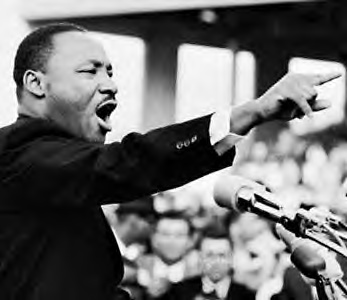
1963 was an eventful year for the Civil Rights Movement: MLK wrote the Letter from Birmingham Jail in April, in the city that erupted in riots a few weeks later following the integration of the University of Alabama. Medgar Evers’ murder occurred in June, the same month President Kennedy delivered a televised speech calling for civil rights reform. King delivered the I Have a Dream speech during the March on Washington in August. And in September, Birmingham erupted in riots again after the deaths of four young girls at the Sixteenth Street Baptist Church.

It’s also the year the state of Maryland passed a bill prohibiting discrimination in public services. Living in Maryland in 2012, in the most affluent predominantly African-American county in the United States, it’s difficult to imagine that less than a decade before I was born, African-Americans in this very county, then much more homogeneously white, were unable to get a haircut at the downtown barbershop or eat at roadside restaurants.

Maryland’s bill wasn’t all that different from other similar ones – except for the involvement of the United States Office of Special Protocol Services, a division of the State Department charged with solving the problems faced by non-white diplomats as a result of systematic race discrimination in the US. The Office got involved in something that on the surface looked like an internal State of Maryland matter because foreign diplomats, particularly African diplomats, driving US Highway 40 between the United Nations in New York and their embassies in DC or the US Federal Government faced discrimination which violated their legitimate expectations as diplomats and generated terrible press in their home countries. By 1963, the State Department saw race discrimination as a threat to their global diplomatic agenda and a liability in positioning American-style democracy as the moral counterweight to Soviet communism.

The Soviets viewed it as an American weakness as well. State radio in the USSR devoted extensive propaganda output to the tumult of the Civil Rights movement. During the Birmingham riots, the USIA reported that the Soviets dedicated 1/5 of their total broadcast time to coverage of events in Alabama. They also continued to use race against the US in narrative propaganda; 1963 marked Soyuzmultfilm’s release of the animated Mister Twister, based on the much-loved poem by Samuel Marshak that tells the story of an American business man who is overwhelmed, angered, and eventually transformed by his experience in a racially integrated society during a visit to Leningrad.

Marshak was an exceptional translator of English-language literature and wrote children’s books in part because they allowed him to avoid the ideological demands and problematic realities of Soviet realpolitik in favor of less ambiguous moral terrain. For reasons I don’t know, Marshak was designated an Enemy of the State during his tenure as head of the Children’s Section of the State Publishing house; apocrypha has it that he escaped the purges only because Stalin himself was so fond of Mister Twister’s story. Doris Lessing wrote about Marshak’s dilemma in her autobiography:

The nicest result of the visit to the Soviet Union was that I became a friend of Samuel Marshak, one of the prominent Soviet writers, a winner of the Stalin Prize for Literature. He was a poet, translated Burns and Shakespeare, wrote children’s stories. At that time writers unable to write what they wanted, because of the persecutions of serious literature, chose to do translating work: this is why the standard of Russian translation was so high…I do not see how any writer could have a worse fate than Samuel Marshak’s. To be a peasant boy with genius – or even talent – at that time was to be seen as the inheritor of a glorious future. To be Gorky’s protégé was to be accepted by the most famous writer in Russia. Gorky steadily fought Lenin over the inhumanity of his policies, procuring the release of hundreds of political prisoners, and then he fought Stalin too: it would have been easy for Marshak to feel allied with the good side of the Revolution, because it was then still possible to think there was one. Slowly he was absorbed into the structure of oppression, but hardly knew it was happening. By the time he knew he was trapped, it was too late. Easy to say, for people who have never lived with the experience of political terror, ‘He should have opted out.” How? He would have been sent to die in the Gulag, like dozens of other writers. ‘I never wrote what I should have written,’ he said.

Although the film of Mister Twister was made in 1963, the poem was written thirty years earlier, in 1933. That same year, one of the earliest uses of moralistic anti-racist ideology in anti-imperialist propaganda, “Black and White”, gave an antebellum flavor to its documentation of Jim Crow racism. The film was directed by perhaps the most important Soviet animator, Ivan Ivanov-Vano, who collaborated with Shostakovich and Stravinsky and who taught at the Gerasimov Institute of Cinematography from 1939 until his death in 1987.

Ivanov-Vano’s film trafficks in the iconography of racism, the caricatures of Picaninny and Brute, and yet manages to convey great pathos, much more than is generally associated with caricatured representations. There is no comedy here; only the violence of those representations, removed from the historical context that created them and stripped bare of all ambivalence. For Western viewers today, the insistence of the representation’s moral starkness undermines their conventional signification and allows the aesthetic merits of the film to come to the foreground. For Soviet viewers in the 1930s, that moral starkness played directly into the hands of a good/evil propagandistic ideology that obscured as much as it revealed. Although the ending of Black and White is more didactically Communist than Mister Twister, that doubling suggests that the same tension between realpolitik and the morality of Marxist ideology likely informed the creation of this work. Perhaps it inspired Marshak’s poem.

Soviet propaganda targeting American racism was not limited to animation — there were live action movies such as the 1936 film The Circus, about an interracial couple fleeing prejudice, and a great deal of non-fiction and journalistic propaganda as well. The linking of racism with imperialism was immensely effective among non-white groups worldwide, particularly in African nations. At least as early as the Truman administration, US leaders saw policy positions in support of civil rights as a necessary component of efforts to contain the spread of communism. In 1962, the United States Information Agency hired the documentarian George Stevens, Jr. to head its motion picture operations. Stevens hired filmmakers such as Charles Guggenheim, Leo Seltzer and James Blue to create films for the USIA, intended to counterbalance the skilled and artistically powerful Soviet propaganda machine. In 1963-4, Blue directed a behind-the-scenes documentary about the March on Washington, capturing the groundswell of enthusiasm and conviction that animated the event.

http://www.youtube.com/watch?v=jidABYf_nLU

The film, which was unavailable for viewing in the United States until 1990, unsurprisingly generated high-level controversy at the time of its release. Although intended to depict the Civil Rights movement as an exemplar of the positive functioning of democracy and the power of the first amendment rights to speech and assembly, diplomats within the USIA worried that it showed too much of the fomenting dissent and actually supported the Communists’ message. A number of Congresspeople objected to the romanticization of the protest (as well as to the depiction of interracial mixing). Eventually an introduction was added to make explicit the film’s message that peaceful assembly and the right to petition the government for redress are the mechanisms by which democracy expands freedom. Although emphasizing the message in some ways diminishes the impact resulting from James Blue’s more subtle presentation and makes the film more overtly propagandistic, there is another sense in which it adds a layer to the message: the director of the USIA, Carl Rowan, who presents the introduction, was one of the first African-American officers in the US Navy and was the very first African-American to serve on the National Security Council.

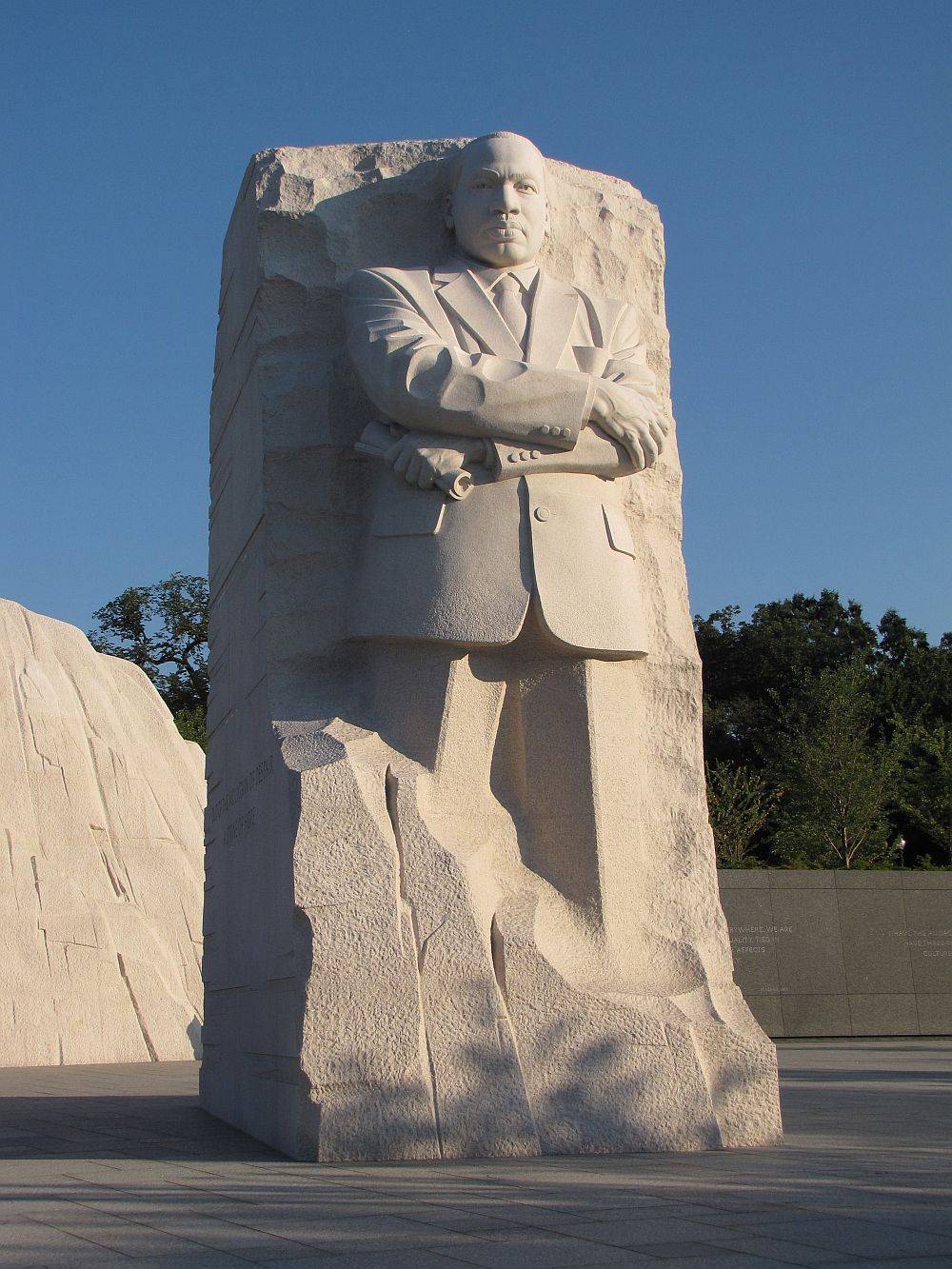
I have mixed feelings about the vaguely Socialist Realist aesthetic of the new Martin Luther King memorial downtown – colossal statues of famous men are broadly associated in my mind with oppressed people tearing those statues down. But I’m going to begin thinking of it as signifying the role that Cold War geopolitics played in bringing about at least one vitally important success of the Civil Rights era. In the same year that James Blue’s film was released to the world, the American Congress passed the Civil Rights Act. There were many people in the American government who supported that legislation because it was the right thing to do, but odds are there were others who supported it for pragmatic reasons of national interest. Thank God that the needs of our foreign policy aligned so well at that critical moment with the needs of our citizens at home.

Happy Belated Birthday, Dr King.


Democracy will not come
Today, this year
Nor ever
Through compromise and fear.

I have as much right
As the other fellow has
To stand
On my two feet
And own the land.

I tire so of hearing people say,
Let things take their course.
Tomorrow is another day.
I do not need my freedom when I’m dead.
I cannot live on tomorrow’s bread.

Freedom
Is a strong seed
Planted
In a great need.

I live here, too.
I want freedom
Just as you.

–Langston Hughes, “Democracy”

Sundown Towns

As a belated acknowledgement of Martin Luther King day, I thought I’d reprint this piece. It first appeared in (I think) 2007 in The Chicago Reader.
______________

A couple years ago the city’s One Book, One Chicago program encouraged Chicagoans to read Harper Lee’s To Kill a Mockingbird. Those that did encountered a familiar portrait of American racism, which, as we all know, was a problem mostly in the south, mostly in the past, and mostly perpetrated by poor, uneducated white folk. The novel’s hero, Atticus Finch, is a respected white attorney in a small Georgia town who defends a black man falsely accused of rape. At the end we’re assured that most people are pretty nice once you get to know them, and left with a vague sense that the world will keep on getting more and more enlightened as long as high school students continue to read high-minded novels like this one.

As a corrective to this lyrical vision of race relations, the city should consider endorsing Sundown Towns, a new study by James Loewen, author of the best-selling Lies My Teacher Told Me, that methodically upends many of white America’s preconceived notions about race.

Sundown towns were incorporated areas that banned African-Americans from living in them, or even from staying overnight. Often, a sundown town would hang a sign or signs at the city limits declaring, “Nigger, Don’t Let the Sun Go Down on You in ________.” African-Americans who were on the city streets after dark might be harassed, beaten, or worse. Even black people on public transportation weren’t safe: whites in Pana, Illinois, are reported to have fired gunshots at African-American Pullman porters as trains passed through town.

Sundown towns aren’t exactly unknown in popular culture; William Burroughs, Maya Angelou, and Tennessee Williams all mention them. But Loewen’s book is the first systematic exploration of the phenomenon, and while the existence of such towns isn’t a shock, virtually everything else he’s found out might be. Sundown towns, he discovered, were located mostly in the west and midwest, not the south. They came into being relatively recently, mostly between 1890 and 1930, but some as late as the 1950s–and Loewen was able to confirm the existence of towns that threatened African-Americans after dark as recently as 2002. Anna, Illinois, population 5,136, is likely still a sundown town, says Loewen. It reported just 89 African-Americans in the 2000 census, most of them probably residents of the state mental hospital. Elwood, Indiana, which has zero African-American residents, an annual Klan parade, and a vicious reputation, almost surely is.

The biggest revelation of Loewen’s book, however, is not the location or continued existence of sundown towns, but their number. When he started his research he thought he would find about 50 towns in the U.S. with a history of sundown practices. But after conducting on-site interviews, he was able to confirm the existence of 145 in Illinois alone. Based on census data and statistical analysis (all carefully detailed in the book) Loewen believes that by 1970, when such towns were most common, there were more than 470 in Illinois. This means that a majority of towns in Illinois may well have been sundown towns. Statistics like these eventually led Loewen to the broader conclusion that when a state, a suburb, or a neighborhood is all white, then it is probably all white on purpose.

At first, this may seem ludicrous. When Loewen asked white interview subjects about small, all-white towns nearby, they would often suggest that African-Americans didn’t live in them because nobody in their right mind would want to live in them. Moreover, the association of African-Americans with cities is so strong that black people take it for granted as well; when I saw Aaron McGruder speak a couple years ago he scoffed at the idea of a black person living in the WB’s Smallville.

Yet Loewen shows conclusively that the historic concentration of African-Americans in cities was a matter of discrimination, not choice. Before 1890 blacks were not particularly urbanized. Shortly thereafter, however, during a period historians refer to as the nadir of American race relations, racism in the United States became much more vicious. The Klan made a triumphant nationwide resurgence; segregation and disenfranchisement solidified in the south. In the north blacks and other minorities, like the Chinese, were forced out of rural areas and small towns. The result was a phenomenon Loewen calls the Great Retreat, in which African-Americans fled to the cities and wound up concentrated in ghettos. This process was well under way when the better-known Great Migration of the teens and 20s spurred the unprecedented resettlement of blacks from the south to the north.

Sundown towns were generally restricted to the north and west, but sundown suburbs were a well-documented nationwide phenomenon. Redlining, steering, and restrictive covenants were standard in communities like the Levittowns of the 50s. Though they’re now less prevalent, not to mention illegal, such practices are still employed surreptitiously; Loewen reports incidents of steering in suburban Harrisburg, Pennsylvania, as recent as 2002. Violence against black home owners and their children has also been persistent, probably peaking during the 1980s.

The relative dearth of blacks in the suburbs–especially the wealthier ones–is often attributed to class. Statistically, blacks are poorer than whites. But Loewen argues that their exclusion from the suburbs is one of the causes of their relative poverty, not one of the effects. Until 1968 the Federal Housing Authority refused to underwrite homes built in communities that included African-Americans. Thus, African-Americans were excluded after World War II from what Loewen credits as “Americans’ surest route to wealth accumulation, federally subsidized home ownership.”

Black poverty isn’t usually blamed on the policies of white suburban home owners; instead, professors and pundits point to the excesses of the welfare system, or the failures of the welfare system, or the enduring impact of slavery on the black family, or what have you. All these explanations focus on how African-Americans live. Loewen’s book suggests, however, that if you want to understand racism in this society you must look at how, and especially where, African-Americans do not live. It isn’t what black people do but what whites do to exclude them that results in inequality. Whites won’t warehouse kids in crappy schools if the kids being warehoused are their own, they don’t want to fund massive police crackdowns if they themselves are likely to be caught in the dragnet, they don’t want to ignore fundamental flood preparedness if their homes are likely to be inundated.

Loewen does discuss some ways African-Americans can change discriminatory policies–by buying homes in mostly white communities, for example, or by supporting legislation to give federal fair-housing policies some teeth. Overall, though, Sundown Towns is not especially empowering: in Loewen’s narrative African-Americans tend to figure as victims rather than heroes.

This is largely a function of his topic. In many ways the history of racism in the north is less hopeful than that of the south. Twice the south has been the site of utopian social experiments, during Reconstruction and the civil rights era. Neither movement was wholly successful, but during both periods African-Americans were able to make important social changes because of their connections to white society. After the Civil War, African-American links with white Republicans, both north and south, gave them a voice in southern government. The Montgomery Bus Boycott was effective because African-American dollars were important to white business owners.

In the north, however, connections between black and white communities were, as Loewen reports, deliberately severed. It’s no accident that Martin Luther King Jr. encountered a harsher reception in Chicago than in Atlanta. Nor is it an accident that black leaders in the north tended to be isolationist. James Baldwin’s famous question, “Do I really want to be integrated into a burning house?,” could only have been asked by a northerner.

Loewen points out that whites who live in sundown towns see no African-Americans and thus tend to believe they have no race problems. Similarly, the north itself, where whites and blacks have historically been more separate, has long been able to convince itself that racism is somebody else’s sin. But 50 years after the Brown decision, separate is still not equal. Illinois was the land of Lincoln, it was a supporter of the Union, and it’s now the home of the nation’s only African-American senator. But it’s also heir to a brutal and ongoing tradition of racism and segregation. All our problems wouldn’t be solved if every person in Chicago read this book, of course. But it wouldn’t be a bad place to start.

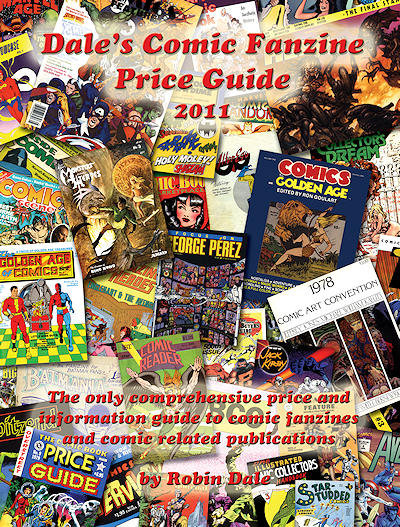
“Dale’s Comic Fanzine Price Guide 2011” Review: It’s Better Than Nothing

After years of false starts and publishing delays, “Dale’s Comic Fanzine Price Guide 2011” was finally published late last year.

I’ve been a comics fanzine aficionado and collector since the early 1970s, and have done quite a bit of research on the subject. I’ve even published a number of complete or partial indexes of key fanzine titles, such as “Star-Studded Comics,” “The Comic Reader,” and “The Buyer’s Guide for Comic Fandom” (now “Comics Buyer’s Guide). And while the TBG index only focused on the first 400 issues, it was a highly comprehensive, three-part, cross-referenced index that included 59 cover scans.

So, more than most, I have a pretty good idea just how difficult an undertaking “Dale’s Comic Fanzine Price Guide 2011” probably was. It speaks volumes that this is the first price guide in the 50-year history of modern-day comics fandom to revolve entirely around comics fanzines. Unlike professional publishers, comics fanzine publishers had highly erratic publishing schedules, frequently changed the names of their publications, sometimes had incredibly low print runs, and sometimes didn’t bother to provide even basic publishing information on the cover or inside of their publications.

That said, overall I was disappointed with this price guide for the simple fact that there is far too much information missing.

Yes, comics-related fanzines is a very tough collecting niche to create a price guide for. Yes, Dale had to make many decisions about what should and should not be included. But even giving him broad discretionary latitude, his price guide seems to have far too many glaring and arbitrary omissions.

For example, when I first started flipping through the book, I quickly noticed about a dozen or so 1970s comics fanzines I had personally contributed artwork to, or was familiar with because they were published by friends, were not listed. Those omissions prompted me to sit down and do a much more detailed cross-check between the “Dale’s Comic Fanzine Price Guide 2011,” and the comics fanzine index data I’ve been gathering on my own since the 1980s. To my surprise, there were literally hundreds of comics fanzines missing from the book – many of which were readily available to contemporary comics fans and well-publicized when they were originally published, and many of which I have in my personal collection.

Here’s just a random sampling of some of the fanzines that one would think should be in such an index, but were not: “Action Illustrated,” “Amazing Science Fantasy,” “APA-Five,” “Armageddon,” “Art & Story,” “Assorted Superlatives,” “Bumbazine,” “Captain George’s Penny Dreadful,” “Collector’s Corner,” “Comet,” “Comic Block,” “Comicaze,” “The Comicist,” “Comic Collector,” “Comic Courier,” “Comicdom,” “Comic Forum,” “Comic Hero,” “Comics Fandom Examiner” (Comics F/X), “Comic Lore,” “Comic Times” (the original version), “Comic Vendor,” Endeavor,” “Epitaph,” “Fandom Annual,” “Fandom Newsletter,” “Fantastic Fan Fiction,” “Fantasy Advertiser,” “Fantasy Fanzine,” “Fanzation,” “Fanzine Illustrated,” “(Irving) Forbush Gazette,” “Forum,” “Fulcrum,” “Funnyworld,” “FVP,” “Graphic Fantasy,” “Graphic Gallery,” “The Harvard Journal of Pictorial Fiction” (yes, this IS a fanzine), “Heroes Unlimited,” “Huh?,” “Marvel Gazette,” “Marvel Main,” “Marvel Mania” (the one that predates the later, slicker version), “Marvel Manor,” “Mask and Cape,” “Mindworks,” “Minotaur,” “Nucleus,” “Nova,” “Paragon Illustrated,” “Poor Richard’s Adzine,” “Qua Brot,” “Sensawunda,” “Spectrum,” “Spidey Fan,” “Stan’s Weekly Express,” “Tetragrammaton Fragments (the United Fanzine Organization club ‘zine regularly published since the 1970s), “Title,” “Touchstone,” “Train of Thought,” “Unpublished,” “Venture,” “What Th…?” and “Woweekazowie,”

Then there’s the seemingly arbitrary decision to list some slick fanzines/prozines such as “Anomaly,” but omit others. When the price guide’s scope is discussed in the introduction, Dale rationalizes his comics fanzine vetting process by stating that “Comics such as ‘Phase,’ ‘Star Reach,’ ‘Infinity’ and so forth are really more of an early independent or alternative comic than a fanzine.”

Really?

“Star Reach,” and unnamed fanzines like “Hot Stuf,” maybe. But “Phase” is as much a fanzine as is “Anomaly” or “Abyss” – both of which are listed in Dale’s price guide. And despite the fact that Dale says he won’t list fanzines like “Infinity,” “Infinity” is, in fact, listed on Page 98 of the guide.

Leaving out fanzines like “Phase,” “Nimbus,” etc., is not at all helpful to comics fanzine collectors simply because it is these fanzines that had larger print runs and might be more readily accessible. Face it, the average fanzine collector will never see a copy of “Xero,” but will pretty likely stumble across copies of “Phase” sooner or later.

There are also many problems in Dale’s price guide with cross-referencing omissions of various fanzines. For example, “Robyn (sic) Snyder’s History of Comics” is listed through volume seven, and at the bottom of the entry, it states that it becomes “The Comics.” Yet, even though the highly informative and respected “The Comics” is still being published today, and is on at least volume 22, there is no entry for the latter version of the title.

Another example of a glaring cross-referencing problem is the listing for “Comic Buyer’s Guide.” It doesn’t directly address the fact that this publication was once “The Buyer’s Guide for Comic Fandom.” It apparently assumes that fact is something everyone buying the price guide already knows. That’s a bad assumption. It also does not address page counts and section counts of the pre-Krause issues – something that is absolutely crucial for any collector or seller to know if they want to be relatively certain they are buying a complete issue. After all, who wants to pay $100 for the 100th issue of TBG, only to find out later that it is supposed to consist of four tabloid-sized sections and 80 pages rather than one section and 24 pages? And if you think that doesn’t happen, think again. I’ve seen eBay auctions of old TBG issues where a single cover section is listed and shown, but I know through my own indexing efforts that the issues being sold actually had two or more sections.

On the plus side, “Dale’s Comic Fanzine Price Guide 2011” lists many of the key classic comics fanzines – including most of the best-known publications – so it should be useful to most collectors in that regards. As for the actual pricing in the guide, I’d say it’s like any other price guide: Some of the prices seem too high, and some seem too low. Still, it does provide a decent baseline for pricing discussions, and one that’s long overdue.

In addition, the price guide contains an added and unexpected bonus: A price guide section for comics-related hardcovers, softcovers and trades. However, like the comics fanzine section that precedes it, what’s included and omitted in the book price guide section is a hit-or-miss proposition.

All-in-all, despite its shortcomings, I’d have to say “Dale’s Comic Fanzine Price Guide 2011” is a must for any comics fanzine collector or dealer – for the simple reason that a “snapshot” view of comics fanzines is better than no view at all.

Ghost World

Creators haunt their creations, more as ghosts than as intentions.

For example, in 24 there are no ghosts and no intentions. The creators are rigidly outside the action, which runs blithely away under its own power, like a watch dropped in a field. The clock counting down is the guarantor of autonomy, the uninterrupted, self-contained material of narrative. Every time Jack Bauer is given fifteen minutes to reach the drop off point, you can hear the gentle high-concept whisper of the argument from design erasing itself. Cliff-hangers, hackneyed betrayals, and feebly ironic reversals — the gears grind to assure you that the only god lubricating the machine is the absence of a god. Bauer never meets his maker, because the main thing the maker has made is his own unmaking. The ticking time bomb blows the roof firmly onto the world.

Fanny Hill’s world, on the other hand, is laced with holes:

A spirit of curiosity, far from sudden, since I do not know when I was without it, prompted me, without any particular suspicion, or other drift or view, to see what they were, and examine their persons and behaviour. The partition of our rooms was one of those moveable ones that, when taken down, serv’d occasionally to lay them into one, for the conveniency of a large company; and now, my nicest search could not shew me the shadow of a peep-hole, a circumstance which probably had not escap’d the review of the parties on the other side, whom much it stood upon not to be deceived in it; but at length I observed a paper patch of the same colour as the wainscot, which I took to conceal some flaw: but then it was so high, that I was obliged to stand upon a chair to reach it, which I did as softly as possibly, and, with a point of a bodkin, soon pierc’d it. And now, applying my eye close, I commanded the room perfectly, and could see my two young sparks romping and pulling one another about, entirely, to my imagination, in frolic and innocent play.

Who is observing the room to see whom in innocent play? What spirit (of curiosity?) possesses Fanny to look in each convenient flaw? Fanny is writing her epistles to a nameless madam, but there is always an echo in her voice; a sign that her person and behavior are observed and offered through some shadowed peep-hole. The imagined frolic is commanded, and the command is itself part of the pleasure.

D.H. Lawrence’s short story “The Border Line” is also porous. The outside seeps through the world’s borders.

The afternoon grew colder and colder. Philip shivered in bed under the great bolster.

“But it’s a murderous cold! It’s murdering me!” he said.

She did not mind it. She sat abstracted, remote from him, her spirit going out into the frozen evening. A very powerful flow seemed to envelop her in another reality. It was Alan calling to her, holding her. And the hold seemed to grow stronger every hour.

“The Border Line” is a story of a love triangle; Katherine Farquhar married Alan, “unyielding and haughty,” and then, after he died, she married Philip, who “caressed her senses and soothed her.” But Alan, manly and unyielding, is so manly and unyielding that even death doesn’t make him yield, and he comes back for Katherine, like a command or a vow that can’t be unspoken. Katherine is only too happy to become his again; Philip is a puny, soft thing, while Alan from beyond the grave is a dream of potency. The world cracks open, and into it Lawrence inserts his rigid avatar, flushed with power. but bitter cold.

Philip lifted feeble hands, and put them round Katherine’s neck, moaning faintly. Silent, bareheaded, Alan came over to the bed and loosened the sick man’s hands from his wife’s neck, and put them down on the sick man’s own breast.

Philip unfurled his lips and showed his teeth in a ghastly grin of death….But Alan drew her away, drew her to the other bed, in the silent passion of a husband come back from a very long journey.

Philip is dead. Katherine is drawn away into Alan’s arms,embraced by her dead lover and, symbolically, surely dead as well. Lawrence’s journey and story are done, and at the end of them is power and death, or power as death. Alan’s mastery, descending from on high, is so total that nothing can survive it.

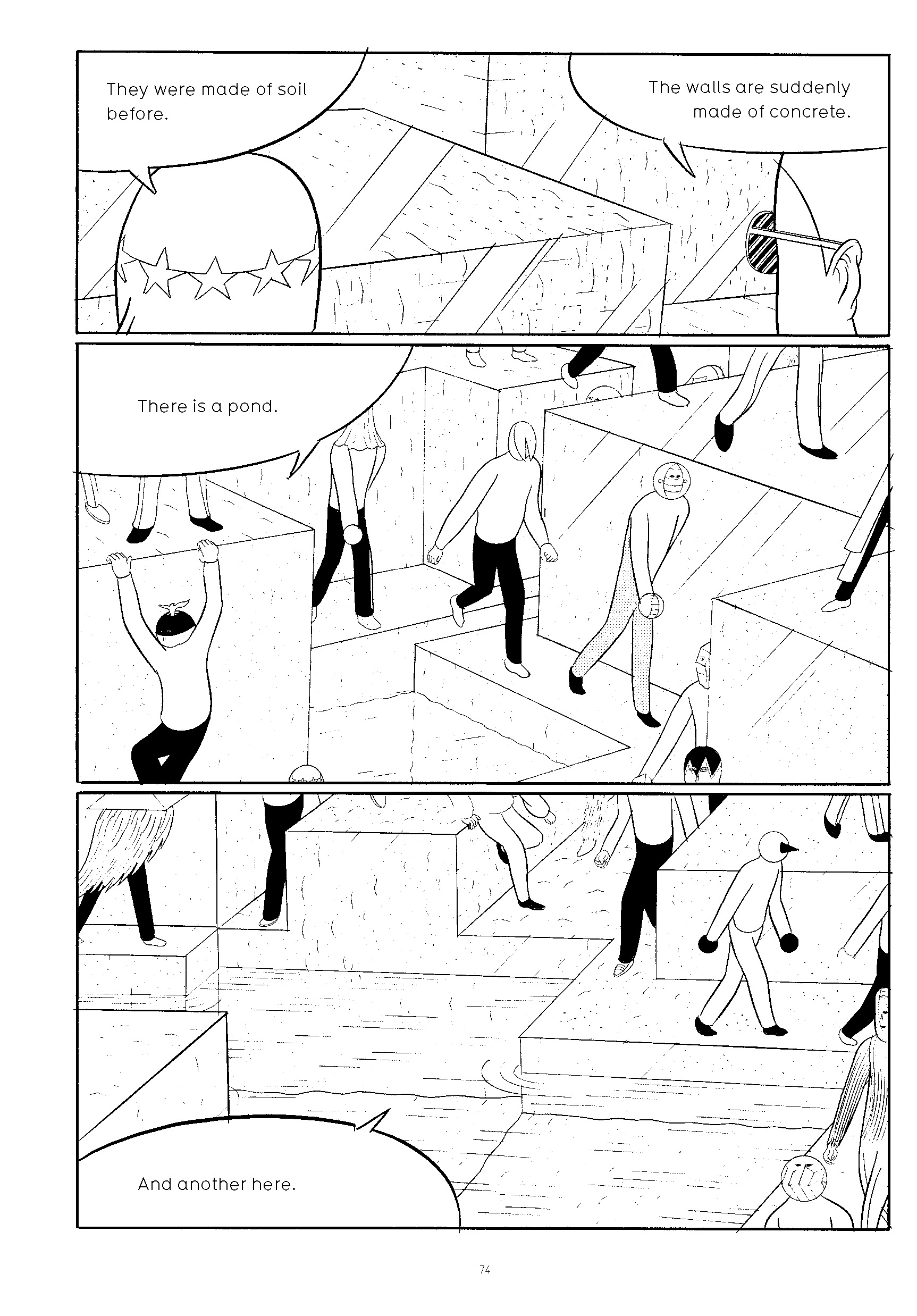
Yuichi Yokoyama’s Garden is not so much open to mastery as a mastery of openness. Inexplicably bizarre-looking characters wander through a seemingly endless landscape littered with the detritus of an ambiguous modernity. Rivers team with office furniture; two-tone mountains rise from the landscape; cameras project everyone’s face onto walls and waterfalls. The seemingly endless stream of people utter repetitive, unanswerable questions: “Why are these things floating in the river?” “Maybe there is someone inside?” “Perhaps it’s a fake city (a dummy)?” It’s “Waiting for Godot” as a combination of Disneyland and Flatland, a geometric theme park with opaque laws. The off-kilter panel shapes combine with the off-kilter views and unusual perspectives so that you, like the characters, often don’t know where you are. Instead of the lines turning into landscapes, the unreadable landscapes resolve back into lines, the mark of Yokoyama’s bewildering hands. The characters wander between his fingers, clockwork ants scrambling through clockwork digits. He’s too big to be seen, but that unassimilable presence is everywhere. We can’t know what he means because he’s the question of meaning itself.

Utilitarian Review 1/15/12

On HU

Our featured archive post for the week is Bert Stabler on abject feminist performance art.

I and others had a conversation about Dan Clowes, knowledge, and power in Ghost World.

Caroline Small talked about high and heavy concepts in art and comics.

I talked about sound effects in Tiny Titans.

Erica Friedman discussed the Arab shounen manga Gold Ring.

We had several posts on the Girl With the Dragon Tattoo: Kinukitty; Monika Bartyzel; Eric Berlatsky.

Ben Crossland explains Islamic finance.

Sean Michael Robinson discussed Mizuki’s Onward Towards Our Noble Deaths.

Robert Stanley Martin on the history and legacy of TCJ.
 
Utilitarians Everywhere

At Splice Today I review music from saharan cellphones.

Also at Splice I argue that Rick Perry is not a strategic genius.
 
Other Links

Derik Badman on Deborah Turbeville.

The Atlantic on Linda Lovelace.

The Devil Inside makes a bunch of money.

Tim Hodler on gag cartoons and conceptual art.

Vom Marlowe talks about her contribution to the Wallace Stevens roundtable.

James Romberger interviews Sammy Harkham.

Dan Nadel on conceptual art.

Semi-Memoir and Stylization in Onward Towards Our Noble Deaths

This review originally appeared in the Comics Journal.

When I was thirteen I spent a week with my grandparents at their house in New Jersey. At the time I was interested in Japanese console role-playing games, and increasingly frustrated with how few games actually made it into English translation. In fact, I told my mild-mannered Catholic grandfather, a man who loved radios and computers and science fiction novels, I was thinking about learning Japanese. “Japanese, huh,” he said quietly, looking away from me. “Only one word I ever learned in Japanese.” He paused. “That was “surrender.””

It is doubtful that 89-year-old cartoonist Shigeru Mizuki will ever forget his war time experiences, either. At the age of 20 he was drafted into the Japanese army and stationed at Rabaul, on New Britain in Papua New Guinea, where he survived several near-collisions with death. His friends were not so fortunate. Possibly his most significant personal loss, though, is one immediately apparent from photographs of the man himself—the loss of his left arm.

Onward Towards Our Noble Deaths (Soin Gyokusai Seyo!) first appeared in 1973, and was inspired by Mizuki’s unintentional reunion with his commanding officer, which led him back to Rabaul after a 26-year absence. It is, according to Mizuki’s afterword, a book of “90 percent fact.” And for that reason, as well as its many strengths and virtues, it is a very difficult book to criticize.

OTOND is an on-the-ground perspective on the inanity and ultimate inhumanity of war, told from the viewpoint of a detachment of soldiers who occupy a portion of New Britain. The soldiers themselves are differentiated mainly by their facial shapes and the unique ways they deal with their hunger and their misery. They pick their noses, build encampments, run fruitless errands for their superior officers who berate and beat them. They dream about women and food, and attempt to satisfy both cravings through talk and pursuit of the latter, including hunting fish with grenades.

The inevitability of death hangs over everything, not just for the reader, but the soldiers as well. As Mizuki said in an interview with the Japan Times, “You feel death already when you receive the call-up papers.” In OTOND, which smartly confines its scope solely to the island on which the soldiers are stationed, the suggestion of the tenuous nature of the lives of these characters comes immediately. Their history- and honor-obsessed (and very green) commander, Lieutenant-Colonel Tadokoro, leads them to claim a bit of new territory south of their current position. When they arrive, bayonets affixed and rifles ready, to find no resistance at all, no people other than themselves, their commander bellows, “WE HAVE TAKEN THIS PLACE WITHOUT BLOODSHED!” “We took this place, he says,” one soldier says to another. “It is almost like heaven, just like you said,” says another as the sun goes down, men silhouetted among the lush palms. And overlapping that sunset, one of the sole instances of narration in the book: “Actually, we were not that far from paradise…”

“Not that far from paradise…”

But death doesn’t need a machine gun and an American flag—death is all around these men. The first to go is crushed by a tree he was carrying, killed in his weakened condition by dengue fever, no doubt made worse by his exhaustion and malnutrition. Another is felled, with no witnesses, by an alligator, another, horrifically, by a fish that he has in his hunger stuffed greedily into his mouth.

And then the enemy arrives.

The early fighting is scatter-shot, furtive, small pockets of men shooting at great distances and then retreating, picking off a few here, a few there. The first truly significant encounter with the enemy is not face-to-face, but with their superior foodstuffs—after driving off a presumably small contingent of American soldiers (presumably, because we as reader haven’t seen them at all at this point), the soldiers find a hut full of provisions, including canned goods and chocolate. “Those bastards are living like kings fighting this war,” says one of the soldiers. “Now that I’ve eaten all of this food I can die a happy man,” says another.

When the fighting finally comes, it comes in bursts of violent punctuation, at a distance, the violence gruesome, inevitable and also somehow impersonal. “Maybe during the Russo-Japanese War you had a chance to ‘see’ the enemy forces,” Mizuki told the Japan Times, “but in the Pacific War, the moment you met the enemy you knew whether you were dead or alive. It was that fast.”

The conflict escalates. Engaging a force superior in numbers and equipment, the specter of annihilation that has so far hovered over the soldiers finally descends. Against the recommendations of his advisers, who plea for strategic retreat, Lieutenant-Colonel Tadokoro orders his men in a suicide charge against the enemy. The men spend their last nights drinking and singing. In the morning Tadokoro instructs his men to turn “towards our beloved homeland and bow in farewell.” “To the RIGHT!” he bellows to the bewildered men. “RIGHT!” They bow, affix their bayonets, and plunge headlong into the enemy.

But not all men are so eager to die as their commander, and some survive the horrific battle. The survivors make their way back to their division base, only to find that their deaths have already been reported to headquarters. The only possible reaction to their cowardice in surviving, they are told, is another charge. Coerced from a new arrival from division HQ, beaten down and demoralized, the eighty-odd remaining men raise their voices to sing and charge the enemy in one last pointless push. The last to die is Maruyama, who earlier we have seen illustrating playing cards for his commanding officers, offering to draw their portraits when they all return home. Now his face is grotesquely distorted, maggots in the fresh hole in his face, a song still on his swollen, bleeding lips. He stands, laughing, among the dead, facing an American tank. His abdomen bursts from artillery fire, and he falls, facing us in closeup. He is the last to die, this artist’s surrogate, the sole character with any interiority, whose thoughts we hear at the moment of death.

His body joins the bodies of his friends, now all texture and value, rendered how one might draw a mass of palm tree logs, felled and scattered. As our view gets closer, the piles of bodies turn to stacks of bone, and, finally, crushed remnants, barely recognizable save a few stray bits; a femur, a portion of a skull.

The decision to stage the book solely on the island neatly side-steps details and potential arguments about cause for the conflict and instead forces the reader to address the situation from the situation of these conscripts—men without hope, trapped in a absurd, grotesque situation in which they have few choices, no individual agency to act.

I said earlier that it’s difficult to criticize a work like this. This difficulty is not just in its subject matter, but also in its status as semi-memoir, a category that allows a work to gain significant power from the story of its creator. Regardless of how someone might feel about OTOND, there’s no doubt that it’s enriched by its proximity to Mizuki’s life story, which is truly remarkable. Mizuki is one of the most popular cartoonists in the world, having with his studio created thousands of pages of comics, and yet he did all of this after having lost his left arm in an air raid. He debuted at age 33, ten years later. His biography is inextricably bound to his war comics. When I reacted emotionally at the conclusion of the book, it was not just for the senselessness of the conflict, nor for the loss of Maruyama, who like most of the other soldiers in the book is very loosely characterized; it’s also for the connection of this character to the man who created him, mulling over all of the complex and contradictory reasons that Mizuki might send his stand-in to a death that he himself escaped.

But this connection is also problematic. Earlier in the book, when a character is killed attempting to eat a large fish alive, I found the sequence, and the explanation for the death, grotesque and unbelievable. But my reaction was quickly tempered by the thought: “This is a sort-of-memoir, right? He wouldn’t add something like that in unless it was true, would he?” And ultimately I have no way of knowing whether people have really asphyxiated from attempting to eat large live fish—but the reader’s likelihood of believing it is much greater because of that semi-memoir status. It’s that “semi” that’s so tricky.

“An unintentional peek inside the process—a paste-up Mizuki head atop a photo-referenced body.”

The visual style of the artwork can also be a stumbling block. The dissonance between the crude but communicative figures and the naturalistic, presumably assistant-drawn and photo-referenced backgrounds can be jarring at first, but soon works fairly well, at least for this reader. What’s problematic, though, is the hand-off—when characters suddenly leap modes, bouncy and expressive one moment, and photo-rendered and flat the next. This isn’t just a visual failing—it’s an opportunity lost. There were moments on my first read-through when I thought these translations of style would prove to be thematic—for instance, maybe the enemy would be rendered naturalistically, in the mode of the backgrounds and the hardware, personality-less, cold, and remote. But then the enemy would appear rendered in Mizuki’s style. Perhaps only the dead could have been rendered in this mode—certainly the transition into death at the end of the book is accompanied by this visual transition—but the power of this potential coherent visual statement is diluted by its use elsewhere. Ultimately I came to the conclusion that the decision to render some panels, and even only certain figures in panels, in this mode was most likely a pragmatic rather than artistic one; either assistants are rendering those figures or Mizuki himself is using photo reference. Either way, it is a major fault of a book that is otherwise very smart and deliberate in its decision-making.

Drawn and Quarterly’s adaptation has problems of its own, not the least of which is the unsympathetic and overly primitive lettering (“font design” is credited to Kevin Huizenga, but no one is credited with the lettering itself, perhaps understandably). Every sound effect in the book is rendered in the same font, which at its largest display sizes looks crude, wobbly and distractingly thick. The translation by Jocelyne Allen is readable, but has its own problems, including anachronism (the word “meh” out of the mouth of a Japanese soldier in 1943?), lack of clarity (a soldier is asked to “draw some cards” for his commanders, without any clarity as to what type of “drawing” might be indicated), and even outright error (the commander’s shifting rank). The translation is especially awkward in the area of the song lyrics that appear at numerous parts of the story.

This might seem like picking at nits, but these aren’t insignificant issues, considering this is in all likelihood the only English-language release this book will ever have. And to my mind, it is a compelling work by a major cartoonist who, like so many of his contemporaries, is woefully underrepresented in English. As for the visual inconsistencies, some would say that’s the price to be paid for volume production, the manga equivalent of television’s pragmatic cinematography, or indifferent musical scoring. Maybe it’s enough, after all, that this story is told, and perhaps it’s petty of people like me to pick at the details.

As for Mizuki himself, he’s long since moved on, his drawing time occupied primarily by manga about y?kai, for which he is widely known. But the past has a way of drawing you back. In 2003 he returned to Rabaul, where he had been held prisoner in the latter days of the war, where, after almost 60 years, he visited the islanders he had befriended during the war, the people that treated him with a humanity so strikingly absent from his commanders.

“We were […] creatures lower than a horse,” Mizuki writes in the afterword. “I wonder if surviving the suicide charge wasn’t, rather than an act of cowardice, one final act of resistance as a human being.”