Buffy the Boyfriend Slayer

The index to the entire Joss Whedon roundtable is here.
_________
 The most jaw-dropping moment in the lastest installment of the Avengers franchise, The Age of Ultron, was not a fight sequence or a CGI robot or even the relvelation about those creeepy twins. It was the discovery that Hawkeye/Clint Barton (played by Jeremy Renner) had a family. While the other Avengers made clumsy romantic overtures toward each other—particularly The Hulk/Bruce Banner (Mark Ruffalo) and Black Widow/Natasha Romanoff (Scarlett Johansson)—Hawkeye had been presiding over an ubertraditional domestic scenario in his other secret life, complete with two towheaded kids and a pregnant wife, Laura Barton, her countenance alternately radiating farmfed good health and requisite worry (the longsuffering Linda Cardellini).
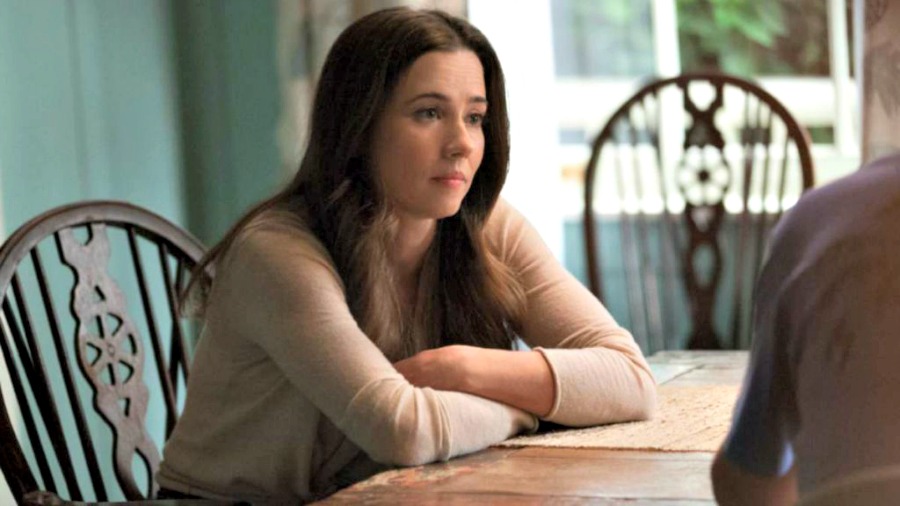
 

65c84_lindacardelliniultron900

 
Though the scenes at the Barton homestead are certainly meant to provide peaceful and occasionally comic intervals between the Avengers lengthy and elaborate battles to save the world, they feel tacked on, inauthentic. What I suspect Whedon was attempting with the deepening of Hawkeye’s character was to make him more interesting (since, let’s face it, his powers are sort of underwhelming) and to add another dimension to the franchise. It’s an age old saw that superheroes can’t have so-called normal relationships; the friction between their everyday lives and their secret identities simply do not allow for it. Getting involved with normals—usually women, since most superheroes are men—can compromise their vocation and make them vulnerable on too many fronts. Thus Hawkeye’s family had been kept secret from the Avengers, so that neither friend nor enemy could put them in danger.

This vision of radical solitude, of permanent singlehood, could be seen as progressive: the hero, fighting always for the greater good, is unencumbered by the domestic relationships and mundane activities that traditionally bind people together. Yet even in his early days, Whedon never took that stance. The Avengers, after all, are a mock family of sorts, and in that they are a natural progression from the Scooby gang of Buffy the Vampire Slayer. Though the gang coalesced around Buffy and her superpowers, by the end of the series nearly every member of the group had some sort of power, an identity he or she had to hide from the world at large (though Xander’s occasional military knowledge, a residue left in his brain after a Halloween episode where he transformed into a mercenary, was always a little suspect).

Over the seven seasons of Buffy, we watched her struggle with The Big Bad, with her powers, with her vocation, and with her family and friends. We also watched Buffy, Willow, Xander, and Giles take on and lose several romantic relationships. Though the first few seasons of the series relied on Buffy’s ill-fated romance with the vampire Angel as an analogy of adolescent relationships, the transformation of Angel into a good vampire eliminated much of the tension that fueled their attraction. Buffy’s subsequent relationships, with the buff-but-boring Riley (who turned out to be involved in a nefarious proto-military project), and then with the reluctantly reformed vampire Spike never quite reached the intensity of feeling of that first time with Angel. When the Spike attraction began it was clearly for a bad boy, and definitely had Buffy dealing with the complications of sexual attraction for someone she really didn’t like or trust. It dovetailed quite nicely with her feelings of alienation upon being brought back to life by her friends; exiled, as it turned out, from a place more like heaven than hell.

The other romances we watched play out on Buffy ranged from poignant to the stuff of romantic comedy. Willow’s high school boyfriend Oz, who conveniently turned out to be a werewolf, joined the group without too much hazing. It was rougher when she fell in love with Tara, not only because Tara was a woman but because she was a witch, and the couple’s dabbling in dark magic went from a hobby to a dangerous obsession. Xander’s only real girlfriend after years of an unrequited crush on Buffy, the former vengeance demon Anya, had a harder time assimilating into the Gang, in part because of her rather abrasive personality. And after his girlfriend, a computer teacher at Sunnydale High with gypsy roots, is killed fairly early in the series, we don’t see token adult/sometime watcher/school librarian Giles do very much socializing. In fact, when he leaves to return to his native England it feels appropriate, like he should really stop being an old guy hanging around with a bunch of college kids.

The solidification of the Scooby Gang as a proto-family reached its apotheosis with the arrival of Dawn, Buffy’s younger sister, who suddenly appeared on the show several seasons into its run. What began as a WTF moment slowly unfolded into one of the most complicated relationships on the show, as everyone became protective of Dawn but Buffy retained the resentment that older siblings generally have for younger ones. Don’t touch my stuff. Stop hanging out with my friends. GO AWAY!

Among Buffy stalwarts it’s generally agreed that the scariest episode of the show has nothing to do with the supernatural, and everything to do with domestic life. In “The Body,” Buffy comes home to find her mother, Joyce, is dead. Her death, sudden but of natural causes, cannot be undone by any spells. No magic, no books, no wishes will bring back her mother. In facing the abyss of grief, Buffy, who has already seen so much death, is forced to deal with the most mundane aspects of life: taking care of her sister, getting a job, housekeeping, and muddling through without the person who had always quietly been there for her, even when they had the usual (and unusual, since she is a Slayer) mother-daughter disagreements.

 

BTVS-season-7-buffy-the-vampire-slayer-796385_600_300

 
In the final season of Buffy, for reasons too complicated to get into, the Scooby Gang has to mobilize once again to save the world but this time they have another agenda: they must protect all of the potential slayers (the brief backstory here is that when the Slayer dies, a new one is called). Thus Buffy and the Scoobys end up running a kind of a training camp for adolescent girls, many of whom resemble Buffy was before she was annointed: bratty, selfish, mopey, whiny, and scared. It would be an overstatement to claim that in raising up her army Buffy takes on a maternal role, but she does take on the persona of mentor and leader.

And it’s this final incarnation of the Gang, which is a family bound by something stronger than blood and far less sentimental than traditional domesticity, which fights the ultimate battle of Buffy. It is much more satisfying, and progressive than anything Whedon has come up with since: an army of adolescent girls, led by an extraordinary young woman and her friends, who have gradually grown up together and discovered their own distinct powers, bestowed on them in part by fickle gods, but mastered largely through their own maturation and machinations. It is more thrilling, dangerous, and emotionally charged than any Avengers battle could ever be.
Weaponizing Everything

The index to the entire Joss Whedon roundtable is here.
_________
 

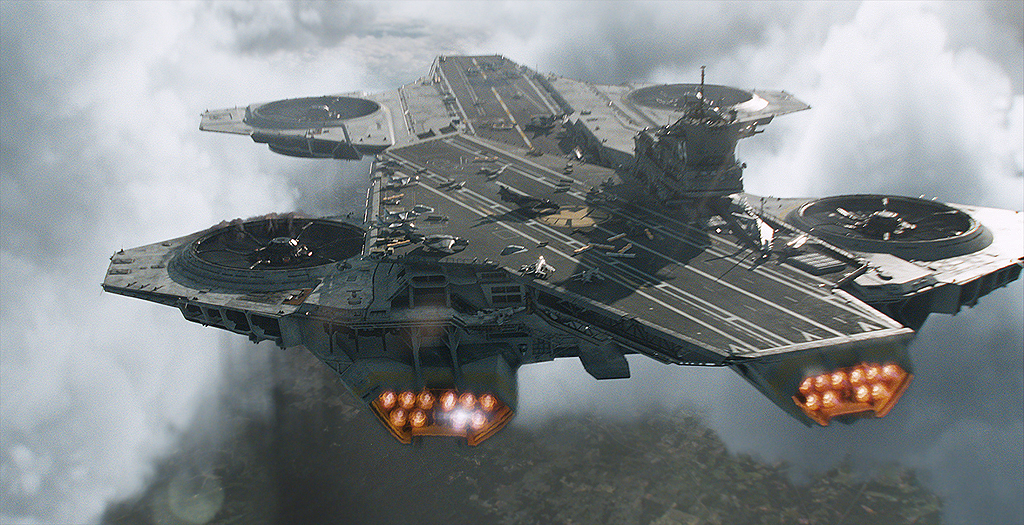
SHIELD-Helicarrier-Screenshot-from-Captain-America-The-Winter-Soldier

 
One of the main strengths I’ve recognized throughout Joss Whedon’s work is his careful crafting of deep, multifaceted characters. He puts enough care and attention into them to ensure they aren’t simple cardboard cut-outs that drive the story along, but persons whose reasoning we can understand. In addition to his complex characters, Whedon focuses on the concept of the family. It’s a recurring theme that, however alienated the characters are when introduced, they’ll inevitably will be drawn into a tight familial group. Case in point, the Scooby gang in Buffy, the crew of the Serenity in Firefly, Angel investigations crew in Angel, the Los Angeles Dollhouse or even, to a lesser extent, the Avengers.

A striking point in Whedon’s work is that these familial groups eventually confront militaristic organizations in one form or another. Some of these organization appear as a benevolent force at first and turn into a tyrannical opponent afterwards, such as the Initiative in Buffy the Vampire Slayer. Some are conventional “villains” from the onset, such as the Alliance in Firefly or the facility operators in Cabin in the Woods. All military industrial organizations we see in Whedon’s work have a clear path: self-destruction. This trajectory is present throughout Whedon’s work; as the military acquires knowledge of powerful artifacts (or powerful persons depending on the genre) they try to weaponize it. Despite the best of intentions at times, the moment the military tries to harness these “powers, they’re propelled onto a collision course with our protagonists. It’s a matter of arrogance; the military sees the potential for power in something and assumes that they are strong and righteous enough to control it, but are ultimately consumed by it. The characters we follow are no less tempted by this thirst for power, but aren’t as misguided by hubris and only resort to wield the artifacts in question as a last resort to avert disaster. In the rare cases where our protagonists yield to those temptations, their punishment is swift and their remorse keeps them from following the military down an ethical slippery slope. This recurring narrative shows a distaste for the hubris of the military organizations and sows the seeds of anti-authoritarian thoughts, but there may be more to it than this.
 

latest

 
I wonder if this relationship between his characters and the organizations around them is a reflection of a long running theme of anti-authoritarianism or perhaps, a reflection of Whedon’s troubled relationship with the studios he has worked for. For decades, his battles with studio executives have become well-known and documented. Angel was cancelled over posturing, Firefly was doomed from the start, the networks backed out of the Dollhouse premise and his recent comments about the Marvel Studios fiasco seems to only hint at the contentions between them. As the subtext seeps into the plot, his complicated and tense relationship with his employers is difficult for the audience to ignore. It’s hard to know which came first: is the underlying anti-authoritarian theme the result of studio conflict, or do the studios rush to stifle Whedon’s creativity when it starts to veer towards difficult themes? Whatever the case, this theme is growing more pronounced with every new piece that Whedon produces.

Buffy developed a huge fan following due to the care and attention Whedon put into building an intricate world and multifaceted characters. The studios want to capitalize on this success and rake in the profits, but balk at the time it takes to build the story. They jump at the idea of working with Whedon, giving him some freedom at first, but become increasingly intrusive and controlling, as they have a very strict idea of where and how the story should be told. They call a halt when Whedon veers off the “acceptable” course or takes too long to get somewhere, and this window is getting narrower the longer their partnership lasts. The studios, much like the military organizations, don’t understand what they have and try to exploit it. They try to capitalize on Whedon’s strengths without understanding them for their own purposes (profit, brand recognition) but it is not what Whedon seems to want to do, which is art.

Is Whedon’s negative relationship with the studios the only thing that affects his writing?
Whedon also seems to enjoy working with regular artists and contributors over time and, although this interaction is normal, it reinforces the subtext. Close friends and the family you create are better and stronger than the organizations you associate with, (corporations and the military industrial complex included). Those entities are bound to destroy themselves through their own misdoings and hubris.

These musings bring the slaughter of the white collar drones and the military organization in Cabin in the Woods into a new light. The military may want to do well, but trampling the civilians and treating them as expendable causes their downfall. The small group of survivors, whether considering this movie or Whedon and his close creative partners, band together and fight back, no matter the cost. They lose their life for their freedom in the former; Whedon loses his job for his freedom in the latter.


First-Name Basis, or How Joss Whedon Finally Stopped Being Your Friend

The index to the entire Joss Whedon roundtable is here.
_________

How do we define “authorship,” anyway? Even in this age of endless reboots, remixes, and universe-building, there’s still some kind of value placed on the idea of originality, as there has been all along. Whether it’s Dickens’ attempts to tighten copyright law in order to shut down rogue performances of his work, JK Rowling’s attempts to shut down publication of a Harry Potter encyclopedia, Warner Bros. forbidding Rocky-Horror-style viewings of “Once More with Feeling…”, or countless post-finale interviews with showrunners offering the “right” interpretation of their show, the relationship between a reader and an author is largely defined by power and anxiety. Sometimes they’re protecting their money, but more often than not, especially in the case of flesh and blood writers like Dickens and Rowling, they’re guarding the sanctity of something more ineffable—something that gets at the etymological root of “authority.”

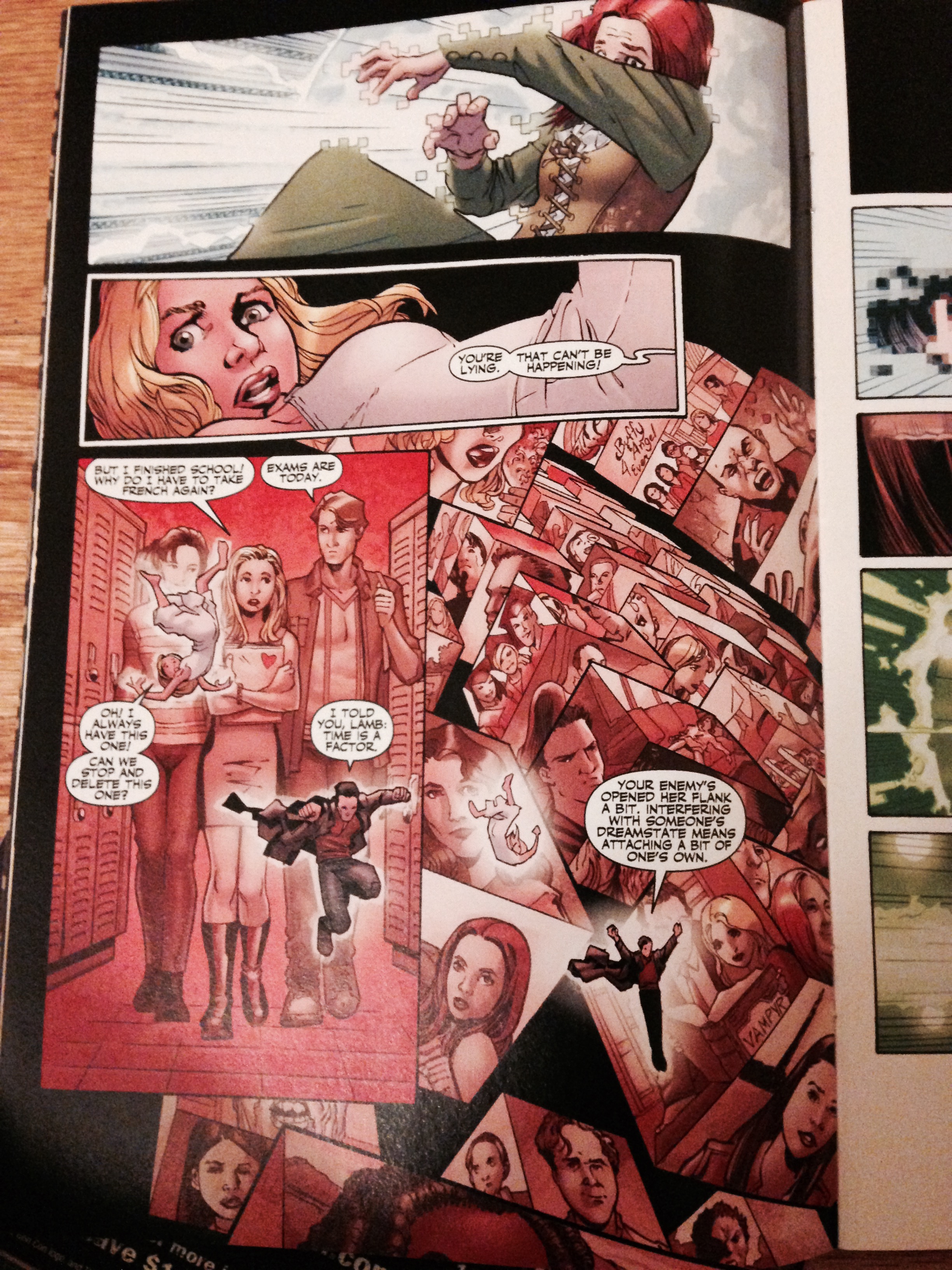
As auteurs go, Joss Whedon has never overtly demonstrated too much of this kind of anxiety. From the beginning, he’s positioned himself as a fan among many, but a kind of super-fan. He engages in projects that feel like fan fiction, recasting Dracula as a minor player on the Sunnydale scene, rewriting space opera from the position of the colonized in Firefly, continuing the story of Buffy in comic form, and even including his own image in a panel of Buffy’s dream sequence–look at the bottom of the page below. It’s Mary Sue through the looking glass!
 

FullSizeRender
 
Perhaps even more importantly, Whedon’s let fans behind the curtain of the production process, participating in early fan forums such as The Bronze and Whedonesque, and even going so far as to hire fans such as Drew Greenberg and Michelle Trachtenberg in later seasons of Buffy. When “authority” has influenced the direction of a text, Whedon’s always positioned himself as being on the side of fans–Fox stunted his vision of Firefly, Warner Bros. didn’t appreciate him enough to give his actors ER or Friends-level salaries, Fox hamstrung the development of Dollhouse, etc. Even his more recent, high-profile work within the Marvel franchise is so rooted in his own fandom that the difference between “adaptation” and “fanfic” gets hard to parse. It’s no wonder fans refer to him as “Joss”–he spent a lot of time and energy, especially early on, cultivating just that kind of intimacy.

But it’s important to remember that this intimacy was always charged with hostility. Jonathan Levinson on Buffy is probably the best example of this vexed closeness. In “Superstar,” for instance, Jonathan gets the intimacy that being on a first-name basis with Joss Whedon might lead to (included in the credits, influencing the rest of the plot of Season Four), but his desire for too much closeness, too much control, is what turns the other characters away from him at the end of the episode, and lays the framework for his return in Season Six as one of three Bad Fans. It’s common enough to have figures of bad fans in a text serving as negative examples of Reading Gone Wrong–the Trio has good company in Ben Linus on Lost, Silas Wegg in Our Mutual Friend, Felix Gaeta on Battlestar Galactica, Comic Book Guy and countless others. The thing that’s interesting to me is how, in “Superstar,” Jonathan’s “bad” fandom doesn’t look that different from the “good” fandom that came from all the people Whedon had been palling around with on The Bronze and Whedonesque. This relationship to authorial power–the boss who’s also your buddy–is ultimately unsustainable, and that’s where the vitriol behind the depiction of fans in Season Six of Buffy comes from, I think.

Which brings us to the present day, and Whedon’s decision to quit Twitter. In his recent interview with Buzzfeed, he blows off the idea that feminist blowback to the Black Widow storyline drove him from Twitter. To his credit, he’s pretty blasé about the whole thing, pointing out how much worse it is for women on Twitter than it would ever be for him. What struck me upon reading the interview, though, was how his reasoning had less to do with politics than it did with intimacy. Twitter is an intimate medium, and the intimacy comes with very little effort on either side. For instance: when I was writing my dissertation (which partially focused on Buffy, natch), I was following television writer and producer Jane Espenson on Twitter, and every now and then she’d announce a “writing marathon,” encouraging her followers to tweet how much they’d written. I didn’t mention her on my acknowledgements page or anything, but those goals felt supportive, and kept me on track toward finishing. I was never part of those early Bronze chat rooms, so I’ve always been a little put off by calling Joss Whedon “Joss,” but when I was writing my dissertation, Jane Espenson did feel like “Jane.” Twitter can feel like a place where you’re hanging out with your friends (shades of The Bronze, perhaps), but when it turns, it turns fast and hard.

With a property as big as The Avengers, the intimacy that characterized his early work just isn’t sustainable anymore, and that’s what his retreat from Twitter is about, I think. Like many others, I was pretty put off by the “big reveal” of Natasha Romanova’s sterilization backstory, and especially by her line that infertility made her a “monster.” I found myself making excuses for Whedon in my head, almost right away, since this seemed so different, at first, from choices he’s made in the past (except, of course, for that one episode of Dollhouse). If it were from anyone else, would I have been surprised by such a hacky motivation for a central female character? Getting depth for female characters in summer blockbusters is always tricky, especially for writers working within an established franchise. But because of my love for Buffy (and Angel and Firefly and Dr. Horrible and even Dollhouse) my expectations are higher, and my disappointment proportionally greater. Based on the tone of some of the responses, I’m not alone in my feeling that this cinematic disappointment is more personal than others.

But here’s the bind for Whedon: his “betrayal” isn’t as personal as it feels, because there’s just no way that he would have the same kind of control over the content of something like The Avengers. Nor can he position himself as a creative genius, hemmed in by the forces of an evil corporate Big Bad. He’s too close to this Big Bad, and his position is much more precarious–Dan Harmon and Amy Sherman-Palladino excepted, it’s rare for a showrunner to get booted from the fictional world s/he invented (and Community and Gilmore Girls both serve as cautionary tales for doing so). But The Avengers is different–he could get replaced on this project easily, though, so his old “I’m on your side, it’s the goddamned network fencing me in” approach isn’t available.

Ultimately, Joss Whedon is too close to too much power (without actually wielding that power) to be the Cool Dad anymore, the one who “gets it” but has to exercise authority because he loves you. The project is too big, its influence too far-reaching for him to be able to hang out on message boards and kibitz with fans. Twitter offers the promise of intimacy, but Whedon’s fans have come to expect something that approaches the real thing. And as Cool Dads have learned since time immemorial, the closer you are aligned with the machinery of power, the less possible it is to be everybody’s BFF. Whedon will just have to settle for being one of the richest guys in Hollywood.

Whedon’s Binary

The index to the entire Joss Whedon roundtable is here.
_________
In the Joss Whedon Avengers universe, to exist somewhere outside of the gender binary is suspect; to be genderless is monstrous.

Whedon adores the “superheroes can be dangerous” theme. In both Avengers films, the Avengers’ potential danger to society is presented repeatedly. Superpowers, whether innate, learned, or built, are dangerous, and superpowers without proper control are likened to nuclear weapons in the hands of madmen. The control of superpowers is associated with the command and control of gender expression. While the 2012 Avengers film features only one female Avenger, Black Widow, the recent Avengers: Age of Ultron introduces additional team members, revealing a sharp gender distinction.

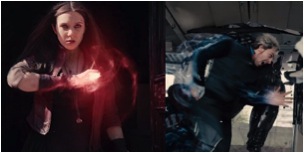
Summarized by Agent Maria Hill – he’s fast and she’s weird – twin siblings Scarlet Witch and Quicksilver are the representative binary in the Whedon Avengers universe. Quicksilver’s superpower is speed: simple, mono-dimensional, active. There is no further revelation or exploration of his powers throughout the course of the film. Scarlet Witch’s power is weird: manipulative, subversive, unpredictable. Wielding sparks of scarlet lightening from her fingertips, she exhibits the ability to control both objects and minds. Her exact powers are never defined, but we learn that she can control the emotions of others and that her own strong emotions activate her most destructive powers. The twins are a traditional gender dichotomy; he is bodily action and she emotional manipulation. Both expressions are conceived of as equally powerful – the difference lies in the approach. Theirs is the traditional superhero’s fate: he meets a hero’s death and she rounds out a heroic team. Channeled in traditionally masculine or feminine ways, superpowers are safe and effective.
 

liu_avengers1

 
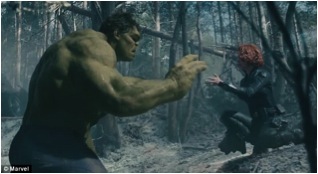
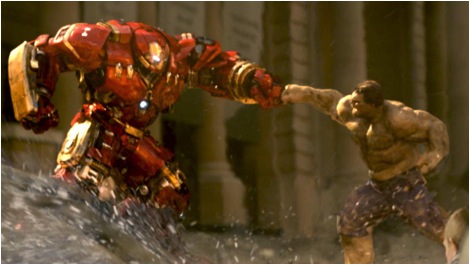
In the Whedon Avengers Universe, both exaggerated and mutilated gender is dangerous, whether it’s the inflated maleness of the Hulk or the broken femaleness of Black Widow. Bruce Banner’s angry transformations to the muscular and furious Hulk are an easy metaphor for the worst of the testosterone-fueled violence of masculinity. Banner, who fears and reviles “the other guy,” rejects this aspect of himself as a monster. His über-gender has rendered him incapable of raising a traditional family with the would-be mother of his children, Black Widow, alter ego Natasha Romanov. Romanov herself is played up as overly flirtatious, not to be trusted, and duplicitous. Romanov assures Banner, however, that her indoctrination as an assassin in the Red Room included a traumatic forced sterilization. After the confession of his inability to provide her the stable family life that she (supposedly) desires, she confesses her dark secret of infertility and wonders “who’s the monstrous one now?”

If femininity is emotional power – the power to exploit our attachments to one another, as Scarlet Witch does – then to harm that power hampers the overall humanity of the female person. A woman without the ability to form that most intimate of biological relationships must be lacking her power. A man whose gender is hyper-expressive is (quite literally in the case of Hulk) not fully human either. He lacks the ability to control his power.

Both Hulk and Black Widow are the only superheroes who, once having joined the Avengers, express doubt over their continued ability to play the part of “good guy”. Banner is prone to brooding and insisting that he is simply too dangerous for human interaction or vehicular containment. Romanov expresses her “dream” to actually be an Avenger, even though she is clearly an established member of the group and hardly the only Avenger lacking superhuman powers. With their gender expressions out of whack, Hulk and Black Widow at best can be marginalized members of the team, capable of doing good, but perhaps not to be fully trusted.
 

liu_avengers2

 
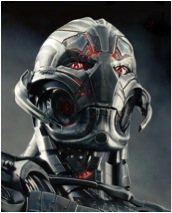
If hyper- or mutilated-gender is dangerous, a lack of gender expression is nothing short of monstrous. The most terrifying monster is, of course, that which exhibits an apparently human mind but is somehow less than human. Ultron, who is human intelligence and emotion trapped inside a crumbling, mechanical body, is humanity without physical expression. It has no gendered body – and therefore no power – with which to control the worst aspects of humanity. In a confrontation scene in which Ulysses Klaue dismisses Scarlet Witch and asks to speak instead to the man in charge, Ultron aborts the interrogation and declares: “there is no man in charge.”

The irony is that Ultron is logically the “man” in charge. The character is voiced by male actor James Spader, and we as an audience have a tendency to presume that anthropomorphized non-humans (dogs, toasters, robots, what-have-you) have a default gender of male. Thus, given the presumption of Ultron’s “maleness”, such a statement might normally be interpreted to suggest Ultron’s lack of humanity – i.e., Ultron is a machine, not a human, and therefore there is no (hu)man in charge. However, the juxtaposition of the specificity of the word “man” with Scarlet Witch’s abrupt and sexist dismissal allows for a second interpretation: Ultron denies not only humanity, but with it gender altogether. There is no “man in charge” because a robot is in charge, and, well, machines have no gender.
 

liu_avengers3

 
Vision is the logical counterpoint to Ultron. With a mind similarly born of Tony Stark’s foray into artificial intelligence, but with a human body grown by medical genius Dr. Helen Cho, Vision is Ultron’s foil. Vision is, to be sure, ambiguous, and the ambiguity remains at the end of the film. The character, however, is clearly intended to be Good, and his Goodness is grounded in his full association with humanity, which includes an apparently male gender (indeed, a hetero-normative male gender, as the beginnings of his relationship with Scarlet Witch implies).

In the Whedon Avengers universe, a tightly defined gender binary informs the superhero’s ability to be human, and therefore to be good. Shambolic gender expression limits the superhero’s humanity, resulting in an ambiguous, potentially dangerous figure. To remove gender expression from the equation altogether stumbles upon an uncanny valley in which the human-esque but grotesque terrify and repulse.

—-

Em Liu is a fiction enthusiast particularly interested in depictions of women and minorities onscreen. She blogs over at FictionDiversity.com, and you can follow her on Twitter at @OLiu1230

Taking a Bath with Mary and Jane

cols_ventura-11740

 
I arrived last weekend in Bath, England, where I am teaching “Writing Bath: Historical, Contemporary, Speculative Fiction,” a creative writing course focused on the multi-genre possibilities of place. Thank you, Advanced Studies in England, for flying me over and lodging me in a 19th century house two blocks from the wonderfully creepy Bath Abbey (the stone angels scaling its sides belong in a Doctor Who episode).

Bath’s most beloved author is Jane Austen, but Mary Shelley ought to be a strong second. She finished Frankenstein while lodging across the courtyard from that same Abbey. Austen’s house is a few blocks north, but she moved out well before the scandal-laden Shelleys moved in. Yet there’s no Mary Shelley tour stop, no building plague–only in part because the building is gone, absorbed into the expanding Pump Room of the Roman Baths. The ASE director seemed a little chagrined, but added, “It’s not really a Frankenstein town though is it?”

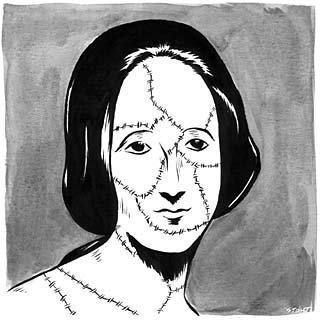
My class is tracing both Jane’s and Mary’s literal and literary footsteps. The oddball pairing is especially fun for a superhero buff, since the superhero is its own sutured corpse of a genre. Austen was sketching a version of hypochondriac Clark Kent (more on that next week) while Shelley was penning literature’s first monstrous ubermensch. It would take later writers to weld the opposing impulses, love and horror, into a single cape-flapping creature, but Bath provided the embryonic fluid.

As any self-respecting goth can tell you, the nineteen-year-old Miss Godwin (she and the still inconveniently married Percy Shelley had been an item for a couple of years already) stayed the summer of 1816 at Lord Byron’s Swiss lair. This was The Summer That Never Was, the summer England and New England weathered historic snow and a veil of sulfuric fog from Mount Tombora in Indonesia the year before. In Switzerland, they were telling ghost stories, among other activities.
 

TheApology-2011

 
John Polidori, Byron’s much maligned traveling companion/physician, was the first of the class to publish his ghostly tale. He also gets credit for the first dual identity supervillain, the Byron-inspired aristocrat-vampire, Lord Ruthven. Vampyre: A Tale was a hit in English bookstores, and not just because everyone thought Byron wrote it. Byron, having suffered a bout of creative impotence that summer, put out Manfred instead. His Faustian super-wizard is neither exotically foreign nor ancient, so a prototype for later Doctors Fate and Strange—only with an autobiographical hankering for his sister, the reason Byron fled to the Alps in the first place. Both Tchaikovsky and Schumann wrote music for the three act poem, as did schoolboy Friedrich Nietzsche, who called the renegade sorcerer übermenschlich (supermanlike).

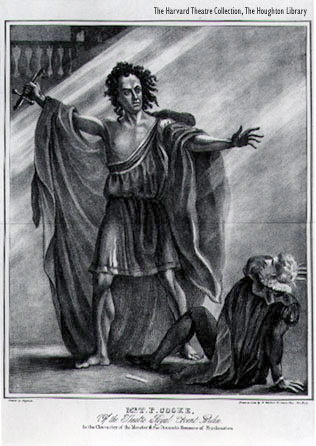
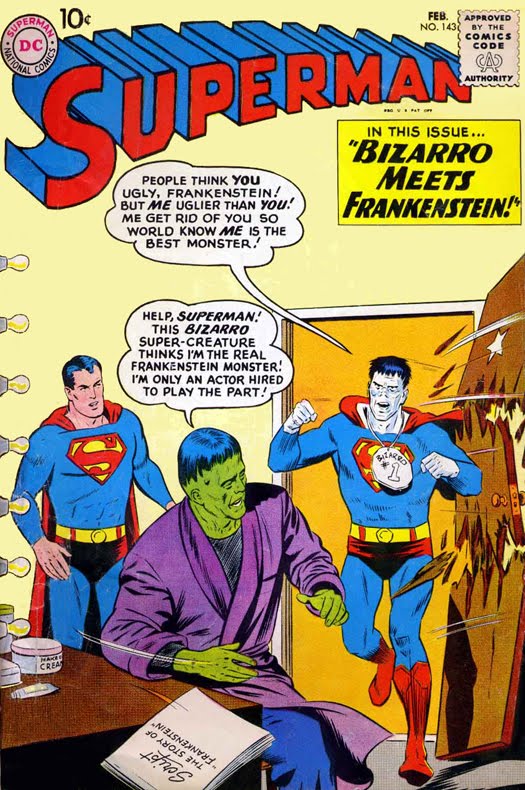
I don’t know if Nietzsche read Frankenstein too, but he should have, since Mary Shelley is first novelist to depict a race of eugenically superior supermen he calls for in Thus Spoke Zarathustra.  The name of her Faustian mad scientist usually conjuror images a flat-headed Boris Karloff with those c. 1931 electric bolts bulging from his neck. Movie buffs might tack on a corpse-sutured Christopher Lee or, more regrettably, Robert De Niro, but the Shelley original sports no stitches or jigsawed body parts. The guy is a god. Early stage productions draped him in Greek togas, his dark locks aswirl. Sure, his skin is transparent yellow and his face is a fit of twitching muscles, but his “limbs were in proportion” (a big turn-on for early 19th century readers) and the doctor “had selected his features as beautiful.”
 

presumption

 
Shelley doesn’t call him a superman because the word wasn’t in circulation yet. Nietzsche borrowed “unbermenschen” from Goethe, who’d coined it for the mad alchemist hero of his own verse play Faust a few years earlier. English translators went with “superhuman” or “demigod,” until George Bernard Shaw gave us the name destined for a cape and tights—though he had Faust’s alter ego, Don Juan, in mind.

After returning to England, Percy’s destitute wife Harriet found herself conveniently drowned in London’s Hyde Park, allowing her adulterous husband to marry his teen mistress around the time he impregnated her again. (Presumably the six-month-old William was present for but not an active participant in the Swiss storytelling adventure.) Jane Austen started work on her last novel the same winter, before stopping in March due to an illness that confined her to bed the following month. Mrs. Shelley finished gestating her first novel in May. Austen died in July at the age of forty-one. Clara Shelley was born in September, six months before Frankenstein was delivered to bookstores. It was a hit, and not just because everyone thought Percy wrote it.

Percy, like Byron, didn’t conceive much during the Summer That Wasn’t. His “Ozymandias” (yes, an Alan Moore influence) appeared between Clara and Frankenstein, but he eventually one-ups Byron with his four act poem Prometheus Unbound. I’m waiting to see what my students will add to that speculative canon. Mary began her novel in June too, not quite two hundred years ago, but close enough. 
 

supe143cover

Utilitarian Review 6/13/15

photo-original

On HU

Featured Archive Post: Ng Suat Tong on Joss Whedon’s signature covering (defacing) a comics cover.

Robert Stanley Martin with on sale dates of comics in early 1942: Wonder Woman, Walt Kelly, and cover eye-candy.

I interviewed artist and comics creator John Jennings about race and superhero comics.

Kim O’Connor in praise of The Toast and the worth of unserious things.

Madeleine Gavaler on how Whedon helped her get through high school.

We started our Joss Whedon Roundtable! Index to all posts is here.

Tim Jones on the insufferable cleverness of Cabin in the Woods.

Cédric Le Merrer on how Whedon substitutes violence for politics.

Utilitarians Everywhere

At the New Republic I wrote about restrictions on professor’s speech. Hint: main threat is not liberal students.

At Playboy

—I wrote about the documentary Cam Girlz and how camming is a lot like freelance writing (though with more stigma.)

—I interviewed Vron Ware about her book Beyond the Pale, white women, feminism, and racism.

At Splice Today I wrote about:

Art Spiegelman’s crappy New Statesman cover and free speech as speaking for women’s bodies.

voting reform, and how partisanship is more likely to bring it about than bipartisanship.

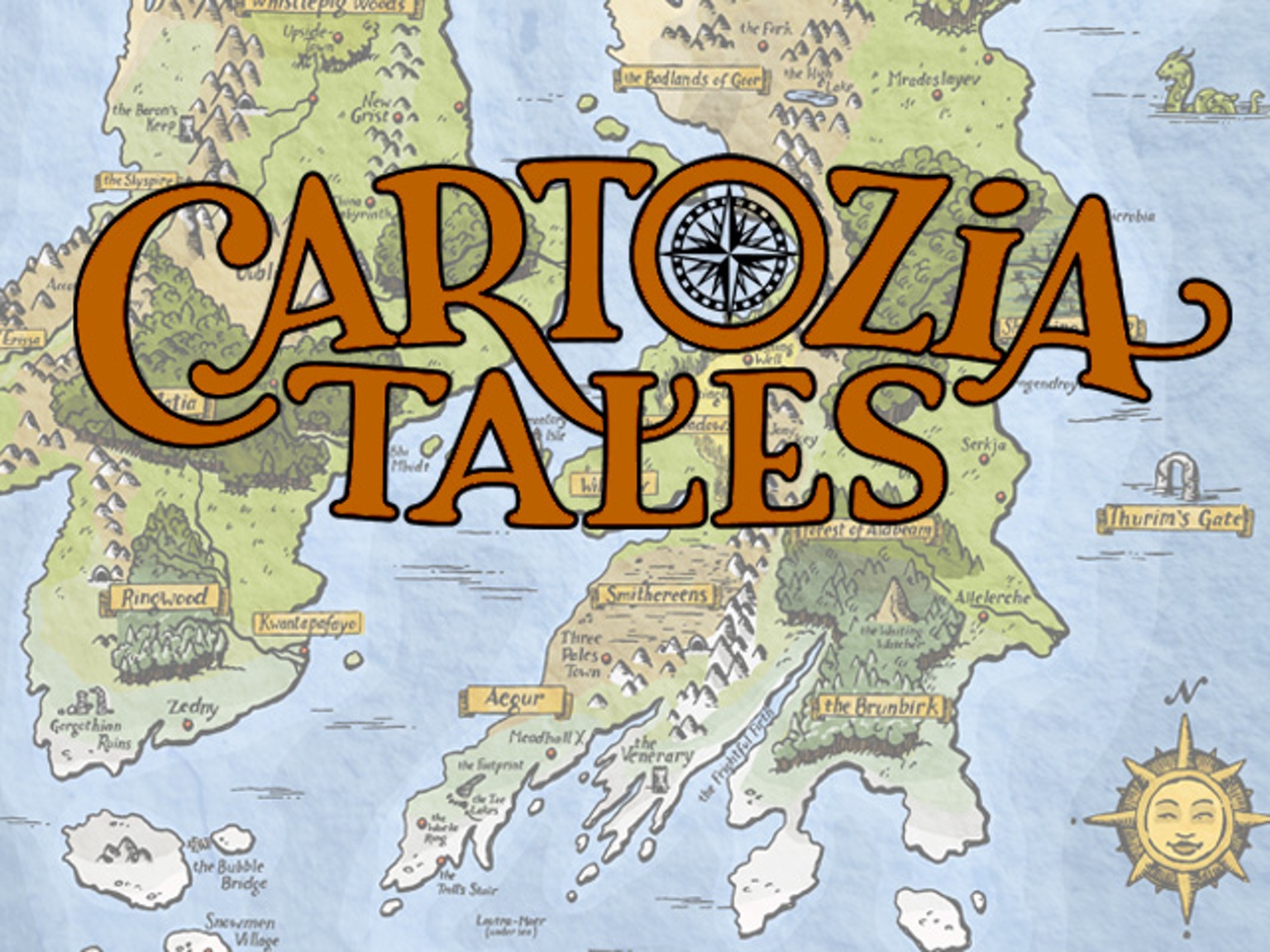
And I wrote about the lovely fantasy anthology comic Cartozia Tales for Urban Faiths’ summer reading list.

Other Links

Alyssa Rosenberg on female robots.

Tracy Q. Loxley on what’s wrong with the campus rape discussion.

Jonathan Bernstein on how ignorant citizens can be good citizens.

Britney Cooper on McKinney, black girls, and white “safety.”

Track of the Week

Thought I’d maybe start posting a video every week, because what the hey. I’ve been obsessed with this track by July Talk. Reminds me of the Pixies; not enough things remind me of the pixies.

Punching Your Problems Away

The index to the entire Joss Whedon roundtable is here.
_________

cedric1

 
Spoiler, but not a big one: Age Of Ultron’s last big action sequence ends with our heroes shooting down drones. Iron Man 3 and Captain America 2 both having ended the same way was kind of a giveaway. Marvel’s last few movies have had an surprising topicality, and this last one is no exception. But Winter Soldier got all the accolades for coming out against the surveillance state while thinkpieces on Ultron were comparatively few.

From both his recent declarations since leaving Marvel and from cursory knowledge of Hollywood, you know that doing Avengers 2 came with a few constraints. One of them was that it had to be bigger than the first one. So instead of New York, this time the whole world is the stage. This, and the growing concern over destruction porn following movies like the first Avengers and the Superman reboot, means that Avengers 2 is surprisingly filled with things like characters concerned with property damage and getting civilian victims out of the way. A subplot mandated by the future Black panther movie also gives us a passage about exploiting foreign countries’ natural resources.

We end up with would be world saviors building killer drones, taking metal from Africa to build super weapons in Asia, plus some resentful American bombings victims in Eastern Europe. Topical! Avengers 2 is a movie about America and its relationship to the world. (note the careful avoidance of the Middle East: Whedon probably knew no big budget movie from Hollywood could treat the region in a tone other than jingoistic). It all gets muddled in the necessities of having ten previous films to follow and just as many sequels to set up, but it’s probably the most explicitly relevant blockbusters of the year, and one of the few overt political statements in Whedon’s oeuvre.

Joss Whedon studied at Wesleyan under Richard Slotkin, who wrote about the myth of the American frontier in books like Regeneration through Violence. In his writing, Whedon hascertainly portrayed more than his share of Americans self actualizing through high-kicks, lasergun shots and mythical hammer blows. As a liberal he seems to struggle with this violence, though. So in Avengers 1 you get super heroes stopping SHIELD from atom bombing New York, and the organisation is purely and simply dismantled in Winter Soldier (Whedon had a nebulous role as supervising writer on all Marvel movies at the time, so I choose to consider “larger events” in these movies as at least partly his doing).

But how do you escape the violent trapping of the American myth? You can’t, Whedon seems to say. Certainly not in big blockbuster about a bunch of super strong guys. So the moral from Avengers 2 may then be “admit you failed and try again”. It’s what Tony Stark does when he builds Vision to save the world after failing to do so with Ultron, and it’s what SHIELD does when it comes back as a big warzone savior in Age Of Ultron. In the end, SHIELD has new soldiers and new Avengers to hit the bad guys with but it’s going to be different this time because they really really mean it.

Firefly is Whedon’s other big political statement. It tells the story of a bunch of rogue space cowboys, in a corner of space far from our own, where humans have had to settle after the destruction of Earth. The protagonists are on the run from the Alliance, a central interplanetary government that emerged from a civil war our heroes were on the losing side of. One of the things Whedon stressed in interviews at the time of the series was that the Alliance was essentially benign (they do end up looking bad in the movie, how much of it was a change of mind on Whedon’s part I don’t know). Our heroes were then rebelling against… what? Organised government? Bureaucracy? The loss of a certain sense of adventure?

The later one seems more likely. Joss Whedon likes comfortable modern life, but he also loves romantic stories of demons and super heroes, living on the frontier, rejuvenating through violence. His Angel is a metaphor for fighting addiction, but on a surface level it’s the story of a knight who cannot stop fighting, again and again, and I’m not convinced the metaphorical level is more important to Whedon than cool swordfights are.

Buffy, for all its reputation as a feminist show, was only so because its protagonist was female. She rarely, if ever, is confronted with outright misogyny. Occasionally she fights a phallic giant snake, but they just as often she battles standing metaphors for various non-gendered teenage fears. She fought a stupid military built demon cyborg that stood for god knows what. She also fought evil itself. Buffy was not so much about fighting patriarchy as she was about fighting for fighting’s sake.

Whedon’s adoption of combat as a value in itself is symptomatic of a post ideological left. You can identify big, systematic problems like America’s capitalistic and military dominance of the world, or patriarchy, or bureaucracy, but you don’t have any big, systematic answer for them like Marxism once provided. All that remains is the will to fight, and the hope of punching the bad guys away (metaphorically). So you tell yourself stories of people who keep punching, no matter what.