Dyspeptic Ouroboros: First Thing We Do, Let’s Burn All the Interviews

Jeet Heer has a post up about Why We Need Criticism. His basic premise, as near as I can tell, is that criticism is just people talking about art — so whether or not we “need” criticism, we’re unlikely to get away from it.

I don’t have any problem with that per se, but…well, look at this:

If we define criticism narrowly as analytical essays on an art form or particular works of art, then it’s true that criticism is a minority interest. But if we define criticism more broadly as any discussion of art or works of art, including conversations and the response of artists themselves to earlier art, then criticism is as unavoidable and essential as art itself. To be more concrete, some of the best comics criticism has come in the form of interviews done by artists like Gil Kane, Robert Crumb, Art Spiegelman, etc. As Joe Matt mentions elsewhere in the discussion, he turns to interviews in The Comics Journal before anything else. Without these interviews, our entire sense of comics would be very different. (my emphasis

For Jeet, the ultimate justification for criticism seems to be that artists do it. A second post privileges the criticism of artists even more strongly when Jeet says “you can learn more about art history by listening to Gary Panter and Art Spiegelman talk than from reading a shelf-full of academic books”.

I don’t deny that artist interviews can be interesting and valuable. And some artists, like James Baldwin and T.S. Eliot, were first rate critics as well. But…looking to interviews and artists for criticism is like looking to critics for art. It’s not totally crazy, but it’s not the best strategy either.

Criticism is a genre of writing. It’s a craft and an art, with its own history and its own integrity as a discipline. That doesn’t mean it has to be professionalized — on the contrary, I’d prefer that it weren’t. But it does mean that to write criticism, it does help to be interested in criticism, just as to write comics it helps to be interested in comics. When Gary Groth conducts a long interview in which he nails down where artist x was and who he worked with for every month of his life over the past four decades — that’s great and worthwhile work, but the result is not exactly criticism as criticism is generally understood. When Alan Moore makes some off the cuff remarks about Steve Ditko, that’s cool and Alan Moore is an insightful guy — but it’s not the same as an actual essay with an actual thesis which actually attempts to engage with a critical tradition.

So…who cares anyway? If folks wants to read interviews instead of criticism, where’s the harm exactly? If Jeet thinks people will get more from a Comics Journal interview than form one of his own essays, why should I kick?

Well, two reasons. The first has to do with this, again from Jeet:

“The simple fact is that because of the intellectual poverty of most writing on comics, infected as it is with fannish boosterism and journalistic glibness, the interview form has been the crucial venue for comics criticism and comics history. ”

For Jeet, then, interviews fill a critical gap. Comics journalism is so bad that we need interviews to save us.

Unfortunately, Jeet has this exactly bass ackward. It isn’t interviews that are saving us from critical poverty. It’s the fetishization of interviews that has led us into this critical difficulty to begin with. Critical comicdom is obsessed with interviews not because there’s nothing else, but because, historically, critical comicdom comes out of the fanzines. The reliance on interviews as critical touchstones is the result of “fannish boosterism” — and it’s also a cause, as critics scuttle around gathering up pearls of wisdom from the horse’s mouth rather than kicking the horse in the teeth, prying off the skull, and making out of it a thing of horror or beauty or ridicule of their own. And as for “journalistic glibness” — substituting five or ten sentence sound bytes by famous artists for an “analytic essay” seems to me to fit the bill.

And the second reason that substituting artists for critics is not ideal is that, besides being bad for criticism, it’s not especially good for art. One of the things criticism does is open up the conversation, both directly, by making artists communicate with people who have different interests and backgrounds, and indirectly, because ideally critics are connected to other critical communities, which are connected to other artistic communities. If you are always turning inward to have artists interpret themselves for an rapturous audience, you end up with a closed circuit — a world in which R. Crumb is not just a talented cartoonist, but a major Biblical scholar; a world in which a shelf full of books about, say, Buddhist ink painting won’t teach you as much about art history (or about the right art history?) as a few hours listening to Gary Panter.

I’m not saying that people should respect criticism. Criticism, like art, deserves not respect, but unremitting hostility. The real problem with Jeet’s discussion is not that he elevates art over criticism, but that he allows his fannish enthusiasm to cast a nostalgic glamour over both. Unless art and criticism are separated, it’s impossible to hate either with sufficient malice. Clubby amity is for interviews; what we really need from criticism and art is more and higher quality loathing.

Update: In reply to some comments below, I have a follow-up post here.
Utilitarian Review 7/2/10

On HU

We’ve been busy on HU this week. We started out with Domingos Isabelinho’s discussion of Frans Masereel.

Guest poster Stephanie Folse (aka telophase) compared the visual language of manga and comics.

Guest poster Robert Stanley Martin provided a warts and all assessment of Frank Frazetta.

I provided a belated conclusion to the Komikusu roundtable by comparing the promotion of lit comics with the promotion of awesome manga. In a follow-up post I discussed my own ignorance.

Guest poster Alex Buchet wrote a three part series on race in Tintin. A fourth part to come next week.

And if any one is interested — disco mix!

Utilitarians Everywhere

The new Twilight movie came out this week, and I wrote several essays about Twilight to celebrate.

First at Splice Today I speculated on what Andrea Dworkin would think about the Twilight phenomena.

In short, the millions of tweens trooping in lockstep to the Cineplex to see the latest Twilight saga installment might as well be trekking over Dworkin’s corpse. It’s a wonder she doesn’t just rise right out of the ground, fangs bared, spitting blood, and personally castrate both Robert Pattison and Taylor Lautner with a rusty cleaver out of pure spite.

At the Chicago Reader I talk about class in Twilight:

If Edward is the aristocrat who treats Bella like a delicate queen, Jacob is the swarthy, sweaty working-class hero who won’t take no for an answer. Edward is obsessively safety-conscious and will barely allow himself to kiss Bella for fear that he’ll lose self-control and bite her neck. Jacob, on the other hand, literally overpowers her when he wants a smooch. In human form, he gives Bella a chance to be a little bit wild, riding motorcycles, diving off cliffs, and generally getting in touch with her inner delinquent. When he turns into a werewolf, Bella risks her safety just by being with him, since he has less control over himself than the proper, uptight Edward.

Also at the Reader, a capsule review of the film is here.

Other Links

This is old, but I just found it: Melinda Beasi on Twilight fandom.

An old friend and sometime commenter here, Bryan Erwine has a very entertaining article up about Superman vs. Muhammad Ali.

And this is a fun skewering of the MSM.

Ignorant and Mean

David P. Welsh responds to my post about lit comics snobbery and the perils thereof, in a very manga-crit way. That is, instead of taking sides, he opens the floor for discussion:

It’s sent me off on a mental tangent, and I wonder how people would define their comics reading tastes if circumstances forced them to do so? I would categorize mine as eclectic, though I would be extremely reluctant to do so precisely because that adjective, neutral as it should read, feels somehow like I’m congratulating myself for liking more than one kind of thing. So I’d love to hear people’s thoughts on categorizing their tastes and the potential pitfalls and moral implications of doing so.

So since David kindly asks: I wouldn’t call myself eclectic (nor omnivorous, as Melinda Beasi does in comments. That’s not because I read only one thing — in fact, I read various sorts of things, whether comics or manga or books.

But eclecticism is a relative term. And however widely I cast my net, there’s lots more stuff I haven’t looked at, and even more I haven’t heard of. I see the stuff Domingos Isabelinho talks about for example…mostly European art comics…and I don’t even know the titles. For that matter, unlike Domingos or Matthias or Suat or Erica, I’m a monoglot, which really restricts what I’m able to process. And there’s whole swathes of comicdom I’m not that interested in (early proto-comics tend to bore me for example; I’m not especially interested in most yaoi, etc. etc.)

I got really into Thai pop music recently, and came out of that experience not feeling like I was especially eclectic or omnivorous, but instead feeling like I didn’t know anything. Entire giant stretches of the globe producing mounds of cultural products, and I can’t even get through the to-read stacks in my house. I know there’s a giant Mexican comics scene for example, of which I have read exactly nothing. I think (though I don’t know) that there’s a fairly large Indian comics scene too, and all I’ve seen of that is a crappy online porn comic that Dirk linked to once.

So if I were going to characterize my tastes, I would have to describe them as “ignorant.” Also as “mean” — because while I don’t know much, I can at least be nasty about what I do know, damn it.

And since meanness is in my portfolio, I might as well sum up by using this post to once again bash all and sundry. Obviously, I’m arguing here that, in terms of cultural consumption in particular, as well as perhaps more generally, we’re all fairly ignorant, from the mouth-breathing superhero fan all the way up to masters of cultural wu-tang like Terry Eagleton or Kim Thompson. Which is why lambasting others for not reading what you think they should read is such an empty exercise…and why even calling oneself eclectic is maybe a little presumptuous (a fact which David basically points out himself.) Event the most cosmopolitan of us are really just provincial hicks. Which is nice actually; it means there’s always some city we can wander into, looking about in wonder.

Komikusu, Selling Awesome Manga: Belated Conclusion

I was originally not going to write a conclusion for last week’s Komikusu discussion. But then I was chatting to Tucker Stone, and he mentioned that he’d enjoyed reading the roundtable.

This took me a little aback, because Tucker’s come out fairly strongly in the past against the “we must read more lit comics!” meme as it applies to Western comics. In an interview with Tom Spurgeon, for example, Tucker said:

There’s a temptation to label mainstream fans as being lazy for not caring about Swallow Me Whole or Blankets, to call them “bone-ignorant” — that’s just a bunch of horseshit. It’s an attempt by boring assholes to assign an overall meaning to a bunch of personal choices made by a group of people that those boring assholes don’t know anything about. On an individual level, I’ve heard a couple of people say they don’t want to read comics that focus on the mundanities of regular life, but I’m more often exposed to people who just like what they like because it’s what they fucking like.

I actually agree with that. Yet, at the same time, I’d like to see some more interesting manga titles succeed in the U.S. So…what’s my problem? Why does the push for more interesting comics make me itch in a Western context and not in a manga one?

Perhaps the answer is simply that I’m inconsistent. But, appealing as that solution is, I think there’s actually something else going on. Specifically, the way the debate is framed in a Western context tends to be different than the way the folks on this roundtable framed it. As an example, here’s Sean T. Collins discussing his wish that there was more discussion of western lit comics in the blogosphere.

I’ll tell you what my big question is: Why do superheroes dominate the online conversation the way they do? Last week saw the release of Jim Woodring’s Weathercraft and Tim Hensley’s Wally Gropius, two gorgeous and weird books that truly make use of the stuff of comics and contain the kind of material you can mentally gnaw on for days on end, but I guarantee you that no matter which comics blogs you read, you read more about Paul Levitz’s return to the Legion of Superheroes. And chances are good that if you’ve read about Daniel Clowes’s Wilson, what you read prominently featured that page where the character makes fun of The Dark Knight. What gives? If you want to make the argument that sheer numbers justify the choice of what bloggers and comics sites cover, I suppose that’s your prerogative. And don’t get me wrong — I read and enjoy multiple superhero comics every single week, and have lots to say about a lot of them. I also understand the need to make a living, which in Internet terms means unique pageviews.

But so much of the comics Internet consists of individual or group blogs where, presumably, there’s no editorial mandate to maximize hits. Indeed, the major selling point of the blogosphere is its lack of the traditional gatekeepers and incentive structures that bedevil mainstream journalism. Meanwhile, even the big group blogs owned by major communications corporations tend to be personality-driven, reflecting the interests and styles of their writers to a refreshing degree — and those writers tend to be interested in all sorts of comics, in their spare time at least. So yes, the nature of the coverage is often idiosyncratic, which is great. But why is that the comics being covered differ so little from what you’d read about on Marvel.com or The Source? Should those of us in the position to do so make an effort to broaden the scope of what we’re presenting to our readers as the comics worth buying, reading, and talking about?

And here’s Kate Dacey responding to Sean in that comments thread.

There’s a similar divide in the mangasphere as well: a lot of sites focus on mainstream shonen and shojo titles (the manga equivalent to tights and capes, I guess) while neglecting the quirkier stuff. To be sure, there are many sites that cover the full spectrum of titles, or focus on a niche, but the pressure to stay current with new releases and draw traffic discourages a lot of folks from waxing poetic about the stuff at the fringes. Looking at my own site stats, for example, a review of Black Bird or My Girlfriend’s A Geek will attract a much bigger readership than, say, The Times of Botchan.

Which brings me to the argument I’d like to see explored somewhere: how do we interest older readers in manga that’s written just for them? What kind of marketing support would, say, the VIZ Signature line need in order for some of those titles to crack the Bookscan Top 750 Graphic Novel list? Are there genres or artists we should be licensing for this readership, but aren’t?

Kate’s post there is what inspired me to organize this roundtable. And obviously there are close analogies between what she’s saying and what Sean is saying. But I think there are important differences as well. Mainly — Sean makes the dissemination of lit comics into a moral issue. “Should those of us in the position to do so make an effort to broaden the scope of what we’re presenting to our readers as the comics worth buying, reading, and talking about?” he asks, and the answer is obviously that yes, we should. The problem for Sean is that super-hero comics are taking up too much space because the people in the blogosphere aren’t doing their job in educating their readers about better fare.

Kate starts from the same place — how do we get more better manga out there? But she doesn’t bother with the moral question at all; instead she goes right to logistics. Not “you people should be doing more!” but, “presuming there are people who would like to read different kinds of manga out there, how do you reach them?”

Kate’s pragmatic approach was absolutely the one adopted by the roundtable. Erica Friedman tried to figure out how scanlations could be used legitimately to make more and different kinds of niche mangas available. Brigid Alverson, Deb Aoki and Kate herself talked about practical marketing steps that could be taken to reach new audiences. Peggy Burns pointed out some strategies that have worked for Drawn and Quarterly in the past. Ryan Sands and Ed Chavez tried to map out the historical lay of the land, explaining how manga has been categorized and sold in different ways at different times in both the U.S. and Japan. And Shaenon Garrity offered some more possible solutions, while also pointing out some possible pitfalls.

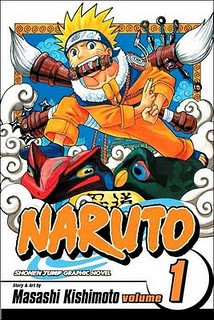
If you read through these pieces, though, what’s almost as noticeable as what is said is what isn’t. Nobody in the roundtable says that the problem is that readers’ tastes suck. Nobody says the problem is that bloggers aren’t doing enough to promote the right kind of manga. Both Shaenon and Deb mention Naruto in a “yep, the manga we’re talking about aren’t going to sell like that” kind of way — but they don’t seem resentful of Naruto’s success, the way Sean Collins seems resentful of superheroes (despite the fact that he reads them himself). In fact, unless I’m missing something, nobody in the roundtable says anything mean about mainstream, successful genre manga at all.

And why should they? The success of mainstream genre manga doesn’t hurt sales of To Terra or A Drifting Life or Travel or what have you. Because, as everybody in the roundtable seems to realize, the people who are buying Naruto — they aren’t the audience for Emma or Tramps Like Us. Not that nobody could possibly read or like all of those series, but simply that the demographic is different. If you want to increase sales of Oishinbo, the way you do that is not to go after readers of Gantz. The way to do it, as Shaenon says, is to get it into cooking stores.

Lit comics have had a lot of success in the U.S. precisely by finding different audiences. But the comics scene here is still so small, and still so defensive, that its vision still seems to be defined to a surprising degree by the mainstream. It’s not just Sean by any means — super-hero crap is, in general, seen as not just bad, but oppressive. There’s only room for so many comics, and the bad forces out the good. It therefore becomes every intellectuals duty to battle against the filth.

I don’t know that the manga scene in the U.S. is bigger than the Western comics scene. But it’s more demographically diverse, and it always has before it a pretty compelling vision of a possible world in which there are no mainstream comics, because comics themselves are mainstream. As a result, manga critics seem to have figured out what Western comics critics still have some trouble with. Namely, improved morals don’t sell comics; better marketing does.

Of course, just because manga folks have figured this out doesn’t mean that there will ever be more awesome manga available on these shores. But it seems like a good first step.
____________
The entire Komikusu roundtable is here.

Utilitarian Review 6/26/10

On HU

This week at HU was devoted to Komikusu, a roundtable on selling awesome manga. Contributors included Erica Friedman, Kate Dacey, Brigid Alverson, Ryan Sands, Ed Chavez, Shaenon Garrity, Deb Aoki, and Peggy Burns. Also lots of insightful comments from folks like Xavier Guilbert, Melinda Beasi, Sean Michael Robinson, and more. Thanks so much to all those who posted, commented and read. I learned a bunch.

Utilitarians Everywhere

Over at Madeloud I provide an introduction to doom metal.

Dooooooooooooooooooooooooooooom. It sounds threatening and, well, doom-like, but in fact doom metal is a giant furry mammoth that just wants to cuddle and roll all over you…inadvertently crushing you into a gelatinous blot of assorted fluids.

Maybe we should start over.

Other Links

When people think NSFW, they think of things like this.

Ed Chavez on Arty Manga, Past and Future

The essay below is by Ed Chavez of Vertical Press.
____________________

30 years ago all translated manga were practically arty comics. The designs were nothing like what was available in the West. The stories were told with a focus on characters, instead of narrative. And while the very first manga in English, Barefoot Gen, came from mainstream anthology Shounen Jump, many of the other titles that followed it in the 80’s were from seinen or alternative manga publications that at the time were just starting to make an impact on the Japanese manga scene.

The industry has changed in almost every way imaginable on both sides of the Pacific over these now four decades. In fact so much has changed that both regions can now say with confidence that they both have legitimate art manga scenes. Whether either market is actually viable is still questionable, but at least for the time being, artsy manga is here and I can say with confidence that more is on its way. And for the sake of this discussion, I would like to go into a little detail as to why that is and what publishers in the industry are doing to maintain that small subset within manga alive and well.

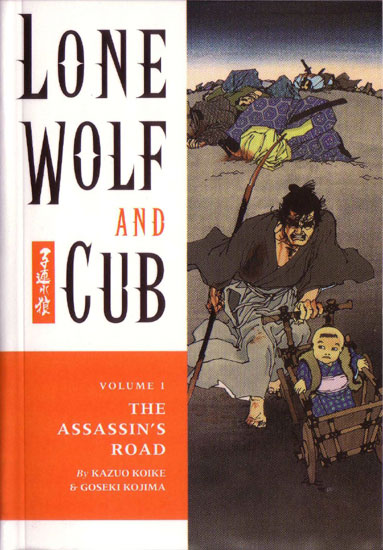
But before I dive into that, I feel I must provide my definition of “arty manga”, as this piece will focus solely on that subset and not just your average seinen or josei title like Oishinbo, InuBaka or even Twin Spica. Japanese comics for older readers have been around since the bronze age of English manga. Akira, Lone Wolf & Cub and Crying Freeman are examples of that. With publishers like Dark Horse and Del Rey Manga these titles should flourish as they have for hits like Genshiken, Hellsing and Chobits. I do not want to disparage the artistic value of any of those titles. However, all of these properties were at one point marketed towards the mainstream overseas by some of the biggest publishers in that market. And in many cases, these titles had media tie-ins that helped their brands receive more recognition from the sub-culture in the West.

An “arty manga” is generally not blessed with either. It is “successful” in spite of being under-supported or is published by the manga equivalent of a Top Shelf or First Second. It has been recognized by editors across the globe even when it doesn’t have a specific genre to be pigeonholed into by critics. An arty manga might not have dialogue. There are times when its designs are so bad they feel so right. These comics have so little going in their favor that even in Japan they are often just called comics (using the English term). And in some cases the artists even create new terms to more closely describe their brand of sequential art.

I suppose classical works are now being called arty, as some can reveal a chronological history of manga story-telling methods and artistic designs analogous that can then be used for study similar to an art appreciation course. But titles like Dororo or even some Tatsumi works transcend time and continue to have themes that can be appreciated from a mainstream seinen or shounen perspective generations later (though many manga readers will likely get hung up on character design).

With so many hurdles to overcome why even approach arty manga? The answer is simple… Unlike more mainstream manga, which is a bit of a contradiction in the US, arty or even literary manga tend to have a feel and tone that is closer to western graphic novels than to the best-selling shoujo or shounen properties on either continent. When approached with enough restraint and common sense, an arty manga has the potential to be a hit with readers, critics and sales directors alike for the following reasons…

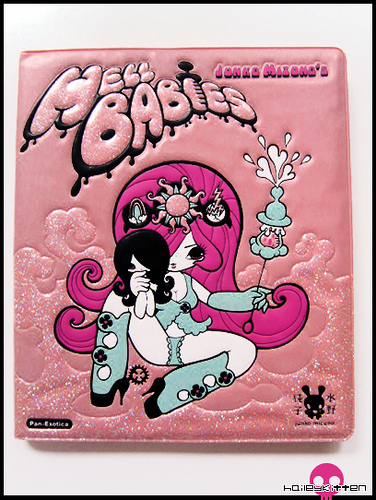
1) Comics like Tokyo Zombie and to an extent many of Junko Mizuno’s works fill a niche for fans. These fans may not be manga fans, either. These readers may have an interest the world of Japanese film or Japanese design. Japanese sub-culture is much broader than just anime and manga, and by exploiting specific designs and genres smart publishers with a keen understanding for the pulse of sub-culture trends in North America can make properties or artists that are experimental even in Japan accessible to a steady readership without having to appeal to a manga-cow audience at Borders or B&N.

The development of “gekiga”, a term that is loosely thrown around by some pundits and marketers in the west, has created a reasonable base for titles that are labeled as such (even if they were originally seinen properties in Japan).

2) When critics outside of the “mangasphere” get a hold of a manga there is often some trepidation. Most appear to be too foreign and while even the best seinen and josei titles can stimulate readers, length is often an issue. So unless the property is extremely compelling or intriguing from a journalistic perspective, like Tezuka’s Buddha, it may be challenging to give an appropriate review.

Because of the challenges to produce these works in Japan, most arty manga tend to be shorter and many are plot driven (instead of character driven which is the industry standard). This allows critics, academics and journalists to really dig deep into these titles without having to devote time and resources to acquire translated versions of every volume of an 11 volume on-going series.
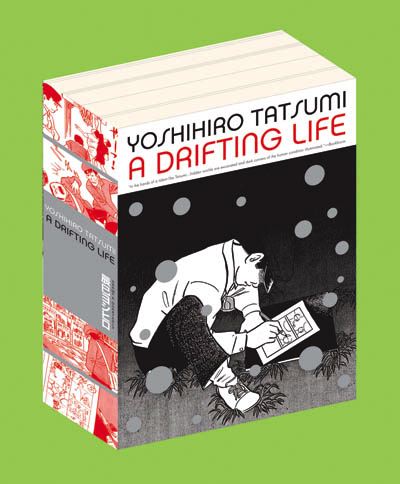
The informed publisher will have staff on hand to select and dissect properties that are challenging but relevant to their market. Through marketing they will find ways to exploit current events, trends or existing authors/books to help promote their titles. The smart publisher makes an effort to present their content as Japanese, but they must be always aware that their readership is not and may not have an interest in the nuances of manga culture, let alone Japanese culture. And when a critic can find a comic that transcends languages, cultures and time they will respect that and champion it as seen with arty mega-hits like A Drifting Life and Buddha.

3) Producing arty manga is a challenge within the manga industry. In Japan artists working within the experimental field have historically not received page rates. Instead they toil away submitting work, hoping that one day their stories or series will be collected into graphic novels from which they receive royalties. Print runs for these GNs are not significant relative to traditional manga releases (in my experience working for Kodansha print runs average around 30,000 for seinen magazines, but can go much lower for their more experimental spin-off lines).

Arty manga is rarely localized by the US manga powers—Viz Media, Yen Press and TokyoPop. Publishers like Drawn & Quarterly, PictureBox and Last Gasp (often with the help of JaPress) tend to provide most of this content with my company Vertical dabbing into the field now and then. Speaking from personal experience, releasing an arty title means a lot of overhead but can often mean significant returns in the long-term. Designing a book that will appeal to a mainstream readership is critical. So everything from the jacket and orientation needs to be scrutinized just as much as the top-class translations these publishers often commission. All of that costs money and demands time. However that is because these books are not mass-market. They are works of love and they deserve more.

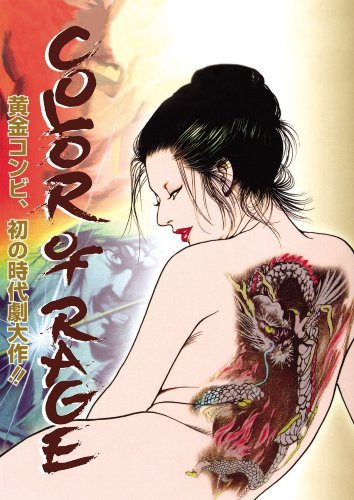
Price points are often higher reflecting the production costs. Marketing budgets are also higher and used more effectively. And while I am reading that some believe this is because many of these publishers are comics specialists, I will say Dark Horse is a comics specialist and well they haven’t taken the scene by storm with their actual gekiga releases such as Satsuma Gishiden or the Color of Rage. At the same time, Dark Horse readers, whether they read manga or AmeComi or both, might not be art comics readers. D&Q readers are. Picturebox readers are. Last Gasp readers know what to expect from their comics. And in the case of Vertical, our readers tend to be fans of Japanese genre fiction and Japanese film, so they get many of the same themes and genres in comic form. I want to believe these publishers also exploit their books knowing that.
These business factors can turn a micro-niche release into a financial success. However, the same formulas also should prevent a publisher from over-reaching by releasing too much into a market that is growing steadily, but appears to be waiting for that next title to break free from the “manga/comics ghetto.”

That said, even with all those variables working in a publisher’s favor not every title will work, nor will every artist. For every A Drifting Life there will be a The Box Man and for every Apollo’s Song there is an Andromeda’s Story, just like Naruto has its Cat Eyed Boy and Fruits Basket has its Tantric Fighter… The successes earned their praise because of the quality of work. Sadly there are many more titles that do not receive their due everywhere for reasons too many to list.
So while others focus on demographics, libraries or designers, I say publishers need to make sure the arty, literary, indie, experimental, alternative…manga they select are always simply great comics. Whether spelled with a “k” or with a “c”, good comics will never be denied their place in homes and stores.
__________________

The entire Komikusu roundtable is here.

Peggy Burns on D&Q’s Success With Gekiga

Peggy Burns, Associate Publisher at Drawn & Quarterly, was not able to participate in this roundtable…but she did graciously agree to let me reproduce an edited version of the email she sent me when she declined. It’s below.

Hi Noah,

Thank you for the invitation but I do not think I would have much to contribute. We have had a lot of success with gekiga, but I sincerely think that the reason why someone like Tatsumi made the cover of the Paris Review, NY Times Arts section and on the NYT graphic novel bestseller list is because we promote him as one of our D+Q cartoonists, and because we publish books for adults, there is no added marketing necessary to get this point across to stores or readers.

While I wish mainstream manga sites the best, I feel no need to convince them to write about us, if they do not already.

Best,

Peggy

________

The whole Komikusu roundtable is here.