Twilight: The Graphic Novel

 
This first appeared at The Comics Journal.

Twilight: The Graphic Novel; Stephenie Meyer and Young Kim; Yen Press;  $19.99; B&W, Softcover; ISBN: 978-0759529434

Twilight isn’t great any more than the original Superman comics are great. Both are essentially empty-headed wish-fulfillment, though differently inflected — in Superman, boys get to imagine that they are strong enough to save everyone; in Twilight, girls get to imagine that their love is so powerful that it magically makes those they care about safe. The day dream is too blatant to be anything but gauche — but the blatancy is also the power. Like Superman, Twilight has figured out how to give its audience exactly what it wants — and the result is mass enthusiasm, fame, fortune and infinite spin-offs.

I’m on my third iteration of the first Twilight novel myself — I read the book, watched the movie, and have now read the graphic novel (or the first volume of it, anyway.) Each has its own charm. The novel has the courage of its convictions, and the not -inconsiderable grace of its own obliviousness. Stephenie Meyer’s vision is melodramatic and often clueless (Volvos and baseball are the height of hip?), but she believes in it as fervently as Siegel and Schuster thought manly men wore their underwear on the outside, and there’s something about such utter faith that makes you sit up and take notice, even if just to exclaim in disgust. Twilight the movie didn’t have that potent naivete, but it made up for it —like the Superman movie before it — with a touch of camp, a sense of humor largely missing from the source material, and, most importantly, drop-dead gorgeous actors.

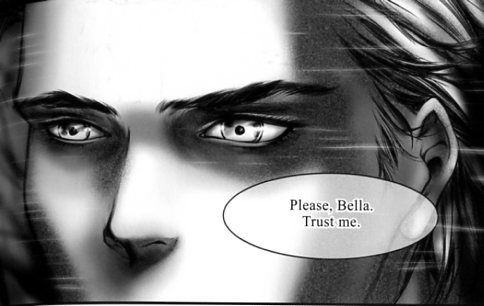
Twilight the graphic novel is more like the book than the movie. Indeed, reading it, it’s hard to escape the impression that Twilight should have started out as a manga-fied graphic novel in the first place. It’s true that, without Bella’s narration, and with manga’s faster pacing, both character and plot are much more attenuated than in the novel. Traits that are important in the book — like Bella’s clumsiness, or Jessica’s cattiness — are present only as asides in the GN. Similarly, the plot whips by faster than a sparkly vampire running through the forest — one moment Bella shows up in town, the next she sees Edward, and the next, hey, presto, she’d rather die than be separated from him. Overall, the pacing feels so rushed that I wonder whether you’d actually be able to follow the thing if you hadn’t read the book first — though, of course, everyone who buys the graphic novel has already read the book first, so it’s not really that much of a problem.

In any case, following Twilight isn’t necessarily the point— which is why the graphic-novel treatment feels so natural. In this version of Twilight, people and events largely disappear, and what you’re left with is lovely faces exchanging soulful looks in lingering freeze frames of fractured time. I’m not a huge fan of Young Kim’s art, which exists in an uncomfortable halfway zone between mainstream and manga, and which manages to be both slickly anodyne and clumsy — especially in the clunkily transparent speech bubbles. But…you know, slickly pretty is probably what most readers want from this experience, and Kim’s general instincts to show as many eyes in closeup as feasible seems similarly sound. The graphic novel, in other words, is just the juicy bits— a kind of distilled overheated fanfic version of the original. Since Twilight was essentially an overheated fanfic version of itself to begin with, though, that works out fine.


The Horror! The Horror!

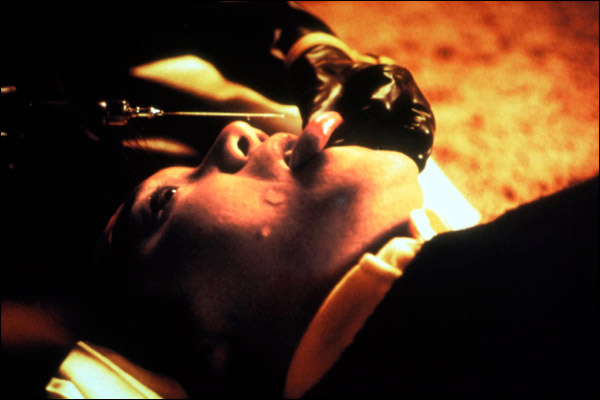
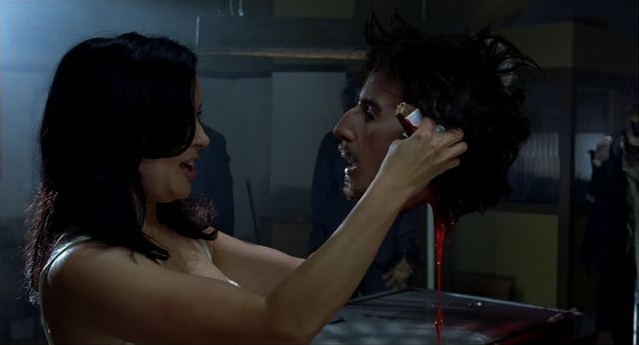
I recently watched Audition and Hostel, films famous for their viscerally graphic depictions of torture. I don’t think I flinched once during either of them; I didn’t look away, I wasn’t freaked out, I was unfazed and untrammeled. Needles through the eyes, feet hacked off, genitals severed — go ahead. Doesn’t bother me.

But I did watch one film recently that traumatized me so thoroughly that I almost couldn’t finish it. I covered my eyes; I stopped the playback; I walked away, ejected the disk, and promised myself I wasn’t going to finish it (though I eventually did.)

What was this terrifying, gruesome film you ask?


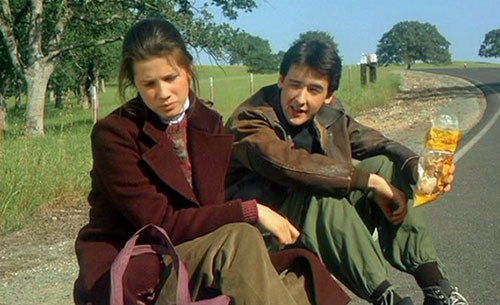
Would you believe Rob Reinter’s 1985 romantic comedy, The Sure Thing?

At least since I got through adolescence, I’ve always found sit-com style social embarrassment porn a lot more difficult to watch than anything having to do blood or horror. Watching Walter Gibson (John Cusack) squirm while his writing teacher reads out loud his roommate’s Penthouse Forum letter which he has mistakenly submitted for his composition assignment, or watching Alison (Daphne Zuniga) let herself be goaded into leaning out of a moving car topless — Eli Roth and Miike dream about attaining that level of sadistic ruthlessness.

Romantic comedies aren’t usually seen as sadistic of course. But The Sure Thing makes a good case that they are — or at least that this one is. Part of what’s so painful about watching it is the manifest contempt Reiner has for his characters. In “Say Anything”, Cameron Crowe presents his mismatched pair as lovable and natural — the female overachiever is cool and smart and funny and to be honored for her work ethic; the doofy kickboxing oddball is respected for his sweetness and his humor and his gallantry.

Reiner uses a similar smart girl/comic guy dynamic, but for him it’s an excuse for sneering rather than sympathy. Allison’s intelligence and focus are a constant cause for scorn; even her writing teacher tells her she needs to “live life to the fullest” — i.e., drink more beer and fuck more often. Walt, meanwhile, is given a completely standar-issue fascination with the stars to show that beneath the shallow, callous, frat boy alcoholic there lurk depths. Despite heroic efforts by Cusack and Zuniga, neither of their characters is remotely likable nor, for that matter, even provisionally believable. They fill the space labeled, “romantic lead here”, spouting more or less funny one-liners and/or engaging in cringe-worthy set-pieces, as the script moves them.

With the rise of reality television, I guess everybody now is more or less aware that people love to watch each other suffer extremes of humiliation. I don’t think folks usually connect those paroxysms of delightful social contempt with the pleasures of horror (or for that matter action) movie violence and revenge. But to me they don’t seem all that different — except, of course, that, compared to the gore and gouts of blood, the sit-com embarrassment is a lot more visceral.

Utilitarian Review 11/9/12

HU News

Joe McCulloch (aka Jog) is going to be joining HU with a monthly column on first-run Bollywood films. Don’t have a bio for him yet (send me a bio, Jog, damn it!) but you can read his past posts for us here.
 
On HU

Featured Archive Post: Domingos Isabelinho on Otto Dix.

Me on nice guys and rape in Audition and Clint Eastwood’s Tightrope.

Me on how Lee and Ditko tilted Spider-Man against pacifism.

Me on why Axe Cop and Johnny Ryan are alike (hint: poop.)

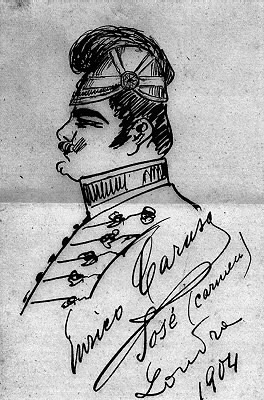
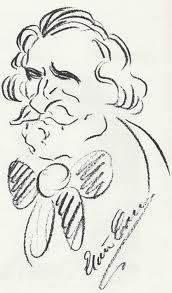
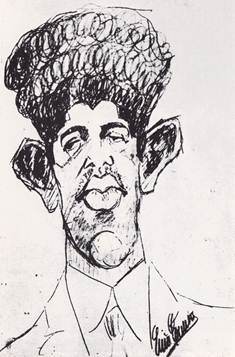
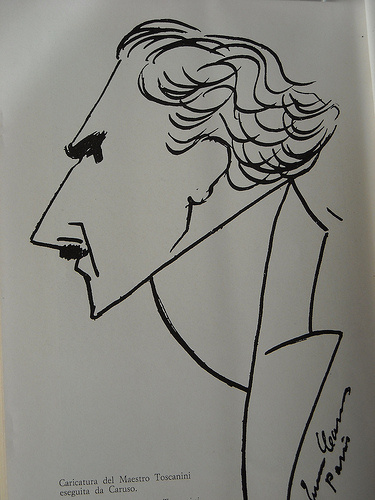
Alex Buchet presents the cartoons of Enrico Caruso.

Voices from the Archive: kinukitty on politics and statistics.

Jog on how nobody likes Bollywood and a closeful of candyfloss.

Me on why there is no first comic, and what is a comic anyway?

Andreas Stoehr on the pain and pleasure of slasher movie sequels.
 
Utilitarians Everywhere
At the Atlantic, I talk about Phillip Pullman’s Grimm Fairy Tales and pandering to huamnity’s worst desires since 1812.

At Splice today I talk about:

Stefan Goldmann’s delightful electronica for robotic children.

Sneering at sneering at Romney voters.

Why liberals can still be depressed about an Obama election.
 
Other Links

Tim Callahan belatedly replies to the HU 10 best comics poll.

Mette Ivie Harrison has some thoughtful questions about Twilight (scroll down a bit to see them on her home page.)
 
This Week’s Reading

I read John Rieder’s excellent book Colonialism and the Emergence of Science Fiction, and read a preview for review of Justin Hart’s book about public diplomacy Empire of Ideas. Also reread some Axe Cop and Johnny Ryan’s Prison Pit #3, and started Junji Ito’s Museum of Terror volume 1.
___________

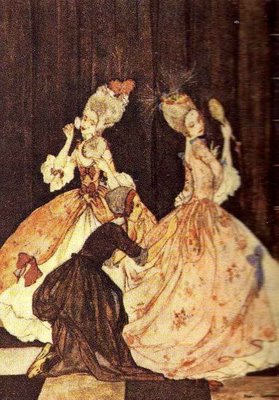
Harry Clarke illustration for Cinderella.

Stab, Rinse, Repeat: The Pain and Pleasure of Slasher Movie Sequels

 
Is any other kind of movie as disposable as the slasher sequel? The Roman numerals at the end of their names even code them as factory product, fresh off the assembly line. They tend to be about 90 minutes long, rigidly formulaic, and instantly forgettable. With only a handful of exceptions, their (mostly young, mostly white) casts are interchangeable, and the same goes for their screenplays—“derivative” may be too gentle a word. Yet, thanks to a terminal case of morbid curiosity, I’ve watched dozens of ’em. Devoured ’em like popcorn. They’re not especially gratifying as art or entertainment; in fact, most are hacky, dull, and repetitive. But if you want to see how filmmakers wrestle with restrictive blueprints, low budgets, and fickle audiences… well, these movies have their pleasures.

The Friday the 13th movies, for example, are like Ozu dramas or Mondrian Compositions, these subtle variations on a theme. In this case, that theme is “Jason Voorhees kills everyone,” and part of each sequel’s pleasure lies in identifying those variations. How do you tell the same story over and over again without boring your audience? You tell it in 3D (Friday the 13th: Part III) and constantly thrust pitchforks and harpoon guns at the camera. Or you put it on a boat (Part VIII). Or you put it in outer space (Jason X). Honestly, the Friday the 13th movies could be titled like Friends episodes: The One Where He Has a Bag on His Head, The One Where Corey Feldman Kills Him, The One Where He Fights Carrie, etc., etc. Beyond these cosmetic differences, the films are near-identical, both in terms of plot structure and quality. (The latter metric staying at “not very high” for the duration of the series.)

Taken together, these films constitute a 19-hour saga as rhythmic and ritualized as its ki-ki-ki ma-ma-ma leitmotif. And taking them together, I just have to marvel at their collective contempt for spatial and narrative coherence, not to mention their shameless acts of self-cannibalism. Cat scares, roadside kills, disemboweled swimmers, bodies flung through windows: this is eternal recurrence localized entirely within rural New Jersey. On an individual level, however, each Friday the 13th entry instills a numbing sense of deja vu. My favorites are the most idiosyncratic ones: A New Beginning and Jason Goes to Hell, parts five and nine respectively. The former opens with a Fulci-esque graveyard scene, often gets distracted by the bizarre lives of its secondary characters, and has a twist ending Scooby-Doo would spit on. Jason Goes to Hell, the only Friday the 13th movie of the ’90s, is nothing but twists, retcons, and non sequiturs; it’s certainly not “good,” but at least it’s delirious.

Maybe it’s silly to prize delirium in a subgenre notorious for its homogeneity, but I get so tickled by slasher sequels that indulge in a little weirdness or, heaven forbid, warmth. Like the Nightmare on Elm Street movies, where reality is slippery and death is just a few seconds of shut-eye away. The series itself gets bad quickly, but its gory set pieces stay evocative: teenagers are fused with their motorcycles, reduced to pizza toppings, pulled into video games they can’t win, turned into comic book characters and then sliced to ribbons. It’s “high school sucks and parents don’t understand” blown up to tremendous, gory size. The only way out of this teenage nightmare? Solidarity. Indeed, the Nightmare movies are consistently the most teamwork-oriented of slashers, a refreshing shift from seeing kids picked off one by one until only the “final girl” survives. (This is that “warmth” I spoke of.) In the third and best Nightmare, subtitled Dream Warriors, a little sentimentality even blossoms up through the film’s blood-soaked carapace. This is no mere slasher movie; it’s a Reagan-era blend of afterschool special, action movie, and charnel house.

Of course, I’d be remiss to discuss the slasher cycle without a mention of Halloween’s myriad sequels. But I hesitate, because I kinda pity the series. Less consistent than the Friday the 13ths, less phantasmagorical than the Nightmares, the Michael Myers movies also have the misfortune of following John Carpenter’s original—the model for lean, low-budget horror. If this built-in redundancy sullies even the high-tension Halloween II, then heaven help something like The Curse of Michael Myers, which turns up four sequels later and stars a young Paul Rudd. At that point, the series still has its two mainstays—killing machine Michael and his personal Van Helsing, Dr. Loomis—but has long since squandered any momentum and is trudging through a morass of mythology. (Mythology that, like a sand castle at high tide, will be wiped away by Halloween H20.) Hence the pity: Halloween’s sequels exhibit glimmers of quality, but always retreat back into slasher tradition. As a result, they never carve out any unified identity beyond that deadpan William Shatner mask.

My favorite among the sequels, however, lacks even that. It’s the sui generis Halloween III: Season of the Witch, a conspiracy thriller that replaces Michael with the sinister Silver Shamrock mask company. Whereas Michael killed Haddonfield residents one by one, Silver Shamrock’s Samhain-loving CEO plots to kill all of America’s children in one fell swoop. It’s grim, yes, but laced with satire and as oddball as slasher sequels come. You couldn’t ask for a movie that undercuts viewer expectations more severely. Outside of Season of the Witch, the Halloween moment I treasure the most is the opening scene of #5, The Revenge of Michael Myers. Michael, we learn, has been hibernating ever since his last fake-out death a year earlier. Hibernating in a shack, that is, where he’s nursed by hermit. Once October 31st rolls around, he bolts up, kills the hermit, and walks back to Haddonfield. “Narrative logic?” laughs Halloween 5. “Fie!” Again, this may not be a “good” movie, but those first few minutes would leave even Luis Buñuel scratching his head.

The lesson here? Shoddy screenwriting can be a virtue as long as it makes a slasher movie stand out. Now that I’ve watched dozens of ’em, most of these movies have coalesced into a blur of knives and blood swirling in my head. I feel like I’m running in circles just trying to write about them. So anything memorable at all automatically becomes a strength. (Indelible performances, traces of visual style, and zippy pacing help too.) All of this explains why two franchises, Phantasm and Child’s Play, sop up most of my slasher love. Each has its dud entries, but both are unusually auteur-driven and blessed with spirited villains. Strip away their more macabre elements, and the Phantasm movies are a serialized Boys’ Own adventure; a Manichaean clash set against the desolate Pacific Northwest. There, evil is endemic… but still our heroes resist it, empowered by camaraderie and a sense of humor. The Phantasm movies envision a tiny light in the midst of vast darkness, making them a radical departure from their morally murky slasher brethren.

The Child’s Play movies, on the other hand, start out as conventional slashers. Their killer doll kills, is killed, and then lies dormant until the next sequel. The first three films lean heavily on two assets: 1) the fact that talking dolls are terrifying and 2) Brad Dourif’s bile-spitting vocal work as Chucky. But from there the series metamorphosed, culminating in the beautiful butterfly that is Seed of Chucky. The aggressively postmodern Seed doesn’t merely swallow its own tail—it gobbles it down in big, lusty bites. It turns slasher tropes inside out; it wallows in the a priori absurdity of a killer doll. Hell, it stages a full-scale 1950s melodrama in Jennifer Tilly’s attic. The movie’s vulgar, certainly, and its comedy is erratic, but it has chutzpah. How else could it so brazenly juxtapose old and new, revolution and tradition, pathos and cartoonish gore? As Seed of Chucky demonstrates, the “slasher movie” is only a template, a set of structuring ideas that tends to limit filmmakers’ imaginations but, on rare occasions, can also serve as a springboard for them. It’s a story syntax, a tool, and a resilient one at that; few others have been dissected and deconstructed so thoroughly yet lived to tell the tale. And, for better or worse, I suspect the slasher movie will always keep on rising from the dead.

Sequence Without Origin

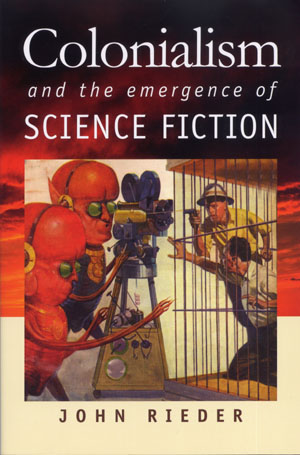
I’ve been reading John Rieder’s excellent book Colonialism and the Emergence of Science Fiction. There’s lots of fun discussion about nightmare invasion scenarios, lost worlds, time travel, constructed humans, and how imperialists love being imperialists, satirize being imperialists, and more or less constantly freak out about the possibility of being imperialized.


So maybe I’ll talk about all that at some point. In the meantime, though, Rieder also has some really interesting thoughts on genre. Specifically, he argues that a genre is best understood not through a strict formal definition, but rather as a group of texts that bear a “family resemblance.” The term is from Wittgenstein, and Rieder quotes a further explication by scholar Paul Kinkaid:

science fiction is not one thing. Rather, it is any number of things — a future setting, a marvelous device, an ideal society, an alien creature, a twist in time, an interstellar journey, a satirical perspective, a particular approach to the matter of story, whatever we are looking for when we look for science fiction, her more overt, here more subtle — which are braided together in an endless variety of combinations.”

Science-fiction is then a “web of resemblances.”

If sci-fi is a web of resemblances though, that has some surprising implications. Specifically, if the genre is the web, it can’t exist before the web. There can’t be a point of origin, because a point isn’t a web. For there to be family resemblances there has to be a family. Or as Rieder puts it:

The idea that a genre consists of a web of resemblances established by repetition across a large number of texts, and therefore that the emergence of science fiction involves a series of incremental effects that shake up and gradually, cumulatively, reconfigure the system of genres operating in the literary field of production, precludes the notion of science fiction’s ‘miraculous birth’ in a master text like Frankenstein or The Time Machine. A masterpiece might encapsulate an essence, if science fiction had one, and it certainly can epitomize motifs and strategies; but only intertextual repetition can accumulate into a family of resemblances.

This has some obvious implications for the much-bruted question, What Is a Comic? Like science fiction, definitions of comics (most notably Scott McCloud’s) generally focus on formal elements — a sequence of images, in McCloud’s case. As a result, McCloud includes in his definition things like hieroglyphs, while excluding single panel cartoons.

However, if comics are seen as a web of resemblances, then the effort to look for origins or predecessors or even formal tropes starts to look misguided. Instead, it’s more useful to focus on the center — on what things are accepted as comics, as I put it in a post some time back. Comics are not a formal template; they’re a genre that has taken shape since around the early twentieth century, and which can have, like science-fiction, any number of hallmarks — including (for example) sequences of images, superheroes, cartoony art, funny animals, autobiographical storylines, humor, adventure, serialized formats, word bubbles, panel borders….etc.

No doubt some comics folks flinched up there when I called comics a “genre”. And that does bring up a possible objection. Isn’t it wrong to think of comics as a genre, like science fiction? Shouldn’t they instead be compared to a medium, like prose or art or music? And if so, how useful is Rieder’s discussion of genre? Yes, genres may be webs of relations. But aren’t mediums defined formally? Art is always art; writing is always writing — shouldn’t, then, comics always be comics, whether created by the ancient Egyptians or on the internets?

I think the answer to those question is no, still pretty useful, not really and not really. Rieder does couch his formulation in terms of genre. But it works so well for comics that I think it forces you to either decide comics are a genre, or else to decide that the difference between medium and genre isn’t as great as it tends to seem. Egyptian hieroglyphs, after all, can either be writing, art, or comics, depending on which web of relationship you want to emphasize — and once you start thinking about webs of relationships, it’s in fact pretty clear that they aren’t that closely related to any current medium. Similarly, is a novel a genre? Is it a medium? It depends on how you look at it, surely — meaning, specifically, how you look at the web of relations of which it’s a part, and how those relationships are embedded in time and culture.

Comics straddles the line between genre and medium for various reasons — mostly having to do with the fact that (for reasons of commerce and credibility) it still hasn’t consolidated its cultural position the way science fiction has (as genre) or the way film has (as medium.) It’s betwixt and between, which makes the task of definition somewhat fraught and conflicted. But surely Rieder’s discussion leads to the conclusion that drawing these lines is always fraught and conflicted. A generic designation isn’t about dispassionately fitting a model, but about the more emotional task of finding and claiming one’s relations. The downside is that comics, as an origin and a form, doesn’t really exist; the upside, though, is that that leaves so many possibilities open for what comics can be.

Voices From the Archive: Kinukitty on Improving This Blog By 17.6%

During out Wire roundtable way back when, Kinukitty had some depressing thoughts on the use of statistical methods in government. Thought I’d reprint it since we’re doing our democracy thing today.

I was delighted when the Wire opened with that CompStat meeting. I don’t know if many people understand the tyranny of the stat programs. Many governments and government agencies wrestle with some kind of performance measurement system, and they tend to work pretty much as you described – there are lies, damned lies, and statistics.

Performance measurement isn’t hopeless, exactly. There are some (probably not a lot) of governments using it right and getting good results. It takes someone special, though, to turn an organization around and create true accountability (which does not include firing people because you don’t like their stats). Especially in an enormous bureaucracy like a government. And then there are the elected officials. But as long as some organizations are doing something good with stats, it seems best not to throw out the baby with the bath water.

Because I don’t know if there are a lot of alternatives. I don’t see NGOs as helping very much. Too many obstacles, including the fact that stats can be altered just by the choices of what is measured, and how. And news coverage? I don’t think the problem there is that news outlets are only interested in sensationalizing stories to sell copies, advertising, etc. Well, it’s not the only problem. A lot of reporters and editors just don’t understand what they’re publishing, and the more sophisticated or complicated the issue is, the less likely they are to really get it. The current hysteria about state and local government pensions is a good example. Yes, they have an incentive to report that the sky is falling, since people are more likely to be interested in that than the sky not falling, but they also don’t understand the issue well enough to challenge any lies, misrepresentations, or mistakes their sources feed them. I’m not actually completely down on journalism — I more or less believe in the fourth estate thing. We’d be screwed without it. But there are problems.

Which leaves me in a Wire frame of mind, too. I appreciate it, though. I think it’s kind of important to make people understand that the problems are complicated.


Sing Me a Cartoon

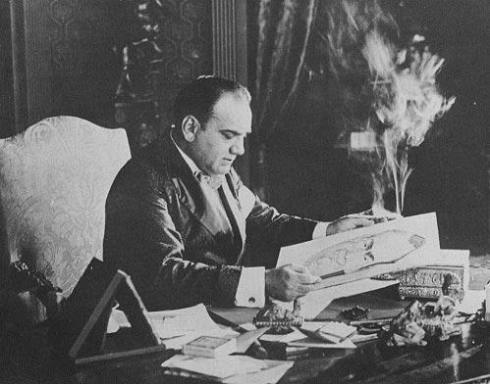
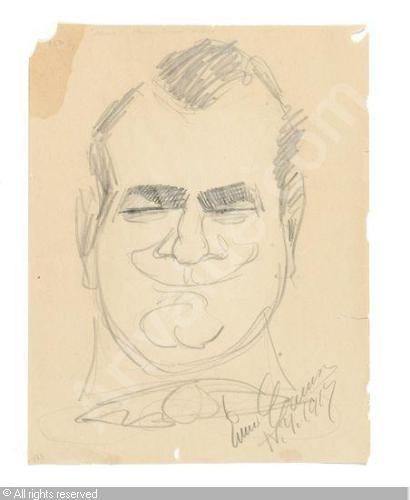
Enrico Caruso (1873–1921) was one of the most celebrated opera tenors in history. He was also a deft and witty caricaturist — not least of himself, as shown below:

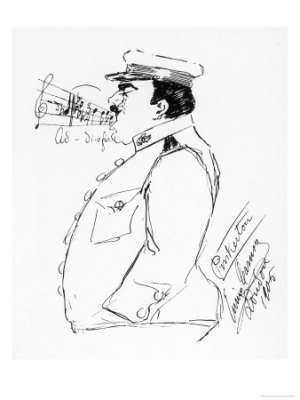
Caruso was prolific and generous with his cartoons, often including them in letters to his fans. They show a wide variety of line styles, from delicate to bold.


Many of them depict him in costume for one of his roles. Below, Caruso as Lieutenant Pinkerton in Puccini’s Madame Butterfly, which he sang in 1906:

As Federico Loewe in Franchetti‘s Germania:

As Don José in Bizet‘s Carmen:


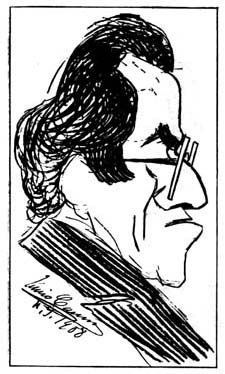
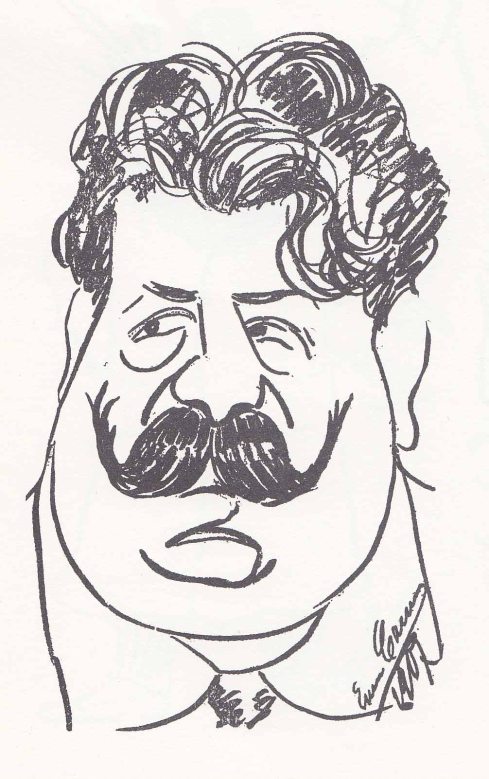
He also caricatured other luminaries of the music world. Giuseppe Verdi:

The Mexican tenor José Mojica:

The conductor Arturo Toscanini, an important figure in Caruso’s life; it was in his 1900 production of Puccini’s La Boheme at the Scala in Milan that Caruso achieved stardom:

The soprano Amelita Galli-Curci, who co-starred with Caruso in Rigoletto:


The composer and conductor Gustav Mahler, who was the director of New York’s Metropolitan Opera House when Caruso was engaged there; this portrait was drawn for The Musical Courier magazine.

The composer Leoncavallo, author of I Pagliacci:

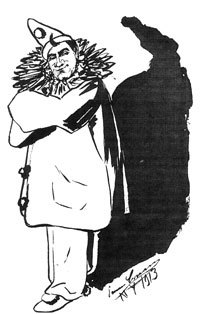
Caruso in the role of the clown Canio in I Pagliacci; Caruso’s recording of the opera’s song Vesti la Giubba (“On with the Motley”) was the first record to sell over a million copies:

A recording of Vesti la giubba may be found here.

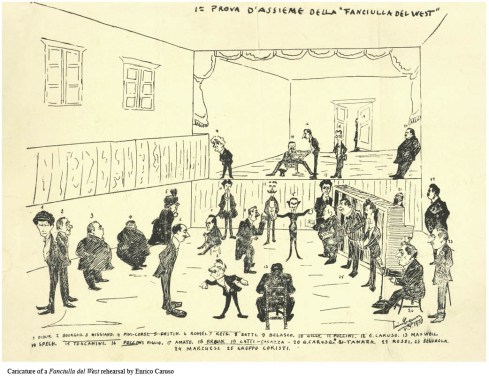
Below is a rare group drawing, depicting the rehearsal for Puccini’s La Fanciulla del West (“The Girl of the Golden West”), for which Caruso created the role of Dick Johnson in 1910:

Click on image to enlarge

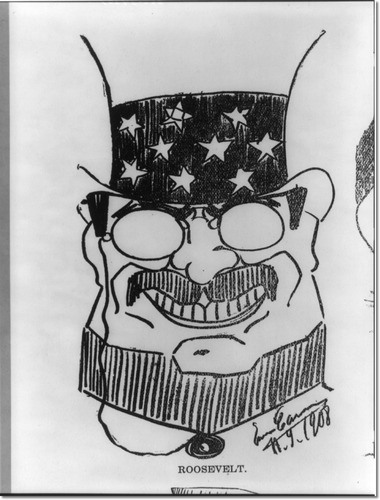
Caruso didn’t confine himself to music-realated subjects; here is his rendering of U.S. President Theodore Roosevelt, with whom he was acquainted:

Roosevelt served the superstitious Caruso as a good-luck charm on a day of disaster.

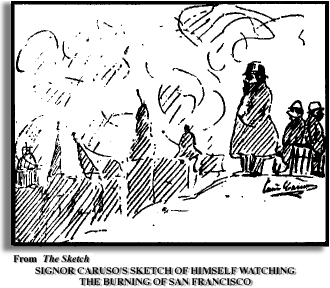
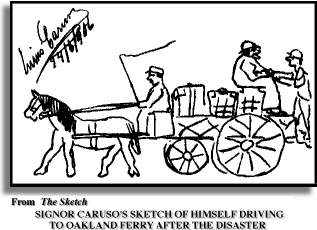
In 1906, Caruso was performing Carmen in San Francisco when the great earthquake and fire destroyed the city. Caruso was found walking the streets, disoriented and weeping, clutching a signed photograph of the President to his chest. He ran into the actor John Barrymore, fresh from a brothel, who persuaded the tenor to sing to calm the panicked crowds.

Caruso’s talent for caricature extended to sculpture, as seen in this bust of himself as a ‘laughing Buddha’, which he presented to Toscanini:

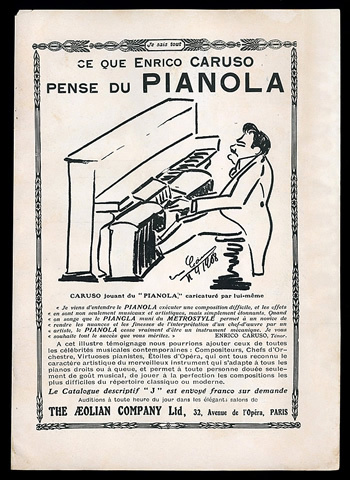
He was not above using his fame to swing lucrative endorsement deals, as we can see from the following advertisement for Pianola– illustrated by the singer:

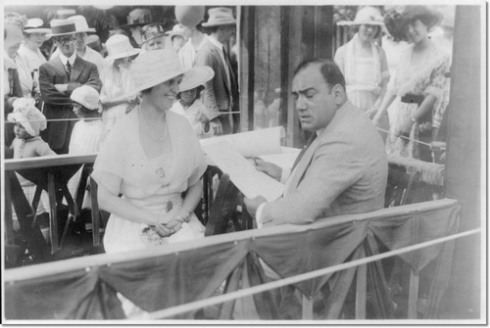
But he also donated his talents for good causes: below, Caruso mans a quick-sketch booth for charity, drawing Mrs Albert Gallatin.

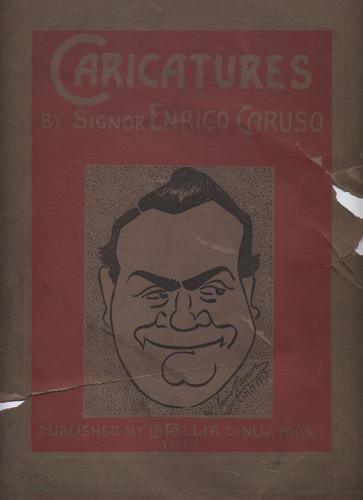
He published several books of his caricatures and cartoons; this one dates from 1914. I like the cover drawing below best of all his self-portraits:

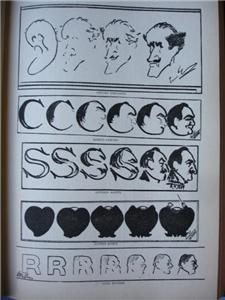
These ‘transformation’ drawings show a delightful playfulness:

Enrico Caruso’s cartoons all evince a spirit of light mockery without a hint of meanness; seeing them, I can believe that the great tenor would have made excellent company!