Bert Stabler on Blood and Earth, Lack and Void

Our extended theory and art discussion seems to have wound down, but Bert Stabler got in some retty great last words which I thought I’d highlight. First:

“The advocates of method oppose the nonmethod of chance to that of proceeding by reason. But what they want to prove is given in advance. They suppose that a little animal, bumping into things, explores a world that he isn’t yet able to see and will only be able to discern when they teach him to do so. But the human child is first of all a speaking being. The child who repeats the words he hears and the Flemish student lost in his Telemaque, are not proceeding hit or miss. All their effort, all their exploration, is strained toward this: someone has addressed words to them that they want to recognize and respond to: not as students or learned men, but as people; in the same way that you respond to someone speaking to you and not to someone examining you: under the sign of equality.” Jacques Ranciere, from The Ignorant Schoolmaster.

The left-theory world has its populists, like Ranciere, Bordieu, Zizek, and Gramsci, and its formalists, like Althusser, Deleuze, Derrida, and Greenberg. And it’s split up in numerous other ways too. And it’s like that in the art world as well, and in various areas of culture. But hierarchies of excellence are always conservative (even in a university), and totalizing universality is always radical (even when it’s just capitalism).

Barthes might indeed agree that image qua image needs to be recognized in some Platonic trinity of language qua language and math qua math, and freedom is the void that distinguishes and defines incommensurable multiplicities. I realize that that is a properly structuralist outlook.

But if the only true philosophy is epistemology, there immediately becomes no truth to epistemologically discern. Which I recognize as a conservative outlook– which, ironically for the feminists working with idealism, leaves them with nothing but nature and embodiment and the return to ancestral lore, the general revival of “witchcraft.”

And I have a great deal of sympathy for that, for blood and earth and haptic reflexive spasm within egoless harmonious chaos. And yet, there’s nothing about that that stands for an ethics that is itself ontological, rooted in the cosmos. I merely hope, without systematically promising, that image, the simulacrum of death, resurrected through the discursive language of art, can perhaps offer, as Caro says (echoing Hegel?), an ‘intervention that challenges the place to which poststructuralism has cast “primordial writing.”’

And here’s me in response.

In terms of your point about feminism…I think that gets at why Irigary, for example, who so radically resists the notion of biological determinism in some ways, in other ways seems so obsessed with embodiment, to the extent of seeing mathematics as gendered. Gender differences are metaphors, but there is no ontological truth beyond metaphors, so the women are not one because female lips are two, and the metaphor is the only truth there is. Bodies get erased by language and then immediately reconstituted in language. Logic is constantly swallowing bloody hunks of meat and then voiding them in a geyser of fluids, the pure grid eternally defiling itself, like Descartes pausing in his syllogisms to cut open a cow carcass, or Frankenstein birthing a shit baby. Derrida’s close reading is not an academic exercise; it’s a shamanic plunging of his orifice into sopping entrails; a violent and bloody ritual sacrifice to the hungering void.

And Bert again.

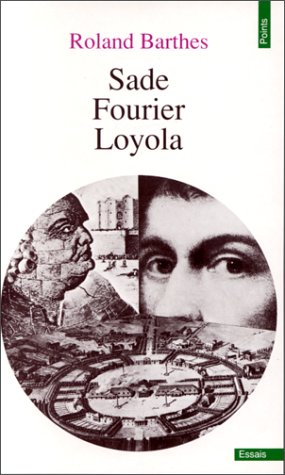
Barthes has a book about Sade, Fourier, and Loyola (called Sade Fourier Loyola), in which he describes them all as “logothetes,” inventors of languages; “It makes little difference how their style is judged, good, bad, or indifferent… all that is left in each of them is a scenographer; he who disperses himself across the framework he sets up and arranges ad infinitum. Thus if Sade, Fourier, and Loyola are founders of a language, and only that, it is precisely in order to say nothing, to observe a vacancy… Nothing is more depressing than to imagine the text as an intellectual object… The text is an object of pleasure… It is a matter of bringing into our everyday life the fragments of the unintelligible that emanate from a text we admire(.)”

This to me seems like a possibility in any discourse, to constantly defer Being through the proceas of Becoming, with the techniques of writing and erasing (sacrificing and consuming) functioning to constantly paper over the abyss on which we tread.

But the abyss itself persists only if we emerge ex nihilo, without reference to the gap that exiles us from nature. This lack that is the Real, perceived only in its effects, opposes the void, through trauma that makes necessity necessary and possibility possible. Language’s connection to pleasure is symbolic desire, which means anxiety and frustration for the phallus, but boundless freedom in lack.
Like I said, we may have exhausted this topic for now (though if people want to start off again, that would be cool too.) But in the meanwhile, thanks to Matthias, Caro, Franklin, Bert, and all those who joined in the discussion.
Gluey Tart: So Nice I Read It Twice

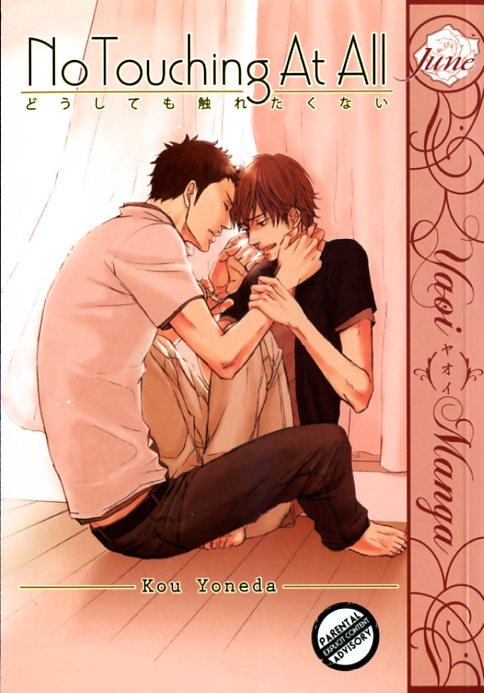
No Touching At All, Kou Yoneda, October 2010, June

My attention is scattered. There are so many shiny things, you know, and all the boring and/or dreary things, and also the bus, which certainly isn’t shiny but also isn’t boring or exactly dreary, because there are always weird things going on, on the bus, and also I can read my Kindle. I don’t read yaoi on the bus because I’m not completely shameless. It gets tight on the bus, and not everybody wants to see that ho shit before work. What was I talking about? Oh, right. So many things, so little time. I pretty much never reread anything, no matter how much I like it, because there’s this towering stack of unread manga (actually several towering stacks of unread manga), to say nothing of the towering stacks of unread books (both physical and virtual). I read it and move on – baby, baby, I’ve got to ramble. But when I finished this manga, and went right back to the beginning and started over.

I wasn’t all that excited about No Touching At All based on reading the description on the back cover. “On his very first day at a brand-new job, shy Shima is trapped in the elevator with a hungover mess of a guy… who turns out to be his boss!” If you read yaoi, you now know how this book is going to work. Shima is a shy, nice guy, and also a bottom, and he’s going to fall in love with some drunk, disgusting asshole who’s also his boss. Drama will ensure, but their love will triumph. Yuck. Usually, I’d rather not. Life is too short to saddle yourself with some drunk, disgusting asshole, even for the hour or so it takes to read a comic book. But the front cover – well, the front cover is different.

The story and art in this manga have a gentle quietness to them, a stillness that lets the uncomplicated but poignant details play out and reverberate in a way I found affecting. On the cover, the smaller guy (yes, that would be Shima) is so nicely rendered, folded up into himself, wound up tight, eyes downcast, but holding on to the other man tight, desperation palpable. That’s a lot for one illustration, and nicely drawn, too. The other man is the drunk, the boss, Togawa. Ignore the fact that his back and torso make nonsense of perspective, space, and possibly time. And that something truly unfortunate is going on with his right foot, which looks like a depilated bear paw. Actually, his entire right leg is perplexing. But never mind. The way he’s holding but not quite holding Shima is beautiful. He’s in love, and I am hooked.

The story isn’t icky, either. One might think this comment is damning the thing with faint praise, but not so. I think of these manga as being a bit like noh plays. (I’ll bet you weren’t expecting that.) There’s a finite number of traditional themes. (Also, all the roles are played by men.) (This isn’t meant to be an air-tight comparison, by the way.) There’s a number of stock themes, and the creators change the details (ideally) from manga to manga in ways that might not look exactly original to all comers. They don’t need to be. We don’t necessarily want them to be. A certain amount of the enjoyment comes from exploring all the nuances of your chosen scenario. Fluffy, weepy little fruit loop getting dominated by “rakish” asshole of a boss is not my chosen scenario, thus my initial concern. To be clear, it wasn’t that I was afraid the book wouldn’t be original – I have no expectations that it would be original. I just wanted it to tweak the same old stories well. “Well” can, to a certain degree, be defined as “in ways I like.”

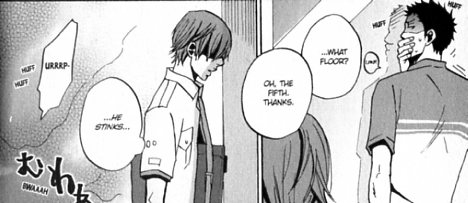
Shima isn’t a fluffy, weepy little fruit loop, though. (Well, yes, maybe he is weepy. It plays all right, though – he has his reasons. I don’t have a generalized problem with male characters crying, but there’s a style of yaoi that has the uke carrying on like John Boehner.) Shima’s character is well-imagined; he feels real, and most of what we know about him is told through the drawing. We see him staring stoically at the elevator doors as he first meets Togawa, who is still drunk at 9 a.m and about to vomit. (“He stinks,” Shima thinks to himself as he stares.)

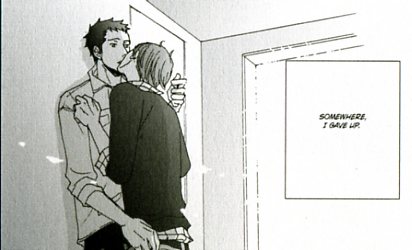
We see him sitting quietly at his desk as he listens intently for information about Togawa, never giving anything away. Shima is quiet and contained. Cautious. When he finally pushes Togawa against a wall and kisses him – this is after they’ve had sex, so it’s an ownership move rather than a “confessing my love” move – it’s believably surprising. And moving. We feel how far Shima has come to allow himself to do this, and how desperate he is.

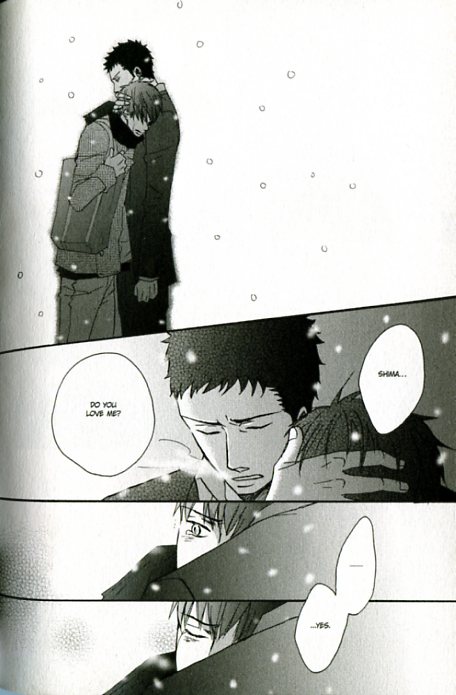
Shima has the requisite sad backstory, but Togawa’s sad tale of woe is grim in a serious and complete way. And he’s a nice guy, it turns out. Easygoing and considerate. The requisite three-quarters-of-the-way-through-the-book breakup is Shima’s fault, a combination of the usual contrived misunderstanding – probably a seven-ish on the one-to-ten scale of authenticity and plausibility, as these things go – and an odd but perhaps believable reaction to Togawa’s unfortunate background. The contrived misunderstanding is often a problem – it doesn’t have to be utterly believable, since it’s more of a plot device than an integral part of the story, but if it isn’t believable enough, you don’t get the payoff of relief and catharsis or whatever. In this case, the cause of the problem isn’t entirely solid, but what carries it is, as usual, Shima’s small reactions.

The pacing often feels off at this point in the story. After the long, detail-filled lead-in, lovingly chronicling the falling for each other phase, the near-breakup and getting back together part tends to get short shrift, as if we’re three quarters of the way through the run and we have to wrap this up. I often start losing track of plot points right about here, and that happened with this book, too. But in this case, it isn’t that I’m annoyed about suddenly not being sure what the story is about any more; it’s that I feel like I’ve missed out on some good stuff.

Rushed though the resolution may be, it is romantic. The characters’ movements and reactions to the plot contrivances ring true. Full pay-off for my inner sap (you don’t have to scratch too hard to find it).

Ryan Holmberg on Tsuge and Tatsumi

Ryan Holmberg has left a bunch of interesting comments on Suat’s essay about Tatsumi. I thought I’d highlight some of them here.

Here’s the first.

I realize I am commenting on a two-month old post, but I just now read it.

I agree with the basic crux of this analysis of Tatsumi. I think it is harsh but fair when it comes to metaphor and sexual values. In that era of Tatsumi’s work every oblong is a phallus and every hole a vagina, no doubt, and the misogyny is unmistakable.

Given this – given that Tatsumi’s work is unsubtle – I have to say your review is about as obvious as Tatsumi’s work. I sympathize with the desire to serve up a corrective to the promotional garbage that fills the press, but you are fighting straw men. I am not sure if you are saying much more than what any of us who have had doubts about Tatsumi’s glory have thought at one time or the other.

You were fairly generous about the menstrual flowers in Tsuge’s Red Flowers. Why is it that clichéd sexual euphemisms are okay in a pastoral “literary” genre but not in pulp? Is the problem that the cicadas and babbling brooks are peeled away?

Also, on what basis are Tatsumi’s drawings “crude” and “inept”? For the most part (some exceptions), they seem pretty finished to me, and work perfectly well for what he was trying to do. “Unpolished skills?” He was a 15-year veteran in 1970.

“A failure to move beyond what remains totally acceptable in modern day manga”? You mean manga then? If so, tell me who was doing stories like Tatsumi’s in 1970, aside from Tsuge. Second, Tatsumi was black-listed by Shonen Magazine, supposedly (according to Tatsumi in “Gekiga kurashi”) after their print-run fell after publishing one of his works) – clearly he was not “totally acceptable.”

Also, “Tatsumi was no different from those individuals (the factory mangaka)”? Just on the basis of a lack of character types? I think you also mention pressing deadlines as a reason for how the work looks the way it does. I doubt it. At this point, he was writing for very few weeklies (this changes in the mid 70s, after the period in question). An artist like him with a 15 year career, having produced hundreds of pages a month for many years, do you think writing one 20 page story per month was rush work? At least be generous enough to assume that the artist knew what he was doing and had complete control over the product. He might not have been a poet or a Kojima Goseki-caliber draftsman, but he was also not an amateur.

Again, I sympathize with your basic distaste. But not with the venting.

And here’s a follow up.

The difference in finish between Projectionist and Forked Road is obvious, and as you pointed out it probably has something to do with Tatsumi`s circumstances at the end of the 60s. (Side note: your quote about Tatsumi having a bunch of artists working for him…I think that means artists writing comics for the magazine-anthologies he was publishing, not assistants for his own work…but I will have to check this.) But first of all Projectionist-type crude drawing has a long tradition in kashihon comics in Japan (this is the point where is moving from kashihon to magazines), so I don`t think it can be chalked up to lack of time or skill, and the increase in finish over those two years also has to do with the different standards of the manga monthlies and weeklies, not just a personal aesthetic decision on Tatsumi`s part. That doesnt make the work better or worse, but I think one should, especially when critiquing an artist so harshly, have some consideration for context.

And one more.

Just quickly, on Imamura, I haven’t watched these in years, but the Pornographers maybe, Insect Woman, Ningen johatsu (probably not in English). They are much more humorous than Tatsumi, but there is some overlapping setting and gender views. The impact of Nikkatsu films is also big on all of the Gekiga artists, from the Action stuff to the romantic stuff. To me, Tatsumi belongs in that world.

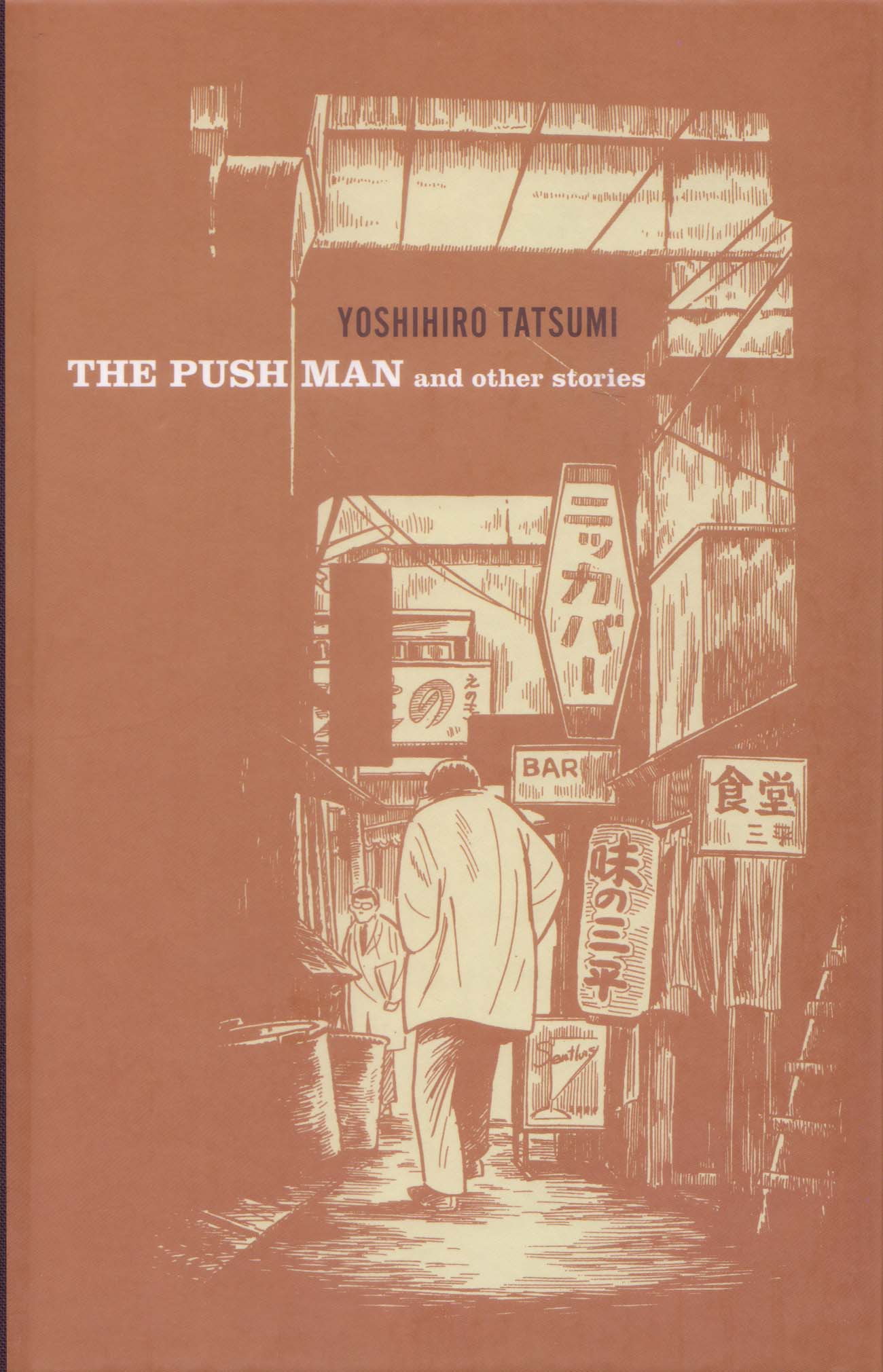
As for Tatsumi’s busy schedule in the late 60s, when he started doing those dirty-men stories. His prose (versus manga) autobiography “Gekiga kurashi,” published last year, has a bit on this period. It says in short, the mid 60s were a difficult time. Then an editor from a second-tier magazine name Gekiga Young commissioned 2 x 8 pages a month from him, which he claims was hard work given his publishing venture. The editor apparently requested lots of revisions, less speech balloons, etc for a tighter more visual product. I would have to check, but these are probably the short works in Pushman. He also thanks the editor for getting him inspired about making manga again.

Later, he talks about how he had a long standing feeling against using assistants, arguing that one’s work should be one’s own. He says that in 1974 he had to swallow his pride and hire two assistants to complete a commission from Shukan Manga Sunday (a weekly). I will have to do more poking around, but the way things are worded here is that this was a turning point in the way he made comics. Maybe at the height of his popularity in the late 50s he had assistants, but given the economic difficulties of kashihon publishing in the mid 60s, I doubt he had them then.

Do click through the links, as there are additional remarks by Ryan, and comments by Suat and others.

Not a Gentleman

Theologian Stanley Hauerwas, in his book Dispatches From the Front, argues that Trollope’s work offers a challenge to the moral peril of modernity.

It is not hard to document the central place of constancy and forgiveness throughout Trollope’s work. That he saw these themes as central no doubt has much to do with his sense that the England he loved and cherished, the England of the genry and the honest workman, was in danger of being lost under the onslaught of the new commercial culture. Thus, in his Autobiography he says: “A certain class of dishonesty, dishonesty magnificent in its proportions, and climbing into high places, has become at the same time so rampant and so splendid that there seems to be reason for fearing that men and women will be taught to feel that dishonesty, if it can become splendid, will cease to be abominable.” The threat of such people, vividly portrayed in Lopez (The Prime Minister) and in Melmorre (The Way We Live Now), was not that they were unambiguously evil, but that they could so easily be mistaken for gentlemen. Even though Trollope was no doubt concerned with the passing of a certain social class, he was yet more deeply concerned with the accompanying threat to moral order. It is that concern which shapes his entire literary enterprise.

As this makes clear, Hauerwas shares Trollope’s concern about the threat of capitalism and liberalism to the moral order. For Hauerwas, the Enlightenment has abstracted moral principles from community and tradition. Thus, liberalism (in its broad sense, including Democrats, Republicans, libertarians, and more) organizes politics as the pragmatic magaerial effort to balance interest groups. “Freedom” and “equality” are seen as the most important virtues, and truth, honor, and everything else is abandoned in their name. Thus, Hauerwas argues:

I have found it hard to enter the debate about abortion since I do not believe the issue for Christians can be framed in “pro-life” or “pro-choice” terms. Such descriptions are attempts to win the political battle on the most minimum set of agreements — that is, that abortion is primarily about the sanctity of life or freedom of women. As a result, abortion is abstracted from those practices through which our lives are ordered that we might as a community be in a position to welcome children. It is a political necessity to make our moral discourse, and our lives, as thin as possible in the hopes of securing political agreement. As a result, the debate is but a shouting match between two interest groups.

Again, Hauerwas sees Trollope as offering a different vision of society — one based on honor, constancy, and forgiveness rather than lowest common denominator interest group squabbles. Trollope presents a vision of a community in which people strive, not for freedom and equality, but rather to be gentleman and Christians.

I have a fair bit of sympathy for this view. Capitalism is an acid; it dissolves social relations and community. It believes in nothing but desire — the freedom to desire, the equality of all desire, and the need for infinite space in which desire can expand. We’re all autonomous wanting machines, scrabbling for oil and sex and the money to buy both as our hydrocarbons and progeny scuttle across the globe, leaving nothing but extinction and advertising slogans in their wake.

So, if Trollope is the cure, then, hey, I’ll read Trollope.

I picked up The Prime Minister; coincidentally one of the books that Hauerwas discusses. Here’s the passage where the gentlemanly, virtuous Mr. Wharton, scion of the old class and old morality, confronts Ferdinand Lopez, the reckless capitalist adventurer, who wishes to marry Mr. Wharton’s daughter. Wharton is turning over, in his own mind, why he cannot allow his daughter to do so.

this man [that is, Lopez] who was now in [Mr. Wharton’s] presence and whom he continued to scan with the closest observation, was not what he called a gentleman. The foreign blood was proved, and that would suffice. As he looked at Lopez he thought that he detected Jewish signs…

As the book goes along, we learn that Lopez is, in fact, not a gentleman. His whole life is devoted to reckless speculation and the pursuit of money. Like capitalism itself, he has no sense of good and bad — and no sense of social fitness. In his egalitarian amorality, he envies those above him (rather than respecting them) and ruthlessly exploits those below (rather than protecting them.)

Lopez is, in other words, modernity incarnate. And modernity incarnate, for Trollope, is a Jew.

I’m a Jew myself, as it happens. There are Jews who see anti-Semitism everywhere in the media. I have to say, I’m not one of them. Jews are, as far as most Americans are concerned, white. Anti-semitism is pretty thoroughly despised…in part because Jews have so thoroughly assimilated, and in part because the U.S. fought a massive, successful war against anti-Semitism, and, partialy as a result (thanks Hitler!), anti-Semitism continues to be equated with absolute evil.

All of which is to say that Trollope’s anti-Semitism in itself doesn’t bother me so much. I don’t feel like I’m being oppressed. Lopez is an invidious stereotype, but it’s a stereotype that lost. I, for example, married a shiksa, and nobody in the shiksa’s family cared. Lopez hasn’t hurt me and can’t hurt me. In the book, all his plans may have failed and he may have offed himself in the interest of conveniencing the uptight Brits. But, in real life he got to keep the girl and have little baby Lopezes who no one could tell, or even wanted to tell, from the uptight baby Brits. Admittedly, Lopez had to go through the gas chambers first, which sucked…but all’s well that ends well.

What does bother me, though, is that I think there’s a real sense in which Trollope isn’t wrong about Lopez. I mean, clearly, he’s wrong that Jews are evil sneaking submen who don’t deserve to marry shiksas, because, in fact, Jews are awesome, and should marry whoever they want. But I think he’s right that the old moral order which Hauerwas defends, the anti-capitalist, cohesive morality he challenges, is, by its nature, anti-Semitic.

Hauerwas is aware that this is a problem…but he tries to get around it by suggesting in passing that Trollope has us identify with Lopez’s frustrations and by emphasizing that it is Lopez’s conduct that makes him not a gentleman, rather than the happenstance of circumcision.

None of which is very convincing. Mr. Warren identifies Lopez as not being a gentleman because Lopez is a foreigner and a Jew before he knows anything else about him. Indeed, he dislikes Lopez, as he says, precisely because “no one knows anything about him” — and no one knows anything about him because he’s a Jew without lineage or proper family.

And lo and behold, the rest of the novel goes about remorselessly demonstrating that Mr. Warren’s prejudices were correct. It’s true that Lopez does not act like a gentleman…but that conduct is not separable from his ancestry. On the contrary, the ancestry comes first, diagetically and I believe thematically.

Trollope does, as Hauerwas says, show the virtues of constancy, forgiveness, and gentlemanliness…virtues that Lopez and capitalism repudiate. But Trollope also shows that virtues of keeping to one’s own set and keeping away from the greasy foreigners. I can sneer at the Enlightenment and liberalism all I want, but the fact remains that it’s because of Enlightenment liberalism that I was able to marry my wife without a great deal of unpleasantness. Capitalism eats through moral truths and communities — but one of the communal moral truths it eats through is anti-Semitism.

Hauerwas seems to believe that we can get Trollope’s honorable cohesive, pre-capitalist community without that anti-Semitism, and, presumably, without the sexism or the homophobia. It’s an appealing vision…but if he wants to make me believe in it, he needs to do better than just pointing to Trollope. Because, lovely as Trollope is in many ways, I don’t think too many Lopezes are going to want to live in his world.


Nazi caricature of a Jewish banker

Utilitarian Review 4/16/11

News

I’m very sorry to say that Domingos Isabelinho has decided to step down as a columnist here at HU. We’ve been really honored to have him. Besides being one of the most knowledgeable critics around, he has a unique and really irreplaceable perspective on comics and culture. He’ll be sorely missed here. You can see all of his posts here.

The good news is that Domingos will be posting again at his old blog the Crib Sheet. Go check it out.

Utilitarians Everywhere

It’s been a couple of weeks since I did one of these, so there have been a bunch of publications.

A piece at the Chicago Reader about Del McCoury, the Preservation Hall Jazz Band, and embalmed traditions.

A piece at Splice Today about the need for two-fisted pacifism.

At Splice Today a review of Source Code.

Also at Splice a review of Insidious.

And at Comixology I talk about Paul Celan, words and images.

Statement of Purpose

(adapted from The Artist’s Way: A Spiritual Path to Higher Creativity by Julia Cameron with Mark Bryan; Media Marketing: How to Get Your Name and Story in Print and on the Air by Peter G. Miller; and from the graduate admissions and promotional materials of writing programs at Brown University, Stanford University, the State University of New York at Buffalo, the University of Houston, the University of Illinois at Chicago, the University of Michigan, and Washington University in St. Louis)

To write is to bring representation and the suggestion of scientific method to the marketing of enlightened self-promotion. It is to be intimately connected to a high-tech ecosystem which overflows organically into a newer, better Graduate Record Examination. That is why, as a writer, I am a talented person. I reparent the artist-child who yearns to be a recognized authority; I pay too much in order to wear weird self-empowering clothing; I think of the universe as a vast electrical sea and of myself quoted in a national magazine. When I — a peripatetic Jungian — go to your cultural mecca to explore the beautiful irreverent shorthand of a profound, profane corporate brochure, the snowflake pattern of my soul will emerge, and, spiritually unblocking, I will become a controversial activist for ethnic and gender collages.

My life has always included strong internal directives. Well-packaged ideas, I call them. Although not always filled with sex and violence, they combine the comfortable nondenominational noncourse educational experiences of Poet Laureate Robert Hass with the sensuous television consciousness of solvent self-affirmer Sharon Olds, and accompany these attempts at conceptual and discursive emotional incest with literary modeling by Kafka, Proust, Woolf, Joyce, Pound, and Stevens. I tell this story not to drop names, but for reasons of ego and commerce. I want to work seriously with a unique community of writers, scholars, and critics in a program which, while current, is not overly specific.

As a kid my dad thought my art was an “unruly multisubjective activity.” That made me feel I was a multidimensional management consultant in pursuit of lush plants, plump pillows, experimental nonlinear interactive space: in other words, of one wonderfully nurturing self-loving something. As I have grown deeper, I have continued to rediscover that my creativity requires a sense of flow and stability different from other’s humility. I believe that the rituals of power and authority which traverse your writing package will fully open to me this sense of abundance — will allow me to perfect my craft and to immerse myself luxuriously in a rewarding publishing and teaching career. In return, I am certain I can contribute to your collective intellectual process by helping your institution maintain its competitive synchronicity.
________

Note: We’ve been talking about artist statements and the evils thereof in comments here. In that vein, I thought I’d reprint the Statement of Purpose I wrote on my MFA applications way back in 2000 or so. I applied to grad school for three years. Writing the statement of purpose the first year almost made me hang myself. So I tried something else the following years. The result was the same (I didn’t get in) but the risk of self-destruction was appreciably lessened. Plus, the Chicago Review printed it, which was nice. I think that this is its online debut, though.

Virtual Gay Panic

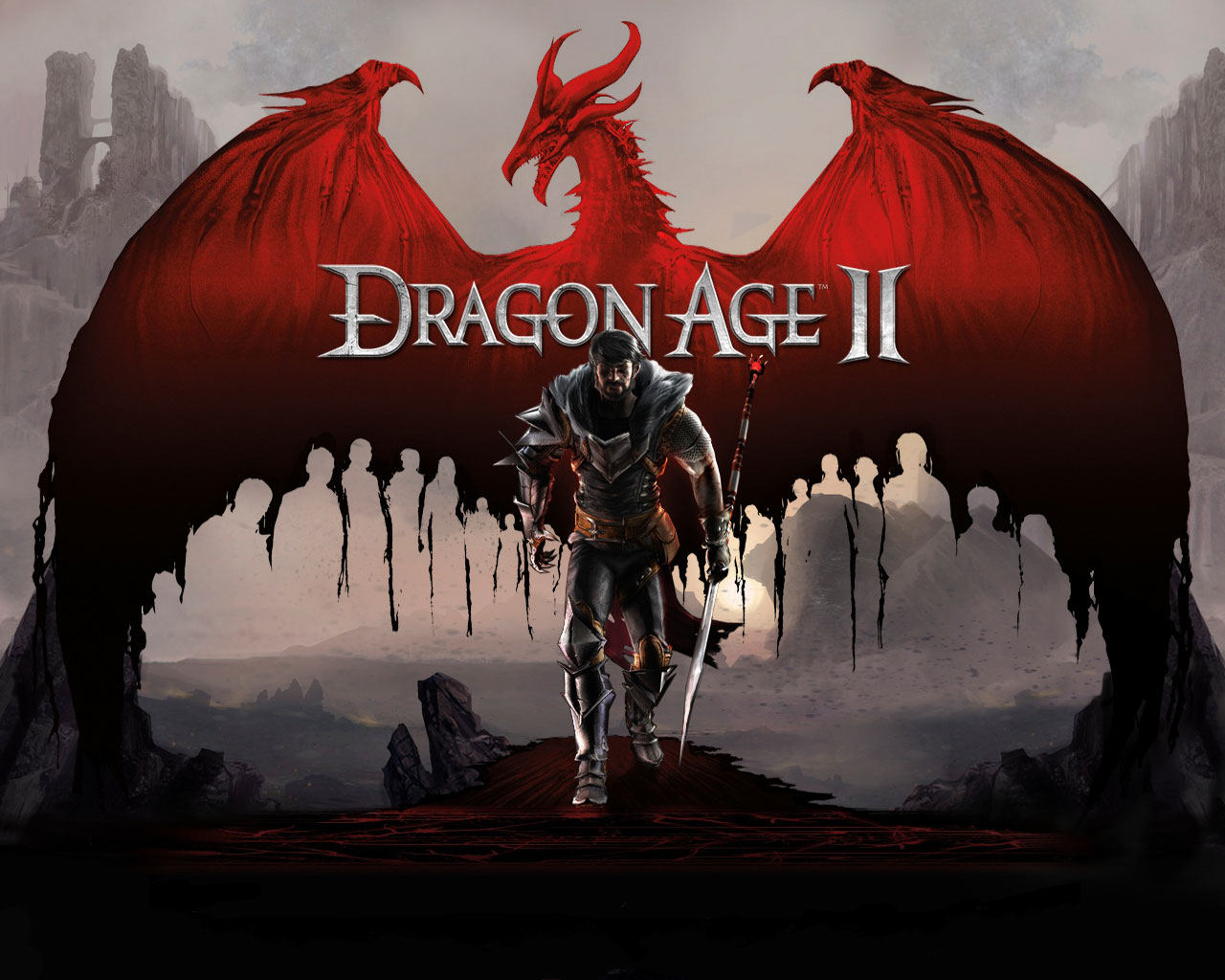
For the past few weeks I’ve been playing Dragon Age 2, a “sword n’ sorcery” role-playing game (RPG) produced by Bioware. The game has earned mixed reviews: many critics raved about the decade-spanning story or the improvements made to the combat mechanics of its predecessor. Others complained about the repetitive nature of the quests, the many glitches, and the painful lack of variety in environments. Speaking of which, I must have visited the exact same cavern about 30 times. And I visited the exact same sewer passage about 40 times. And half the game is spent wandering around just one city (it got really fucking tedious is what I’m saying). But for more than a few people, the biggest flaw in Dragon Age 2 isn’t the repetitiveness or the bugs. It’s that the game is kinda gay.

I’ll provide some background: Bioware RPGs almost always include a romantic sub-plot, where the player’s avatar (referred to as the Player Character, or PC) has the option to romance one of his/her traveling companions. In most RPGs, the romantic options are exclusively straight. If the PC is male, he can only romance female companions. If the PC is female … you get the idea. But Bioware has the habit of including at least one gay romantic option, and Dragon Age: Origins included gay options for both men and women. Though it’s important to note that there were also exclusively straight companions who could be wooed only by PC’s of the opposite gender. So there was a little something for everyone (well, not exactly everyone, but certainly a larger demographic than just straight men).

Dragon Age 2 upped the ante by doubling the number of same-sex romantic possibilities, and in the process eliminated the exclusively straight romantic option. There are four companions, two male and two female, that a PC of either gender can woo (as a side note, your PC always has the last name of Hawke). So is this a universe filled with bisexuals? Possibly, but only one of the companions (the pirate wench, Isabela) makes comments that clearly establish her bisexuality. The other characters do not discuss their sexuality without reference to Hawke, which means that the player effectively determines their sexual orientation when he/she selects a gender for their PC. As an example, the male companion named Anders only expresses homoerotic desire if Hawke is male, but he shows no interest in men if Hawke is female.

A few fans have referred to this feature as “subjective sexuality,” meaning the sexual orientation of supporting characters is not fixed, but dependent on the player’s choices. This goes beyond the simple empowerment fantasy of most adventure games, and actually brings gaming closer to fan fiction (or slash-fic, in this case). Like a fan-fic author, the player is crafting the story and the romance to their liking, but unlike fan-fic, the in-game romances are actually “canon.” As an approaching to virtual romance, subjective sexuality is quite inclusive.

Perhaps a little too inclusive for some people’s tastes. But I’ll let Captain Cornhole at the Bioware Social Network speak for himself in a thread titled “Straight romances got screwed, no pun intended.”

“No seriously for those of us who like straight romaces [sic] we all got screwed over big time. Before I go any further let me clarify this is not a condemnation of homosexuality or bisexuality by any means.

Now sure your Hawke is female you can romance Anders or what have you, but it isn’t a truely straight romance. Every romance option is bi, and it’s just not the same knowing Anders or Fenris will flirt with male Hawke just as much.

Bottomline it is disgusting and I’m a tad upset there is not a single straight person in the game, and frankly there isn’t anyone that I want to romance because of it. It’s a shame really.”

Even more outraged was the commenter named Bastal, who posted a Unibomber-quality manifesto in the thread titled “Bioware Neglected Their Main Demographic: The Straight Male Gamer.” You can probably guess the gist of his complaint. These comments were not isolated incidents, and they attracted the attention of the gaming press, and eventually elicited several responses from Bioware staff.

David Gaider, one of the Lead Writers of the Dragon Age franchise, responded to the Cornhole’s comment (with far more politeness than was deserved):

“… [I]f the concern is you might accidentally be exposed to an unwelcome sexual advance– oh well. One would hope you’d deal with it in the same mature manner you’d do so in real life …

Fenris and Merrill [two other potential love interests] don’t initiate a romance with any gender, and really their sexuality is the most subjective since they don’t discuss it. Regardless, why someone would be concerned about what other people might do in their playthroughs is difficult to say. If the idea that a character might be having hypothetical sex with someone of the same gender in an alternate dimension bothers you, then by all means don’t continue with their romance. That’s why they’re optional.”

It’s tempting to just dismiss this fanboy whining as homophobia and be done with it. But there’s another facet to these types of complaints besides the usual “gays are icky,” and Gaider’s response doesn’t quite address it. This facet is not about a fear of queerness in itself, but a fear that there is nothing else. It’s a discomfort that was inadvertently expressed by one of my friends (they shall remain nameless) who also played Dragon Age 2. Like the commenters at the Bioware Network, he was unhappy that the  male traveling companions (and several other male supporting characters) flirted with him. I responded by noting that he didn’t have to flirt back, but it wasn’t so much the flirting that bothered him but the absence of relationships with men where flirting didn’t occur. He wanted un-erotic relationships with other men, in other words, straight male friendships. At that moment, part of me agreed with him. While I don’t presume to speak for all straight men, there’s something comfortable about my friendships with other straight men, when sex (at least on a conscious level) is out of the question. What my friend wanted, and what I suspect many other straight male gamers also want, is the virtual version of these “safe” friendships.

But this safety relies upon the rejection of a romantic possibility. There are endless opportunities for romance or non-romance in the real world, and my decisions have no effect on the options of the vast majority of humankind. But the virtual world of Dragon Age is finite. There are only so many characters and only so many romantic possibilities. When I start insisting that certain sexual identities become fixed so that those friendships feel safer for me, what I’m also saying is that a romantic option for a gay man (or for a woman who enjoys the fantasy of being a gay man) cannot exist. And in the balance of who’s gaining or losing, I’d say that losing the easygoing quality to a friendship with a nonexistent person is a very, very small price to pay so that someone else can have the same freedom that I possess when creating their ideal fantasy.

Or it might be possible, in theory, to create their ideal fantasy if less of the game took place in that one goddamn cavern … I’ll stop harping on that now.