A Short Walk through the Unifactor: Jim Woodring, Frank and Weathercraft

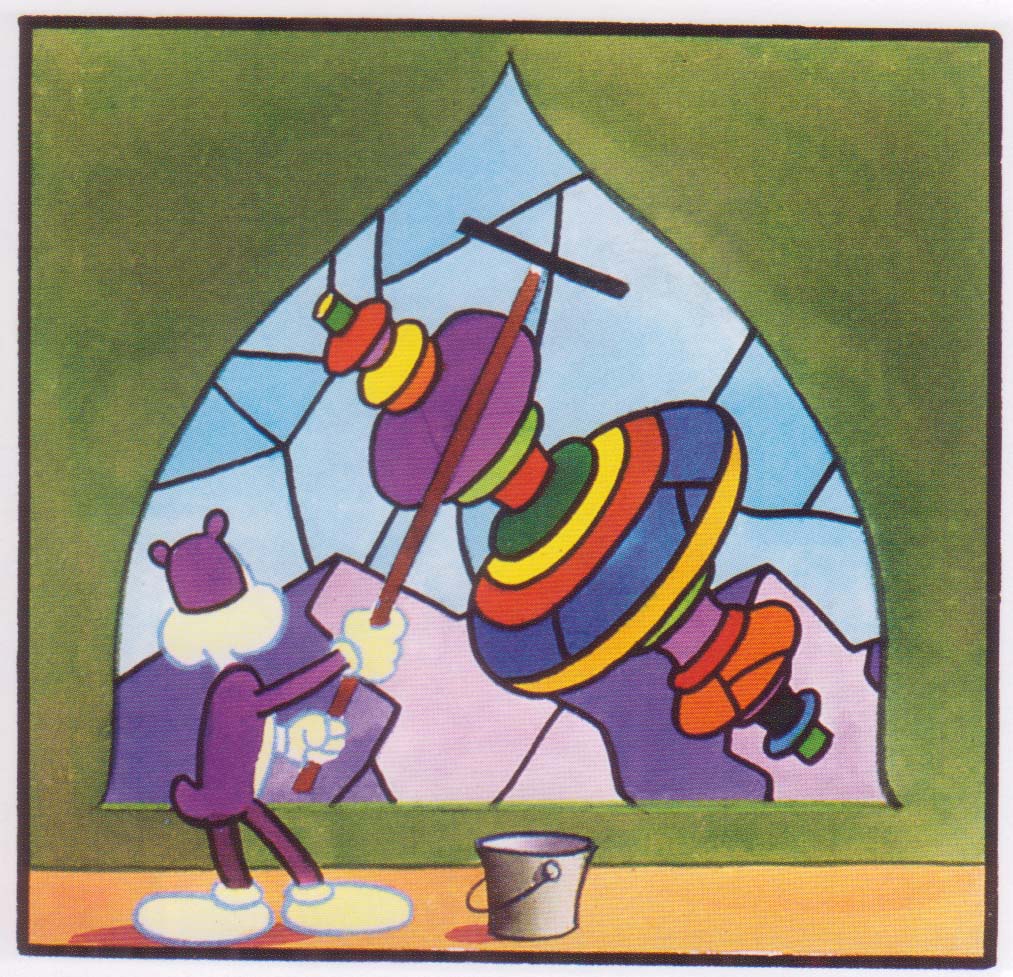
The Unifactor. A world born of the intellect, hallucinations and waking dreams of its author. An expanse which might just as well be called the Unimind, a pantheistic unshifting wonderland of the soul; instinctive in its creation and consistent in its mythology.

We first catch sight of one of its substrates in the stained glass window of a mansion or temple Frank has been assigned to clean.

Continue reading

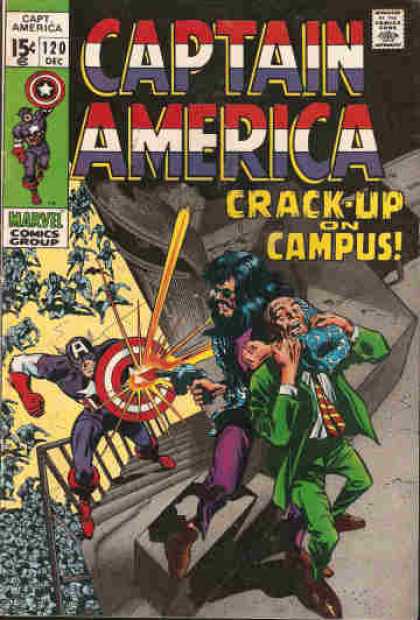
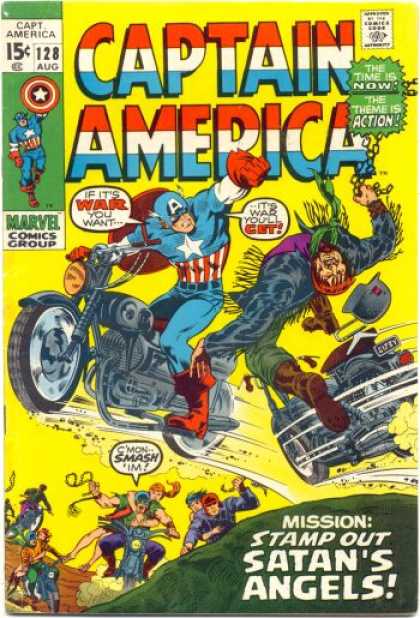
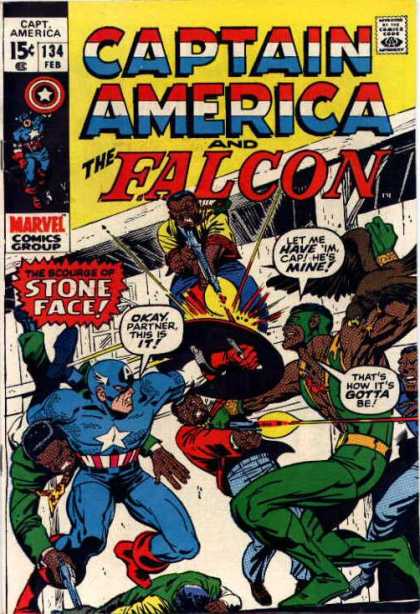
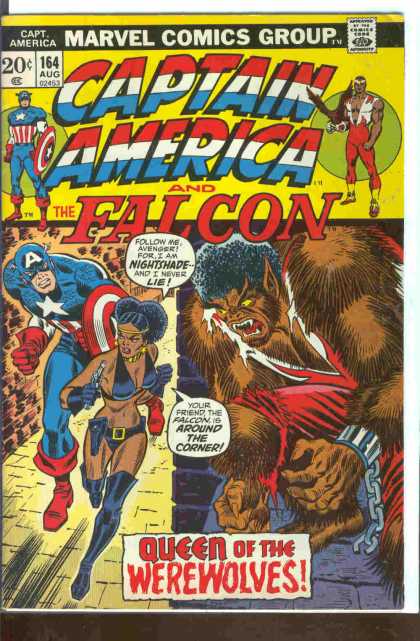
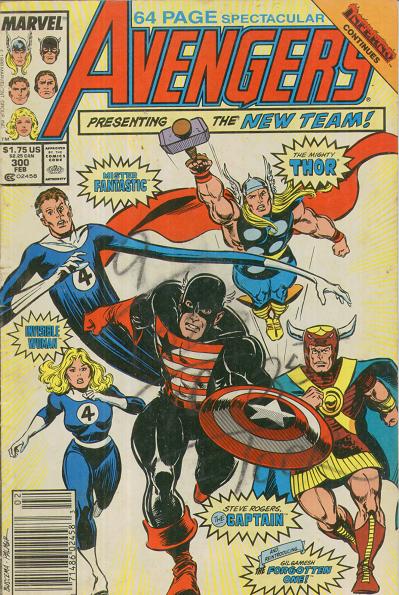
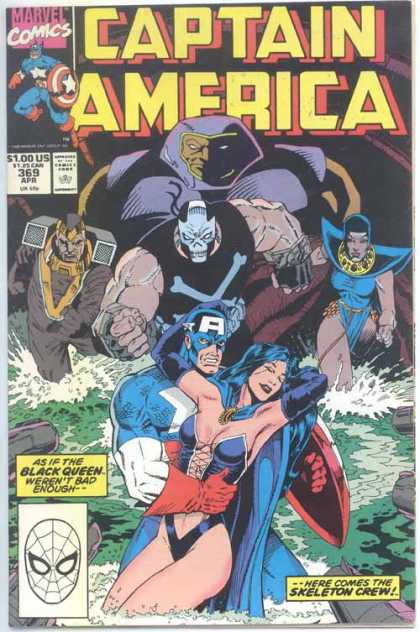
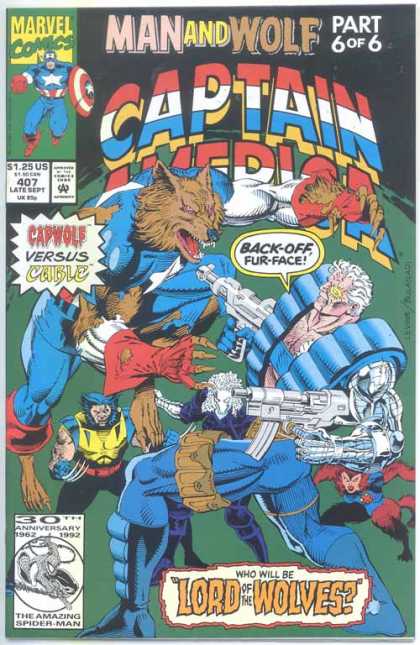
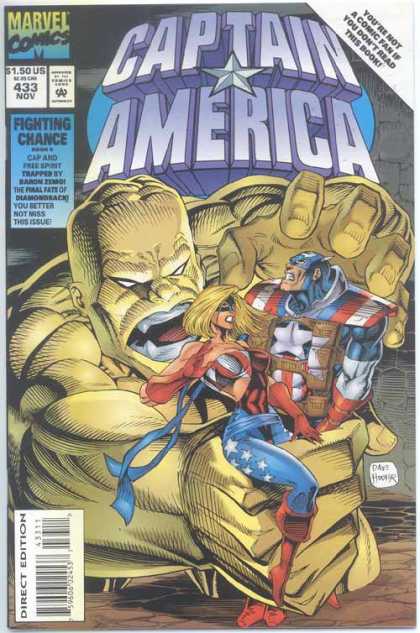
Punching Hitler Since 1941: The History of Captain America in Covers

Happy Fourth of July! Let’s celebrate the holiday with America’s most patriotic hero.

1940s

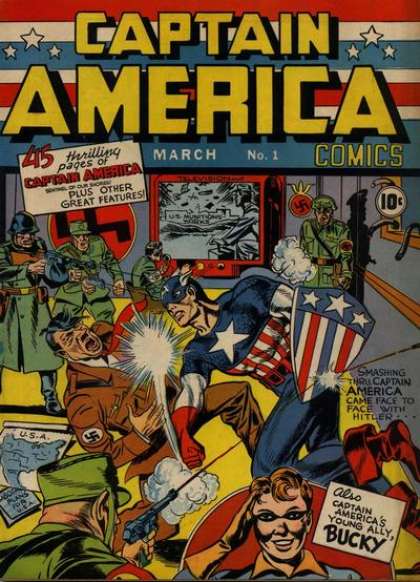
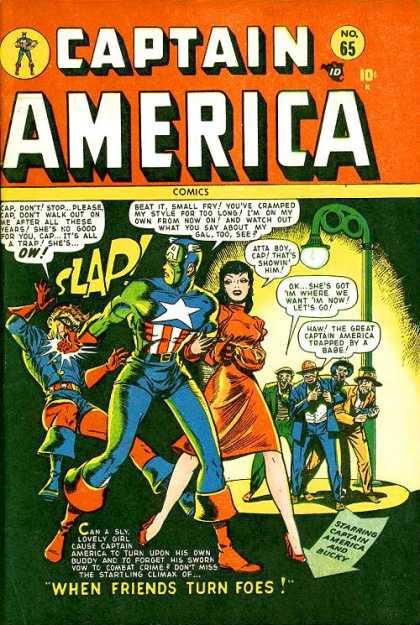
Cover by Joe Simon and Jack Kirby (1941)


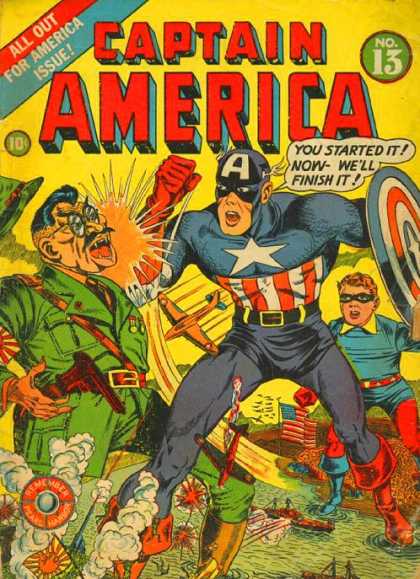
Cover by Al Avison (1942)


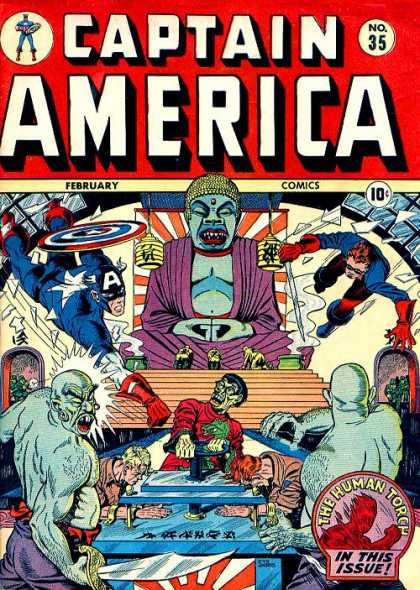
Cover by Syd Shores (1944)


Cover by [I have no idea] (1948)


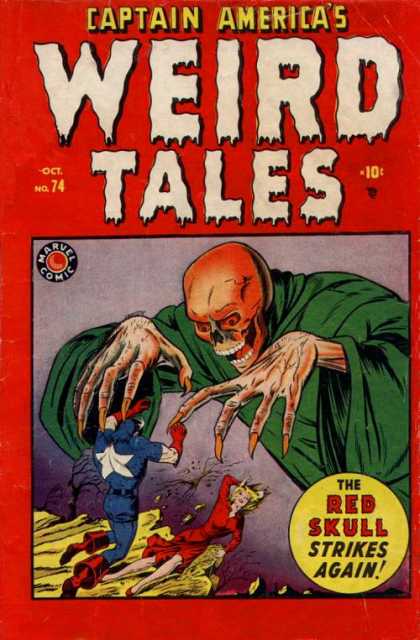
Cover by Martin Nodell (1949)

1950s

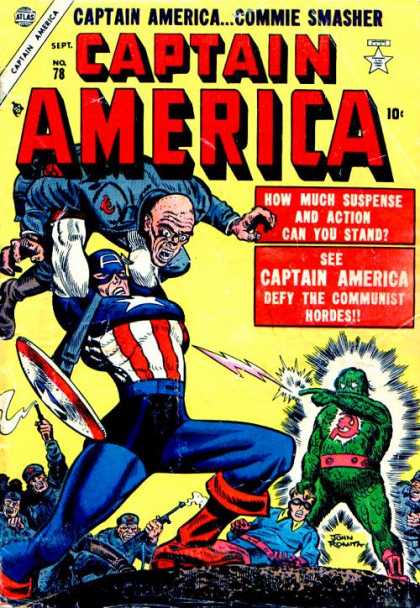
Cover by John Romita, Sr. (1954)

After several failed re-launches, Atlas Comics (later Marvel) canceled Captain America with issue 78.

1960s


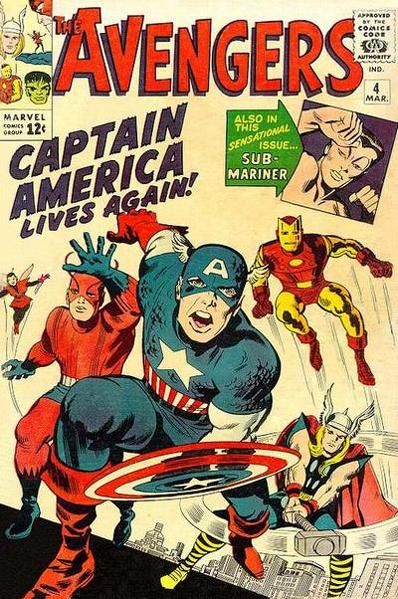
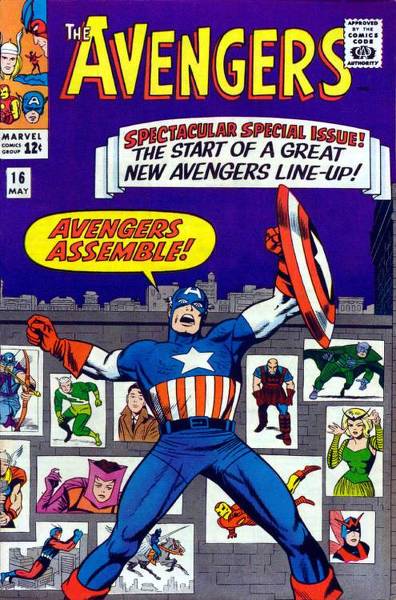
Cover by Jack Kirby and Paul Reinman (1964)


Cover by Jack Kirby (1965)


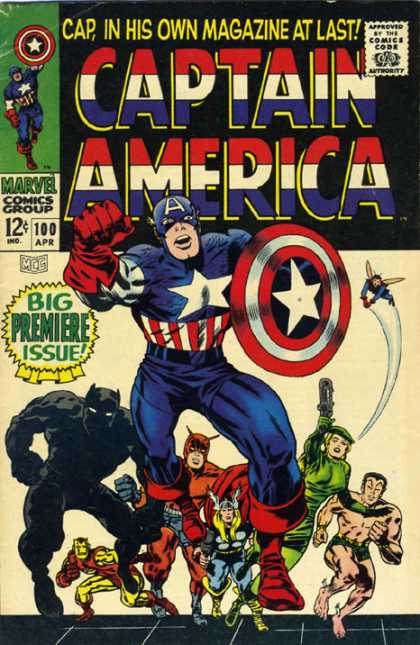
Cover by Jack Kirby and Syd Shores (1968)

Captain America returns … and co-opts the numbering of the canceled Tales of Suspense comic.

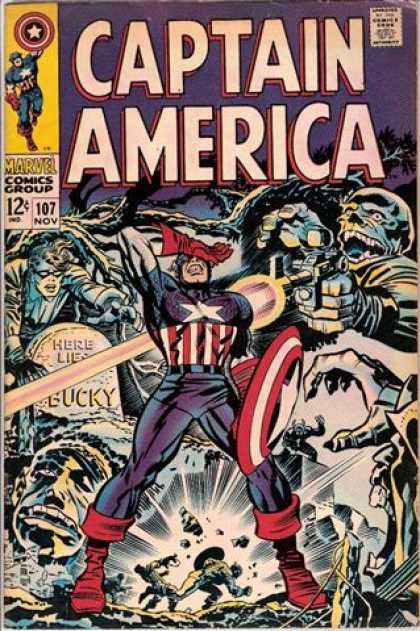
Cover by Jack Kirby and Frank Giacoia (1968)


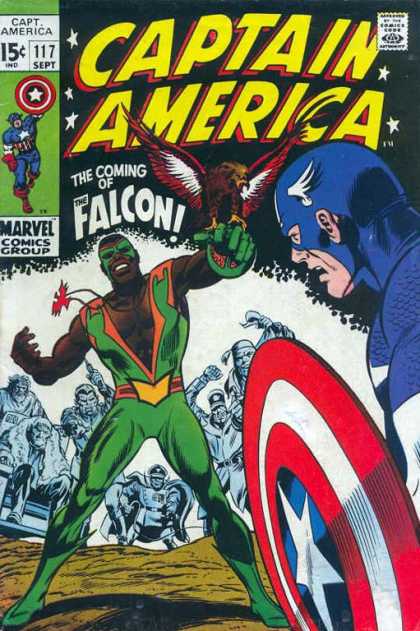
Cover by Gene Colan, Joe Sinnott, and John Romita, Sr. (1969)


Cover by Gene Colan and Joe Sinnott (1969)

1970s


Cover by Marie Severin and Joe Sinnott (1970)


Cover by Marie Severin, Herb Trimpe, and John Romita, Sr. (1971)

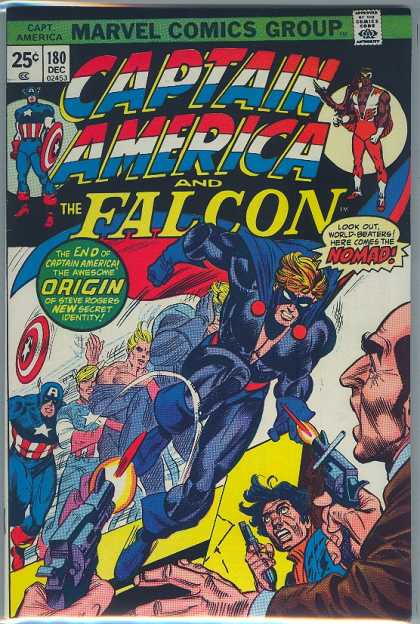
Renamed to Captain America and The Falcon with issue 134.

Cover by John Romita, Sr. (1973)


Cover by Gil Kane and Frank Giacoia (1974)

Captain America briefly lost his faith in America and became Nomad after discovering that President Nixon was the leader of a terrorist organization called the Secret Empire (and before you ask, no, I’m not making that up).

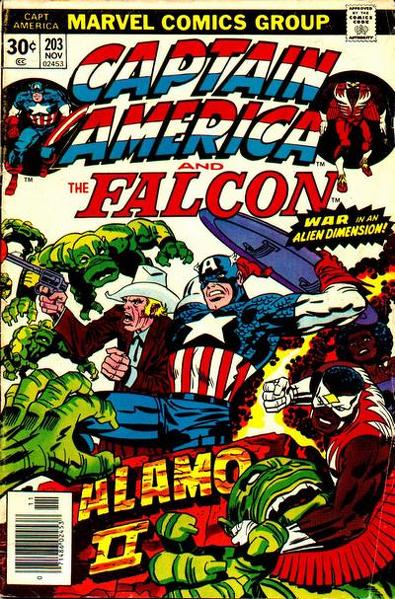
Cover by Jack Kirby (1976)


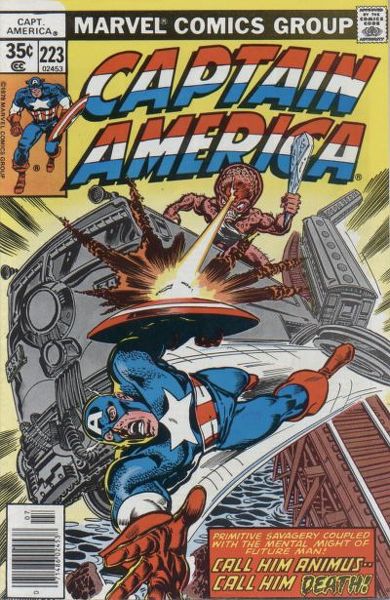
Cover by Sal Buscema (1978)

Poor Falcon lost his title billing in issue 223.

1980s

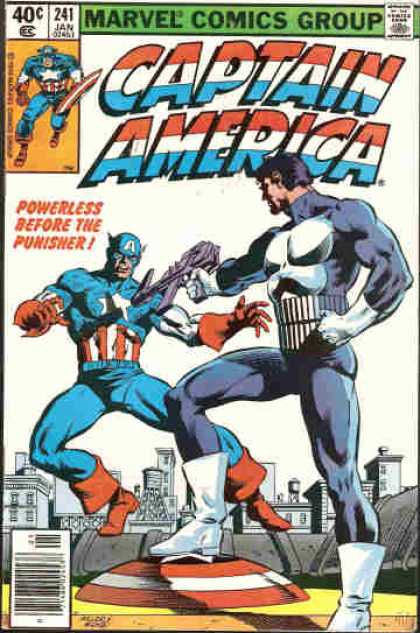
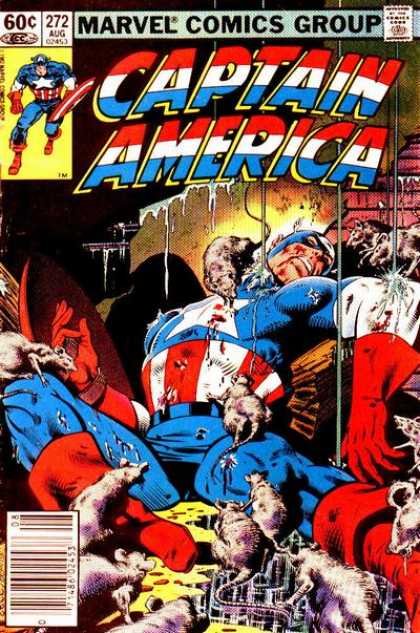
Cover by Frank Miller and Bob McLeod (1980)

Now THAT’S how you start off the 80’s…

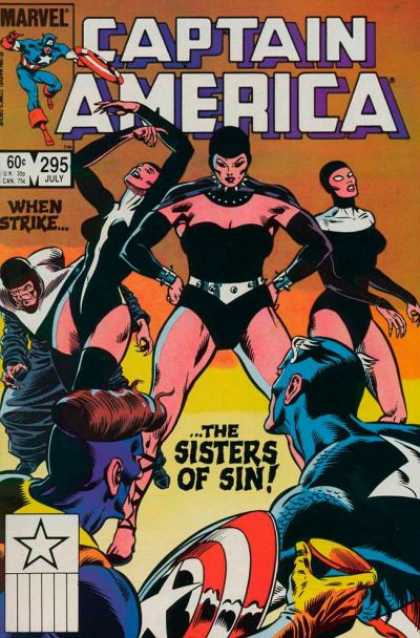
Cover by Mike Zeck and John Beatty (1982)


Cover by Bob Budiansky and Joe Sinnott (1984)


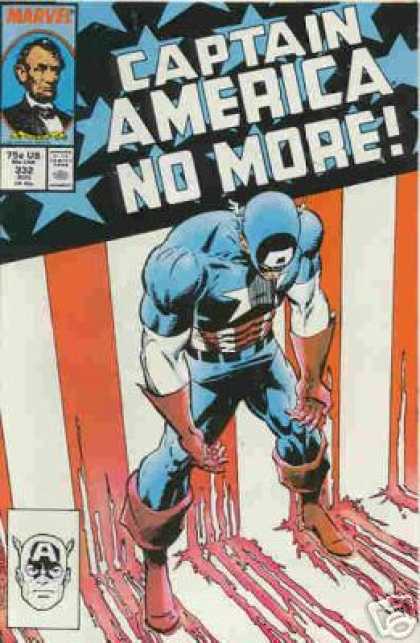
Cover by Mike Zeck and Klaus Janson (1987)


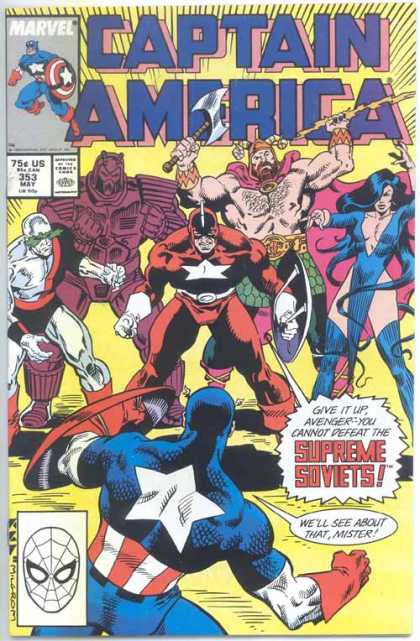
Cover by Kieron Dwyer and Al Milgrom (1989)


Cover by John Buscema and Tom Palmer (1989)

1990s

Cover by Ron Lim (1990)


Cover by Rik Levins and Danny Bulanadi (1992)


Cover by Dave Hoover (1994)

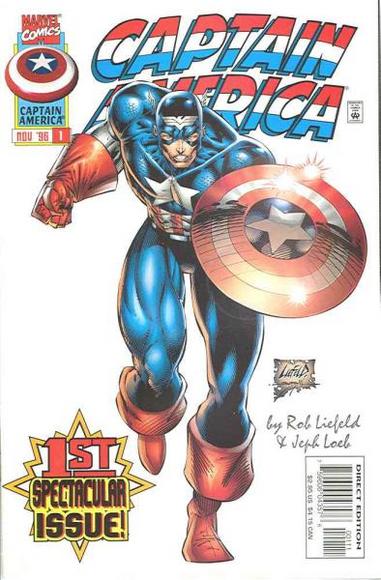
Captain America was canceled with issue 454, which led to the Heroes Reborn relaunch…

Cover by Rob Liefeld (1996)

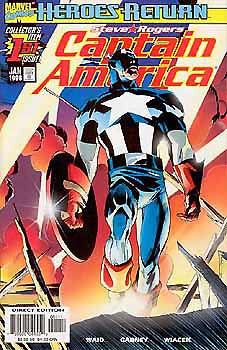
That was followed quickly by the Heroes Return relaunch…

Cover by Ron Garney (1998)

2000s

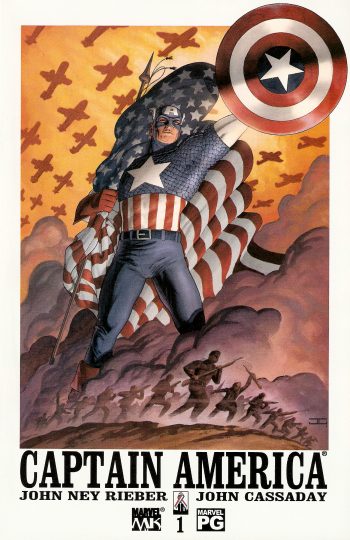
And the book was relaunched again…

Cover by John Cassaday (2002)

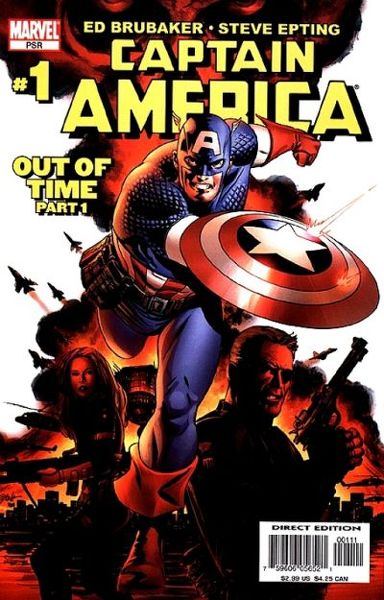
And the book was relaunched again…

Cover by Steve Epting (2004)

And the book was relaunched again…

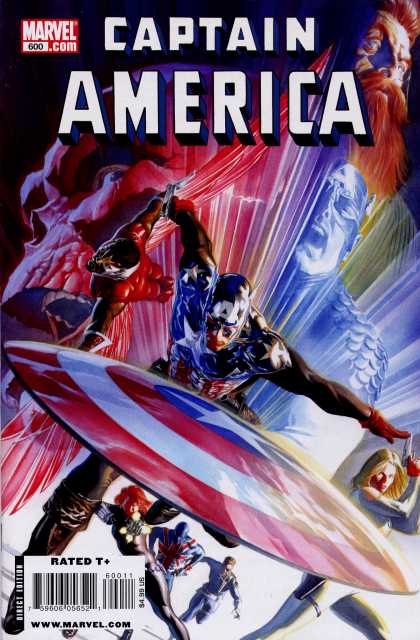
Cover by Alex Ross (2009)

Gluey Tart: Kiss Your Hair

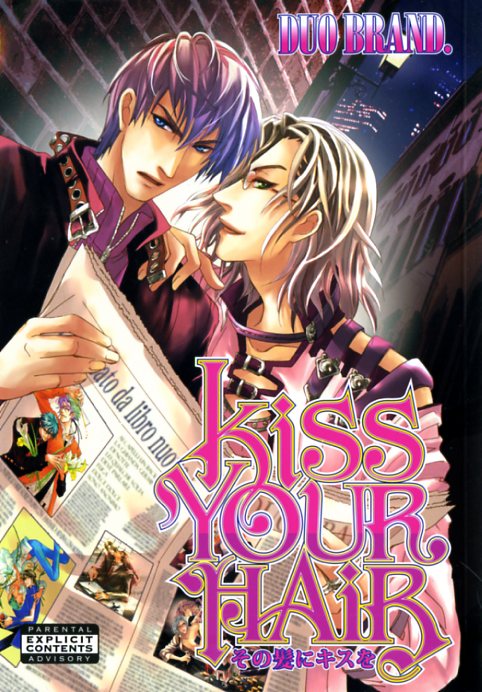
Duo Brand, 801 Media, 2010

I don’t understand how a story about a hair fetishist (and a book named for same) could go so far wrong. Seriously. The first story in this book is about two servants at an estate where everyone is hired for their long, beautiful hair. One of the servants does very naughty things with the master – wink wink, nudge nudge. Delighted as I was by this premise (and that would be very delighted indeed), my reaction to the actual story can be summarized thus: Meh. There were long-haired pretty boys, sex, romance – but not enough detail in any area to sell it. The art isn’t quite good enough to stand on its own, either.

But I did not despair, because I had not actually bought the book for the hair fetish story. Frankly, I didn’t give a damn about the hair fetish story. Or the second story, whatever that was about. (I couldn’t tell you, literally to save my life, and I’m too lazy to get up and walk into the next room to pick up the book. Ditto stories three and four.) No, I cared about the guys on the cover, and they were in the fifth story, “Escape.” That’s the one I had my hopes pinned on.

My standards aren’t usually so low that four out of five stories in a compilation can suck and I’m just fine with that. (There was a sixth story too; don’t remember that one either.) This was a special case. It’s a Weiss Kreuz thing.

I’ve written about my Weiss Kreuz situation before, recently and less so. I have a major, major thing about two of the characters in that anime, which is insanely bad. Really – however bad you’re thinking it is, badify it about 75 percent, and we might be in the ballpark. It’s almost one of those so-bad-its-good things. Almost. Which is like jumping from the roof of one building to another and almost landing. We are not concerned about the shocking lack of quality offered by Weiss Kreuz, however. We are concerned with – me. Me, me, me. Me and my bizarre fixation with Aya and Yohji.

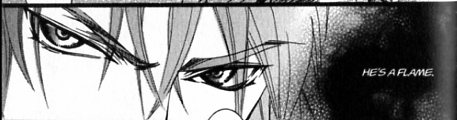
Because the guys on the front of this book (hey, we’re talking about the book again!) look like Aya and Yohji from Weiss Kreuz, who just happen to be my OTP (one true pair, fanfic-speak for the two fellows upon whom I have affixed the majority of my unhealthy erotic attention). I saw the cover and didn’t really care about anything else. Aya is an intense, redheaded, sword-wielding assassin. He often wears a long, swishy burgundy leather coat and a sort of S&M turtleneck with a leather strap that buckles across his throat. Yohji is an impossibly tall, lanky, world-weary blond who kills people by strangling them with a measure of wire he flips out across vastly improbable distances, from his watch. (God is in the details, people.) Yes, I hoped the story about those characters (not-Aya and not-Yohji, I mean) would be good, but such is my depravity that I was in fact willing to spend $15 or whatever it was (see above re. poor memory/too lazy to go look at book) just to have an image that looks like these characters but is slightly better drawn. I cannot defend this. Obviously, I am mad.

So, that fifth story. Not much happens, and it’s not entirely coherent, but it does not suck, at least not too much, and I do remember it. Huzzah! (We like to keep the bar low for celebrating our wins here, chez Kinukitty.) The sort-of redhead (the cover is murky and undecided as to his hair color, but I am morally certain it is red, based on the “because I insist” principle) is an assassin who is injured and shows up at a safe house run by a tall lanky blond. And, what do you know! The redhead and the blond were friends in high school! And apparently the redhead became an assassin to avenge some injury inflicted on the blond. All that is a bit lightly told and sparse on details, much like party mix is always mostly peanuts, hardly any cashews. I always wonder, in cases like this, if the author simply miscalculated about how many clues to leave for the reader – maybe in her efforts to avoid banging us over the head with unnecessary back story, she unwittingly left us with less a rich tapestry and more a moth-eaten sweater. Or maybe she just didn’t feel like fleshing out the details. I don’t really have any theories, but I do remember thinking the other stories suffered from a similar feeling of not being fully imagined. Whatever they were about.
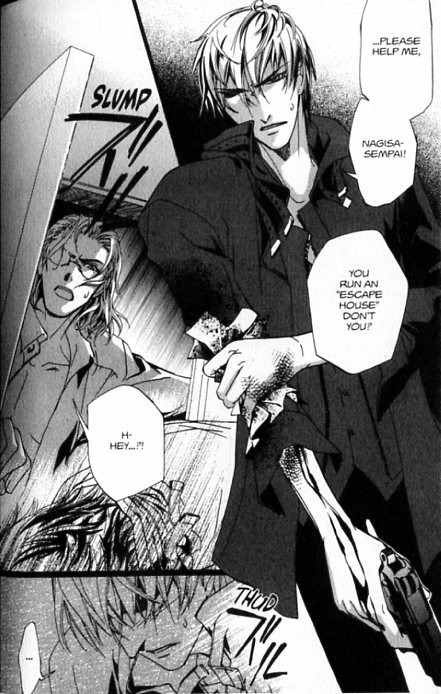
Anyway, the initially grim assassin perks up under the care of the tall, lanky blond, who is sad to see his old friend go. And, basically just like that, the two wind up at the airport, flying off into the sunset together. You think I’m skipping over a lot of story there, but I assure you I am not. It’s a sweet ending, really. And sort of a sweet story, to the extent that there’s any story there. The important thing is that there are several images that look very Aya/Yohji to me, and because I am a simple creature, I am happy.

I don’t actually know anything about Duo Brand. Who is it? Is it a person? A collective? A person who houses a multitude, like the Borg? Whoever it/they is/are, I can’t help wondering if the hive mind is aware of and perhaps likes Weiss Kreuz, particularly Aya and Yohji. Because Crimson Wind? Redhead with a sword, with a tall, lanky blond. Shards of Affection? Murky redhead with a sword and a long, swirling burgundy coat with a sort of blond (his hair is white, which is of course almost the same thing). Isle of Forbidden Love? Well, not a redhead, but a lithe young thing in pigtails, a kimono, and geta, his legs wrapped around the hips of a blond pointing a gun – so I’m willing to ignore the lack of red hair and generally unassassinly air (Kinukitty is somewhat catholic in her kinks). Do I have all these titles? Yes, I do. Am I ashamed of myself? I would be, if I were familiar with this thing you call shame. Did I really just buy them because they remind me of Aya and Yoji? Er, yes. Shut up.

So, Kiss Your Hair. I don’t think so. Unless you need that picture of the Aya-like eyes. And I would support you in that.
EXCITING UPDATE! (July 4, 11:39 a.m., CDT)

I was doing the laundry and found Isle of Forbidden Love (don’t ask), and guess what! Pig-tail guy does have murky red hair! And a sword! My excitement cannot be contained.

That is all.

Utilitarian Review 7/2/10

On HU

We’ve been busy on HU this week. We started out with Domingos Isabelinho’s discussion of Frans Masereel.

Guest poster Stephanie Folse (aka telophase) compared the visual language of manga and comics.

Guest poster Robert Stanley Martin provided a warts and all assessment of Frank Frazetta.

I provided a belated conclusion to the Komikusu roundtable by comparing the promotion of lit comics with the promotion of awesome manga. In a follow-up post I discussed my own ignorance.

Guest poster Alex Buchet wrote a three part series on race in Tintin. A fourth part to come next week.

And if any one is interested — disco mix!

Utilitarians Everywhere

The new Twilight movie came out this week, and I wrote several essays about Twilight to celebrate.

First at Splice Today I speculated on what Andrea Dworkin would think about the Twilight phenomena.

In short, the millions of tweens trooping in lockstep to the Cineplex to see the latest Twilight saga installment might as well be trekking over Dworkin’s corpse. It’s a wonder she doesn’t just rise right out of the ground, fangs bared, spitting blood, and personally castrate both Robert Pattison and Taylor Lautner with a rusty cleaver out of pure spite.

At the Chicago Reader I talk about class in Twilight:

If Edward is the aristocrat who treats Bella like a delicate queen, Jacob is the swarthy, sweaty working-class hero who won’t take no for an answer. Edward is obsessively safety-conscious and will barely allow himself to kiss Bella for fear that he’ll lose self-control and bite her neck. Jacob, on the other hand, literally overpowers her when he wants a smooch. In human form, he gives Bella a chance to be a little bit wild, riding motorcycles, diving off cliffs, and generally getting in touch with her inner delinquent. When he turns into a werewolf, Bella risks her safety just by being with him, since he has less control over himself than the proper, uptight Edward.

Also at the Reader, a capsule review of the film is here.

Other Links

This is old, but I just found it: Melinda Beasi on Twilight fandom.

An old friend and sometime commenter here, Bryan Erwine has a very entertaining article up about Superman vs. Muhammad Ali.

And this is a fun skewering of the MSM.

Ignorant and Mean

David P. Welsh responds to my post about lit comics snobbery and the perils thereof, in a very manga-crit way. That is, instead of taking sides, he opens the floor for discussion:

It’s sent me off on a mental tangent, and I wonder how people would define their comics reading tastes if circumstances forced them to do so? I would categorize mine as eclectic, though I would be extremely reluctant to do so precisely because that adjective, neutral as it should read, feels somehow like I’m congratulating myself for liking more than one kind of thing. So I’d love to hear people’s thoughts on categorizing their tastes and the potential pitfalls and moral implications of doing so.

So since David kindly asks: I wouldn’t call myself eclectic (nor omnivorous, as Melinda Beasi does in comments. That’s not because I read only one thing — in fact, I read various sorts of things, whether comics or manga or books.

But eclecticism is a relative term. And however widely I cast my net, there’s lots more stuff I haven’t looked at, and even more I haven’t heard of. I see the stuff Domingos Isabelinho talks about for example…mostly European art comics…and I don’t even know the titles. For that matter, unlike Domingos or Matthias or Suat or Erica, I’m a monoglot, which really restricts what I’m able to process. And there’s whole swathes of comicdom I’m not that interested in (early proto-comics tend to bore me for example; I’m not especially interested in most yaoi, etc. etc.)

I got really into Thai pop music recently, and came out of that experience not feeling like I was especially eclectic or omnivorous, but instead feeling like I didn’t know anything. Entire giant stretches of the globe producing mounds of cultural products, and I can’t even get through the to-read stacks in my house. I know there’s a giant Mexican comics scene for example, of which I have read exactly nothing. I think (though I don’t know) that there’s a fairly large Indian comics scene too, and all I’ve seen of that is a crappy online porn comic that Dirk linked to once.

So if I were going to characterize my tastes, I would have to describe them as “ignorant.” Also as “mean” — because while I don’t know much, I can at least be nasty about what I do know, damn it.

And since meanness is in my portfolio, I might as well sum up by using this post to once again bash all and sundry. Obviously, I’m arguing here that, in terms of cultural consumption in particular, as well as perhaps more generally, we’re all fairly ignorant, from the mouth-breathing superhero fan all the way up to masters of cultural wu-tang like Terry Eagleton or Kim Thompson. Which is why lambasting others for not reading what you think they should read is such an empty exercise…and why even calling oneself eclectic is maybe a little presumptuous (a fact which David basically points out himself.) Event the most cosmopolitan of us are really just provincial hicks. Which is nice actually; it means there’s always some city we can wander into, looking about in wonder.

Komikusu, Selling Awesome Manga: Belated Conclusion

I was originally not going to write a conclusion for last week’s Komikusu discussion. But then I was chatting to Tucker Stone, and he mentioned that he’d enjoyed reading the roundtable.

This took me a little aback, because Tucker’s come out fairly strongly in the past against the “we must read more lit comics!” meme as it applies to Western comics. In an interview with Tom Spurgeon, for example, Tucker said:

There’s a temptation to label mainstream fans as being lazy for not caring about Swallow Me Whole or Blankets, to call them “bone-ignorant” — that’s just a bunch of horseshit. It’s an attempt by boring assholes to assign an overall meaning to a bunch of personal choices made by a group of people that those boring assholes don’t know anything about. On an individual level, I’ve heard a couple of people say they don’t want to read comics that focus on the mundanities of regular life, but I’m more often exposed to people who just like what they like because it’s what they fucking like.

I actually agree with that. Yet, at the same time, I’d like to see some more interesting manga titles succeed in the U.S. So…what’s my problem? Why does the push for more interesting comics make me itch in a Western context and not in a manga one?

Perhaps the answer is simply that I’m inconsistent. But, appealing as that solution is, I think there’s actually something else going on. Specifically, the way the debate is framed in a Western context tends to be different than the way the folks on this roundtable framed it. As an example, here’s Sean T. Collins discussing his wish that there was more discussion of western lit comics in the blogosphere.

I’ll tell you what my big question is: Why do superheroes dominate the online conversation the way they do? Last week saw the release of Jim Woodring’s Weathercraft and Tim Hensley’s Wally Gropius, two gorgeous and weird books that truly make use of the stuff of comics and contain the kind of material you can mentally gnaw on for days on end, but I guarantee you that no matter which comics blogs you read, you read more about Paul Levitz’s return to the Legion of Superheroes. And chances are good that if you’ve read about Daniel Clowes’s Wilson, what you read prominently featured that page where the character makes fun of The Dark Knight. What gives? If you want to make the argument that sheer numbers justify the choice of what bloggers and comics sites cover, I suppose that’s your prerogative. And don’t get me wrong — I read and enjoy multiple superhero comics every single week, and have lots to say about a lot of them. I also understand the need to make a living, which in Internet terms means unique pageviews.

But so much of the comics Internet consists of individual or group blogs where, presumably, there’s no editorial mandate to maximize hits. Indeed, the major selling point of the blogosphere is its lack of the traditional gatekeepers and incentive structures that bedevil mainstream journalism. Meanwhile, even the big group blogs owned by major communications corporations tend to be personality-driven, reflecting the interests and styles of their writers to a refreshing degree — and those writers tend to be interested in all sorts of comics, in their spare time at least. So yes, the nature of the coverage is often idiosyncratic, which is great. But why is that the comics being covered differ so little from what you’d read about on Marvel.com or The Source? Should those of us in the position to do so make an effort to broaden the scope of what we’re presenting to our readers as the comics worth buying, reading, and talking about?

And here’s Kate Dacey responding to Sean in that comments thread.

There’s a similar divide in the mangasphere as well: a lot of sites focus on mainstream shonen and shojo titles (the manga equivalent to tights and capes, I guess) while neglecting the quirkier stuff. To be sure, there are many sites that cover the full spectrum of titles, or focus on a niche, but the pressure to stay current with new releases and draw traffic discourages a lot of folks from waxing poetic about the stuff at the fringes. Looking at my own site stats, for example, a review of Black Bird or My Girlfriend’s A Geek will attract a much bigger readership than, say, The Times of Botchan.

Which brings me to the argument I’d like to see explored somewhere: how do we interest older readers in manga that’s written just for them? What kind of marketing support would, say, the VIZ Signature line need in order for some of those titles to crack the Bookscan Top 750 Graphic Novel list? Are there genres or artists we should be licensing for this readership, but aren’t?

Kate’s post there is what inspired me to organize this roundtable. And obviously there are close analogies between what she’s saying and what Sean is saying. But I think there are important differences as well. Mainly — Sean makes the dissemination of lit comics into a moral issue. “Should those of us in the position to do so make an effort to broaden the scope of what we’re presenting to our readers as the comics worth buying, reading, and talking about?” he asks, and the answer is obviously that yes, we should. The problem for Sean is that super-hero comics are taking up too much space because the people in the blogosphere aren’t doing their job in educating their readers about better fare.

Kate starts from the same place — how do we get more better manga out there? But she doesn’t bother with the moral question at all; instead she goes right to logistics. Not “you people should be doing more!” but, “presuming there are people who would like to read different kinds of manga out there, how do you reach them?”

Kate’s pragmatic approach was absolutely the one adopted by the roundtable. Erica Friedman tried to figure out how scanlations could be used legitimately to make more and different kinds of niche mangas available. Brigid Alverson, Deb Aoki and Kate herself talked about practical marketing steps that could be taken to reach new audiences. Peggy Burns pointed out some strategies that have worked for Drawn and Quarterly in the past. Ryan Sands and Ed Chavez tried to map out the historical lay of the land, explaining how manga has been categorized and sold in different ways at different times in both the U.S. and Japan. And Shaenon Garrity offered some more possible solutions, while also pointing out some possible pitfalls.

If you read through these pieces, though, what’s almost as noticeable as what is said is what isn’t. Nobody in the roundtable says that the problem is that readers’ tastes suck. Nobody says the problem is that bloggers aren’t doing enough to promote the right kind of manga. Both Shaenon and Deb mention Naruto in a “yep, the manga we’re talking about aren’t going to sell like that” kind of way — but they don’t seem resentful of Naruto’s success, the way Sean Collins seems resentful of superheroes (despite the fact that he reads them himself). In fact, unless I’m missing something, nobody in the roundtable says anything mean about mainstream, successful genre manga at all.
And why should they? The success of mainstream genre manga doesn’t hurt sales of To Terra or A Drifting Life or Travel or what have you. Because, as everybody in the roundtable seems to realize, the people who are buying Naruto — they aren’t the audience for Emma or Tramps Like Us. Not that nobody could possibly read or like all of those series, but simply that the demographic is different. If you want to increase sales of Oishinbo, the way you do that is not to go after readers of Gantz. The way to do it, as Shaenon says, is to get it into cooking stores.

Lit comics have had a lot of success in the U.S. precisely by finding different audiences. But the comics scene here is still so small, and still so defensive, that its vision still seems to be defined to a surprising degree by the mainstream. It’s not just Sean by any means — super-hero crap is, in general, seen as not just bad, but oppressive. There’s only room for so many comics, and the bad forces out the good. It therefore becomes every intellectuals duty to battle against the filth.

I don’t know that the manga scene in the U.S. is bigger than the Western comics scene. But it’s more demographically diverse, and it always has before it a pretty compelling vision of a possible world in which there are no mainstream comics, because comics themselves are mainstream. As a result, manga critics seem to have figured out what Western comics critics still have some trouble with. Namely, improved morals don’t sell comics; better marketing does.

Of course, just because manga folks have figured this out doesn’t mean that there will ever be more awesome manga available on these shores. But it seems like a good first step.
____________
The entire Komikusu roundtable is here.

Monthly Stumblings # 2: Frans Masereel

Frans Masereel’s Route des hommes (men’s path)

In my humble opinion the best Belgian comics artist is not Hergé… The best Belgian comics artist is Frans Masereel…

I vaguely remember mentioning this to a couple of Masereel’s fellow countrymen and I’ve got two different answers (I must add that, in my view, of course, I chose my collocutors well): (1) a nod of approval; (2) something like: In Belgium we don’t view Frans Masereel as a comics artist.

(Needless to say that, besides some puzzled expressions asking “who are those?,” most of my possible Belgian interlocutors would react in a third way calling me a lunatic, or worse, depending on the person’s degree of Tintinophily.)

The first reaction was understandable because said person is an artist himself and what he does is akin to Masereeel’s work. The latter one is more interesting to me at this particular moment because it permits me to enter one of the muddiest territories in comics scholarship once again (when will I learn, right?…), the old conundrum: what is a comic?…

I’m not going to answer that question because it can’t be done. All the answers that one can come up with are rigged because they depend on a previous particular view of what’s essential in a comic (and that’s not only prescriptive, that’s also arbitrary). To Bill Blackbeard, for instance, speech balloons and image sequences are essential so (even if there are older examples, namely, here or even, here) comics started with Richard Felton Outcault’s Yellow Kid in 1896.

Saying this though, doesn’t get us very far (my thoughts on the subject, are here, by the way). What interests me right now are two related points: (1) the sociological side of the problem; (2) anachronism. (1) Words have a (social) commonly agreed meaning. The dictionary tries to stabilize it, but significations aren’t fixed. There’s a reason why we call Maus a “comic.” The sense evolved to include serious work while the signifier stood still. Even so I accept that “comics,” to most people, don’t include Frans Masereel’s oeuvre. Perhaps it will, someday… (2) Frans Masereel didn’t view himself as a comics artist. As far as he was concerned he did wood engravings, that’s all… To call his cycles “comics” is an anachronism. Maybe so, but it seems to me that we are guilty of anachronism all the time and nobody cares. To go back to Tintin, the expression “bande dessinée” didn’t exist when Hergé started doing comics. Why do we continue to say that he did comics, then?… Did the Lascaux painters call what they did “painting?” Is that important? How logocentric can we get?…
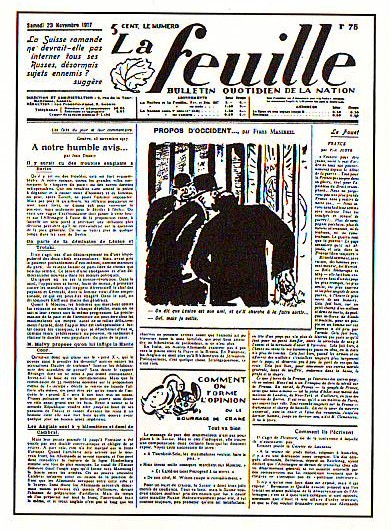
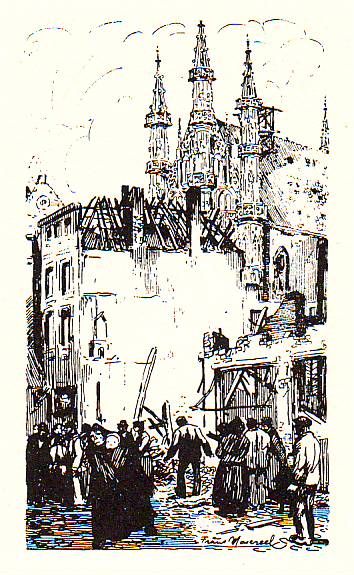
As you can see in this 1915 illustration above Frans Masereel was a naturalist. But working for the pacifist newspaper La feuille in Geneva as a political cartoonist during WWI Masereel needed a less detailed, more urgent, style. As Josef Herman put it:

Working for La Feuille posed two main problems for [Masereel], both of a technical nature. One was that the drawing had to be done quickly, leaving no time for the careful, detailed draughtsmanship he had practised until then. The other was how to achieve maximum effect using poor quality paper, on which thin lines were simply lost. He solved these two problems with the true instinct of a man of genius. He avoided drawing with a fine pen and took a thick brush, in the process giving up the search for tonal texture. He now used large planes of intense black, drawing lines wherever needed with a brush. The emotional effect he achieved was staggering.

Maybe the times weren’t right for nuanced views of the world (?). I love Frans Masereel’s verve and variety (he did manga in the original sense of roaming drawings), but his ideological views and Expressionist style push him into a less than complex view of the world sometimes (the fat, jeweled, cigar-chomping capitalist, for instance, is a regrettable stereotype). You can see one of Frans Masereel’s political cartoons as published in La feuille below:

Frans Masereel was 75 years old when he published Route des hommes (1964). He did “novels without words” all his life (more than 50, according to David Beronä). Route des hommes is far from being one of his best (that would be Passionate Journey – 1918 – and, my personal favorite, The City – 1925).

Route des hommes is about the horrible and great things that happen to humankind. We find in the book Masereel’s usual topics: war, famine, exploitation, but also progress, team work, joy, etc…

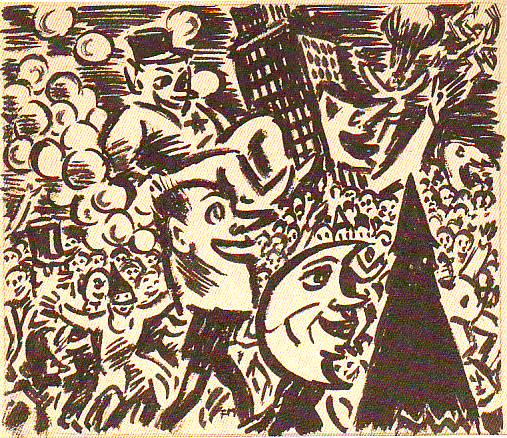
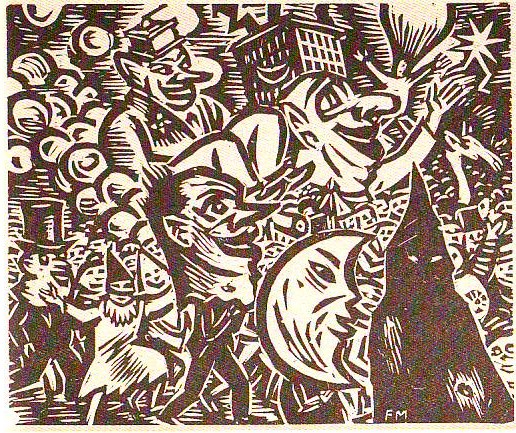
The greatest thing about this edition of the Musée des Arts Contemporains au Grand-Hornu and La Lettre volée (2006) is that it shows both Masereel’s prep drawings and his wood engravings. In this way we have access to the artist’s creative process as never before.

We can see above how Frans Masereel cites another Belgian painter, James Ensor (ditto Jacques Callot at some point). It’s interesting how what seems to be a tree in the foreground of the drawing becomes a sinister figure in the wood engraving (death waits us all at the end). His composition changes (increasing the two background figures’ size) greatly improve his work.

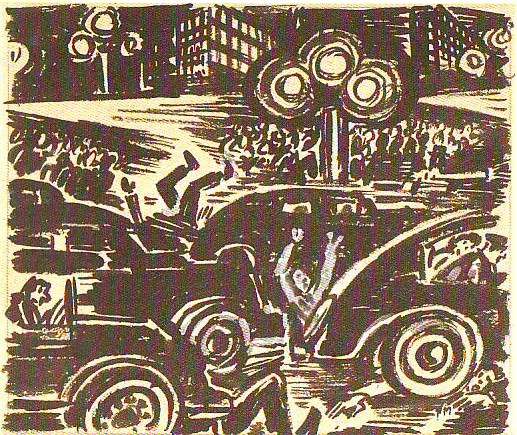
Masereel used allegory a lot. In this drawing the cars represent careless rich people. The city lights aren’t just that, they connote poor people’s acceptance of the status quo: they’re hypnotized, alienated (as Marxists liked to say)…


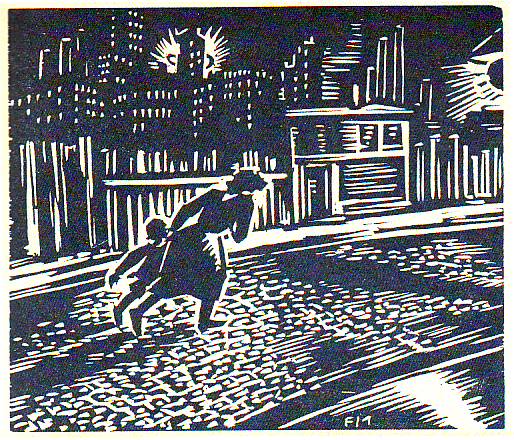
…But, to tell you the truth, I prefer allegoryless Masereel. He could be very poetic, as we can see above…