Three not-so-radical ideas for marketing manga to grown-ups

One of the things that struck me when reading Erica and Brigid’s contributions to the roundtable was that each proposed solutions that made sense for a particular audience. In Erica’s case, that audience is comprised of adult manga fans who have a passionate engagement with the medium, a knowledge of its history, and an active interest in the Japanese publishing scene, while in Brigid’s case, that audience is comprised of adults who are receptive to the idea of reading a graphic novel, but don’t know much about manga. As publishers like Vertical, Inc. and Drawn & Quarterly have demonstrated, these two groups’ reading interests do overlap; Buddha, Ode to Kirihito, and A Drifting Life are three examples of manga that appealed to a wide range of readers, from folks interested in good stories to folks interested in reading works by seminal Japanese artists. It’s this piece of the Venn Diagram that I’d like to address, in the form of three simple suggestions for marketing books to both audiences.

1. License manga that appeals to older female readers.
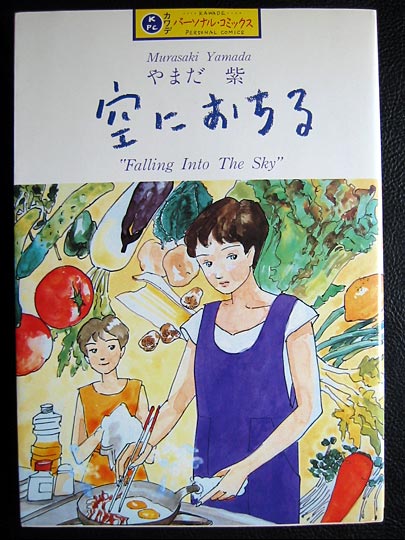
There’s almost no English-language manga about women over the age of 22 (at 28, the heroine of Tramps Like Us is positively geriatric), and little to no josei that features genuinely strong, independent female characters. (It’s telling that two of the best josei titles to be licensed for the US market, Bunny Drop and The Antique Bakery, feature male protagonists.) That’s where an artist such as Murasaki Yamada comes in; her work has things to offer the hardcore manga fan and casual reader alike, from her pedigree (she cut her teeth writing stories for COM and Garo), to her elegant, naturalistic style and feminist outlook. Which brings me to my next point…
2. Tell a good story about the book.

In their responses to Brigid’s post, Noah and Ryan Sands raise an important issue: meet-the-author events and book tours are an important marketing tool for generating interest among book-buyers and media outlets. Though a few publishers have brought Japanese artists to the US for signings, the process is complicated, in Noah’s words, “by language and distance.” In the absence of opportunities for authors and readers to interact face-to-face, publishers need to step up to the plate to tell readers what’s so special about the books they’re licensing. Drawn & Quarterly’s presentation of Black Blizzard is a good example of how to do just that. Consider the back jacket copy:

In 1956, at the age of twenty-one, Yoshihiro Tatsumi arrived as a major new talent in Japan’s burgeoning manga industry with the publication of his graphic novel Black Blizzard. With influences ranging from Osamu Tezuka to Alexander Dumas to Mickey Spillane, Tatsumi’s noir thriller displayed a cinematic, hard-boiled aesthetic, as well as a prodigious knack for inventive, fast-paced storytelling. Long out of print and never before published in English, Black Blizzard is a rare piece of Japanese cartooning history and an enduring work of high entertainment. Drawn & Quarterly Publications and series editor Adrian Tomine are proud to present this lost treasure from a modern master.

Without even opening the book to look at the pictures or read Tomine’s interview with Tatsumi, readers know immediately (a) who Tatsumi is (b) where the work fits into his development as an artist (c) who influenced him and (d) why Drawn & Quarterly’s edition is significant. Bonus points for connecting Black Blizzard with more familiar Western points of reference.

Now imagine doing that for an artist like Murasaki Yamada — not only are you appealing to manga enthusiasts who know about COM and Garo, but you’re also pitching your work to readers who enjoyed Persepolis and Fun Home by positioning Yamada as a similarly important female voice in comics (and one with an interesting biography as well — in addition to writing for two seminal manga magazines, she also ran for Japanese Parliament).

3. Get librarians in on the act.
As my colleague Eva Volin pointed out in an earlier discussion about manga marketing practices (this one focused on manga for younger readers), there are a number of compelling reasons to pursue the library market:

1) There are a lot of libraries.
2) We buy a lot of books.
3) We rarely return the books we buy.
4) If the book we buy turns regularly (circulates a lot), we buy extra and/or replacement copies.
5) If a category turns regularly we increase the amount of books we buy in that category.
6) By doing all this we create loyal readers who will often go in search of books at bookstores to buy and keep for themselves.

If you want librarians to buy your books and talk them up with patrons, however, you need to do more than just send out fliers and point to reviews; you need to meet with them face-to-face, explaining how your books fit into a well-rounded graphic novel collection, identifying the likely audience for your books, educating them about the creators, and giving them samplers or review copies. You also need to provide convenient ways for librarians to preview titles online — and you need to tell them about those online resources. The SigIKKI website is a great tool for librarians interested in building a graphic novel collection for adults, as it allows browsers to read entire volumes of manga for free and provides background on each of the featured artists, but if you’re not already a manga fan, how would you know about the site and what it has to offer?

Librarians can perform another valuable service for you as well: they can host events to raise awareness about your book, introduce readers to one of your authors, or engage them in a discussion of a broader theme. Done right, these kind of events can draw in long-time manga readers and newcomers alike, especially if you find a compelling hook for the material: a local mountaineering expert discussing the backstory to Summit of the Gods (and maybe sharing a few of his own pictures of Mt. Everest), an art historian tracing a particular manga-ka’s style back to nineteenth-century print-making traditions, a translator discussing the difficulty of adapting a script for English-speaking audiences, a film historian comparing scenes from a Masaki Kobayashi samurai film with sequences from Satsuma Gishiden.

__________
Update by Noah: The entire Komikusu roundtable is here.
Breaking out of the walled kingdom

There are two kinds of people in the world, my father used to say: People who divide all the people in the world into two types and people who don’t.

Comics readers tend to be the former: They look at the world as made of up of the initiated, people who read their particular type of comic (be it superheroes, shoujo manga, or introspective graphic novels) and those who are outside the walled kingdom.

There is some validity to that, because most comics genres, like most other genres, require a certain initiation. In the case of superheroes, you almost have to be born into it; one could spend a lifetime learning all the backstories, interrelationships, and alternate universes. Manga readers have to learn a code of visual cues such as sweatdrops and cultural clues such as honorifics and holidays, not to mention how to read right to left.

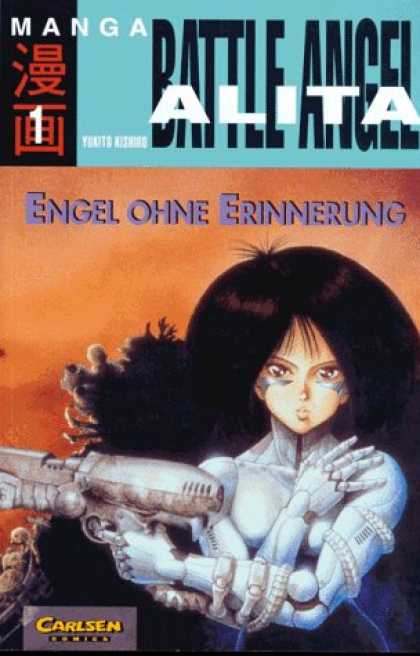
People who don’t normally read comics, on the other hand, don’t usually define themselves as “people who don’t read comics.” Most, in fact, will pick up a graphic novel if the subject matter interests them. They might not be able to enjoy something very genre-bound like Blackest Night or Battle Angel Alita, but they might read Fun Home, Mom’s Cancer, or The Photographer, because those books tap into more universal experiences and interests. A lot of people read those books not because they are comics (although the medium may make the story more compelling) but because they are books.

A lot of literary manga deals in topics that adult readers are interested in: Oishinbo (gourmet food), Ooku (historical drama and switched gender roles), Suppli (workplace comedy and romantic angst). These are good stories about things people care about, and you don’t have to understand the intricacies of samurai life or the Japanese school system to enjoy them.

But before you can read them, you have to find them.

Noah asked us a simple question: How do you market art manga to readers? The answer is equally simple: Don’t market it as manga. Market it as books.

Some specifics:

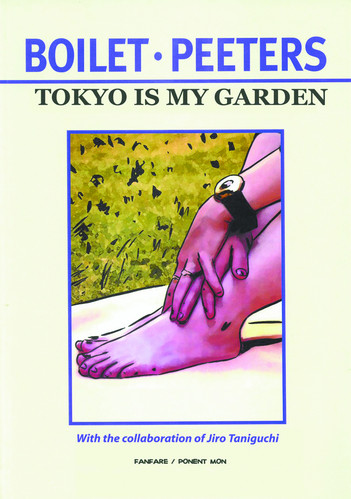
Don’t shelve it in the graphic novel section: The first step in reaching that broader audience is not to confine the manga to comics stores or even to the graphic-novel section of the bookstore. Ideally, booksellers should keep a couple of copies around, some in the graphic novel section and some elsewhere: Put Oishinbo near the food section, Barefoot Gen near the World War II books, Suppli by the chick-lit, Naoki Urasawa’s Pluto next to the science fiction. Scatter a few literary fiction titles (Tokyo Is My Garden, Red Snow) among the “staff picks” novels in the center tables.

Flip it: The purists hate this, but for older readers, reading “backwards” is a deal-breaker. Furthermore, it marks the comics as manga, and for those who aren’t famliar with the medium, that starts a whole chain of associations: porn, big eyes, teenage girls, boobs-n-battles. A lot of readers, wrongly, think of manga as a genre; manga for grownups must be marketed separately from the shonen and shoujo teen fare. Titles with broad crossover appeal should be made accessible to all readers, not just the cognoscenti. You can always publish an unflipped deluxe edition for the hardcore otaku.

Hire Chip Kidd to do the cover: Or someone like him. Make it arty and attractive. Do not fill it with slashing shonen battle action or an upskirt shot of a schoolgirl. (If those things appear in your manga, you probably shouldn’t be marketing it to adults anyway.) This should be a book you are proud to be seen reading on the subway, not something that would embarrass you if your boss saw it in your briefcase.

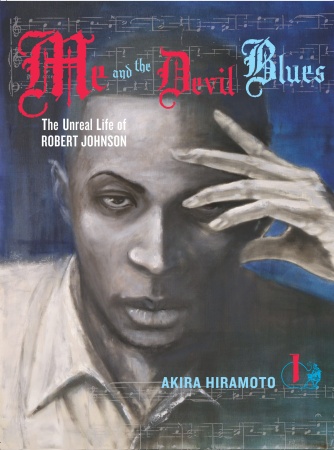
Send it out to “mainstream” reviewers: There are plenty of graphic novel-friendly reviewers at big newspapers and magazines, and they have a lot of pull. I first heard about Fun Home on NPR, and not because they were having “comics day” or anything; it just was a compelling story. As a journalist, I can tell you that a new and interesting topic is always welcome. A manga about a family with an autistic child? Bring it on! A manga about bluesman Robert Johnson teaming up with bank robber Clyde Barrow? Sign me up! These are topics that are interesting just by themselves, and the fact that someone in Japan has chosen to make a comic about them makes them even more interesting.

Also, you know what can really sell a title? Online previews at hip websites. There’s something inherently cool about manga, so the occasional free sample would most likely be welcome. Smith Magazine, for instance, hosted the webcomic AD: New Orleans After the Deluge, and Words Without Borders has a whole graphic lit section. These websites already cater to readers with a literary and artistic bent, so they are likely to be a receptive audience for art manga.

Go digital: You knew I was going to say that, right? Everyone is doing it! The Kindle, the iPad, and the plain ol’ internet are places your potential audience can discover your manga and instantly read it. Here’s the thing, though: Go ahead and put your manga into comiXology and Longbox and those other … things… but let them stand alone as well. Recently, Longbox developer Rantz Hoseley talked about the possibility of having a link directly from a story on, say, the NPR blog, to their digital edition of a comic. That’s a great convenience, but the occasional comics reader just wants to read the book, not sign up for some complicated digital storefront that they will never visit again.

Harness serendipity: All these factors boil down to the same thing: Make it easy for potential readers to stumble upon a book, and once you catch their interest, make it easy for readers to buy it. Go back to the dichotomy I started with: Serious comics readers know where to find comics and how to buy them, but it’s a system that is invisible to most people and forbidding to those who do know about it. Superhero fans may be willing to go out of their way to a special store and pre-order their comics sight unseen, but the rest of the world doesn’t operate that way. Even the graphic novel section of a chain bookstores is terra incognita to most customers. The key to expanding the comics market, for art manga or any other type of graphic novel, is to step outside the closed circle of the comics world and find the readers where they already are. After that, the books should sell themselves.

__________

The entire Komikusu roundtable is here.
Komikusu — Introduction

A couple weeks back Sean Collins wrote a post over on Robot 6 asking folks to propose comics arguments they’d like to hear more often. In comments, on that thread, Kate Dacey offered this response.

There’s a similar divide in the mangasphere [between art comics and more popular titles] as well: a lot of sites focus on mainstream shonen and shojo titles (the manga equivalent to tights and capes, I guess) while neglecting the quirkier stuff. To be sure, there are many sites that cover the full spectrum of titles, or focus on a niche, but the pressure to stay current with new releases and draw traffic discourages a lot of folks from waxing poetic about the stuff at the fringes. Looking at my own site stats, for example, a review of Black Bird or My Girlfriend’s A Geek will attract a much bigger readership than, say, The Times of Botchan.

Which brings me to the argument I’d like to see explored somewhere: how do we interest older readers in manga that’s written just for them? What kind of marketing support would, say, the VIZ Signature line need in order for some of those titles to crack the Bookscan Top 750 Graphic Novel list? Are there genres or artists we should be licensing for this readership, but aren’t?

That sounded like a great argument to have to me…so, with Kate’s help, I’ve organized a roundtable on HU to explore the issues Kate has raised. The critics who have agreed to participate are, in no particular order:

Kate Dacey of The Manga Critic.

Ryan Sands of Same Hat!

Brigid Alverson of lots of places, inlcuding Mangablog.

Erica Friedman of Okazu.

Shaenon Garrity who writes at tcj.com.

Deb Aoki of About.com.

Ed Chavez of Vertical.

Peggy Burns of Drawn & Quarterly also graciously granted permission for me to reprint a short email she sent me in regard to the roundtable, so that will be appearing in the mix as well.

The title of the roundtable was suggested by Ed Chavez:

I would possibly call it… “Komikusu” (Comics) is Japanese for manga

The reason I’d say that is in the seinen and the experimental manga world most manga is not called manga it is literally called comics. However for the longest time pubs and editors there have gone about presenting this category (particularly seinen which happens to be the most stable demographic in manga) as sequential art for the masses. Not just for kids or teens, men or women, but for anyone.

Erica Friedman will kick off the conversation tomorrow, and others will be posting throughout the week. Many thanks to Kate Dacey and Bill Randall for their suggestions and help in pulling this together. And of course thanks to all those who agreed to participate: I’m really looking forward to it!

________
Update: Erica’s post is now up.

Utilitarian Review 6/19/10

Starting tomorrow, HU is going to host a roundtable on the marketing of art manga. We’re going to have a whole host of guest contributors…so click back through the week.

On HU

HU suffered a major outage and was down for 9 days. For a moment we thought we were going to lose about half our comments…but the folks at tcj, and especially blog admin Tom came through and managed to restore almost all the damage. More details here and here.

In less apocalyptic news; since the last link roundup, we completed our Asterios Polyp roundtable with posts by Caro, Robert Stanley Martin, me, and Matthias Wivel. Please note that all comments have not been restored to Caro and Robert’s posts; we’re hoping to fix that soon, but at the moment the threads may be a little disjointed.

Suat published a long two part discussion of The Times of Botchan. Part 1; Part 2.

Richard Cook reviewed Iron Man 2 the movie.

Vom Marlowe reviewed Connie Willis’ novel To Say Nothing of the Dog.

Suat discusses Walter Benjamin and comics criticism.

And finally, I have a cheesy country download available, and also a Scandinavian black metal download.

Utilitarians Everywhere

Both kinukitty and I participated in a roundtable about an academic collection of essays analyzing the Boys’ Love genre.

Kinukitty’s posts are here and here.

As it turns out, I was reminded of an observation by G.K. Chesterton. In a 1911 essay, he said (in his cheerful, racist turn-of-the-20-century British way) that he felt Japan had imitated many Western things — the worst Western things. “I feel as if I had looked in a mirror and seen a monkey,” he wrote. And, reading “Rewriting Gender and Sexuality in English-Language Yaoi Fan?ction,” I had a similar experience. I love yaoi. I love Weiss Kruez fanfiction. And, to be overly dramatic about it, this essay ground my longtime passion and obsession into dust and ashes. I looked in the mirror and saw a demographic slice, vaguely exotic, in a Dances with Manporn sort of way, and ready to be dispassionately observed.

My contributions are here and here.

This book really helped me come to terms with my past, my regrets, my desires. Speaking as a straight white cisgendered male, I occasionally regret my transgressive decision to drop out of grad school to explore the fluid, abject jouissance of the non-(i)voried and nontowered. But then I encounter a text like this, and in its quivering, jellylike prose I remember why, though riven by radical difference, still numerous numinous heterogenous communities speak with a single pleasurable speech-act when they utter: “academics fucking suck.”

Over at Comixology I discuss a classical Chinese Zen triptych featuring bodhisattva, crane, and monkey.

Kuan-yin’s calm here may be in contrast to these unenlightened viewers, who squat like monkeys or strut like cranes, curious but oblivious. Or, perhaps, the joke isn’t that the audience is unworthy of enlightenment; but rather that they are already enlightened. Because they are as undignified as the monkey or the crane, those who contemplate the picture have their own plain, contingent place within it, like cranes or monkeys who happen to be nearby when the bodhisattva comes.

At Splice today, I review new releases by Monica and Toni Braxton.

One of the more noticeable results of this transformation was that r&b semi-fused with rap, and the resulting homunculus took over the world. Less spectacularly, the change wreaked havoc with typical pop career arcs. In the normal course of things, you expect a pop act to release a few good albums, and then get progressively crappier until they finally attain a plateau of unlistenable awfulness and fade into oblivion. But after r&b as a genre exploded aesthetically, singers like Brandy and Mariah Carey found themselves doing their best work in their second decade rather than their first.

Also at Splice Today, I reviewed new albums by Christina Aguilera and black metal band Nachtmystium.

All of which leads me to conclude that, if given the choice, I’d rather hear Christina Aguilera perform black metal than listen to Blake Judd try his hand at pop R&B. Some musicians should stick to their roots; others can only get better the more thoroughly they betray themselves.

At Madeloud I have an interview with Norwegian black metal band 1349.

Many black metal musicians have been inspired by Satanism or alternately by traditional cultures or nationalism. Is that where you’re coming from at all? Or are there other beliefs and convictions you have which influence your music?

ARCHAON: For us this is about the art. But when that is said, it’s an artform coming from a background that had a great focus on such beliefs/convictions, and to a certain extent we are all believers of the individual being it’s own master – that’s where we would meet. Obviously, we are four individuals that would give you four different answers to this subject, but none of us are worshipers as such. And 1349 has never been a religious or a political band, and (most probably?) never will. Even though we’re all quite philosophical…I cannot see any of us going down that path, mate.

Also at Madeloud, I have reviews of two short albums by pop R&B group Allure, a review of 1349’s latest album Demonoir and a review of a new album by the dubstep duo Vex’d.

Dyspeptic Ouroboros: Walter Benjamin Lite

“The gift of judgment is rarer than the gift of creativity.”
Oskar Loerke as quoted by Walter Benjamin.


In the tradition of appreciative stealing, this post will consist of a series of quotes by Walter Benjamin, one of the main ports of call for people seeking a voice of authority on art, literature, children’s books, toys, blogging and, of course, comics.

As one of the fathers of popular culture studies, Benjamin has been quoted and used liberally by comics academics and critics, largely with respect to his seminal essay “The Work of Art in the Age of Mechanical Reproduction“. Gary Groth relies on him in his discussion of Reinventing Comics, as does Ernesto Priego in his paper on comics and digital reproduction. I, myself, have used some of his statements on children’s books and nostalgia in a disappreciation of EC comics I once wrote. It should also be noted that our host, Noah, recently wrote a post making fun of Mr. Benjamin so this could be seen as another opportunity for him to laugh at a dead man.

Most of the quotations which follow are from notes and fragments which remained unpublished prior to his death by suicide. They provide a glimpse into the man’s unfiltered thoughts.

Continue reading

To Say Nothing of the Dog: Beach Reading for Meta-Historians

To Say Nothing of the Dog, Or How We Found the Bishop’s Bird Stump At Last by Connie Willis, narrated by Steven Crossley. (An affordable version is available for sale at Audible.)
Obligatory note: We’ve been down baby down over here at HU for a little bit, so I’m running a review of a book rather than a comic, for technical reasons. Apologies! I hope everyone enjoys reading this instead, and I’ll be returning to visual storytelling comicness forthwith.

This is not a comic. I admit this upfront. It is, however, one of the most interesting and fun things I’ve read in a long time. I say read, but that’s not true either. I listened to it, in fact, via my Audible account.

This is the story of Ned Henry, a historian at Oxford in the future, who is trying to find the Bishop’s Bird Stump, an ugly vase, in order to complete the details of the restoration of Coventry Cathedral, which was destroyed in the Blitz. Lady Shrapnell, a very powerful and wealthy woman, has dragooned Ned Henry into searching for the Bishop’s Bird Stump as part of this restoration and he has spent most of his recent weeks visiting jumble sales and church fetes.

While searching for the Bishop’s Bird Stump in the smoking Cathedral ruins, Ned becomes time-lagged, an illness which causes difficulty hearing, mental confusion, and mawkish sentimentality.

You see, historians in 2057 can travel to the past to investigate history if they follow certain rules. They must travel in clothes that fit into the time period. They must travel using the Net, a time machine, with certain co-ordinates and computer settings. They must not meet themselves, or interfere with history, or take anything back with them to the present, lest it interfere with the space time continuum and cause an incongruity. A parachronistic incongruity, in fact.

Well, Ned’s yanked back to Oxford of 2057 for being addled and sentimental and the nurse who examines him decides that what he needs is two weeks bedrest. Which will be impossible to get with Lady Shrapnell breathing down his neck. So Mr. Dunworthy, Ned’s superior, sends him to the Victorian era to recover.

And do a simple little job.

Which Ned can’t remember because of the time-lag. He also can’t understand what people are saying, but that’s partly because people in Victorian England can be quite confusing. The reader isn’t sure what Ned is supposed to do either. So here Ned is, on Oxford Railway station in Victorian England in June, outfitted in a boating blazer and a handlebar mustache, with the fate of the world depending on him.

He ends up sailing down the river with an Oxford Don who quotes Herodotus, a lovesick undergraduate who quotes Tennyson, and a bulldog.

It’s delightful.

The interesting bit, besides the river boating and the bulldog and the great writing, is that this quiet gentle story is a combination of period mystery, romance, and the exploration of chaos theory, personal responsibility, the causes of history, and physics. And it does this with church jumble sales, spoiled cats, Victorian sprirtualism, tea drinking, croquet, and well, bulldogs.

There are no explosions, unless you count a brief scene during the Blitz, no real violence, and a lot of quiet country scenes. It might sound boring, but it’s lively and interesting and fun. The nature of history and causation are explored–when are events or actions significant? How do people affect history? Is it natural forces and populations or is it character that shapes events? Which actions are significant? Who is the important person? And which is the important date–and can we tell that from inside the event?

That sounds very dry, but it’s told very much through travel on a boat down the Thames, an old fashioned Victorian spirtualism table-turning seance, sight seeing of church architecture, and other delightful scenes. I enjoyed it very much. Highly recommended.

Back Up, Comments Restored

I think the work on the site is done for the moment. TCJ has managed to restore all our comments and post labels. I think there are probably a few blips here and there — most notably poor VM’s post from earlier in the day seems to have gotten torched (though I think it will be restored shortly). But considering what it looked like we were going to lose over the last couple of days, we’ve survived pretty well it looks like.

Many thanks to Tom, the tcj tech point man, who has worked very hard to restore the site and get our comments back. Also thanks to Dirk, Gary, and Michael for resolving this situation and taking many steps to make sure it doesn’t happen again. I was somewhat down on everybody earlier, out of what I hope was understandable panic and despair. So apologies for doubting, and my thanks again for everyone’s hard work. I’m very, very grateful to have our content back, and the site restored to working order.

Thanks too to all our readers for your patience with this, and to everyone who offered advice or sympathy. I’m very grateful Derik Badman didn’t have to do all the work he volunteered to do to get our comments back…but I still owe you, Derik.