Music For Middle-Brow Snobs: Book Radio Mixer

No metal this week. Instead we’ve got a couple classical tracks, a couple other things…but mostly contemporary R&B. Albums are in parentheses.

1. Artur Rubinstein — Chopin: Mazurka #19 in B Minor, Op. 30/2
2. Sian Alice Group — First Song-Angelina (Troubled, Shaken, Etc.)
3. The Observatory — Incastrate (Dark Folke)
4. Pierre Boulez —Webern: Pieces for Orchestra, Op.6, No. 3
5. Pierre Boulex — Webern: Pieces for Orchestra, Op.6 No. 2
6. Ang Song Ming — Book Radio Mixer (Anthology of Chinese Experimental Music)
7. Beyonce — Diva (I Am…Sascha Fierce)
8. ISYSS — Stood Up (
9. Brandy — Who Is She 2 U (Afrodisiac)
10. Raekwaon Ghostface Killah, Masta Killa & Blue Raspberry— Glaciers of Ice (Only One 4 Cuban Linx)
11. Ciara feat. Chris Brown — Turntables (Fantasy Ride)
12. Nivea feat. Rasheeda — Quickie (Complicated)
13. Ol’ Dirty Bastard — You Don’t Want to F**k With Me (N***a Please!)
14. Kelly Rowland Feat Eve— Like This (Ms. Kelly)
15. Instant Funk — You Want My Love (The Funk Is On)
16. The 5th Dimension — Carpet Man (Magic Garden)
17. Johnny Cash feat. Glen Campbell — Gentle on My Mind (Unearthed)

The download is here: Book Radio Mixer

And in case you missed it, last week’s download is here: The Old Gospel Ship.

Wiki Trek: “The Empath”

update,  Down in Comments, Joe S. Walker tells us about the BBC and Star Trek:

There were four TOS episodes that for many years weren’t shown on the BBC. I think they were left out of the original run (c. 1969) because of attitudes back then, and it just took a long time for somebody to include them in a repeat showing.

Anyway, they were “The Empath,” “Whom Gods Destroy,” “Plato’s Stepchildren” and “Miri.” 

Didn’t see “Empath,” but “WGD” is about the insane, “PS” about a dwarf, and “Miri” about children. Maybe the BBC didn’t like the way they were all being presented.

***
Kirk does some reasoning with a misguided local set-up: “This Arena of Death that you’ve devised for your pleasure … will it prevent this catastrophe?

Jerry Finnerman’s last episode. He was the cinematographer and had been with the show from the start. Inside Star Trek says that just before the guy’s first show Robert Justman had to talk him out of a bad case of cold feet, and then Finnerman got all cocky and would make an ass of himself on set by goosing people with a swagger stick. At any rate, he did some great lighting, all those oranges and purples and deep shadows and so on. The idea was to make the colors jump off the screen: RCA owned the network and had color tvs it wanted to move.

This is another of the four I don’t have. Saw it last year but have forgotten it. The MemAlpha/Wiki synopses indicate a subterranean planet world with corridors and hulking guys who have strange foreheads. There’s an asteroid or something heading toward the alien culture or the Enterprise, probably both, and a woman who forms a monumental but transient connection with a member of the cast.

The story’s centerpiece is the woman and her psychic powers — third-season Trek has a lot of psychic powers, especially on the part of women. Earlier Trek, such as the first pilot, had its share of mind powers but not episode after episode, and not necessarily with girls. Spock’s mindmelding is the main example, I think.

Another example of sf ideas that require some talking out and explaining to the audience. In this case there’s a whole new word that’s front and center, the way “cyborg” would be in a few years. 

From Mem Alpha:

This episode was written by Joyce Muskat, one of only four fans who were able to sell scripts to the original series; the others being David GerroldJudy Burns, and Jean Lisette Aroeste. Co-producer Robert Justman read her unsolicited script and recommended it be bought.


The Jean Lisette Aroeste script, or the first one by her, was “Is There in Truth No Beauty?”, which also has a woman psychic and sf concepts that needed explaining.

Wasn’t there a lot of ’60s/70s/80s sf with alien cultures that had women as mind-reading/soul-sensing alien priestesses/witches/etc?  Dune, the Darkover books, the Pern books, and a bunch of others, right? I haven’t actually read up in the area. My impression is that most were written by women (not Dune, of course) and that the trend really picked up steam in the ’70s after getting started in the ’60s. If so, “The Empath” puts Star Trek early enough in the trend, and the script is by a woman.

The BBC wouldn’t show this series until 1994 because it was too violent. Trek books are always making fun of NBC standards & practices, but the BBC seems more skittish.


  Photobucket

The empath, b. 1933 in Princeton, Ill. Kim on As the World Turns from 1972 on. During “Empath” she was married to Glenn Ford. IMDB credits start with Hawaiian Eye and Surfside Six in 1962, continue with Alfred Hitchcock, Kraft Suspense Theatre. The Virginian, Bonanza,  High Chapparal, The Man from UNCLE, The Road West, Night Gallery, even a Law and Order and a Law and Order: SVU in recent years.

Wiki says, “Hays played bit parts in many sitcoms and drama series throughout the 1960s and into the 1970s … Billed as ‘and introducing Kathryn Hays,’ she had a major role in a June 1962 episode of Naked City, ‘The Ryedecker Case.’ The script was written by Gene Roddenberry. Hays appeared on the Roddenberry’s series The Lieutenant.”

In 1968 she appeared in a New York stage production of Dames at Sea that starred Bernadette Peters just starting out.
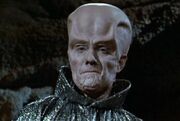


Big-headed alien. Born in NYC. ’60s/70s tv, some familiar titles: High Chapparal, Mannix, Wild Wild West, Big Valley, M:I, Bracken’s World, etc., plus a few movies. IMDB lists first credit in 1963 on soap The Nurses (episode’s incredible title: “To Spend, to Want, to Give”), last credit for main career is “Director” on a 1977 Wonder Woman ep where she visits Hollywood, so I guess he was just playing a director. A long while after, we get one last credit “Mr. Kramer” in the 1997 film Turbulence,  a would-be action blockbuster from MGM that starred Ray Liotta and Lauren Holly. Yish.
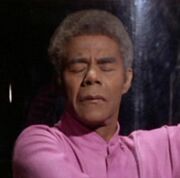


Black doctor, b. 1917 in Mobile, Ala. “More than 30 feature films,” something in Roots, Gunsmoke, I Dream of Jeannie, All in the Family, Sanford and Son, Mary Tyler Moore Show. IMDB and MemAlpha don’t quite match up, but guy may have had more than a hundred roles from circa 1950 to 1993. The Killers with Reagan (1964), To Sleep with Anger (1990). Lot of tv from mid-1950s into 1980s. A role in Jungle Drums of Africa (1953) as “Native Ambusher.” In the very early years he even did the Amos and Andy tv show (he was “Mr. Royal,” one ep).
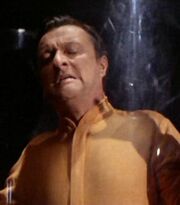


Boba Fett’s voice. B. 1919 in Brooklyn. Plus he was in Twilight Zone’s famous “A Stop at Willoughby” and another ep, “Midnight Sun.” And he was “Man #2” in a Seinfeld (“The Opera, 1992). Voiced Boba in pre-2004 versions of Empire Strikes Back. His “Empath” role is as an earth scientist who gets tortured and killed by the aliens.

IMDB lists about 150 roles, going back to 1955 and Armstring Circle Theatre, ending with In the Heat of the Night in 1994.

Wiki says, “best known for his role as Harry Snowden on the classic television sitcom All in the Family and its spin-off series, Archie Bunker’s Place. He played the character from 1977 until 1983.. … regular during the 1960-61 season of The Untouchables, playing Police Captain Dorsett…. recurring role as Judge Arthur Beaumont in the series Matlock  guest-starred in … Mission: Impossible, The Outer Limits, Bonanza, The Rockford Files, and The Fugitive,” among others. Also was in Roots: The Next Generations.
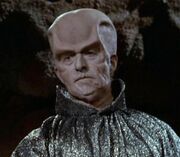


Another alien, b. 1922 in Canada. IMDB gives him 82 credits from 1943 to 1974, when he died. “Second Reporter” on The Lloyd Bridges Show, things like that. In 1963 appeared as “Self” in The Man Nobody Liked, which IMDB lists as a documentary. The cast also had Philip Boyce, who was the Enterprise medical officer in “The Cage” (Star Trek’s first pilot). Weird. Apparently it was a service film.

Wily Ourobourus

I’ve got a review of the newish Xasthur album up at metropulse. The first paragraph is one of the better things I’ve written for them, in my opinion anyway:

For centuries, scholars believed that metalness was a straight continuum, with bands like Slayer at the top end and performers like, oh, say, Debussy at the bottom. In recent years, though, researchers have discovered that the truth is somewhat different. Beyond St. Vitus, beyond Celtic Frost, out where the black dooms drone, we now know metal curves, and like a wily ourobourous, takes its tail in its teeth only to discover it’s chomping on the smiling visage of Danny Elfman.

Lions and tigers and bears oh my: Magic Bites by Ilona Andrews

I’ve been a on YA s/f reading kick for a while now. Most of the books I “read” are audiobooks that I listen to while commuting or filing at work, because I have little spare time. One of my recent favorites was the Demon’s Lexicon by Sarah Reese Brennan. I follow her LJ and she wrote a great essay about women in fiction during which she recommended Ilona Andrews’ Magic Bites series.

I picked it up at Borders yesterday (yay coupons!) and gnawed my way through it over lunch breaks. It’s pretty good, and I’m curious to see where the author takes it.

The basic summary is boring: Kate, intrepid heroine, is a magic mercenary in Atlanta, where magic returns in waves from time to time. She’s investigating the death of her guardian, Greg, who died while working for an Order of protective knights. There are two main camps of potential baddies: wereanimals (the Pack) and vampires (actually run by necromancers).

Kate is tough, cold, and friendless, unless you count weapons as friends. She wisecracks and is stubborn, wears her hair in a braid, and acts a lot like early Anita Blake, right down to an uncomfortable dinner date at a fancy restaurant. She keeps a big sword on her back, camouflaged by her braid, and she Fights Crime.

This all seems very stock, but it has a certain charm. For one thing, it’s got a very Russian feel to it. (The main author is Russian; English is her second language, and she writes with her husband.) By which I mean, tons of the old parts of Atlanta are destroyed and they’re going to stay destroyed. It’s a fatalism that I find kind of refreshing. The descriptions of people and actions and places are detailed and rather fast paced. In some ways, it reminds me of a short story, where ideas are paramount. There are many ideas in this book–complex buildings, social structures among monsters, weapons, rituals, powers, types of humans, and they’re tossed in practically every other paragraph. It’s a short book, but very dense. This feels very Russian to me, although others might characterize it as something else.

There are many male characters in the book, and very few female ones (except as victims). There’s some fighting over who gets to date Kate, which I found tiresome. However, the essay I mentioned above indicated that part of the purpose of the series is to overturn the Anita Blake-style tough chick surrounded only by guys trope, so I’m curious to see what happens in future books. As per usual for me, the so-called “pack” dynamics drove me nuts (note to authors: alphas do not always insist on eating first; and when they do, it’s often so they can regurgitate to feed their young. Puppies generally eat first. But whatever.)

One other issue I had may be a personal quirk, because I’ve come across this in other books. You’re in the middle of a tough case; “no one” will believe that things aren’t finished; you’re certain that the killer is out there and may be after you. What do you do? Go to bed and sleep soundly. Baffling. Maybe I’m a workaholic, but I’d be calling around, following up leads, or at least having nightmares. Perhaps librarianship has a stricter work ethic than mercenary detectives.

Juno

Just saw this movie (about a 16-year-old named Juno who gets pregnant and puts the baby up for adoption, if you missed the hype.) It’s not bad; the dialogue is snappy, and the star (Ellen Page) is appealing — she refers to her the effect of her very pregnant presence at school as that of a “cautionary whale” for example. And there are lots of nice moments — at the hospital when she’s about to give birth, for example, Juno begs her step-mom to get her a spinal tap to offset the labor pains. Her step mom (Alison Janey) calls out exasperatedly for a nurse, and in doing so refers to Juno as “my daughter.” It’s a nice moment, emphasizing the movie’s insistence that parenthood is more about love and commitment than it is about biology.

Overall though…I guess the basic problem can be summed up as sit-com quirkiness. Indeed, the movie is insistently, almost desperately quirky; everyone is always spouting pithy one-liners and engaging in telling, charming idiosyncracies (Juno’s boyfriend pops orange breath mints, for example; Juno’s step-mom loves dogs, etc. etc.) But if you look a little closer, those idiosyncracies are mostly deployed in the interest of covering up fairly banal insights and familiar characters. The working class, clueless, but loving dad; the slightly nerdy boyfriend; the teasing dependable best friend…where have I seen this all before?

Worst of all is the adoptive yuppy couple. Vanessa [Jennifer Garner] is uptight and wants a baby. That’s pretty much all there is to her; she’s the quintessential modern woman, striving for the one thing all her success has denied her…motherhood. Over the course of the movie she becomes more sympathetic…but never because she acts or behaves differently, really. Her quest for motherhood is just seen as more and more sincere and worthwhile as we go along. Indeed, you never learn anything about her except that she wants a baby. She never gets any quirky lines, never is blessed with quirky habits; never seems anything but completely uptight. Part of the problem is Jennifer Garner, who is about as responsive as a stick…but the script gives her little to do in any case.

Even worse is Jason Bateman as Mark. Like Garner, Bateman is a dull fish, playing uptight and suburban as unexpressive and flat. He’s also a caricature in any case; a formerly cool musician (he opened for the Melvins!) who now writes advertising jingles, he initially seems kind of cool, and then pitiful and icky as he makes a semi-pass at Juno. Again…where have we seen this before, I wonder? Guys who like rock music must be stunted men-children afraid of grown-up commitment. Also, they want kids less than women do. Who knew?

And then, at the end, we learn it’s all not really a story about giving up your baby for adoption so much as it’s a story about finding your true love. We’re in a John Hughes movie after all. It’s good to know that, even though the man himself is gone, his spirit lives on.

Living Hand to Brain

Inspired by Suat and some comments on his post, I surfed over to Thought Balloonists, and poked around a bit. The article Suat referenced on Dash Shaw by Charles Hatfield was certainly thoughtful and well argued, but did little to dispel my generalized indifference towards everything I’ve heard about Shaw and his comics. There was a lovely essay by Craig Fischer on Steve Ditko though. Basically, Fischer argued that in Ditko, illustration of hands carry much of the emotive power. Fischer then suggests that this focus on hands rather than on a more diffused expressiveness or sensuality is linked to Ditko’s deep discomfort with sexuality and, indeed, (especially later in his career) with emotion in general. Fischer then concludes that Ditko may have suffered some sort of abuse, which may be the cause of his repression.

As I said, it’s an interesting argument overall. I’m no Ditko expert myself, but the discussion of the use of hands (inspired in part by comments by Bill Randall, it looks like) and the repression in Ditko’s art seems pretty spot on. I think it’s really dicey to try to use that to extrapolate information about Ditko’s past trauma, or lack thereof. Mostly because, as Fischer notes in comments, people are really surprising and unpredictable. People can be repressed or uncomfortable with certain kinds of material for all sorts of reasons, some of them pretty counterintuitive. Knowing pretty much nothing about Ditko’s biography, I can say, you know, maybe Ditko was beaten as a kid and so feels uncomfortable with sex. Maybe Ditko’s gay and repressed and so feels uncomfortable with sex. Maybe he had a religious background and so felt uncomfortable with sex. Or, you know, maybe he’s just uncomfortable using sex in his work for reasons that connect to a lot of things, but not to any one clear explanation. Works of art can sometimes work like puzzles that you can fit together and solve, but people aren’t like that. It seemed to me that Fischer’s essay was in some ways an effort to forgive Ditko’s schematic view of humanity by turning Ditko into a schematic himself.