Be White Or Explode

Agents of SHIELD starts out as a black superhero story. Mike Peterson (J. August Richards), a laid-off factory worker, is on the street with his son when a building nearby explodes (as they do.) He hears someone screaming for help inside, and uses super strength to smash handholds in the wall, climb up, and save the damsel in distress. He then leaps to the ground and slinks away, covering his head with his hoodie. He’s soon being referred to as the Hooded Hero.
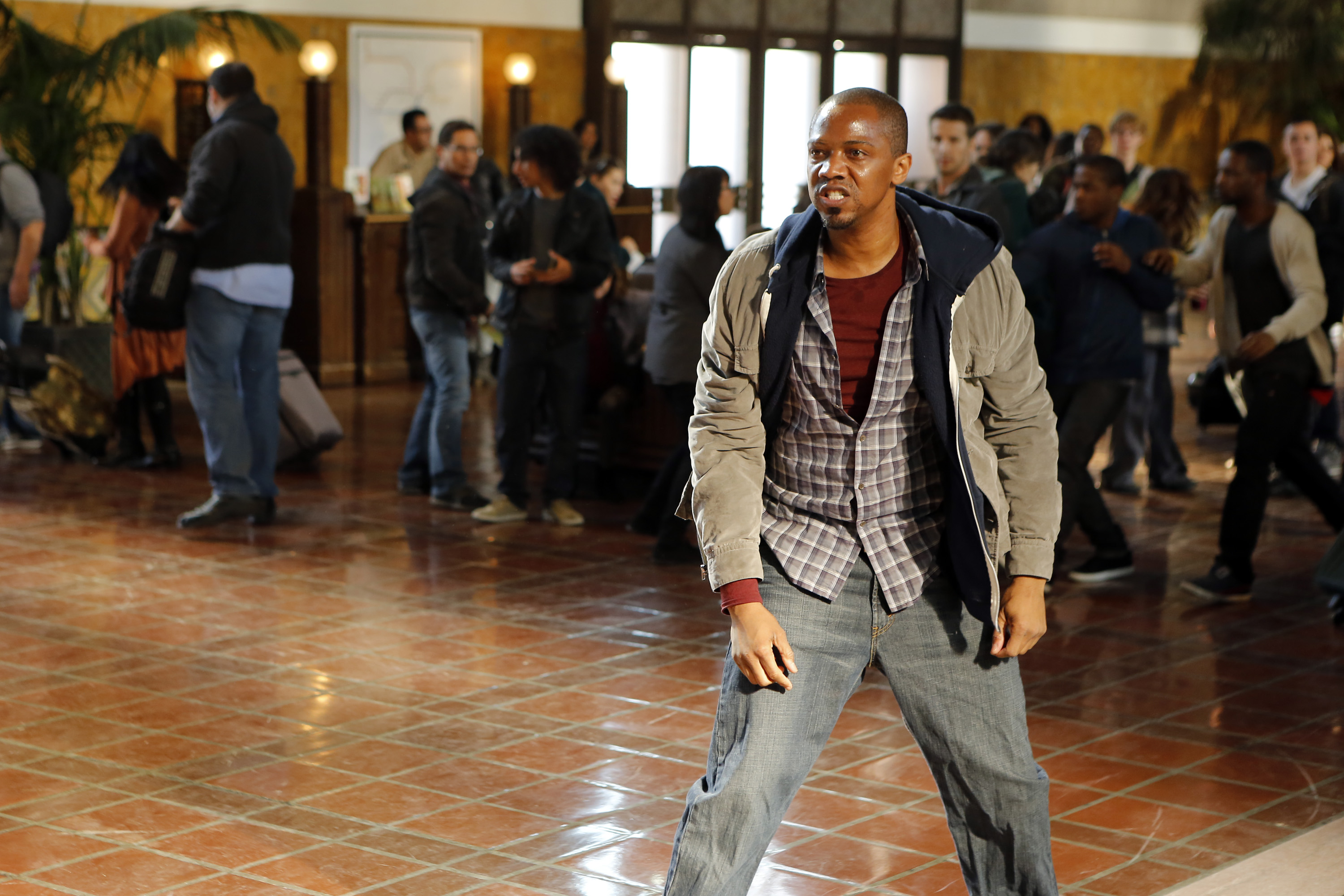
 

J. AUGUST RICHARDS

This seemed like an intriguing development. No one had told me that AoS was based around the adventures of a super-powered, single-dad, working-class black man. Even the hoodie — a reference, intentional or otherwise, to Trayvon Martin’s death the year before the pilot aired — seemed potentially positive. The symbol of supposed black criminality reversed and turned into a heroic icon; that could work, maybe. Maybe?

Or then again not so much. As you know if you’ve seen any of the series at all, the Hooded Hero is not the hero. He’s just some schlubby plot point. He never gets to save anyone else. He volunteered to be a guinea pig for an experimental treatment after he was hurt on the job, and his powers are unstable. Soon he’s experiencing uncontrollable rages, beating up his old factory boss, and engaging in kidnapping, assault, and other nefarious super-villainesque deeds. It turns out even the woman he saved wasn’t an innocent, but the evil scientist herself. At the end he gives a speech about how people like him don’t get a fair shake, etc. etc., and the white guy hero without superpowers listens to him sympathetically and calms him down to where he can be ignominiously shot with some sort of sedative for his own good. Yay.

It all seems wearisomely familiar, doesn’t it? For me I was reminded of one of the first comics I think I ever read; an old Flash story from way back in the 1970s. The comic is about Ms. Flash; Patty Spivot is standing in Barry Allen’s lab when (improbably) another bolt of lightning hits, electrifying the shelves of chemicals and giving her superspeed just like Barry Allen had. She too decides to fight crime with her super-speed…except there’s a catch. Her powers are (wait for it) unstable; whenever she runs anywhere, she causes poison gas to seep into the air, or fires to break out. She doesn’t believe that she’s causing the damage, so Barry has to contain her and eventually figure out a way to depower her. Only guys can be Flash; empowered women are too dangerous. End of moral. (It was all an imaginary story anyway, so I guess you could see it as some sort of critique of Barry’s paranoid misogyny, if you felt like being kind.)

Just as the female Flash is a danger to us all, so, in AoS, is the black supehero. The Hooded Hero talks throughout the episode of his desire to be good, and he’s supposed to be a good man confused by the treatment he’s undergone. But that just emphasizes the disconnect between power and blackness. Good white people who get superpowers go off to save the day; the Hooded Hero proves his goodness by recognizing that he can’t do anything but stand there and let the white super-espionage dudes get a clear shot at him with their magic depowering gun.

You could argue I guess that the Hooded Hero doesn’t need to stand in for all black superheroes ever; he’s just one guy, after all. But the show stacks the deck by, inevitably, presenting him as the only black character around. Other than the wearisomely obligatory Asian martial arts expert, the entire SHIELD team is white. (Update: Skye, the superhacker, is bi-racial, with Chinese ancestry.) The climactic surrender scene, then, takes on racial overtones that the show is clearly not prepared to handle. Peterson rails against the giants, the people putting him down — which diagetically are supposed to be the superheroes. But as a lone black man facing a sea of white agents, it reads as a lament about whiteness. In that context, the denoument, in which the solution is for the black guy to trust patiently that the white cops shooting him are beneficent, seems almost unbelievably callous — especially, again, in light of the perhaps accidental but unavoidable resonance with Trayvon Martin.

None of this is particularly surprising given the crappy record of the superhero genre on race…but still, the gratuitous stupidity of it make you shake your head a little. Joss Whedon, who’s supposed to have a brain, directed — and yet, the best he could come up with is a parable about how black men with power need white agents of the state to shoot them for their own good? If this is how the series handles race, maybe it’s just as well that there aren’t any black continuing characters. Erasure is bad, but condescending disempowerment may just be worse.


Son of X-Files, Jr., Part II: The Beginning

scully

 
 It’s hard to believe, but The X-Files is returning to Fox. The six-episode mini-series starts shooting this summer. And Twin Peaks, another dead show about paranormal investigators, is being reincarnated by Showtime.
 

twin peaks

 
Why are occult detectives back in fashion? I think Scully’s M.D. makes her more qualified than either Agent Mulder or Agent Cooper. Remember the episode when she gets abducted by aliens? The scene was shot in Vancouver, but they pretended it was Afton, Virginia—which does not have a funicular. I know because I used to drive over the Blue Ridge Mountains to the University of Virginia’s Creative Writing Department three days a week, unaware that the university also housed a Division of Perceptual Studies.  Its founder, Dr. Ian P. Stevenson, died a few months after I finished my MFA.

Given his research area, I feel I should place an asterisk next to “died,” but his colleagues have yet to report evidence of his afterlife activities. Dr. Stevenson had been a full-time paranormal researcher since 1968 when philanthropist Chester Carlson, inventor of the Xerox machine, willed UVa’s medical school a grant to open DoPS. So, yes, the world’s only university-based researcher of reincarnation was funded by photocopiers.

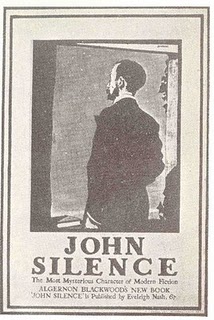
If a medical school seems on odd place to find a psychical investigator, you should know that Scully comes from a long tradition of occult detectives with MDs. World-renown surgeon Stephen Strange abandoned his scalpels for astral projection, in 1963, two years after Dr. Droom entered “that dark and mystical world which lies beyond the known and the unknown!” Dr. Stevenson visited India in 1961 too, to document his first of almost 3,000 cases of past-life memories. Stevenson was still finishing high school when Superman co-creators Siegel and Shuster dreamed up the first comic book occult physician, aptly named Dr. Occult. But Algernon Blackwood’s 1908 Dr. Silence is the first general practitioner to accept the superhero job title “psychic doctor.”
 

john-silence-poster

 
If a medical degree doesn’t sound sufficiently superheroic, then you need to see Hugh Jackman in Van Helsing—or wait for the Tom Cruise reboot, if it ever escapes from development hell. All these Hippocratic Oath-swearing healthcare professionals also reveal the superhero genre’s most important superpower. Sure, X-ray vision would be handy when diagnosing, and what doctor couldn’t use telekinesis in the O.R.? But despite all those fist-thrown Ka-Pows! and bone-bashing kicks, the number one superhero trait is kindness.

When told he won’t be paid to treat the dying Llama, Droom answers: “I can’t refuse to treat a sick man! If I must, I’ll treat him for nothing!”And so he’s rewarded because: “Only a charitable, self-sacrificing human would have done so!” Dr. Silence also takes “no fees, being at heart a genuine philanthropist.” His wealthy friends are “puzzled” that he “should devote his time” not just to doctoring but “chiefly doctoring folk who could not pay.” He poses the “native nobility of a soul whose first desire was to help those who could not help themselves.”

This Hippocratic philanthropy extends to monsters too. Dr. Van Helsing can “pity” and “weep” for vampires during his “butchery” of their bodies, imagining Dracula’s “joy” when “his better part may have spiritual immortality.” When Dr. Silence faces an Egyptian fire spirit wrongly “torn from its ancient resting-place” and brought to England where it exacts revenge, he feels more for the mummy than its wealthy looters. He later worries about the well-being of a werewolf, a condition he terms an “infirmity,” rare but also “often very sad.” He has no enemies, only patients. Though the ghost of a witch is beyond his help, he transmutes the “evil forces” she left behind “by raising them into higher channels.” He doesn’t destroy evil—he cures it.

Unlike the vampire-hunting Drs. Van Helsing and Hesselius, Silence has actual superpowers, making him the first superman to leap beyond the comparatively mundane realm of superhuman strength. He would be an ideal subject for Dr. Stevenson’s studies in extrasensory perception. Not only does he posses the “power almost to see in the dark,” “that special sensibility that is said to develop in the blind—the sense of obstacles,” but “his psychic apparatus never failed in letting him know the proximity of an incarnate or discarnate being.” His Watson-like narrator also wonders if he has “some secret telepathic method by which he knew my circumstances and gauged the degree of my need,” a power that also “saw into the future.”

These powers don’t come from enchanted artifacts or mutating radiation.  His magic isn’t magic. It’s an extension of his “humanity,” his “spiritual sympathy.” He can “absorb evil radiations into himself and change them magically into his own good purposes” because he’s just an incredibly nice guy. He’s not just sensitive, he’s “ultra-sensitive.” “Thought-reading” just requires paying attention to and caring deeply about other people. And since “suffering always owns my sympathy,” of course he’s going to dedicate his life to helping them.

Dr. Stevenson kept a list of the books he read that numbered over 3,535. I’m sure it includes some of the same “Yoga books” Dr. Silence admires, the ones arguing “the necessity of man loving his neighbors as himself” because, says Silence, “men are doubtless not separate at all.” Stevenson achieved that  interconnected state of “perfect serenity” though the “mystical experience” of LSD, but whatever its source, he and Silence had the same goal, the same desire for “peace and quietness.”

Usually that means putting the past and present back into balance. “Ancient pasts” and “ancient instincts” have a way of rising in Blackwood tales. Stevenson traveled the world to study the same phenomena, writing a 2,268-page monograph on past-life memories, including 200 “in which highly unusual birthmarks or birth defects of the child corresponded with marks, usually fatal wounds, on the previous person.”

Silence’s filing cabinet is considerably smaller. He vanished in 1917, after Blackwood published his sixth and final case study. Given that John Silence, Physician Extraordinary was a breakout best-seller that let the author quit his day job, it’s weird the doctor never came back. Maybe Silence has just been waiting for his favorite shows to return to TV in time for the 100th anniversary of his last publication?

Or maybe he was abducted? Those X-Files aliens returned Gillian Anderson after her maternity leave and Buddhist wedding. Blackwood and Chester Carlson were students of Buddhism too and firm believers in reincarnation. I’m more of a Dr. Scully myself. Though I try to be sympathetically open-minded.
 

stevensonbook

ARTS Games Are The Dream of Neoliberalism, Interrupted

ARM_main
 
Action Real-Time Strategies (Or, ARTS, as some in the community call them) has blossomed into something of a proud E-sports institution in the decade or so they’ve been around. In these games, players select unique characters and then compete in violent conflict against each other down a series of lanes across a (usually) isometric map. The goal of this conflict is to accumulate the resources necessary to overcome watchtowers that stop forward momentum, and then finally destroy the opposing team’s base.

ARTS grew out of user created maps for Starcraft and Warcraft 3, but it was mostly in the last decade that entries in the genre became seriously profitable both as consumer products as well as potential games of sport. Today, ARTS titles have huge tournaments with prize purses worth millions of dollars, featuring the backing of corporate sponsors from energy drink purveyors to computer hardware manufacturers. These games didn’t merely become popular out of a steady development of graphics, accessibility, or dumb luck; they became popular because the stories these games present to audiences, either playing them or spectating them, are syntonic with conservative understandings of how the world works. ARTS games are a sort of regurgitation of Neoliberal ambitions and narratives in the form of competitive play and sporting.

The genre is essentially defined as the development and flexing of capital among teams of exceptional individuals, each engaging in war against the others. Neoliberalism is built on economic misery to maintain the interest of a tiny elite class — inequity which is justified through claims of meritocracy. Ostensibly ARTS titles are meritocracies too, where the best team wins by doing a better job at accumulating wealth, securing objectives, and punishing opponents. But all of them feature gameplay elements that contradict, compromise, or otherwise qualify narratives of victory by reason of virtue or skill.

This qualification of meritocracy begins as soon as the match does, with players selecting their hero or champion unit that they will then control throughout the match. Each unit is mythologized as incredibly unique within each game’s fiction, presenting players with an endless procession of John Galts to choose from. These mythologies of strange power, alien forms, and cunning intellects are boiled down into a core set of tools and statistics that players improve over the course of the match by gaining experience points and gold. The goal of this continual arc of improvement is not merely to access power, but to access better tools of acquiring currency and to complete objectives.

These characters, our rainbow collection of possible Atlases, exist in a context of privileged hierarchy to one another. You could readily divide these characters by their function and relationship as team members, but by contrasting them against each other with aggregate data from publicly available matches, we can, for any given game, understand both any given character’s odds of winning a match, as well as whether or not players prefer a given character. This system of understanding the advantage some characters pose against others is key to the inherent drama of the character selection phase. It also provides narrative possibilities with which commentators, viewers, and players can interpolate the game that follows. The data driven model of ARTS heroes is not much different, then, from more conventional sports, where statistics have steadily grown as a tool for audiences to readily parse the events that unfold, or construct possible futures that are the subject of halftime and lunchroom discussions, or more recently, fantasy sporting.


These relationships of immediate privilege and power are complicated by the the playing field. The lanes of the playfield are the space that players are engaging in a sort of reverse tug of war across, partly processed by endless waves of computer controlled, generic characters, dubbed “creeps” by the ARTS community. In between these lanes lies what players refer to as “The Jungle”, a place where vision is limited, and small camps of monsters endlessly spawn every minute or so. When a player character lands the last hit that destroys any character, including player controlled units, that player receives a gold bounty that they can later spend on items to upgrade their unit or enhance their team’s effectiveness. Along the lanes are other objectives with gold bounties, like guard towers and unit barracks, which obstruct or slow the push of war, either by destroying creeps and heroes, or by weakening other enemy creeps. The “world”, the playing field, of ARTS games is one embroiled in perpetual conflict, with natural resources that simply emerge to be exploited.

Players vie for objectives, awareness, and resources on the map not just in open conflict, but by carefully deciding who among their team is best positioned to exploit available resources to carry the team to victory. The strategic thrust here is not merely where and when to execute a play for an objective, but also deciding how best to take accumulated wealth and translate that into capital, which in this case is the strength of a given unit to take objectives and acquire yet more wealth. This accumulation and flexing of capital as a form of physical power is a narrative audiences already understand. It is essentially a base assumption that the team who acquires the most power at the right time should win, or at least, gain a significant advantage. So, the timing and use of material acquisition serves as yet another data point for audiences to process in creating an understanding of how events should play out.

However, for all of this talk about creating certainties through capital and material privilege, ARTS games often include a certain element of random chance. The sheer number of reasonable options available to players regarding positioning, timing, et cetera are innumerable, and gives every game a quality of unpredictability that prompts blunders out of even the most professional of players. Much like the Real-Time Strategy games that spawned them, ARTs titles generally possess a “Fog of War” that limits what players can see. What this means in practice is that players are often guessing or inferring their opponents decisions regarding positioning, rather than knowing. On top of this unpredictable element there are other explicitly random features in some character’s tool sets that can swing a confrontation heavily to one side, which could theoretically swing an entire game around.

These elements tend to rankle the design purists out there, because we understand them as players or designers to be fundamentally “unfair”, but the point of this randomness is precisely that. The cruelty of fate abruptly disturbing what “should” happen is a story-telling delight that is the definition of an upset, and that threat of an upset in either matches or small engagements is always bubbling away in the back of the spectator’s psyche. It’s a worrisome fuel that keeps people involved in the events as they unfold, and is to an extent present in every e-sport to date. For every possible narrative that players could construct with the discrete data previously discussed, they are all unstable in the face of unpredictability and randomness.

This injection of random cruelty is even more necessary than in other genres within e-sporting, because material gained or lost translates to long term power gains. Consider this data from League of Legends matches regarding accumulated wealth. To paraphrase the article, if a team possesses only 2.5% more currency than their opponents by twenty minutes into a match, that team has about a 90% chance of victory. The surreal nature of a scoreboard serving double duty as a means towards greater power is that victors tend to keep winning. Elsewhere in e-sports, or in traditional sporting, it’s perhaps understood that the chance of victory is a function of time; so long as there’s time for the clutch field goal to turn the football game around, or time for the kind of absurd comebacks in fighting games, the game could belong to anyone. That isn’t the case here.

We understand through the data that the most convincing evidence for predicting a victory is the flow of currency and the player characters chosen. If the chance of an upset were not present, either in the moment-to-moment experience or the game itself, viewers and players could safely tune out or surrender halfway through the game and be fairly comfortable doing so, but they cannot because the ever threat of randomness and serendipity can destabilize that arc of continued growth or rapidly change the direction of the game. The fundamental narrative and assumptions that are built up steadily are nevertheless unstable, because as soon as these games become perfectly predictable, they’d become insufferably boring.

However, even with the knowledge that the game can be rapidly tilted in one direction via some twist of fate, players and viewers still participate with the assumption that the game is fair, even when the odds can be heavily altered very early. Here, ARTS games provide a kind of evidence for their fairness, even when that fairness is often inscrutable, or is the product of processes unseen and unknown to audiences. ARTS games are under constant revision, some of their rules and statistics being revised on a monthly basis, not because the changes those revisions provided are important, but because they provide a narrative explanation for the current state of perpetual imbalance.

These changes assure players that the playing field is going to be ever more fair, while providing additional concrete details to continue to form sports narratives. The assurance of fairness can be contradicted for drama, and the latter emphasized for coherence. In the same way we can understand political processes: internal contradictions are fodder for political narratives, and continuing legislation, even when totally incomprehensible to the public, is used as evidence of a state getting fairer. The process of revision itself is the secret ingredient that allows the appearance of fairness or justice to coexist safely with the cruelty that systems enact on individuals through no fault of their own.

The trick here, in ARTS games and in many modern governments, is that the evidence for fairness is a fabrication. It isn’t that the evidence is a lie, it’s that it was constructed to appear fair, not to deliver fairness or justice. In the meantime, while middle and lower class America gnashes its teeth, wondering how its constituents could fail to receive basic health care and housing while “doing everything right”, we cheer when an ARTS professional fails because of some mechanical quirk. Where the failure to receive what is owed us is painful in life, here, in fiction, and in sports stories, that contradiction of the established narrative is the fuel of drama, and is the fundamental hook that keeps players and audiences invested.

Ginsburg and Breyer Have Doomed Us All

Ruth Bader Gisnburg was honored in Time this week, so there was a lot of Ginsburg love floating around. In response, I thought I’d reprint this Splice Today piece about how Ginsburg and Stephen Breyer should have retired, and now that they didn’t we’re all screwed.
__________

Justices Ginsburg and Bryer chat before Obama's address to a joint session of Congress in Washington

 
It’s increasingly likely that the 2014 midterms will result in a Republican Senate. It’s quite possible that a Republican will be elected in 2016. The government, therefore, is more progressive now than it will be for another six years. Ruth Bader Ginsburg is 81; Stephen Breyer is 75. They are both in good health, but when you get into your 70s and 80s, six years can cause major reversals. If they want their legacy to be carried on by other progressive justices, the smart thing for them to do is retire now. If they wait, and get sick in, say, four years, their replacements could be appointed by a Republican president, and the balance of the court tilted decisively conservative for who knows how long.

Judges who care about progressive goals should try to ensure continued progressive justices on the court. That’s a pretty simple calculus. But Dahlia Lithwick and Garrett Epps both disagree. Epps says that Ginsburg loves her work and that “the timing of judicial resignation is a complex mix of ego, ideas of mortality, political fealty, and dynamics within the Court”—which I’m sure is correct, but doesn’t either refute the electoral calculus, nor explain why it shouldn’t be taken into account. Lithwick, for her part, insists that “arguments about Ginsburg’s political judgment almost by necessity inflect upon her judgment as a whole, and yet nobody has advanced any argument for the proposition that Ginsburg’s judgment is failing.” The reasoning here is that Ginsburg is awesome, her faculties sharp, and that suggesting that she might possibly make an error, or even attempting to present arguments to sway her, is disrespectful. Ginsburg is the Pope; not only can’t you question her pronouncements after she’s made them, you can’t even offer an opinion on a matter where she hasn’t yet weighed in.

Ginsburg and Breyer are powerful and important people in the U.S. government, but they aren’t kings or popes. They’re public functionaries in a democracy—we pay their salaries. Moreover, as Jonathan Bernstein points out, the founders intended judges to be included in the democratic process. Federal judges are appointed by the executive and confirmed by the legislative branch. Executive and legislative elections therefore have a major effect on the judiciary. Pointing that out isn’t bad form or insufficiently respectful. It’s simply acknowledging how our Constitution works.

Of course, the Constitution also says that Supreme Court justices serve for life, or until they decide to retire. No one can make Ginsburg or Breyer leave; it’s a decision they’ll make for themselves. But part of democracy is a free press, and part of a free press is attempting, through argument and reason, to influence policy and political actors. And whether they want to be or not, Ginsburg and Breyer are political actors, and their decisions about when they will retire have enormous political consequences.

Epps says he thinks it’s “bad manners and bad psychology” for anyone to tell Ginsburg (or presumably Breyer) what to do. As far as the “bad psychology” goes, the idea that Ginsburg is some sort of cantankerous child who will stay in her seat just to spite some op-ed writer strikes me as insulting and ridiculous. And for the “bad manners”: well, democracy thrives on bad manners. Deference to power and reverence for position have their place, but in a democracy that should be fairly circumscribed. The Constitution says that Ginsburg and Breyer can hang on as long as they want or can. But it also says that people have the right, and arguably the responsibility, to point out what the political consequences of that political decision may be.

Knife Forever

This first ran on Madeloud way back when.
__________

Shonen Knife
Free Time
[P-vine]

I haven’t heard any of Shonen Knife’s albums since 1998’s sublimely silly Happy Hour. Honestly, I wasn’t even aware that they were still a going concern. So when I picked up their latest, I was excited, but a little nervous as well. They’ve replaced their founding bassist, they’re a decade past their heydey — Lollipops and Fish Eyes forbid, but…is it possible that they suck now? Could their cuteness have curdled?
 

shonen-knife-free-time1

 
I needn’t have worried. Shonen Knife’s formula has stayed the same: Ramonesesque three-chord songs backing adorably dada lyrics about food, animals, or any other topic as long as it is treated as if it were a food or an animal.   It’s simple, it’s unpretentious, and — even if the indie scene has moved on to other things — it works every bit as well in 2010 as it did in the 90s. The most characteristic outing here is undoubtedly “Capybara,” an insanely catchy tune about…well, you know. “South American animal/always biting grass….roly-poly body shape/swimming very well.” Sing it in a winsome female voice with a Japanese accent, shifting into a Beatles-y psych chorus to announce “Sleeping, biting, all the time/Sleeping, snoring, all the night” — it’s so comforting.   In fact, the only way it could possibly be improved is with a techno version sung in Japanese — which is thoughtfully included as a bonus track.

“Comforting” pretty much defines Shonen Knife’s whole aesthetic. Greil Marcus and a million sad aging morons may point to the Clash and mumble incoherently about fighting the power, but in Japan they know that punk is music to shake your toddler to. “Rock N Roll Cake” isn’t about keeping the faith — it’s a recipe for woolgathering. (“Rock cake/ I want to sleep inside it…Roll cake/I can have funny dreams.”)

Even a song like “Economic Crisis” is not a call to arms but a cheerful ditty. And “Perfect Freedom” isn’t about the allure of Dionysiac abandon, but is instead a thoughtful, cautionary note from your mildly dotty aunt. “An…archy in the UK/it might be a mistake.”

“Love Song” though, is my absolute favorite. The band nods to girl group garage with a tune that adds some sway to the rock as they sing about how they don’t really like love songs, but everyone likes to listen to them. “Maybe I have a strange mind,” they muse, and then, in half parody, half capitulation, they start trotting out the clichés. “I want you, ooooo/ I need you, oooo/ such phrases/embarrass me.” The completely disarming sincerity of the distanced disavowal sung in those little girl voices just about breaks my heart. There are another six albums that Shonen Knife released over the last 12 years, and I’m thinking I’m going to have to go back and get them all.

Goat With a Thousand Record Reviews

This first ran in Madeloud way, way back in 2009. So out of date, but hopefully still entertaining.
_________

800px-Aquarius_Records_Store_front_sign

 
The Aquarius Records website is just about the most mind-bogglingly erudite font of esoteric music I could ever even imagine, much less witness. Every other week the store releases a massive 25,000-word-plus new arrivals list. They’ve published more than 300 of these monsters, and all are archived and accessible through their impressive search function. The result is a gargantuan, thorough, hysterical, learned, thoughtful mountain of obsessively cross-referenced prose about every kind of obscure metal, noise, psych, roots, electronica, funk, krautrock, shoegaze, and more. Store owner Andrew Connors (better known as aNDEE to AQ customers) spoke to me by email about the store and the list.

When did you start doing your reviews of new releases?

Not sure exactly. 10 years ago? We decided to start spreading the word about the store via short emails, original reviews were more like one sentence. If we were SUPER psyched about something maybe one paragraph, it was mostly for locals, to see what was new and come down and buy stuff. Eventually, people all over started signing up for our email list, and as it grew into a proper mailorder, the list sort of took on a life of its own, and the reviews blossomed into ESSAYS haha. I sometimes long for those one sentence days for sure. But folks love the list, and we do actually love writing it. And a lot of the stuff we sell and carry, is obscure enough that people might not check it out or give it a listen without the reviews. And in the store, we take those reviews and print them out and affix them to the cds, so people can come in, and it’s like a bookstore, with the little tags on each record, which hopefully makes browsing through all this crazy stuff, easier, and more interesting and fun.

How exactly do you compile these lists?

By the seat of our pants unfortunately. It just depends on what comes in, what gets released. Stuff we’ve been able to track down direct from bands and labels. We write about the stuff we have been most excited about. Sometimes we include old stuff we’ve always wanted to review, sometimes there’s some new release that folks are dying for, and maybe we’re not insanely psyched about it, but folks want to know what we think…

Everyone here writes reviews, regular readers of the list can usually discern who reviewed what, although it’s written in a collective voice, a very eclectic, weirdly varied voice, some folks write more than others. I tend to write about 40-50 reviews for each list, which comes out every other Friday. We all try to write them regularly, a few every day, bit more often than not, it gets right down to the deadline, and we’re scrambling to finish.

Do you review everything that comes into the store?

We get so much stuff, that would never be possible. New release wise, there are probably 100-200 every week, then cd-r’s and lps and 7″s submitted for review direct from bands and labels, another 50 or so every week? Just not enough time in the day. As it is, I try to listen to every single thing we get in, but it’s gotten harder and harder. As for how we decide, it really comes down to stuff we dig. The things we find ourselves listening to over and over and over. It’s very subjective, but it’s meant to be, we try to find the records we love and then champion them. I usually compare it to making a mixtape, the new arrivals list for me is like a massive mixtape we make for our friends every two weeks, stuff so good you want other people to hear it and love it, and hopefully buy it.

Do you feel that the lists are worth the effort in terms of sales?

Absolutely. It’s one of the things that defines our store. And unlike most stores, we have this list that people who live thousands of miles away can read, and feel like they’re a part of. We try to make it fun and friendly and interesting to read, our regular mailorder customers generally become friends of ours, when they visit here we hang out, when we’re traveling we end up meeting and sometimes staying with mailorder customer. It functions the way record stores have traditionally functioned, building a sense of community, cuz sure this is a business, but there’s not much money to be made, if we wanted to get rich, we sure as hell would be doing something else, but we LOVE music, as do the people who read the list, which for me, DOES make it good business, even just on that level, music nerds obsessing about new records and new bands and crazy sounds, and because of that, it does in fact generate much of our business, people anxiously await friday night to see what new stuff showed up and to order a bunch of cool crazy music.

It is a lot of work, and of course sometimes we wish, we didn’t have a list to send out, it certainly affects how we live our lives, when we can go away, how long we can go away, our days off, the way we feel about music, knowing that if we like something, we’re also gonna have to review it, but I definitely think it’s something super special, and I hope other folks feel the same way.

Looking at these lists online, you sort of get the feeling that the store itself must be gigantic. How big is the store? How many records do you have in stock at one time?

That’s funny. It really does. And I sometimes feel bad when someone finally gets to visit, having come all the way from Japan or the UK, I feel like we should apologize for how small the store is, but almost always, people dig it. It’s small-ISH, but there’s tons of records, cds, plants in the windows, posters and flyers, and crap all over the walls, doors and posts and windows have been painted by artists, there are video games (a Tron, a Rastan and a Joust, and we usually have a Ghosts And Goblins, but that one’s broken), there’s good music playing, it’s just really comfortable and worn and home-y, the way a record store should be.

As for how many records we have in the store, only a fraction of what’s on the website. we’re usually full to capacity, but the cool thing about visiting is, there’s always plenty of stuff that is NOT on the site, maybe stuff we haven’t reviewed yet, stuff that we were only able to get a few copies, not enough to post on the site, some stuff that just won’t make it on the site, for whatever reason, not to mention TONS of awesome used stuff, and new arrivals and more…..

What would you say is your favorite review on the site?

One of my favorites is probably for the M83 record, when we first heard them, mostly for the last couple sentences:

“Now imagine [the album] as the soundtrack to the love scene in some super bizarre Anime. You know, the part where the girl is going into space because she can’t live on earth because her tentacles keep killing cute little pandas, and her boyfriend is a giant panda, but they love each other so much her tears turn into jewels that the pandas can eat to make them invincible. It’s that heartbreakingly good.”

What releases are you looking forward to in the next few months?

Definitely excited about the new Velvet Cacoon, long time aQ faves, a band from Portland who do a super blissed out fuzz drenched eco black metal. REALLY PSYCHED on the forthcoming Teenage Filmstars reissues, one of THE best heavy druggy shoegaze bands EVER. Some of us think WAY better than My Bloody Valentine (I know, blasphemy! haha), the new Bunkur, killer crushing slow motion ultra doom from Holland, the new Yoga, super tripped out murky droney sort-of-black metal, and also pretty excited for the new Arctic Monkeys…. and sure there will be more more more!!

Skating Above It All

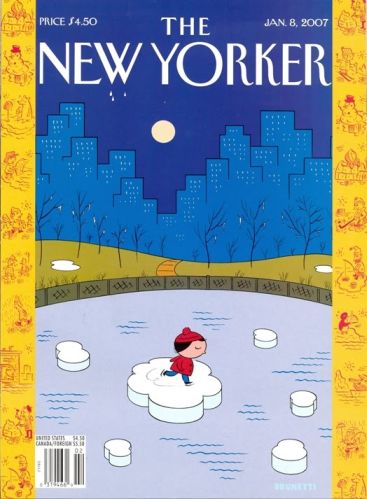
IB1

Is that a girl or a boy skating there?

Ken Parille, in a recent analysis of this Ivan Brunetti cover at tcj.com argues that it’s a girl, and, partially on the strength of that gendering, places the cover in a tradition of sentimental art.

With eyes closed, her face wears a contented expression. While traditional sentimentality sees a woman’s value as defined by her relationship to others (as wife, mother, daughter, etc.), Brunetti’s cover celebrates female solitude and introspection — a romance with the self.

When I initially saw the cover, though, I saw the figure as a boy — and the gender switch arguably changes the genre. As Parille notes, the person here may be engaged in contemplation, but she (or he) also seems to be violating the rules; he’s jumped the fence and is now skating on a chunk of ice where there’s some danger he’ll fall in. Seeing her as a her, Parille ends up underlining the ominous threat; “Her rebellious actions are admirable, even inspirational, but a little reckless. Perhaps she should open her eyes.” But is she’s a he, you might switch that about — it seems a little reckless, but even so, inspirational and admirable. She isn’t a girl in need of saving; he’s Tom Sawyer on an escapade. The figure isolated against the city isn’t inward turned and contemplative, but serenely pleased with his daring. The New Yorker readers get to identify with that lone figure, impishly crossing boundaries and frolicking where one should not frolic. The three drops falling from the title, which Parille reads as tears, might perhaps be seen as bright stars, confetti — a small tribute to the daring youth, and the viewer who dares with him (at least intellectually, in the way of New Yorker readers.)

Parille is probably right about the gender, as far as the artist’s intentionality goes (I get the sense that he’s probably spoken to Brunetti about it.) But of course no one can be right about the gender in an absolute sense; images don’t have gender really; a drawing has no genitals; even if you draw genitals, they’re just lines on paper. The gender is a convention, and part of that convention is genre — in the sense that the genre you see has gendered implications, and vice versa.

Though at the same time, I do wonder — are the genres all that different? Girls’ sentiment and boy’s adventure seem less like opposites, here, and more like a different way of looking at the same image; a gestalt shift. Is he mildly mournful beneath a sorrowful moon? Is she impishly pleased with herself under cover of darkness? Will they fall into their lovers’ arms, or answer the Bat signal? Which melodrama do you choose? Or will you stay, poised and refined above it all, avoiding those damply gauche pulp pleasures by skating upon a thin surface of ambiguity? Male or female, our iconic representative floats upon self-conscious, ostentatious whimsy, the genre of genius.