Blog vs. Professor vs. The Internet

I thought we’d end (for now anyway!) the roundtable on Charles Hatfield’s Alternative Comics by highlighting some moments from comments.

Steven Samuels:

When I think of Gilbert Hernandez, I don’t exactly think of lusty, go for broke cartooning. What he does do is write these potboiler scripts where the characters are put through the wringer. It’s more for the service of the storyline that for the sake of unleashing the id. And yeah, like I said, he does experiment quite a bit but the final results are quite often mixed. It usually feels quite dry to me. For me, real unrestrained cartooning would be from the likes of Crumb, Gary Panter, a lot of the Zap Comix guys, Fletcher Hanks, Jack Cole, Kirby. That said, though, I did like his surreal story from last year’s Love & Rockets #2, probably the only experimental piece of his I’ve ever liked.

Nonetheless, you make the same mistake as Daryl when you object to his work being judged to the same standards as literary novels. He’s been making literary novels for twenty five years. And the results have been no better than mixed.

Continue reading

Blog vs. Professor: On Surface Pleasures and Digging Oneself Deeper

We’re coming to the end of our multi-week roundtable on Charles Hatfield’s book Alternative Comics. Yesterday, Charles wrote a post defending Gilbert Hernandez from…well, mostly from me and Robert Stanley Martin. In this post I’m going to try to clarify my position somewhat, and also try to tie this discussion into why I thought it was a good idea to do this roundtable in the first place.

_______________________

Charles spends much of his post defending Hernandez’s use of fetish and pin-up imagery. He says:

I’m not going to argue that Gilbert’s above or beyond the pinup. Essentially I’m arguing here that Hernandez approaches self-parody, that the aesthetics of that passage, indeed of Poison River as a whole, are baroque, self-reflexive, and frankly decadent (in several senses), and that what he is doing with the Maria-fetish can best be understood in terms of the book’s overall agenda. Arguments like these—that such excessive, disturbing, and arguably self-mocking elements have some value other than masturbatory or shock value—depend on the arguers’ shared knowledge of the larger context of the work, so I don’t know how to explain or defend my argument to one (Noah!) who admits not having read the work in question. We’re at an impasse.

The page that this debate has centered on is here:

The page in question: from Poison River

So, let’s start by looking at that page for a second. Then, if you would, answer this question. Suppose Gilbert Hernandez put that page up for sale at auction. Do you think the price would be higher or lower if Maria’s breasts were half the size?

Continue reading

Gilbert Hernandez and the “Pornography” of Images

Don’t play with me, cause you’re playing with fire…

I hadn’t expected that a roundtable on my book Alternative Comics would become a referendum on Gilbert Hernandez’s work. But something like that happened last week, thanks to the one-two punch of Noah and Robert and their comments about my book’s investment in Hernandez, followed by vigorous point-counterpoint in the comments section, followed by Suat’s considered response to and extension of Noah’s critique of Hernandez in the form of a smart retake on Hernandez’s Human Diastrophism—a retake I’m inclined to disagree with, but articulated well.

The page in question: from Poison River

Continue reading

Alternative Comics: An Afterword

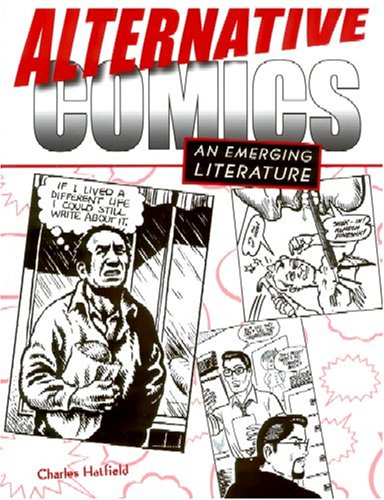
Alternative Comics cover

Last week several HU stalwarts and guests put a great deal of energy into their analysis of, and conversations around, my book Alternative Comics: An Emerging Literature (2005). I want to thank everyone for weighing in and taking on the work. I’m gratified by your sustained attention to Alternative Comics, even in those instances where you took issue with it. It’s great to see that the book can inspire such intense discussion, and, man, have I learned a lot from the spirited back-and-forth.

Tomorrow I plan to post in response to our exchanges on Gilbert Hernandez. And, in the weeks ahead, I hope to respond at length to Caro’s excellent and important post (from my POV the most thought-provoking of all, and one that will definitely inform my work, going forward). In today’s post, though, with your indulgence, I’d like to offer something different from a point by point reply or analysis. I’d like instead to give a personal afterword to the book, an autobiographical and critical reflection that will (a) sketch out the book’s history and context, and (b) consider the prospects for its future reception and use. I want to do this because the circumstances that drove me to write Alternative Comics have changed so very much since—not just on a personal level, but within the comics studies field—and because I want to show how a project like this fits into a working and teaching life, one that, inevitably, presses onward after the project is done.

Along the way, I’ll consider whether “alternative comics” even continue to exist in the same form as they did when I began the book, and whether the terms used to organize my thinking in the book can remain relevant.

I don’t presume that my circumstances are (or were) typical, since I’m a slow writer and Alternative Comics took a long time to get out the gate, but, given last’s week discussion and the changes fast overtaking comics and comics studies, I’d like to share with readers how the work emerged, under what pressures, and why. I hope this will go some way toward demystifying the processes that result in books like mine.

Continue reading

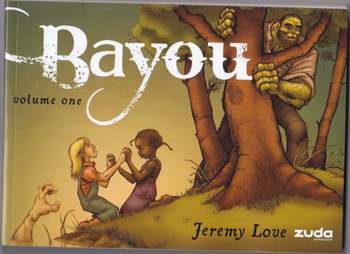
Bayou Vol 1, Jeremy Love

This is a beautiful and haunting comic. It’s kind of what I had hoped and expected to feel after reading Swamp Thing, to be honest. Not the parts about racism, but the parts about the feeling of the swamp as a powerful life force that cannot be controlled and that contains far more life in far stranger ways than we can admit to ourselves. A life that can tell us odd stories and take us on strange journeys.

Continue reading

Worship the Martyr, Ignore the Man

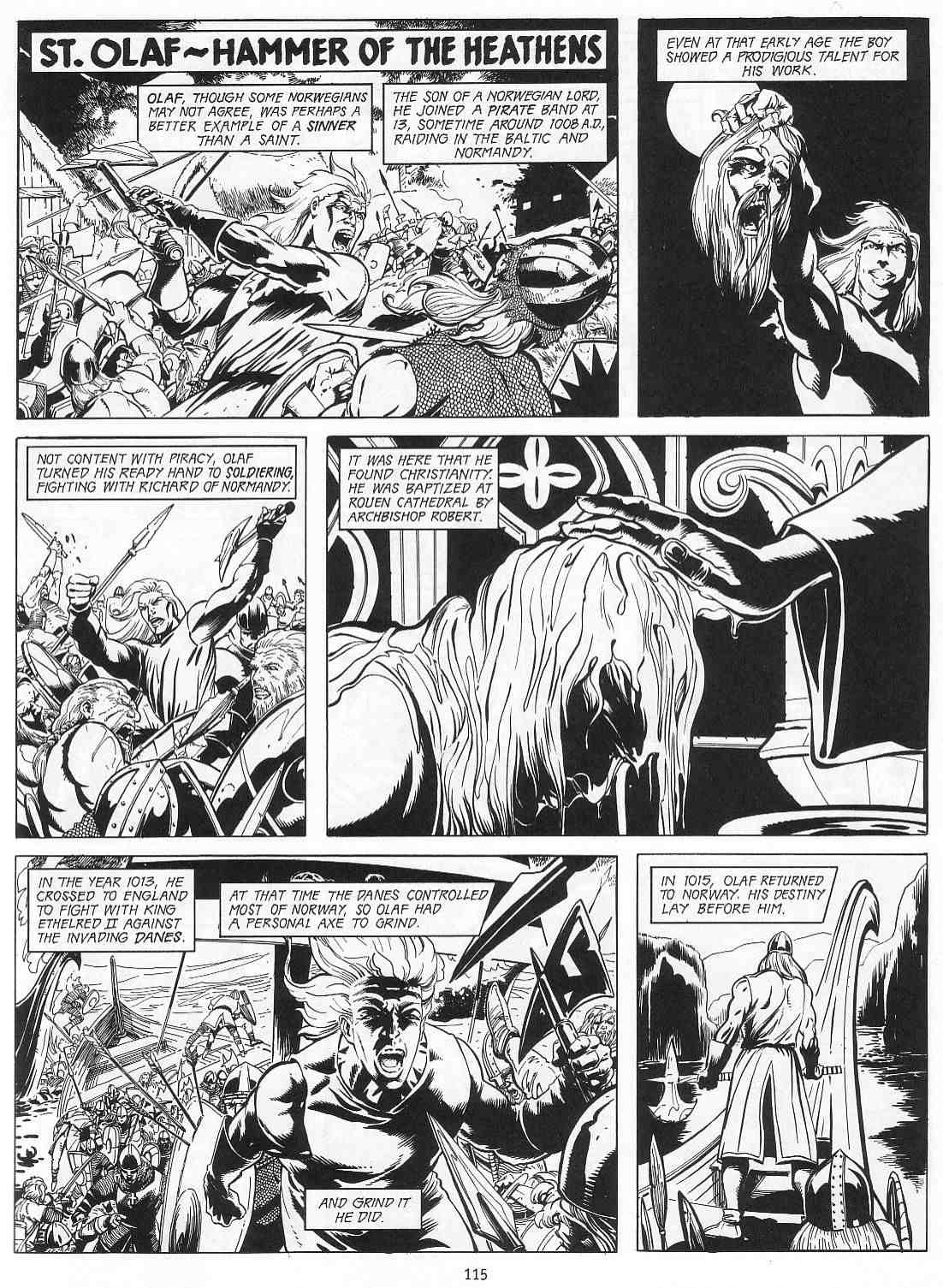
I’m a lapsed Catholic who loves reading about the history of the Catholic Church. For the past few days I’ve been reading “The Big Book of Martyrs,” a comic written by John Wagner (creator of Judge Dredd) in collaboration with over two dozen artists. Back in the 90s, it was published as part of a series of reference-lite comics under the “Factoid Books” label. The comic consists of about 50 biographies of Christian martyrs (the vast majority Catholic, with a few Orthodox mixed in), each only about 3-4 pages. Needless to say, these snippets can provide only the barest details, but the brevity is also a blessing. Reading 50 full-length biographies would be a time-consuming chore, especially if they were all written in the dry, indifferent manner of a reference book.

While “The Big Book of Martyrs” could never be seriously compared to a scholarly work of history, it did at least inspire me to do further research on a few obscure martyrs that I had never heard of before. And for all its limitations, the book serves as an adequate introduction to Christian martyrs, and the comic format makes it a quick and accessible read.

But I don’t intend to write a full review of the comic, at least not for this week. I’d rather talk about one of the more entertaining martyrs, St. Olaf of Norway (995 to 1030 AD).

Artwork by Rafael Kayanan

Continue reading

Moto Hagio: Who Watches the Watchwoman?

This is I think my penultimate post about the Moto Hagio’s collection of stories A Drunken Dream. You can read the whole series here.
_________________

Drunken Dream concludes with two entirely forgettable sentimental ghost stories: “The Child Who Comes Home” and “The Willow Tree.” Both exploit familial grief — respectively, dead child and dead mother — and an emotional twist-ending in the service of tear-jerking emotional catharsis. Unfortunately, as has been a problem before in this volume, Hagio has neither the space nor the inclination in these stories to create fully realized characters, and so the grief and pathos come across as both generic and unearned. These are probably the dullest stories in the volume. Some of Hagio’s work is actively stupid and irritating , but these really feel like she’s just filling the form in. Ambiguous death, twist, catharsis. That’s a wrap.

So yeah; not a lot to say. Except…I’ve been thinking a little about feminist film gaze theory and how it would work in comics. So I’m going to try to read “The Willow” through Laura Mulvey’s classic 1975 essay “Visual Pleasure and Narrative Cinema” and see what happens. Maybe it’ll even get me to like the story better; who knows?
______________

Mulvey’s essay is based in Lacanian and Freudian theory. I’ll quote from second paragraph.

The paradox of phallocentrism in all its manifestations is that it depends on the image of the castrated woman to give order and meaning to its world. An idea of woman stands as lynch pin to the system: it is her lack that produces the phallus as a symbolic presence, it is her desire to make good the lack that the phallus signifies….. To summarise briefly: the function of woman in forming the patriarchal unconscious is two-fold, she first symbolises the castration threat by her real absence of a penis and second thereby raises her child into the symbolic. Once this has been achieved, her meaning in the process is at an end, it does not last into the world of law and language except as a memory which oscillates between memory of maternal plenitude and memory of lack. Both are posited on nature…. Woman’s desire is subjected to her image as bearer of the bleeding wound, she can exist only in relation to castration and cannot transcend it. She turns her child into the signifier of her own desire to possess a penis (the condition, she imagines, of entry into the symbolic.) Either she must gracefully give way to the word, the Name of the Father and the Law, or else struggle to keep her child down with her in the half-light of the imaginary. Woman then stands in patriarchal culture as signifier for the male other, bound by a symbolic order in which man can live out his phantasies and obsessions through linguistic command by imposing them on the silent image of woman still tied to her place as bearer of meaning, not maker of meaning.

So to summarize the summary (as much for my benefit as anyone else’s): woman=castration. This symbolic difference is the basis for symbolization itself; it’s the difference that enables or creates meaning. Woman exists only to embody this difference; she is the non-meaning (castration) which enables meaning (the phallic father’s realm of law and language.) Woman cannot take up the law and language herself; she can attain mastery only vicariously through a child who acts as a substitute phallus. (Ideally, the woman will give this phallus up to the world of law; alternately she may try to retain it, preventing it from entering adulthood and the world of law.) The phallic law rules, and what it rules or regulates is non-meaning/castration/woman. Woman is then by definition silent and controlled.

Continue reading