Question for Kurt Busiek or Mark Evanier

If Batman is the best because he makes himself the best, and if the Green Lantern Corps’ special rings are fueled by will power, then how come everyone gets to be a Green Lantern except for Bruce Wayne? He ought to be the greatest Green Lantern of them all.

It bothers me that nobody else has thought of this.

So Long, Loser

Yes, the headline of this post is directed at everyone’s favorite Republican. But before I am a citizen, I am a copy editor. As our own Kaiser Wilhelm shuffles off to let us deal with the fruits of his truculence, ignorance, laziness, ineptitude and rampant need for ego compensation, the world press has been echoing a phrase from the well-respected center-right news publication The Economist. The problem is that, as far as I can tell, the phrase makes no sense. Here the phrase is:


Bush has presided over the most catastrophic collapse in America’s reputation since World War II.


Ok, we know about the current, ongoing collapse in American reputation. But what collapse in American reputation is associated with World War II? Does The Economist mean the time that the country was caught in a men’s room outside Boulogne with that French kid and some chocolate bars? Or, to be more charitable, maybe The Economist has in mind some collapse in American repute that happened before WWII. But that makes no sense either. We had our problems — the Civil War, race — but nothing that made the rest of the world think so badly of us. We were the big young country that was up and coming and kept on being up and coming.

As far as I can tell, the only serious pre-Bush blow to America’s standing was the one-two punch of Vietnam and Watergate. The morbid can debate whether that mess was worse than our current mess. But we can all agree it came after World War II.

 So, Economist, what the fuck are you talking about?  

Manga: What Is the Point? — Do Over

Same thoughts as here, but differently presented. First time around I tried being sprightly and provocative, like a British op-ed columnist fussing about how actually the French can’t cook or TV game shows teach you about life or some other bogus, dumbass lifestyle issue. This time I’ll be straightforward.

So here we go:
I don’t get manga. I look at a page and want to look away. Reason: the stylization of figures appears to me to be highly uniform, and it’s not a particular stylization I like. Solid black hair, googly eyes, the kids who look like adults, the adults who look like kids, etc. The look turns me off. Further, its kindergarten feel makes it hard for me to believe worthwhile stories could be told using this stylization, or at least told to their advantage.
Because my aversion to manga is so sharp and immediate, I have never given the comics a chance. If you ask me about pistachio ice cream, all I can say is I don’t like the taste. But manga ain’t just an ice cream flavor (title of my forthcoming Young Adult novel). Manga’s look is what I react to, but there’s more to manga than its look.
Which is the missing piece from this post’s old version. I should have asked straight out: What am I missing?
Noah has already started to answer the unasked question. Point one: the googly eyes, etc., belong to just one style of manga. The girls’ stuff, apparently. There are lots more out there. Other looks.
One observation I’ll stand by: manga emphasizes high-speed, all-out forward movement of the reader’s eye. US superhero comics have also started to do so, but manga does it more and seems to lack any other approach to word-picture combination. Pleasant as the effect can be, having just one item on the menu seems like a drag. Noah says US superhero stuff is wordy — well, sometimes, because every flaw on earth can be found there except overerudition. But at least a few different verbal-visual gears are available. In manga it seems like there’s just the one.
But hey, maybe not. The fellows will tell me.
All right, I guess that’s it. Xavier, thanks for the links and info. You too, Anonymous — you’re ok. Richard, thanks for the joke. Bill, thanks very much for laughing at my jokes, because somebody’s got to. Blackasthenight, thanks just for being you.

Manga:What is the Point volume 2

Tom posted yesterday to say that he really doesn’t like manga at all.

All that solid-black hair, those pie-shaped googly eyes and triangle mouths (with rounded corners!), the stunted pseudo-children, the skimpy few words stranded in fat balloons. And never anything in view but more black hair, googly eyes, and a lonely sprinkling of words against white space. Page after page, book after book, truckload after truckload. Manga makes me feel claustrophobic.

He adds:

manga, all manga, carries to an extreme the formal trend followed by US mainstream comics over the past few decades, which is to streamline word-and-picture arrangements so that the eye is always pinging forward with as little drag as possible, even if a concomitant of drag might be better dialogue or more detailed drawing.

That second quote is interesting, because it’s got the formal influence exactly reversed. That is, manga isn’t carrying a U.S. trend anywhere; the influence goes the other way. To the extent that there has been cross-fertilization between manga and American comics over the last decade, most of it’s gone Japan to America, rather than the other way around, I think.

That aside…Tom’s not really making, or attempting to make, an objective argument here, so refuting it is in some sense kind of pointless. If you hate manga art, you hate manga art; I can’t make you like something you don’t.

Still, there are a couple of ways to go with this argument I guess. In the first place, the formal elements you object to seem to be derived mostly form looking at shojo — comics for girls. As Tom somewhat reluctantly noted towards the end of his post, there’s actually a lot of manga out there that looks rather different.
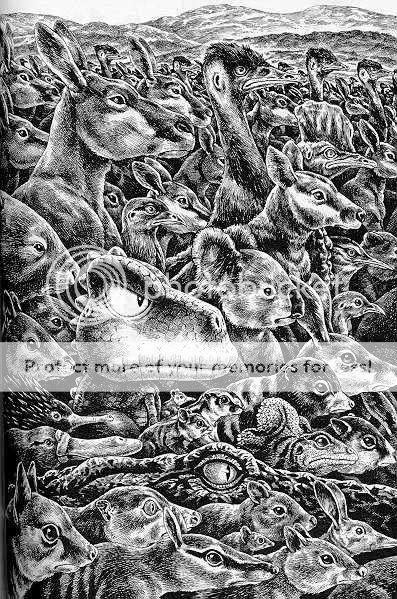
Photobucket
Gon, by Masashi Tanaka

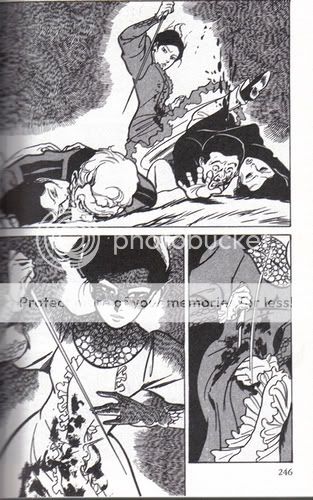
Photobucket
Lady Snowblood, Kazuo Koike and Kazuo Kamimura
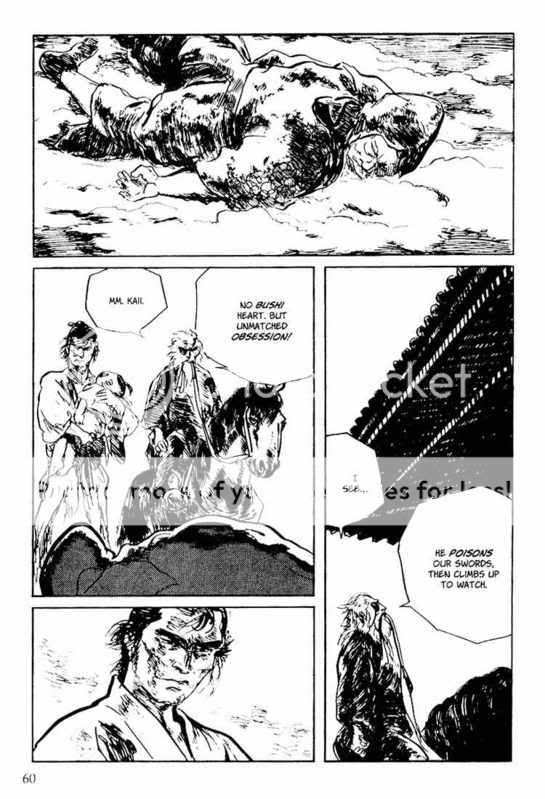
Photobucket
Lone Wolf and Cub, Kazuo Koike and Goseki Kojima
Photobucket
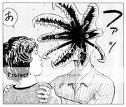
Parasyte, Hitoshi Iwaaki

I’m sure Bill could come up with more and better examples, but I think you get the general point; dismissing all manga is like dismissing all American comics…or, more, like dismissing all American movies. It’s a huge medium; if you felt like looking, you could probably find something that you liked.

As for shojo — that’s actually a genre I like a lot. To answer your objections in turn:

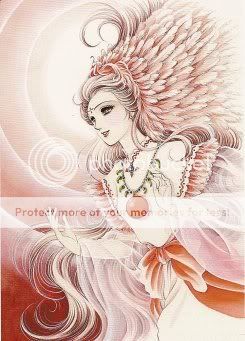
1. Stylization — If you don’t like stylization, you don’t like stylization, I guess. If most of the enjoyment you get from art is based on realism and anatomical fidelity, then, yeah, shojo isn’t necessarily the place to be looking. If, on the other hand, you really appreciate patterning, layout, and surface detail, shojo can be amazing.
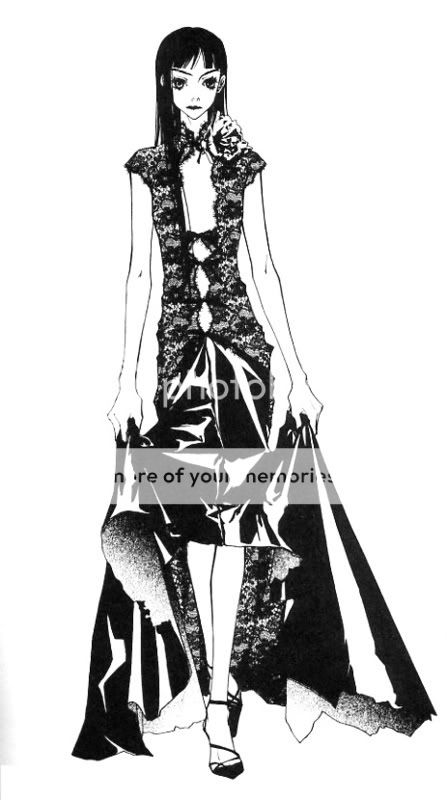
Photobucket
Amaterasu, by Suzue Miuchi

Photobucket
Forest of Gray City, by Jung-Hyun Uhm

I just hardly see anything, ever, in mainstream comics, and precious little in alternative comics, that gets me the way drawings like the above do.

2. Too few words — American comics are extremely wordy. Manga in general (and shojo in particular) are much less so. You seem to see this as a failure on the part of manga. For me it’s the reverse. Manga is extremely good at visual storytelling; in comparison, American comics writing seems extremely tedious, tending to state the obvious over and over and over again. This afflicts superhero comics..but it’s also the case for things like Maus, which goes on and on and on and on and on, almost fetishizing the fact that the pictures are so unnecessary to the story.

When manga (or shojo specifically) doesn’t work, it can be well nigh incomprehensible; I wouldn’t deny that. On the other hand, when it does work, it fuses word and images in a way that’s really sublime. Nana and Let Dai, two of my favorite shojo series, have incredibly nuanced and thoughtful characterization and relationships, much of it conveyed through visual expressions and body posture, just as you would see in, say, a movie or on stage. In comparison, something like Fun Home seems to me incredibly thumb fingered, in every sense — constantly harping on the obvious, much less fluid storytelling, art with a lot less emotional heft, etc.

I’m kind of not the best person to be defending manga, maybe…I haven’t read a ton, and I’m certainly nowhere near being an expert. But in my limited explorations in the genre, I’ve found a number of series that are funny, touching, thoughtful, cool as shit, beautiful — all the things I look for in art, basically. So that’s the point of manga to me.

Or you can read Tucker’s take; first review at the top.

Update: Tom does over his post. His rejiggering of his discussion of manga pacing made me thing more about his point, which in turn made me not quite get what he’s talking about. Tom says manga is all very fast forward movement. I don’t get that at all. On the contrary, people like Ai Yazawa or Sooyeon Won or even Clamp seem much, much more in control of pacing than their Western peers. In Nana especially, the story can bounce along quickly…or it can be slower and more contemplative…or it can freeze in a moment of emotional intensity. It’s true the text is less heavy than in American comics, but there are other ways to slow down the story — close-ups, expression, levels of detail, and so forth.

I guess it’s possible that what’s happening for Tom is that he’s so alienated by the art that he’s not able to pick up on the pacing cues? Anyway, for me, super-hero comics seem to be much more frantically paced…Grant Morrison’s cyberpunky stuff especially often seems just jam-packed with stuff without almost any effort to do visual pacing. Most of the manga stuff I see is very aware and capable of using space for pacing….

Manga: What Is the Point?

UPDATE:  Fuck it, I screwed up. I’m redoing the post here. Meanwhile, Noah’s response to the original version is here. 
Now the old version:

We at HU are having our second round of “theme” posts. First time we talked about our comics discoveries of 2008. This time we’re talking about manga: what is it, why is it, why do I hate it so badly I can’t look at more than a page? “Hate” is a strong term, but it’s true that my brain and eye shut down as soon as I encounter a manga specimen. All that solid-black hair, those pie-shaped googly eyes and triangle mouths (with rounded corners!), the stunted pseudo-children, the skimpy few words stranded in fat balloons. And never anything in view but more black hair, googly eyes, and a lonely sprinkling of words against white space. Page after page, book after book, truckload after truckload. Manga makes me feel claustrophobic.


Mind you, I haven’t read any. I’m starting off the round robin because perfect ignorance and unreasoning dislike provide a striking backdrop for the informed and authoritative. My colleagues will soon be along to provide some intelligent content. In the meantime, I’ll suggest the following: manga, all manga, carries to an extreme the formal trend followed by US mainstream comics over the past few decades, which is to streamline word-and-picture arrangements so that the eye is always pinging forward with as little drag as possible, even if a concomitant of drag might be better dialogue or more detailed drawing. [ Preceding sentence is not clear. To Noah it sounded like I was saying manga was imitating new-style US superhero comics. I just meant the two show the same tendency and manga takes it further. ]

Another observation: All the above, right down to my closing suggestion, places me in the same class as some fellow turning on the radio in 1968 and deciding that Jimi Hendrix, Otis Redding, the Beatles, the Young Rascals, the Four Tops, and the Velvet Underground are all pretty much the same because they have that damn beat and the electrified instruments. So, having set myself up, I now await my education at the hands of those who know better.

UPDATE:  Wait a second, is this manga? Maybe I should rewrite. Nah … double down. Time for the big guns.

For example, over on some message board a guy called  blackasthenight breaks off from frotting his pimples and declares:

ok now honestly, who has ever seen anyone whoes head, eyes, mouth, ect. is shaped like that? to me this just appears as a lack of willingness to studdy anatomy.

and whats with this gay stuff. half the time i see this crap its two dudes about to get it on. i mean wtf japan? also why do 80% of the dudes look like girls? and all the people with tails and stuff? and extra ears???

Yeah, Japan — wtf? 

Dang

Nobody says that, except prospectors in old cartoons and characters in new cartoons written by women. I have in mind the work of Alison Bechdel, Linda Barry and a young woman doing a webcomic that I saw recently but whose title I forget. (Not a bad webcomic either, but my memory isn’t sharp these days.)

All right, possibly men do use “dang” in their cartoons, but I haven’t caught them at it, just three women. Three’s a trend and I’m calling this one.
Come to think of it, it’s interesting how people nowadays treat expletives. My vague sense is that the following observation applies to men and women, though Bechdel provides the only example I can think of. Here it is: Dykes to Watch Out For shows people waving dildos about and hollering in bed, but the hollering is all #?!@*!!. Which is one of those decisions that are hard to explain but make sense in practice. I haven’t seen much in the way of dildos, yet I don’t mind sex toys in Bechdel’s strip. On the other hand, I curse all the time but suspect I would be annoyed and distracted if “fuck,” “shit,” etc. kept popping up in cartoon dialogue — though not movie or tv dialogue. So, you know, go fucking figure.