stupid tree

A couple more drawings:

The scan on that first one is pretty bad, actually; there’s supposed to be textures and stuff in the black, but you can’t see it at all. When my drawings start selling like hotcakes, first thing I’ll do is buy a better scanner, I guess.

Which raises an interesting question…what are hotcakes, exactly, and are they still selling even in this economy?

Unfulfilled Predictions

From Wikipedia:

In 1938, Walter Lippman wrote a column praising liberal arts education as a bulwark against fascism, and said “in the future, men will point to St. John’s College and say that there was the seed-bed of the American renaissance.”

Nothing against St. John’s, of course.

Virtue of Ignorance 2008 — part 1

I find the flurry of year-end best-of lists a little oppressive. In the first place, they remind me that, for a self-proclaimed cultural critic, I really don’t keep up with anything. And for the second — there’s just a kind of tyranny of news that seems crystallized in those lists. This moment you must think about All Star Superman! Jeez, ma…do I have to?

So anyway, I thought it would be fun instead of a typical best of list to maybe talk about some comics-related things that I discovered in 2008 that I’d never known about before. This has the added bonus of making my general ignorance of everything an advantage, since the more I don’t know, the more I have to write about. (The rest of the Hooded U bloggers thought it was an entertaining idea as well, so they’ll be providing their own lists as the week goes on.)

So to start:

–in mainstream comics, the creator I stumbled upon who made me happiest was probably Jeff Parker. As regular blog readers know, Parker writes a bunch of all-ages titles for Marvel. I just got his Marvel Adventures: Avengers vol. 4 collection and he was totally in the zone. The first issue has the Avengers fighting MODOC, and they all get turned into giant-headed MODOC’s themselves. The best part is when they (inevitably) fight the Leader, and they all make fun of him for having such a small head. And how do they make fun of him? By suggesting he become a teacher! And then they suggest that he can’t even get tenure. Then the Abomination, who is the Leader’s ally, gets really ticked and starts shouting “He does too have a big head!”

Macrocephalic jokes combined with sneers at the educational establishment. That’s all I really want from my super-hero books. Is it wrong?

–in manga,the thing I read that I didn’t know about that kicked my ass was the Korean mahwa yaoi series Let Dai, which is fantastic. I wrote a forthcoming review of it, so I probably shouldn’t enthuse too much here, but it’s brutal and preposterously romantic at the same time, and it literally made me cry.

–for art comics…well, this is probably a definitional stretch, but the thing that springs to mind is Hokusai’s manga. I’d known about Hokusai of course, but I’d never heard of his series of drawing books until this year when (I think) R.C. Harvey wrote about them in the Comics Journal. Beautiful, energetic line-work, filled with character and wit and…actually, heaping praise on them is just kind of silly. It’s just about the best drawing anyone has ever done; if you care about illustration at all, it’s the holy grail. You can check out some amazing images here. Or I’ve put a couple below if you’re too lazy to link:
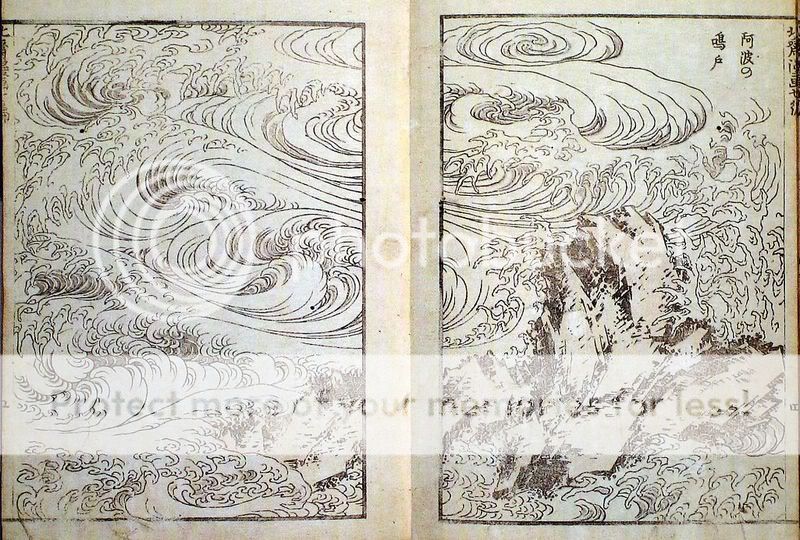
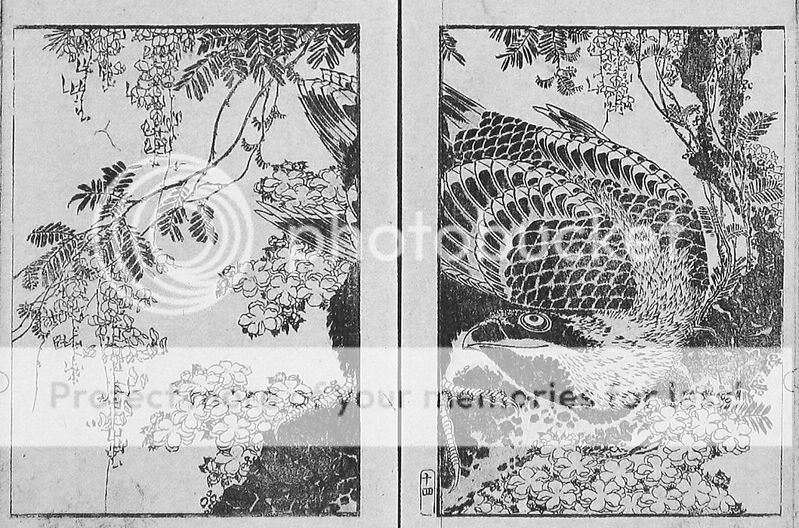
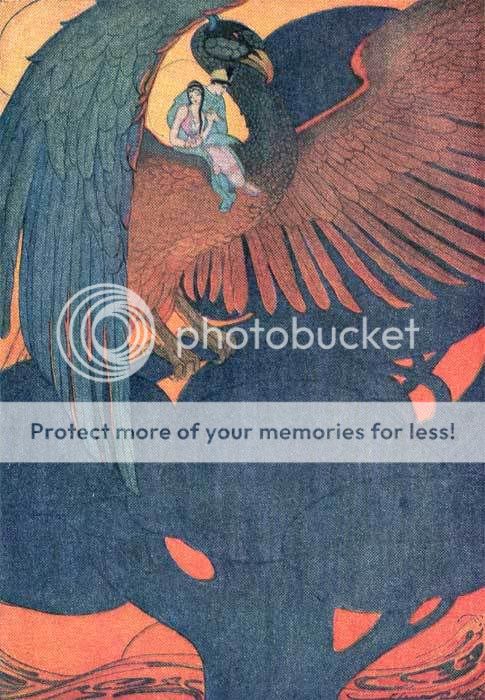
Hokusai is hard to beat. Still, the vaguely-comics-related-thing I discovered this year, though, that most thoroughly rocked my world was the amazing Sur La Lune fairy tale website. Specifically, I’m talking about the massive collection of fairy tale illustrations available on the site. It was through Sur La Lune that I found out about Arthur Rackham’s unbelievable silhouette work for Cinderella and Sleeping Beauty. That’s only the beginning of it though. The site introduced me to

Kay Nielsen
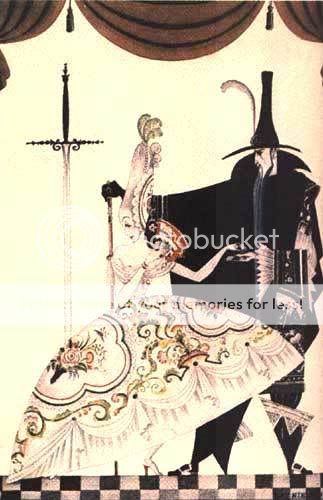
Photobucket

Margaret Evans Price

Photobucket

Elenore Abbott

Harry Clarke (who is a God)
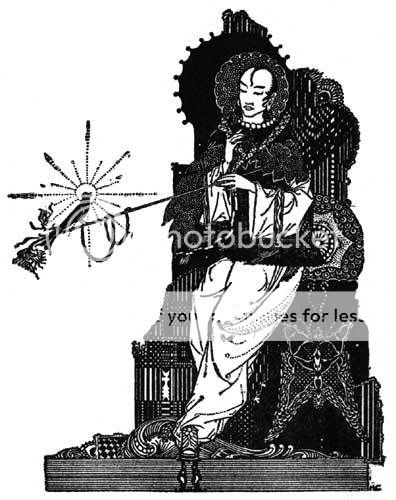
Photobucket

And a bunch of others. It’s a fantastic place to get lost in.

So there you have it. Check back on Monday for Tom’s favorite comics discovery of 2008; Miriam and Bill will post later in the week.

Update: Minor edits for consistency.

Blogathon

So over the next few weeks the Hooded crew (that’s me, Tom, Miriam, and Bill) is going to do some group theme blogging to kick off the new year. This next week (starting tomorrow) we’re going to blog on the Virtue of Ignorance 2008 — each of us is going to talk about our favorite comics thing we discovered in 2008 that we hadn’t known about previously.

I think the week after that we’re going to write about Manga (I believe that the working title, offered by Mr. Crippen, is “Manga: What the Hell?”) After that we may talk about comics we wish existed …and then we’ll stop or keep going, depending on how the spirit moves us.

So in that vein: are there any topics that folks out there would like to see us have at? Let us know in comments and if something sparks our fancy we’ll pick it up.

Constructionism: What the Hell?

I’m reviewing of Essential Dykes to Watch Out For and it’s taking forever. Here’s one snag I just noticed. In her introduction, Bechdel recounts her discovery of constructionism, which she defines this way: “Apparently no one was essentially anything!” But in Dykes we find a frail little boy named Jonas who insists on taking hormones so he can be a girl, at which point he becomes quite a sassy, self-confident little creature. But if no one is essentially anything, what’s the point of messing around with your body?

Does Jonas/Janis mean:

1) Alison Bechdel is no constructionist?
2) Constructionism makes an exception for transsex operations because those are transgressive enough anyway?
3) [ some undefined third option ] ?

Lachrymal Ducts of Old Shanghai

Reading Tom Spurgeon’s interview with Abhay Khosla confirmed why I don’t read Khosla: I don’t know 90% of the comics he covers. But I do like the tension in these two quotes:

[#1] With art comics, the conversations that I tend to see, it’s not as much about actually caring about what happens to the characters who live in the four-corners of the page. … I’ve never seen anyone go nuts on the internet over what happened to Crying Asian Man from some Adrian Tomine comic. “I’m going to predict what happens to Crying Asian Man in the next issue of Optic Nerve.” Never seen that. I’ve never seen a Crying Asian Man fan-site, or anyone dressed as Crying Asian Man at a comic convention, or Crying Asian Man slash-fic.

(Now, since “Crying Asian Man” sounds like “Crying Freeman,” from now on I’ll see Adrian Tomine’s deathly still hipsters threatened by a yakuza assassin’s speedlines.)

And:

[#2] Comics, animation, both seems to dis-empower the artists even though they’re art-driven media.

(He’s drawing a distinction here between writer-as-creator and artist-as-creator, but I think the former point informs the latter in a slanted way.)

Think of Nancy. There’s Bushmiller’s Nancy, the Gilchrists’, and John Stanley’s comic-book Nancy. Bushmiller’s defines the character, but didn’t create her. She’s almost Platonic:

She doesn’t need the artists who drew her, or the writers who wrote her: model sheet immortality.

That’s seemed to me like a condition of cartooning. The characters tend not to change, and actively resist it. So they transubstantiate into models, toys, and character goods, and any one artist’s intentions are just a footnote. (Cartooning as iconography, as opposed to drawing as record-of-seeing).

But prose fiction, Optic Nerve‘s model, can be read as a record of a character’s change. The payoff’s often enough the character realizing the change, epiphany at the end. In comics, as in genre fiction, I think the stability of the characters works against this– Optic Nerve and many of the 90s wave of literary graphic novels have paralysis as a theme, full of characters frozen in ice.

This could be a fundamental difference in the media. The comics that deal in time have done so over decades: Cerebus, Gasoline Alley. Even the Palomar stories seem to return to state whenever Gilbert does one of those episodes where all the characters show up for a big party.

(Nitpick: Edmund Gosse was a hack just as a scholar! Father & Son lives on.)

Anita The Swedish Nymphet

So, yeah, I brought the new year in by doing an illustration and then watching this 1978 Swedish exploitation flik starring Christina Lindberg. And wow, what an utterly bizarre movie. Anita is literally a nymphomaniac — that is, she has a psychological compulsion to have sex. So far, it could be a porn set-up, and obviously soft-core is a lot of the point here; Lindberg is extremely good-looking if you have any interest at all in the innocent waif look, and she seems to take her shirt off every other scene or so. And obviously, the clinical set-up is more or less an excuse to have her do that. But the movie never quite treats it as an excuse; instead, Anita’s compulsion is played for sympathy/psychological drama as much as for thrills — Lindberg is a decent actress, and she seems genuinely distressed by sleeping with all these guys, having her reputation destroyed, her horrible relationship with her parents. The sexual encounters are also played really grimy and depressing and sordid for the most part, more depressing than arousing.

The exploitation elements and the pyschological drama and sordidness collide in some (I think intentionally) hilarious ways. There’s one scene in which Anita starts out singing a demure series of songs at a dinner party with her parents — and then she does a striptease for all their friends. And her parents are just like, oh, gee, what should we do now that our daughter is thrusting her crotch at Dad’s boss?! And they don’t do anything! It’s completely surreal and weird; like Bunuel just wandered in, directed one scene and left. There’s also a laugh-out-loud funny moment where a young, earnest psychology student explains to Anita that to save herself from nymphomania, she must have an orgasm as soon as possible — and he’s telling her this at the breakfast table with two other female roommates present! I guess since he’s a student he can’t afford a room with a couch….

That psychology student, incidentally, is pretty much a sweetheart and fairly good-looking to boot; his obsession with Anita is certainly creepy, but compared to most of the guys she deals with he’s obviously a gem. So…he screws her into orgasm and she is cured, right? Uh uh. The end of the movie is somewhat incoherent, but as near as I can tell, Anita manages to obtain an orgasm…by sleeping with a woman. Then she joins a lesbian sex show, and thereby discovers she has lost her compulsion to sleep with men. Only then does she screw the psychology student, and they live happily ever after.

Obviously, this is an example of Fanny, and it’s icky fascination/disavowal/lascivious sympathy with female deviance/psychology isn’t any kind of feminist message. And, inevitably, the cure for lots of sex is better sex, rather than, say, no sex, or less sex, or, you know, taking up a hobby. But there’s also (and somewhat out of left field) an acknowledgment of the importance of female-female relationships (the movie passes the Bechdel test). And there is some effort to find a man for the heroine who is moderately attractive. Though, of course, we never exactly see her falling in love with him (rather than vice versa.) He just sort of gets her as a prize for being such a good guy and sticking with her and not having sex with her when she couldn’t control herself and generally being there for her over a long period of time, all of which is cool but not necessarily a reason in itself to have sex with him. Though that’s better than having sex with someone for being a nerdy loser with no redeeming qualities, I guess.