Announcing…the Next Roundtable!

So, we’ve had a ton of suggestions as to what to do for the next roundtable, from Roz Chast’s new book to the Claremont X-Men to Mad Men. I have considered all the suggestions carefully, weighed the pros and cons, and decided on the next one true roundtable topic.

(Drumroll.)

Joss Whedon!

Okay, so no one actually suggested that we do a roundtable on Joss Whedon. But! I am morally certain lots of folks are interested in him, and I would like a better sense of his virtues and weaknesses.

In short, I am a not especially benevolent dictator, and I say Joss Whedon it is.

Unless no one will write about Joss Whedon, in which case we’ll have to pick something else, or shutter the blog, or take drastic measures. So! If you would like to avoid that horrible fate, whatever it is, say you will write about Joss Whedon in the comments, or email me or contact me psychically if you are able to do that.

Update: There seems some interest in this from folks who haven’t written here before, so I should probably explain that HU is an all volunteer endeavor, alas; we have no ads, no funding, and no one gets paid. So, if that does not dissuade you, we’d love to hear from new folks!
 

resizedimage600298-Standard-Image-Size-Buffy

Utilitarian Review 4/25/15

On HU

Featured Archive Post: Pam Rosenthal on Jo Baker’s Longbourn — literary fiction or romance?

Shonen Knife forever.

Ginsburg and Breyer have doomed us all.

Nate Atkinson wonders whether the superhero genre, or any genre, can be racist in itself.

Stephan Gary on ARTS video games, neoliberalism, and randomness.

Chris Gavaler on the X-files and super doctors.

The Premiere of Agents of Shield is really racist.

Episode 2 of Agents of SHIELD is also really racist. They’re on a role.
 
Utilitarians Everywhere

This was kind of an insane week. I had six pieces published in one day, which I think is a record…and the Playboy piece on Laverne Cox went semi-viral on twitter.

For Pacific Standard I wrote a piece on the importance of sex workers and former sex workers doing research on sex workers.

For Chicago Magazine I wrote about how Chicago’s torture reparations fit into the case for reparations for African-Americans.

At TNR I wondered why all the hate for Superman?

At the Life Sentence I explained why cozies are morally reprhensible.

At Reason I wrote about how Daredevil sacralizes torture.

For Playboy I wrote about:

—how the structure of twitter is optimized for abuse, and needs to be changes.

— how poptimism does’t limit music criticism; attention does.

Laverne Cox posing nude and how radical feminism often fails black women and trans women.

At Quartz I wrote about how searching for happiness makes you unhappy. Also evil.

At Ravishly

—I wrote about Daredevil and how white saviors need injustice.

—I argued that to puncture the cult of motherhood we need to value other relationships, not independence.

At Splice Today I wrote about how Orphan Black’s male clones are kind of boring stereotypes.
 
Other Links

I think with all the above I’m a little link-exhausted…but if you have pieces you’d like to share in comments, that’d be great.
 

c_fit,h_1280,q_80,w_720-http---images-origin.playboy.com-ogz4nxetbde6-4zvU9iSoJ2M2OGOSMcc2U6-8bbbc50932f148d9d10dfda1e538776f-main_Laverne-Cox

Waiting for Alan Rickman

Zoe Saldana as "Cataleya" in Columbia Pictures' COLOMBIANA.

 
This first ran on Splice Today.
_________

Good guy, bad guy. It’s what you do if you’re making a basic action/adventure movie. In Die Hard, you have John McClane as the hero…and the most interesting, most charismatic, most important secondary character is Alan Rickman having the time of his life as Hans Gruber. In Face/Off, you’ve got John Travolta as the good guy (or bad guy) and Nicholas Cage as the bad guy (or good guy), and who the hell can remember anybody else in that film? Superman’s got Lex Luther, Batman’s got the Joker, and Jennifer in I Spit on Your Grave has her evil rapists. Good guy, bad guy. A simple-minded formula for people who want to sit and watch simple-minded virtue triumph while things blow up. You give them what they want, and they are happy.

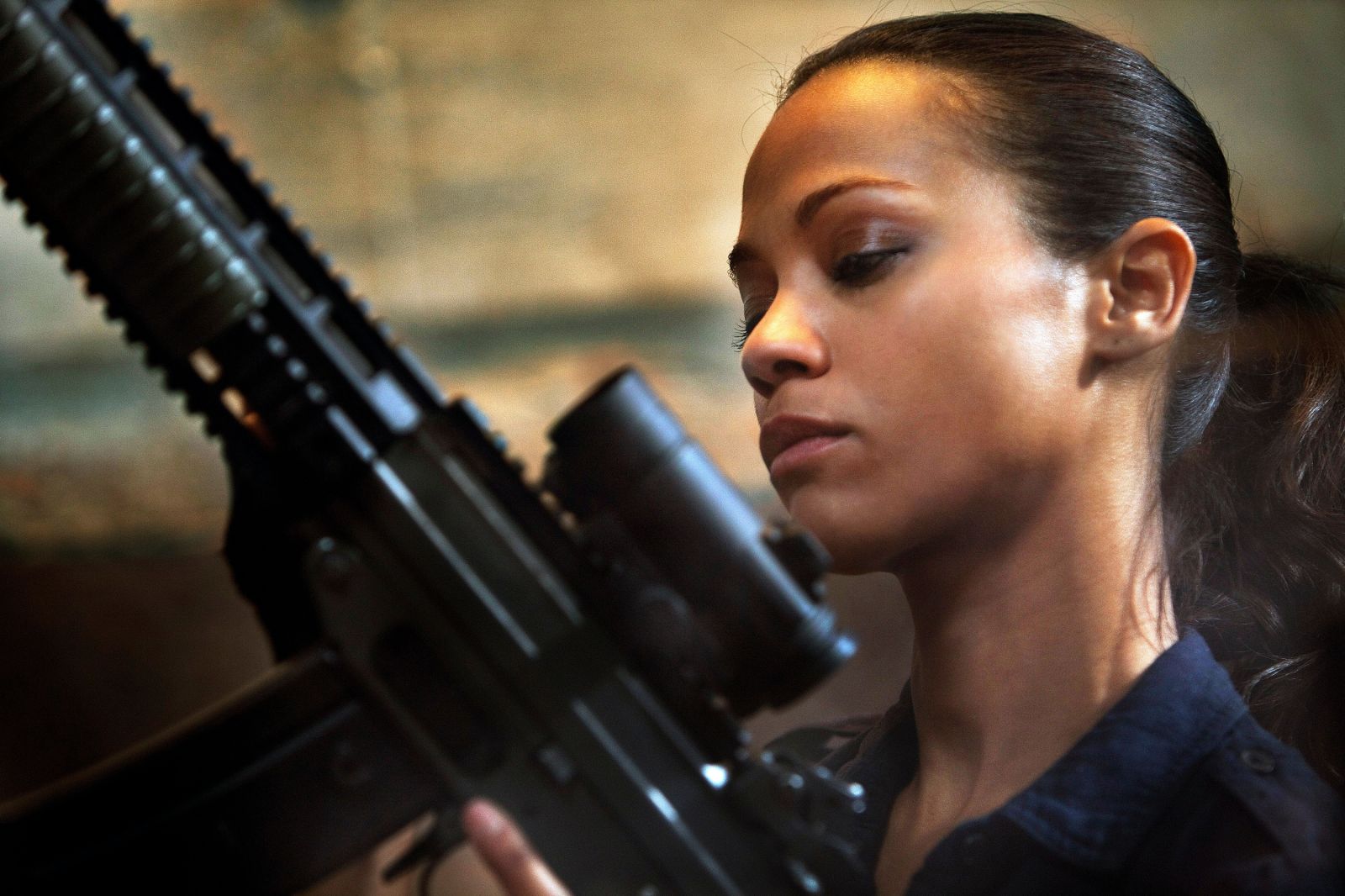
Olivier Megaton, director of Colombiana is not trying to be fancy. He wants to give you the good guy — he hired Zoe Saldana to play heroine Cattaleya, gave her lots of firepower, skintight outfits, and a tragic backstory, and sent her out there to right wrongs and/or cause explosions. And he wants to give you the bad guy too. Evil Colombian drug lord who murdered Cattaleya’s parents while she watched — offensively stereotypical, yes, but for that very reason an efficient fulfillment of narrative expectations. So you see crime lord Don Luis (Beto Benitas) and his henchmen Marco (Jordi Molia) pop up at the beginning all swarthy and sneering and you say, okay, so these are the guys we hate; for the balance of the film we’ll get to see them being sneaky and nasty and underhanded and ruthless and then at the end they’ll get their satisfying comeuppance. Thus it has ever been, thus it shall be.

Except…somewhere, somehow, something goes horribly wrong. Cattaleya, the good guy (or in this case good gal), wreaks horrible vengeance on slimy evildoers just the way she’s supposed to…but somehow the prime evildoers, the guys we’re supposed to love to hate, are brutally blindsided not by our heroine, but rather by a series of viciously sodden subplots. There’s lots of back and forth with Catalleya’s adoptive, tough, but tender-hearted uncle. There’s sexy shenanigans with the hot artist-guy boyfriend with the adorable sign between his ears proclaiming, “this space for rent.” There’s the earnest cop and his earnest cop sidekick who pursue Saldana by drinking coffee and looking at computer screens and talking into cell phones, or sometimes by doing all three while simultaneously reusing footage from every Hollywood film from the last decade.

By the time we’ve eliminated the uncle and watched the boyfriend take off his shirt and watched the cop and his subplot emit their last joint indifferent fart, Megaton has almost run through his hour and forty minutes, and there’s no time left for the baddies. The final apocalyptic fist fight between Cateelya and Marco is shot in kinetic jerky fast forward, presumably because the director was worried the clock would run out. And after that, the supposed criminal mastermind doesn’t even get a face-to-face confrontation. It’s like Saldana spent her life looking for revenge, and then just shrugged and said, “ah, to hell with it. I guess I’d rather whimper at that boring artist guy — or maybe talk tough to that cop, presuming I can tell him apart from all the other cops.”

The saddest part is that Colombiana has a real star; a hero with charisma and beauty and oodles of killer instinct. Not Saldana, alas, who has the intensity of a mildly weepy guppy, but Amandla Stenberg. Stenberg plays Cattaleya as a child with a restrained and canny brutality that brings the film’s first half to life despite the best efforts of every adult involved in the project. When the young actor impassively makes herself vomit, or declares to her uncle with utter conviction that she’s given up on being Xena Warrior Princess, and now she wants to be a killer, you know that here, at least, is a hero who deserves the best villain Hollywood can dish out.

Denied that, however, she should at least get the chance to kick Olivier Megaton a good crack in the shins on our behalf. Vengeance is beautiful.

Stealing Your Relics for Your Own Good

Agents of SHIELD returns

 
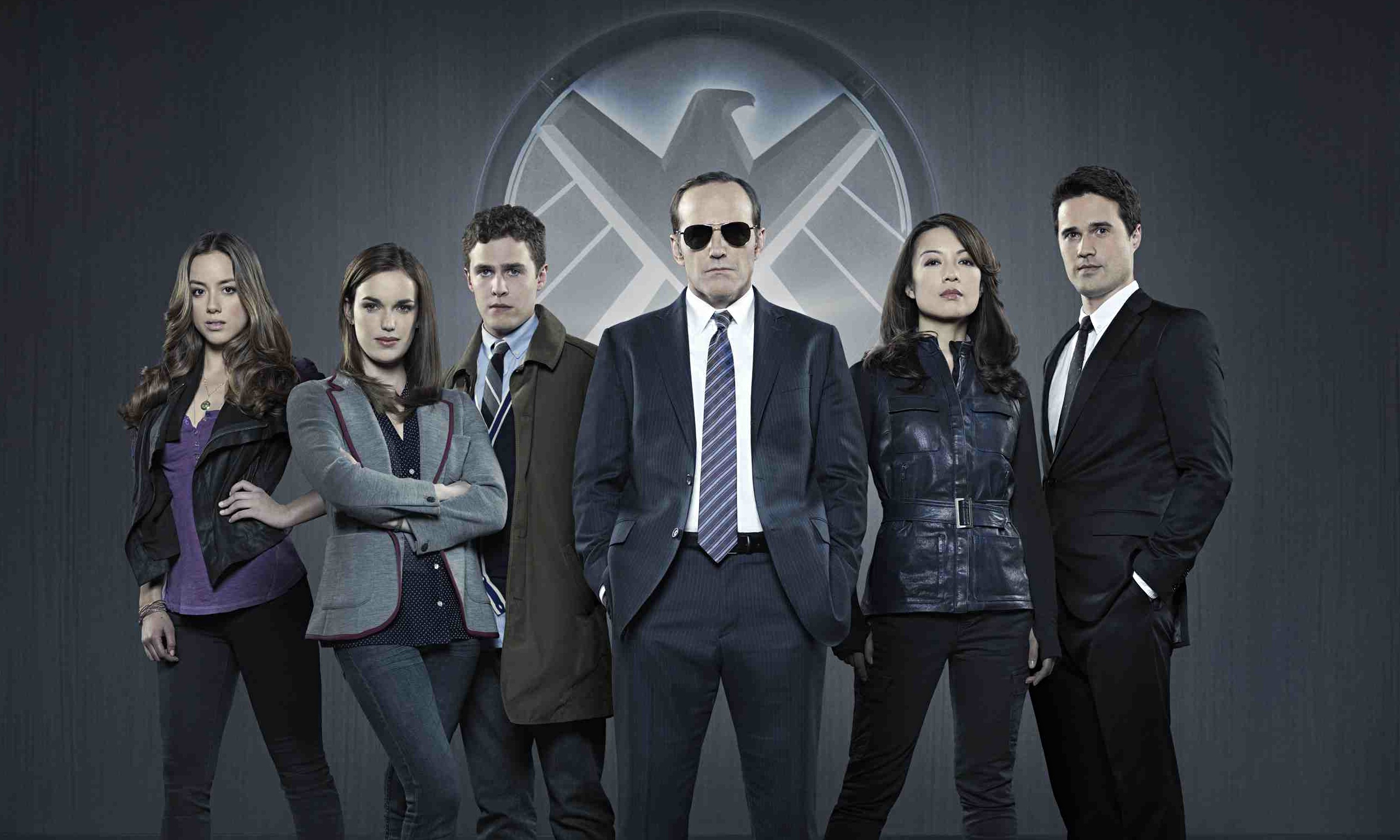
Well, I was supposed to have another post today, but it fell through…so. Second episode of Agents of SHIELD, just as racist as the first? Somewhat improbably, yes.

Our team heads off to Peru to find an object of great power, which they appropriate in the name of international law and harmony and because white people are the best ones to hold onto bombs, just ask Hiroshima. The Peruvians understandably don’t see it quite that way, and try to get the object for themselves. In particular, one of Coulson’s old flames, a (surprise!) hypersexualized Latina woman tries to use her wiles on him, but he’s too stoic and smart and white. The team sets aside its internal differences to self-actualize through the slaughter of the brown people whose stuff they’re stealing. Then at the end Samuel Jackson shows up and gives forth with the silly over the top indignation just to show that there’s no hard feelings from POC about the pillage and murder. Happy ending all around.

What’s interesting here is that this isn’t even really a superhero narrative. There aren’t any metahumans about; it’s a basic action-adventure narrative. Yet, the superhero filled world it exists in remains important — and part of the way it’s important is in the racism. Superhero genre default is that the powerful are good; the righteous who win are right. In the context of international security arrangements, this ends up meaning that stark imperial condescension is justified, and the bad guys are the indigenous people who object to having their borders violated and their resources robbed.Similarly, online activist Skye’s efforts to argue for people resisting oppression are pooh-poohed; rebellion against authority is portrayed as violent while the gun-wielding international agents with the flying fortress are just protectors.The connection between superpower narratives and the international superpower couldn’t be much more naked, or much more unquestioned.

Be White Or Explode

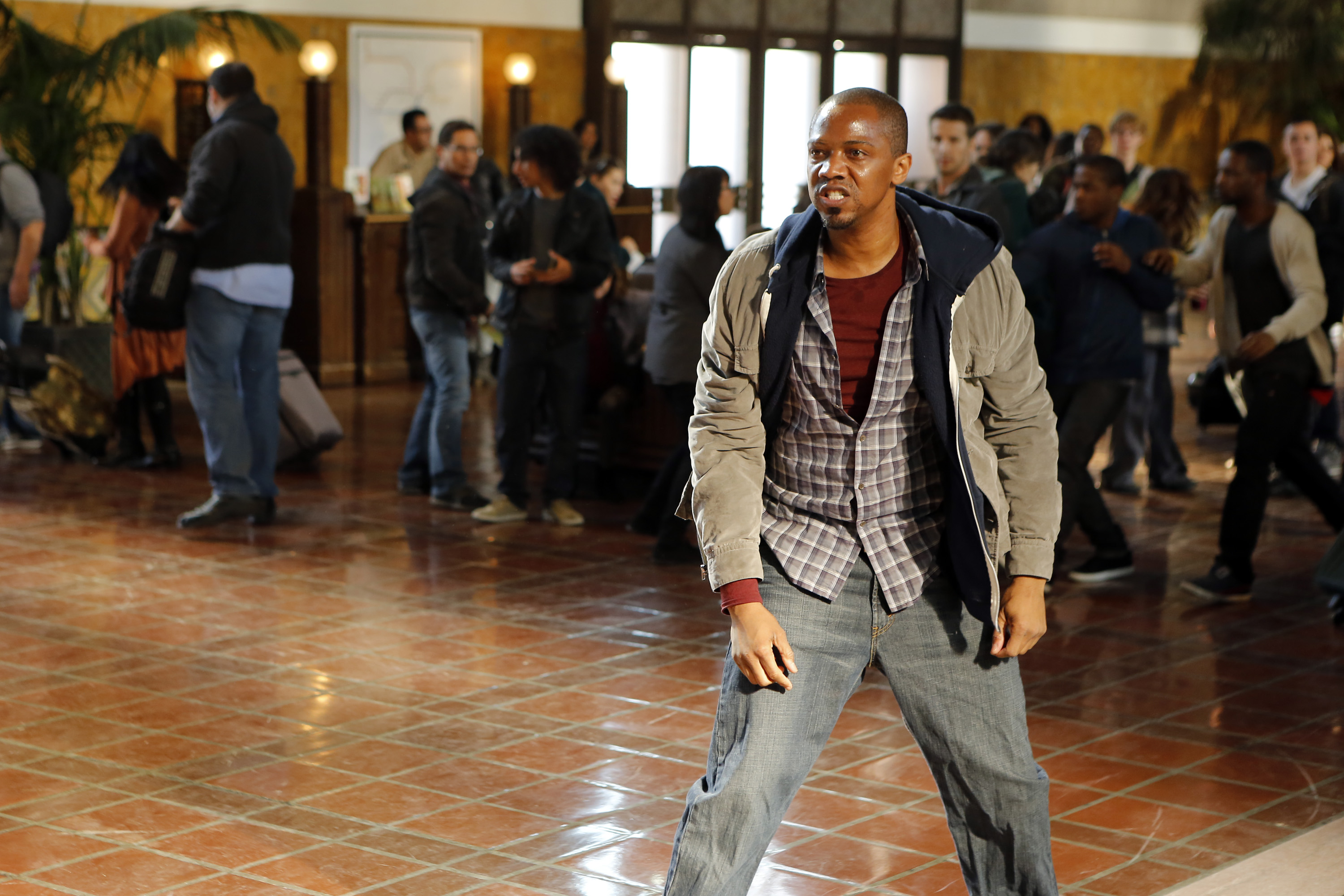
Agents of SHIELD starts out as a black superhero story. Mike Peterson (J. August Richards), a laid-off factory worker, is on the street with his son when a building nearby explodes (as they do.) He hears someone screaming for help inside, and uses super strength to smash handholds in the wall, climb up, and save the damsel in distress. He then leaps to the ground and slinks away, covering his head with his hoodie. He’s soon being referred to as the Hooded Hero.
 

J. AUGUST RICHARDS

This seemed like an intriguing development. No one had told me that AoS was based around the adventures of a super-powered, single-dad, working-class black man. Even the hoodie — a reference, intentional or otherwise, to Trayvon Martin’s death the year before the pilot aired — seemed potentially positive. The symbol of supposed black criminality reversed and turned into a heroic icon; that could work, maybe. Maybe?

Or then again not so much. As you know if you’ve seen any of the series at all, the Hooded Hero is not the hero. He’s just some schlubby plot point. He never gets to save anyone else. He volunteered to be a guinea pig for an experimental treatment after he was hurt on the job, and his powers are unstable. Soon he’s experiencing uncontrollable rages, beating up his old factory boss, and engaging in kidnapping, assault, and other nefarious super-villainesque deeds. It turns out even the woman he saved wasn’t an innocent, but the evil scientist herself. At the end he gives a speech about how people like him don’t get a fair shake, etc. etc., and the white guy hero without superpowers listens to him sympathetically and calms him down to where he can be ignominiously shot with some sort of sedative for his own good. Yay.

It all seems wearisomely familiar, doesn’t it? For me I was reminded of one of the first comics I think I ever read; an old Flash story from way back in the 1970s. The comic is about Ms. Flash; Patty Spivot is standing in Barry Allen’s lab when (improbably) another bolt of lightning hits, electrifying the shelves of chemicals and giving her superspeed just like Barry Allen had. She too decides to fight crime with her super-speed…except there’s a catch. Her powers are (wait for it) unstable; whenever she runs anywhere, she causes poison gas to seep into the air, or fires to break out. She doesn’t believe that she’s causing the damage, so Barry has to contain her and eventually figure out a way to depower her. Only guys can be Flash; empowered women are too dangerous. End of moral. (It was all an imaginary story anyway, so I guess you could see it as some sort of critique of Barry’s paranoid misogyny, if you felt like being kind.)

Just as the female Flash is a danger to us all, so, in AoS, is the black supehero. The Hooded Hero talks throughout the episode of his desire to be good, and he’s supposed to be a good man confused by the treatment he’s undergone. But that just emphasizes the disconnect between power and blackness. Good white people who get superpowers go off to save the day; the Hooded Hero proves his goodness by recognizing that he can’t do anything but stand there and let the white super-espionage dudes get a clear shot at him with their magic depowering gun.

You could argue I guess that the Hooded Hero doesn’t need to stand in for all black superheroes ever; he’s just one guy, after all. But the show stacks the deck by, inevitably, presenting him as the only black character around. Other than the wearisomely obligatory Asian martial arts expert, the entire SHIELD team is white. (Update: Skye, the superhacker, is bi-racial, with Chinese ancestry.) The climactic surrender scene, then, takes on racial overtones that the show is clearly not prepared to handle. Peterson rails against the giants, the people putting him down — which diagetically are supposed to be the superheroes. But as a lone black man facing a sea of white agents, it reads as a lament about whiteness. In that context, the denoument, in which the solution is for the black guy to trust patiently that the white cops shooting him are beneficent, seems almost unbelievably callous — especially, again, in light of the perhaps accidental but unavoidable resonance with Trayvon Martin.

None of this is particularly surprising given the crappy record of the superhero genre on race…but still, the gratuitous stupidity of it make you shake your head a little. Joss Whedon, who’s supposed to have a brain, directed — and yet, the best he could come up with is a parable about how black men with power need white agents of the state to shoot them for their own good? If this is how the series handles race, maybe it’s just as well that there aren’t any black continuing characters. Erasure is bad, but condescending disempowerment may just be worse.

Son of X-Files, Jr., Part II: The Beginning

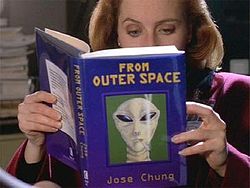
scully

 
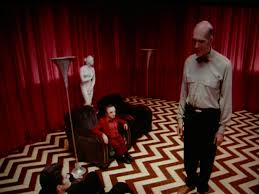
 It’s hard to believe, but The X-Files is returning to Fox. The six-episode mini-series starts shooting this summer. And Twin Peaks, another dead show about paranormal investigators, is being reincarnated by Showtime.
 

twin peaks

 
Why are occult detectives back in fashion? I think Scully’s M.D. makes her more qualified than either Agent Mulder or Agent Cooper. Remember the episode when she gets abducted by aliens? The scene was shot in Vancouver, but they pretended it was Afton, Virginia—which does not have a funicular. I know because I used to drive over the Blue Ridge Mountains to the University of Virginia’s Creative Writing Department three days a week, unaware that the university also housed a Division of Perceptual Studies.  Its founder, Dr. Ian P. Stevenson, died a few months after I finished my MFA.

Given his research area, I feel I should place an asterisk next to “died,” but his colleagues have yet to report evidence of his afterlife activities. Dr. Stevenson had been a full-time paranormal researcher since 1968 when philanthropist Chester Carlson, inventor of the Xerox machine, willed UVa’s medical school a grant to open DoPS. So, yes, the world’s only university-based researcher of reincarnation was funded by photocopiers.

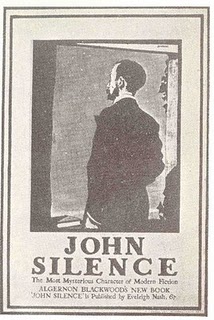
If a medical school seems on odd place to find a psychical investigator, you should know that Scully comes from a long tradition of occult detectives with MDs. World-renown surgeon Stephen Strange abandoned his scalpels for astral projection, in 1963, two years after Dr. Droom entered “that dark and mystical world which lies beyond the known and the unknown!” Dr. Stevenson visited India in 1961 too, to document his first of almost 3,000 cases of past-life memories. Stevenson was still finishing high school when Superman co-creators Siegel and Shuster dreamed up the first comic book occult physician, aptly named Dr. Occult. But Algernon Blackwood’s 1908 Dr. Silence is the first general practitioner to accept the superhero job title “psychic doctor.”
 

john-silence-poster

 
If a medical degree doesn’t sound sufficiently superheroic, then you need to see Hugh Jackman in Van Helsing—or wait for the Tom Cruise reboot, if it ever escapes from development hell. All these Hippocratic Oath-swearing healthcare professionals also reveal the superhero genre’s most important superpower. Sure, X-ray vision would be handy when diagnosing, and what doctor couldn’t use telekinesis in the O.R.? But despite all those fist-thrown Ka-Pows! and bone-bashing kicks, the number one superhero trait is kindness.

When told he won’t be paid to treat the dying Llama, Droom answers: “I can’t refuse to treat a sick man! If I must, I’ll treat him for nothing!”And so he’s rewarded because: “Only a charitable, self-sacrificing human would have done so!” Dr. Silence also takes “no fees, being at heart a genuine philanthropist.” His wealthy friends are “puzzled” that he “should devote his time” not just to doctoring but “chiefly doctoring folk who could not pay.” He poses the “native nobility of a soul whose first desire was to help those who could not help themselves.”

This Hippocratic philanthropy extends to monsters too. Dr. Van Helsing can “pity” and “weep” for vampires during his “butchery” of their bodies, imagining Dracula’s “joy” when “his better part may have spiritual immortality.” When Dr. Silence faces an Egyptian fire spirit wrongly “torn from its ancient resting-place” and brought to England where it exacts revenge, he feels more for the mummy than its wealthy looters. He later worries about the well-being of a werewolf, a condition he terms an “infirmity,” rare but also “often very sad.” He has no enemies, only patients. Though the ghost of a witch is beyond his help, he transmutes the “evil forces” she left behind “by raising them into higher channels.” He doesn’t destroy evil—he cures it.

Unlike the vampire-hunting Drs. Van Helsing and Hesselius, Silence has actual superpowers, making him the first superman to leap beyond the comparatively mundane realm of superhuman strength. He would be an ideal subject for Dr. Stevenson’s studies in extrasensory perception. Not only does he posses the “power almost to see in the dark,” “that special sensibility that is said to develop in the blind—the sense of obstacles,” but “his psychic apparatus never failed in letting him know the proximity of an incarnate or discarnate being.” His Watson-like narrator also wonders if he has “some secret telepathic method by which he knew my circumstances and gauged the degree of my need,” a power that also “saw into the future.”

These powers don’t come from enchanted artifacts or mutating radiation.  His magic isn’t magic. It’s an extension of his “humanity,” his “spiritual sympathy.” He can “absorb evil radiations into himself and change them magically into his own good purposes” because he’s just an incredibly nice guy. He’s not just sensitive, he’s “ultra-sensitive.” “Thought-reading” just requires paying attention to and caring deeply about other people. And since “suffering always owns my sympathy,” of course he’s going to dedicate his life to helping them.

Dr. Stevenson kept a list of the books he read that numbered over 3,535. I’m sure it includes some of the same “Yoga books” Dr. Silence admires, the ones arguing “the necessity of man loving his neighbors as himself” because, says Silence, “men are doubtless not separate at all.” Stevenson achieved that  interconnected state of “perfect serenity” though the “mystical experience” of LSD, but whatever its source, he and Silence had the same goal, the same desire for “peace and quietness.”

Usually that means putting the past and present back into balance. “Ancient pasts” and “ancient instincts” have a way of rising in Blackwood tales. Stevenson traveled the world to study the same phenomena, writing a 2,268-page monograph on past-life memories, including 200 “in which highly unusual birthmarks or birth defects of the child corresponded with marks, usually fatal wounds, on the previous person.”

Silence’s filing cabinet is considerably smaller. He vanished in 1917, after Blackwood published his sixth and final case study. Given that John Silence, Physician Extraordinary was a breakout best-seller that let the author quit his day job, it’s weird the doctor never came back. Maybe Silence has just been waiting for his favorite shows to return to TV in time for the 100th anniversary of his last publication?

Or maybe he was abducted? Those X-Files aliens returned Gillian Anderson after her maternity leave and Buddhist wedding. Blackwood and Chester Carlson were students of Buddhism too and firm believers in reincarnation. I’m more of a Dr. Scully myself. Though I try to be sympathetically open-minded.
 

stevensonbook

ARTS Games Are The Dream of Neoliberalism, Interrupted

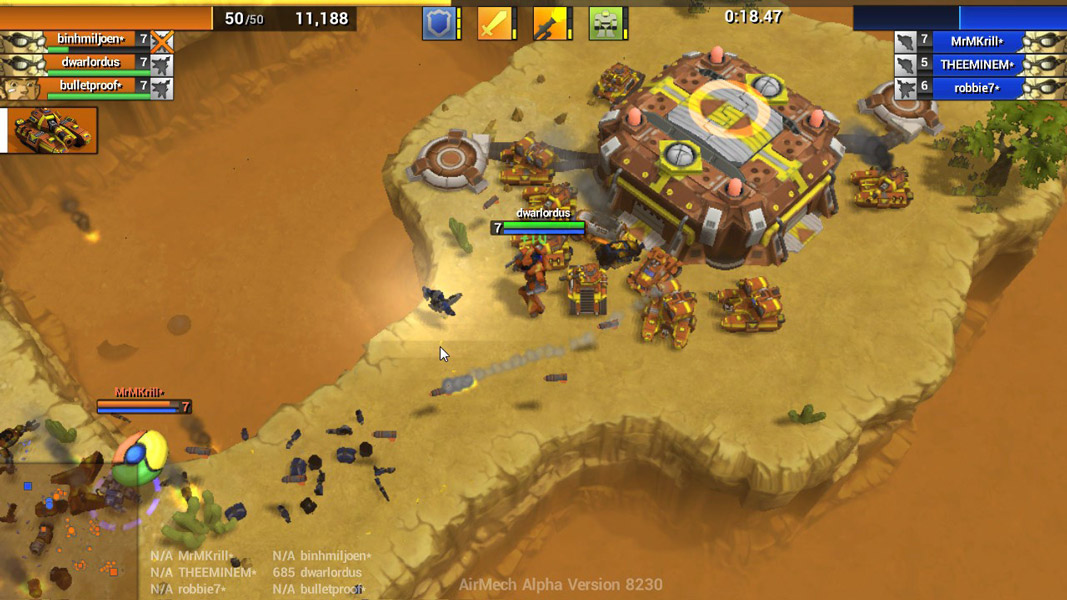
ARM_main
 
Action Real-Time Strategies (Or, ARTS, as some in the community call them) has blossomed into something of a proud E-sports institution in the decade or so they’ve been around. In these games, players select unique characters and then compete in violent conflict against each other down a series of lanes across a (usually) isometric map. The goal of this conflict is to accumulate the resources necessary to overcome watchtowers that stop forward momentum, and then finally destroy the opposing team’s base.

ARTS grew out of user created maps for Starcraft and Warcraft 3, but it was mostly in the last decade that entries in the genre became seriously profitable both as consumer products as well as potential games of sport. Today, ARTS titles have huge tournaments with prize purses worth millions of dollars, featuring the backing of corporate sponsors from energy drink purveyors to computer hardware manufacturers. These games didn’t merely become popular out of a steady development of graphics, accessibility, or dumb luck; they became popular because the stories these games present to audiences, either playing them or spectating them, are syntonic with conservative understandings of how the world works. ARTS games are a sort of regurgitation of Neoliberal ambitions and narratives in the form of competitive play and sporting.

The genre is essentially defined as the development and flexing of capital among teams of exceptional individuals, each engaging in war against the others. Neoliberalism is built on economic misery to maintain the interest of a tiny elite class — inequity which is justified through claims of meritocracy. Ostensibly ARTS titles are meritocracies too, where the best team wins by doing a better job at accumulating wealth, securing objectives, and punishing opponents. But all of them feature gameplay elements that contradict, compromise, or otherwise qualify narratives of victory by reason of virtue or skill.

This qualification of meritocracy begins as soon as the match does, with players selecting their hero or champion unit that they will then control throughout the match. Each unit is mythologized as incredibly unique within each game’s fiction, presenting players with an endless procession of John Galts to choose from. These mythologies of strange power, alien forms, and cunning intellects are boiled down into a core set of tools and statistics that players improve over the course of the match by gaining experience points and gold. The goal of this continual arc of improvement is not merely to access power, but to access better tools of acquiring currency and to complete objectives.

These characters, our rainbow collection of possible Atlases, exist in a context of privileged hierarchy to one another. You could readily divide these characters by their function and relationship as team members, but by contrasting them against each other with aggregate data from publicly available matches, we can, for any given game, understand both any given character’s odds of winning a match, as well as whether or not players prefer a given character. This system of understanding the advantage some characters pose against others is key to the inherent drama of the character selection phase. It also provides narrative possibilities with which commentators, viewers, and players can interpolate the game that follows. The data driven model of ARTS heroes is not much different, then, from more conventional sports, where statistics have steadily grown as a tool for audiences to readily parse the events that unfold, or construct possible futures that are the subject of halftime and lunchroom discussions, or more recently, fantasy sporting.


These relationships of immediate privilege and power are complicated by the the playing field. The lanes of the playfield are the space that players are engaging in a sort of reverse tug of war across, partly processed by endless waves of computer controlled, generic characters, dubbed “creeps” by the ARTS community. In between these lanes lies what players refer to as “The Jungle”, a place where vision is limited, and small camps of monsters endlessly spawn every minute or so. When a player character lands the last hit that destroys any character, including player controlled units, that player receives a gold bounty that they can later spend on items to upgrade their unit or enhance their team’s effectiveness. Along the lanes are other objectives with gold bounties, like guard towers and unit barracks, which obstruct or slow the push of war, either by destroying creeps and heroes, or by weakening other enemy creeps. The “world”, the playing field, of ARTS games is one embroiled in perpetual conflict, with natural resources that simply emerge to be exploited.

Players vie for objectives, awareness, and resources on the map not just in open conflict, but by carefully deciding who among their team is best positioned to exploit available resources to carry the team to victory. The strategic thrust here is not merely where and when to execute a play for an objective, but also deciding how best to take accumulated wealth and translate that into capital, which in this case is the strength of a given unit to take objectives and acquire yet more wealth. This accumulation and flexing of capital as a form of physical power is a narrative audiences already understand. It is essentially a base assumption that the team who acquires the most power at the right time should win, or at least, gain a significant advantage. So, the timing and use of material acquisition serves as yet another data point for audiences to process in creating an understanding of how events should play out.

However, for all of this talk about creating certainties through capital and material privilege, ARTS games often include a certain element of random chance. The sheer number of reasonable options available to players regarding positioning, timing, et cetera are innumerable, and gives every game a quality of unpredictability that prompts blunders out of even the most professional of players. Much like the Real-Time Strategy games that spawned them, ARTs titles generally possess a “Fog of War” that limits what players can see. What this means in practice is that players are often guessing or inferring their opponents decisions regarding positioning, rather than knowing. On top of this unpredictable element there are other explicitly random features in some character’s tool sets that can swing a confrontation heavily to one side, which could theoretically swing an entire game around.

These elements tend to rankle the design purists out there, because we understand them as players or designers to be fundamentally “unfair”, but the point of this randomness is precisely that. The cruelty of fate abruptly disturbing what “should” happen is a story-telling delight that is the definition of an upset, and that threat of an upset in either matches or small engagements is always bubbling away in the back of the spectator’s psyche. It’s a worrisome fuel that keeps people involved in the events as they unfold, and is to an extent present in every e-sport to date. For every possible narrative that players could construct with the discrete data previously discussed, they are all unstable in the face of unpredictability and randomness.

This injection of random cruelty is even more necessary than in other genres within e-sporting, because material gained or lost translates to long term power gains. Consider this data from League of Legends matches regarding accumulated wealth. To paraphrase the article, if a team possesses only 2.5% more currency than their opponents by twenty minutes into a match, that team has about a 90% chance of victory. The surreal nature of a scoreboard serving double duty as a means towards greater power is that victors tend to keep winning. Elsewhere in e-sports, or in traditional sporting, it’s perhaps understood that the chance of victory is a function of time; so long as there’s time for the clutch field goal to turn the football game around, or time for the kind of absurd comebacks in fighting games, the game could belong to anyone. That isn’t the case here.

We understand through the data that the most convincing evidence for predicting a victory is the flow of currency and the player characters chosen. If the chance of an upset were not present, either in the moment-to-moment experience or the game itself, viewers and players could safely tune out or surrender halfway through the game and be fairly comfortable doing so, but they cannot because the ever threat of randomness and serendipity can destabilize that arc of continued growth or rapidly change the direction of the game. The fundamental narrative and assumptions that are built up steadily are nevertheless unstable, because as soon as these games become perfectly predictable, they’d become insufferably boring.

However, even with the knowledge that the game can be rapidly tilted in one direction via some twist of fate, players and viewers still participate with the assumption that the game is fair, even when the odds can be heavily altered very early. Here, ARTS games provide a kind of evidence for their fairness, even when that fairness is often inscrutable, or is the product of processes unseen and unknown to audiences. ARTS games are under constant revision, some of their rules and statistics being revised on a monthly basis, not because the changes those revisions provided are important, but because they provide a narrative explanation for the current state of perpetual imbalance.

These changes assure players that the playing field is going to be ever more fair, while providing additional concrete details to continue to form sports narratives. The assurance of fairness can be contradicted for drama, and the latter emphasized for coherence. In the same way we can understand political processes: internal contradictions are fodder for political narratives, and continuing legislation, even when totally incomprehensible to the public, is used as evidence of a state getting fairer. The process of revision itself is the secret ingredient that allows the appearance of fairness or justice to coexist safely with the cruelty that systems enact on individuals through no fault of their own.

The trick here, in ARTS games and in many modern governments, is that the evidence for fairness is a fabrication. It isn’t that the evidence is a lie, it’s that it was constructed to appear fair, not to deliver fairness or justice. In the meantime, while middle and lower class America gnashes its teeth, wondering how its constituents could fail to receive basic health care and housing while “doing everything right”, we cheer when an ARTS professional fails because of some mechanical quirk. Where the failure to receive what is owed us is painful in life, here, in fiction, and in sports stories, that contradiction of the established narrative is the fuel of drama, and is the fundamental hook that keeps players and audiences invested.