Utilitarian Review 1/24/15

Wonder Woman News

This Wednesday, at 6:00PM, I am going to be signing books at the lovely First Aid Comics, 1617 East 55th Street, Chicago, IL 60615. If you are in Chicago, come on by and chat about space kangaroos!

Lauren Davis did a really fun interview with me; we talked about Steve and castration and Etta Candy and love leaders, which haven’t come up in other interviews so much.
 
Other News

Jacob Canfield talks about the depressing and overwhelming response to his viral internet piece on Charlie Hebdo which ran on HU.
 
On HU

Featured Archive Post: Subdee on Britpop and Phonogram.

Josselin Moneyron looked at a year of Charlie Hebdo covers (most of them aren’t about Islam.)

Folks asked me questions about Wonder Woman, and I answered.

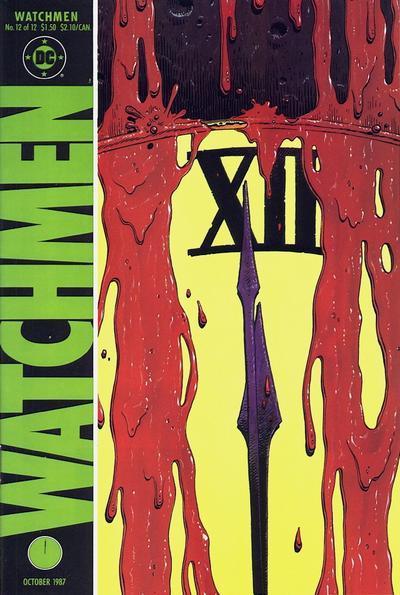
I interviewed Andrew Hoberek about Watchmen and neoliberalism.

Sarah Shoker on whether science fiction will lead us to a better future.

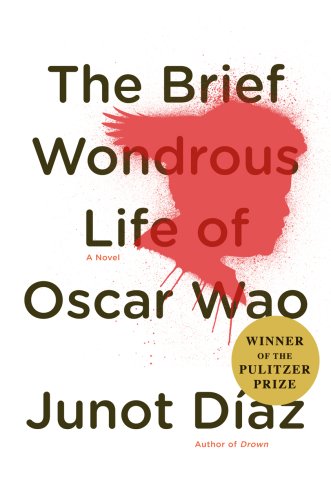
Naphtali Rivkin on Junot Diaz, Isabel Allende, and superbildungsromans.

Kim O’Connor brings you fables from your comics industry.

Michael Carson on American Sniper as authenticity kitsch.
 
Utilitarians Everywhere

At the Atlantic:

— I wrote about Bart Beaty’s new Archie book and the advantages of no continuity.

—I explained that the point of The Man in the High Castle is that the Nazi dystopia isn’t that dystopic.

At Ravishly:

— I talked about why Beyonce and Wonder Woman are alike (they will save the world through sex.

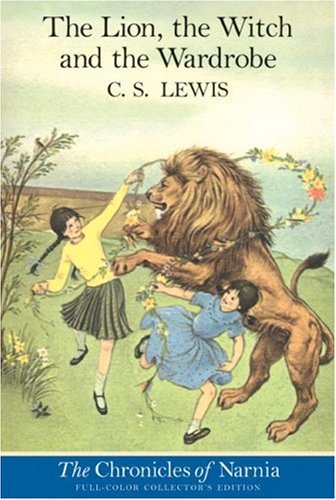
—I argued that Lucy in the Lion, The Witch and the Wardrobe can be seen as a feminist character.

At Pacific Standard I reviewed Edward Struzik’s Future Arctic, about practical responses to climate change.

At Splice Today I wrote about

— why you can write about a trailer without seeing the movie.

— how my cat does not want to be cozy.

At the Chicago Reader I did short reviews of

— a nifty Posada tribute show

—woozy loungey hipsters Woo Park.

 
Other Links

Forrest Wickman on how women don’t get credit for their music.

Anthony Failola on the French Muslim community and Charlie Hebdo.
 

LionWardrobe12

American Sniper’s Uniquely American Kitsch

AMERICAN-SNIPER

 
Since the release of American Sniper, people I haven’t heard from in years have taken the time to text me and tell me I really needed to see this movie. They said: “you owe it to yourself to see this movie.” “I don’t really want to,” I responded. “Why don’t you want to?” they asked me archly, as if my refusal to see the movie hinted at some deeply-seated and conveniently unexamined perversion. “Well,” I said, “I guess I didn’t much like Chris Kyle’s book and his general attitudes about the Iraqi people.” “Watch the movie,” they said with all wisdom that comes with seeing a movie that someone else hasn’t, especially one of political and patriotic import: “It really makes you think.”

Maybe I was being unfair, I thought. Maybe I did it owe to someone – whom, I’m still not quite sure – to pay ten dollars and watch this story that had roused a nation from its intellectual lethargy and inspired old friends to start thinking about my movie-going patterns.

To my surprise, I did not hate the movie. I nodded off two or three times, wondering how old Clint Eastwood was exactly and whether or not he and Scorsese had reached some kind of artistic dementia unique to directors, but I did not hate the film, or even actively dislike it. If I saw it on Lifetime one afternoon, I would change the channel, but not out of spite, simply because it does not seem different than any other Lifetime special. Far from being authentic and gritty, the sentimentality in the film is perhaps only exceeded by that of Linklater’s Boyhood, its competition at this year’s Academy Awards. Both are drearily episodic American bildungsromans that manipulate the idea of authenticity to play on the audience’s mawkish assumptions and aspirations about history and art. Further, and not coincidentally, both are predictable and safe, working hard to ask uninteresting questions about once interesting subjects.

This boredom genuinely surprised me. I read countless reviews of American Sniper before seeing the movie. Almost unanimously, they took time to point out its essential authenticity, its suspense, the immersive immediacy of the action and the audience’s consequent titillation. Even those who hated it passionately did so with a fervor that suggested the movie annoyed them due to its undeniable cinematic excellence, whatever its ideological failings. For this reason, I had ceded its basic entertainment value going in. But I shouldn’t have. Despite all the violence – or, rather, precisely because of all the formulaic and orchestrated violence – the movie is boring and the movie is boring because everything in it from the love story, to the jokes, to the war story is pure unadulterated kitsch.

How best to describe kitsch? Milan Kundera, a man who endured a regime that used this aesthetic to propagate its peculiar sentimental balderdash, puts it this way in The Unbearable Lightness of Being:

“Kitsch causes two tears to flow in quick succession. The first tear says: How nice to see children running on the grass! The second tear says: How nice to be moved, together with all mankind, by children running on the grass!”

At its most fundamental level, kitsch is a poorly constructed or mass produced object or work of art that elicits a predictable and abstracted emotional response, something like a Pavlovian bell that releases saccharine into the viewer’s gut while shutting down the brain. Yet, contrary to popular belief, kitsch does not only apply to the warm and fuzzy feeling we get when children run in the grass and play with dogs; it also applies to the warm fuzzy feeling when we watch children being gunned down by morally conflicted patriots. The first tear says: how nice it is to see this perfectly decent man wrestle with what it takes to protect his friends and countrymen. The second tear says: how nice it is to be moved, together with all mankind, by watching a perfectly decent man do whatever it takes to protect his friends and countrymen.

Never one for subtlety, Eastwood wants tears, lots of them. I feel Eastwood took bits and pieces of every American war movie since Audie Murphy’s To Hell and Back, chose the most hackneyed moments and then tried to make them even more generic, sappy and palatable. Starting with, of course, a lovable loser looking for purpose in life, the movie proceeds to a training scene where people of different race and class backgrounds come together in harmony, the courting of a supposedly cynical girl just out of a break up (which of course turns out to be a girl in need of a real man), the initial battle enthusiasm (Yay! War! We’re going to win!), an evil super-enemy to provide some complexity to the countless legions of brown bullet fodder and a triumph somewhat (but not truly) diminished because of dead friends (whose names we forgot the moment we heard them).

If American Sniper wasn’t based on real events, we would likely laugh it off as a poor man’s Full Metal Jacket. Yet our uniquely modern kitsch privileges authenticity to such a degree that it mistakes authenticity for art; worse, it excuses bad art through the lie of authenticity. Our superficially ironic modern audience knows to feel warm and fuzzy about a girl running through a field (or a heroic marine-saving SEAL) is a little old fashioned and silly. But if the event really happened, the audience can feel warm and fuzzy (or angry and titillated) without any guilt for the obviously contrived sappiness. This child really does run through the grass just like my child so my feelings of joy and warmth at watching this child run through the grass are real and true and profound. This man really did kill 160 people and save soldiers and help veterans so my complete emotional investment and sense of solidarity with my fellow movie watchers is not only justified but an act of political courage. Right?

Not quite. Eastwood’s Kyle is nothing like the Kyle of the memoir – a person of infinitely more interest, an American gem, a fantastic and fascinating mass of contradiction, absurdities, and hypocrisy, worthy of much more than this movie gives him. Instead, this movie manipulates substandard genre tropes to produce an innocuous and utterly uninteresting character study, turning a once breathing man into a figment, an avatar of our lazy imaginations. All the characters beside Kyle are interchangeable – hard bodies and strong chins, except for the broken and mutilated men, with soft bodies and soft chins – which is impressive considering Kyle himself is but a shadow. The sentimentality in the film’s opening and final moments reaches near criminal proportions. The shootouts are loud and repetitive, the enemies cowardly, sadistic or – hold it – cowardly and sadistic. They and everyone else in the film are no more true to life than the targets Kyle practices on. It’s as if the fact that they existed gives the director the excuse to make them as uninteresting and stereotypical (or unreal) as possible.

I should say here that the problem of kitsch is not unique to war films, or films beloved by Red America. Boyhood, the Academy’s likely Best Picture winner, is nothing if not an egregious attempt to confuse an audience into accepting bad fiction as profound art through the sophistry of authenticity. It suffers from the same sense of confused profundity, and critics have fallen all over themselves to celebrate a movie that amounts to little more than a glorified reality TV show, replete with incredibly banal dialogue and moralistic tripe. We are supposed to celebrate this and shed tears because we lived it, but I’ll save my tears for a movie that give me more than pop-cultural touchstones, a face aging in real time and platitudinous white angst.

This is not to say there are not inspired moments in both movies. In American Sniper, most occur on Kyle’s return home. When he yells at the nurse to stop his baby from crying, I paid attention. There are times when his very obliviousness makes Kyle into a heroic sad sack, just way in over his head in a world that does not allow for heroes (Cooper is a superb actor). But, still, these were flashes, a few well-timed complexities in a movie of explosive sappiness. By the tenth gunfight and the slow build to the inevitable confrontation between the evil brown sniper and good white sniper, I looked around to see if anyone else was as bored as me. I wanted to ask someone if they realized the way in which every character seemed to be playing a part in a movie, and how nearly every one of them played it badly. But there were no takers. They all wanted to see what happened next.

Of course, these failures in themselves point to a reason to celebrate the movie, and Boyhood as well. Their unique kitsch corresponds perfectly with recent American history, which is essentially a series of moments where we let sentimentality drive our actions, all the while unaware of (or maybe just unconcerned with) how those in power manipulate our intellectual indolence to their perpetual advantage. The Iraq War was an absurd proposition from the start, whose disastrous prosecution and consequences should have been obvious to any country not driven nearly insane by saccharine nonsense fed to them in movies that informed American Sniper (Rambo, Saving Private Ryan and An Officer and a Gentlemen for example).

So while most of us do not live violent lives like Kyle, we do, like Kyle, live lives of violent sentimentalism. We do live in fogs like the characters in these movies – irresponsible, lost, and drunkenly emotional. But just because we live such lives, lives of exceptionally cartoonish renderings of reality, replete with stereotypes, racism and an absurdly simplistic and insidious sense of history, does not make an accurate recording of our human failure art; these movies are, in truth, only glorified documentaries, which serve their purpose and have their uses, but cease to do so as soon as they are considered sublime and magical, exciting and profound. At this point, they then become in many ways a gesture of collective despair, an implicit admission that we can no longer achieve anything but a fickle emotional bond in dark theaters, eyes rolling, tears dripping down our cheeks like Dollar Tree communicants.

But when it comes down to it, no one escapes kitsch. It is part of us – this substitute spirituality, a farcical aesthetic we live and breathe as pre-capitalist societies used to live and breathe God. But we can, as Milan Kundera, the author of the earlier quote, once argued, be at least open to the fact that we are indulging our maudlin fantasies. At least a movie like Nightcrawler has the courage to point out the obvious – to make us aware of what it is we do when it comes to violence and cinema – and to do so in an entertaining way. As for those who argue American Sniper is the only movie out there really tackling trauma: watch Babadook and tell me which of the two has something to say and which one just repeats what we want to believe in predictable and cowardly monotony

Towards the beginning of American Sniper, Kyle’s father tells him that there are three types of people in this world: wolves, sheep and sheepdogs. The sheepdogs, his father says, protect the sheep from the wolves. Kyle is supposed to be a sheepdog, protecting us. Maybe he was. Neither a Navy SEAL nor a think-tank fellow, I can’t really speak to the success of his guardianship. But I can say with some authority that it is the kitsch in movies like American Sniper and Boyhood that turn us into sheep, and no one will be happier to see the bleating masses fattened by this sentimental drivel than the wolves.

_______________

Michael Carson deployed to Iraq in 2006. He now writes criticism at the Wrath Bearing Tree. Follow him @WrathBT on Twitter.

Aesop’s Comics

The Old Man and Death

A pale old man, bent low from a burden he carried upon his back, walked along the path that led away from what remained of his village. The old man’s burden was a large sack of garbage, the fact of which became more pronounced as the day (a real scorcher) wore on. Of course there was the smell, but the sack was also unwieldy, and as the old man walked it kept knocking against other people on the path.

“Sir, please” one woman implored, rubbing a lump that was beginning to rise on her head. “I would never suggest that you abandon your…garbage treasure, but might you be more mindful of how it impacts your fellow travelers?”

The old man shook his fist and screamed at the sky. “I can bear these rubes no more. Death, I beseech Thee, take me now!”

A skeleton stepped softly from the shadows.

“Ugh,” said Death. “You are literally the worst.”

The Ass and the Lapdog

There once was a farmer who had an old hound and a donkey. The hound was well loved by his master, but in the town he had a certain reputation. The beast barked and barked and barked and was always rubbing its privates on the townspeople’s legs. When they complained, the farmer felt a sense of deep satisfaction. “Oh, he does that to everyone,” he’d say. But in truth the hound never bothered anyone who looked like his master.

One day, in the barn, the nasty old hound fell asleep in the farmer’s lap. Sensing an opportunity, the donkey broke loose from his tether and began prancing about in imitation of the hound. “Look at me!” the donkey cried. “I’m going to perpetuate racist stereotypes, and…like…” The donkey bit his lip, thinking hard. “Shit on some titties, or something.”

The farmer reached into his pocket and pulled out a pair of sunglasses, which he unfolded carefully. Slowly, deliberately, he placed them over the pair he was already wearing.

“Not bad,” he said finally. “I’m going to give you a book deal.”

The Town Mouse and the Country Mouse

Weary of dreary old London, the town mouse bought a Groupon and embarked on an exotic holiday. She was having quite a time until she saw something very strange indeed: a country mouse in traditional garb. What a sad sight, she thought. How thoroughly unmodern.

Overcome with pity for the poor creature, the town mouse stirred herself into action. “Sister, you don’t have to be so unfashionable!” she cried. “Come with me to the city and I’ll show you freedom.”

The country mouse felt a sadness so deep and familiar she couldn’t even call it sadness, really. It was just another part of her heart. But she had been dying to see the Alexander McQueen exhibit, so she took the town mouse up on her offer.

Back in London, the pair had just sat down for tea when the country mouse heard something strange. The sound was coming from the attic, and it was unmistakably rude.

“Oh! That’ll be Mister Crumb having a wee fap,” said the town mouse. “It’s a bit of a bother, I know. But I believe in free speech, you see.”

“LOL,” said the country mouse. “I thought The Beat was supposed to be open-minded and forward-looking comics journalism.”

The Mouse and the Hawk

Three mice were standing around in a field. One held up a picture he had drawn. It was a black woman depicted as a monkey.

“Oh no!” said the second mouse. “That looks super racist.”

“No, no, no, no, no, no, no,” said the artist. “Allow me to explain to you its context. You see, the target of this joke is other racists.”

The third mouse nodded vigorously. “Sounds legit.”

But the second mouse wasn’t convinced. “This image doesn’t degrade and dehumanize racists,” he said. “It degrades and dehumanizes the black woman who you depicted as a monkey.”

Suddenly, a hawk swooped in and gobbled up the artist mouse. It was awful.

Horrorstruck, the second mouse turned to his companion, who was quivering with rage.

“You’re glad that happened,” the third mouse spat. “You think he had it coming.”

Said the second mouse: “Um, no.”

The Boy Who Cried Wolf

The Old Gray Farm had hired a boy to watch over a flock of sheep in the nighttime. They didn’t pay very well, but the boy knew the flock was counting on his keen eyes to pierce through the perilous dark.

The first night, the boy watched the chickens. His boss was surprised to find him asleep in the coop when the sun came up. “Say, why did you do that? I hired you to watch the sheep!”

The boy spent the second night farting around on his iPhone. This time his boss was incredulous. “Why?” she said. “Why are you so bad at this?”

Something something Twitter dot com, the boy mumbled. Something something artistic integrity.

His boss rolled her eyes. “Listen, kid,” she said. “Most of these sheep don’t even have smartphones.”

The boy was sacked, of course. Six months later, he cried wolf.

The Wise Mother

A mother sat with her small son in the park. Far over their heads, a flock of pristine white birds flew into the glorious sunset.

“What are those, mama?” said the boy.

“Sweet child, those are racists,” his mother said. She kissed his forehead and stroked his soft hair.

The birds flapped their wings, seemingly oblivious. Beautiful. Except—wait—this one bird in the back that flew all crooked and kept snapping at the empty air. Was it angry? Confused? The boy wasn’t sure.

“What’s that bird doing, mama? Is it a racist, too?”

The mother paused for a moment, contemplating the mysterious universe.

“No, honey,” she said. “That’s Ted Rall.”

ADULTMAN: An Origin Story

Zorro_(novel)_cover brief-wondrous-life-of-oscar-wao-by-junot-diaz

 
Junot Diaz, in The Brief and Wondrous life of Oscar Wao, and Isabella Allende, in her rendition of Zorro, both interweave a bildungsroman with questions of ethnic identity. Both novelists seem to indicate that coming to terms with one’s ethnic identity, however complicated, is a necessary part of growing up. The novelists’ claims seem to hold water even beyond the realm of literature, where real studies of “young adolescents of color” and children of immigrants in Spain have demonstrated that developing a sense of ethnicity is vital to healthy human growth, especially to children living in a culture where their ethnicity is not the normative ethnicity. But while both novelists claim coming-of-age and ethnic identity is inextricably connected, they might disagree with each other about the best method for coming to terms with complicated ethnic identities. Diaz’s Oscar Wao transcends his internal and external ethnic conflicts by actively embracing his ethnicity, while Allende’s titular Zorro escapes his identity conflicts altogether by crafting a non-ethnic masked persona. Diego grows up to become Zorro the Superhero, whose origin story serves to rid him of his humanity and ethnicities, while Oscar evolves into the far more complex, relatable, and admirable super hero, whose brief and wondrous life transforms him into an adult.

Allende and Diaz both seem to reflect scientific realities of ethnicity’s role in a young man’s coming-of-age through their psychologically real narratives. In so doing, they both would agree that, in their bildungsroman novels, “ethnicity is…a factor in identity formation, which it is not in the (older) European bildungsroman” (Iversen 197). James Hardin, in his compendium Reflection and Action, attempts to define the 17th century German term bildungsroman, but it seems the only consensus his contributors come to is that “Bildung [in its oldest, original connotation] is a verbal noun meaning ‘formation,’ transferring the formation of external features to the features of the personality as a whole” (Hardin xi). By defining a bildungsroman as a coming-of-age story where a character is formed through the influence of his surroundings, it can be said that the current scientific studies about ethnicity and identity formation resonate with a 300-year-old literary genre in the works of Allende and Diaz.

Studies have shown that ethnicity matters, particularly to children who grow up in a society where their ethnicity is not the normative one. Diaz’s Oscar struggles to understand the hyper-masculine expectations associated with his Dominican heritage in the context of his upbringing as an overweight New Jersey “nerd.” Diego, the boy who becomes Allende’s Zorro, faces the perhaps more complicated task of reconciling his mixed Native-American and Spanish colonial birth while studying in traditional Spain under the occupation of Napoleonic France and traveling with gypsies and creole pirates. Diego and Oscar’s struggles with ethnic identity reflect the psychologically real process that boys in alien societies must confront in order to come of age.

In her study on “Teaching Young Adolescents of Color,” Geneva Gay defines what we mean by ethnic identity in the context of coming of age. It is

the dimension of a person’s social identity and self-concept that derives from knowledge, values, attitudes, the sense of belonging, and the emotional significance associated with membership in a particular ethnic group. Whether and how it is achieved affect many other dimensions of students’ personal, social, and academic attitudes and behaviors. A clarified ethnic identity is central to the psycho-social well-being and educational success of youth of color (Gay 151)

Diaz’s Oscar Wao, a “youth of color” growing up outside of his element, struggles to find that sense of belonging with his ethnic group that Gay claims is vital to psycho-social well-being. While it is sadly routine for people of one race to treat the other poorly, it is downright tragic when Oscar must convince even his own people that “I am Dominican, I am” (Diaz 180). Oscar struggles with depression to the point of attempting suicide largely because he feels like he does not share the knowledge, values, or attitudes of either his own ethnicity of the normative white ethnicity in New Jersey. Dominicans question Oscar’s virility and ethnicity simultaneously because Oscar does not seem to know how to get women to sleep with him, seems to value fantasy and the pursuit of writing more than a Dominican “should,” and speaks with a literary vocabulary, reflecting an attitude that the Dominicans around him find wholly contrived and off-putting. Growing up in an alien society of New Jersey, where White is the normative ethnicity, Oscar cannot even rely on the comfort of his own ethnic family (or literal family) to shepherd him through his coming-of-age.

Allende’s Diego similarly faces complex ethnic boundaries to his coming-of-age, but his ethnic issues differ from Oscar’s. Diego can soundly rely on the support of an almost unrealistic variety of ethnic representatives. His Native-American heritage grants him powerful tools, friends, and pseudo-mystical powers; his colonial Californian father gives him money and a proud lineage; his Spanish hosts educate him; their French conquerors incite his indignity; the gypsies shelter and develop his physical prowess, while the creole pirates sharpen Diego’s indispensible savvy and worldliness. Diego, unlike Oscar, is spoiled for choice in the ethnicity department, which begs the question, who is Diego?

Diego’s case reflects the current, real problem of immigrants “coming of age in Spain,” which The British Journal of Sociology attempts to address.

On its part, self-esteem has been consistently associated with positive academic outcomes and is influenced, in turn, by the quality of relations with parents and by past experiences of acceptance or rejection in the host society. Our analysis reveals an initially anomalous result: the majority of children of immigrants in Spain neither identify with the country nor intend to live there as adults. (From Article chapter “Conclusion”)

It seems that since Diego checks all of the journal’s boxes for a positive self-perception considering his legendary “good luck” and a knack for fitting in wherever he goes, it’s no wonder Diego does not ultimately associate with any particular country or ethnicity in the same way that the successful children of Spanish immigrants do not identify with the country where they came-of-age.

But while both stories include elements typical of a bildungsroman, I think that the end result of Diaz’s The Brief Wondrous Life of Oscar Wao fits the bildungsroman mold better than Allende’s Zorro. In fact, while both Diaz’s and Allende’s novels can be read as a coming-of-age story guided by the scientific realities of ethnicity in identity formation, Allende’s novel can be read as a superhero origin story, which differs from a bildungsroman in its end result. A superhero origin story, according to Peter Coogan, creates a superhero, who is something other-than-human, and therefore, by definition, without ethnicity.

Diego, in Allende’s novel, may have many ethnicities, but with each of those ethnicities come special powers or privileges that transform Diego into Zorro, who is a superhero. Zorro meets Coogan’s three criteria for superhero status: namely, a mission, powers, and identity (Coogan 39). Zorro’s “pro-social mission” is “to seek justice, nourish the hungry, clothe the naked, protect widows and orphans, give shelter to the stranger, and never spill innocent blood” (Allende 154). Just in case the reader may begin to consider Oscar as a superhero as well, I will point out here that Oscar’s mission, in contrast, is, at worst, to get laid, and at best, to find love. Zorro also meets Coogan’s “powers” criterion for superheroes. He’s an unmatched fencer, intelligent, lucky, possesses unique tools like his grandmother’s sleep potion; he can pick locks, jump like an acrobat and can see very well. Even if we left aside his potentially magical link to Bernardo and the Fox (since Oscar too has supernatural experiences with a small mammal), Zorro has abilities which make others perceive him as superhuman, like when the pirates aboard his ship took him for a ghost or when Moncada’s men thought Zorro was in two places at once.

Finally, and most importantly, Zorro meets Coogan’s criterion for a superhero identity. By becoming a symbol through his costume and iconic “Z” sign, Zorro transcends human characteristics and therefore escapes the human need for an ethnic identity. The ultimate proof to this is that literally anyone who puts on Zorro’s costume can be Zorro, regardless of his or her ethnic identity— a small Spanish girl, an adult Native-American man, or Diego. Conversely, there is no way to become Oscar without going through Oscar’s unique combination of ethnic self-identification and coming-of-age.

By growing up into the superhero Zorro, Diego sheds his ethnic identities whenever he is in Zorro costume.

Diego realized that, without planning it, he was playing the part of two different persons, determined by the circumstances and the clothing he was wearing…He supposed that his true character lay somewhere in between, but he didn’t know who he was: neither of the two nor the sum of both…He would assume that he was two persons and turn that to his advantage (Allende 232)

By definition, the bildungsroman cannot end in a conflict of identities. It implies the forming of a holistic person, who “comes to a better understanding of self” (Hardin xiii) as a result of his coming-of-age. Instead of understanding himself better through confronting his multiple ethnic allegiances, Diego finds comfort (indeed, he finds charisma, confidence, and virility) in donning the mask of Zorro and escaping the question of ethnicity altogether.

Though Diego’s coming-of-age reflects the psychologically real process of wrestling with ethnicity, the result of his coming-of-age is not typical of a bildungsroman but is instead typical of a superhero origin story. Conversely, Oscar’s story can and should be read as a prototypical bildungsroman with an ending that would satisfy the genre’s criteria.

Oscar’s formation (bildung) as an adult mirrors his pursuit of the Dominican ethnic identity that his family lost generations ago. Abelard, Oscar’s grandfather, began his break with Dominican ethnicity when he realized his daughters might fall victim to Trujillo’s rape. Instead of taking action—sending his daughters to Cuba, for instance—he hesitated indefinitely; “instead of making his move, Abelard fretted and temporized and despaired” (Diaz 231). Dominicans, as Diaz would have his readers understand them, are decisive and aggressive, almost to a fault. Take Lola, for instance, who runs away to Wildwood on the whim that she simply cannot stay in her mother’s house any longer. Abelard, in contrast to Lola and Diaz’s typical Dominicans, cannot even die decisively; while all the other people in his life die quick deaths, Abelard is cursed by his indecision to meekly shuffle through prison—purgatory—half-lobotomized, in his pajamas, ad infinitum.

Perhaps Oscar is Abelard’s second chance—his spiritual reincarnation—as the next male Dominican born to Abelard’s family. As a member of the Dominican ethnic family, Oscar is expected to sleep with any woman he wants, like Yunior, without compunction or effort. This described Dominican promiscuity is the manifestation of a Dominican’s ability to take action. “Did you fuck her?” asks Lola. “I do not move so precipitously,” sighs Oscar, who still carries his grandfather Abelard’s indecisive genes. Oscar tries, periodically, to take his life into his own hands, like when he agrees to go running with Yunior. But it seems Diaz shows the readers this episode just to highlight how much of Oscar’s bad shape (mentally and physically) is his own doing. “He quit,” Diaz unequivocally tells the readers through Yunior, the narrator. “I will run again no more, he [Oscar] intoned from under his pillow” (Diaz 178), showing and telling Yunior that he prefers inaction to action, literally and metaphorically.

When it comes to love and sex, Oscar is similarly indecisive. When Oscar falls in love with Ybon in the Dominican Republic (on a trip he took because he had nothing else to do during the summer), he finds himself pathologically incapable of acting. “Did they ever fuck? Of course not…He watched her for the signs…that would tell him she loved him” (Diaz 290) instead of confessing his love himself. He does not kiss her for the first time; she kisses him in her Pathfinder. And when Ybon’s kiss gets Oscar beat up by her jealous boyfriend, Oscar “thought about escaping, thought about jumping, out of the car and running down the street…but he couldn’t do it” (Diaz 297). It is fitting, then, that Oscar gets beaten to near-death like his predecessor Abelard—cursed by his indecision to live in pain.

By going back to the Dominican Republic at great peril to himself specifically to confess his love to Ybon, Oscar comes of age through the fulfillment of his ethnic identity. It is important to note, however, that love and sex is simply the context in which Oscar finds his identity. Objectively, perhaps the fact that Oscar somehow accedes to his ethnic misogynistic expectations is not all good. But love and sex are simply the tools of the Dominican ethnicity, and Oscar uses them to come into himself. It is vital, for Diaz, that Oscar grow up, and grow up Dominican—and being Dominican means taking action, for better or worse. Oscar ultimately does take action, for worse. He actively loves Ybon at pain of death. Most importantly, though, he finds that Dominican compulsion with his last breath. “Fire, he blurted out, unable to help himself” (Diaz 322); the old Oscar would not have been able to pull his own trigger for love. He finally does what Abelard couldn’t do—he acts, even if it kills him.

Oscar’s bildungsroman teaches us that you don’t get to just excuse yourself from your history, ethnicity, and human experience. Growing up and becoming an adult in real life means coping with all the ethnic baggage you were given; only superheroes like Zorro can don a mask and escape. Zorro, as a superhero, escapes all ethnic considerations and qualifications, but in so doing, he gives up his uniqueness as a human being, becoming a symbol instead that can belong to anyone. As a human, you have to deal with both the good and the bad of your ethnicity in order to develop a unique identity. Perhaps the greatest super hero is not the guy who leaves earth in a single bound, but the braver person who accepts who he is, where he’s from, and does something about it.
_______

Naphtali Rivkin is a senior English and Russian Area Studies double major at Washington and Lee University. He recently published a piece called “Why Everything you need to know about politics you can learn from Shakespeare’s Julius Caesar” in the Ukrainian Philosophical Foundation’s journal, Future Human Image. Currently, he is writing an English honors thesis on early 20th century Socialist American writers. He wrote “ADULTMAN: An Origin Story” in Professor Gavaler‘s course 21st Century North American Fiction.

An Ambiguous Utopia: Science-Fiction and Fantasy as the Solution to our Problems?

a-wizard-of-earthsea-cover


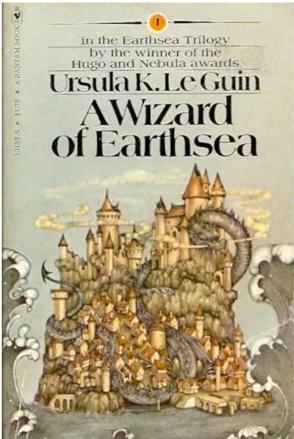
Ursula K. Le Guin, giving her acceptance speech at the National Book Awards, stated that we needed writers who knew “the difference between the production of a market commodity and the practice of an art. Developing written material to suit sales strategies…is not quite the same thing as responsible book publishing or authorship.” Le Guin posited that Science Fiction and Fantasy (SF/F) were tools for imagining alternatives to capitalism.

A week prior to the National Book Awards, The Guardian published an article by Oscar Williams covering the Mindshare UK event, where Buzzfeed UK’s creative director and an event representative argued that Science Fiction over the last twenty years had become less imaginative. “[M]ore recent sci-fi film and literature has been less ambitious and…this could hamper future innovation.” They referenced 2001: A Space Odyssey’s Hal 9000 and compared him/it with Apple’s Siri, mentioned the touchscreens featured in Minority Report, and “the 70 predictions made in 1984 that have now been realised.”

A little over a month later, The Guardian published another article on the climate of SF/F, this time by Damien Walter, positively noting that 2014 was the year that the genre “woke up” to diversity, naming, amongst several titles, Anne Leckie’s Ancillary Justice, which reimagines the importance (or lack thereof) of gender. Leckie’s novel won the Hugo, Nebula, Clarke and BSFA awards and some of the best novels of 2014, Walter notes, were from the science-fiction and fantasy genres. Of course, awards organizations haven’t completely ignored diversity. I recently finished The Snow Queen by Joan D. Vinge, a science-fiction epic that contains substantial gender and racial diversity and that won the Hugo Award in 1981. However, Walter rightly points to the increasing volume and acceptance of these works by readers and publishers.

Within the span of one month, we have contradictory viewpoints about what makes “good” science-fiction and fantasy and apparent agreement that these genres should be instrumentalized to serve social purposes.

I read the comments by Buzzfeed’s creative director with irritation and wondered if he was blithely ignoring the tomes of interesting science-fiction literature being produced by authors like China Mieville, G. Willow Wilson, Kameron Hurley, Ken Liu, Cory Doctorow…and on and on and on I could go. However, his comments became more understandable upon realization that “good” science fiction was being defined as science-fiction-that-will-let-us-invest-in-more-gadgets. Using this reasoning, a time machine should be produced so a time traveler can invest in historically low-cost real estate. Good science-fiction becomes a mechanism which assists in the production of capitalist expansion, of “innovation.”

Despite Le Guin’s appeal that “[t]he profit motive often is in conflict with the aims of art,” science fiction and fantasy is often complicit with the growth of private enterprise and with Le Guin’s other pet peeve, state-sanctioned militarism. The United States military provides material resources to Michael Bay. Newt Gingrich wrote the forward for William R. Forstchen’s One Second After, a novel that features an electromagnetic attack on the United States, which Gingrich argues that the country must be prepared to encounter. Both the American and Canadian militaries have recommended reading lists for their personnel that include several science-fiction titles like Starship Troopers, China Attacks, and The Third World War. Science Fiction and Fantasy have also been instrumentalized to serve the interests of a central authority that(allegedly) has a monopoly on legitimate political violence: the state.

In her acceptance speech, Le Guin framed science fiction and fantasy as potential disrupters to the status quo. From this lens, science-fiction and fantasy function as mechanisms that de-socialize readers from normalized assumptions about how the world should work. I’m very sympathetic to this view and at a conference I attended in November, I argued that SF/F was explicitly engaged in recreating normative standards.

By arguing that fantastical texts influence the social world, Le Guin invites the social sciences to meet with and consider fiction seriously. As a student of international relations (IR), I find that SF/F is particularly suitable for my discipline because of the genre’s emphasis on concise world-building. Consequently, I’m more than happy to include SF/F in my scholarly presentations and research–with the understanding that fiction shouldn’t be viewed as possessing a special monopoly on truth and fiction writers are not prophets whose visions have greater status than ordinary workers. Le Guin isn’t naïve about SF/F, though: the subtitle for The Dispossessed is An Ambiguous Utopia, after all.

Unfortunately, the kind of intellectual disruption advocated by Le Guin often comes at a cost. As Le Guin points to sales departments’ influence on book purchasing and publishing, researchers are also restricted by scholarly expectations; certain journals will only publish articles with specific theoretical orientations and scholars who challenge the limits of a particular discipline risk limiting their publication and employment opportunities. So too does the fiction industry prioritize certain trends over others, though perhaps SF/F publishers are more receptive to alternative realities, as long as the world-building is rigorous and systematic. Still, those researchers and authors who do not have social clout are more likely to tread cautiously and produce work that fits into already identifiable boundaries.

There are always exceptions, obviously, and the Guardian article on diversity in SF/F illustrates that the industry may be undergoing a transition. Notably though, even Le Guin had to stealthily insert that Ged, one of her most famous protagonists, was a person of colour later into the story than right at the outset of the novel. This writing decision wasn’t a result of publisher pressure, but because Le Guin feared that her readers may not “immediately identify with a brown kid.” Some of the early covers of the Earthsea series featured a white protagonist, and when the Sci Fi Channel televised the EarthSea series, Le Guin wrote in Slate that the channel “wrecked” her books by whitewashing her characters. SF/F’s influence on revolutionary change becomes slightly questionable in the context of gatekeepers who prioritize incrementalism. There is also the shadow of the reader hanging over the author’s head, where even writers like Le Guin have adjusted their writing to real-world constraints like racism. Hiding Ged’s skin colour could be interpreted charitably. By slowly introducing the idea that PoC characters can be likeable, Le Guin uses fiction as an emancipatory mechanism. This decision could also be less kindly described as a form of self-policing which compromises the radicalness of her project. SF/F can de-socialize readers, sure, but what happens when writers are socialized by their readers into writing more “palatable” literature?

Perhaps some would laugh at the idea that there’s any connection between elves and the social sciences. I once heard a professor express confusion at the popularity of fantasy fiction because “elves aren’t real.” But sovereignty, statehood, nationhood, and citizenship are constructed ideas (and still remain ideas; you certainly can’t touch sovereignty though we feel its effects) with very real material consequences. The boundaries between knowledge/practice and reality/fiction aren’t particularly clear, especially if we view texts, both realist and fantastical, as socializing forces. I would argue against positing a stark difference between an “idea” and an “action,” as most norms gain status as “common sense” through practice.

The selection process for deciding what is a “better” or “worse” text is valuable and eventually a judgment must occur on what works merit publication. This process involves a set of standards or codes that aspiring scholars and writers follow. But this process becomes problematic if the work that is selected for publication becomes repetitive and unquestioned, like a fantastical trope that becomes a sacred cow that prevents better stories from emerging (I’m looking at you, “hero’s journey.” You’re good, but we treat you like a rule instead of a suggestion.) Science Fiction and Fantasy have their own ontological starting points, their own boundaries, and prioritize certain ways of thinking. The very structure of a book is a boundary, and so places an actual physical limit on the author’s imagination. Fantastical fiction isn’t the holy grail and isn’t the answer to all of our problems. But as an exercise in deconstructing entrenched beliefs, SF/F can behave like a remedy to tired ways of thinking.

I do not want to turn science fiction and fantasy into a second-class citizen, where the purpose of the genre is to serve the interest of other disciplines or industries. I recognize that this article treats literature instrumentally and not as a good in its own right. My aim isn’t to oppose “literature for literature’s sake,” but to recognize that people will, inevitably, use texts to create personal meaning and to understand the world. Le Guin’s acceptance speech was too clean and employed a narrative that treated SF/F as a monolithic force for good, if only those pesky capitalists could leave art alone. Le Guin’s optimism is understandable as one is generally gracious when accepting an award, after all. However, as a graduate student, I am always troubled by optimism (kidding, maybe.) Still, the increasing diversity in SF/F is a positive sign that the industry is capable of self-criticism and adapting to new ideas. This change should render readers hopeful that SF/F can do what Le Guin promises: destabilize comfortable ideas.
***************
Sarah Shoker is a PhD student in Political Science at McMaster University, where she once used Lord of the Rings in a presentation to explain a Foreign Policy conundrum. She regularly quotes from Harry Potter to her more respectable colleagues. You can follow her on twitter @SarahShoker.

**I would like to thank my colleague, Ira Lewy, for first informing me about military reading lists and the navy’s rather unfortunate decision to assist Michael Bay in producing more movies.

Watchmen and Neoliberalism: An Interview with Andrew Hoberek

ProductImageHandlerAs I’ve said before, my book, Wonder Woman: Bondage and Feminism, came out last week. It’s published in the Comics Culture series at Rutgers University Press. My book is the second volume to be published; the first, released in late 2014, was Andrew Hoberek’s Considering Watchmen: Poetics, Property, Politics, focusing on Alan Moore and Dave Gibbons’ Watchmen.

Andrew’s book is appreciative but not reverent; he’s especially skeptical of the political stance in Watchmen. HU has talked a lot about Alan Moore’s politics over the years — so I thought it would be interesting to talk to Andrew about his take as the last post in my book release roundtable. Andrew and I spoke by email.
_______

Noah: Your central argument about Watchmen’s politics, as I understand it, is that Watchmen is based in Moore’s sweeping distrust of institutions. For Moore, that connects to 60s anarchism and progressivisim, but your point is that it’s also the basis for the neoliberal attack on government institutions. So when Moore rejects political collective action, he ends up on the side of Reagan and Thatcher, who he hates. Have I got the argument right there? And maybe you could talk a bit about where or how you see Moore rejecting collective politics?

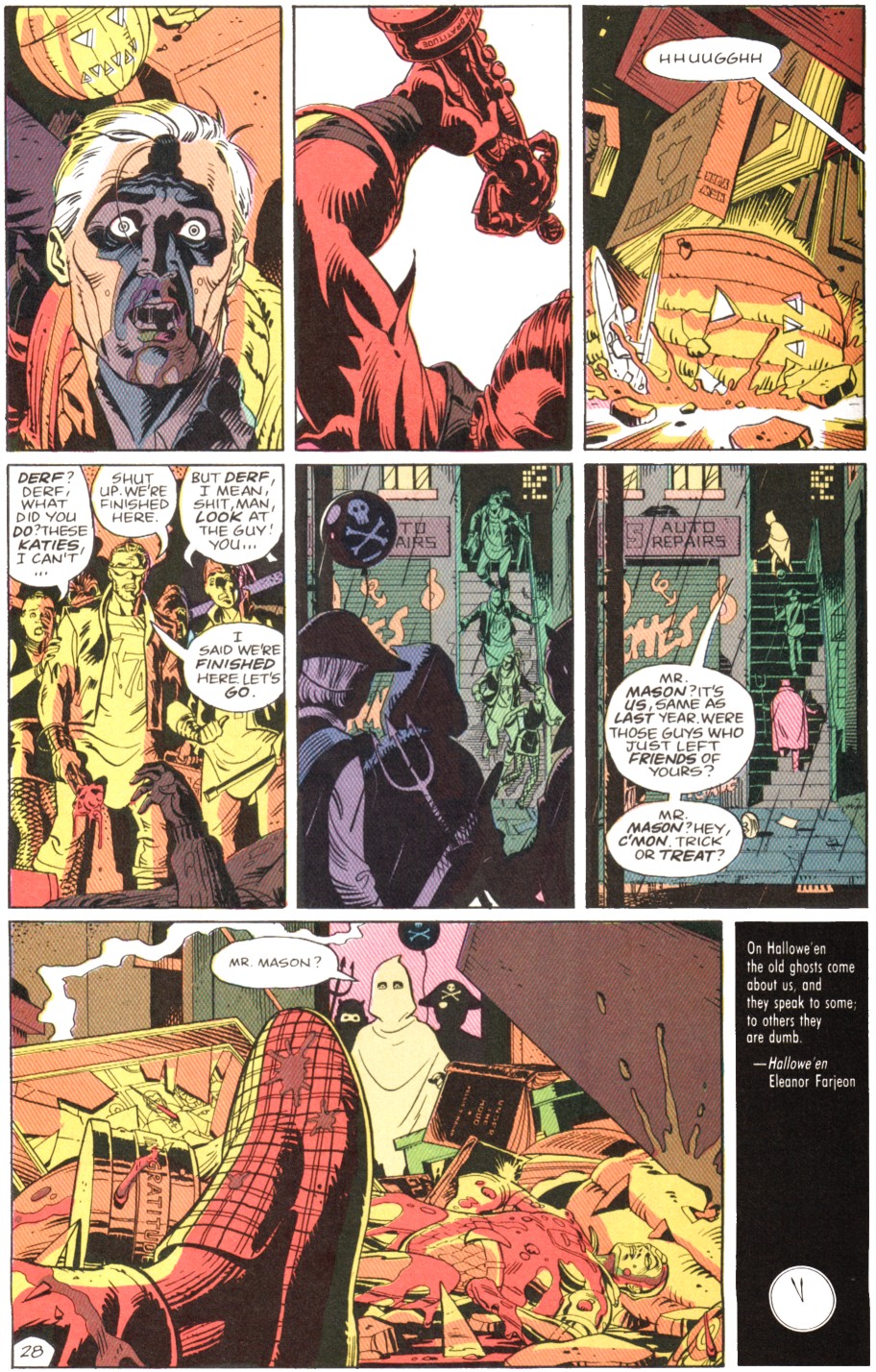
Andrew: I think one example, perhaps relevant now, is the protest against Nite-Owl and Silk Spectre freeing Rorschach from prison that spills over into a group of skinheads killing the original Nite-Owl, whom they confuse with Dan Dreiberg.
 

watchmen-08-28

 
Another way to think about it is the fact that Moore’s respect for individualism transcends actual political stances, to the extent that the rightwing Rorschach is a much more sympathetic character than the liberal Ozymandias. Ozymandias is a classic totalitarian figure, someone who (like Stalin) wants to impose plans from the top down and who doesn’t care if literally millions of people have to die in the process. This is very much the kind of figure that Reagan or Thatcher deployed to justify both their foreign policy and their domestic cuts, and that we still have with us in the form of the (absurd) assertions that Barack Obama is a socialist.

That said, I think “ends up on the side of Reagan and Thatcher is strong.” It’s probably more correct to say that he shares an anti-collective stance that hadn’t yet become totally the property of the neoliberal right at that point (It was still central to the sixties left from the Port Huron Statement to the anti-Vietnam movement), but was on its way to doing so.

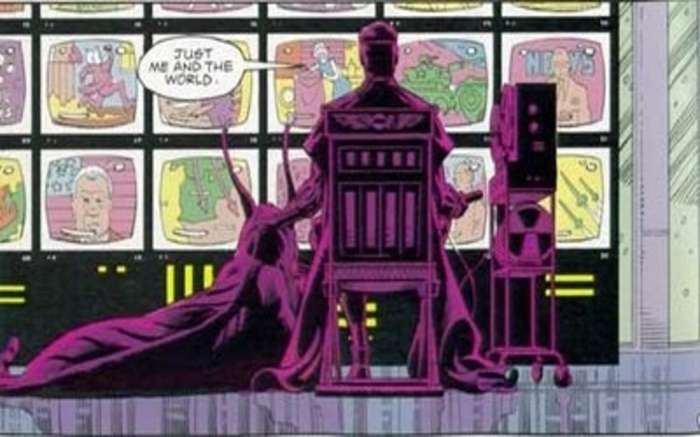
Noah: So, do you think it’s possible to see Ozymandias as in some ways a critique of neoliberalism, or as trying to think through the connections between liberalism, capitalism, and authoritarianism? You say that Veidt is a classic totalitarian figure, but he’s awfully pro capitalism. And it’s not industrial Nazi-era capitalism either; it’s way more late capitalism, consumerism of the image, it seems like (part of his evil plot is essentially to make a movie.) Casting Veidt as the villain seems like it’s at least in part casting big business as the villain.
 

25796

Andrew: That’s a good qualification. As I was writing the book I had my eye on the way that Veidt’s portrayal exemplifies a general distrust of institutions that has gone from being a shared feature of both the left and the right in the cold war period to a hallmark of neoliberalism. But another way to think of Veidt is as a figure who embodies Moore’s distrust of large-scale capitalism–a thing I associate in the book with the way he stands for the big comic book companies who exploit the intellectual property of work-for-hire creators. At the same time, it’s when Ozymandias steps outside the profit motive, and attempts to perform what he believes is an altruistic act, that he becomes the villain of the piece. Moore’s thinking about the comic book industry and his general politics remain entwined here, in that the celebration of individual comic book creators remains entwined with a kind of romantic ideology of small property ownership (in this case intellectual property) that’s long been central to American thought, and in some ways has facilitated or served as cover for the rise of neoliberalism. We think of Reagan and his successors as champions of small business–in part because they continuously tell us so–but their policies have largely benefited big capital.

Noah: Veidt’s capitalism doesn’t end though. And in fact he takes advantage of his knowledge of the change in the world situation to switch his investments around and make even more money. Liberal one-worldism and neoliberal corporation seem to fit together seamlessly.

I guess I wonder in part whether the critique of institutions you point to, or the sympathy for Rorschach and the distrust of Veidt — the assumption in your book seems to be that that’s politically retrograde or problematic. But— I mean, for myself at least…if the book is anti-Stalinist, and anti-violent revolution, which I think it is, I’m kind of on board with that. I feel like Moore points out that revolutions are really bloody, kill real people, and don’t necessarily actually change all that much, or can’t be counted on for real transformation. Those all seem like reasonable points — and stand in contrast to V for Vendetta, for example, where V seems infallible and revolutionary violence and torture result in Evey’s personal transformation rather than in the kind of pointless pile of corpses you see in Watchmen.
 

watchmen12

It also seems prescient in terms of our current political moment. Obama’s not Stalin, obviously, but like most of our Presidents he’s happy dropping bombs on people in the name of a better world. He really doesn’t look all that different from Veidt in a lot of ways (he’s even a successful creator of intellectual aesthetic content, right?)

Andrew: The Obama-Veidt comparison is a fascinating one, although I guess an even better comparison would be Veidt and Mitt Romney, since Romney too made a lot of money and now seeks to turn his attention to public service. (Of course he didn’t make it all on his own after starting from the bottom, the way Veidt and Drake did.) For my money, though, I think the things that are problematic about Obama actually have to do with his very Reaganesque dislike of large organization. For all the flak that he takes for his past as a “community organizer,” this is a figure whose commitment to ground up consensus building reflects a sixties left critique of big government in an era when anti-government sentiment has become a major tool of those in power. Obama’s missteps (including, one imagines, those with the security state, although we’ll probably never know the details there) seem to me to be a property of his desire to compromise and build consensus with everyone. To my mind I’d prefer a Lyndon Johnson who knows how to work within organizations and who isn’t afraid to strong arm opponents to get what he wants. I actually think Lyndon Johnson is–mistakes with Vietnam aside–an unacknowledged hero of the twentieth century. I’m getting a bit away from Watchmen here, but these days you don’t see too many celebrations of institutions on either side of the political fence: Spielberg’s Lincoln is one of the few I can think of, and a great, unheralded film for that fact.

Noah: Hah; I loathed Lincoln. Part of my broader loathing of all things Spielberg. I don’t think it does actually celebrate institutions, exactly. It celebrates Lincoln as white savior hero genius. Barf.

Andrew: My defense of Lincoln’s would be Adolph Reed’s, which is simply that it portrays politics and dealmaking as valuable and even dramatic activities, in contrast to a movie like Django Unchained which seems racially progressive but which actually personalizes both the critique of and solution to an institutional problem like slavery.

But to return to Watchmen in conclusion, I think this whole political question has a lot to do with the history of the superhero in which Moore and Gibbons play a key role. The pre-Watchmen history of the genre runs from 1938 or so to 1986, precisely the period in which Americans believed in the potential of government to make things better. In that respect, I tend to see the superhero as a figure for the New Deal state itself–a figure of extra-ordinary power committed to doing good in the world. The post-Watchmen idea of the superhero (in which Moore and Gibbons participate, even though they later come to bemoan it) as an obsessive or self-interested figure who claims to do good but in fact makes things worse nicely parallels, by the same token, neoliberal accounts of government.

Wonder Woman Questions

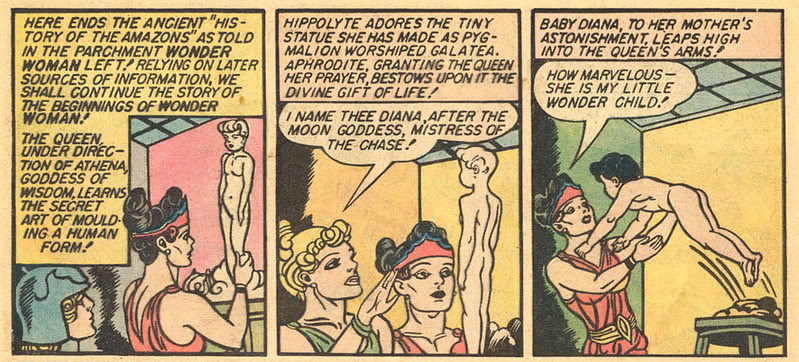
This is the week my book, Wonder Woman: Bondage and Feminism is released. I’ve put together a week-long roundtable to celebrate.

Earlier in the week I asked folks to ask me Wonder Woman questions and I’d answer them here. A few people responded. So here’s my answers. If you have other questions, ask in comments and I’ll try to answer as best I can. (Questions about my book would be great too, if you are one of the few who have read it!)

Figure 30

____________

Andrew

Is there someone that you think could channel H.G. Peter?

I love Harry Peter too! His style is very different from current mainstream superhero art. He looks back to a Victorian illustration tradition in a lot of ways; stiff figures, fluid linework, just very different than the muscles-on-muscles pin-up style you get in Marvel and DC nowadays.

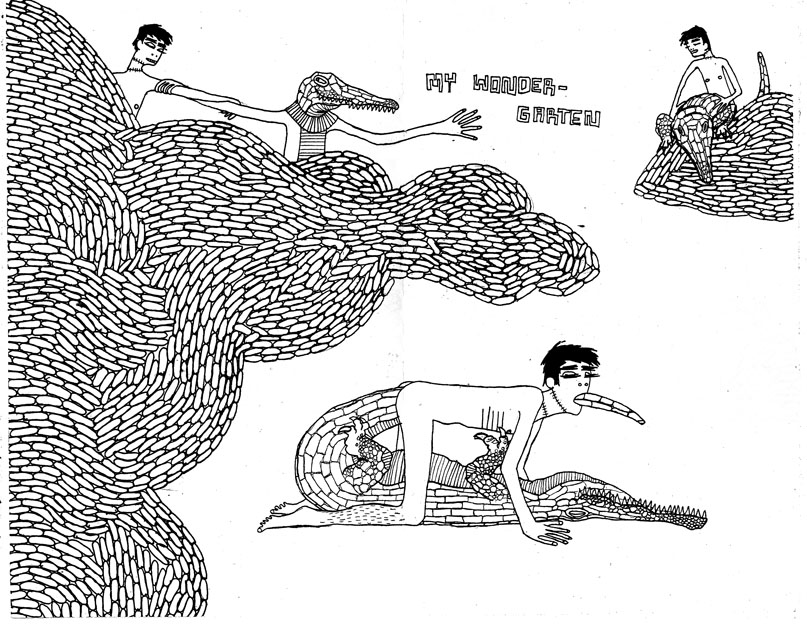
So, if you were going to have someone approximate that, I think you’d need to look to alternative and indie creators probably. I’d love to see Edie Fake do a Wonder Woman story. Edie’s fascinated with gender and sexuality in a way that’s reminiscent of Marston, and he’s really into fantasy landscape as well. It would be different than Harry Peter, of course, but I think he could get some of the same sense of overripe wrongness/rightness that Peter did.
 

v-2

 
Leah

How do you think Wonder Woman has informed the portrayals of other women superheros. And why do you think there there not more leading lady superheros. Most of the well known ones these days seem to be part of teams (ex. XMen, Fantastic Four) rather than stand alones.

That’s tricky; I don’t think the original Wonder Woman comics have had much influence at all on other female superheroes, as far as I can tell. Marston’s mix of bondage and feminism isn’t something that many other mainstream creators have been all that interested in. There have been a few direct lifts, like Alan Moore’s Promethea, or Winged Victory in Kurt Busiek’s Astro City, or Wonder Girl. But for example Storm, from the X-Men, whose one of the higher profile superheroes, doesn’t owe much to Wonder Woman. Buffy and Sailor Moon, two very popular female superheroes, don’t look back to her much either.

And I think that’s part of the answer to your second question. There are stand along female superheroes, like Buffy and Sailor Moon. They tend not to come from Marvel and DC (the big two superhero companies). And that’s just because Marvel and DC have historically featured male characters by male creators mostly packaged for me. That’s changing somewhat as the movies create a more diverse audience, and so maybe we’ll see more stand alone superhero films featuring female heroes from those companies in the future.

Matthew

It seems that people are clamoring for a Wonder Woman movie, but do you think an interesting film could actually be made with the character in her current state? Or are her bizarre origins, years of retcons, constantly fluctuating characterization, and general difficulty to handle by modern comics writers too much to overcome?

Anything’s possible I guess. Somebody could just go back to Marston and Peter and make a movie with gorilla bondage and space kangaroos, if they wanted. I suspect though that the movie will be boring not because anyone is confused by years of indifferent comics, but just because most superhero movies are boring and unimaginative, and there’s no reason to think this will be different. In other words, the Wonder Woman movie will be bad because the Avengers and Superman and so forth are bad, not because Wonder Woman comics are bad. They’ll write a script where she hits people and has angst and things blow up, would be my guess.

I suppose they might try to incorporate feminism in some way. That could be bad, as the animated feature showed. For an actual feature there’s too much money at stake to screw around with trying to be true to the character or the comics fanbase, though, would be my guess.
 
Eric

What did you think of the David Kelly pilot?

I didn’t see it!