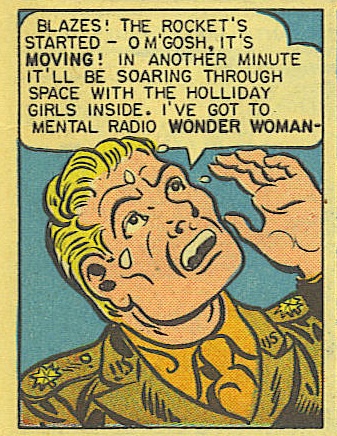
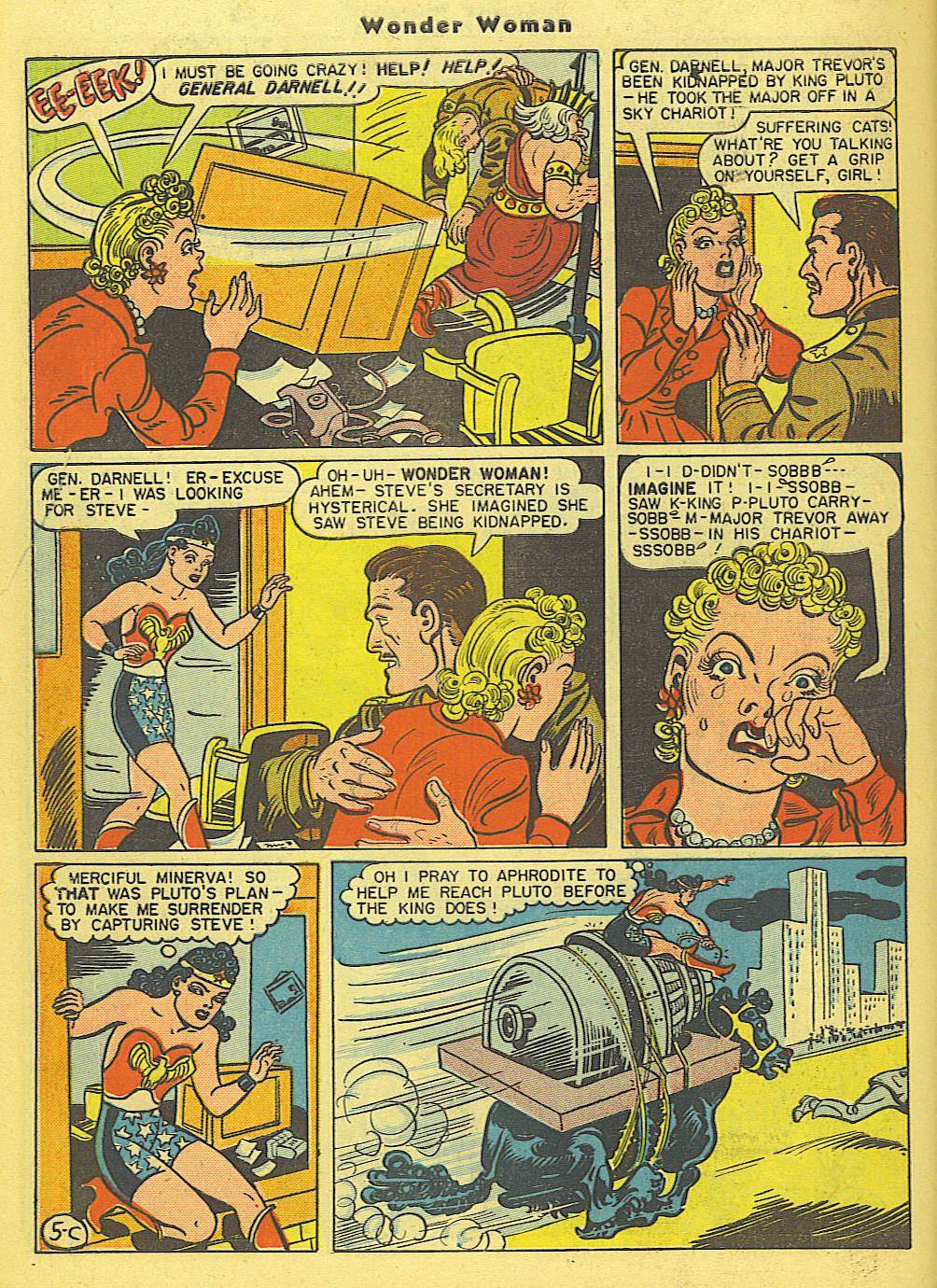
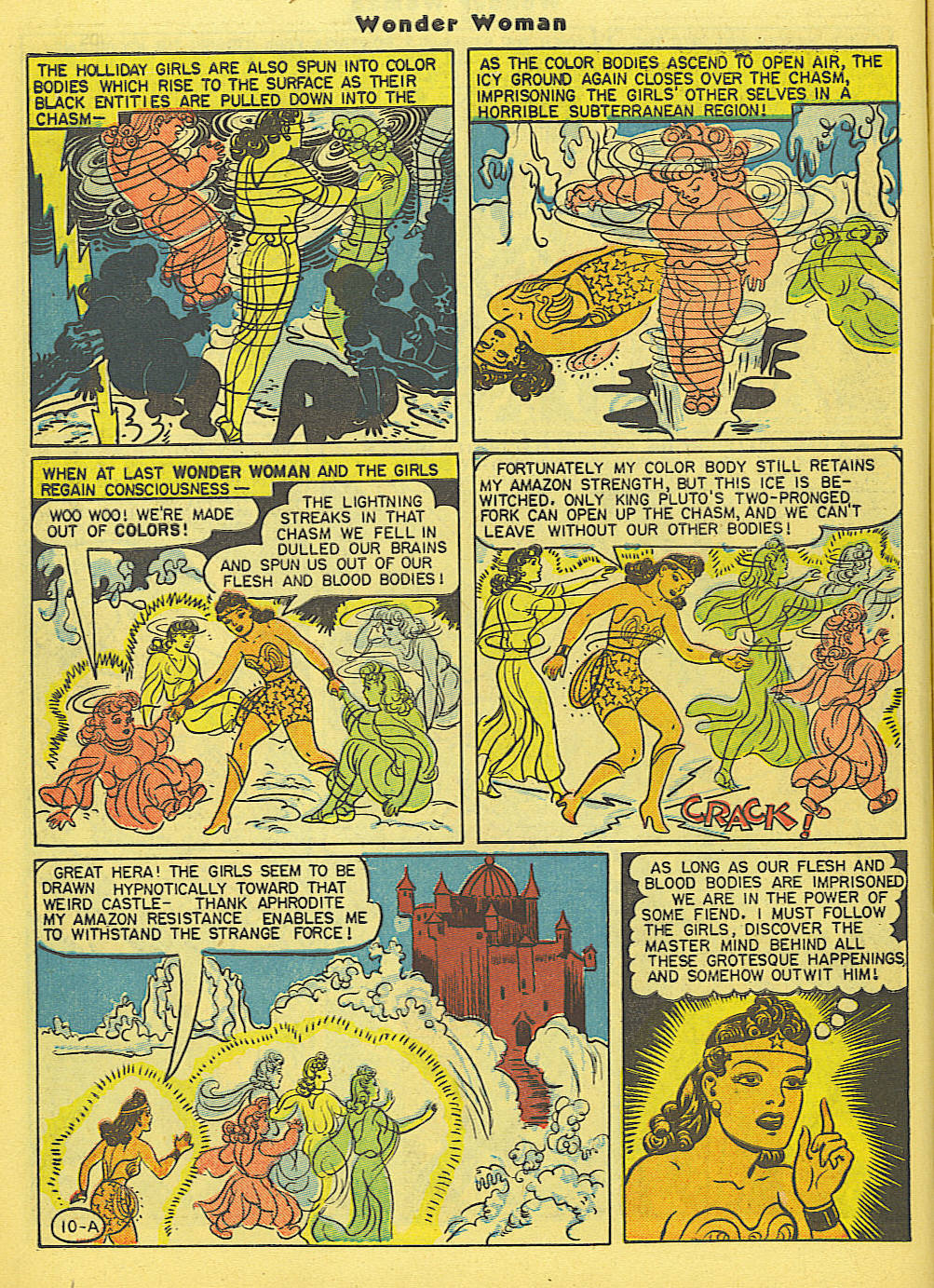
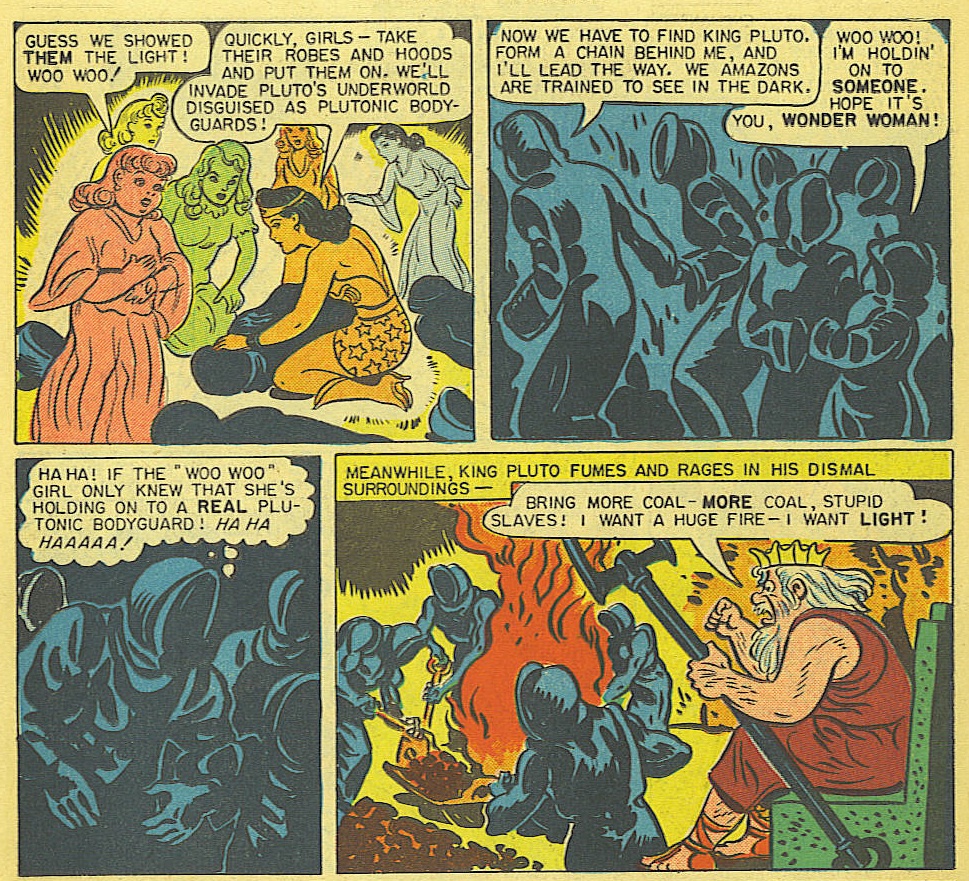
Color Illustrations for “Wonder Woman: Bondage and Feminism”

My book, Wonder Woman: Bondage and Feminism is out today! I’m doing a little roundtable to celebrate.

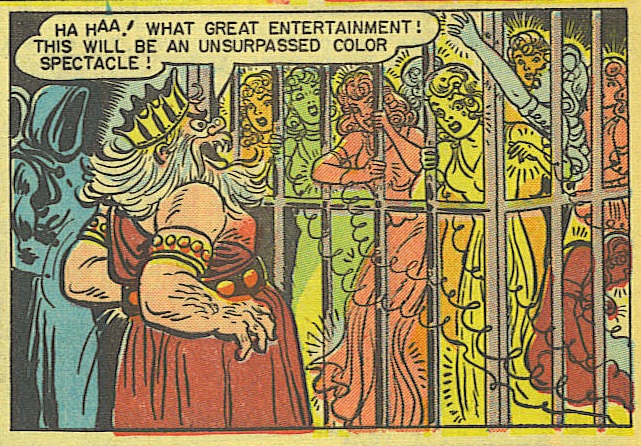
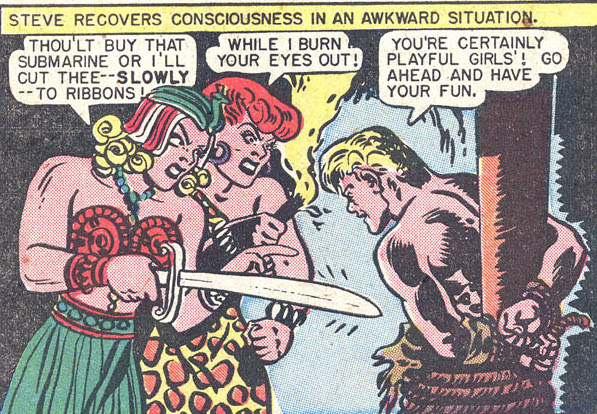
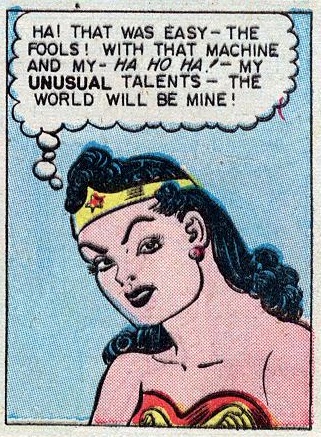
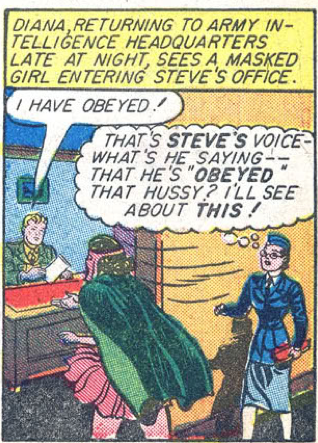
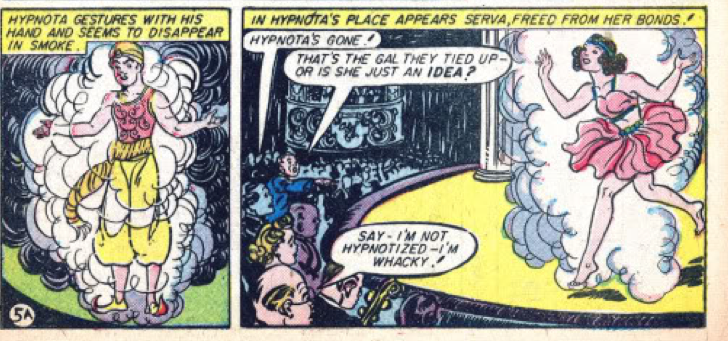
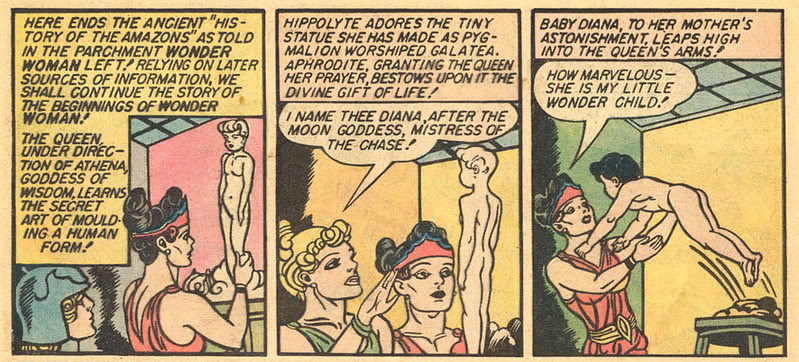
The book includes a number of illustrations from the Marston/Peter Wonder Woman comics. Alas, in the print edition, the images aren’t in color — and, of course, even in the digital version, I wasn’t able to include as many images as I wanted.

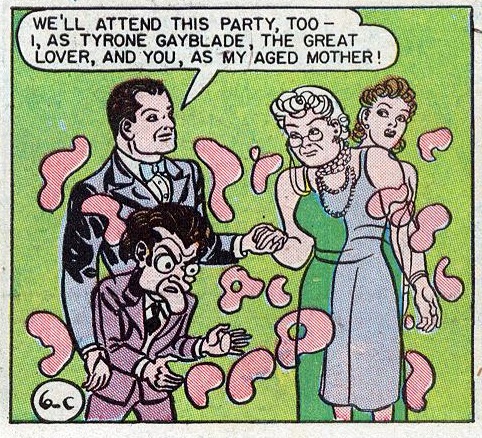
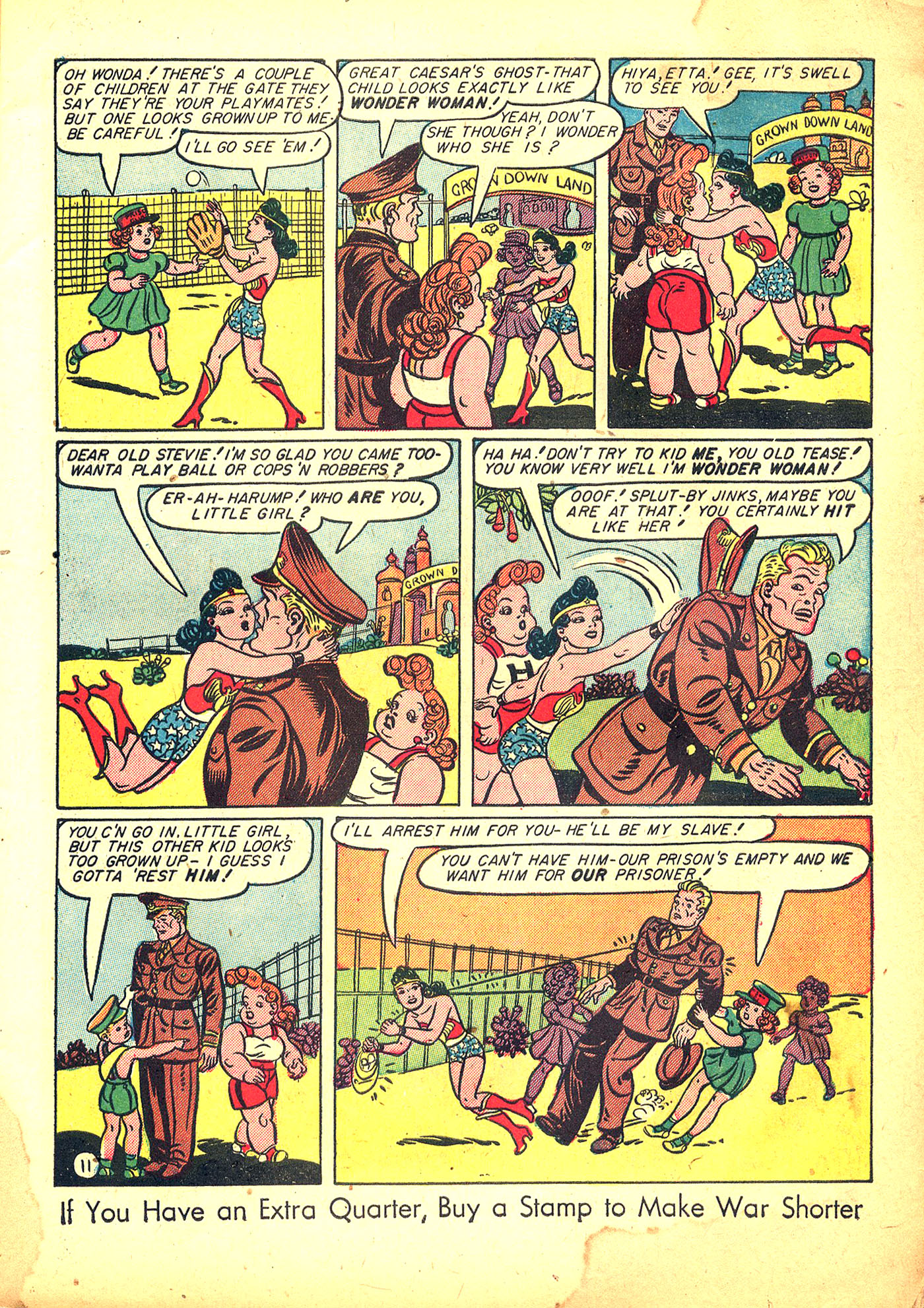
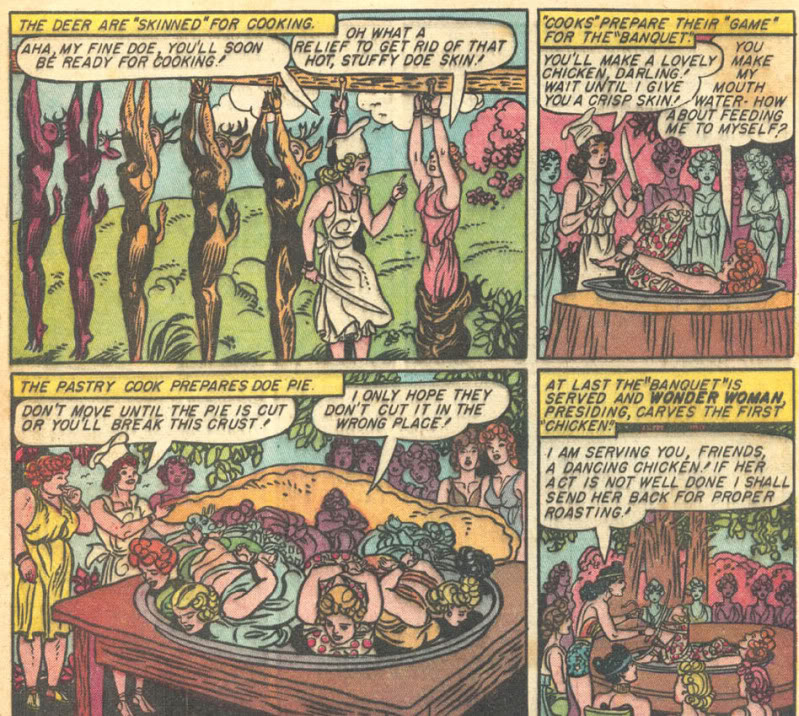
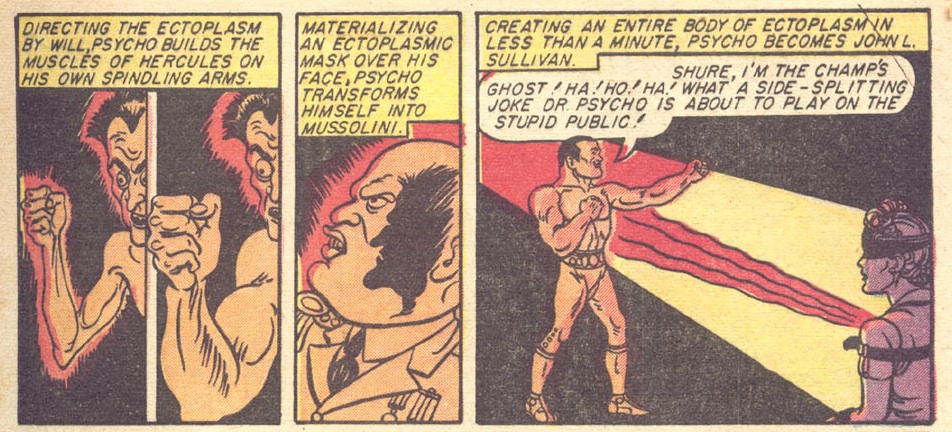
So, I figured I would try to give folks a chance to see everything I wanted to put in here. For those who have the book and want to match images to the discussion in the text, I’ve included the figure numbers (for those included in the book) and the corresponding text pages of my book for everything else.

All images are by William Marston and Harry Peter’s run on Wonder Woman, unless otherwise noted. I’ll try to give issue numbers in most cases, but their may be a few where I’ve lost them. In many cases you should be able to click on the picture for a magnified look.
_____

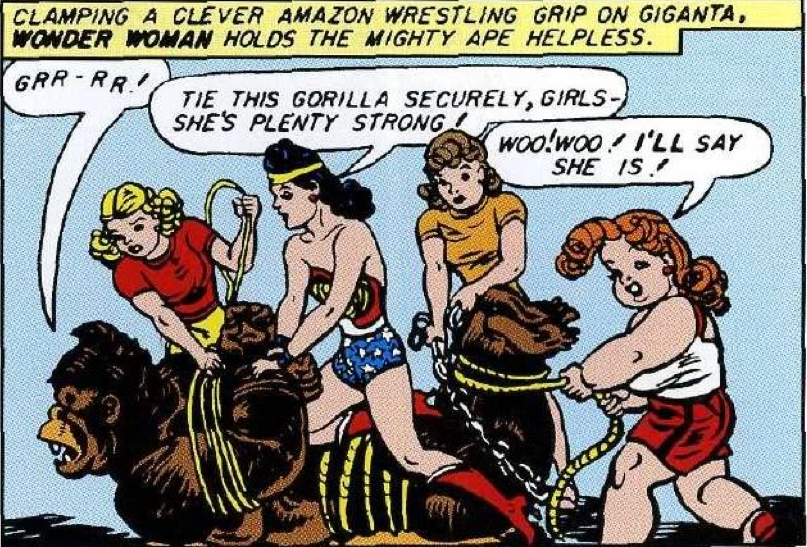
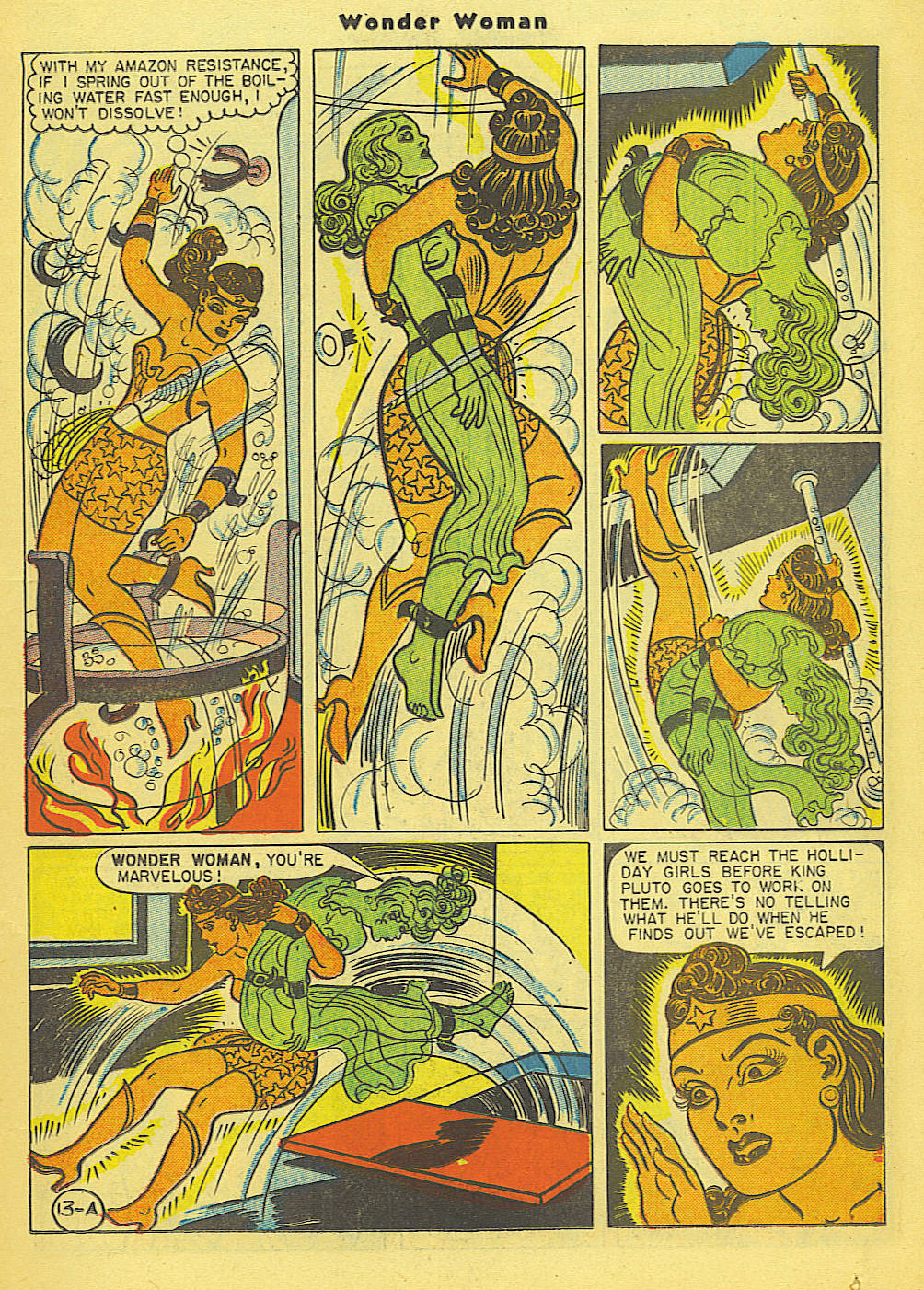
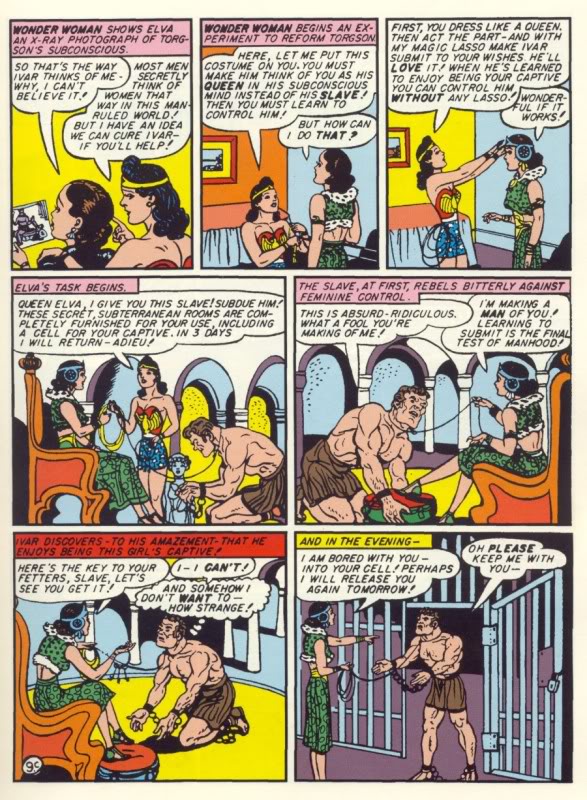
Figure 1, page 17, Wonder Woman #18
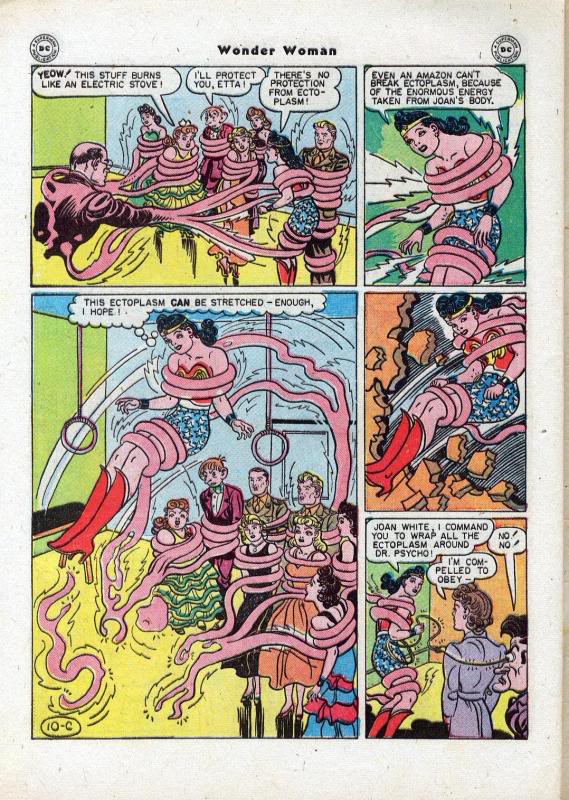
Figure 1

 
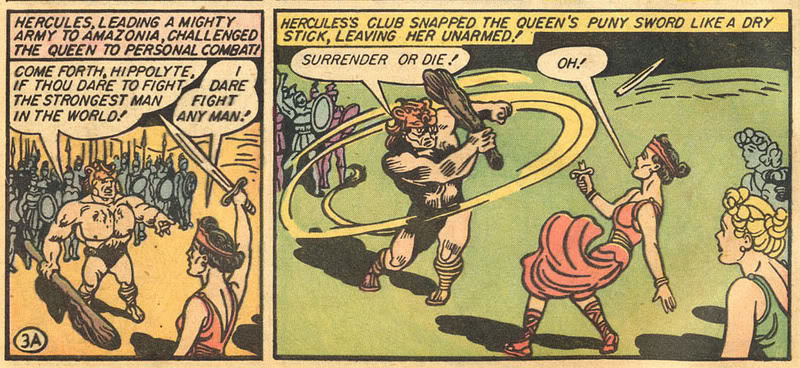
page 20, Wonder Woman #9

Screen Shot 2015-01-01 at 1.52.37 PM

 
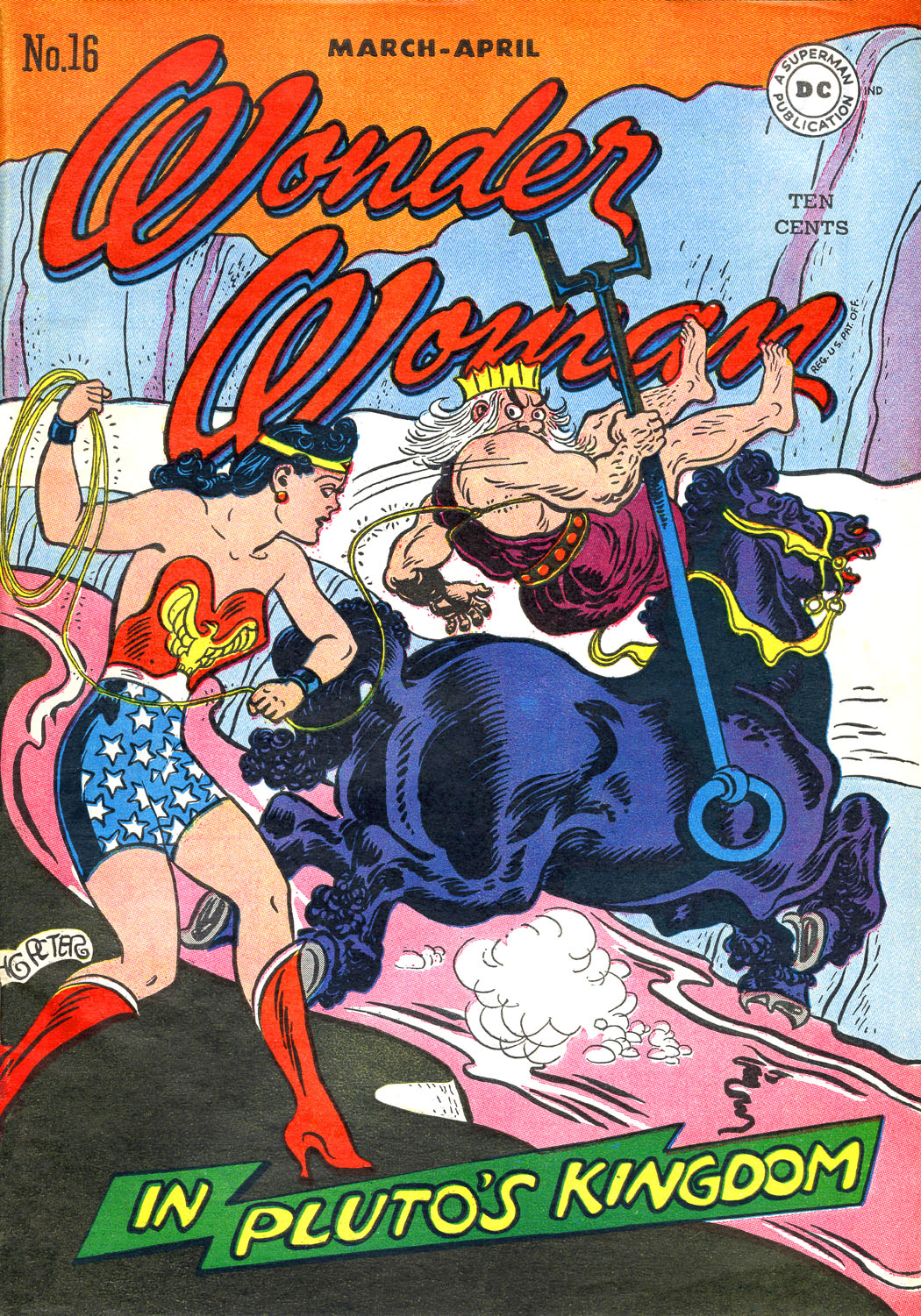
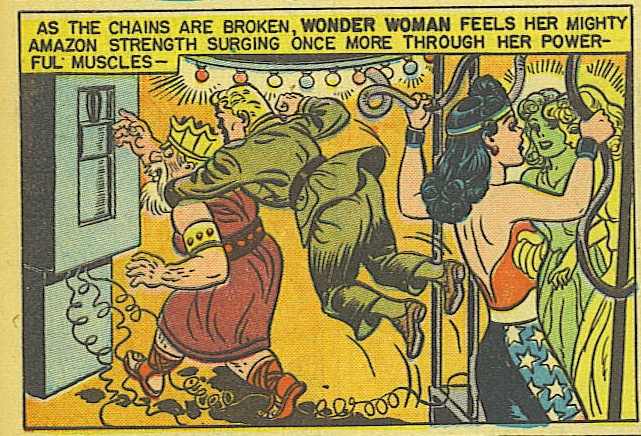
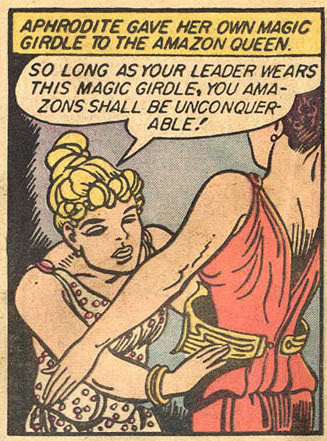
Figure 2, page 27, Wonder Woman #16

Figure 2

 
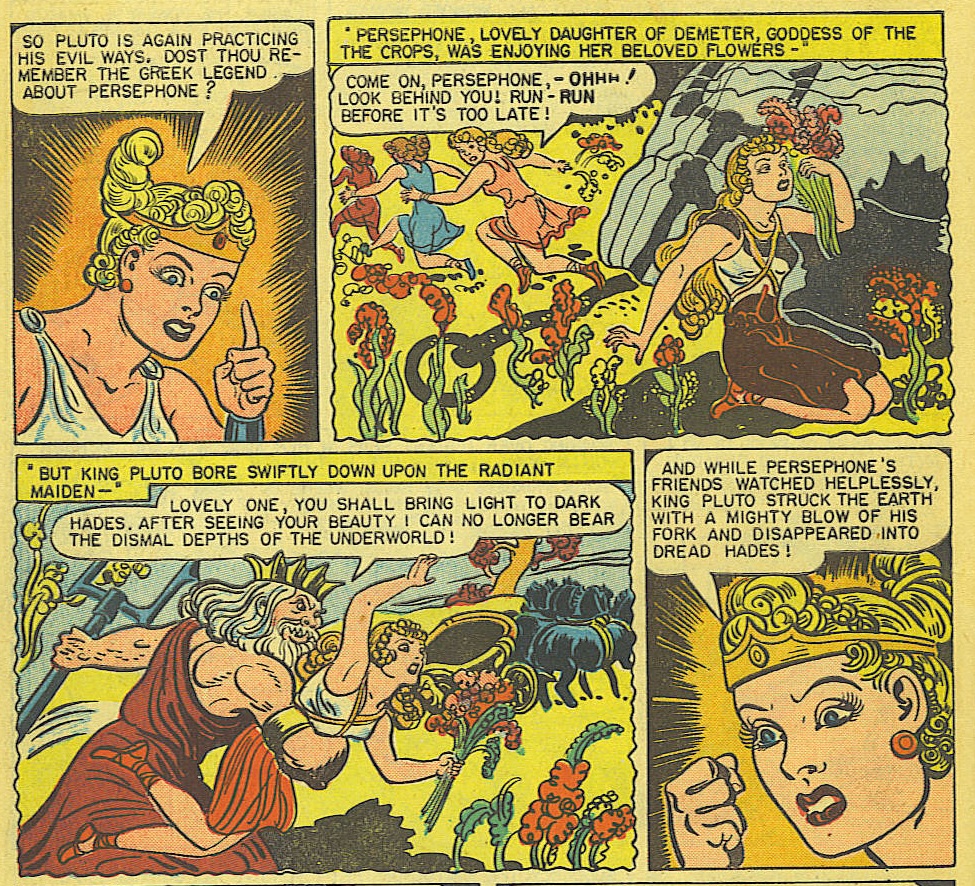
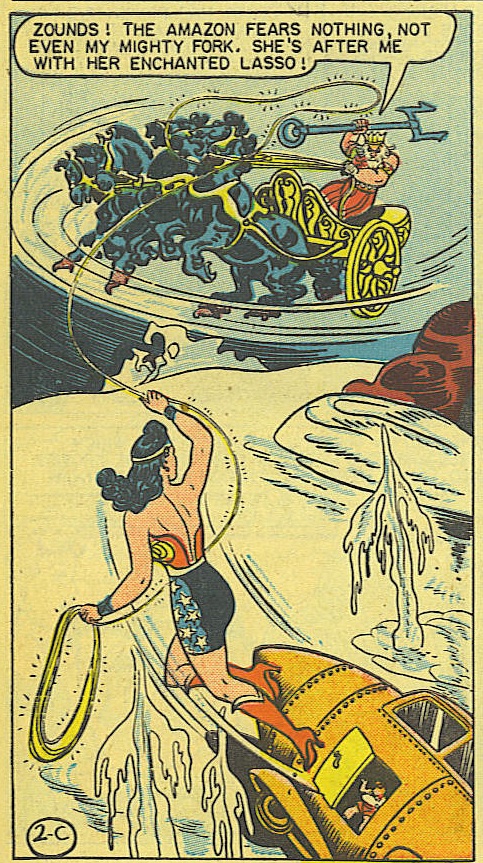
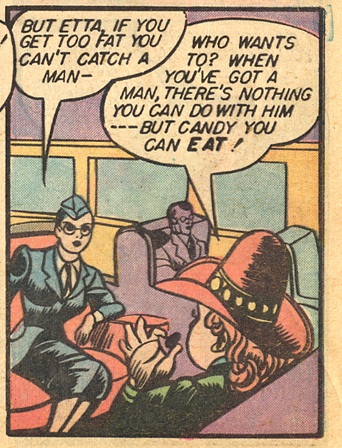
Figure 3, page 29, Wonder Woman #16

Figure 3

 
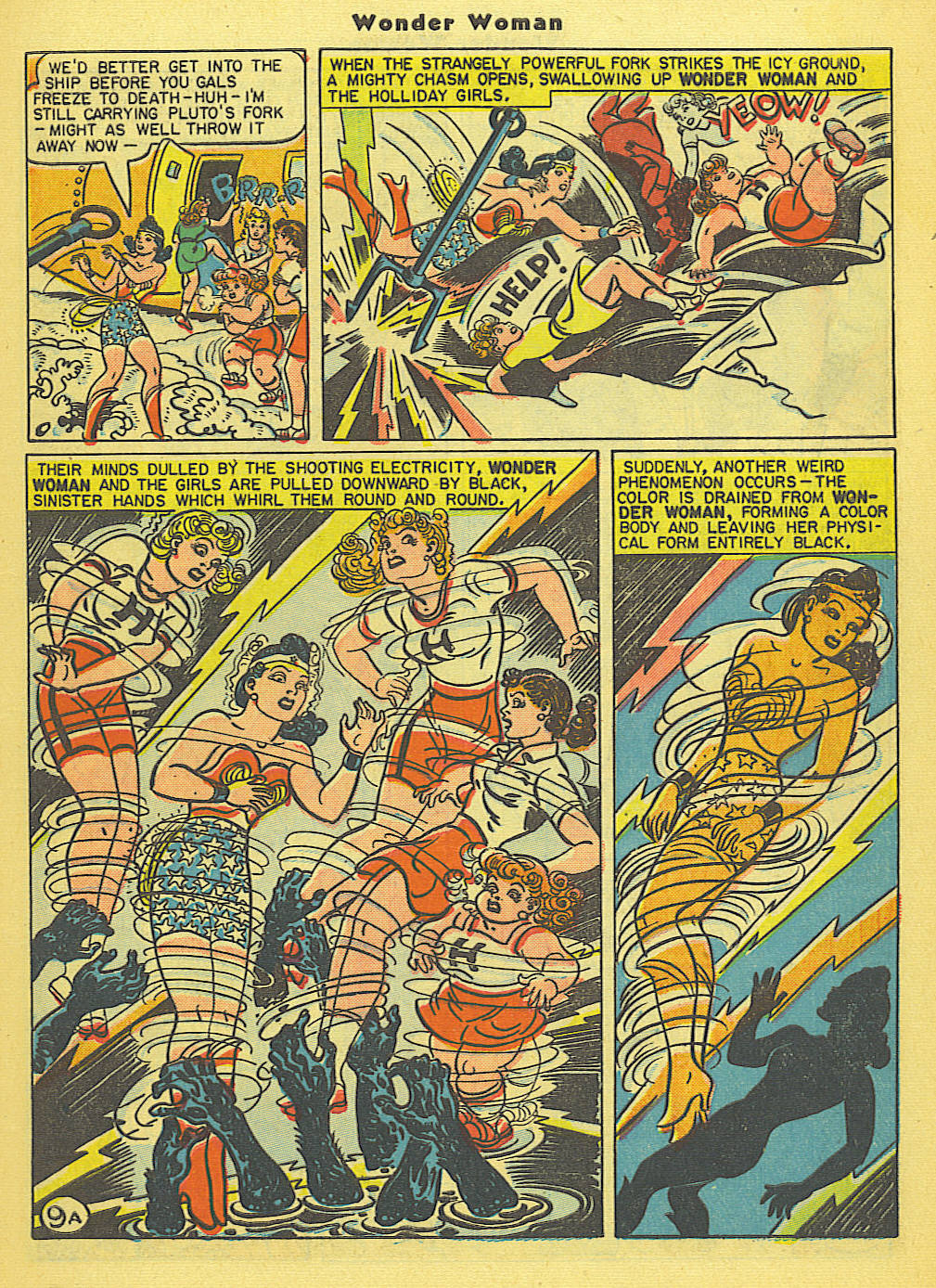
Figure 4, page 32, Wonder Woman #16

Figure 4

 
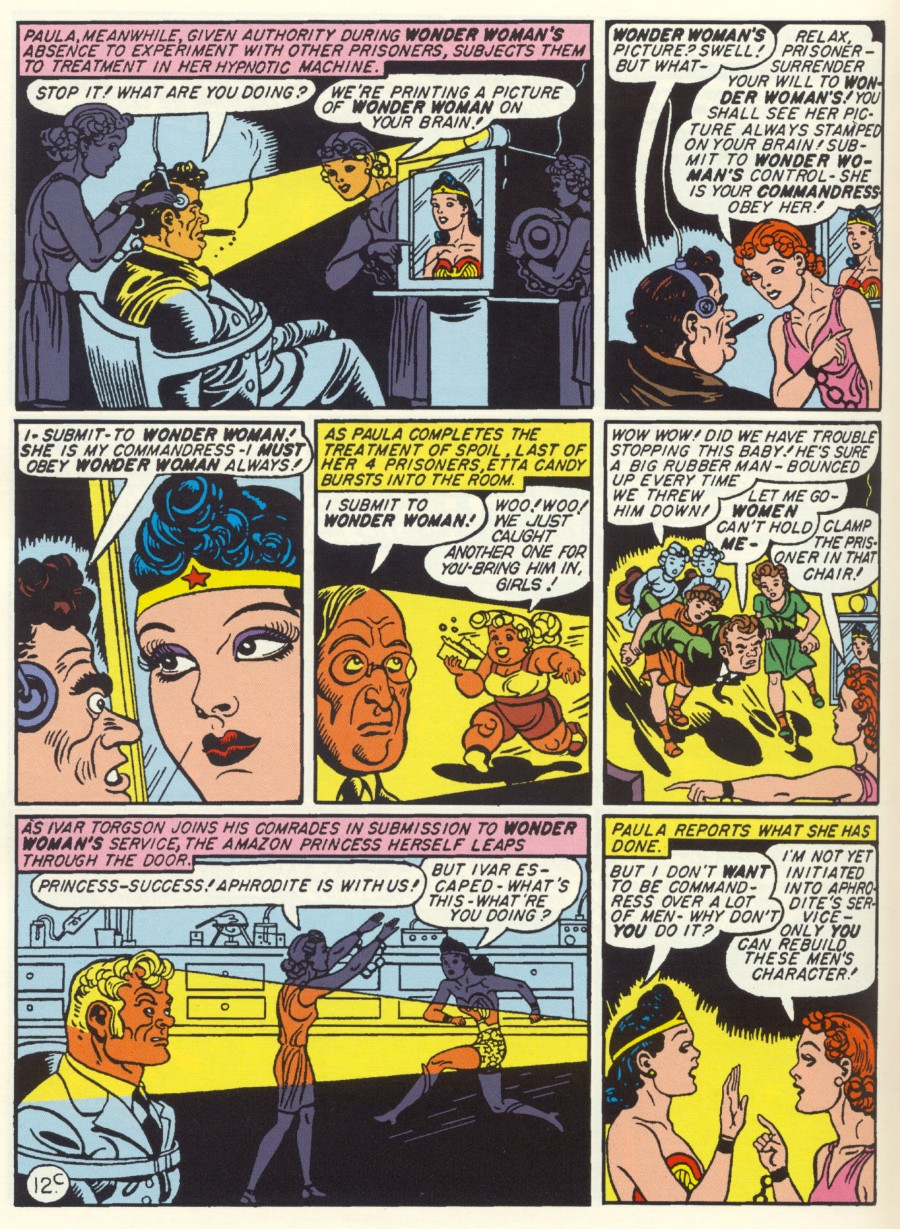
page 37, Wonder Woman #16

Figure 5

 
pages 37-38, Wonder Woman #16

Figure 6

 
Figure 5, page 47, Wonder Woman #16

Figure 5

 
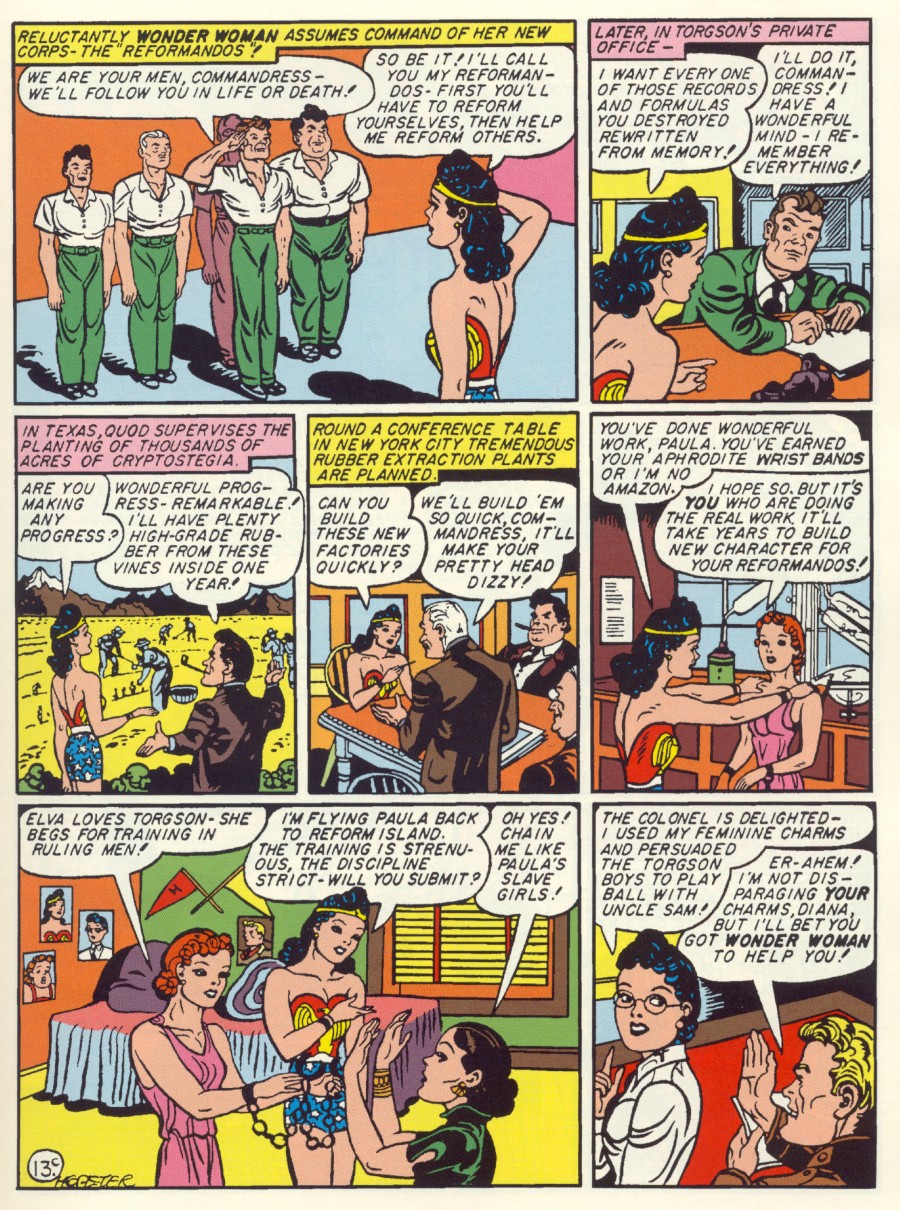
pages 51-52, Wonder Woman #16

Figure 8

 
page 53, Wonder Woman #16

Figure 9

 
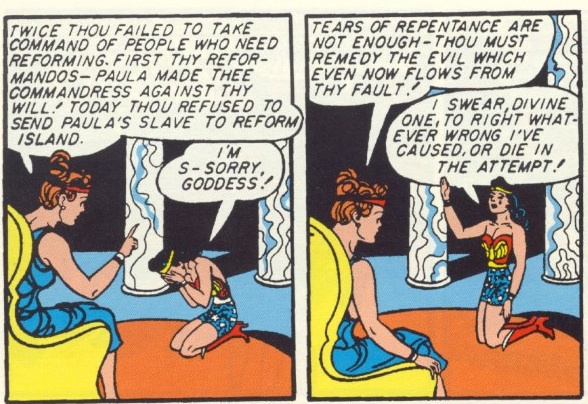
pages 54-55, Wonder Woman #16

Figure 10

 
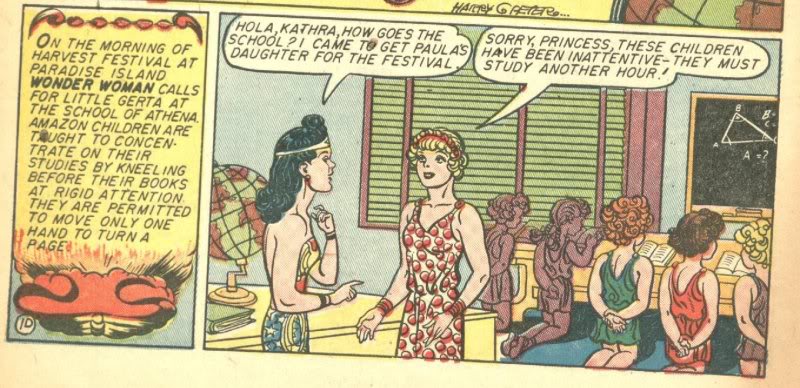
Figure 6, page 56, Wonder Woman #16

Figure 6
 
Figure 7, page 61, Wonder Woman #28

Figure 7

 
Figure 8, page 67, Wonder Woman #16

Figure 8

 
Figure 9, page 72, Wonder Woman #16

Figure 9

 
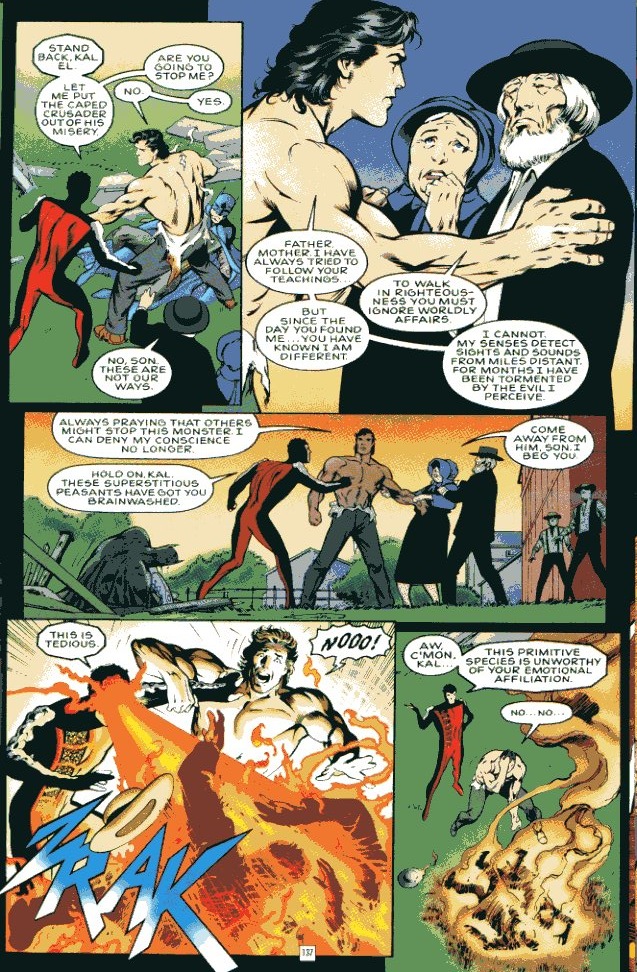
page 77, Alan Davis, The Nail

nail177

 
pages 80-81, Stan Lee and Steve Ditko, Amazing Fantasy #15
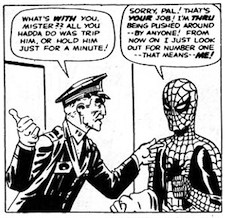
Figure 15

 
page 86, Wonder Woman #1

Figure 16

 
Figure 10, page 84, Wonder Woman #4

Figure 10

 
Figure 11, page 91, Wonder Woman #4

Figure 11

 
Figure 12, page 97, Wonder Woman #4

Figure 12

 
Figure 13, page 98, Wonder Woman #7

Figure 13

 
Figure 14, page 105, Sensation Comics #1
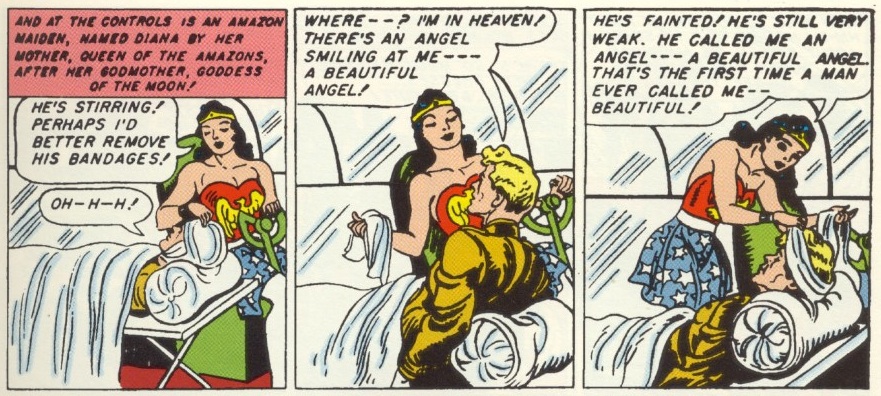
Figure 14

 
Figure 15, page 105, Sensation Comics #1
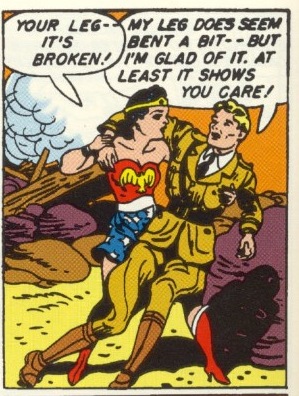
Figure 15

 
page 110, Wonder Woman #4

Figure 23

 
Figure 16, page 113, Wonder Woman #1

Figure 16

 
page 113, Wonder Woman #1

Figure 25

 
Figure 17, page 116, Sensation Comics #31
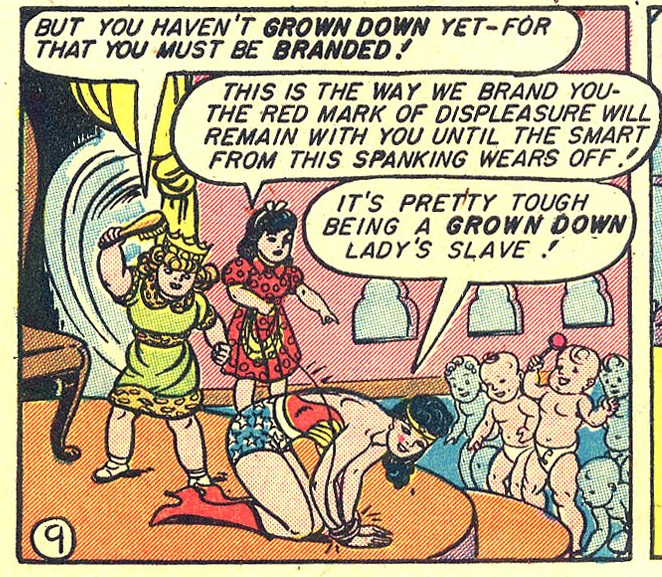
Figure 17

 
Figure 18, page 121, Sensation Comics #1
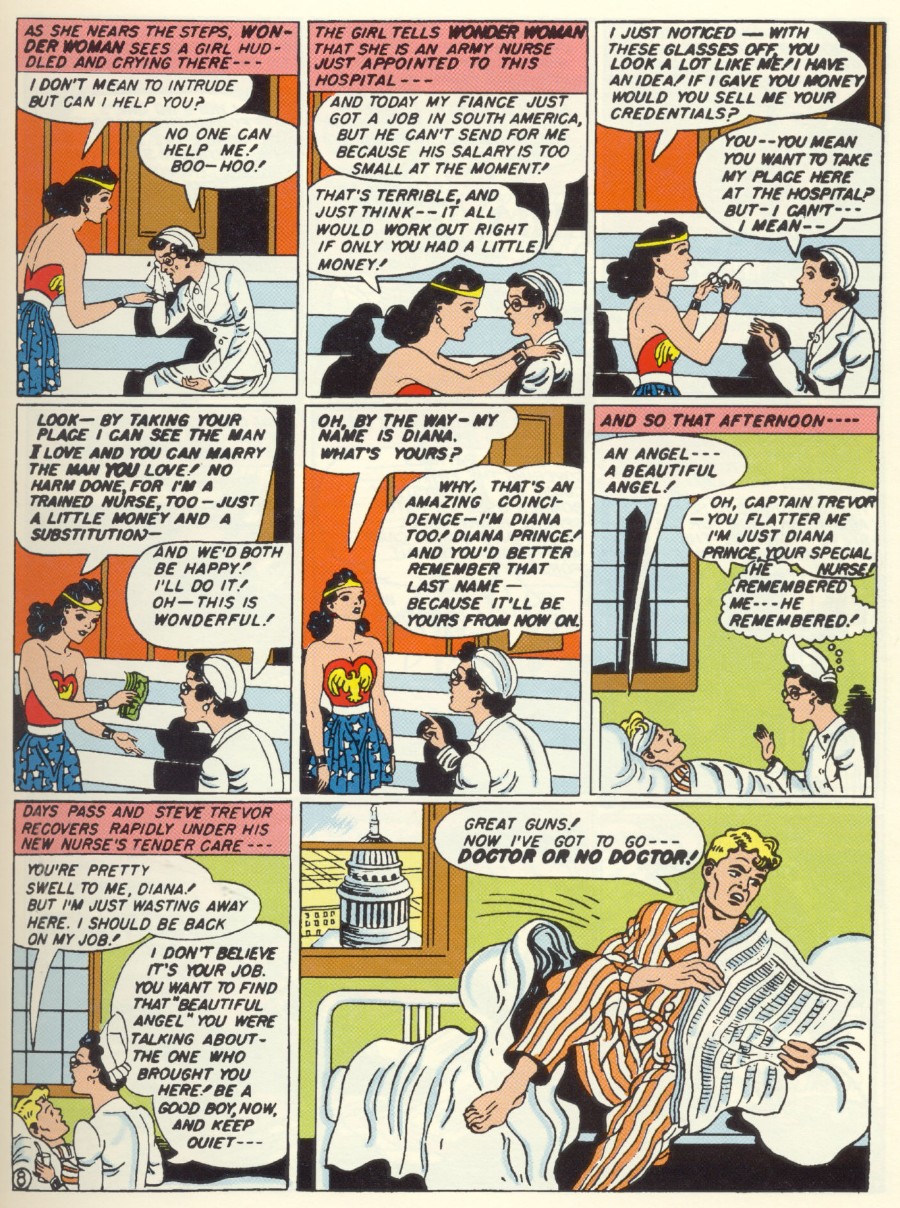
Figure 18

 
Figure 19, page 129, Wonder Woman #1

Figure 19

 
page 130, The Rifleman (creators unkown)
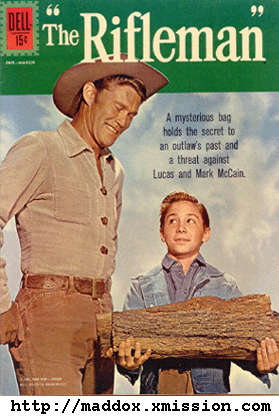
Figure 29

 
page 133, Wonder Woman #18

Figure 30

 
Figure 20, pages 134-135, Wonder Woman #2
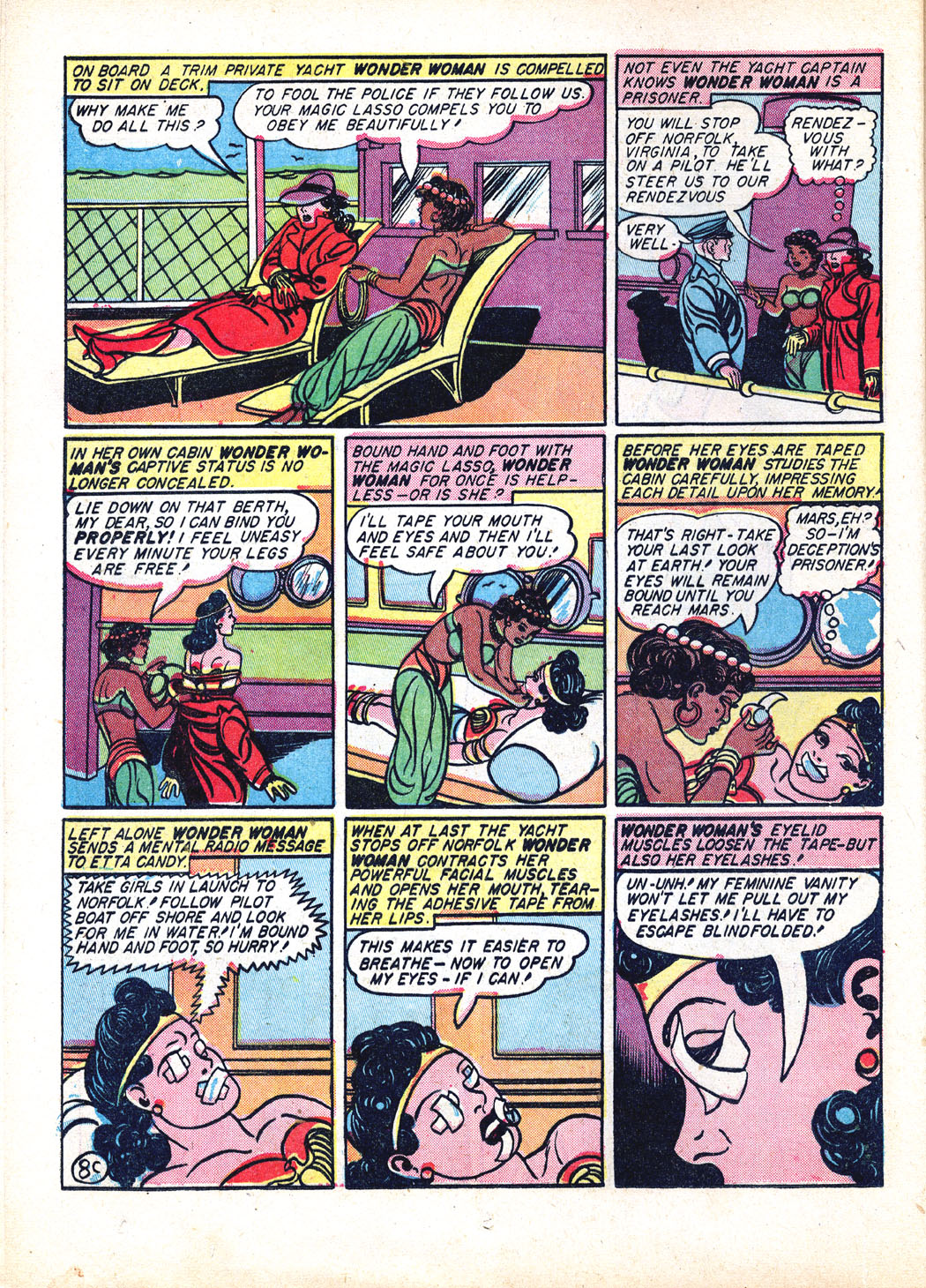
Figure 20

 
Figure 21, page 139, Sensation Comics #31
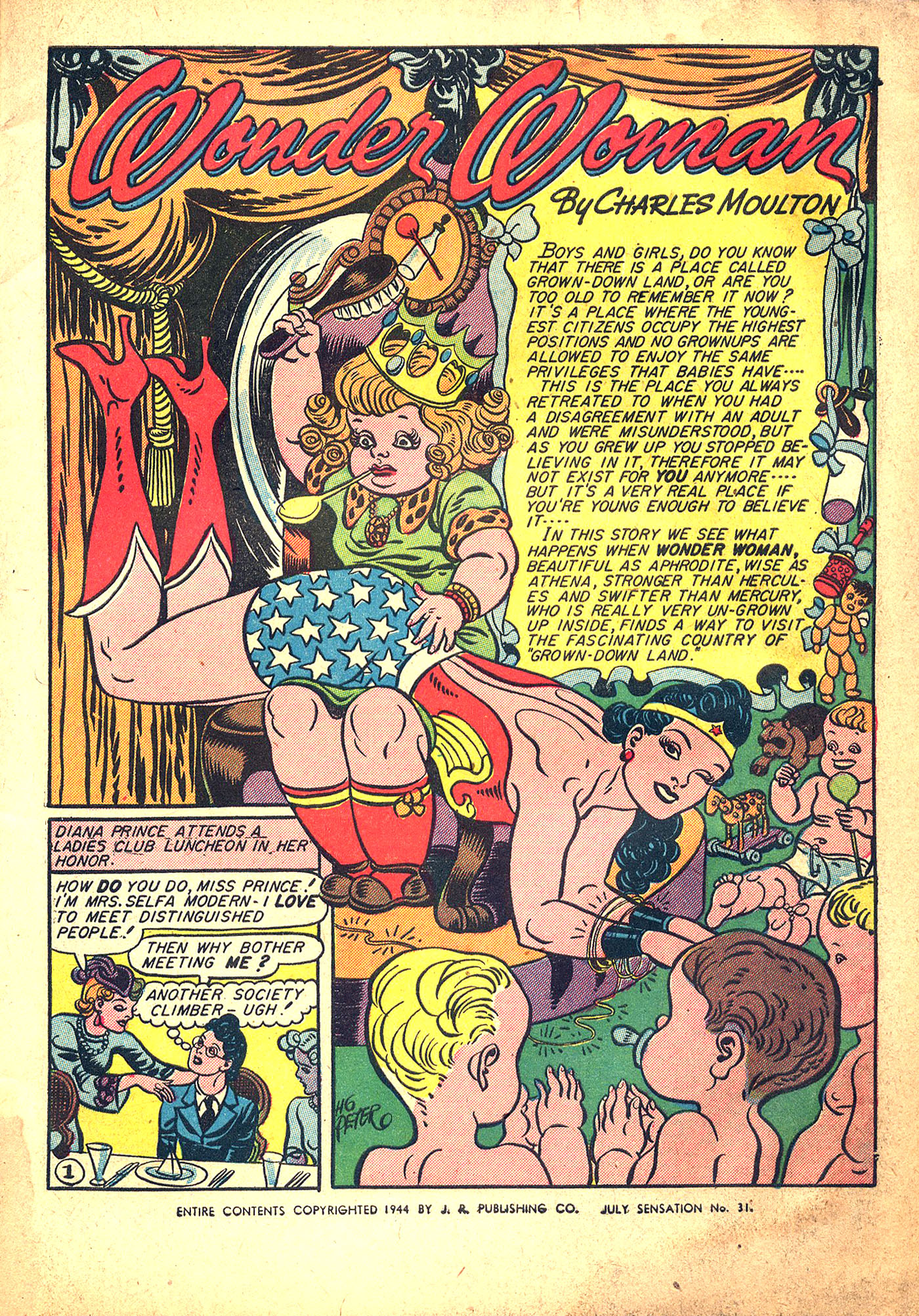
Figure 21

 
Figure 22, page 141, Wonder Woman #5
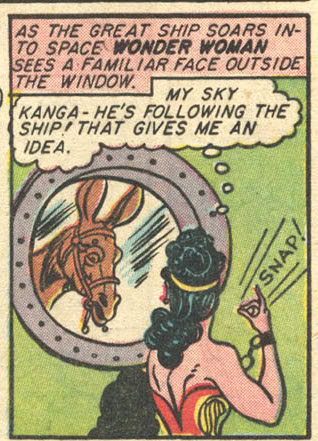
Figure 22

 
page 140, Sensation Comics #31

Figure 33

 
Figure 23, page 143, Wonder Woman #3

Figure 23

 
Figure 24, page 155, Wonder Woman #5
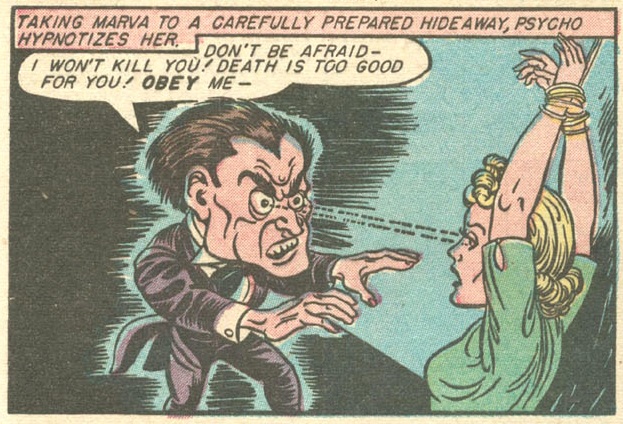
Figure 24

 
page 155, Wonder Woman #5

Figure 37

 
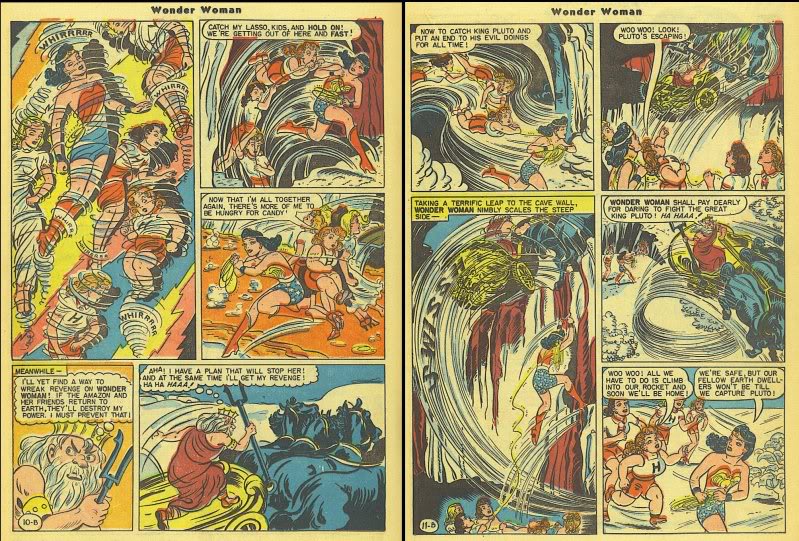
page 156, Wonder Woman #18

Figure 38

 
Figure 25, page 157, Wonder Woman #5
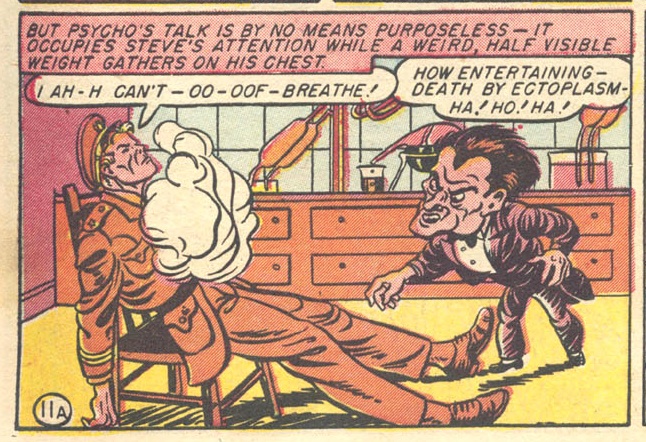
Figure 25

 
Figure 26, page 166, Wonder woman #5
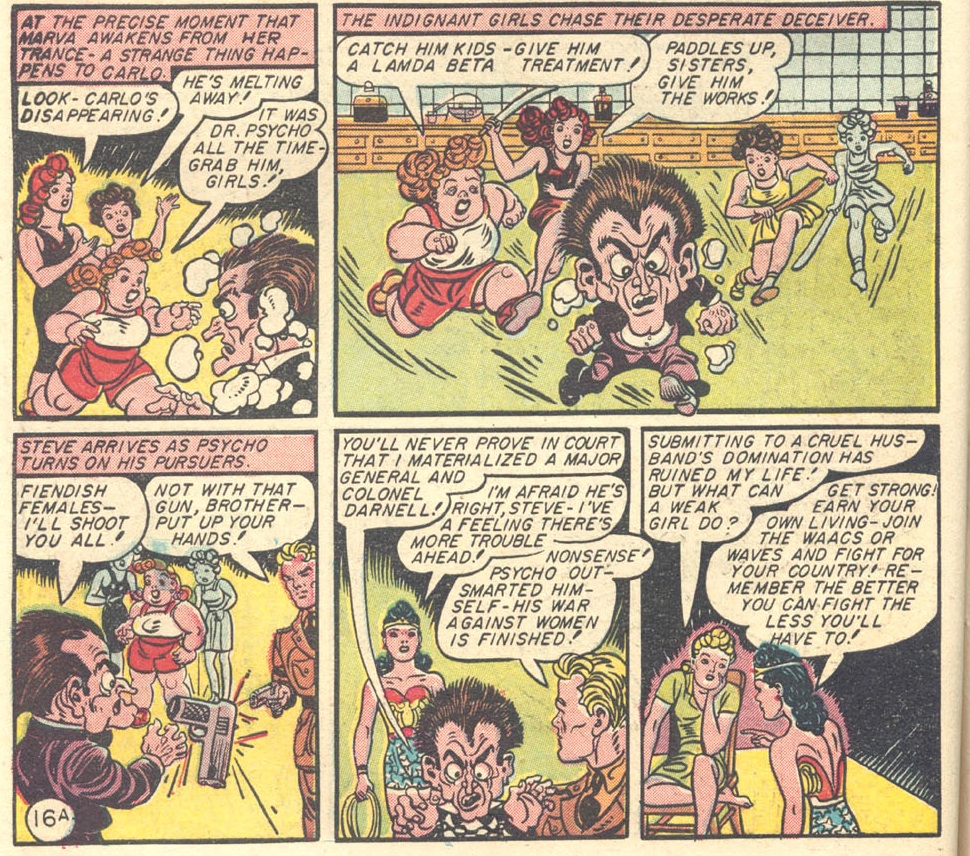
Figure 26

 
page 167, Herbert Cole, illustration of Sleeping Beauty
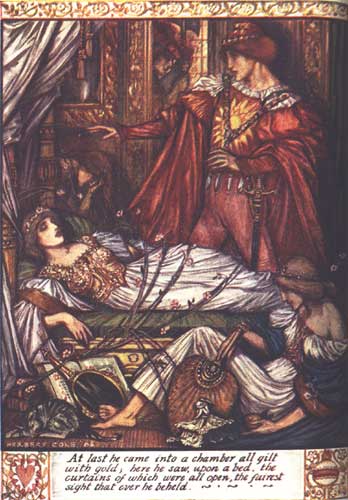
Figure 42

 
Figure 27, page 168, Sensation Comics #41
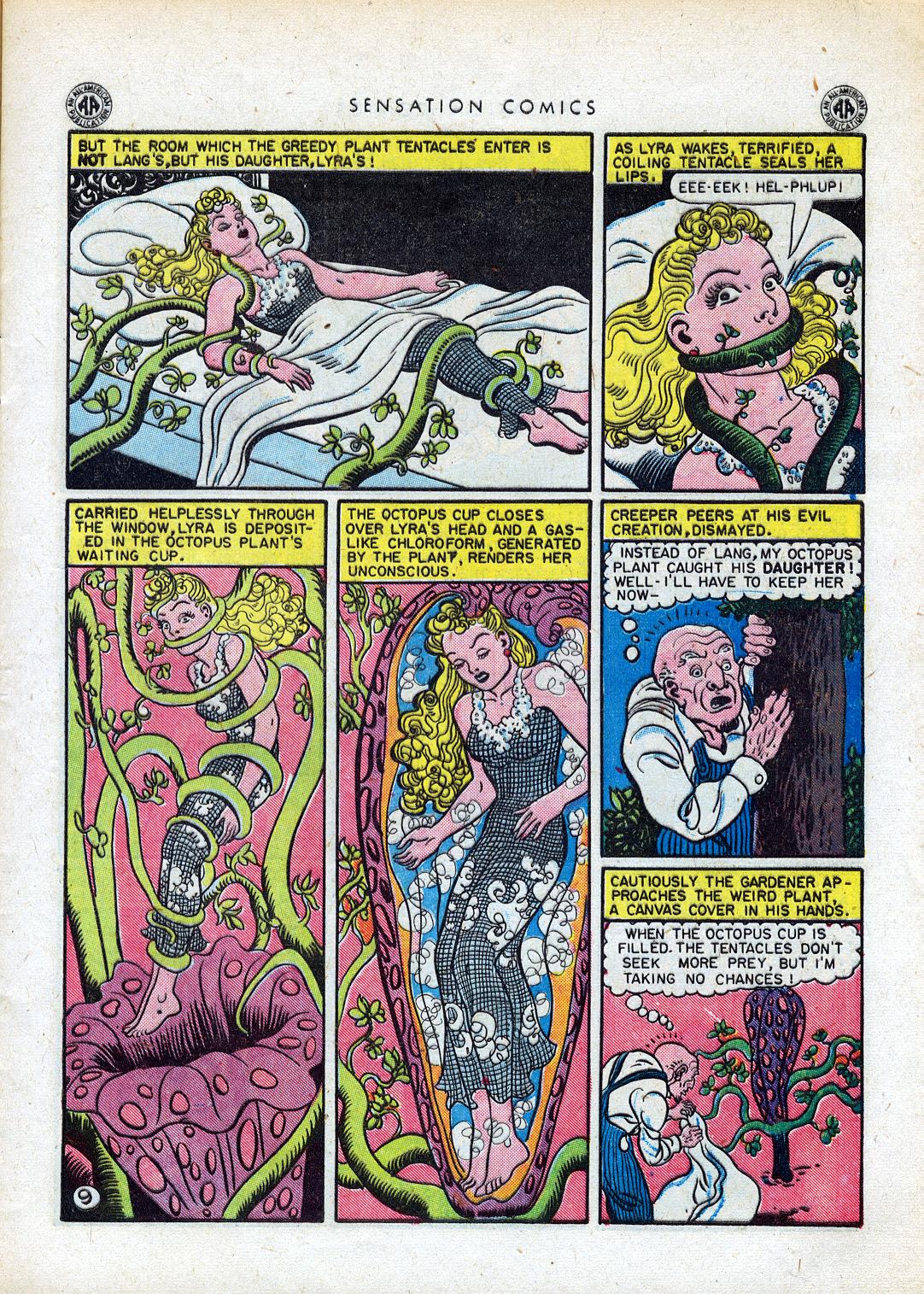
Figure 27

 
Figure 28, page 171, Wonder Woman #11 (the issue number is mislabeled in the book alas)
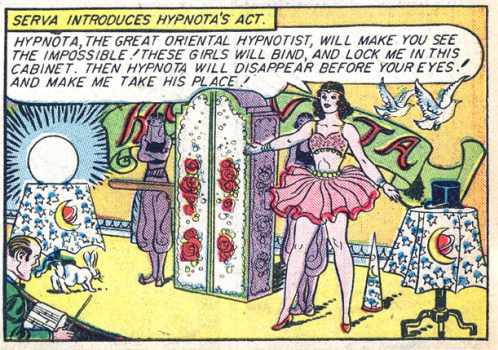
Figure 28

 
Figure 29, page 177, Wonder Woman #23 (issue number also mislabeled in the book. Sigh.)
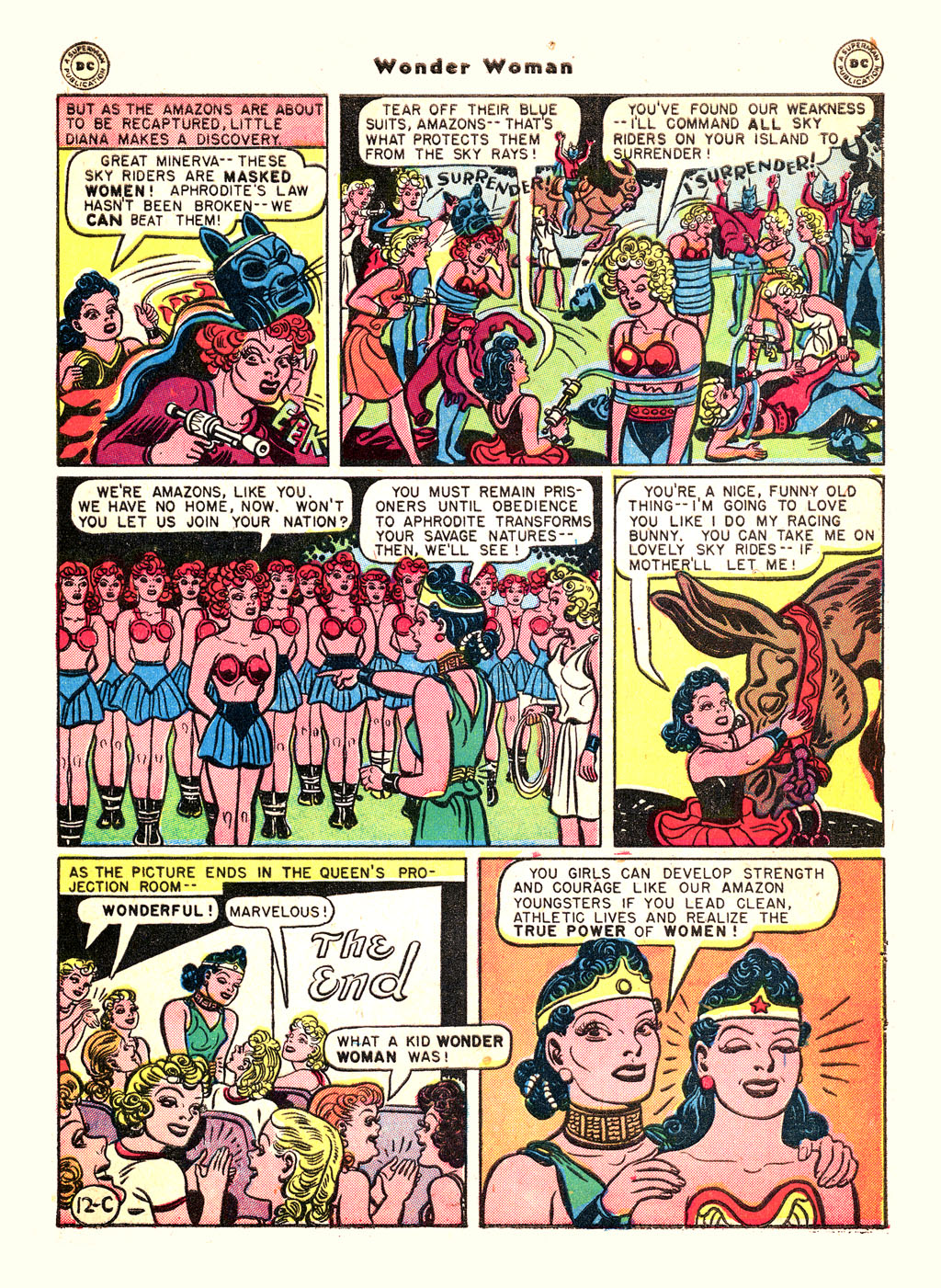
Figure 29

 
page 178, Wonder Woman #11

Screen Shot 2014-12-31 at 10.49.25 PM
 
page 179, Wonder Woman #11

Screen Shot 2014-12-31 at 10.50.25 PM

 
Figure 30, page 183, Wonder Woman #1

Figure 30

 
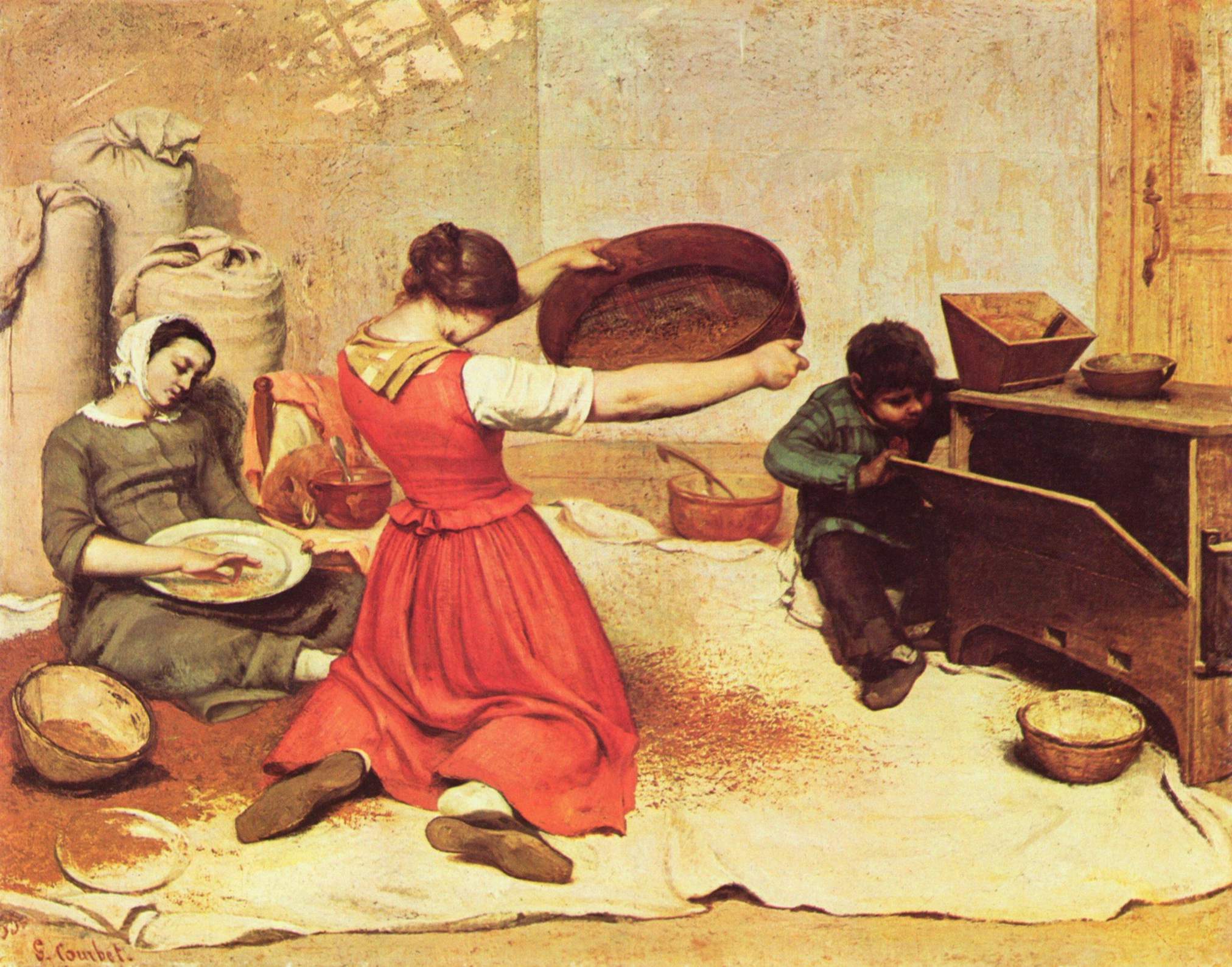
page 184, Courbet, The Grain Sifters

Figure 45

 
This last one is NSFW


Figure 31, page 307, Nicole Eisenman, Alice in Wonderland, 1996, ink on paper, 30 x 22.5
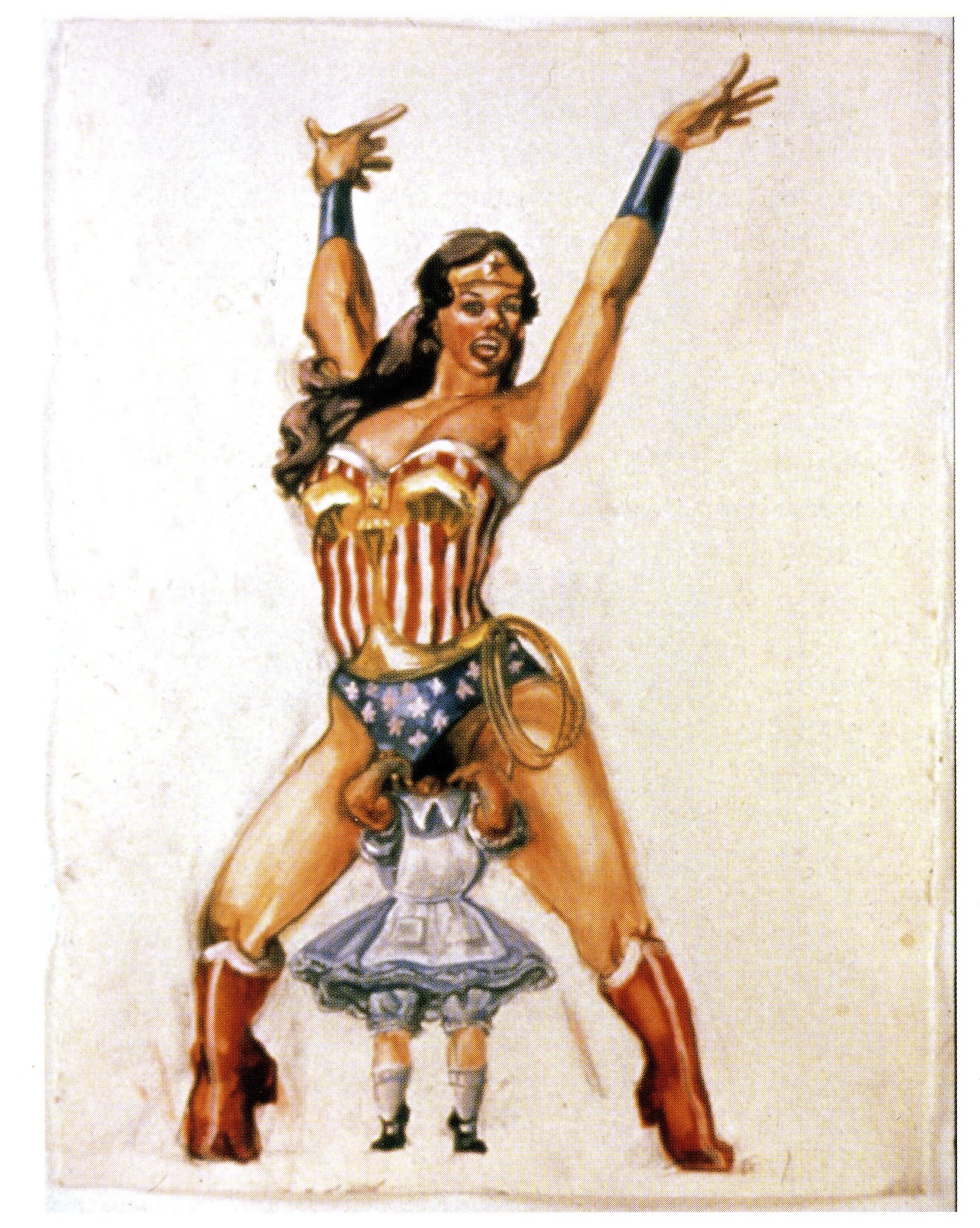
Figure 31

Outside Charlie Hebdo

I’m really appreciative to all the Francophones on various sites who have taken the time to put Charlie Hebdo’s work in a rich cultural context, opening up the magazine’s visual aesthetic and clarifying their editorial and political vantage point with more nuance than most of our mainstream Anglophone sources. These people’s willingness to do the tedious work of translating image after image, kindly and with probably strained patience, has elevated a very stark conversation into a vastly more nuanced one.

Here we have a convergence of so many issues that compel our culture to debate: free speech, extremism, faith and fascism, violence, humor, bullying, mockery, racism, sexism, and art. And yet so many opinions seem to fall broadly into one of just two camps – the ones that just outright call CH racist, and the ones that cloak it in the venerable mantle of satire.

Anyone who has ever had the misfortune of a long discussion with me on the subject of satire knows that I really just, generally, don’t find any aesthetic pleasure and only very limited intellectual pleasure in satirical work. Even when it’s very well done, it is a mode of discourse that relies on a spectrum ranging from discomfort to derision, and my response is almost always to turn away on purely emotional grounds. I’ve been very open about this opinion; it’s not new this week. It’s made me feel very awkward about adopting the “Je Suis Charlie” hashtag, because I wouldn’t have said something like that before last Wednesday’s events. The hashtag makes the magazine a metonym for all the people killed – even the Muslim policeman. I respond strongly and decisively to those who were killed and wounded as people, with voices and rights and subjectivity. But I respond to the magazine and the cartoons with ambivalence – because even though I tend to agree with the politics, the aesthetics are beyond me.

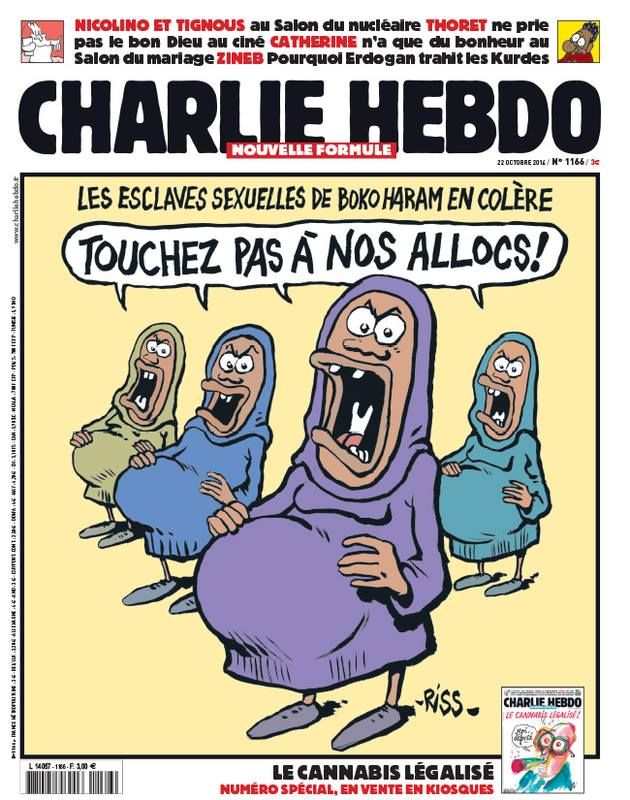
Probably for that reason, my reactions are not substantially mitigated by actually understanding the satire, although it helps. The logic of Charlie Hebdo’s satire is certainly much clearer to me now that so many people have spoken patiently and eloquently to clarify it. In particular, the cover depicting the sex slaves of Boko Haram as welfare queens appears much smarter and more complex when interpreted as “why do you care so much about these threatened and disadvantaged girls, but not about the threatened and disadvantaged girls right on your doorstep?” I am convinced that much of the work is indeed more complicated — and certainly contextually rich – than appears at first glance to readers who do not inhabit the immediate cultural context. These are political cartoons, and politics is always contextual.
 

CHARLIE-HEBDO.0


But I don’t think there’s any amount of context that will make me find that cartoon less viscerally off-putting. It’s just so ugly to represent those girls that way. The explanation makes sense, but it doesn’t change my aesthetic reaction. It doesn’t feel ok to use their horrifying experiences, even for some noble cause. The complicated reading makes my reactions more complicated too, but it doesn’t make the negative reaction go away.

And even if the explanation did actually make me like that one, not all the cartoons yield to complicated readings. Some of the work really does seem to be simply calling a stupid fig a stupid fig, nothing more than making a wrongheaded idea look sickly and unappealing by shining a puce limelight on it. Basically an intensified form of caricature, It’s a tactic embraced by a lot of contemporary satire. It’s popular – a lot of people really do like it. But I’m not one of them. I’m not sure that type of satire, whether it occurs relatively gently on the Daily Show or with poison incisors at Charlie Hebdo, is anything more than vulgar mockery – even if it’s not racist, sexist, imperialist or otherwise. I’m not convinced it’s a meaningful way to deal with stupidity and wrongheadedness – at least, it doesn’t really seem to be trying to change the wrongheadedness so much as it seems like gallows humor for people who see no possibility of change. It doesn’t recast the stupid thing in a way that raises questions and doubts among the community that believes it or even tolerates it; it doesn’t get inside the heads of the people who think the wrongheaded thing and challenge their motivation or logic; it just puts people on the defensive. The target doesn’t feel outsmarted; they just feel disrespected.

In what way does that serve a positive end or increase our overall intelligence? Doesn’t satire need to be effective at challenging and destabilizing stupid beliefs if it is intended to have political power? If it only reaches people who don’t hold the belief, isn’t it just mockery? Mockery just ends up creating a group identity among the people who collectively believe the stupid thing is stupid. I think that may be why people react so negatively to this kind of imagery – even if it doesn’t actually qualify as racist (and I will refrain from an opinion on that in this particular context that is not my context), it does alienate and separate, working against solidarity rather than increasing it.

So faced with the difficulty of feeling intense compassion and so much horror at Wednesday’s events, yet not quite feeling the identification with Charlie Hebdo that the “Je Suis Charlie” hashtag implies, I am left with an intellectual’s inward-looking response, trying to explain to myself why it just doesn’t feel quite honest to use the tag. I know I am not Charlie Hebdo’s target audience. I struggle to appreciate satire even when it’s really obviously well done. I am stopped by the tone and the feel of the work. I cannot spend enough time with it to understand. But that means the nuances of my emotional and aesthetic responses to this kind of work are largely inaccessible to me – I can intellectually see why much of this work is satire, but I can’t experience it as anything other than raw and ugly and mean and sad.

Again, I am indebted to conversations that catch me up in ways I can’t do myself. In response to the original version of this comment on Facebook, a friend made a comment that struck me as important – “who are outsiders to presume to ‘cast doubt’ on someone else’s beliefs?” Outsiders don’t speak from a place of profound understanding. An outsider’s satire doesn’t know; it just knows better. And when I tried to think of satire that I like better than most, I noticed that Stephen Colbert and Jonathan Swift both rely very heavily on the first person, which is a way of “inhabiting” the person and ideas being satirized. I think the first person is a little sop to people like me, who are put off by how much emotional and critical separation is necessary to make satire work.

This is, perhaps, what makes Charlie Hebdo’s Boko Haram “welfare queen” cartoon so particularly hard for me. What am I supposed to do with the empathy and sadness I feel for the kidnapped girls? Just transfer it over to the welfare moms – as if empathy is generic and disconnected from each group of women’s real stories? The pregnant bodies in the cartoon are named as the “sex slaves of Boko Haram,” the cartoon asserts that they are speaking. But it’s not their voice and their story and their point of view – it’s the voice of the “welfare queens.” The reality of those girls being forced into sexual slavery is alluded to through the pregnancy, but it’s sidestepped and displaced into the significantly different resonance that pregnancy carries in discussions of welfare and indigence. Any identification with anybody here is uncomfortable and unsatisfying – to “get the joke”, to see how smart it is, everybody must be kept at emotional arms’ length.

Clearly I’m just not supposed to react to it this way. Is it even possible to simultaneously satirize and empathize? I don’t know that it is – it is certainly easier to avoid satire altogether than to find the hypothetical example that succeeds at this. And first-person does get very complicated very fast when the subject being satirized is “other” from the satirist in some palpable way – like race or ethnicity or religion. You bang quickly up against issues of authenticity.

And yet – I’m not typically much for authenticity so I’m not entirely comfortable with that, either. Surely it cannot be impossible to satirize someone different from you. That’s why I initially went with the “getting inside someone’s head” – surely the greatest satirists understand their subjects in some profoundly incisive way, not just knowing that they are wrong, but comprehending why they believe they are right.

Perhaps in all of this, I am just missing human nature. It is not human nature to inhabit the minds of people whose beliefs are anathema to us. And surely satire cannot be truly politically effective if it discounts human nature. So all this has brought me back to again concluding that I just don’t like satire, or appreciate it, or enjoy it.

I suppose it has to be said, in all of this, that the use of violence against speech is never anything other than brutal totalitarianism, regardless of the speech and regardless of the violence. But I think about mockery and judgment and how destructive and alienating they are. And I want to be able to understand what distinguishes, on one end of a spectrum, the great artistic and political tradition of satire from, on the other end, plain old bullies mocking people and ideas they don’t like because it makes them feel superior. Understanding is not as easy, I think, as I would like. Satire traffics in mockery and judgment, and the world already has too much of those things and too little connection and justice. I cannot be Charlie, because I am an outsider, and I do not understand. But perhaps I can be Charlie, since by their own logic, being an outsider is good enough.
________
For all HU posts on Satire and Charlie Hebdo click here.

“I am fond of hidden agendas:” Carla Speed McNeil on Wonder Woman

This is the week my book, Wonder Woman: Bondage and Feminism is released upon a waiting and/or unsuspecting world. I’ve got a number of posts to celebrate, all of which will be posted under the “Bound to Be Released” tag.

This is the first; an interview about Marston, Peter, gender, and feminism with Carla Speed McNeil, creator of Finder.
______

Noah: Are you a Wonder Woman fan of longstanding? What did (or didn’t) attract you to the character?

Carla: I’m not. I’ve only recently become attracted to super-heroes, I never really understood them as a reader. I thought they were science fiction, and since science fiction progresses from unfolding concepts (at least, the kind I enjoy does), they didn’t seem to be very GOOD science fiction. I’m getting a better grasp on them now, and I find I like the ones that have a blasting-powder mix of realism and fantasy to them, that are weird and dreamlike in ways. The closer a look I take at Wonder Woman, the more she surprises me. She turns up everywhere. I never knew until this past summer that my older sister is a huge WW fan. She’s got the look, too, maybe I’ll use her as a model if I ever draw her.

I know you’re said you’re a fan of the Marston/Peter comics. What do you like about them? Do you have a favorite Wonder Woman comic from their run, or a favorite aspect of those comics?

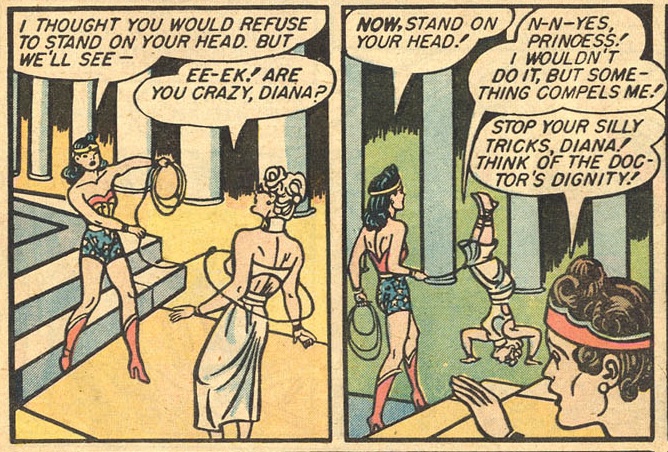
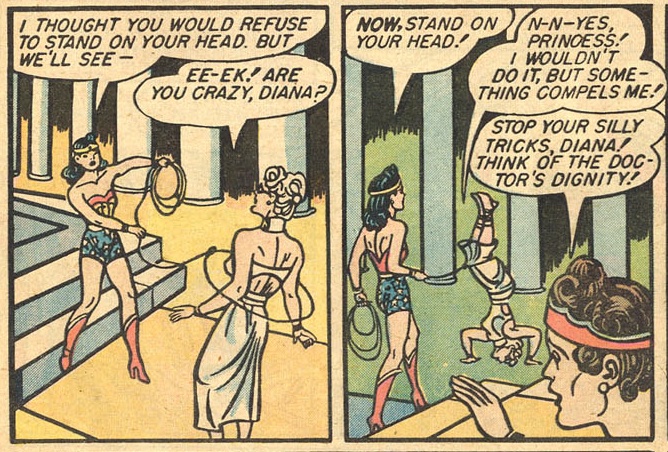
I like their sheer absurdity. I like their playfulness. I like the fact that Diana is superlative in many ways but is also very, very human. She may be some breed of demigoddess, but she’s also full of passions and humor. The fact that the first thing I saw her do with her lasso was to compel a dignified older Amazon to stand on her head just delights me.
 

Figure-16

 
She’s not above-it-all. It’s hard to write White Knights, because our definition of what constitutes a Galahad is so narrow. They’re not allowed to just do stupid things. Labeling nearly all human characteristics “flaws” and shaving them off of your paragons is like trying to make a cake having removed every ingredient.

Also, I am fond of hidden agendas. Not pamphleteering, but deeply-held beliefs and a desire to cast them into fiction. Dickens and Poe would never have written a line without them. Spider-man wouldn’t have been what he was, then or now, without Ditko, and Wonder Woman wouldn’t have existed without Marston’s agenda. He wasn’t unlike the Futurists.

There have, of course, been many other interpretations of Wonder Woman over her years. I plan on digging into them as well. But it’s wonderful to me that she has this time-of-legends quality to her early existence.

Your comic, Finder, plays with gender and drag in ways that are at least somewhat similar to what Marston and Peter are doing. How is your work similar to or different from theirs?

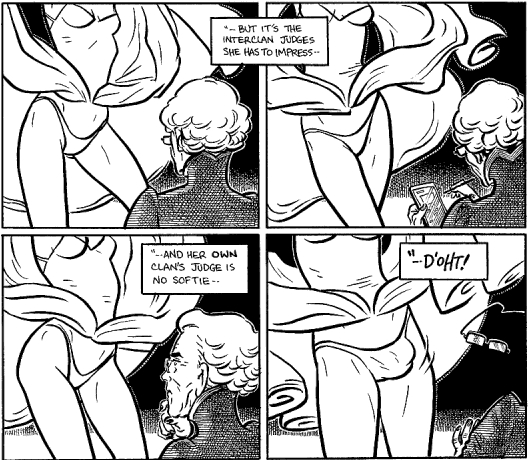
Wonder Woman is a “female man,” a woman from a world of women, living in “man’s world” where she exists as a cultural ambassador as well as an active, energetic person who doesn’t just stand on a box proselytizing. Although the campus evangelists would be pretty damned entertaining with her in the mix. It’s exactly the kind of thing I like to play with. I didn’t realize, when I designed Jaeger, my usual main character, how pretty I’d made him. Not until I realized that I can’t stand using any more than the least suggestion of modeling around his bottom lip, anyway– I step on my colorist all the time. “Don’t give him LIPS! I can’t take him seriously if he’s pouty!” Similarly, I created a “world of women” in the form of an extended family, a “clan,” in which all the members look vaguely like Marlene Dietrich. There are males in this family, but they all look like women too. There is a “world-of-men” clan in which there is a fairly strict division of labor; men are soldiers and cops, women are doctors and nurses. There is still another clan in which all members are attracted to their same sex, and are accustomed to marry only in same-sex pairs, making contractual arrangements for the conception, custody, and raising of children. The permutations are endless.
 

9781595826510two

from Carla Speed McNeil Finder: Voice

 
Marston’s idealized Themyscira was populated only by women. Given how much fun she has in man’s world, I can’t think that he thought separatism was the answer. I don’t know if other Amazons left the island to do the same, and if so, how many. I definitely need to get caught up.

Not Just Charlie Hebdo

Let’s talk about Ali Ferzat.

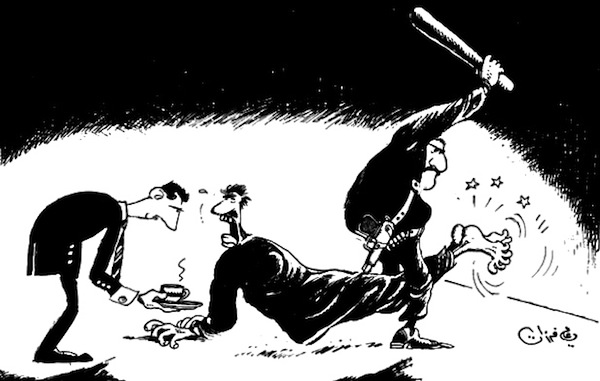
Ali Ferzat is a Syrian political cartoonist. A scathing one. He gets right to the point in his drawings and isn’t known to shy away from what he sees as dirty politics. This was no exception when Bashar al-Assad came into power in Syria. In August 2011, Ferzat was seized by a militia group loyal to Assad and beaten—his assailants made extra sure to break the bones in his hands. While Ferzat survived the attack, he is now living in exile in Kuwait.

ali-ferzat-cartoon

Political comics reign supreme in the Middle East, a place where politics and religion are The (capital T) biggest games in town. Humor is a universal tool, after all, and humor always makes such heavy topics easier to digest. The same can be said of political comics in the United States, but, I’m sorry, in the Middle East? It’s an old-fashioned throwdown. Their humor is scathing and raw and it sometimes causes revolutions. The people in charge know this. The press—including the comics printed in the papers—is tightly regulated, and cartooning is a heavy form of activism. I want to talk about the Arabs in the Middle East whose tools of dissent are also pens and brushes, who are in the line of fire—not just from terrorist groups, but sometimes their own governments. And, guess what, they’ve also had some opinions about the Charlie Hebdo attack.

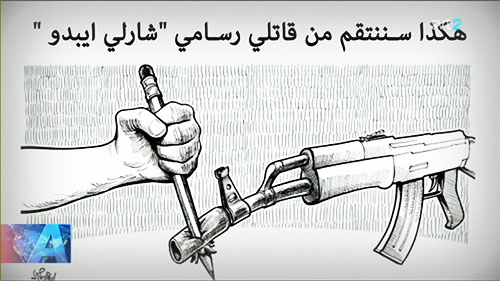
Charlie-Hebdo-Salute-6

Translation: This is how we get revenge on the cartoonists’ killer. By Lebanon’s An Nahar.


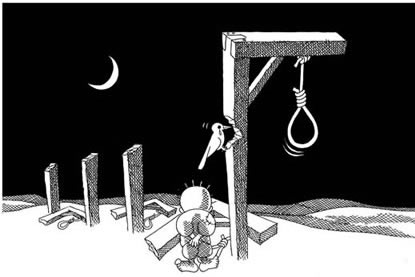
The first comics I ever had access to were the comics of Naji al-Ali. Though political comics existed in the Middle East before he started creating work, this guy worked his mojo. I think it’s safe to say that he’s still the most famous Arab cartoonist to date. His iconic character, Handala, is still referenced in comics drawn today. He was a Palestinian refugee, and his work very much reflects this. He felt for the Palestinian everyman and was scathing toward the ineffectiveness of Arab countries, the ambivalence of the West, and the cruelty of Israel. No one was safe in his comics, and he made so many enemies that he was exiled from most Middle-Eastern country and settled in London, where he was murdered in 1987. They never caught the perp.

I remember seeing his comics for the first time and thinking how terrifying they were.

2

I won’t even address the blatant racists/religionophobes who claim Muslims/Arabs are the source of all evil, because I don’t talk with those people and they aren’t worth the kilobytes. I’m talking about microaggressions. I’m talking about absolute silence and the feeling of speaking to walls. Unless Whites end up being the ones in the crosshairs. (An officer was also killed at Charlie Hebdo, but—let’s be real—most of those outside of the Muslim/Arab community are not paying much attention to Ahmed.) (And then there were the four Jewish hostages killed—targets only because of their freedom. I unfortunately can’t say that I heard much noise made about them, either. Is there something about exercising one’s rights passively, instead of aggressively, that’s less newsworthy? Is it the same turning wheel that blocks out Ahmed? My gut tells me it’s both of these things.)

Suddenly the cartoonist’s ideal is under attack and our free speech is thwarted—except it always has been, in plain sight. Just read the top BBC News stories every morning. There’s no shortage of misery. We never talk about those lives since they aren’t “here,” even though to the American psyche (and I can only speak of the American psyche), France is a part of “here,” while half of the world is not. The problem is that we’re all connected, whether we like it or not. We inhabit the same universe. I just read about Boko Haram terrorizing Nigeria. These are people who are slaughtered—who are fleeing in droves—because they are moderates being overtaken by radicals. How do we care so much about some types of terror, but not others?

I’m going to talk about myself, because I want to explain that sick feeling I’ve had in the pit of my stomach for the past few days.

I call The Hookah Girl my “heartbreak book.” The comic is about Palestinians being human. No publisher would touch it, though one had the grace to tell me they feared being firebombed (they didn’t specify by whom—hipsters wanting their money back?). A Jewish man who told me I should be ashamed of myself for the comic brought me to tears on the Javits Center floor. I co-created a comic strip that was actually picked up by a certain syndication company. The comic was also about Arabs being human. The marketing team didn’t sell the strip to a single paper. Did they try? No idea. I just know that I learned a lot about the media from that experience. I wrote a scholarly paper about women in Middle-Eastern comics that highlighted the portrayal of women in these comics as well as the flesh-and-blood female cartoonists who are actually creating them. Palestinian society and politics are something I keep a close eye on because, well, I’m half Palestinian, I’m sort of interested in that kind of thing. I talk about it. I’ve had people take me aside and tell me I’m doing something positive but they themselves could never “publicly” say such things. I’ve lost friends because of it, too. I had to jump through some extra-special hoops to get my passport and one time the FBI came into our apartment while we weren’t there to search it (I hope they enjoyed the pile of dirty dishes in our sink).

This has been the loneliest, most Sisyphean road. And I’m tired. I’m really tired.

I understand the need to do something constructive with the outrage. I would never take that from anyone. But take this opportunity to remember that the world is in a fight against radicalism and all its members need solidarity. Think of the activists who are still alive—you don’t have to be dead to be a hero.

Je ne suis pas Charlie; je suis tout le monde.
________
For all HU posts on Satire and Charlie Hebdo click here.

My NYT Nightmare

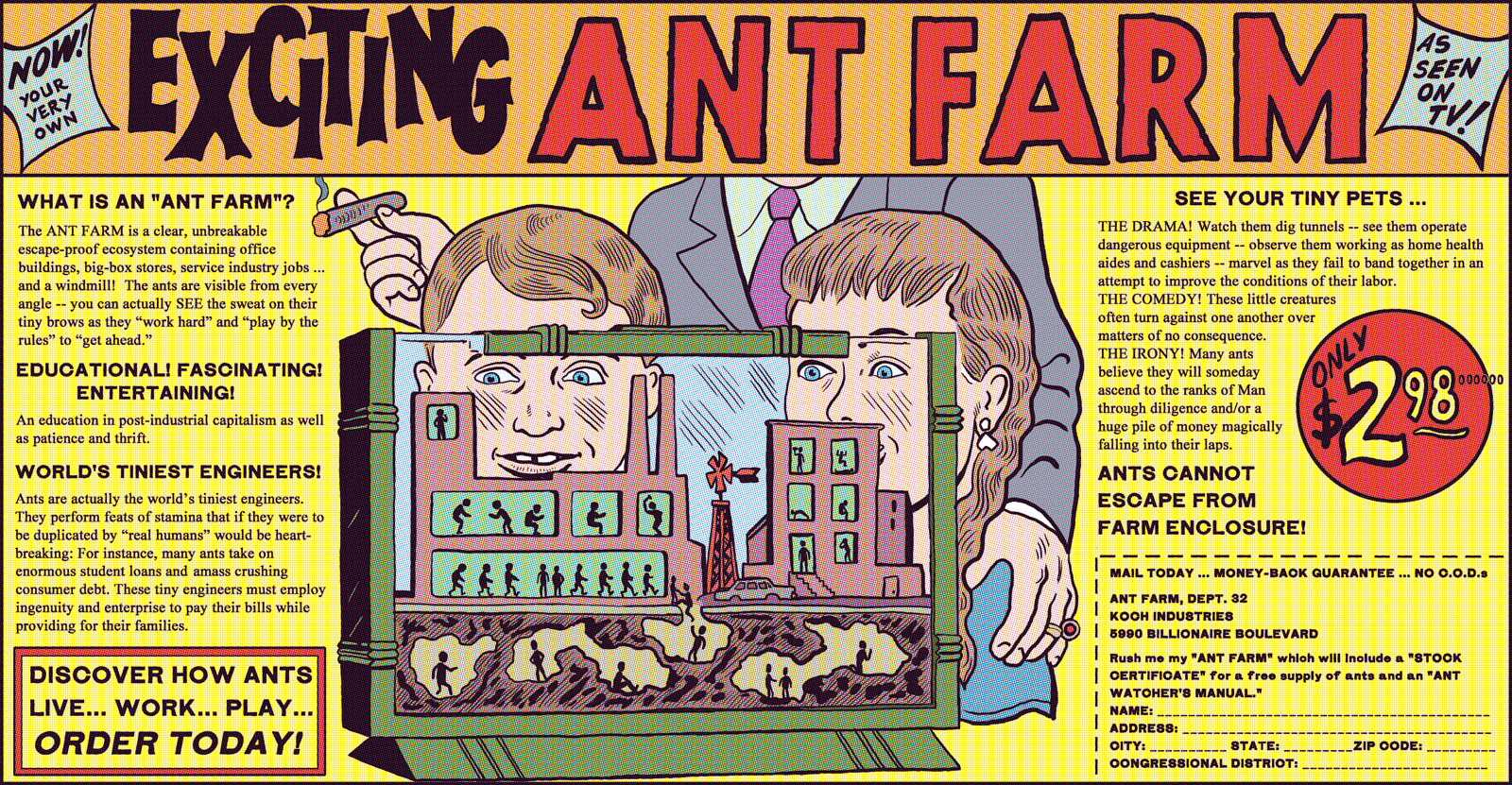
EXCITINGANTFARMv03
 
Just under a year ago, I started a new gig that I was cautiously excited about: creating editorial comics for the Week in Review section of The New York Times. David Rees was going to write them and I was going to draw them. This seemed like an ideal partnership; David (creator of the satiric comic Get Your War On) has a great skill for walking the fine line between irony and sincerity, and is extremely funny as well. We both wanted to try to do new things with the political strip format, and bring metahumor to the Times.

Already, though, things were not as we’d been promised. The Times had approached David and then myself in April of 2013. After approving us, they told us their master plan: Brian McFadden, the resident comic artist, would be replaced by myself and David alternating with Lisa Hanawalt. This would be a part of the exciting revitalization of the Week in Review section. To that end, they told us to wait while their redesign proceeded.

By September, the redesign seemed to be finished; but the editor in charge decided that something as exciting as this new comic rotation couldn’t be unveiled in a dull month like September. Better to wait until… January! when it could be announced to the world with the appropriate fanfare and excitement.

So we waited seven months in all. And on January 20th, David & I created our first strip for the Times… which was printed with no fanfare or announcement or anything; we were simply dumped into an alternating slot with McFadden, because by then Lisa was simply too busy (drawing Bojack Horseman). The brilliant strategy of waiting all that time had backfired, because in fact it was pointlessly stupid.

Then there was the money. The New York Times– get this- refused to come up from the fee for one artist, which we were to split. We finally got them to come up a little, but only a little. These strips are done in a very short time period- basically between Wednesday night and Friday morning, and I stayed up all night for a couple fo them. We were going to be making very little money, but still, it was an opportunity to do good work, maybe make some statements on serious issues and have them be seen by people. And the Times still stands for something in peoples’s minds, some kind of editorial quality.

Of course, it didn’t work out at all; their nitpicking, antiquated style of editing got more oppressive until they were killing entire strips. And it’s quite clear they were refusing to print them because they didn’t understand them. It was like being edited by hobbits.

The first few went through fairly smoothly; David pays close attention to the news, and the art director mentioned approvingly that she was glad he was tackling issues that the paper wasn’t covering otherwise. The one thing that bothered me was: we would present the script, the editors would make corrections, I’d create a finish. Then, after I’d handed it in, I’d get back a complete different set of corrections, mostly concerned with their antiquated style guide. The Times puts periods in “IRS,” for instance, even though the IRS themselves do not. They also changed the wording of Donald Rumsfeld’s letter to the IRS when we quoted it directly; that seemed wrong to me. And that they couldn’t do all the corrections at once, before I’d done the work, felt to me like laziness and a lack of coordination which ended with me doing unnecessary work at the last minute.

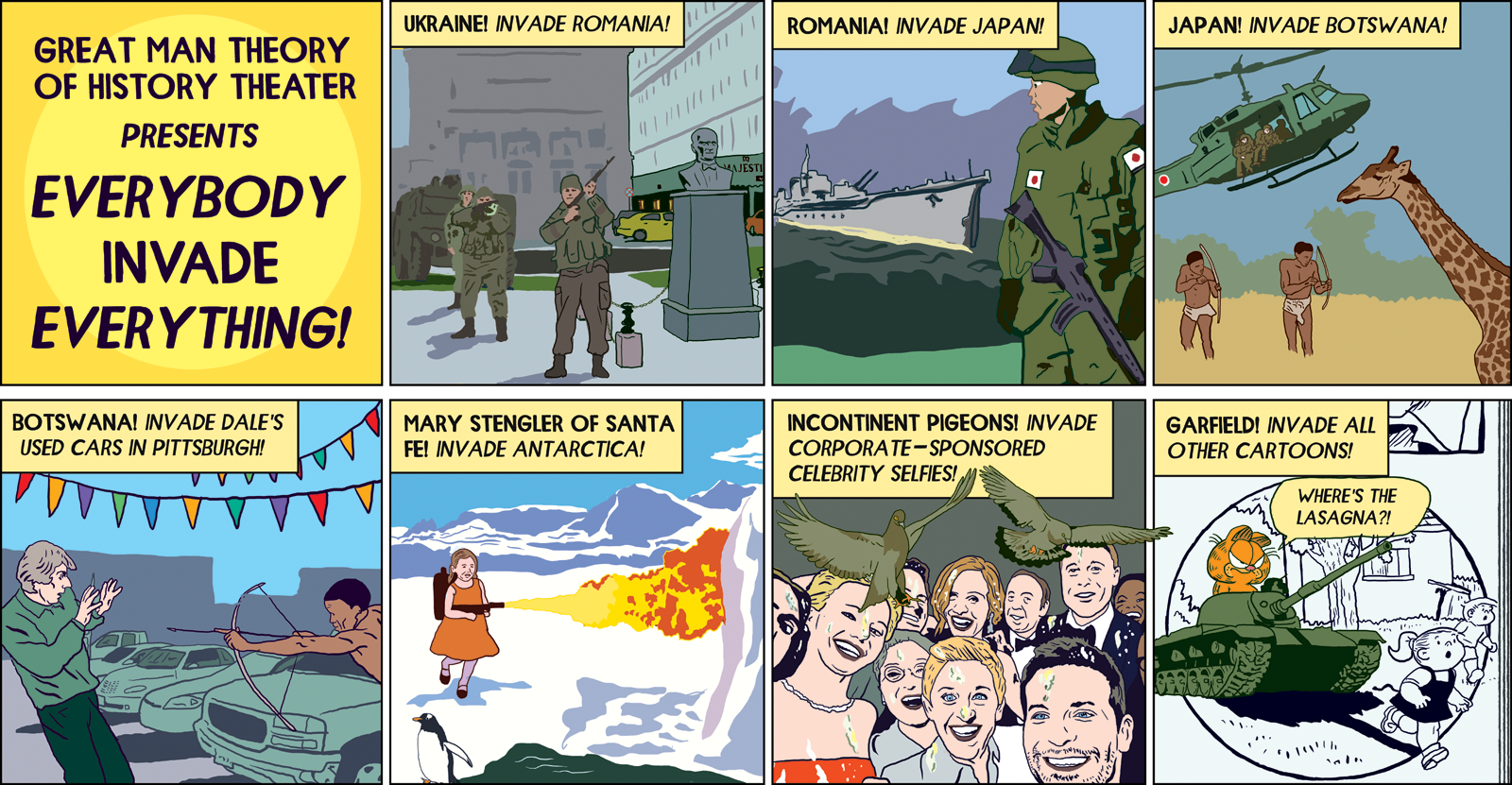
They did start reading the script more closely, though, after our fifth strip. The script mentioned the cartoon character Garfield and tribesmen in native costume in Botswana, so I was less than sympathetic when they were surprised when the art was turned in. “We have to check with our lawyers if we can use Garfield,” the AD said, and “the tribesmen in Botswana are making people uncomfortable.” Soon came the word that the lawyer had said Garfield was okay (luckily they had asked one who understood the first amendment). I hope they would also drop the tribesmen issue, but no. They insisted I make it a different country, and have them fully clothed. I thought about it for maybe five seconds, and then I said something I’d learned to say after a lot of bad experiences with illustrations and comics that turned out mediocre because of meddling editors who thought they were smarter at what I do then I am. I said “I’m not comfortable with that.” And they… backed down. Okay, we’ll print it the way it is.
 
EverybodyAttack1
 
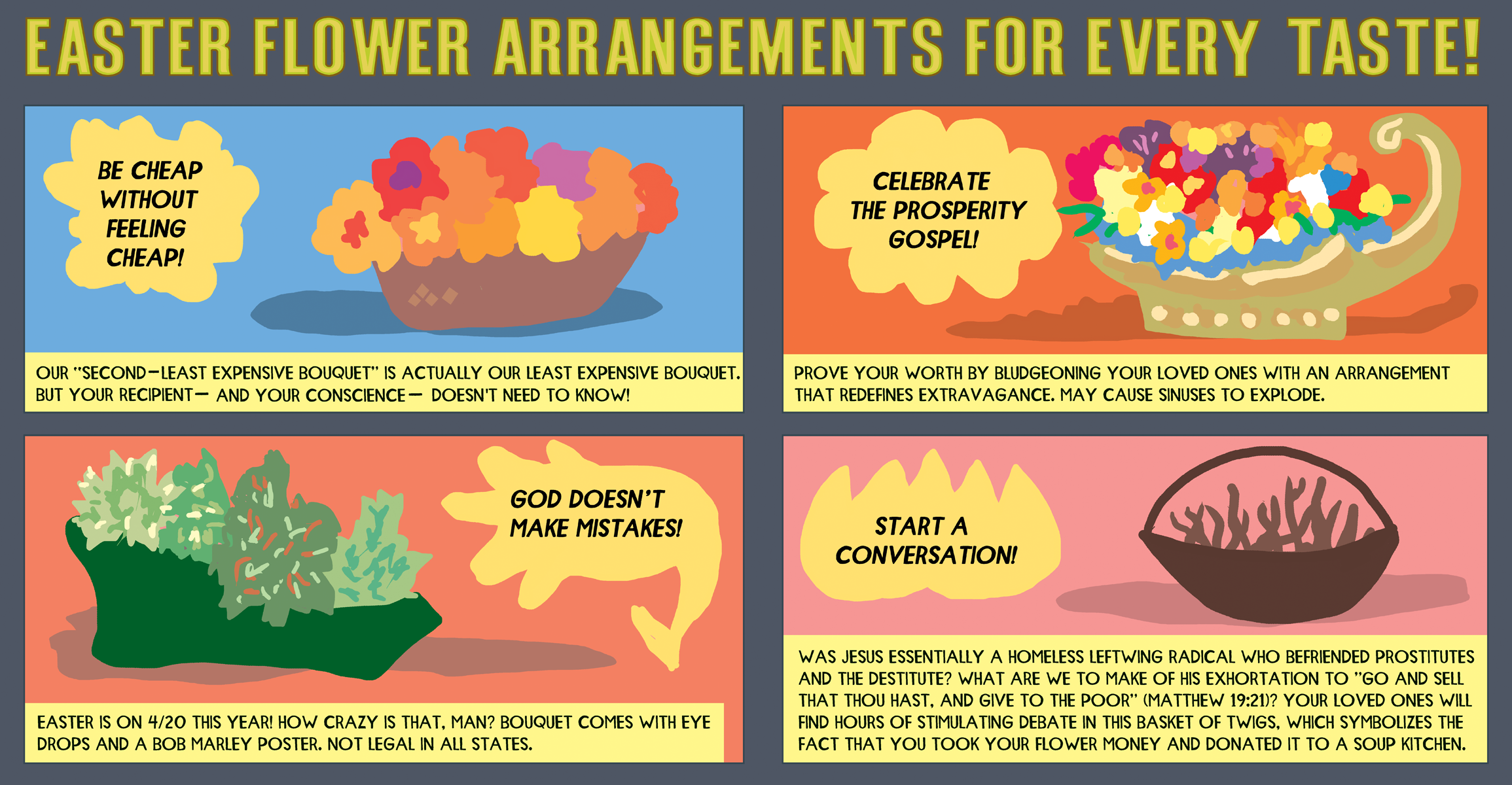
I thought we’d won a small, but important victory. Of course, I was kidding myself. Two strips went by and then it was Easter; David wrote a script parodying floral bouquet ads. It showed several extravagant bouquets before showing a basket with twigs in it, suggesting that maybe the real spirit of Jesus would be served by saving the money spent on bouquets and giving it to a homeless shelter. It was David at his best: sharp, moral, funny & brilliant. (I’ve done a rough of it to show you here).

They hated it. “The editor is asking why are we making fun of religion” came the reply. I couldn’t believe this, and still can’t; it’s the response of someone who can’t read. David was doing the opposite of making fun of religion; he was in fact underlining one of its central tenets, the concept of charity. He felt really strongly about it, and even managed to talk with one fo the editors to make his case. But no amount of arguing would dissuade them. We had to come up with another strip in a hurry.
 
Easter

A sketched-out version of the unpublished strip.

 
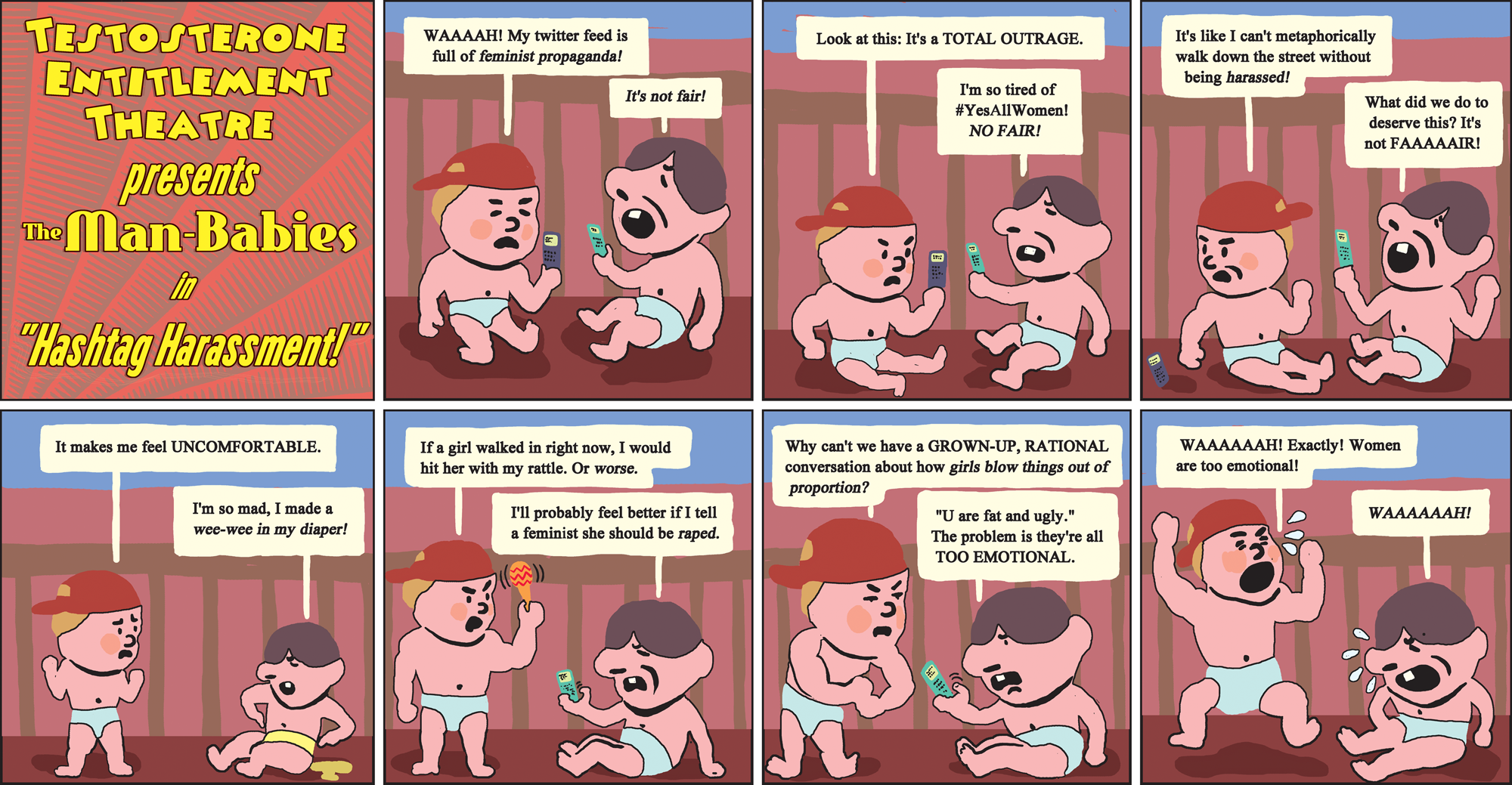
The next strip went through with no difficulty, and then David wrote a strip about male bullying online. That week, the hashtag #yesallwomen had taken over Twitter, following a misogynist’s killing spree in California. The reaction to this was a torrent of abuse from men and boys towards women- and this was before Gamergate, which really took it to another level. As always, David’s strip on the subject was right on. His script had a pair of baby-men (wearing diapers) talking about trolling and threatening women online. I was excited, because I knew this was one that would attract attention, and make a point that deserved to be made. Incredibly, the Times wouldn’t touch it. “So I floated this by the editors, and they all feel that this news story is just too sensitive to be prodded at in a humorous way,” was the way the substitute AD put it.

This was when I had had enough. Too sensitive to be prodded at in a humorous way? Why had they hired us? What did they think we were supposed to be doing? David was busy at that point doing his TV series for National Geographic, so I told the AD that I was not happy with the Times‘s behavior, that we would not be giving them a substitute strip for that week, and then I created a rough version of the strip from David’s script and put it online, with a full explanation of how the Times wouldn’t print it. It got more attention than anything else we’d done for them.
 
testosterone01

A sketched-out version of the unpublished strip.


We did one more strip after that and then, big surprise, they fired us. But once the Times had made it clear that we were not allowed to offend anyone, or handle any but the safest material, it was all over for us anyway. For me, as a cartoonist, it was another depressing reminder of how bad things have gotten in the print world for people who do what I do. David had a TV show. Lisa had a TV show. I was working in print and I felt like a real loser for it.

I couldn’t help but think of all this again this week as the images from Paris appeared online. Cartoonists had given their lives for the freedom of speech their work represented. It still means something over there.
_______
________
For all HU posts on Posted in Blog, Featured, Satire and Charlie Hebdo Roundtable, Top Featured | Tagged , , , , , , ,

Utilitarian Review 1/10/15

News

First, my book is officially out next week. We will have a bunch of Marston/Peter content out next week and possibly into the week after, including reviews, interviews and more. So stay tuned!

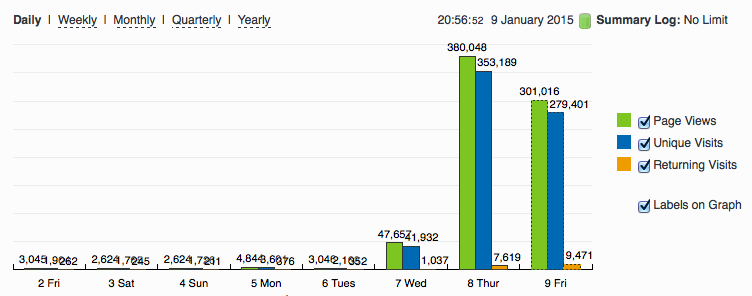
Also, as folks probably know, Jacob Canfield‘s post on the Charlie Hebdo shootings went viral. We’ve gotten exponentially more traffic than we got even when the Sean Michael Robinson and Joy DeLyria’s post went viral way back in March 2011. Since the post went up on Wednesday, we’ve gotten close to as much traffic as we received in the entirety of last year. The site has done better with it than I thought it would, but we’re still somewhat glitchy and erratic. I’m hoping that with the weekend things will calm down and we’ll start getting back to normal.

More after a brief appearance by our preposterous stats graph for this week.
 

Screen Shot 2015-01-09 at 8.57.02 PM

 
On HU

Besides Jaob’s monster, here are the other pieces that went up on HU this week.

Featured Archive Post: Betsy Phillips on Sleepy John Estes and the poetics of place.

A list of my best writing of the year from around the web.

On the Handmaid’s Tale and bad slavery comparisons.

Michael Arthur on furry and profiling your own damn fandom.

Alex Buchet gives credit to the comic-book creators who developed the characters in Marvel’s Age of Ultron film.

Chris Gavaler on why we should get away from the term “genre ghetto”.

Isaac Butler on Joe Sacco’s BUMF#1, and why we need satire.
 
Utilitarians Everywhere

At the Atlantic I wrote about Kanye West and Paul McCartney’s lovely new song, and how no one needs to know who Paul is.

At the Atlantic I interviewed DeRay Mckeeson, one of the organizers of the Ferguson protests, about the importance of social media to the movement.

At Ravishly I wrote about feminism as the patriarchal ogre father.

At Ravishly I wrote about the fact that the James Bond films are white supremacist, and why casting Idris Elba won’t necessarily change that.

At Splice Today I wrote about how you can’t trust book release dates.

At Splice Today I explained why Islamophobia can be racist.

At the Pacific Standard I wrote about evidence that images of effective torture can convince people that torture is okay.

At the Chicago Reader I got to write about great grunge primitives Bionic Cavemen.
 
Other Links

Anne N. Bornschein on the scholarly study of romance.

Tim Hanley on the Marston/Peter Wonder Woman newspaper strips.

Serene Khader on Charlie Hebdo and racism.

On life without police in Bed Stuy.

Jesse Walker points out that sources lie to reporters.

Tauriq Moose is skeptical of public marriage proposals.

Shhhhhh (for the Love of Comics)

Comics asks that you join it in observing a moment of silence.

Comics is staunchly anti-censorship. We shall discuss this in due time, after the moment of silence.

No, not yet. Hush, now. For freedom. For Comics!

Comics isn’t sure about the kids these days, to be honest.

Comics worries the next generation might not read the right things. Sometimes Comics can’t sleep at night, for all the worrying.

Comics wonders if you plan to wear a sweater. It’s supposed to get chilly, you know.

Also pack some extra socks. It’s good for Comics.

Comics has put together a big book of newspaper clippings for posterity. Comics someday hopes to print and collate corresponding threads from the most essential message boards.

What’s a Tumblr, Comics wonders. It sounds stupid.

Comics respects women. Obviously.

Why? Because Comics says so, that’s why.

Psssh. Comics is not racist. Because satire.

Comics says maybe YOU’RE the racist. Did you ever think of that?

Comics will try to speak more slowly so you can understand.

Actually…Comics.

Merica. Krazy Kat. Comics.

Comics says this is not the time or the place.

Comics says watch your tone.

Comics says that you just want attention.

Comics can’t hear you. LA-LA-LA

You are not the boss of Comics.

Comics has made a list of 500 things we can all do to improve Comics. 1. Always listen to Comics.

Comics. Comics!! COMICSSSSS

Comics had a black friend in middle school.

Homophobic? Comics has two words for you: Alison Bechdel.

Transphobic? Listen, Comics doesn’t even care about that stuff!

No, seriously. Comics doesn’t give a fuuuuuuck.

You know what Comics does care about? Art. Unlike some certain people.

You just don’t understand Art. Or history. Not like Comics does.

Comics only wants what’s best for you. Someday you’ll understand.

Anyway, this isn’t about you. It’s about me. I mean, Comics.
________
________
For all HU posts on Posted in Blog, Satire and Charlie Hebdo Roundtable, Top Featured | Tagged , ,