Human By the Book

This first ran at Splice Today.
____

Priests tell us we need religion. Therapists tell us we need therapy. Writers, with a parallel enthusiasm, insist that we need reading. “The one way of tolerating existence is to lose oneself in literature as in a perpetual orgy,” says Flaubert. “There is no friend as loyal as a book,” announces Hemingway. “Reading is the sole means by which we slip, involuntarily, often helplessly, into another’s skin, another’s voice, another’s soul,” insists Joyce Carol Oates, who has apparently never seen a movie or had a conversation.

The latest salvo in this tradition of self-advocacy is Karen Swallow Prior’s piece at the Atlantic, in which she claims that reading—or at least the right kind of reading—has important spiritual and moral implications. Reading sensitively and carefully and deeply, Prior says, “unleashes the power that good literature has to reach into our souls and, in so doing, draw and connect us to others.” She concludes, “The power of ‘spiritual reading’ is its ability to transcend the immediacy of the material, the moment, or even the moral choice at hand…  Even so, such reading doesn’t make us better so much as it makes us human.”

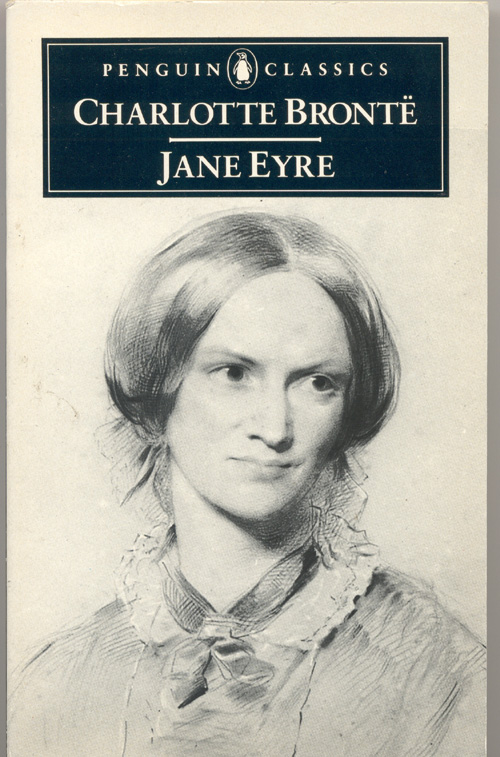
Which raises some unfortunate questions. Prior dutifully lists the books that have influenced her and made her more spiritual—Jane Eyre taught her to be herself, apparently, and Gulliver’s Travels taught her to see the limitations of her perspective. Okay, but if what I learned from Gulliver’s Travels is that a giant pissing on a fire is really funny. Does that make me less human? If I read Twilight instead of Jane Eyre, does that make me less spiritual?

I’m pretty certain this is not where Prior intends her argument to go. Explicitly she advocates a particular kind of reading, rather than a booklist, and she doesn’t say that the lessons she took from the books should be normative. But there’s a good deal of rhetorical force behind listing books from the canon and framing them as weighty moral goods—and that rhetorical force gets upped substantially when you start talking about who is human, and, by implication, who is not. When Prior makes distinctions between deep spiritual reading and “mere decoding,” and then references her own article about the common core, she appears to be saying that reading some things is better than reading others. And the way she frames that “better” is through language about what is more or less human. Which takes her, no doubt unintentionally, right up to a place where those who read 50 Shades of Grey aren’t as human as the rest of us.

Nor are those the least pleasant implications. There are people out there who read neither Madame Bovary nor 50 Shades. Some people, especially in the past, lived in non-literate cultures. Some people simply don’t learn to read or have developmental disabilities. Some are infants or small children.

Many of these groups are often considered marginal to what we think of as “human,” and treated accordingly. The poor, the disabled, and the young tend to be outside circles of social and economic power; they’re easy to ignore. But is it really a great idea to codify that marginalization through an appeal to spiritual truth or ontological absolutes? It’s a delight to see my son read, but I don’t think he is “more human” now than he was when he was four. I don’t think he’ll be “more human” in 10 years when he starts to read more difficult literature than the not-especially-canonical Secret Series.

Prior’s problem is that the language she’s using has a force and a history and an intention of its own. Linking humanness and virtue to cultural attainment is a trope of very long standing. Here, for example, is Allen Tate, demonstrating that a lifetime of deep, spiritual reading in the classics really does not in any way prevent you from being a racist shithead.
 

“The enormous “difference” of the Negro doomed him from the beginning to an economic status purely: he has had much the same thinning influence upon the class above him as the anonymous city proletariat has had upon the culture of industrial capitalism… The white man got nothing from the Negro, no profound image of himself in terms of the soil… But the Negro, who has long been described as a responsibility, got everything from the white man.”

 
Tate’s disdain for the cultural attainments of black people slides easily into an erasure of them as human beings. Humanity is a function of culture; ergo, generations of enforced labor is as nothing to the gift of white upper-class culture, which is the only thing that counts as culture. Apportioning human worth on the basis of cultural attainment is one popular, well-traveled way in which people get to racism. Which is not to say that Prior agrees with Tate, which I’m sure she does not, even a little bit. But it is to suggest that it’s a good idea to think hard before blurring the distinction between what is cultural and what is human.

One book I read recently which I think taught me how to be more human is Nora Olsen’s lesbian YA novel Swans and Klons. The narrative is set in a far future in which a disease has left all men with chromosome damage that renders them mentally and physically incapacitated. The main female characters, Rubric and Salmon Jo, come from a society where people reproduce by cloning, and there are no men. When they leave their land, though, they find that their neighbors, the Barbarous Ones, have children, and care for their male babies. Rubric is horrified… but not Salmon Jo. Instead, for her, the disabled men are a revelation.
 

“You know how before we left home I said I didn’t know what human was? I know now. The Sons taught me what it means to be a human being. Even if they’re sick or not brainy, they’re just as human as us. I think they make you learn more about yourself, and that’s why the Barbarous Ones think they’re such an asset.”

 
You learn to be human and spiritual, not by reading, but by treating others as human—especially others who are not like you. Books can, perhaps, teach you about that. But to make books the measure of humanness is to restrict that measure to the brainy and the privileged. If books make us more human, then some of us are less human that others, which is the same as saying that all of us are less human.
 

charlotte_big

Utilitarian Review 8/9/14

On HU

Featured Archive Post: Kate Dacey on a crappy manga about Ghandi.

Chris Gavaler on Lucy and the regin of the superwoman.

I explain why I stopped watching Weeds after its godawful sex trafficking story.

Chris R. Morgan looks back at the Blair Witch project after 15 years.

Osvaldo Oyola on Dan Slott’s Superior Spider-Man and how continuity mucks with identity.

Vom Marlowe with an introduction to the wonderful world of Avengers slash fan fic.

Adrielle Mitchell kicks off a PPP roundtable on Groensteen and narrative by looking at panel shape.

On Spider-Man, identity, morality and Kant.
 
Utilitarians Everywhere

At Comic Book Resources I argued that William Marston would approve of Laverne Cox playing Wonder Woman.

At the Atlantic I argued that Shakespeare was a conservative.

At Splice Today I wrote about:

—how Nicki Minaj and Lana Del Rey are watching you.

—how I was the victim of an IRS phone scam.

— Kira Isabell’s Quarterback“, date rape, and country music history.

London Crockett interviews me about genre in music and literature.

At the Chicago Reader I wrote about Brown Sabbath and the glory of lounge metal.
 
Other Links

Christina Sharpe on racism, urban ethnography, and Alice Goffman’s much-praised, ethically challenged new book.

Roxanne Gay on racism and retail.

Jim Norton on being a john.

Julia Serano on media coverage of trans issues.

On class and getting into elite schools
 

Brown Out

Brown Sabbath


Spider-Kant

Superior-Spider-Man-31-1

 
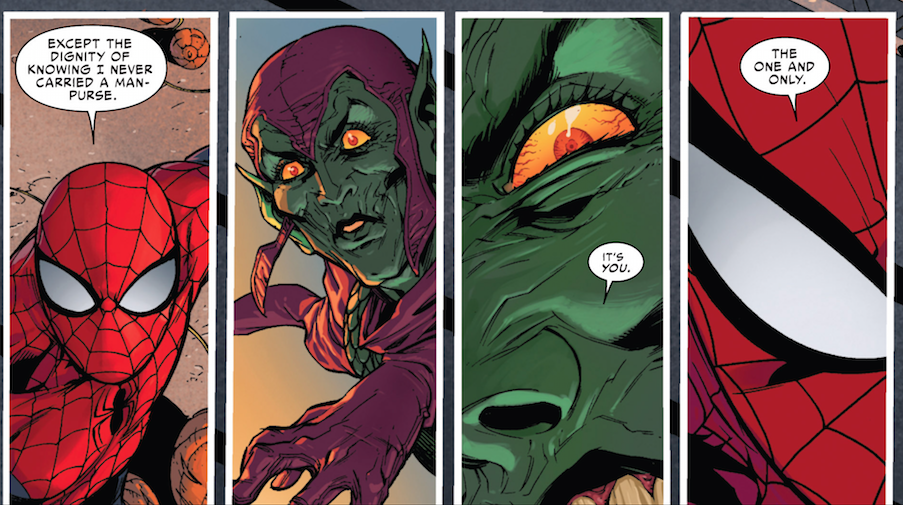
In the above scene by Dan Slott and Giuseppe Camuncoli, the Green Goblin at first thinks he’s fighting Doc Ock in Spidey’s brain (as Osvaldo Oyola explains in his review of the arc.) But Doc Ock doesn’t joke — so when Peter makes a snide remark about GGs’s tote bag, the Goblin realizes he’s confronting the real, the true, the one and only Peter Parker. Peter’s identity is his humor; his self is his jokes.

Which makes sense, to some degree; Peter’s wise-cracking has been one of the characters consistent tropes through the years, more reliable than even his (occasionally black) costume — a point of stability in what Osvaldo correctly points out is decades of ret-conned, indifferently written incoherence

And yet, looking at that sequence, I realized that Spidey’s humore has never exactly made sense to me. Peter Parker is not, as he’s generally written, witty or even particularly cheerful. His backstory is all about trauma; he’s a bullied, bitter, guilt-ridden, whiny nerd, worrying about his Aunt May and filled with insecurity and neurosis. And then all of a sudden, he puts on the costume and he’s nattering on about man purses like he’s got not a care in his webhead.
 

ditko-spidey

 
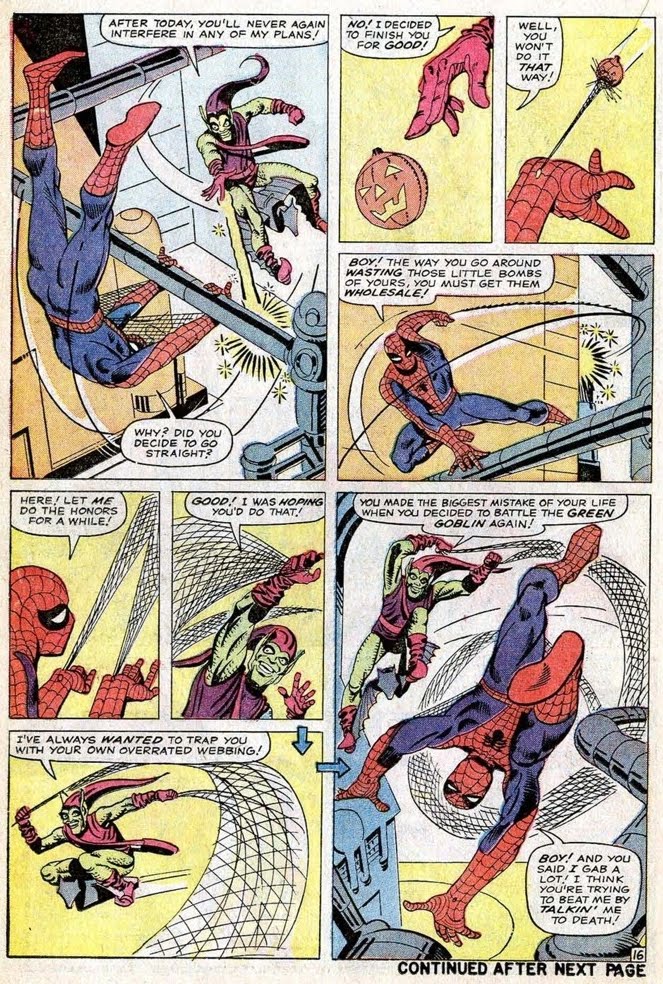
You could explain this psychologically if you wanted to I suppose, and I’m sure someone has — the happy-go-lucky Spidey front hides Parker’s deep pain; the double-identity gives him the opportunity to explore aspects of his personality that nerdy Peter has to repress. You could also, and somewhat more convincingly I think, explain it as a by-product of Marvel’s creative process; Steve Ditko laid out this bitter, depressing story, and then Stan Lee came in afterwords and filled in the text bubbles with obliviously cheerful blather.

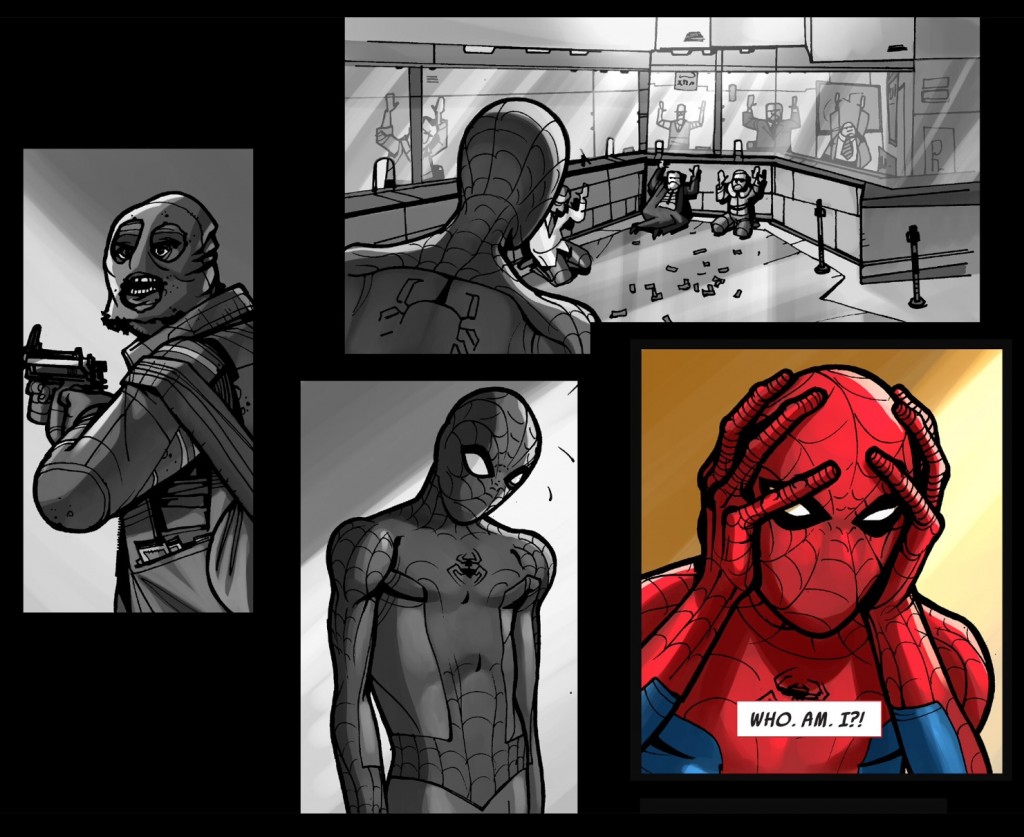
Either way, though, the point is that the multiple-personality disorder that Osvaldo diagnoses in the character is not, or not just, a function of decades of continuity burps and generations of hacks writing on deadline, only occasionally paying attention to what the hack before, or the hack after, happened to do. It’s also something in the character from the beginning. Spider-Man was never coherent; he always had a double identity.

Double identities are a standard superhero trope, obviously. Nor is it unheard of for the superself and the nonsuperself to have different personalities. The Hulk is the most famous example, but the truth is that Superman and Clark Kent, early on, seemed less like one guy in two outfits, and more like two different people — one helpless, nerdy masochistic nebbish; one sadistic wise-cracking swashbuckling asshole. Superheroes from early on, and even iconically, are not one person; they don’t have a single identity. They’re more than one; their selves are multiple.

As folks pointed out in the comments to Osvaldo’s post, this has some interesting moral implications. Kantian morality, in particular, is based in a particular notion of identity and the divided self. For Kant, the true self is the moral self, or the moral law that speaks within you. Immorality is the accretion of transient desire, or really transient personality, that ties you to the phenomenal world, and distracts your brain, or more your conscience, from noumenal contemplation. From this perspective,you could see the split personality superhero as a kind of Kantian parable. Peter Parker is the phenomenal self, riven by neurotic doubts and distractions; Spider-Man is the noumenal self, devoted to the single-minded pursuit of duty.

That doesn’t actually sound much like the Peter/Spidey we know, though. Spidey is hardly a serene slave to duty; on the contrary, as Osvaldo explains, Spidey is all over the place, sometimes a self-sacrificing martyr, sometimes a cheerful babbler, sometimes a brutish thug. He’s hardly a consistent example of WWKD.

Maybe that’s the point, though. Chris Gavaler has argued that the figure of the Clansman was an important pulp precursor and inspiration for the superhero trope of double identity. The KKK, of course, used the double identity as a way to wreak evil — being somebody other than who they were allowed them to sidestep duty and the moral law, and embrace the exhilarating phenomenal pleasures of violence and evil. Kant presents good as arising from an eternal, unwavering identity. It makes sense, then, from his perspective, that to abandon morality you would first abandon a stable self.

And that, again, is what superheroes do. Peter Parker puts on a mask to go hit people really hard without legal authority or due process of law. That’s not duty; it’s vigilantism. And that vigilatism is enabled by forswearing one identity; Peter Parker wears a mask so that he doesn’t have to be Peter Parker, with all the attendant moral and social obligations, just as the KKK put on the hoods to escape their dull selves bound by law and duty not to shoot and lynch their fellow citizens. As Doc Ock’s possession of Spider-Man suggests, superheroes escape their identities in order to become supervillains. The more continuity renders their selves incoherent, the more true to themselves they are — that self being, at its coreless core, bifurcated, morally adrift, and un-Kantian.
 

WhoAmI_02-1024x837

From Spider-Man, “Who Am I?” by Joshua Hale Fialkov and Juan Bobillo and JL Mast

Why I Quit Watching Weeds

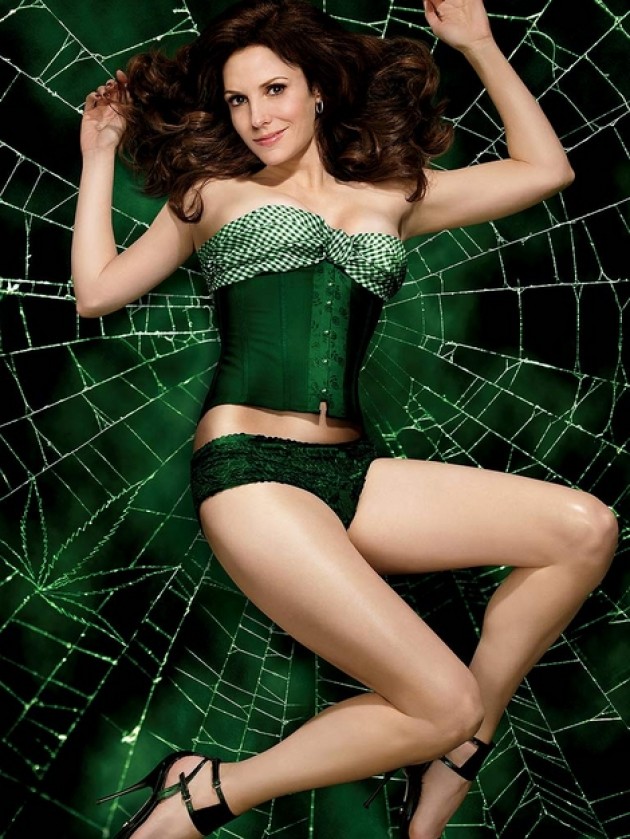
I binge-watched several seasons of Weeds back there a while ago. The show got worse and worse and more and more improbable as it went along. Soccer-mom-turned-weed-dealer Nancy Botwin (Mary Louise-Parker) becomes stupider, more repulsive, and less believable as the plot spins along pointlessly yet eventfully, as serial plots will do. Eventually Nancy ends up moving out to Texas and the Mexican border, where she owns a little boutique as a front for hard drug dealers (hard drugs are bad, in case you didn’t know) who use the store as one end of a smuggling tunnel.

The problem is that running the store makes Nancy bored, despite the fact that she’s now wealthy and has enough money to take care of her family and could presumably take up a hobby like golf or sleeping with various guys (which the show presents as her main interest) or whatever.

But again, plot must keep plotting, so Nancy goes exploring where she shouldn’t (shades of Bluebeard) and ends up seeing, coming through the tunnel, not hard drugs, but…a woman.

Again, I watched this a while ago, and I’m not watching it again, but as I remember the image of the (Latina) woman is shot in semi-slow motion, like a dream image. Nancy is transfixed with something (horror, presumably, though desire is a buried possibility) — and then the woman is gone, taken away, we know not where. Later, Nancy has a kind of moral epiphany related to the woman; she realizes that her work with the drug cartel is horrible and wrong, and that she (Nancy) is a bad person and needs to change. End of moral — and of the series, for me. That was the last episode I watched.

I wasn’t at the time entirely sure why Nancy’s slow-mo longing for the woman in the tunnel was so repulsive. But I’ve done more reading about sex-trafficking since, and that’s clarified the problem. In sex-trafficking narratives (of which this is one) women who cross borders are seen as helpless, debased victims, in the thrall of villains who ruthlessly exploit them. It’s a sensational story — and, as Laura Agostín and others have argued, it’s not necessarily especially anchored in reality. Instead, sex trafficking often serves as an exploitation narrative, providing exciting thrills for folks at home while giving useful cover for government anti-immigration raids.

In this context, it seems important to point out that Nancy never talks to the distant marginal woman. She doesn’t ask her if she’s in distress, or if she needs help. How exactly does she know that the woman doesn’t want to come into the United States? There are, after all, many folks who do want to immigrate from Mexico to the U.S.; it seems like a pretty big leap to assume that someone crossing the border is a kidnapping victim rather than an immigrant under her own power. Unless, of course, you assume all non-white women are automatically debased victims.

That does seem to be how Weeds sees this unnamed and unspeaking icon, whose function is to remain silent so that she can fit neatly into Nancy’s psychodrama. She is a mute object lesson; we don’t care about who she is, but only about how Nancy feels about who she is. The dispossessed, victimized other is valuable as an exercise in empathetic response for the middle-class white woman — to show how privileged and awful she is, and teach her to do better.

Kohan went on to make Orange Is the New Black, of course, a show in which non-white women do, mercifully, get to talk. Still, Kohan hasn’t changed that much. I’ve written a bunch about why I don’t like OITNB, but I think this incident from Weeds sums up the trouble economically. That trouble is carelessness — both in the sense that Kohan has not taken the time to learn about the Very Important Issues she addresses, and in the sense that she doesn’t seem to actually care about them, except as they fit into her sit-com engine of alternating cutesiness and moral epiphanies. Her glibness is so overwhelming it is virtually indistinguishable from cynicism, and her empathy so conveniently self-serving it might as well be solipsism. She is a master of empathysploitation, a longstanding genre whose popularity, it seems, never fades.
 

Nancy-Botwin-e1352412238853

Utilitarian Review 8/2/14

On HU

Featured Archive Post: our Octavia Butler roundtable

Me on Nicki Minaj’s crappy first album.

Nishizaka Hiromi with a manga version of red riding hood, translated by Matt Thorn for the gay utopia.

Kim O’Connor on Tom Spurgeon, tcj.com, and barriers to women in comics crit.

Chris Gavaler with an introduction to the French superhero Atomas.

Alex Buchet with the first ever translation of Pellos’ French superhero comic, Atomas.

Brian Cremins with his first post as a regular for PPP — on Charles Johnson’s single panel cartoons and Thiery Groensteen’s theories of narrative.

Me on Christopher Priest’s Black Panther being trapped by superhero tropes.
 
Utilitarians Everywhere

At the Atlantic:

—I interviewed Feminista Jones about street harassment of Black women.

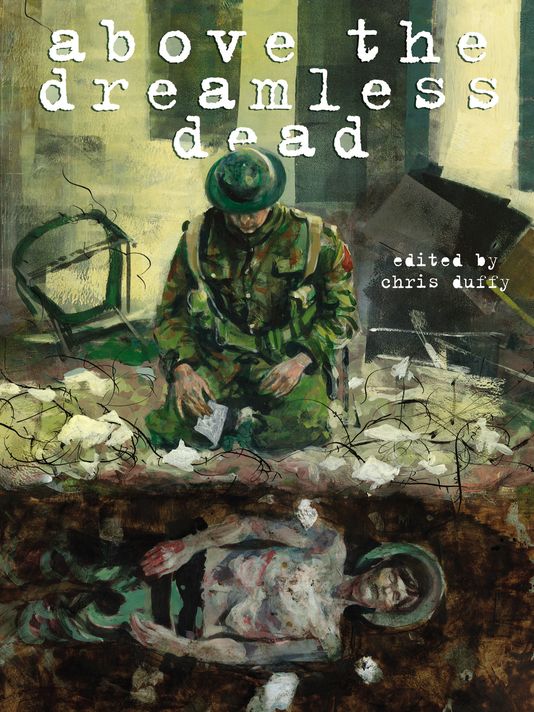
— I reviewed Above the Dreamless Dead, a collection of comics adaptations of World War I Poetry, and talked about the possibility of anti-war art.

At the Awl I interviewed Otrebor aka Botanist about black metal and eco-apocalypse.

At Salon I did a list of the most covered songs. This is my last list for Salon, alas.

At Splice Today I speculate about the next Supreme Court nomination battle and the broken Republican party.
 
Other Links

David Brothers on Marvel’s diversity marketing.

At the Village Voice, Stephanie Zacharek said the Guardians of the Galaxy was mediocre. Marvel true believers spewed sexist bile, because that is what they do.

Andrew O’Hehir thinks about violence and Guardians of the Galaxy.

Margaret Corvid on the pernicious myth of sex trafficking.

Russ Smith on still liking Bob Dylan, albeit not live.
 

1392619125000-ATDD-Cov-300rgb

Superheroes vs. The Black Panther

A little bit back I wrote a piece about the upcoming black Captain America and the idea of Black superheroes more generally. In the essay I said:

So, on the one hand, a black Captain America is a strong, and welcome, statement that the American dream isn’t just for white people — that black folks can, and for that matter, have been heroes. On the other hand, though, a black superhero who just does the superhero thing of fighting criminals or anti-American spies or traditional bad guys can seem like a capitulation. Fighting against crime in the U.S. means, way too often, putting black men behind bars. Will a black Captain America serve as a kind of “post-racial” justification for that law-and-order logic? Or will he, instead, open up a space to question whether law, order, and superheroics are always, and for everyone, a good?

Criminals in the United States are insistently conceived of as black. Superheroes are iconically crime fighters. A black superhero is forced to confront that contradiction one way or the other — since even ignoring it becomes a kind of confrontation.

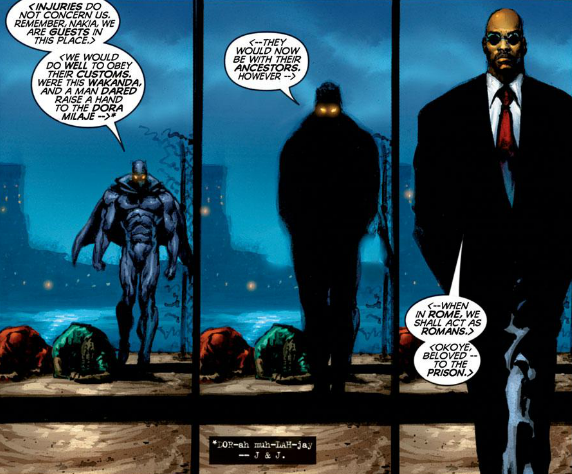
I just read the first volume of Christopher Priest’s Black Panther(art by Mark Texeira and Vince Evans), which is definitely aware of this issue, and works to address it. In the series, Black Panther is a superhero who isn’t really a superhero; he’s the king of Wakanda, a fantastically advanced African nation. He may pose as a crimefighter for his own reasons, but really he has only an at best peripheral interest in putting bad guys behind bars, or in fighting for truth, justice and the American way. You could say he’s passing as a superhero. He’s pretending to assimilate and to be one of those oh-so-folksy Kents, but in fact he’s still true to his advanced, alien Krypton — still an other, who does not belong in America, and who doesn’t have any particular desire to belong.
 

2425453-2425449-untitled

 
This is a clever, and powerful, critique of the superhero assimilation narrative, not least because of the metaphorical resonance. Black people, after all, are the one immigrant group that is never allowed to assimilate, and the one group that has most reason to know why assimilation with the as-it-turns-out-not-all-that -virtuous-Kents is not necessarily all that it’s cracked up to be.

At the same time, though, the comic is, at least in early issues, never quite willing to push the criticism all the way to its logical conclusion. Priest talks openly in his intro about the fact that the series is trying for compromise. This is most obvious in the narration by Everett K. Ross, a white guy who Priest says “interprets the Marvel Universe through his Everyman’s Eyes,” and who is “a new voice, seemingly hostile towards the Marevel Universe (and by extension, its fans.” That’s one way to read it…but you could also see Ross as a sop to those same fans, giving them an identifiable white point of insertion to interpret Panther’s amazing, mysterious blackness.

Priest’s negotiation with the superhero genre goes well beyond the use of Ross, though. The whole plot of the volume is designed to make Panther act like a regular old superhero, complete with tracking down criminals, interrogating suspects, and beating up (mostly black) gangsters. Wakanda finances a charity for inner city kids in New York City; the publicity poster child is mysteriously killed, and so Panther decides personally to abandon a volatile political situation in Wakanda in order to track down the girl’s murderer. He intends to return to Wakanda as soon as possible…but in his absence, there is a coup, and to avoid further bloodshed he is forced to remain in the U.S. and keep on superheroing. Tough break for the Panther, good luck for the superhero audience.

There is some ambivalence about Panther’s superheroing in the comic. His foster mother and others back in Wakanda tell him he’s being foolish for abandoning his kingship to be a cop (though his mom doesn’t put it quite that way.) And later it turns out his mother and the guy who usurps the throne were actually in cahoots to trick Panther to come to the New York. Rather than fighting the bad guys as a superhero, the bad guys essentially trick him into being a superhero. Supeheroing is a trap; to the extent that Black Panther is a superhero, he’s a rube.

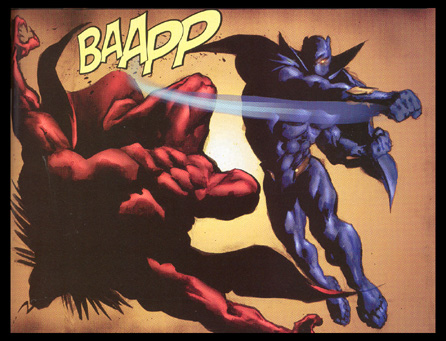
Just because the comic knows that superheroing is a trap, though, doesn’t change the fact that superheroing is a trap. Black Panther is presented as an awesomely powerful, superintelligent, spiritually advanced African king who knocks out the devil with one punch but still can’t get out of a story where his main function is to hit monsters.
 

fnf_bpanther

&nbsp
“Why the hell are you wasting your time with this crap, you idiot?” is a barely subdued subconscious chorus that echoes jarringly against the more overt insistence that “Black Panther is awesome!” Making a black man a superhero, Priest suggests, can’t help but show the limits of superheroing; there’s a slapstick futility to gods and kings with vast powers slugging “bad guys,” rather than attending to the more consequential kingdoms and injustices that start to be hard to miss when the world isn’t quite so insularly white. You wonder, perhaps, if Priest is prodding, or questioning, his own genre investments — if he too, like his main character, feels a little hemmed in by the narrative in which he’s found himself; a story he clearly loves, but which just as clearly wasn’t made with him, or his (helplessly super) hero in mind.

The Helen Reddy of Rap

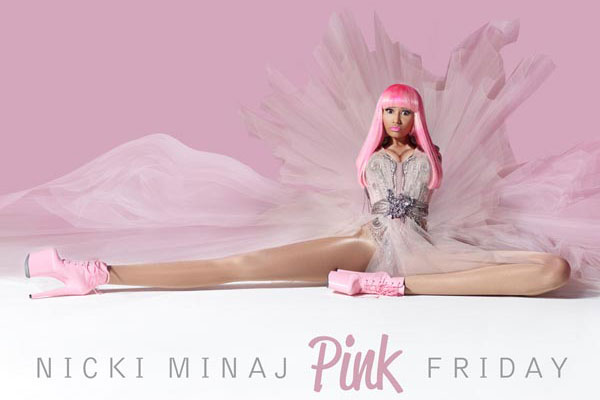
Nicki Minaj is gearing up for a new album; thought I’d reprint my review of her last one from the Chicago Reader.
_________

minaj_magnum


“I’m the best bitch,” Nicki Minaj declares on “I’m the Best,” the opening track of her debut album, Pink Friday. It’s not the first time she’s bragged about her bitchiness—the difference here is that she doesn’t seem to mean it. A year and a half ago, on “Itty Bitty Piggy” from her mix tape Beam Me Up Scotty, she came across as a cackling, potty-mouthed machine gun, declaring “I’m a bad bitch, I’m a I’m a bad bitch” in a deranged, hammering singsong that made you believe in both her badness and her bitchiness. In comparison, “I’m the Best” sounds like—well, like a rapper looking to go pop by abandoning weirdness for rote R&B backing and rotely inspirational lyrics. “I’m fighting for the girls that never thought they could win” is a long, sad trip from profane nuttiness like “If you see a itty bitty piggy in the market / Give that bitch a quarter and a car, tell her park it / I don’t fuck with pigs like as-salaam-alaikum / I put ’em in a field, I let Oscar Mayer bake ’em.”

I wish “I’m the Best” were an aberration. But alas, Pink Friday is filled nigh to bursting with blandness. You know those swelling, earnest, I-have-overcome bullshit tracks that even decent rappers often put at the ends of their CDs, where you can conveniently avoid them? Imagine a whole album of that, and you’ve got a general idea of what Minaj has perpetrated. The Rihanna collaboration “Fly” is the sort of dreary gush you’d expect from a song that uses “fly” as a verb; the Natasha Bedingfield collaboration “Last Chance” is the sort of dreary gush you’d expect from a Natasha Bedingfield collaboration. But don’t blame the R&B songstresses: Minaj proves she can suck all on her lonesome with dross like “Here I Am,” where she actually says, “I’m a woman, hear me roar.” What’s next—is she going to call Lil Wayne the wind beneath her wings?

The fact that Minaj channels Helen Reddy with a straight face on a hip-hop album seems like a good indication that she’s lost her way in spectacular fashion. It’s easy to see this as a desperate and misguided effort to reach a mainstream audience—and it clearly is that. But at the same time, the album’s rudderlessness seems like part and parcel of Minaj’s persona. With a flow that hops from Barbie cuteness to Rasta declamation to a faux British accent to sped-up Tourette’s, Minaj has always been about spastic incoherence, and one of her most acclaimed performances is deliberately and gloriously bipolar. In her verse on Kanye West’s “Monster,” she switches back and forth between a flirtatious little-girl coo and a fierce, ranting growl, using the alternation to create an escalating momentum so massive it makes the other rappers on the track—Jay-Z and Rick Ross—sound positively precious.

As the two poles of “Monster” make clear, Minaj has flirted throughout her career with both of the standard hip-hop roles for women: sex kitten and ball breaker. That flirtation, though, has up till now tended to be oddly and in some ways refreshingly halfhearted. True, Minaj wears preposterous ass-accentuating outfits in the video for the pre-album promo track “Massive Attack” and huge castrating claws in video for Ludacris’s “My Chick Bad,” but for the most part it’s remarkable how little she seems to care about teasing cocks or cutting them off. Her focus is almost always on, as she invariably puts it, “bitches.” One of the decent tracks on Pink Friday, “Did It on ‘Em,” is fairly characteristic: “All these bitches is my sons. . . . If I had a dick I would pull it out and piss on ’em.”

If fantasizing about having a penis so you can better dominate other women sounds suggestive—well, yeah. Though Minaj dances around her rumored bisexuality in both her lyrics and her interviews, her most explicit statements of lust on record almost invariably involve women. The exception that proves the rule is perhaps her cameo on Christina Aguilera’s “Woohoo,” about the pleasures of cunnilingus. Though the song is ostensibly addressed to off-mike men, Aguilera is on record as not especially straight either, and when Minaj exclaims “Lick, lick like a lolly,” you get the sense that she’s not just the potential lickee. Less coy are her verses on Usher’s “Little Freak” and Gucci Mane’s “Girls Kissing Girls,” in both of which Minaj hornily anticipates a menage, offering to hook her brothers up.

Pink Friday doesn’t have anything that hot and heavy. Minaj may enjoy lasciviously contemplating your “kitty cat” and asking if she can “touch her,” but she’s careful to rhyme the whole thing with “Usher.” Lesbianism is only OK packaged for male consumption. Minaj wants girls . . . but it ain’t no fun if the homeys can’t have none.

And no wonder: as a female rapper, Minaj can’t be a sex bomb and a badass; she can’t be a castrator and one of the boys; she can’t be an out dyke and have a career. But artistically, this tension isn’t always a bad thing. Her seesawing between identities is a large part of her appeal and her genius. What other female rapper has called herself Monica Lewinsky, Barbie, and Freddy from Nightmare on Elm Street? Minaj’s refusal to stay in the hip-hop box labeled “women” has allowed her to be silly, unpredictable, and fierce in a way that few rappers of any gender have managed.

But a debut album is where an artist shows the world who she is, and for Minaj that’s a trap. You can see the problem most clearly on the album’s best track—”Roman’s Revenge” with Eminem. Swizz Beatz drops the two rappers into a factory full of hammering synths, and Eminem proceeds to tear that shit apart, bouncing from S&M to pissed-off Happy Meals, spewing tangled knots of filthy punch lines so fast that lesser mortals don’t even have time to be knocked on their asses. “So I tied her arms and legs to the bed, set up the camera and pissed twice on her. Look! Two peas in a tripod.”

Like most rappers, Minaj doesn’t have Eminem’s skills, but she doesn’t get blown away either. From her first stuttering transgender declaration—”I am not Jasmine, I am Aladdin!”—she spits insults and threats, at one point even comparing herself to Eli Manning, and in general she sounds lean, mean, and nuts.

The only thing is . . . well, Eminem is up in there getting a blow job and pissing on women, you know? And in response, Minaj . . . starts sneering at bitches again. The Internets have speculated that she’s calling out Lil’ Kim, and fair enough. But can you imagine Minaj cutting off some guy’s bits and Slim Shady just saying “ayup” and going after a third party? You have to wonder if he’s glancing sideways at Minaj when he snaps, “Look who’s back again, bitch / Keep acting as if you have the same passion I have / Yeah right, still hungry, my ass.”

The point isn’t that Minaj has some obligation to fight for the rights of women everywhere. But it is to suggest that, even at her most feral, there are places she won’t or can’t go. “I feel like people always wanna define me and I don’t wanna be defined,” Minaj said in a Vibe magazine interview this summer. I can sympathize with that—but on Pink Friday, the fear of being defined seems to have made her unwilling to say anything of interest at all. At some point, if you’re not going to stand for something, you might as well sit down.