Utilitarian Review 7/12/14

On HU

Robert Jones, Jr. on giving up on mainstream comics.

Matt Thorn with a brief note on Ursula K. Le Guin’s Left Hand of Darkness.

Alexis Pauline Gumbs on Octavia Butler as uncomfortable foremother.

A.Y. Daring on wound as identity in Kindred.

Julian Chambliss looks at what scholars study when they study Octavia Butler.

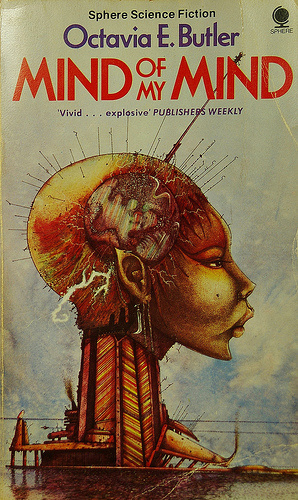
Me on Octavia Butler’s mediocre prose and why it matters.

Chris Gavaler on how Fantax shows that the French know their way around super-hero violence.

I think we’ve got a couple more Octavia Butler posts next week, but then that’s it, and we’ll be back to regular old posting!
 
Utilitarians Everywhere

At Salon I have 19 songs that show that Jimi Hendrix was not a token.

At the Atlantic I argue that Elvis invented nothing and stole nothing.

At Splice Today I write about the great conservative novel, Gone With the Wind.
 
Other Links

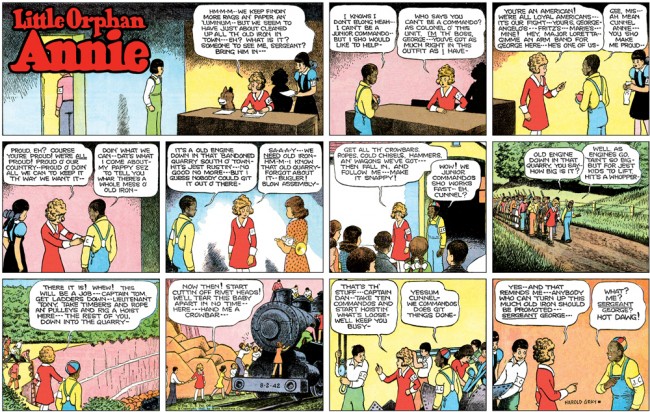
Jeet Heer on Harold Gray and the limits of conservative anti-racism.

Armond White on the mediocrity of Roger Ebert.

Elias Leight on new albums by Joe and Trey Songz.
 
ANNIE_Sunday_LOA420802-lo1-650x412

Pattern Flattener

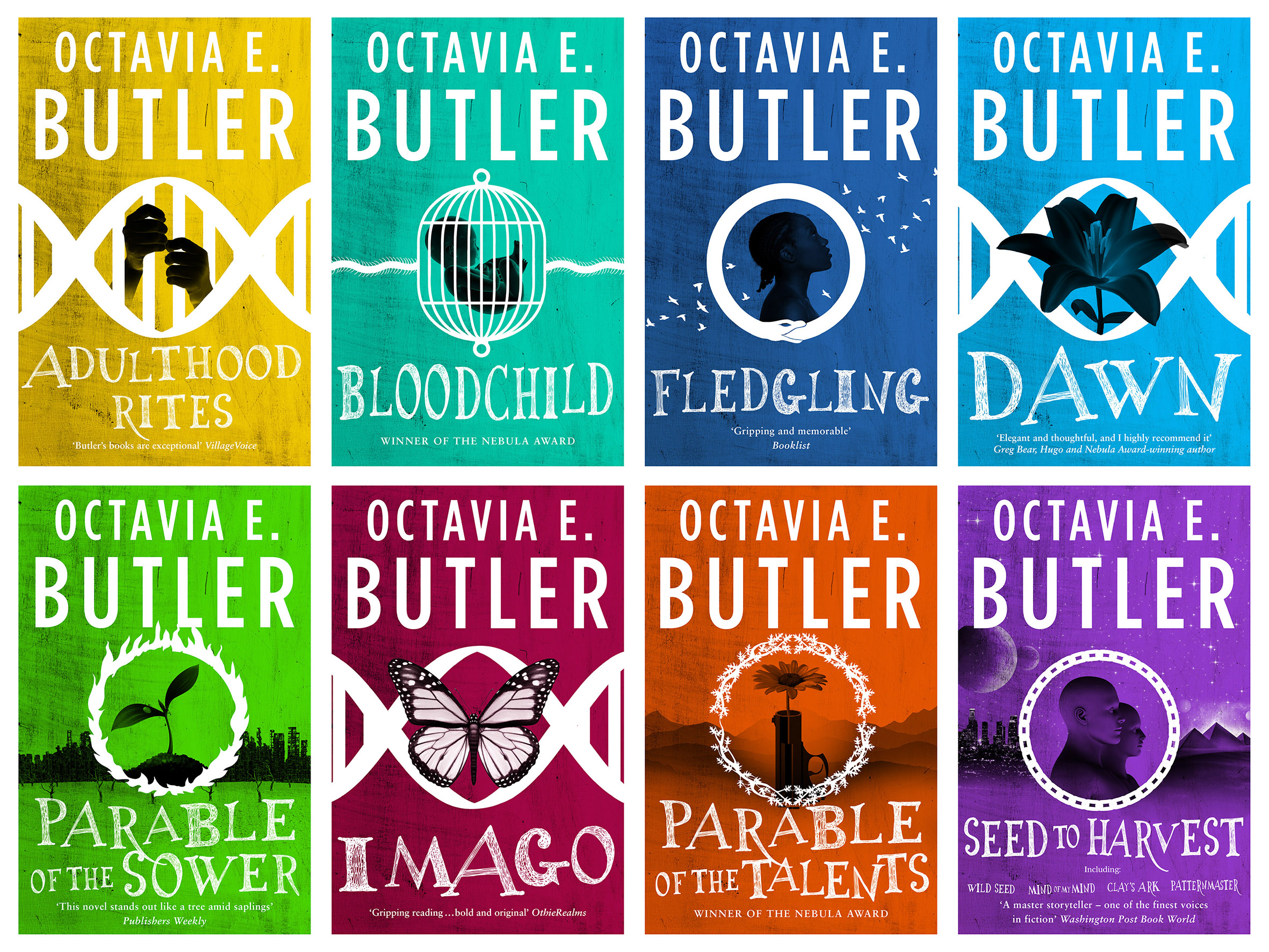
This is part of a roundtable on the work of Octavia Butler. The index to the roundtable is here.
__________
Most of the posts in the Octavia Butler roundtable (including my earlier post) have been fairly laudatory of Butler’s work. And there’s certainly a lot to like in Butler’s novels. She tackles complicated themes in imaginative ways and manages to be quite repulsive while doing so. Not many folks out there walk the line between slavery narratives and tentacle sex. Hard not to cheer for that.
 

octavia-bulter

 
But, while I like Butler quite a bit, I do have some reservations. The main one being that she’s not a very good writer.

Of course, Butler is a good writer in some ways. As I said, she’s very inventive and thoughtful; she has lots of ideas; and she explores them in interesting ways. Still, reading her, you can’t help but notice that her prose rides a fine line between uninteresting and actively insipid. Yes, there’s tentacle sex, but it’s tentacle sex described with all the fever and poetry of a long, leisurely session at your tax accountant’s. Mutant eternal killer demons speak from out the ages with the somnolent laconic lack of affect of a Calvin Coolidge. Apocalypses of multivariant forms all land upon an unsuspecting earth like wire service news bulletins. Characters of diverse class, race, and ethnicity, whether blood-sucking vampires or gelatinous fern assemblages, all speak with a default mid-range vocabulary, eschewing figurative language for bland glops of transparent earnestness.

Here, for example, is Mary, a troubled young African-American girl who is coming into her own as a massively powered telepath who can read the minds of hundreds and hundreds of other psis all bound to her will. She has just defeated her only rival for power. It’s an emotional moment. Right?

Not so much.

They cremated Doro’s last body before I was able to get out of bed. I was in bed for two days. A lot of others were there even longer. The few who were on their feet ran things with the help of the mute servants. One hundred and fifty-four Patternists never got up again at all. They were my weakest, those least able to take the strain I put on them. They died because it took me too long to learn how to kill Doro. By the time Doro was dead and I began to try to give back the strength I had taken from my people, the 154 were already dead.

he sentences sit there in a Hemingwayesque funk, desperately hoping that the short. simple. structure. will lead you to think that the passage is economical, even though she keeps repeating the same not especially revelatory information with a distant, feeble ruthlessness. They were the weakest, and they could not take the strain; they were dead, and then they were dead, and at the end of another sentence, they’re still dead.

Perhaps you could argue that Butler is deliberately using a simple voice to convey Mary’s consciousness here — but, again, Mary is supposed to at this point be an incredible mutant superconsiousness. What is it like to be inside the head of someone who is inside the head of hundreds of other people? How must it feel to know all those other people’s lives and vocabularies? If Samuel Delany or Gwyneth Jones or Joanna Russ or any number of Butler’s compatriots in the realm of gender-bending avant sci-fi art were writing this, Mary’s consciousness would be multi-vocal and strange — it would mirror alienness in its syntax and grammar and language. Mary wouldn’t just say, “Hey! I’m different! How about that?” Her voice would be part of the meaning of the novel. But it’s not, because it can’t be, because Butler has no interest at all in language, the supposed tool of her trade.

There are times when the lax limpidity of the prose does work thematically, at least up to a point. “Dawn” and “Fledgling” can both be read as coming-of-age novels, with the protagonists growing up to discover their true selves as tentacled imperialist monstrosities and vampiric incestuous slaveholders, respectively. In these books, you could argue, the flatness of the prose (and as a result of the affect) has an almost satirical fillip; the default of bland genre becomes a patina of normalcy over a pit of perversion and alienness. The nice, easy story isn’t so nice and easy — or possibly vice versa.

Still, it seems pretty clear that, in many respects, better prose would in fact result in better books. In “Wild Seed” and especially in the earlier “Mind of My Mind”, Butler creates careful moral dilemmas, only to have them sag beneath the damp uselessness of her style. Doro, the eternal mutant who survives by jumping from body to body and killing his hosts, is, as I’ve said, completely unconvincing; when he speaks he sounds not like an all-powerful parasite, but like mid-range science-fiction narrator explicating.

Even worse is the fact that the rest of the characters are equally indistinguishable and bland. Doro is supposed to be a monster, destroying person after person — but the people he destroys aren’t real. We never feel any deaths, because the characters are just chits Butler moves around the page. It’s almost as if Butler is Doro; he sees humans mostly as personality-less puppets to manipulate through his plots, and Butler treats the humans as personality-less puppets to manipulate through her plots.

This is especially painful in “Mind of My Mind” where Butler switches point of view characters repeatedly, in an effort (presumably) to have us get to know each one. But instead, what we get to know is that they’re all the same. In theory, if we actually could tell one from the other, we might feel some sort of loss when Mary pulls them into her pattern, and they abandon their independence. But it never happens, because they were never individuals to begin with. Similarly, the Patternists take over the minds of normal humans (mutes) and enslave them. But it’s hard to much care when the humans are blandly uninteresting before being slaves, and then blandly uninteresting afterwards. How can you provide a moral meditation on human individuality when you’re unable to create an even passable representation of an individual human?

In her post on Butler and empathy, Qiana Whitted says that she is impressed with the way that Butler creates repulsive insect-like aliens as a barrier to empathy. It’s true that Butler’s aliens can be squicky, and that can in some cases be a way to withhold empathy, or insist on difference. But those insisted-on differences in Butler’s work rarely go more than squick-deep. Bodies in Butler may be wildly heterogenous and imaginative, but her language is always the same untrammeled non-thing, scooping up tentacle creature and vampire alike in its unwavering similitude. Everybody thinks alike and talks alike, which means that on the level of the prose, which is the essence of the book, Butler often seems unable to think difference at all. Maybe that’s why her books can seem oppressive — not because she has a bleak vision of human intolerance for strangeness, but because the pattern in her books is too flat to allow the strangers called humans any life of their own.

Utilitarian Review 7/5/14

On HU

Our Octavia Butler roundtable continued:

I asked folks to tell me their most and least favorite Butler novels.

I wrote about Octavia Butler as romance novelist, and Laura Kinsale as sci-fi author.

Vom Marlowe reviewed Butler’s Wild Seed.

And then the roundtable took a sort of pause as people didn’t quite have their pieces in…but it will resume next week!

In the meantime,

Adrian Bonenberger examined the movie-making talents of radical Islamic insurgent group ISIS.

Chris Gavaler wrote about the first comic book and the comics artists of Lascaux.

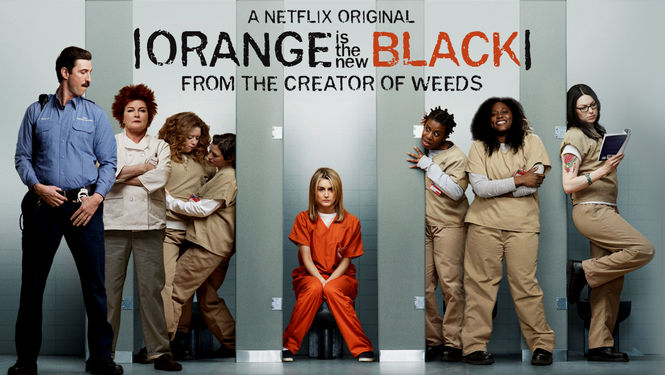
And I provided an index of all my writing on Orange Is the New Black, plus some responses to critics.
 
Utilitarians Everywhere

At the Atlantic I wrote about Orange Is the New Black, gender stereotypes, and male representation. This turned into a viral hate read this week, if you missed it.

At Salon I did a list of great double entendre songs.

At Splice Today I wrote about

— the great Al Green song I Can’t Get Next to You; better than Robin Thicke!

Obama, generic democrat, with maybe slightly less hawk.

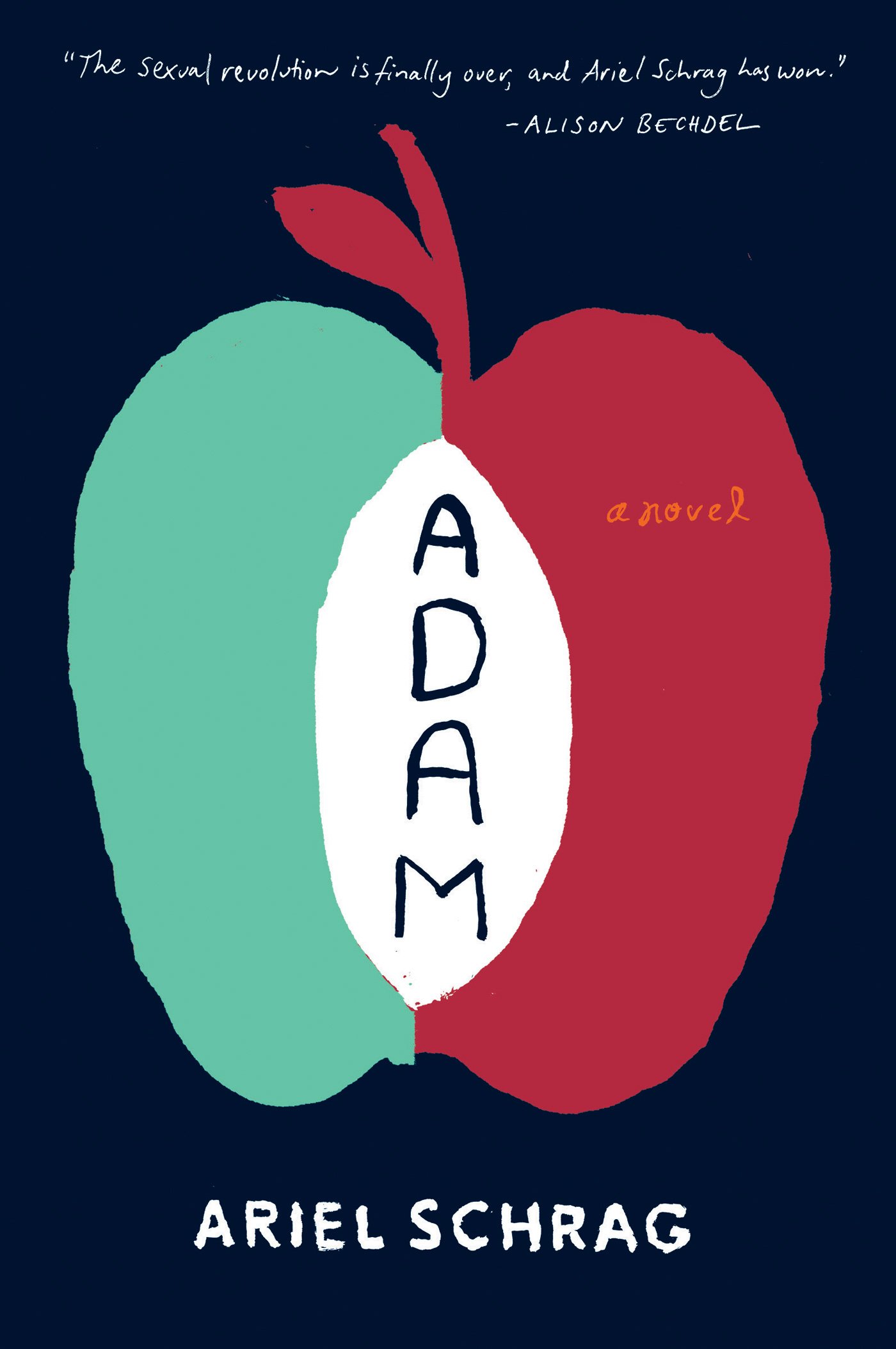
At Bitch I wrote about Ariel Schrag’s lovely new novel Adam, about a cis man passing as a trans man.
 
Other Links

Steven Heller on the long-running comics anthology World War 3.

Mary McCarthy on the perils of sex in a hot tub.

Jill Filipovic has a nice piece on the Hobby Lobby decision.
 

7102WDiKj9L

Orange Is the New Black: Index for the Haters, and Response to Critics

So I had a post on Orange Is the New Black become a viral hate read over at the Atlantic this week. In celebration (?) and as a low key way to post without posting on the fourth, I thought I’d provide an index of my writing on the show for those who are curious. The articles are arranged chronologically in the order they were published.
___________

At Public Books, Orange Is the New Caged, on how the first season picks up on tropes of femininity and lesbianism from the 1950 women-in-prison film Caged. (This is part of a roundtable at Public Books; lots of other good essays on the series by other folks there too if you want to browse around.)

At Splice Today, The Crassness of Orange Is the New Black, on how the first season adds sex and deviance to the memoir.

At the Atlantic, “A Lewd Reminder of How Tame Oranges Is the New Black Really Is”, in which I compare the first season to the 1974 film Caged Heat, and talk about political and sexual fantasies.

Right here at HU, Orange Is the New Black: Episode 7 Hate Blogging, in which I blog my way through a second season episode.

At Splice Today, Prison and White People, in which I talk about why focusing on Piper’s white privilege misses out on the way that institutional racism is not her friend.

And finally, the hate read at the Atlantic, Orange Is the New Black’s Irresponsible Portrayal of Men, in which I argue that the show’s relationship to male prisoners is problematic.

There were a number of online responses to the piece, most of them not really all that useful from my perspective. A couple of the more interesting ones were by Alyssa Rosenberg and Madeleine Davies. This piece by Sonny Bunch is probably the best though; mean-spirited and clever.
__________

What the hell; might as well respond briefly. Alyssa’s piece argues that it would be more strategic for me to criticize some show other than Orange Is the New Black. Her reasons are somewhat unclear; as far as I can tell, the argument is partially that OITNB is relatively good, and partially that it has a relatively small audience, so I’d be better criticizing NCIS, or whatever. To the first point, I’d say that whether the show is good or not is part of the question at issue; just because Alyssa thinks it is isn’t a reason for me to toss over my own opinion and write about something else. For the second…you don’t influence people based on what show you talk about, in any direct way. You influence people based on the reaction to what you, yourself, are writing. And as far as being strategic and getting my message out…this was one of the most popular things I’ve ever written (for better or worse.)

Alyssa concludes by saying, “If we want a culture that tells a wider variety of stories, we need to work on moving culture at the mainstream, rather than simply at the margins,” but that seems to assume that my criticism is going to move NCIS or OITNB in some direct way. I really doubt that that’s the way these things work, particularly. You move people through criticism the way you move people with any art; sporadically, confusedly, maybe if you’re lucky but generally not, depending on a lot of factors. The idea that you move the mainstream by talking about a mainstream show and move the margins by talking about a marginal show strikes me as really simplistic (not least because, for example, Alyssa probably wouldn’t even have written her post if I had been writing about something other than OITNB.)

Caroline Small on facebook also pointed out that culture often moves not by moving the mainstream, but by changing the margins, which then shifts the center. Which I think certainly can be the case, at least.

Sonny Bunch in his response to my piece sneers at the whole idea of thinking about representation in art, arguing that doing so isn’t criticism. He says that:

There’s also the obvious point to be made that this isn’t “criticism” in the traditional sense: there’s little discussion of craft or storytelling, no sense of how the authors of the program help us understand the world they’ve created. It’s a simple collection of grievances that can be summarized thusly: “Why aren’t you telling the story I think needs to be told and why have you portrayed a group I believe needs defending in an unflattering light?

What’s really funny about this is that it’s gloriously self-refuting, and utterly unaware of it. After all, Bunch isn’t looking at the craft of my essay; he’s not trying to figure out how my essay forms a coherent intellectual world. He’s just listing grievances, and asking, “why aren’t you writing the kind of criticism I want you to write?”

I’d argue (contra the somewhat confused Bunch) that Bunch’s criticism is entirely defensible as criticism, because engaging with the ideology and the preconceptions of the work you’re looking at is a legitimate critical project. The problem with Bunch’s view isn’t that he engages with my ideology and my preconceptions; the problem is that he’s not a very attentive reader, and so isn’t alert to the fact that I have quite a bit to say about craft, about storytelling, and about how the program creators help us understand the world they’ve created (hint; they do it in part through gender stereotypes.)
 
70242311

Movie Review: Clanking of Swords IV

Much media attention has focused on the capabilities of ISIS’s propaganda wing, a smart and decentralized group of well-funded jihadis who have produced one of the most vibrant – and, many say, most effective – bodies of artistic work to emerge from the region in recent memory. Their latest offering, fourth in the “Clanking” franchise, is light years ahead of its predecessors, which, it must be admitted, were little more than videos of ISIS fighting against Assad’s fighters and Al Nusra, an Al Qaeda affiliate (Al Qaeda has disavowed ISIS).

Clanking of Swords IV” (caution – viewer discretion HEAVILY recommended, it is an exceptionally vicious film – and some versions offer “Clanging” instead of “Clanking”) is dedicated to the proposition that only violence can cleanse the Middle East. With the redemptive power of violence as its philosophical center, the film aims to unify those competing narratives of violence we know from YouTube and LiveLeak, the badly-recorded battles wherein people die or are hurt in all the surprising ways one encounters in war.

“Clanking” begins with a geopolitical statement: a zoom-out shot of the Mesopotamian region that ISIS intends to rule. The perspective descends to a quad-copter drone hovering over the city of Falluja. The drone flies over formations of fighters, and lines of pickups and old military 2 ½ ton trucks filled with fighters and heavy-caliber machineguns and staged for attack, then heads back into the sky, at the midway point between four roads, spinning around faster and faster, creating a whirlwind-like effect, which resolves into a battle where ISIS is attacking the Iraqi military. The battle doesn’t last long, and includes the now-obligatory picture of American-style military vehicles under heavy fire, with repeated invocations to Allah. “Clanking’s” introduction then spends time recording some of its fighters delivering speeches, and dedicating themselves to the cause of establishing a super-national caliphate in the region.

From there, the film moves between scenes wherein people renounce their citizenship in various Middle Eastern countries, pledging homage to a new Caliphate by tearing their passports, and various iterations on the theme of battle. ISIS hunts down rival Sunni gangs by conducting drive-by shootings. ISIS hunts down Shia military and intelligence apparatus officers with a special squad dressed like Iraqi Army commanders. Fighters deliver victorious speeches, or inveigle against western influence. ISIS offers clemency to those who convert to the Sunni faith, or turn in their arms. Fighters snipe unsuspecting Iraqi soldiers, detonate IEDs, force prisoners to dig their own graves, tear up more passports. Fighters execute more captured members of the Iraqi military apparatus.

The cinematography is effective, accompanied, unaccountably, by the sound of a sword being sharpened, or possibly unsheathed – and certainly not “clanging” or “clanking.” More on the name of the film later. The cuts between scenes are professional and effective, and particularly devastating IED strikes and checkpoint attacks are rewound and played back in slow motion, creating a response in the viewer that can only be described as enthusiastic expectation. At least, in viewers like myself who are accustomed to scenes of violence, having been to war. Well adjusted viewers should find such scenes horrible, sick, and almost unwatchable.

The point of the film – although historians will likely debate this in years to come, depending on how effective the ISIS brand is in Iraq and Syria – is twofold. First, to create fear in viewers loyal to Iraq and citizens who (according to the point of view of ISIS) collaborated with the regime. Second, to attract new members by demonstrating ISIS fighters’ prowess in battle. The film does both of these things successfully – and it would be successful, I think, whether or not ISIS were especially active on the battlefield, as it is now. The violence is graphic, and real. The killings and attacks are chosen with an eye toward casting their enemies in the most pathetic light possible – in no frame does the Iraqi Army fight back with tenacity, save by implication. Each finishing shot of a battle is triumphal, featuring dead Shia Iraqi soldiers and police, as well as weapons seized. The sniper victims are killed in ways that render them laughable, and there are usually subtitles that ensure viewers interpret the action in a way that is as generous as possible to ISIS.

The subtitles, as well as cut-away scenes narrated by one of the filmmakers, condemn each of the victims, and the government in general. At one point near the end of the film, the group of ISIS soldiers who are hunting down regime “collaborators” enters the home of a “tyrannical” member of the Iraqi counter-terror effort – a colonel. They show pictures of him working with the Americans, and smiling. They then execute him by cutting his head off, and placing it between his legs. He struggles. The film states that “the mujahedeen will not sleep in the face of injustice.”

Overall, the film views like the most extraordinarily violent action movie you’ve ever seen. The filmmakers do an excellent job of capturing scenes using high-quality cameras, and the bloodiest parts are celebrated and revisited throughout the film. It is a meditation on violence and revenge, and it’s impossible to watch the movie without concluding that the events that are happening in the Middle East will not be resolved easily, and are bound to get worse – which boggles the mind – before they get better.

The only weak point in the movie is that whomever translated the movie chose a terrible title. “Clanking of the swords” is ridiculous to western ears, and regardless of the intention – to echo a popular song, or some relevant event from whatever past ISIS seeks to reference – it fails to inspire the same level of dread as the film itself. This wouldn’t merit discussion if the title weren’t stereotypically laughable – the signifier by which people are first introduced to the movie / documentary is absurd, and will only elicit contempt among English-speaking viewers. ISIS would likely claim that Americans and Europeans are not part of their target audience – their audience is people who sympathize with their cause, but haven’t yet picked up a weapon to fight. Calling it the “fourth” installment, and encouraging interested individuals to dig into the recent past of ISIS, before it was a nation-beater, is a further mistake. But perhaps the people who chose the name can be forgiven for catering to jihadis who had already watched the first three “Clanking” videos, and had developed emotional attachments – they probably didn’t expect to go so far, so fast. They couldn’t have expected that America would return to Iraq, giving U.S. soldiers and Air Force pilots an opportunity to make a sequel of their own: “Exploding of the Smart Bombs III.” Coming this July.
_____
Adrian Bonenberger is a freelance journalist, author of the epistolary war memoir “Afghan Post,” and helps run veteran intellectual blog “The Wrath Bearing Tree.” His twitter handle is @AHBonenberger.

How Do You Say “Love” in Alien, or Vice Versa?

This is part of a roundtable on the work of Octavia Butler. The index to the roundtable is here.
__________

FlowersStorm_avoncovers_first_web-200x327

 
In her short story “Speech Sounds”, from the Bloodchild collection, Octavia Butler imagines a world in which a mysterious plague has robbed most people of language — both speech and written. The story opens as the protagonist, a former freelance writer who can still speak but not read, sees a dispute on a bus.

People screamed or squawked in fear. Those nearby scrambled to get out of the way. Three more young men roared in excitement and gestured wildly. Then, somehow, a second dispute broke out between two of these three — probably because one inadvertently touched or hit the other.

The first time you read this, it’s not especially clear that the combatants can’t talk to each other; their screams and squawks, gestures and roars, seem figurative — a description of chaos, in which communication becomes irrelevant because of anger and fear and violence. It’s only as you go along that you realize the description is literal; people are really screaming and squawking inarticulately, because no one can speak. A scene that seems familiar is actually strange. The people who we think we recognize as ourselves, under stress, are actually separated from us by an insurmountable barrier; we think we understand them, but we don’t; we think they are speaking to us but they aren’t. Through a trick of language, a realist anecdote becomes science fiction, and the world, and those in it, become more alien than we thought.

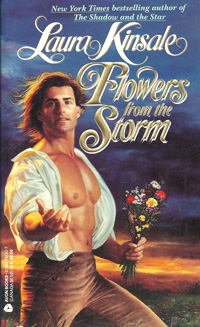
In her historical romance, Flowers From the Storm Laura Kinsale’s hero, Christian, the wealthy powerful rakish Duke of Jervaulx, suffers a brain hemorrhage which robs him of the power of speech. He ends up in an insane asylum, where he is cared for by Maddy, a Quaker and coincidentally the daughter of a friend. Jervaulx’s loss of speech seems like it should put him beyond communication, or shut down his ability to communicate with Maddy. But instead, somewhat miraculously, it makes it possible for them to love each other, both because his illness is the cause of bringing them together and by making her understand him better.

She lifted her head. He wasn’t a two-year-old. He had not lost his reason.

He isn’t mad; he is maddened.

The thought came so clearly that she had the sensation someone had spoken it aloud….

Jervaulx had not lost his reason. His words had been taken away. He coulcn’t speak,and he couldn’t understand what was said to him.

Christian’s silence enables Maddy to hear something which Kinsale strongly suggests is the voice of God. And what the voice tells her is that the stranger she thinks she sees is not actually a stranger. Through a trick of language, the other, beyond reach, becomes an intimate, and tragedy moves towards romance.

For both Butler and Kinsale, then, genre is built around language and the loss of language. And if both depend for genre on who understands what, it seems like you could understand them both as part of the same genre, depending on how you listen to them.

It’s not too difficult to see “Speech Sounds” as a thwarted romance; the main plot of the story involves the protagonist, Rye, tentatively falling in love with a man she calls Obsidian; they have sex, decide to stay together, and he is then suddenly killed. If the story starts by making you perceive the everday as alien sci-fi, it moves on to contact between stranger’s, a quick flowering of love from the storm.

By the same token, Flowers From the Storm can be read as science-fiction. It’s set in the Regency period, with rules and customs which are certainly as alien to the contemporary reader as Butler’s familiar post-apocalypse. A good bit of the story is told from Christian’s perspective, and so you see the alien world speak to him in an alien language. “Weebwell,” she whispered. “Vreethin wilvee well.” The Quaker woman, with her rituals and strange taboos (no lying, using “thee” and “thou”) is seen by Christian, too, as other and distant; he becomes the readers’ point of identification, a stranger in a strange land.

Both Butler and Kinsale are writing in a genre of difference — a genre that can broadly encompass both sci-fi and romance. This focus on difference is also, as Lysa Rivera says of Butler’s work, a focus on marginalization. Those who are seen as different are also marginal. When everyone else loses language, Rye, who retains it, becomes a potential target of jealousy and violence. Christian is rich and powerful, but when he loses language he becomes a madman, marginalized and subject to arbitrary imprisonment and punishment.

It’s significant that these differences and marginalizations are, literally and figuratively, a byproduct of language. This is true on multiple levels. Both Rye and Christian are marginal, or marginalized, because of their relationship to speech, or words. But they’re also marginalized because of their positions within an arbitrary fiction. Butler has created a future world, and placed Rye on the margins within it; Kinsale has created a past world and placed Christian on the margins within it. The characters’ struggles with language could be seen then as a kind of awareness of their own status as subjects to, and objects of, language. Their speech is wrong because they’ve been spoken wrong.

If the characters are positioned through language, the same can be said of the authors. As Rivera pointed, out, Butler’s work can be seen as marginal in many ways — it’s by an African-American woman, which is a marginal identity within science-fiction; and it’s science-fiction, which is a marginal genre in terms of literary credibility and academic interest. In comparison to Laura Kinsale, though, Butler is certainly more centrally positioned in numerous ways; sci-fi has more credibility than romance, and Butler is fairly well-established as an object of academic inquiry in a way Kinsale certainly isn’t (there’s a lengthy entry for “Speech Sounds” on Wikipedia; none for “Flowers From the Storm”). Marginalization and difference, for both authors, isn’t an absolute, but a function of their relative position to genre and to speech. Who is different, and from what, depends on what, or how, you’re talking about, or to.

So who is the person talked to? Arguably it’s you, the reader. In both Butler and Kinsale, language positions you as other, trying to understand, and as intimate, comprehending and empathizing. Language alienates and seduces; it conveys the terror of difference and the joy of bridging it — or, alternately, the joy of difference and the terror of bridging it. Language, that intimate betrayer, makes you each book’s monstrous invader, and each book’s lover.

Octavia Butler — Best and Worst

OEB

So we’re in the middle of an Octavia Butler roundtable, I thought it’d be fun (maybe) for people to talk about which of her works are their favorites and which are their least favorites.

My favorite book of hers is Dawn, from her Xenogenesis series (which I’ve written about here among other places.) I just love the way it presents a standard aliens-as-colonizers narrative in such a way that the colonizers are both repulsive and sympathetic. The flatness of her prose here feels like it both conceals and accentuates the complexity of what she’s doing with empathy. It’s an interesting comparison with Gwyneth Jones, who touches on many of the same themes and ideas in a more knowing, ironized, and deliberately academic way. I love Jones, but there’s a lot to be said for Butler’s approach too, which presents everything almost transparently; it feels almost like a YA novel about growing up to be a tentacled sex monstrosity.

As for my least favorite….I read “Wild Seed” a long while back, but I found its presentation of gender difference (male, bad! female good!) to be pretty irritating. I just read Butler’s short story collection “Bloodchild”; the last story, “Martha”, in which a black female sci-fi writer is asked by God to save the world through vivid dreaming seemed both overly cute and nakedly self-aggrandizing.

For the rest of her books I’ve read, I quite like Kindred, didn’t like Fledgling much, and I think that’s all I’ve read.

So what about you all? What’s your favorite and least favorite Butler?