Shakespeare Hatred: An Underground Literary Tradition

Editor’s Note: This post first appeared on Jeet Heer’s blog Sans Everything. Jeet graciously suggested we reprint it here as coda to our hatefest, just as a reminder that everything should be hated, not just comics.
_________________

Shaw:No Lover of Shakespeare He

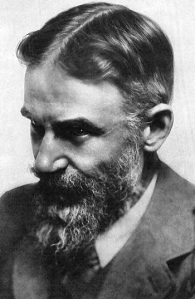
Over at Crooked Timber, they are having a lively discussion  provoked by George Bernard Shaw’s scorn for Shakespeare. On many occasions Shaw expressed extreme distain for the Bard of Avon. In a 1906 letter Shaw wrote “I have striven hard to open English eyes to the emptiness of Shakespeare’s philosophy, to the superficiality and second-handedness of his morality, to his weakness and incoherence as a thinker, to his snobbery, his vulgar prejudices, his ignorance, his disqualifications of all sorts for the philosophic eminence claimed for him.”

Shaw’s opinions are easy to dismiss, but it is often forgotten that there is a long and venerable tradition of Shakespeare-hatred, a critical tradition that includes not just crank and reflexive contrarians but also some very great writers. Aside from Shaw, Voltaire and Leo Tolstoy were also vociferously hostile to Stratford’s favourite son. Voltaire actually started off as a champion of Shakespeare but turned against the English writer’s plays. More recently the novelist Joyce Carol Oates (in her collection Contraries) and mad-dog essayist Marvin Mudrick have taken aim at Shakespeare.

Below I’ve assembled a mini-anthology of Shakespeare-bashing. Although I myself am rather fond of Shakespeare, I have to say I think this tradition of attacking the dramatist is actually quite valuable. Unlike most of the thousands of volumes given over to bardolatry, the anti-Shakespeare brigade doesn’t assume that every jot and titter that flowed out of the playwright’s quill pen is pure gold. The hostile critics tend to be close readers, alert to the texture of the words and the logic of the plots. They pay Shakespeare the respect of careful scrutiny. The opponents of Shakespeare treat him as a living writer, one whose choices can be argued with, not as a marble statue commemorating universal and immemorial truths. Tolstoy in particular was a very astute critic and his long essay (or short book) on Shakespeare deserves more attention than it’s received.

So here is an anthology of Shakespeare-hatred.

Tolstoy:

I remember the astonishment I felt when I first read Shakespeare. I expected to receive a powerful esthetic pleasure, but having read, one after the other, works regarded as his best: “King Lear,” “Romeo and Juliet,” “Hamlet” and “Macbeth,” not only did I feel no delight, but I felt an irresistible repulsion and tedium, and doubted as to whether I was senseless in feeling works regarded as the summit of perfection by the whole of the civilized world to be trivial and positively bad, or whether the significance which this civilized world attributes to the works of Shakespeare was itself senseless. My consternation was increased by the fact that I always keenly felt the beauties of poetry in every form; then why should artistic works recognized by the whole world as those of a genius,—the works of Shakespeare,—not only fail to please me, but be disagreeable to me? For a long time I could not believe in myself, and during fifty years, in order to test myself, I several times recommenced reading Shakespeare in every possible form, in Russian, in English, in German and in Schlegel’s translation, as I was advised. Several times I read the dramas and the comedies and historical plays, and I invariably underwent the same feelings: repulsion, weariness, and bewilderment. At the present time, before writing this preface, being desirous once more to test myself, I have, as an old man of seventy-five, again read the whole of Shakespeare, including the historical plays, the “Henrys,” “Troilus and Cressida,” the “Tempest,” “Cymbeline,” and I have felt, with even greater force, the same feelings,—this time, however, not of bewilderment, but of firm, indubitable conviction that the unquestionable glory of a great genius which Shakespeare enjoys, and which compels writers of our time to imitate him and readers and spectators to discover in him non-existent merits,—thereby distorting their esthetic and ethical understanding,—is a great evil, as is every untruth.

George Bernard Shaw:

Search [in Shakespeare] for statesmanship, or even citizenship, or any sense of the commonwealth, material or spiritual, and you will not find the making of a decent vestryman or curate in the whole horde. As to faith, hope, courage, conviction, or any of the true heroic qualities, you find nothing but death made sensational, despair made stage-sublime, sex made romantic, and barrenness covered up by sentimentality and the mechanical lilt of blank verse.

All that you miss in Shakespeare you find in Bunyan, to whom the true heroic came quite obviously and naturally. The world was to him a more terrible place than it was to Shakespeare; but he saw through it a path at the end of which a man might look not only forward to the Celestial City, but back on his life and say: ‘Tho’ with great difficulty I am got hither, yet now I do not repent me of all the trouble I have been at to arrive where I am. My sword I give to him that shall succeed me in my pilgrimage, and my courage and skill to him that can get them.’ The heart vibrates like a bell to such utterances as this; to turn from it to ‘Out, out, brief candle,’ and ‘The rest is silence,’ and ‘We are such stuff as dreams are made on, and our little life is rounded by a sleep’ is to turn from life, strength, resolution, morning air and eternal youth, to the terrors of a drunken nightmare.


Marvin Mudrick: Known as the Dirty Harry of Literary Criticism

 
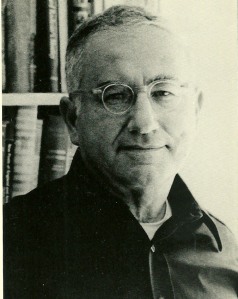
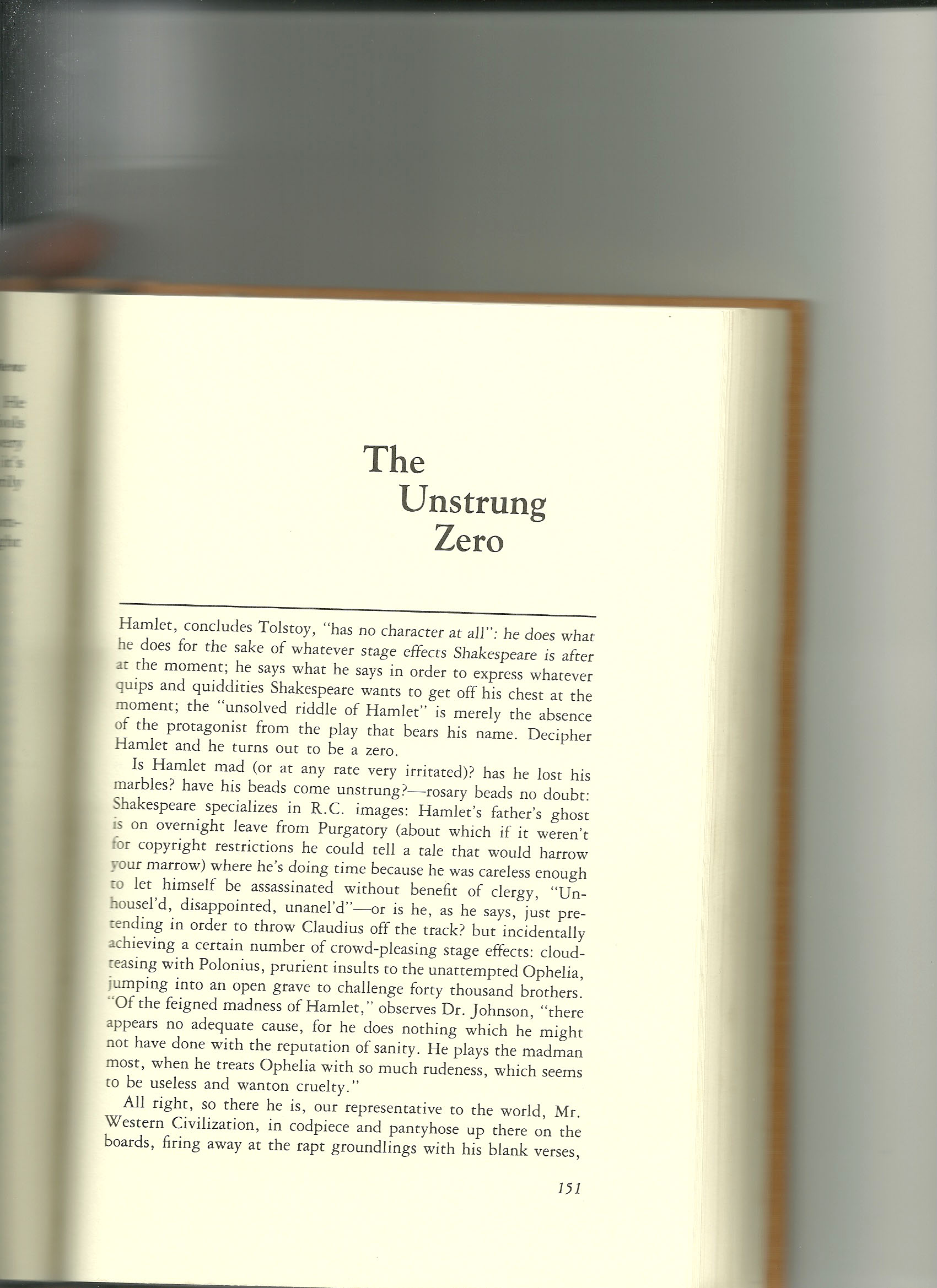
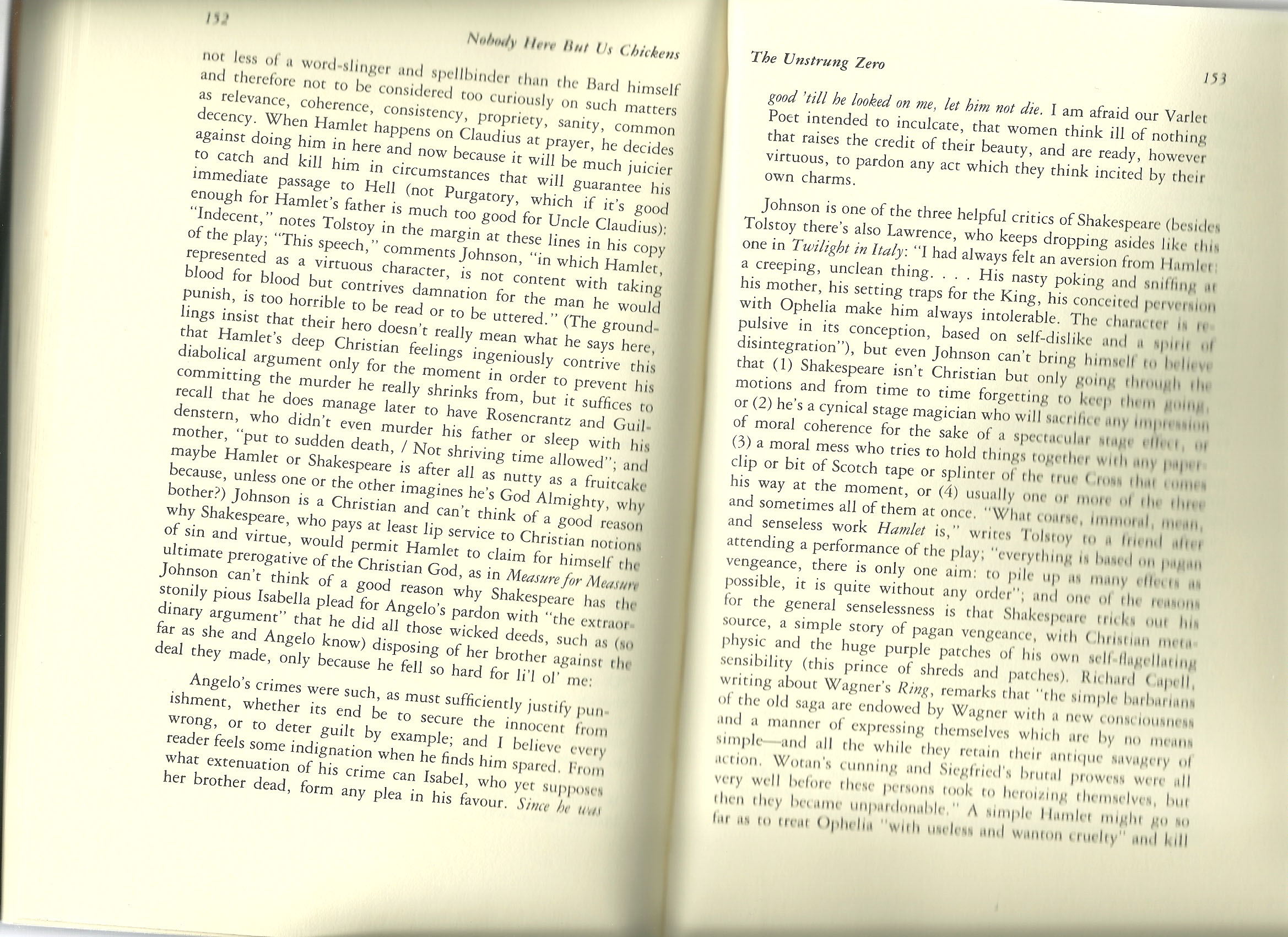
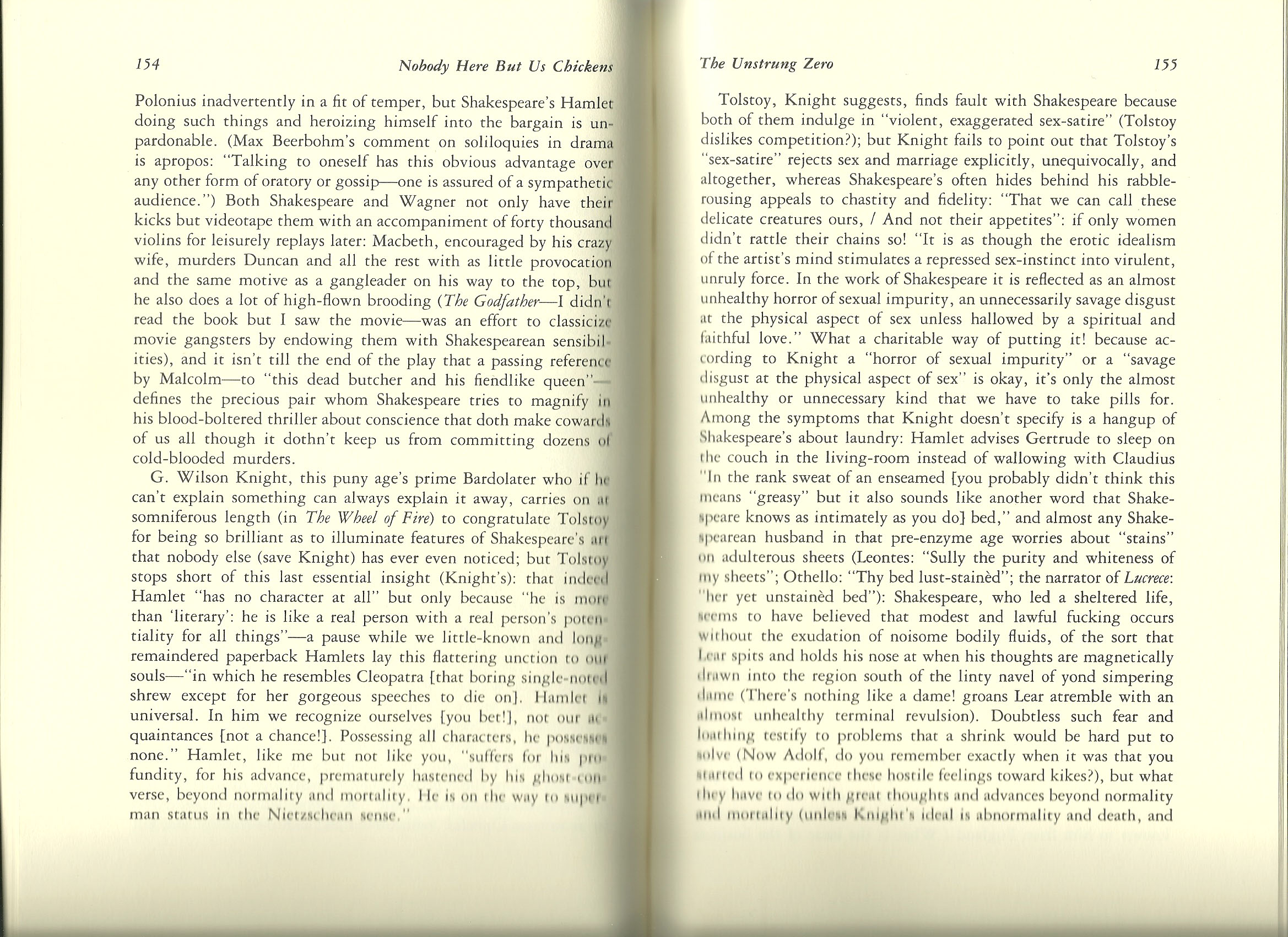
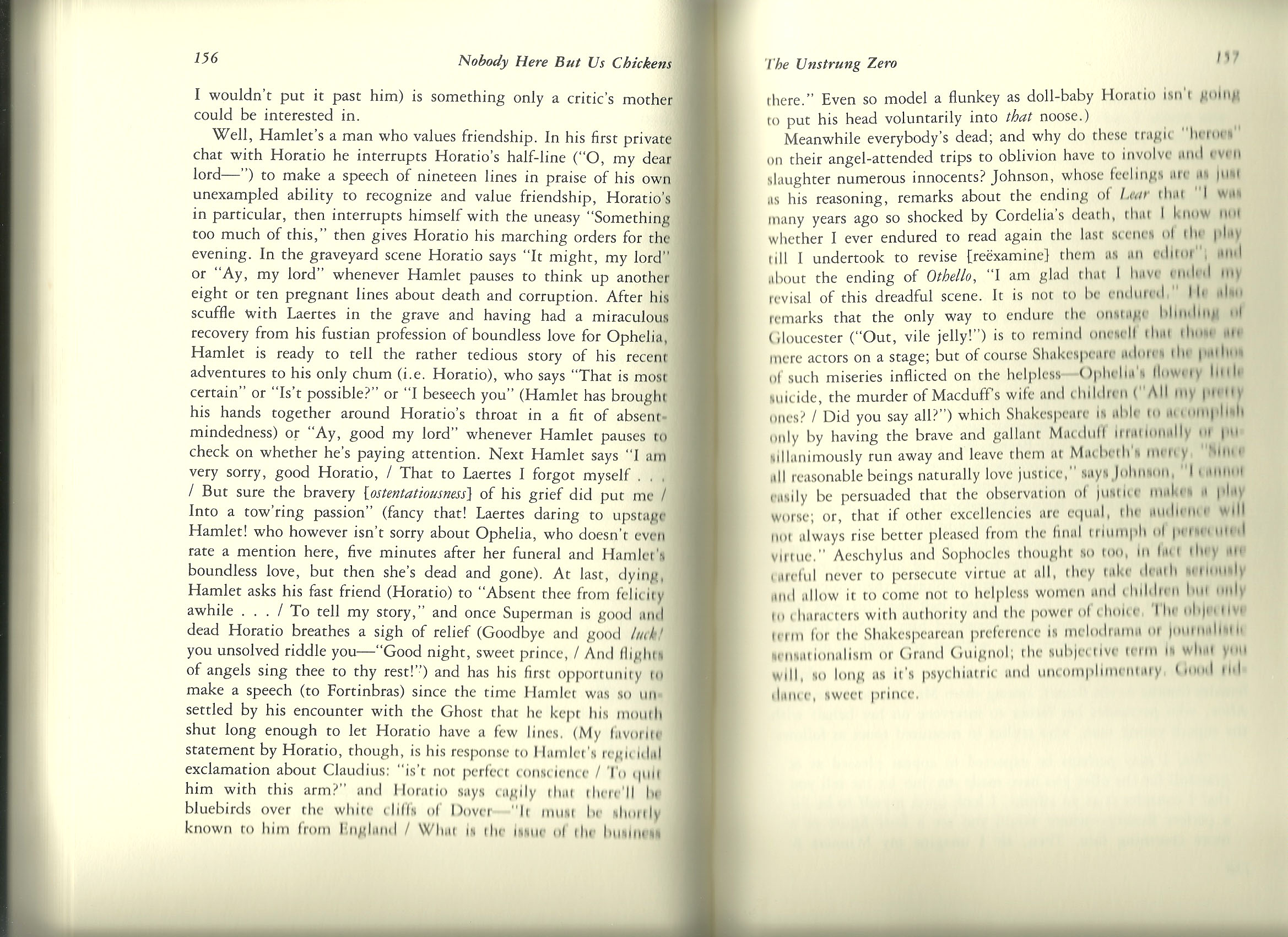
Marvin Mudrick’s Nobody Here But Us Chickens – arguably the most eccentric book of literary criticism ever written by a sane writer – is long out of print. So I’ve scanned in one chapter (“The Unstrung Zero”) dealing with Hamlet. Mudrick write about Shakespeare elsewhere in the book, sometime appreciatively, but here he is at his most tart. (The rest of the book, with discussions of everyone from Lady Murasaki to Leon Trotsky, is very much worth reading).


Trial By Fire: Mad Max, Rorschach, and the Girl With the Dragon Tattoo

 
Three Scenes
 
In the climactic scene of the Swedish film Män Som Hatar Kvinnor — literally, “Men Who Hate Women”; released in the U.S. as The Girl with the Dragon Tattoo[1] — the serial killer, Martin Vanger, fleeing from the heroine Lisbeth Salandar, runs off the road and flips his car.  Injured and trapped, he pleads for his life as gas leaks from the tank:  “I can’t… I can’t… I can’t move,” he cries piteously.  “I can’t move.  Help me.  Please help me.”  Lisbeth, however, can spare no feeling for the rapist and murderer who is suddenly at her mercy.  She watches silently as the vehicle catches fire, and walks away while Vanger screams.  We see the car explode behind her.

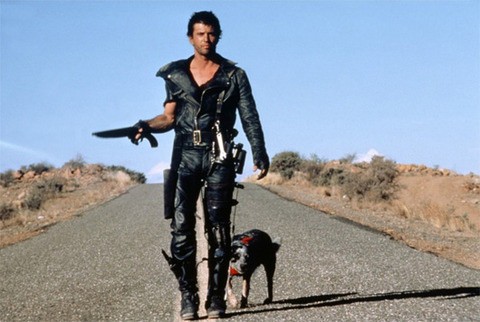
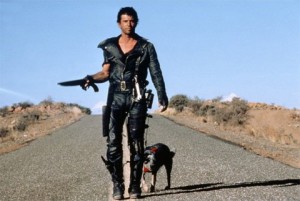
The image is distinctly reminiscent of another, filmed three decades before.  In the final scene of 1979’s Mad Max, the cop — or ex-cop — Max Rockatansky finds himself similarly confronted with an enemy at his mercy.  Here, too, a vehicle is overturned, leaking gas, and the villain pleads with the hero:  “Don’t bring this on me, man.  Don’t do this to me, please.”  And here, too, the hero is unmoved.  Max, in fact, takes a more active role that Lisbeth.  He handcuffs the “Johnny the Boy” to the overturned truck, fashions an ad hoc fuse where the gas is leaking, and hands him a hacksaw, saying:  “The chain in those handcuffs is high-tensile steel.  It will take you ten minutes to hack through it with this.  Now, if you’re lucky, you can hack through your ankle in five minutes.”  As Max drives away, we see the explosion in the background.

The hacksaw shows up again a few years later in Alan Moore’s graphic novel, Watchmen.[2]  In the sixth chapter, Walter Kovacs recounts how he became the masked avenger Rorschach:  “1975. Kidnap case.  Perhaps you remember.  Blaire Roche.  Six years old. . . .  Thought of little child, abused, frightened.  Didn’t like it.  Personal reasons.  Decided to intervene.  Promised parents I’d return her unharmed.”  He does, eventually, find the girl — or rather, her remains. Then Rorschach waits, hiding, for the killer to return home.  When he does, Rorschach handcuffs him to an old stove, leaves him with a saw, and sets the building on fire.  Unlike Lisbeth or Max, Rorschach stays to face what he has done:  “Stood in street.  Watched it burn. . . .  Watched for an hour.  Nobody got out.”

The Moment of Truth

In each of these stories, the incident with the fire — triumphant and horrifying — is treated as a revelation.  It shows us what kind of person the hero really is.

Yet in all three stories, the hero had already been portrayed as ruthless and vengeful.  Lisbeth had previously tortured and then blackmailed a rapist.  Max had hunted down and killed other members of a murderous motorcycle gang, sometimes using torture to do so.  And Rorschach’s methods are so extreme they even frighten other superheroes.  But to kill a person who is helpless is presented as an ultimate transgression, a final forbidden threshold, a border at the outer limits of moral goodness.

All three heroes kill their helpless adversaries, if only by their inaction, but the event signifies different things for each of them.  For Rorschach it is a transformation:  When he sees that the kidnapper had killed the girl and fed her to his dogs, he recalls, “It was Kovacs who closed his eyes.  It was Rorschach who opened them again.”  For Max the crisis is the culmination of a process long underway:  He had previously worried that “any longer out on that road, and I’m one of them. . .  a terminal crazy.”  By the end he has lost everything to the forces of barbarism — his friend, his family, his sense of his own goodness — and he does, finally, become a barbarian himself.  The representative of law becomes an outlaw.

For Lisbeth, however, the revelation is different.  As she watches Vanger burn, she flashes back to a scene of a child deliberately throwing gas on a middle-aged man, and setting him ablaze.  In the second film of the series, The Girl Who Played with Fire, we learn that she was the girl; the man, her father; and she was acting to save her mother from his persistent abuse.  Lisbeth was institutionalized as a result. Thus her character is revealed at the climax, but with reference to a transformation that occurred much earlier.  And yet the two scenes are identified: she is, in some ways, still that little girl.  And, watching Vanger burn, it is as though she is not only remembering, but re-living the first attack.  In that sense, by the film’s identification of these acts, we again see the heroic transgression as both revelatory and transformative.

It is interesting to compare Lisbeth’s back-story and Rorschach’s.  Walter Kovacs, too, saw his mother mistreated by men, and was himself “regularly beaten and exposed to the worst excesses of a prostitutes (sic) lifestyle.”  The critic Katherine Wirick has persuasively pointed to textual evidence that he was sexually abused as well.[3]  Then in one scene, Kovacs — just a little boy — attacks some older children who are threatening him.  Fire is the weapon here, too: he burns one of the bullies, blinding him with a cigarette.  After that he is institutionalized.

But Rorschach’s transformation comes later, like Max’s.  And in both stories, the critical moment when they put themselves beyond the law comes as a kind of revelation, not only about them, but for them.  Max has learned how fragile civilization really is, how easily chaos overtakes order.  Rorschach, likewise, opens his eyes.  As he watched the kidnapper’s house burn, he

looked at sky through smoke heavy with human fat and God was not there.  The cold, suffocating dark goes on forever, and we are alone. . . .  Existence is random.  Has no pattern save what we imagine after staring at it for too long.  No meaning save what we choose to impose. . . . .  Was reborn then, free to scrawl own design on this morally blank world.

Lisbeth, however, experiences the climactic scene not as a revelation, but as a return to painful memories.  She has known for a long time the kind of world she is living in.

So Max abandons civilization for the wasteland, and Rorschach uses violence to impose order where none exists — but Lisbeth’s rejection of order takes the form of resistance.  Martin Vanger is not merely a rapist and serial murderer.  He is also wealthy and powerful, from a prominent family with a Nazi past.  In the context of the story, he is a representative of the social order, and especially its worst aspects — corporate control, lingering fascism, racism, and male dominance.  And Lisbeth’s father, too, (we learn in the sequels) is not only a misogynist and a bully, but a human trafficker operating with the protection of ta secret section of the intelligence services.  It is not chaos, but the forces of order, that Lisbeth fears; and when she attacks her father, and later, when she lets Vanger die, she does so to protect the people she loves.

Redemption Without Forgiveness

Mad Max ends with Max driving into the desert, the explosion behind him, his transformation from law to lawlessness complete.  But the movie’s sequel, The Road Warrior, tells the story of his redemption.  After months, or possibly years, surviving as a kind of scavenger, Max helps to defend a small community against a horde of bandits and regains some of his humanity in the process.  It is a story of redemption, but redemption without forgiveness: The people he has helped to save leave him stranded on the roadway, in the desert, alone.  The future he has fought for, and the community he defended, have no place for him.

Rorschach’s redemption is equally ambivalent.  He alone, among all the superheroes, cannot be blackmailed into silence after discovering that one of their own has attacked New York, killing millions but likely averting nuclear war.  Ozymandias asks, “Will you expose me, undoing the peace millions died for?  Kill me, risking subsequent investigation?  Morally, you’re in checkmate.”

Dr. Manhattan, the Silk Specter, and the Nite Owl, all quickly acquiesce: “Exposing this plot, we destroy any chance of peace, dooming earth to worse destruction”;  “We’re damned if we stay quiet, Earth’s damned if we don’t.”  They soon agree to “say nothing.”

To which Rorschach replies: “Joking, of course.”  He then interrupts further argument:  “No.  Not even in the face of Armageddon.  Never compromise.”

Rorschach’s unwavering position is just what we should have expected — not because he believes in moral absolutes, exactly, but because he believes that we alone are responsible for the world we live in.  As he watched the fire that fatal night, years before, Rorschach realized, “This rudderless world is not shaped by vague metaphysical forces.  It is not God who kills the children.  Not fate that butchers them or destiny that feeds them to the dogs.  It’s us.  Only us.”  Later, in his last entry in his journal, he wrote:  “For my own part, regret nothing.  Have lived life, free from compromise . . .  and step into the shadow now without complaint.”  The only thing that Rorschach can be certain of is his own integrity, and so that becomes his absolute.  He is unbending in his own moral code precisely because he has seen that there are no absolutes.

The other heroes, equally naturally, cannot allow him to reveal what he knows.  The only way to stop him is to kill him, and Rorschach accepts this martyrdom.  But it is significant, I think, that at the end he takes off his mask.  Facing death, he becomes, once again, Walter Kovacks.  In death, Rorschach rejoins humanity.[4]

Lisbeth Salandar fares better.  She walks away from the burning car and returns to Mikael Blomkvist, her investigative partner and occasional lover.  Later, he asks her:

“What happened out there?  He didn’t die in an accident, did he? …”

“He burned to death.”

“Could you have saved him?”

“Yes.”

“But you let him burn.”

“Yes.”

Mikael thinks for a long moment, and lies down, exhausted.  Lisbeth lies next to him.  Struggling to speak, he says: “I would never have done that, Lisbeth.  But I understand why you did it.  I don’t know what you’ve been through.  . . .  Whatever it is you’ve been through — you don’t have to tell me.  I’m just glad you’re here.”

“Thanks,” she says, and takes his hand.

Mikael’s reaction is complex.  He neither idealizes nor judges.  He does not justify her action, or forgive it.  He wants only to understand, though he will not demand that she explain herself.  It is a moment of deep compassion.  Sympathetic understanding is a reaction not usually associated with heroism, but one most appropriate to tragedy.

Heroic Sacrifice

Understanding is not without its risks.  The title of Watchmen’s sixth chapter, “The Abyss Gazes Also,” is taken from a quote of Nietzsche’s: “Battle not with monsters, lest ye become a monster, and if you gaze into the abyss, the abyss gazes also into you.”  In the story this epigram refers, first, to Rorschach’s nihilistic epiphany and the change in character that overtakes him, and then, to the attempts of a prison psychologist to comprehend the workings of Rorschach’s mind.  But the warning might apply to the reader as well:  Our heroic fictions sometimes contain dangerous truths.

It is possible to read these stories — Mad Max, Watchmen, and The Girl With the Dragon Tattoo — as revealing, not only the nature of these heroes, but the dark side of our heroic ideals.  (That is, after all, the entire point of Watchmen.) The transformation of victim into avenger is central to revenge stories, of course, but in each of these three cases that transformation is also treated as a kind of loss.  There may be some symbolism in the fact that both Rorschach and Max offer their victims an improbable and cruel chance for escape.  Are they suggesting, from their own experiences, that the price of survival is severing a part of oneself?

The heroic figure is defined, in large part, by the risks he accepts and the sacrifices he makes.  What these stories show is that, among the things he may risk — and sacrifice, if need be — is not merely his life, but his own moral standing.  This risk, this sacrifice, cannot be understood only in terms of particular actions, but more broadly as such actions help to shape one’s character.  At the end of the ordeal, a hero may well be a worse person.[5]  We often hear of the heroic virtues — qualities such as courage, loyalty, and resilience — but less is said of the heroic vices.  Prolonged exposure to violence may well leave one bitter, vengeful, suspicious, cruel, callous, even cynical and sadistic.  In the revenge fantasy, it is precisely these attributes that motivate the heroic transgression.

Our heroes — Max, Rorschach, Lisbeth — are not just imperfect, they are deeply damaged.  And their actions seem to occupy a space outside of our normal moral judgments.  The deaths they cause cannot rightly be called justice, but neither are they merely murder.  And these killers, whom we may love or admire, are not simply Good Guys, and are not quite villains.  In this sense they might be thought of as monstrous.  The evil they do is the result of their virtues, and the good that they do depends upon their vices.  These two elements cannot be separated, they cannot be reconciled, and they do not cancel each other out.  The heroic ideal subsumes, or surpasses, our moral categories; the heroic figure, however, is sometimes destroyed by the contradiction.  Hence, the sense of tragedy.  Hence, also, the need for redemption — to enter, again, into the moral community, to regain some measure of humanity.

[1] I’m writing specifically of the first film.  The American film, and the original novel, on which the films were based, handle this scene quite differently.

[2] Here, I’m specifically discussing the comic.  The saw is absent from the film version.

[3] Katherine Wirick, “Heroic Proportions,” The Hooded Utilitarian, April 5, 2012.

[4] This reading gives a double meaning to Dr. Manhattan’s earlier prediction: “I am standing in deep snow. . .  I am killing someone.  Their identity is uncertain.”

[5] It is interesting how commonly philosophers have forgotten about the effects on one’s character as a relevant moral consideration.  Thomas Nagel, for example, has written:  “the notion that on might sacrifice one’s moral integrity justifiably, in the service of a sufficiently worthy end, is an incoherent notion.  For if one were justified in making such a sacrifice. . . then one would not be sacrificing one’s moral integrity by adopting that course: one would be preserving it.”  Thomas Nagel, “War and Massacre,” in Mortal Questions (Cambridge: Cambridge University Press, 1980) 63.   Notice that Nagel assumes that the person who embarks on the sacrifice and the one who remains when the sacrifice is over are substantially the same.  One may tell a lie for decent and even justifiable reasons.  If those reasons force one to lie repeatedly over a long enough period, however, it seems at least possible that one will lose the habit of truthfulness, and his estimation of its value may well decline.  The notion that one’s integrity is preserved not only during such a shift in values, but through it, would seem to rob the notion of integrity of any content.

The End of Hate

We’ve come to the end of our massive 5th anniversary festival of hate. An index of articles by author is here. We also have a handy index listing all the hated things themselves here.
___________________

A couple days ago, Jones (One of the Jones Boys), put up a post logically proving that it is impossible to have a worst comic ever. He argues that there are so many different ways for a comic to be bad that it is impossible to rate or weigh them. Or, as he puts it:

What I claim is that the ways a comic can be bad are irreducibly plural and literally incommensurable — there is no way to put all these different ways together so that you end up with a single dimension of badness (which, if you recall, is what we need in order to declare something the X-est Y, in this case the worst comic of all time).

I agree that this is a good argument for why there is no worst comic ever. The one flaw is that it uses the term “worst comic ever” in a way in which no one actually uses the term “worst comic ever.”

The point being…it’s hard for me to imagine that anyone participating in this roundtable, or anyone reading this roundtable, really believed when they picked a comic to discuss or read about that that comic was, in an objective or even in a subjective sense, the worst comic ever. Aesthetics isn’t math, and no one (except maybe Jones, in some of his more fey philosophical moods) thinks of it as math. When we talk about the “worst comic ever” we’re not actually talking about quantifying comics linearly. At most, I’d say, the ranking is a metaphor — and understood as such by virtually everyone who ranks any aesthetic object. Even in something like the HU Best Comics Poll, which was based on counting survey results, the organizer of the endeavor, Robert Stanley Martin point out that the ranking is “an interpretation”, not an algorithm — and that the list is therefore a conversation, not a solution.

Again, Jones focuses on the fact that there is no one — nor even two, nor ten, nor ten thousand — way(s) to evaluate comics. He presents this as evidence of the futility of naming the worst comic ever. But on the contrary, I think the impossibility and messiness of the task is precisely the reason that best of (and sometimes worst of) questions are fascinating — and illuminating. In choosing a best or worst, and in defending our choices, we reveal — and not just to others — what matters in art, and why. Of course those revelations are themselves often confused, vacillating, contradictory and vague — but that merely makes them a reflection of the aesthetics with which they’re engaged. Rather than thinking about ranking (or should we say criticism?) as a debased and innately functionless branch of logic, perhaps we could think of it as a genre itself — as useless, as frustrating, as stupid, as partial and as sublime as any other aesthetic effort to represent the world.
____________________

If the worst comic ever is a genre, one can perhaps ignore its possibility, and instead think about its tropes. In that context, and on the basis of this roundtable, I think subdee is dead on when she says, “Though there are exceptions, it seems to me that very often, to hate something you also have to love it.”

In life, real antipathy often has to wait upon love spurned — and that’s often the case in criticism as well. Thus, Bert Stabler writes about his early love and recent disillusionment with Chris Ware, while Jason Michelitch talks about his early love and recent disillusionment with Matt Wagner. Derik Badman and Richard Cook, on the other hand, write about realizing that that first shiny nostalgic love wasn’t so lovable after all. In other cases — for example, Ng Suat Tong, Susan Kirtley, Vom Marlowe, Matthias Wivel — love hovers in the background as a popular or critical imperative, transforming alienation or indifference into a more weaponized dislike.

Selecting the worst comic ever, then, seems to depend not only, as Jones argues, on all the myriad ways in which comics can be bad, but on all the myriad ways in which they can be good — and even more, perhaps, on the ways that it’s difficult to pull the two apart. The purpose or end of hate is love — and so, while this roundtable may be coming to a close, we can all rest easy knowing that as long as we love comics, there will be no end to hate.

__________________

Early on in the roundtable I mentioned that I didn’t think that hate was all that popular. Which just goes to show what I know. This last five weeks has seen far more traffic than we’ve ever gotten outside of the crazy couple months when the Victorian Wire post went viral. Perhaps the world really does love hate…but I suspect instead that the success is due to the genius, time, and care which all our contributors donated to help us celebrate our anniversary. Thanks so much to all those who posted, to those who commented, and to our readers as well. It’s been a great roundtable and a lovely five years.
_______

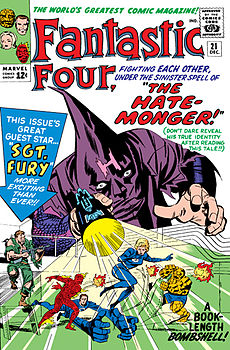
The cover is from Fantastic Four #21 by Jack Kirby (who, of course, is hated here.)

Hot For Teacher

This first appeared at Splice Today.
_____________

Student-teacher relations have been a source of sexual fantasy at least since the time of Socrates.  Across history, the young and the nubile meet the powerful and experienced in the fevered imaginations of both, as well as in a kajillion bad porn scripts.

Probably the most famous modern iteration of the archetype is Van Halen’s 1984 hit song “Hot for Teacher” and its accompanying music video. The latter infamously featured a teacher stripping to her underthings atop a desk and gyrating in front of a group of wildly cheering middle-school students.


Sex and kids is a sure-fire recipe for controversy, and inevitably the “Hot for Teacher” video inspired protest and condemnation from the usual quarters.  Looking back on it from a couple decades on, though, what’s most notable about it is its resolute unsexiness.  Part of that can perhaps be chalked up to changing styles and perhaps personal preference— the thin-as-a-rail, teased-out eighties models who play the part of eye candy seem more like weirdly dated manikins than like actual fetish objects.  When the camera lingers hungrily on the back of teacher’s skirt, the main impression you’re left with is, “Jeez; that woman has no ass.”

But there’s more to the lack of heat than just changing fashion.  Indeed, considering the subject matter, gyrating female bodies are really on camera for a remarkably limited period of time.  Instead, we get a lot of the Van Halen band doing a consciously campy Vegas dance routine beneath a glowing disco ball and numerous shots of Waldo, a bespectacled Clark Kent of a kid paralyzed with nerdiness.  And, of course, plenty of footage of Van Halen partying.  With kids.

The truth is that the video isn’t really about lusting after the teacher at all. Instead, it’s about lusting after a childhood in which you lusted after the teacher.  The whole short film is focused on adults imagining how cool they could have been in high school if they had known then what they know now — and, simultaneously, on kids imagining themselves as being adults. The Van Halen band members are portrayed both by the real Van Halen and by a group of kids dressed like the adults.  The video unabashedly blends both identities, with the adults sitting right beside their younger selves in class and the kids lip-syncing the lines in the voices of their grown-up doppelgangers.  The hot teacher is just an accessory; a convenient stand-in for the real passions, which are between male adults and their younger iterations.  The adults want the rebelliousness and goofy energy of youth; the kids want the sexual opportunities and confidence of grown-ups.  And both achieve their dream not by sleeping with the teacher, but by rocking out.

Unlike Van Halen, when Ke$ha’s sings about intergenerational sex she really sounds like she wants to have sex with someone other than herself.  Van Halen never even bothered to name the teacher they were hot for; Ke$ha does so right in the title of her 2010 bonus track “Mr. Watson.”  The song is addressed specifically to the object of affection, rather than, as with Van Halen, to a generalized audience of like-minded horn-dogs.  “Oh boy I just can’t wait for history class/ It’s my favorite hour of the day,” Ke$ha coos at the song’s opening.  She’s got the giddy, giggly energy of a high school crush — a far cry from David Lee Roth’s entirely impersonal concupiscence (“I wonder what the teacher is going to look like this year?”)

As this suggests, Ke$ha is much less coy about pretending to be an actual student than the Van Halen guys.  For Halen, the whole point of the song was the frisson between then and now. Ke$ha, on the other hand, comes on as if her wriggling butt is actually in one of those plastic chairs.  Instead of Eddie Van Halen’s swaggeringly virtuoso guitar solo, “Mr. Watson” is all bouncy bubble-gum choruses, chirrupy girl-group harmonies, and Ke$sha’s producer-sweetened, mewling vocals.

Part of the reason that Ke$ha’s song seems less distanced is perhaps that she’s playing an older student — someone of at least high school age. Or at least, I really hope that’s what she’s doing, because the song is significantly more explicit than Van Halen ever dared to be.  “I can’t put my finger on what’s so sexy/or why I want you in my bed/ (or on your desk)/is it your power or authority/or for the thrill of being bad?”   If Van Halen’s version of teacher-sex basically involved having the hot authority figure available as an opportunity for male bonding, Ke$sha’s version is a lot more direct in its desire to seize the rod of puissance. (“I want to get my hands in your khaki pants…mrow!”)

At first glance, Ke$sha’s song seems to serve equally as male or female fantasy (as she says, “I know it’s a fantasy of yours/ you know it’s a fantasy of mine!”)  And certainly, the kittenish yet sexually aggressive school girl complete with Catholic uniform is a male porn staple.  Still, the song vigorously objectifies Mr. Watson in a way that doesn’t necessarily cater to male tastes.  That khaki pants line, or Ke$ha declaring “Up on the chalkboard I just love your ass/ when you write notes it’s just shake, shake, shake” — you get the somewhat uncomfortable sense that she’s making fun of the guy.


And indeed, though he is named, and gets a specific ass and pants to call his own, at bottom (as it were) it’s not clear that Mr. Watson is any more real than Van Halen’s gyrating eighties manikins.  Ke$sha is explicitly lusting after and somewhat more subtly mocking a stereotype or an icon, not a person.  The excitement of the fantasy is, as she says, the ability to be girlish and innocent while simultaneously seizing sexual power.  The switch in gender and genre changes the exact mechanics, but the point isn’t that far removed from Van Halen’s.   Lusting after a fantasy teacher is a way to make the student more confident, more sexy, and more real.

“Teacher”, a 2009 single by weirdo indie art duo Ina Unt Ina takes a very different approach.  In the first place, it’s not a fantasy.  And, in the second place, it’s not heterosexual.

Two weeks to sixteen
leaning against the wall
kissing boys
but my eyes, my eyes are following you.

Why do I stare?
Why do I care?
Why do I stare?
Why do I care?

Teacher, teacher sexy creature.
I want to die and I don’t know why.

The music here is sparse electropop. The synth hook references girl groups, but without Ke$ha’s anthemic horniness.  Instead, the harmonies here are wistful and the cadences don’t really resolve. Instead the song drifts. The catchy melodies wash up against one another and the song at various points seems to almost stop before picking itself up and moving on again, as if it’s unsure when or where to end.

The point is fairly obvious; from a lesbian perspective, high school sexuality is less about seizing power and more about confusion, questioning, and a swooning loss of self.  Van Halen and Ke$ha know what they’re after, but Ina Unt Ina doesn’t even know why they’re after what they’re after.  “Early morning, on the roof, I’m secretly looking down/ watching you move, watching your hands, I’m secretly looking down.”   The distance between student and teacher which is so exhilaratingly easy to bridge for David Lee Roth or Ke$ha here becomes unbridgeable. Desire doesn’t pull Ina Unt Ina near; instead it pushes them out and up and away. The song finishes with the singers chanting “don’t know how to get close to you/don’t know how to get close to you.”  Desire is never consummated, and if the singers know themselves somewhat better at the end of the song than they did at the beginning, that knowledge only leads to more, and more poignant, uncertainty.

Again, this is obviously, and intentionally, a song about being gay.  Yet of these three songs, “Teacher” is easily the closest to my own experience of heterosexual high school crushes. Said crushes were not, as far as I remember, particularly empowering and/or triumphantly lascivious.  Instead, they were, for the most part, confusing and destabilizing.

Of course, Van Halen and Ke$ha aren’t going for realism.  They’re going for dreams of invulnerability; a kind of super-hero version of hyperbolic heterosexuality.  I get the appeal— both “Hot for Teacher” and “Mr. Watson” are great songs.  But I think we all learned in school that love is queerer than that.

Index of Hated Things

Charles Addams

Anything you can’t find on the rest of the list, probably

Peter Arno

Nate Atkinson

Autobiographical comics (all of them).

George Booth

Batgirl/Stephanie Brown Women in Refrigerators Story Arc

Betty and Veronica

Buffy: Season Eight

Roz Chast

Frank Cho, Liberty Meadows

The Collection of Sean Michael Robinson

Ctrl-Alt-Dlt.

Dragonlance #3.

Kazuke Ebine, Mahatma Gandhi

EC Comics in general.

EC War Comics in particular.

Will Eisner, The Spirit.

Gardner Fox/Carmine Infantino: Adam Strange/Justice League Team-Up

Neil Gaiman, Sandman

Neil Gaiman in general

Edward Gorey

Fletcher Hanks.

Jamie Hewlett, Tank Girl

Helen Hokinson

Geoff Johns, Blackest Night

Kim Dong Hwa’s Color Trilogy

Jack Kirby

Rich Koslowski, Three Fingers

Regis Loisel, Peter Pan

Jason Lutes

Milo Manara, Fatal Rendezvous

Robert Mankoff

Benjamin Marra, Gangster Rap Posse

Alan Moore/Brian Bolland, Killing Joke.

Alan Moore/David Lloyd, V for Vendetta

Alan Moore/Dave Gibbons, Watchmen

Thomas Nast

New Yorker Cartoons

Tsugumi Ohba/Takeshi Obata, Bakuman

Denny O’Neill/Neal Adams, Green Lantern/Green Arrow

Natsume Ono.

Alex Ross and Mark Waid, Kingdom Come

Johnny Ryan

Dave Sim and Gerhard, Cerebus

David Small, Stitches

Art Spiegelman, Maus

Spirou et Fantasio a New York

J. Michael Straczynzki, Midnight Nation

J. Michael Stracyznski in general

Osama Tezuka.

Craig Thompson, Goodbye Chunky Rice

Craig Thompson, Habibi

Matt Wagner, Batman/Grendel II

Western Civilization

Judd Winick, Pedro and Me

X-Men: Onslaught

Ai Yazawa, Nana #22

__________

Click here for the post author index.


Utilitarian Review 12/6/12

HU News

James Romberger’s awesome collaboration with Wallace Stevens from HU’s illustrated Wallace Stevens roundtable was selected as a notable comic of the year in this year’s Best American Comics anthology. Regular contributor Derik Badman also was selected for his comic Badman’s Cave. Congratulations to both of them!
 
On HU

Subdee on how she would love Bakuman except for that one thing.

Conseula Francis on why she hates Watchmen.

Vom Marlowe on the misguided craft of Alex Ross.

Melinda Beasi on why she hates the Kim Dong Hwa’s Color Trilogy.

Sean Michael Robinson on hating the collection, not the collector.

Matthias Wivel on the New Yorker’s legacy of mediocre cartoons.

Jones, One of the Jones Boys explains why there can’t be a worst comic ever — and points out many comics that are nonetheless quite bad.

By popular demand (more or less) we have an ongoing thread on whether Cerebus is the worst comic ever.

Me on Nana #22 and the worst comic being the one that doesn’t exist.
 
Utilitarians Everywhere

At Splice I talk about Chris Connelly and nostalgia for cassettes.

At Splice I make fun of the Economist’s vapid knee-jerk bipartisanship.

At Splice, I urge panicking Obama supporters to chill the fuck out.
 
Other Links

Martyn Pedlar on Theo Ellsworth’s The Understanding Monster.

This Week’s Reading

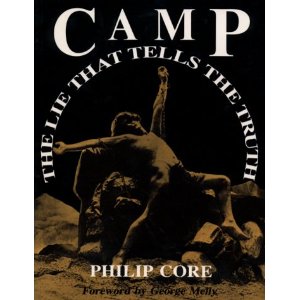
Lilli Carre’s Nine Ways to Disappear, which wasn’t bad, but a little disappointing; Jeffrey Brown’s Darth Vader and Son, which wasn’t great, but more enjoyable than I expected; Philip Core’s Camp: the Lie That Tells the Truth, which is amazing; Aubrey Beardsley’s “Under the Hill”, and started Kate Soper’s “Humanism and Anti-Humanism”.
 

Nana #22

The last issue of Ai Yazawa’s Nana in English is volume #21. The series stopped publishing in 2010, when Yazawa contracted an unknown illness. She hasn’t been able to work since.

Nana could not have picked a worse moment to come to an abrupt end. In Volume #20, Ren, the lead guitarist of Trapnest and the boyfriend of Nana Osaki, dies in a car crash. Volume #21 is an extended, painful depiction of grief, in all its overwhelming, banal detail. At this point in the series, after hundreds and hundreds of pages, we know all of Yazawa’s characters intimately, and their every characteristic and uncharacteristic action as they learn of their loss takes on an almost unbearable weight.


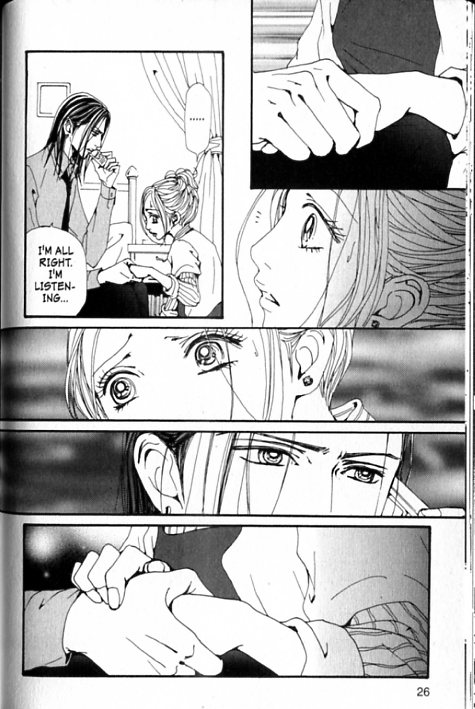
For example, it seems like the most natural thing in the world for a husband to grab his wife’s hand for support — except that distant, assholish, controlling Takumi hardly ever reaches out to anyone for anything. Nana Komatsu (or Hachi) knows her husband shouldn’t be behaving like this; she looks down at her hand as if she’s afraid it’s going to fall off. Ironically, soon after this, when Takumi views Ren’s body, he sees that the only part of Ren not badly damaged in the accident were his hands, which, a guitarist to the end, he protected during the crash. Ren’s fingers, carefully preserved, hold nothing, while Takumi and Hachi’s, unnaturally, hold, and are held by, his death. It’s not just that there’s space where there should be presence, but that there’s presence where there should be space. Ren can’t hold anything except those he leaves behind.

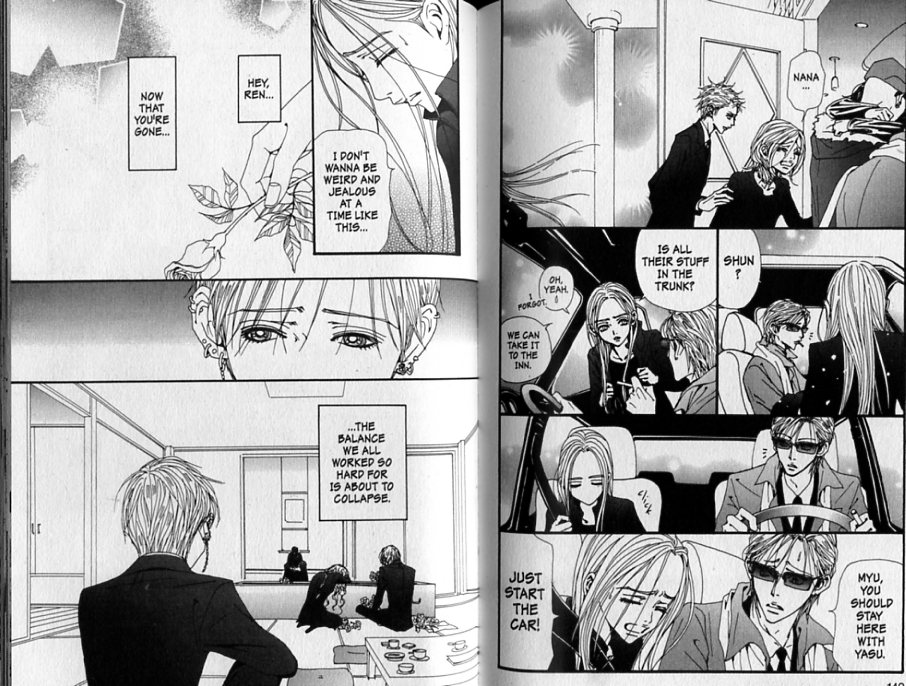
In another sequence, Yasu, Ren’s childhood friend who has an intense long term platonic relationship with Nana, goes to tell her that Ren has died. She’s a rockstar in her own right, and is on tour. Yasu has to fly out to get her and then they drive all night to get back home to see Ren’s body. When they come out of the car, Yasu carries Nana, who is draped over him helplessly. Yasu’s girlfriend, Myu, takes one look at them and flees:


Whereas Takumi’s reaction resonates because it’s not normal, Myu’s is touching because it is. Like Yasu, she’s level-headed and thoughtful. For him, that means being there for Nana when no one else will or can. For her, it means knowing when to get herself out of the way.

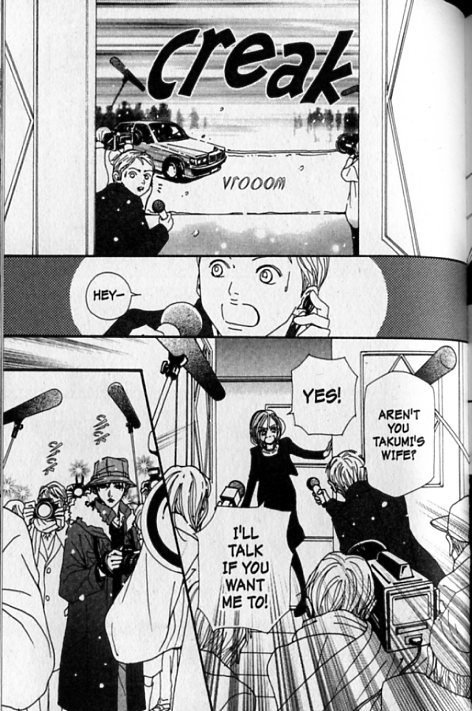
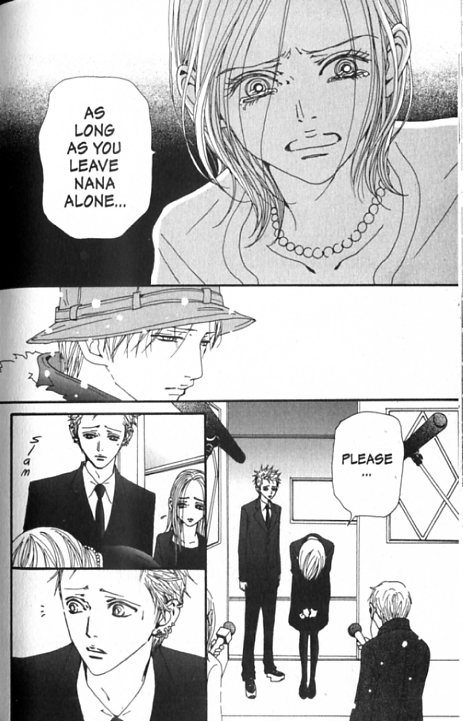
The scene that most affected me, though, occurs a couple pages earlier, when Nana’s car pulls up. Earlier in the series, Nana and Ren’s relationship became a gigantic tabloid news story; in fact, Ren’s car crash was caused in part because he was fleeing the papparazzi. Naturally, then, there’s a scrum of reporters waiting for Nana when she arrives, ready to ask her about Ren’s death. Hachi, Nana’s former roommate and one of her closest friends, intervenes:


Again, the sequence gets its power because we’ve known Hachi so long. She’s a strikingly hapless and needy airhead. She spends the series desperately glomming onto a series of men (and arguably women too) in an effort to get somebody else to provide the backbone and rational decision making functions that she so spectacularly lacks.

And yet, while Hachi is exasperating, she’s also very sympathetic…and this sequence helps to get at why. Over the course of the manga, Hachi develops a huge, somewhat ridiculous hero-worshipping crush on rock-star Nana. This seems like it should be another sign of Hachi’s puppyish infantilism — the nickname “Hachi” is in fact a dog’s name given to her by Nana. But instead of cementing her helplessness, Hachi’s clinging to Nana blurs into a kind of mothering, with Nana, estranged from her own mother, turning increasingly, semi-secretly, and desperately to her friend.

And so, in this sequence, when the worst ha happened, Hachi does what mothers often do, and sacrifices herself for her baby. It reminds me a little of my mother-in-law, who, like Hachi, is in many ways, infuriatingly flighty, and who, like Hachi, married too young. Yet, when my father-in-law (that man she married) was dying of brain cancer, she fed him and cleaned him and struggled tirelessly with a series of indifferent doctors and hospitals to get him the best possible care. Watching her was more than a little awe-inspiring.

Hachi here is awe-inspiring too…but there’s also something heart-breakingly futile about her attempted bargain with the reporters. Nobody takes her up on her interview offer…and indeed, Nana is swept out of the car too quickly for anyone to really get at her, it seems like. Hachi’s sacrifice ends up being superfluous; the story wouldn’t be changed at all without those two pages. Her love and her strength don’t really matter…just like, for all my mother-in-law’s efforts and care, her husband died just the same.

Life is filled with such blind alleys, of course, where the narratives sputter and stall and then go on; where the storyteller seems to have abandoned her work. Genre fiction, on the other hand, always know where it’s going — what’s the point of genre after all if you don’t have a blueprint? Nana, certainly, is as insistently artificial as any soap opera melodrama, packed with tell-tale and impossible coincidences. On the micro level, the two protagonists have the same name; on the macro level, everybody in the manga either becomes a rock star or marries one. That’s the inevitable teleology of fiction, not the stuttering uncertainty of fact.

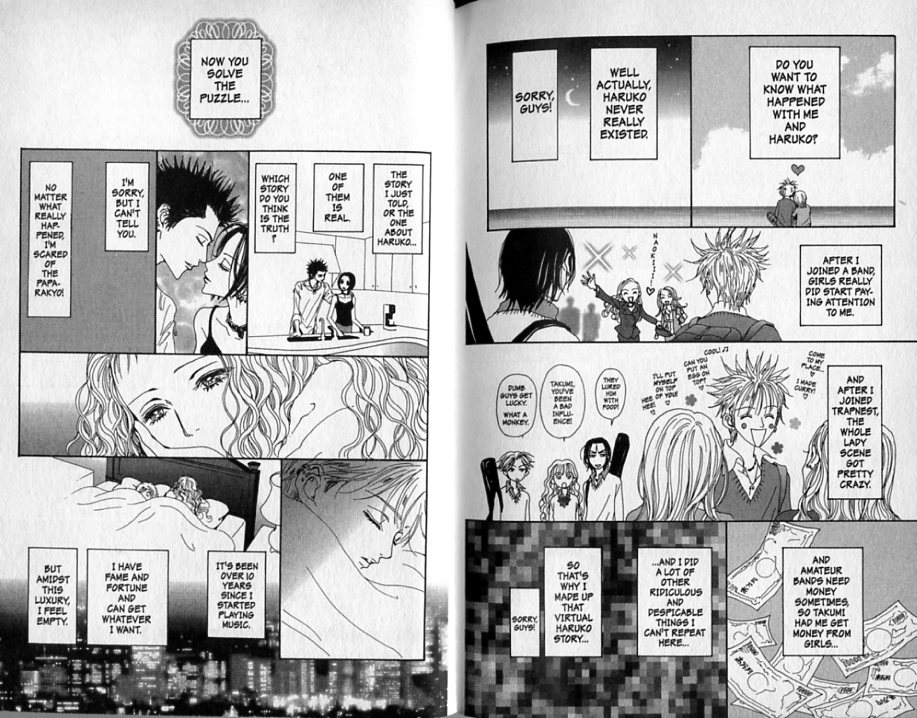
Yet Nana‘s extended discursive format, and the way Yazawa privileges the characters and their emotions over the steady churn of events, often give the series a feeling of being weirdly aimless and fragile. In Nana #9, for example, Yazawa includes a short story purportedly about Naoki, Trapnest’s drummer. It starts with him dying his hair daringly blond, and then proclaiming to his parents, “It’s the real me, maman!”

That could be the start of a tale about discovering one’s true inner rebel rock star. But instead, Yazawa goes in the opposite direction; Naoki narrates, but what he narrates is almost entirely about other characters — or more precisely, about his misinterpretations of the other characters. He thinks Takumi and Yasu are gangsters, he misinterprets Takumi’s relationship with Reira (the Trapnest singer); he fails to recognize Yasu when the later changes his hair. The story isn’t about Naoki finding his real self, instead, it’s about how he fails to discover everyone else’s.

Finally, towards the end of the piece, we learn that there is a center to Naoki’s life — his relationship with his hometown sweetheart, Haruko.

Or, then again…


Haruko may be real, or she may not; her drawn image is either the the core of Naoki, or a meaningless surface. Moreoever, the meditation on truth and lies in the pages above is contrasted, not with pictures of Naoki, but with pictures of Nana and Ren. Haruko isn’t real, Naoki isn’t real…and of course, Nana and Ren aren’t real either. They’re just a dream. In the context of a serialized soap opera, this meta moment, where the headlong narrative collapses into itself, is unsettlingly disorienting. These people we know as friends are just visual illusions; line drawings on the top of nothing. The effect is not so much to knock us out of this story, as to knock us out of any story, including our own. Instead of images arranging themselves into a sequence, they seem to hang still, unorganized bits and pieces that refuse to make a whole. Genre falls apart, as ungraspable as life, or as death.

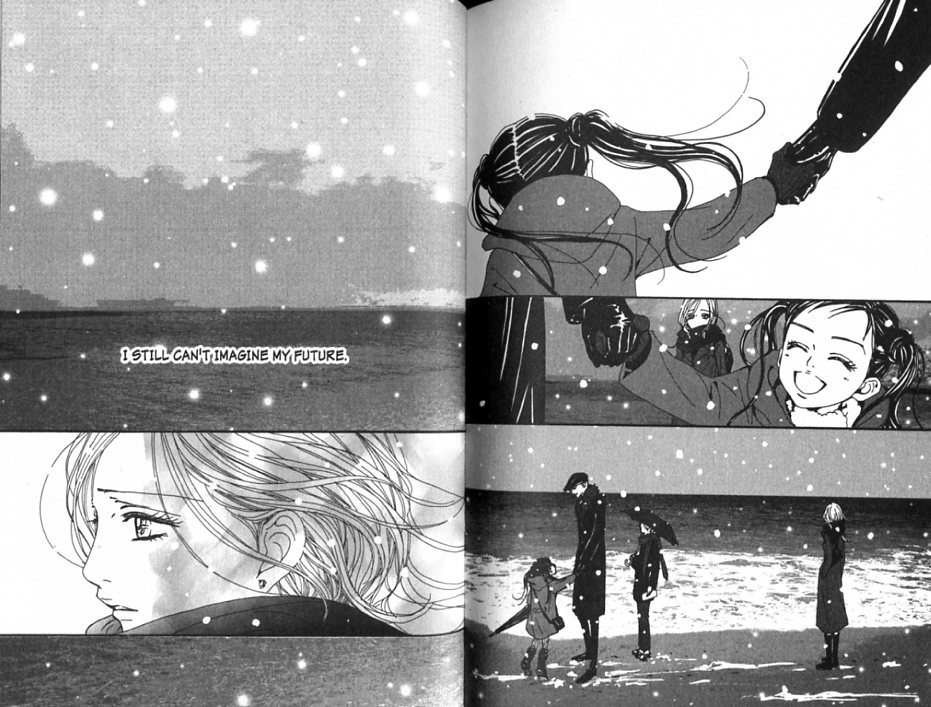
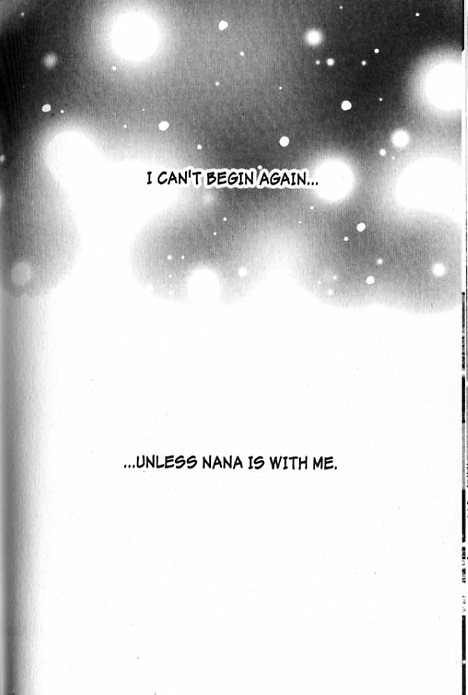
There’s a similar effect in the latter part of the series, when Yazawa begins to let us see glimpses into the future of her characters. But these futures are less a terminus, giving finality and shape to the whole, than a way to extend and double the narrative’s irresolution. Nana-to-come has run away and is living incognito…but perhaps she’ll return. Takumi-to-come and Hachi-to-come are estranged. But that’s not the end of their relationship. It’s simply another stage in it, as subject to change and vacillation as the past. There is no happily ever after, not because there isn’t a happily, but because there’s no ever. The characters keep falling out of the genre narrative, or else the genre narrative falls from around them, like snow dissolving. “After your death, the future we all hoped for was wiped clean,” future Hachi says to the long- passed Ren. “I still can’t imagine my future. I can’t begin again unless Nana is with me.” But while she’s saying that, the future goes on; her daughter plays with Yasu, the waves go in and out, the snow comes down. The plot is gone, but she’s still there, lamenting the fact that death is an end, and also lamenting the fact that it’s not.

Those are the last pages in Nana #21. The series hangs there still, waiting for Yazawa to come back, or never to come back, just as Hachi is waiting for Nana. We’re stuck with grief and a future that won’t tell us what it means. Maybe that’s why sometimes the worst comic book is the one that was never written — the page that you can’t turn, and can’t stop turning.
 
 
__________
Click here for the Anniversary Index of Hate.