The Art of Racism

A version of this review first appeared at the Chicago Reader.
__________

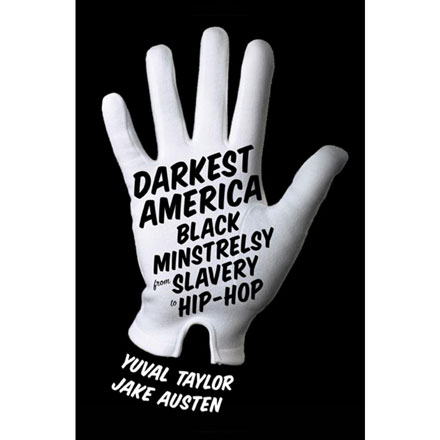
“It was shocking that in a city bursting with parade enthusiasts and curious tourists, a pair of European women who stayed less than an hour were the only white faces in the crowd other than ours,” write Yuval Taylor and Jake Austen in their new book Darkest America: Black Minstrelsy from Slavery to Hip-Hop. (100-101) The two are describing their experiences at Mardi Gras, where they went to watch the Zulu parade, one of the few places in contemporary America where African-Americans will wear blackface as a matter of course. Taylor and Austen describe their own experiences at the parade in order to convey the manic strangness of carnival; to show why and how even blackface can be normal there. At the same time, though, by highlighting their presence at an all-black parade, they emphasize their whiteness — and, paradoxically, their adoption of blackness. The Mardi Gras description is, at least in part, about two white authors momentarily joining the black community. In that sense, the passage can itself be seen as a kind of literary blackface.

This is not to criticize Taylor and Austen. On the contrary, this very mild stumble — if it even rises to a stumble — serves mostly to throw into relief how very surefooted, thoughtful, and perceptive they are for the bulk of the book. This is no mean achievement, since black minstrelsy — the practice of blacks donning blackface and/or performing routines associated with minstrel shows — is surely one of the most charged and uncomfortable topics in American pop cultural history.

In the late nineteenth and early 20th century, blackface performances by whites perpetuated vicious racist stereotypes of happy, lazy, stupid chicken-eating, watermelon-slurping, vacuously-grinning darkies. And yet, as Taylor and Austen show, blacks themselves have been long time, and even enthusiastic participants in the minstrel tradition. From Louis Armstrong to Flavor Flav, minstrel clowning and tropes have been central to black American music and black American comedy.

What, then, did blacks get from minstrelsy? Was it an example of false consciousness, with African-Americans duped into adopting hurtful stereotypes as their own? Or were black entertainers forced to adopt minstrelsy to make a living in a white-controlled entertainment industry?

Such explanations have been staples of the longstanding black anti-minstrelsy tradition, from Richard Wright to Spike Lee’s 2000 film Bamboozled. But while Taylor and Austen have great respect for anti-minstrelsy’s commitments and aesthetic achievements, they mostly reject its conclusions. Black minstrelsy, they argue convincingly, was not, at least for the most part, the result of self-deception or coercion. No one, for example, forced the politically engaged Paul Robeson to record “That’s Why Darkies Were Born,” a minstrel type song which told blacks to labor cheerfully in the cotton-fields and “accept your destiny.” (208)

Instead, Taylor and Austen argue, blacks used minstrel traditions in a number of different ways. Sometimes, they deployed it as a critique— as Spike Lee does in Bamboozled. Sometimes, they adapted and subverted racist messages, as in Robeson’s version of “That’s Why Darkies Were Born.” Robeson, Taylor and Austen argue, treats the song as a spiritual, in which blacks shoulder suffering, hardship and injustice on their way to the Promised Land. Rather than a justification of racism, in Robeson’s hands the minstrel song becomes a dream of liberation. In a similar vein, the great early-20th century black blackface performer Bert Williams injected pathos and nuance into his performances and songs, undermining the racism of minstrelsy by emphasizing the humanity of his characters.

While black minstrelsy could be used consciously to confront or undermine racial tropes, however, that does not seem to have historically been its main appeal to black performers and black audiences. On the contrary, in many cases, Taylor and Austen suggest, minstrelsy was enjoyed by blacks in much the same way it was enjoyed by whites — as low humor and nostalgic escapism. Southern hip hop performers who gesture towards minstrelsy with clowning about chicken or watermelon do so because they enjoy such humor…and aren’t going to be embarrassed about it just because various cultural arbiters say they should be. Similarly, Louis Armstrong sang “When Its Sleepy Time Down South” — with its evocation of the lazy “dear old Southland” — because a nostalgic vision of ease and plenty appealed to him and other blacks during the Great Depression, just as it appealed to whites. (211)

In minstrelsy, this paradise of laughter and ease is, of course, racialized. A world of blackface is a world in which, by definition, everyone is black. For whites, this world is in part an object of ridicule. But it is also, as Taylor and Austen argue (and with their trip to Mardi Gras, perhaps demonstrate) an object of yearning. To put on blackface is, for whites, to be free, crazy, funny, authentic, cool. And this is also, Taylor and Austen suggest, what it means, or can mean, to put on blackface for blacks. Thus, Zora Neale Hurston, who loathed white minstrelsy but used minstrel tropes extensively in her work, often spoke admiringly about black primitivism, naturalness, and spontaneity. “[T]he white man thinks in a written language,” she said, “and the Negro thinks in hieroglyphics.” (269)

Hurston’s investment in black minstrelsy and black folk traditions inspired her to create Their Eyes Were Watching God, one of the great American novels of the twentieth century, built on her love of black people and black community. But her investment in minstrelsy also arguably inspired her to oppose integration, on the grounds that she didn’t want black primitivism and naturalness to be contaminated. Racial pride and racism for Hurston were two sides of the same mule bone.

Hurston’s habit of calling herself “your little pickaninny” in letters to a white benefactor is viscerally jarring. But her black minstrelsy is perhaps only a more exaggerated and painful form of a problem that confronts any minority cultural production within a racist society. Black music, theater, literature, entertainment, and comedy, from the days of black minstrelsy to the present, have been a glorious, seemingly limitless aesthetic treasure. But those riches have been created, and are in some sense dependent upon, the subcultural marginalization resulting from segregation and oppression. To celebrate black cultural achievement, whether Mardi Gras, or Hurston, or even Paul Robeson, is to celebrate in part the fruits of racism.

Nothing could make this clearer than black minstrelsy, a black art form built — with courage and cowardice, subversion and acquiescence — out of racism itself. Darkest America is, in this sense, not a story about an obscure and forgotten curiosity. Instead, it is a surprisingly graceful and erudite recuperation of what may be our most inspiring, most shameful, and most American art form.
 
Darkest-America-magnum

Utilitarian Review 3/2/13

8211279009_cca4f2314b_o-1

On HU

Featured Archive Post: Alex Buchet on EC comics, accuracy and morality.

Reading Anna Akhmatova’s poetry as comics.

Reading Paul Celan’s poetry as not comic.

Sudee on Kieron Gillen’s phonogram and the power of britpop.

Sean Michael Robinson on why Downton Abbey isn’t very good.

Robert Jones, Jr. explains why he is no longer reading mainstream comics.

I talk about Ursula K. Le Guin’s Left Hand of Darkness and a world without imperialism.

Chris Gavaler on Robin Hood and the history of sex abuse in the Catholic Church.

Our weekly music sharing post featuring Horowitz playing Scarlatti.
 
Utilitarians Everywhere

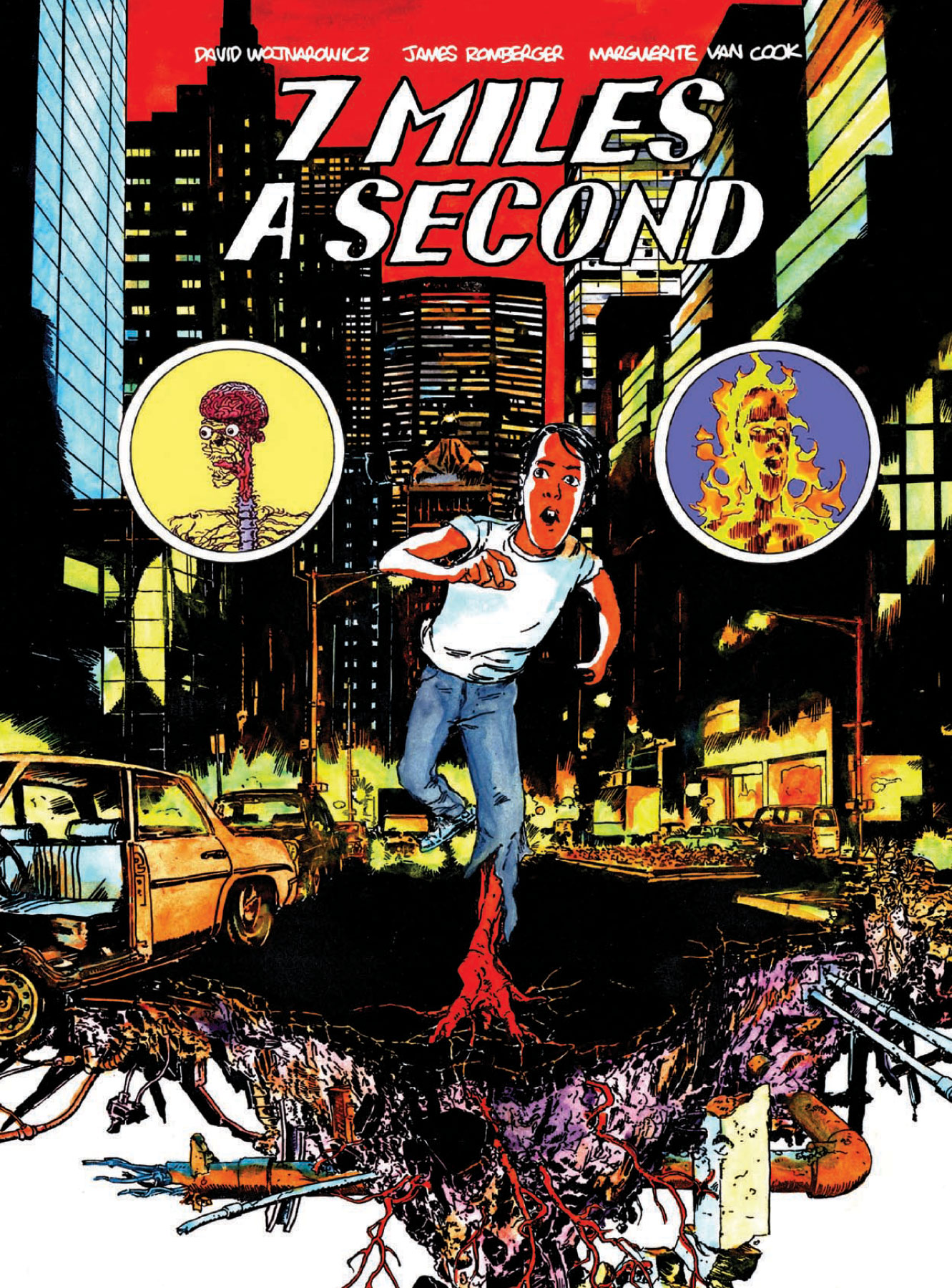
At Slate I reviewed David Wojnarowicz, James Romberger, and Marguerite Van Cook’s amazing graphic novel 7 Miles a Second.

At the Atlantic:

—I talk about She Devil! Forgotten super femme fatale!

—I reviewed Emmylou Harris and Rodney Crowel’s new album and talked about Emmylou’s career as a collaborator.

—I argue that rom coms are crap because Hollywood sucks, not because love has won out over all in our culture.

—I picked Funeral Mist’s White Stone as a track of the day.

At Splice I talked about Destiny’s Child’s awesome Christmas album.

At Splice I talked about Chinese electronica hipsters White+

Last Saturday I got to talk a bit about Wonder Woman at a screening of a documentary about her at Chicago Filmmakers.
 
Other Links

Sharon Marcus defends cats.

Michael Nugent analyzes sexist facebook photos.

TNC on my racist city.

Sarah Carr on the hurdles poor kids face on getting into colleges.

Ashle Fetters on nicknaming your romantic prospects.

Robert Stanley Martin reviews Game Change, which he argues is unfair to Palin.

 
This Week’s Reading

Finished Ursula K. Le Guin’s Left Hand of Darkness and started Anne Bronte’s The Tenant of Wildfell Hall. Oh…I think I failed to mention that last week I read Anna Akhmatova’s poems, translated by D.M. Thomas. Also I watched the Wigs channel’s web series Blue for a review. Oh, right, and still reading the Fellowship of the Ring to my son…though almost done.

Robin Hood vs. Sons of Beckett

Robin Hood, founding father of noble outlaws across the multiverse, has no secret origin. He doesn’t even have a Year One. William Langland knew some “rymes of Robyn hood” when he wrote Piers Plowman in the late 1300s, but no one can sing those originals now. The original Boy Wonder enters The Merry Adventures of Robin Hood as “a youth of eighteen, stout of sinew and bold of heart.”
 

images

 
Howard Pyle’s 1883 readers didn’t need any born-that-way mutations or radioactive arrow bites to explain the kid’s archery skill or endless law-eluding superpowers. No murdered parents, no exploding planet, just a tussle with some unsavory knights and his life of vigilante justice is up, up and away.

Robin Hood, if he existed, was born in the 1100s or so. Scholarly guesswork includes 1110, 1160, and 1210. Personally, I’d go with 1171. No later than September, though possibly as early as December 1170.  If you really want to be dramatic, then December 29th.  And not for the Christmas themed, Robin-is-our-savior angle.

The 29th is the day a lynching posse of four vigilante knights strolled into Canterbury Cathedral and murdered Archbishop Thomas Becket at the altar. Or at least there’s an altar now to memorialize the spot. I found T. S. Eliot’s Murder in the Cathedral criminally dull when I read it as an undergraduate—except when the knights step through the fourth wall and give a literally prosaic defense of their actions. A make-believe vigilante like Robin Hood would never have done anything so dastardly. Plus the outlaws were serving their King, so not really the break-the-law-to-serve-the-law shtick either.

Becket was sainted as a martyr afterwards. Richard Burton played him in the film version, winner of the 1964 Oscar for Best Adapted Screenplay. Peter O’Toole was Henry II. They start out a dynamic duo, the carefree King deflowering local daughters of the peasantry with his trusty man servant as look out. The grinning girl in the window assures us it was just a wholesome romp.

Things don’t go awry till Henry makes Thomas the Archbishop. He’s hoping to get those pesky clergy under control, and has no idea that Thomas is going to take all that religious nonsense seriously. Like when a priest rapes a nobleman’s little girl. Becket is supposed to hand the pedophile over, not shield him under church law. And he’s certainly not supposed to excommunicate the father when another lynching posse exacts vigilante justice on the priest.

The screenwriters cut some corners, but that’s the gist. The historical Becket wouldn’t turn clergymen over to law enforcement. Priests accused of rape are handled in-house. Since Becket is the noble hero of the tale, the film swerves past the crime scene as speedily as possible. Eliot doesn’t even mention it. But church officials protecting pedophile priests are common headlines these days:

“Cardinal’s Aide Is Found Guilty in Abuse Case” (New York Times, June 22, 2012)

“US Bishop Convicted of Covering up Clerical Sex Abuse Pressured to Resign”(The Guardian, 8 September 2012)

“Another Catholic Sex Abuse Cover-up” (Salon.com, Jan 22, 2013)

“Priests face court over child sexual abuse” (ABC New, Jan. 29, 2013)

Last summer, Kansas City’s Robert Finn became the first bishop convicted in American courts of failing to report an abuse. He got two years probation, but kept his job.  Philadelphia’s William J. Lynn is the first senior U.S. official of the Roman Catholic Church convicted of covering up sexual abuses by priests under his supervision. He’ll serve three to six years in prison. L.A.’s Archbishop Roger M. Mahony and his adviser Monsignor Thomas J. Curry have admitted to conspiring to “shield abusers from police,” with a flood of incriminating church memos revealing dozens of previously secret cases. Curry resigned and Mahony, already retired, was banned from public ceremonial duties. In January, Australian courts charged a retired priest, Lewis Dominic Fenton, for concealing two alleged offenses committed against a nine-year-old. He faces his jury on March 13.

The sons of Becket have gone global.

Though two years probation, 6-7 years jail time, permanently banned from presiding over confirmations, this is hardly the stuff of martyrdom.  If this were a comic book, Finn, Lynn, Mahony, Curry, and Fenton would be expecting a visit from some not-so-merry Sherwood Forest men. T.S. Eliot can write their monologues.

But instead of more vigilante justice, I endorse a literary reparation. On behalf of the victims that these later day Beckets further abused, I hereby bestow Robin Hood an origin story:

His mother is that nobleman’s young daughter, and his father is the priest who raped her. She dies in childbirth. He dies at the hands of avenging murderers after Bishop Becket shields him from government prosecution. Raised by his excommunicated grandfather, that stout and bold eighteen-year-old was orphaned by the failures of both Church and State. Of course he was destined to become the most famed and noble outlaw in proto-superhero history.

It’s not a happy story, but origins rarely are.
________________
 
Illustration by Howard Pyle.