Playing Narrative Part 2: Survivor’s Guilt

the last of us

(Hey! As the title indicates, this is part 2 of something! Part 1 is here!)

(Warning: Spoilers. Including the end of the game.)

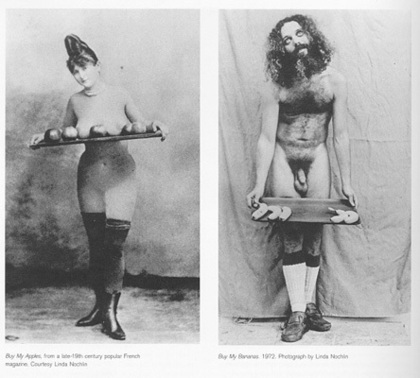
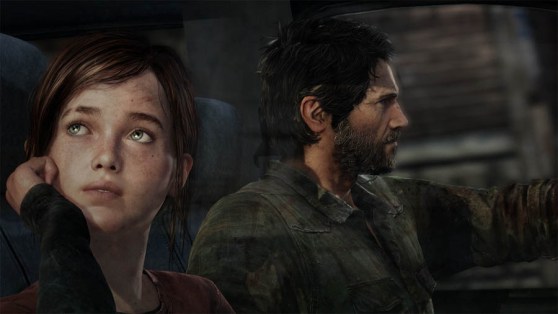
Somewhere around the halfway mark of Naughty Dog’s The Last Of Us, Joel, the hardened survivor of a plant-parasite-fungus-zombie-apocalypse that you spend most of the game controlling, finally makes it to his brother Tommy, located somewhere in the vast middle of America. Joel’s there to try to hand off Ellie, a teenage girl who must be taken to the Fireflies, a subversive group located somewhere out West. It’s the second time you’ve seen Tommy. In the game’s prologue, set twenty years before the rest of the action on the day the apocalypse started, Joel, Tommy and Joel’s daughter attempted to escape Austin, Texas.  Now, relations between the two of you have cooled. Or, as Joel tells Ellie, “His last words to me were… I don’t ever want to see your goddamn face again.”

The player never learns exactly what caused Joel and Tommy’s falling out,  but when Tommy—who now has a wife and helps run a small town based around a hydroelectric plant—refuses to help Joel, you get some idea. Joel tells Tommy that he’s owed this, “for all those goddamn years I took care of us.”  Tommy replies, “took care? That’s what you call it? I got nothing but nightmares from those years.”

“You survived because of me,” Joel, tells his brother.

“It wasn’t worth it,” Tommy says, looking at the camera, stricken and haunted.


What could possibly make not-dying not-worth it? Likely, it’s the stabbing, shiving, Molotov-cocktailing, strangling, shooting, archering, punching, bricking, bottling, and IEDing that the player has spent the last seven hours making Joel do to various zombies and humans. The Last of Us is a game that takes its violence and its theme of survival very seriously, and gradually asks the player to do the same. In doing so, we come to realize that Joel, the man we inhabit, may be a survivor, but he sure ain’t a hero.

After the prologue, when we jump twenty years in the future and re-meet Joel as a childless middle-aged man, he is a lowlife. He smuggles drugs, ration cards and weapons, serving up some terrible ownage on people who cross him. He runs in a relationship of sexual and financial convenience with a fellow smuggler named Tess, who will go on to summarize their lives by saying “we’re shitty people, Joel,” and mean it. Later still, after Joel and Ellie take on a group of marauding bandits, Joel reveals to Ellie that he’s “been on both sides of this thing.” When a different group of bandits invade Tommy’s power plant, Tommy asks Joel if he still knows how to kill, but the look on Tommy’s face tells you that he’s disgusted with himself for asking.

Joel, just to be clear, isn’t an anti-hero. Nor is he another in a long line of video game asshole warriors. He’s not a Don Draper or Tony Soprano charming psychopath. He’s actually kind of a piece of shit. Not that he doesn’t have his complexities, particularly in his relationship with Ellie. She sees a goodness in him, the same goodness we glimpse in the prologue, the goodness he appears to have lost. It’s a goodness that, when it’s just the two of them together, The Last of Us dangles in front of us as a possibility.  Joel’s a broken man, physically strong and spiritually bereft. A man who has turned off his soul for twenty years, and, over the course of The Last Of Us, we begin to care whether he gets it back or not, just as much as we care about whether he and Ellie ever make it out West.

Much of the time, however, Joel’s like a mix between Rooster Cogburn from True Grit and Theo Faron from Children of Men, sans most of the redeeming qualities of both.  What makes The Last of Us so startling is that it knows this. And, gradually, it makes the player know it too.


Naughty Dog became famous over the last decade for a series of Indiana Jones like games called Uncharted that, as cinematic acts of storytelling, are actually better than half of the Jones films and all of Jones’s latter day imitators like The Mummy and National Treasure. In those games, the player controls Nathan Drake, a descendent of Sir Francis Drake and international treasure hunter who gets in over his head having a series of thrilling, funny, genuinely charming adventures having to do with lost artifacts that may hold great power. The Uncharted games harken back to movies like Treasure of the Sierra Madre or Romancing the Stone, the kind of big budget, exotic locale, rakish hero, adventure films that Hollywood used to be able to do well, while removing the problematic racial politics that often make those films unwatchable today.

There’s just one problem: These are, of course, action games. Which means that the player also spends a great deal of time killing people. Hundreds of people, it turns out. After Uncharted 3: Drake’s Deception came out, more and more people started raising a stink about this issue. It’s pretty clear that the team on The Last of Us—many of whom also worked on Uncharted—wanted to see what would happen if they started taking all the killing seriously and asked their audience to do the same.

While The Last of Us, like The Walking Dead, takes place in a world hit with a zombie apocalypse, the similarities pretty much end there. TWD’s gameplay functions through dialogue and action choices. The Last of Us has very little choice in it at all. TWD’s graphics are stylized and cell-shaded.  The Last of Us uses motion capture. TWD is an adventure/puzzle game. The Last of Us is a stealth/action game.

Most importantly, TWD takes place immediately following the zombie apocalypse, as people learn how to survive. The Last of Us takes place twenty years in, and is set amongst the whittled down population of people who’ve figured it out.

Survival is what The Last of Us is all about on both a thematic and gameplay level. If Naughty Dog were in search of an alternate title for the game, Survivor’s Guilt (with “guilt” here meaning both the feeling of remorse and the state of having done something wrong) would’ve been a good stand-in. As with The Walking Dead—where a series of choices serves as an essay on ethics when you realize death in inevitable—it is this interweaving of theme and mechanics that enriches The Last of Us and makes it work.

In the game you have limited weapons, and all of them have limited uses. You have to worry constantly about making too much noise, alerting nearby enemies. Killing people is difficult, noisy, and time consuming. All of the materials you find are necessary to craft multiple items. You can’t carry very much. There are also many points in the game where you can sneak by adversaries and not engage with them, leading—if you are, like me, both ethically minded and neurotic—to calculations that go something like Well, I’m low on supplies and I bet I could take these guys out and loot their corpses. Wait. Am I seriously contemplating killing six people who aren’t a threat to me for the express purpose of looting their corpses? Oh my God. I’m the worst.

In The Walking Dead, violence is very personal. Most of the time, it is being dealt by or to someone Lee Everett knows. The Last Of Us, on the other hand, primarily features the kind of depersonalized violence that most video games trade-in, it just makes that depersonalization part of the point. Joel—who has survived precisely because he’s selfish— can’t see the people he’s killing as human.

Not that the game is a relentless downer. Much of it is spent wandering overgrown urban landscapes and idyllic vistas talking with Ellie and deepening the bond between the two of them. Ellie is one of the few great characters to emerge from video games. She’s funny, charming and human and feels in many ways like a real fourteen year old. Indeed, any affection the player gains for Joel is likely the end result of loving Ellie, and wanting to love what she loves. For each of the game’s acts (there are four of them, one for each season), Ellie and Joel meet and team up with other survivors, who all prove to be interesting, fully realized characters written and performed with that rarest of video game traits: subtext. The Last of Us is a game where watching facial expressions and listening to tone of voice changes meaning, and the few choices they give you along the way are entirely about character development. You can stop to explain to Ellie what a coffee shop was, or pet a giraffe. You can find comic books to give her to read. You can give a man a Dear John letter from his boyfriend.

Ultimately, however, The Last of Us’s themes cannot be escaped for long. And yet, because it is a very well designed game, it is fun play. And yet, because it takes what it is doing seriously, it’s a disturbing and wrenching and truly, deeply, haunting. The ending of the game is anti-cathartic and disturbing and in no way resolves the central tension between depicting the urge for survival while also problematizing it, suggesting that perhaps, at times, being a survivor means being a monster.

Joel, you see, is presented with the opportunity to save the world, but doing so entails Ellie’s death.  Ellie is immune to the parasite that has destroyed civilization, but creating a vaccine from her body would involve removing her brain. Joel saves her life, killing a hospital full of people, and ends any hope of humankind’s recovery. The Last of Us twice hints that Ellie would’ve accepted her death if given the opportunity to choose. But she never knows she had the choice because Joel lies to her about it. Joel, we come to understand, is as selfish as ever. Needing and loving this new surrogate daughter, after having lost his own twenty years before, he is unable to let her go for the greater good.

For those of you reading this who don’t play video games, I want you to understand that this kind of ending—one that is neither triumphant nor cathartic, but instead haunting and true to its characters—basically does not exist in mainstream video gamesIn fact, it’s the kind of ending that most mainstream blockbuster movies—and The Last of Us is the equivalent in terms of budget, market presence, hype and sales—would never dare attempt.

It’s these kinds of elements—story, theme, structure, subtext, writing, performance—that are responsible for the nearly universal critical rapture that has greeted The Last of Us, and they flow directly out of the thematic integration of gameplay and story, and from questioning the purpose of all the violence the video game marketplace demands. It is in this way similar to Watchmen. By taking its subject matter seriously, it simultaneously is a masterpiece of its form (the superhero comic/ the action game) while undermining the existing status quo.

And that brings me to the ultimate problem with making the resolution of ludonarrative dissonance the ultimate goal and measure of quality of video games. It’s no mere coincidence that The Walking Dead and The Last of Us take place during the apocalypse. There’s a limited number of scenarios that justify the kind of violence that the form regularly contains and that audiences demand from it. While we can get moralistic about this, high body counts have graced our literature since The Iliad, our theatre since The Persians, our films since Intolerance and on and on. As someone interested in video games becoming a richer source of stories, of examining theme, subject, narrative and character through the unique medium of a player interface, I’m less concerned with the virtues of violent games and more by how thuddingly boring and narrow their possibilities often are.  As the current “gritty downer” era of superhero comics and films shows, replacing the current narrow possibilities of the medium with a different set of narrow (but critic-approved) possibilities isn’t really a solution, even if we get more games like The Walking Dead and The Last of Us along the way.
Superheroes With Cigarettes

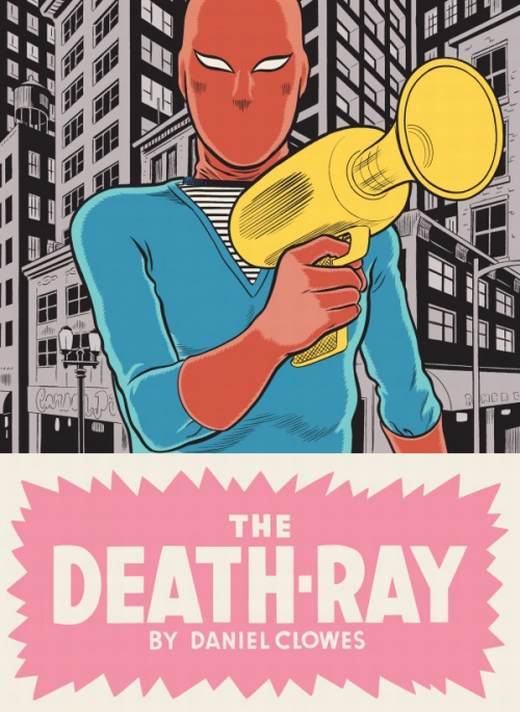
death-ray-daniel-clowes-drawn-quarterly2

 
A little bit back, Peter Sattler noted that Dan Clowes’ career in comics often seems like a long, bitter struggle against comics. As Peter says:

[Clowes’] work goes out of its way to thematize the artist’s and/or the story’s struggle against comics themselves – against a form that, as Clowes presents it, seems unable to encompass interior states, unable to escape its own theatricality and artificiality, unable to circumvent its own closed system of beginnings and endings, set-ups and punch-lines. Clowes dramatizes his contest with these limits, transforming that contest into the content of his graphic novels.

Peter talks about this mainly in terms of formal limits…but to me it seems like it’s a cultural issue as well. Comics seem unable to encompass interior states, and unable to move beyond largely bone-headed gags, because comics are for kids. As I discuss here, Clowes in comics like Velvet Glove and Wilson seems to compulsively assert his distance from a form, and from influences, which he views as both infantile and inescapable. Much of the adult/edgy content, misanthropy, and violence against women in his books comes across as a kind of desperate signaling that he is not (like say Charles Schulz) writing for children. His comics can be seen as a long insistence that he is too grown up — an insistence which is (as he is certainly aware) infantile. From this perspective, Enid’s obsession with older men is not (just) a kind of self-flattering, but is a displaced expression of Clowes’ own obsessions. He’s an older guy who is fascinated with the idea, and the impossibility, of being an older guy.

The Death Ray is pretty much in the same mold. It’s a super-hero parody whose protagonist, Andy, gains super-strength by smoking cigarettes — an obvious reference to wanting to look and be older. The rest of the story is built around exploring what super-hero stories would really be like, as Clowes, familiarly, uses the genre to underline his own adult distance from it. Andy wanders around looking for criminals to beat up, but nobody attacks him. He punishes people who don’t particularly deserve it at the behest of his best-friend, Louie, and then feels bad about it. As Aaron Leitko wrote at the Washington Post “The Death-Ray employs the core super-hero conventions — the origin story, the costume and the sidekick — in the most banal ways possible.” That banality (like the banality in Wilson, or in alt comics more generally) is the validating boredom; the sign that we are not children, but adults, who understand (to paraphrase Ambrose Bierce) that realism is the world as it is actually seen by toads.

So Clowes is doing his usual thing. But…his usual thing, in this context, isn’t nearly as irritating as it usually is. The main reason for that, I think, is that, in this case, Clowes’ agonized relationship with his material doesn’t come across as condescending or wearisomely anxious. It just comes across as another superhero comic. After all, the main reference here seems to be to the Lee/Ditko Spider-Man — and how different is Andy from Peter Parker, really? Not very. Like Andy, Peter is a nerdy, angry, unhappy, orphaned kid; like Andy, Peter uses his powers for self-aggrandizement; like Andy, Peter’s powers make things worse for him, not better; like Andy, Peter makes his own kind of doofy looking costume.

And, like Andy, Peter, and the comic he’s in, is obsessed with growing up. As Chris Gavaler pointed out here last week, the whole Spider-Man story is basically a metaphor for puberty, with radioactive spider bite standing in for surging hormones. Clowes changes the spider bite to a cigarette, which makes the metaphor more pointed, but it doesn’t really change it’s nature. The Death Ray, almost despite itself, is extending its source material — the anxiety and angst that Clowes’ taps is the same in essence as Lee/Ditko’s angst. That’s very different from Wilson, for example, where Charles Schulz’s whimsy and weird humor are replaced with jokes about shit and ass rape (and not with funny jokes about shit and ass rape, either.)

All of which perhaps helps to explain in part why parody has always been so central to the super-hero genre. From Plastic Man and Captain Marvel to Superduperman to the 60s Batman television show to the Watchmen, superhero parodies have always been both critically lauded and extremely popular. On the one hand, you could argue that this is because superheroes are really stupid, and no halfway intelligent creator is going to take them seriously. And I certainly think there’s a lot to that argument.

But Death Ray also suggests that parodies are the best superhero narratives not only because they undermine the stupidity of superhero narratives, but because they fulfill them. Superhero stories are, as everybody knows, adolescent power fantasies; they’re a way for children of all ages to pretend to have ascended to the prerogatives and super-strength of adulthood. And what is more adult than parodying the silly fantasies of youth? Clowes is (fairly amusingly) sneering at the stupid dreams of fanboys of all ages who want to be grown up — but he’s also providing those fanboys with the exact same dream. Andy takes a hit from his cigarette; Clowes’ readers take a hit of The Death Ray. It’s Clowes’ best comic because, almost despite himself, it’s the one in which he’s able to provide the genre pleasures that obsess him without compulsively assuring his readers and himself that he’s too good for them.

Prehistory of the Superhero (Part 1): Waltzing with Frankenstein

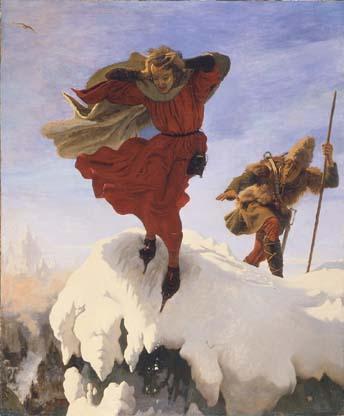
Brown_Ford_Maddox-Manfred_on_the_Jungfrau

Manfred on the Jungfrau, by Ford Madox Brown

 
“In any case, one can state that much of the so-called Nietzchean ‘superhumanity’ has as its origin and doctrinal model not Zarathustra but the Count of Monte-Cristo, by Alexandre Dumas.”

– Antonio GramsciLetteratura e vita nazionale, III, ‘Letteratura popolare”.

This quote  comes from Umberto Eco‘s introduction to the French translation of his 1978 book of essays, Il superuomo di massa.

As Eco  elaborates:

 I found Gramsci’s idea seductive. That the cult of the superman with nationalist and Fascist roots be born, among other things, of a petty bourgeois frustration complex is well-known. Gramsci has shown clearly how this ideal of the superman could be born, in the nineteenth century, within a literature that saw itself as popular and democratic:

“The serial replaces (and at the same time favorises) the imagination of the man of the people, it is a veritable waking dream (…) long reveries on the idea of vengeance, of punishing the guilty for the ills they have inflicted (…) “

Thus, it was legitimate to wonder about the cult of the right-wing superman but also about the equivocal aspects of the nineteenth century’s humanitarian socialism. [tr:AB]

The French title of Eco’s collection is, aptly, De Superman au surhomme– ‘From Superman to the superman’.

But what of the reverse — how did we go from the superman to Superman?


How did we get from here:

…to here?

Art by Joe Shuster

The superhero is one of the strongest — and strangest–  modern pop charactertropes;  I propose we dig into its roots– which I maintain go back to the 18th century’s  massive cultural shift: a revolution in politics, thought, and culture.

The superhero is an ultimate narcissist fantasy of identification; it thrives in a modern world of atomised society, where the basic unit is the individual to a historically unheard-of degree. Thus we’ll start with the centuries that enshrined individualism, the better to give a cultural context to our enquiry.

We’ll also examine why the superhero is so dominantly an American cultural artifact; this will lead us into some dark territory.

First, though, we must distinguish the superhero from his heroic predecessors in myth and legend.

The Classic Hero

The idea of the superman was spawned in the 18th and 19th centuries. This statement may strike the reader as historically false; what of the superhuman heroes of myth and legend,  Gilgamesh and Enkidu, Herakles and Achilles, Roland and Rustam, Cuchulain and Tomoe Gozen?

Heracles Farnese

These heroes were enmeshed in the fabric of myth. They were part of the structure of society, of the “great chain of being” that descended from the divine to the infernal, through the human; many were demi-gods, the legitimacy of their power stemming from godly parentage. Others were avatars of a warrior culture– linked through duty and right to the formal, “ordained” structure of the polity: for example,  the knights of King Arthur’s Round Table, or the Argives besieging Troy.

What the classic hero was not was an individual.

Indeed, when the hero asserted his individuality — repudiating or even betraying the obligations that hampered and enmeshed him — the result was tragedy. The Greeks spoke of a person’s hamartia, or fatal flaw: very often, this took the form of hubris, pride or ambition so excessive as to invite divine wrath:

“Seest thou how God with his lightning smites always the bigger animals, and will not suffer them to wax insolent, while those of a lesser bulk chafe him not? How likewise his bolts fall ever on the highest houses and the tallest trees? So plainly does He love to bring down everything that exalts itself.”

– Herodotus,  History

Thus Herakles, after drunkenly massacring his family, is punished by enslavement to his enemy Eurystheus; Achilles in his anger withdraws from the Trojan war, so imperilling his fellow Argives and bringing about the death of his lover Patrocles.

Sir Lancelot betrays his liege, King Arthur, by taking the king’s wife as a lover: the kingdom is subsequently torn apart by civil wars. The mighty warrior Roland is trapped with Charlemagne’s rearguard at Roncevalles by an overwhelming force– but pride stops him from blowing his horn to summon help until it is too late, and his army is killed to the last man.


Too late, Charlemagne

To deviate from duty, from his proper place in the scheme of the world, brings about the hero’s downfall and inflicts disaster on  the community.

This is decidedly not the fate of the new  character type– the superman.

The Birth of the Individual and the Coming of the New Hero

We have undertaken to discourse here for a little on Great Men, their manner of appearance in our world’s business, how they have shaped themselves in the world’s history, what ideas men formed of them, what work they did;–on Heroes, namely, and on their reception and performance; what I call Hero-worship and the Heroic in human affairs.

(…)  For, as I take it,Universal History, the history of what man has accomplished in this world, is at bottom the History of the Great Men who have worked here.They were the leaders of men, these great ones; the modellers, patterns,and in a wide sense creators, of whatsoever the general mass of men contrived to do or to attain; all things that we see standing accomplished in the world are properly the outer material result, the practical realization and embodiment, of Thoughts that dwelt in the Great Men sent into the world: the soul of the whole world’s history, it may justly be considered, were the history of these.

Thus Thomas Carlyle (1795 — 1881) in Heroes and Hero Worship (1840). For Carlyle, the sole true root of human progress was that man who could rise above the mass, transcend his time and shake the world into a new form– the Hero.  Examples he cites include Muhammad, Cromwell, Shakespeare, and Napoleon.

Unlike classic heroes, these men were not the servants (if often rebellious ones) of fate: they shaped fate. They stood above it.

The individual as giant was the logical extrapolation of the individual per se, who had in the eighteenth century assumed an importance never before acknowledged:

I have entered upon a performance which is without example, whose accomplishment will have no imitator. I mean to present my fellow-mortals with a man in all the integrity of nature; and this man shall be myself.


I know my heart, and have studied mankind; I am not made like any one I have been acquainted with, perhaps like no one in existence; if not better, I at least claim originality, and whether Nature did wisely in breaking the mould with which she formed me, can only be determined after having read this work.

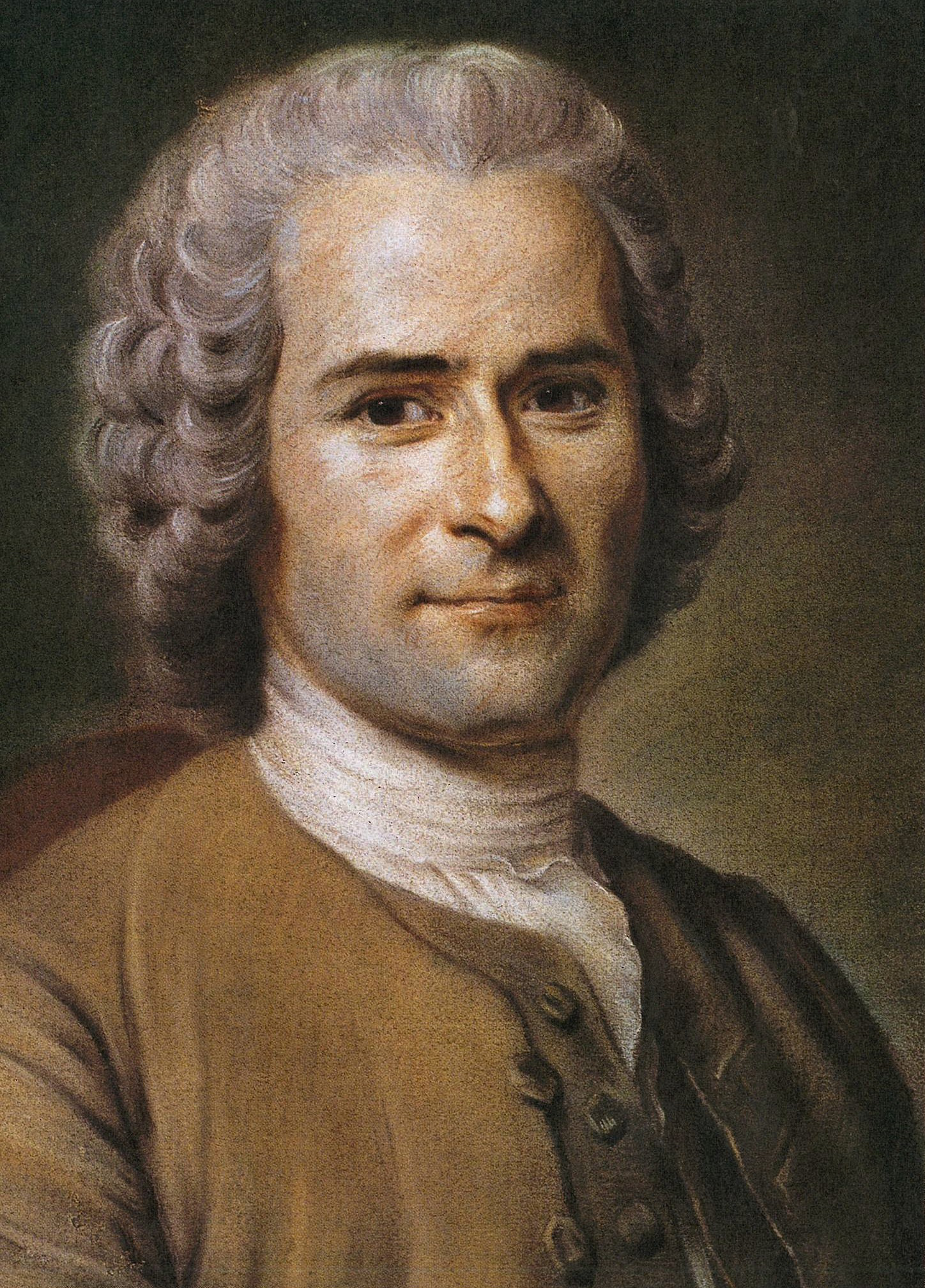
These are the opening words of the 1769 Confessions of Jean-Jacques Rousseau (1712 — 1778).

Portrait of Rousseau by De la Tour

It was something unheard-of:  the Self as subject, in all its raw nakedness, faults and all.

The rise of the individual found political expression in the Enlightenment, as well.  The notion of his or her personal rights was enshrined in such foundational documents as the Bill of Rights of the United States Constitution and the French  ’ Declaration of the Rights of Man and of the Citizen’.

Individualism also flourished in the wider culture. The school of sentimentality in literature, as typified by Johann Wolfgang von Goethe‘s The Sorrows of Young Werther or Laurence Sterne‘s A Sentimental Journey, valued the enjoyment of emotion for its own sake– not as a source of empathy or catharsis. In parallel, the psychological novel was born — examining the inner life of the self.

The Italian innovation of the apartment,  intimate, cosy and — above all–  private, began to supplant the old houses and manors where many generations of different families and classes would live together.

Diners were less and less eating à la française,  seated at large banquet tables and sharing from common dishes: in the new restaurants, they could be seated and served alone, at their own separate tables.

Dinner service à la française

The dance craze that was sweeping Europe was the waltz;  in contrast to the group dances such as the pavane or the quadrille theretofore prevalent, couples twirled alone.

Even so seemingly trivial detail as shoe size underwent the individualistic evolution; in prior centuries, shoes were undifferentiated between left and right foot, and came in few standard sizes. Now cobblers were literally tailoring each piece of footwear to the specific foot.

Yes, heady times for the individual! All the headier after the French Revolution sent shock waves rocketing through Europe, ripping up the ancient structure of the world, bringing terror and war in its train.

The old order was  shattered; the new citizen was deprived of “natural” superiors to look up to, the King, the aristocrats and the clergy. This was a vacuum waiting to be filled.

Came the moment, came the man — the Hero as Carlyle later conceived him, who bent the forces of history itself to his will; the true progenitor of the superman– Napoleon Bonaparte.

Napoleon crossing the Alps, by David

The armies of  revolutionary France were marked by a new kind of professionalism: an officer’s commission was no longer secured by genteel birth or outright purchase. Thus men rose in the ranks through merit– and in the case of the artillery lieutenant Bonaparte, he would rise to the throne of the world’s mightiest empire.

Nothing seemed able to stop him; destiny was clay in his hands; nations fell or were born at his word. He elicited worldwide admiration even from his enemies. (To this day, the British, his most tenacious foes, allude to Waterloo as if it were a defeat — ‘He met his Waterloo in the 2008 election’– rather than the greatest victory in British history; and it is a compliment to call a man, say, ‘the Napoleon of finance’.)

Wordsworth, Goethe, Beethoven, Byron– they were excited by this seemingly superhuman figure who was poised to sweep the old corrupt order onto the trash-heap of history.

(Great was their disgust and sense of betrayal when the former revolutionary crowned himself emperor:

          O joyless power that stands by lawless force!
Curses are his dire portion, scorn, and hate,
Internal darkness and unquiet breath;
And, if old judgments keep their sacred course,
Him from that Height shall Heaven precipitate
By violent and ignominious death.
Wordsworth,  1809

The moral being: don’t expect too much from supermen, and you’ll not be disappointed.)

It is a cliche of the lazy writer or  cartoonist to depict a lunatic as one persuaded he is Napoleon;  yet there have been hundreds of  such cases documented, from Napoleon’s own time to the present, attesting  his power over the imagination. Napoleon himself was a canny curator of his own image. That famous pose with the hand tucked under his shirt? It was suggested to him by an actor. That hat? He had dozens of them, to be left as souvenirs wherever he travelled.

(He is also the exemplar for world-conquering villains; there is a direct line of descent from Napoleon to Doctor Doom.)

Napoleon formed a template for the superman; and he further smoothed the path for the latter by radically institutionalizing meritocracy, “career open to talents” as embodied in the Grande Ecole  schools of France or in the University of Berlin, institutions of excellence set to turn out the genius leaders of tomorrow.

A new elitism was in the shaping, and the idea of the superman largely sprang from it into the cultural zeitgeist.

Masters of Nature

Welch erbaermlich Grauen Fasst Uebermenschen Dich?

[What vexes you, oh superman?]
— Johann Wolfgang von Goethe, Faust (1808)

The eighteenth century was also marked by a growing mastery over the physical world. The very idea of progress flourished as never before; for most of history, it was thought that mankind had regressed from a long-vanished golden age. (Mark how the classic heroes all belonged to the past.)  Human beings now, however, were going from strength to strength with no end in sight.

This was the age of the Industrial Revolution.  Steam power gave men the might of Titans;  nature seemed to yield more and more of its secrets to the natural philosophers not yet given the new name of “scientists” ( coined in 1833).

Let us consider the below painting, An Experiment on a Bird in an Air Pump, painted in 1768 by Joseph Wright of Darby (1734 – 1797):

click image to enlarge

A cockatoo is trapped in a glass jar from which the air is gradually pumped out, leaving the bird slowly to die, suffocating in the vacuum.

Note the two weeping little girls to the right, distressed by such cruelty; but one of the experimenters is at hand to explain how this suffering is necessary for the progress of science. The other experimenter stares out at us — challenging us, perhaps, to dare contest his will to knowledge.

This painting presages another avatar of the superman: the scientist, wresting control of the secrets of the universe as the titan Prometheus stole fire from the gods.

Yes: a modern Prometheus… as an 18-year-old Englishwoman dubbed her fictional challenger of Heaven:

So much has been done, exclaimed the soul of Frankenstein — more, far more, will I achieve; treading in the steps already marked, I will pioneer a new way, explore unknown powers, and unfold to the world the deepest mysteries of creation.
–Victor Frankenstein, in Frankenstein; or, the Modern Prometheus, by Mary Shelley


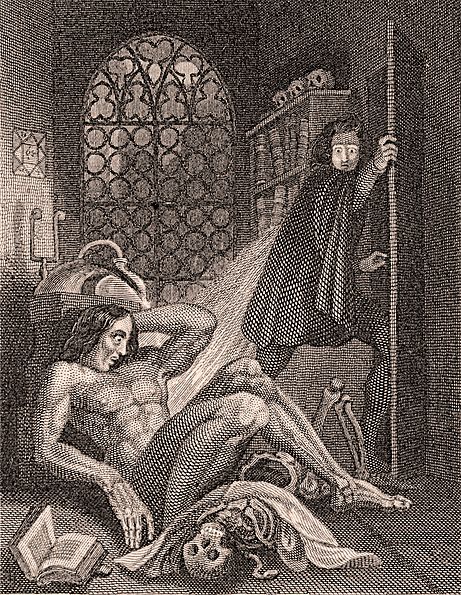
Frankenstein and his monster; illustration by Theodor von Holst

Mary Wollstonecraft Shelley (1797 – 1851) published her novelFrankenstein; or, the modern Prometheus in 1818.

The title hero usurps God’s privilege by creating life: a monstrous, manlike creature endowed with reason.

Yet, to do so, Frankenstein eschews the occult, magical methods of the Fausts  of previous fiction. His power derives from a mastery of the elements attained by rational study and experiment– from science.  He aims to join that near-Godlike elite of researchers so admiringly described by his teacher Waldman:

They ascend into the heavens: they have discovered how the blood circulates, and the nature of the air that we breathe. They have acquired new and almost unlimited powers; they can command the thunders of heaven, mimic the earthquake, and even mock the invisible world with its shadows.

– Shelley, op.cit.

No need for bowing to demons to do his bidding. Frankenstein is free of God and Satan alike. (Shelley was, in her youth at least, an atheist.)  He replaces God, in fact; and though the novel shows him punished for his deeds, it is clear that his destruction comes not from a vengeful heaven, but from his own flawed character– Shelley, like her female equivalents in the Darby painting, could see the cruelty in the scientist’s will to power.

Victor Frankenstein points forward to other, future ‘scientific superman’ characters; to Verne’s Captain Nemo and Robur the Conqueror, to Wells’ Griffin (the Invisible Man) and Dr Moreau, to countless Mad Scientists and scientific heroes like Tom SwiftDoc Savage or Captain Future.

(As for his tormented monster spawn, he too has superhero descendants, in the ‘monstrous’ vein: the Heap, the HulkSwamp Thing…)

Indeed, many literary historians credit Mary Shelley with creating a new literary genre:  science fiction, of which more anon. She was also writing within the perimeters of another new genre: the Gothic.

Romanticism and the Gothic Backlash

Not everyone welcomed the new industrial age. The rapid changes of the modernising world alarmed and alienated people of all classes. There came to be a yearning for nature, for sublime landscapes and ruins, for an idealised past; to the cold new rationality were preferred the warmth of feelings.

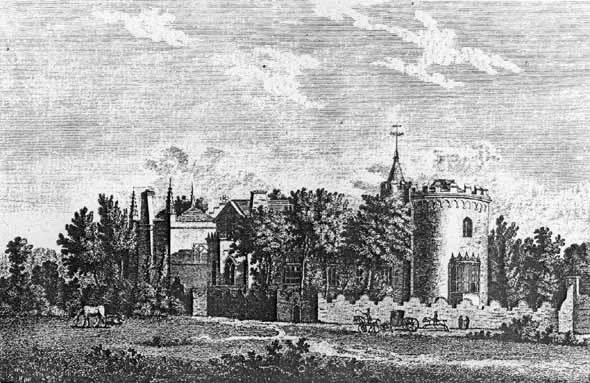
The literary expression of this backlash was the Gothic novel, the first of which is generally agreed to be that of  Horace Walpole (1717–1797), The Castle of Otranto.

Walpole’s neo-Gothic castle, Strawberry Hill

 
There followed a flood of spectre-haunted volumes, many of which featured brooding predecessors of the superman: the title character of William Beckford’s The History of the Caliph Vathek,  who dares to invade Hell; Charles Maturin‘s Melmoth the Wanderer (1820),  a damned, dark near-immortal;  Lord Byron‘s Faust-like Manfred, who defies God and Satan alike; and perhaps the most proleptic of all, Byron’s secretary John William Polidori‘s The Vampyre (1819).

The Gothic novel was also the first narrow commercial genre of popular fiction.

The nineteenth century saw the rise of the first true mass media, and the birth of literature for the masses;  Polidori’s book will serve as a useful transition to the next chapter.

Next, in Part 2:  The true birth of the superman.

Superheroes Never Die Young

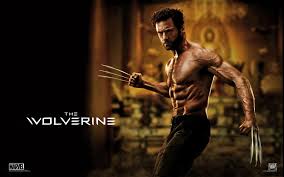
The Wolverine movie

Best thing to be said about The Wolverine came out of my daughter’s mouth in the parking lot afterwards: “I forgot I like superhero movies. I always think they’re going to be stupid. But that was good. I want to be a superhero!”

She’s sixteen. She also did a good parody of Hugh Jackman’s lumbering walk as we looked for our car.

My twelve-year-old son said afterwards (SPOILER ALERT!): “That was Magneto? He’s really old.” Sadly the warmest reviews praise the two-minute preview bit during the ending credits. Which can’t be that much of a surprise since there are X-Men 2015 posters all over the lobby.

The reviews also said (I skimmed a lot while deciding whether I could subject my family to yet another superhero movie this summer) the train scene was really cool. I’m apparently one of the few people in the U.S. who saw The Lone Ranger and so could live longer than the semi-immortal Wolverine and never want to watch two guys fighting on top of a train ever again. I felt that way after Skyfall as well. Hell, I felt that way after Spider-Man 2. But don’t worry, this time it’s a bullet train, which not only changes the physics in a fun way, it means the scene is short.

Even my wife (she sat through The Long Ranger too) liked the train, but not as much as the clothes. They were beautiful, she said. Except Hugh Jackman’s. He wanders the whole movie dressed like a lumberjack.  Which is loads better than the leather and/or spandex outfits all other superhero movies require their leads to shimmy into at least once in the third act. It’s literally a surface change, but it says a lot about the deeper structure of the film.

With one or two gratuitous exceptions, director James Mangold allows very few superpowers room to fly. Sure, masked ninjas are kinda the same thing, but it’s okay because we’re in Japan. Since the bad guys zapped his mutant healing, Jackman spends this round closer to a garden variety martial arts pro than the Man of Adamantine. Think 007 if Q could figure out the claw-popping tech. He also apparently has a license to kill. People got quite bent about Superman snapping poor General Zod’s neck earlier this summer, but Wolverine slices up two hours worth of bloodless PG-13 bad guys without a moral shrug.

But despite such stalwart formula-bending, the film still operates wholly within superhero movie expectations. More specifically, superhero movie 2 expectations. Somewhere in Hollywood it is written that in his second film the hero will temporarily relinquish his accursed powers in an attempt to live a more human life only to learn the noble necessity of his lonely plight and renew his do-gooding mission. See the above mentioned Spider-Man 2. And Superman II. Christopher Nolan shook things up by yanking Christian Bale’s bat tights off at the start of his third movie, and the Fantastic Four franchise crammed the Thing’s arc into that unfortunate first flick. I’d call it a Last Temptation of Christ thing, but I’m on vacation and so not in the mood for the analysis of bloated superhero-as-savior imagery.

I should probably also mention that the Wolverine screenplay is based on a 1982 comic book by Chris Claremont, but I never read it. I was suffering my brief, too-cool-for-comics phase in junior high. Though I do remember seeing the cover and thinking, “Really? Wolverine gets his own series? Aren’t they milking that a little thin?” Which explains why no one in Hollywood ever phones me for advice.

If you count his cameo in X-Men: First Class, Jackman has played Wolverine in six movies, the seventh currently in production.  He was 31 when X-Men premiered and 44 now. Though his anti-aging mutant powers are way way better than mine, Hugh is not that spry young thing he once was. That massive musculature looks like the product of lots and lots of effort—not the ole born-that-way mutant privilege.

And that’s true of the superhero movie in general. It’s working really really hard to maintain its supremacy, but the skin pulled over all that muscle is looking a bit grizzled. As my son would say, “He’s old.” Fortunately for every Toby Maguire there’s an Andrew Garfield, and a Henry Cavill for every Christopher Reeve. Who do you think will be playing Wolverine when my son takes his twelve-year-old to X-Men XX?

wolverine1982

Excerpt from “Black Angels and Blue Roses”

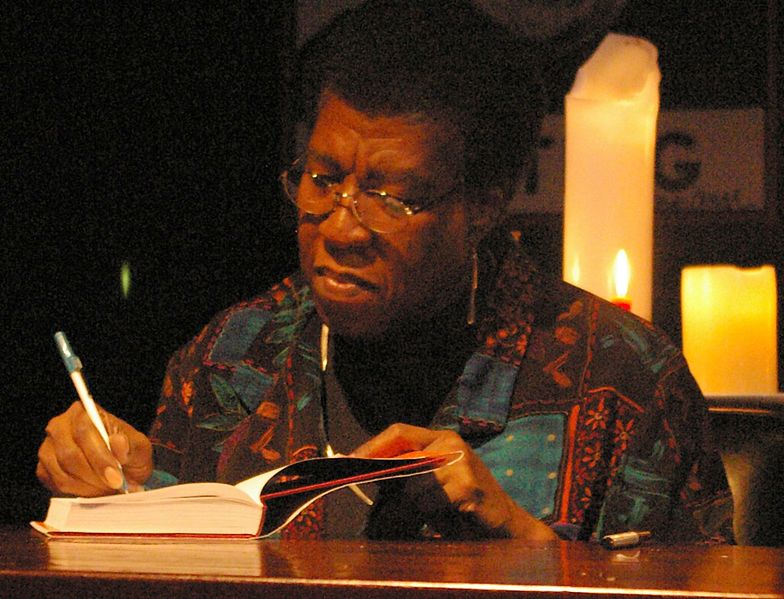
[Note by Noah: This is an excerpt from a story by Walidah Imarisha which will be included in the anthology Octavia’s Brood: Science Fiction Stories From Social Justice Movements, edited by Walidah Imarisha and Adrienne Maree Brown. The book is a collection of sci-fi stories by social activist writers, inspired by the work of Octavia Butler. The editors are currently running a funding campaign on indiegogo, where you can find out more about the project.

Thanks to Walidah and Adrienne for running this excerpt here!

784px-Butler_signing

Octavia Butler

 
… The gang stayed for a few hours, drinking copious amounts of whiskey and making more noise than the rest of the bar put together.

Finally they started to trickle out. Tamee, who had to take a piss, was the last one out. He walked down Lennox on unsteady legs. Night still warm from the summer’s day heat, like the hood of a parked car. He looked up at the moon. It was blood red. Damn, Tamee thought. Rubbed his head. His fingers tracing the uneven scar that ran from the top of his cranium, down the right side of his forehead. Crossed the socket where his right eye used to be. Ended an inch or so under his bottom lid. Like a permanent tear.

The doctors said he was damn lucky. If his head had been turned just a few degrees up, it would have penetrated his brain. If it didn’t kill him, it would have left him a vegetable.

This is why you don’t try to take on five nazi skinheads all by yourself, he mused ruefully to himself. Especially not if one of them has a crowbar. His mother always said he was stubborn as a mule and had to learn everything the hardest way possible.

As if called into existence by his thought, Tamee caught sight of a nazi he knew sauntering on the other side of the street. Tamee didn’t know his real name, only knew the bonehead went by Joker. Tamee had had a number of run-ins with Joker and his crew. Tamee had come out the worse for wear on most of those too.

But not tonight, he thought grimly. Cracked his knuckles. Tonight was payback night.

Tamee started loping across the street after him, his long legs gazelle-like in their movements.

“Hey fuckwad!”

Joker’s turning face smashed into Tamee’s fist. Blood rained on the ground. Tamee hit him with a flurry of punches. A knee to the gut. Threw him up against the wall. Another combo to the face.

Tamee was so intent on administering the beating, he didn’t hear Joker’s three man crew approach from his right side. His blind side. And he was blindsided. A fist slammed into his skull right behind his ear. He didn’t see stars; he saw a nuclear bomb explode behind his eyelids.

The four nazis circled around Tamee. Boots fell like autumn leaves. Tamee was protecting his head, his face, his internal organs. But not for long. He knew they were just getting started. He wouldn’t be able to hold out long. Tamee could tell they didn’t mean to leave anything of him when they were done.

Just when Tamee felt his consciousness begin to slip away, A. rounded the corner. She stopped, took a couple seconds to assess the scene.

“Hey, get out of here! Get out of here, black bitch, if you know what’s good for you!’

A.’s eyes smoldered, but she turned to leave. Her eyes caught Tamee’s. His desperate, terrified, hopeless eyes. She had seen that look so many times before. That look had gotten her kicked out of heaven. That look had cost her everything. She would have nothing to do with that look.

But the nazis took her moment of reflection for defiance. Three of them peeled off. Menaced towards her. Circled her like jackals. One of them pulled out a knife.

“You shoulda left when you had the chance, bitch.”

She locked her eyes on them. She knew they couldn’t seriously injure her. They didn’t have the power. But they could hurt her. And she’d felt enough pain for three lifetimes.

And she just really really hated boneheads.

With one fluid motion, A. whipped her trenchcoat off. Her remaining wing was wrapped across her shoulder like a shawl. Tied down by a cord wrapped firmly around her waist. She ripped the cord free, and her wing, black as the night’s sky, snapped back and out with a five foot span. Reaching for the lost heavens.

“What the fuck???” The closest nazi to her scrambled backwards.

“Man, it’s kind of costume or something. Don’t be fucking stupid!” Joker yelled. “Fuck her up!”

The nazi nodded and charged A. She jumped in the air, flapping her wing while she did. She could not fly with only one wing, but she could jump much higher than humans, and descend slowly.

The nazi ran right under her, carried by his own momentum. As he passed, she kicked him with a boot to the back of his head. He sprawled on the concrete like split milk, unconscious.

She made short work of the other two who bellowed and ran at her, enraged. An elbow to the face. Flurry of punches. Broken nose. Blood. Silence.

Joker stared at her. Fear and loathing mixed in his eyes. He looked about to rush her. But he must have calculated his odds because instead he turned to run. A. leapt forward. Wrapped her wing around him. Squeezed. Squeezed until he stopped struggling and slumped to the ground, breathing shallowly.

She surveyed the five men sprawled on the ground, the nazis and Tamee, who had uncurled himself from a ball but had not moved during the fight. Frozen with amazement and awe. He felt absolutely no fear. He knew he was in the presence of something incredible. Exalted. Divine.

She looked down at Joker. She should just leave them all here for the cops to find and be done with it. This wasn’t her problem. She wouldn’t have gotten involved if they hadn’t pulled her into it. She shouldn’t have gotten involved at all. Why the fuck did she? she asked herself, disgusted. She glanced at Tamee, the cut on his forehead leaking blood into his good eye.

A. sighed. She had lived in Harlem long enough to know sending anyone into the criminal justice system did nothing but make them more damaged and desperate. She hid in the shadows, watched the police patrolling the streets. Not patrolling. Hunting. There was no mercy behind those shining badges. The scene played out over and over like a flickering film projected onto the city. And she had done nothing each time before, just waited for the reel to end.

She knelt down next to Joker. Like this, he looked so fragile. So breakable. She could end this right now. Do to him what he had planned to do to Tamee. She was an Angel, after all, even if she was fallen – she would be merciful.

A small voice in the recesses of her mind asked, Should I use the Voice? She stared down at this manchild she knew to be a killer. She could smell it on him; this was not his first attempt at taking a life, nor would it be his last if something wasn’t done. She shook her head, trying to clear the thought out, but it clung like a burr.

When she was an Angel, A. had used her Voice to change hearts. Sing humans good. There were no repercussions as an Angel, with a sanction from the Almighty. It had actually been a joyous communion, and the glow she felt had filled her with even more warmth and peace than she thought possible.

But God had taken that when he set fire to her and expelled her from Heaven. Sure, He had left her the Voice. But if she used it, she took on these humans’ pain. She had tried it only once, when she was first exiled. It was flames of the barrier between Heaven and Earth licking at her flesh again, biting and tearing until she could not take it. She had collapsed; it took days to recover fully. One of the many reasons she avoided interacting with humans when at all possible. She’d already suffered enough pain for them.

But now that this situation stared her in the face, she found she could not just walk away. Even though everything inside her screamed to. She could not shake the look in Tamee’s eyes, the plea for help. Mercy. Grace. It had been a long time since she had been reminded not only of the horror of humans, but the vulnerability.

A. opened her mouth. She began to sing. It was the most incredible sound Tamee had ever heard. Cool clean waterfalls cascading down into cool green valleys, his mother’s hands cool on his hot forehead, the beauty of a grove of olive trees bright in the sunshine in his stolen home of Palestine. His whole family, even the ones murdered and lost, gathered, arm and arm. Complete peace.

A golden light shone in A’s mouth, illuminating through her flesh. She leaned over Joker. The light cracked and rained down on his face. Soaked into his skin. At the same time, a murky darkness crept up the stream of light. Climbed into A. through her mouth. Darkened the glow emanating from her chest. She grimaced and her voice faltered, but she continued singing.

Joker’s face, twisted with hate and rage even when unconscious, began to relax. The lines of anger smoothed out. His face became serene. A child curled up in the arms of its mother, protected and safe.

A. turned and did the same to the others. The light in her chest almost entirely eclipsed by the smoky darkness from their mouths. She could barely reach the one furthest away, had to drag herself over, still singing but now her voice sounded like a small wounded animal.

When she finished with the last one, she leaned backwards. Wavered like a candle in a strong wind. She keeled over, her head hitting the ground with a sickening thud.

Tamee rushed forward to lift her up, despite the many injuries that screamed at him.

“Are you all right?” he stared down into her face. The color of coffee beans dusted with rose petals. Flawless like glass. Eyes like galaxies.

She was more beautiful than anything he could have ever imagined.

Her eyes focused on him. She jerked away and tried to stand up. She failed, and only accomplished rolling away onto her side.

“Get off.” Her voice, though thin, was infused with steel. Reached out her hand to try to lift herself up.

“I… I can’t believe you’re here. You exist. I never thought I would see something… someone like you…” Tamee sputtered.

A. gave up trying to stand. Laid there breathing shallowly for a while. Reached into her trenchcoat pocket. Pulled out a cigarette.

“So you think you know what I am.” The snap of the lighter.

“Of course I know what you are.” A touch of awe in his voice. “It’s been a minute since I touched the Qu’ran. Years since I went to masjid. But I would know you anywhere.

“You’re an angel.”

She paused, the look of pain on her face completely unconnected to her injuries.

After a long minute, she growled, “I used to be an Angel. Now I’m just like all of you. Scraping away on the face of this cesspool called a planet until you fucking die.”

“Wow… um, okay,” Tamee stuttered.

Silence. Her ragged exhale.

“Well, thanks. For saving me. I mean. I really appreciate it. Really,” he babbled.

“Don’t thank me.” Her tone stung more than a slap to the face. “If I’d had my way, I wouldn’t have done shit.”

Tamee was a little taken aback by her callousness. She didn’t sound much like an angel. For one thing, he had not imagined an angel would curse. He thought there would be more love and compassion. She wasn’t really at all how he imagined an angel.

She was a million times better.

A. reached into her pocket and pulled out some more black cord. She propped herself up against the brick of a building. Gingerly folded her wing forward across her shoulder. Began wrapping the cord around and around, until the wing was strapped down securely.

“So, what’s your name?” Tamee asked after a minute.

“Don’t have one.”

“Well, what did they call you back then? In… you know, in Heaven?”

“Nothing. Angels don’t have names. We know each other. We can… “

A. had no words to describe the flow of energy. The connected contentment that linked all of the Angels. God. Heaven itself. They were all one. Separate and one. There was a me, but there was no you. Everything was felt. A continuous feedback loop of perfect joy. There were no human words to describe it, because they could not even fathom the depths of beauty that come from being part of God. It made her angry to try to find words to explain the most painful loss she would or could ever have.

A. barked, “ We just feel each other, okay.”

“Okay, can I just call you Angel then?”

“No.” She threw her trenchcoat over her shoulders as she staggered to her feet. She began dragging herself away. Tamee sat, frozen, wanting to yell for her to wait, wanting to say something, anything, that would make her stay. Make her turn around so he could see her face one more time. But he could think of nothing. His heart contracted in his chest as he watched her limp away.

She stopped, hand on the dirty brick beside her. She turned her head slightly to the right. Enough for him to see her face in profile.

“You can call me A.

“Ain’t no Angels in Harlem.”

The Spy Who Waded About in the Bullshit

This ran a long ways back at Splice Today.
___________

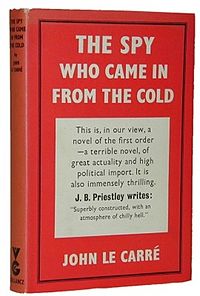
200px-JohnLeCarre_TheSpyWhoCameInSomehow, I had thought that John Le Carré’s The Spy Who Came In From the Cold was an unflinching look at the idiocy of the cold war era — a spy novel for people who hated not just James Bond, but John F. Kennedy.

Alas, the book in my head was far, far better than the book that ended up in my hands. I had hoped for acerbic wit; what I got instead was maudlin tripe.

Admittedly, Le Carré’s book has superficial differences from Fleming’s here-I-come-to-save-the-world! cheerleading. Alec Leamas is not your typical manly-man. Basically a rumpled bureaucrat, he spends most of the book semi-undercover as a no-account boozing wastrel. His main spy skill is not fighting powers or seductive charm, but the ability to lie convincingly for surprisingly extended periods of time.

And yet, on closer look, Leamas starts to seem not so different from Bond after all. It’s true that he only gets into one or two fights — but the book details his brutal competence in those encounters with crisp, matter-of-fact smugness. And yes, he only sleeps with one girl — but that relationship is wearisomely familiar. Liz, library assistant and idealistic Communist party member, is pure and good and loving, and she falls in love with Alec instantly and for no reason except that he’s so darn deep. Leamas loves her too, and the book pivots around that mutual love without ever providing one iota of evidence that it exists. Declarations of eternal devotion come out of nowhere and are attached to nothing. Liz and Alec are in love not because they like each other, or make each other laugh, or even know jack shit about each other. Rather, they’re in love because Le Carré has a plot to push along, and this is the best he could do.

Thematically, Liz is supposed to contrast with the evil machinations of the spy network. She’s sentimental and good; the service is realistic and bad. The final pages of the novel (following the Shocking Twist Ending that I figured out halfway through the book) are given over to a heartfelt argument between Liz and Leamas. “[T]hey…find the humanity in people…and…turn it like a weapon in their hands, and use it to hurt and kill—“ Liz fulminates with naïve moralism. “What else have men done since the world began?” Leamas responds with world-weary cynicism. “I don’t believe in anything don’t you see — not even destruction or anarchy.”

Thus are the battle lines laid down…though, appropriately for a spy novel, I suppose, it’s pretty much impossible to tell the one side from the other. Liz and Leamas are equally earnest, equally humorless, and equally committed to vapid Hollywood philosophizing. Ostensibly their conversation reveals the evils of spying and exposes the despicable practices of the Cold War warriors. In fact, though, their sodden disillusionment is indistinguishable from slack-jawed reverence. “The spies…,” they seem to cry in unison, “oh, Lord, they’re so diabolical, so vicious! They do such dirty work out there beyond the bounds of morality, use such subtle tricks, that normal people just fall to pieces before them. How can we parse the questions they raise? How can we live in this horrible world? What, oh what, shall we do?”

Back in the real world, of course, most major espionage activities look more like farce than anything else. I mean, the Bay of Pigs? Oliver North? Accidentally murdering suspected terrorists at Guantanamo Bay and then removing the corpses’ throats because, hyuk! hyuk!, gee nobody’ll notice that? Clearly, the real secret of intelligence is that these people aren’t Machiavellian geniuses. They’re bumbling shitheads, just like most government functionaries — or, for that matter, most people.

Joseph Conrad had this figured out in The Secret Agent. Not Le Carré though. He believes in the hard truths, which is the same thing as saying that he’s a credulous sucker for melodrama. Leamas sacrifices himself for love, because, damn it, that’s what spies do. Le Carré’s heroes care so much they barter their souls, a formulation which cleverly elides the fact that in truth said heroes couldn’t find their own asses, much less their souls, with both hands and a $50,000 government-procured state-of-the-art GPS tracking system.

Utilitarian Review 8/3/13

News

I’m supposed to be on NPR’s Weekend Edition, I think today, (Update: Nope, it’s on Sunday) talking about Johnny Cash and “Ring of Fire”. Not sure what time though….

On HU

Featured Archive Post: Sarah Horrocks on Salammbo.

Me on the sometimes pleasing but not this time crappiness of Bonnie Raitt.

I express skepticism about ev psych’s ability to understand the mind.

Me on conventions of violence in We3, Spy vs. Spy, and martyrs.

Richard Cook on the crappy Evil Dead remake.

Chris Gavaler on how a radioactive spider bite means you have puberty for all eternity.

A 50 Shades/Cthulhu ebook which you can purchase for your enjoyment, and/or to help us help you. Heaving tentacles! Thrashing bosoms! Limping ecommerce!

Ng Suat Tong on whether Joss Whedon deliberately defaced John Totleben’s art.
 
Utilitarians Everywhere

At the Atlantic I wrote about how Johnny Cash sang a love song to himself.

At Wired I write about crazy Japanese fusion and how the internet killed the music bargain bin.

At Slate I talk about the feminist blogosphere, male writers, and Hugo Schwyzer.

At Splice I talk about:

Why Anthony Weiner’s penis is funny.

G.I. Joe, Mike Vosburg, and work for hire.

At the Good Men Project I talk about transgender kids and gender essentialism.

 
Other Links

Osvaldo Oyola on Spider-Man, Watchmen, and race.

Tom Spurgeon hosts a conversation about the direction of comics journalism.

Noam Scheiber on Obama’s boy’s club.
 

content_ffcpic3