Dr. Strange! Explained by a Nine-Year-Old

My son has been really into the Lee/Ditko Dr. Strange recently. So I thought I’d ask him what he liked about it. Here’s what he said.

I like the art because it’s really colorful and I like how he gets different cloaks through the series. I like the plot too. I like how Dr. Strange runs around and does things and goes into different dimensions a bunch. I like how everybody talks to themselves a lot because it’s funny when they’re just saying things to themselves. I like the way they talk about the writers. For example, “written at twilight by Stan Lee.”

That’s kind of all I have to say.

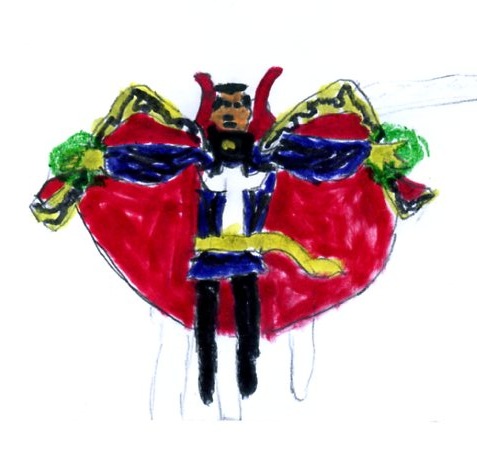
And here’s a drawing of Dr. Strange he did.
 

Dr. Strange

Packaged In Black

I don’t know if it was so much [Johnny Cash’s] music per se that drew me to him; it was more his overall persona….

            —Rick Rubin, Interviewed on NPR’s Fresh Air, February 2004


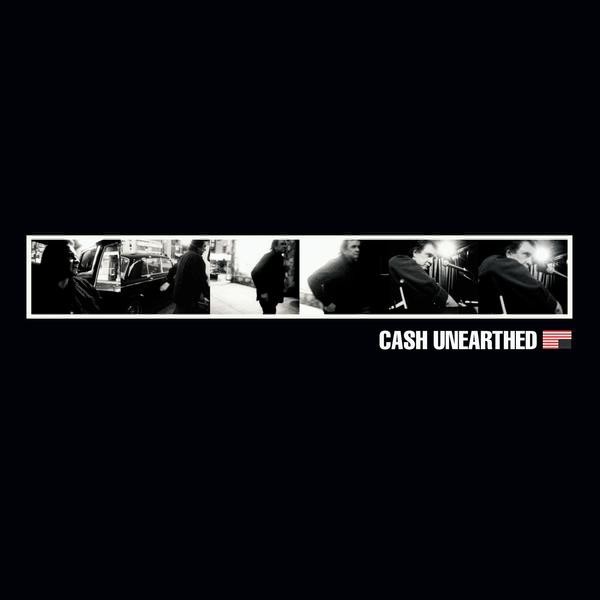
Unearthed, the five-CD collection of outtakes and unreleased material from Johnny Cash’s last 10 years with American Recordings, comes in a box as black and stark as Cash’s tormented soul.  The sleeves are made of CD-scratching cardboard, as rough and uncompromising as Cash’s famously raised middle finger.  The shrink wrap is tough and tenacious, as tough and tenacious as….
 

JohnnyCash-Unearthed-1

 
Well, you get the idea.  Cash is a serious artist and it takes a virile, forward-looking, serious company like American to provide his music with the extremes of over-packaging it deserves.  Old, stodgy labels like Columbia and Mercury hadn’t known what to do with a complex iconoclast like Cash — it took Rick Rubin, American’s founder, to see the greatness in Cash and act on it.  The liner notes to Unearthed gleefully quote Nick Tosches, who claimed that “Johnny Cash at 61 was history, an ageing, evanescent country music archetype gathering dust in a forgotten basement corner of the cultural dime museum.”  It wasn’t until Cash’s first 1994 album on American that the singer was granted “the imprimatur of ageless cool.”

Or so the story goes.  Johnny Cash’s career was indeed in a slump in the eighties and early ‘90s — enough of a slump that he thought he might cease recording altogether.  But he was hardly as irrelevant as Tosches and Rubin make him out to be.  In fact, in 1993, the year before his first American release, Cash made a much promoted and discussed appearance on the final track of U2’s Zooropa.  Rubin didn’t have to be a genius to figure out that there was an audience for Johnny Cash’s work — all he had to do was read the papers.

Nonetheless, American has spilled a lot of ink insisting that Cash’s career would have been over without Rick Rubin.  The point of this strategy seems to be to make Cash and American go together like ham and eggs, or music-industry and slimeball.  Usually a label promotes the artist, but with Cash and American, something like the opposite has occurred.  Cash’s first album with the company was actually named American Recordings (as Cash quipped on one of his final tours, “the album American Recordings on the American Recordings label, recorded right here in America”).  His other albums also give the American name unusual prominence and, continuing the trend, the back of Unearthed features the labels’ upside-down flag symbol alone on a black background.  Little wonder, then, that Unearthed’s liner notes exclaim  that Cash’s first album with American was “as stark, dark, and elemental as the stunning cover photo,” as if it’s some sort of compliment to Cash to have his work compared to a publicity shoot.  Still, there’s a certain logic here: if the label is as important as the artist, then it makes sense that the packaging is as important as the music.

For this particular promotional strategy, the blame must rest with Rubin himself, who not only signed Cash, but also produced each of his albums.  Rubin was already quite well-known before his work with Cash, in large part because he had worked on a number of landmark rap and metal albums: most notably the classic early records of L. L. Cool J, the Beastie Boys, and Slayer.  But Rubin’s notoriety was also a function of assiduous self-promotion.  With the Beastie Boys, in particular, Rubin pushed himself forward with unusual enthusiasm, touring with the group, appearing in videos, and adopting the rap moniker DJ Double R.  According to The Vibe History of Hip Hop, Rubin considered himself a member of the band.  If he believed his own hype, however, the Beastie Boys did not, and when they left his then-label Def Jam, they left Rubin behind as well.

As far as I know, Rubin has never appeared on stage with Cash, but he hasn’t exactly retired into the background either.  Unearthed is presented as a collaboration between the two men, who are portrayed  as something very close to equal artists.  “This is the story of what happened when the man with the beard [Rubin] met the Man in Black,” the liner notes intone.  Their encounter is then described in the portentous language of trashy romance novels —  Cash’s former manager is quoted as telling Rubin ‘You could see the sparks flying between you two.  There was such an immediate, powerful connection,” to which Rubin adds “It felt like we connected on some level other than talk.”  Cash’s recollection is a bit more tongue-in-cheek.  “You know, I’d dealt with the long-haired element before, and it didn’t bother me at all.  I find great beauty in men with perfectly trained beards and groomed faces — or grooved faces, or whatever it is.”

Cash was intimately involved in the production of the box set before his death last September, and he’s clearly both grateful to Rubin and willing to share the spotlight with him.  And there is no doubt that Rubin did revitalize Cash’s career, basically by marketing Cash the way he had marketed rap and metal acts — that is, by making Cash a dangerous outsider, a loner, an outlaw.  Gone was the Johnny Cash whose biggest hits had been jokey novelty records like “A Boy Named Sue” and “One Piece at a Time”.  In his place was, as the notes put it, “a dark troubadour with a troubled past who had sinned and been redeemed.”  The first song on the first American release, “Delia’s Gone,” was a particularly vicious murder ballad — the video featured Cash killing model Kate Moss.  Ten years before, “the dark troubadour” had appeared in a video for his song “Chicken in Black” wearing a blue-and-yellow mock-superman suit.

Obviously, Rubin didn’t invent the “dangerous loner” image for Cash, who had been singing about shooting people since the ‘50s.  The American publicity merely emphasized this aspect of his persona with stark, moody, black-and-white album art and stripped-down production — especially on the first release, which featured Cash alone and unaccompanied for the first time in his career.  Whatever the publicity material said, of course, Cash continued to record goofy stuff alongside the doom-and-gloom numbers. “The Man Who Couldn’t Cry” from American Recordings, “Mean-Eyed Cat” from Unchained, and, Cash’s heavenly duet with Merle Haggard on Solitary Man’s “I’m Leavin’ Now” are all glorious examples of Cash’s lighter side — wise, witty, and very funny.  None of these cuts is represented on Unearthed’s fifth disc, a “Best of American” compilation which is tilted heavily towards his more solemn numbers — “Delia’s Gone,” “Hurt,” “I Hung My Head,” and the really annoying “Bird on a Wire” (Leonard Cohen’s clumsy ramblings do not benefit from Cash’s gravitas: the set also includes a fully orchestrated and even more lugubrious version.)  Still, the other Unearthed discs contain a fair share of lighter material, including a jovial discussion of substance abuse in “Chattanooga Sugar Babe” and the unaccompanied “Two-Timin’ Mama,” perhaps the one American cut that most clearly evokes Cash’s Sun sides.

So all well and good: Cash is doing what Cash does, and Rubin has realized that young hipsters think it’s cooler to kill people than to laugh — or, perhaps more charitably to everyone, Rubin simply had the vision to give Cash a marketing budget, something the singer had been denied for years. Rubin, however, has not been satisfied with merely contributing to Cash’s commercial Renaissance.  Instead, Unearthed’s liner notes insist that Cash’s resurgence has been aesthetic as well as critical.  In explaining why he approached Cash, for example, Rubin says “I’d been thinking about who was really great but not making really great records…and Johnny was the first and the greatest who came to mind…Someone…who didn’t seem inspired to be doing his best work right now.”  Rubin also says that his biggest challenge with Cash was getting the singer to see each recording date as special, rather than as just another album.  The implication of all this, of course, is that the material on Mercury which Cash recorded in the early ‘90s was a series of prefabricated knock-offs.

Au contraire.  The Mercury material is great — not every cut, of course, but the hit-to-miss ration isn’t significantly worse than on the American albums.  At Mercury, Cash mostly worked with producer Jack Clement— a longtime friend — and he sounds relaxed and inventive. Indeed, his best material on Mercury is as good as anything he’s ever done.  The duet-heavy Water From the Wells of Home from 1988 is perhaps the stand-out, featuring the lovely “Where Did We Go Right” with his wife, June Carter Cash; and the tough, vindictive “This Old Wheel” with Hank Williams Jr.  Best of all, though, is the utterly bizarre “Beans for Breakfast” from 1991’s Mystery of Life, in which Cash explains that “the house burned down from the fire that I built in my closet by mistake after taking all those pills, but I got out safe in my Duckhead overalls.”  Significantly, Cash never said that his work with Mercury was slick studio product: he only said, with great frustration, that the label wouldn’t promote it.

In this context, the most impressive thing about Unearthed is not how distinctive the American recordings are, but rather how much of a piece they seem with the rest of Cash’s oeuvre.  For the truth is that each of the much-ballyhooed strengths of the American years — the surprising song selection, the challenging duet partners, the varied settings, and even the reinvention of Cash’s image — have all been typical of Cash’s career throughout.  This is a man, after all, who started out as a rockabilly performer in the Elvis/Carl Perkins mode, appeared at the Newport Folk Festival in 1964, was associated with the Outlaw country movement in the ‘70s, showed up on Emmylou Harris’ seminal Roses in the Snow album in 1980, and had his last hit record with the Highwaymen supergroup in 1985.  Along the way, he recorded songs by everyone from Ray Charles to Bob Dylan to Kris Kristofferson to Bruce Springsteen to the Rolling Stones, hosted an eclectic television show, and released protest songs, concept albums, and a novel.

Cash, in other words, was always experimenting, and it is this aspect of his work that Unearthed puts center stage.  It’s an odds and sods collection, so not everything works — a couple of tracks with a mediocre blues band are a mess; Joe Strummer sounds badly outclassed when he sings with Cash on Bob Marley’s “Redemption Song”; the version of “You’ll Never Walk Alone” with organ is cluttered rather than sweeping; and I’m forced to admit that Cash’s austere renditions of hymns on disk four grow wearisome on repeated listening.  That leaves, however, quite a lot of impressive music.  The first disc in particular shows what a great idea it was for Cash to record alone and unaccompanied — an idea the singer had had some time ago but had been unable to sell until Rubin came along.  All the interpretations are lovely: Billy Joe Shaver’s wistfully hopeful “Old Chunk of Coal,” and Cash’s own love letter to his wife, “Flesh and Blood,” are particularly fine.  On the rest of the set, the duet with June is, as always, a high point; Cash’s baroque cover of his friend Neil Young’s “Pocahontas” (with mellotron) is also pretty great.  Introducing Cash to Nick Cave was an obvious move, but it works wonderfully; Cave adds a touch of out-of-place gothic glee to “Get Along Home Cindy” which almost upstages the master.  My absolute favorite track, though, is Cash’s short, sweet version of “You Are My Sunshine.”  The song is a fusty piece of schmaltz which I’ve never liked very much, but Cash’s bleak quaver turns it from a greeting card into an agony of grief and loss.

Certainly Cash knew about grief and loss.  This is the aspect of his work which — with his long illness, the death of his wife last May, and the success of the single and especially the video for “Hurt” — has been most in the news for the past couple of years.  To me, though, the fact that Cash was able to change, to learn, and to take risks with his life and art for more than forty years is far from sad.  One of those risks was to record with Rick Rubin, who led him to new songs, new people, new audiences, and new approaches to recording.  Rubin, Cash himself, and the public all benefited from their collaboration.  But I have no doubt that if Cash had not had the opportunity to take that particular chance, he would have taken another one.  Even had the Man in Black never met the man with the beard, Cash’s story would still be one of the happiest in American music.

_________

A version of this essay ran at the Chicago Reader way back when.

Voices From the Archive: Trina Robbins on Selling Marvel’s Barbie Comics

Trina posted this comment comment during our Wonder Woman roundtable a while back:

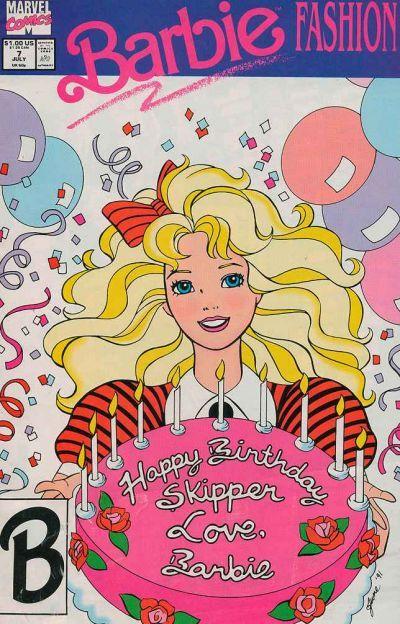
The problem definitely seems to be that the mainstream two do not know how to market to girls and women. Back in the 90s when I was one of the writers on Barbie comics for Marvel, their only advertising was in their own comics. Then, on Barbie’s 30th anniversary, my editor got an agreement with Toy R Us to have various Barbie creators do a one-day signing and appearance in their various stores and of course sell the comics. (The comics had NOT been for sale at those toy stores or at ANY toy stores, only for sale in comic book stores!) So I showed up at our local TRoys R Us and they had a nice display with the comics and a cute throne-like chair for me to sit, and people came in and saw the comics and went “Wow, I never knew there were Barbie comics! And look, they’re only 75 cents! Let’s buy some for our daughter/ neice/ granddaughter, etc.” and the comics sold out! Marvel did NOT follow up and start distributing the comics through toystores, and of course eventually they cancelled the line because it wasn’t selling enough. Makes you want to bang your head against a wall!
Noah, while some books in the Minx line were [perfectly fine, others made me wonder if the editor understood whom she was selling to. The books got edgier and adgier until there was one (I think it was called “Shark Girl”) about a surfer girl who lost her heg to a shark — a potentially great premise — but it included erotically charged scenes of girls in the world’s briefest bikinis, the kind of stuff that parents, if and when they saw the books, would have a fit.


tumblr_luetcbRJpe1qbw5o0o1_500

Quentin Tarantino, Humanist

Since we’re doing a Django Unchained roundtable I thought I’d republish this. It first appeared way back when in the Chicago Reader.
___________________

It’s hard to believe the acclaim bestowed on this rip-off artist. Second-hand plots, second-hand characters, second-hand themes, all thrown together without regard to narrative probability, but with plenty of gratuitous violence to bring in the groundlings, and — ta daa! A marketing phenomenon is born.

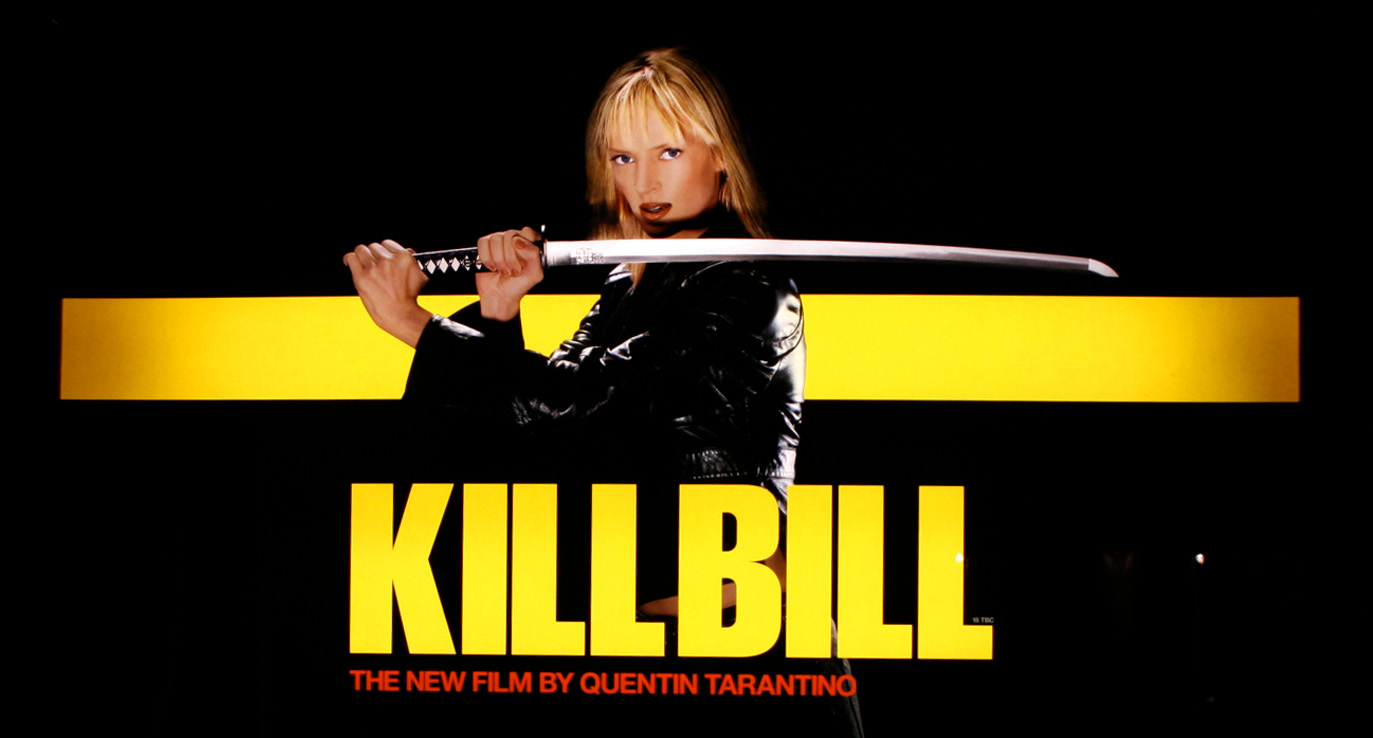
But enough about Shakespeare. Kill Bill isn’t exactly Henry IV, but at least Quentin Tarantino’s two part epic is shallow and derivative. Even fast food commercials these days want you to believe in the sincere virtues of family, community, and up-to-date urban newness. Not Tarantino, thank God. Kill Bill is relentlessly, gloriously glacial — the ravishing Kung Fu battle in the first part unwinds endlessly without narrative function or even, really, suspense — we all know how this is going to turn out, after all. Its only raison d’etre is the choreography and the beauty of the shots. In “Crouching Tiger, Hidden Dragon,” Ang Lee tried to give martial arts films a soul. Fuck that, Tarantino seems to be saying — his version is all cold surface; blank stare as tribute. Empty? Why, yes. But, as it happens, it’s also more true to the source material, and a more thoughtful take on the depersonalized attraction of violence.

Kill Bill 1, like martial arts movies generally, is a mechanized ballet — even the out-of-sequence narrative feels, at this point in Tarantino’s career, more like a reflex than an innovation. Kill Bill 2, on the other hand, is not so much robotic as paralyzed. Everything is Sergio-Leone-extreme close-up and anticlimax. Bud (Michael Madsen), the ex-killer, working as a bouncer in a girlie bar, is painfully chewed out by his thoroughly despicable boss — we expect him to go ballistic and trash the place, but instead he just mumbles and goes off to clean the plugged toilet. The super-martial-arts-guru played by Gordon Liu dies from eating poisoned fish-heads. Our heroine, the great swordswoman, keeps gearing up for a awesome display of virtuosity and then getting shot — the first time with rock salt, the second, bizarrely, with a truth serum dart that forces her to confess absolutely nothing of consequence. David Denby in the New Yorker speaks for many critics when he claims that “such scenes don’t work,” but surely they’re not supposed to, any more than the Simpsons is intended to be dramatically intense. This isn’t homage — it’s slow-motion parody. Action-movie clichés — revenge, honor, violence — all end up looking not merely dumb, but boring.

Tarantino’s usually viewed as simply a fan of movies. His films are supposed to be giddy hipster pleasures; an excuse to show off, the accusation goes; at his best he merely reproduces the stylistic tics of his heroes. Thus, for Denby, the fact that Gordon Liu comes off as “a prancing little snit” is a mistake; martial-arts masters should be treated with respect, right?

On the contrary, Tarantino’s studied refusal to fulfill genre expectations is the reason to watch him. He doesn’t want to make a Hong Kong action movie, or a blaxploitation flick: he wants to have a conversation about one. And that’s what his movies seem like: long, dramatic arguments with other filmmakers and other films. Probably the most enjoyable part of Jackie Brown, for me, was the treatment of Robert DeNiro, whose portrayal of an utterly inept, hen-pecked wannabe bad-dude deftly upended decades of macho posturing — this guy, Tarantino seems to say, is just another honky who wants to be tough. Similarly, in Pulp Fiction, gangland thugs, so celebrated by Scorcese, Coppola, et. al., are presented as moronic sit-com buffoons.

It’s no accident that Tarantino seems most masterful when skewering the primal histrionics of a method-actor like DeNiro. The pulp movies Tarantino draws on are, as a rule, obsessed with visceral responses — sex, blood, suspense, shock. Tarantino is interested in these things too, but only second-hand, as odd collectables you might find on display in a museum. He doesn’t want to create excitement, but to take it apart and see what makes it tick. The famous torture scene in Reservoir Dogs, set to a feel-good seventies sound-track, was disturbing not because it was so immediate, but because it was distanced: Tarantino seems to be watching you with his head slightly to one-side, clipboard in hand, asking, “Well, now, how did you feel about that?” In Kill Bill 2, Elle (Daryl Hannah) sics a black mambo on Bud, then reads him pertinent facts about the snake as he lies paralyzed. That’s Tarantino all over; you can bet that if he were dying in horrible agony, he’d still want to know how many milliliters of venom had entered his bloodstream.

Every so often, though, Tarantino does attempt to generate the kind of catharsis that he usually makes it his business to mock. The results, needless to say, are not pretty — a vivisectionist may be good at taking the dog apart, but he’s not the person to go to if you want to buy a pet. Of all his movies, Kill Bill seems the one in which Tarantino has most consistently attempted earnestness and, as a result, it’s his weakest effort. The character of The Bride (Uma Thurman) is a case in point. She’s clearly patterned on Clint Eastwood’s Man With No Name — an ectomorphic, blond, impassive killer. Fun could certainly be had with this character, and Tarantino indisputably hits some of the right notes; after digging herself out of her own coffin, for instance, The Bride, covered in dirt and looking like death, calmly walks into a diner and asks the startled counter-attendant for a glass of water.

Before being buried alive, however, The Bride totally loses her composure, weeping hysterically. This would be okay if Tarantino had actually cast Eastwood in the role. But Thurman is a woman, and seeing a woman fall apart in an action movie doesn’t tweak convention; it fulfills them. Of course, The Bride pulls herself together and escapes in an utterly preposterous and enjoyable sequence, but what’s the point of her outburst? To increase suspense? To make us identify with her? To make her more believable? Tarantino can be brilliant when he pushes ideas to their limits, or when he undercuts them. But here he’s doing neither; he’s using tired techniques to achieve tired ends. Thurman’s desperate emoting doesn’t comment on Sergio Leone — at best, it merely replicates the supposed “realism” of Bruce Willis’ average-joe action hero in Die Hard.

The misguided desire to turn Thurman’s character into an actual person is underlined by her christening; in the first movie, she’s nameless, in the second, we learn that she’s called “Beatrix.” But it’s her final appellation that really causes trouble. In the film’s last scene, we see a close-up of Thurman’s face and printed over it the information that she is now known as “Mommy.” Motherhood is, in fact, the central theme of Kill Bill. It’s also one of the most loaded and thorny topics in our culture, and by the end of the second part of the movie, its clear that Tarantino, in confronting it, has suffered a catastrophic failure of nerve.

Things start out all right. Many pulp movies center around plots involving brutality committed against or witnessed by children: “Once Upon a Time in the West,” for example, or, more recently, “Batman.” But in Kill Bill 1, Tarantino features not just one act of violence, but several. To open, Bill supposedly kills The Bride’s unborn child. Then, in an animated sequence we see a young girl literally covered in the blood of her murdered parents. This is O-ren Ishii (Lucy Liu) whose horrifying experience inevitably inspires her to become a ruthless assassin and the crime-lord of Tokyo.

And finally there’s the movie’s first extended sequence. The Bride has tracked ex-assassin Vernita Green (Vivica Fox) to the later’s suburban home; the two immediately begin an extended, violent kung-fu battle, complete with kitchen knives, but they are interrupted by the arrival of Green’s four-year old daughter Nikki (Ambrosia Kelley). The Bride, it turns out, doesn’t want to kill the child’s mother in front of her. Green pushes for more, suggesting that, for the sake of the child, the Bride should abandon her revenge. But the Bride is unconvinced, she refuses to let Green off the hook just for “getting knocked up.” In the end, she does murder the mother in front of the daughter, and then apologizes woodenly: “When you grow up, if you still feel raw about it, I’ll be waiting.” There’s been much speculation on the net about a sequel starring a vengeful Nikki, and rightly so. After all, children in this world aren’t the innocent victims of violence — they’re excuses for it — convenient plot devices. Oren Ishi’s seventeen-year old, psychotic bodyguard Gogo (Chiaki Kuriyama) who wears school-girl outfits is emblematic; a kind of living fetish of blood and gore.

Kill Bill 1 suggests that we enjoy watching our children get hurt. In Kill Bill 2, Tarantino merely notes that children have aggressive impulses — a much less daring thesis. Certainly there’s nothing particularly daring about the portrayal of Beatrix’s four-year-old daughter B.B. (Perla Haney-Jardine), who, it turns out, did not die after all. Bill has raised her as a normal, upper-middle-class suburban youth who enjoys playing with toy guns. She also deliberately killed her pet goldfish, but her real function is to humanize her mother. After rediscovering the child, Beatrix kills Bill, ends her crusade of vengeance, and begins a new life as a loving mother –inaugurated by another extended crying jag. B.B. herself, however, barely exists; she’s little more than a stand-in for hundreds of redemptive movie children. Tarantino could have made her a hyperbolically saccharine sit-com clone; he could have made her a spunky bad seed like John Connor in James Cameron’s motherhood-obsessed Terminator 2; he could have made her a ninja-assassin hell-bent on avenging her father’s death. Instead, he gives her an obligatory quirk (she likes watching “Shogun Assassin” before bed) and otherwise treats her with an unbecoming reverence. It’s as if he’s afraid to touch her.

Tarantino isn’t usually considered a cautious director. But in his scenes about motherhood he is pulling his punches, and the strain eviscerates his writing. Thus the scene in which Beatrix discovers, using an over-the-counter test, that she’s pregnant. Moments later an assassin bursts into her hotel room. Hijinks ensue, but finally the assassin accepts that Beatrix is with child. This time the plea of “but the children!” which was so ineffective in the first part of the movie, works like a charm. Looking through the shotgun-hole she’s blasted in the door, the assassin intones “Congratulations,” a punchline predictable and saccharine enough to have come out of a third-rate, by-the-numbers Hollywood action-comedy like Police Academy.

Tarantino’s never going to make even a first-rate action comedy, of course; he’s simply too talented a craftsman to churn out a scattershot masterpiece like Airplane. But if he doesn’t take care, he could create something significantly worse. Kill Bill’s more maudlin moments queasily echo the efforts of Jim Jarmusch, a director who, instead of puncturing genre conventions, inflates them with pretentious philosophizing and waits for the critics to call it art. It would be a shame if Tarantino went further down this road. Truly talented satirists are few and far between, but film-schools are full of myopic white boys eager to tell the rest of us what it means to be human.
_______________
lb-kill-bill-quad

Utilitarian Review 1/19/13

On HU

Featured Archive Post Anja Flower on gender in Ghost in the Shell.

Me on the pernicious drivel of Jim Carrey’s Yes Man.

Me on Fredric Wertham and the Seduction of AbEx.

Matt Brady on Django vs. Lincoln.

Gail Carson Levine (author of Ella Enchanted) on Joan Abelove’s anthropological novel, Go and Come Back.

Robert Stanley Martin on Jim Shooter and Moonshadow.

Owen Alldritt on Lil B as God.

Watching Django on the southside of Chicago

Richard Cook with 8 reasons that the Hobbit sucks.

Me on Dr. Strange and Steve Ditko erasing himself.
 
Utilitarians Everywhere

At the Atlantic I talk about mamas in country music.

At Splice, I review the Future Sounds of Buenos Aires, and decide the future is exotica.

At Splice Today, I urge everyone to follow me on Twitter!
 
Other Links

David Brothers has been writing an interesting series on Django Unchained.

Amanda Marcotte on why rape is not an accident.

Alyssa Rosenberg on Beyonce’s compulsive self-documentation.

Brian Cremins on the queer joys of Black Cat and tiny Spider-man.
 
This Week’s Reading

I’m rereading Twilight for a piece. And rereading/editing my Wonder Woman book; hopefully I’ll finish up next week and can get it out to readers sometime soon after that.
 

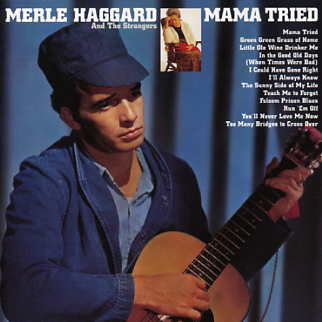
Merle_Haggard_-_Mama_Tried

The Erasure of Steve Ditko

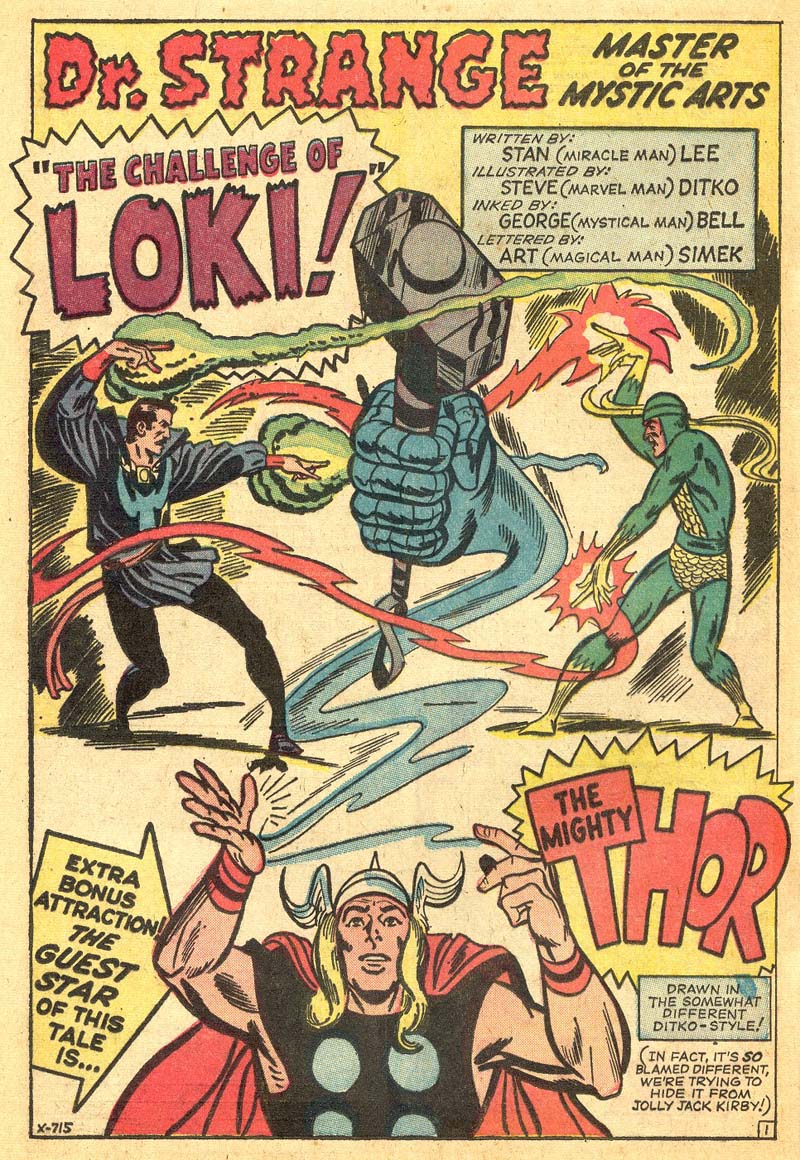
I think I first read Stan Lee and Steve Ditko’s story “The Challenge of Loki” in a black and white reprint edition when I was around 8 or so. It’s originally from Strange Tales #123, August 1964.
 

ST123DS

 
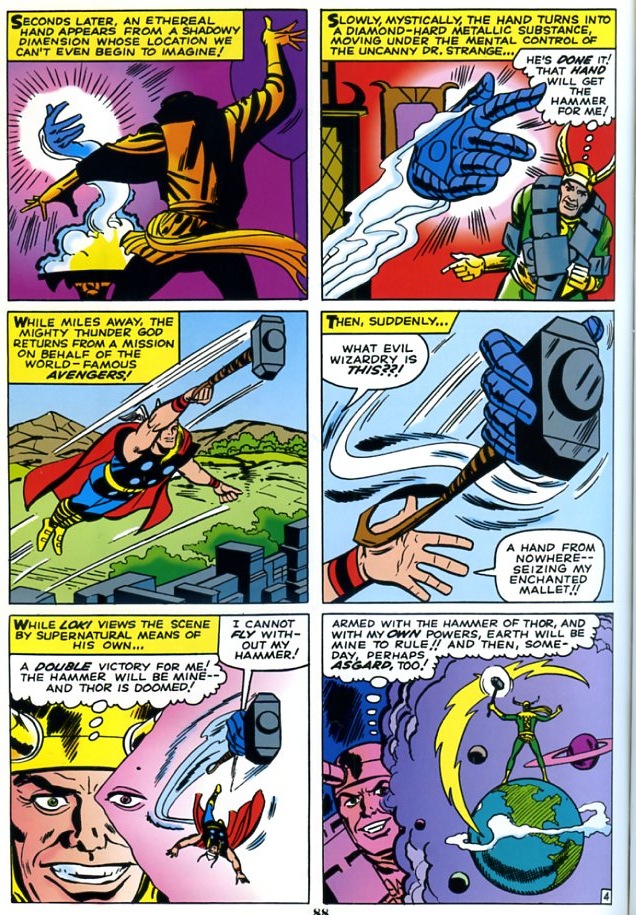
It’s not exactly right to say that it hasn’t held up — I wasn’t necessarily all that into it even as a kid, though it does have its virtues. Chief among them is a kind of self-contained inevitability; plotting that opens and closes with a satisfying “click.” In the story, Loki decides to use Dr. Strange to destroy his old enemy, Thor. He convinces Strange to cast a spell to rob Thor of his hammer while Thor is in flight. Without the hammer, Thor starts to fall to his death. Dr. Strange realizes he’s been tricked, and he and Loki battle. Strange is losing, but manages to reverse his spell, winding time backwards and returning the hammer to Thor. His life and hammer restored, Thor sets out in search of Loki, arriving at Dr. Strange’s sanctum just in time to scare Loki off and save Strange. The end.

I guess it sounds convoluted in the telling, but, again, the thing I sort of liked about it, and still sort of like about it, is the neatness of it — the way the story so swiftly and so unapologetically sets itself in motion, and then resets, or erases itself. Loki has an evil plot; it is discovered; everything goes back to normal. It’s transparently unmotivated, and then gratuitously rubbed out — pulp piffle which revels in its own greasepaint-daubed inconsequence. The gaudiness of the lack of pretense is refreshing — though also, admittedly, a little unsettling.

That hint of wrongness, might, perhaps, be tied to some of the characteristic tensions in Ditko’s work. Specifically, Craig Fischer argues in this lovely essay, in which he connects Ditko’s obsession with eloquently gesturing hands to the anxiety and unease which pervades the artist’s oeuvre — and then (obliquely) connects both the hands and the anxieties to repressed themes of abuse.

Certainly, hands are very important in “The Challenge of Loki.” Dr. Strange steals Thor’s hammer from him by generating a giant, blue/black hand.
 

dr.strange1

 
In part, the hand can be seen as pointing directly to Ditko himself; the elaborate motion lines an excuse to show the squiggle of the pen line — the diegetic hand as artist’s hand drawing the diegetic hand. The comic is showing you its own grinding mechanisms; it’s showing you the man (and the hand) behind the curtain.

What the man behind the curtain is doing, of course, is wreaking havoc. Thor is sadistically thrown to his death by the mystic hand — or, if you’d prefer, by the hand of the artist. There’s no motivation, other than Loki’s almost pure malevolence — which both is a plot device, and can be seen as characterizing pulp plot itself. The narrative almost figures artist as supervillain.

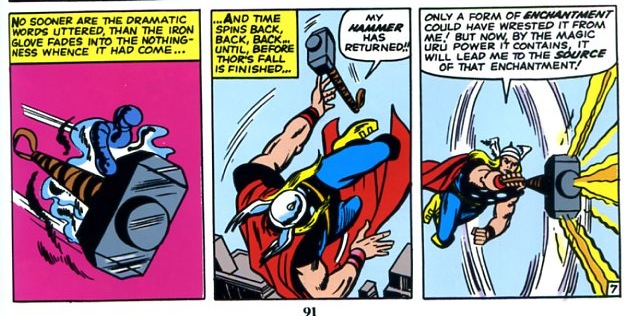
But then, of course, the artist relents.

dr. strange2

It’s interesting that the hand does not return the hammer, but instead fades away. Time is wound backwards (though, again curiously, this is not really visualized). Thor’s hammer is returned to him; the supervillain artist erases his own work. Not only is recompense made, but, apparently, the evil was never done. It effervesces, like a dream — or an instantly forgettable chunk of pulp detritus. There’s almost a wistfulness there — a fantasy that those hands (my hands? whose hands?) had never been or done; that they could just vanish with a wave of (the same?) hand.

I’m sure some folks will say that it’s a stretch to read into this story trauma or guilt or a confused identification/repudiation of an abuser. And I’d actually agree with that. “The Challenge of Loki” isn’t about abuse. It’s not about anything. It’s a stupid little story about Dr. Strange fighting Loki, with Thor thrown in for cross-promotional purposes. It’s well-constructed, and mildly entertaining, and that’s all that can be said for it, really. It’s inconsequential genre product. If there was ever anything more there, it has been scoured out by some violent or gentle hand.

The 3-D Gave Me a Headache and Seven More Complaints about The Hobbit

the-hobbit-an-unexpected-journey-movie-2560x1600-2048x1536

1. The movie spends over half an hour introducing the dwarves, yet doesn’t give a single reason to care about any of them. It’s hard to even keep them straight. I remember the king, the fat one, the old one, and the one with the stupid hat. Beyond that, I don’t remember them and don’t care. By any standard of characterization quality, this movie compares poorly with Snow White and the Seven Dwarfs. At least I knew what to think of Grumpy.

2. Somewhere in this great big world, there is a movie that successfully combines musical numbers, snot gags, and rampant violence. The Hobbit is not that movie. The plot retains the cutesy qualities of a children’s adventure, but with incongruous levels of violence. Though now that I think about it, this is familiar territory for a comics blogger.

3. PG-13 violence is remarkable, and not in a good way. The movie has decapitations, eviscerations, multiple stabbings, and a body count in the hundreds, yet there is very little on-screen blood and the camera never lingers on the gruesome consequences of violence. The Hobbit is too gory to be cartoonish yet too tame to be explicit. It’s the uncanny valley of violent entertainment.

4. The action scenes are not exciting. Several reviewers have noted the video gamey quality of the action, particularly the big battle/chase sequence with the goblins. There is shot after shot of indistinguishable dwarves killing indistinguishable orcs. Noah compared it to a “body count video game,” which sounds about right. While body count video games can’t be defended as good art, they can at least provide a base level of entertainment and a pleasurable empowerment fantasy. But watching The Hobbit is like watching someone else play a video game, which  is never fun.

5. Every scene is about 10 minutes longer than it needs to be. It’s bad enough that such a short book was split into a trilogy. But there’s no conceivable reason why each installment has to exceed 2 hours. Though now I can’t help but wonder what sort of scenes were cut from the theatrical release. And what will be included in the extend cut DVDs? No doubt there are many more thrilling scenes of characters sitting around tables and explaining the plot to each other.

6. The film is tragically lacking in hobbit feet close-ups. Why even make The Hobbit if you’re not going to showcase hobbit feet?

7. To harp on the 3-D again, it adds absolutely nothing to the movie experience. 3-D is just a silly gimick, so if you’re going to use 3-D you might as have some fun with the audience (for a great example, see Friday the 13th part 3, which is all rats and marijuana and eyeballs in the third dimension). The Hobbit doesn’t have any fun with the 3-D, so it feels suspiciously like an excuse for theaters to jack up the ticket price.

7.5. Speaking of ticket price, two tickets cost me $38. Thirty eight fucking dollars.