Music For Middle-Brow Snobs: Surfin’ and Drivin’

Little bit country, little bit bleached-out pop. Download Surfin’ and Drivin’ here.

The playlist is below.

1. Still With You — Caroline Peyton
2. Sweet Dreams of You — Emmylou Harris
3. Smoke Along the Track — Dwight Yoakum
4. When Being Who You Are Is Not Enough — Patty Loveless (and Emmylou)
5. Tumbling Dice — Linda Ronstadt
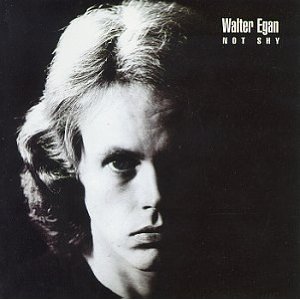
6. Surfin’ and Drivin’ — Walter Egan
7. Rock’n Me — Steve Miller Band
8. Trying to Get Over You — Danni Leigh
9. All the Words — Bridges
10. Tracks of My Tears — Linda Ronstadt
11. Complicated Girl — Bangles
12. Got a Hold on Me — Christine McVie
13. Rainbows — Dennis Wilson
14. This Whole World — Beach Boys
15. Trouble — Lindsey Buckingham
16. Second Hand News — Fleetwood Mac
17. Black Rose — Waylon Jennings
18. Do It Again — Steely Dan

Wonk vs. Pol

This was first published on Splice Today.
_______________________

Al Gore is a wonk—for a politician. But politicians aren’t real wonks. They’re doughy, be-suited wonk wannabes; plodding poseurs with pasteboard and tinsel craniums. When politician wonks go to the think tank locker rooms, the real wonks snicker and tape “Kick Me!” to the backs of their slide rules.

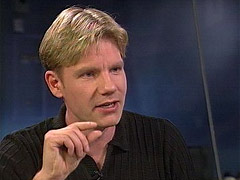
The documentary Cool It is the revenge of the real wonk—specifically of Bjorn Lomborg, author, statistician, environmentalist and native of Denmark, where they take their wonks seriously. Lomborg’s controversial thesis in Cool It (first floated in his 2001 book The Skeptical Environmentalist) is, essentially, that Gore and his ilk are full of hooey. Global warming will not cause the apocalypse in the foreseeable future, and the effort to frighten people into lowering carbon emissions is disingenuous and misguided.

Lomborg doesn’t deny that global warming is occurring and that it is a serious long-term problem. Instead, he notes that doomsday scenarios (20 ft. sea level rise! Devastating hurricanes once a week!) are overblown, and that the efforts to drastically reduce greenhouse gases through legislative caps are ineffectual. Instead, he argues we should funnel the massive amounts of money it would take to lower temperatures by a fraction of a degree over the course of a century into more productive ventures. He suggests, for example, developing renewable energy resources and fighting poverty, malaria, and other scourges in the developing world.

Cool It has more ambitions than merely setting the record straight on global warming, though. One of the talking heads that Cool It drops on the unsuspecting viewer notes with the slightly condescending chuckle of the large-brained that Gore’s film, An Inconvenient Truth, was a “great piece of propaganda.” No doubt it was. So is this. Cool It uses, in fact, many of the same hagiographic tactics as its more famous predecessor. We see Bjorn biking healthily through Denmark, chatting earnestly with impoverished children in third world nations, and puncturing bloviating politicians with his rapier wit. We get porn-movie close-ups of his book as voiceovers speak sternly of its controversial and brave counter-intuitiveness. The movie even trots out Lomborg’s Alzheimer-afflicted mother for a few scenes—because nothing adds depth to a wonk’s character like a little family tragedy.

Bjorn may be a bouncing boy genius, but he’s not the only one. The movie has enough reverence for contrarians to spread its shining pixie dust all across the wonkosphere, breathlessly rushing from a plan to cool the world’s cities by painting them white to a plan to cool the earth by spraying particulate matter into the stratosphere by balloon to a plan to turn algae into fuel, and on and on. Economists will tell us what to invest in and researchers teleologically deliver the goods. “The solution is us!” one scientist proclaims. And by “us” he doesn’t mean you and me, child. He means the wonks.

The wonks always think the solution is them, of course. Leave it to wonks and they’ll reason and invent and statistic until our problems are all solved. Of course, one could argue that many of our problems were caused by wonks in the first place. World Bank economists are not generally hailed as saviors in the developing world; the technological miracle of massive irrigation projects has in many places intensified water crises; the massive population boom enabled by modernization in Africa pushed humans into forested areas where, it seems likely, they came in contact with the simian-born HIV virus. Advances can have unintended consequences. But so what? As one cantankerous bearded fellow notes, you may not trust the wonks, but you don’t have a better solution do you? Unless you do, he sneers, “Don’t stop me!”

As it happens, I don’t have any particular desire to stop Angry Bearded Guy. I agree with the film that politicians are largely useless. To the best I’ve been able to determine from doing a moderate amount of research on the topic over the years, global warming really is not an imminent millenarian threat. Lomborg’s suggestions—stop scaring people; stop calling for useless individual actions like replacing light bulbs, invest money wisely—all seem reasonable.

But I wish we could agree to those solutions without engaging in rampant wonkolatry. Because the fact is, wonks are as stupid, as duplicitous, and as self-impressed as the rest of us—a fact this movie inadvertently demonstrates quite clearly. The end isn’t nigh, but neither should we necessarily put our faith in the convenient development of timely techno miracles. And you know what you call a wonk who wants your trust? A politician.

Utilitarian Review 6/4/11

On HU

Our featured archive post last week: Sean Michael Robinson on the curse of talent.

James Romberger on the IDW book about Alex Toth.

I talk about what we don’t see in Paul Verhoeven’s the Hollow Man.

Anja Flower on art, skill, and talent.

Nadim Damluji on the rise, fall and disappearance of manhua (Chinese comics).

Don’t reboot, DC. Just fucking die.

Erica Friedman on Judo Master and being sick of racism and sexism in comics.

Domingos Isabelinho on Alan Dunn, Will Eisner, R. Crumb, and how to avoid racist caricature.

Utilitarians Everywhere

Lady Gaga vs. Gallhammer at Splice Today.

Learning to love the sword with 13 Assassins.

Other Links

One review of the Wonder Woman pilot.

Let’s have war forever.

On micro-criticism.

Another review of the Wonder Woman pilot.

Don’t Reboot. Just Fucking Die.

DC is rebooting their entire line of shitty comics. This is huge news because it means that the company is finally going to devote themselves to encouraging innovative creators to come up with fresh, meaningful stories, at least, say, 20% of which will no longer feature 40, 50, or even 80 year old characters promoting bone-headed violence, occasional fascism, and casual racism.

Ha ha. No, I lied. It doesn’t mean any of that. It’ll be the same stupid characters in the same stupid stories created by the same bunch of unimaginative, borderline morons you’ve come to know and love. It’ll be stories mostly about white men mostly for white men who love their own childhoods so much that they don’t care how much said childhoods are repeatedly, brutally, and incompetently defaced. It’ll be crap and everyone will know it is crap, and there will be massive crossovers which will be mostly devoted to rearranging the crap in the toilet bowl, and then standing back and watching as the crap floats aimlessly out of position and chortling happily at the amazing newness of those patterns formed by the same old crap which have been sitting in the same damn bowl for decades.

Of course, everyone has an inalienable right to love their cultural products, no matter the stench. And now there are films which somebody other than the same eight people seem willing to watch no matter how lousy they are, and somehow that validates everything. Iron Man was a dunderheaded imperialist fantasy for the scumbag arms dealer in all of us, but, hey, Robert Downey, Jr. is a cutey; who can argue with that?

Still, I can’t help wondering…is there a moment, sometime, when we can maybe stop this? When we can pick up these slack, sodden bags of incompetently tailored power fantasies, look at them one last time, and say, you know…fuck this shit. I want my power fantasies to be competently tailored…or at least not moldering. Let me give my hard-earned cash to some moron who owns the boring, derivative nonsense he’s peddling, rather than to corporate drones so soulless that they’re willing to thank their overlords for letting them drool lasciviously on the sloppy seconds of octogenarian serfs?

Maybe that moment will never come. Maybe Superman will always stand for truth, justice, and using your godlike powers to beat up criminals rather than to make the world a better place. Maybe Wonder Woman will always show that strong women wear spangled stars on their derriere and promote peace by hitting people. Maybe Spiderman and the Thing will always demonstrate the heroism of protracted whining. Maybe the comics audience will just get older and older but never die, just shrinking and becoming thinner and thinner until they’re all tiny and brittle like insects, rubbing their legs together feebly to emit their little cricket cries..”is it in continuity? *chirp* “is it in continuity?”

Maybe that’s what has to be. But damn it, even if there’s no hope, even if our cause is doomed, still, I say, the fight is worth it. Stand up now; join hands and say it with me. Say it proud! “Don’t reboot DC! Just fucking die!”

No Face in the Mirror

“And what does Hollow Man give us apart from a gripping genre exercise? Moviegoing as leering and chortling over crushed mice.” Jonathan Rosenbaum

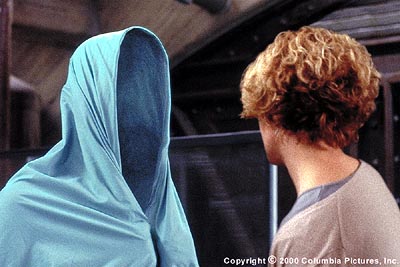
I just saw Paul Verhoeven’s “Hollow Man”. On first glance (not glance?) it works more or less the way Jonathan Rosembaum says. Scientist Sebastian Caine (Kevin Bacon) figures out a way to make himself invisible, and then uses said invisibility to realize his sadistic rape fantasies while the viewer simultaneously enjoys said fantasies and wags his (presumably) finger at them. The emblematic moment here is the scene (cut from the theatrical release, but restored on DVD) where Rhona Mitra acts out being raped while the viewer fills in the invisible Sebastian. Shot POV, it’s movie-viewer-as-rapist analogy couldn’t be much clearer. Mitra thrashes and shrieks for nobody but the camera. With the rapist transparent, the point of the exercise becomes all too visible. It’s not Sebastian, but the director who is raping her for our elucidation and enjoyment. When the camera lingers on her confused whimpering form following the rape, the answer to her unstated question, Who? is obviously supposed to be “Us.”

So “Hollow Man” is all about implicating the viewer, as the-lack-that-is-not-there provides the excuse for stripping Elizabeth Shue, playing with Kim Dickens’ nipple, and bloodily killing a mouse, a dog, and assorted humans. The Hollow Man is the absent body hollowed out of everything except desire; the full-body-castrati who has exchanged the penis for the phallus/power. The “phase shift” the scientists all gobbledygook about is not just a transformation from seen to un; it’s a move across the plane of the screen — a transformation from movie actor to movie watcher.

All of which is to say that the metaphor is clever. Unfortunately, clever only takes you so far. “Hollow Man” is willing to show the transparent voyeurism of its pulp narrative — but it never actually questions that narrative itself. As a result, all the “implicating the viewer” seems more like hand-waving than actual moral commitment — just a way for Verhoeven and his viewers to have their genre cake while feeling smugly self-aware of it.

The main problem is that, while the movie’s visuals and set pieces raise questions about viewer investment, the narrative itself is much more conventional. In particular, Sebastian is a really predictable power-crazed mad scientist. Even before his transformation, he’s an egocentric leering bastard who refers to himself as God and leches after his neighbor and his ex. Turning invisible doesn’t change him so much as it allows him to release his inner megalomaniac. His final shift to unstoppable insane slasher villain is unbelievable only because unstoppable insane slasher villains aren’t believable. There’s nothing in his character that would make you doubt it.

The point here is that while viewers may occasionally have a stake in Sebastian’s voyeurism, they never have a stake in Sebastian himself. Rape fantasies are not actually rape. One of the differences is that lots of people have rape fantasies while only rapists commit rape. That’s certainly what we tell ourselves, anyway, and “Hollow Man” is happy to go along, providing lots of entertaining voyeurism for the fans while gruesomely punishing the creepy rapist who, we are assured, has no redeeming qualities whatsoever. Jonathan Rosenbaum thinks the film dings the viewer for “leering and chortling” — but he rather passes over the fact that the most cathartic violence in the film is directed not against mice, but against Sebastian himself, who is lit on fire as Elizabeth Shue triumphantly tells him he’s not God.

In contrast, consider something like John Carpenter’s “Christine.” In that film, we initially pity and identify with Arnie Cunningham, the nerdy protagonist. Because we like Arnie, we want him to succeed — to get his act together, get the girl, and get revenge on his enemies. True to our wishes, the film supplies him with all he wants, with the caveat that he simultaneously turns into a monster. Our narrative investment and desires make Arnie what he is, which raises questions about what our narrative investments and desires make of us.

There are other films that work this way too — Cronenberg’s “The Fly,” for example, where the likable Jeff Goldblum becomes a subhuman insect. But “The Hollow Man” takes a much easier route. Sebastian is never the vulnerable kid or quirky nerdy scientist whose striving is our striving; we never see him as weak and hope for him to get strong. He’s always already the evil daddy-thing; the smug sadistic overlord we want to destroy. And destroying him is just what we get to do, cheering Elizabeth Shue on as she outsmarts and then satisfyingly slaughters him. His death is a straightforward triumph, untrammeled by any considerations of his possible humanity. In Hollow Man, when you look at the bad guy, you don’t see yourself.

Utilitarian Review 5/28/11

New

Our poll of the ten best comics of all time is still ongoing. Read more about it and (if you’re a comics blogger, journalist, professional, or academic) submit a list!

On HU

Featured Archive post Ng Suat Tong on the market for original comics art with racist content.

Mahendra Singh on the greatness of Jeffrey Catherine Jones and the ugliness of contemporary comix.

Sean Michael Robinson on Cross Game; part of this month’s MMF.

I wrote on Wonder Woman: Christ or Superdick?

Kinukitty on Crimson Snow and the sad end of Tokyopop’s Blu.

A review of Wonder Woman: Amazon. Icon. Hero.

I talk about the Wonder Woman pilot getting canned and why I find it hard to care.

Utilitarians Everywhere

In Robot 6 comments I had a long argument about racism and Flashpoint.

At Splice Today I review Alvarius B’s Baroque Primitiva.

Also at Splice I talk about Jack Hill’s Switchblade Sisters.

Links

Robert Stanley Martin on Godard’s Vivre Sa Vie, prostitution, and Chester Brown.

Satoshi Kanazawa’s racist nonsense.

Derik Badman on Cross Game.

Nice article about Rosalie and Leah and misogyny in Breaking Dawn.

Craig Fischer’s Team cul de sac, favorite comic zine zine cover.

Tucker Stone on Flashpoint at comixology.

Stanley Hauerwas on the war in Iraq.

Derik Badman detourns Cross Game.

Adrianne Palicki Will Not Wear the Venus Girdle

The Wonder Woman TV show got canned, and comics fans of various stripes are rushing to explain why it should or shouldn’t have. The Beat has a roundup. They link to dcwomenkickingass, who has a heartfelt rant saying in part:

Why is Thor so easy to get to screen, but Wonder Woman is reduced to a television drama by David E. Kelley where she’s a superhero but also a female who worries about her body and pines for her boyfriend? Why when that treatment fails do the stories focus not on the execution but on the character?

Why is it when it comes to a male character like the Hulk, we don’t see that reaction. “Oh gee, it couldn’t possibly be the character of the Hulk that is the problem. We’ll just make three movies until we get the execution right.” Three takes. Not one.

And we have seen treatments that have worked. For all its gender issues the animated movie showed that Wonder Woman can be badass and compelling.

DCU Online has Wonder Woman as a core character and anyone who has seen the cinematic trailer can see how bad ass she would look on screen.

And the original TV show, despite being 30 years ago, worked.

The problem with adapting Wonder Woman to the screen, either big or small, has nothing to do with the character other than her gender. The recent television show felt they needed to turn her into something she’s not. She’s not Ally McBeal. She’s Wonder Woman….

How fucking sad is it that we as a gender are forced to prove ourselves worthy as a film audience once again? Every time there is a hit or success outside the narrow little lens that Hollywood views us it is an aberration or a fluke.

Hollywood is certainly sexist. But…is it really the case that Hollywood and television are uninterested in promoting shows about kick-ass women? La Femme Nikita just got renewed. The terrible movie Priest features Maggie Q as a superninja kicking ass. Bones’ main character is a female physical anthropologist/best-selling novelist martial arts expert. There’s multiple killer female assassin movies just released or coming out. There’s Salt from last year. Is there really a reluctance on the part of entertainment media to show women in tight clothes kicking ass?

I think much more of a problem is that large numbers of viewers just don’t necessarily share dcwomenkickingass’ enthusiasm for Wonder Woman, whether she’s kicking ass or not. The cancellation of wonder woman isn’t a blow to women everywhere. It’s a blow to women who like Wonder Woman maybe…but that’s not all that many women.

I thought I’d reprint my comment from the Beat thread here.

I don’t think it’s a problem of growing expectations exactly. It’s a problem that the character is really, really weird. The costume is bizarre even by super-hero standards (yes, even by superhero standards); she’s all about bondage; she’s got nutjob accessories like the invisible plane; she’s supposed to be a pacifist who runs around hitting people. She’s goofy. Which I love, love, love about her — those early Marston/Peter comics are basically the best super-hero comics ever, damn it. But the fact that she’s so idiosyncratically weird it makes her much harder to sell than, say, a secret agent with a tragic backstory who shoots people like Salt.

WW was very popular 70 years ago in comics and for a few years on television back in the 70s. Outside of that, people have really had trouble figuring out what to do with her, even as female action heroes have become really really popular (Buffy, Xena, Angelina Jolie in everything, Kill Bill, La Femme Nikita (recently re-jiggered), there’s like three more female assassin movies just come out or coming out whose titles I can’t remember…there’s just no shortage of examples.)

I don’t exactly understand the logic of wanting new WW product anyway. The TV show looked like it was going to be dreadful. If you like WW, why not just go reread the old stuff? What’s so validating about having some corporation make some stupid show that uses the character you love in insulting and moronic ways? Why is Thor validated by some stupid movie? Why is Batman validated by being put in a ridiculous styrofoam suit and having a bunch of mediocre to bad films made about him? Why do you need your art to be a pop cultural phenomena for it to matter? Like I said, I don’t get it.

I make similar points in this essay here.

Just to expand a little…I agree with dcwomenkickingass that female superhero pop culture efforts can work. Twilight is a female superhero film in a lot of ways; Bella certainly gets superpowers at the end. Buffy was a female superhero project. Sailor Moon is a female superhero story which was crazy popular. And, again, women with ninja powers kicking butt are all over the pop culture landscape. Temperance Brennan from Bones (the anthropologist/novelist/martial artist mentioned above) even dresses up as Wonder Woman on occasion. As a joke.

So the issue isn’t whether female’s kicking ass or even female superheroes can be popular. The issue is whether female superheroes toeing the very narrow genre constraints of mainstream comics can be especially popular. The issue is whether most women really want their superheoines with secret identities and dressed in swimsuits and coming out of an industry that has been male-dominated for decades — an industry that has shown over and over again that it has only the vaguest idea how to appeal to a female audience. The answer in general to that question has been that no, they don’t, they’d rather get their kick-ass women fix elsewhere.

I can see where that’s really frustrating for fans like dcwomenkickingass, who are in the minority that really like the superhero women on offer by the big two. And I can see arguing that media is sexist. But I think it’s worth pointing out that less sexism in Hollywood really, really would not have to go along with more Wonder Woman in Hollywood. Because, like I said, WW just isn’t that popular and is very weird and has that costume that doesn’t exactly scream “independent woman” and doesn’t have a clear romantic interest with angst and tension, which is what you generally look for in female genre product, and…well the list goes on. But the upshot is that if you wanted to create a woman kicking ass, even if you were really committed to feminism, you might think twice before going with Wonder Woman.

I’ll end with another comment I left on the Beat, where DF said that WW had become boring except for maybe Darwyn Cooke’s version of her. I replied:

I like Darwyn Cooke’s version, including his satirical take. I’d agree that his version is probably as good as it gets after Marston…unless you go to once-removed versions like Alan Moore’s Glory or Promethea or Adam Warren’s Empowered.

I think the boredom is part of not knowing how to deal with the original concept. And the original concept is not going to be redone; you’re not going to see WW in a gimp mask or Amazons hunting each other in deer costumes or entire races of seal men subjugating themselves to women or even giant space-faring kangaroos. It’s just not going to happen. Which is a shame, and I strongly believe that all girls and boys and adults should read the original Marston/Peter run, which is one of the most ridiculously sublime pieces of work the comics medium has to offer. But I don’t need new stories with WW anymore than I especially need some random Hollywood development team to do the brand new adventures of Elizabeth Bennett.

Update: Aha! I was wondering why we were getting commenters all of a sudden. dcwomenkickinass has a response to this post here.