
The Great Gay Future

Earlier this week Caro discussed the ethics of Dr. Who. In the course of comments, Torchwood came up…and I discovered that the article about that show I wrote for the Chicago Reader in October 2008 has mysteriously vanished into the dreaded vacuum-of-perpetual-redesign. So, since it’s gone there, I thought I’d post it here. This is my original version, slightly different from the one that was published.
___________________________

Sci-fi melodramas have long inspired narrative compulsions in their devotees . Every episode of these shows leads, not to resolution, but to heaving, endlessly provocative streams of quasi-licit online fan-fic. The (largely) female viewers of these shows don’t just want to watch the characters — they want to pick them up, strip them down — to possess them and be possessed by them. Trite storylines and gaping plot holes are forgotten, to be rewritten as devotion, inspiration, and the beauty of orgiastic metatextual romance.

On the surface, Torchwood looks a lot like its predecessors. The plot, based around a group of super-secret operatives who protect Cardiff, Wales from aliens, is in fact, a perfect hybrid of Buffy, the X-files, Star Trek, and Dr. Who.

And therein lies its distinction. Torchwood isn’t so much a TV show as a fan-girl wet dream. Star Trek and Buffy merely inspired fan-fic; Torchwood is inspired by it. Fan fiction creates new stories for established characters— Torchwood is a spin off of the revamped Dr. Who. Fan fiction rewrites series continuity — a process sometimes referred to as retroactive continuity, or ret-con. Torchwood characters rewrite history and cover up their mistakes by using a memory wipe drug called — you guessed it — Ret-Con. Fan fiction writers will often introduce a “Mary Sue”; an author surrogate who wins over the cannon characters with her depth and general wonderfulness. Torchwood’s first season focused on Gwen Cooper (Eve Myles), a normal, everyday viewer surrogate who stumbles into the world of alien technology — and wows all the other characters with her depth and general wonderfulness,

But all that’s just icing. The main link between Torchwood and the fandom is sex. Specifically, gay sex. More specifically, angsty, hot guys who indulge in tortured romance and witty repartee as a prelude to gay sex.

Everybody knows that guys love lesbian porn. The fact that many women like gay male porn is less well-established — but the evidence has been quietly mounting. Perhaps the biggest tween girl phenomena of the last 15 years is the spectacular success of shojo manga — romance comics from Japan, written by women for girls. Shojo narratives often center around romantic trysts between boys — there’s even an explicit sub-genre called yaoi, a word which is sometimes jokingly translated as “Stop! My butt hurts!”

There are huge fan-fic communities associated with almost every shojo title. But the obsession with gay sex is hardly confined to those fandoms. In the early 70s, female Star Trek fans started penning slash fiction, in which Kirk and Spock explore some of the repressed aspects of their relationship. With the Internet as a spur, slash fiction has metastasized. If you had a dime for every Snape/Harry Potter story, you’d be almost as rich as if I had a quarter for every Xander/Spike pairing.

Spike is, of course, the brutal, charismatic, ambivalently redeemed vampire who stole the show in both Buffy and its spin-off Angel. Not accidentally, the actor who played Spike, appears in the Torchwood second season debut as a brutal, charismatic, ambivalently redeemed time traveler named Captain John Hart. He and dashing series star Captain Jack Harkness (John Barrowman) have a history, and when we see them together for the first time in “Kiss, Kiss, Bang, Bang”, they stare soulfully at each other…then exchange blows…and then lock lips. The pounding rock music on the soundtrack is drowned out by millions of rapturous fan-girls flapping their arms and shouting “squee!”

The Captain Jack/Captain John relationship is definitely a series highlight, reveling as it does in the homoerotic elements of the hero/villain duality which most cultural products repress. When Captain John returns in the series finale, “Exit Wounds”, he declares that he wants revenge because Jack hasn’t spent enough time with him. It’s arch-villain as spurned lover — which gives you a whole new perspective on, for example, the Batman and the Joker, or, for that matter, George Bush and Osama Bin Ladin. Just get a room, guys.

For most male action heroes from Clint Eastwood to Martin Van Peebles to Keanu Reeves, masculinity equals emotional remoteness. Even the relatively effete Dr. Who (David Tennant) shows his nads by never quite being able to say “I love you.” In Torchwood, though, pretty much everyone is bi, and as a result the fear of feminizing emotional display is suspended. Captain Jack is a mysterious semi-reformed undying time-traveler with various tragedies in his past — in another show, he’d be all broodingly taciturn and repressed. Here, though, he’s flamboyant, flirting outrageously with middle-aged secretaries, babbling about his fetish for office spaces, and impulsively resurrecting his teammate because he can’t bear to see him go. He also cries when he’s sad and hugs those he loves and giggles when someone says something funny. And, in the second season at least, he’s in a stable, caring, and supportive relationship with his adorably dry teammate Ianto Jones (David Gareth-Lloyd.) In other words, because Jack occasionally engages in anal sex, he doesn’t have to constantly act like he’s got a pole up his ass.

This isn’t to say that Jack is always sympathetic. He’s often dictatorial, unpredictable…and, indeed, incoherent. If the best parts of Torchwood spring from its gender-bending roots in fan-fiction, its downsides also seem drawn from the fandom. The writers are way, way too enamored of drippy melodrama, on the altar of which they are willing to sacrifice even minimal consistency. Every episode, practically, ends in A Very Tragic Death — of a major character, a minor character, a space whale — it hardly seems to matter, as long as we can get everybody weeping. Even worse is the need to saddle every Torchwood member with a traumatic backstory. Jack’s past, which involves dead parents, lost brothers, and an ill-defined sepia-toned landscape, is hard to beat for idiocy. And yet, I think the prize has to go to Owen Harper (Burn Gorman), who, late in the season, acquires a never-before-mentioned, completely incongruous dead ex-fiancée.

The reliance on soap-opera tearjerker is especially frustrating because the cast is uniformly stellar. David Gareth-Lloyd as Ianto rarely has that much to do, but he really delivers — his deeply uncomfortable twitchiness when Jack first asks him out is one of the funniest things I’ve seen on television. Naoko Mori as the nerdy Toshiko Sato is also a gem; her subtle blend of innocence, eagerness and bravery, and her painfully unrequited crush on Owen, provide the series with most of its moments of real heartbreak. The best episodes — like the comic “Something Borrowed,” or “Adam,” in which Tosh and the assholeish Owen switch personalities — just draw into relief how great Torchwood could be if the actors weren’t so frequently saddled with duff scripts.

But that’s television, I guess. Torchwood isn’t quite great. But it is a watershed — the first show to take fan-fic to the mainstream . Unsurprisingly, Torchwood’s exploitation of a hitherto underserved fetish has resulted in excellent sales: its debut broke BBC audience records. With such success, there are sure to be imitators. “The 21st century is when everything changes,” as the Torchwood tagline says. The manporn deluge cometh.
Shorter Fiore

I am not world weary and cynical, I am just Machiavellian. The west is not more reasonable than Islam, except that it is more reasonable than Islam. You can see this because of the reason and good fellowship that has prevailed in European countries such as Serbia. Regimes like Iraq were openly hostile to us until very recently which is why we armed them when they fought Iran. Also, Noah Berlatsky coddles terrorists, nyah nyah. I understand how Christians ought to act better than Christians do, which is why I can say with assurance that if Martin Luther King Jr. were a real believer, he would have advocated nuclear annihilation for commies. The fact that atheists and believers sometimes act alike shows that faith is only relevant to someone’s actions when I say that it is. Also, I’m a fucking materialist existential hero; please join me in weeping aloud for me in my tough-minded tragedy.


And hey, let’s hear it for this gem:

“Cultural materialism is the theory that there is a Darwinian process in the selection of social forms, and that therefore for instance no religion that is adopted by large populations for generations can be arbitrary or irrational, but rather must serve some purpose for its adherents.”

Translation:
Look, I dropped Darwin’s name, and concluded that religion must serve some purpose! Unlike lame-assed, half-baked, clichéd, swaggering cultural materialism, which is handed down from God…whoops! I mean from my own pure, indomitable brainstem! Which by coincidence I pulled yesterday out of my own indomitable ass.


If you missed it, here’s Fiore’s original post and my response to it.

Worshipping Nothing

R. Fiore has a recent article up about the South Park censorship brouhaha in which he takes a brave, world-weary stand against cowardly corporations, crazy Muslims, and simplistic theists. As always with Fiore, it’s stylishly written…and as sometimes with Fiore, it’s pretty thoroughly vapid. He’s got that just-plain-common-sense-man-on-the-street approach, which involves repeating things everyone already knows, retailing banal prejudices as shocking insights, and patting yourself rhythmically on the back all the while.

Fiore’s argument is basically that we’d all get along better in this old world if we acted as if we didn’t believe anything. Or as Fiore says, “What the West has learned is that even if you do sincerely believe in God, if you want any peace you can’t act that way.” For Fiore, the South Park incident shows the eminent reasonableness of the Western world, and the fact that reasonableness is essentially useless in dealing with nutzo Islamist thugs:

The Danish Jyllands-Posten, lulled into a false sense of security by a period of reason and good fellowship in Europe dating all the way back to 1945, published their suite of cartoons featuring Muhammad on the assumption that no one was crazy enough to sacrifice their lives and liberty or commit horrible crimes over a drawing. The response of the fanatical end of Islam was, in effect, yes as a matter of fact we are crazy enough, and if that wasn’t sufficient please let us know and we’ll be crazier still. The position this places the would-be blasphemer in is that you can visually depict Muhammad, but only if you’re willing to see blood shed over it. Courage will allow you to express yourself, but it won’t prevent the violence. The net result is that the fanatics get their way and the only cost is to brand millions of completely innocent Muslims as murderous barbarians.

I think my favorite part of that quote is the nostalgic harking back to “a period of reason and good fellowship in Europe”, coupled with Fiore’s utter lack of historical or intellectual curiosity. Presuming that this period of reason and good fellowship did exist for a moment — why did it end, precisely? What caused the Muslims to suddenly jump the shark? Is it immigration into Europe that’s the problem — which would lead to certain policy positions that I strongly suspect the carefully enlightened Fiore wants nothing to do with.

Or…as an alternate possibility, could it be that, from the Muslim perspective, there was in fact no “period of reason and good fellowship,” but rather decade upon decade of Western-supported dictatorships, quasi-imperialism, repetitive humiliations, and (in the case of Afghanistan, at least) vicious, unending warfare? Fiore muses with an air of non-plussed good humor at what could have possibly led some Muslims to set themselves against South Park so:

The Mafia is an appropriate comparison because the threats made against South Park are in some ways more akin to extortion than conventional terrorism. A typical terrorist campaign attempts to achieve an absurdly ambitious goal with an absurdly miniscule amount of force. For example, in 40 years of terrorism after 1967, Palestinian terrorists managed to kill something like 2100 Israelis. No one is going to surrender their country to avoid this level of casualties. A modern army can kill that many non-combatants in an afternoon by mistake. The campaign against depictions of the prophet Muhammad on the other hand brings to bear an absurdly disproportionate amount of force to stop something most people in the West don’t have the inclination to do in the first place.

The Mafia analogy carefully obscures the clear conclusion — Muslims have little if any way to address their political grievances to the foreign powers that repetitively kick them in the teeth. Terrorism is largely, as Fiore quite rightly notes, useless. So when you can’t do anything about the big insults, you naturally focus on the small ones. Surely segments of the Muslim world sees depictions of the prophet by the infidels not as the first insult, or the fifth or the 200th, but rather as part of one, long, sustained insult by a bully who has kept his foot on their throat for half a century plus.

Threats against newspaper publishers or television networks are petty and stupid and despicable, obviously — but they’re neither incomprehensible nor evidence of some sort of disconnect between religious thinking and rationality. Given the relationship between the west and the Middle East, the threats are, on the contrary, entirely comprehensible. That doesn’t mean that they should be condoned. In the first place, as Fiore points out, the whole brouhaha definitely makes things worse, not better, for Muslims worldwide. Moreover, while it isn’t as bad as the Taliban’s systematic oppression of women or al Qaeda’s terrorist attacks, threatening to kill innocents for drawing pictures does seem to me to be a fair definition of evil. Still, we can take comfort in the thought that we’ll go tit for tat or better in the near future, whenever the next American drone strike takes out the next Afghani wedding party.

Fiore’s a lefty too, and I doubt he supports the Afghan war any more than I do. But he doesn’t want to talk about it in too much detail because to do so would mess up his nice little binary; rational west as powerless, peaceful victims; nutty religious dickheads as powerful, violent thugs. To give Fiore his due, though, he is willing to follow his simplistic analogy wherever it takes him, no matter how idiotic the end location is. And so in the last paragraph we get this gem:

What the West has learned is that even if you do sincerely believe in God, if you want any peace you can’t act that way. After all, if you truly believed that those who follow the wrong religion will be subjected to eternal torment then you’re doing them no favors by allowing them to do so. For instance, during the Cold War, if you believed as Jesus told you that death is an illusion, and the atheistic regimes of the Soviet bloc were depriving millions of even opportunity to save their souls from eternal damnation, then you would be honor bound to not only risk nuclear war but to engage in it. After all, eternal bliss would compensate the just for any suffering they endured.

To call this a strawman argument is to cast scurrilous aspersions on the structural integrity of straw. Which Christians exactly is it who want to start a worldwide nuclear holocaust for the sake of the souls of atheists? Would that be the many Christians who, on quite good scriptural authority, believe that Jesus enjoined them to pacifism? Would it be the Catholic Church — still the largest Christian denomination — which holds to a just war doctrine that declared the Iraq war anathema? The Niebuhrian realist tradition, which stresses a humane concern for human life and justice? Hell, even wacko Protestant Christian right-wing apocalyptic fantasies like the Left Behind series doesn’t advocate genocide-for-Jesus as far as I know.

There are nutcases everywhere, obviously, and I’m sure there’s the random Christian out there who wants everyone to die in a fiery man-made holocaust — but to suggest that this is especially a hallmark of religious thinking as opposed to the rational atheist philosophies of, say, Pol Pot or Mao or Hitler…it’s nonsense on its face. And that’s to say nothing of our own lovely, rational, harmless, hapless capitalism, which can’t stand up for South Park, but which has, nonetheless, shown itself capable on occasion of a certain ruthlessness, as Chileans, Cambodians, and, for that matter, Native Americans would no doubt be willing to attest.

“What the West has learned is that even if you do sincerely believe in God, if you want any peace you can’t act that way.” I’ve quoted that twice already, and I’m quoting it a third time because it’s central to Fiore’s argument — and, I believe, to his belief. Because it is a belief, right? It’s certainly not a fact. Where, after all, is this peace we’ve found by acting as if we don’t believe in God, precisely? The U.S. is more religious than Europe, certainly, but by world-historical standards we’re a pretty secular society — and, by world-historical standards, we have probably the biggest military of all time. China’s fond of playing with weapons too, and they aren’t noticeably religious last time I checked. And, you know, on the other side, I was under the impression that Martin Luther King, Jr. and Gandhi both drew the inspiration for their non-violent resistance movements from their faith. Or does Fiore think that MLK was somehow acting as if he didn’t believe in God?

Fiore ends with a really tiresome roulette wheel analogy which I don’t have the heart to quote. But it’s telling that such vacuous modernity can only end by seeing faith in terms of gambling, money, and yes, capitalism. Fiore believes that believing in nothing will save him…but the truth is that nothing has its own rites and rituals, its own insanities, its own cruelties, and even its own genocidal impulses. The world isn’t divided into believers and non-believers, or into the sane and the insane. The only ones here are us chickens — or, if you prefer, us poor sinners, a long way from home.
_________

Update: R.Fiore has an extremely long response here.

And my short reply to Fiore is here.

Dyspeptic Ouroboros: Alyssa Rosenberg on Pop Culture and Criticism

Alyssa Rosenberg writes on pop culture for the Atlantic and at her own blog. We met a while back when she wrote an article on Twilight, to which I responded snarkily, and she responded to my response with much good grace. After that auspicious start, I asked her if she’d be willing to talk about criticism and art for this blog. In response she wrote the essay below.

_____________________

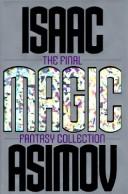
When I was in middle school, a prescient friend bought me Isaac Asimov’s Magic, a collection of the science-fiction author’s fantasy writing and essays. Some of that book’s lessons, have lasted with me for more than a decade: Overindustrialization is Mordor. Writing aliens is pretty hard. And perhaps I should have absorbed a third, delivered in the short story “The Critic on the Hearth”: “I have two of my own comments. The first is that every critic ought to become a garbage collector. He will be doing more useful work and he will have a higher social position. The second is that every critic ought to be thrown into the fireplace.”

But by the time I got to Magic, it was already too late. My first career as a pint-sized critic was already behind me–and unbeknownst to me, one of my future paths had been set.

To fill lingering hours after elementary school during a four-year stopover in Middlebury, Vt., my mother had convinced an editor at our local newspaper to give me space on the children’s page to write about books. The criticism, such as it was, that appeared next to a school picture of me in round glasses and a dress with an equally round lace collar wasn’t exactly sophisticated. At eight years old, I wasn’t up to doing much more than picking books that had something in common and explaining that I liked them. Or not.

The column ended when we moved away, and high school and college brought pleasures other than criticism: insanely competitive debate programs, hard-fought municipal elections, the ability to drink legally, writing classes, boys. Each time I felt as if I’d found the Next Thing. With the perpetual certainty of youth, I was alternately sure I was going to be the best high school debater ever, an activist professor, a local political fixer. There were a lot of possibilities that felt more important than journalism, much less something like writing about YA literature. And yet, by my senior year in college, I found myself sending off dozens of applications for journalism and publishing jobs, ending up at National Journal, a respectable and deadly-serious Washington, DC political weekly.

It wasn’t necessarily the platform from which to get back to criticism. But I arrived in Washington in a season when a thousand blogs weren’t just blooming, they were being transplanted into some of the best journalistic greenhouses in the city. And after several years at National Journal and then at Government Executive, a magazine for civil servants, I looked not to political bloggers, but to my eight-year-old self when I decided to start writing on the side and for fun, and wanted to find a meaningful subject. And after watching policy bloggers slug it out against the backdrop of an oft-deadlocked Congress, pop culture seemed more valuable than it had before, as both an escape, and as a field of play. I’ve become a somewhat more sophisticated consumer and observer of media in the last decade and a half. I can explain why I like or don’t like things now. But I’ve also found myself interested in a larger question: what does what we like say about us?

Noah and I met, in fact, because of a disagreement over what the Twilight phenomenon means for discussions about sexuality and gender. We never reached agreement on the merits, but it was clear we were working under the common assumption that culture, particularly popular culture, is a place where both creators and consumers work out real-life issues ranging from deciding whether to have sex before marriage to what would happen in a world with extremely large, well-equipped private armies.

Doing this kind of criticism doesn’t necessarily mean being deadly serious about things that are, after all, a lot of fun. Sometimes a Robyn song is just a Robyn song. But sometimes it’s also an argument for female artists about going independent rather than relying on and being shaped by a major label, just as the pop-rap fusions in collaborations between artists like Kanye West and Keri Hilson or B.o.B. and Janelle Monae are evidence for rap’s conquest and colonization of popular music. The Iron Man movies are fun because Robert Downey, Jr. is relaxed and having a great time playing a roguish industrialist, but they’re also action movies for people who feel ambivalent about the projection of American military power–even if it means they’re settling for an individual having tremendous power, fire- and otherwise, because he’s charming. Unlike in politics, in pop culture the choices don’t always have to be clear. Artists are blessedly free to explore gray areas without risking the career suicide that so often accompanies the impression that a government leader possesses less than crystalline moral clarity.

All pop culture might have larger implications, but that doesn’t mean that pop culture is weighed down or overwhelmed by its larger significance. That means that lots of Americans can murder prostitutes in video game worlds without feeling bad about it, but also that they can absorb relevant lessons about respecting the elderly along with a bunch of jokes about talking dogs. Critics are the people who can live in those tensions and contradictions, who interpret and clarify the meaning in jewels and in junk. Maybe for happily residing in the midst of those fractures, for seeing the value in a movie that involves a little girl beaten up, or a cowardly loan officer dragged to the netherworld by a demon, for balancing difficult aesthetic and political judgements, we still ought to be roasted. But I think in a world where culture has such freighted implications, there’s room for critics along with the garbage collectors.
_________________

Many thanks to Alyssa for her guest post. Please visit her blog if you get the change; she writes on comics, hip hop, television, movies, and lots more.

Utilitarian Review 4/24/10

On HU

We started the week with some Mary Sue links by Vom Marlowe.

I had another Swamp Thing post about gender and hawk women.

Suat had a lovely tribute to one of Tony Millionaire’s Sock Monkey stories.

We highlighted some comments on the Swamp Thing roundtable from Andrei Molotiu, Charles Reece, and EricB.

I sneered at Kingyo Used Books.

We announced four (count ’em, four!) new columnists on HU.

And we’ve got some black and doom metal for download.

HU….Live!

You can hear audio of the C2E2 comics journalism panel in which I participated.

There’s also commentary on the panel by Matthew Brady; Johanna Draper Carlson, Michael May, and Heidi at the Beat.

Utilitarians Everywhere

I have an interview about copyright issues with songwriter Bill Ritchie over at Splice Today.

Bill: As it happens, there’s a silver lining to my problems with getting paid. I can always trump someone who’s ranting away about how downloading is stealing, it’s wrong, it’s immoral, all that stuff because I can always point out that even if downloading were theft (which it isn’t, it’s copyright infringement), it sure wouldn’t be me any downloaders were stealing from if they copied thus-and-such a song because I don’t get paid for the sales of the record it’s on anyway, somebody else has got the money. So, “Whom are you defending?” is a question that I’m happy to be able to raise in that sort of discussion, because I just want to put it out there to people that this isn’t all cut-and-dried. I’m a music rights holder and I’m fine with downloaders, and not okay with the hyper-righteous criticism of them, because, hey, I’m out actual dollars that were already paid for my work, so why are we sitting around debating whether or not someone who downloaded represents a potential lost sale for someone who’s not me anyway, right?

Also on Splice Today, I review the new Merle Haggard album.

Haggard had a lot of hits besides “Okie from Muskogee,” and as a singer, guitarist, and songwriter he remains hugely important, a major influence on everyone from George Strait to Alan Jackson. Still, “Okie” was a telling moment. Even though somewhat tongue in cheek (white lightnin’ is every bit as illegal as marijuana, after all) it was still a line in the sand. And though Haggard has recorded with Willie Nelson and was idolized by Gram Parsons, that line hasn’t ever really disappeared. Over the years, he’s added strings at various points, but he’s never put together a New Age album with Daniel Lanois, or written with Jack White, or recorded a cover version of a Trent Reznor song. His latest album title, I Am What I Am, pretty much sums it up. And what Haggard is, is country or bust. He doesn’t have an alternative career path.

I have a couple really mean-spirited short book reviews at the Chicago Reader (you need to scroll a bit to find them.)

And a review of death-doom band Hooded Menace at Madeloud.

Other Links

In response to our own Richard Cook’s question, Can Comics Be Scary?, Curt Purcell put together an all star panel, including Sean T. Collins and Richard Sala(!) Check it out.

I’d seen this letter before, but it remains a truly transcendent example of snark.

And They Shall Call Them…Hooded!

I’m pleased to announce that next month HU will be adding four (count ’em, four!) new monthly columnists to our regular roster of bloggers. Our new columnists are:

Erica Friedman of Okazu.

Matthias Wivel of the Metabunker.

Domingos Isabelinho of The Crib Sheet.

And our own kinukitty who will be moving from blogger to columnist.

All of these folks should be familiar if you’ve bounced around the blogosphere. Matthias and Domingos have written for TCJ at various points I believe, and Erica is the founder and organizer of Yuricon and ALC publishing. And of course, kinukitty has written on and off for HU. They’re all great writers and thoughtful people, and I’m thrilled to have them writing here.

For the moment we’re planning to have columns appear on Sunday, and the first should go up on May 3, if I’ve got my sundial calibrated correctly. (Update: I didn’t have it calibrated correctly! It’s May 2.) So please welcome them aboard, comment copiously, show them where we keep the snack food, etc.
___________________
And as long as I’m announcing things — I thought I’d mention that, if you have an idea for a post or an article that you’d like to write for HU, please don’t hesitate to contact me. We do have other writers pop up here occasionally, as you’ve probably noticed, and I would like to do more of that as well. You can contact me at noahberlatsky on gmail.

Also, do let me know, either in comments or by email, if you have ideas for improving the site, or features you’d like to see added. One reader pointed out that we should have a comments feed, and as you can see we have now added that up at the right. Suggestions would be especially welcome as I think there is a redesign coming down the pike at some point in the mid-future, which would be a good time to implement some changes.

So thanks for your feedback, and thanks again to our new columnists…who you will be hearing from in person shortly!

Give Yourself a Hug

“Kingyo Used Books” is the heartwarming tale of a guy who finds a used book shop that sells manga and it reignites his faith in manga which is also his faith in life. And, of course, you’re reading a manga too, and it’s a manga about how great it is that you’re reading manga, which makes your life double-plus good worthwhile with a cute manga storekeep thrown in into the bargain for you to start a meaningful flirtation with and perhaps “something more,” I wouldn’t be surprised. And that’s incredibly valuable because, after all, the book seems to say, the people reading this aren’t actually people at all — they’re glommed together homonculi made out of consumer enthusiasms and social networking software and smiley icons. Without the reassuring infrastructure of positive blogging, they’d experience buyer’s remorse and simply discorporate.

Until now! Because “Kingyo Used Books” kicks the critics to the curb and speaks to you directly. “Manga!” it says. “Manga’s great! Don’t let anyone tell you different! It’s good…and good for you!” So give that manga a hug. It likes you because you like it because it likes you — and there’s nothing more important than a beautiful relationship with the crap you buy.