How to Be a Man

Screen Shot 2016-02-11 at 7.26.17 AM

This first ran on the Dissolve.
________
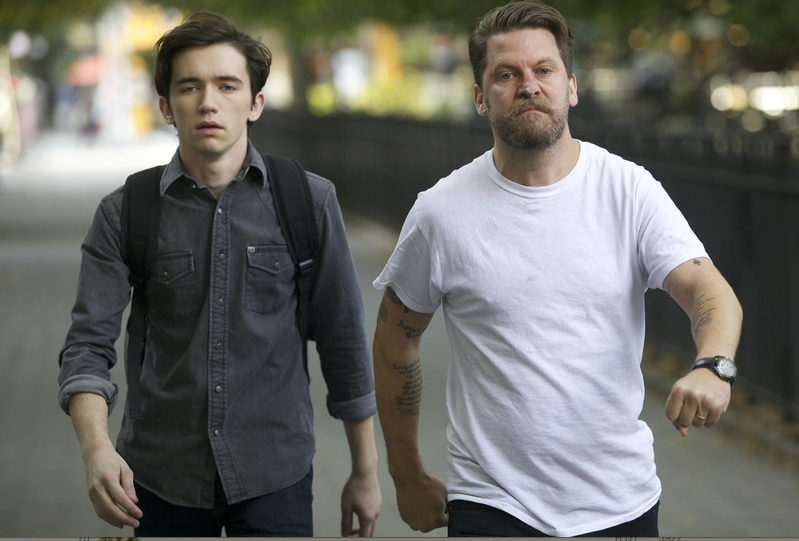
Nothing about the description of How To Be A Man induces confidence. Mark (Gavin McInnes), an ex-comedian with a pregnant wife, discovers he has breast cancer and decides to record life lessons for his son-to-be, teaching him how to fight, drink, pick up girls, and otherwise do stereotypical man-things. He recruits Bryan (Liam Aiken), the 22-year-old son of an old flame, to videotape him. The two bond over guy humor and recreational drug use, eventually teaching each other—wait for it—how to be a man.

That sounds pretty dreadful in concept, but in execution, it’s worse. This film brings a resolute lack of wit and a numb stupidity to stereotypical concepts like mid-life crises and regressive gender stereotypes. For all its burble about toughness, How To Be A Man doesn’t even have the elementary courage of its own hackneyed formal conceit. The film is supposed to be structured around Mark’s video transmissions to his son, a concept that seems to call for a found-footage approach—or at least for some sort of play with the space between what Bryan records and what the audience sees. But the film within a film is all but ignored in the interest of running through a series of stupid setpieces: Mark quits his advertising job in an excess of egotistical bombast. Mark’s wife calls him a child. Mark picks up girls. All with a minimum of invention, and a maximum of banal crudity.

The crudity is supposed to be winning. A scene where Mark tells Bryan (loudly, with hand motions) how to perform oral sex gets a standing ovation from the assembled bar patrons, who are presumably meant to cue the viewing audience that this is some wild, awesome writing and acting. The truth, unfortunately, is that the writing is flabby and tedious, and McInnes’ delivery has little charisma or charm. The film is like being stuck in an elevator with a boorish drunk for an hour and a half. The fact that the boorish drunk gives a wink every so often to let viewers know that yes, boorish drunks are really irritating, doesn’t salvage it; it has the reverse effect.

Most of the boor’s spouting has to do, as the title says, with being a man—how to be tough, how to wow women, how to take risks and follow a dream. Much of Mark’s advice is patently poisonous, and he just about wrecks his life, which would seem to undercut his status as testosterone guru. But it doesn’t. Instead, the good things Mark does are part of being a man; the bad things are simply a failure to be manly enough. Thus, Mark’s advice to act like a dick and threaten people lets Bryan jettison his uptight roommate, whose main, unforgivable sin is being kind of freaked out that Bryan was using heroin in their apartment. Mark’s fashion advice leads Bryan to ditch his funky hat and appealingly schlubby clothes for bland preppy blah, à la Ally Sheedy’s transformation at the end of The Breakfast Club.

The path to being a man, then, is narrow and fraught: No silly hats, no expressing interest in astrology, no drinking wine instead of beer. Certainly, no homosexuality: The film’s one gay character is an abusive cocaine dealer, and physical affection between men is treated as a scandalous joke. How To Be A Man isn’t so much a how-to guide as a frightened list of anxious proscriptions.

The source of that anxiety isn’t hard to locate. Both Bryan and Mark at different points suffer humiliating beatings at women’s hands, and beyond that lingers Mark’s fear that the womanish illness of breast cancer has doomed him. Both the beatings and the breast cancer are played for laughs, not because the film sees fear of femininity as ridiculous, but because men with women’s diseases, or men beaten up by women, are feminized, and therefore funny. A morbid, snickering, terrified misogyny runs through the film like a sad trail of fart jokes. Toward the end, Bryan, following Mark’s dictates, imagines the girl he’s trying to pick up as disgusting and diseased; loathing women gets him sex, and makes him a man. Masculinity appears, for the filmmakers, to be based on fear, hate, intolerance, and mediocre bathroom humor. In short, How To Be A Man is an insult to men, to women, and to everyone else.
When I Walk

Screen Shot 2016-02-10 at 8.29.08 AM

 
This first ran at The Dissolve.
________

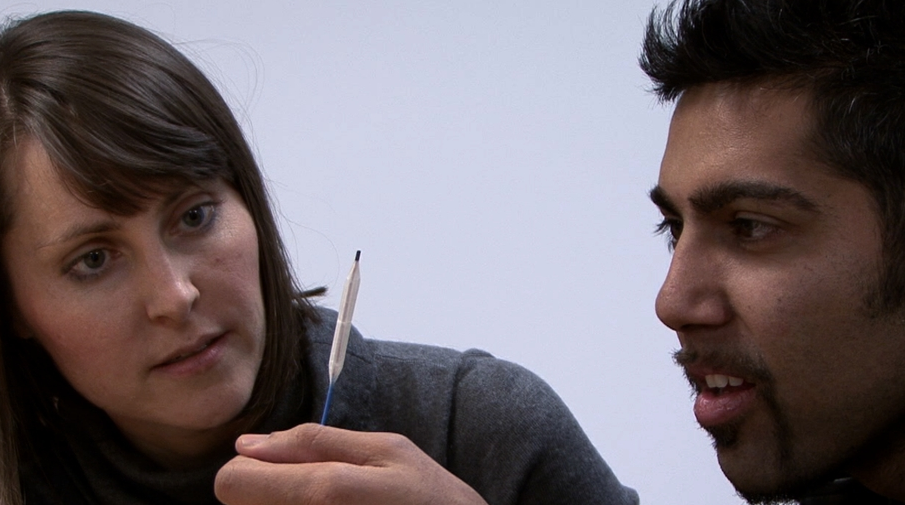
“We are all alone in this world, even though we have support systems,” Jason DaSilva’s mom tells him early on in the documentary When I Walk. It’s a harsh thing for a mom to say, and even harsher in context. DaSilva, the filmmaker, was diagnosed with multiple sclerosis in 2006, at age 25. MS is a degenerative disease that robs its victims of motor control, and often of vision. In the scene in question, Jason is telling his mom that he’s worried about how he’ll manage on his own. To which, again, her reply isn’t, “I’m here for you,” but more like, “We’re all alone anyway. Deal with it.”

His mother’s advice is typical of the first part of the movie, not because of its bleakness so much as because of the way it jars. As a filmmaker, DaSilva quickly decided to make a movie about his illness after he was diagnosed. But while the disease provides a topic, it doesn’t give the film a coherent narrative, or an emotional center. When Jason’s mom urges him to be positive, her advice rings hollow, but the documentary doesn’t seem to know how to question it. When Jason goes to India for a film project and tries various cures, from yoga to transcendental meditation, his investment in them, or his degree of hope, isn’t explored convincingly, either. At one point, he talks about how women aren’t as interested in him since he’s had MS, and then shows a number of pictures of “beautiful women” he has dated in the past, with their features blanked out. He’s erased their features for privacy reasons, but the result is awkwardly ghoulish. It feels as if who they are is less important than that he has pictures of them, or, more charitably, as if he isn’t sure what he wants to show, and is trying to get something on the screen even if it’s just a blank.

That all changes dramatically when Jason meets Alice Cook at an MS support group. Alice is at the meeting because her mother has MS, and soon she and Jason are dating. In one exhilarating scene, she gets on a scooter to see what life is like from his perspective, and the two of them go zipping gleefully around the Guggenheim.

As Alice and Jason’s relationship deepens, it quickly becomes apparent that the film isn’t about Jason’s illness, but about their love affair. Alice expresses some discomfort about being on film, but the movie’s most powerful moments are all hers. Jason’s loss comes through most vividly not through the deterioration in his condition, but through Alice’s desperate confession, “I don’t want Jason getting any worse. But it just keeps coming.” The day-to-day grind of the illness is brought home not through his difficulty in putting on his pants, but through Alice’s frustrated, guilty decision to go on a hiking trip alone in order to briefly escape the constant demands of being a caregiver.

Even on that hike, though, she’s taking footage for the film itself, both helping Jason with his project and sharing her experiences with him. She’s part of him, and vice versa—and again, in many ways viewers learn more about him, his illness, and what it costs him by listening to her than by listening to him. The film becomes more sure-footed, and more certain, as Jason loses control of his body, not because the disease gives the film meaning, but because Alice does. When I Walk makes it very clear that Jason isn’t all alone despite his support system. Rather, his support system, including his mom, makes him who he is, even more than his malfunctioning legs and hands. His life isn’t his disease, and neither, after an uncertain start, is his lovingly collaborative film.

Battle of the Corporate Training Exercise

This first ran at The Dissolve.
________

Screen Shot 2016-02-09 at 7.24.17 AM

 
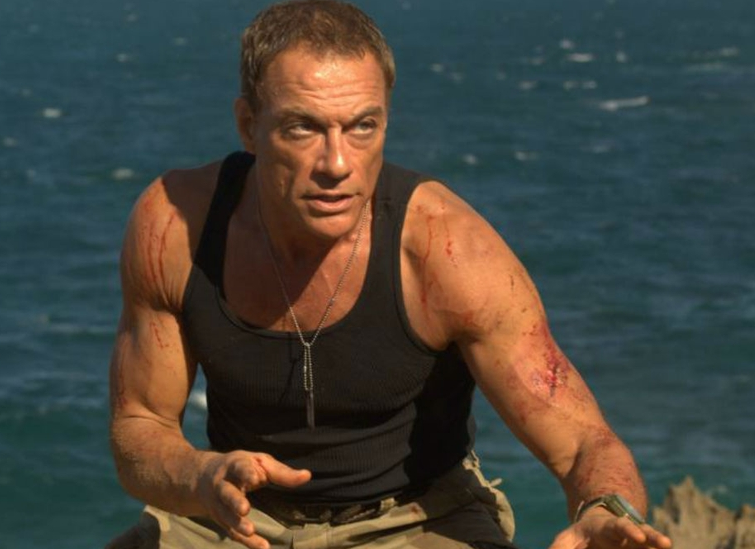
Comedies’ goal is laughter above everything else, and in that pursuit, they’re sometimes allowed surprising leeway in terms of plot and tone. Welcome To The Jungle, about an ad-agency team-building exercise gone horribly wrong, takes that breathing room and runs with it. The film starts off as an office comedy with nods toward The Office and Dilbert, and feints toward Full Metal Jacket. Then, as the cast ends up on a remote island, it gleefully devolves into Lord Of The Flies. The archetypal moment may be the charmingly awkward, obviously fake battle between Jean-Claude Van Damme and a tiger—logic and suspension of disbelief casually defied in the name of high-camp vaudeville.

Van Damme, as team-building coach Storm, appears to be having the time of his life parodying every other role he’s ever played. The rest of the actors seem to enjoy the script’s loony opportunities as well: Rob Huebel as the evil VP Phil swings from corporate backstabber to lunatic Kurtz without ever losing touch with his oleaginous essence, while Kristen Schaal as Brenda gets to launch into discursive monologues about everything from bunny rabbits to the state of her bowels. Adam Brody as diffident beta-male hero Chris has less room for overacting, but he still manages to sell his role, remaining low-key and earnest in the face of escalating preposterousness.

In addition to the absurdist comedy, Welcome To The Jungle has a satiric edge. The movie is smart enough to make the connection between petty boardroom oneupmanship and action-movie tropes, and deft enough to ridicule them both for their panicked performance of testosterone. Chris’ boss (played by Dennis Haysbert) strokes his corporate awards suggestively. Van Damme emits crazed primal screams one moment and flinches from needles at the next, in an ecstasy of macho self-parody. Multiple onlookers comment on the homoeroticism of Chris and Phil’s final mud battle.

The film is hyper-aware of the ridiculousness of the patriarchal obsession with masculinity-as-penis-size—and yet, in the end, and rather helplessly, it’s still mired in a banal narrative of masculine self-actualization. The plot comes down to Chris trying not to be (as the film delicately puts it) “the world’s biggest pussy.” Since the focus is on Chris’ manliness or lack thereof, his romantic interest Lisa (Megan Boone) is, inevitably, the only character in the film who doesn’t have anything interesting to do. She looks attractive, she expresses sincere sympathy when Chris talks about how he’s just too darn nice, and she waits patiently for him to complete his narrative arc and become the kind of man who can sweep her off her feet. Comedy frees up the plot and allows even Van Damme to play against type, but there are limits. The leading lady still has to be dull.

So Welcome To The Jungle abandons its own doofy tiger in favor of Chris’ more conventional, generic inner beast. That’s disappointing, but not exactly surprising. As the film suggests, it’s hard to escape the corporate calculus, no matter how far from the office you try to travel.

Utilitarian Review 2/6/16

gwtw2

On HU

Featured Archive Post: Emily Thomas on new text adventure games.

Ng Suat Tong on We Stand on Guard and Brian K. Vaughan’s hackishness.

David James reviews Rich Scranton’s book on global catastrophe.

Chris Gavaler on drawing words in comics.

Me with a review of the documentary Caucus.

Robert Stanley Martin with on sale dates for comics from March/April 1952.
 
Utilitarians Everywhere

At the Guardian I argued that aesthetics needs to consider racism.

At the Establishment I wrote about Orientalism, Beyonce, and that crappy Coldplay video.

At Playboy I wrote about DeRay Mckesson’s Baltimore mayoral bid and black lives matter’s willingness to try new tactics.

At Splice Today I wrote about

Be Steadwell’s Jaded Dark Love Songs and queer sadness.

—how the Republican establishment seems to be doing fine.
 
Other Links

Ta-Nehisi Coates on pragmatism and reparations.

Avital Norman Nathman and Deborah Wage on frightening expectant mothers for profit.

Santorum, the Last Time

fullwidth.687fd24d

Since Rick Santorum just dropped out, it seemed like a good moment to reup this review, which first ran on the lamented Dissolve.
__________

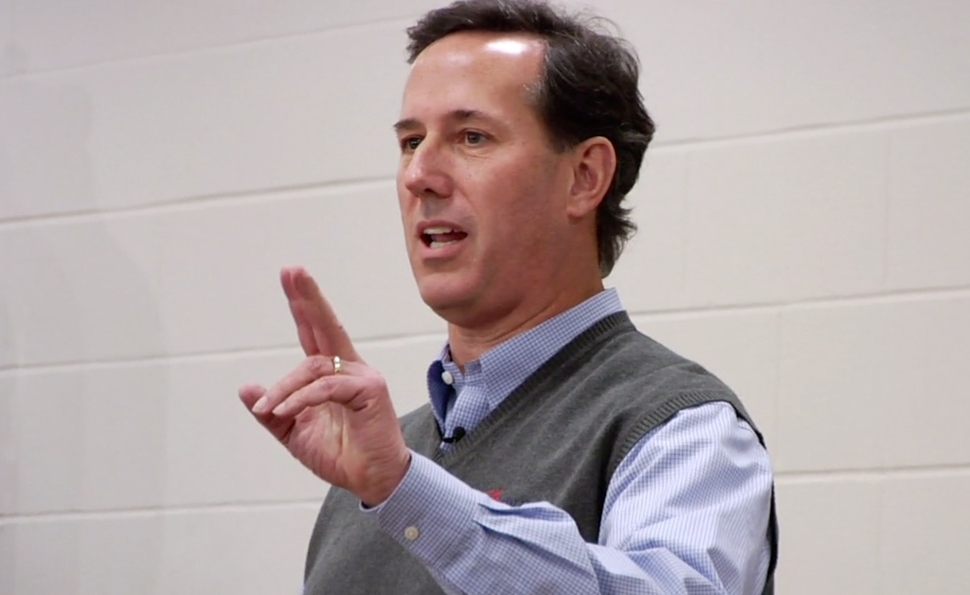
“Game on,” Rick Santorum declares, as REO Speedwagon’s rock-schlock uplift blares earnestly from the soundtrack. That’s the end of Caucus, a documentary about the 2012 Iowa Republican caucuses that frames the political competition in the grand tradition of underdogs overcoming adversity; it’s Hoosiers with tour buses, pro-life rallies, and sweater vests. Santorum ran a scrappy campaign, with one guy and one car crisscrossing the state. Candidate after candidate surged ahead of him before he came roaring back in the last two days of the race, finally beating Mitt Romney by 34 votes. For this, REO Speedwagon signals, viewers are supposed to cheer.

Some of those cheers are no doubt intended to be ironic. On the one hand, Caucus is interested in the horse race. On the other hand, though, it’s dedicated to the painful and fairly humiliating spectacle of candidates dragging themselves across the cornfields from house party to rec center. In one scene, Michele Bachmann and the crowd around her stands silent in front of a television camera, waiting for a network cue, until eventually she asks the poor kid serving as her television prop if he’d like to talk to Wolf Blitzer. In another, a not especially enthusiastic Romney gamely tries to eat a vegetarian corn dog. In a third, Ron Paul struggles haplessly to close a van door.

Not all the candidates are laughable. Bachmann and Romney are consistently repulsive, but Herman Cain is charming, and has an amazing singing voice. Santorum is likable, especially when talking about his family—as in one emotional discussion of how he tried to keep from loving his very ill infant daughter, because he was afraid she would die. The guy even has the decency to look uncomfortable when voters on the trail start spouting bizarre, offensive anti-immigrant paranoia. He comes across as committed and decent enough that it’s hard to begrudge him his moment of triumph at the end, especially since it was fleeting, and didn’t actually lead to him imposing his particular style of intrusive morality on the rest of the country.

The difficulty is that that’s all the documentary really seems to have to say. The underdog won. Some candidates are likable, and some less so. When cameras follow people around all day, every day, they often catch them looking silly and stupid. Who out there doesn’t know all this already? Director AJ Schnack resolutely avoids voiceovers, expert talking heads, or anything that might be considered analysis or a point of view. Presumably this is meant to let the material speak for itself, to show the full, unfiltered strangeness, hilarity, and profundity of the campaign trail. Instead, it feels like 100 minutes of arch nudges, a highlight reel from Politicians Say The Darndest Things. Political junkies may find that appealing, but for more general viewers, the film—like Rick Santorum’s campaign—feels largely irrelevant.

Utilitarian Review 1/30/16

jackie-brown

 
On HU

Me on Moto Hagio’s short story A Drunken Dream.

Chris Gavealer on closure, framing, and the Walking Dead.

Me on As Good As It Gets, love, healing, and bullshit.

Me on Jen Kirkman and condescending to mothers.

mouse on furries invading the mainstream on the cover of Island.

Robert Stanley Martin with on sale dates for comics from Jan/Feb 1952.
 
Utilitarians Everywhere

At Quartz I made the case for disarming the police.

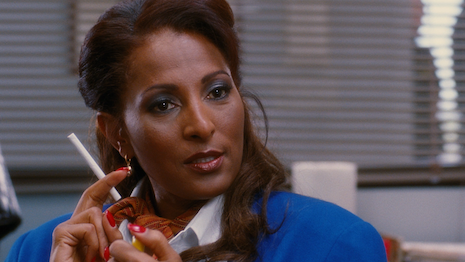
At the Guardian I talked about Oscarssowhite and how Pam Griet, not Helen Hunt, should have won the 1998 Oscar for Best Actress.

At Random Nerds I wrote about male victims and female rapists in Jessica Jones.

At the Establishment I wrote about

Alexander Hamilton and the history of immigrants bashing immigrants.

—why using hackers to disrupt sex trafficking is a bad idea.

At Splice Today I wrote about:

—how Bernie Sanders thinks socialism will address racism, and why it won’t necessarily

—Patrick Breen’s Nat Turner biography and how his story doesn’t fit into Hollywood tropes.

At the Chicago Reader I wrote about retro thrash band Warhead.

Other Links

This is a thoroughly depressing story about a woman who was trafficked, “rescued” by police, and then ended up being arrested and put on a sex offender registry.

Condescending to Mothers

Jen-Kirkman-Book-Cover-ICBTCOM

 
This first ran on Splice Today.
________

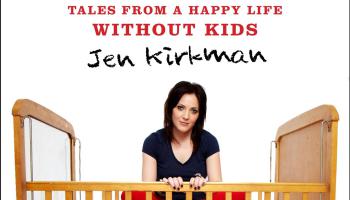
In a recent post on the Atlantic, Jen Kirkman stated that she did not want to be a mother. Further, she didn’t want people to tell her that she’d be a great mom. To tell a childless woman that she’d be good at mothering, Kirkman said, “is at best condescending and at worst, patently false and potentially dangerous.”

Which left me with one question when I had finished the article. Would Kirkman think it was condescending if someone told her she’d be a great dad?

Obviously, women aren’t usually referred to as fathers. My point, though, is that “Dad” and “Mom” aren’t just equal and neutral descriptors for the same role. They carry a lot of connotations. And it seems like in her piece, Kirkman is resisting not so much the idea of being a parent, per se, as the idea of being, specifically, a mom.

The post (an excerpt from Kirkman’s forthcoming book) doesn’t delve too deeply into specifics about motherhood. It doesn’t need to, though, because — in the long tradition of her stand-up comic forbears — Kirkman simply relies on rule-of-thumb gender stereotypes

I have memories of my grandfather Kirkman making mashed potatoes that were so good because they tasted like a bowl of butter. I love my mom’s brownies. My favorite thing about both of those recipes is that someone else made them for me. Occasionally I feel an urge to whip up some mashed potatoes and brownies but I don’t ever feel an urge to scrape the crust from the baking pan, or to squeeze out some progeny so he or she can remember that while mommy was out of town often doing stand-up comedy, she baked a mean banana bread to try to make up for her flagrant neglect.

It’s true she’s talking about her grandfather as well as her mother. But both are being used as examples of mothering, and that mothering is defined mainly through food preparation, and secondarily (at the conclusion of the paragraph) through spending lots of time at home.

I’m sure this isn’t Kirkman’s intent, but in her effort to distance herself from mothering, she ends up having to essentially tell lots of people who are mothers that they’re not very good at it. My son’s mother, for example, pretty much never cooks. Does that make her a bad mother? Lots of women with children have demanding jobs that require them to travel extensively. Does that make them guilty of “flagrant neglect”?

Again, and tellingly, Kirkman’s description of bad motherhood would almost certainly not be an example of bad fatherhood. Expectations for fathers have changed a lot, it’s true. Still, when people think “being a dad” they don’t immediately leap to “cooking banana bread.” Similarly, I know numerous dads who travel a great deal for work. It’s true that I, personally, would rather undergo minor elective surgery than do that. But no one — not me, not society, not anyone — thinks that those fathers are bad or neglectful parents just because they often have to be away from home.

The condescension Kirkman’s hearing, then, seems like a condescension that is tied up in her own condescending notions of motherhood. When someone says to Kirkman “you’d be a good mother”, she appears to hear “you’d be a good 50s TV sitcom housewife,” and, relatedly, “you should quit your job.”

The insult, then, is in Kirkman’s head. It’s her issue. But it’s not just in Kirkman’s head, and it’s not just her issue. She didn’t make up the stereotype of 50s TV sitcom housewife, after all. She didn’t invent the connection between mothers and banana bread. “Mother” can mean a lot of things, but one of the things it still means, whether we want it to or not, is June Cleaver. Mothers have been condescended to for centuries. They’ve been linked to the infantile and the instinctive, to emotionalism, passive-aggressiveness, dependence, smothering neediness and triviality. In fact, a big part of the way that women are condescended to is through the use of tropes and stereotypes derived from condescending ideas about motherhood. This is why radical feminist Shulamith Firestone wanted to get rid of biological motherhood altogether, and why child care and mothering issues have often been fraught for the feminist movement. Turning women into mothers first and everything else a distant second is one of the main ways that sexism has historically been articulated and enforced.

So it makes sense that Kirkman’s should feel distrust and anger when she’s told “You would make a great mother!” But even if it is understandable, it’s also unfortunate. Because, in distancing herself from mothering, Kirkman helplessly reproduces the condescension she repudiates. Why can’t she be a good mother? Because she doesn’t cook, she has a demanding job, and she finds children terrifying. Good mothers, then, cook, and don’t work, and are somehow naturally, magically free from anxiety about making major, terrifying life changes which involve, in the majority of cases, nine months of sharing your body with another life form. Followed by labor. Which, my wife tells me, hurts a lot.

If Kirkman does not want to have kids, she absolutely should not have kids. I wish she could find a way to talk about her decision, though, which didn’t involve turning the word “mother” into an insult. There are as many ways to be a mother as there are to be childless. Recognizing that seems like it would be a boon for mothers and single women and maybe even for men like me, sitting at home with my sick son while writing, and thinking that getting called a mom now and again wouldn’t be such a bad thing.