Love and Healing and Bullshit

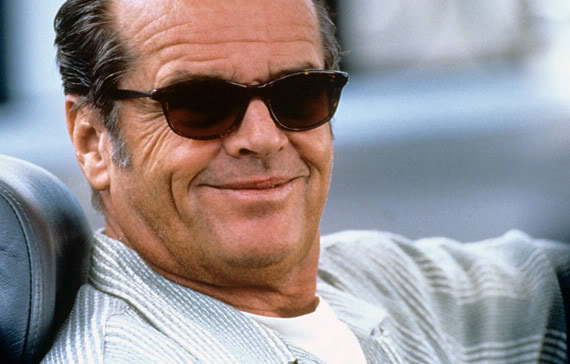
as-good-as-it-gets-41-4

At its core, Hollywood is an engine for turning pain, hardship, and trauma into shallow inspiration porn. From paralysis to the Holocaust, slavery to cancer; Hollywood cheerfully takes these blood soaked lemons and makes you drink blood soaked lemonade, albeit with lots of sweetener.

As Good As It Gets is firmly in the tradition, though the cocktail in question is perhaps more repulsive than most. Part of that is thanks to Jack Nicholson, whose smug self-regard can barely be contained in his constantly arching eyebrows. Most of the blame, though, rests squarely on the script.

For those lucky enough to have avoided the film since its release in 1997, I’ll briefly recap what I suppose I’ll have to refer to as the plot. Nicholson plays Melvin Udall, a fabulously wealthy romance novelist who suffers from some undefined form of OCD; he won’t step on cracks in the sidewalk, he locks the door five times every time he walks into his apartment; he opens a new bar of soap every time he washes his hands; he’s germphobic. Oh, and he’s also homophobic, racist, and deliberately abusive and cruel to everyone. But then he gets a dog, and a woman who looks like Helen Hunt and is 20 years younger than him decides inexplicably that he’s the guy for her. He gives her money to help her asthmatic son, life lessons and becomes a better person. The end.

There’s basically nothing to like in this film, but the bit that sticks out as particularly, drearily awful is the treatment of Melvin’s disability. At the Dissolve a while back, a commenter with OCD named Chapman Baxter argued that the film was correct in that people with OCD can engage in assholish behavior; “Although I’m not proud to admit it, I know from experience how a constant compulsion to do methodical rituals and the perpetual anxiety of intrusive thoughts can make one behave in quite an irritable and anti-social manner.” That seems reasonable…but I think it misses the main problem with what the film is doing.

The movie doesn’t just suggest that Melvin is a jerk because he has OCD. It suggests that the OCD and the jerkishness are essentially one and the same. When Melvin calls his gay neighbor a “fag”, it’s a sign of his quirky woundedness, just like his nervousness about stepping on cracks. And, similarly, when Melvin needs to eat at the same table in the same diner every day, that’s a character flaw on par with insulting a Jewish couple for having big noses. Melvin’s cruelty and his illness merge together, he’s at one and the same time responsible for both and for neither.

Because Melvin’s awfulness is an illness, he gets a pass; he can be spectacularly horrible, but still basically a good person underneath it all, since his behavior is essentially a medical condition, outside of his control. And because his illness is a character flaw, it is curable via the all-purpose nostrum of true love. Mixing flaws and sickness allows Hollywood to blend two of its favorite genres—the rom com and disability inspiration porn. The love of Carol, the waitress played by Hunt, makes Melvin want to become a better, less bigoted man—and that love simultaneously and spontaneously causes him to overcome his germphobia and other manifestations of his OCD. Mental illness and racism both evaporate with a kiss. Fall in love, and you can step on a crack.

This is supposed to be a happy ending for both Carol and Melvin, in theory. In fact, it’s impossible to imagine that this is a good long term choice for Carol, who, understandably, protests against her narrative fate, tearfully demanding to know why she has to settle for this decades older bigot who has just barely learned to form casual friendships, much less a serious romantic partnership. Carol’s mother is wheeled out on cue to tell her that nobody ever gets a perfect boyfriend—the uplifting message of the film being, you might as well settle, girl. We know you’re desperate.

Nor is this in any sense a happy ending for Melvin. Yes, Carol unaccountably decides to date him. But her love is precisely predicated on him becoming a better man–not just by being less of an asshole, but by being less mentally ill. There’s no sense that Carol is willing, able, or interested in dealing with Melvin’s illness; instead her love, the film assures us, will make that illness go away. What if it doesn’t, though? What happens to their relationship then?

As Good As It Gets, in short, is blandly contemptuous of both of its protagonists. Carol, with her asthmatic son, mentally ill boyfriend, and heart of gold, is a human mop, admirable by virtue of the selfless sopping up of her loved ones messes. When she suggests she might deserve more, her mother (presented as a moral voice of truth) tells her to quit kidding herself. Melvin, for his part, is presented as only worthy of love to the extent that love is a miraculous cure. Women are nurses who exist to make men normal. And if the woman doesn’t want to be a nurse, or the man isn’t instantly cured? Sorry, no rom com for you.

The forced happy ending is supposed to be inspiring; an unlikely boon to two wounded people. But instead it feels like an act of cynical, manipulative loathing. A working-class waitress with a sick kid; an aging man with OCD—without Hollywood pixie dust, no one gives a shit about you, the movie taunts. Follow the script for your gender and your illness, and all the normal people will maybe deign to sympathize. Romance! Cure! Come on kids; this is as good as it gets.
Utilitarian Review 1/23/16

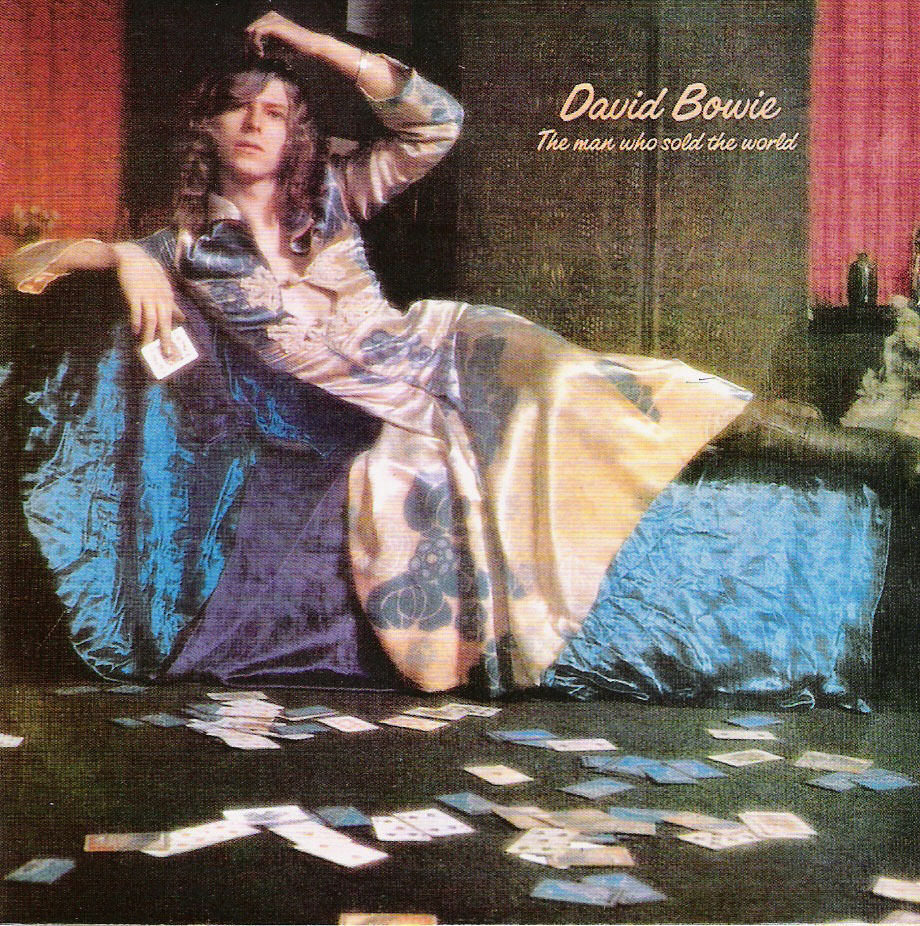
08981131bf34f1a21ff4300ba7509be5.920x926x1

 
On HU

Featured Archive Post: Brannon Costello on Christopher Priest and Jack Kirby’s Black Panther.

Subir Dey discusses some of the most important publications in the history of Indian comics.

Chris Gavaler looks at Bill Sienkiewicz’s various levels of abstraction.

Me on Valerie June and better american music.

Me on progressives shaming people for their labor.

Robert Stanley Martin with on sale dates of comics for nov/dec 1951, including lots of EC.
 
Utilitarians Everywhere

At the New Republic I wrote about how the biggest threat to minors who trade sex is the police.

At the Establishment I wrote about how nobody appreciates me enough.

At Splice Today I wrote

—about Freddie deBoer and the virtues of performing progressivisim.

the last David Bowie think piece.

At the Reader I reviewed the britpoppy Chicago band Kerosene Stars.
 
Other Links

Great Pitchfork interview with Dawn Richard, in which she name drops Shakespeare, Klimt, and Aphex Twin.

Kevin Drum on the problem with the NRO anti-Trump issue.

Charlotte Issyvoo on why as a trafficking survivor she found academia to be horrible.

Better American Music


valerie-june-live-letterman-lead

 
This first ran on Splice Today.
_______

At the dawn of mass-market commercial recordings in the 1920s, record companies divided race records from hillbilly music. The first were intended to target blacks; the second were marketed to rural whites. In many ways, this division was arbitrary; rural black and white music was not that distinct. Recent scholarship has, for example, shown that black musicians played on many hillbilly recordings, suggesting that integrated sessions were not that uncommon. Black and white collaboration has continued throughout American music — and yet, at the same time, that race/hillbilly distinction has become a self-fulfilling prophecy. R&B today is a ton different from country, in no small part because the marketing insistence that the two musics had to be different helped create two different, segregated traditions. What could have been one became two.

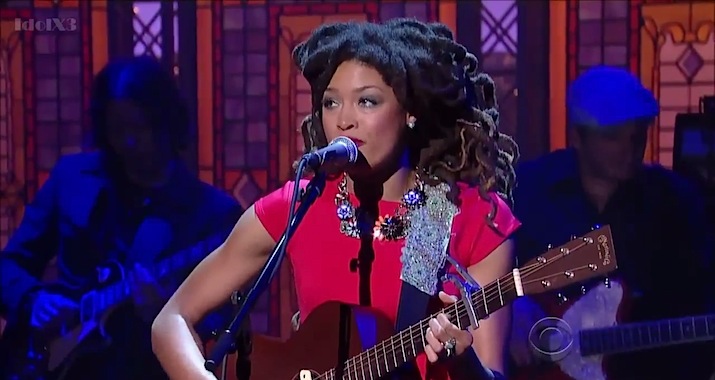
Valerie June’s album from earlier this year, Pushin’ Against A Stone, presents a possible version of what might have happened if that split had never happened. The first song, “Workin’ Woman Blues” is a barreling, bizarre, perfect mash-up of styles; June starts with a folk-blues percussive strum and then launches into a shattering nasal vocal that would do Sara Carter proud. “I ain’t fit to be no mother/I ain’t fit to be no wife/I been workin’ like a man/I been workin’ all my life,” she declares, as the music cockily struts towards, of all things, swinging funk — and then, right after she multitracks herself for a line, we get a full on Memphis horn line, which veer into jazz. That’s 90 odd years of music condensed into 3 minutes of seamlessly awkward awesomeness. The song is a Frankenstein monster of backwoods cool.

The rest of the album is somewhat lower key, but it’s never less than great. “Somebody To Love” finds the sonic link between doo wop backing “ooo”s and bare country fiddle while June plays ukulele and lets her vocals lean into Booker T. Jones’ (!) dreamy organ backing with those paint-stripping vocals, exquisite pain and pleasure. “The Hour” is straight up girl-group sung so hillbilly it makes you wish Hank Williams had done a session or two backed by the Shirrelles. “Tennessee Time” is slow-tempo hippie folk, complete with exquisite mandolin and a buddy good time chorus where June’s keening vocals jump ahead and soar above her male duet partner, raggedly perfect.   “Pushin’ Against a Stone” has a distorted wailing pyschedlic guitar set against a Stax rhythm backing while June does old school $&B that is actually old school — none of this neo crap. On “Shotgun” she sings a bloody minded blues country death song, her voice keening and wailing besides her remarkable slide guitar work. And then, improbably, the album closer, “On My Way,” lifts the tune from “Friend of the Devil” — which is, as it turns out, a great song if you can find a great singer to sing it.

You could argue that the inspirations here aren’t as diverse as I’m suggesting; the nasal Hank Williams vocals could come from Shirley of Shiley and Lee instead; the acoustic gospel of “Trials, Troubles and Tribulations” could derive from singing preachers like Washington Phillips rather than from the Carter Family. You listen to the tough blues of “You Can’t Be Told,” and June’s nasal voice seems to derive more from Howlin’ Wolf than Bill Monroe. But that’s what’s so glorious about the album; black/white, rural/urban — it all sounds like a single tradition. It’s almost as if Howlin’ Wolf and Bill Monroe both loved Jimmie Rodgers, as if the Carter Family and rural black singers shared a love of the same spirituals, as if poor rural whites played R&B instead of country. Pushin’ Against the Stone is just like the music we’ve got, only better.

Utilitarian Review 1/16/15


275403bd2020896f1db321db0ae57efa

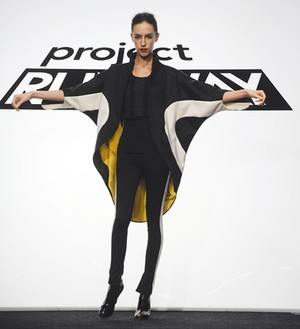
Project Runway Season 7 dress by Mila Hermanovski

 
On HU

Featured Archive Post: My illustrations for Wallace Stevens’ 13 Ways of Looking At a Blackbird.

Robert Stanley Martin on Patrick Modiano’s 2014 novel So You Don’t Get Lost in the Neighborhood.

Chris Gavaler classifies abstraction in comics.

I answered twitter questions about freelance writing.

Me on how women’s genre fiction doesn’t fit the Bechdel Test.

Robert Stanley Martin shows you the Pogo collection you could have bought in sept/oct 1951.

 
Utilitarians Everywhere

At Playboy I wrote about Alan Rickman’s greatest performance on film.

At the Guardian I wrote about Project Runway and how you don’t need to be a superstar to make a living in fashion.

At Random Nerds I wrote about Paul Atreides and the Mary Sue power of being a white guy.

At the Establishment I wrote about Project Runway and the pettiness of making art.

At Splice Today I wrote about

—my favorite hip hop albums of the year, by Father and Death Grips.

—Hitler, Staling, and how the U.S. collaborates with ISIS.
 
Other Links

Adam Epstein on oscars so white.

This album by Fadimoutou Wallet Inamoud is amazing.

Smart little discussion of how television companies gender segregate their content.
 

Women’s Genre Fiction Fails the Bechdel Test

This first ran on Salon…and then Salon deleted it. Not sure why; I suspect a glitch. I tried to notify the editors, but they didn’t do anything…so what the hey, I figured I’d reprint it here, since they don’t seem to want it.
___________

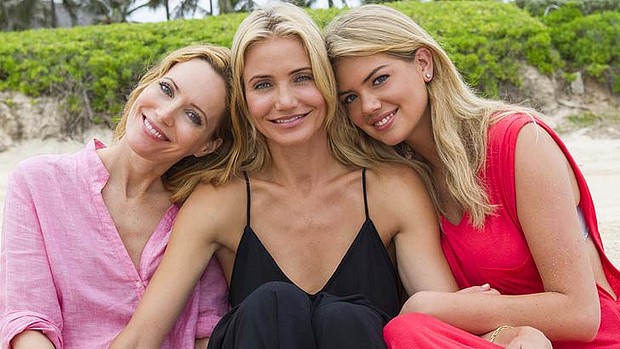
art-Kate-Upton-Cameron-Diaz-The-Other-Woman-620x349

 
Lately critics have piled on the chick flick “The Other Woman” for one specific reason: it doesn’t pass the Bechdel test— Alison Bechdel’s famous heuristic which asks whether a film has (a) two women who (b) talk to each other about (c) something other than a man. As Linda Holmes says in a particularly scathing review at NPR, “The Other Woman” is 109 minutes long, and at no time do any of these women—including Carly (Cameron Diaz) and her secretary (Nicki Minaj), who only know each other from work — pause for a discussion, even for a moment, of anything other than a series of dudes…” Vulture put a clever new spin on this argument by collecting all the lines Kate Upton says in the movie, which included: “I can’t believe he’d lie to me, I really thought we were soul mates” and “We could kick him in the balls!”

Having a film featuring three female protagonists who do nothing but talk about men is, the Bechdel Test suggests, unfeminist. Let it be known, though, that “The Other Woman” does technically pass the Bechdel Test: Kate (Leslie Mann) has a very brief conversation with Amber (Kate Upton) about how good Amber smells. Still, the films female friendships are all based on the women’s relationship with a single, caddish guy. Those applying the Bechdel Test say that this is a failure. But if a movie for women, with female stars, about female friendships and the evils of male infidelity can’t pass the test, maybe the problem isn’t with the film, but with Bechdel’s rubric.

The truth is that female genre fiction (whether movies or TV or books)— designed for and consumed mostly  by women—not infrequently has difficulty passing the Bechdel Test, precisely because female genre fiction is often really interested in men. The Twilight films don’t do well. Neither do many romance novels, as romance novelists like Jillian Burns and  Jenny Trout have acknowledged.

Tessa Dare’s 2012 Regency romance “A Week to Be Wicked,” for example, features as its heroine Minerva, a determined geologist who becomes a noted scientist in the teeth of contemporary mores while also showing an unexpected flair for passion and screwball comedy. There’s no doubt that the book is self-consciously feminist — the scientific community’s exclusion of female scientists is a major plot point, and one of the things that Minerva loves about the hero, Colin, is that he isn’t threatened by her accomplishments. But despite such support for female empowerment, “A Week to Be Wicked” doesn’t really pass the Bechdel Test. When Minerva talks to her beloved sister or to her mother, it’s about Colin.  There are a few ensemble scenes in which Colin and Minerva fool a carriage full of women into thinking that they’re royalty on their way to a kingdom on the border of Spain and Italy — so that might technically count, if you were determined to make it. There’s probably another moment or two as well; books find the tests easier to pass just because they’re longer than films. But as with “The Other Woman” — or really even more than with “The Other Woman” — the story in “A Week To Be Wicked” is about the relationship between the female lead and the male lead. And that means that the female lead is generally either talking to the guy or talking about him. There’s not a ton of space for extraneous Bechdel-appeasing conversations.

A genre novel that fails the test even more spectacularly is Alex Beecroft’s “False Colors.”  There are hardly any women in Beecroft’s romance novel at all. It’s M/M — a gay historical novel set mostly aboard ship with the British Navy. Despite the failure to pass the test, M/M novels in general are hardly anti-female. Beecroft is a woman, her readership (as with most M/M) is probably predominantly women, and the female characters we do see are treated with sympathy and surprising depth given how little screen-time they get.  I particularly liked the fortiesh widow, Lavinia Deane, who flirts with one of the heroes and figures out (with no bitterness) why he won’t flirt back before he fully understands it himself (“Say you won’t try to be some sort of saint in the wilderness,” she says with earthy kindness, channeling the wishes of both author and readers. “I’d hate to think of you withering away untasted.”)

But such bright cameos can’t change the fact that, as far as the Bechdel Test goes, the novel fails big-time. I don’t think there’s a scene in which two women talk to each other, much less talk to each other about something other than men. As M/M writer Becky Black says about her own books and the Bechdel Test, “I personally usually structure the story so every scene will be from the Point of View of one or the other of the heroes. All of this means there isn’t much space for the female characters to have a chance!”

M/M romance, and associated genres like yaoi manga  and slash fiction underline the limits of the Bechdel Test. It’s true that a book like “False Colors” doesn’t have many female characters — but that’s because the author fully expects the audience to identify, and fantasize, across genders. In “False Colors,” both leads play the role of damsel in distress, and both play the role of heroic rescuer. The Bechdel Test assumes that men are men and women are women. But questioning that assumption can be a feminist project in itself.

The point here is simply that — as many of the romance authors I’ve linked say — the Bechdel Test has some limits. Alison Bechdel has said she doesn’t use it as a “filter” for herself , as her character Mo did. The test can be a useful way to think about how gender works in films or books, but alone it can’t tell you whether something is good or bad, or feminist or unfeminist.

It’s also, though, worth thinking about the way that the Bechdel Test fits a bit too neatly into cultural and feminist prejudices against genre fiction. Mo is a lesbian, so it makes some sense that she wouldn’t be interested in the kind of stories where women are focused on heterosexual romance (even though there certainly are lesbians who enjoy het romance.) But should that really be turned into a general rule suggesting that women’s interest in heterosexual relationships is somehow unfeminist, or a sign of aesthetic failure?

From Nathaniel Hawthorne’s sneer at “that damned mob of scribbling women” to Lisa Jervis’ assertion that chick lit is responsible for the “evacuation of feminist politics,” men and certain strands of feminism have long been united in seeing female genre fictions as weak, foolish, corrupt, and even corrupting. Using the Bechdel Test as a way to chastise women for enjoying the wrong, insufficiently highbrow, unfeminist thing — whether that be The Other Woman, or “Twilight,” or romance novels — seems like it fits into that unfortunate tradition of gendered scorn. The Bechdel Test remains a useful lens for looking at art. But it’s important to remember that Bechdel’s Rule is, itself, a cultural and aesthetic product. If Bechdel’s comic can be used to test romance, or chick flicks, then romance, or chick flicks, can be used to test Bechdel as well.

Questions for a Mid-Level Slogger

Yesterday on twitter I offered to answer folks’ questions about freelance writing as an occupation. A handful of people took me up on it, so here are the questions and my best shot at answers.
______

What is a reasonable annual earnings expectation for a freelance writer? Full time.

Really variable, I think is the answer here. I’ve been very lucky to make a decent living at it which is actually quite a bit more than I made at my full time writing job. That’s by dint of (a) being able to write very quickly, (b) working more or less all the time, and (c) doing a good deal of work for hire writing for educational publishers, business publishers, and the like. I’m also in my mid-40s and have been writing professionally for about 20 years now; that has a big effect on what kind of work for hire gigs you’re likely to be considered for.

I started out doing freelancing part time for several years, working at a full time job during the day, until I’d lined up enough clients that I felt like I could make a go of it. I’d definitely recommend that. Also, it’s a lot, lot, lot easier if you’re married to someone who’s got a full time job, both for health insurance (less of a problem with Obamacare, but still) and because *someone* needs to be making a steady paycheck if you don’t want to go completely crazy. With freelancing, some people will make less, some more, but the precarity is a constant. It’s really hard to know if people will or won’t have work for you. My main client, for whom I was editing like 20 books a year, just decided to have me write 0 books this year. I found something else…but that’s the sort of thing that really plays havoc with your blood pressure.
________

How do you develop relationships with editors?

Relationships with editors are often about networking, like most things. I’m always looking for new venue, and trying to reach out to people who might have editorial contacts. It feels pushy, and I always feel nervous about it…but it’s part of the job.

I’ve had editors reach out to me a couple of times too, which is really nice. And I’ve cold contacted a couple of editors…which usually doesn’t work, but every so often. And then I’ve also had editors who I thought I was doing well with stop talking to me. Part of the reason you need to constantly be trying to find new places is that the old places stop working with you, for one reason or another. Someone goes out of business, some editor moves on and the new person isn’t into you. I counted up the number of places I’d written for at one point and it was over 50 I think.

How many of your pitches actually get accepted?

I try not to think about this one too much. I bet probably 70% of my pitches get rejected. However, I think 80% of my pitches eventually get published somewhere. That means I only rarely place a piece at the first venue I send it too. Most things by me you see in print were turned down by somebody at some point.

dHow does a freelancer compensate for the stigma of not being permanent?

This is not a stigma I’ve really come across that much? Most places that are interested in working with freelancers are interested in working with freelancers. People seeking freelancers aren’t going to turn you down because you have freelance experience.

It might(?) be different if after working for a freelancer for five years I went to try to get a permanent job somewhere. It’s true nobody’s come to me offering me a staff position…but on the other hand, I haven’t applied for any staff positions. Not sure what would happen if I did. Freelancing’s working okay at the moment though.
_____
What are the best ways to establish contacts with alt news publications? How sustainable is it to start off as a freelancer?

I think I answered these above….
________
It seems like it would be hard to cold call people for research/quotes on pieces if you’re not affiliated with a media outlet. True?

I think it depends. You can definitely get bigger names if you’re writing for a bigger publication. But on the other hand many people are interested/excited about getting their ideas out there. It can help to have mutual acquaintances who can make introductions, too.

But the general rule is it never hurts to ask. If you’re writing a piece for a blog and there’s someone you want to talk to, write them an email/dm/whatever. If they’re too busy they won’t get back to you; but if you don’t ask, you’ll never know if they would have been interested.
_________
Do you permanently sign away the rights to your work? How common are “buyout” clauses?

It really depends on the publisher. A lot of the times yes, though there are exceptions (Slate’s relatively good about letting some rights revert, for example.)

I don’t even know what buyout clauses are!

For me, for the most part, this just is not that big a concern. I work on the expectation of one time sales. Every so often something is picked up by someone who pays me for it again, and that’s nice; every so often something is picked up by someone and I don’t get paid for it, which is a little irritating. But realistically, I’m not writing things where the copyright is going to be a moneymaker decades down the road or anything. You sign the contract and you shrug and you write the next piece.