We’re off through Monday. Have a good vacation, if you’ve got one,and we’ll see you back here then.

We’re off through Monday. Have a good vacation, if you’ve got one,and we’ll see you back here then.
This was one of those pieces where I said to myself as I was writing it, “I can’t believe a mainstream magazine is going to print this! That’s so cool!”
And as ever when I say that to myself, the editor who had accepted the pitch looked at it and didn’t get it. So, I thought I’d run it here for my patrons. This is my third Twisted Mass of Heterotopia column; if you like it, please consider donating to my Patreon so I can write more pieces like this.
______________________
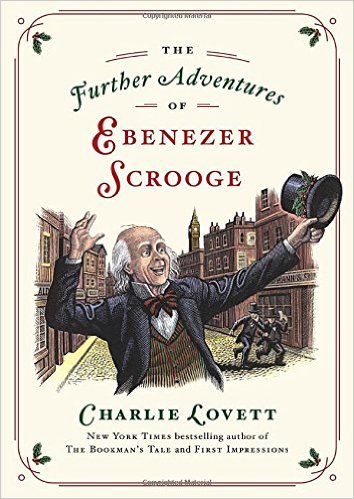 Fan fiction is despised. Criticism is despised. And both are despised for the same broad reason; they’re seen as parasitic. If a critic was a real artist, the critic would make a film rather than just writing about how superhero films are crap. If a fan fiction writer were truly creative, that fan fiction writer would develop their own characters and plots, rather than having Spock pour his heart out to Kirk for the gazillionth time. Great artists are originals; fan fiction writers and critics are derivative copyists, battened, like great aesthetic mosquitoes, upon the blood of their betters.
Charlie Lovett’s The Further Adventures of Ebenezer Scrooge must be doubly derivative, then, since it is both fan fiction and literary criticism. Lovett is best known for his best-selling book-centered mystery, The Bookman’s Tale. But in The Further Adventures he moves from broad bibliphilia to individual homage—or individual theft, if you’d prefer.
The short novella picks up twenty years after the end of Dickens’ famous A Christmas Carol. The formerly miserly Scrooge is now as renowned for his manic generosity and good will as he once was for his ill temper. “A generous, charitable, jolly, gleeful, munificent old fool, yielding as a feather pillow that welcomed the weariest soul to its downy breast,” as Lovett describes him in solid faux Dickensian prose. Determined to do even more good, Scrooge calls upon the Christmas spirits to work their nighttime magic on others: his newphew, his former-assistant-now-partner Bob Cratchitt, and his bankers. The result (spoilers!) is additional joy on earth for all.
The story is mostly an excuse to visit with Scrooge again, and for Lovett to splice in various passages from Dickens (the description of the the London slums from Bleak House, for example) with his own pastiche. But while the book is mostly tribute, it also functions as a criticism of the original novel. Early on, it mildly tweaks Dickens’ sentimentalism; Scrooge’s unfailing good cheer is, it turns out, as irritating as his former dyspepsia. Over twenty years, in fact, Scrooge’s “constant kindnesses had grown wearisome from years of use.” Is Scrooge generous, or is he, in his single-minded effort to store up treasures in heaven, really as selfish and unconcerned with others as he was in his single-minded miserliness? Maybe the ghosts didn’t change him all that much after all.
The main critique though, comes in the second half of the novella, when the ghosts lead Scrooge’s nephew to run for Parliament, and inspire his bankers to set up a permanent charity. Dickens’ Christmas Carol presents personal transformation as the route to social good; God reaches down and makes the world a better place by changing Scrooge’s heart. Lovett, though, suggests that ghost Marley’s chains can never really be taken from him through individual acts of kindness. Real change, and really helping people, requires political power and institutional investment.
Lovett’s combination of fan fiction and criticism isn’t an aberration. On the contrary, literary fan fiction like The Further Adventures of Ebenezer Scrooge frequently includes, or is based upon, a critical reading of the original work. Jo Baker’s marvelous Longbourn (2013), for instance, is a reworking of Pride and Prejudice from the point of view of the servants. As such, it functions as a counter-intuitive, but powerful reading of the original novel. Suddenly, the Bennett household is built, not on the goodness and wisdom of Jane and Elizabeth, but on the raw hands and constant toil of the women below stairs who wash the sheets and make the dinner. And Elizabeth’s story is not so much about true love, as it is about the power and privilege which enable true love. “What it is to be young and lovely and very well aware of it,” the servant Mrs. Hill thinks while looking at Elizabeth. “What it is to know that you will only settle for the keenest love, the most perfect match.” Mrs. Hill could not settle for the perfect match; she fell in love with Mr. Bennett, had his child, then had to give the boy (Elizabeth’s half brother) away to avoid scandal. Austen’s vision of respectable, respectful love is only possible because she’s in a family, and a class, where they can afford respectable, respectful love. Other people aren’t so lucky.
Again, criticism is often seen as parasitic on original art. But in Longbourn, this is turned around. Jo Baker’s novel is essentially parasitic on critical insight. The kernel of the novel is the critical question, how is class erased in Pride and Prejudice? “The main characters in Longbourn are ghostly presences in Pride and Prejudice, they exist to serve the family and the story,” Baker says in an author’s note. “But they are—at least in my head—people too.” The commentary on, and critical reading, of Pride and Prejudice becomes a work of art of its own.
Jo Baker isn’t the only writer who builds her art on criticism. Jane Austen, famously, did the same in Northanger Abbey, a book which is a parody, or reworking, of the Gothic novels of Austen’s day. Just as Lovett questions the presuppositions of Dickens, and Baker questions the presuppositions of Austen, so Austen’s novel is an extended critique of the tropes of the Gothic. “No one who had ever seen Catherine Morland in her infancy would have supposed her born to be an heroine,” is Austen’s opening line—pointing not forward into the story, but backwards towards all those other Gothic narratives with extraordinary heroines. “She had a thin awkward figure, a sallow skin without colour, dark lank hair, and strong features—so much for her person; and not less unpropitious for heroism seemed her mind. She was fond of all boy’s plays, and greatly preferred cricket not merely to dolls, but to the more heroic enjoyments of infancy, nursing a dormouse, feeding a canary-bird, or watering a rose-bush.” Austen is criticizing, and questioning those perfect, feminine, marked-for-destiny Gothic heroines, just as Baker criticized and questioned Austen’s own sprightly, self-confident, self-determining ones. If Baker is parasitic on Austen, then Austen is parasitic on those Gothic novels — or, more directly, on a critical analysis of those Gothic novels. If Baker is Austen fan-fic, why isn’t Austen Gothic fan-fic?
Dickens’ Christmas Carol is not a direct parody or reworking of another story. But still, Lovett’s fan fiction seems so much in the spirit of the original in part because A Christmas Carol functions in a lot of ways as a criticism, or fan fiction retelling, of itself. Scrooge starts out as a “tight-fisted hand at the grindstone…a squeezing, wreching, grasping, scraping, clutching, covetous, old sinner!” That’s the iconic Scrooge…and then the rest of the book shows us what’s left out of the portrait, just as Jo Baker shows us what’s left out of Austen, and Austen shows us what’s left out of the Gothic. The ghosts don’t just transform Scrooge; they transform that original vision of Scrooge. We see his childhood; his love for his sister; his fiancé; we see, in other words, that the hard-hearted, miser Scrooge is not the whole story. Dickens could be seen as writing his own fan-fiction, creating an Elseworlds version of his own character. What if Superman had landed in Russia? What if Scully and Mulder had a passionate fling? What if Scrooge were a good man? That last is the premise of The Further Adventures of Ebenezer Scrooge — but it’s also the premise of A Christmas Carol.
Criticism, fan fiction, and original art seem like easily separable categories; Mark Twain’s works goes in the library, your online Twilight story about Edward and Jacob and all the things they do goes in the online forum, this essay you’re reading right here is in the TNR books section. But Mark Twain wrote Arthurian fan fic (and criticism) in Connecticut Yankee in King Arthur’s Court. E.L. James’ Twilight fan fic went to the best-sellers list. This essay is, admittedly, not likely to enter the western canon, but still, I contend that it’s inspired by the same impulse as Baker’s Longbourn, or Northanger Abbey or those further adventures of Ebenezer Scrooge. For art, for criticism, or for fan fiction, the question is always the same. How might this story be changed? Questioning the world, playing with the world, and creating the world — those things aren’t so different. We can maybe even write a story, or an essay, if we’d like, and imagine a place, much like this one, where they’re all the same.
On HU
Featured Archive Post: Caroline Small on Ivan Bilibin’s Russian Folktale illustrations.
Philip Smith on the thoughtful messiness of Serial.
Chris Gavaler on Darth Vader, superhero.
Chris Gavaler analyzes page layout and character in the Walking Dead #1.
Links to all my Star Wars articles.
Robert Stanley Martin with on sale dates of comics from early 1951.
Utilitarians Everywhere
At Quartz I wrote about prosecutorial overreach, mass imprisonment, and the campaign against Anita Alvarez.
At Playboy I got to list the best albums of the year (that no one else puts on their best of lists.)
At Pacific Standard I argued that children should have the right to vote.
At the Establishment I wrote about:
—The City on the Edge of Forever and how everyone wants to kill baby Hitler.
—my giant insane smelly greyhound.
At Splice Today I wrote about
—how the Force Awakens probably isn’t so great.
At the Chicago Reader I reviewed the classic Chicago death metal of Usurper.
Other Links
Angus Johnston on why college protest isn’t a threat to free speech, and isn’t always civil.
Daniel Larison on our support for the awful war in Yemen, and how no one even mentions it.
Star Wars, Star Wars, Star Wars, also Star Wars. So, what the hey, I thought I’d jump on the hype and do a little link list of my pieces on the franchise over the years.
Star Wars and the 4 Ways Science Fiction handles race.
Star Wars’ Original Scum-Caked Brilliance.
The Star Wars reboot and how Hollywood sci-fi doesn’t care about the future.
Slave Leia as uneasy sexual fantasy (about Han Solo)
Star Wars and a universe without women.
Star Wars and a universe with boring gender roles (or, let Octavia Butler write Star Wars)
Lupita Nyong’o, Star Wars, and keeping black actors off-screen
And, finally, why the Force Awakens will probably suck.
On HU
Featured Archive Post: Mahendra Singh on the draftsmanship of Jeffrey Catherine Jones.
Chris Gavaler on analyzing comics layout.
Me on why writing for hire isn’t spiritual debasement.
Me on Robocop 2 and the joy of hating children.
Roy T. Cook tries to tell Indiana Jones from Harrison Ford.
Robert Stanley Martin with on sale dates of comics from the end of 1950, including the first graphic novel ever.
Utilitarians Everywhere
At the Guardian I :
—interviewed William Richards on his new book about psychedlics and spiritual experience.
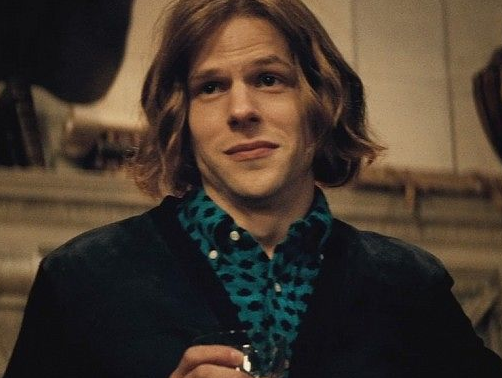
—wrote about Lex Luthor, Jr, and corporate fan fiction.
At the Establishment I wrote about my son’s acting career and the myth of meritocracy.
At Splice Today I wrote about
—Project Runway and how people suck and friends don’t win.
—why Trump is not the future.
Other Links
Mistress Matisse on the James Deen accusations and how the law doesn’t care about sex workers.
Ta-Nehisi Coates on hope, or lack thereof.
Neil Drumming on diversity on Project Runway.
This post is one of my Twisted Mass of Heterotopia columns, supported by my Patreon subscribers. If you think it’s the sort of thing you’d like me to write more of, consider contributing (and thank you!)
________
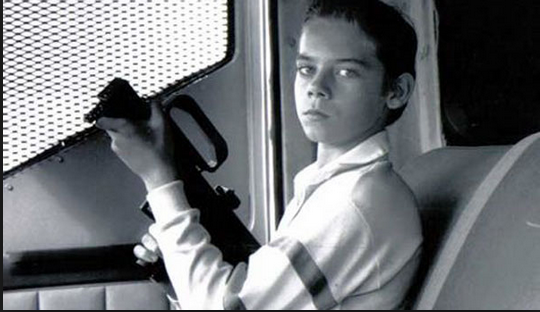
Robocop 2 was mostly, and not wrongly, ignored when it came out in 1990, but it did manage to spark a smidgen of controversy. One of its major villains was Hob, played by Gabriel Damon, who would have been 13 during filming and looked like he could easily have been a year or two younger. Hob curses foully, dispenses narcotics, attempts murder, and watched vicious bloodletting while barely blinking an eye. Then he dies in a sentimental, tearful scene clutching Robocops hand.
Critics were appalled. “The use of that killer child is beneath contempt,” Roger Ebert declared. David Nusair added, “That the film asks us to swallow a moment late in the story that features Robo taking pity on an injured Hob is heavy-handed and ridiculous (we should probably be thankful the screenwriters didn’t have Robocop say something like, “look at what these vile drugs have done to this innocent boy”).”
Ebert and Nusair aren’t exactly wrong. Robocop 2’s use of Hob is both gratuitous and cynical. Hob doesn’t need to be a child; everything he does could just as easily been given to an adult actor. There’s no effort to explain what a 13 year old is doing in the drug business, either. As far as the script is concerned, Hob is played by a 13 year old purely because it’s shocking to have him played by a 13 year old. It’s pure exploitation of a minor. Who can blame the critics for recoiling?
Still…I love Hob. I love him precisely because his presence in the film is so utterly, bracingly cynical. For most of the film, he embodies our hyperbolic fear and hatred of children; the preposterous inflated fear of a new generation of cynical pre-teen superpredators, the jaded youth terrifyingly familiar with vice. And then, in his death scene, when he’s no longer a threat, he becomes the perfect, heart-tugging victim. The film’s view of Hob turns on a needle from paranoia to pathos; from loathing to sentimental catharsis. There’s no attempt at connective tissue; no effort to make Hob a character beyond the tropes. He’s just Childhood Monster or Childhood Victim. There’s not even a pretense that he’s anything else.
I don’t know whether Hob is intentional satire, gleeful hyperbole, or sincere fever dream. Probably a little of all of those, if the scene with the pre-teen Little League team and their coach robbing a store is any indication. But whatever the motivation, the result comes across like a sardonic, giggling sneer at every Hollywood film that has ever whipped up moral panic about teens, or dropped a dead child onto its protagonist in the name of Real Emotion. From the bad news kids breaking jazz records in Blackboard Jungle to the kidnapped youngster motivating a tearful Tom Cruise in Minority Report, all the children on screen, everywhere, start to look like Hob. And suddenly you wonder, do we even care about these kids? Or do we just get our kicks by pretending that they’re nightmare demons, innocent angels, and/or both at once?
Roger Ebert adored Minority Report, dead kid and all, and Millenial think pieces continue to dot the Internet. If you use racial or gendered or homopohobic stereotypes, there’s at least a decent chance someone will point them out. But kids aren’t seen as a marginalized group, and tropes around them aren’t seen as invidious, or just aren’t seen at all. Kids really are innocent victims, right? Or else they really are dead-souled thugs in training who need to get off my lawn.
Robocop 2, though, takes up the difficult task of exploiting childhood so blatantly that you can’t look past it, even if you’re determined to set your eyeline a foot over Hob’s head. Robocop 2 presents a dystopic future in which we hate and fear and condescend to children, just like we do now, just with a little less hypocrisy.
This first ran on Splice Today.
___________
Writing gets demystified pretty quickly when you do it for a living. All the stuff you hear in creative writing programs about cultivating your own voice or writing what you know or making the familiar strange — pretty much nobody who will pay you actually gives a shit. Instead, the kind of things your clients are likely to focus on are, can you meet a deadline? Can you be just as entertaining and accessible as we’ve decided the audience would like you to be, without being so entertaining and accessible that someone gets offended? Can you figure out something to say about dietary supplements without instantly revealing that neither you, nor we, nor really anybody cares about dietary supplements? In short, can you competently jump through the hoops at your boring day job the way that everybody else has to jump through the boring hoops at their boring day jobs? And can you do it without too many glaring grammatical errors?
Like I said, you figure all this out fairly quick. Or, at least, it seems like you would. Not Anna Davies, though. Davies is, she tells us right at the beginning of her essay a “real writer” — and as proof, she says she’s ghost-written a massively popular YA series. She clearly intends for us to be impressed — and, hey, I can oblige happily enough. I was impressed. Ghost-writing a massively popular YA series— that sounds like a great, relatively enjoyable source of steady income. I’d do it if I had the chance.
Anna, though, doesn’ t present it as an enjoyable source of steady income. Instead, she makes it sound like some sort of Faustian bargain, in which she sold her inner glittery snowflake for ugly, mundane cash. She’d wanted to be a famous YA writer herself, but all she did was write other people’s series. She buried her muse so thoroughly that even her editor tells her, “You write well, but nothing has heart.” To which she replies, in a transcendent psalm of self-pity:
“Of course nothing did. I’d given it to them. I’d given them my time, my talent, my 20s. And that was the lesson that had somehow gotten buried as I learned to create characters, set scenes and turn around a revise in three days: Never give more than you’re prepared to lose. In the course of five years and approximately 600,000 words, I’d become so good at mimicking the voice of another author that I’d lost my own, and I’d failed to nurture my own career, not to mention well-being, as carefully as I had the lives of the characters that had never belonged to me.”
Davies has written for the New York Times and Marie Claire, and is making her declaration of failure from Salon. Clearly, she spent some time in there nurturing her career. But putting that aside, what exactly is she complaining about here? That all her dreams didn’t come true? That she had to work at a job that was occasionally unpleasant and felt like work? That after five years she’s only a quite remarkably successful writer rather than being J.K. Rowling? I don’t mean to be cruel, but, jeez, buck the fuck up.
To be fair, when you read the whole essay, you get the impression that there is more going on with Davies than she is quite willing or able to explain. She talks about her mother’s death; she talks about drinking too much; she talks about relationship failures. It doesn’t exactly add up, but for whatever reason, she’s obviously quite unhappy. I don’t think she’s lying about that, and I certainly don’t blame her for it.
Still, for a working writer, it is kind of irritating to see my profession presented as some sort of catastrophic self-betrayal, and/or as leading inevitably to a dark night of the soul. Reading it, I felt (presumptuously, but still) like I’d gotten a little glimpse of how sex workers feel when they have to sit through yet another documentary about how debased and miserable they are. Work for hire can be exploitive and depressing just like any other job, of course, and sometimes folks will treat you badly (or in the worst case not pay you.) But there’s nothing about it that’s inherently demeaning, or no more so than any other kind of employment.
Davies though, thinks there is. Work for hire function in her essay as a weight and a corruption, the thing that has prevented her from becoming a real writer, or even a real person. It’s like being a ghost writer has made her a real ghost; as if writing for someone else has turned her into no one. She seems, in other words, to have confused her job with her soul, and to have lost perspective in a catastrophic manner on the fact that being a ghost is just a gig. It’s not a sign that you are dying.