Utilitarian Review 12/4/15

On HU

Featured Archive Post: Jaime Green on how Clybourne Park is lying to you.

Chris Gavaler with a bibliography of superman before Superman.

Ng Suat Tong on why Jessica Jones is a poorly thought out mess.

Me on how Rogue Nation makes sense if you just hate Tom Cruise.

Me on Wonder Woman, the stranger in the new Batman vs. Superman trailer.

Robert Stanley Martin with on sale dates of comics from fall 1950—lots of EC, plus Gasoline Alley.
 
Utilitarians Everyhwere

For Slates’ annual overlooked book list I got to recommend Kathleen Gilles Seidel’s Again.

At Quartz I wrote about

Jessica Jones vs. the patriarchy.

how conservatives police speech by don’t get called out for political correctness.

At Playboy I wrote about white paranoia and fear of crime.

At the Guardian I wrote about the Hunger Games’s dislike of femininity.

At the Establishment, I wrote about

prejudice against young male Syrian refugees.

the anti-gun control movement and apocalyptic fantasies of violence.

At Splice Today I wrote about

free speech and my experiences with the editors at the Atlantic.

why Project Runway is better than quality television.
 
Other Links

Joanna Angel describes her abusive relationship with porn star and accused rapist James Deen.

From a bit back, Alyssa Rosenberg on The Voice and LGBT contestants.

Lee Drutman with an excellent article on why gun control is so hard to past (and no, it’s not because the NRA bribes Congress.)
 

1406438617_9-Anya-Ayoung-Chee

Wonder Woman in Batman vs. Superman

There’s a new (new!) Batman vs. Superman: Dawn of Justice trailer. Watch it now!


Online reaction seems pretty skeptical, centering on Jesse Eisenberg’s jittery camp. People don’t want jittery camp from their supervillains anymore, I guess. No love for Frank Gorshin.

Anyway, as you’ll see if you can make it to the end, Gal Gadot shows up as Wonder Woman right at the close, in a moment also played for cutesy laughs. Doomsday (I guess that’s Doomsday) shoots some sort of special effect thing at Batman, and our dour hero is about to be incinerated, when Wonder Woman leaps in with her shield. “Is she with you?” Superman asks, with Henry Cavill demonstrating that he’s got nice comic timing. “I thought she was with you,” Batman replies in grim dark bat voice.

Part of the joke is about the wrong-footed testosterone. Wonder Woman, as a woman, should belong to either Superman or Batman. But (feminism!) she doesn’t. The conflicted bromance m/m romantic comedy (complete with meet cute at the trailer’s beginning) is interrupted; the gritty ballet of manly men thumping each other gives way to the sit-com shuffle of manly men belching in confusion as the woman of the house swoops in to be competent.

William Marston, Wonder Woman’s creator, would probably find a bit to like here; Wonder Woman as invader of man’s world (metaphorically and literally) resonates with his original themes to some degree, and of course it’s nice to have her saving the bat dude rather than the other way around. The perspective, though, is inevitably wrong way round. Wonder Woman, the original comic, started out after all with Steve Trevor invading Paradise Island, and even in Man’s World, Diana was surrounded by sorority girls and fellow Amazons, so that Steve was always the lone dude in a female community.

The whole point of the original Wonder Woman was that Wonder Woman was the standard; women were the normal thing, and men were the sometimes odd, sometimes sexy, but always secondary other. Wonder Woman in Dawn of Justice is heroic, but she’s heroic through the eyes, and from the perspective, of the two guys whose relationship is the title of the film. Which isn’t surprising, really, but does mean that, Supergirl, Jessica Jones, Buffy, or any superhero show where the woman is in the title, is going to be truer in many ways to Marston’s vision than the character called Wonder Woman in a film titled Batman vs. Superman.

Rogue Nation Makes Sense If You Just Hate Tom Cruise

This first ran on Splice Today.
_______

large_Screen_Shot_2015-08-15_at_12.00.06_PM

 
Early on in the latest Mission Impossible film, Rogue Nation, the aging but not greying Ethan Hunt (Tom Cruise) meets a young female contact (Hermione Corfield) in a record store. After they exchange knowing quips about John Coltrane and Shadow Wilson, she hands him his secret message in the form of a vinyl record, and then, breathlessly, tells him how wonderful he is. “All the stories about you can’t be true…can they?” she stutters. Cruise-as-Hunt pauses without speaking, giving her a self-satisifed grin that says clearly, hey, I’m an awesome movie star and/or superspy. I am pleased that the script has recognized that women decades younger than me should fawn at my feet. All is right with the world.

And then that fawning record store clerk is murdered brutally in front of him while he watches helplessly. He’s not an awesome superspy. He’s just a smug twit whose unearned assurance results in death and bloodshed wherever he goes — while he himself is unscathed. Why doesn’t someone kill him already?

Of course, throughout Rogue Nation, and for that matter throughout the two decade long film series, people do try to kill Ethan. You’re supposed to root for them to fail…or are you? Rogue Nation makes you wonder. The plot pits the Impossible Missions Force, led by Hunt, against the Syndicate, an “anti-IMF” — a collection of agents disavowed from the world’s spy forces.

Throughout the film, the IMF and the Syndicate are presented as parallel and equivalent. That first vinyl message is from the Syndicate rather than the IMF, as it turns out. The characterization of the Syndicate as a “rogue nation” also, and deliberately, applies to the IMF, which continues to operate secretly within the IMF even after Congress closes it down. Agent Ilsa Faust (Rebecca Ferguson) who may be working with the Syndicate or with the IMF or both, argues, convincingly, that there’s not much to choose between them. “They’re all the same,” she says of the vying secret agencies. “We only think we’re fighting on the right side because that’s what we choose to believe,” she’s right too. “There’s always people like [Syndicate-head] Lane (Sean Harris) and there’s always people like us to fight him.” What’s the difference? Lane used to blow people up in the name of the status quo; now he’s doing it, he says, in the name of “change”. Even if you do prefer the status quo to change, dead folks are dead; they don’t care in the name of what nebulous ideology they’ve been killed.

Other films in the series play with similar insights. Ethan is constantly fighting moles within his own agency, and/or disgusing himself as his villainous counterparts, or stealing the super deadly information from the government for the shadowy organization he plans to betray any moment now. In the secretive world of spies, the “good guys” are constantly threatening to turn into bad guys, so you wonder whether the world wouldn’t be better off without the good guys in the first place.

The thing that keeps you on the side of the good guys, the thing that distinguishes bad from good, isn’t so much motivation or methods as Cruise himself. He’s the star oozing action-hero charisma and boyish charm, even as a fifty year old. He’s the Hollywood protagonist — you’re supposed to love him, like that record clerk, and so end up rooting for the Western righteousness he represents.

But what if you don’t like Cruise? This is hardly an academic question; the world is filled with Cruise anti-fans. His manic self-regard, his creepy involvement in Scientology; the way he clenches his jaw to show earnest determination…he’s a hero you love to hate. In the second Mission Impossible, the evil villain rants at length about wanting to wipe the stupid grin off Ethan’s face. I related overly.

And that’s the brilliance of Rogue Nation, if brilliance is the word. The film is a passionate call for less supervision of spy networks. It lauds American hegemony, not just over imperial possessions, but over Britain and Europe. The Brits are responsible for the Synidcate; the Americans have to bail them out, even to the point of drugging the Prime Minister and framing a cabinet officer. Raffish Tom Cruise knows best for everyone; pledge allegiance to the smirking America, world, and all your problems will be solved.

But all that collapses in on itself if you just, for a moment, let yourself hate Tom Cruise. Suddenly, Ethan isn’t the hero — he (and the country he represents) is an out-of-control narcissist with limitless ammo and no accountability. When his teammates accuse him of turning his mission into a deranged personal vendetta — they’re not failing to see his greatness. They’re right!

From this perspective, Rogue Nation isn’t a standard action movie in which the good guys are challenged and struggle and eventually triumph for virtue and stability. Instead, it’s a dystopic vision. This evil, self-satisfied, unhinged superguy whooshes back and forth across the world, sowing chaos and insufferable cockiness in his wake, and no one can stop him. Bullets, bombs, Congressional subcommittees, common human decency—he ignores them all. Tom Cruise rules the world in the name of Hollywood stardom, self-regard, and the American way. Stopping him is a bleak, impossible mission. Look at that jaw clenching, filmgoers, and despair.

Utilitarian Review 11/28/15

On HU

Featured Archive Post: Kinukitty on writing Stevie Nicks fan fic as a nine year old.

Chris Gavaler on Frankenstein superheroes.

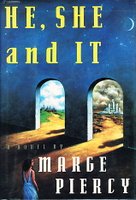
Me on Marge Piercy’s He, She, and It and the virtues of heterogenous apocalypse. (This was a Patreon supported post, so, if you like it, consider contributing.)

Me on the awesome doomy death and spiritual torment of Immolation.

We were off for pray for woodstock day.

Robert Stanley Martin with on sale dates for comics from summer 1950 (lots of EC.)
 
Utilitarians Everywhere

At Quartz I wrote about the documentary Killing Them Safely and how tasers escalate violence.

At the Establishment I wrote about how spewing racism isn’t braver than protesting it, and neither are part of a culture of fear.

At Ravishly I wrote about how Mockingjay can’t imagine non-violence.

At Splice Today I wrote about:

Kelela, Girlyboi, and how R&B has always been everything.

all the cultural journalists binge watching Jessica Jones.

how Iron Man won’t save Jessica Jones.
 
Other Links

Terrell Jermaine Starr on how Ben Carson inspired him as a kid.

Mojo has the first year end best of list. Dylan, Keith Richards, Richard Thompson *and* David Gilmour? That’s a lot of fogeys on there.

And another example of political correctness run amok.
 

469735950

Forgotten Spiritual Death

This first appeared on Splice Today.
________

large_normal_Immolation_Dawn_1600


On the landscape of pop culture, death metal is an incongruous oozing spiky heap of torment. Too loud and abrasive to be popular; too formulaic and un-ironic to be avant-garde, it’s the exploitation cinema of music—except that folks like Ridley Scott and Paul Verhoeven long ago took exploitation cinema mainstream. Death metal, on the other hand, remains more or less what it always was; a hermetic low-brow underworld of regimented troll fury.

Even seminal death metal bands, then, are largely unknown to everyone but hardcore fans, and that’s certainly the case with Immolation. Hailing from Yonkers, Immolation was far removed from the central Florida death metal scene that nurtured acts like Deicide, Obituary and Malevolent Creation. Perhaps in part as a result, they’re somewhat unheralded even by hardened metalheads. They show up on “best of” lists now and then, and they’re certainly respected… but they don’t provoke the rabid partisanship of, say, Cannibal Corpse.

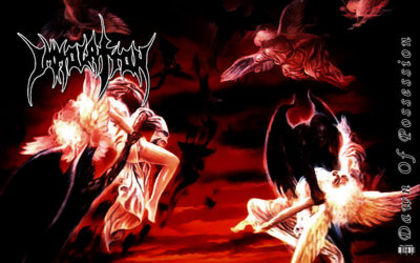
Which is a shame, because Immolation’s debut album, 1991’s Dawn of Possession is solidly, idiosyncratically ferocious, from its demons-raping-angels tacky airbrushed cover through its obsessively anti-Christian lyrics. While many death metal bands of its era, like Deicide, embraced propulsive speed and whiplash, Immolation took a slightly different approach. The percussion still sounds like someone is pouring amphetamines into the drummer with a funnel, and the arrangements are jittery and proggy and clearly thrash-ready. But the whole thing keeps downshifting, the guitars thick and minor key and clotted, like massive primeval roadrunners stumbling into viscous tar pits.

There are other doom-death bands, of course—the amazing Autopsy, most notably. But Immolation feels less like they’ve fused doom and death, and more like they’re trying for death but doom has come upon them. Parts of Dawn of Possession suggest a kind of bifurcated torment, in both lyrics and music. The five-minute long “Those Left Behind,” opens with a slow, screeching, painful dragging guitar figure, like a tomb rasping open. The band then kicks into a parody of high gear, a swollen swagger that suggests classic rock performed by corpses. And all the while they rasp out the praises of Jesus:

I lift my soul joyfully

If not, my life will end painfully

Extol He who rides above the clouds

Majestic and glorious

Reigning victorious

The song goes on like that, jerkily taking painful fight and then sinking under the gravity of coveted failure.

Jesus Christ

You are Lord

You are God

But have You won over sin and death

Victory’s crown shall be ours

For we are those

Those You’ve left behind

The singer lets out a distant shriek at the end, and the music cuts out to just the drum thunking emptily, until the next song, “Internal Decadence” comes in seamlessly with its despondent chorus “Twisted brain/Abstract world of pain/Anguish of the mind/Tortured afterlife.”

Obviously, Dawn of Possession is an atheist document, but the tormented weight with which the music is pulled agonizingly first towards heaven, then towards hell seems close to the experience of some of the great Christian doubters. Take Gerard Manley Hopkins’ terrible sonnets, for example: “Bones built in me, flesh filled, blood brimmed the curse”—that’s totally a metal lyric.

In fact, listening to Immolation’s album full of prayers and sighs, wishes for hell and fears of heaven delivered against a backdrop of music constantly lumbering from defiance to crawling despair—listening to that, you start to wonder if it’s really the volume and the harshness which has sidelined death, or whether it might be something else. Neither pop nor the avant-garde has much room these days for spiritual torment, at least expressed in such an explicitly theological context. Maybe Dawn of Possession is forgotten not like a pop culture curiosity, but like a dark night of the soul.