Meta-Crap

Dollhouse-tv-17

For God’s sake don’t make me watch any more.

 
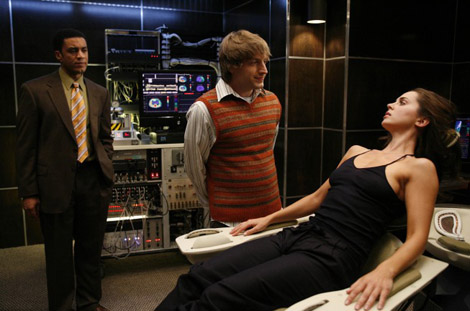
We’re doing a Joss Whedon roundtable hopefully week after next. In preparation, I thought I would watch Dollhouse…but it’s so crappy I don’t think I’ll actually make it all the way through. I like Eliza Dushku; she’s charming, if not exactly talented. But charm can only take you so far.

Anyway, what’s interesting to me in the first few episodes is how they work as self-parody of television writ large. Echo (that’s Dushku) is a mind-wiped young woman who gets some new personality transferred into her in each episode, at the behest of some paying client who wants a customized toy human to play with. Each of the scenarios is basically a clichéd and indifferently realized genre exercise: Echo becomes a profiler and deals with kidnappers; echo goes into the woods with an outdoorsman and then it turns out he’s a psychopath and she’s in a slasher movie; Echo is programmed as a swaggering art thief in a caper gone wrong. The blips in echo’s program function as a kind of wink at televisions myriad plot-holes. In one episode Echo is programmed to protect a pop singer, and keeps protecting her because the programming/plot demands that she should, even when, as far as character consistency goes, it makes no sense. In that art thief ep, Echo is mind-wiped half way through, becoming completely useless—echoing, again, the erratic competence of tv characters, who are as hapless or as effective as the plot requires. The fact that Dollhouse is itself wretched television only makes its meta-commentary on the wretchedness of television more perfect. It is itself the slipshod awfulness it mimics; Whedon is a fool performing a perfectly brainless imitation of a fool.

Dollhouse isn’t just a parody of television, though; it’s a parody of Whedon himself—and particularly of his feminism. Each of the personalities injected into Echo is resourceful, intelligent, determined. They’re strong female characters all. But they’re strong female characters that are made up, and visibly hollow. More, they’re strong female characters who just about all seem designed to be raped. Echo is often programmed to have romantic and sexual encounters—and such encounters are of course not consented to by Echo’s original personality, wherever that may be. For that matter, the insertion of the personalities into a unwitting body is itself a kind of assault. The creation of strong female characters is conflated with skeevy, snickering, and generally horrible abuse. This juxtaposition fits rather too neatly onto, for example, Buffy, where the strong female lead is frequently punished and shamed for her strength, almost as if the whole point of creating strong women is to run them through a sadomasochistic fever dream.

I only made it through episode 5, and in theory 6 is where things start to somewhat improve. I don’t know if I’ll ever get there…but I guess I do grudgingly admire the start of the series for its unremittingly self-accusatory awfulness. It’s hard to think of another series that so self-consciously uses its own crappiness to indict its medium and its creator.
Can There Be a Black Fantasy Hero?

hundred-thousand-kingdoms-e1336862036505

The most famous black sf/fantasy writers, Samuel Delany and Octavia Butler, are both on the high art end of the genre, leaning towards literary fiction, feminist utopia, and high art bona fides. Their peers are people like Joanna Russ, Urusla Le Guin, and Philip K. Dick, rather than, say, the solidly middle-brow Neil Gaiman or page turning sci-fi young adult fare like the Hunger Games.

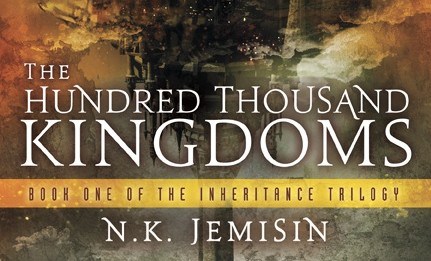
N.K. Jemisin’s novel The Hundred Thousand Kingdoms is more in the Gaiman/Hunger Games camp; there is plot, there is a heroine, there is little in the way of complicated semiotic play, body horror, or high concept. To the extent that there is genre drift, it’s not towards literary fiction, but towards romance. You don’t have to squint much to see that, Nahodeth, the Night Lord, the most powerful being in the universe, is a dead ringer for Edward, and Christian Grey, and all those other wounded, violent, seductive super-patriarchs who hold out the promise of apocalyptically violent, yet mystically safe, romps/relationships. There’s even a bed-breaking scene a la the one in the last volume of Twilight (Jemisin might even have been directly inspired by Twilight; the timing seems about right.)

This isn’t to denigrate Jemisin’s book; I like Twilight quite well, as regular readers know, and while this isn’t as weird as Meyer’s book, its substantally better prose makes up for that to a good degree. The bed-breaking scene is cute, and in general the novel does what it sets out to do—which is to say, it bounces along at a readable clip, providing an enjoyably imagined world and a suitably fleshed out and determined heroine.

The novel is also concerned, in various ways with race. As we’ve mentioned a time or two on the blog, race in some genres, like superheroes, can be an extremely thorny issue to navigate.Even black creators often have a very difficult time incorporating black heroes in a meaningful way into superhero comics, as James Lamb has argued. Category fantasy has been perhaps even more overwhelmingly white in terms of creators and protagonists than the superhero genre has been. Given that history, and given Jemisin’s determination to write a category fantasy, rather than (like Butler or Delany) a meditation and subversion of the genre, you might expect some strain. Black superheroes are a mess; why should black fantasy heroes be any different?

But, at least in Jemisin’s handling, they are. Fantasy allows you of course to build entirely new worlds and cosmologies, and Jemisin uses that freedom to create an a reality in which race functions differently than, but with meaningful parallels to, our globe. Yeine Darr, the heroine, is from a backwater; she’s the child of the heir to the throne who gave up her legacy to marry a barbarian. Since she’s from the periphery, and because of her mother’s betrayal, Yeine is stigmatized. She’s also black—and while being black doesn’t function exactly the way it does in the modern U.S., it is still part of why she’s marginalized among the ruling Arameri, who are pale-skinned. Without much fuss, then, Jemisin manages to do what has so often eluded X-Men writers; she metaphorically references a history of anti-blackness without whitewashing it.

So what about fantasy’s white supremacist take on good and evil. Creators like Tolkien and C.S. Lewis linked virtue to a white British identity, casting the enemy as dark-skinned and/or, in Lewis’ case, as Muslim in all but name. Defenders of order and light fight the chaos of the dark; that’s how fantasy works — much like, not coincidentally, superhero stories.

Superhero stories have an awful lot of trouble switching around that law and order logic. But Jemisin inverts it almost casually. In her world, the evil is the white god of order, Itempas, who has enslaved his dark sibling, Nahadoth, god of chaos, and therefore of creation. The link between whiteness and enslavers is certainly not accidental. Nor is Yeine’s rumination, upon witnessing a particularly painful piece of hypocrisy:

This was the sort of thing that made people hate the Arameri—truly hate them, not just resent their power or their willingness to use it. They found so many ways to lie about the things they did. It mocked the suffering of their victims.

That’s pretty obviously a quote not just about bone-white Arameri self-delusions, but about Anglo-white American-European self-delusions. And again, those self-delusions are not necessarily the same, but are parallel enough to resonate—and not to themselves mock the suffering of victims by, for example, making a fantasy in which the bone-white ones are the main victims of slavery.

Again, Jemisin makes this all seem easy; why not have a black protagonist? Why not have a fantasy world very different from ours in which black historical experience, rather than white supremacist fantasy, remains recognizable? Part of the deftness is certainly due to Jemisin’s skill. But I think the fantasy genre itself deserves at least a bit of the credit. Imagining another world gives you more flexibility in dealing with race than the demand to imagine heroes operating in a world similar to ours, which they are not allowed to change.
______
Update: I actually talked to N.K. Jemisin for a separate interview, and she very kindly and gently told me I had misidentified the races here. The sun God is black; the god of darkness is white, and Yeine is half white and half Incan, or something close to Incan.

It doesn’t really change the thesis here very much I don’t think, but interesting for the way reader responses or visualizations can differ. Especially since a number of people who have read the books talked to me about this piece, but nobody else seems to have caught the errors either.

Utilitarian Review 5/23/15

On HU

Featured Archive Post: Joy DeLyria on long fictions.

Me on slow, cheerful doom.

Me on whose gender is artificial.

Phillip Smith on Darna, the Filipino Wonder Woman.

Chris Gavaler on Raskolnikov and the problem with Hollywood super dudes.

Kim O’Connor on why we need to take the sexual harassment allegations against Louis CK seriously.

Me on Game of Thrones and comics to change your gender.

Kate Polak on sexual violence and implicating the viewer in Game of Thrones.
 
Utilitarians Everywhere

At the New Republic I wrote about Game of Thrones and how critics write about all the same things all the time.

At Playboy I

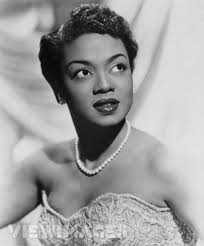
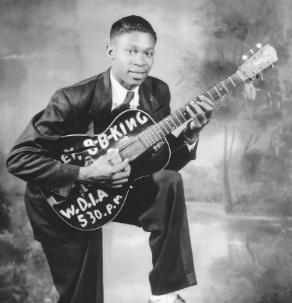
—wrote about why B.B. King is the King of Rock, not just blues.

—interviewed Dianna E. Anderson about purity culture and creating a better Christian sexual ethics. .

—wrote about Game of Thrones and the complimentary media portrayals of sexual violence against women and violence against men.

8 Minutes and why sex workers don’t need to be saved.

At Ravishly I wrote about how erasing male victims of domestic violence hurts both men and women.

At Splice Today I wrote about books for white guys.
 
Other Links

Chris Blattman on that faked gay marriage study.

Barry Ritholtz on how the minimum wage doesn’t kill jobs; it just reduces corporate profits.

Rex Huppke on how the Mad Max movie is a feminist trick.
 

bb-king-1

Comics to Change Your Gender

This first ran on Splice Today.
______
 

ranma-12-2311781

 
Comics in the United States have traditionally been associated with guys. The stereotype of superheroes as male adolescent power fantasies has more than a little truth to it; Neil Shyminsky’s informal survey found that 95% of X-Men readers were male. Surveys focusing on a wider array of comics have found a less lopsided breakdown, though one still tilted towards men.

But the link between comics and XY chromosomes isn’t some sort of preordained biological truth. In fact, in Japan, comics (or manga) have been read by just about all demographics — kids, adults, men, women, and everybody else. Manga’s deliberate appeal to a wide range of audiences is one reason it became so successful in the U.S. in the 90s: shojo manga titles, or comics for girls, catered to a niche in the American market that the mainstream superhero publishers were unable/unwilling/too clueless/too sexist to fill.

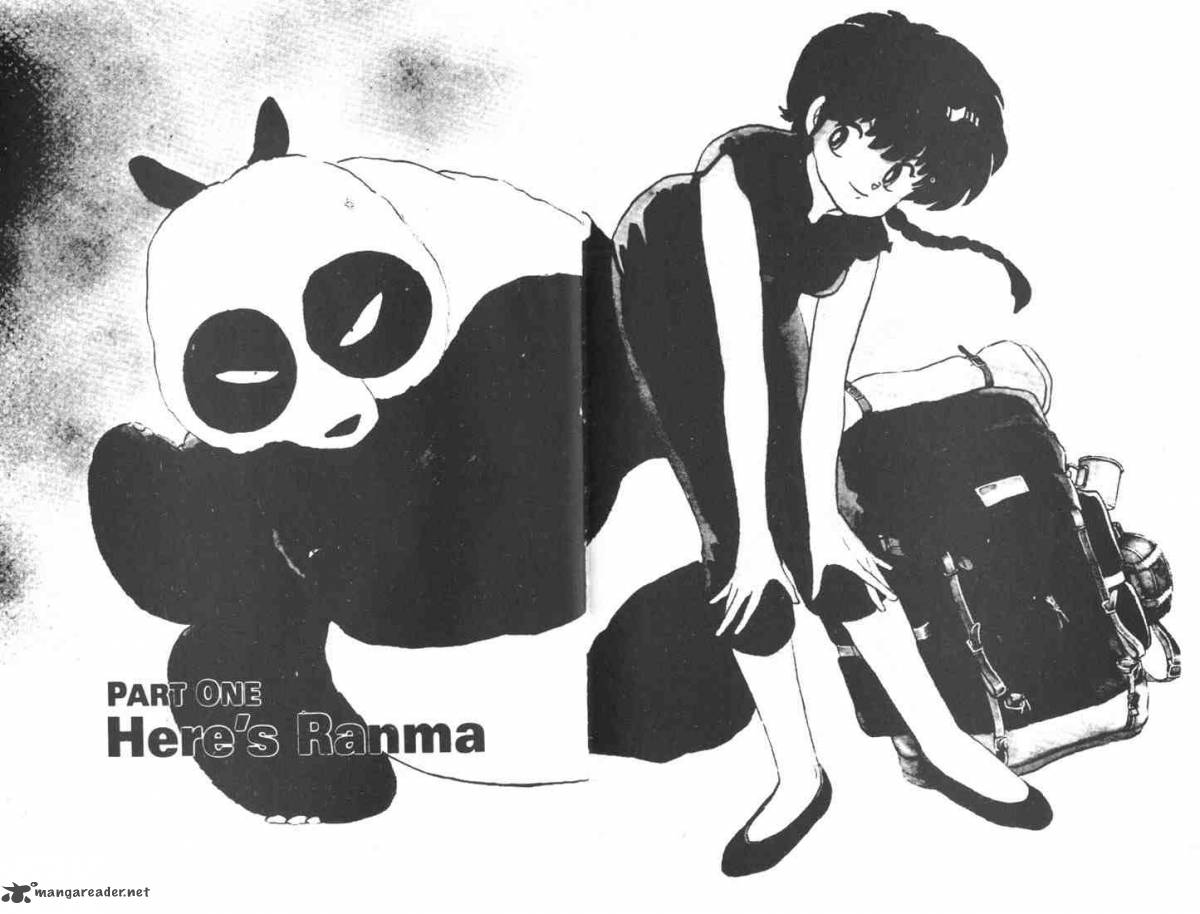
One of the first major manga American successes in the late 1980s/early 1990s was Rumiko Takahashi’s Ranma ½. Takahashi supposedly had determined to write a comic that would appeal more to girls than some of her earlier series, and that series couldn’t have been much more straightforward (if that’s the word) about its cross-gender  ambitions. “Ranma” refers to the hero of the book; “1/2” refers to the fact that, due to an accident at a cursed spring, that hero spends a significant portion of his time as a heroine. Whenever he’s splashed with cold water, he turns into a girl; when he’s drenched in hot water, he turns back into a guy.

If that sounds like a preposterous premise for a series — well, that’s the least of it. Viz has just started to rerelease Ranma 1/2 in budget two-for-one volumes, and re-reading the beginning of the series again, it’s hard to express, right from the start, how completely, joyfully absurd it is. By page four, we’ve got Ranma (as a girl) racing up the street pursued by a giant panda bear — a giant panda bear who turns out to be Ranma’s father, Genma Saotome. At the same time that Ranma fell into the cursed spring that turned him into a part-time girl, Genma fell into a spring that turned him into a part-time panda. And a very cute part-time panda at that.

This labile approach to gender and species is mirrored in the book’s genre commitments. The narrative is devoted to a series of crushes/romantic entanglements interspersed with violent martial arts battles interspersed with gender switch hijink and a heaping helping of sexual farce.

Though Ranma is the titular star, he shares the spotlight with Akane Tendo, a young girl who loves martial arts, hates boys, and is kind of/sort of Ranma’s arranged fiancé at the behest of their parents. The two have hardly met before they’re engaged in a martial arts battle (with Ranma as a girl), and they’re hardly done fighting before they’re running into each other naked in the bath, where the hot water has changed Ranma back into a guy. This is but the first of many nude sexual teases, all the more giggle-inducing it’s unclear who the fan service is for. Are we looking at female bodies for male gazes? Male bodies for female gazes? Both for either? Or are there other possibilities? In one scene, female Ranma and Akane run into each other in the bath again, both naked, prompting Akane to deck him (or her.) “But you were both girls, right? Doesn’t that make it okay?” Akane’s older sister Nabiki asks. For Nabiki, the gender (and genre) changes ease or erase sexual tension. For Akane, though, the male/female switch makes all relationships potentially charged with polymorphous verve.

Ranma ½ as a whole leans towards Akane’s interpretation. In making a book aimed at both boys and girls, Takahashi doesn’t opt for a middle-of-the-road, appeal-to-everybody kind of story. Rather, she revels in the way that she can giddily bash boys’ genres and perspectives against girls’ genres and perspectives and come up with ridiculous risqué adventurous loopiness for all. Thus, upperclassman Kuno’s mano-a-mano desire to best Ranma in single combat for the hand of Akane slips inevitably into courtship, as the antagonist confusedly falls in love with Ranma’s girl form, thrusting flowers at her (him) with the same hostility/obsession with which he first went after him (her) with a sword.

As the first male-male martial arts rivalry in the book, the Kuno-Ranma rivalry/romance sets a blueprint for other encounters. When the next antagonist, Ryoga, shows up, his ill-defined desire for revenge (because Ranma stole bread from him at some point?) seems like it could just as easily be some other ill-defined passion. The slipperiness of motive fits into other slipperinesses; Ryoga too fell in a cursed spring, and when exposed to cold water he turns into an adorable baby pig. That pig wins Akane’s heart, and the Ryoga/Ranma battle ends when Akane drags off the irresisitibly neotenous ungulate to cuddle in her bed. So Ranma goes to get him out of Akane’s room, and there’s an epic battle with Ryoga-pig boucing around the room in an explosion of racing motion-lines. The cuddly-animal martial arts battle ends with Akane discovering that her little comfort pet has been replaced in her bed by a very embarrassed Ranma, the funny animal comic for kids morphing into a sex comedy with the same sort of audible “Bloosh!” that always greets the panda’s ascent from water.

Those easy substitutions — of genre for genre, gender for gender, species for species — are enabled by, or work as a metaphor for, the comics form itself. Each panel in a comic is a different, fractured moment. We see a picture of Ranma kicking here and a picture of Ranma punching there and we determine those are two images of the same person simply because we’re told they’re the same person. So you can call this pig and that human the same character if you’d like; who’s to stop you? Identity in comics is a convention — and if self is simply a trope, then so is gender, and even species. Comics don’t have to be for boys only, because in comics even boys don’t have to be boys only. Ranma ½ is its own cursed pond; you fall in and come out every which body, whether a boy reading girls comics, girls reading boys comics, or a panda reading both.


Whose Gender is Artificial?

Radical feminist writer and blogger Meghan Murphy has written several posts over the last couple of weeks about how awful I am. I don’t really have much interest in responding in kind, but I did want to talk briefly about one argument she makes in her most recent piece, in which she accuses me of believing that gender is real, rather than a construct.
 

Berlatsky says feminist critique often involves a critique of “femininity,” which is true… Though he doesn’t quite get why. He writes:

Is femininity a tool to devalue women? Or is the devaluation of femininity a tool to devalue women? Wearing high heels doesn’t necessarily make you a dupe of the patriarchy. It could mean you’re a super-powerful rock star, and you want to show that femininity can be strong, too.

He seems to see femininity as innate, here. As though, to critique social constructs is to critique something essential about females. But “femininity” is an idea — a set of characteristics (invented and reinforced by a patriarchal society). It says “woman” means “delicate,” “passive,” “pleasant,” “accommodating,” “pretty,” “nurturing,” “irrational,” and “weak.” Feminists say women are not “naturally” any of these things. So no, femininity isn’t about “strength,” despite the fact that women are “strong.” And this is because femininity and femaleness are not connected in any material way.

What’s interesting to me here is that Murphy claims to be undermining femininity even as she reifies it.

My point, in the bit she quotes, is that there’s nothing innately weak, or innately debased, about wearing high heels. Wearing high heels is coded feminine, and is therefore seen as weak, or wrong, or silly, or stupid. But both the decision to code high heels as feminine, and the insistence that femininity is weak…those are cultural choices, not some sort of absolute truth. And pushing back against either of those assumptions — by arguing that high heels don’t have to be feminine, or arguing that high heels, as “feminine” espression, don’t have to be weak — is effectively challenging the innateness of femininity.

Murphy starts out by saying she thinks femininity is a construct too. But the construct is for her awfully real looking and solid. First, she insists that femininity has to mean nurturing, irrational, weak; it can’t mean anything else. And second, she seems oblivious to the possibility that particular gendered expressions are only feminine by convenience. She doesn’t mention any gendered expressions at all in her paragraph, presumably because everyone knows what the signs of femininity are. Murphy’s “constructed” femininity thus has both a stable meaning and a stable expression. It’s solid enough, in short, to serve as a way to police women, who are dupes and tools of the patriarchy if they express themselves in certain ways deemed artificial and constructed.

Murphy thinks she’s getting out of patriarchal thinking by de-naturalizing gender. Patriarchy insists, in her view, that gendered differences are true; by insisting that gendered differences are not innate, she paves the way for women’s liberation. But in fact, she simply replaces the binary male/female with the binary natural/artificial—and that binary is used to police and chastise the same people as ever. Note that it’s femininity here which is seen as artificial: a patriarchal trope if ever there was one. Feminine gender expression is seen as false, frivolous, weak, debased; male gender expression (in Murphy’s piece, and in general) is seen as unmarked, unremarked, and natural. The artificiality of femininity is supposed to free women from patriarchal expectations, but really it just repeats the same old patriarchal prejudices. Feminine gender expression isn’t real. That’s what patriarchy says, and Murphy cosigns it.

In contrast, maybe a better way to approach gender expression is to admit that we don’t really know what’s artificial and what’s natural, or even what those words mean in the context of human behavior. The most human thing about humans is they use all those artificial tools, like language; humans are most natural when they’re most artificial, and maybe vice versa. As long as there is a “wrong” “artificial” “weak” gender expression, it seems likely that it will be attributed to women, and used to denigrate them. So, why not just stop policing people’s gender expression altogether? As long as an individual’s gender expression isn’t hurting or impinging on others fairly directly (like, when masculinity is used as a lever to get people to shoot each other), people should be given leeway to express their gender as they wish without being told that they’re dupes or artificial or monsters or failing feminism. Because it doesn’t make much difference if you’re censuring people in the name of biological truth or the one true feminism—especially when it’s so often the very same people who end up being censured for performing their gender wrong.
 

bigexcluded

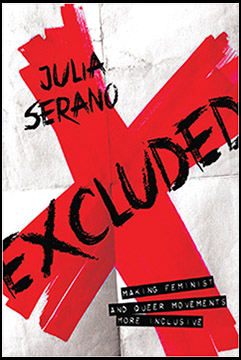
Julia Serano said most of this better than me in her book, which you should buy.

Utilitarian Review 5/16/15

Wonder Woman News

Natalia Mehlman Petrzela reviews a bunch of Wonder Woman books, including mine, at Public Books.

The Dartmouth student newspaper is confused about the subject of the talk I gave there.
 
On HU

Janell Hobson and the context of global racism.

I am bitter that Paul Krugman gets to write pop culture crit at the NYT.

Should I try to run a patreon to write my book?

Kim O’Connor writes an open letter to Art Spiegelman about the PEN awards and Charlie Hebdo.

James Lamb with a long post on why diverse superheroes are an impossibility.

Chris Gavaler on how the KKK fit the definition of superheroes.

Phillip Smith on Saga and trauma.

Donovan Grant on the possibility of black superheroes.
 
Utilitarians Everywhere

At the Guardian I wrote about Wonder Woman, A-Force, and how super sexy may be better than super violent.

At Urban Faith I reviewed Robert Marovich’s history of Chicago gospel.

Jordannah Elizabeth interviewed me to ask me what I think I’m doing, anyway.

At Raivshly I made a list of lesser known torch singers.

At the Reader a little review of Jason Eady, the best country singer out there now.
 
Other Links

Nicole Cliff with a list of books all white men own.

Dianne Anderson on the demand that Christian bloggers be nice.

Tressie McMillan Cottom on how if academic institutions want their scholars to be public intellectuals, they need to support them when the social media firestorm erupts.
 

images

Slow, Cheerful Doom

This first ran on Madeloud, way back when.
_______
 

l_c49e69bdeb2c4162ae504e6c99e0c6c7

 
Bunkur
Nullify
Three Stars

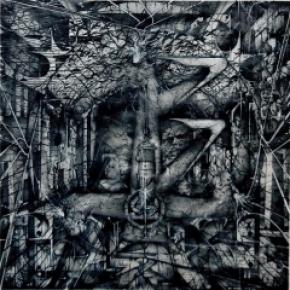
One single seventy-eight minute ultra-slow doom metal track from Holland. It starts off with some clanging which resolves itself into the sound of a train starting up. You’re not on the engine though, nor even on the caboose. Instead you’re sitting on the track in the middle of a barren plane, listlessly whacking at one of the rails with a two by four. Occasionally, a massive, drooling derelict leans towards you from the platform above and spits out phlegm-pocked gibbets of indecipherable apocalyptic imagery. The PA system crackles with more and more insistent feedback, inspiring you to hit that rail harder and harder, and the derelict to try more insistently to cough up a lung.

This all goes on for some time.

Still going.

Stilllllll gooooinnnnggggg.

Stillllllllll gooooiinnnnnnngggggg.

The loudness of the feedback changes some; the shrieking varies a bit; and every so often there’s a sound like a rusty gate being dragged across a chalkboard. But basically, nothing happens until past the 45 minute mark. At that point, the percussion shifts from single thwacks to a series of leaden drum rolls, the feedback resolves itself into a recognizable tolling, and suddenly we’ve got something that almost seems like a groove.

That lasts for about ten minutes before the momentum frays and cracks into more insistent feedback drifting above lumbering percussion and the same hideous screaming. And then it goes on like that for a surprisingly long time again, till eventually the screaming and the bashing drop out, and you’re left with just the feedback chords, which phase in and out, finally suggesting a train again laboring off into the distance.

Nullify is one of the more extreme examples of doom, and as such it encapsulates the genre’s paradox. In some ways, doom, is absolutely the quintessence of metal — metal stripped down to its bleak, black, featureless soul. It almost isn’t even music anymore; just a giant, repetitive pummeling; a noise stripped of all meaning except pure, blind force. It’s the overwhelming soundtrack that lets you, the tiny hobbit, know that the great Sauron is upon you, moments before he crushes you beneath his heel.

And that’s why, at the same time, it ceases to be metal at all. Doom really does function almost as a soundtrack; background shoegazy ambience for a pleasantly Tolkienesque apocalypse. Being pummeled very, very slowly is, as it turns out, kind of restful. Almost despite itself, the nihilistic Nullify, promotes a spirit of peace and goodwill, as extreme metal fans and non-metal fans join together for 78 minutes, of slow nodding to the same non-beat.
nullify