Patreon: Threat or Menace?

Okay; so last week I talked about maybe using a kickstarter to fund my book (on the topic of Can There Be a Black Superhero?”. The collective reaction was, meh.

So as an alternative, I thought that I might possibly shut down the blog for a few months as a way of getting time to work on the book.

Alternately! If people really don’t want the blog shut down, I could try to do a Patreon to fund the blog so I could work on it in good conscience, and then do the book as the hobby.

Any thoughts on that as an option? I guess I’m not confident that anyone would want to pledge to the blog, but it couldn’t hurt to find out. My one concern is that it would be crappy for me to take money for the blog when contributors aren’t paid…I don’t know. Thoughts?
 

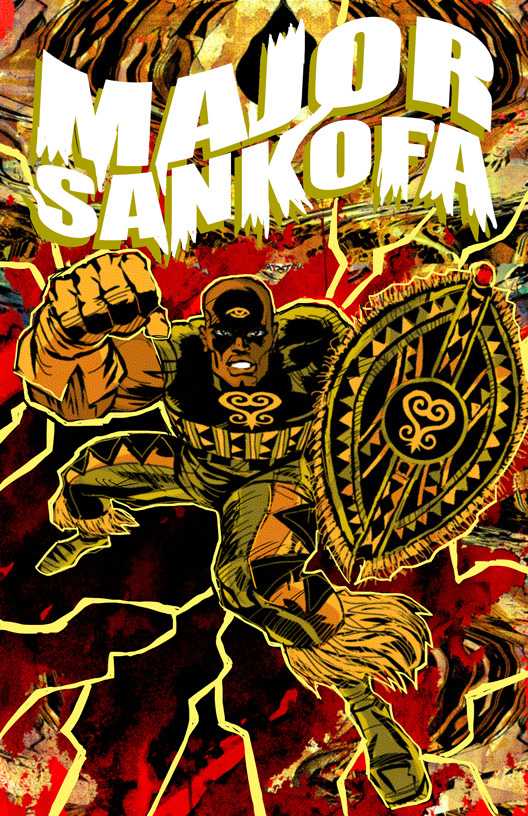
blackkirby1

John Jennings and Stacey Robinson, from the Black Kirby project.

Utilitarian Review 5/8/15

FullSizeRender

 
Wonder Woman News

I am giving a talk at Dartmouth Sat. morning on WW; maybe even as you read this.

Matthew Cheney gave me a really nice review on his blog.

Joan Hilty reviewed my book at the Wellesley Women’s Review of Books.

On HU

Featured Archive Post: James Romberger on Marie Severin.

Me on how the success of Louis Armstrong doesn’t disprove Jim Crow.

Should I do a kickstarter for my next book?

Ibrahim Ineke with a devotional reading of Frank Miller’s Dark Knight.

Aaron Kashtan on whether comics geekdom can become more inclusive.

Chris Gavaler on the Nepal earthquake and superhero Orientalism.

Roy T. Cook on the paradox of comics; reading pictures and drawing words.

Nix 66 on 8 minutes, sex workers, and getting truth from women’s bodies.
 
Utilitarians Everywhere

At the Guardian I wrote about how the Black Widow/Hulk romance sucked.

At the Atlantic I reviewed an excellent historical comic about the Civil War.

At Playboy:

—I talked about cell phone’s important but limited role in holding police accountable.

—I reviewed Maya Rodale’s Dangerous Books for Girls, about why people hate romance novels.

—I wrote about how Age of Ultron is a slave narrative and you should root for the robots.

—I wrote about how you can’t have feminist liberation without choice.

At Quartz I reviewed Sam Magg’s Fangirls Guide to the Galaxy.

At Splice Today I wrote about how My dog is dumber than my cat.
 
Other Links

Katherine Cross on choice feminism.

Tara Burns on how sex workers killed 8 minutes.

Juniper Fitzgerald on discrimination against sex workers in academia.

Paul Thomas on the disappointing black Captain America.

Paul Krugman, Pop Culture Critic

This first ran on Splice Today.
_______________________

large_krugman

 
“If you saw Suzanne Vega years ago, as I did, and wondered if she’s still as good in live performance, she isn’t — she’s better.” A Facebook post by some acquaintance, you think? A tweet? A tumblr? A small blog from some semi-anonymous writer who likes to share their concert-going experiences with their friends? None of the above. This here is Paul Krugman, Nobel Prize winning economist, and the venue for his clichéd, pedestrian fanboy gushing about Suzanne Vega is the website of the illustrious New York Times.

I’m trying my best here to restrain the snark, because I generally like both Krugman, and Vega, and because I don’t think there’s anything wrong with fanboy gushing. Krugman loves Suzanne Vega, and he wants to share his love with the world — nothing wrong with that. Even if he wants to go on to tell us about his meal afterwards (“The food in Joe’s Pub was very good….”) well, that’s fine. Lots of people use the Internet as a way to share the equivalent of personal letters with friends, and why shouldn’t they?

But (and here’s where the snark comes in) this is not a personal letter. This is a post to the website of the New York Times. Krugman labels the piece as “personal”, but he’s not actually sharing it with friends or family or Uncle Jimmy. He’s sharing it with you, and me, and the rest of the world — this is a piece of cultural criticism on one of the most prestigious websites in the United States. And what does this cultural criticism say? Its says, whoa, Suzanne Vega is awesome and she played some of my favorite songs and then I got food at Joe’s Pub and hey, here’s a picture of me and Suzanne Vega, eat your heart out, losers.

If there’s a trace of bitterness there…well, sure, I’m bitter. I’d like to write cultural criticism for the New York Times, too. But to do that, I have to pitch things, and have ideas, and maybe even employ paragraph transitions. But Krugman can just write a blathery, vacuous numbered list, and hey, presto, there he is on the New York Times, writing immortal lines like “Has there ever been another widely heard song, let alone a massive hit, written in blank verse?” Is that supposed to qualify as insight. As brain activity? Why are the editors letting him print this crap?

They’re letting him print this crap because he’s Paul Krugman, Nobel Prize winning economist, liberal gadfly, puncturer of Republicans, mocker of inflation hawks. Krugman is one of the NYT’s most visible voices and assets; he’s a hugely successful brand. People are not just interested in what he has to say about economics; they’re interested in him, personally, yay, verily, unto the Suzanne Vega worship and what he had for dinner. Krugman is a big enough name that he can print what he wants. If he felt like running his laundry list, I suspect the Times would let him.

This isn’t exactly a new phenomenon — writers from from Sylvia Plath on down have long been public figures and celebrities, and folks have always been interested in their lives as well as in their writing. The Internet though, with its demand for content and its ease of publishing, has made it possible for celebrity writer brands to let their fans in on the minutia of their lives in new and copious ways, whether on social media or from the platform of the Grey Lady.

These developments aren’t all bad. I like the informality of the Internet, and I enjoy the way that blogs can escape the tight confines of a particular pigeonhole. I don’t really want to read Jonathan Bernstein’s (http://www.bloombergview.com/contributors/jonathan-bernstein) baseball posts, but I like that he’s allowed to write them.

But, then, Bernstein actually works on his baseball posts; he has expertise and knowledge, and he takes time to put both in a coherent form. Krugman, on the other hand, seems to be flaunting his half-assedness. It’s like he wants everyone to know that he’s so big, and so important, that he can use the New York Times as his personal social media account.   In Internet journalism, it’s not what you write, but who you are — and he’s Paul Krugman. Look on his laundry list, aspiring cultural journalist, and despair.

Kickstarter: Threat or Menace?

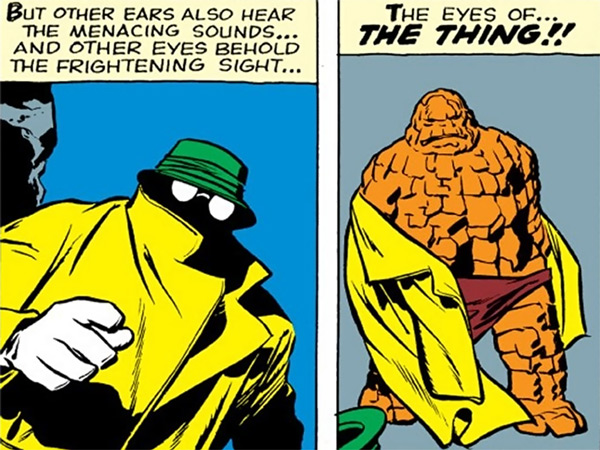
Thing_early_benchmark_h1

 
So, I think maybe I have an academic publisher for my next book. If the good lord is willing and the creek doesn’t rise, the book would focus on a topic much discussed on this blog — whether superheroes can meaningfully represent diversity, and especially blackness.

The problem is that academic presses don’t pay — and of course I’m not an academic, so I don’t get a salary to publish. If I’m writing a book, I’m not writing other things that people might actually pay me for.

So I’m considering doing a kickstarter or a patreon or some such to try to see if I can generate enough money to make writing the book worthwhile — or at least defray the extent to which it isn’t worthwhile. I’ve never done a crowdfunding thing before — and I don’t know that I’ve ever seen anyone try to do a crowdfunding effort to write an academic press book. Basically, I’m looking for feedback. Is this a horrible idea? Would anyone willingnly contribute to such a thing? What platform do you think would be best? How much should I ask for?

This is all fairly notional at the moment; everything may fall through. But I’m curious if people have thoughts/advice/mockery. Help?

Utilitarian Review 5/2/15

On HU

A trans man on what Sailor Moon means to him.

Remember Colombiana? It was terrible.

We’re going to do a roundtable on Joss Whedon; more details to come!

P. Marie, Zoe Samudzi, and Julia Serano on feminist exclusion of black and trans women.

Jaz Jacobi on why the silly wonderful Weisinger Superman is the greatest Superman of all.

Eric Berlatsky on how continuity precludes real diversity in superhero narratives.

Em Liu on Bruce Lee and the desexualization of Asian men in Hollywood.

Winter Soldier is a vacuous piece of crap that makes me hate my country.
 
Utilitarians Everywhere

At Playboy I wrote about:

(not) being an ally.

Black widow, slut shaming, and why one strong female character isn’t enough.

I talked about how racism is partly a question of etiquette on the Matt Townsend show.

At Pacific Standard I wrote about how public policy has made Indiana’s HIV crisis worse.

At Ravishly I wrote about:

—how the genderless utopia isn’t really a utopia at all.

Mariah Carey’s new video and gender without bodies.

At Splice Today I wrote about constantly marketing yourself as a freelancer.

And the Salem’s Lot study guide I worked on for Shmoop is online.
 
Other Links

Pauline Kal-El on why superhero comics in general, and Catwoman #23 in particular, are terrible.

Emma Kidwell on video games looking to attract a more diverse audience.

DeRay Mckesson reveals Wolf Blitzer to be a racist tool.

Gerry Conway on how DC works to screw creators out of royalties.
 

Salems+Lot

The Louis Armstrong Fallacy

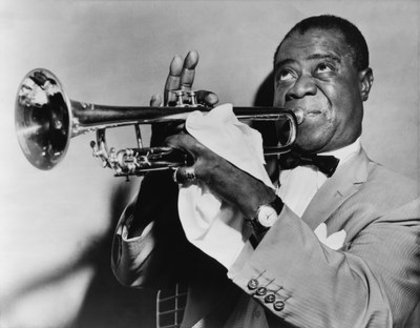
large_rsz_louis_armstrong_restored

 
This piece first appeared on Splice Today.
________

The election of Barack Obama means that there is no more racism in the United States. The fact that some women have been elected to the Senate means that sexism is no longer a major factor in American life. Beyoncé’ is a superstar, so that means that women of color are celebrated in our culture, not denigrated.

Those arguments may sound fairly ridiculous, but if you spend any time taking about discrimination online, you’re bound to stumble across them or their equivalents. I think of it as the Louis Armstrong fallacy: “Louis Armstrong was successful, therefore Jim Crow doesn’t exist.”

Louis Armstrong is clarifying both because he’s universally revered and because he lived, and succeeded, during a time that was, by any measure, extremely racist. Armstrong started his career during the height of what historians have called the “nadir of American race relations.” In 1901, the year he was born in New Orleans, 105 people were lynched, and the last post-Reconstruction African-American congressman gave up his seat; there would not be another for 28 years. In 1912, when Armstrong dropped out of the Fisk School for boys and joined a quartet singing in the streets, Woodrow Wilson, a racist white Southerner, was elected President — the next year he resegregated the Federal government. In 1917, when Armstrong was sixteen and playing in New Orleans’ brass bands, whites rioted in East St. Louis, IL, killing between 40 and 220 African-Americans. In 1926, when Armstrong’s recording “Heebie Jeebies” became a sensation, the Supreme Court in Wyatt v. Adair ruled that racial discrimination in housing was Constitutional.

From the executive branch to the judicial branch, from south to north, America in the early decades of the 20th century was not just racist, but actively, in many ways, becoming more racist than it had been since at least the end of the Civil War. And yet, nonetheless, Louis Armstrong went from success to success. Even in the Depression, when jazz greats like Sidney Bechet had to hang up their horns, Armstrong flourished, celebrated and beloved.

So how is that possible? How does a society of lynching and segregation manage to turn around and give one black man riches and fame? The answer is in part that no one gave Armstrong anything. No system of oppression is ever total; music was one of the relatively few avenues in which some few black Americans were able, through sheer talent and grinding work, to force their racist society to acknowledge their genius, if not their humanity. Armstrong was arguably the most talented American musician ever, in any genre, and still, he was quite aware that the accolades he received were grudging. “I don’t socialize with the top dogs of society after a dance or concert,” Ebony reported him as saying in 1964. “These same society people may go around the corner and lynch a Negro.” Though he was sometimes accused of being an Uncle Tom during the Civil Rights era because of his generally jovial demeanor and stage presence, Armstrong made no excuses for white America, and could be a harsh critic. During the 1957 struggle to integrate Little Rock Central High in Arkansas, Armstrong called Eisenhower “two-faced” and stated, ” “It’s getting almost so bad a colored man hasn’t got any country.”

To use Armstrong to exonerate America of racism is obscene in part because Armstrong’s success was accomplished in the teeth of racism — the grandson of slaves, he grew up poor, and was often harassed and arrested by the police. Through sheer talent, he overcame America’s best efforts to thwart him. But that doesn’t mean that racism didn’t exist, anymore than Jane Austen’s novels mean that women had the same access to education as men did in England in the 1800s. The fact that some people, through luck, skill, and genius, manage to thrive despite oppression is a testament to the human spirit of those whose humanity is often denied. But the oppressors shouldn’t get the credit when, despite their best efforts, in some small way, the oppression fails.

Hail America, Captain Hydra

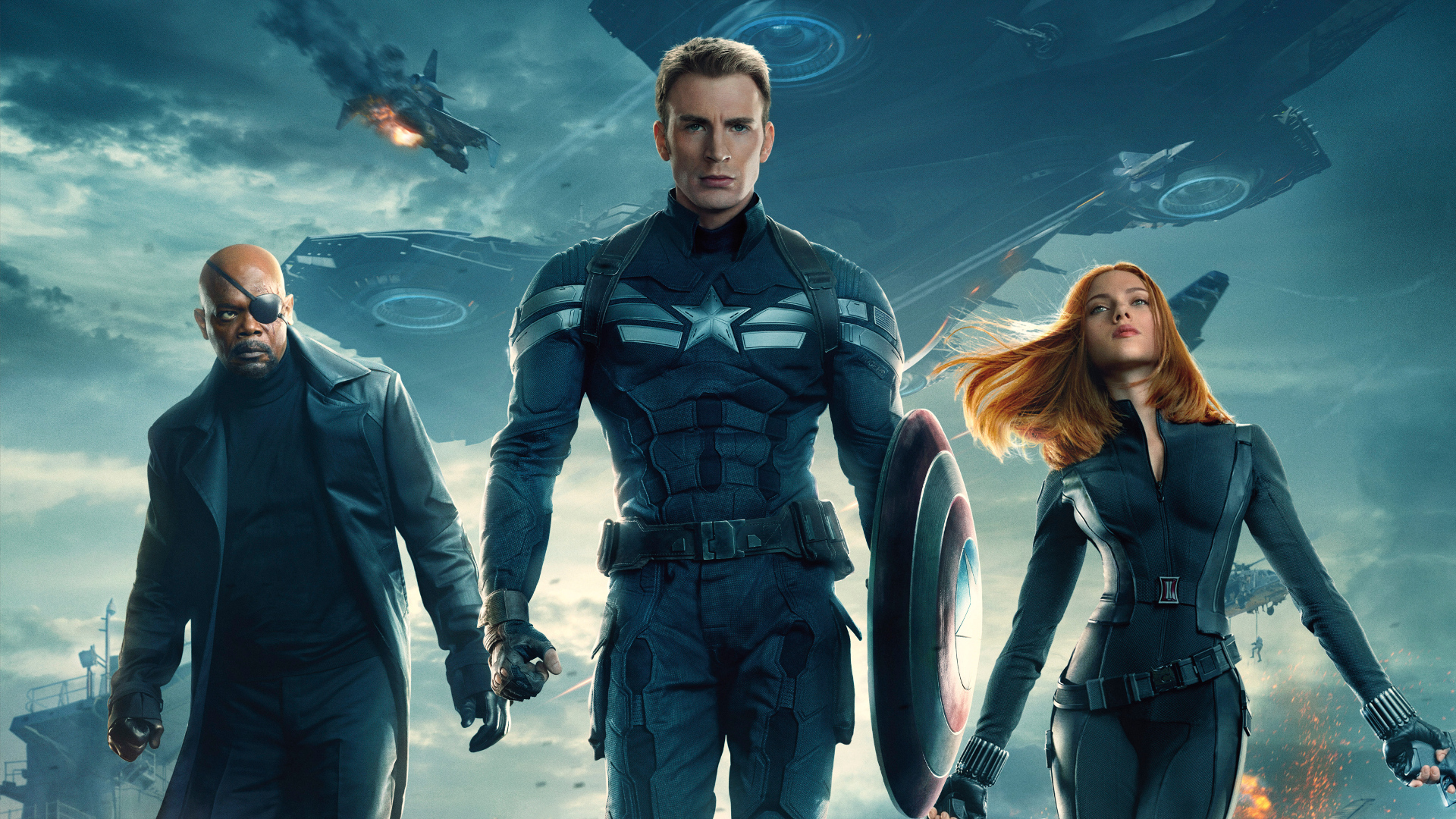
Captain America: Winter Soldier, like Dark Knight Rises before it, signals its intelligence through ambivalent allegory. In the Avengers, the supersecret SHIELD spy network is unambiguously good; the government defends our borders against a (literal) alien menace, as the spies man the ramparts. In Winter Solider, though, the spooks are the foe, as well as the heroes; America (and its security force) is its own worst enemy. Hydra lurks within SHIELD itself, working to promote terrorism in order to make the world ready and eager for totalitarian dictatorship. The terrorist other and the fascist state collude together to oppress and murder us all. End of moral.

It’s not a bad moral, as these things go. It is in fact the case that imperial excess and terrorist extremism thrive on each other; George W. and Osama, loving frenemies, birthed the big ball of hate and bile that consumed thousands of people here and hundreds of thousands overseas. Were we not gallumphing around the Middle East casually starving children and dropping the occasional bomb, who would climb into a plane and kill themselves in a futile orgy of innocent death? If terrorist whackos didn’t create a futile orgy of innocent death, what excuse would we have for picking a random, distant country and turning it into a nightmare wasteland? The pendulum of revenge needs psychopaths pushing on both sides, if it’s going to continue to reap.

Which is sort of what Winter Soldier is about, with its Hydra vs. SHIELD shenanigans…but then, not really. Because Hydra and SHIELD don’t furtively collaborate in bloodshed. Instead, Hydra is both halves of the evil dialectic; it’s both Osama, the terrorist, and George W., the totalitarian twit. Hydra creates chaos to impose imperial order. SHIELD, on the other hand, in the person of the noble Nick Fury (and of course, of Captain America), remains transcendently pure, battling anarchy and fascism in the name of an unexamined, supposedly non-ideological middle. Fury and Cap stand for decency — said decency underwritten by high-tech weaponry, martial bluster, and megaexplosions, of course. At the end Black Widow sneers at the appointed democratic representatives of the people, giving them the old, “You don’t want to know the truth” spiel, utterly without irony. We need kick ass heroes to do the dirty work of protecting us from the evil bastards who tell us they will protect us from the terrorists. America is the land of the violent, uncompromising, brutal middle.

Chris Evans as Captain America seems, then, like the perfect vacuity to paper over this empty aperture. Wooden, certain, noble, sexless, a blank, blond, slightly startled bolus of violence, pointed by the plot in more or less arbitrary directions, scattering bodies and explosions about him as he rolls like a muscle-bound marble about the screen. He is goodness sans ideology, justice sans brains, righteousness sans character. The world in its complexity is shoved into Hydra, which whispers “Hail nuance!” before it is battered into submission by the purity of himbo. America marches on, unsullied by thought, on the straight and narrow path to what we call justice for all.
 

nick-fury-captain-america-black-widow-winter-soldier-2014-movie-hd-1920x1080