To God With Hell

This first ran on Splice Today.
______

To-Hell-With-God

 
Some years back I got the chance to interview Daniel Smith of the Danielson Famile. The band is known about equally for its extremely idiosyncratic songwriting and its Christianity. When I talked to Smith, he explicitly linked the two. To create, Smith said, was to imitate God. God was infinitely creative and original; to honor him, therefore, you should be creative and original. When I asked him what he thought of most so-called contemporary Christian music, he looked pained.

Like Danielsson Famile, Stryper is a Christian band that’s positioned itself (more or less) in the mainstream rock world. They’ve essentially spent their career demonstrating that a Christian band can be as boring as a secular one, and vice versa. In that sense, their new album, The Covering, seems to be an inevitable culmination. Like the idiotic title says, this is (mostly) covers of FM staples.

Nobody says that covers have to be unoriginal. The Danielson Famile’s version of the Shagg’s “Who Are Parents?”, for example, is both reverently faithful and mind-blowing. Smith and his cohorts reproduce, note-for-note, the insane, dysfunctional, metrically-crippled Shagg original. It’s like watching someone drop a glass bottle on the floor and then perfectly reconstruct it from a million scattered bits so that you can’t even see the cracks. It’s miraculous in a way I think God would appreciate.

The Covering is not miraculous. And though I don’t want to presume about God’s aesthetic impulses, it’s hard to imagine how any being, finite or otherwise, could find much to like in this rote slog. It comes across as a kind of anti-creativity; everything is taken and borified by, say, 70%. The harmonies and cheesy proggy changes of Kansas’ “Carry on My Wayward Son,” are dumbed down with clunky drumming and pro-forma hard rock trundling. On Van Halen’s “On Fire”, Michael Sweet proves himself utterly unable to channel the bloated Vegas charisma of David Lee Roth, while some hapless guitarist demonstrates to a world that knew it already that he’s no Eddie Van Halen. And then there’s Zeppelin’s “Immigrant Song.” Why, Lord, why? Best, perhaps, not to speak of it.

Stryper found someone else’s rut to wallow in; Deicide, at least, built their own. One of the classic eighties death-metal bands, Deicide has experienced numerous personnel changes, but little alteration to its winning formula — fast, hard, brutal death metal with blasphemous lyrics.

In fact, where the recently released To Hell With God gets into trouble isn’t where it’s true to form, but where it innovates. Early Deicide albums sounded like they were recorded somewhere south of your basement; the latest effort is more polished and crisper. And where, say, “Blaspherion” managed to be both propulsive and evilly slogging, the title track on the latest effort drifts perilously close to actually having a rawk-anthem melody. You could see people raising their lighters and shouting “To hell with God! You don’t want to be forgiven!” like they were at a High on Fire concert or something.

Not that Deicide’s totally lost their way. They certainly haven’t embraced the post-grunge emoting behemoth metal zeitgeist the way Metallica has, for example. The riffs still come at you like you’ve stuck your face in a ceiling fan, just the way they should. It’s only when you listen closer that there’s a little disappointment; the rhythmic, stuttering maelstrom of old tracks like “In Hell I Burn” are gone. “Into the Darkness” is fierce, but it’s a more predictable fierceness, like Pantera. And I like Pantera fine. But they’re not classic Deicide.

So would it be better if Deicide were doing now exactly what they were doing twenty years ago? Obviously that seems kind of pointless. Maybe frontman Glenn Benton should just have retired. He could have called it quits a couple of years ago when he had the crucifix brand in his forehead surgically removed, for example. But then there’s always the great beast Mammon to consider. The irony is that by sticking around past their sell-by date, Deicide may actually have finally attained the blasphemy they claimed to be going for all along. To Hell With God doesn’t spit on the deity the way Stryper does, but it does have about it the whiff of defilement. Those old Deicide albums though; I have to think they’re on Jehovah’s iPod.

Utilitarian Review 4/4/15

Wonder Woman News

Liz Baudler reviewed my book at New City.

On HU

Featured Archive Post: Michael Arthur on Magical girl anime.

Linke on Valerie D’Orazio and Goodbye to Comics.

Me on Insidious and why you need sin in your horror films.

Chris Gavaler on superheroines old and new.

Me on Orphan Black, Pam Rosenthal’s The Edge of Impropriety and how the closet shapes genre fiction.

Matt Healey on Green Fairy and searching for great furry genre fiction.

Patrick Carland on Steven Universe and narrative arcs in animated series.

Shonté Daniels on the mediocrity of Mario Party 10.
 
Utilitarians Everywhere

At the New Republic I wrote about how indie music defines itself through whiteness.

At the Atlantic I wrote about Trevor Noah and the petty etiquette of discrimination.

At Urbanfaith.com I wrote about Anthony Heilbut’s wonderful history of Gospel The Gospel Sound, still great some 40+ years later.

At Ravishly I wrote about:

adolescent brain science and its limited applicability to policy

Lena Dunham and how anti-Semitism has been abolished in America.

—the terrible new A&E show about saving sex workers.

online abuse and privilege

Azealia Banks’ whiteface video and appropriation

CBR’s list of the greatest female comics creators and the surprising ways its different than their overall list of greatest comics creators.

At Splice Today I wrote about:

Scott Walker, better a liar than a warmonger

—Lena Dunham, Stephin Merritt and weeping on the corpse of meritocracy.
 
Other Links

Katy Lee on Japan and blackface.

Robert Jones Jr. on DC’s Cyborg and racism.

Ijeoma Oluo on how your fave is problematic.

The Sun Times on efforts to move forward with torture reparations in Chicago.


azealia-banks-ice-princess-1-630x354

Give Us Your Roundtable Ideas

01stein600.1

So, I was thinking about trying to organize another roundtable, though I’m not sure what the topic would be. I’d love to hear people’s suggestions, or what people would like to write about.

Here are some things I’ve been toying with:

— Afrofuturism

—Birth of a Nation (it’s the 100th anniversary)

—Carla Speed McNeils’ Finder

— Death Note

—Saga

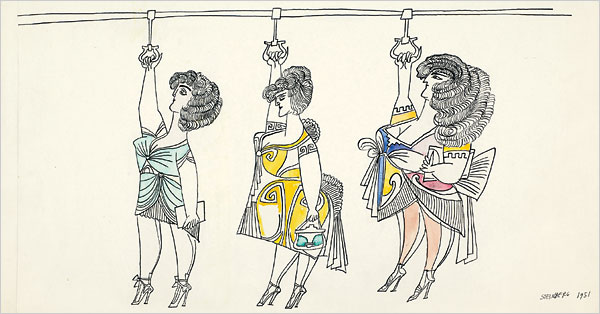
—Saul Steinberg

—Judith Ivory’s “Black Silk”

I’ve gotten a couple of other suggetions…someone wanted to do J.M DeMatteis a while back, someone wanted to do Garfield, someone suggested a meta-HU roundtable, where people revisited or responded to old posts.

So…let me know which or when or what of those might appeal to you, or if you have other ideas.

The Romance of the Closet

51AIyxdOPlL._SY344_BO1,204,203,200_At the end of Pam Rosenthal’s 2008 regency romance novel The Edge of Impropriety, we learn offhand that Lady Isobel Wyatt and Miss Amory, two wealthy young women who had been seeking husbands during the season, have “determined to live together as companions and had set themselves up in a Welsh cottage.” The information is about minor characters, and is dropped casually — too casually, in fact. Rosenthal is telling us that Wyatt and Amory are lesbians, and in doing so, she rewrites, or reinterprets, every scene in which the characters appeared. When Miss Amory, the American heiress, watched eligible bachelor Anthony courting Wyatt, she was jealous — but the jealousy, we now realize, was because she was in love with Wyatt, not with Anthony. When we overhear Wyatt telling Amory that she has turned down Anthony’s proposal and is truly happy for the first time in her life, that happiness, on rereading, is not just because of a loveless marriage avoided — it’s because of a loving companionship embraced. Wyatt and Amory are treated throughout the novel as a kind of side plot; they are edges of Anthony’s love triangle. But then, at the end, we find that triangle was concealing another, and that the two women have their own hidden story, if you know how to look for it.

If Wyatt and Amory’s love is in a closet, though, it’s a closet within a closet. Because their Welsh cottage is not just their Welsh cottage, but the Welsh cottage of everyone in the novel. In The Edge of Impropriety, everyone, it seems, has a secret love, and, for that matter, a secret life. Lady Gorham, or Marina, the fabulous author and socialite, was once a poor Irish kept woman, forced to dance on tabletops for her upkeep. Helen, the perfect governess, is in love with the rakish, inaccessible Anthony. Jaspar, Anthony’s uncle and guardian, is actually Anthony’s father — and on top of that he’s concealing an affair with Marina. “Marina’s besotted lover and Sydney’s quaint, straitlaced guardian might inhabit the same body,” Jaspar muses, but they had very little to say to each other.” Everyone has a double life; everyone is playing his or herself for others, hiding a desire that dare not speak its name.

The key that opens the closets of that Welsh cottage, then, is also a key to the novel as a whole — which is to say, the novel is, in many ways, a closet. Wyatt and Amory are minor characters, perhaps, but Rosenthal’s emphasis on secret loves and secret lives makes them thematically central. To drive the point home, Rosenthal includes a scene lifted from (and directly referencing) the famous Catherine de Bourgh encounter in Pride and Prejudice, in which Elizabeth realizes that Darcy loves her because his aunt tries to separate them. Romance is interpreted by hints and signs — and not just by hints and signs, but by hints and signs between two women, whether Elizabeth and Catherine, or Marina and Jaspar’s ward Sydney, or the (generally female) reader and that some female protagonist. Romance is a book you read for hidden, queer love — which means those two women, and their Welsh cottage, aren’t a marginal storyline, but the story itself.

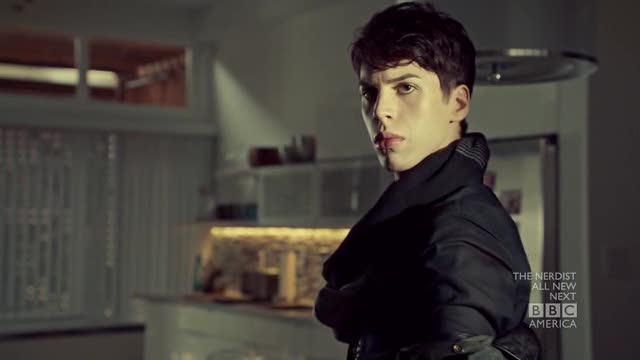
This isn’t just true for romance, either. Take the hip sci-fi Canadian televison thriller Orphan Black, which I’ve just gleefully begun to binge watch. The series focuses on Sarah Manning (Tatiana Maslany), a struggling young woman who discovers that she’s one of a number of clones. She ends up impersonating one of her “sisters”, a police officer named Beth .

Sarah’s brother, and closest friend is Felix (Jordan Gavaris). Felix is flamboyantly gay — and the fact that he is so far out of the closet tends to force you to read Sarah as in. Sarah, after all, is, like the characters in The Edge of Impropriety, playing herself. She takes on Beth’s middle-class, straight life — wearing her square clothes, living in her square house, and (with a notable lack of enthusiasm, at least at first) having sex with her square boyfriend. In one sequence, Felix is asked over to a suburban potluck as a bartender in order to distract from the fact that clone Allison has her husband tied up in the basement for questioning because she thinks he’s a spy. Felix, out of the closet, is a screen for Allison’s kinky torture role-play — a doubled roleplay, since for part of the torture, Sarah is pretending to be Allison.

As the show goes on, Sarah’s square boyfriend turns out not to be what he appears either, which only perhaps underlines the point. Spy narratives are built on secrets and double lives, on passing for what you aren’t while keeping some sexy secret gun behind that secret closet door. It’s no surprise that one of Sarah’s clones turns out to be bisexual, since Sarah herself spends all her time passing. And for that matter, all those sci-fi clone and robot fictions, are about queer reproduction — a world in which heterosexual sex is displaced by alternate couplings.
 

obs01e0308

 
The Edge of Impropriety and Orphan Black both reflect a world in which LGBT people are more accepted, and more visible, than in the past. But that has not banished the LGBT experience as a fictional metaphor or trope. Rather, it seems to allow us to see just how pervasive, and important LGBT stories have been to the construction of narrative and genre. Critics of diversity sometimes argue that advocates are pushing gay content — but these stories suggest that in romance, in sci-fi, in espionage, gay content was always already there to begin with. It’s just that now, and hopefuly increasingly, it can come out of the closet.

Insidious Without Sin

This first appeared on Splice Today.
________
 

large_insidious

 
Great horror films connect supernatural terrors to real-life terrors. Whether it’s Rosemary’s Baby and pregnancy, Fire Walk With Me and incest/abuse, or Shivers and sex, the point is not only blood and death, but also guilt and retribution. She has chosen a shallow, careerist husband, and so shall bear a demon baby; he lusts after his daughter, and so shall be possessed; he experiences sexual desire and so shall descend into a Dionysian apocalypse. The movies have an inevitable logic; the repressed returns, the crime is found out, the doom descends. Horror is not about the suffering of innocents; it’s about sinners being devoured.

The main problem with Insidious is that it has no sinners. The protagonists are an adorable nuclear family out of an old-school TV sitcom; loving, slightly artsy mom; loving, overworked dad, three kids (two boys, one infant daughter.) They’ve just attained the American dream and bought a gigantic, rambling house. When one son, (Dalton, played by Ty Simpkins) falls into an inexplicable coma, the family moves effortlessly from sitcom to movie-of-the-week, all of them suffering in undeserved unhappiness with the same bland, predictable sentimentality with which they at first frolicked in deserved joy.

Under some circumstances, a failure like this might suggest a lack of familiarity with horror tropes. But that’s not the case here. Director James Wan (Saw) obviously knows his canon; the movie’s screechy soundtrack harks back to Psycho and everything since and the various startles and shocks are all done with exquisite freak-out timing. For that matter, the dad, Josh (Patrick Wilson) looks so much like Craig T. Nelson, who played the patriarch in Poltergeist, it seems Wan made the casting choice on purpose.

Moreover, Wan does seem to have fitfully noticed that his screen family is too pristine. The script makes some half-hearted gestures at developing corruption within as well as without. The mother, Renai (Rose Byrne) mutters something at one point about how she’s worried that life in her new house won’t be any better than life in the old, and Josh promises her it will. Unfortunately, we never actually learn what was bothering them beforehand (infidelity? termite infestation? peeling paint?), so it’s hard to get too worked up about it.

There are a couple of slightly more effective attempts to sully our heroes. After Dalton has lapsed into a coma, Josh stays late at work at his teaching job night after night. Finally, Renai accuses him of  running away from the problem, suggesting that this is what he always does. The film has up to this point (about halfway through) mostly focused on Renai, but from here on it becomes more and more a story about Josh’s neuroses about being an inadequate patriarch. These neuroses are somewhat undermined by the fact that, if the size of his house is any indication, he appears to make more money than any other teacher in the country. And, besides that, Dad worrying about being a protector is more than a little stale at this point. But better a hoary, poorly conceived anxiety than no anxiety at all, I suppose.

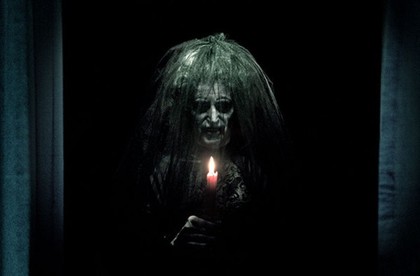
But, no sooner is Josh’s inadequacy introduced than it’s brushed away at tedious length. Various explicators reveal that Dalton is an astral projector; his spirit has wandered out of his body, and various evil critters are attempting to take over. Josh used to be able to project his spirit too—but as a child he was haunted by a creepy old woman who threatened to take him over. He outfoxed her with the help of medium Elise (Barbara Hershey), who got him to forget he could astral project. So the reason he responds to stress by running away from it isn’t because he’s a douchebag; it’s because he was traumatized as a child by evil outside forces. In short, the movie uses its horror tropes to let its protagonist off of, rather than to hang his decaying flesh upon, the hook.

All of which suggests that the director lacks the courage of his convictions. In some sense, that’s probably good, because his convictions appear to be not so much insidious as invidious. When Josh wanders off into the astral plane to save Dalton, the evil spirits he encounters are all smiling theatrical cabaret weirdos; carnivalesque deviants. And the shocking final dénouement involves Josh finally being possessed by that evil old woman. The happy nuclear family is undermined by the father’s unhealthy closeted secret—the patriarch is a woman in a man’s body. Bad things follow.

If Insidious were willing to really embrace the connection between insidious possession and the insidious allure of gender deviance (as, I’ve argued, The Thing does) it would be a much better film. It would also be potentially much more offensive. As it is, the movie does little with the gender switch and never suggests that Josh has any actual predilections of his own. He’s just the boring straight victim, fighting for his boring straight family against the somewhat-but-not-insistently queer powers of darkness. Maybe he wins, maybe he loses. With so little at stake, it’s hard to care which.

Thanks to Bert Stabler for his help with this essay.

Utilitarian Review 3/28/15

stockartseahorse_4514

 
Wonder Woman News

Me on how only bad art is sacred.

Peter Sattler on how comics can’t escape formal definitions.

James Romberger on Antonioni, Bunuel, and love in the dirt.

Kim O’Connor on Valerie D’Orazio, Chris Sims, and progress, or lack thereof.

Chris Gavaler on Cinderella and how superheroes are easy to remember.

Tara Burns interviewed me about the coming matriarchal utopia at Vice.

A Spanish translation of the Vice interview is here.

Frederik Sisa reviewed the book (negatively) over at Frontpage.
 
On HU

Sarah Shoker reviews Cinderella and talks about why kindness isn’t a fantasy.

Jared Hill on our fascination with AI.
 
Utilitarians Everyhwere

For Ravishly I wrote:

—on Edward, Pretty Woman, and power fantasies.

—a list of men covering songs by women.

—abput Project Vox and the need for women philosophers.

The Solaris study guide I worked on for Shmoop is online.

At Splice I wrote about

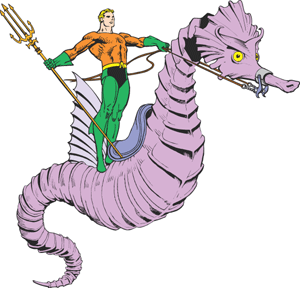
Aquaman, who is not a badass.

—book tours and writer’s egos.
 
Other Links

Rahm Emanuel is awful.

Depressing piece on problems with the Hollaback anti-harassment organization.

Matt Binder on GG and comics.

Linke on Valerie D’Orazio and Goodbye To Comics

A commenter named Linke discussed the background for the recent revelations about Chris Sims harassing Valerie D’Orazio. I thought I’d reproduce the comment here.

I find it disturbing that even in this moment of reckoning, the full backstory of why Sims targeted D’Orazio has gone unmentioned.

In 2006 D’Orazio caused a stir with a 12 part rant titled Goodbye to Comics: a blistering critique of misogyny by an industry insider. It includes a takedown of DC’s Identity Crisis, which many consider peak Women In Refrigerators, which is significant as she was the assistant editor on the book.

For the unfamiliar, Identity Crisis centers on the murder of Sue Dibny, wife of Elognated Man. The bronze age couple were known for being depicted as consistently loving, supportive and lighthearted. In issue 1 Sue Dibny was graphically burned alive. In issue 2 she was explicitly, brutally raped. Her murderer turned out to be the Atom’s ex-wife, literally a crazy bitch. The whole series was full of overwrought pain and suffering and a weird takes on female characters. It was inspired by Watchmen and the Killing Joke (even Moore admits Joke had flaws) but either missed the deconstruction of Moore’s work or discarded it for pure shock value.

Many hated it when it came out, but in 2004 it was easier for fans to handwave or rationalize the content. Some praise is disturbing in hindsight (including Joss Whedon who later hired Metzger to write the Buffy comic with equally creepy results).

Goodbye To Comics is pure rant, a digressive mix of insider dish, critique, personal anecdote (some a bit TMI) and now dusty topical humor. Some who didn’t like her blunt denunciation of misogyny seemed twice provoked by the raw, awkward presentation.

At it’s best, however, it’s very good:
http://occasionalsuperheroine.blogspot.com/2006/11/goodbye-to-comics-7-we-need-rape.html

Such a dramatic and at times scattered call out was bound to attract some scorn and eye-rolling. What’s striking is how aggressive and resentful some became and how little, if any, was initiated by D’Orazio.* Like Anita Sarkeesian, just being a woman making vehement statements was an affront those who disagreed with her.

It was in this context Chris Sims began picking on D’Orazio. As others speculate, it’s likely he was demonizing her to build up his own rep, but this involved knowingly embracing unhinged resentment of “too much” feminist critique and pushing it further.

I knew little about this, but when her Punisher special came out, the irrational hatred of her intense enough that it was visible casual fans.

Even then, it didn’t register just how fucked up it was and I suspect people might not have believed, pre-gamergate.

This is what bothers me about McDonald’s take – what she calls feuds was mostly people snarking at D’Orazio until she responded (or didn’t). It’s telling McDonald mentions Ragnell, whose grudge against D’Orazio is oddly into political correctness myths for a progressive (much like McDonald herself).

Thing is nothing D’Orazio wrote – indeed no comics criticism – merits hostility even Marvel took the death threats seriously. After recent death threats on Sarkeesian, Zoe Quinn and others, it’s clear D’Orazio was an unwitting pioneer.

What’s ironic that that Sims has more recently said Identity Crisis is the comic that ruined comics – and his critique sounds a hell of a lot like D’Orazio. To echo the words of the person you tormented yet not apologize until called out is a bit more troubling than I think he realizes.

As McDonald reveals, Chris Sims only apologized after he was called out by gamergate – which he was because he was a precursor to gamergate. He didn’t start the rage against D’Orazio, but he fed on it for cynical reasons. In this context, Sims “are you going to cry, little girl” is far more disturbing. I do think change and genuine apologies are possible, but so far he and his cohort haven’t quite acknowledged how much he’s entwined in the forces which led up to this current wave of zealot trolls. Nor how the gender imbalance in mainstream comics has improved very little since then.


71PithyctZL