Peter Sattler on How Comics Can’t Escape Formal Definitions

Roy T. Cook wrote a recent post trying to define comics, those tricksy critters. There’s a fun comments thread; I thought I’d highlight one comment from Peter Sattler.

Hi Roy,

I appreciate your interest in defining comics in part by “how” we read and interact with these texts. I’ve thrown around my own definition of this type in various conference talks: “COMICS ARE WHAT HAPPENS WHEN TEXTUAL READING HABITS ARE ACTIVATED IN A VISUAL (IMAGE-CENTERED) FIELD.”

[Please feel free, everyone, to let this go viral.]

But I also tend to think that all our definitions — yours, mine, institutional, genre- or reader-based, Wittgensteinian, deflationary — are fundamentally FORMAL in the the end.

Your definition and mine, for example, are still trying to capture something about sequence — the juxtaposition of images to be read in a certain order. People who try to formulate definitions based on what either general users of the term or experts in the field think, they still always seem to come down to aspects of the medium that can be described formally. Wittgensteinian “family resemblances” — at least when it comes to this term, comics — seem to resemble each other in formal features. Even people who want to say that comics didn’t exist until there was an institutional matrix for the medium ultimately have to develop new terms to talk about what links post-institutional comics from pre-institutional proto-comics, and those inter- and supra-institutional forms of analysis tend to be formal.

Of course, it didn’t have to be this way. But it is. Or rather, I’ve yet to see that any other definition of comics has any level of usage, pull, institutional support, or analytic heft as formalism. And definitions that try to account for other aspects, for interactive practices, for unavoidable vagueness, and for historical contingency still seem to be tacking their new ideas onto the old formalist structure.

Perhaps, in this case (for now), there is no “outside” or “after” formalism. And that’s okay.

Utilitarian Review 3/21/15

Wonder Woman News

I am reading in New York on Monday! Hope to see some of you all there.

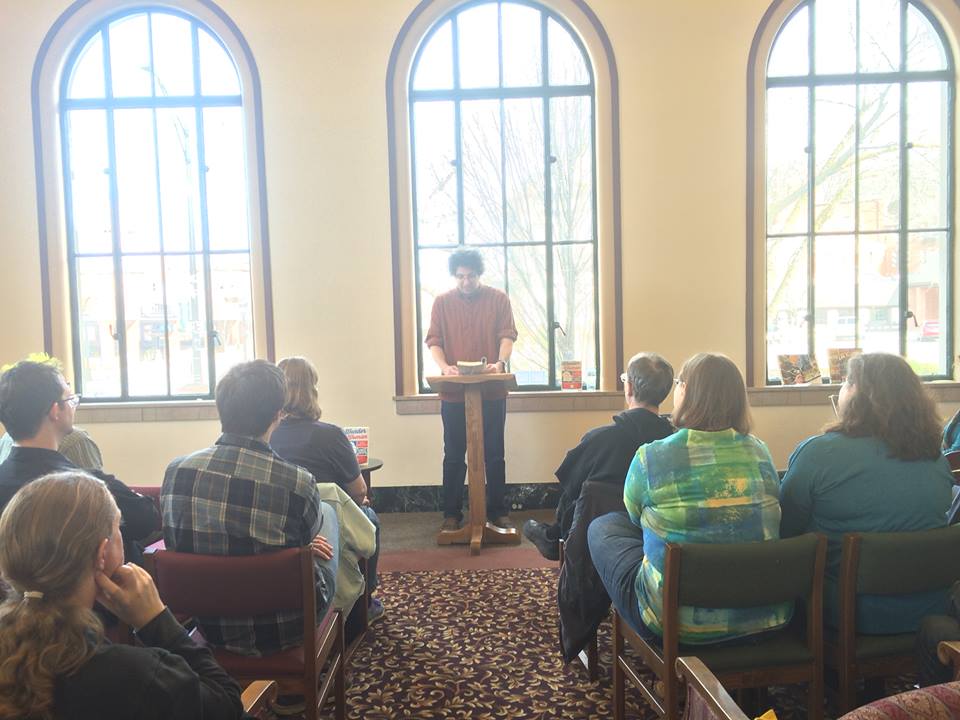
And my friend Bert Stabler posted some pictures of me reading in Urbana last Saturday. I stand before impressive windows.
 

1514964_10153048959440860_1650021395122420441_n

 
On HU

Featured Archive Post: Caroline Small on Nina Paley, Jonathan Lethem, and how copyright kills culture.

Best Music of the Year So Far

Me on Gilette ads and gender roles.

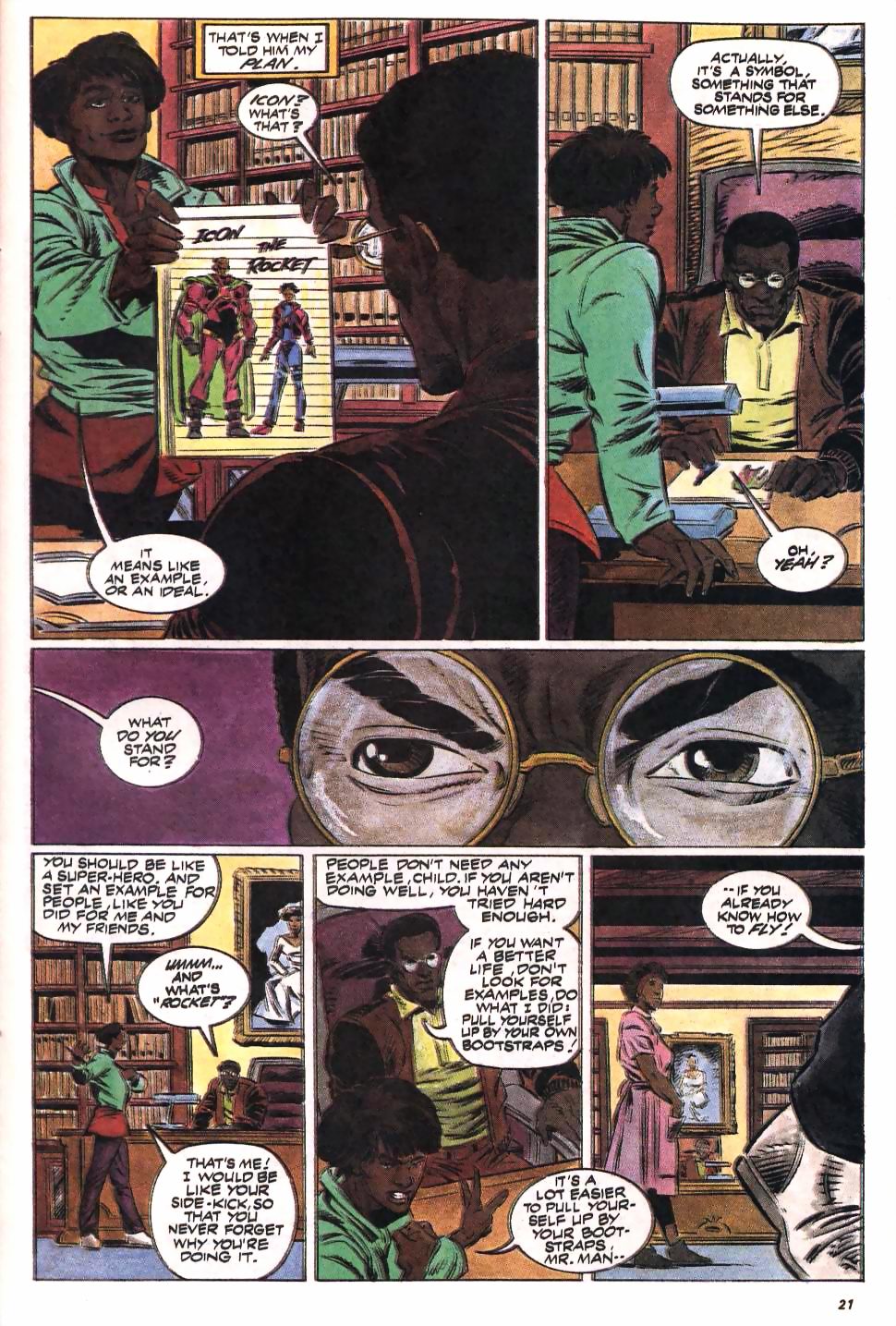
Me, on Icon and what black superheroes can’t do.

Chris Gavaler on Houdini’s superpowers.

Brittany Lloyd on ecofeminism, Allende, and Nicolay.

Roy T. Cook tries to define comics, those pesky suckers.

Kailyn Kent on the unbearably apt whiteness of the “Wes Anderson” X-Men spoof.
 
Utilitarians Everywhere

At Urbanfaith.com I interviewed Mikki Kendall about diversity in comics, sci-fi, and YA.

At Ravishly I wrote about:

Chris Hedges, Wonkette and how hatred of sex workers sells.

—why the Handmaid’s Tale is overrated, and Marge Piercy’s great A Woman At The End of Time.

Batgirl and changing audiences in comics.

how Starbucks should have a conversation about class and making workers do emotional labor for no pay.

At Splice Today I argued that the left should spend less time on the strategy of privilege discussions, and more time on their truth.

At the New Republic I wrote about Sensation Comics and why Wonder Woman needs her lasso of control back.
 
Other Links

Thor is selling better as a woman.

Katherine Cross on gg’s crusade against blocking.

Claire Napier on Chris Sims’ harassment of Valerie D’Orazio.

Sarah Nyberg on being outed and harassed by gamergate.

James Parker on trying to make G.K. Chesterton a saint.

The Last Shall Be First

I think this is the first thing I published on Splice Today.
______

Most traditional economic theory is built around the concept of scarcity – the idea that there’s not enough stuff to go around. In The Accursed Share (1946), Georges Bataille inverts this; life, he says, is characterized, not by too little, but by too much. Life is excess—it pushes onto every bleak rock, every cranny; it spends itself in profligate sexual activity and in the ultimate profligacy of death. And it throws out unneeded economic activity; too much fat, too many children, too much grain in the stores, too many bodies in the street, too much creative energy shaking its collective tuchas on the YouTube videos.

For Bataille, it is the business of life and of society to consume this “accursed share.” The paradigmatic way to do this is through sacrifice; the burning of goods-or, better, of lives-with no recompense. Through sacrifice, Bataille argues, the blasphemous impulse to turn other creatures, other lives, into productive things, is reversed, acknowledged as false and evil. To respect the universe, abundance must be spent, not horded. The Aztecs, in burning men, honored life.

The bloody Aztec rituals were paradigmatic; the North American Indian custom of potlatch, on the other hand, was, for Bataille, a sinister travesty. In the potlatch, an Indian would give a valuable gift to a rival to demonstrate his own wealth and power. In response, a rival would have to give an even greater gift. This could go on and on, back and forth, and whoever ended by giving the greatest gift would show himself superior. Thus, squander was not in fact squander—the winner did not lose his gift, but instead traded it for prestige, or rank. Bataille thus notes contemptuously that potlatch “attempts to grasp that which it wished to be ungraspable, to use that whose utility it denied.” By turning sacrifice into rank, Bataille believed, potlatch turns, not a part, but the whole of the universe to a servile thing.

Potlatch as such is now practiced in only a handful of places, and (to be remorselessly PC) one has to wonder whether Bataille’s anthropological account really did the custom justice. Still, if Native Americans don’t exactly recognize Bataille’s potlatch, others, I think would. Who, after all, profligately spends time, energy, and resources in a remorseless quest for status and rank? Who grasps the sacred and turns it to the profane ends of thingness? Who wastes, not in the name of a sublime nothing, but in the pursuit of a soiled, excess something?

The answer is clear enough: in the modern day, the avatar of Bataille’s twisted potlatch is none other than the artist, in all his (or her) needy, self-deluding, miserly profligacy. The artist hunkers down with her (or his) materials, practicing, practicing, practicing, wasting life in the pursuit of an entirely useless form-and for what? Why, to be noticed, admired, proclaimed a genius-in short for rank. True, the least debased artists seek not some subcultural caché, but simply money. They are guilty only of the typical human failing; the desire to turn bits of life to things; to treat the sacred as a business proposition. Beyoncé and Rod Stewart are no more despicable than, say, Bill Gates, or your average carpenter. But by far the vast majority of artists foreswear (relatively) healthy capitalism for the putrid wallowing in essences; they desire to turn life itself (“authenticity”) into a bludgeon with which to beat their rivals. The Aztecs tore out hearts to offer to the sun god; artists pour out heart and soul and offer it to the Pitchfork reviewers.

Which isn’t to say that all artists are inevitably defiled. On the contrary, if any contemporary figure attains to Bataille’s ideal of pure sacrifice it is one particular kind of artist—that is, the failed artist. Note that by “failed” here, I do not mean the artist who has missed commercial success, but has underground cred or aesthetic bonafides, or who is discovered and lionized after his death. On the contrary. When I say, “failed” I mean “failed.” I mean an artist who profligately, copiously, obsessively works on creating objects that are, literally—by everyone and forever—unwanted. Creators of tuneless songs who never achieve dissonance; of ugly canvases too self-conscious to be outsider art; of doggerel verse too banal for even the high school literary magazine-in them, the excess of the universe is annihilated. Genius, love, life—they are exchanged for neither lucre, nor cred, nor beauty, but are instead simply thrown away. Failed art is permanently wasted. Squatting amidst the gross outpouring of sublimity, the ugly, the thumb-fingered, the clichéd piece of crap, is alone sacred.

Incoherent Icon

icon-point-01

The first volume of Milestone Comics’ Icon asks two provocative questions: “What would a black superhero be like?” and “What would happen if Superman landed on earth in the antebellum South and was found by an enslaved black woman?” Unfortunately, as it turns out, these two questions are antithetical; trying to answer them both at once results in storyline that, despite some intelligence, resolves into incoherence, it’s most provocative possibilities drowned in genre default fisticuffs and capitulation to unexamined tropes.

But let’s start with the positive. Dwayne McDuffie, M.D. DBright, and Mike Gustovich’s answer to their first question is smart, funny, and so brilliantly obvious it makes you slap your forehead. What would a black superhero be like? they ask. And the answer is that a black superhero would be…a conservative Republican. Why on earth would a black man like Augustus Freeman, with Superman level powers, spend his time arresting low level criminals and attempting to aid the cops? Because he has politics like those of “Rush Limbaugh” (who gets a call-out) or Clarence Thomas. He’s a reactionary — and it’s that which puts him in line with the reactionary politics of the superhero genre. The iconic (if you will) moment of the series comes when he tells his young-but-hip sidekick Rocket that they need to aid the police. She tells him he’s nuts, and he replies pompously, “Don’t assume everything’s racial” — and then of course he asks the cops if he can help them, and they start shooting at him. “Don’t assume everything’s racial, huh?” Rocket says in exasperation. “I’ll try.”

McDuffie and his artists do that rare thing in black superhero comics — they acknowledge the tension between the law and order imperative of the superhero and the fact that law and order, in real life in the U.S., is inevitably directed against black people. Icon (both comic and superhero) work consciously to bridge or finesse that gap. The hero subscribes to a black conservative self-help philosophy that goes back to Booker T. Washington (who is mentioned by name): he tells black criminals they discredit the race (“Your behavior reflects poorly on our people and on yourselves”) and his goal as a superhero is to be an inspiration by showing black people that they can be heroes, and succeed, according to white cultural norms which he accepts — but which other characters, like Rocket, do not necessarily. (As she says upon learning Icon’s origin, “I think I just figured out how a black man could be a conservative Republican…You’re from Outer Space!”)

Rocket both inspires Icon to take responsibility for the black struggle, and (to some degree) argues with him about how to do that. Her own acquiescence in his brand of superheroing isn’t really thought through as well as it might be, but incidents like those with the cops, and a later pointless slugfest with some supergang members, nicely illustrate the problems of black conservatism and the contradictions of black superheroism. But while the comic sees Icon’s ideology as flawed, it also sees him as admirable and as having qualities — inspiration, hope, and (given his wealth and power) resources — to contribute to the black struggle. Black superheroes, Icon suggests, are silly and don’t always make sense, but, like black conservatives, they can still be valuable and meaningful. By acknowledging the contradictions inherent to black superheroes, Icon makes perhaps the best mainstream case possible for their value.
__________
But then there’s the answer to the second question. What would happen if Superman were a slave in the antebellum South?

Icon is an alien; he lands in a damaged ship on earth, and takes on the genetic imprint of the first human he encounters — a woman who is a slave. Icon then lives through the last century and a half plus of black history; he helps slaves escape through the Underground Railroad, fought with the Union in the Civil War, got a law degree from Fisk, met his wife during the Harlem Renaissance, and fought for the U.S. in World War I. “Icon” is not just his superhero name, it’s a description of his character — he embodies the black experience.

Symbolically, you can see the appeal. Logistically, though, it’s nonsense. Icon is, again, at Superman level powers. If there were a slave in the antebellum South with Superman level powers, would he be mucking around with the Underground Railroad and joining the Union army? Surely not; a superpowered slave would be able to have a much more direct impact.

Successful slave revolts were impossible in the South because of the massive disproportion of weaponry, personnel and power. The arrival of Icon would have changed all that irrevocably. You can think through various scenarios, but presuming Icon was not a pacifist (and he fought in the war, remember), surely he would have made some attempt to liberate the slaves. And given what we know of his powers and of technology in 1850s America, that attempt was likely to have been at the very least partially successful. There would have been successful revolts; you can easily imagine a free state carved out of large chunks of the American South, with Icon as a protector and guarantor. A black superhero in slavery times isn’t just a cool origin idea; it’s an idea for an alternate history. If Icon is Icon, then black history, and world history, could not be the same.

The comic can’t imagine that, though, precisely because it’s a superhero comic. For the most part, superhero comics say that the present is just like our present, except with powerful beings zipping around. There are revisionist exceptions (like Watchmen) but those are presented as exceptions. Icon wants to be just a standard superhero story. And as just a standard superhero story, it can’t radically alter history, or radically reimagine the present. McDuffie is able to criticize (with love) black conservatism, but in a broader sense he is wholly trapped by a vision more reactionary than even Clarence Thomas could manage. No matter how much power they had or acquired, slaves in Icon still have to wait on white people for their freedom.

Maybe these issues are explored in greater detail later in the series. But in the first collected volume, McDuffie and his cocreators have smart things to say within the limits of the superhero genre, but they have little ability, or interest in pushing at the edges. As a result, Icon can see the contradiction between superheroes and blackness, but can’t really address it beyond making a joke or two. Superheroes can fly to distant moons and free the inhabitants from tyranny, but when confronted with a giant prison camp in the Southern United States, all they can do is a bit of remediation around the edges. In the context of superheroes, the goal of black empowerment can literally mean nothing more than black people flying and hitting bad guys. A more just world is something the comics can’t even dream of.

Gillette Ads and Gender Roles

This first ran on Splice Today.
__________

large_rsz_gillette

 
Pop culture is everywhere and inescapable, so there’s a very understandable knee-jerk reaction to wish that it not be horrible and soul-destroying. The most recent manifestation of this phenomena centers, somewhat desperately, on a Gillette ad, in which some random narrator receives body-grooming advice/dictats from models Kate Upton, Hannah Simone and Genesis Rodriguez.


Obviously, no one thinks that this is a great blow for freedom and sexual equality or anything. But various commenters have argued that it’s at least a pleasurably clever rejiggering of gender norms. Paul Farhi at the Washington Post argues that the ad reverses the usual roles of objectified and objectifier:

What’s remarkable about the Upton TV commercial is not just its basic message — guys, you should be shaving down there — but who’s delivering the message. In the spot, set amid a pool party that suggests the last days of ancient Rome, women are set up as the arbiters of what it means to be manly, a role women rarely play in TV commercials. In this case, the women want what men demanded of women long ago — that they become hairless.

Hanna Rosin at Slate agrees — and manages to find an even more cheerful message The ads aren’t just reworking gender roles; they’re capturing the small intimate sweetness of moving in together (with supermodels, no less.)

No one really thinks that Kate and Hannah and Genesis are doing these men any damage. Why? Because the vibe they tap into is not really “last days of Rome, women rule the world,” but “first days of moving in together, girlfriend throws out my La-Z-Boy.” The ad takes for granted a truth that is sometimes overlooked: that men welcome their partners’ small interventions, the way we steer them through the endless set of never-done tasks that constitute women’s work.

I hate to be a party pooper but…okay, I actually kind of like to be a party pooper. We need more party poopers. Because, for the most part, pop culture is not transgressive or sweet or inciteful. It’s predictable and awful. And that goes doubly (or triply) for advertisements. And, certainly, for this advertisement.

If you watch the ad closely, you’ll notice something odd. It’s true that the supermodels are consulted about their preferences in male foliation. But, those preferences are almost entirely routed through the male narrator. He doesn’t even ask the women what they want; he states their desires for them. He tells the (presumably male) audience that Kate likes men with a little hair on their chest, and then lets her finish the sentence by saying she doesn’t like hair on the back. Then he goes to Hannah…and she doesn’t even get to speak, instead merely winking in acknowledgement when he declares that she likes men with smooth stomachs to show off their six-packs. Finally, he declares that Genesis likes men completely hairless and she doesn’t think that’s weird — to which Genesis does a little model shimmy and affirms, “I don’t.” And that’s all she gets to say.

Contra Rosin, then, the ad isn’t really about intimacy between men and women: how can it be, when the women don’t actually get to say anything? Nor are we actually having women arbitrate male beefcake — again, to be an arbiter, it seems like you need to be the one talking, rather than the one on the sidelines cheering the arbiter along.

To me, in other words, this ad doesn’t really seem to have much to do with women at all. The primary relationship in the ad is not guy/girl, but guy/guy; the ad is 1:22 of a guy talking to other guys about how to be a man. That this male/male instruction is more than a little homosocial shouldn’t be especially shocking. As Eve Sedgwick discusses at length in her classic book Between Men, patriarchal relationships within men are often sealed and charged with a not especially suppressed eroticism. But, as Sedgwick also argues, acknowledging that eroticism is verboten — which means that male/male erotics have to be routed, or deferred, through women. Thus the supermodels, who stand there in their evening gowns helpfully vocalizing and validating narrator dude’s kinky desires. They don’t say much (or in Hannah’s case, anything) because it isn’t their words or desires that are at issue. They’re just window dressing to make it okay for men to seduce each other into being men.

That seduction involves conspicuous consumption, gratuitous treatment of women as voiceless window dressing, and complicated and deliberate repression of homosexuality as an acknowledged possibility. Contra Farhi, it doesn’t reverse gender roles: women are still window-dressing for male psychodrama. Contra Rosin, there’s no intimacy; instead, the ad is an almost ludicrously neurotic effort to leverage intimate emotions it simultaneously wishes to deny. Being a man, according to Gillette, involves deceiving yourself about who you love, treating women as things, and buying shit. Which is not exactly surprising, but doesn’t really seem like cause for celebration, either.

Best Music of the Year So Far

What have you all been listening to so far this year? Here’s a couple things I’ve liked:
&nbsp
“Valis” — Mastery: avant noise black metal.

 
“Sundial” — Jonny Faith: zoned out trippy electronica; you can hear a bit at the link.
 
“A Rush”— Jordannah Elizabeth: psychedlic soul: again, you can hear it at the link.
 
“Blackheart” — Dawn Richard: electric rock soul R&B

 
So let me know what you’ve liked from this year in comments, if you’re so moved.
 

Dawn-Richards-Meteors1-600x450-600x450

Utilitarian Review 3/14/15

Wonder Woman News

I am reading at the Urbana Free Library today! At 4:00; hope to see you there if you are an Urbana-ite.

On HU

Featured Archive Post: Jeet Heer on Shakespeare hate.

My list of best women comics creators.

Caroline Small on how women challenge the comics canon.

Kim O’Connor on Mahou Shounen Breakfast Club, the Times Literary Supplement, and the limits of awareness.

Chris Gavaler with a time travel adventure, and the real Kennedy assassination plot.

Kristian Williams on Alan Turing, superhero.

Me on how OITNB’s focus on Piper’s privilege is confused.

Stephan Gray on tabletop roleplaying vs. computer roleplaying (i.e., violence vs. sex.)
 
Utilitarians Everywhere

My first piece for UrbanFaith.com, I interviewed the amazing anti-prison and anti-police brutality activist Mariame Kaba.

At Salon I wrote about Miranda Lambert and doing bro country better than the bros.

At the Atlantic I wrote about Books of Magic the little known predecessor of Harry Potter.

At Pacific Standard I wrote about how racism has damaged job recovery.

At Ravishly I wrote about:

why progressives need conservatism.

— how my dog’s butt is ruining my marriage and my life.

Jane Austen hate and why popularism doesn’t include romance.

At Splice Today I wrote about Hillary Clinton’s email scandal and why I will be voting for her without any enthusiasm.
 
Other Links

Jason Thompson on manga by folks outside of Japan.

Stoya on revenge porn and the importance of consent in the porn industry.

Kelis doing Smells Like Teen Spirit is pretty fun.

Ijeoma Oluo on the unberable whiteness of Kimmy Schmidt.

Nick Baumann on how the Free Beacon is actually doing conservative journalism.


rs_560x415-150311165125-1024.miranda-lambert-little-red-wagon-031115