Can Comics Critics Be As Vapidly Ignorant as Political Pundits?: Live-Blogging the Presidential Address on Syria

syria292way_custom-ade1b7712443d957fcdace3a8bc4e16e97b493fe-s6-c30

The live blogging is below in comments (scroll down!)

Below is my concluding response to the speech:

All right. Well, as I said, that was a naueseating and unbelievably disingenuous performance. I guess it’s foolish to think that a President planning the incredibly serious step of dropping bombs on a foreign nation would try to lay out all the facts rather than doing some television courtroom bullshit complete with pictures of dead children and lowered, whispery, “I am sincere” voice.

At a minimum, any serious speech should have acknowledged that we don’t know for sure that Assad used the chemical weapons, and pointed out specifically that there’s a ton of evidence that the rebels did in fact use such weapons a few months back. It would also acknowledge that the “moderate” resistance barely exists, and that al Qaeda and other radical groups have a really good chance of taking over if Assad falls. And it wouldn’t pretend that somehow Assad using chemical weapons means that Iran is going to make a nuclear bomb and kill us all.

Of course, without all of that, there’s basically nothing left. Which to me means we shouldn’t be dropping bombs on Syria. But obviously, the President thinks we should. Why? I still don’t know. He can’t possibly believe the nonsense he was peddling, can he? He can’t be that much of a fool. I know it’s supposed to be all about Israel, but I don’t see what Israel gains by dropping bombs on Assad for maybe using chemical weapons in the interest of maybe slightly helping al-Qaeda take over in Syria.

Maybe someone else can figure it out. I’m just baffled and depressed.

And here’s Richard Cook’s response:

In the spirit of a 15 minute speech, I’ll lay out my opposition to the war as briefly as possible.

Attacking Syria would not be legal, not even if Congress gave him authorization. As I mentioned above, international treaties regarding the use of chemical weapons do not empower any nation to unilaterally enforce them. The use of force – outside of defense – is ultimately governed by the Security Council. Of course, China and Russia would never allow the president to wage a war of choice on Syria, which is why he’s prepared to violate international law (again).

Attacking Syria would not be prudent. There is no guarantee that we would successfully destroy all of Assad’s chemical weapons. We would invite retaliation by Syria or Hezbollah. If the bombing topples the Syrian government, we have no guarantee that the so-called moderate rebels will be able to govern the country. We may very well be helping extremist groups allied with al-Qaeda.

It would not be moral to bomb Syria, especially for the reasons that the president gives. We are allegedly punishing Syria for using chemical weapons, but who are we punishing? Top regime leaders? Military leaders? Their wives and kids and anyone else who happens to be in the room when the bombs hit? What if Assad decides to continue using chemical weapons? Or, more likely what if he just goes back to killing kids with bullets and bombs? What have we accomplished, other than making ourselves feel righteous?

Thanks everyone for reading, and especially Richard for live-blogging with us here. Feel free to leave any thoughts in comments.

Indie Comics vs. Context — Death Match

Heidi over at the Beat had a post at the end of last week in which she argued that indie comics are rarely examined in cultural context.

And yet, it does seem that indie comics and cartoonists are rarely examined in a larger contextual way. This is possibly because the content involves a lot of what some call introspection, and others emo shoegazing—even the greatest one—and maybe because this kind of analysis if of a secondary interest of most of those creating and consuming indie comics? And to be fair, a lot of indie comics are created by an ethnically homogenous groups of suburban white kids. When they stray too far away from writing what they know, as Craig Thompson did with Habibi, the results aren’t awesome. Even a work as great as Building Stories is a personal story—on a most simplistic level, it’s telling us that it’s better to have a happy marriage than lie in bed every night wondering if you should kill yourself.

I disagree with the vast majority of what Heidi says in that post…but I don’t know that a fisking would really be that productive. So, instead, I thought it might be fun to take her post as a challenge, and try to do a roundtable on indie comics in social context.

What “social context” means is a little unclear; Heidi seems to be particularly focused on issues of racism, sexism, and gender, since she’s responding specifically to the recent discussion of Jason Karns work (Heidi has all the links on her post.) I’d certainly be interested in hearing folks talk about those issues in relation to indie cartoonists, but I’d think other approaches would be useful as well. For instance, looking at comics in terms of their relationship to visual art traditions, or to literary traditions, or, for that matter, to comics traditions, seems like it would qualify. Talking about comics in relation to historical events could work too. I’m sure folks could think of other possibilities.

The term “indie comics” also seems like it’s somewhat up for grabs. We’re trying to avoid mainstream superhero titles, obviously, and genre works (manga or otherwise) seem like they should be out too. Heidi expressed interest in focusing on more recent cartoonists (i.e., not Crumb, Clowes, etc. etc.), though again that’s maybe more something to think about than a hard and fast rule.

So…anybody in? I think I’d aim for early October or thereabouts. If you’re interested, let me know in comments, and maybe mention who you might write about if you have an inkling, since I think that would be a nice way to spark discussion and generate ideas.
 

201309050337

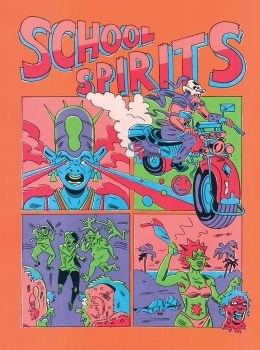
Anya Davidson’s School Spirits, which Heidi talks about at her post.
 

Utilitarian Review 9/7/13

On HU

Featured Archive Post: Jacob Canfield on Johnny Ryan, Benajamin Marra, and lazy thinking in comics criticism.

Piyali Bhattacharya with a short review of Bea Ridgway’s River of No Return.

I celebrate the glorious alienation of Chicago juke.

I explain why Shelby Lynne is not death metal.

Ng Suat Tong looks at Dan Clowes’ short story “Justin Damiano,” about critics and criticism.

Alex Buchet continues his pre-history of the superhero, with a focus on sci-fi from Verne to Vril.

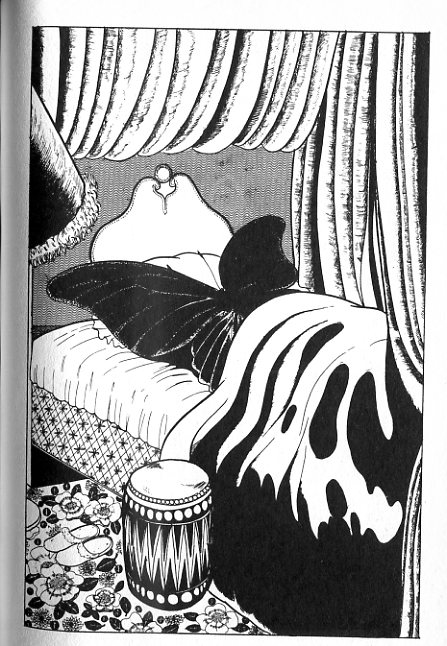
I talk about Kazuo Umezu’s Butterfly Grave and how weak mothers eat their young.

Chris Gavaler on his mother’s superpowers and her aging.
 
Utilitarians Everywhere

At the Atlantic I interviewed Stanley Hauerwas about intervention in Syria.

At Reason I review a love letter to an Afghan warlord.

At Splice Today I talk about

— how the Internet hates you, and what to do about it.

Dungeons and Dragons and the rule of nerds.
 
Other Links

Robert Reece on black men’s bodies and the white female gaze.

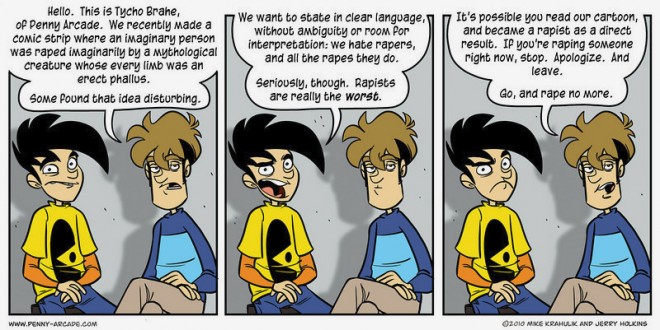
Elizabeth Sampat on why the guys who do Penny Arcade need a swift kick in the shins.
 
PENNY-660x330

Jack B. on Johnny Ryan and The Appeal of Bullying

Jack B. just left this lengthy comment on an old thread. I thought I’d highlight it here.
_________

This discussion interested me enough that I thought I’d try to revive it, lo these many months later.

Johnny Ryan’s comment about the bully’s perspective being more interesting than the victim’s perspective has always struck me as really insightful, especially as it comes from a guy whose work can be so dumb. There’s something kind of precious and self-pitting about art with a sweet, sensitive narrator/protagonist, whether it’s Craig Thompson in Blankets or Holden Caufield, that you don’t get when the narrator is Humbert Humbert or Alex in A Clockwork Orange (although the latter two characters are self-pitying themselves). I also agree with Ryan that Lucy is a good character—her dual role as the cause of Charlie Brown’s problems and his psychiatrist was one of the wittiest things about Peanuts. Noah, even before his excellent interview with Ryan, made the point that the strip would have been a drag if it had focused only on Charlie Brown and his melancholy, as some alt-comics Peanuts fans seem to do.

Jacob Canfield’s problems with Ryan seem to involve the victim/bully dichotomy in areas beyond art, and I think I might side with Ryan in some of those areas, too. Like a lot of left-leaning internet commentators, Jacob seems to think that “macho” is a bad thing and that straight white men should be very conscious of their privilege. But speaking as the wussiest “beta male” you could possibly imagine and as an upper-middle-class white person with a fair amount of guilt, I’m not so sure that it’s good to be like me. My experience is that self-confidence and male strength, even on the part of straight white males, is looked on favorably by almost everyone, including blacks and women, outside of left-leaning internet circles. I’m pretty sure that most black, blue-collar workers would prefer working with a confident, macho white guy than with a sensitive Caucasian who enjoys discussing his white male privilege, for example. By the way, Jacob’s line, “It makes comics critics look like macho assholes” struck me as unintentionally funny—they might look like assholes, but I doubt that they’ve ever looked macho to anyone other than Jacob.

I definitely don’t want to go too far in aesthetically favoring an “alpha” perspective over a “beta” one, though. P.J. O’Rourke once said something to the effect that Jewish American humor is pro-loser while Irish American humor is pro-winner, and he called The National Lampoon a breakthrough in that it succeeded with the latter for the first time in American pop-culture history. I don’t know if there’s anything to his history or his ethnic breakdown, as plenty of Jewish comics from Groucho on have been more aggressive than self-deprecating, but I will say that I love early Woody Allen and can’t stand what I’ve read of The National Lampoon or O’Rourke (I think I’d hate him even without the stupid right-wing politics). So I’m definitely not in the fratboy camp when it comes to humor.

And of course, when it comes to real life, siding with bullies over victims is pretty horrible. I would imagine that one of Johnny Ryan’s main influences is Howard Stern, and Ryan drew this poster of the regulars from The Howard Stern Show: http://www.flickr.com/photos/18176432@N00/990828987/in/photostream/. Those who are not familiar with Stern—or, as I prefer to call him, “Fartman”—may wonder about some of the people depicted on the poster, such as “Gary the Retard” and “Wendy the Retard.” These are actual mentally retarded people that Fartman has had on his show to make fun of; mocking disabled and generally fucked-up people is a major aspect of the show (there used to be a gigantic Wikipedia article describing this aspect in excruciating detail, but it’s been truncated into a tiny one at http://en.wikipedia.org/wiki/Wack_Pack). I seem to be alone in this, but I find it extremely disturbing that a guy who has publically picked on mentally retarded people to their faces on the air as an adult has gained Fartman’s level of mainstream acceptance. Whenever a coworker mentions liking him, I actually feel kind of queasy, as if they’re admitting that beneath a veneer of adult civility, they’re much worse than the most vicious junior-high bully you could possibly imagine. Beyond that, I really believe that the relatives of “Gary the Retard” and “Wendy the Retard” should have the legal right to murder everyone, including Johnny Ryan, who has publically fucked with their loved ones. On the other hand, I’m a big Eminem fan, and he’s made plenty of shitty jokes about Christopher Reeve and other unfortunates, so maybe I’m just a big hypocrite.

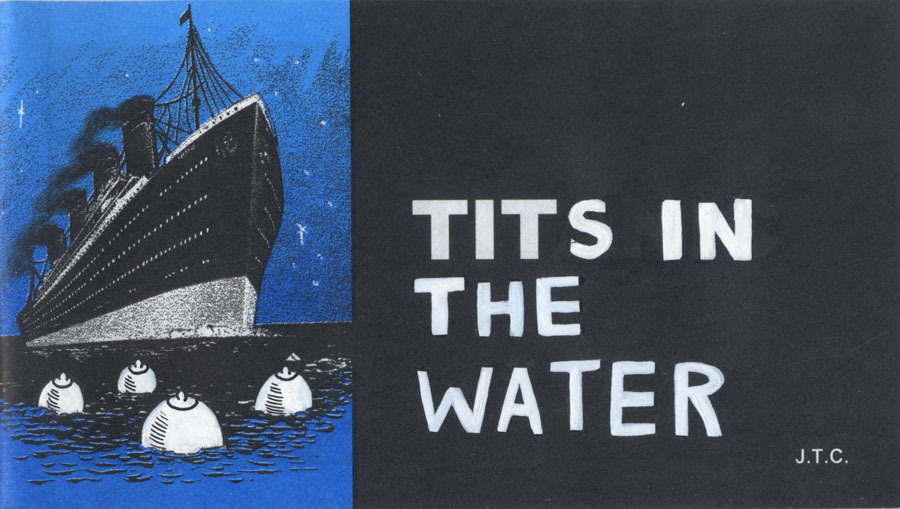
Some final thoughts on Ryan—maybe I shouldn’t have called for his murder, because I actually like his art a lot and find some of his comics extremely funny. I have to say, though, that I don’t think his overall batting average for comedy is so great. For example, I just looked through a bunch of his altered Chick tract covers (at http://www.vice.com/read/johnny-ryans-chick-tracts), and the vast majority of them didn’t make me laugh. However, looking through them was definitely worth it, as the ones that did make me laugh, like “The Letter” (http://www.vice.com/read/johnny-ryans-chick-tracts/115761), “The Contract” (http://www.vice.com/read/johnny-ryans-chick-tracts/115762), and one that suggests my favorite rapper will not go to Heaven (http://www.vice.com/read/johnny-ryans-chick-tracts/115796) made me laugh an awful lot. Batting average aside, he really hits a joke way out of the park every now and then.

Well, those are my thoughts. If no one finds this incredibly lengthy post worth replying to, I’m going to be extremely embarrassed.

 
255bd0c59a989cbe60888dd209d6aa93

The Weak Mother Eats Its Young

A couple weeks back I talked a bit about the tiresomeness of the strong female character trope. And I don’t disavow that: strong female characters, who all know kung-fu and never take no shit, remain tiresome. But Megumi, the main character in Kazuo Umezu’s one-volume manga “Butterfly Grave,” reminds you why, tiresome as they are, those strong female characters are generally seen as preferable to the alternative.

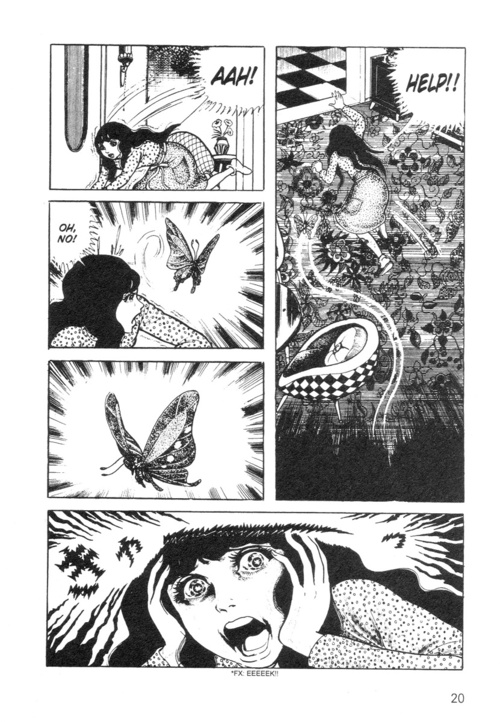
Megumi is the alternative. She is not strong. She is weak…and holy shit is her drippy, unrelenting weakness incredibly annoying. Virtually all she does, throughout the entire manga, is whine, cower in tower, and then, sometimes, for variation, whine some more. Her one character trait is an overwhelming phobia of butterflies, and when she is not shrieking and running from some fluttering assailant, she is trembling and helplessly agonizing internally about how terrible it is that she is always shrieking and running from the fluttering assailants. When even Umezu tires of that, he has her start seeing phantom black butterflies everywhere, resulting in more cowering, additional agonizing, and, if you’re me, a fair amount of fervent wishing that the horror manga would get on with the horror and kill her off in some gruesome fashion — preferably with collateral damage including her colorless father, her colorless boyfriend, the colorless kids at her school, and perhaps (if you’ll forgive me) the banally uninventive manga-ka who has inflicted all of them upon me.
tumblr_mc7o49iyCq1qg3b5co1_500

As this suggests, Megumi’s spinelessness, and consequent shapelessness, is more than just a personality trait; it’s a kind of miasma which infects the entire manga. Umezu’s Drifting Classroom, which focuses on the Bildungsroman of a male protagonist, has a grim, ineluctable structure, racing forward in an ever-rising body count towards an ever bleaker future. “Butterfly Grave”, on the other hand, vacillates in a sodden nowhere. There are events, and more events, but they never add up to anything or go anywhere. Megumi is scared by butterflies; Megumi is scared by the grotesque but harmless gardener; Megumi is scared by a dream in which her dead mother rises from the grave as a butterfly. The whole middle section of the manga is given over to little episodes where Megumi sees an ominous black butterfly, and then disaster strikes (a car loses its breaks; there’s an earthquake.) This seems to be building somewhere…but no. Umezu just abandons it. When Megumi’s fear of butterflies is eventually explained, her predictive powers aren’t so much rationalized as simply forgotten. The story — Megumi’s story — doesn’t matter, because she doesn’t really have a story. She just has the ritual repetition of terror and weakness.

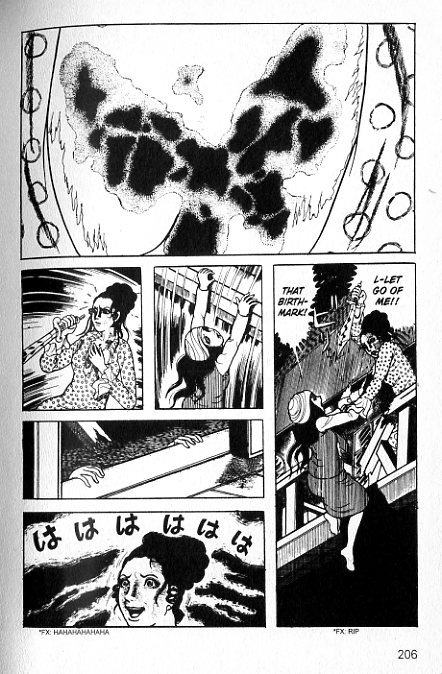
Nonetheless, and almost despite itself, the manga does heave lugubriously into a kind of plot. Megumi’s mother (given to unaccountable fits of terror like Megumi herself) died soon after Megumi was born, killed in a fall from the balcony of the house. Eventually, Megumi’s father decides to remarry a woman he has known for a long time…a woman who, as it turns out, is evil, evil, evil. It is she, the new second mother, who killed Megumi’s actual mother, pushing her off the balcony as she clutched Megumi to protect her. In the climactic scene, this murder is recreated; the evil mother tries to push Megumi off the balcony, revealing in the process a butterfly shaped birthmark. Thus Megumi’s fear of butterflies — it’s all a infantile psychological thingee, don’t you know.
 

zita008

 
The explanation doesn’t make a whole lot of sense, but again narrative closure, or even coherence, isn’t really the point. On the contrary, narrative incoherence is the point. The butterfly “revelation” tends not to provide linear closure, but to turn the manga into a closed fuzzy circle — or perhaps a blurred shadow, like the birthmark itself. Megumi takes the place of her mother as victim. But the mother has also been insistently associated with the butterfly, as in this dream sequence.
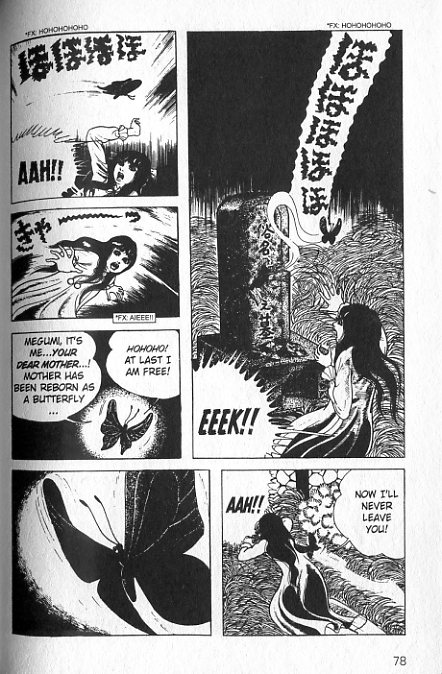
 

butterfly009

 
Thus, mother and step-mother are butterflies, and mother and step-mother end up also being substitutes for each other. And if mother is Megumi, and mother is step-mother, then step-mother and Megumi are also the same…a point underlined when the step-mother, like the mother, and almost like Megumi, falls to her death from a height (a cliff face rather than a balcony, but still).

I’ve been reading several articles recently which reference the work of Nancy Chodorow, a feminist psychoanalyst who argues that female ego-formation is less complete or rigid than male ego-formation; that the boundaries of women’s selves are more permeable because daughters identify with mothers, and eventually with their own daughters/children. Whatever it’s application to real women, Chodorow’s ideas have an obvious application to “Butterfly Grave”, where Megumi both barely has a self and is transposed with multiple mothers, who in turn keep becoming dis-embodied and turned into soft, shadowy things, grotesque butterfly non-forms.
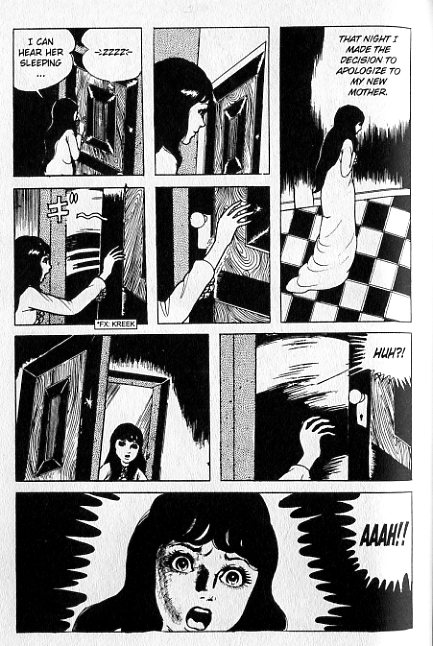
 

butterfly010

butterfly011

Throughout the manga, Megumi keeps asking herself “Why am I afraid of butterflies?” The answer, diegetically, is that she is afraid of her step-mother. The answer, thematically, is that she is afraid of her mother.

So why is she afraid of being her mother? Mothers are good things you’d think. Megumi’s mother sacrifices her life so her daughter won’t die in the fall from the balcony. This is initially described as an accident; Megumi crawled out into danger, and her mother rushed to save her.

The mother gives her life and saves Megumi…but if Megumi is the mother, or is to be the mother, then the sacrifice is also an imperative that she, Megumi, die — to be a mother is to give up the self. Thus, the mother is the victim of Megumi who causes her fall accidentally, and/or of the stepmother (who is also Megumi) who murders her. But the mother is also the murderer, the woman you will be who demands you give up your self. Mother murders daughter, daughter murders mother, in a perfect glob of girly-butterfly passive-aggressive doom.
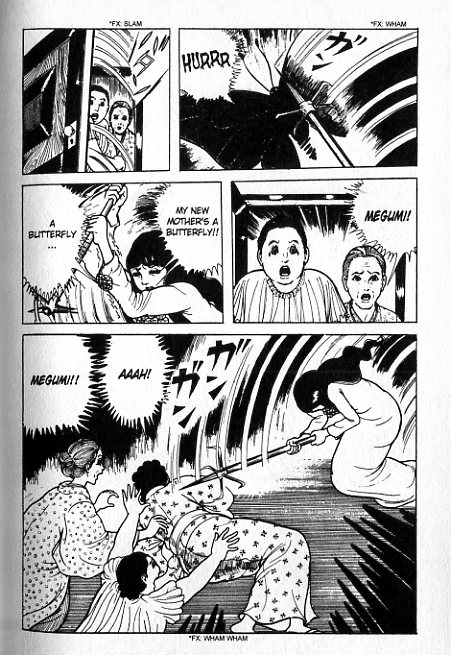
butterfly012

In the manga, the step-mother hates Megumi’s mother because she wants her father — a neat Oedipal drama, if the step-mother is a stand-in for Megumi. But really there’s little energy invested in the het-plot, which seems mentioned only to show us how irrelevant it is. The real change in the step-mother’s behavior comes after Megumi’s attack on hert’s not love which leads to aggression, but loss of self — both in the sense that Megumi is not herself when she attacks, and in the sense that what provokes the attack is the step-mother not being herself, but an amorphous other, which is also Megumi.

The manga ends happily; the step-mother has killed herself, Megumi isn’t freaked out by butterflies anymore, and — significantly — Megumi has her own daughter, who isn’t afraid of butterflies either. The last image is of the mother and daughter looking calmly out the window at a group of butterflies flying past; white rather than black, the blurred, shapeless shapes are domesticated and contained in the comforting grid of window panes, and the domestic arc of the curtains.
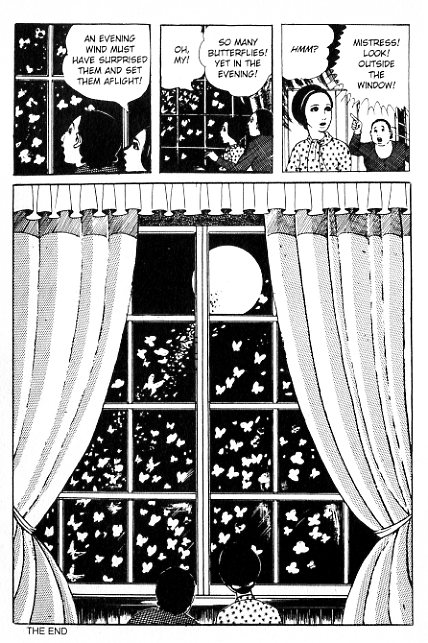
butterfly013

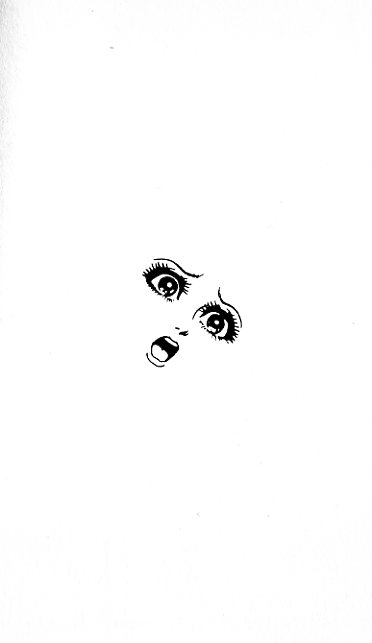
Or that seems to be the last image. In fact, on the overleaf is one final drawing — Megumi’s frightened face, screaming, disappearing into whiteness.
butterfly014

It’s not clear how this image fits into the story narratively. But thematically and visually, it links Megumi to the white butterflies, and simultaneously replaces domesticity with dread. Maternal peace suddenly becomes merely a continuation of Megumi’s monotonous terror. Megumi’s happy ending is her worst fear; she’s finally a mother, and so her self — which was never anything but her terror — fades to white. Instead of a strong female character, Umezu gives us woman as mother, which is also, in this vision, woman as void.

Why Shelby Lynne Is Not Death Metal

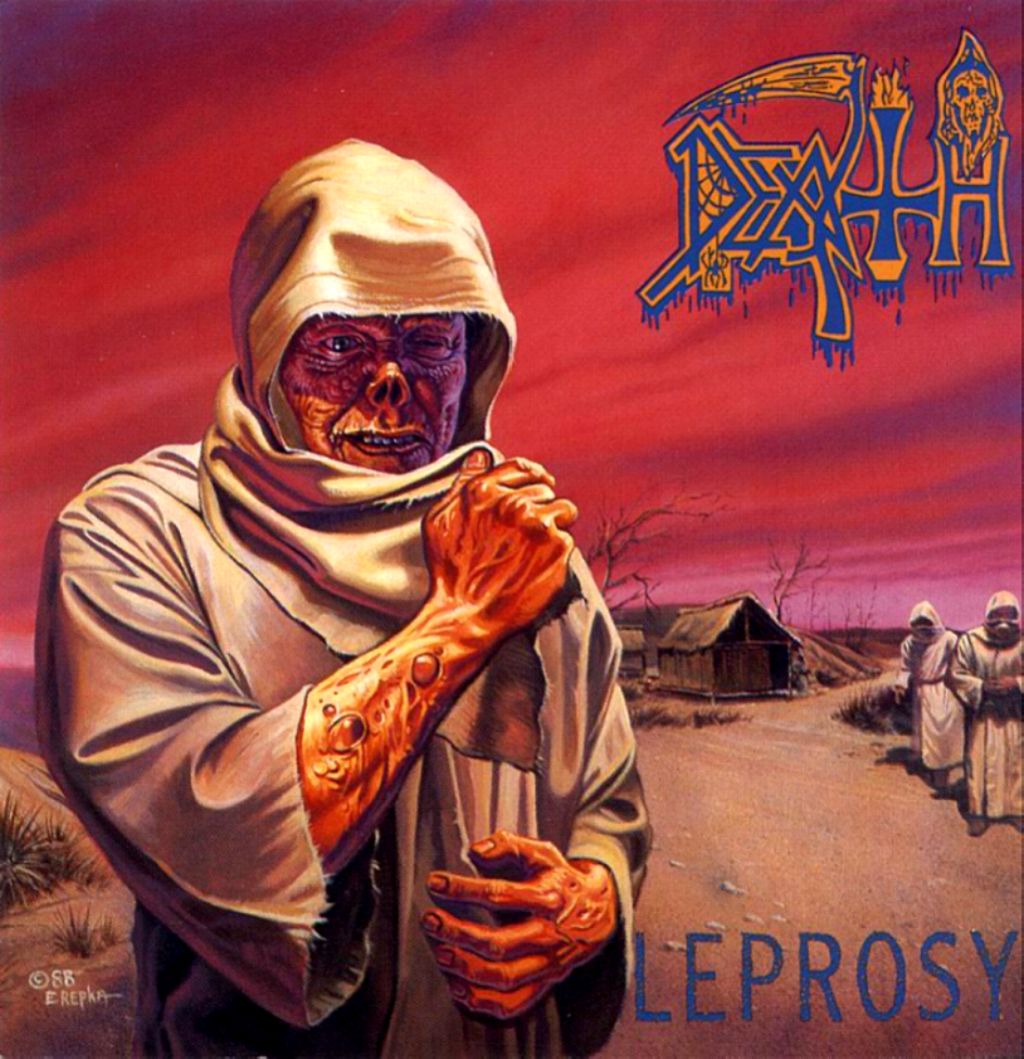
leprosy+death_halifaxcollect.net

This ran a while back on Splice Today.
____________
I’ve been obsessed with death metal recently — Decapitated, Disincarnate, Dismember, Deicide, Demilich, and of course Death — best fucking band names in the world of music, and that’s just the ones that start with “D”. I love that listening to death metal on an ipod is like collecting every word in the dictionary that could possibly be considered morbid and gross and putting them together almost at random. And yes, I’m sure there’s a band named “Morbid Gross” out there somewhere, and their singer sounds like he’s gargling knives and the music is like being bashed upside the head with a decaying goat tied to a spinning helicopter rotor because — that’s what death metal is damn it! Just ask Carcass or Cancer or Cannibal Corpse or Kreator.

The other thing I’ve been listening to is the new Shelby Lynne album, Tears, Lies, and Alibis, which obviously has nothing to do with death metal at all. It has so little to do with death metal that it’s kind of fun to sit back and count the ways that it is not like everything else I’m listening to. You can hear the lyrics. They are sensitive songs about love and heartache rather than vile despicable ruminations on nuclear winter, incest, and stripping the flesh from the rotting Christ with your teeth. And, to get a little more meta, it’s always clear as clear can be why a death metal album is death metal, but it’s not at all clear what Shelby Lynne is supposed to be. Folk? Pop? Country?

Country’s where she’s usually filed I think, and that’s actually the best explanation of her genre incoherence. Because, if death metal revels in fiendish formal consistency, country has long been defined more by who’s doing the dancing than by what they’re dancing to. Music by rural whites for rural whites, country has borrowed variously from jazz, rockabilly, rock, pop, soul, blues, and whatever else happened to be around, just so long as it wasn’t too up to the minute. Death metal (or for that matter, bluegrass) is what it is; country is who is playing it and listening to it.

What this means is that fans of country — even more than fans of pop, perhaps — aren’t especially fans of a particular musical style. Listening to country means listening to an amalgamation. As a result, there’s a great deal of emphasis on personality. Death metal performers (and, for that matter, bluegrass performers) are relatively hidden, obscured behind their technical mastery and their unholy obeisance to the tropes of their genre. Country, though (or for that matter punk) is all about charisma — your stories, your voice, your sexiness, your humor. If death metal is anonymous assault, country is personal seduction.

Which maybe helps explain why I’m not so into this Shelby Lynne album. Not that I don’t like country — overall I probably like classic country more than death metal, truth be told. But…well, Lynne just isn’t that charismatic. She’s got all the technical bits down, no doubt — her voice is rich and full, with a touch of plainspokennness that comes across as sensuality. The songwriting is unimpeachable, from the Beatlesesque “Rains Came” with its woodwind accents ,to the swinging soul come-on of “Why Didn’t You Call Me,” to the earnest folkisms of “Family Tree.” It’s all done with professional polish and even moments of inventiveness. If it were death metal, I’d thrash my head to it happily.

But it’s not death metal — and as a result it’s roteness is kind of a problem. Country has no solid formal grounding to fall back on, so mere competence, or even hyper-competence, just isn’t good enough. George Strait or Leanne Womack or Lyle Lovett or K.D. Lang, to cite some artists comparable to Lynne, all manage, at various points, to be funny, or weird, or eccentric or heartfelt. I don’t necessarily adore everything any of those singers have done, but they do put their own stamp on their material. You’d have to go a long way to find someone who could put as much rueful pathos as George Strait does into the couplet “Oh she tells her friends I’m perfect and that I love that cat/But you know me better than that.” It’s hard to think of anyone who could sound as simultaneously ridiculous and heartbroken as Leann Womack does when she declares “I’m the fool in love with the fool who’s still in love with you.”

There’s no comparable moment like that on Shelby Lynne’s album. Yes, she has a great voice, but various people have great voices, and it’s hard to see how this album would be changed if one of them sang it instead of her. When you listen to a country album, you’re kind of always asking, “Who are you? And why should I love you? “ If Shelby Lynn were Morbid Angel or Malevolent Creation or Massacra the answers would be, in order, “no one” and “I will feed your corpse to the pit”. But she isn’t, and so the answers instead seem to be “I’m not sure,” and “because I’m a little bland.” Which is why I’m turning off Shelby now and going back to listen to Sodom or Slayer or Sepultura— or, hell, maybe even to Strait.

The Future Will Be Repeated

This first ran on Splice Today.
_________

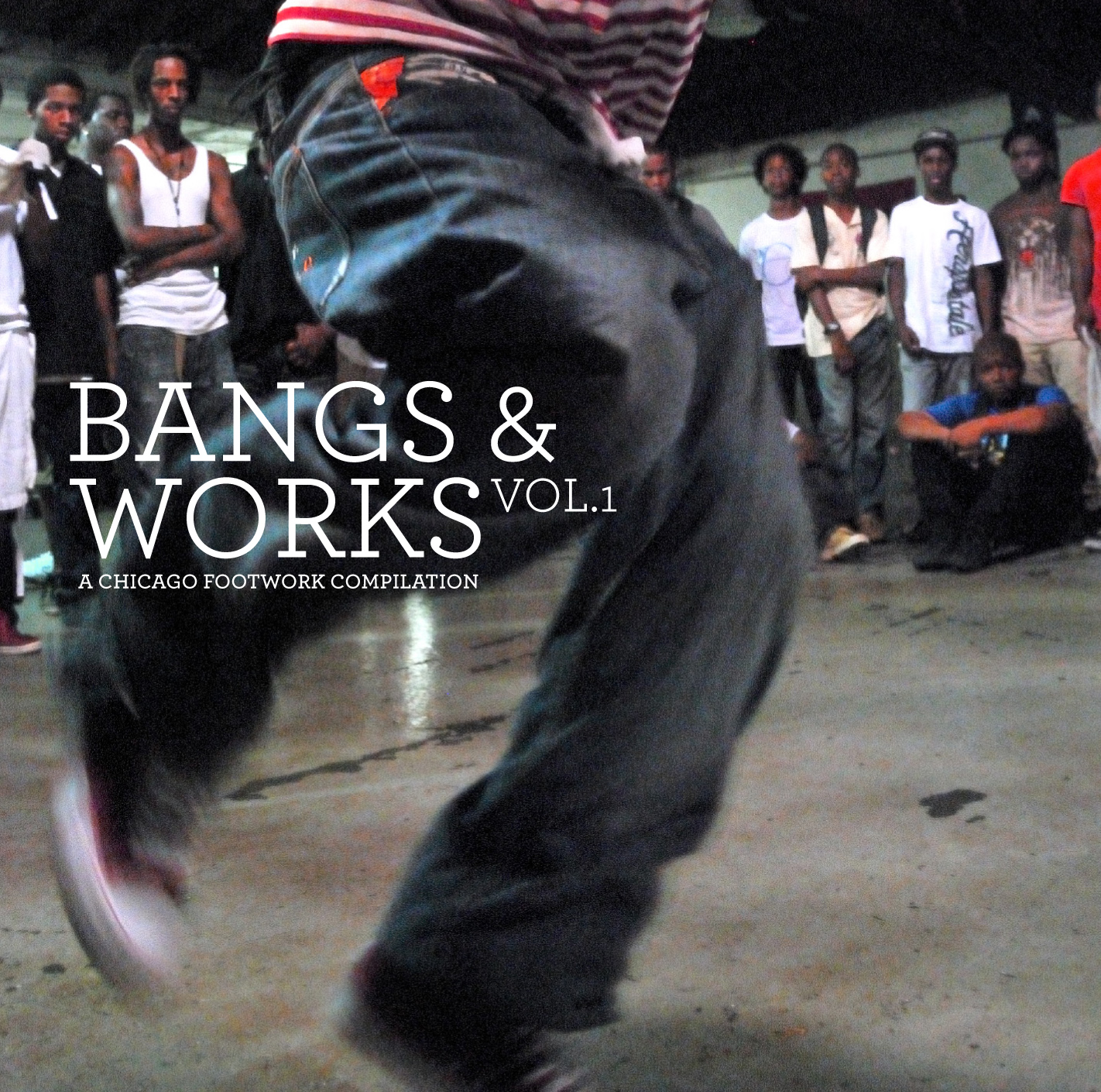
ZIQ290_Bangs

 
Chicago juke is supposed to be dance music. Listen to Bangs & Works Vol. 1 (A Chicago Footwork Compilation), though, and you’ll be hard pressed to believe it.  The album sounds like Philip Glass being hit in the head with a turntable. Repeatedly. Repeatedly. Repeatedly. Repeatedly. And he says shits fuck, shits fuck, shits fuck, shits fuck, shits fuck , shits fucked up.  That shit is fucked up.  That shit is fucked up. That shit is fucked up.

The repetition is addictively flattening. This is music as endless bland trance, everything reiterating into a meaningless blur.  Hip hop is about the clever dexterity of the samples and the wordplay;  jazzy individualistic improvisation.  This…this is droned out and faceless; incongruous samples like “The Lion Sleeps Tonight” run round and round for two minutes till you want to strangle yourself or go into a coma; random profane phrases spit out and spit out again and spit out again till they don’t even register as offensive. The whole comp is sexless, the beats coming in rapid bursts like balls bounced on the ground and then stopping again, utterly impervious to funk.  Compared to this, nerdy electronica swaggers and Xenakis swings. “Ima dog Ima dog Ima dog Ima dog Ima dog,” one track insists, but really it should be saying, “Ima cas Ima cas Ima cas Ima castrated robot.”

Check out actual videos of footwork  competitions online and “castrated robot” starts to seem even more apropos. The dancers look like Michael Jackson in a sped up film, their legs pounding and racing in time to nothing. The music’s there, but it’s fractured loops seem divorced from the motion of the performers; they might as well be dancing to a leaf blower or a boiler. The technical facility is amazing, but it seems to occur in a vacuum. Passion is bled away and all that’s left is motion and sound, spinning on automatic, like a projector running after the film has run out, the loose end of the last reel stuttering on and on until the projectionist wakes up to turn it off.

It’s hard to imagine this style ever going pop.  Maybe one or two tracks on the comp suggest a path; DJ Trouble’s “Mosh Pit” has a repeating classic rock guitar riff, for example, and something that comes within spitting distance of an actual beat.  But it’s telling that Kid Sister, a thoroughly awesome Chicago pop artist who occasionally name-checks juke,, sounds way more like the early eighties than she does like the stuff on Bangs & Works.

Still, who knows?  Afrika Baambata must have seemed like he was coming from another planet to boring middle-aged white people like me when he first appeared on the scene.  Maybe bloodless spastic trances are the future.  For that matter, it’s a little miraculous, and not a little inspiring, that they’re part of the present.