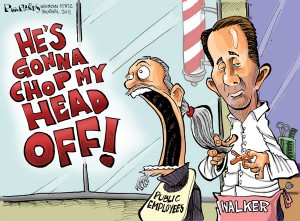
The editorial cartoon above by Phil Hands has sparked some interesting debate. Hands published the cartoon along with an editorial in which he noted that he’s usually liberal, but in the case of the current Wisconsin budget crisis found himself siding with the Republican governor against employee unions. Tom Spurgeon read the editorial and complimented Hands for his courage in stating his beliefs.
Category Archives: Blog
Bill Randall on Tatsumi
Despite my best efforts, I can’t get Bill to write for HU more often, so I am forced to steal his comments and pretend they are posts.
Below is a lengthy comment from him on Suat’s post about Tatsumi.
War, what is it good for?
Blazing Combat
Editor and Writer: Archie Goodwin
Original Publisher: Warren Publishing (1965-66)
Re-published by Fantagraphics Books
Blazing Combat was a war anthology edited and written by Archie Goodwin in collaboration with a dozen artists. It was also a commercial flop back in the sixties, getting canceled after only four issues. According to its publisher, James Warren, the tepid sales were due to politics. The book earned the ire of comic distributors (many of whom were veterans) for its perceived anti-war bias and they refused to sell it. It was outright banned from stores on military bases, meaning that active servicemen (who made up a sizable share of the market for war comics) could not buy it.
But authoritarian politics and government censorship are no match for comic book nostalgia. Decades later, Blazing Combat was resurrected by Fantagraphics, and it’s not hard to see why. Forget the stories or the politics; the list of artists who worked on this title is an aging fanboy’s wet dream. Frank Frazetta (on covers), Wally Wood, John Severin, Alex Toth, Gene Colan. And these artists brought their “A” game. As mainstream comic art goes, few books look as good as Blazing Combat.
Cartooning, Caricature, Stereotype
In comments Jeet Heer and Caroline Small call for a consideration of the relationship between cartooning, caricature, and stereotype.
I’m curious what people have to say about this, so I thought I’d give it a thread and see if anyone else wanted to take a whack at it.
Reconsidering Tatsumi
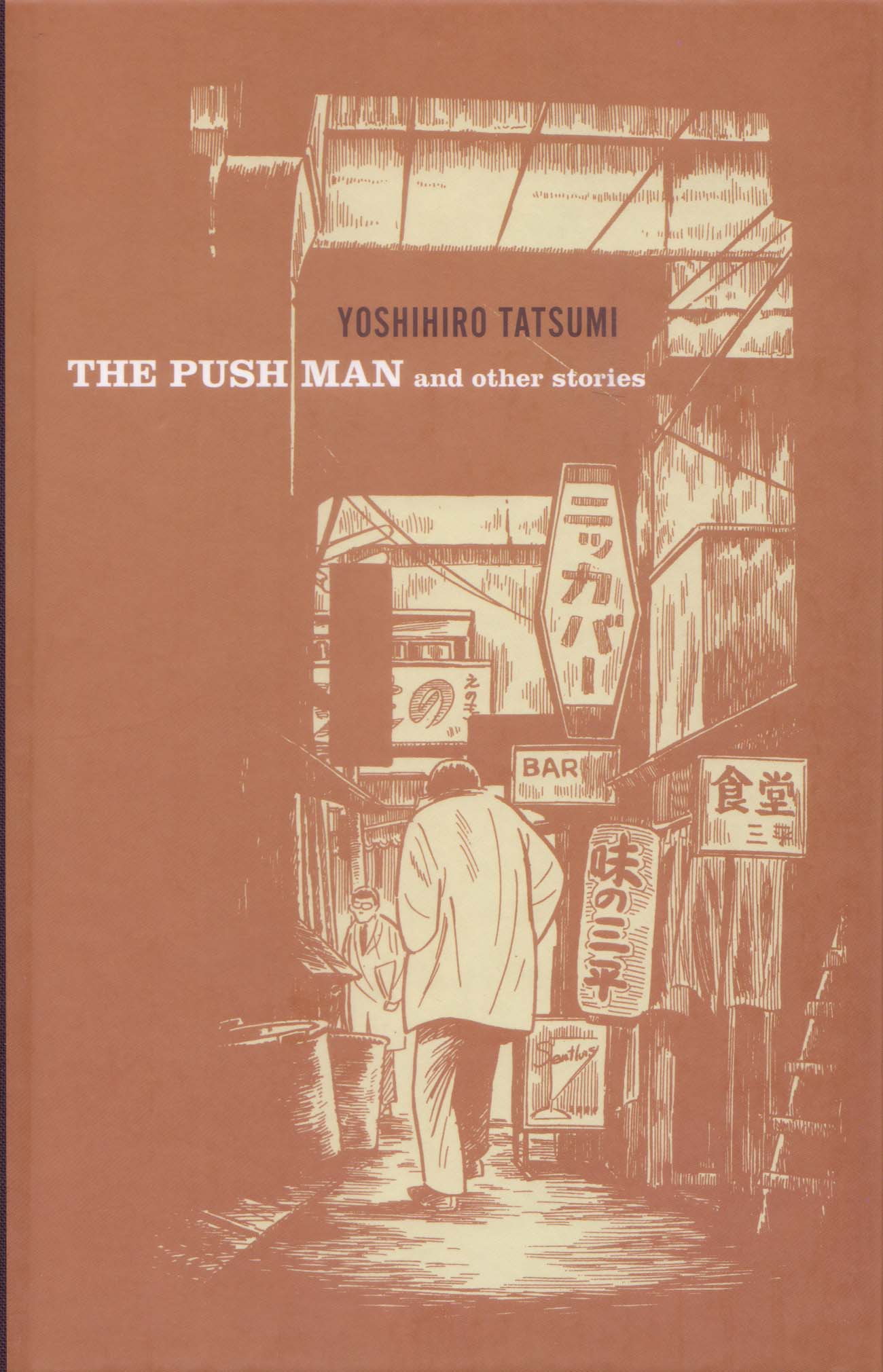
EARLY TATSUMI: The Push Man and Other Stories (1969)
Everyone has to start somewhere.
For Yoshihiro Tatsumi and Drawn and Quarterly that beginning was the collection of short stories titled The Push Man and Other Stories, an anthology of stories dating from 1969 which was translated and published by Drawn and Quarterly in 2005 [1].
It comes with a prodigious list of accolades. Chip Kidd calls it a “revelation” which “[peels] away the lacquered layers of Japanese social and sexual surfaces to reveal the elemental heart beneath, and with such fearless depth of feeling.” Paul Gravett proclaims Tatsumi “a master of frank, unsentimental exposés of the human condition”, and Jaime Hernandez suggests that “Tatsumi’s comics are clean and straightforward without pretentious tricks. Storytelling at its best.”
The evidence on the ground is less convincing.
Dragon Nonsense
This essay first appeared on Splice Today.
__________________
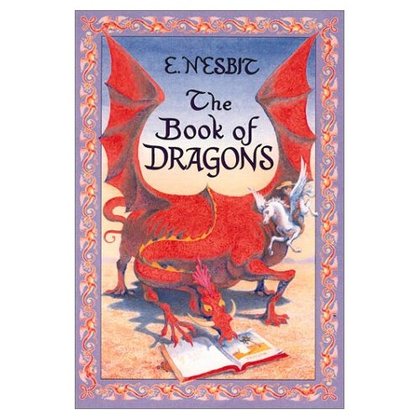
Perhaps my favorite story in E. Nesbit’s Book of Dragons is “The Ice Dragon, or Do as You’re Told.” George and Jane defy their parents by walking out of their English backyard in search of the North Pole. They cross one lawn, then two, and then find the Arctic, complete with a giant ice slide for convenient travel, evil dwarves made out of sealskin, and a giant dragon curled around the North Pole itself. And what does the North Pole look like? Well, as Nesbit explains, “You will hear grown-up people talk a great deal of nonsense about the North Pole, and when you are grown up, it is even possible that you may talk nonsense about it yourself (the most unlikely things do happen) but deep down in your heart you must always remember that the North Pole is made of clear ice, and could not possibly, if you come to think of it, be made of anything else.”
Continue reading
Gluey Tart: Baseball Heaven

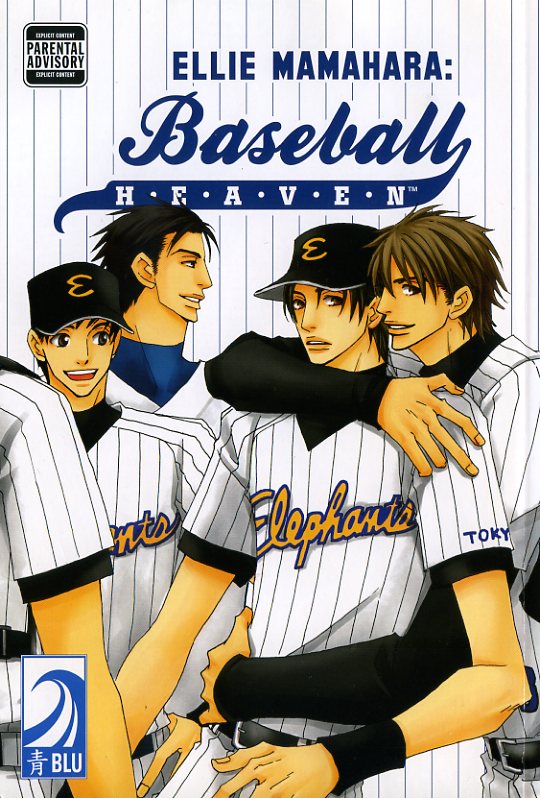
Ellie Mamahara, Blu, October 2010
I cannot explain my attraction to this book. I do not like baseball. For years, I lived near Wrigley Field in Chicago, an experience I can only describe as somewhat scarring. Indeed, my only interest in sports whatsoever is an admitted and frank enjoyment of David Beckham’s person. I will go further and admit that I am highly suspicious of teamwork, in general.