Utilitarian Review 1/29/11

On HU

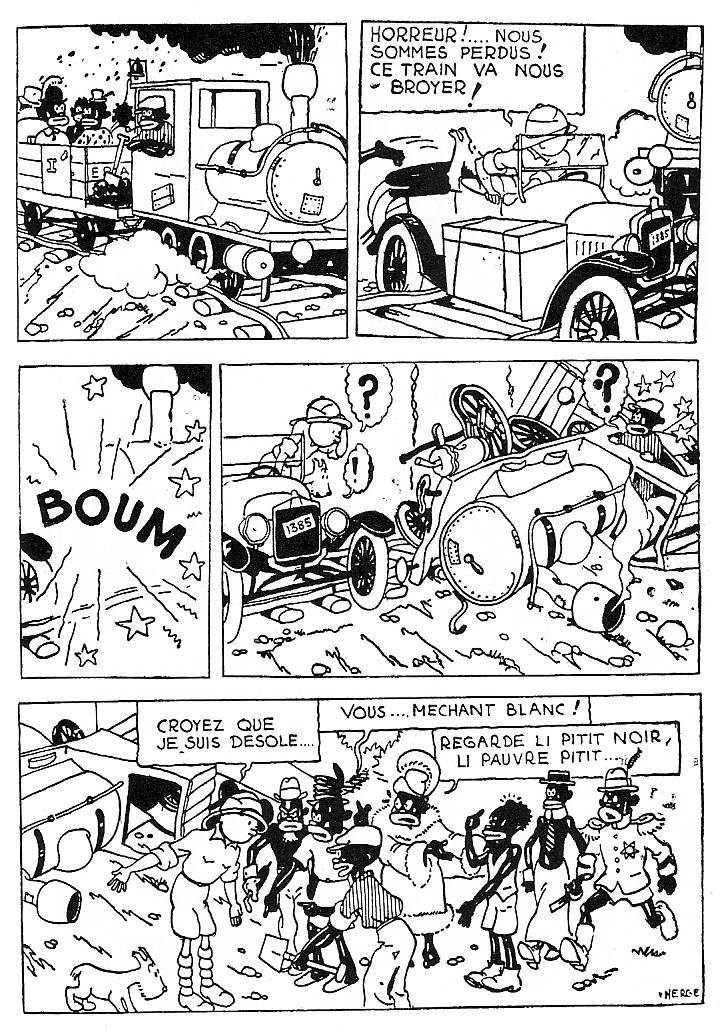
Domingos Isabelinho does a close read of a page of Herge. In comments he explains what he did wrong.

Stephanie Folse looks at issues 3 and 4 of Elfquest.

Matthias Wivel looks at Jimmy Corrigan in light of Chris Ware’s later work.

Richard Cook looks back at the Comics Code.

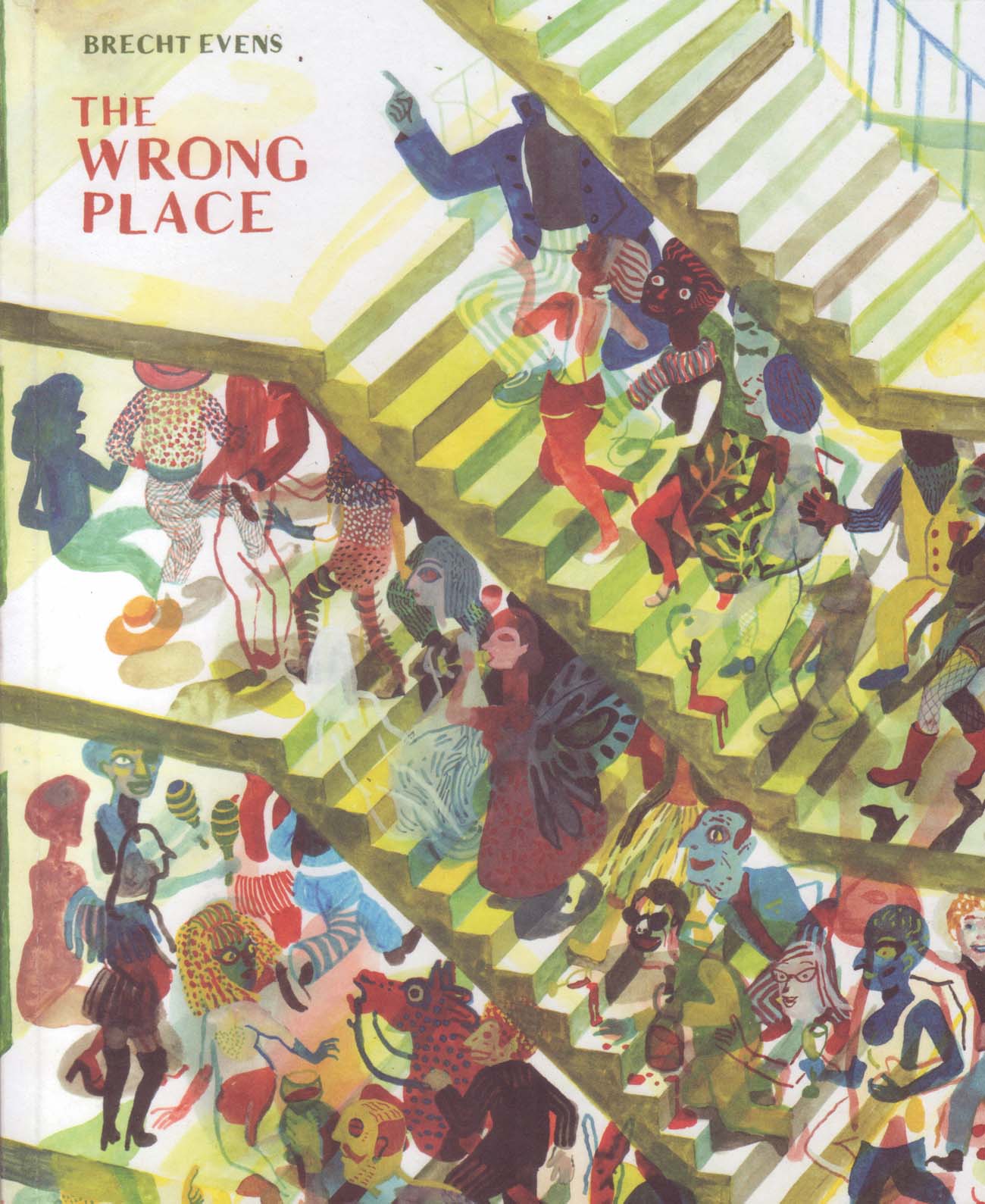
Ng Suat Tong reviews Brecht Evens’ “The Wrong Place.”

I discuss Stanley Cavell’s theories of film in relation to Mondrian, HIroshige, Jeff Wall, Blaise Larmee, art, film, and comics.

Alex Buchet looks at how British comics have influenced the English language.

Utilitarians Everywhere

At Splice Today I talk about Chicago juke.

Other LInks

Stanley Fish has a nice review of True Grit.

Chris Sims explains Bane.

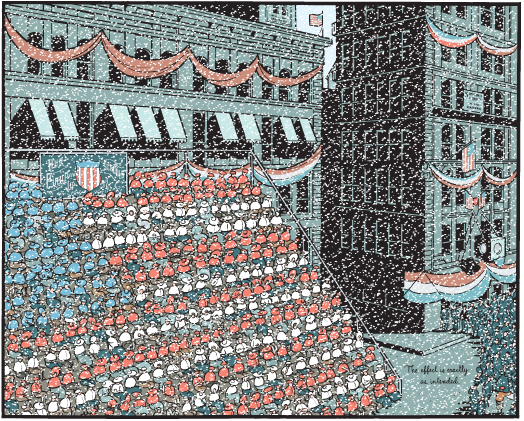
Matt Seneca on a panel from Tintin.

Jason Overby quits.

Kate Beaton presents sexy Batman. (Via Sean Collins.

And your Panelist link of the week: Derik Badman discusses bricks.

The World Panelled

I recently finished Stanley Cavell’s 1971 book of film philosophy, “The World Viewed” (with a long addendum from 1979.)

The book is a mixed bag. Many of Cavell’s readings are thoughtful and sharp. On the other hand his take on one film I know well, “Rosemary’s Baby,” is so misguided as to be actually offensive. (He claims that the film is about Rosemary’s husband’s impotence rather than about Rosemary’s rape, and then muses on the exact nature of Rosemary’s sin, which he determines has something to do with the fact that “Rosemary does not allow her husband to penetrate her dreams, allow him to be her devil, and give him his due.” Which I suppose is a roundabout way of saying that her sin is that she was insufficiently accommodating and so her husband had to rape her, or let the devil do it for him. Cavell also seems to believe that the movie is about motherhood, when it’s rather clearly about pregnancy. His inability to tell the difference is of a piece with a consistent incapacity to imagine that somewhere, somehow, the audience for some movie or other might include women. In any case, when you are more misogynist than Roman Polanski, you are in serious trouble. )

Where was I?

Oh right.

So some downsides. But on the other hand there’s lots of interesting theoretical material. Cavell’s book is fascinated with the relationship between film and reality. For him, the most salient fact about film is the manner in which it technologically, automatically, produces a reproduction or an image of the world that is neither a reproduction nor an image. Film is the world itself, though a world from which we (the audience) are exiled; we can watch but not interfere. Cavell therefore sees film as directly confronting Western philosophical skepticism — the Cartesian fear that we’re trapped in our minds with no way to perceive or access reality — or, indeed, the fear that our minds are all there is, and there is no reality to access. The loss of objective reality is also the death of God, and in embodying that absence, film replaces religion.

Continue reading

Review: Brecht Evens’ The Wrong Place

The revelers which fill the stairwell of Brecht Evens’ cover painting seem like a code for the contents of his book, ever striving for the space which occupies the right topmost corner of that image. They are dressed as for a masque: a conga line of harlequins, butterflies, angels, fairies, gauchos, ballerinas and Greek gods; ancient bacchants holding fiddles and rattles, sitting astride tandem bicycles and hobby horses; leaching on to the front and end papers of the book design, an account of the history of gaiety and debauchery.

Continue reading

R.I.P. Comics Code

On January 24, Archie Comics abandoned the Comics Code Authority, following a similar decision by DC Comics last week. The Comics Code is officially dead, though it had been dying the slow, painful death of irrelevance for some time. But way back when I was a youngster, the CCA was still a significant part of the comics industry, so I thought it would be worthwhile to take a look at the Code.

Continue reading

DWYCK: Jimmy Corrigan’s Spectacular Reality

It has now been over a decade since Chris Ware’s Jimmy Corrigan – The Smartest Kid on Earth was published in collected form, and almost two since he first drew the character in a number of short strips in the Chicago weekly New City. Through the nineties, as it was being republished for the first time in his ongoing serial the ACME Novelty Library, it was for many consistently the most anticipated serialized comic around; an indication that comics were experiencing an artistic renaissance and a harbinger of great things to come for the medium.

Its release in book form in 2000 has now come to be seen as an emblematic event in what certain commentators, such as yours truly, have termed the international “new wave” of comics, which has since only gained in force and momentum. And Chris Ware is still working somewhere at is center, simultaneously expanding and refining his approach to comics, most recently with ACME #20, or “Lint”, which provides as good a touchstone as any to chart his development since Jimmy Corrigan. The following is a re-examination of Ware’s seminal book, made with the benefit of a decade plus of hindsight, with attention paid to how it has contributed to the evolution of the art form of comics and how we think about them. Continue reading

Monthly Stumblings # 9: Hergé

Tintin au Congo (Tintin in the Congo) by Georges Remi (aka Hergé)


Reproduced above is page 32 of Tintin au Congo published  in the children’s supplement of the Belgian newspaper Le Vingtième Siècle (the twentieth century), “Le petit vingtième” (the small twentieth), September 18, 1930. Tintin au Congo was serialized in “Le petit vingtième” from June 5, 1930 to  June 11, 1931 (110 pages in toto). The album (or graphic novel if you will) was published in 1931. Tintin au Congo is Tintin’s second adventure.

Continue reading