Thomas Nast and The Art of Betrayal

Earlier in this roundtable of hate Alex Buchet wrote about racism in European kids comics. Among other things, he pointed out that the skill of the rendering in this case compounded rather than excused the crappiness of the comics. Skill used in pursuit of vice is itself a vice, not a virtue.

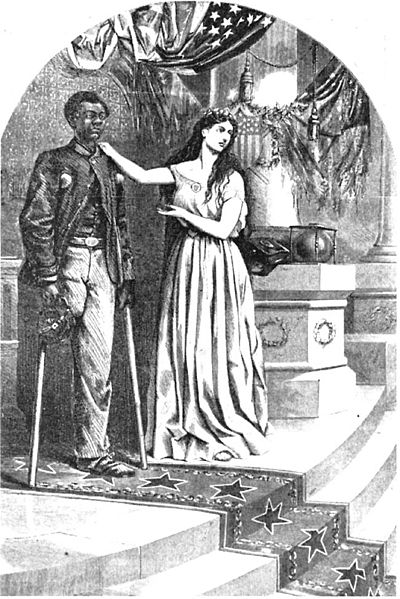
I think this also arguably applies to the work of Thomas Nast. In particular, I’m thinking of a couple of Nast’s cartoons which were highlighted in James Loewen’s excellent book Lies My Teacher Told Me. Loewen first points to the illustration below.

The cartoon was titled “And Not This Man?” and was printed in Harper’s Weekly, August 5, 1865. As Loewen says, the cartoon “provides evidence of Nast’s idealism in the early days after the Civil War.” It also shows the strong memory of black’s recent service in the Union army, and links that service directly to their citizenship, their equality, and their suffrage rights.

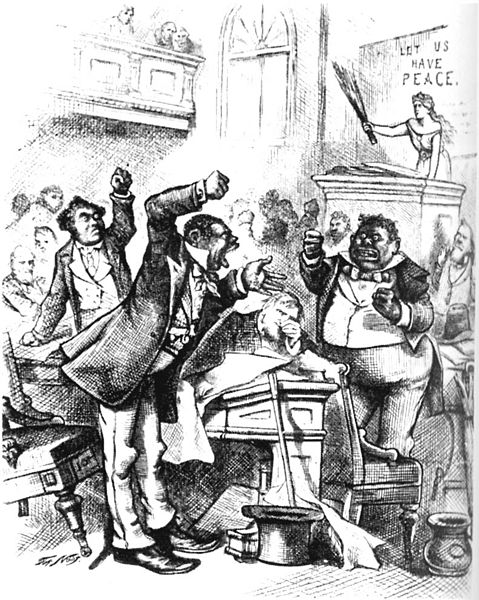
Here is another Nast cartoon, from nine years later.

This one is titled “Colored Rule in a Reconstructed(?) State.” Again, it was printed in Harper’s Weekly; the date was March 14, 1874. As Loewen says, “Nast’s images of African Americans reflected the increasing racism of the times…. Such idiotic legislators could obviously be discounted as the white North contemplated giving up on black civil rights.”

I think it’s clear enough that the second cartoon is, on its own merits, a vicious and evil racist piece of shit, which uses blackface imagery and racist iconography to (as Loewen says) justify inequality and discrimination. This sort of imagery and language was the basis for 100 years of Jim Crow. Moreover, this vision of Reconstruction still undergirds neo-Confederate sentiment and racism to this day.

But the second cartoon is only more painful when compared to the first. Sometimes cartoonists are excused their use of racist caricature on the grounds that they couldn’t have known better at the time, or that everyone was doing it back then. But, clearly, Nast did know better, and was perfectly capable of drawing black people without using caricature when he felt like it. He became more racist over time, not less. His racism was a function of his era, but it was not a function of simply living in the past. Rather, he was racist specifically because he was capitulating to a society which was becoming more racist — and not only was he capitulating, but he was actively encouraging that transformation. America betrayed its ideals…and Nast betrayed his own right along with those of his country.

And if Nast was culpable in 1874…well, it’s hard to see how Winsor McCay wasn’t culpable in the early 20th century, or how Eisner wasn’t culpable even later. Racial idealism wasn’t foreign to America; artists who were sufficiently intelligent or brave or moral had an iconographic and ideological tradition to draw on if they wanted to present black people as human. Cartoonists who chose not too — like Nast in 1874, or McCay and Eisner later — or Crumb later than that — were making a choice.

Along the same lines, I think these images show that Nast’s formal powers were deliberately and maliciously perverted. He used his considerable skills (evident even in these crappy scans) to make caricature look natural and feasible, to ridicule the weak, and to portray the Reconstruction period as one of chaos and monstrosity. If he were a lesser artist, the drawing would be less effectively racist. But even beyond the utilitarian argument, the second drawing seems more evil because we know, from the first, that Nast is capable of seeing and depicting black people as human. His betrayal is more thorough because there is a talent and a vision there to betray.

These cartoons don’t exactly make me angry the way that the comics I dislike the most make me angry. I was really furious after reading In The Shadow of No Towers, for example — the pompousness, the tediousness, the stupidity, all seemed to be speaking directly to me in a way which I’m afraid I took personally. That second Nast cartoon, though, is so old, and so clearly ideologically repellant that looking at it I don’t feel individually assaulted — just depressed and a little despairing for my country. Still, while it’s not my least favorite, I think that the magnitude and influence of its betrayal puts it in the running for being the worst comic ever.
__________

Click here for the Anniversary Index of Hate.

In Offense of Wonder/In Advance of Discrete Funk

“The man who has no sense of history, is like a man who has no ears or eyes” -Hitler

I hate Berlin by Jason Lutes, but I feel bad.

I feel bad for singling out Lutes (as opposed to other more successful folks I hate like Brandon Graham or Frank Quitely), some poor dude who is just working hard doing something he loves. Something decidedly uncool. With little hope of any reward. I feel bad for the version of myself (the idealistic, formalist one) who grew up in the nineties, but I hate him too.

And let’s just get it out of the way that I haven’t read Berlin – only early chapters of it many years ago.

[pic of my copy – er, um, sold it – imagine a space on the shelf big enough for a “graphic novel”]

But I don’t think my lack of familiarity with the book makes much difference because I’m well enough acquainted with it (I’ve read/listened to interviews with Herr Lutes, in fact) to know that it’s what I find quintessentially boring, concerned with the past as parts, with correctness and historical accuracy, with piecing together a clockwork apparatus that utilizes the “comics medium” properly. parts is parts…


I have these two competing metaphorical agents operating inside my brain: the quick, spontaneous, associative agent and the slower, more organized analytical agent.  The analytical agent seeks order, control – building systems that are self-contained and complete.  The unresolved nature of the work produced by the quick, spontaneous part of my brain is more interesting, though, to me because its success or failure just seems to happen – I can’t unpack the way it functions.

So, yeah, here’s what I hate: when cartoonists give themselves over completely to their fascistic, organizational side, when the design of the system they’re building is the goal, when the components of the work are these discrete, mechanical operators that are masterfully controlled to achieve a particular end.  I can appreciate the craft (and, really, the nineties college kid in me would love to be this sort of craftsman, where deeds would get him into heaven), but the work itself eschews excitement and delight in favor of propriety and cleverness.

It is creative process as control fetish, reducing life to pedantry and toil, cutting out the weirdness, the unexpected beauty that keeps me going.
 

Nuff said!

__________

Click here for the Anniversary Index of Hate.

And You Fuck Them Up Right Back: Stitches and the Ethics of Memoir

While I’m happy to participate in HU’s fifth anniversary celebration, I should make it clear that I’m a poor hater. I’ve read many comics that I dislike because I found them stupid or offensive, but rarely do my feelings escalate to the point of active hatred. By confirming my speculations about the decline of the medium, bad comics put me into a sullen funk instead of a rage. I brood better than I hate. If the following essay seems low on anger, chalk it up to my beta-male, passive-aggressive personality.

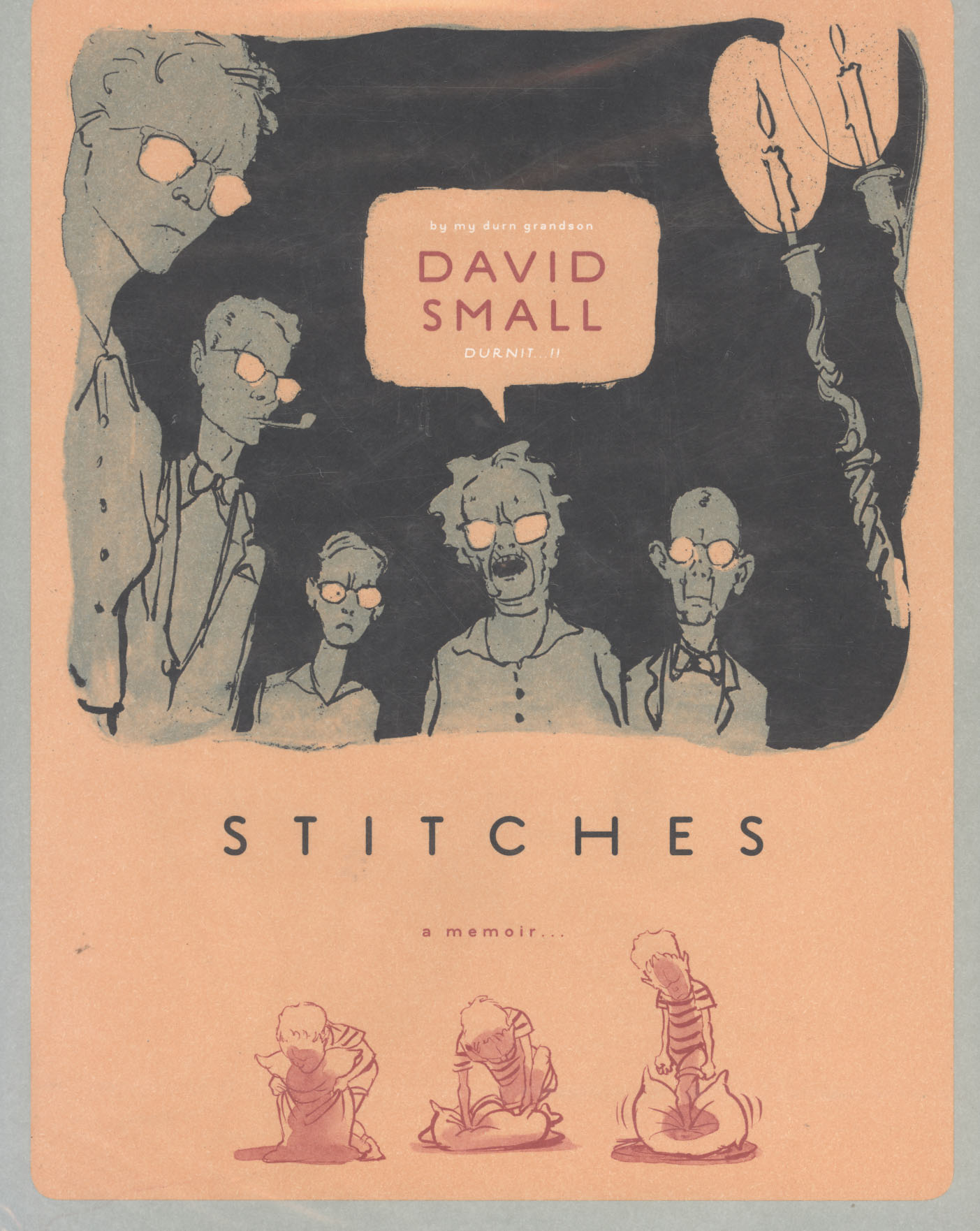
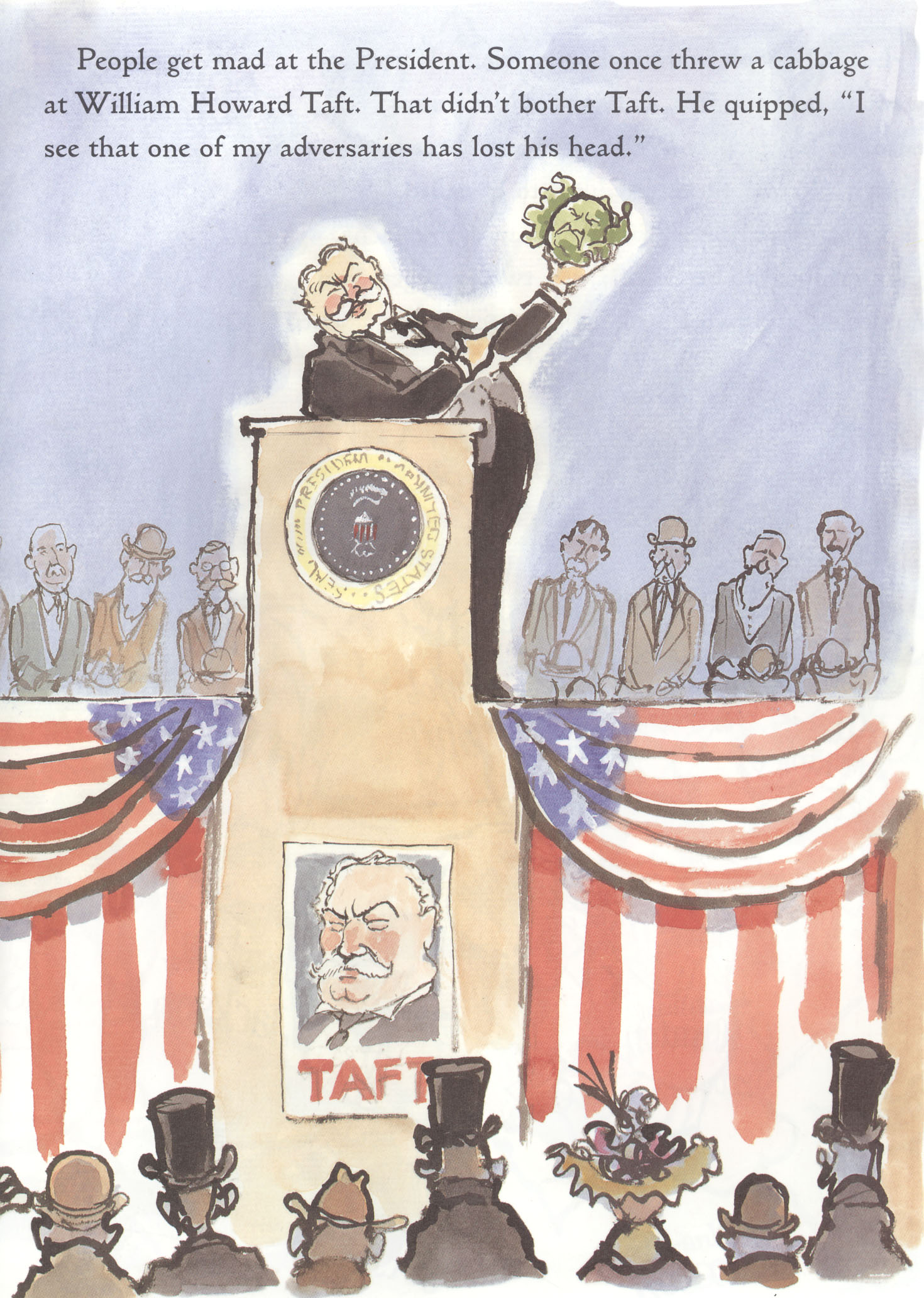
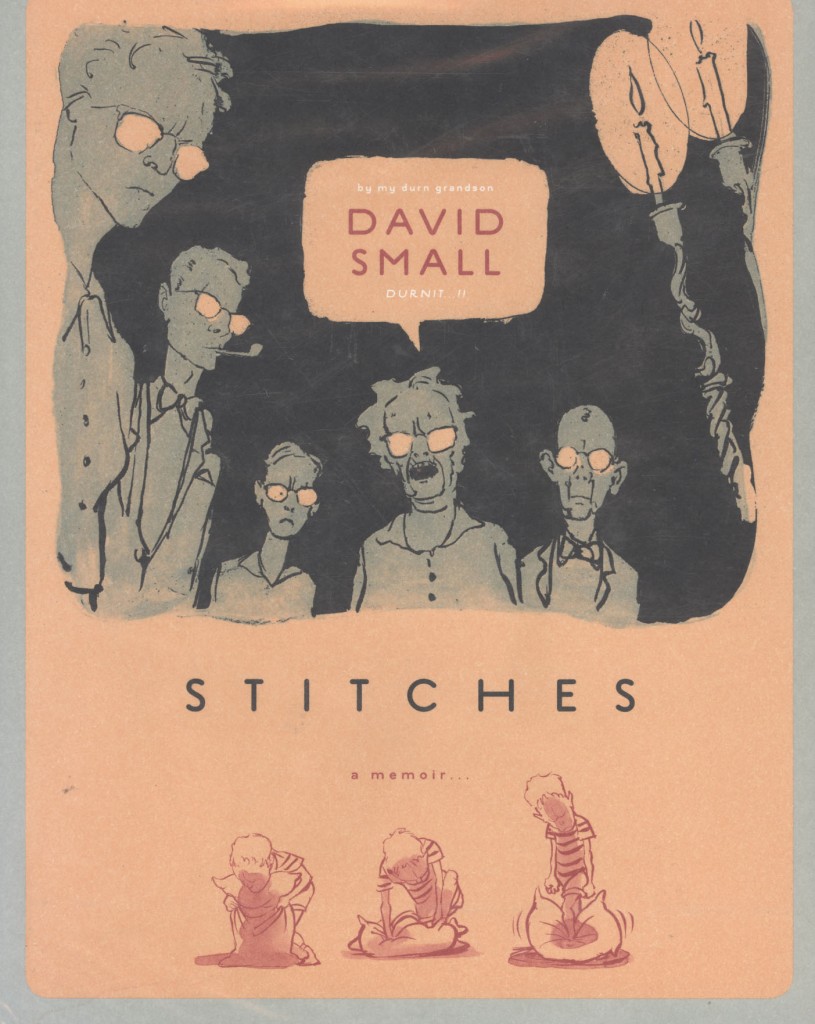
I’ll further deviate from my HU Hate-Fest Assignment by talking about a comic that on an aesthetic level is actually quite accomplished, David Small’s Stitches (2009). I came to Stitches familiar with Small’s art from a handful of terrific children’s books, including The Gardener (1997, written by Sarah Stewart, Small’s wife), a Depression-era tale of a farm girl who brings a rooftop garden and joy into the lives of her urban relatives, and So You Want to Be President (2000, authored by Judith St. George), a charming collection of stories about POTUSes past and present. Small can draw, as any sample of the Presidential caricatures in So You Want makes clear.
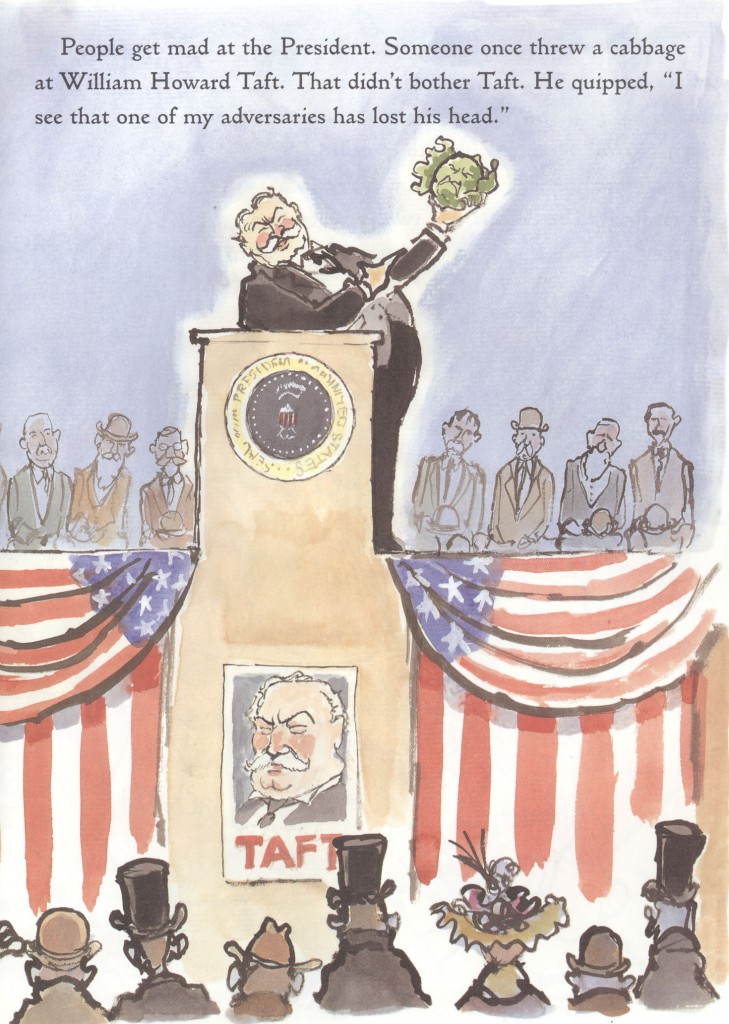
Small brings this same high level of craft to the pictures in Stitches, though I wish that publisher W.W. Norton had published the book in color. Small’s black-and-white ink washes are fluid and atmospheric, but I prefer his vibrant color work a bit more.

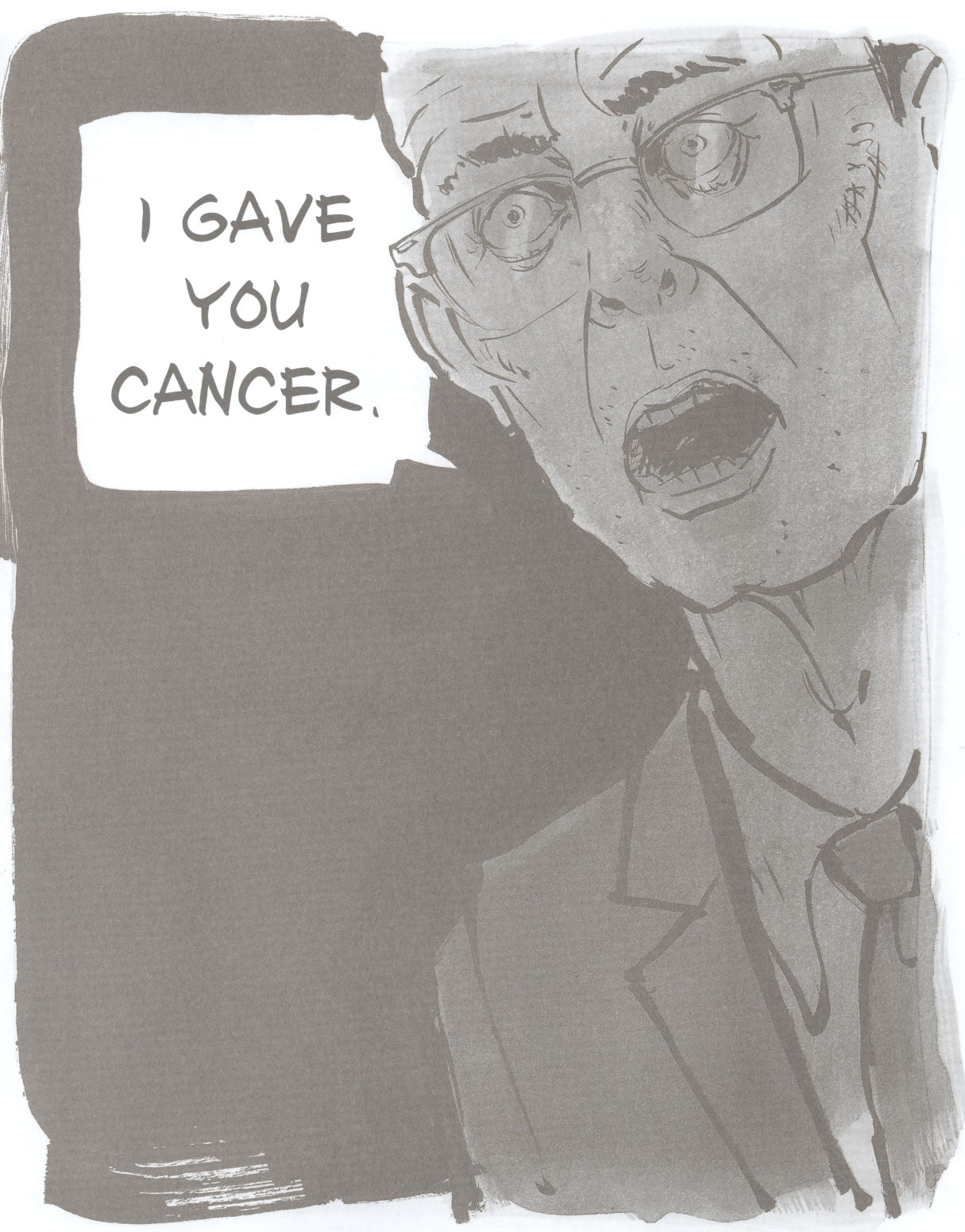
If I have nothing but compliments for the art in Stitches, then what’s my objection to the book? Stitches is a brutal memoir about Small’s childhood in an abusive family, whose members included his father, an emotionally distant doctor who treated David’s sinus troubles with carcinogenic X-rays; his brother, a bully who forced sensitive David to look at their father’s X-rated medical books; and his mother, a brittle, closeted lesbian prone to silent rages and devoid of any love for her sons. This is the stuff of both drama and prolonged introspection, but Small refuses to engage thoughtfully with his troubled past. His characterizations never move beyond one-dimensionality (Dad and Brother are bad, Mom the absolute nadir), and the book reads like a futile attempt to get back at those adults who damaged him as a child. Motivated by revenge, Small sacrifices one of the central ethical responsibilities of the autobiographer: to try to understand why the people in his/her life behave as they do.

I’m no scholar of autobiography, so let me consult people who are. In the excellent collection The Ethics of Life Writing (Cornell University Press, 2004), edited by Paul John Eakin, several essayists directly address the thorny dangers of writing about one’s parents and childhood. Near the beginning of his essay “Judging and Not Judging Parents,” for instance, John D. Barbour writes the following:

To the degree that a writer focuses on her relationship to a parent, she must explore the parent’s life, explaining how the parent came to have specific values and a certain moral character. It becomes harder to judge when one realizes how various influences shaped a parent’s life—including the fact that the parent, too, was once a child reacting to family pressures. If “tout comprendre, c’est tout pardoner” (to fully understand another person is to forgive), the autobiographer may find that the project of life writing makes it difficult to judge. He may recognize that a parent’s character was formed by causal influences beyond his control, for instance, during childhood or times of great duress. A writer may recognize the limits of moral judgment for other reasons as well, including a desire to forgive and awareness of the danger of judgmentalism. Intergenerational autobiography is a matter of both judging and “not-judging.” Moral judgment is not negated but made more complex by causal interpretations of behavior, by forgiveness, and by scruples about the appearance or reality of self-righteousness. (73-74)

Barbour makes other points to reinforce his claim that a memoirist’s evaluation of his/her parents is a minefield of complications. Most telling, perhaps, is his argument that “the experience of having children of one’s own” (74) can make an autobiographer realize how hard it is to be a mom or dad, and consequently be more sympathetic to one’s own parents.

Barbour’s observations are personalized by Richard Freadman’s essay “Decent and Indecent: Writing My Father’s Life,” where Freadman describes the process of researching and writing a biography of his father Paul, an Australian Jew who had, in son Richard’s words, “quite a successful career as a teacher of political science at a business school, a political commentator, and an exemplary citizen” (122). Richard Freadman further describes his father as a Decent man—a capitalized “Decent” to reflect the ubiquity of the moral norm of Decency in mid-20th century Australian culture—and as a man whose potential was limited by “dangerously low self-esteem and treacherous self-doubt” (123). Richard Freadman’s first quandary: if his father’s idea of Decency and propriety would prevent him from revealing secrets about himself and others, does the son have the right to talk about his father’s self-doubt? Does Richard Freadman have the right to write his father’s biography at all?

Throughout most of his essay, Freadman analyzes multiple definitions for the terms “trust” and “loyalty,” straining to figure out how he can be frank about his father while still remaining loyal to him. Freadman even stages imaginary dialogues with his dad, who died ten years before Freadman began the biography, and reaches a tentative peace with his father’s hypothetical disapproval:

I’d like to think that in putting many facets of my father on record, as I have done here, I have brought a fine man back to life for the contemplation of others. In the end, I have to leave it to the reader of the book to decide where, if anywhere, the essential Paul Freadman resides, and what he would have felt about this book. I hope I haven’t subjected a profoundly decent man to unreasonable narrative indecency. I hope I have done the right thing in publishing this auto/biography. I think I probably have. (145)

These essays by Barbour and Freadman, and most of the other pieces in The Ethics of Life Writing, posit that autobiography is a tricky genre that requires, at the very least, authors who recognize and contemplate the dilemmas implicit in writing about the family that shaped their earliest years. Can we ever be objective about our parents? Should we even bother to chase some ephemeral notion of “objectivity” in our memoirs? “They fuck you up / Your mum and dad” and can we forgive them enough to represent them somewhat fairly and three-dimensionally in our memories and books?

When I read Stitches, I see no forgiveness, and few attempts by Small to understand his Mom and Dad outside their rotten parenting. Dad comes off a bit better than Mom, if only because Small defines him as the typical post-war absent patriarch. He’s present at the family’s dirge-like suppers, but escapes soon afterwards, either to his punching bag in the basement or to some undisclosed destination in his car. Perhaps the most harrowing passages in Stitches have to do with David’s illness—his two operations, his first sight of his neck scar (“My smooth young throat slashed and laced back up like a bloody boot”) and, most wrenchingly, his discovery that his parents hid a cancer diagnosis from him—and Dad is a full co-conspirator with Mom in all these lies and injustices. Dad is redeemed somewhat, however, at the end of Stitches, in a key moment (its importance underlined by a full-page splash) where he assumes his responsibility for the overdose of X-rays that he gave his own child.
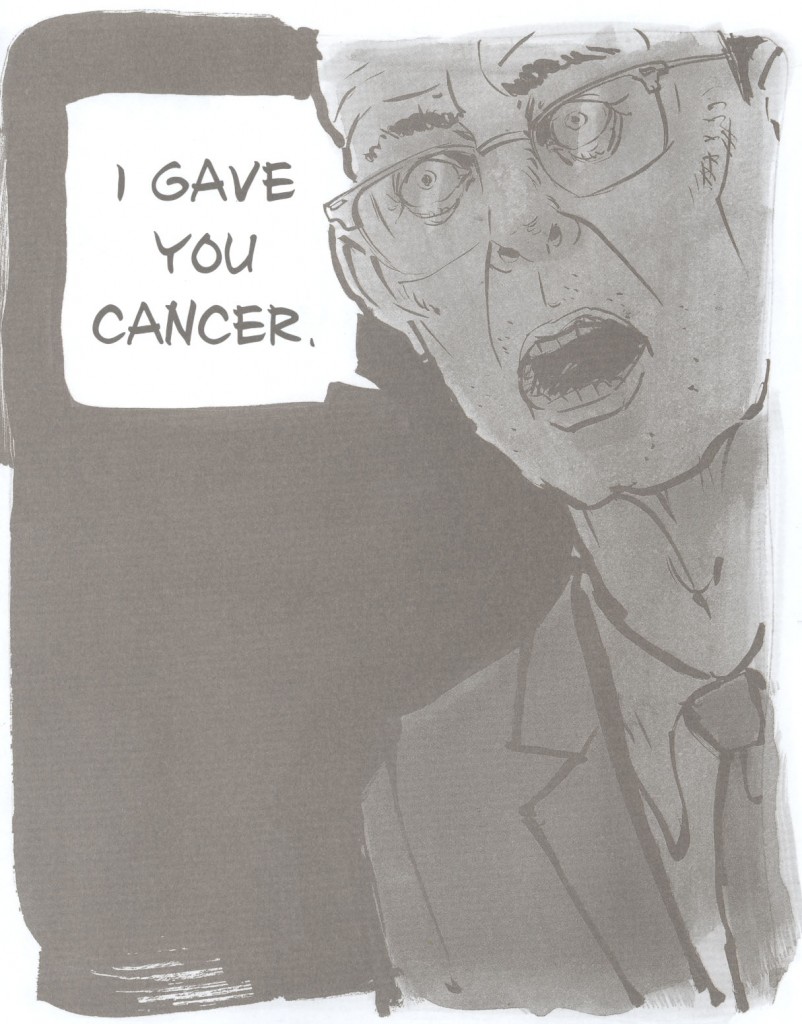
 

After this moment of truth, Dad drops out of the book, only to reappear briefly in an appendix that includes a photograph of Small’s Dad, and a note indicating that after Mom’s death, father “remarried—happily this time—and lived to the ripe old age of 84” (328). Dad gets a happy ending and relatively benign treatment from his son, although he never emerges as a fully fleshed-out character, partially because certain questions about him remain unanswered. Where did he go at night when he went out driving? What motivates him to confess to David about the cancer? For me, the biggest problem is that Small gives us no information about how two such spectacularly incompatible people managed to marry and have children. The family dysfunction is presented as a fait accompli; Small never analyzes his father’s past, never tries to explain how his father’s character was shaped by moral lapses, poor choices (particularly in a wife) or (in Barbour’s words) “causal influences beyond his control.” As a result, father Small remains a cypher.

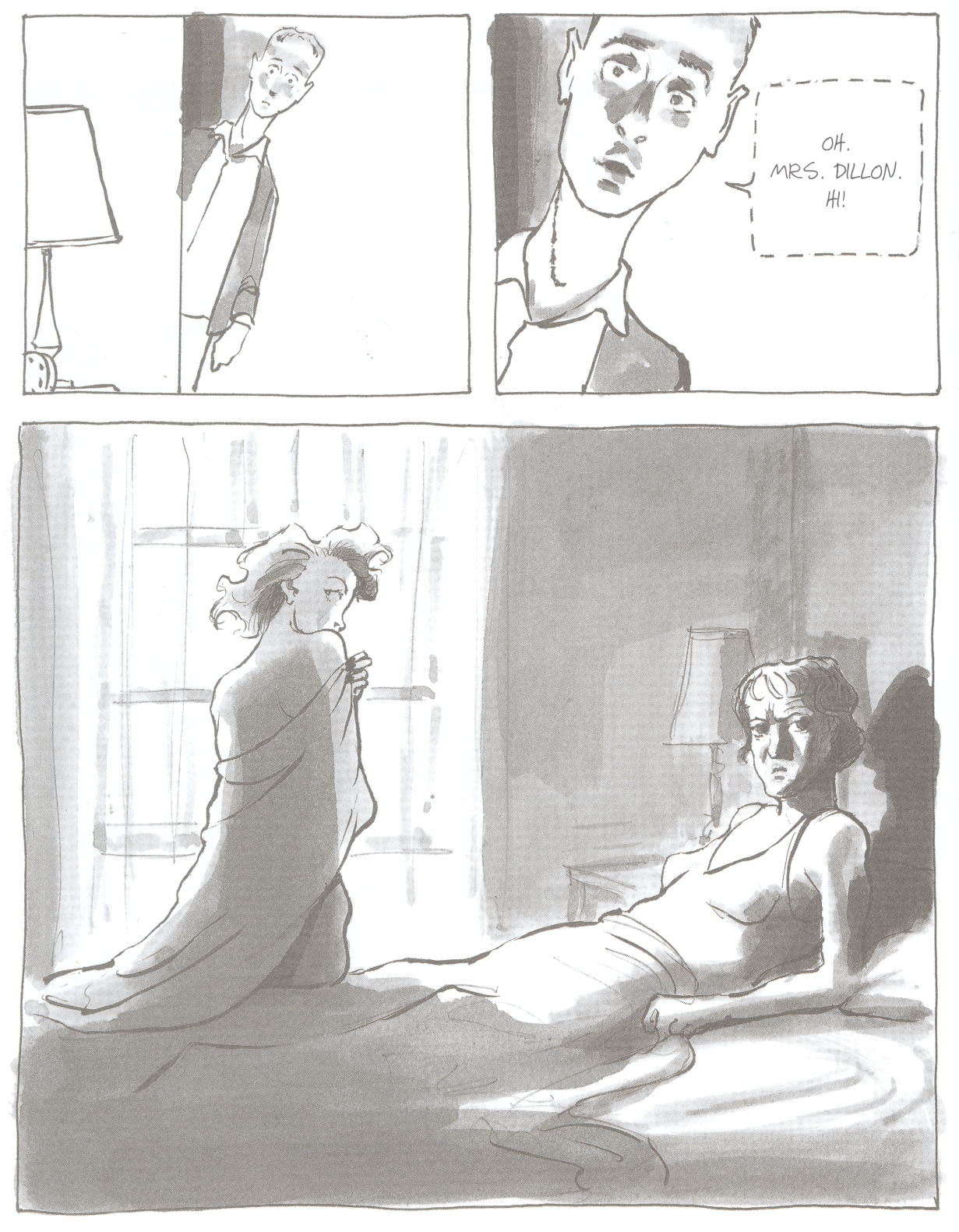
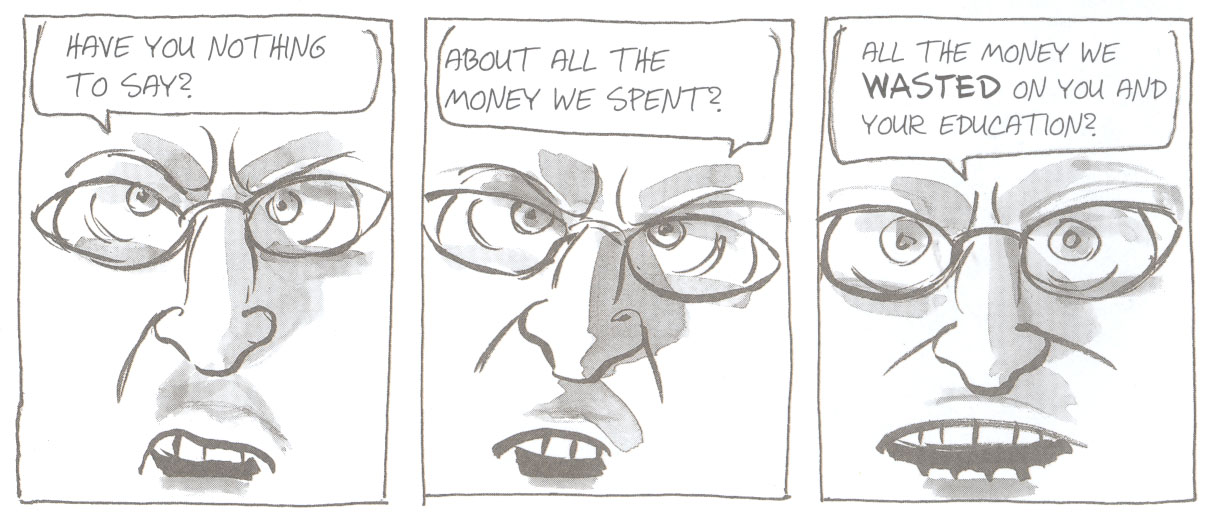
Small’s mother was a terrible person, and Stitches is a catalog of the ways she abused her children. She keeps the domestic situation tense by slamming cupboards and refusing to speak; she slaps David when he loses his shoes; she goes on a shopping spree instead of using the money to pay for David’s doctors; she burns David’s library of paperback books because he was reading “smut” like Nabokov’s Lolita (1955); she sends David away to boarding school, and rages when the school administrators send him back home; and she hardens even more towards David when he accidently catches her in a tryst with another woman.
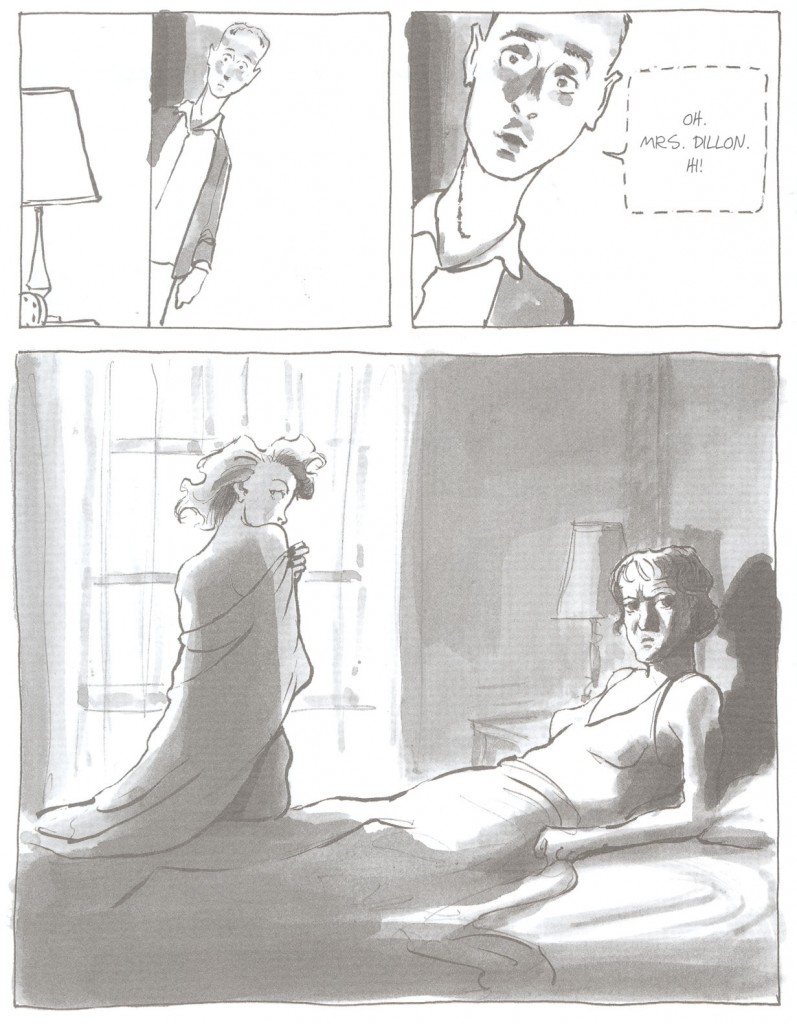
 

Small’s messed-up relationship with his mother is the fuel for two of Stitches’ epiphanies. The book’s acknowledgements include a special thank you “to Dr. Harold Davidson, for pulling me to my feet and placing me on the road to the examined life” (331), and though he’s never identified by name in the story, Dr. Davidson is clearly the psychotherapist that facilitates the healing of fifteen-year-old David about three-fourth of the way into Stitches. Davidson is drawn as the White Rabbit in Alice in Wonderland (1865)—one of a cluster of motifs that show how Alice’s playful escapism was a lifesaver for David—and in their first session tells David the blunt truth: “Your mother doesn’t love you” (255). The next several pages show David’s tears expanding to drench all the objects and locales in his barren suburban world.

Another of David’s key insights comes as a dream at the conclusion of Stitches. He’s a child again, looking out the window of a large house; he sees his mother sweeping a path to an insane asylum, “the one where Grandma had been locked away” (324). Mental illness ran in Small’s maternal family—his great-grandmother was a kleptomaniac, his grandmother a would-be homicidal arsonist—and he interprets this dream as an invitation to succumb to his own demons, to follow his grandmother and mother into insanity. His response is two words on an otherwise blank page: “I didn’t” (325). Stitches is the story of how David learns to live without mother love, and without going mad.

Small’s decision to focus almost exclusively on his own journey, however, prevents him from diving into the points-of-view of other characters. I don’t want to defend Small’s mother—there’s no excuse for how she mistreated her two sons—but David isn’t interested in finding any explanations for her behavior. Throughout most of Stitches, Mom is shown to be unworthy of our empathy or understanding, a cross-eyed ogre that David must transcend to become a well-adjusted, psychically healthy person.
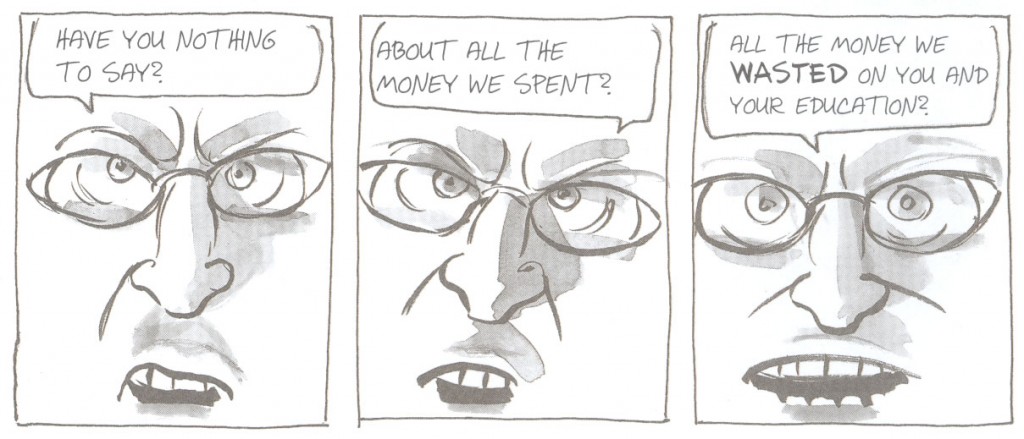
 

But therein lies the paradox: the more Small presents his mother as the evil villain, and himself as the heroic victim, the more we realize that he didn’t grow up to be well-adjusted, and that much of Stitches is about settling scores with a ghost rather than reaching any cathartic truce with his past. His maternal grandmother was a deeply disturbed woman, but Small doesn’t consider how this made his mother’s childhood a horror too. In Stitches’ appendix, Small describes his mother’s physical problems—“Born with her heart on the wrong side of her chest, she suffered from multiple heart attacks towards the end of her life. She also had only one functioning lung” (327)—but gives no attention to how these infirmities might have twisted her personality. And Mom’s lesbian desires are played mostly for laughs, especially in a party scene where she shamelessly flirts with a glamorous family friend, but I can only imagine what a grind it must’ve been to be gay or otherwise sexually non-normative in the Mad Men era. (In Dress Codes: Of Three Girlhoods—My Mother’s, My Father’s and Mine [2002], Noelle Howey writes that the incompatibility between her father’s biology and his gender identity was so agonizing for him that he had to change his sex to become a nice person.) While reading Stitches, I kept hoping for some consideration of his mother’s difficulties, for some of Barbour’s “judging and non-judging” and Freadman’s thoughtful ambivalence. No luck. Thirty-four years after his mother’s death, Small is still pissed, still too close to his subject, and his continuing hatred for his mother flattens her into a one-dimensional monster.

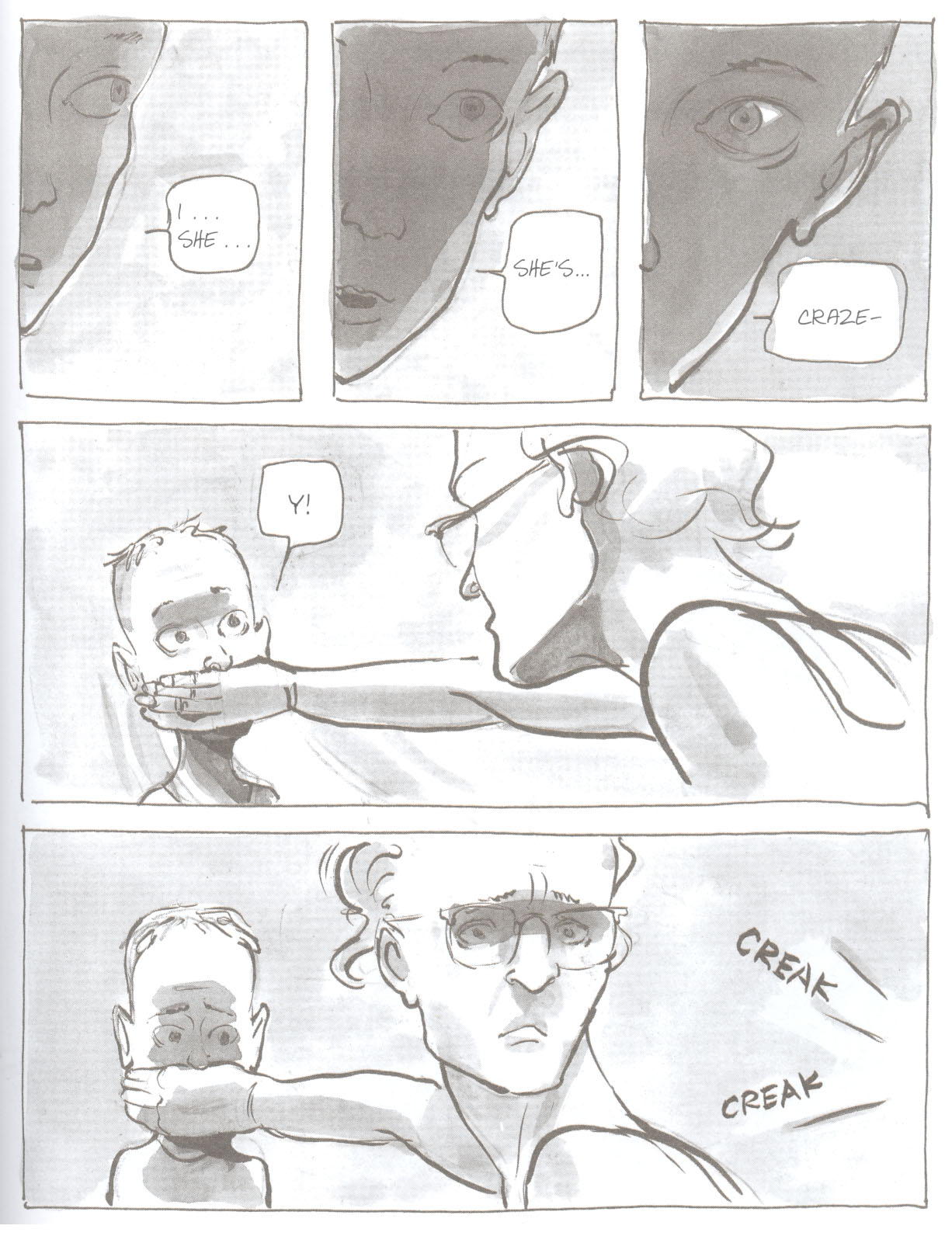
There’s only one moment in Stitches where Small hints at any empathy for his Mom. About a third into the book, after Grandmother scalds David’s hands with hot tap water and sends him to bed early, Mom returns to Grandma’s house. David explains to Mom how he’s been mistreated, and he’s about to say that his Grandmother is insane when his mother silences him:
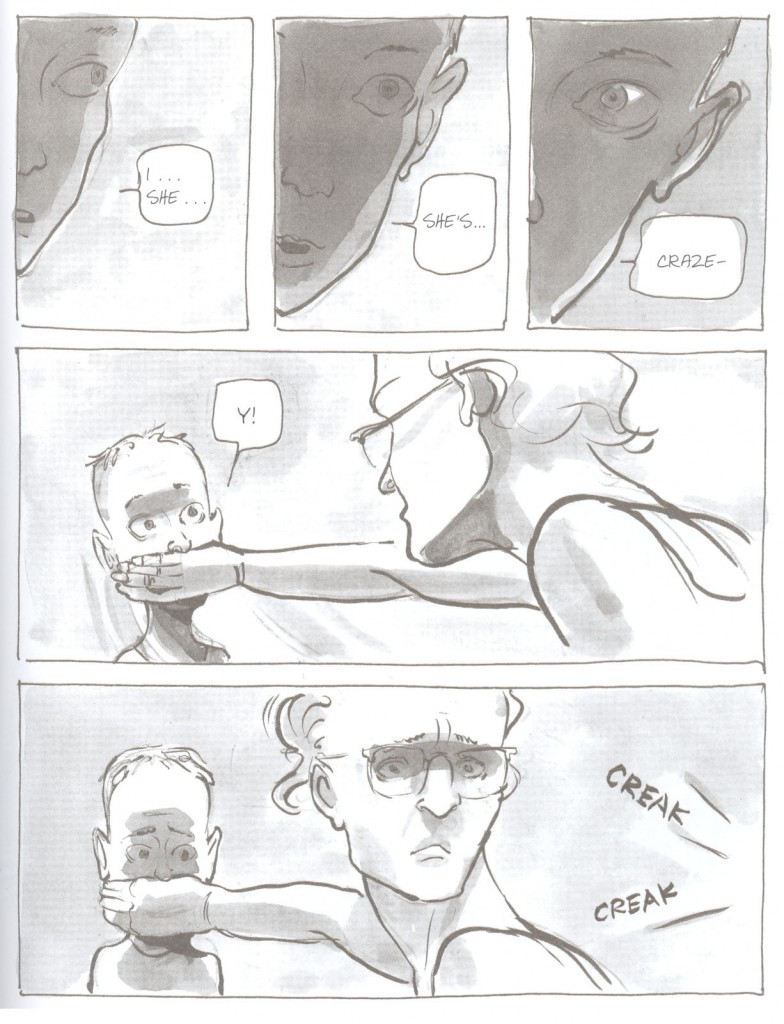
 

That look on Mom’s face in the last panel is one of the few times in Stitches she’s drawn expressing an emotion other than hatred or contempt. Even as an adult, she’s afraid of her mentally ill mother, and we understand that she’s been irrevocably scarred by forces beyond her control. Retroactively, Small also feels for his Mom—little David can’t see her face as she turns away, but the adult artist intuitively knows that she’s become an animal in a trap. This moment of insight and empathy passes quickly, however, and Small’s mother snaps into her role as Sauron for the rest of the book.

The moment I find most depressing in Stitches comes in the appendix, where Small writes the following about his mother: “If this had been her story, not mine, her secret life as a lesbian would certainly have been examined more closely” (327). The essays in The Ethics of Life Writing define memoir as a genre that obligates its practitioners to trace connections and influences among individuals, family members, social forces, ideological beliefs; Small instead builds false walls between himself and his mother, pretending that her “secret life as a lesbian” didn’t affect her character and, by extension, himself. The best memoirs remind us that we are part of each other, but in Stitches Small stands apart, refusing to extend empathy or forgiveness. The result is an autobiography that feels, well, small.
 
Click here for the Anniversary Index of Hate.

The Hooded Utilitarian Comics-Hating List of Love

I’ve hated hard in my day. Hated hard and long and hot. Hated all day long in the burning sun and come back to hate some more. Most of all, when they’ve deserved it, I’ve hated comics. I once wrote a sitcom pilot based on my life and entitled it “Hating Comics.” (This is 100% true.) But a while back, hating comics lost its luster. I stopped reading comics blogs and message boards, cut back my comics reading to the stuff I actually liked, and renounced comics hate in all its forms. My chakras are now clear and my heart is simple as a child’s as I meditate upon the eventual ascent of my soul unto the Fourth World.

That’s why, when the Hooded Utilitarian invited me to this roundtable, I responded SHAME! Shame on you, Hooded Utilitarian, for promoting negativity! For promoting divisiveness within Team Comics! Comics blogs lead to anger, anger leads to hate, and so on. Personally, I have evolved beyond such base sniping. I no longer hate comics. I have certainly not ranked various comics by level and quality of the hate produced therein, from those which inspire white-hot sputtering rage to those which merely stir intense allergic dislike, nor have I organized my most hated comics into various little categories. Categories like:

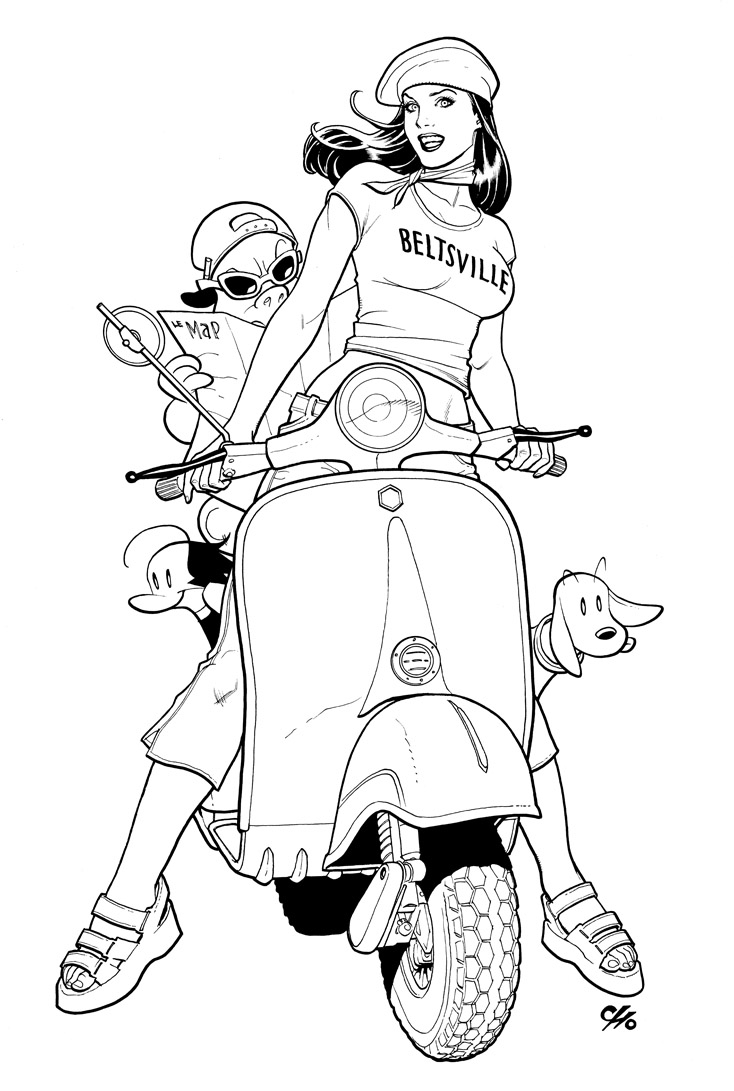
Most Hated Comic Strip. You see, this is how damaging hate can be. There was a time, in my youth, when I was consumed by hatred of Frank Cho’s Liberty Meadows. It reached the point that my future husband, when about to introduce me to one of his childhood friends, added, “And please, please don’t mention Frank Cho.” Was this healthy for our relationship? Surely not.

Yes, Liberty Meadows was unfunny, predictable, tidily but lazily drawn, burdened with one of those self-pitying-nice-guy-nerd protagonists I just want to punch until they cry and then stomp on their glasses, and popular only because it featured huge-breasted women drawn in profile, but was that any reason to hate it the way I did? At the time, I didn’t even know about Cho’s “censored” strips wherein his cute-animal characters describe how to perform a donkey punch. My anger was completely out of proportion.

In fact, it was Milo George’s epic takedown of Liberty Meadows in the pages of The Comics Journal, on the occasion of the strip’s reception of an Ignatz Award, that first warned me off the dark path of hate. As an ardent Liberty Meadows hater, I should have basked in sweet schadenfreude, but it didn’t feel meaningful because Milo George hated everything. He’d probably be just as bitchy to Bone. That was my first inkling that hate, when it becomes all-consuming, ultimately loses its power and its meaning.

Most Hated Superhero Comic. Hardcore superhero fans are much better at hating superheroes than I could ever have been, even at my most hate-filled. That said, I confess to being one of the many nerdgirls outraged by DC’s ungentlemanly treatment of Stephanie Brown, a.k.a. Girl Robin. And it all started so well! I’m officially meh on Batman (grim superheroes are just not my thing), but I did always dig the girl Robin in Dark Knight Returns. When, in the mid-2000s, Stephanie “Spoiler” Brown put on the Robin costume and started spunkily kicking ass, I found myself interested in Batman comics for the first time.

So of course Girl Robin got kidnapped and tortured to death.

Then, in an even more hateable and much more bizarre plot development, longtime heroic doctor character Leslie Thompkins took a break from being awesome in the Batman TV cartoons to reveal that she deliberately let Stephanie Brown die in order to teach Batman a lesson. So not only is Girl Robin a textbook Woman in Refrigerator—that is, a female character who is tortured and/or killed strictly to provide the male characters with motivation—the refrigeration was actually engineered in-story. By another female character.

But I don’t hate those comics. Not anymore. I am…irked, perhaps. But hate? Never. Remember how hate can spiral out of control. Keep it down. Keep it way low down.

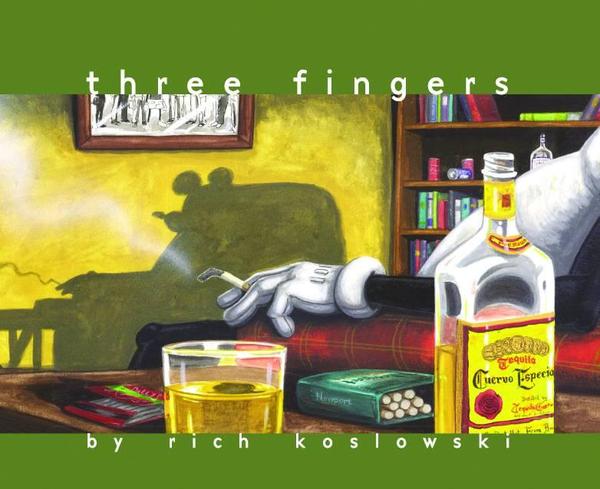
Most Hated Graphic Novel. OH MY GOD RICH KOSLOWSKI’S THREE FINGERS.

Down. Calm. Down. We don’t hate anymore, remember? We’re past that. Visualize soothing images. Reed Richards entering the Negative Zone. Roger Langridge’s Muppets riding a bus with the Electric Mayhem playing on the roof. Lynda Barry monkeys.

There. Better.

I shouldn’t hate this comic, anyway. Koslowski seems like a nice guy, and he inks a mean Archie comic, and he probably meant well. It’s just that I was suckered into paying hard-earned money for what turned out to be a queasy remake of Who Censored Roger Rabbit with none of the cleverness and deeply inappropriate appropriation of mid-century national tragedies. And having Mowgli from Disney’s Jungle Book as the Toon equivalent of MLK was just a weird choice, and why do I even remember that detail? And then it won an Ignatz Award, which seems to be a recurring theme in comics I hate…

I mean used to hate. Used to. Because I don’t hate anymore. I love. My heart is open and I love comics without judgment or reservation, I welcome all iterations of sequential art into my arms…

Most Hated Webcomic. Okay, I give up. The hate is back. Also? Ctrl-Alt-Del.

__________

Click here for the Anniversary Index of Hate.
Losing One’s Way in NeverNeverLand

There’s a major comic market in France. Since I don’t know the numbers, I hesitate to claim it’s a bigger industry than the US’, though I’d like to imagine so. My argument: like manga in Japan, comics in France are seen as targeted to a wider audience, and not just to what is perceived as an audience of kids. It’s not quite to the extent of Japan’s market, where there are comics for as many social demographics that exist, but in France, some kid’s grandparents are as likely to read and enjoy the same comic book as their 15-year old grandchild.

I had a period where I was wholly engrossed by US comics, around the age of 12-15, but I had been indoctrinated into comics years before (by Astérix and Tintin and before that, Topolino, the Italian-language Mickey Mouse comics, which is another story of comics transcending the target audience perceived in the USA), and although my romance with superheroes ended in my early teens, my love for the French comic industry in general continues far into my adulthood.

The attitude of French comic lovers from France — where there is a substantial market for manga and US comics, known there as “comics” (to differentiate how the French call their comics “bandes déssinées” or “BDs”) – is that their native-language comics require an immense amount of work and planning to put out… perhaps in unspoken contrast to their perception of how much less work manga or “comics” require to complete, or perhaps not. Sure, it’s part snobbery, part elitism, but take a look at any French comic book and you can tell that at least there’s a more important investment financially in being a fan: Every single BD is hardcover, from the original Lucky Luke‘s to the final volume of De cape et de crocs, and as such cost around 13-15 euros a piece. There are never any ads in any French BD, and there’s a sense that the population in general sees the medium in a more artistic light than how Americans view the comic industry – take a look at most reviews of French BDs on amazon.fr and you’ll get far more florid, well-spoken, nigh-erudite examinations of the artistic merit of the art style, the story pacing, and the cultural significance of a comic series (take Aldebaran as a good example), as opposed to the kind of reviews you’re likely to read on English-language Amazon where people can’t get things like “their” vs. “they’re” straight.

But all this “high” art, with all of its veritable or romanticized artistic merits, does come at a price beyond the financial one: The next issue of a BD series in which you were left with a cliffhanger revelation on the last page of the previous book might not come out for years. In France, it’s viewed as nothing short of a well-oiled machine in the extreme when a BD series puts out a new book every year. In fact, it’s borderline suspicious. Take Christophe Arleston, one of the biggest names in BD from the past 15 years. He’s got his scenario-writing fingers in no fewer than five pies at once, with some of those pies baking a new slice every year, much to the criticism of the French public, who generally believe his work has become about cranking out quantity over quality, and has become rehashed, shallow, recycled. formulaic pulp as a result. In contrast, the superb, highly celebrated series La quête de l’oiseau du temps‘s first book was released in 1983, and 2010 saw the release of only the seventh book, including an 11-year gap between books 4 and 5, and a nine-year gap between books 5 and 6. Compared to that, the release schedule of the next book of a series like “Harry Potter” would seem like the next issue of “Vogue.”

I’ve always wondered how an industry could sustain itself with such a business model; how people wouldn’t get so aggravated or simply just lose interest during the years of wait between books 2 and 3. French comic shop owners point out that there generally aren’t any deadlines on BD creators, and that the industry isn’t quite so successful to allow the creation of BDs as a livelihood to more than a few artists.

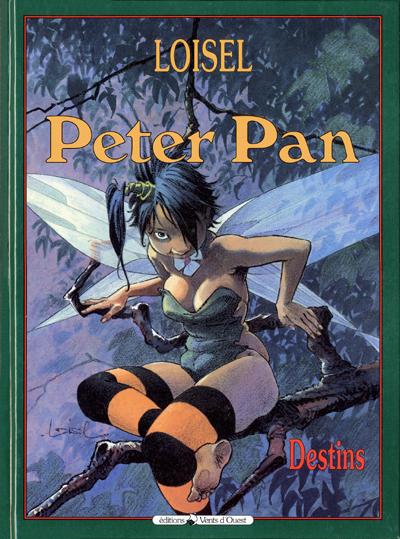
There’s even a bigger drag to having to wait, though. Sometimes where a series ends is far different than where it began. The series that will live in the most personal infamy is Régis Loisel’s re-interpretation of the origins of Peter Pan (BD) It took some convincing to read this series, but that it was a darker, more adult-oriented re-imagination of the famous tale, and that it was made entirely by part of the creative genius team responsible for the essential “La quête de l’oiseau du temps” made me take the plunge.

In Loisel’s version, Peter is the bastard son of an abusive, alcoholic whore in 19th Century London. After meeting a fairy in the slum where he lives, Peter manages to escape to Never Neverland, where he ingratiates himself with the fairies and satyrs there. They elect him their leader after he helps fight off the pirate who later loses his hand and becomes Hook. Hook is hanging about in part to find treasure purportedly hidden in Never Neverland. There’s also something to do with Hook having had an manipulative affair with one of the islands fatter mermaids, who’s still in love with him.

Loisel’s first “aha!” creative spin on the tale comes from the origins of Peter Pan’s name. In the story, it is derived from Peter’s own, Christian name, and the name of his short-lived best friend and leader of Never Neverland, Pan (yes, just like the mythical satyr), who is killed during the struggle with Hook. Pan’s death leads to Peter becoming the island’s leader, and he takes on his friend’s name as an homage.

Loisel’s “Peter Pan” first four volumes were released between 1990 and 1996, a relatively brisk pace for the French market. As such, the story is interesting, creative, and most importantly, gives a sense of a well-progressing narrative.

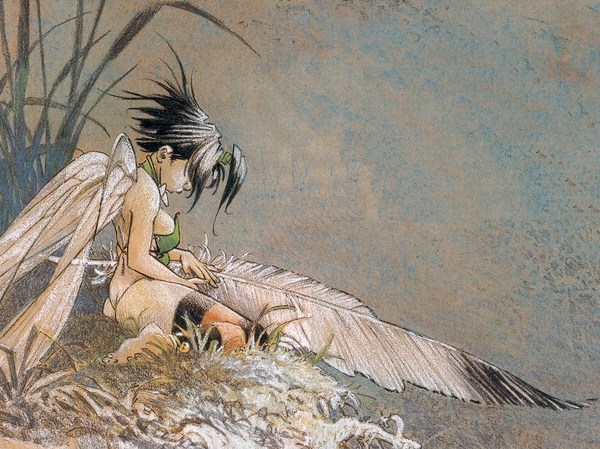
By the time volume 5 was published, five years had gone by since volume 4, and things were starting to take an odd turn. There was a lot more focus on a side story involving Jack the Ripper back in London, and an arc portraying Tinkerbell as a manipulative, selfish, careless creature responsible for the deaths of Never Neverland residents who got a little too much in her way. The story still floated, but the feel that books 1-4 were one entity, and that book 5 was another was strong.

2004 saw the release of the sixth and final volume of the series, which cemented the sense of bewilderment. Now, the Jack the Ripper side story became central, and it was revealed that Tinkerbell had been repeatedly rubbing out her rivals. She never suffered for her actions, though, in part because it turned out that Never Neverland had the effect of wiping clean any inhabitant’s mid- to long-term memory. This meant that no one could remember where anyone came from, why they were there, or how their situation came to be… and that included Peter’s tale and Peter’s own personal recollections. It turned out that the tale of Never Neverland had been on constant repeat since time literally immemorial, and that all of its inhabitants were caught in its temporal memory-loss loop.

It’s not even how the series ends with Jack the Ripper stalking and killing another victim (I seem to remember it being Peter’s mother), or that the entire series took a major emotional turn from a boy’s tale of triumph over adversity and his rise to power. It’s that the story changed tone and content to such a degree that it not only felt like two separate stories, it felt like the author had taken too long to complete his vision, had grown weary of the work he had made in the ’90s, and wrapped it up with some out-of-left-field randomness that felt convoluted, obscure, half-baked and rushed. Essentially, whatever had been built during the successful first 4 volumes had been utterly crapped on in the final 2. The first movement’s mood is of edgy adventure, of progressive storytelling; the mood the reader is left with on the second movement is of depression, that the world is a bleak place with no outcome, that no wrong is righted, all of which is communicated with a strong lack of closure.

Today, in research for this article, I looked up the story of this series online, and discovered an interpretation that Loisel’s intention with the inclusion of Jack the Ripper was to stipulate that Peter Pan and Jack the Ripper were in fact one and the same, which, if accurate, is a major plot point that I was utterly clueless to until having read that (though it helps explain some things). This does little to change my opinion that Loisel’s “Peter Pan” is one of the most irresponsibly wasted efforts I’ve come across in my comic reading life, one whose rampant disregard for its own craft and narrative tone soured my mood for some time after. Considering its horrific procession from interesting work to obvious cut-and-burn job, it is my vote for Worst Comic of All Time.
_____________

Otrebor is a musician from San Francisco whose most notable bands are Botanist and Ophidian Forest.

 
Click here for the Anniversary Index of Hate.
Hating on Season Eight

When Noah invited me to take part in the “anniversary of hate,” I wasn’t sure at first that I would have anything to contribute. After all, I am primarily of the belief that life is too short to waste a single moment reading crap, and therefore either never start comics (or novels or TV shows) that don’t appeal to me or quickly give up on those that soon prove unpalatable. There was one case, however, where my abiding love for the original source material coupled with an excess of faith in its creator caused me to see an awful series through to its conclusion, pretty much hating it more and more as it went on. That series is Buffy the Vampire Slayer Season Eight, overseen by Joss Whedon but written by various folks. Warning: spoilers and fangirl ranting.

In retrospect, I should’ve known right off the bat that it would be bad. The first arc—which establishes the characters’ current whereabouts and the existence of an ambiguous new enemy called “Twilight”—features a certain character that Joss “forgot” was canonically confirmed dead and not dead in a conveniently retconnable way. Not very encouraging. Still, the series was just starting out and, as many fans pointed out at the time, season openers on the show were never his strong suit. So, I persevered and seemed to be rewarded with a strong second arc, “No Future for You.” Penned by Brian K. Vaughan, this arc introduced the very best thing about Season Eight—the growing bond between Giles and Faith—which, in turn, paved the way for the currently running (and superior to Season Nine) Angel & Faith series. (Ironically, Vaughan never wrote for the TV incarnation, but did a better job than those who actually did!)

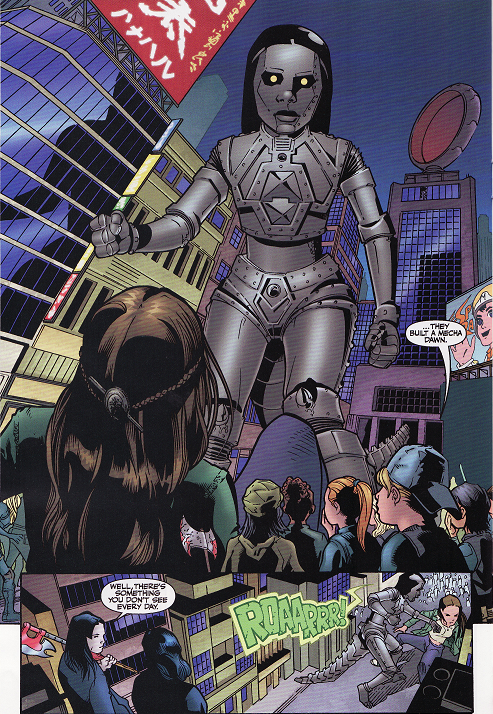
Alas, my hopes were dashed by the third arc, “Wolves at the Gate,” which continued the Season Eight theme of “bringing back characters you don’t want” by reintroducing Dracula (who appeared in all of one episode) and shoehorning in a backstory about how he consoled Xander after the loss of Anya, all seemingly to make Drew Goddard’s Tales of the Vampires short story “Antique” suddenly canon. As if this weren’t enough to piss me off, there was the righteously stupid cameo by Mecha Dawn and all of the publicity buzz that accompanied Buffy’s one-night stand with a fellow Slayer, which we were assured wasn’t just supposed to be for shock value. Uh-huh.

Volume four, in which Buffy travels into the future and meets fellow Slayer Melaka Fray (who once had a short series of her own) as well as a future incarnation of Willow, sucks less than the others. There are a lot of unanswered questions about what Willow was doing there—present-day Willow insists it couldn’t have been her—but, in general, I don’t have much to complain about. Volume five casually introduces a plotline that winds up changing the entire Buffyverse. Essentially, the populace learns about vampires and is suddenly “go them” and “boo Slayers.” It’s really stupid and seems like it wasn’t thought out very well but it’s something that subsequent writers haven’t been able to just ignore. It’s even cropped up in an issue of Angel & Faith and I am ready for it to go away, like, yesterday.

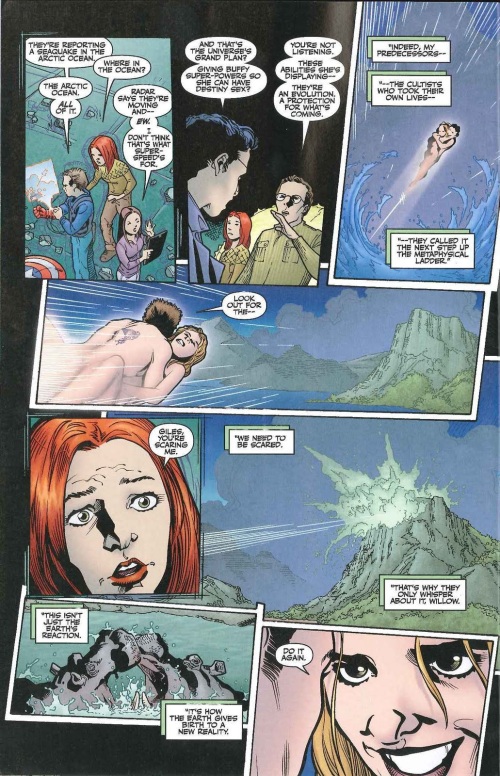
In volume six, Slayer central has come under attack by Twilight, who has tracked them by their magical signature, and since the public hates them Buffy decides to go off the grid and essentially invade the bucolic existence of the one person they know who’s managed to divest himself of magic: Oz. After bringing a huge battle down upon his peaceful life, complete with some random goddesses that kill indiscriminately, Buffy discovers she can fly. Whee! About this time I decided that what I was reading could no longer be considered canon but somebody’s convoluted fanfic. And if I’d thought what I’d read before was mind-bogglingly dumb, I was not prepared for volume seven, in which a random prophecy that we’ve never heard of before suddenly comes into play. It states that a Slayer and a Vampire (here embodied by Buffy and Angel) will engage in boffing of such magnitude that it births a new universe for superbeings. No, really. See?

To stop the formation of the new universe and the destruction of the current one, Buffy and friends return to the Sunnydale Hellmouth in volume eight and destroy “the seed of wonder,” which is the source of all magic in the world. Betrayal ensues. A beloved character dies. Thus endeth Season Eight, pretty much, except for a glimpse of Buffy’s life a few months later.

I’ve griped primarily about the plotting here, but lest you think my hatred stems solely from that quarter, I assure you that I’ve got issues with the way the characters are treated, too. While Xander is consistently one of the bright spots of the series, Willow is severely underused, and Dawn doesn’t get much to do, either. Buffy mucks things up in a colossal way, which isn’t out of character for her, but she is depicted as being so desperate for male attention that I found it offensive.

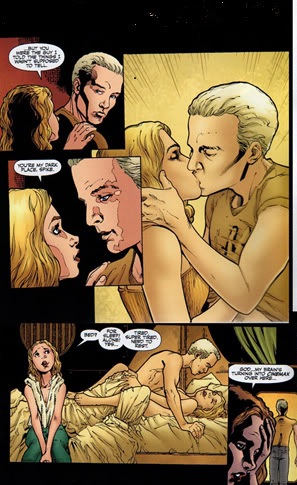
First, she decides that she loves Xander by virtue of him being the only guy around. Then Angel shows up and she boffs the heck out of him, never mind that he’s been revealed to be the Big Bad responsible for the deaths of over 200 Slayers. Now, true, it’s possible that the universe coerced her into having sex with him, but if that was the case, then why would she later tell him “You gave me perfection and you gave it up. That’s not just the love of my life. That’s the guy I would live it with”? Oh, and one issue after making that statement, she’s fantasizing about doing Spike. I don’t begrudge a girl a healthy sex life, but please don’t make Buffy appear so brainlessly boy crazy.

So, to sum up: I hate the plot. I hate what this does to Buffy’s character. I hate the unfunny gimmicks and the various attempts to shock the reader. I hate Georges Jeanty’s art. I hate it because I wanted so much to love it.

I advise Buffy fans to avoid Season Eight like the plague. Season Nine is better, but it’s already showing signs of the “shock ’em and then back away” style of storytelling, which is disappointing. If you’re really curious about the Buffy comics, go read Angel & Faith. The story is better, the art is lovely, and so far it hasn’t made me gnash my teeth once.

__________

Click here for the Anniversary Index of Hate.
Onslaught of the 90’s

A common stereotype of superhero fans is that they love the comics they read as children. Apparently, superhero comics were so much better during the Golden/Silver/Bronze/Iron/Tin Age. But rosy nostalgia is difficult if you grew up reading superhero comics in the 1990’s. With a tiny number of exceptions, those comics were terrible. That’s not meant as a defense of the current crop of superhero comics, which are generally unreadable. But the comics I read as a kid weren’t much better. In fact, many of the problems in the 2012 superhero market – amateurish art, continuity porn, title crossovers designed to push you into buying a dozen extra comics – were firmly in place by the mid-90’s. And yet I was buying this crap.

I’ve mentioned before that I was an X-Men fan. And out of all superhero fandom, X-Men fans were the biggest suckers. Marvel editors figured out that we cared so much about our spandex soap opera that we’d be willing to buy not just one, or even four, but upwards of six or more titles each month. In any given month, I was buying X-Men, Uncanny X-Men, X-Force, X-Factor, Excalibur, Cable, X-Man, Wolverine, and probably around 2-3 mini-series. I was even willing to shop outside the X-Men ghetto if a crossover required it. Crossover with Ghost Rider? Sure, I’ll buy that. Avengers? Not a fan, but I would get it. I was even willing to buy Fantastic Four if necessary (and if you want to experience superhero comics at their nadir, read some FF in the 90’s).

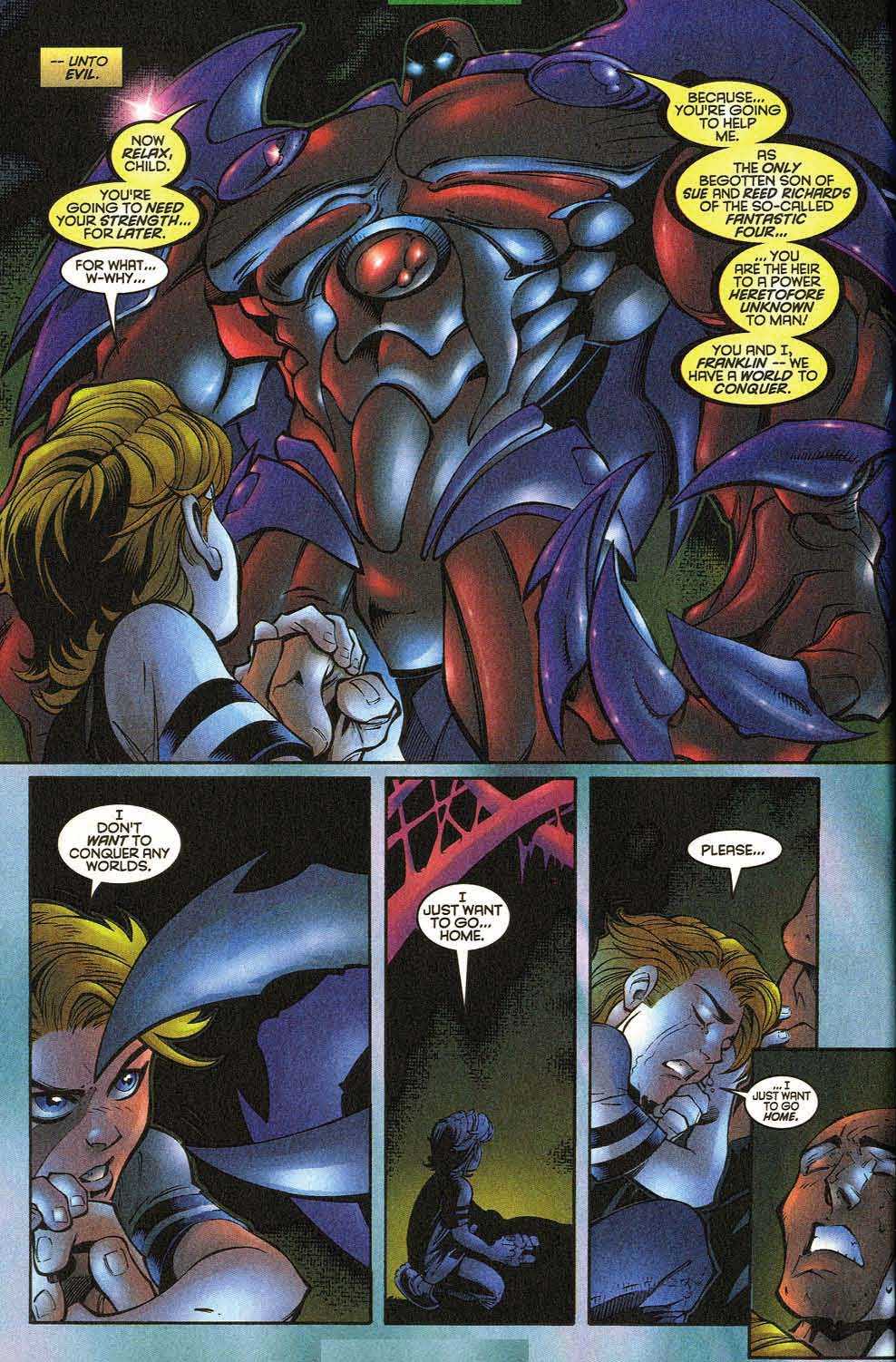
So I was part of the target audience for the “Onslaught Saga,” the big crossover of 1996. For those of you who had social lives that year, Onslaught was a psychic energy being inadvertently created by Prof. Xavier after he psychically lobotomized his arch-enemy, Magneto. They had some weird mind-meld, and their bastard offspring was out to conquer the world, enslave humanity, etc., etc.

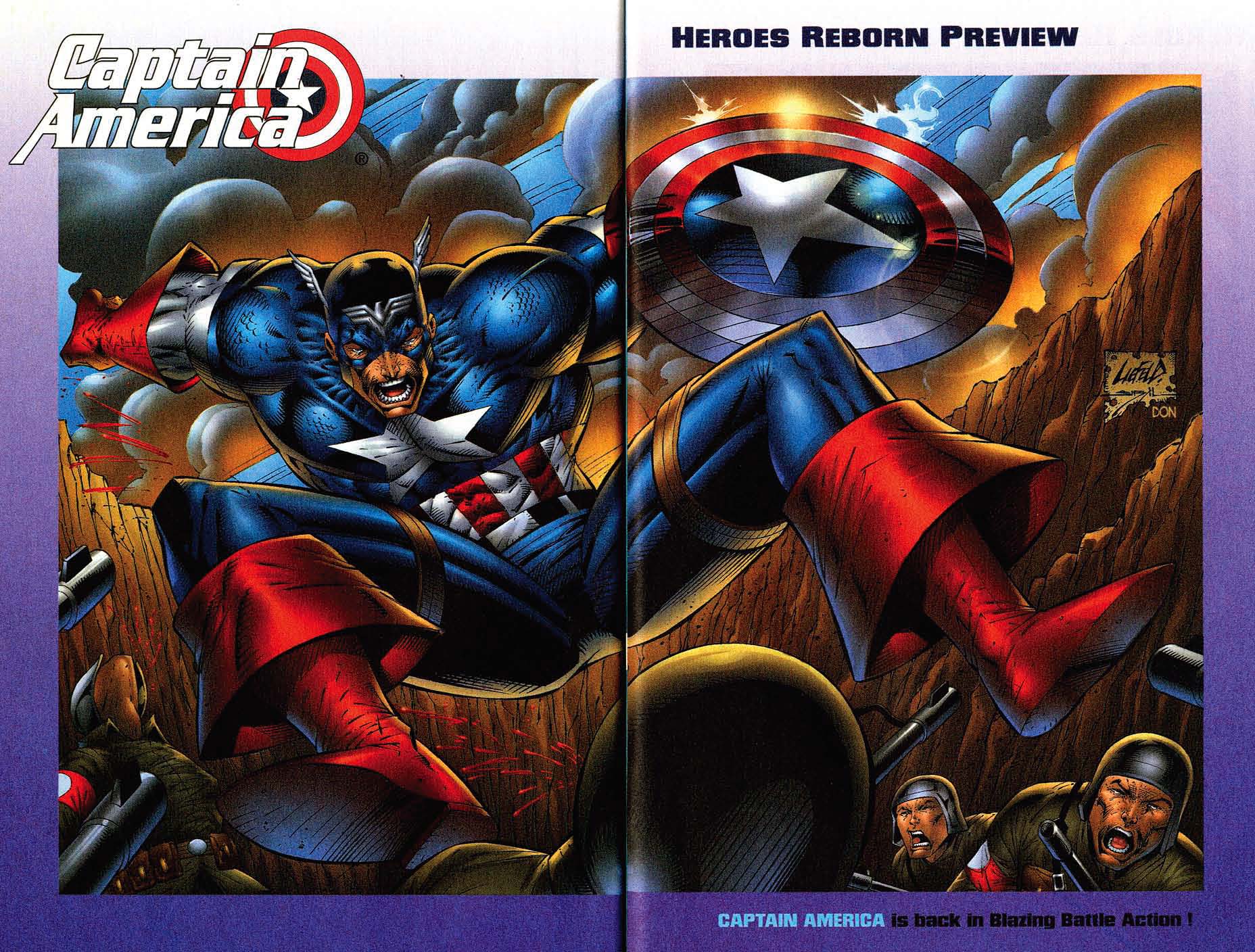
Onslaught was not much of a character, being one-dimensional and completely devoid of personality. But he wasn’t even much of a plot device, because the Onslaught Saga barely had anything resembling a plot. Instead, it meandered from one irrelevant beat to another before finally lurching to a “climax.” More accurately, Onslaught should be described as a corporate re-tooling device: most of the Marvel titles that weren’t part of the X-Men line were selling so badly that Marvel decided to reboot most of the characters and hand creative control over to the big names of the decade, like Rob Liefeld.

Eat gooch and die, Japo-Nazi!

 Onslaught existed for only one purpose: to “kill” all the heroes (excepting the X-Men) so they could be reborn in another universe. In other words, the point of the Onslaught Saga was not to tell a story but to restart a few brands. I had purchased plenty of bad crossovers before the Onslaught Saga, and I had seen plenty of transparent attempts to reboot an unpopular superhero. But the Onslaught Saga actually offended me in a way that’s hard to describe. Maybe it’s because the X-Men franchise was hi-jacked to reboot another group of heroes, characters that I had never cared about and would never care about. Or maybe I was offended by the blatantly transparent “corporateness” of it all.

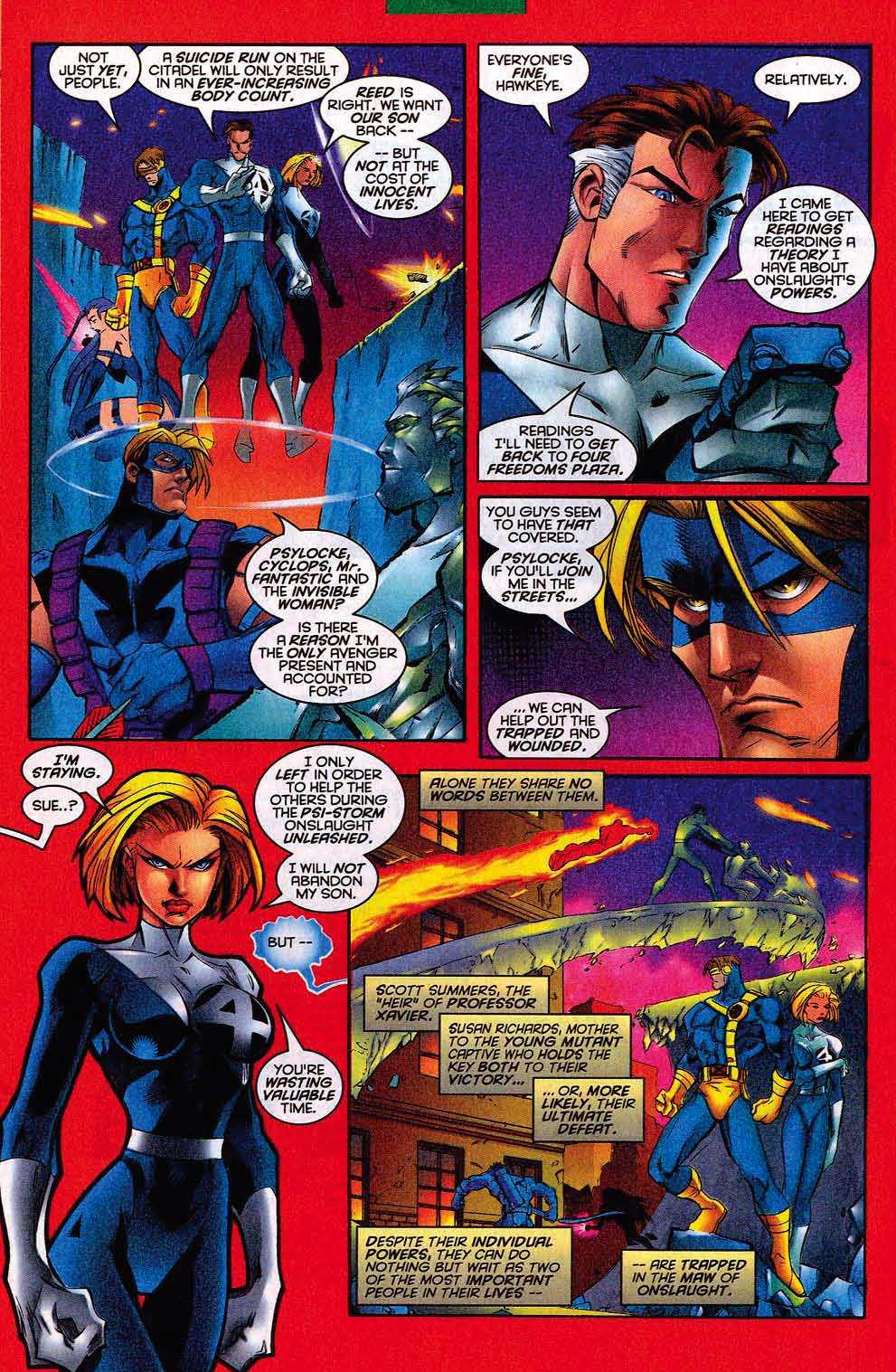
Technically, this roundtable is supposed to be about the worst comic I ever read, not the worst crossover. It’s hard to pick a single “worst” comic in the Onslaught storyline, because all of them were rubbish. But if I had to pick, I’d go with Uncanny X-Men #336. It isn’t the worst on most “technical” levels. Scott Lobdell’s script is about as passable as one could be for a comic of this nature. And Joe Madureira’s art doesn’t make me want to poke out my eyes most of the time, though there are plenty of shitty panels.

I’m not even sure where to begin: the lazy use of coloring instead of drawing a background, the balloon boobs, or the fact that her hands are turning into rocks.

But what makes this the “worst” comic was that this particular issue was the moment when I stopped caring about the X-Men. I know this because it’s the last issue of Uncanny X-Men in my collection (I read the Grant Morrison comics years later, but I downloaded those). It’s hard to look back and remember what was passing through my mind, but at some point I decided that I was getting nothing out of this hobby: no laughs, no excitement, not even the fannish pleasure of seeing certain couples hook up. I just wasn’t interested. When I quit X-Men, I actually stopped reading all comics for the most part, and it wasn’t until several years later that a college friend introduced me to comics for older readers.

My decision to quit X-Men comics was at least partially dictated by other developments in my life. Around the same time I gave up comics I also got my first car and I was starting to notice girls. I was spending more time with my circle of friends and less time reading the funny books. And none of my friends were into comics, so there was no one to reinforce my bad habit. And back then the Internet was only partially developed – and dial-up connections SUCKED – so there were few opportunities to participate in comic blogs or web forums. So, despite being an X-Men fan for years, it proved surprisingly easy to quit.

In a way, I supposed I should be grateful to the writers of the Onslaught Saga. Had they actually put together a halfway decent story, I might of continued reading superhero comics indefinitely. And instead of blogging about the worst comic I ever read, I’d be writing a panegyric for Geoff Johns.

__________

Click here for the Anniversary Index of Hate.