The Truth Is Out There

Considering they’re both serial TV dramas, Twin Peaks and the Wire couldn’t have much less in common. Twin Peaks explores the quirky surrealism of a small town; the Wire looks at the intricate realism of a city. Creator David Lynch uses the improvisational rhythm of dreams; creator David Simon relies on the layered narrative of investigative reporting. And where the Wire is one of the most multi-racial shows ever to appear on television, Twin Peaks is, insistently, not.

Yet, on closer inspection, the two shows had in common. In particular, both Twin Peaks and the Wire are obsessed with the real.

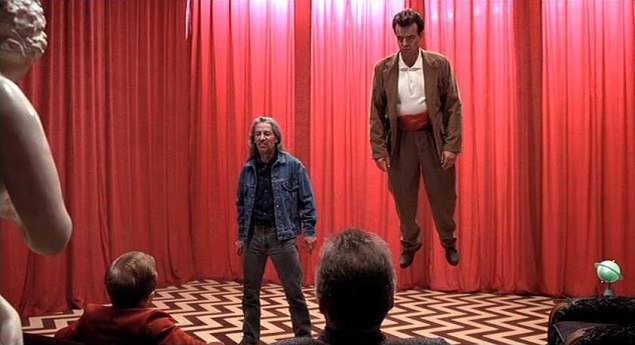
In part, this obsession is a function of genre. For all their differences, both shows are at heart police shows, and both are built around investigations and the ferreting out of secrets. In both, the techniques and expertise of the protagonists are leant to the viewer, who is enabled to approach nearer and nearer to a provocatively concealed heart of corruption. The famous scene in the Wire, where McNulty and Bunk deduce how a murder was committed while communicating solely by using the word “fuck” is analogous, in its flamboyant hermeticism, to the scene in Twin Peaks where Dale Cooper identifies likely suspects by referencing Tibet and throwing stones at bottles.

Whether through a triumph of earthy procedure or through semi-mystical intuition, the results are the same — the knowing expert shines light into the heart of darkness.

“Heart of darkness” has racial connotations of course — and that’s apropos for both shows. The connection between race and reality is most obvious in the Wire, a show immersed in the vibrancy, and despair of Baltimore’s African-American community. Omar’s transcendent cool, Kima’s understated integrity, D’angelo’s tragedy, and Snoop’s brutality are all manifestations of intertwined authenticity and blackness. The white characters, too, draw their grit in large part from the show’s integration. Thus Entertainment Weekly praises McNulty for his funk, which it links to his “easy rapport with his African-American work partners.”

Race at first appears to be almost entirely absent from Twin Peaks…but the absence speaks loudly. The show is set in the perfect American small town, with people who are all friendly, all decent, all blessed with movie star good looks, and, oh yes, (with the exception of a stereotypically untrustworthy Asian woman and a stereotypically spiritual Native American) virtually all white.

That whiteness — the trusting small town, the blonde homecoming queen cheerleader — is part and parcel of the perfection. And as the town’s secrets are revealed, it is not just the perfection, but the whiteness, which is shown to be a facade above a swirling pit of jealousy, greed, and deformation. Laura Palmer, that blonde homecoming queen, is addicted to cocaine just like all those black junkies on the Wire. Her father, Leland, is, in the depths of his twisted soul, not white at all, but rather the demonic spirit BOB played by Native American actor Frank Silva.

Moreover, the whiteness in Twin Peaks is undercut and doubled by its own queerness. The show is an extended meditation on the campiness of whiteness; the perfect exterior concealing melodrama and lust. When Laura’s best friend Donna wears her friend’s sunglasses, she turns into a teen femme fatale, exterior transforming interior. More pointedly, after Laura’s death, her murderer/rapist father, Leland, begins to compulsively dance to show tunes, his dark sexual secret finding expression through his response to stereotypically gay cultural responsiveness.

The truth in Twin Peaks is ultimately Freudian; the revelation of the ogre father and the primal scene. In the prequel, Fire Walk With Me, we learn that Leland has been raping her daughter since she was 12; in the series itself, another father almost sleeps with his daughter. In The Wire, on the other hand, the revelations are less psychological and more pragmatic, focusing on the overwhelming, crushing, and corrupting power of institutions.

There are many other cop shows built around investigation, of course. But where something like Bones or the Mentalist lets the knowing detective tie up the truth in a pretty bow at the end of (at least most) episodes, the Wire and Twin Peaks treat truth as an overwhelming excess, which expertise can provisionally master but not contain. The resulting tragedy is is in many ways the guarantor of the reality. The real does not have a happy ending. The Wire concludes by establishing that life in Baltimore will go on as before; while some individual characters may escape to provisionally bright futures, the city as a whole is no closer to escaping its pathologies than it was at the beginning of the series. Twin Peaks effectively ends with the death of Leland and the escape of BOB. The culprit is dead, but his spirit lives on…and to the extent that the series abandoned that grim insight in its later part, it became virtually unwatchable (or, at least, I couldn’t watch it.)

I love both Twin Peaks and The Wire. I think they both deserve their reputations as the greatest television show ever. I do wonder though how much that reputation is about their mutual obsessions with the real. Television has often been seen as uniquely irrelevant bone-headed escapism. The Wire and Twin Peaks both, in quite different ways, present themselves as windows onto unpleasant truths. They’re serious because they show us what is, and provide no escape. Laura’s ascent to heaven in Fire Walk With Me seems more a dream to emphasize the tragedy than an actual cause for optimism, while McNulty’s final attainment of peace seems like an instance of accepting what he can’t change rather than a broader assertion of hope. Evil is fixed; experts know but can’t save us, or even themselves. It’s a grim vision so critically embraced that one starts to wonder if it could be, at times, self-fulfilling.
_________________

Coincidentally, I just watched Tarkovsky’s film Stalker, which has a very different take on the real. Stalker is ostensibly a science fiction tale set in the Zone, a mysterious, dangerous realm where your deepest wish may be granted. Tarkovsky, though, makes no use of special effects of any kind, and so the Zone appears as simply any other piece of countryside. The three men wandering through it, casting nervous glances this way and that, seem like children playing a not-very-convincing game of make-believe — a sensation only emphasized by Tarkovsky’s long takes and excruciatingly slow pacing. The camera frames a long shot of a field, the men in the distance move across it…and still move across it…and still move across it…giving your attention a chance to wander to the trees, and the sky, and then back and yep, the men are still crossing the field…and you’ve got plenty of time to think about how silly the actors must have felt, and wonder whether they were thinking about their motivation, or how silly the script is, or just about whether they were ever going to get to stop walking across the field and go to the bathroom, for the love of God.

Eventually the guide (Stalker) leads his two followers (Writer and Professor) to the wish-granting center of the Zone, called the Room. But at the last minute both of the followers, perhaps fed up with the transparently ersatz nature of the whole endeavor, refuse to participate in the silliness anymore and balk at going in. One of the film’s last scenes shows Stalker back in his beautifully grungy hovel, lying down into his bed as if reclining in an Old Master painting, bewailing the intelligentia’s lack of faith. “Can people like that believe in anything!” he moans. “And nobody believes! Not just those two. Nobody!” After comforting him, his long-suffering wife breaks the fourth wall and directly addresses the camera, insisting that despite all her troubles, she has never regretted her life with the Stalker. “It’s better to have a bitter happiness” she says, “than a gray, dull life.”

On the one hand, Stalker is like the Wire; it fetishizes grit. The first part of the film, before the protagonists make it into The Zone, is set in an urban landscape which is run down even by the standards of the Wire’s Baltimore. On the other hand, Stalker shares characteristics with Twin Peaks. Both fetishize a secret, dangerous realm just out of sight.

But where the Wire and Twin Peaks figure the physical and spiritual as truths for genre to reveal, in Stalker both function more as consciously framed tropes. The Stalker’s hovel is so ravishingly shot and carefully composed that it becomes a quotation about grit rather than a direct apprehension of it. The intimations of otherworldliness in the Zone are so stubbornly unrealized that they become quotations about surrealism rather than an actual apprehension of subterranean dangers.

Stalker loves these genre references, but not because they show reality. Rather, it loves them as genre — as the imaginary. And if there’s a real in Stalker, it’s not in these pulp gestures, but in the process of film itself; the shots of grassland or a wall or a face held so long that narrative drains away, and you’re left looking at grassland or a wall or a face. The real is not the end result of a process of meaning, but the beginning of a process in which meaning must be added. The wall can be poverty; the grassland can be an ominous psychological truth; but the viewer must make it so. Art does not strip away to an essence, but adds to a blank. The Wire is worthwhile not because it is true to Simon’s Baltimore experience, but because of the energy of its narrative entanglements; the energetic metaphoricity of D’Angelo at the chess board or the profaner-than-life dreamed-of universal signification of “fuck”. Twin Peaks is profound not because it shows the real corruption of small town America, but because of its hollow flamboyance, haunted by specters of irony and dread. The shows are great not because they’re real, but because they’re imagined.

The very last scene of Tarkovsky’s film shows the Stalker’s crippled child sitting at a table, staring at glasses, and apparently moving them (slowwwwly) with her mind. After she stops, we hear a train pass, and the glasses shake. The telekinesis is, of course, just a special effect…and it emphasizes the fact that the train shaking the house is probably a special effect too. Tarkovsky seems to be almost taunting us, daring us to accept the shaking but not the telekinesis — or rather, to accept both. For Stalker, film is not about gaining expertise and seeking truth. It’s a way to practice faith.
Utilitarian Review 6/25/11

News
Only a few more days till our best comics poll ends on June 30! Details for participating are here.

On HU

Kinukitty talked about writing Stevie Nicks fan-fiction as a nine-year-old.

I had a short review of Dinosaur King vol. 1.

Richard Cook explained how to fix some titles in the new DC reboot.

I put together a free music download mix of spooky melodramatic pop music.

Robert Stanley Martin weighs Crumb’s use of blackface imagery.

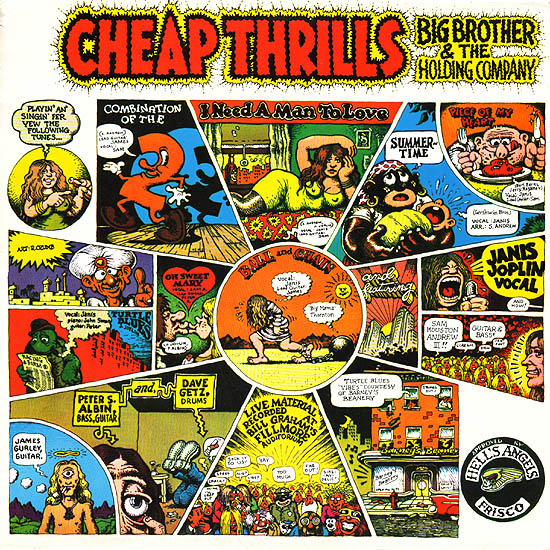
I discussed Crumb’s use of racist imagery on the Cheap Thrills album cover.

Sean Michael Robinson talked about how the movie Crumb helped him appreciate the cartoonist.

Utilitarians Everywhere

At Splice Today, I talk about Andrew Sullivan, biological determinism, and Anthony Weiner.

Other Links

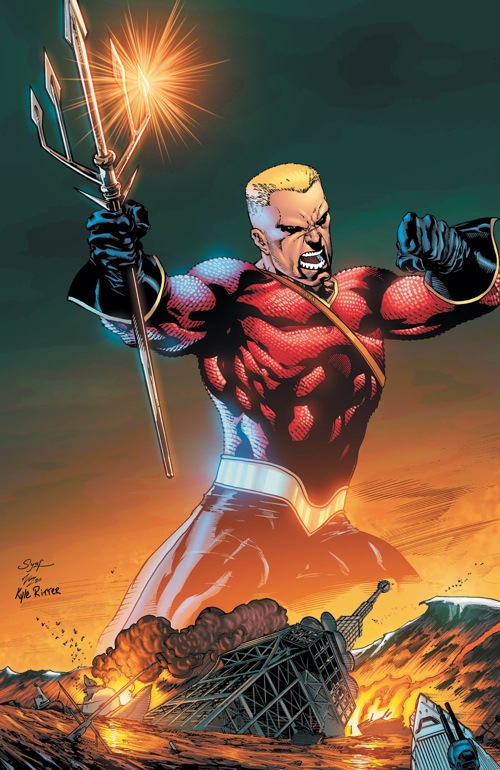
Nina Stone wants Aquaman to disco dance.

I wish Ke$ha really said this.

Robert Crumb: Survivor

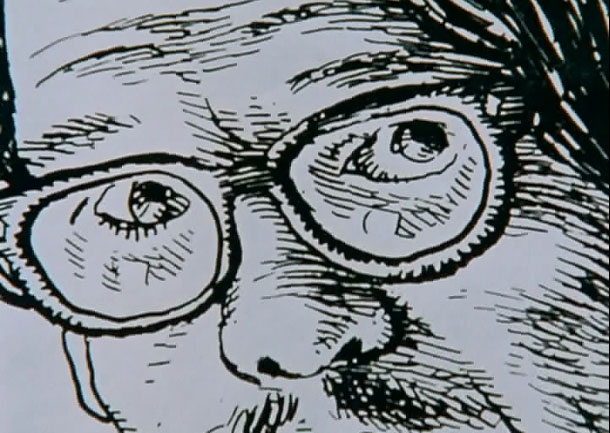
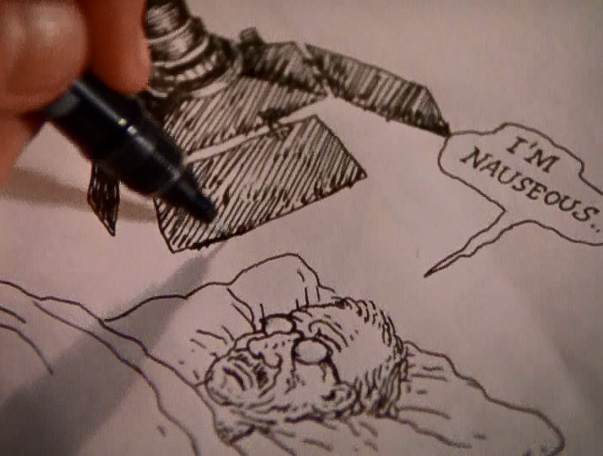
I was a teenager the first time I saw a drawing by Robert Crumb, and I had an immediate, visceral reaction, a feeling of nausea, a slightly floating, psychic displacement from my physical self. I don’t remember now what the specific image was, nor does it really matter at this point—it wasn’t the content that repulsed me, but the neurotic, shaky, compulsive lines, invading every form, erratic, descriptive of the hand that made them as much as the subjects themselves.

My disgust deepened after my first exposure to his comics—they seemed so tightly drawn, so cluttered and cramped that I felt anxious, trapped in neurosis. And when I did, finally, make it past the surface to the actual content, I found nothing to reassure my trembling stomach—even in the less overtly challenging short stories, I found the neurotic aggression overwhelming, overpowering. I moved on and found work to read that didn’t make me physically ill.

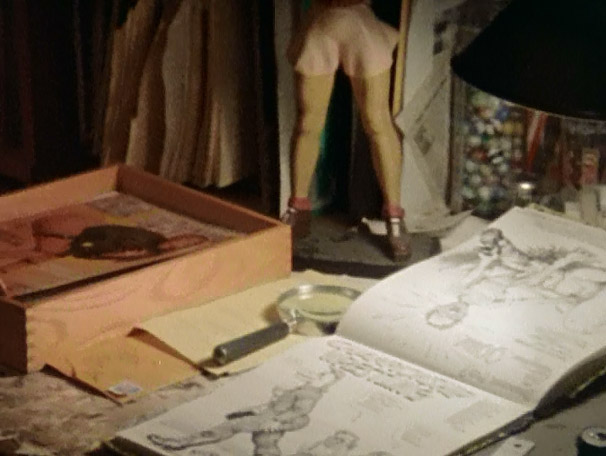
A few years later, a film about the cartoonist himself changed all of this. Crumb, a 1994 documentary directed by Terry Zwigoff, transformed Robert Crumb’s work permanently for me, by providing context, nuance and even ambiguity to work that had up to that point seemed alien and severe. The movie opens with gentle upright piano music and a close-up shot of a sculpted, hand painted statue of a woman’s muscular butt, and in a slow, shaky pan takes in row after row of wooden spools to which faces have been elaborately, lovingly drawn, remarkable objects that, it slowly becomes clear, seem to have no practical or commercial purpose. From the very first shot the film suggests that Crumb creates because he must. His artwork is a need, the spools say, open-mouthed, eyes agog. The shot continues, and lap dissolves into a pile of sketchbooks and records, and finally Robert himself, back to us and facing his stereo, knees to his chest, rocking slowly to the music.

Cut to a drawing, and a hand with brush moving rapidly across the surface of the paper. “If I don’t draw for a while I get really crazy. I start feeling really depressed, suicidal.” These are Crumb’s first words in the film, delivered in a quiet, distant voice. “But sometimes when I’m drawing I feel suicidal too.”

“What are you trying to get at in your work?” someone, presumably Zwigoff, asks off-mic.

“JESUS,” Crumb says, suddenly animated. “I don’t know.”

Robert Crumb’s drawings are unflinching in their taut, sweaty grotesquerie, but the man himself flinches—he laughs nervously, stutters, cringes, equivocates.

He continues. “I don’t work in conscious messages. I can’t do that. It has to be something that I’m revealing to myself when I’m doing it, which is hard to explain. Which means that while I’m doing it I don’t know exactly what it’s about. You just have to have the courage or the… to take that chance. What’s gonna come out of this? I’ve enjoyed drawing, that’s all. It’s a deeply ingrained habit, and it’s all because of my brother Charles.”

Because of the powerful presence of his brothers, particularly Robert’s older brother Charles, the movie almost inevitably focuses on Crumb’s childhood, seemingly the source of both his obsessions and prodigious skill. By both their accounts Charles forced Robert to draw comics with him from a very early age, and was a domineering and seemingly crazed and competitive presence in young Robert’s life. Despite appearing for what probably amounts to about twenty minutes of screen time, Charles dominates the film, an intelligent, witty and doomed ghost of a man who seems in a way to have already passed on. So much of his life seems to be over, so many of his desires extinguished, that it seems inevitable that he will not last the duration of the movie.

We see examples of Charles’ and Robert’s comics from their childhood and teenage years, and get a glimpse at how these two remarkable young talents developed in parallel. Robert discusses his interest in other forms of art, and how it was his brother’s dogged persistence that kept him making comics, that in fact, it’s his brother who he still thinks of as his audience when he’s creating comics.

Young Charles’ work is truly remarkable, the work of someone who’s internalized at a very young age a whole host of cartooning skills and already developed his own visual style. But as Robert narrates the work chronologically, we slowly see that something seems to have gone awry in Charles’ mind. His style blossoms slowly into a collection of strange, grotesque visual tics, and pictures give way to more and more words, at first a rush, and then a torrent, panels and finally pages dissolving into microscopic scribble. And then, finally, his marks are nothing but scribble at all—content-less, without thought, finally, just tic. We watch as Robert flips through page after page of his brother’s illness made physical via pen and paper.

In the movie Charles serves as a harrowing parallel to his younger brother, a brilliant young cartoonist turning ever more inward, until there’s no communication left, no outside at all. He is the brother that could not escape the orbit of his childhood, who was unable to find a way to free himself from whatever it was that held him in thrall for so long.

What type of shared experiences shaped these three brothers? The movie hints at the edges—an abusive, withholding father, a mother who was either mentally ill, a drug user, or possibly both; but it presents no easy answers to these questions. What it does do, however, is provide a context for even the most extreme of Crumb’s works, and present a compelling argument for a man being saved by his art. Is it possible, the movie invites us to ask, that the difference between Robert and his brothers is that Robert found both release and escape?

Context also comes from the aesthetic decisions by Zwigoff himself. An early sequence of some of Crumb’s most violent, arguably mysogynistic drawings is accompanied by a haunting, keening voice, backed only by a circular, searching guitar and a blanket of hiss and pops. It is a song of “calamitous loss,” as Robert said earlier, and to hear such a song as the camera slowly pans and zooms across the twitchy surface of the drawings changes the experience of the drawings themselves from one of naked animal aggression to one of bewildered, pained loss. Where have these thoughts come from? the music seems to suggest. What has happened to this man?

Through its use of music and its austere, uncluttered editing and cinematography, the movie has great rhetorical power, great enough to reframe and even change the art that is ostensibly at the center of the film itself. A sequence mid-film presents an Angelfood McSpade strip with no narration, accompanied solely by a jaunty piano ditty that helps create a satirical tone that might be more arguable or problematic without the aural reinforcement.

The film also gives significant screen time to Crumb’s detractors, a strategy that defuses some of the uncomfortable edge of the work presented, which has the curious effect of allowing the viewer, or more specifically this viewer, to take his side again. Objections stated, points duly noted, we can return to the man himself and his obvious, almost palpable, need to create his work.

And that naked need, and the remarkable story of his brother Charles, are the reasons I’ve returned to Crumb so often, why despite a host of reservations, I showed the film, admittedly highly-edited, to my high-school cartooning class. Because Crumb is, in a winding, fractured, way not just the story of an artist, but a portrait of a survivor.
______________
Update by Noah: This post is loosely affiliated with an ongoing roundtable on R. Crumb and race.

Cheap Thrills

Yesterday, Robert Stanley Martin argued that there was satirical intent in R. Crumb’s Cheap Thrills album cover.

Contrary to Noah Berlatsky’s reading of the second panel in his “Crumbface” essay (click here), I don’t feel any of it is gratuitous. It’s a pointed rebuke that did not flatter its ostensible targets. Telling Joplin that’s she’s engaging in a “Mammy” routine, as well as identifying her audience in part with an Al Jolson figure, is not something that would be calculated to endear Crumb to either. And given the avowedly anti-racist liberal politics of the San Francisco counterculture scene that Joplin and her early audiences belonged to, Crumb also pointed the way for their political enemies to cluck at them for hypocrisy. It didn’t cause offense because Joplin and her audience were sophisticated enough to both recognize and at least tacitly acknowledge the failing Crumb was highlighting.

It’s a thoughtful defense. I’m still not convinced though.

First, Robert says that Joplin and her fans would not have found Crumb’s satire of their black appropriations comfortable.

However, Drew Friedman’s account seems to contradict this:

Interestingly, Crumb’s original intention was for this art to run on the back cover and a portrait of Joplin to run on the front. But Joplin loved the the comic strip art so much, (she was an avid underground comics fan, especially the work of Crumb, and already at that point in her escalating career, had the power to hire her own cover artist), she decided to run it on the front.

That certainly doesn’t sound like Crumb’s satire made Joplin at all uncomfortable. I haven’t been able to find anything online suggesting that fans were put off either. Maybe Joplin’s just kind of dumb of course…or maybe, as Robert suggested, she was self-aware enough to find a pointed reference to her black roots amusing. Still, if satire doesn’t cause its targets even the least discomfort — if they in fact want to put it on the cover of their product — does it make sense to call it satire?

More important than intention or audience reaction, though, is the image itself. And I don’t think that image sustains a claim of satire.

Look at the rest of the album cover; the images other than the blackface caricatures. None of those images is satirical, or pointed. Instead, they’re silly and/or sexy and/or energetic. Many of them rely on goofy puns (“Piece of My Heart”, “Combination of the Two”) The center top image shows a woman (probably meant to be Joplin) in a sultry pose with prominent nipples clearly visible through her top. On the left hand side, there’s a drawing of a goofy, stereotypical Indian with traditional headdress. On the bottom, there’s a caricature which seems to conflate Jesus and Eastern mysticism.

Robert argues that the blackface caricatures are different. Instead of an expression of high-spirited high-times and easy irreverence, he argues, the blackface caricatures are a critique. In them, Crumb is showing Joplin’s connection to and reliance on a black musical tradition, and linking her to earlier white performers who relied on that tradition, like Al Jolson.

But, as an alternate reading…couldn’t Crumb just be more or less thoughtlessly using blackface iconography because it’s funny and energetic? Couldn’t the images just be examples of high-spirited high-times, and of Crumb’s irreverent refusal to bow to the 60s equivalent of political correctness? Couldn’t his use of blackface be like his use of prominent nipples or his use of a sacrilegious Jesus caricature? That is, couldn’t the blackface caricatures be used because they are fun, and because they are (at least somewhat) shocking, rather than because they skewer Joplin and her fans?

Intent is hard to parse, of course. But I think if you’re going to argue for satire, you need to explain what Crumb has done to distinguish between blackface-as-critique and blackface-as-nostalgic-scandalous-good-times. If the cover can be read as fun good times, and the blackface can be easily incorporated into the idea of fun good times, and Joplin and her fans embraced it, presumably as an icon of fun good times, it’s really not clear to me why I should give Crumb credit for making a pointed political statement. On the contrary, it seems to me that he’s using blackface like he’s using nipples and silly puns — as a cheap thrill. And, as I said before (to Jeet Heer’s annoyance)using blackface as a cheap thrill still makes Crumb, to my mind, kind of a shithead.

I have to say too…even if Robert is right, and it’s a satirical take, I still find it pretty dumb. As I note in that Comixology article, “Summertime” is one of the great interracial collaborations in American song. Written by George Gershwin about the black experience, it was based on Eastern European folk melodies and adopted by many of the greatest American performers of various races. It’s a song whose history challenges the usual narrative of white appropriation of black music. George Gershwin didn’t don blackface to become a pretend black person; he collaborated with black people over decades in order to interpret an American experience through an American art that was neither white nor black.

The usual narrative of blackface appropriation— applied to Elvis, or Janis Joplin, or whoever — is itself part of our racist past. It assumes that blacks are the authentic creators of music, the magical Negroes, to whom whites must go to draw upon true musical genius. And I think you can actually see Crumb’s cover as plugging directly into this; his use of black caricatures does not so much critique Joplin’s music as light-heartedly validate it. The caricature in the center bottom panel, the black man digging Joplin’s music, is not a sneer at Joplin — it’s a goofy thumb’s up. See! Whoohoo! Even black people dig this music! Similarly, the shouting baby, all gusto and throat, is not a critique, but a funky wink. Joplin gets her lungs from that true source. And that true source is a stereotypical black mammy.

American music is, and has always been, both black and white, with performers of every race borrowing and learning from each other. The reason blackface is racist is not because white performers were inspired by blacks, but because they gilded their black influences with invidious racist stereotypes. Crumb’s use of blackface caricature is, therefore, neither fun nor, even in the most generous interpretation, insightful. It perpetuates simplistic images of black people and of race in the U.S. The Cheap Thrills cover is an ongoing testament to Crumb’s great illustration and design skills, and to the extremely limited intelligence with which he often employs them.

____________
Update: This post is part of an ongoing roundtable on R. Crumb and race.

Music for Middle-Brow Snobs: Blue Velvet

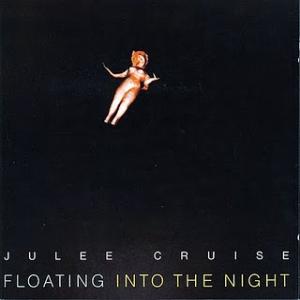
Spooky pop melodrama download; Click to download Blue Velvet mix.

1. Cry Me a River — Julie London
2. Falling — Julee Cruise
3. Crying — Roy Orbison
4. I Miss You So — The Orioles
5. Blue Velvet — Gene Pitney
6. He Cried — The Shangri-Las
7. I’m Me — The Paris Sisters
8. She’s Got You — Patsy Cline
9. Hope There’s Someone — Antony and the Johnsons
10. Salvador Nao Inerte — Virginia Rodriguez
11. Rising Moons — The Horse’s Ha
12. The Owl of Love (featuring Shara Worden) —The Clogs
13. Meadowlark — Fleet Foxes
14. All My Sorrows — Lindsey Buckingham
15. ‘Till I Die — Beach Boys
16. Rockin’ Back Inside My Heart — Julee Cruise
17. It’s My Party — The Paris Sisters

Snap Judgments: Five DC Reboots

The comics blogosphere can’t stop talking about the DC Comics reboot in September. Some bloggers are cheering. Others are jeering. But anyone can offer a general impression. A true comics blogger explains why something sucks, and then explains how everything would be better if said blogger was in charge.

.

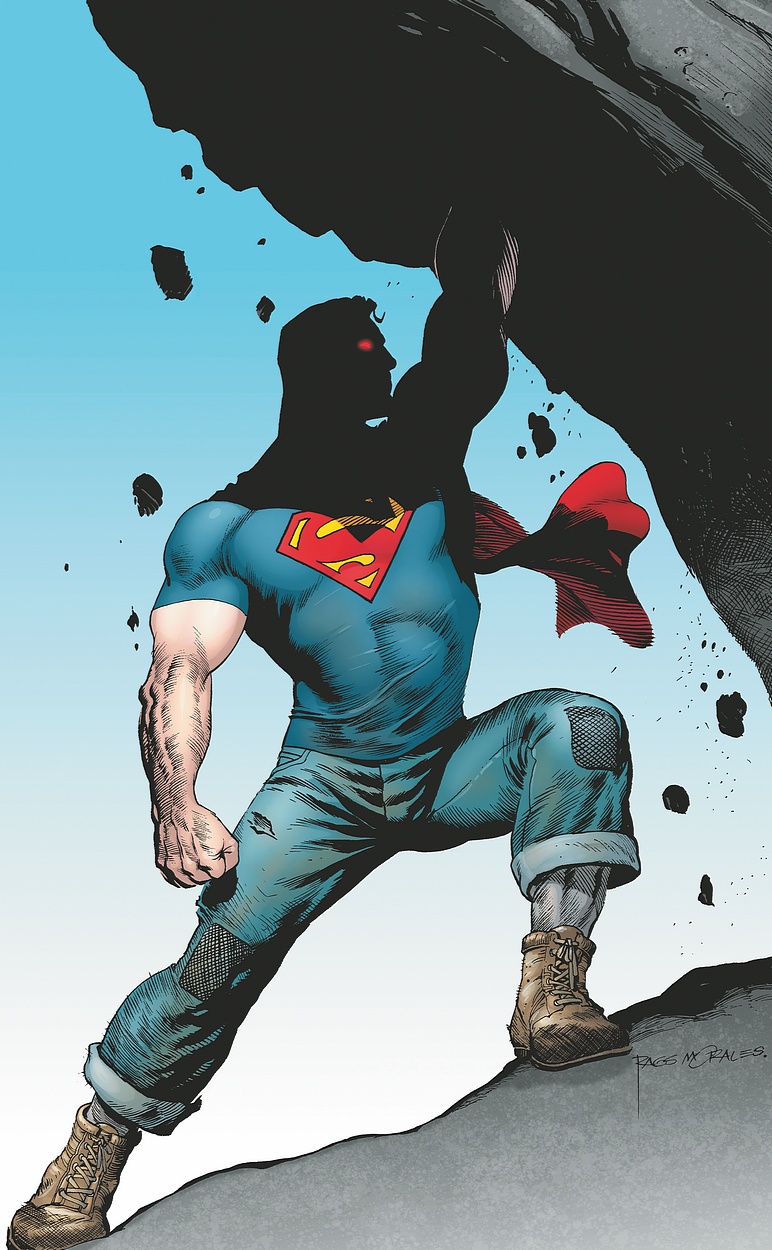
Action Comics #1
Written by Grant Morrison
Art by Rags Morales and Rick Bryant

Pros
Grant Morrison has written great superhero comics.
And lots of people seem to really like Morrison’s All-Star Superman.

Cons
The unbearable Modern Myth/Super Jesus/Underwear Messiah garbage.
And All-Star Superman was incredibly overrated.

Odds That It Will Suck
High. In his 70+ year history, Superman has starred in about 5 good comics. The rest are about why the world “needs” Superman and his crappy merchandise.

How I Would Make It Better
Superman is an escapist fantasy about male potency, which is why Action Comics should be an adult comic. Every issue should be 22 pages of hardcore sex where Superman fucks his way through Lois, Lana, Lex, Jimmy Olsen, Martha Kent, Krypto, and consequently saves the world. Superman isn’t Jesus Christ. He’s Ron Jeremy-meets-Arnold Schwarzenegger.

.

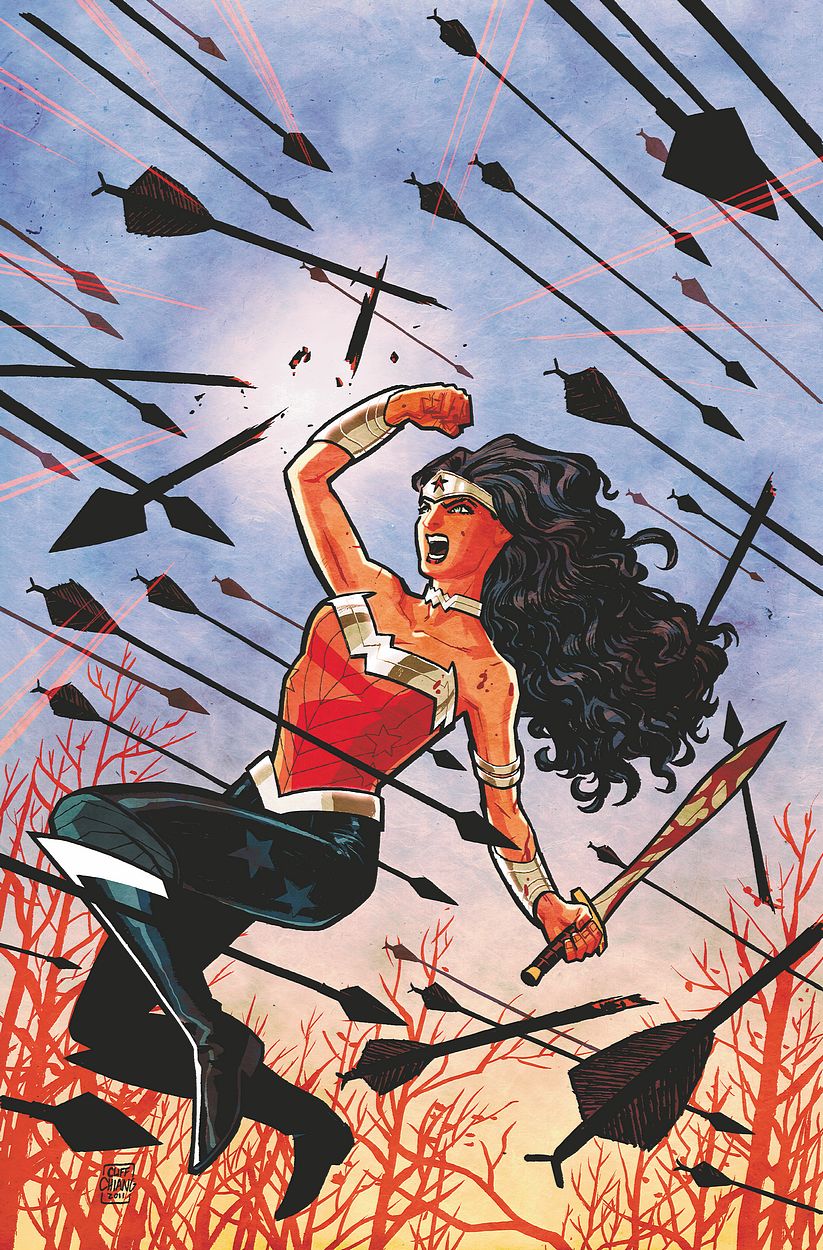
Wonder Woman #1
Written by Brian Azzarello
Art by Cliff Chiang

Pros
Azzarello has written some good (crime) comics.
I like Cliff Chiang’s artwork, if for no other reason than it doesn’t look like everyone else’s artwork.
The new costume is a slight improvement over the last new costume.

Cons
Azzarello has written some terrible (superhero) comics.

Odds That It Will Suck
Super high. When it comes to crappy comics, Wonder Woman has an even worse track record than Superman. Nobody at DC knows what to do with this character.

How I Would Make It Better
I’m tempted to just write “make it porn” for each these. But in all seriousness, the only way that Wonder Woman would ever be good again is if William Marston came back from the grave. The next best alternative would be to find a writer who has a similar personality to Marston: feminist, polygamist, BDSM enthusiast, lesbian fetishist, furry, all-around pervert and political visionary, etc.

.

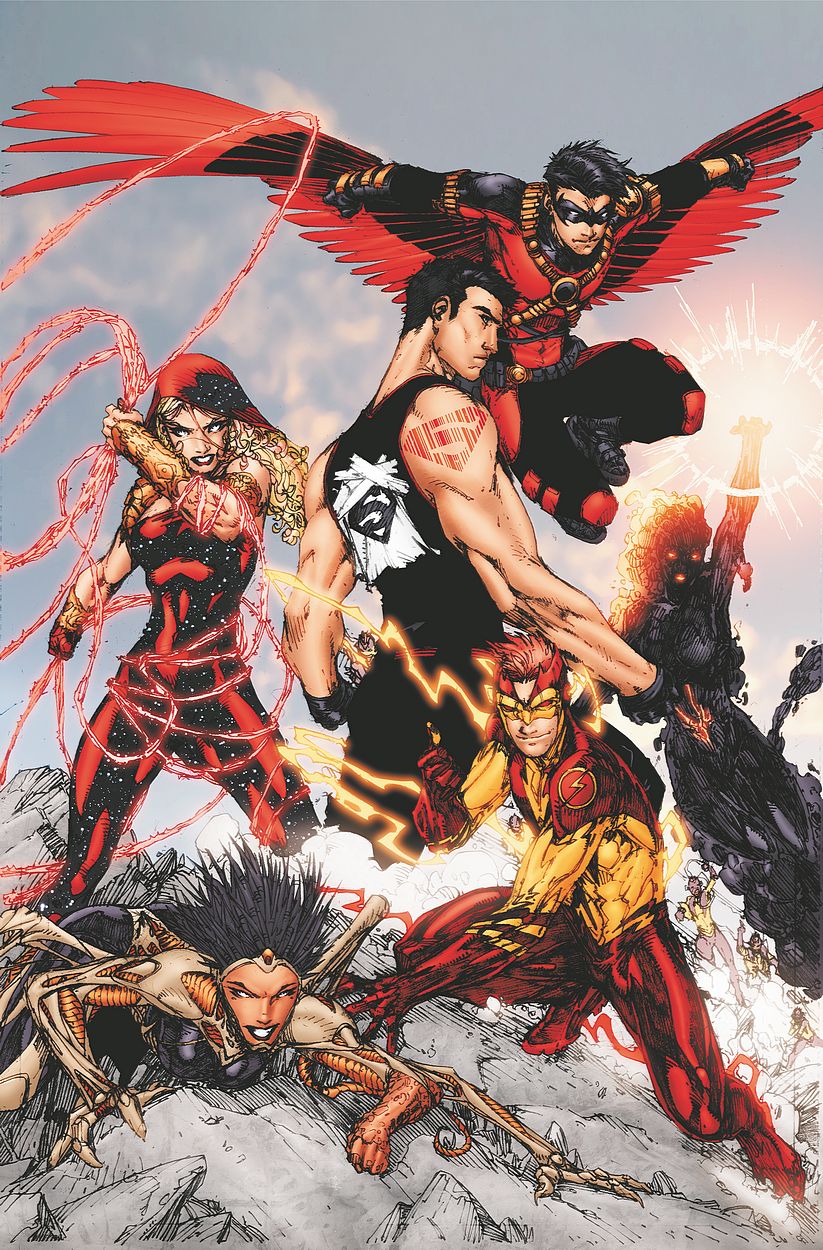
Teen Titans #1
Written by Scott Lobdell
Art by Brett Booth and Norm Rapmund

Pros
Lobdell has experience writing teen superheros, going back to Generation X.

Cons
Generation X was actually kinda boring.
Superboy is not and will never be badass, no matter how many ‘tats he has.

Odds That It Will Suck
Very high. Teen Titans was tolerable for about 3 years in the early 1980s. Everything before and after was a miserable failure.

How I Would Make It Better
The core problem with Teen Titans is that it’s never been about teenagers, but rather what adult writers want teenagers to be. Superboy, Robin, Wonder Girl, Kid Flash – these kids revere their elders and try to emulate them. Fuck that noise. Adults don’t deserve reverence. Plus, teenagers don’t want to read about obedient, law-abiding teens, and adults reliving their youth don’t want to read about obedient, law-abiding teens. They both want sex, drugs, and rock n’ roll (or substitute in hip hop). The Titans shouldn’t be fighting crime, they should be fighting for the right to party, and generally reminding adults how much they suck.

.

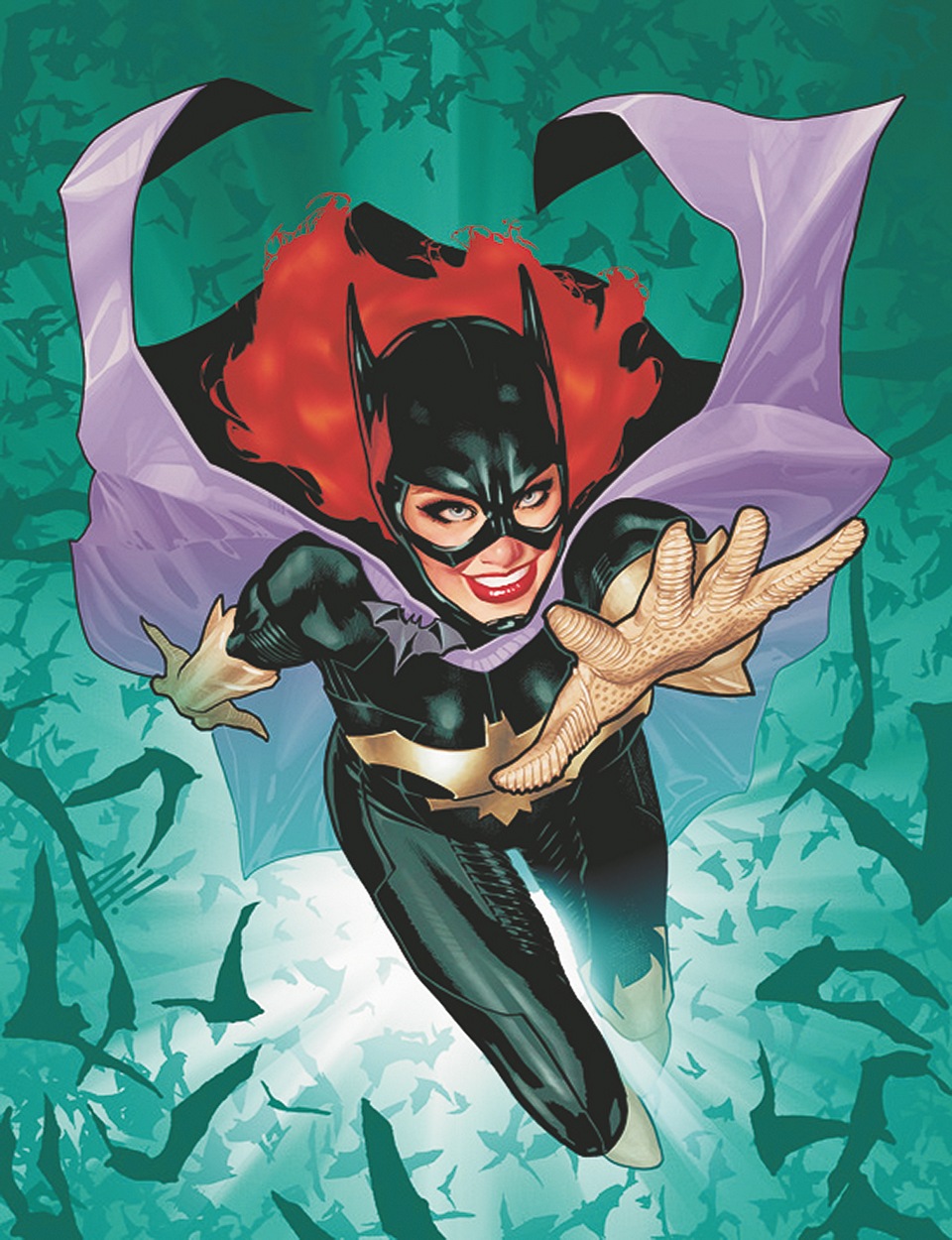
Batgirl #1
Written by Gail Simone
Art by Ardian Syaf and Vicente Cifuentes (cover by Adam Hughes)

Pros
Having a writer with an actual sense of humor never hurts.

Cons
Barbara Gordon can now walk again, which means DC eliminated one of the tiny handful of disabled heroes.
That Adam Hughes cover freaks me out. She keeps smiling at me with her cold, dead eyes…

Odds That It Will Suck
Medium. Batgirl is a fairly straightforward character who stars in straightforward adventures. No history of greatness, but no history of terribleness either.

How I Would Make It Better
Comics starring solo heroes often tend to be a dreary reads because the protagonist rarely has anyone to interact with. This leads to page after page of mind-numbing narration just so the writer can justify their wage. This book needs a big supporting cast, preferably other superheroines who accompany Batgirl on her adventures. So it would essentially be Birds of Prey with Batgirl. And like Birds of Prey, there should be plenty of lesbian subtext, because lesbian subtext improves everything.

.

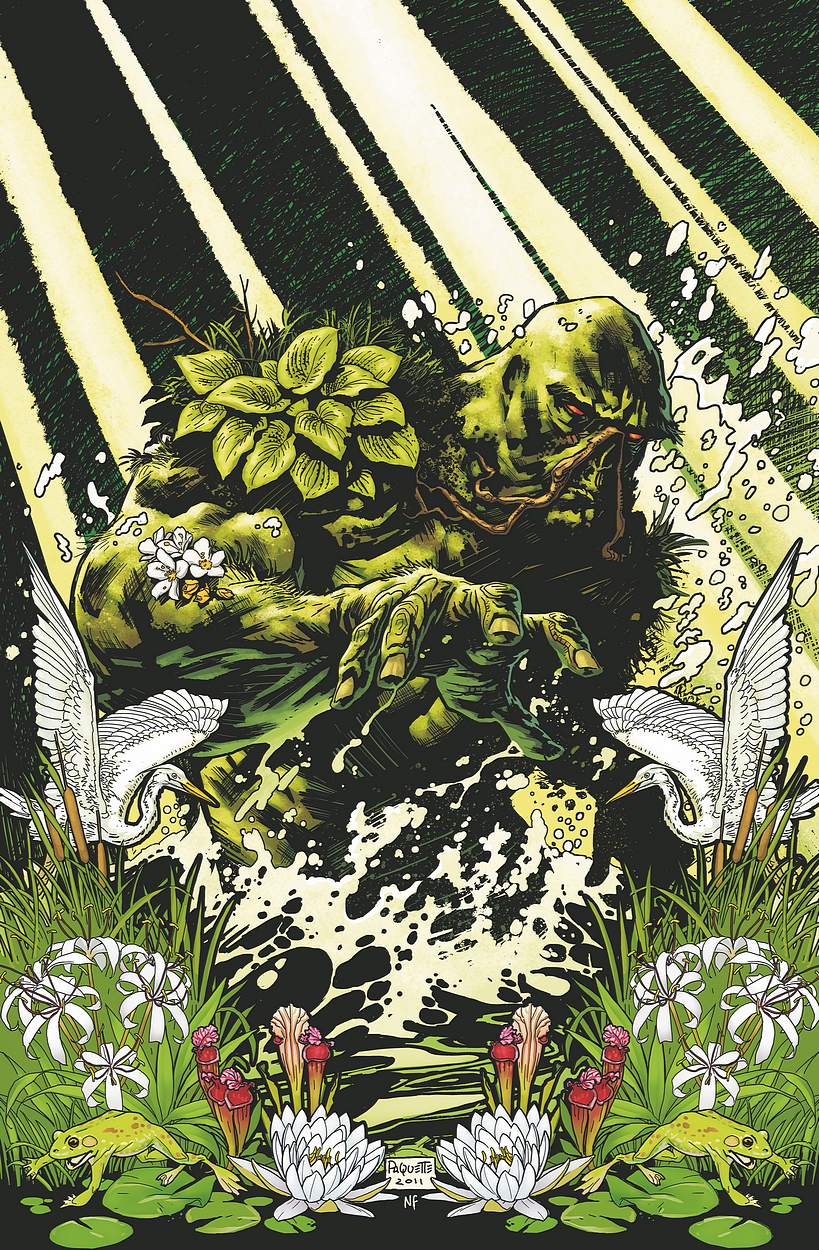
Swamp Thing #1
Written by Scott Snyder
Art by Yanick Paquette

Pros
I’m drawing a blank here…

Cons
Mediocre writer, mediocre artist, a character who is ill-served by being dragged back into mainstream superhero comics.

Odds That It Will Suck
Certainty. Alan Moore is a tough act to follow. And outside of Moore’s run, Swamp Thing doesn’t have a rich history to draw from.

How I Would Make It Better
Well, I probably wouldn’t make it at all. But if I had to, I’d shamelessly rip off the best parts of Moore’s run. At minimum, the comic should have purple prose, leftist politics, and psychedelic yam sex.

Reach for the Prehistoric Stars, American Comics!

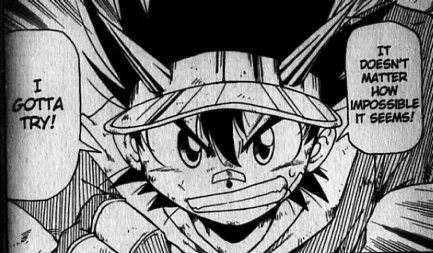
There should be more American comics like Yohei Sakai’s Dinosaur King volume 1.

Not that this is a great comic. Or a good comic. Or a comic that in any way makes you not want to seek out Yohei Sakai and force-feed him every Happy Meal in your local McDonald’s emporium, including the special toy Alvin and the Chipmunk figures, until his colon is completely encased in plastic, opening an anal fissure in space/time into which you can chuck him in the desperate hope that he, in turn, will be devoured by a fire-breathing Tyrannosaurus Rex, or, preferably, by a non-fire breathing Tyrannosaurus Rex so that he can confirm that no, really, Tyrannosaurus Rexes did not breathe fire, you shithead.

And then, as he’s torn into bloody, un-flaming gobbets, you can point out to him cheerfully that even if you grit your teeth and really, really try while simultaneously proclaiming your love of dinosaurs and whimpering softly about how you lost your mother at a tender age, encountering a T. Rex is still really fatal.

Where was I?

Oh right.

Yes, this book is bad enough that I wish hideous and improbable constipation and death on its creator and its distributor and its protagonist and, indeed, on dinosaurs, if, in their case, the death was not somewhat redundant and the constipation unlikely given the widespread absence of fossilized intestines.
But for all its manifest, egregious, bottomless badness, this book has something to teach American publishers. If you’re going to be bad, why not cater to the poor taste of the broadest possible herd? Fuck the decadent costumed multi-colored lantern corpses with the 30 years of repeatedly retconned backstory (no, not literally. What is wrong with you people?) Fuck the Forever Ultimate X-Claremont McKenna that 12 people want to read. Yes, Dinosaur King seems to say, those things suck like Youporn inhaling a vacuum cleaner. But I suck too, and I have cute baby dinosaurs and spunky young protagonists who have the amazing ability to talk to dinosaurs, and also I have full-sized dinosaurs with special ninja attacks. And, hey, I’ve got trading cards too. My artwork is even entirely decent in a stereotypical over-carbonated shonen kind of way. There are lots and lots of kids clamoring for just this kind of badness, and I aim to deliver it directly to their malleable, sugar-spasming adrenal glands and long-suffering parents.

Stop your elitist, clubby, insular dreck, American comics! You too can make dreck for the masses! I just know you can! There’s nothing you can’t do if you just try!
______________
This review first appeared on tcj.com.