Monthly Stumblings # 7: Aristophane [Boulon]

Les soeurs Zabîme (the Zabîme sisters) by Aristophane [Boulon]

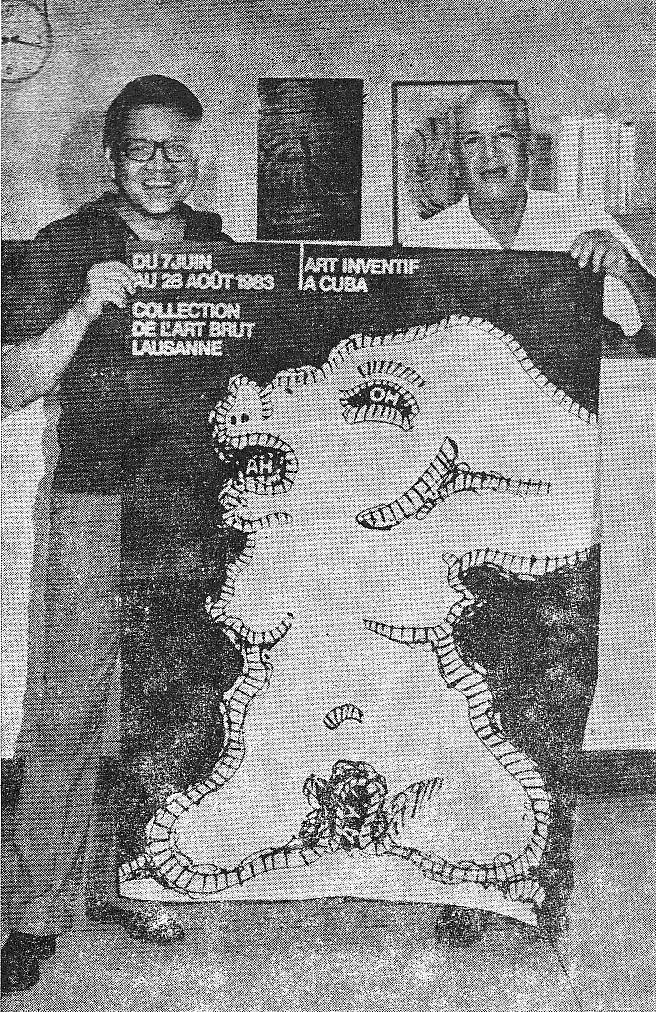
Can you imagine yourself in Kupe’s lighthouse (that ideal comics library filled with books that don’t exist in Dylan Horrocks’ Hicksville)? I do sometimes, but, even if I wholeheartedly agree with Kupe’s point of view (which is: “The official history of comics is a history of frustration. Of unrealised potential. Of artists who never got the chance to do that magnum opus. Of stories that never got told – or else they were bowdlerized by small-minded editors…”) my particular lighthouse has a few books whose content does exist, but isn’t available. Books like Santiago “Chago” Armada’s Sa-lo-mon, or Rafael Fornés’ Sabino, or James Edgar’s and Tony Weare’s Shannon Gunfighter or Isepinal and the Apaches, or Héctor Germán Oesterheld’s and Francisco Solano López’s Amapola Negra (Black Poppy), or Martin Vaughn-James’ The Park

Cuban artists “Chago” Armada (left) and Samuel Feijóo (photo published in Signos # 32, 1984). The drawing is Armada’s.

Continue reading

Utilitarian Review 11/26/10

On HU

Slightly short holiday week this time out.

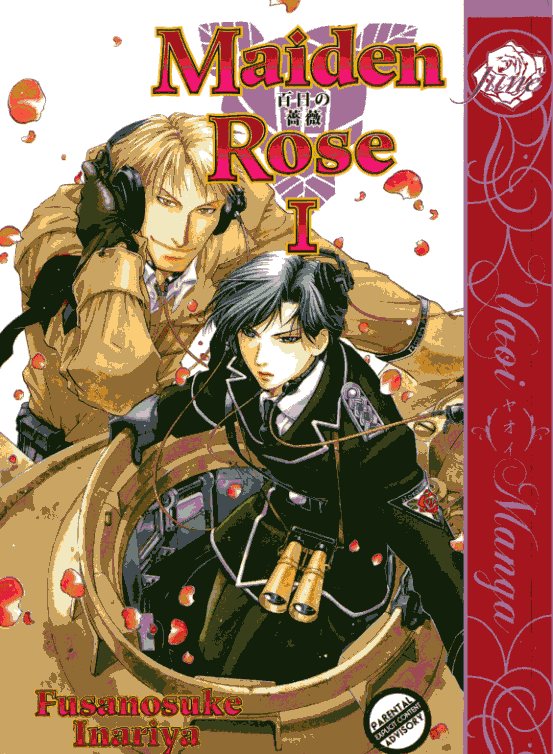
Kinukitty reviewed the semi-historical yaoi Maiden Rose.

For our Sequential Erudition series reprinting academic articles on comics, Ariel Kahn discussed the role of the gaze in young adult graphic novel.s

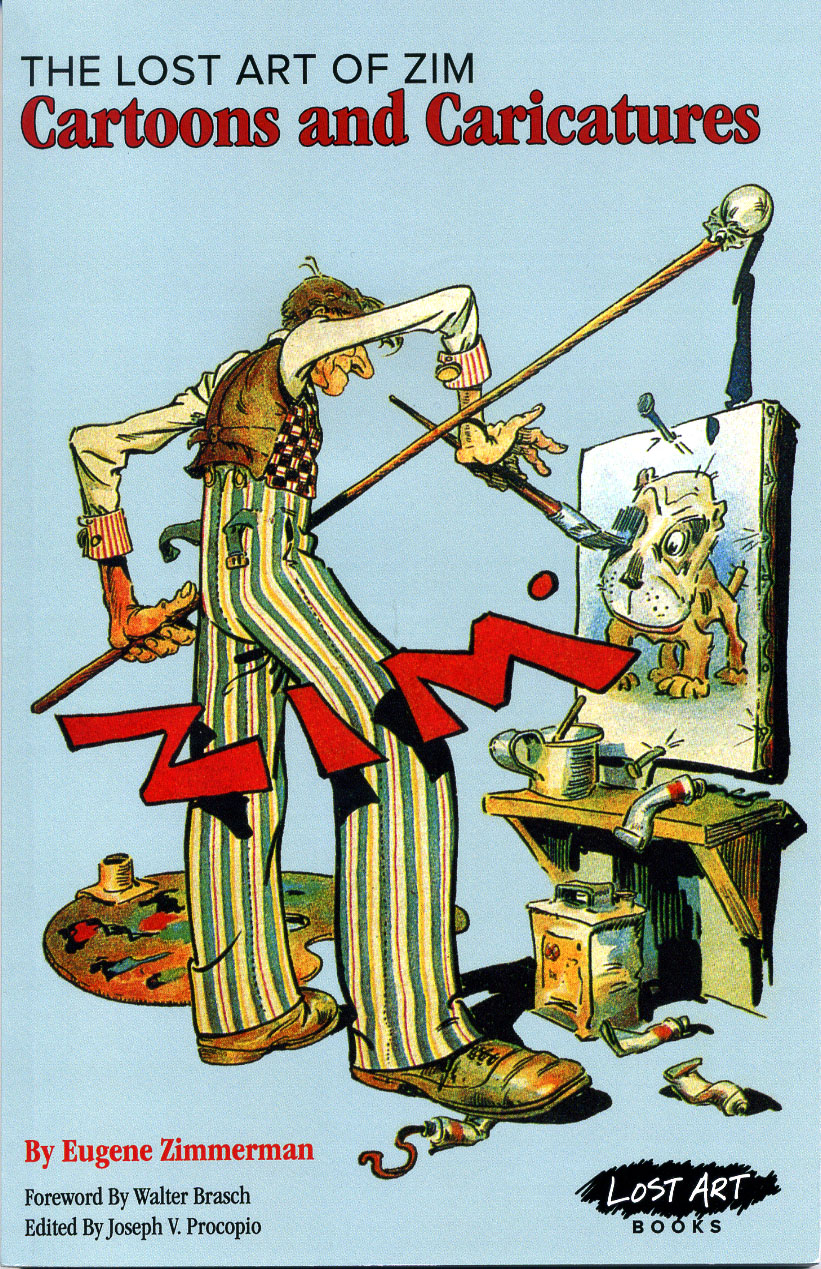
Sean Michael Robinson looked at some old books about the art of drawing.

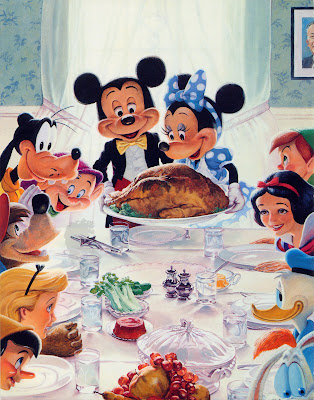
And for the holiday, Alex Buchet posted a gallery of Thanksgiving comics.

Utilitarians Everywhere

At Splice Today I have a short review of The Disappearance of Alice Creed.

Also at Splice, a short review of Ke$ha’s new album Cannibal, vagina dentata and all.

At Madeloud I review some semi-recent mash-ups.

Other Links

Sean Collins’ review of High Soft Lisp touches on some issues that came up in this blog’s discussion of Gilbert Hernandez.

And Charles Hatfield enters the lists on behalf of Joe Sacco against an army of trolls. I don’t really like Joe Sacco’s work much, but Charles is definitely fighting the good fight on this one.

Celebrate Imperialism!

It’s that time of year when Americans give thanks that the smallpox virus and small arms fire cleared a continent for Europeans and their livestock. In that healthy spirit of aggressive annexation, I am imposing my provincial holiday on our international contributors and closing shop for a few days. Happy turkey eating, if turkey is what you’re eating, and we’ll be back as usual on Sunday.

Books for Looking

I’ve recently begun teaching cartooning again. That event, and the approaching season of commerce gift giving have persuaded me to take a look at some interesting books that have a tangential relationship to the subject. There are plenty of books out there that directly address the processes and skills of cartooning, with greater or lesser results (I happen to think Scott McCloud’s Making Comics is the clear champion in this category) but for the purposes of this post I’ll be covering those books that might not have quite as direct a connection.

Continue reading

Reading Between the Lines: The Subversion of Authority in Two Graphic Novels for Young Adults by Ariel Kahn

Editor’s Introduction: This month’s “Sequential Erudition” features Ariel Kahn’s paper originally presented at the IBBY UK/NCRCL Conference last November. We choose it for this month’s column because its use of Laura Mulvey’s concept of the “gaze” fits with Noah’s recent post on Moto Hagio here at HU and a number of comment conversations. Personally, I appreciate the way Kahn combines thematic and formal analysis in combination with theoretical texts to make his point and provide an engaging essay. We’ll still looking for more papers for future columns, so if any academics out there would like to participate, leave a message. -Derik.

Reading Between the Lines: The Subversion of Authority in Two Graphic Novels for Young Adults by Ariel Kahn

Originally presented at IBBY UK/NCRCL Conference, 14 November 2009 at Roehampton University, London.

A recent resurgence in the publication of comics and graphic narratives specifically aimed at young adults raises a range of issues about the nature of authority, and the role of the reader in negotiating the narrative and constructing meaning in and through the interplay of image and text. This paper explores the diverse relationships between image and text, and the implications of the enhanced role they create for the reader.

The Problematics of Children’s Literature

The notions of authority and of the relationship between writer and reader are central to critical discussions of literature for children and young adults. This is evident in the contrasting positions taken by Jacqueline Rose (1984) and Peter Hollindale (1997). Rose argues that ‘children’s fiction is impossible … it hangs on an impossibility, … this is the impossible relationship between adult and child’ (1984: 1). The use of the author’s adult authority to shape and instruct the reader leads Rose to view children’s literature pessimistically as an act of repression. In contrast, in Signs of Childness in Children’s Books, Hollindale defines the divide in critical focus in children’s literature as existing between those who ‘prioritise either the children or the literature’ in the study of children’s literature (1997: 8). He advocates instead a study of children’s literature as a ‘reading event’ (p.30) in a strategy that allows both the child and the text to have a place.

Image/Text Relationships in Picture Books and Comics

The possibility of such a ‘strategy’, and the exploration of the narrative possibilities of such a ‘reading event’ are, I will argue, particularly striking in comic books written for young adults, picture books in which the active engagement with image and text opens up a multiplicity of possible readings, rather than enacting the closure and repression of which Rose warns. In How Picturebooks Work (2001) Maria Nikolajeva and Carole Scott identify ‘a taxonomy of picture book interactions’, which places the interactions of image and text on a sliding scale from Symmetry, to Enhancement, Counterpoint, and Contradiction. The authors are most interested in those picture books that use ‘counterpoint’, i.e., when ‘words and images provide alternative information or contradict each other in some way’ (Nikolajeva and Scott, 2001: 17, quoted in Donovan, 2002: 110).

Continue reading

Gluey Tart: Maiden Rose, Volume 1

Fusanosuke Inariya, 2010, Digital Manga Publishing and Oakla

I’d heard very, very good things about this manga from people who were hoping someone would pick it up from licensing limbo. Now that June has come to the rescue, I decided I could not ignore all the buzz about this title, despite my misgivings. Grave misgivings. Because look at that cover. I am merely talking about my own squick factors here, but even a whiff of WW II fetishization raises a forest of red flags for me. I am also not a fan of ukes who appear to be under age. (Or semes either, but putting the too-young-looking one on the bottom seems to bother me more.)

Now, Taki, the uke of whom we speak, is younger than the seme, but not under age. It’s just that in the very fully realized sex scenes, he looks it. He’s even in a position of great power, a lord and a military commander. Not underage, not powerless. This is so clear that by the end of the book, I almost got over thinking he looked twelve whenever he was stripped (which was often). It is a testament to the power of the story-telling here that I was pretty much able to get over my pretty thoroughgoing distaste for this kind of visual.

And the book is about war. Old-fashioned world war, including lots of old-fashioned ideas about heroism and honor and noblesse oblige, all of which I think is not only horse shit, but dangerous nationalistic horse shit. I do not find war stories romantic. And I especially worry about the kind of sexual excitement some people get from fascism, often symbolized by Axis uniforms. Now, just like the uke isn’t actually under age in this book, the war isn’t exactly WW II, and the lovers (Klaus, a tall, strapping blond, and Taki, a diminutive Asian man) aren’t exactly German and Japanese. The particulars are technically different, but – look at the cover. It’s obvious what we’re looking at. I do not like to take things too seriously, especially yaoi manga, of all things, but I was highly skeptical that I was going to be able to enjoy a manga in this setting. (Apparently even Kinukitty has limits.)

But I was told no, it’s OK, really. It’s well done. I didn’t think that was likely, but I was interested in what this book would be, anyway, so I bought it. And pointedly ignored it for months, unable to quite deal with it.

I wound up bringing it with me to the park to read while my son flung himself alarmingly off large pieces of playground equipment. I will point out one thing right now – this is not the book you should bring with you to the playground. There is lots of graphic sex. Lots. Graphic. I was off in a corner by myself, but I kept looking furtively over my shoulder, terrified some other, more responsible parent would show up and see this extremely NSFW image after the jump:

Continue reading