Utilitarian Review 8/7/10

On HU

Erica Friedman started the week by asking a bunch of creators and cartoonists why they made art.

For his first official column, Alex Buchet looked at some inaccuracies in Harvey Kurtzman’s war comics.

This is a delightful con wrap up by Kristy Valenti. The comments are even funnier.

Richard Cook continues his look at the Silver Age Flash.

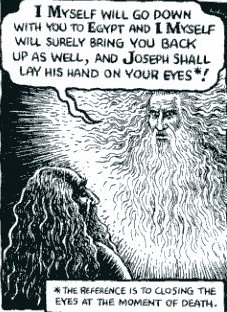
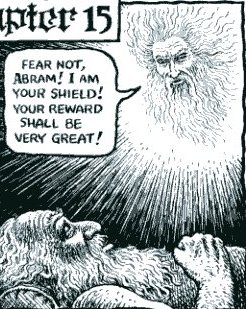
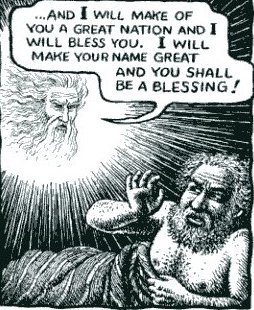
I made fun of R. Crumb’s Genesis, particularly his floating bearded heads.

Vom Marlowe looked at the illustrated children’s book series Billy and Blaze.

Caroline Small compared Crumb’s Genesis to work by Howard Finster and Basil Wolverton.

I reprint an old essay about war in literature.

And here’s a random download mix with Thai music, funk, ZZ Top, and maypole dancing.

Utilitarians Everywhere

At Splice Today I reviewed Kelis’ new album.

Flesh Tone isn’t horrible. It’s just anonymous—which is perhaps even more depressing. Kelis’ distinctive, not-quite-ready-for-primetime voice is processed into bland submission, and the Neptunes’ unique production is replaced with third-drawer dance-floor dreck. The lyrical nuttiness of Kaleidoscope is entirely gone; instead we’re left with groaners like “Just like the sky on the 4th of July/you make me high.” The low point is probably “Song for the Baby,” the cheery sentiments and perky beat of which put Kelis dangerously close to Amy Grant territory. There’s a bitter irony too in “Scream,” where Kelis insists, “You’ve won the right to scream and shout.” Unlike on Kaleidoscope, Kelis does not in fact scream. She barely whimpers.

Also on Splice, I talk about Kierkegaard, Abraham, puritanism, and aesthetics.

This shouldn’t be particularly surprising. If there’s one tendency in Protestantism that’s stronger than the loathing of aesthetics, it’s the veneration of the same. The Bible, after all, is a series of tales. Kierkegaard sneers at aesthetics because he takes them so seriously. The problem with stories is not that they’re stories, but rather that they’re not the one story. It’s because he loves the tale of Abraham so elaborately that Kierkegaard denigrates other narratives as sentimental balderdash. Sci-fi jelly creatures attacking—that doesn’t have the terror, the sorrow, the human interest and moral power of Abraham walking to the mountain to slay his son. Away, then, with the jelly creatures! Puritan philistines are just particularly foul-tempered critics; their iconoclasm is just one long bad review.

Other Links

Roland Kelts is writing some interesting stuff about the fate of manga in the U.S. over at tcj.com.

And in my continuing pursuit of blog amity: Jeet Heer’s piece on Harvey Pekar is balanced and thoughtful.

Caro put me onto this really pretty great Newsweek article about Lily Renée

Derik Badman has a thoughtful assessment of Ben Schwartz’s Best American Comics Criticism.

Bombs in NeverNeverland

I wrote this almost twenty years ago for a course on representations of war when I was a junior in college. It touches on some issues raised in the comments section of Alex Buchet’s recent post on war comics, so I thought I’d resurrect it. I think I still agree with the main points, though the prose would probably be a trifle less earnest if I wrote it now. But, for better or worse, here it is.
_____________________________

“All children, except one, grow up,” writes J.M. Barrie at the beginning of Peter Pan. In many ways, the fictional constructions of war created by Tennyson, Kipling, Remarque, and Zola, appear to be attempting to deny this insight; appear to be attempting to suggest that war provides a return to an idyllic youth and innocence which allows the men who participate in it to escape from the mores and constrictions of adult society and return to an idealized childhood in which manners and restraint are cast away and replaced by simplicity and exuberant enthusiasm. War, for these authors, is an arena in which adventures can occur; in which heroism and enthusiasm triumph over the stodgy grind of day to day life. One can almost hear the cavalry in Tennyson’s “The Charge of the Light Brigade” declaring, with Peter Pan, “I’m youth, I’m joy” as they thunder towards the artillery guns, can almost hear Peter’s cocky self-assurance in Kipling’s breezy assumption that “of course” the British forces broke the “Fuzzy-Wuzzies”. The soldiers of which Kipling, Tennyson, Remarque and Zola speak have no fear, they have no doubts. They live, like children, in their own world with their own rules, in their own “NeverNeverland” separated entirely and forcibly from the reach and understanding of adult society.

Yet, despite this separation, the soldier is not ostracized, not attacked or unaccepted by the society which he seemingly rejects. He is not, in fact, a threat to civilized society, but is rather a delightful dream, an idea with great appeal both to the emotions and to the imaginations of people of the time, as the popularity of Charles Gordon demonstrates. Thus Kipling’s “Tommy” is a man (or, perhaps more correctly, a boy) who should be admired and loved even though he does not really fit the mores and norms of society, even though, as Kipling puts it, his “conduck isn’t all your fancy paints”. It is, in fact, Tommy’s separation from fine society which make him an attractive figure; his very simplicity, the very fact that he does not want luxuries but only wishes to be treated “rational”, composes his glamour. Tommy does not want “better food”, but only to be accepted by society without having to conform to its rules. He wants (and appears to receive from Kipling) to be given the freedom not to conform and to be admired for his very possession of that freedom; wants, like Peter Pan, to receive unconditional affection and yet to never have his mind cleaned.

It should, of course, be impossible to be at one and the same time independent and dependent, impossible to be heroic for the sake of the sympathy and admiration which that heroism brings. Only if one is capable of a total lack of self-reflection and self-awareness is this contradiction resolvable; it is only through his total naivety that Peter Pan is able to both expect admiration and receive it. Through war, Kipling, Tennyson, Zola and Remarque appear to suggest, through becoming a soldier, this simplicity can be (re)gained, this idealized childhood can be (re)found. Soldiers, like children, are, for these authors, not concerned with whether what they do is correct or incorrect, they do not agonize–they simply are. The soldiers whom Zola describes are “Like children and savages, their only instinct…to eat and sleep in this rush towards the unknown with no tomorrow”, Remarque’s Paul notes that “The national feeling of the tommy resolves itself into this–here he is.” The soldier is unthinking; in fact, thought is his enemy, his destroyer. The self-reflection which connotes adulthood, the loss of innocence and unselfconsciousness, results, in these fictions, in age and death. When the soldier begins to think, as Lapoulle does after killing Pache, he is destroyed. As Remarque’s Paul says, “we [the soldiers] are in a good humour because otherwise we should go to pieces.”

Remarque, of course, is contending that it is the horror of war, not of adulthood, which makes this jollity necessary; that to think about war would cause madness, insanity. But in many ways Remarque’s novel makes a statement not that war is too awful to think about, but that it is, in fact, aging which is the greatest horror. It is for this reason that the older men in the War are not as tragic as the men of Paul’s generation, for the older men have no youth to lose. For Remarque, the tragedy of the war is a loss of childhood, is the fact that through the war, Paul discovers death and sexual initiation (“the curse of a soldier” as Kipling writes), fear and vulnerability. Yet all of these discoveries are, in fact, not unique to wartime; as Paul himself realizes, they are instead the necessary adjuncts of adult life, the manifestations of a superficial society which delivers coffins punctually before a battle and places you under the arbitrary control of a postmaster. The war is the extension of civilian societies cruelties and artificialities, stupidities and absurdities. But even as it is so, the war also provides a means of escape, a strategy of resistance, a means whereby youth can be retained through “the finest thing that arose out of the war-comradeship.” Through this camaraderie, the trappings and foolishness of civilization, the unnecessary clutter of the school room, can be shrugged off and subsumed in the contentment of a good meal tasted among good friends. Paul relishes the experience of sitting with his comrades on their makeshift toilets not in spite of the primitiveness of the facilities, but because of it. Remarque views culture and civilization with suspicion, and finds in war a way to sidestep them, to return to the idyllic childhood which Zola describes the young intellectual Maurice finding in the arms of the simple peasant Jean when “Maurice

…let himself be carried away like a child. No woman’s arms had ever held him as close and warm as this…Was this not the brotherhood of the earliest days of the world, friendship before there was any culture or class, the friendship of two men united and become as one in their common need of help in the face of the threat of hostile nature?

Through his relationship with Jean, Maurice regains infancy; he is tended too, sheltered, cared for. War in The Debacle provides Maurice with a way to return to simplicity, with a means of becoming both noble and tragic. He becomes one of the “poor boys, poor boys” to whom his sister refers; he becomes innocent. In its creation of an arena in which life becomes more simple and true, war also, then, absolves of guilt even as it confers naivete. The soldier makes a sacrifice for crimes he did not commit. Like the men of the Charge of the Light Brigade, he goes unquestioningly to his death, following orders to the last. The betrayal of the soldier by civilians and generals is made all the more poignant because the soldier has done nothing wrong; has, in fact, placed his whole trust and hope upon civilian assurances of glory and easy victory. The betrayal is, in fact, like the betrayal which Peter Pan experiences at Hook’s treachery on the rock in the lagoon, the betrayal of a child’s total trust by a parent’s unfairness, after which, Barrie writes the child “will never afterwards be quite the same boy.”

It is this betrayal which Paul feels has robbed him of his youth when he says that, “I am young, I am twenty years old yet I…see how peoples are set against one another, and in silence, unknowingly, foolishly, obediently, innocently slay one another. [italics mine]” Remarque claims, then, both that the soldiers have lost their innocence, and that they retain it. Remarque says that their parents have failed them, and yet he still conceptualizes them as children. They have discovered that the world is unfair, and yet Remarque, through Paul, still perceives them as innocent. Paul repeats over and over that his generation is lost, it is useless, it is old and destroyed, but he never once decides to stop fighting, and even pushes Himmelstoss forward when the former drill master falters. Self-consciously martyred, Paul cannot solve, but can only revel in his troubles, just as Mr. Darling revels in his sojourn in the kennel.

Mr. Darling is, of course, not really comparable to Paul. He is not as young, nor in as much distress; he was not in the trenches of the First World War. Yet, in a deeper sense, Mr. Darling is very much like Paul, very much like Maurice, very much, for that matter, like Charles Gordon. He is a man who wishes more than anything to be admired, as Paul and Maurice did when they joined their respective armies, but who, through that very wishing, has condemned himself to an unadmirable existence. He is a conceited fool, a whining incompetent, a desperately contemptible figure when placed beside the apogee of unconscious grace and youthful innocence which is Peter Pan. And yet, while no one would want to be Mr. Darling, no one can wish to be Peter Pan either, because the very wishing dooms the attempt. One either has “good form” or does not have it. To have good form is to be young, unconscious, free. But “All children, except one, grow up.” And that one, as Barrie surely knew better than anyone else, was not real.

This is, I think, Barrie’s central insight, is the reason that Peter Pan , if it does not really oppose war, offers a way to oppose war that none of the other pieces of literature we have studied manage to suggest. For if, in fact, childhood is unattainable, if simplicity is gone, then the attempt to recapture that simplicity and childhood through war is not only misguided, but is actually dangerous, futile, and pitiful. Barrie loved children, he loved childhood. But he knew that he was not a child, and that he could not become one by travelling to some foreign field with a rifle and a battalion of comrades. Childhood games played by adults are not touching or cute; they are pitiful and even terrible. When Mr. Darling pours the medicine into Nanna’s bowl, he does not appeal to the reader in the same way that Peter does when he plays the game of question and answer with the pirates. Similarly, Peter’s comment that “to die will be an awfully big adventure” is charming and witty only when uttered by Peter’s naive voice. Kipling’s effort to capture what appears to be a similar sentiment sounds incredibly cold-hearted and callous, advising as it does that a soldier wounded on the field of battle and facing imminent mutilation ought to “Jest roll to your rifle an’ blow out your brains.” On the other hand, the French mutineer’s letter telling his sweetheart that, “I love you, and I don’t want to die”, is touchingly painful, and would be just as out of place in Peter Pan as would Kipling’s injunction. Real horror (though apparently Kipling, whose brain may itself be scrambled in some anomalous fashion, does not know it is real horror), and real fear are not part of the world which Barrie describes.

This is, of course, because Barrie’s world is not real. NeverNeverland is named so for the obvious reason. Tennyson, Zola, Kipling, and Remarque, in attempting to locate it within the context of reality, in attempting to suggest that NeverNeverland is obtainable within a historical rather than an imaginary framework, trap themselves within the very mundane existence that they wish to escape. In trying to escape adulthood, in trying to leave behind their responsibilities, they succeed only in making Mr. Darlings of themselves, only in placing themselves in a continuum where they refuse to face their problems because they wish so badly to transcend them. Tennyson cannot feel outrage or shock at the death of the Light Brigade, Zola can create only shallow caricatures in the place of real characters, Remarque can not move past self-pity and gruesome imagery to register any deep and meaningful moral objection to the carnage he witnessed, and Kipling appears to have buried any decent human compassion at all beneath a glut of imperialist fervor. Each is left romanticizing stupidity and horror in the hope that in doing so they can rediscover the childhood that they have lost.

Barrie offers no alternative to this quest. He, too, cannot turn from childhood, cannot stop seeking Peter Pan. But he knows, as Tennyson, Kipling, Zola, and even Remarque do not seem to, that the quest is futile, knows that Wendy and John and Michael and the Lost Boys must grow up eventually, must take up a mundane existence no matter how boring or dull it appears. And once it is recognized that war is not a return to some idealized NeverNeverland of childhood, then perhaps a convincing opposition to it can begin to be formulated.

Outside Crumb

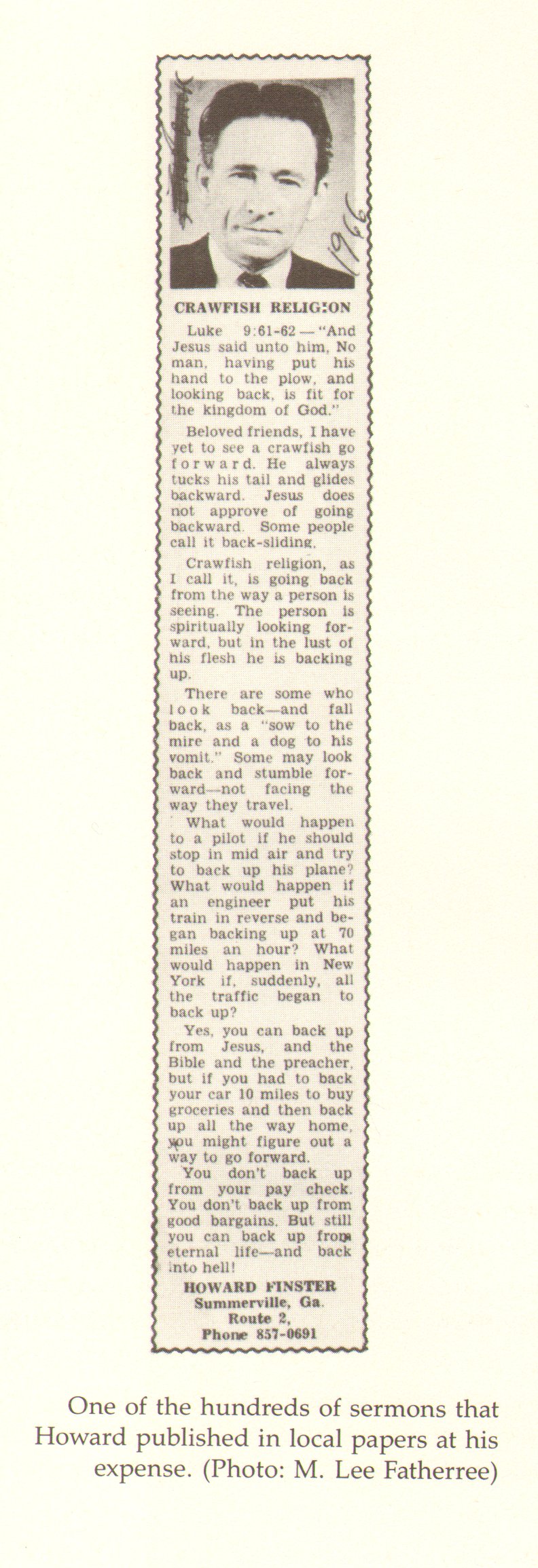
There’s a style of talking about the Christian God that you find in rural corners of the American South where there are Free Will Baptists and Pentecostal Holiness churches. Imbued with images and rich with metaphor, it’s also thickly oral, repetitious and rhythmic – reading transcripts of sermons aloud is like holding pebbles of words in your mouth:

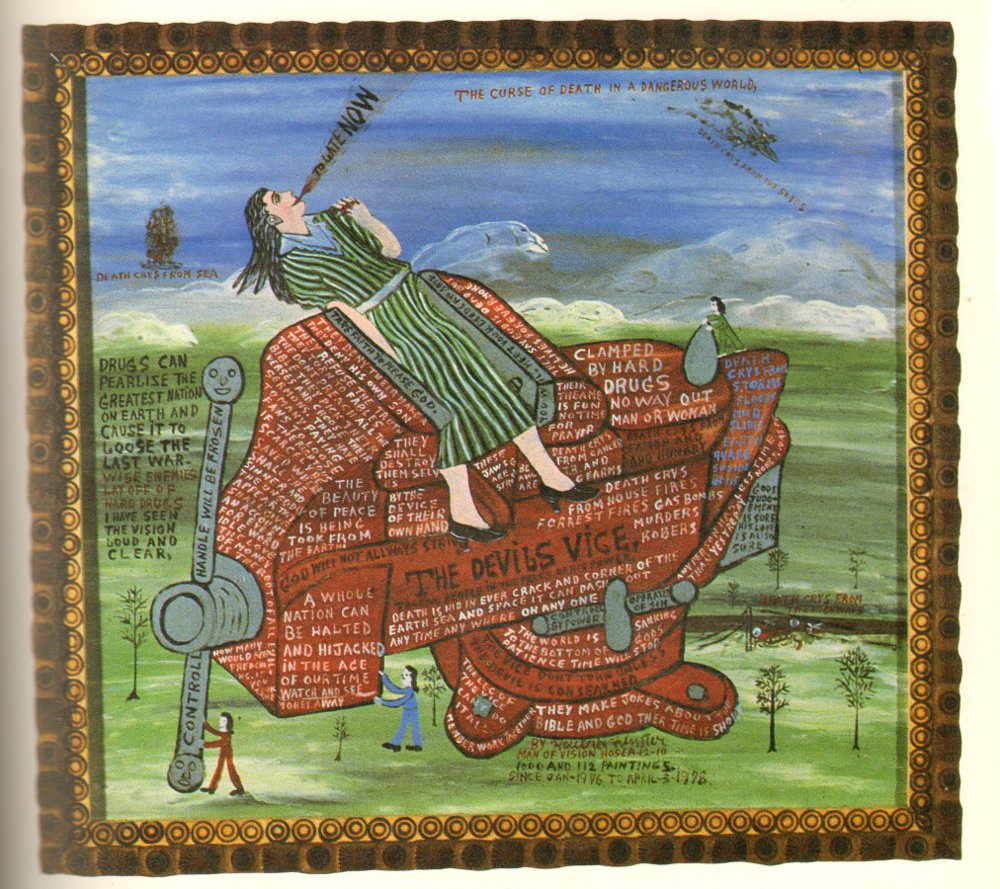
I was voted in to pastor a church away down in southeast Alabama. I felt like I was drifting into a paradise opportunity to work for God, but really I was headed for the jaws of a vice on the Devil’s workbench. What I didn’t know what that the young people outvoted some of the old-time goatheads which was trying to bring in an older minister. They had future trouble up their sleeves…[they said] we are going to bring our minister to church and he is going to take the pulpit.

“When the other people at the church heard this, they were ready for a fight. One rough sinner-man came to me and said “I have a real sharp knife and I ate peas and cornbread in prison before and I can do it again. Don’t worry, no one is going to take your pulpit. My knife is sharp and I’ve been in trouble before.” So I woke up in a vice between a prospering church and a blood-shedding fight. I wanted to preserve peace, but that ain’t easy, because the Devil has got me in that vice time after time…Preachers think they got power just by preaching and that sinners will get saved. You can’t run sinners out of church. You have to run them into church and make it a soul-saving station for God.”

The Devil's Vice (click to enlarge)

Howard Finster (who wrote and drew the above) was a particularly strong example of this way of talking about God. It was common, among people of his generation, in the Pentecostal sects of his part of the south, where the Holy Spirit gets a seat at the table and the church elders speak in tongues, but even there his imagination was more vivid than most.

Click and zoom to read

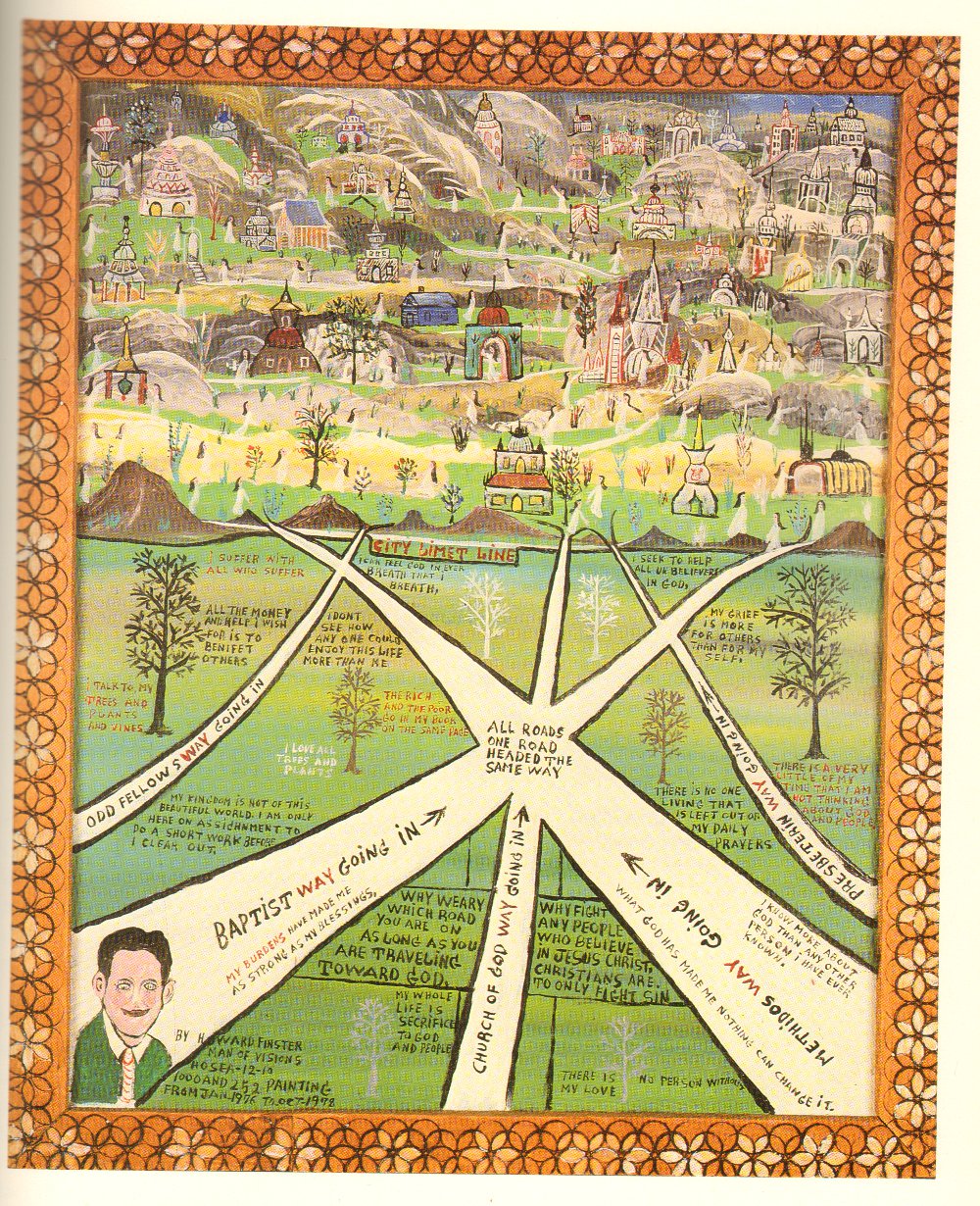
His paintings, which I linked to briefly a few days ago, share the same sensibility as his sermons – a mixing up of images and metaphors from sacred and secular life, mixing that he thought was essential to his evangelical purpose.

In these places, deep in the rural South, where the nearest town of any size is hours away and the churches have had the same families in the same pews for 100 years, religion stops feeling like a choice, because culture is so saturated with faith it’s not something you believe, it’s just the way things are. “Ashes to ashes, dust to dust” isn’t just a phrase in a funeral: it describes that sense that everything in the world is made of the same stuff and that stuff is God: the trees and the fish and the people and the boards of your porch and the bricks of your church.

Howard Finster draws the psyche of that place.

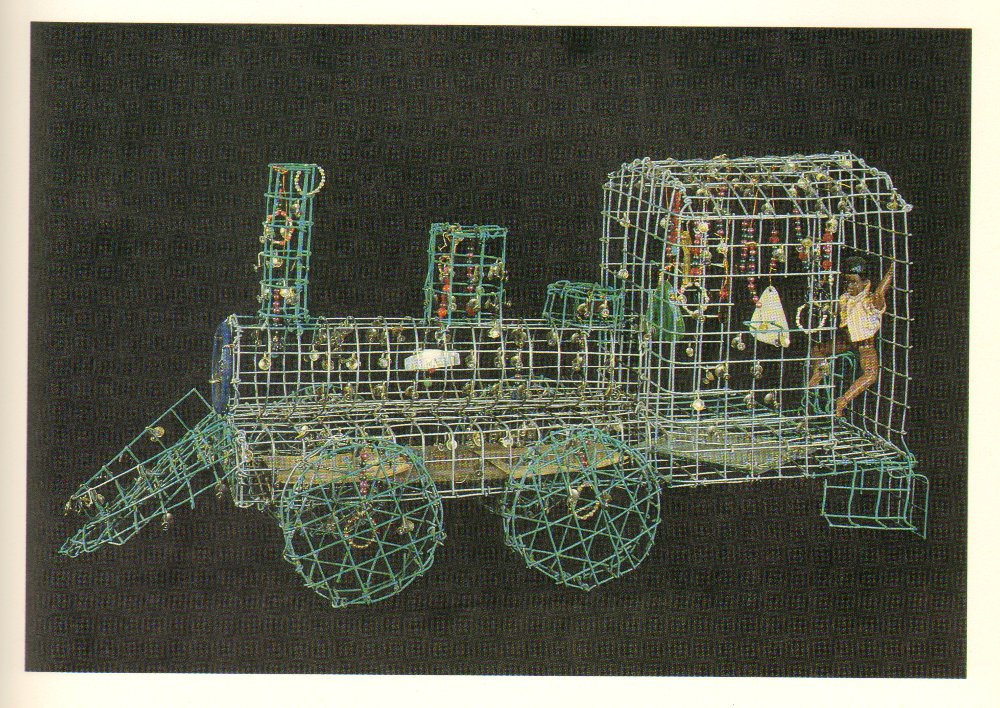
It’s come up several times that asking R.Crumb to “have some imagination, damn it,” (in Genesis, at least) is somehow tied up with asking him to be more religious, or that seeing his imagination as falling short is somehow due to mistakenly looking for signs of belief. I think, though, that it does Howard Finster’s imagination a great disservice to attribute it to his faith. There are too many faithful people who don’t have it. I wish faith did automatically produce it: then we’d have more art like his.

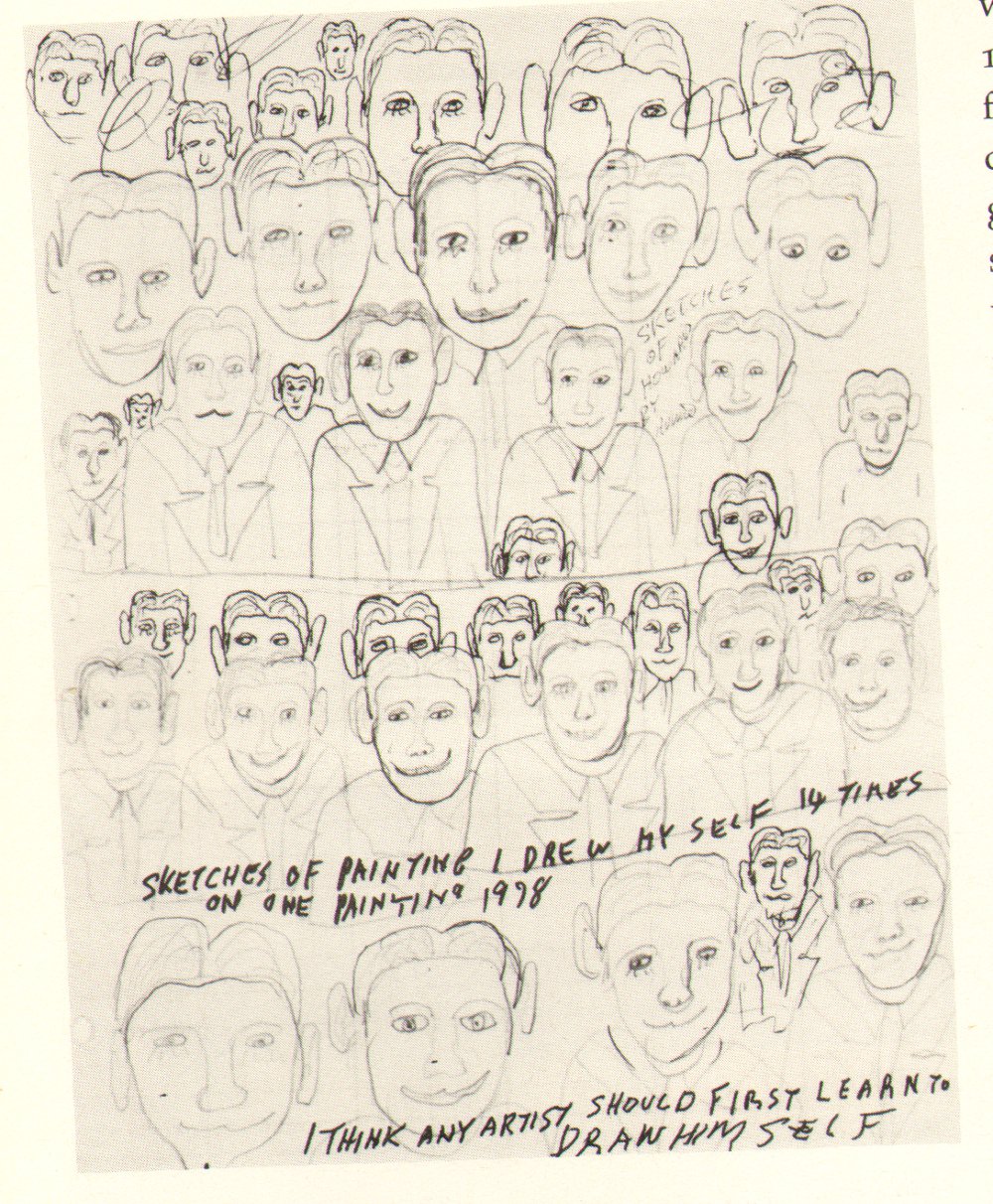
Annotated Sketch (c. 1978 click to enlarge)

Wire Train (click to enlarge)

click to enlarge

============

Cartoonist Basil Wolverton was also a believer when he began illustrating Bible stories and verses for evangelist Herbert Armstrong in the early 1950s. Wolverton had been drawing comics since 1925 and was drawing for Mad at the time he started illustrating the Bible. His cartoons influenced Crumb and other underground cartoonists – he drew grotesque, weird, exaggeratedly humourous characters that, despite his protestations about intent, were viewed as highly sexually suggestive.

Mad Cover Illustration (click to enlarge)

His Biblical illustrations, unsurprisingly, are more straightforward and serious, although the exaggerated sensibility sneaks through. In the introduction to “The Wolverton Bible,” his son Monte observes:

Wolverton’s challenge was to portray the Biblical accounts accurately without tramautizing children too much. Yet from his background in comics, he understood that children actually enjoy a certain amount of violence (how it effects them is another topic.) In this way he was a pioneer for later comic artists, beginning in the 1970s, who would bring a more realistic interpretation to graphic depictions of the Bible…he never backed down from his position that the Old Testament needed to be depicted for what it was.

(Sound familiar?) Like Finster’s, Wolverton’s approach is consistent with the declamation style practiced in his church, but Wolverton’s church was very different. Monte Wolverton describes Herbert Armstrong’s preaching style as “newscaster-like” and “devoid of churchy language.” Although essentially a one-man-show when Wolverton first became involved, Armstrong’s church, called the Worldwide Church of God, had become extremely rule-bound and institutionalized by the end of the 1960s – members who disagreed with church teaching were “disfellowshipped.” (It was not a typical fundamentalist church, however, as it did not prevent drinking, dancing or other social activities.) Wolverton himself was a jovial, congenial and funny man who loved to entertain. His drawings reflect this mixed vantage point: the serious, “newscaster-like” declamation with a great appreciation for humanity and personality.

Creation (click to enlarge)

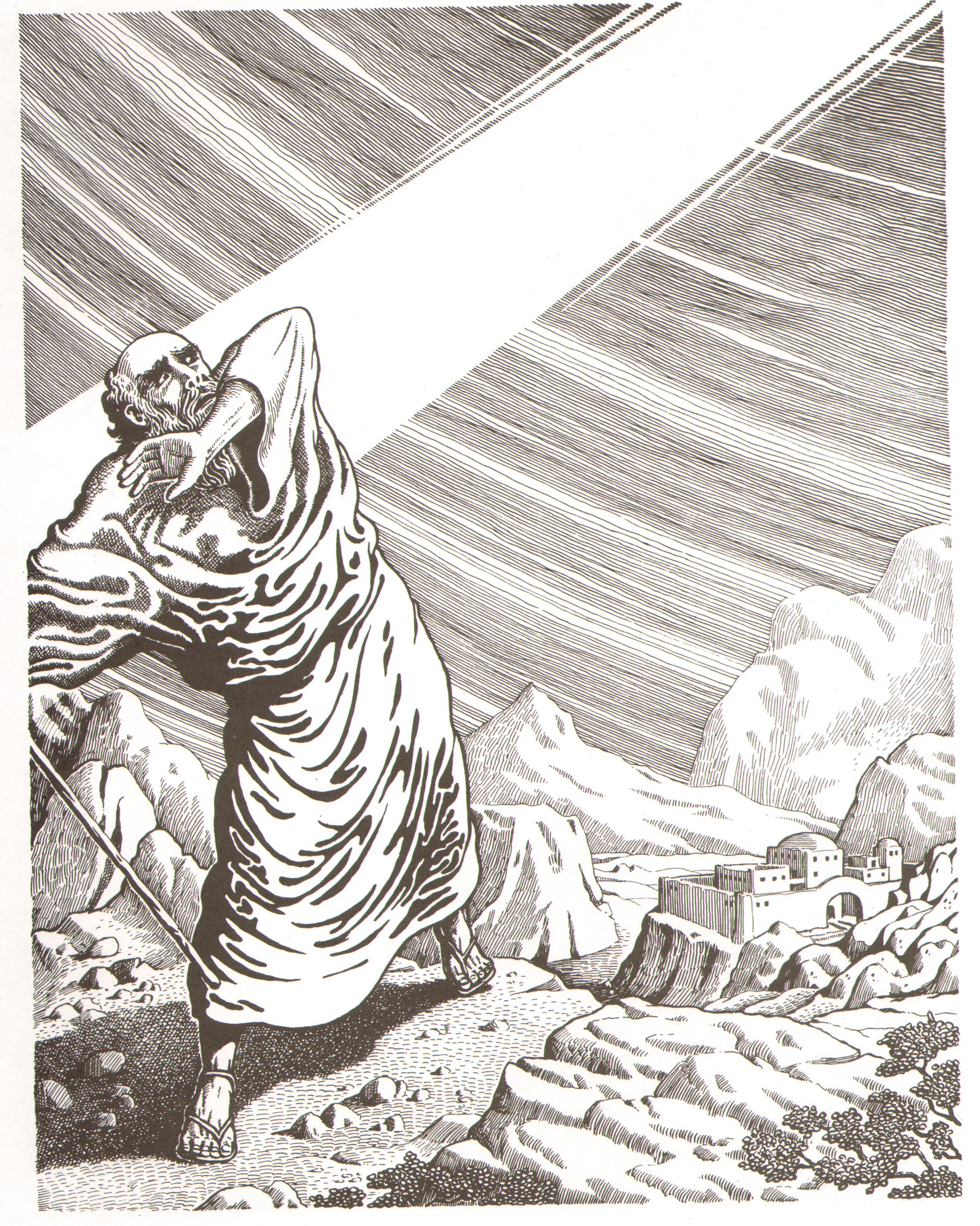
God speaks to Noah (click to enlarge)

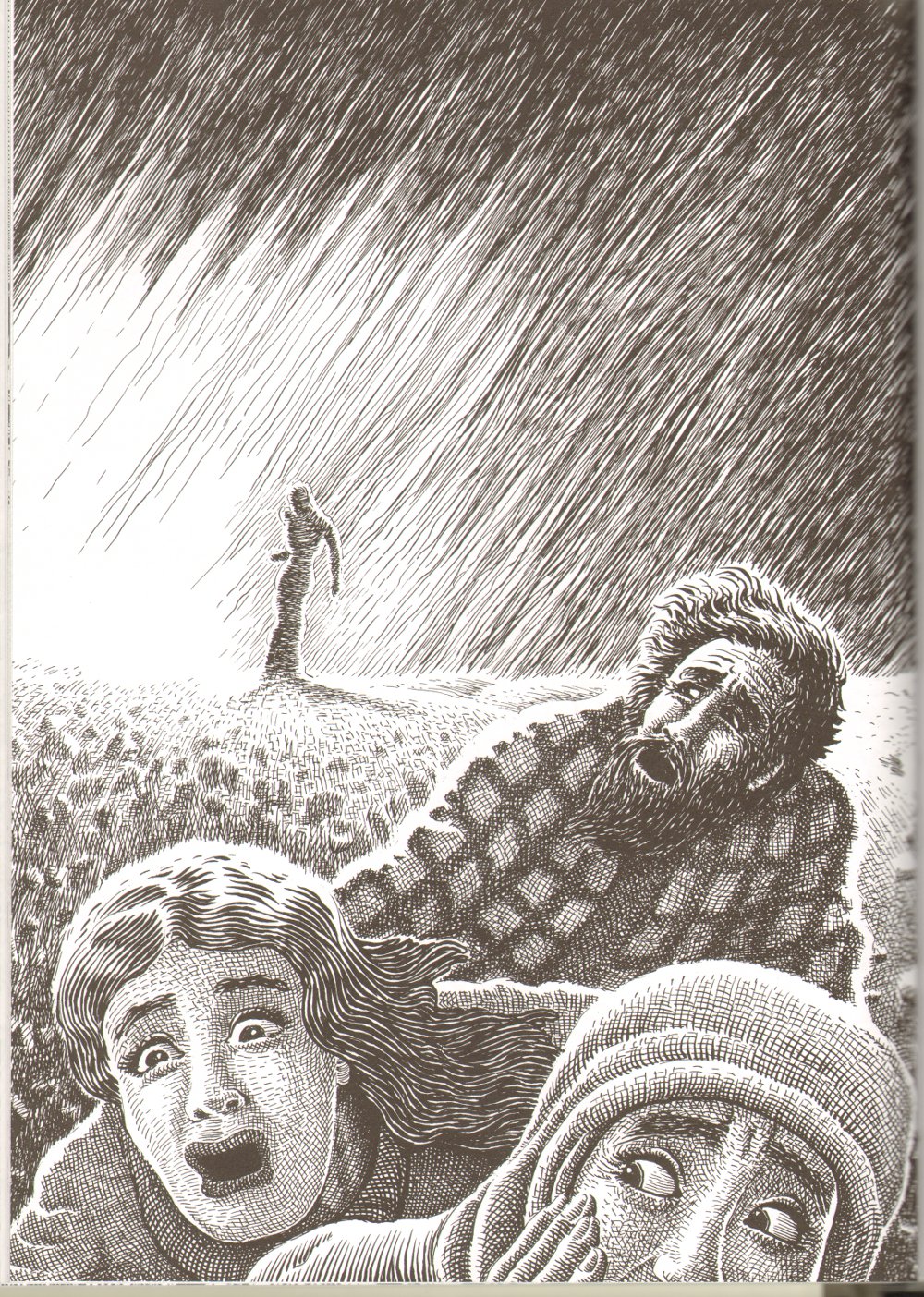
Lot's wife turned to salt (click to enlarge)

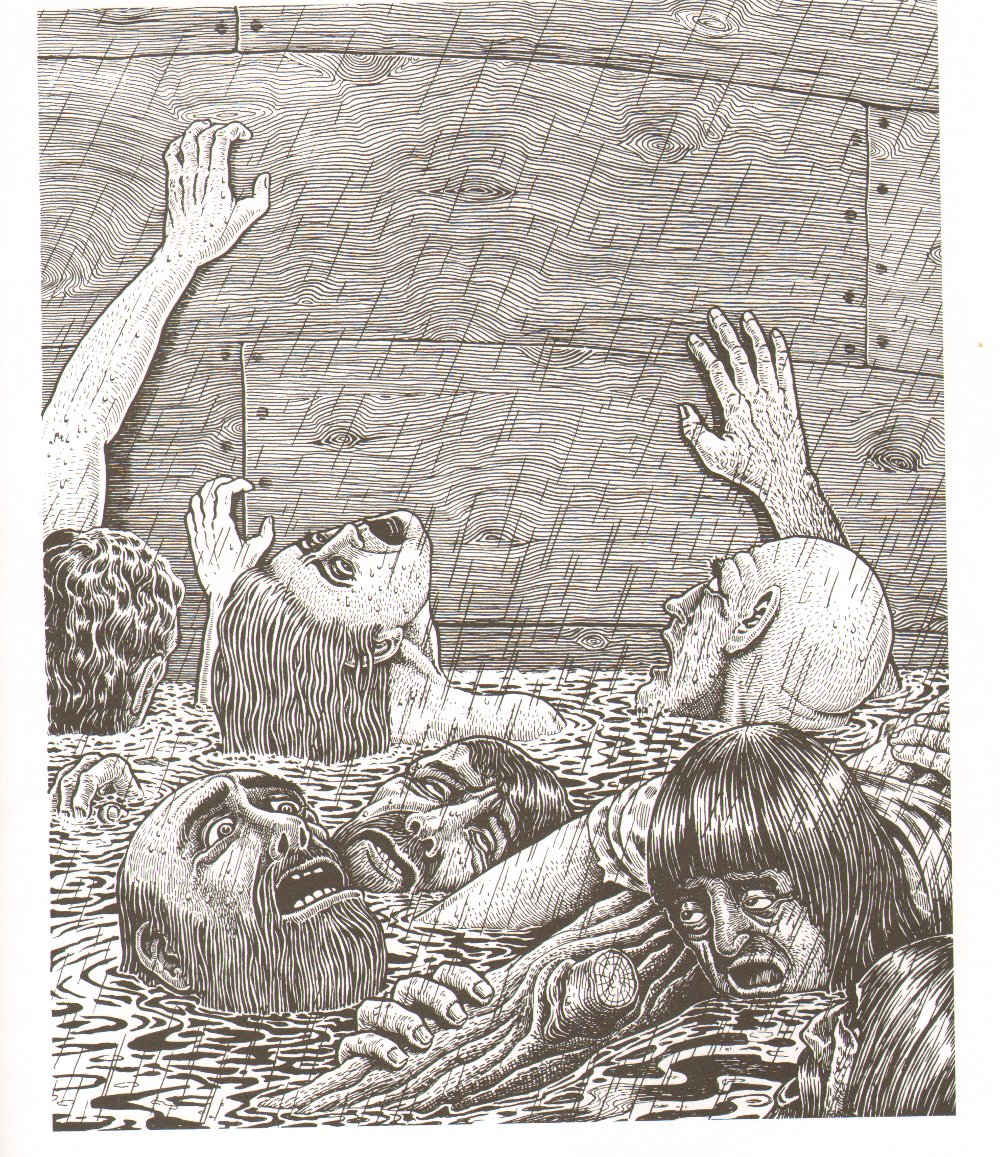
Victims of the Flood (click to enlarge)

It seems obvious that Wolverton’s treatment of the Bible was more influential on Crumb than Finster’s, although I have no evidence that Crumb saw these Biblical drawings before beginning his work. Crumb’s Bible strikes me as very much the literal Evangelical Bible, though, so it wouldn’t surprise me if there was genealogy through this path.

What’s more difficult to account for, for me personally, is the greater aesthetic impact I feel from the Wolverton drawings, since they are in many respects so very similar to Crumb’s. In comparison, I think much of my dissatisfaction with Genesis does in fact come from two formal elements of the comic idiom: the grid, which provides a repetitive overarching composition even when the in-panel composition is varied, and the transformation of the prose text from its familiar, “native” graphic presentation in the columnar numbered pages of the Bible, into the comics idiom of captions and balloons. Text is, for all its abstraction, also a visual medium, and the flow and sound of the text in normal prose presentation is governed by different interactions than the ones in Crumb’s comics version.

My lack of appreciation for this – my sense that more is lost than is gained – is without doubt my limitation, not Crumb’s, and in this particular matter, an issue of personal aesthetic preference. But the comparison raises questions about the impact and effect of “sequential art”: I think because most people who read comics have an affinity for these elements of the idiom, they’re often accepted unquestioningly, without critical challenges or evaluation. A “nothing left out!” illustration job is a translation of sorts – normally the prose Bible is very aural; in Crumb’s book that aurality is replaced with the visual. The oft-described effect of “making the pictures narrate” is very palpable here – Crumb is without doubt successful at that effort – but to what end? Is it really just a “translation” into the comics “language”?

I think it may be — while Finster in particular can stand up against the more elite Biblical art that Suat drew on in his comparison and Wolverton’s approach is at least highly representative of his particular individual reading, Crumb’s is much less an individual reading than either. His very successful effort to humanize the Biblical characters resulted in a dehumanization of the experience overall. This perhaps shows us Alter’s error: it is not the concretization of images that marks the limit of the comics form at this moment in history, but instead the lack of imagination regarding the ways in which illustration can be fully literary without being tied relentlessly to sequence, grid, and narrative. Some experimental cartoonists are working to imagine new notions, but the far-more-common reliance on sequence to capture the spirit of literature – well, it only “captures” it, like a wild animal kept in a tiny cage.

Howard Finster described himself like this: “To do art like them fellas do in the books, it would take months. I’m a cartoonist. I don’t fool with details like that.” Without those details, an imagination like Finster’s makes all the difference.

============
Images and quotations in this post are taken from: “Howard Finster, Man of Visions: the Life and Work of a Self-Taught Artist” by J.F. Turner (Knopf, 1989) and “The Wolverton Bible: The Old Testament and Book of Revelation through the Pen of Basil Wolverton,” Monte Wolverton, compiler (Fantagraphics, 2009).

Billy & Blaze

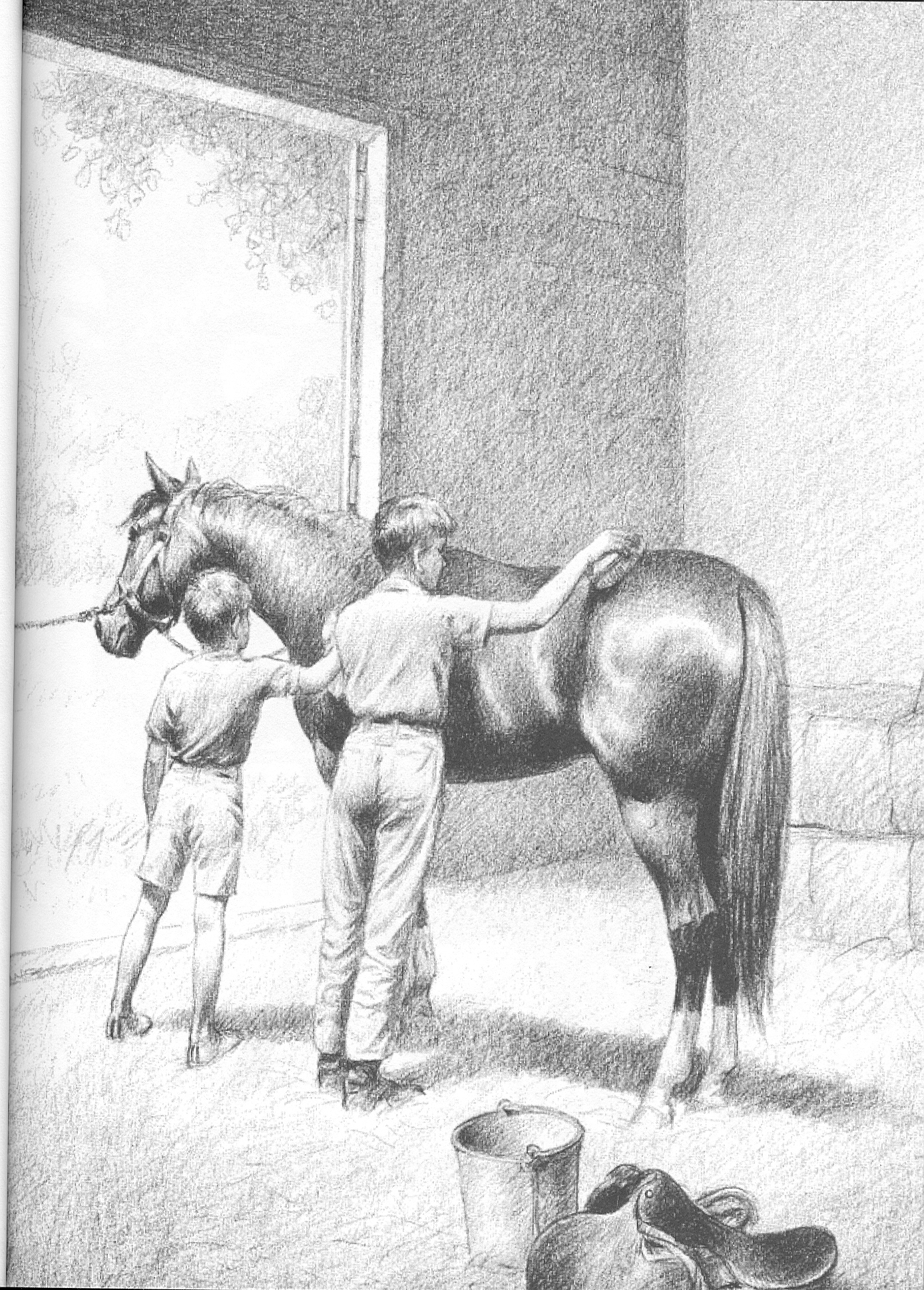
C. W. Anderson, series, focusing on Blaze and the Gray Spotted Pony and Blaze Finds the Trail.

This easy-reader children’s series is from the fifties and sixties.  They have simple, straightforward text and black and white pencil illustrations.  Hands down, they are probably my most favorite books in the entire universe.  When I lost my personal library to a flood, my family instantly Amazoned me the entire set (probably in the hopes that I would stop crying; it worked).

Sometimes, when I read comics or other graphic stories, I find myself frustrated with the art.  For all the options these days in color, from traditional mixed media to advanced Photoshop autofills and filters, there is often, well, a lack of craftsmanship.  There is something to be said for a simple drawing that conveys a straightforward idea in a straightforward way, done well.

I know this may make my tastes dull and boring, but to me, these simple drawings done with nothing more than pencil and paper by one man are more beautiful than many of the creatively mixed media of pencils and ink and Photoshop and InDesign and who knows what all else done by a team of five or more.

One of these books is sixty years old.  So they’re not exactly getting a lot of hot press, but they’re still in print.  Unfortunately, the current reproductions kind of suck.  They don’t do a good job of displaying the subtlety of the pencil drawings’ shades, but they’re also only six bucks each retail.  If you can get your paws on the older, library bound versions, they’re better.

But I wanted to share them, for two reasons.  One, I think they’re lovely drawings that some of the art-focused adults here would enjoy.  Second, I think they’re a great choice for young children, especially if they’re just beginning to read.

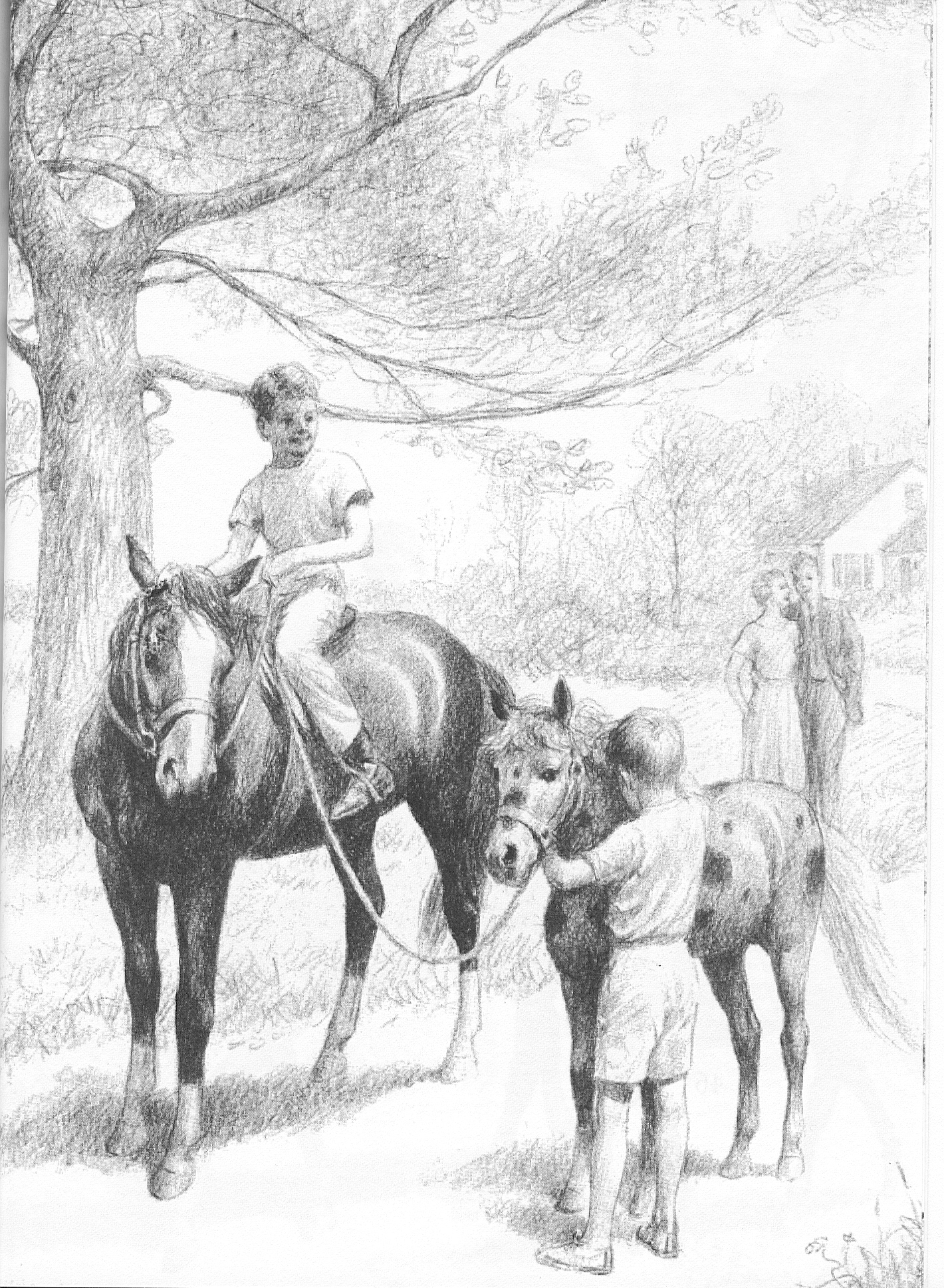
The stories are all about a boy named Billy and his faithful pony Blaze.  Sometimes they include his friend down the road, Tommy, who wants a pony of his own.  Here’s part of Blaze and the Gray Spotted Pony:

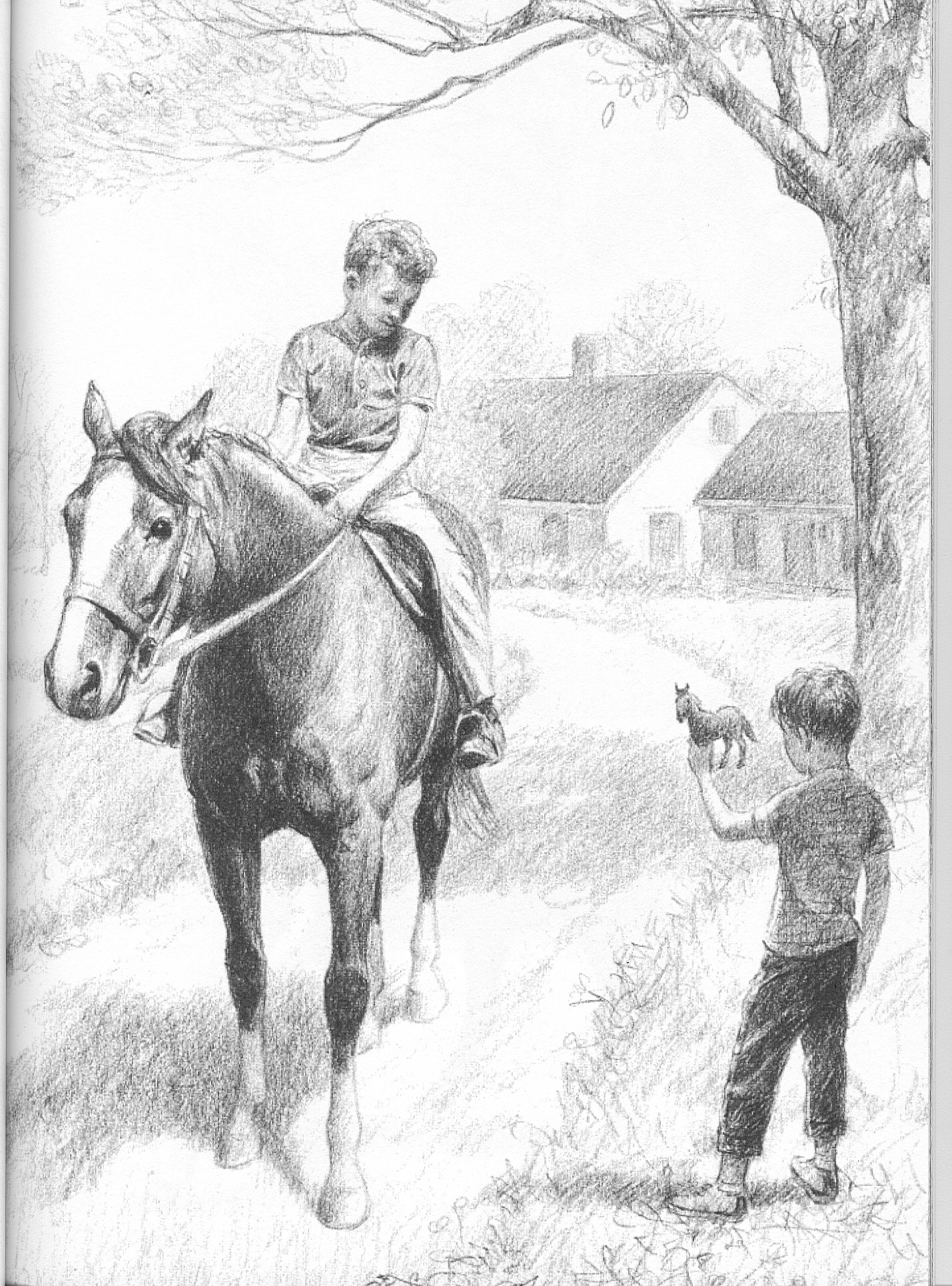
“Tommy was a little boy who loved horses.  Almost all his dreams were about horses–all kinds of horses.”  Tommy makes due with his toy horses and his dreams for a while.  Then we get this, “Whenever Tommy got a new little toy horse, he always showed it to Billy.  Billy said they were very nice and looked real.”

With the charming picture:

Billy shows Tommy how to ride and how to take care of Blaze.

Eventually, Billy and Blaze find Tommy a gray spotted pony of his very own.  (These are not complex, twisty plots.)  Billy and Blaze and Tommy and his Gray Spotted Pony all become best friends.  You can see the bad scanning job and strange pixelations in the reproduction here  (and I thought I was a bad scanner, jeez) , but I also hope you can see the lovely drawing beneath:

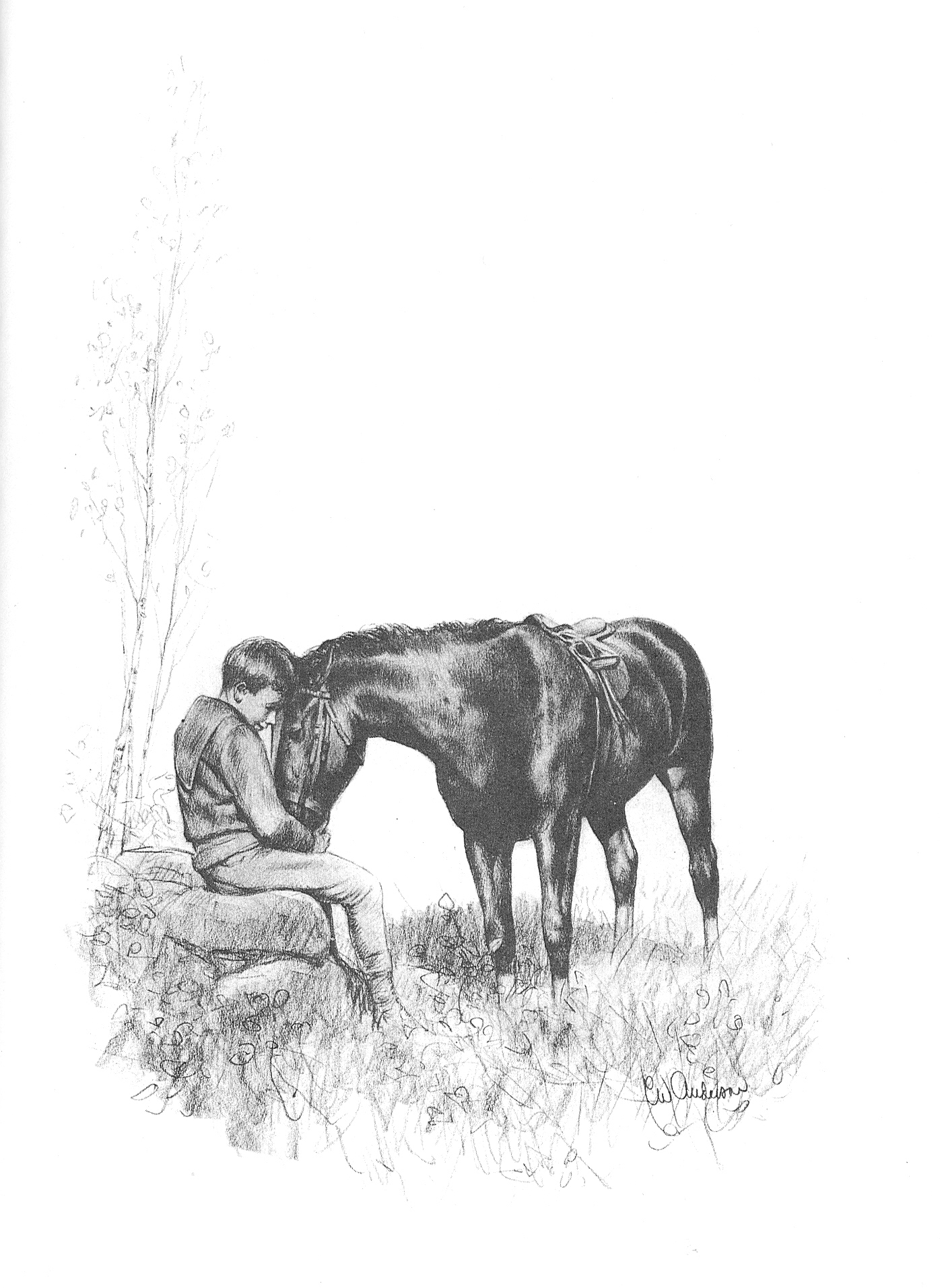
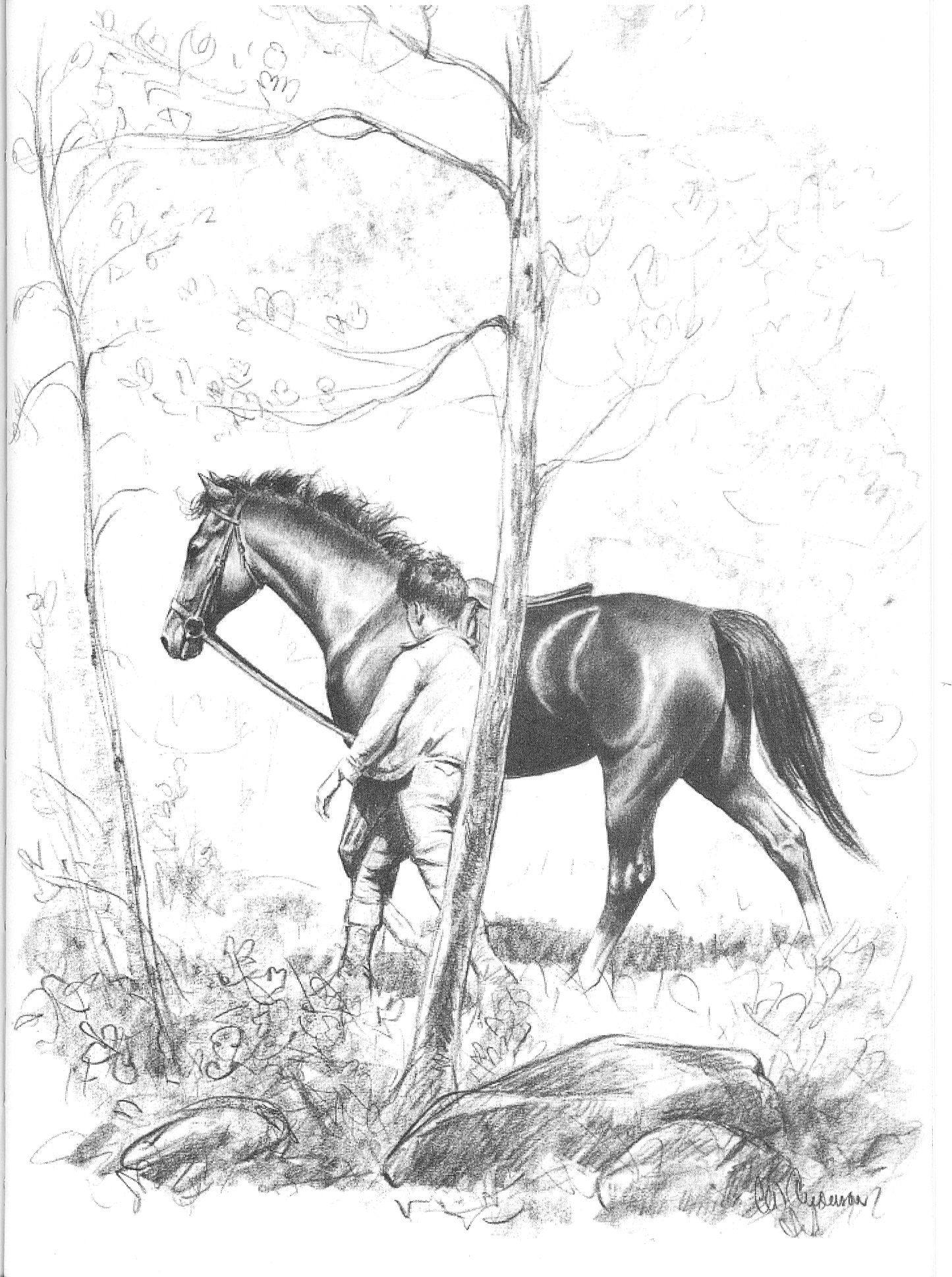
The next story in the series that I wanted to talk about was Blaze Finds the Trail.  As you might imagine, it’s a story about Billy and Blaze taking a ride in the woods, getting lost, and –wait for it!– Blaze finds the trail!  Shocking, I know.  But beautifully drawn and simply told.  We start out with this warming picture of the boy and his pony:

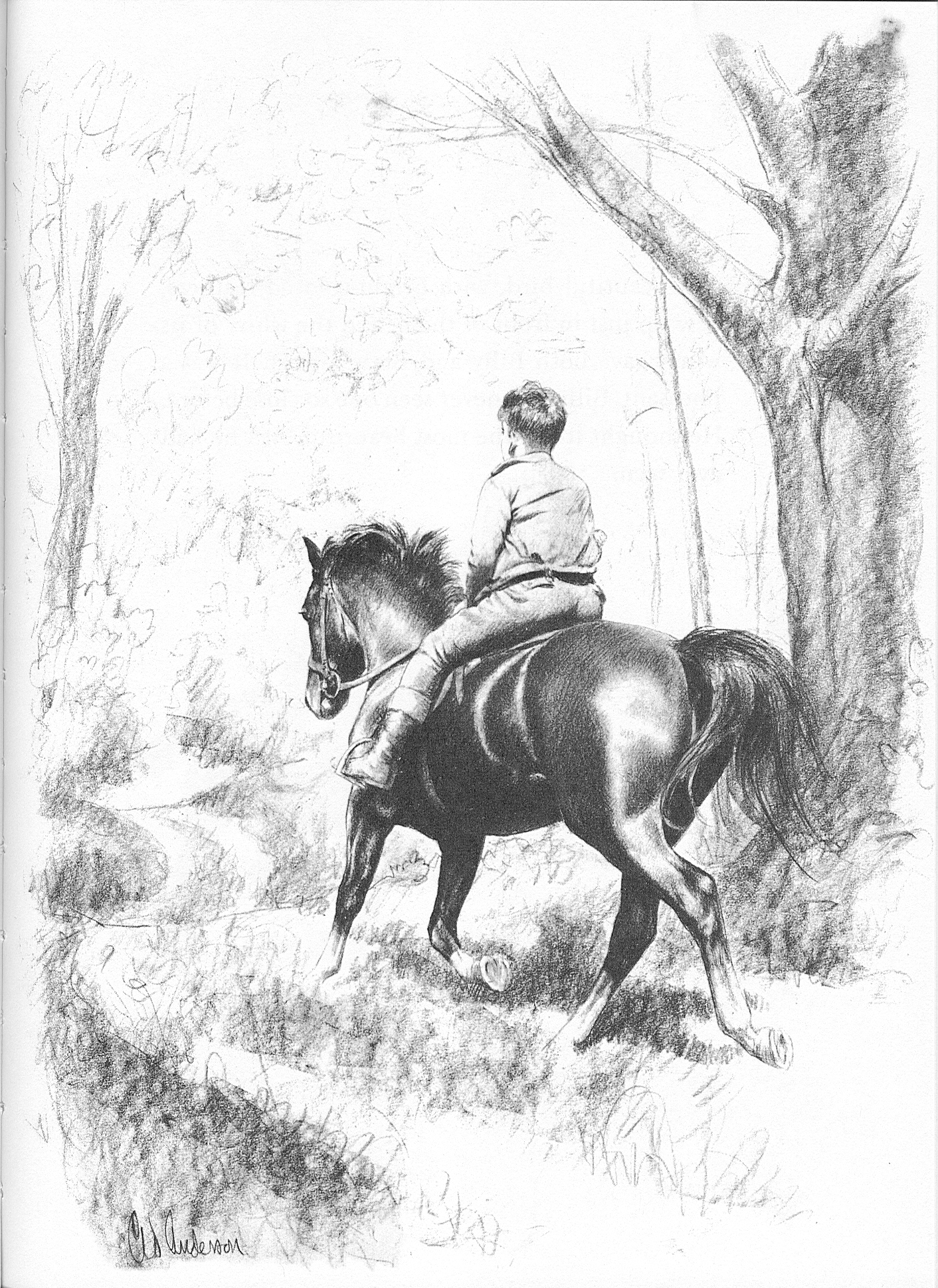
The drawings in this story are especially well-done with the pony rich in shiny coat and detail, and the forest and background rougher and more gestural as they enter the forest for their adventure:

In the tradition of plucky ponies everywhere, Blaze refuses to go the wrong way and eventually leads Billy out of the forest:

They escape the forest and the building storm, just in time.  Simple stories, simple drawings, but lovely.

I hope you enjoy them as much as I have, and perhaps you can enjoy them with a child and instill in them the fiery hunger for drawing with pencils on copy paper that was lit in me.

R. Crumb vs. Kierkegaard — Battle of the Floating Heads!

Langlois’ formulation is the denial of time: an idea of history not as something past, things having happened and remembered, but something entirely now, aggregated all together, present – meaning both presence and in the present tense. — Caroline Small

There was once a man; he had learned as a child that beautiful tale of how God tried Abraham, how he withstood the test, kept his faith and for the second time received a son against every expectation. When he became older he read the same story with even greater admiration, for life had divdied what had been united in the child’s pious simplicity. The older he became the more often his thoughts turned to that tale, his enthusiasm became stronger and stronger, and yet less and less could he understand it. Finally it put everything else out of his mind; his soul had but one wish, actually to see Abraham, and one longing, to have been witness to those events. — Kierkegaard, Fear and Trembling

R. Crumb’s illustrated Book of Genesis does precisely what Caroline Small and Kierkegaard ask of art and of faith. In Crumb’s literal reading, with its physicality, and its playful touches of cartoonishness, the Bible is transformed from a fusty, inaccessible monument to boredom and bewildering begats into “something new,” a text that makes the familiar alien, or, at least, more familiar. In giving flesh to the Biblical narrative, Crumb allows us to do what Kierkegaard, tragically lacking the technology of sequential pictograms, could not. We can “actually…see Abraham” drawn before us, and watch the flickers of agony, hope, love, and relief flow across his comfortingly craggy patriarchal visage, as if he were Patrick Stewart reacting with satisfying aplomb to the Romulan menace.

Moreover, Crumb penetrates to a truth that Caro and Kierkegaard fail, each in their own way, to understand. Making something new is best done, not through imaginative engagement, but through rote drudgery. Clichés are our deepest selves; to present them with minimal comment or inquiry is therefore the artist’s highest calling.

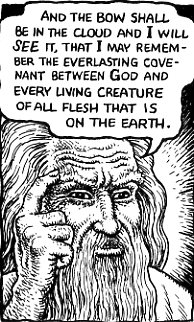
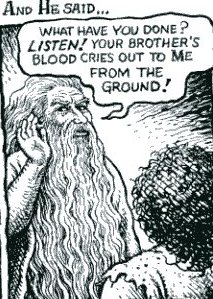
Pesky floating bearded heads — didn’t I spray for those?

You can tell I am remembering because I am pointing to my head!

You can tell I am listening because I am cupping my ear!

Why do we see God as a bearded patriarch? Crumb cunningly investigates and undermines this image through his steadfast refusal to investigate or undermine it. Deftly deploying the poverty of his visual imagination as well as a deep spiritual engagement, Crumb shows us a God daring in His vacuousness; a children’s book deity who pantomimes and points in case the kiddies can’t parse the text, yet who thoughtfully problematizes His own superficiality not through any actual ideas or initiative, but rather through the very fact of being in a big honking coffee table book by R. Crumb.

Crumb’s insistence on transcribing every word of Genesis without bowdlerization or omission again makes history new by bringing into focus many aspects of the narrative previously glossed over by Christian and secular readers alike. For example, Crumb shows us that women in the past had nipples. He also demonstrates that Adam had a penis, even if nobody else in particular did, (Update: Robert in comments points out that at least one other person in the book has a penis too.) and that when people are anxious, little sweat drops fly off of them.

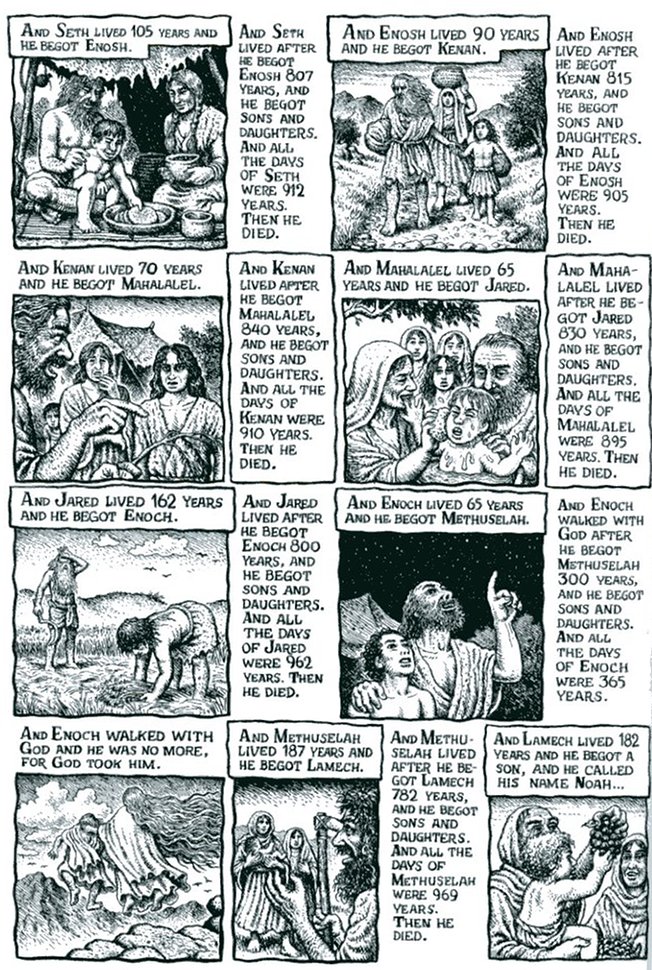
And, of course, he provides visual referents for the begats.

Another artist, less versed in the transcendentally validating power of banality, might have attempted to visually integrate the passage’s obsessions with patriarchy, seed, age, and death. One can imagine Chris Ware, for example, creating a single intricate image of lineage, or Johnny Ryan (channelling the younger Crumb) treating the text as an opportunity to create an extended daisy chain of sentient semen. Far better Crumb’s vision — a series of small disconnected drawings of more or less random scenes of life, recalling a light television montage that gets up on its hind legs to say, “Humanity! How heartwarming!” Time passes, life passes, Crumb draws, and the strings swell. Crumb has commented in interviews on the strangeness of the Biblical narrative; what better way to emphasize that strangeness than to turn it into a drab sentimental parable?

Ng Suat Tong started this Genesis discussion off by comparing Crumb’s visuals to the efforts of great artists of the past. Of course, it is not really cricket to put Crumb next to artists like Blake since Crumb draws lots of pictures on a page, thus obviously quantitatively overwhelming painters who only drew one at a time. Similarly, it seems unfair to place Crumb beside mere authors since mathematically: pictures + words> words. Still, I think it’s worth looking at this passage by Kierkegaard to show exactly what Biblical exegesis has been missing up to this moment.

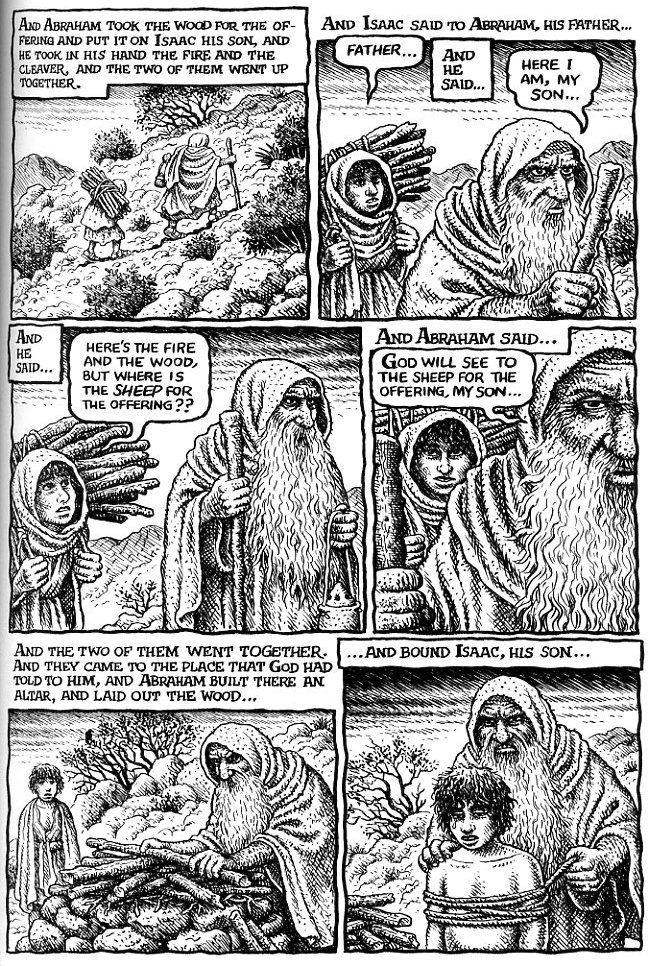
It was early morning. Abraham rose in good time, had the asses saddled and left his tent, taking Isaac with him, but Sarah watched them from the window as they went down the valley until she could see them no more. They rode in silence for three days; on the morning of the fourth Abraham still said not a word, but raised his eyes and saw afar the mountain in Moriah. He left the lads behind and went on alone up the mountain with Isaac beside him. But Abraham said to himself” “I won’t conceal from Isaac where this way is leading him.” He stood still, laid his hand on Isaac’s head to give him his blessing, and Isaac bent down to receive it. And Abraham’s expression was fatherly, his gaze gentle, his speech encouraging. But Isaac could not understand him, his soul could not be uplifted; he clung to Abraham’s knees, pleaded at his feet, begged for his young life, for his fair promise; he called to mind the joy in Abraham’s house, reminded him of the sorrow and loneliness. Then Abraham lifted the boy up and walked with him, taking him by the hand, and his words were full of comfort and exhortation. But Isaac could not understand him. Then he turned away from Isaac for a moment, but when Isaac saw his face for a second time it was changed, his gaze was wild, his mien one of horror. He caught Isaac by the chest, threw him to the ground and said: “Foolish boy,, do you believe I am your father? I am an idolater. Do you believe this is God’s command? No, it is my own desire.” Then Isaac trembled and in his anguish cried” “God in heaven have mercy on me, God of Abraham have mercy on me; if I have no father on earth, then be Thou my father!” But below his breath Abraham said to himself: “Lord in heaven I thank Thee; it is after all better that he believe I am a monster than that he lose faith in Thee.”

Kierkegaard uses the story as the occasion for an inquiry into faith and love between God and man, father and son. He does this by treating the story as his own; it is a coat that he can put on, adjust, take in or let out. For him, reverence involves dispensing with reverence; to understand the story of Abraham as it is, he has to defile it with his own imagination.

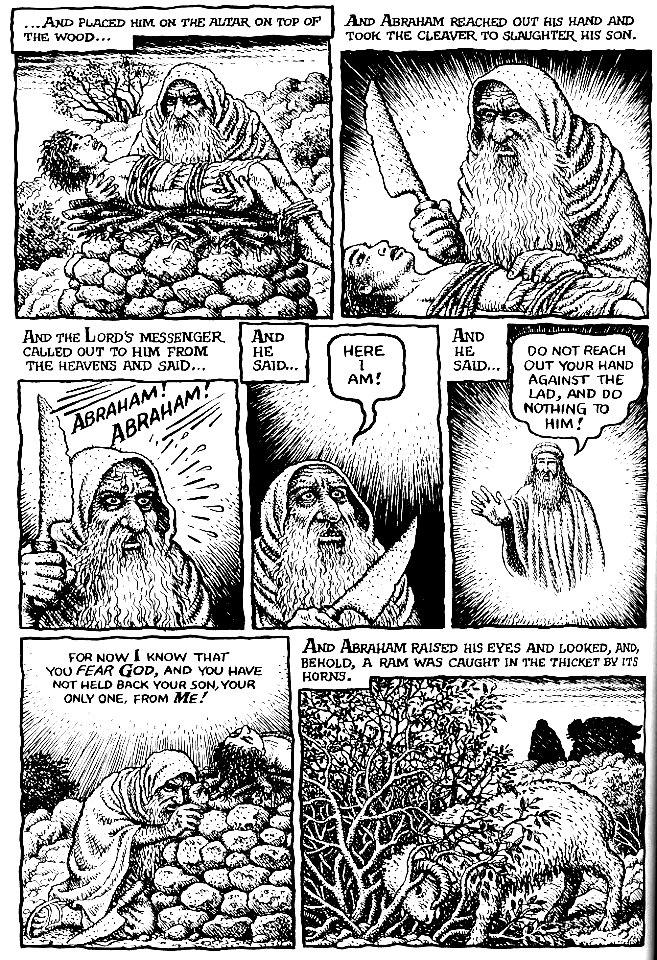
Crumb, on the other hand, treats the story as an inquiry into the story. It is his job to clothe the text, not to have the text clothe him. You can see him doing his best to provide a striking garment; Abraham looks grimly determined here, sweatily panicked there, movingly relieved in the center panel of the second page (perhaps the strongest single image in the book, despite the yep-there-it-is-again light from heaven.) But this is gilding, not defilement. Kierkegaard fucks with Genesis and ends up begatting a new creation; Crumb puts a few ribbons of varying construction in the text’s hair and sends it on its way.

And, surely, this is the great contribution of comics to Biblical criticism and to art. Without much of a tradition of accomplishment, sequential pictographs are perfectly situated for the aesthetic task of the future — namely to rehash what has gone before as doggedly and unimaginatively as possible. Perhaps Caro was wrong after all; the best way to deny time is not to recast the past as present, but the present as past. Nothing has happened, no one has spoken, neither God nor our ancestors have taught us anything, and so the most lackluster retread deserves the most heartfelt hosannahs. If defilement is reverence, then reverence is the truest defilement —both of the Bible and of art, which are cast together, through the power of Crumb’s genius, out of the flawed garden of giving a shit and into the absolute purity of irrelevance.

_____________________

For a less gratuitously mean-spirited take on R. Crumb’s Genesis, I’d urge folks to read the heartfelt and thoughtful defenses by Alan Choate andKen Parille. The entire ongoing back and forth about Genesis on this blog can be found here.

Nostalgia-Fest, Week 2

This is the third post in my never-ending series on the Flash. My first post was on Flash Rebirth, and I was not very kind. To understand where all this nostalgia for the Flash was coming from, I began reading the Silver Age Flash stories, starting with the debut of Barry Allen in Showcase #4 (1956). For this week, I’ll be reviewing the first three issues of The Flash.

Quick history lesson: Barry Allen was the star of Showcase for ten more issues before DC Comics gave him his own series. Flash #105 debuted in March 1959, retaining the numbering of the original Flash Comics from the 1940s. The earliest issues of the Flash were all written by John Broome and drawn by Carmine Infantino. Joe Giella provided most of the inking.

Flash #105

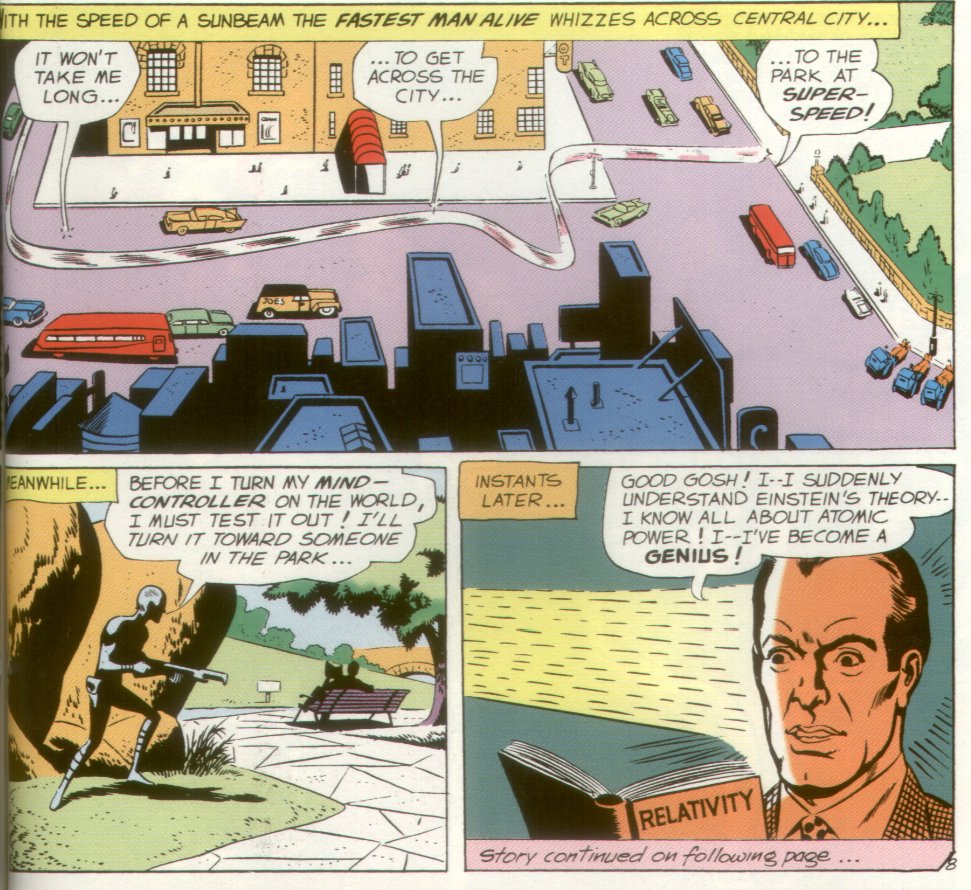
As with Showcase, the early Flash issues contain two stories apiece. The first story in #105 wasn’t very memorable, though it wasn’t terrible either. It’s one of those stories where an archaeologist digs up an ancient villain from a forgotten, hyper-advanced civilization. The ancient villain, Katmos, plans to conquer the world, and (spoiler alert!) the Flash stops him. Katmos is a boring villain, but there is one great scene where he tries to use a mind control ray on an unsuspecting civilian and ends up enhancing the guy’s intelligence by mistake.

As I mentioned last week, I appreciated how these early Flash stories embraced the inherently ridiculous nature of the superhero genre. There’s no grim n’ gritty posturing, no contempt for young readers, no oppressive reverence for the past (then again, Barry Allen was introduced with an extended call-back to the 1940s Flash. But there isn’t any real connection to the original Flash except the name, similar powers, and a cutesy nod to Flash Comics. Because there is no actual continuity, this comic hasn’t degenerated into a continuity quagmire … yet). It’s a book that’s comfortable being popcorn entertainment for kids, and that makes the limitations of the storytelling and art somewhat more forgivable.

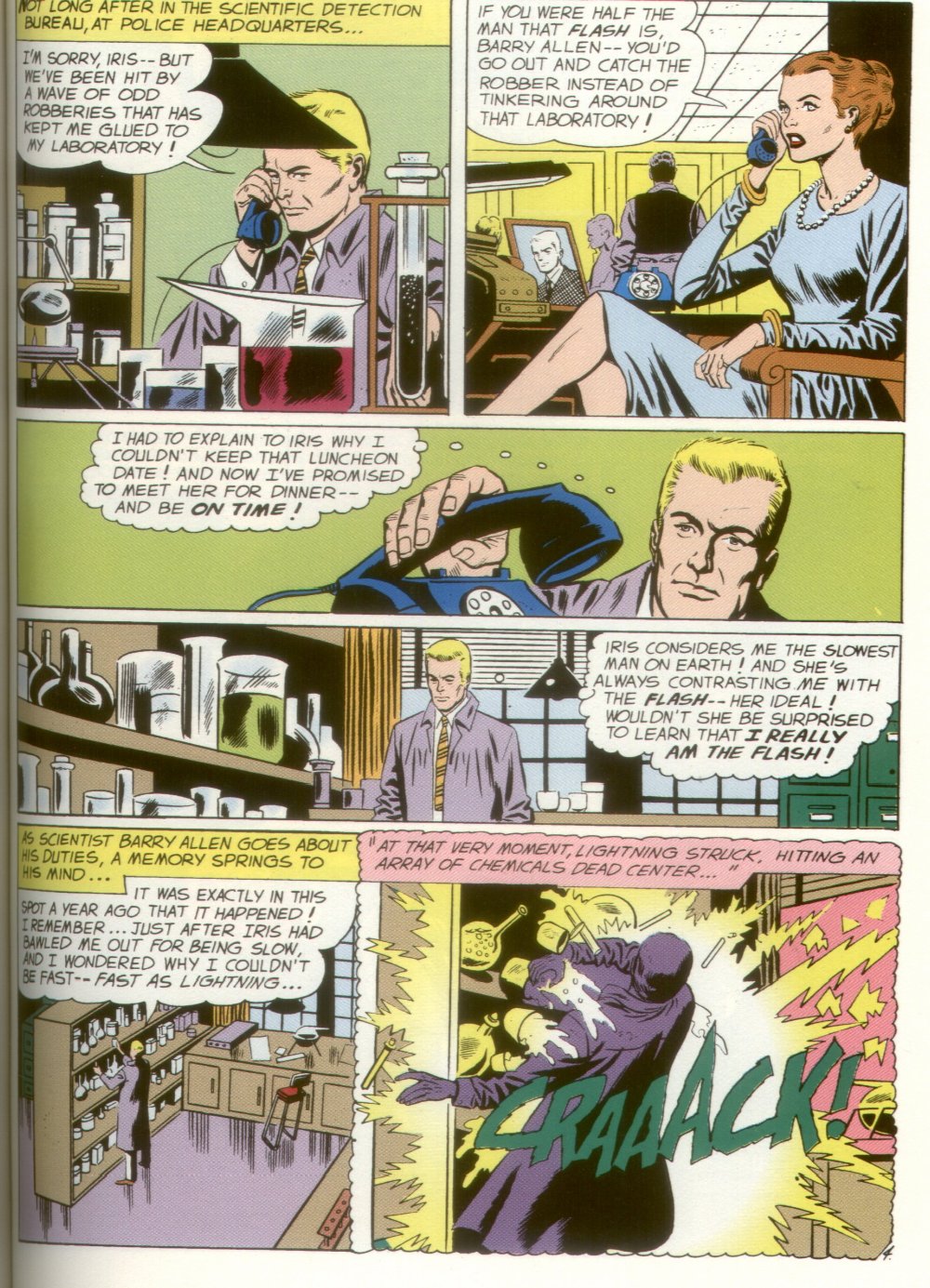
And look, the hero is getting emasculated by his clueless girlfriend! that never gets old.

While Superman took pleasure in repeatedly humiliating Lois, the Flash just takes Iris’s abuse. I suspect she got off easy not because Broome and Infantino cared about Iris, but because they didn’t have that all-too-common intense loathing of the fairer sex. It’s not so much hate as mild contempt: Iris was an accessory, like the capsule ring or the Flash costume. She’s there so that Barry can bask in a woman’s praise of the Flash without her knowing that Barry is actually the superhero. Secret identities and male egos are preserved.

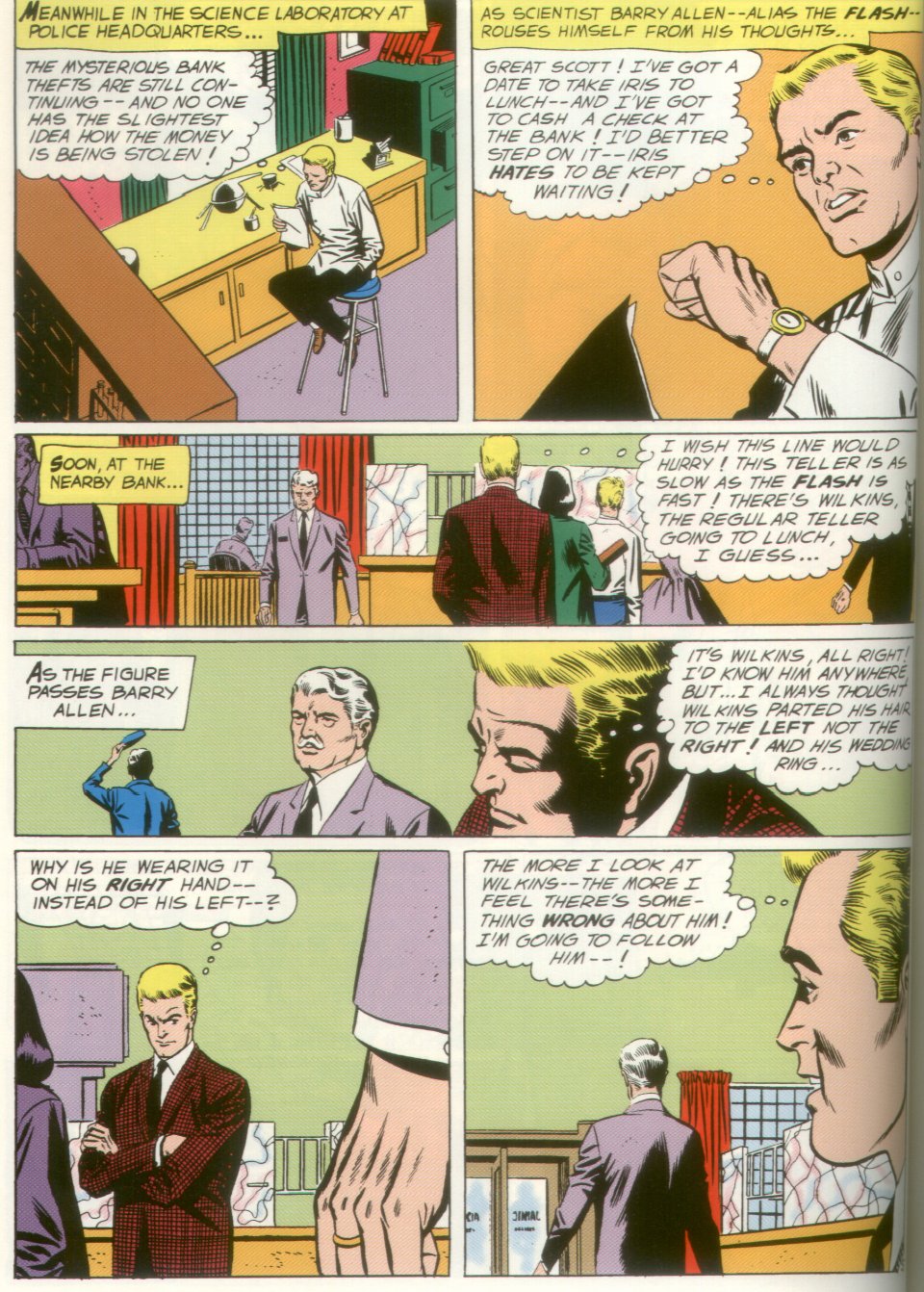
I preferred the second story, which introduced one of Flash’s better villains – Mirror Master. As his name suggests, Mirror Master uses mirrors to create false images that can interact with the physical world. It’s silly comic book pseudo-science, but the mirror images are limited by rules that are easy for young readers to grasp.  For example, a mirror image of a person will be an exact duplicate except that asymmetrical features like watches or the part in someone’s hair will be on the wrong side.

And since a mirror image can’t exist without the reflection of light, Flash defeats the Mirror Master by simply turning the lights off.

Flash #106

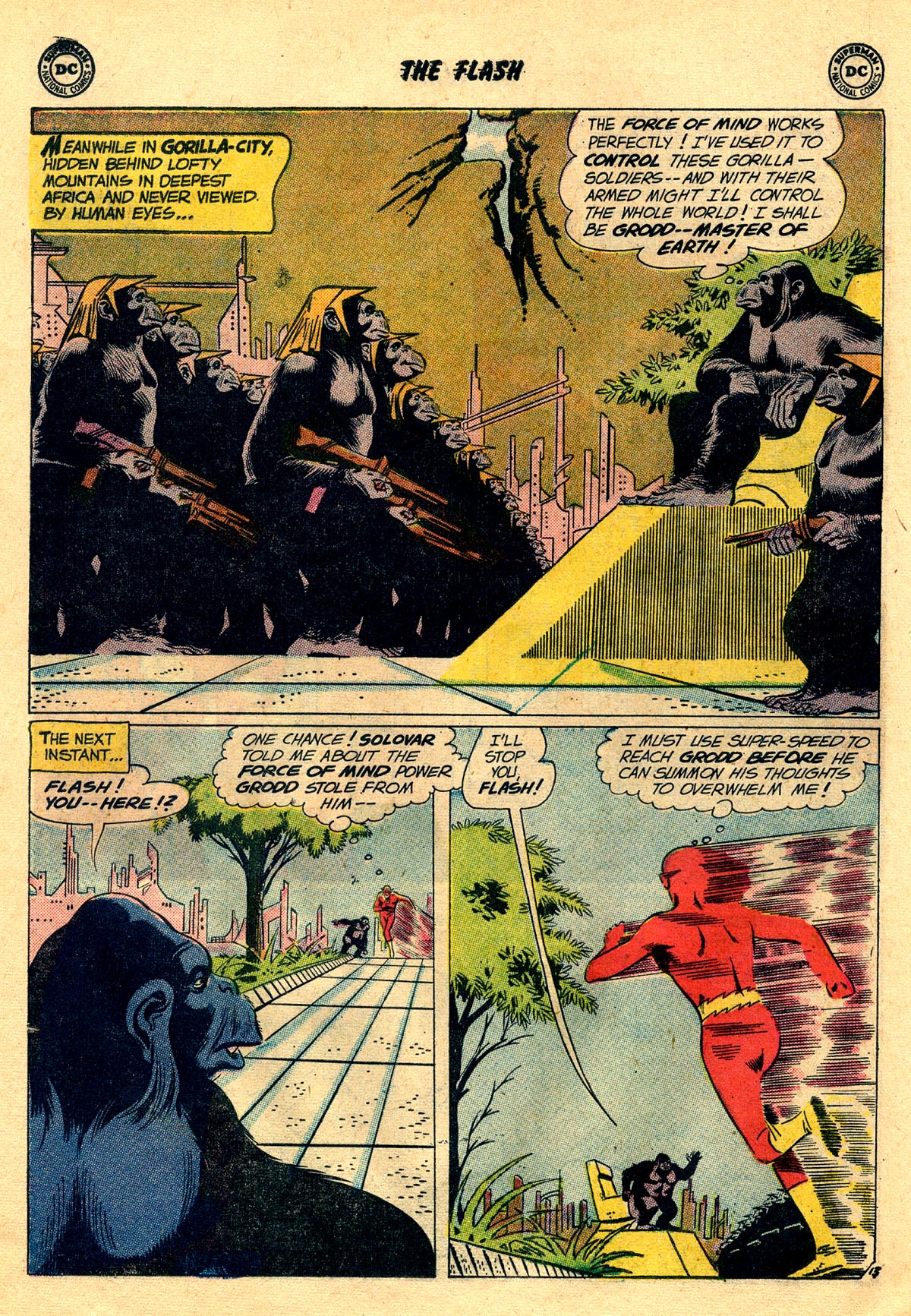
Broome and Infantino continue to improve their comic with the next issue. The first story introduces Gorilla Grodd, a shining example of the narrative theory called “apes make everthing better.” The plot, if you can call it that, is a series of increasingly absurd moments that are nevertheless easy to follow. An actor who plays a gorilla is worried that he’s unconsciously causing trouble while dressed in his gorilla costume (stuff like this happens when apes are involved). He asks his friend Barry for help, and Barry investigates as the Flash. He runs into Grodd, a villain from a hidden race of hyper-intelligent gorillas from Gorilla City. The city is located in Africa, presumably near the Country of Africa just south of Africa City.

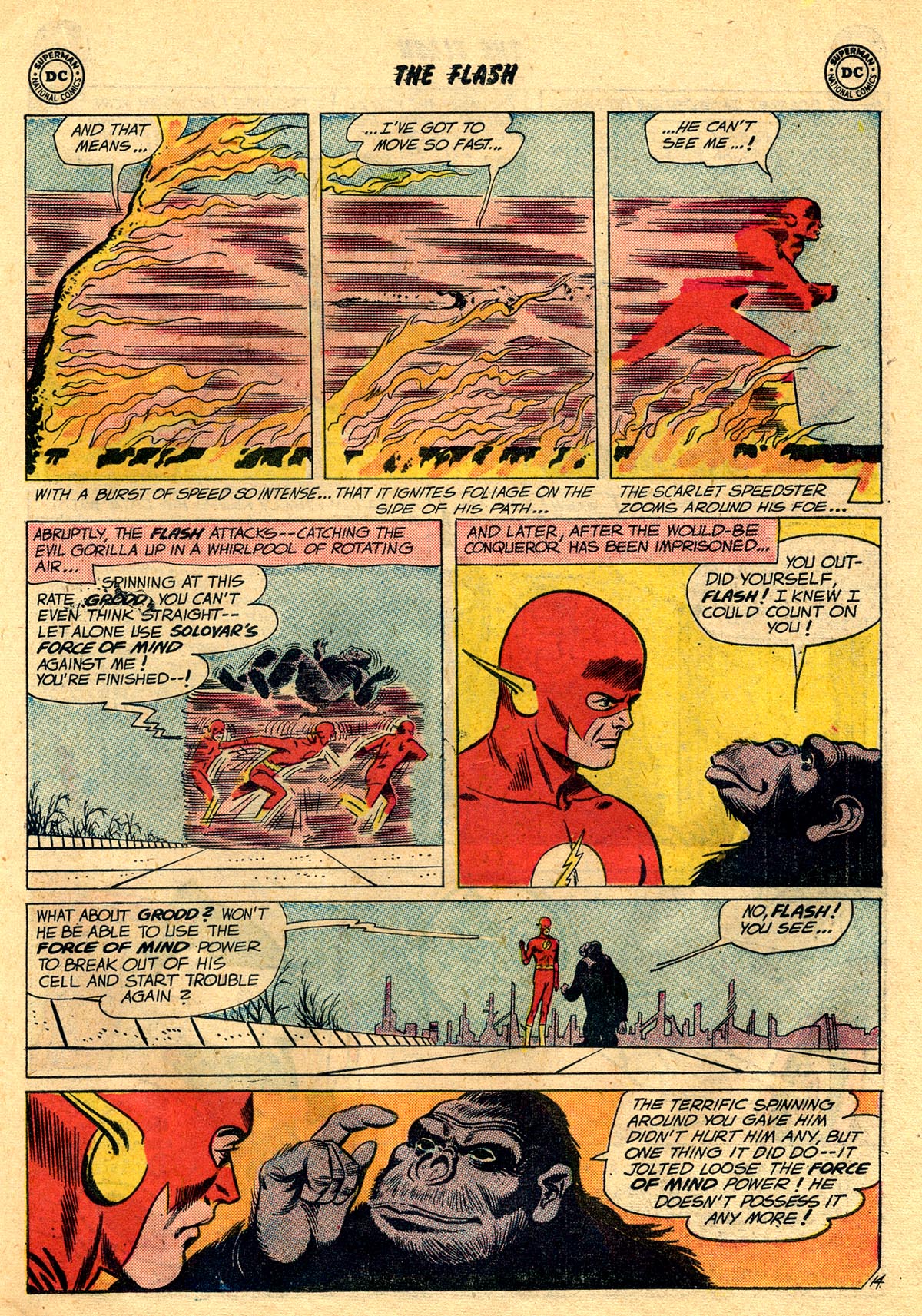
Grodd is pursuing another ape, Solivar, who was captured by poachers and sold to a circus where he’s been masquerading as a regular gorilla (hyper-intelligent maybe, but not very bright). Grodd steals Solivar’s intelligence with his telepathy so he can conquer the gorillas and then use them to conquer the world. Flash teams up with Solivar and beats Grodd by using his powers in the most obvious but effective way: he runs really fast so Grodd can’t see him coming.

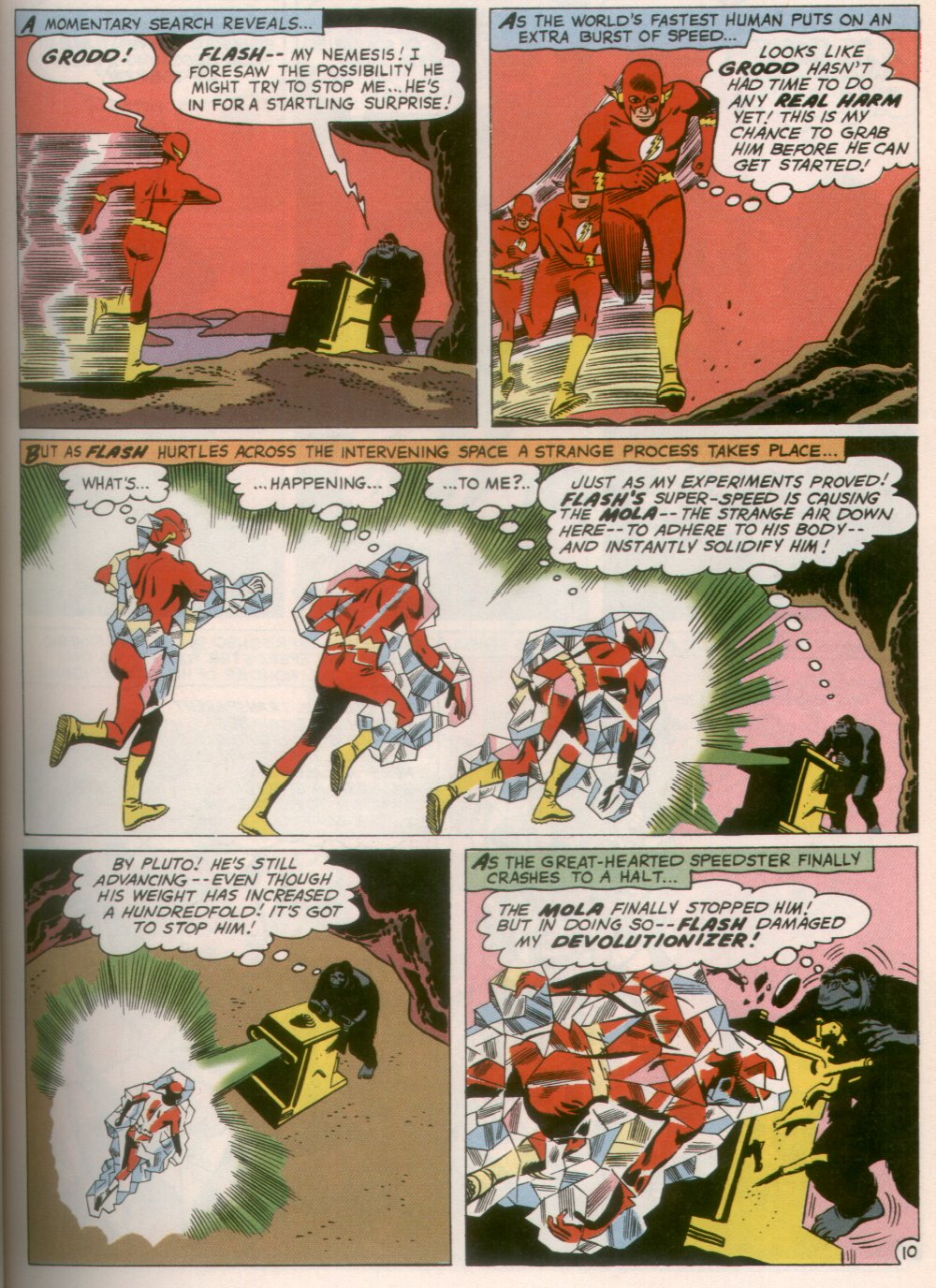
The art remains a cut above competent, but Infantino never really goes crazy with depicting speed powers. For the most part, it remains speed-lines and largely empty panels that imply the rapid transition of time.

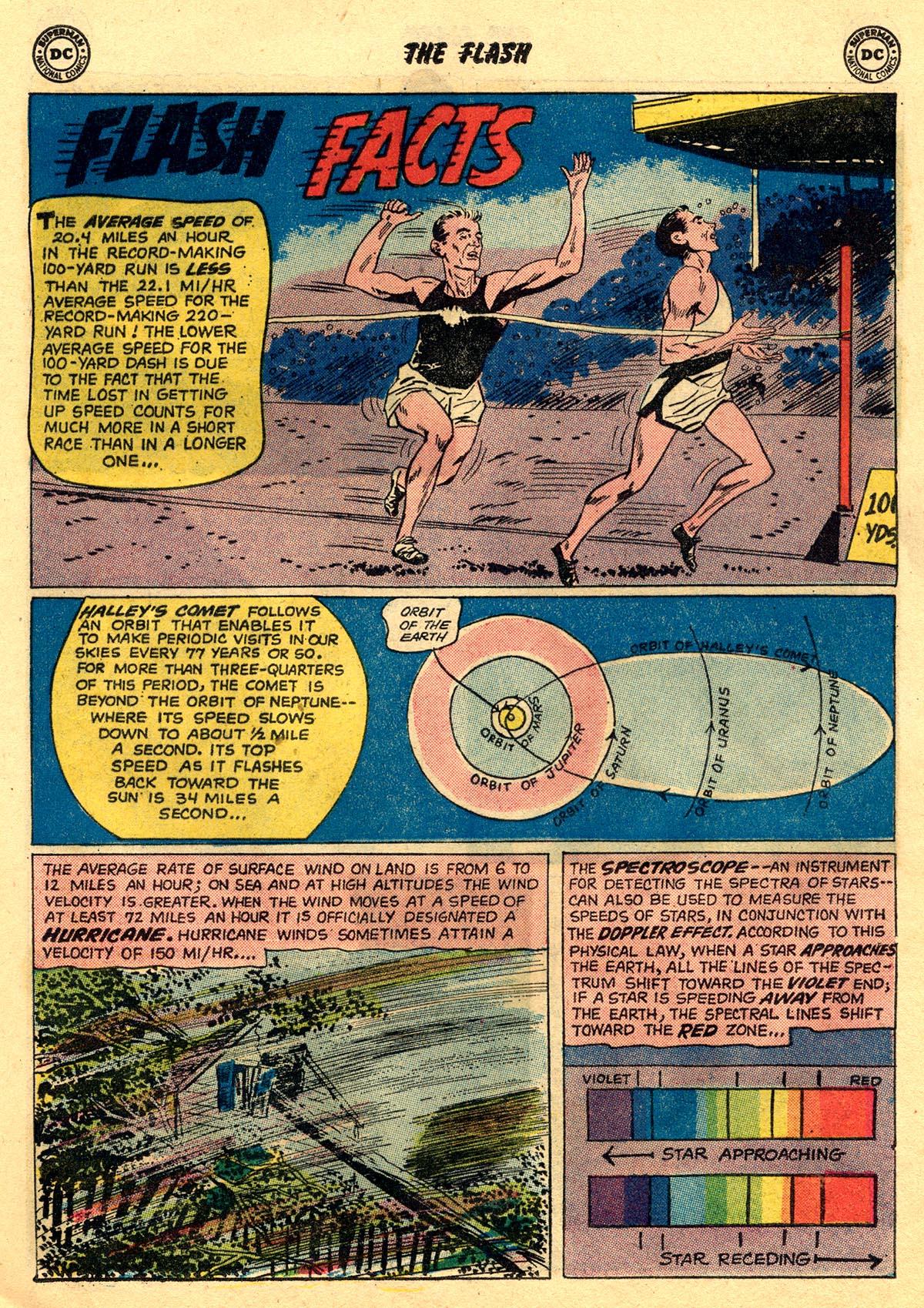
The second story isn’t as good, but it’s a half-way decent introduction of another Flash rogue, the Pied Piper. There are also these great Flash Facts pages with random speed-related info. This comic has everything a nerdy kid could want.

Flasth #107

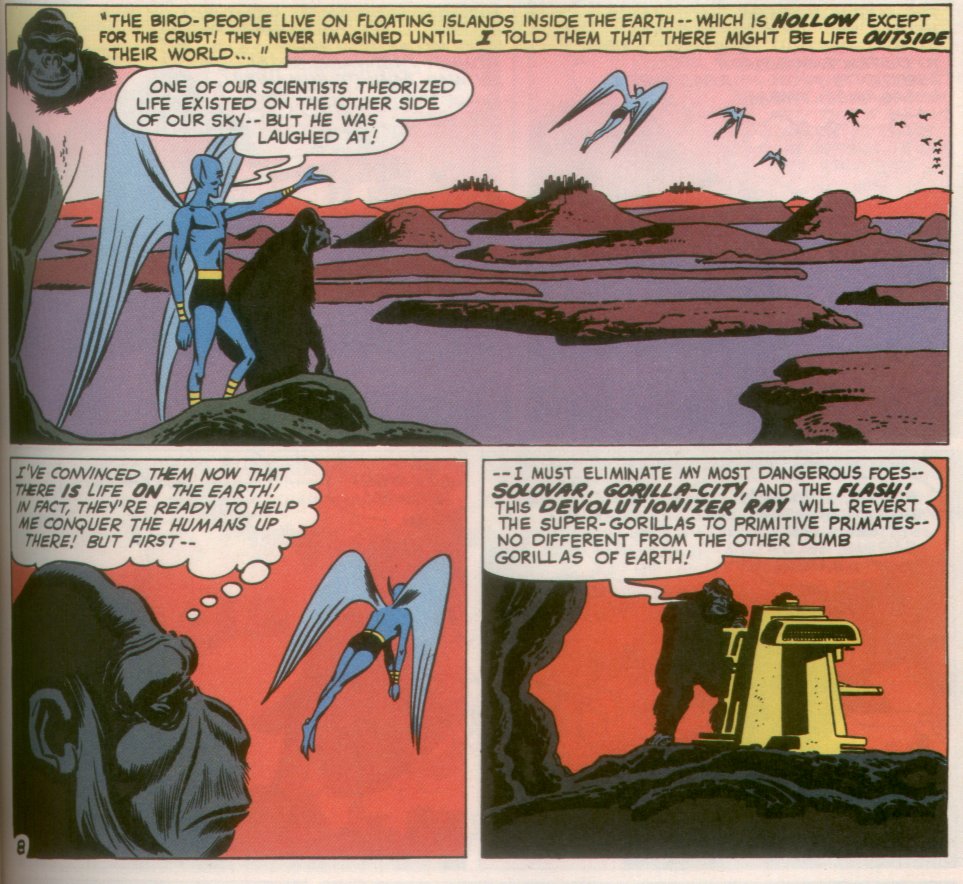
Realizing that they have a hit on their hands, Broome and Infantino use Grodd again as the primary villain. Grodd escapes from Gorilla City and flees to the center of the Earth, which is hollow (Neal Adams was right!). Grodd plans to brainwash a race of bird men to help him conquer the world, but Solivar recruits Flash to stop him. Flash does that vibrational thing where he moves through solid matter, and he fights Grodd … at the center of the world!

Of course, Flash escapes and he beats up the ape. Broome rights a decent fantasy adventure, but Infantino really drops the ball when it comes to envisioning the hollow Earth. It just looks like a generic, barren landscape with a pink sky.

Later, he adds a couple of vaguely sci-fi houses to the background, but the art is never as exciting as it could be. Last week, I described Infantino’s art as “eye-catching,” and I stand by that. He can draw big, splashy panels when he needs to and he knows how to arrange an action sequence. But his imagination seems very limited. 

I’ll continue my review of Silver Age Flash in a couple weeks, focusing on the famous issues that, for better or worse, defined the series.

Strange Windows: “Someone had blunder’d”

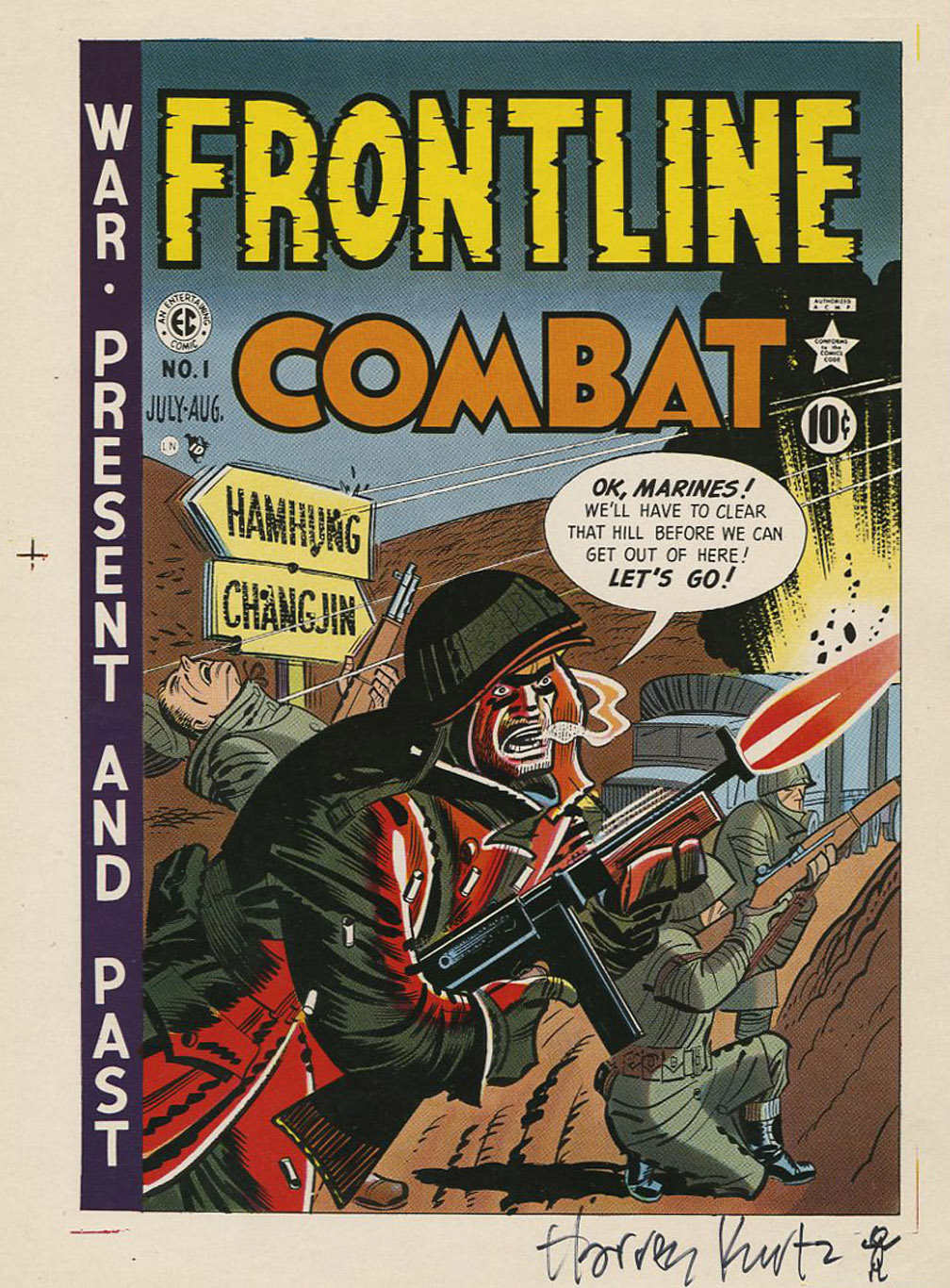
Frontline+Combat+cover+proof+with+signature

Art by Harvey Kurtzman


The past is a foreign country; they do things differently there.

 — L.P. Hartley, The Go-Between

Among the most respected mainstream American comics ever produced are the war stories written and edited (and often drawn) by Harvey Kurtzman for the EC Comics titles Two-Fisted Tales and Frontline Combat between 1950 and 1953.

EC publisher Bill Gaines (left) with Kurtzman

Continue reading