Utilitarian Review 1/29/11

On HU

Domingos Isabelinho does a close read of a page of Herge. In comments he explains what he did wrong.

Stephanie Folse looks at issues 3 and 4 of Elfquest.

Matthias Wivel looks at Jimmy Corrigan in light of Chris Ware’s later work.

Richard Cook looks back at the Comics Code.

Ng Suat Tong reviews Brecht Evens’ “The Wrong Place.”

I discuss Stanley Cavell’s theories of film in relation to Mondrian, HIroshige, Jeff Wall, Blaise Larmee, art, film, and comics.

Alex Buchet looks at how British comics have influenced the English language.

Utilitarians Everywhere

At Splice Today I talk about Chicago juke.

Other LInks

Stanley Fish has a nice review of True Grit.

Chris Sims explains Bane.

Matt Seneca on a panel from Tintin.

Jason Overby quits.

Kate Beaton presents sexy Batman. (Via Sean Collins.

And your Panelist link of the week: Derik Badman discusses bricks.

The World Panelled

I recently finished Stanley Cavell’s 1971 book of film philosophy, “The World Viewed” (with a long addendum from 1979.)

The book is a mixed bag. Many of Cavell’s readings are thoughtful and sharp. On the other hand his take on one film I know well, “Rosemary’s Baby,” is so misguided as to be actually offensive. (He claims that the film is about Rosemary’s husband’s impotence rather than about Rosemary’s rape, and then muses on the exact nature of Rosemary’s sin, which he determines has something to do with the fact that “Rosemary does not allow her husband to penetrate her dreams, allow him to be her devil, and give him his due.” Which I suppose is a roundabout way of saying that her sin is that she was insufficiently accommodating and so her husband had to rape her, or let the devil do it for him. Cavell also seems to believe that the movie is about motherhood, when it’s rather clearly about pregnancy. His inability to tell the difference is of a piece with a consistent incapacity to imagine that somewhere, somehow, the audience for some movie or other might include women. In any case, when you are more misogynist than Roman Polanski, you are in serious trouble. )

Where was I?

Oh right.

So some downsides. But on the other hand there’s lots of interesting theoretical material. Cavell’s book is fascinated with the relationship between film and reality. For him, the most salient fact about film is the manner in which it technologically, automatically, produces a reproduction or an image of the world that is neither a reproduction nor an image. Film is the world itself, though a world from which we (the audience) are exiled; we can watch but not interfere. Cavell therefore sees film as directly confronting Western philosophical skepticism — the Cartesian fear that we’re trapped in our minds with no way to perceive or access reality — or, indeed, the fear that our minds are all there is, and there is no reality to access. The loss of objective reality is also the death of God, and in embodying that absence, film replaces religion.

Continue reading

Utilitarian Review 1/22/11

On HU

Kinukitty was underwhelmed by much yaoi.

Sean Michael Robinson discussed Manga! Manga! and interviewed its writer, Frederik Schodt.

Ng Suat Tong introduced the awards for the Best Online Comics Criticism.

The final list of Best Online Comics Criticism.

Bill Randall, one of the judges of the Best Online Comics Criticism, discussed the list and his choices.

I talked about two of my favorite pieces of comics criticism from last year.

Vom Marlowe discussed the use of ink in Kouga’s Loveless.

Caroline Small talked about sequence (or the lack thereof) in Saul Steinberg’s Passport.

Alex Buchet looked at the influence of editorial and panel cartoons on the English language.

Utilitarians Everywhere

At Splice Today I explain why Michael Chabon is not necessarily more thoughtful than Barack Obama.

This, indeed, seems to be the cause of part of Chabon’s dyspepsia. Artists, especially successful artists like Chabon, receive such fulsome praise that I think they can occasionally mistake themselves for priests. Which is maybe why he felt qualified to proclaim with such certainty that heaven isn’t real and that death is just absence. To suggest otherwise is a stylistic error—rectifiable only by transforming the clumsy words of the President through the magical gifts of a real writer.

Also at Splice, I discuss the Meads of Asphodel’s anti-Christian Broadway black metal.

I do have a hideous attraction/repulsion for show tunes, and I think it makes sense to think of them as the music of the Antichrist. Especially if the show tunes are written by Andrew Lloyd Weber. And I dare anyone to listen to the second half of the song “Addicted to Christ” without having major Jesus Christ Superstar flashbacks. There’s a lonely horn that wanted to be jazz but had its soul stolen by music theater, and then a choral refugee starts singing like a chipper thespian—“Who is God? I am God? Are you God? But what God? I’m no God, it’s my God.” Soon enough we’ve got contrapuntal voices reciting bitter lyrics in an uplifting back and forth (First cheerful voice: “God hates you all!” Cheerful choral response: “Circumcise!”) And after not too long, again like Lloyd Weber, we launch into some classic rocky concept-album strut. Even the end, with a more traditional metal vocalist and a heavier roar, still has the busy crescendos and prog-rock shifts that strongly suggest Vegas.

Other Links

Sean T. Collins argues that Dirk Deppey’s column ran out of gas at the end, and that tcj.com is an embarrassment. It’s a thoughtful piece; if you scroll down you can see me doing some arguing in comments.

This made me want to try those old Rachel Pollack Doom Patrol issues again.

I liked Ariel Schrag’s column on Patricia Highsmith.

Best Online Comics Criticism 2010: Kibbitzing

I had no involvement in the selection of this year’s Best Online Comics Criticism. And I don’t plan to talk directly about the list here. Except to point out that it is fatally flawed. Because I’m not on it, damn it.

I did think I’d take this opportunity, though, to talk about two of my own favorite pieces of comics criticism from last year.

Continue reading

Bill Randall’s List: Best Online Comics Criticism 2010

Critic and one-time HU writer Bill Randall was one of the judges for this year’s Best Online Comics Criticism. He asked to run his essay about the selection process here — and we’re very pleased to have him back under the Hood, however briefly.
__________________________

by Bill Randall

How did he know?

Real critics are as pure as new snow, with eyes of a child yet minds learned like the eldest philosopher. They castrate their creativity to write from the place of total mental stillness. Able to see through all walls of personal agenda. They use their pen of young lamb to judge what’s best not for themselves, but for all humanity. Such is the powerful power, the terrible responsibility of the true critic.

I have fasted for three centuries, nailed myself upside down to the Tree of Woe, drained my body of every ounce of blood and replaced it with the freshest plastic-bottled spring water. …I am ready to speak of comics with the furiously unpoliticized gaze of the Real Critic.

Spot on, B.C., as I’ve spent a meditative month staring down Phyllis Hodgson’s 1944 critical text of Þe Clowde of Vnknowyng, in þe whiche a soule is onyd wiþ God, by the unknown author of the Cloud of Unknowing, good for inspiration and revelation as I selected my Best Comics Criticism 2010 votes. Prophetic, you prophet! as I like you and all true critics strive ascetic to write apophatic– kenotic– apocatastatic words, good for instruction and reflection, more sacred than the sacred texts of “Maggots,” “If’n Oof,” and “Þe Book of Priue Counseling.” Words of Groth in red, and remember the worst a comics critic can do is hurt some feelings. It’s not like we excommunicate, move product, make reputations, or stand at the kitchen gallery door with Hans Ulrich Obrist and his flaming sword. I can’t even resurrect the dead, may my essay on Kamimura Kazuo burn in hellfire for all eternity while A Drifting Life glows transfigured on your bookshelf.

Continue reading

Utilitarian Review 1/14/11

On HU

I wrote about films and self-reflexivity in Tarkovsky’s Solaris

James Romberger discussed the beginnings of his love for Alex toth and Jack Kirby.

Richard Cook looked at the gay hijinks in the 1992 Marvel Swimsuit Special.

Jason Michelitch discussed Face/Off, The Death of Superman, and the pointless inevitability of hero fiction.

Ng Suat Tong reviewed Mezzo and Pirus’ King of the Flies.

I try to remember a panel from Peanuts.

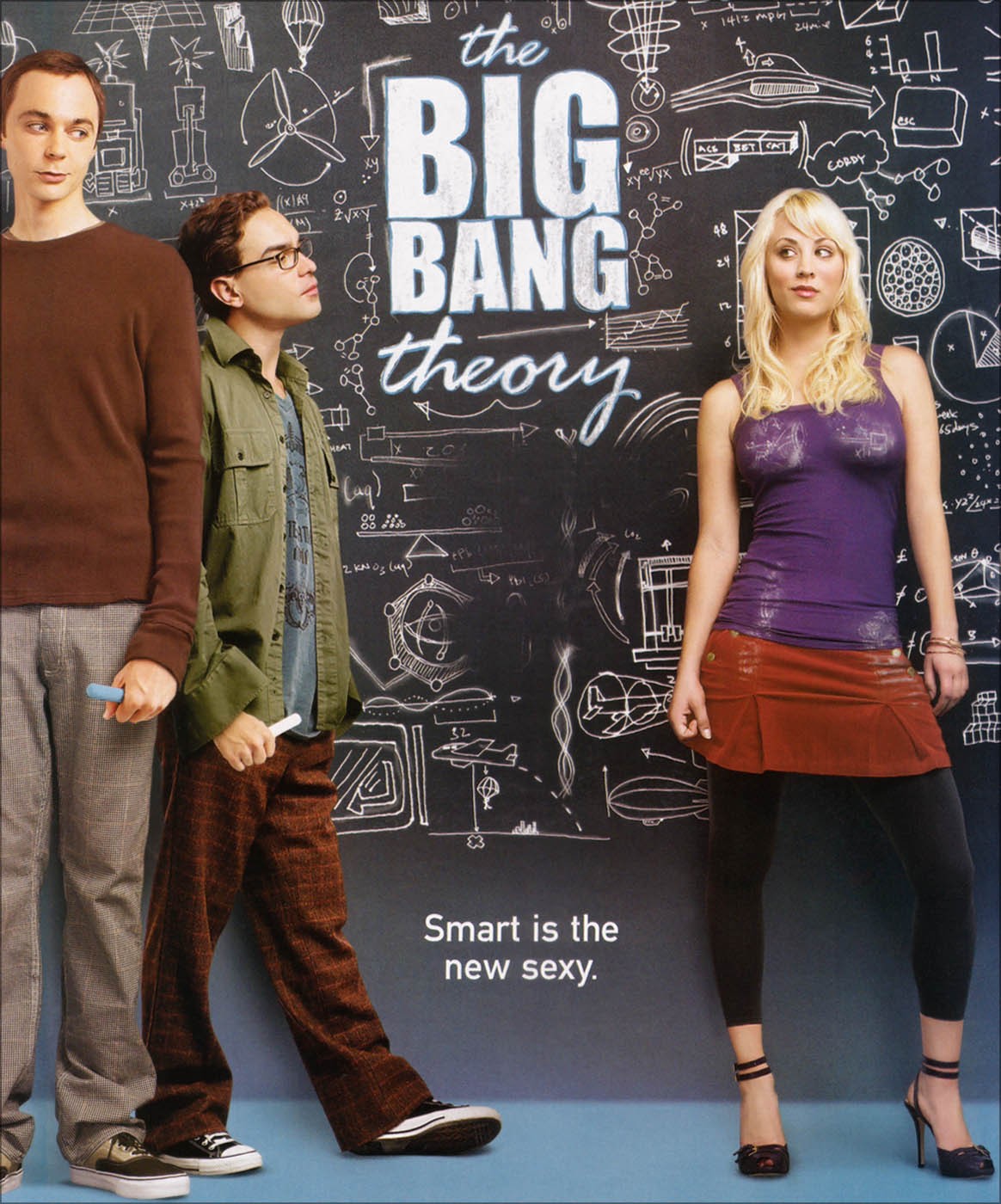
I talk about class in the Big Bang Theory.

Utilitarians Everywhere

At the Metabunker, Matthias Wivel happily anticipates the Fantagraphics edition of Carl Barks.

At Comixology, I compare the Iron Man movie and Bataille’s poetry.

In another poem Bataille declares, “I fill the sky with my presence.” And that does seem to be the point for ecstatic modernity, whether pop dreck or snooty highbrow philosophizing. Presumably it’s Nietzsche’s fault that God is dead and all we’re left with is the will to power of arms traders and self-proclaimed radicals. Or maybe Jung’s right and it’s just a mythopoetical heroic something — though it seems telling that we’ve only recently decided that we require one hysterically hyperbolic hero with a thousand faces rather than making do with all the dinky little heroes with one face each.

At Splice Today I tell Matt Yglesias not to bore the children.

Far from having a job in which discipline is necessary, Yglesias has one of the least disciplined jobs one could imagine. If being bored in school had any effect on him, it was not to instill an ability to focus on trivial, mindless tasks. Instead, it’s apparently convinced him to have nothing whatsoever to do with those tasks. He’s not going to spell. He’s not going to write about only economics and policy. He’s not going to work at a job he doesn’t want to. Such drudgery is for those school kids who need to be trained for lives of data entry and/or stupid paperwork. Matt Yglesias? He’s going to pat those little suckers on the head and go off and write a post about the Washington Wizerdds.

Other Links

I may have made fun of Matt Yglesias this week, but his diss of Sarah Palin is really funny.

And Jonathan Scalzi’s made me laugh too. She’s a good punchline, damn it.

Shaenon Garrity’s essay on Sandman is great.

One Brain to Rule Them All

This essay first appeared on Splice Today.
___________________________________

Americans in general, and American sit-coms in particular, take pride in being stupid, so no one is likely to be offended if I point out that the premise of The Big Bang Theory is somewhat dense. The show is based around the hilarious hijinks that result when a hot young waitress and aspiring actor named Penny moves into the apartment across the hall from a couple of nerdy physicists, Leonard and Sheldon. And…quick! What’s wrong with this picture?

Continue reading