
Utilitarian Review 11/14/10

On HU

Erica Friedman began the week with a discussion of the Bechdel Test and the manga Silent Mobius.

James Romberger wrote about the late horror comics of Alex Toth.

I used Laura Mulvey’s gaze theory to talk about Moto Hagio’s story “The Willow Tree.”

Richard Cook discussed St. Olaf’s appearance in the Big Book of Martyrs.

Vom Marlowe reviewed James Love’s Bayou.

And we finished the week out with the conclusion of our roundtable on Charles Hatfield’s Alternative Comics: An Emerging Literature. Charles himself has two posts (about his writing and rethinkings of his book, and about Gilbert Hernandez) and I had a reply because I’m incorrigible — and there are some spirited debates in comments as well.

Utilitarians Everywhere

At Splice Today I review some Roger Corman produced Alien knock offs just released to DVD.

But what’s most notable about these movies is not who gets killed, but who doesn’t. Because the greatest thing about Alien, the thing that gave it its real bite (as it were) wasn’t the gruesome beauty of its special effects or the brutal claustrophobia of its mise en scene… Or, okay, it was those things, I’ll admit. But it was also its twisted ruthlessness. Alien looked like a sci-fi film, but it walked like a slasher. Everybody in that movie was ruthlessly humiliated—especially the brave het heroes, who ended up raped, impregnated, violated, and dead, dead. The only one who gets out alive was that uber-final girl, Ripley, who was hard-assed and butch as hell, and when she left she didn’t need no stinking man, because (as I mentioned) all the men were dead.

Also at Splice I reviewed a new album by Eurodisco weirdos Majeure.

Long before Westerners had discovered philosophy, or even consecutive thought, the ancient Mayans were predicting a day in 2012 when Hegel’s brain would be uploaded to rotating satellites, creating a dialectical Skynet which would order the crucifixion of all humans and then broadcast impenetrable prose to their rotting corpses. Scientists today still wonder at the perspicacity of these ancient cultures, which—using nothing but the basest computers woven out of specially prepared obelisks—managed to predict the bloody demise of the hidebound print-based media, the rise of the cyborg antichrist Ke$ha, and the reverse rapture of materializing silly-bands which are even now drowning the world in a multi-colored kaleidoscope of hollow Platonic forms.

At Madeloud I reviewed Antony and the Johnsons new album.

Also at Madeloud a review of some depressive mopey but chimey black metal by Happy Days and Eindig.

Other Links

It’s good to be reminded now and then that before Gary was beloved and respected he was really, really, really loathed. (Our own Alex Buchet comments extensively on the very rancorous thread.)

Shaenon Garrity has been on fire recently. I kind of have no interest in ever reading Scott Pilgrim, but this review is awesome.

Blog vs. Professor vs. The Internet

I thought we’d end (for now anyway!) the roundtable on Charles Hatfield’s Alternative Comics by highlighting some moments from comments.

Steven Samuels:

When I think of Gilbert Hernandez, I don’t exactly think of lusty, go for broke cartooning. What he does do is write these potboiler scripts where the characters are put through the wringer. It’s more for the service of the storyline that for the sake of unleashing the id. And yeah, like I said, he does experiment quite a bit but the final results are quite often mixed. It usually feels quite dry to me. For me, real unrestrained cartooning would be from the likes of Crumb, Gary Panter, a lot of the Zap Comix guys, Fletcher Hanks, Jack Cole, Kirby. That said, though, I did like his surreal story from last year’s Love & Rockets #2, probably the only experimental piece of his I’ve ever liked.

Nonetheless, you make the same mistake as Daryl when you object to his work being judged to the same standards as literary novels. He’s been making literary novels for twenty five years. And the results have been no better than mixed.

Continue reading

Blog vs. Professor: On Surface Pleasures and Digging Oneself Deeper

We’re coming to the end of our multi-week roundtable on Charles Hatfield’s book Alternative Comics. Yesterday, Charles wrote a post defending Gilbert Hernandez from…well, mostly from me and Robert Stanley Martin. In this post I’m going to try to clarify my position somewhat, and also try to tie this discussion into why I thought it was a good idea to do this roundtable in the first place.

_______________________

Charles spends much of his post defending Hernandez’s use of fetish and pin-up imagery. He says:

I’m not going to argue that Gilbert’s above or beyond the pinup. Essentially I’m arguing here that Hernandez approaches self-parody, that the aesthetics of that passage, indeed of Poison River as a whole, are baroque, self-reflexive, and frankly decadent (in several senses), and that what he is doing with the Maria-fetish can best be understood in terms of the book’s overall agenda. Arguments like these—that such excessive, disturbing, and arguably self-mocking elements have some value other than masturbatory or shock value—depend on the arguers’ shared knowledge of the larger context of the work, so I don’t know how to explain or defend my argument to one (Noah!) who admits not having read the work in question. We’re at an impasse.

The page that this debate has centered on is here:

The page in question: from Poison River

So, let’s start by looking at that page for a second. Then, if you would, answer this question. Suppose Gilbert Hernandez put that page up for sale at auction. Do you think the price would be higher or lower if Maria’s breasts were half the size?

Continue reading

Utilitarian Review 11/6/10

On HU

The rest of the week was devoted to a roundtable on Charles Hatfield’s Alternative Comics: An Emerging Literature. Contributors include me, Caroline Small, Ng Suat Tong, HU columnists Matthias Wivel and Derik Badman and guest poster Robert Stanley Martin. Lots of discussion in comments too.

And we’re not done yet! We’re going to focus on other things for a couple of day while Charles Hatfield gathers his thoughts, and then at the end of the week he’s going to do two or three posts in response. So stay tuned, as they say….

Utilitarians Everywhere

At Splice Today I look at fetishizing the teacher in pop music, from Van Halen to Ke$ha to Ina unt Ina.

The truth is that the video isn’t really about lusting after the teacher at all. Instead, it’s about lusting after a childhood in which you lusted after the teacher. The short film is focused on adults imagining how cool they could have been in high school if they had known then what they know now—and, simultaneously, on kids imagining themselves as being adults. The Van Halen band members are portrayed both by the real Van Halen and by a group of kids dressed like the adults. The video unabashedly blends both identities, with the adults sitting right beside their younger selves in class and the kids lip-syncing the lines in the voices of their grown-up doppelgangers. The hot teacher is just an accessory; a convenient stand-in for the real passions, which are between male adults and their younger iterations. The adults want the rebelliousness and goofy energy of youth; the kids want the sexual opportunities and confidence of grown-ups. And both achieve their dream not by sleeping with the teacher, but by rocking out.

Also at Splice Today, I review the first chapter of John Grisham’s new novel.

You can probably see where this is going. No doubt you’ve already intuited not only the existence but also the main character traits of Keith the pastor, who “spent much of his time listening to the delicate problems of others, and offering advice to others” and had therefore “become a wise and astute observer.” Probably you’ve also guessed that Boyette is a bad, bad person (did you figure out he was a sex offender from the fact that he looks at the pastor’s wife’s chest? You did? Bonus points!) If you’re especially perspicacious you may even be able to reconstruct from TV movies past the hollow schlop-schlop of pop theology and pop psychology flopping about like two half-dead fish in a bucket. “It’s human nature. When faced with our own mortality, we think about the afterlife. What about you, Travis? Do you believe in God?”

I have a short review in the Chicago Reader of an enjoyable art show at Columbia College called Post Human/Future Tense.

Another short review of a quite bad book called Cute Eats Cute.

And an essay at Madeloud about musical guest stars on Sesame Street.

Other Links

Bert Stabler has a lovely essay up about The Monstrosity of Christ, by John Milbank and Slavoj Zizek.

Poking around the internet looking for discussions of comics and the gaze, this is what I came up with.

Blog vs. Professor: Seduced by Form

The comics blogosphere and comics academia can seem both unaware and mistrustful of each other. This is the case despite the fact that there are many people who work in both worlds. Probably it has something to do with the fact that traditional publishers are understandably wary of making their texts accessible online; probably it has something to do with a fan culture’s understandable skepticism of the ivory tower.

In any case, I thought it would be nice to buck the trend at least a little by devoting a roundtable to an academic work. After some discussion, we decided to read Charles Hatfield’s Alternative Comics: An Emerging Literature, one of the most respected academic publications on comics of the last decade. The choice seemed especially pertinent since Charles is a blogger as well as an academic; he writes with Craig Fischer at the wonderful Thought Balloonists. (And Charles has graciously agreed to weigh in himself at the end of the roundtable.)
__________________

Alternative Comics turns out to be an excellent book to bridge the comics/blog gap in that its concerns, interests, and enthusiasms are ones which map closely onto the online world (or at least the art comix parts of it). Specifically, the book focuses on history, on formal elements, and on authenticity, especially as the last relates to autobiographical comics. Alternative Comics also, and somewhat to my surprise, engages in a good bit of advocacy — Charles definitely sees himself as validating comics as art and (more specifically) as literature for an academic audience.

The part of Charles’ discussion I found most compelling was the formal. Charles sees comics as “An Art of Tensions,” defined by how it negotiates between competing ways of making meaning: image vs. text, single image vs. image in series, seriality vs. synchronism, sequence vs. surface, and text as experience vs. text as object (loosely narrative vs. style.) Most of these contrasts will be familiar to comics readers, but Charles’ exposition of them is unusually clear, and his application to particular cases is very nicely handled. For instance, here’s a discussion of seriality vs. synchornism (events happening one after the other vs. events happening at the same time) in a page from Mary Fleener’s “Rock Bottom”:

Continue reading

Utilitarian Review 10/30/10

On HU

Domingos Isabelinho looked at Otto Dix’s bookDer Krieg.

New columnist Stephanie Folse talked about the BBC crime drama New Tricks.

Ng Suat Tong talked about the accomplishments of the Comics Journal.

Ng Suat Tong compared the workings of the visual art market to those of the original comics art market.

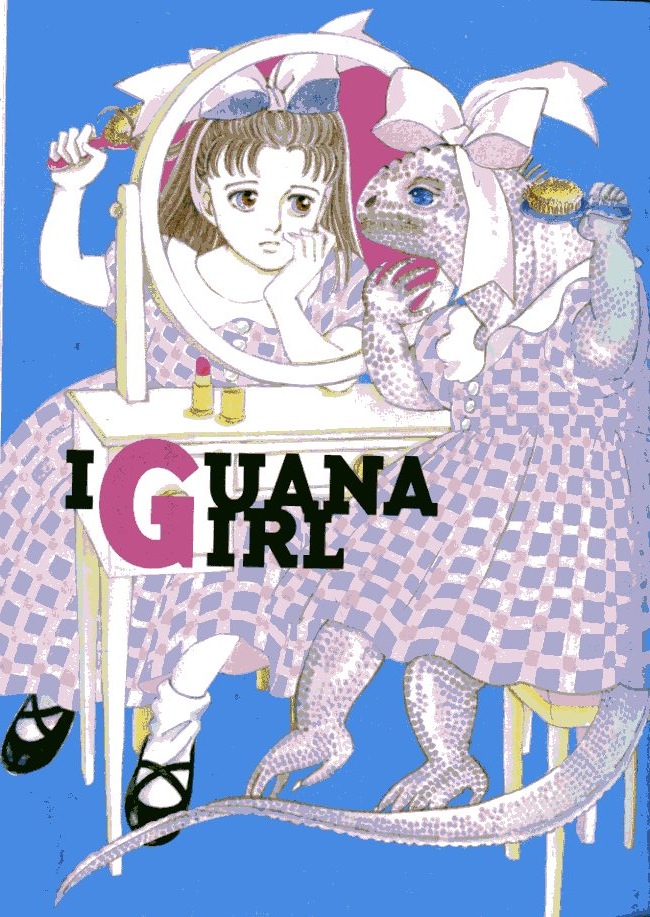
I wrote a longish essay about Moto Hagio’s story Iguana Girl.

Jones (One of the Jones Boys), did a two part guest post on visual aliens — characters drawn in a different style from their surroundings. Part One Part Two

Utilitarians Everywhere

For Splice Today I wrote an essay on Faith Evan’s new album and torch songs.

For Madeloud I sneered at Sufjan Stevens’ new album.

Other Links

A couple people pointed out this interesting post about where Marston and Peters try to figure out how to draw Wonder Woman.

Shaenon Garrity has a great post about Michael O’Donaghue’s over-the-top-exploitation comic Phoebe Zeit-Geist.

And I’m really into Rye Rye at the moment.

Moto Hagio: “Iguana Girl”

I’m blogging my way through Fantagraphics’ Moto Hagio collection, “A Drunken Dream.” You can read the whole series of posts here.
_________________________________

In reviews of Drunken Dream, “Iguana Girl” is generally pointed out as the highlight of the collection along with Hanshin: Half-God. The two stories are similar in a lot of ways; both involve sisters, one beautiful, dumb, and beloved, the other (our heroine) homely, smart, and despised. And both are engaged with ideas about self-image, femininity, gender, and identity.

Hanshin, as I said in my review, is more a poem than a story. It raises questions deliberately to leave them unanswered — the narrator’s self is ultimately her lack of self. The identity she finds is that she does not know who she is: herself, her congenital twin, or the space left between her and her sister when they are separated.

“Iguana Girl”, while using a more arresting gimmick than “Hanshin,” ends up being a more conventional (and to my mind a less interesting) story. The plot focuses on Rika, a child whose mother sees her as an iguana from the moment of her birth. Rika’s perceived ugliness makes her mother hate her; she much prefers her second daughter, the lovely (and rather dumb) Mami. Rika sees herself as an Iguana too, though everyone else sees her as a beautiful girl (and eventually as a beautiful young woman).

The problem here is the same one that dogs many of Hagio’s stories — a lack of characterization resulting in glibness.

Continue reading