Liberal Fascism

573Earlier this week, Brannon Costello suggested (with a hat tip to Walter Benjamin) that fascism could be seen “as the aestheticization of political life, the process by which a state-sponsored fantasy of heroic struggle overwrites and replaces real social, economic, and political anxieties.”

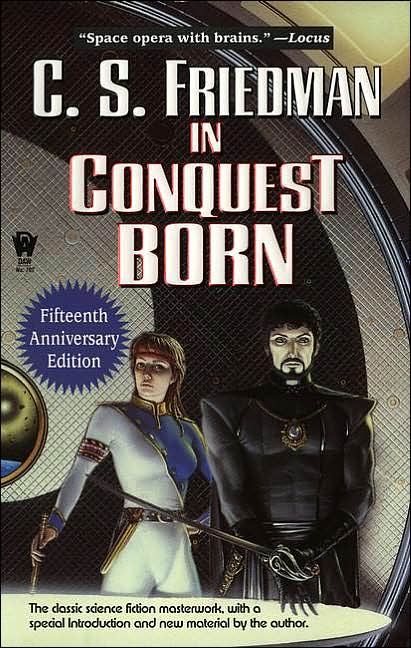
I was thinking about this definition in terms of C.S. Friedman’s novel “In Conquest Born.” The book is sci-fi space opera, but it functions in a lot of ways as a super-hero narrative. The main character, Zatar, is a Braxin, a warlike culture of distant human descendents who have been genetically manipulated to be superstrong and supertough. Zatar is strong and tough and cunning even by the strong, tough, cunning standards of Braxia, and much of the book is a series of vignettes designed to show just how damn awesome he is. He infiltrates the enemy Azeans and poisons a key figure; he goes on a one-person space ship and withstands high gravity pressures in a way no one has withstood high gravity pressure before, he machinates sneaky spy plots causing the death of his enemies, he wows women and has his way with them. He commits ultra-cool sneaky awesome genocide. And so forth.

Again, this fits pretty easily into superhero tropes — and/or supervillain tropes to the extent that they can be distinguished. What’s interesting, though, is that the superhero fascist undertones — the way in which aesthetics replaces politics — are here made thoroughly explicit. Braxia is fascist state. As I said, it’s a warrior empire; it just about worships war and battle. It’s organized along racial lines, too: the rulers (the Braxia) are a small minority of genetically enhanced humans. The regime is hyperbolically masculine; rape of women is legalized, and rule or subservience to women is seen as terrifying and evil.

The novel doesn’t exactly endorse the Braxian view of the world — it’s supposed to be a brutal, ugly culture. But that brutality and ugliness are in themselves an aesthetic attraction; a venue the main purpose of which is to set off Zatar’s charismatic brutality and ruthlessness all the more vividly, and therefore all the more sexily. There’s a sense in which the entire nasty race, complete with legalized rape and endless warfare, is there just so we can watch various brutal, hard warlike men and women fall to their knees (often literally) before Zatar’s bigger, badder warlike bits. The political/social trappings of a fascist state are all channeled into the aesthetic pleasure of the Mary Sue.

Zatar isn’t the only Mary Sue in “In Conquest Born.” Friedman has another; Zatar’s sworn enemy, Anzha, a member of the Azeans, a culture locked in an unending war with the Braxins. Anzha is a powerful telepath, and the part of the book that is not devoted to showcasing Zatar’s awesomeness is devoted to showcasing Anzha’s. The capstone of ridiculousness here is when Anzha, more or less at random, has to cross an ice planet and succeeds by telepathically bonding with intelligent extraterrestrial superwolves. “In Conquest Born” is from the 1980s, before fan-fic really took off, but that just shows that the tropes are of long-standing. And yes, after she succeeds, people kneel down to her too.

But despite that kneeling, Azea is a very different society from Braxin. It’s not a warrior culture. Women are equal to men. It arrives at decisions through a not-super-well-defined-but-still democratic process. It’s remarkably racially heterogeneous as well; the Anzha empire is based on equality, and many alien peoples are equal members. The society isn’t perfect by any means; Anzha faces discrimination because she doesn’t physically fit the genetic human Azea pattern, and the telepathic bureaucratic secret organization screws with her brain in unpleasant ways without her consent. But still, in its broad outlines and ideology, Anzha pursues a liberal policy of peace and inclusion, rather than a fascist policy of war and purity. Anzha, with her telepathy and her fierce love of war and killing all things Braxin (because Zatar poisoned her parents) could be seen as a Superman figure, a liberal, battling, anti-fascist fascist.

Siegel and Shuster didn’t monkey around with relativism; Superman may have been a kind of doppelganger of the Aryan Ubermensch, but that wasn’t meant to create an equivalent. Good was good, bad was bad; and if one was the mirror of the other, that emphasized the differences, not the similarities.

Friedman is less partisan. Ultimately, I think Anzha is supposed to be the force for good, not least because she wins in the end. But, again, the two characters work in almost exactly the same way — they’re both dark, heroic, angsty totems performing awesomeness in repetitive set pieces. Zatar replaces the fascist political system with the aesthetic iconicity of his coolness; Anzha replaces the liberal political system with the aesthetic iconicity of her coolness. And not just the political systems themselves, but the conflict between them, is turned into an individual matter of style, as Zatar and Anzha are enmeshed in a personal grudge feud/telepathic love thingee, which shakes the stars and keeps the pages turning, if you like that sort of thing.

You could see this as exposing the definition of fascism that we’re working with here as self-contradictory. Aestheticization of politics means that aesthetics overwrites politics — in which case the content of the politics doesn’t really matter. Fascism, liberalism — who cares? As long as you’ve got your anti-heroes, it’s trivial whether they run with wolves or commit genocide. It’s all the same marginally entertaining genre fiction, and it doesn’t need to mean anything more than that.

From a bleaker perspective, though, you could argue that the banality of the genre fiction, the emptiness of its political content, is a sign not of the irrelevance of fascism, but of its ubiquity as a kind of substrate in both mass culture and modernity. Those dreams of strong warriors to whom everyone kneels; they’re as native to Azea as to Braxin, it seems like. Victory of one over the other is a satisfying denoument, not for any ethical or political reason, but simply because the strong looks stronger when he, or she, subjugates the strong.If modernity overwrites all political systems with aesthetics, then fascism isn’t just one possible political system of our day, but the blueprint for them all.
No Sequence

This first appeared on Comixology.
______

Guanyin,_Monkeys,_and_Crane

 
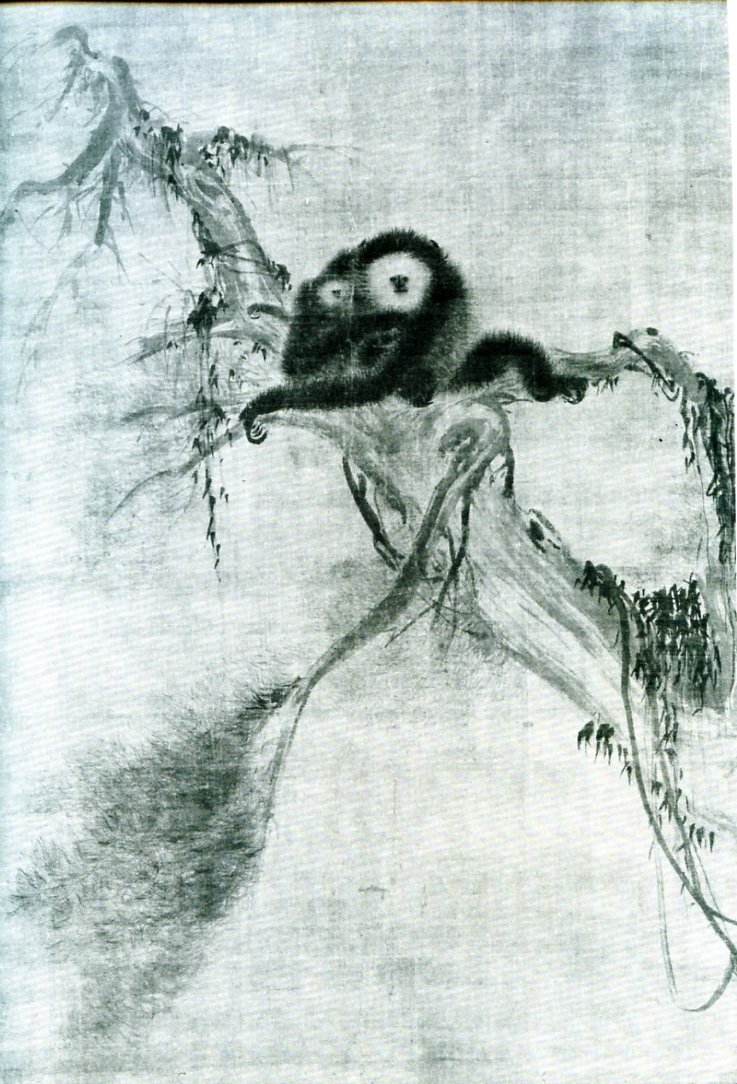
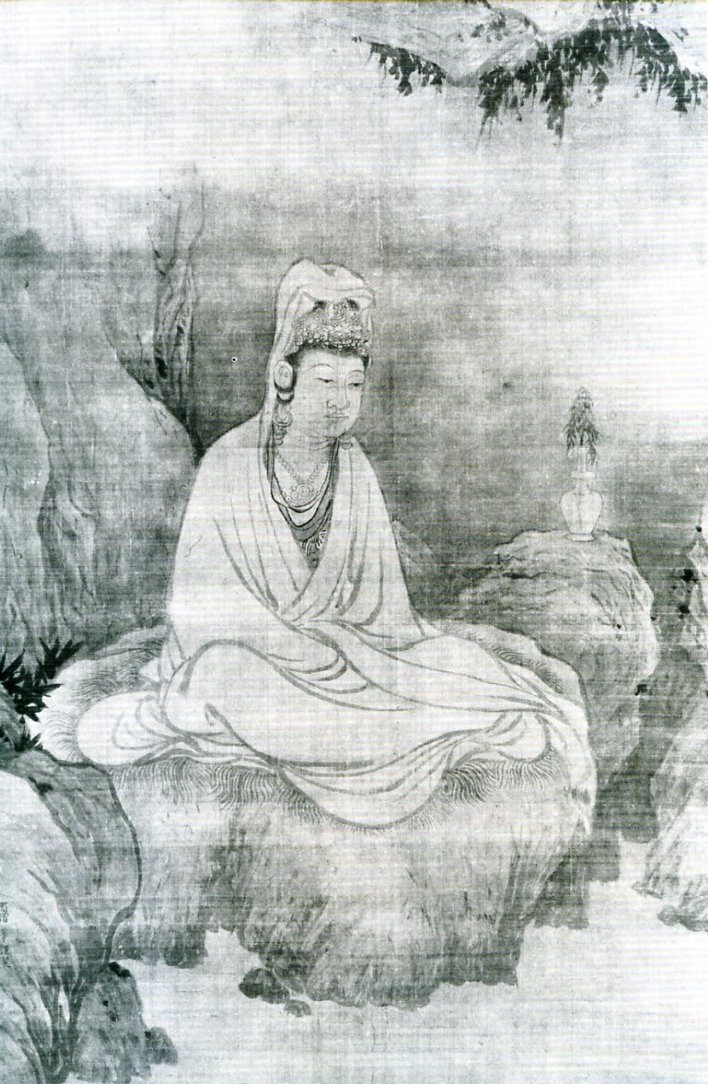
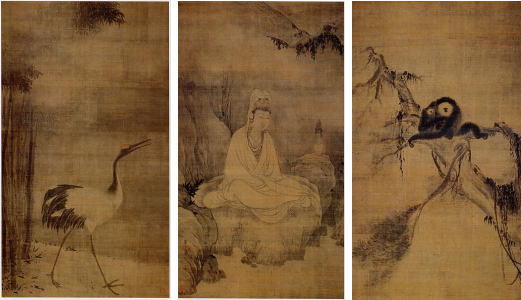
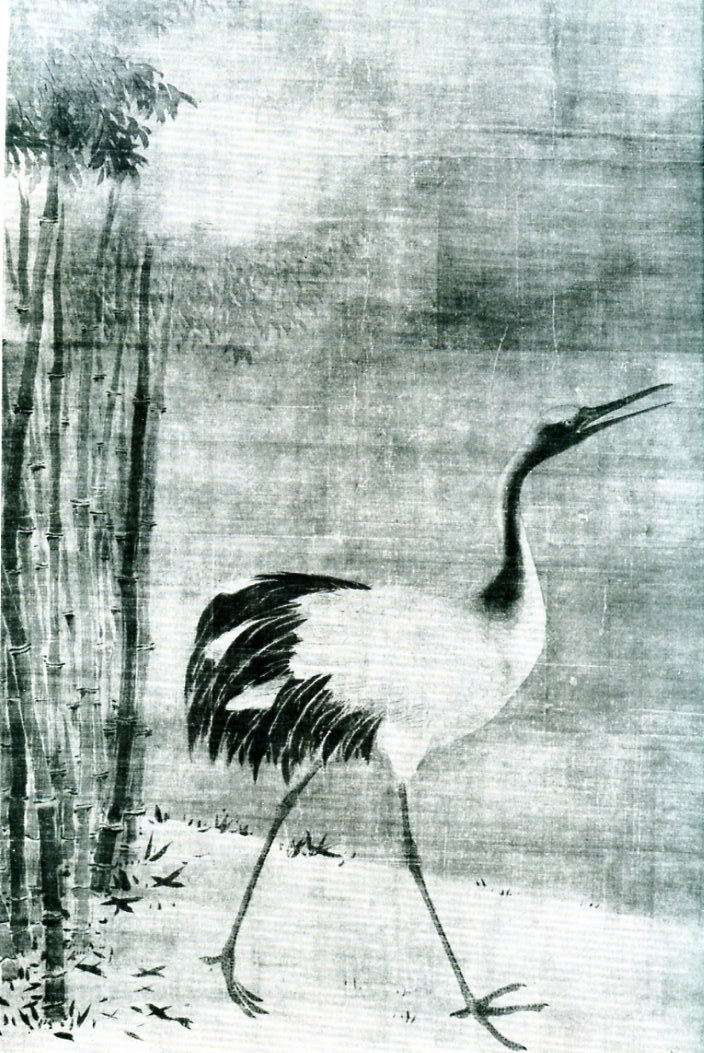
The triptych above was supposedly painted by Mu-ch’i, a Chinese monk, in the 1200s. The middle picture is of Kuan-yin, a much-revered bodhisattva, who had decided to remain on earth and help others to attain enlightenment rather than preceding on to a higher plane.  The other pictures, obviously, are of a monkey and a crane.

In the book, Zen Ink Paintings, Sylvan Barnet and William Burto suggest several possible reasons for the juxtaposition of bodhisattva and random fauna. On the one hand, they say, the crane may symbolize intellect, while the monkey (with its child) may symbolize love, the suggestion being that Kuan-yin is a fusion of the two — as, indeed the bodhisattva is generally seen as a fusion of both male and female.   Or, alternately, the authors say, the placement of the animals beside the bodhisattva may be a way to connect the human, the divine, and the animal in a single harmony.  Or, possibly, the crane may be meant to stand for extended life, thereby making fun of  the Taoist desire for immortality, while the monkey stands for family, satirizing the Confucian emphasis on household harmony.
 

crane

 
My favorite interpretation, though, is based on these lines from a contemporary poem which Barnet and Burto quote:

An old monk arrayed in purple

Would be laughed at by monkeys and cranes.

From this perspective, the crane and the monkey are there, not to make fun of Taoism or Confucianism, but to make fun of Kuan-yin.  Certainly, the crane, with its mouth open, can be seen to be laughing at the serenely oblivious bodhisattva. Moreover, the crane’s oval shape seems to mirror the bundled shape of Kuan-yin’s robes; it’s as if the artist is deliberately mimicking the central figure, turning Kuan-yin from a divine ideal into just a goofy waterbird. Something similar seems to be going on with the monkey too; curled up and staring out of the canvas, she mirrors and parodies the bodhisattva’s solemnity. The one monkey leg reaching out across the branch imitates Kuan-yin’s trailing robes; the long arm reaching crossways across the body seems like a mockery of Kuan-yin’s own crossed arms.  On the one hand, the bodhisattva is parodied for being like an animal; on the other, both side-pictures seem to be poking fun at him for his reserve and determined spirituality. The crane’s neck curves as if ready any moment to jerk with a squawk; the monkey’s soft fur almost quivers in the wind — and the bodhisattva just sits there.
 

monkey

 
If the crane and the monkey are teasing Kuan-yin, perhaps they’re also teasing someone else — specifically, you.   The monkey, after all, isn’t staring at Kuan-yin, but out of the picture; its position may mirror the bodhisattva’s, but it also in some sense looks like a mirror. The crane, too, could be a passing onlooker, staring at the bodhisattva’s picture with his or her mouth agape.  Kuan-yin’s calm here may be in contrast to these unenlightened viewers, who squat like monkeys or strut like cranes, curious but oblivious.  Or, perhaps, the joke isn’t that the audience is unworthy of enlightenment; but rather that they are already enlightened. Because they are as undignified as the monkey or the crane, those who contemplate the picture have their own plain, contingent place within it, like cranes or monkeys who happen to be nearby when the bodhisattva comes.

In an essay titled “Humour and Faith,” Reinhold Niebuhr said,

The intimate relation between humour and faith is derived from the fact that both deal with the inconguities of our existence….  When man surveys the world, he seems to be the very center of it, and his mind appears to the be the unifying power which makes sense out of the whole. But this same man, reduced to the limits of his animal existence, is a little animalcule, preserving a precarious moment of existence within the vastness of space and time.

The joke here, then, is on man, the little animacule, who can reflect on himself like Kuan-yin, and who sees in that reflection a monkey. For Niebuhr, as a Christian, this absence of meaning is finally resolved, at its limits, not by laughter, but by faith. As he says, “We laugh cheerfully at the incongruities on the surface of life, but if we have no other resource but humour to deal with those which reach below the surface, our laughter becomes an expression of our sense of the meaninglessness of life.”

You could see this as the point of this triptych as well, which starts on its outer edges with laughter and moves, at its center to a divinity which binds both animal nature and human watchers together in contemplation of the divine.

The caveat is that the “meaninglessness of life” doesn’t mean quite the same thing for the Protestant Niebuhr as it did for the Buddhist artist. Niebuhr can see laughter as directed at human beings, but when he thinks about laughter directed at divinity, he ends up talking about Jesus’ tormentors mocking Christ on the cross.  In this vision of Buddhism, though, laughing at creation doesn’t have the same connotations of blasphemy.

In this context, the best part of the joke here, and maybe the most Buddhist part as well, is that all of these speculations about the triptych— mine and Barnet and Burto’s — are quite likely, and precisely, nonsense.  Nobody really knows if the crane and the monkey and Kuan-yin form a triptych. The three may well have been assembled haphazardly long after the artist’s death.  The only meaning in the juxtaposition of images is the meaning you graft onto it yourself; the pictures make a story because you say they do. There’s no more sense there than the silent croak when the crane opens its mouth, or than Kuan-yin sitting as poised as a monkey on a branch.  The crane laughs at you because it knows it isn’t laughing at you, and the monkey mocks you because it knows it isn’t. Flanked by them both, Kuan-yin seems content to be ridiculed both by the animals’ presence and by their absence. Enlightenment’s a joke that isn’t, then is, then isn’t.
 

kuan-yin

Most Underrated Movie Ever (And/Or Most Overrated)

So folks seemed to enjoy chatting about the worst movie ever last week, so what the hey, I thought we’d try a related thread this week. What do you all think is the most underrated film ever? And you can throw in your vote for most overrated too, if you’d like.

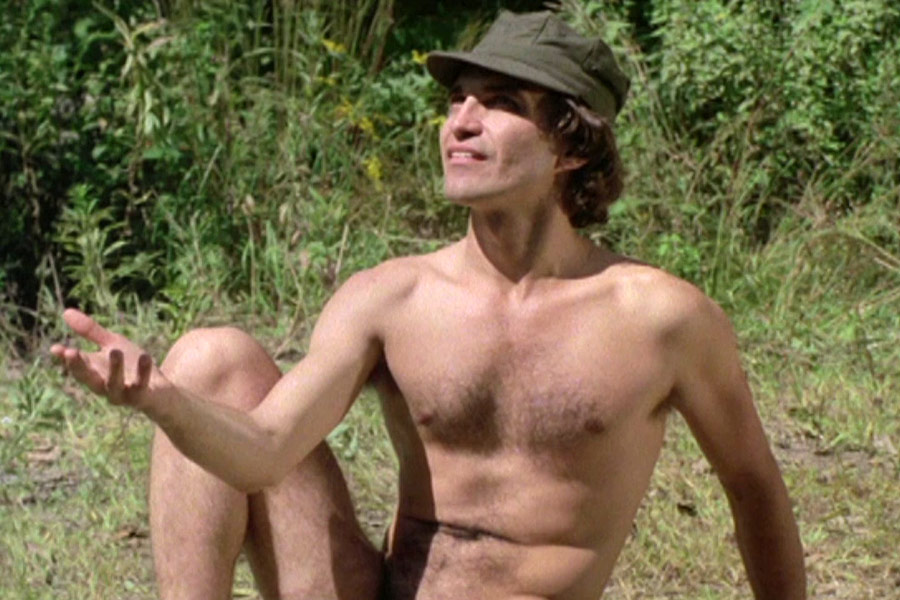
I think the most underrated movie is “I Spit On Your Grave.” I think it’s critical standing has risen slightly since Ebert wrote his scathing review memorably referring to it as “a vile bag of garbage”, but I think it’s mostly still thought of as an exploitation piece of trash. Whereas I think it’s one of the best films I’ve ever seen; bleakly insightful about the mechanisms and the consequences of sexual violence. Eron Tabor’s quietly delivers one of the best performances I’ve ever seen in cinema. (I talk about the movie at some length here.)

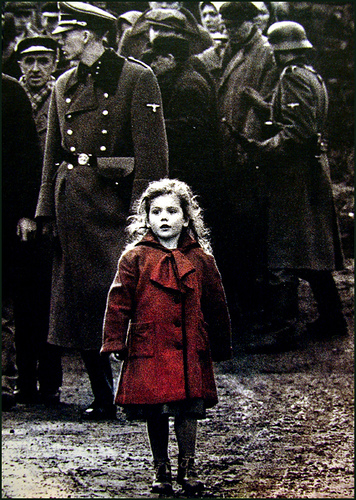
Most overrated…I guess I could go with Schindler’s List, which is my least favorite film and which lots of people inexplicably believe has some merit. But I guess I’d probably plump Taxi Driver, with its glib grit and De Niro ACTING! Barf.

Citizen Kane’s standing has always mystified me a little too. I love “Touch of Evil”, but “Citizen Kane” has always struck me as pretty boring, and its banal psychologizing twist is too earnest to even appreciate as campy fun.

So what about you all? Most underrated film and most overrated?
 

271681.1

So what about you folks? Most underrated and

Utilitarian Review 2/8/14

On HU

Featured Archive Post: creators who haunt their creations, from John Cleland to Yuichi Yokoyama.

A positive review of negative book reviews.

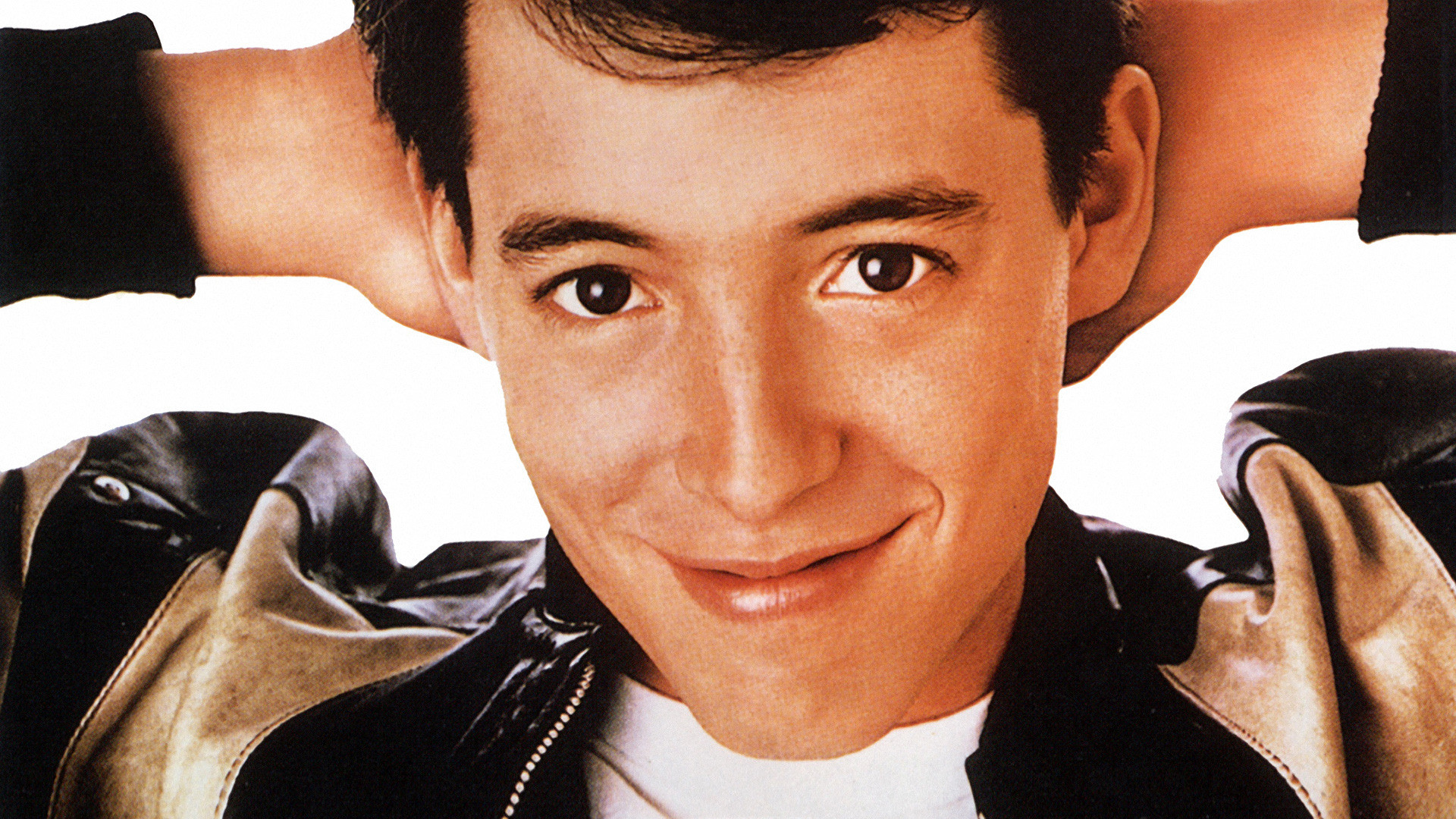
Schindler’s List, Ferris Bueller’s Day Off and other nominations for the Worst Movie Ever.

Michael Carson on Tim O’Brien and how a true war story does have a moral.

Brannon Costello on Christopher Priest’s Black Panther vs. Jack Kirby’s Black Panther.

Samantha Meier on Trina Robbins and the beginning of feminist women’s underground comix.

Ng Suat Tong lists the Best Comics Criticism of 2013.

Michael A. Johnson on the medieveal danse macabre.
 
Utilitarians Everywhere

At Salon, I

— listed 30 great Beatles covers.

— wrote about writing all the time.

At the Atlantic I wrote about:

— how women don’t get to have friends in that awkward moment.

how arguing about less or more violence in films is not especially helpful

At Splice Today I write about:

not knowing who won the superbowl or who Phillip Seymour Hoffman is.

— how Miranda Lambert’s crappy nostalgia makes me nostalgic for Dolly Parton.

At the Dissolve I review the surprisingly not-awful Jean-Claude Van Damme comedy Welcome to the Jungle.

I have a poem/rant/story/thing about Utopia in this LJ issue of the Book of Imaginary Beasts.

I asked political scientist Jonathan Bernstein about whether voters ever pay attention to issues. (Short answer: not really.)
 
Other Links

David Brothers interviews Qiana Whitted over at the inkstuds podcast.

A short documentary on Edie Fake,

Zoe Zolbrod explains why it’s very unlikely that Dylan Farrow’s accusations are based on false memories.

Interesting piece on copyright law and revenge porn.

C.T. May on yoga and P.C.

Tressie McMillan Cottom on yoga and how black women don’t necessarily want to be white women.
 

ferris-bueller

Utilitarian Review 2/1/14

News

Featured Archive Post: Kristian Williams on morality in Mad Max, Rorschach, and Girl With the Dragon Tatoo.

Stephen King’s The Running Man and superhero fascism.

What is the worst movie of the year?

Rooting for the Nazis in Mignola’s Hellboy.

We’ve got a Bloom County roundtable on the way in a couple of weeks. If you’d like to participate, let me know.
 
On HU

Chris Gavaler on sherlock vs. sherlock vs. sherlock.

Hellboy art is not all that. Especially when you’re talking about Mignola’s Baba Yaga.

Qiana Whitted asks for PPP, “What Is An African-American Comic?”

Chris Gavaler on cowboys, superheroes, and online harassment.
 
Utilitarians Everywhere

At Salon

— I list 18 great songs about the devil

— I talk about how the internet made me a better writer

At the Atlantic:

— I argue that just because racism and sexism is of its time doesn’t mean we should ignore it.

— I review At Middleton, which envisions college as a playground for the affluent.

At Splice Today I talk about how:

moral foreign policy is an oxymoron.

I would like more hypocrisy from Paul Ryan.

 
Other Links

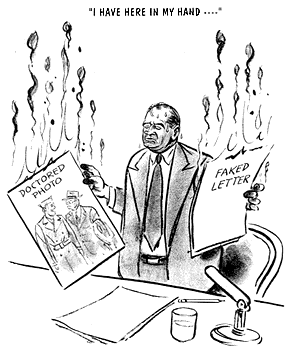
Jeet Heer on the limitations of Herblock.

Owen Alldritt on Her as biting satire of the human condition.

Brannon Costello on Howard Chaykin and fascism.

Edie Fake on Mould Map 3.

Natalie Cecire on gender and the discussion of head injuries in football
 

5_7_54

A Positive Review of Negative Book Reviews

This first appeared at Splice Today.
____________

Recently, Jacob Silverman blamed the sad decline of the negative book review on the dangerous rise of literary niceness on Twitter and social media, presumably because blaming/congratulating Twitter/social media for the decline/ascension/transformation of society is what you do if you’re on the #edge @cutting.

On Sunday, Salon’s Laura Miller replied with a defense of positive book reviews that, to its credit, doesn’t claim that Twitter has caused anything in particular. Instead, Miller links the decline of the negative book review to the decline of literary fiction itself. People don’t really read literary fiction any more, she argues. Therefore, blasting a book that nobody has read is (a) bad for business, and (b) pointless. Or in her own words:

But a negative or middling review of a literary novel that the reader would otherwise have never heard of and is unlikely to ever hear of again? No one needs to read such a thing, and furthermore, no one really wants to. (At Salon, we’ve got the numbers to prove that.)

There’s certainly some force to this argument. I’m not sure that fewer people read literary fiction now than before. It seems possible instead that the Internet decentralization of taste-making has simply made it more apparent what a small audience serious elite fiction always had. But it’s certainly true that unloading on a book no one has ever read can feel pointless and needlessly cruel if you don’t have a broader point to make.

Of course, Miller doesn’t seem to believe that one can ever have a broader point to make. Or as she says:

A close critical reading of a text can be revelatory indeed—but only when you’ve had a chance to read it, or other works by the same author, for yourself. “Let me draw your attention to an obscure book that’s not worth reading and then tell you in detail why it doesn’t measure up,” is a pretty feeble bid for a reader’s attention and time. And the only kind of literary conversation it fosters is more of the sort where people talk knowingly about books they haven’t even read.

The possibility that one might use a text as a launching point for some other kind of conversation doesn’t occur to her. And yet, this sort of thing happens with some frequency. James Baldwin’s biting, beautiful review of the utterly forgotten Ross Lockridge, Jr.’s Raintree Country, for instance, is a searching examination of race and the American dream. This is the last paragraph.

“What is America?” Mr. Shawnessy asks the question and except to call is a noble dream the question is not answered. Since the book at every point evades the riddle of the human being the question is never really asked. The death of the hero of Raintree County admits an uncertainty and desperation the entire county would conspire to deny. But if America is a dream it is also a reality; a small dream is not enough to live by. We are not unlike the audience which assembled to hear the only political speech made by Mr. Shawnessy when he was running for office: they liked him, they knew it was a good speech. But they could not remember nor repeat a single word of it.

I don’t know who Mr. Shawnessy is, and I don’t ever plan to read Raintree County. But I’ve never fallen in love with an 18th century landowner, either, nor set sail on a whaler, nor hunted down androids in a shabby future semi-dystopia. Yet somehow I still love Pride and Prejudice and Moby Dick and Do Androids Dream of Electric Sheep? And somehow I still think Baldwin’s essay is worthwhile.

But I suspect that Miller is right, and that if Baldwin were alive today, and writing such essays for Salon, they wouldn’t get a ton of clicks. As Miller says:

Platforms on which to write about books for a general audience are vanishing fast. Most of the readers drawn to such publications want to be informed of the best new books and to read criticism that enhances their understanding of and appreciation for those books.

So there’s a solid marketing rationale for not publishing negative reviews. But marketing isn’t aesthetics, and it simply isn’t true that a negative review is automatically likely to be less interesting or worthwhile or revelatory than a positive one. On the contrary, I would argue that the irrelevance of literary fiction is not only a cause, but a result of the depressing process whereby reviewing, advocacy and marketing blur into a seamless whole.

Miller argues that proponents of negative reviewing are nostalgic for the days when lit. fic. mattered—but surely positive reviewers rather desperately shining sunshine up the butt of the latest new, new lit sensation are also trying to bring back those older, sunnier days. I don’t know that reviews of whatever sort will necessarily help get us back there. It wouldn’t hurt, though, to realize that critical writing is worthwhile or not because of the thought, the genius, and the prose that goes into it, not because of the book it’s based on, or the hits it generates, or its position pro or con.
 

61uRM+b4GzL._SL500_AA300_