Utilitarian Review 12/14/13

51E412989WL

 
On HU

Featured Archive Post: Sharon Marcus on liking Wonder Woman the comic but not Wonder Woman the character.

Fleetwood Mac for the old and boring.

A short story about a kangaroo who changed the world, with illustrations by my son.

Chris Gavaler provides free script advice to DC on a Wonder Woman movie.

Osvaldo Oyola on double-consciousness and what Black Lightning could have been.

Me on Black Lightning in Chains in the not very good Batman and the Outsiders run in the 1980s.

Qiana Whitted with a PPP post on the connection between anthropomorphism and race in Krazy Kat.

Michael Arthur on the good, the sweaty,and the cute at Midwest Furfest.
 
Utilitarians Everywhere

At Salon I have a list of metal tracks for non-metal heads. I think I’m going to be doing music lists over there weekly for a while, so check in every Saturday, as they say.

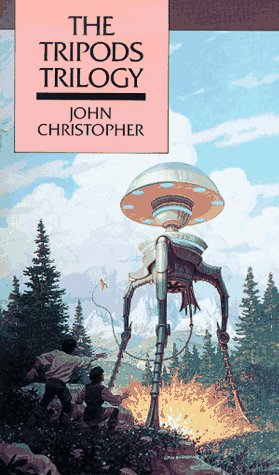
At Wired I talk about the Tripods series, and YA hero as failure.

At the Dissolve I review Nuclear Nation, a film about nuclear refugees in Japan.

At Splice Today I write about:

— how superhero narratives are about fascism, which doesn’t necessarily mean that superheroes are fascist.

—how America’s incarceration boom is over, and no one will be punished for it.
 
Other Links

James Romberger interviews Paul Kirchner.

Noah Gittell on that crappy Walt Disney movie.

Why it’s worth caring about women on a bank note.

Kevin Drum on our educational apartheid.

The Regency Romance as Horror

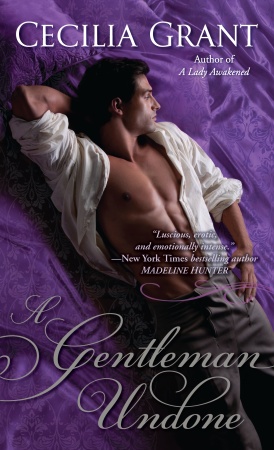
I wrote a bit back about Cecelia Grant’s novel A Lady Awakened. As I said, I loved it all the way up until the last fifth or so, when everything got resolved happily, causing me to be deeply depressed.

cover_2After taking some time to get over my disappointment though, I girded my bits, and read the next two novels in the series: “A Gentleman Undone” and “A Woman Entangled.” Neither was really quite up to A Lady Awakened…until the end, when both were (not coincidentally) less disappointing.

The main difference between books 2 and 3 and book 1 is that 1 is more ambitious. In the first place, the lovers face much more serious difficulties Martha in book 1 has just lost her abusive husband, and needs a child and heir if she is to keep her place, so she hires her neighbor, Mirkwood, to sleep with her. Her husband abused her as well — the book is in many ways a long, painful ode to the powerlessness of women in that age. Moreover, while books 2 and 3 mostly stick to working for the happiness of their couples, book 1 spreads out to include the entire countryside, and the farmers and families for whom, as landowners, Martha and Mirkwood are responsible.

The ambition in book 1 is definitely part of its energy; book 3, deals with two bland social climbers who are pallid nonentities both compared to the courageous, broken, determined Martha, and the social milieu of drawing rooms and society barely registered compared to the multi-class social world of the first book, complete with importunate pig. But ultimately, book 1 buckles beneath its own sweep. I can believe that those two pallid nonentities in book 3 could get together and make each other happy; why shouldn’t they? I can believe that the wounded soldier and the fallen woman in book 2 could heal each other — a little more of a stretch, but not impossible. But that circumstances should fit together to not only extricate Martha from her own predicament, but that Martha and Mirkwood’s love should be so perfect as to spread peace and happiness throughout the hinterlands…it’s just not credible. Romantic love is not the solution to all social ills; two people, no matter how worthy, having good sex and meaningful conversation just is not going to feed the hungry nor (as book 1 suggests) abolish rape and violence.

This is one way, perhaps, in which a fantasy YA romance like Twilight, or The Host or for that matter, Tabico’s insect-sex apocalypse, have an advantage over the regency. the realism of the regency requires some grounding in probabilities; the gestures at social realism interfere with the sweeping fanciful dreams. Fantasy or sci-fi, though, mark their fantasies more clearly as fantasies. Love can save the world — provided it’s vampire love, or love with larva. I also appreciate the horror elements in both Twilight and Adaptation; the sense that, if the personal and sexual were to become social, the social would have to change in ways which would be not just beautiful, but traumatic. The revolution requires blood, of one form or another, or at least a transformation more thoroughgoing, and more potentially disturbing, than just marrying that nice landowner next door.

Though maybe, on the other hand, there is something uncanny and disturbing about regency’s, after all. The end of book 1 (A Lady Awakened), where problems fall away and everyone starts to have their personalities scooped out to be replaced with a sickly sweet happiness; that’s not utterly different form Invasion of the Body Snatchers. Or the way that, certainly by book 3, you know as soon as their introduced who is going to end up with whom, so that the rest of the novel becomes disturbingly like watching watching lifeless mannikins speak and walk and perform like human beings — there’s an uncanny valley charge there as well. If horror can often be read against itself to provide a happy ending for the monster, perhaps romance, too, can be seen not as a triumph of love, but as a beakly mocking, knowing patomime of despair.

Black Lightning in Chains

Yesterday, Osvaldo Oyala posted an essay about the DC character Black Lightning, focusing particularly on how the characters’ two series (written by Tony Isabella) failed to address issues of race. Along these lines, Osvaldo wondered how race was handled when Black Lightning appeared in the team book, Batman and the Outsiders, during the 1980s.

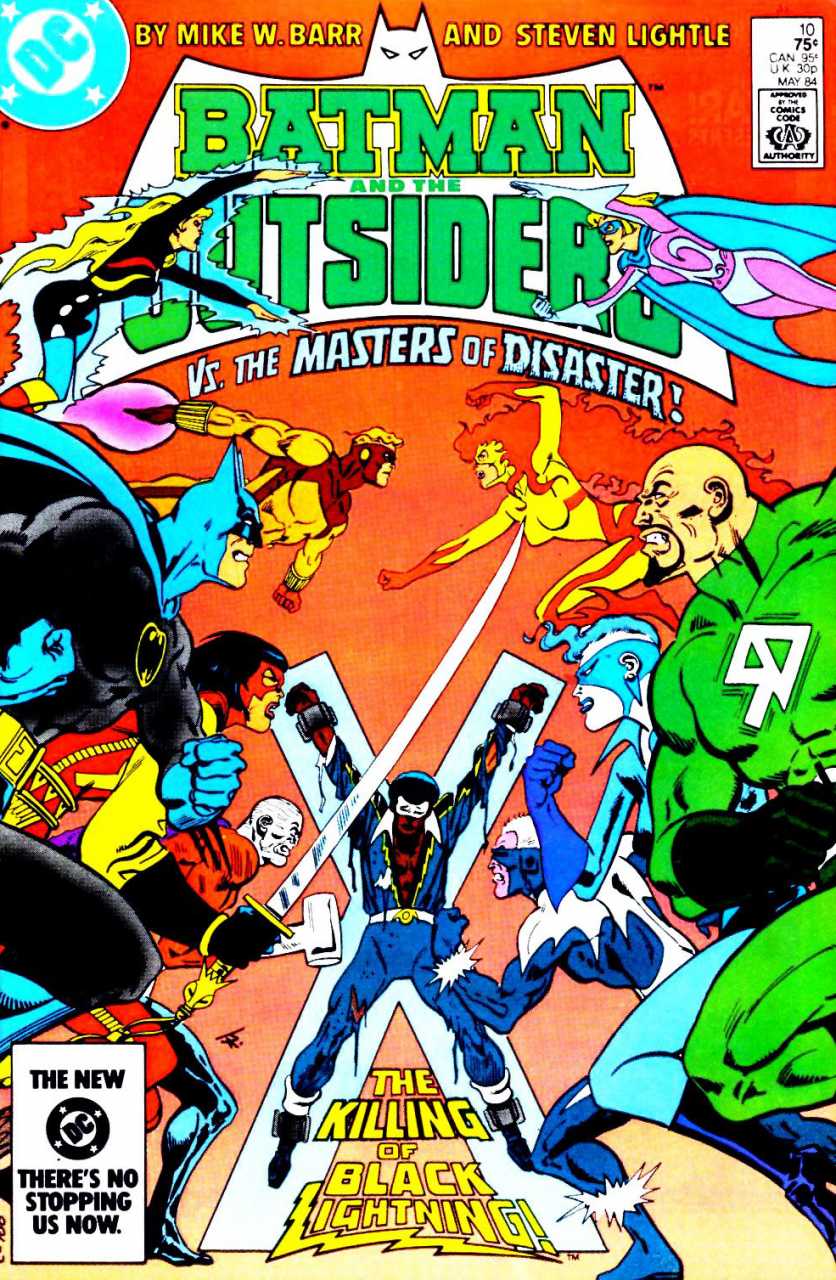
I read those comics when they came out, and my memory was that race was barely mentioned, much less dealt with. I thought I’d double-check, though, and so I went ahead and reread Batman and the Outsiders #10, by Mike W. Barr and Steven Lightle titled…The Execution of Black Lightning!
 

2755095-10

 
There’s black lightning, dead center, manacled to a structure which evokes a cross, clothes torn. It’s hard to avoid the evocation of slavery, and the link between African-American suffering and Christ. And yet, all those other characters on the cover do manage, somehow, to avoid it; the charged history of blackness in America hangs there suspended, while various costumed clowns square off for their tiresome Manichean good white guys vs. bad white guys battle, burying trauma under the high-pitched shuffle of silly costumes.

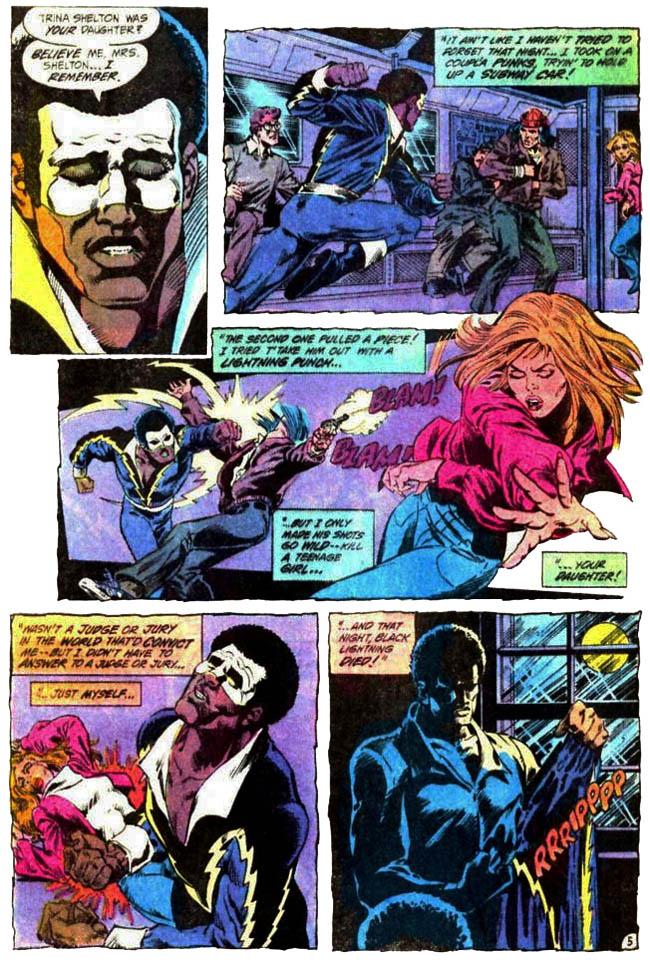
That’s fairly typical of how the comic as a whole works. Black Lightning’s blackness functions as an almost but not conscious theme, instantly and insistently deferred and repressed. The plot of the comic (such as it is) involves Lightning’s own traumatic tragic backstory — while he was fighting soem robbers on a subway car, a bullet went astray and killed a teenage girl named Trina nearby. Lightning blamed himself, and the trauma caused him to have trouble with his lightning powers, and to quite superheroing, until Batman convinced him to join the Outsiders (and helped him recover his lightning abilities). Trina’s mom, though, remained embittered, and so (as you will) she hired a team of supervillains to kill BL.
 

BlackLightning13

 
Again, race here flutters about, shooed away before it can quite settle. This was the 1980s, before the crack epidemic, but still, I think death by stray gunshot would be legible as a problem that particularly plagued gang-ridden minority communities. You have a black superhero, then, dealing with a violence and a trauma that is particularly associated with black communities.

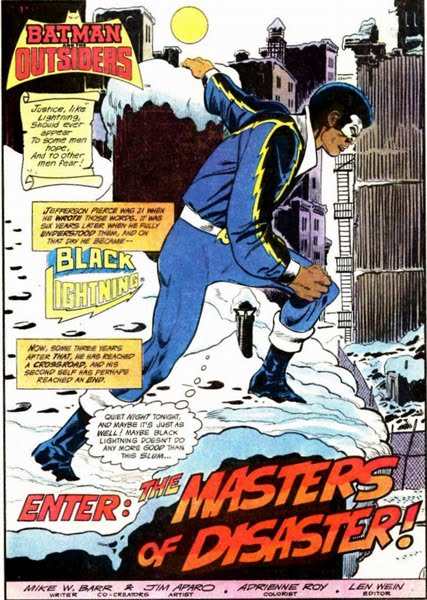
And yet, the racial, and for that matter the class, connotations of the storyline are insistently disavowed. The girl killed by the thugs is white; her parents are presented as thoroughly middle class (with enough money to hire assassins, even.) Although BL was, as Osvaldo notes, originally presented as a hero particularly committed to inner-city and poor neighborhoods, he never appears to connect his particular, individual trauma to the trauma of those communities. Or, when he does, as in a couple page sequence in the previous issue, it seems designed specifically to replace the community with some guy in tights who can be taken out of them.
 

out9-1

 
“Maybe Black Lightning doesn’t do any more good than this slum.” And that’s as much of a meditation as we get on race; inner-cities as throwaway metaphor for Black Lightning’s inner angst.

Similarly, the plot arc — a black man accused by middle-class white folks, chained and (almost) executed without trial — has pretty obvious parallels with African-American historical experiences of lynching. But neither creators nor characters seem to notice. The iconography (as on the cover) just sits there, as if daring the reader to make a connection. Black Lightning functions here not to present black characters or black experiences, but to studiously deny both. History and iconography are accessed simply to be denied; it’s an object lesson in how tokenism can be used not to grant visibility, but to more completely erase. The comic is almost a dare; how much African-American history can we pretend has nothing to do with African-Americans? The answer being, essentially, all of it.

In that sense the bulk of the Outsiders comics that don’t focus on BL are actually something of a relief. For the most part, he’s just another one in the crowd of superfolk, disinguishable by his costume and powers but not by anything else. In the black and white reprint volume I’ve got, even his skin color doesn’t set him apart. There’s only that Afro and the occasional more or less random lurch into dialect to remind you that the race-blindness here isn’t egalitarian, but simple, determined ignorance. They may claim they’re saving him, but none of those heroes on the cover is willing to look over at the black guy on the cross.

The Kangaroo Who Changed the World

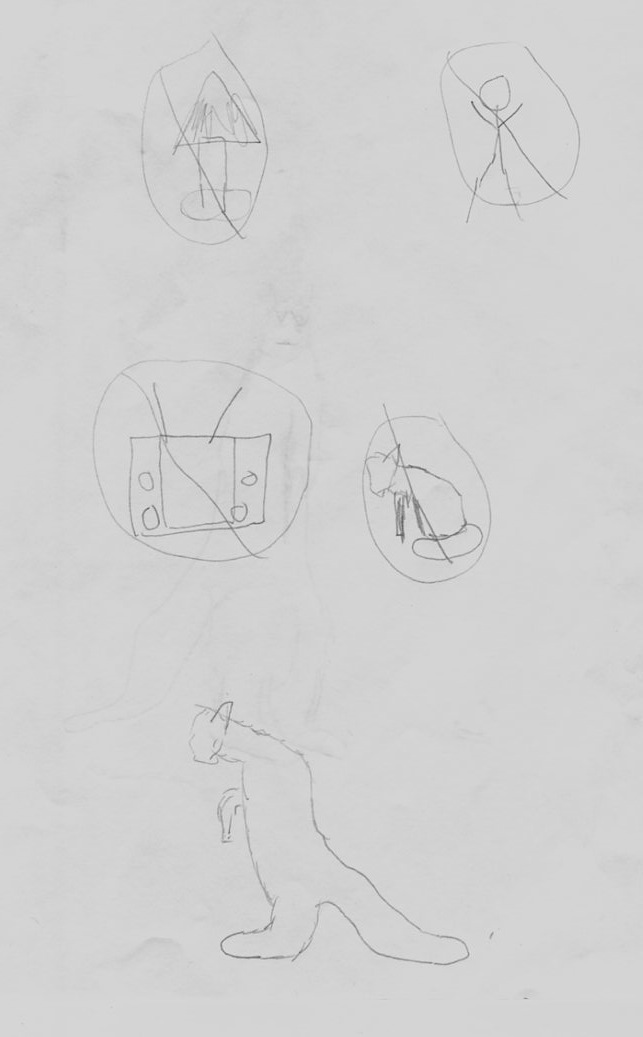
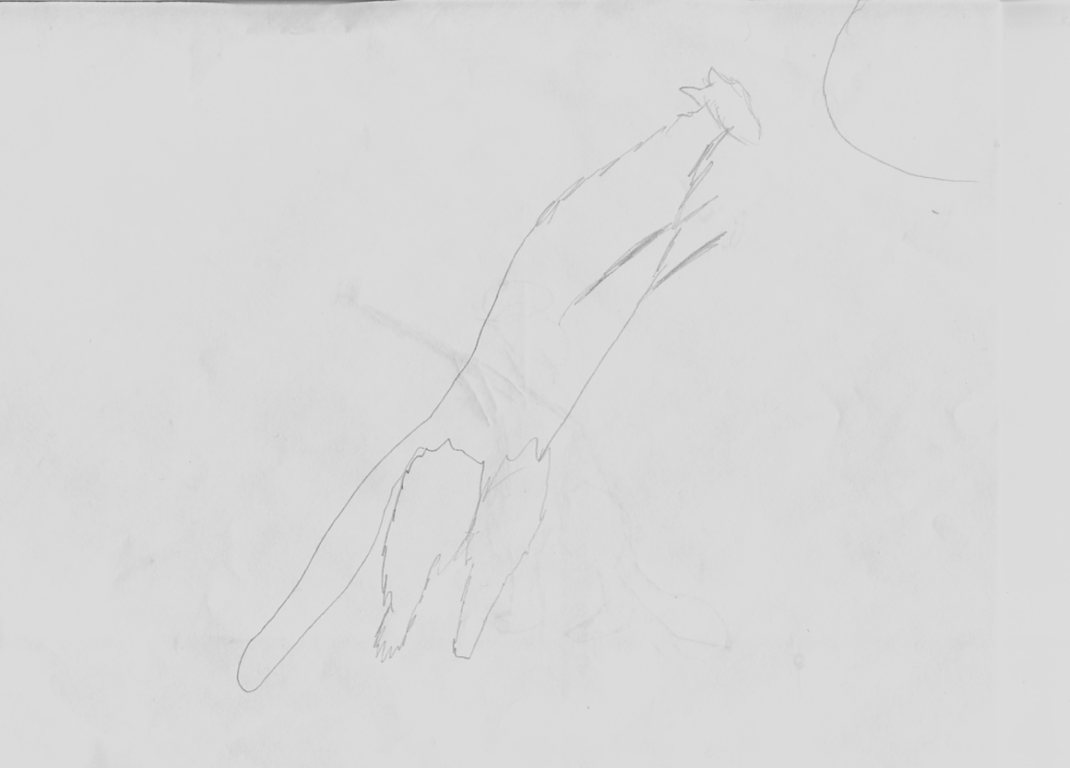
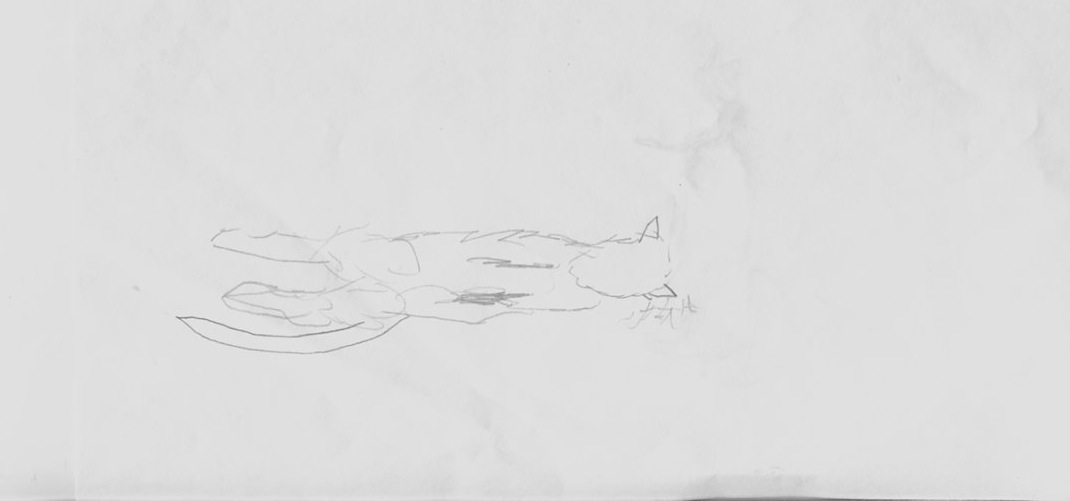
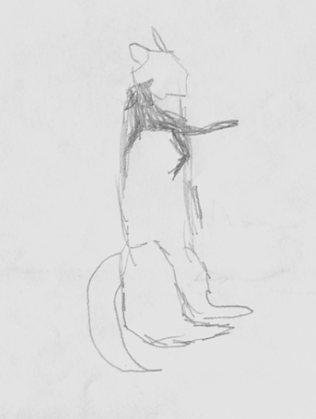
Long, long ago, before you were born, there were no people. There were no lamps. There was no television. There weren’t even cats!

Kangaroos ruled the earth!
 

kangaroo001

 
This was the Ice Age. The kangaroos had especially thick, shaggy fur, so they weren’t too cold. But life was hard, because everything had to be made of ice. They had to make their chairs out of ice. They had to make their watches out of ice. They even had to make their mittens out of ice. And mittens made out of ice are not very warm.

When everything is made out of ice, there is not much to do. So mostly the kangaroos played golf. When their ice golf clubs shattered, they sat down right where they were and made new ones. Between playing golf and making golf clubs, they kept busy.
 

kangaroo002

 
Only one kangaroo was dissatisfied. Molly did not like golf. Molly liked to read. But you can’t make a book out of ice. So she was sad.

One day, she reared up on her big kangaroo feet and she said, “I am SICK of ice! I am SICK of golf! I am going to go change the world RIGHT NOW!”
 

kangaroo003

 
Her parents scratched their heads and twiddled their whiskers. “Are you sure?” they said.

“YES!” Molly said.

So her father packed her an ice bag full of ice to take with her, and her mother gave her her very best golf club, and they both hugged her and tried not to ask her again if she was sure because they knew that would annoy her.

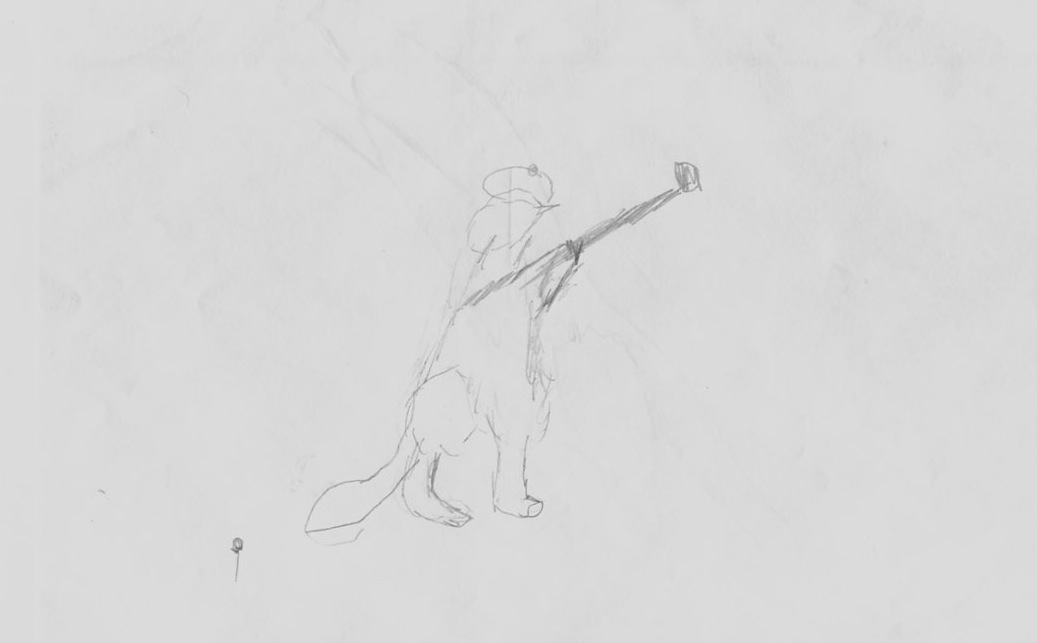
So Molly went outside and lifted one foot up and then the other foot up and then she looked way up and then she jumped to the sun.
 

kangaroo004

 
The sun was surprised. She didn’t have many visitors at this time of year. But she’d always been taught to be polite.

“Hello, Molly,” she said, trying not to melt Molly’s mother’s best golf club. “What can I do for you?”

Molly put her paws on her hips. “It is time to change the world!” she said. “I need you to start getting hotter and melt all that ice RIGHT NOW!”

The sun thought a bit. “I’m sorry, Molly,” she said. “I like watching golf. No changing the world today.” She smiled. Then she blew up, which was her way of saying, “Come back next Thursday, or possibly not at all.”

Molly drifted back to earth. She felt a little discouraged.

Down, down, down…wham! She landed on the golf course on her right ear. It hurt.
 

kangaroo005

 
She got up and went back to mom and dad. “The sun was polite and yet also kind of mean,” she said. “My ice melted and my ice bag melted and my golf club melted and I landed on my right ear. It still hurts. Also I don’t think I changed the world.”

Her father kissed her ear and her mom gave her an ice cookie. They went outside and there was a big hole where Molly had landed on her ear,

And in the hole were cats! They came out and purred and rubbed against the kangaroos, because rubbing against the ice was uncomfortable.
 

kangaroo006

 
“Huh,” said Molly, as a cat licked her ear. “I guess I changed the world a little bit. That’s not so bad.”

Maybe, she thought, she’d try again next Thursday.
_____
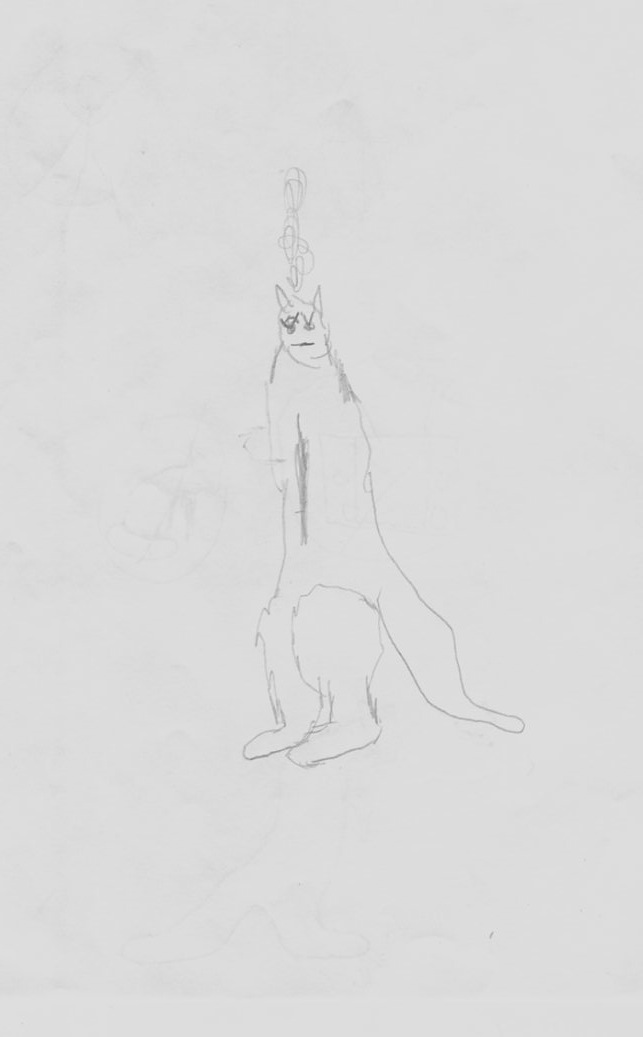
I wrote this in hopes that a children’s book publisher might take it, but the agent I talked to said it was too weird and never write her again. My 10-year-old liked it though, and drew pictures for it (in very light pencil for some reason, which is why the scans are not so great.) His drawings were published earlier this week at The Book of Imaginary Beasts, which was edited by HU writer subdee.

Utilitarian Review 12/7/13

On HU

Featured Archvie Post: Eric Berlatsky on Maus and reality.

Voices from the Archive: Jason Thompson on Orientalism.

Me on abortion and violence.

Mahendra Singh on the limitatons of drafting in Maus.

Me on Maus and Marketing.

Chris Gavaler on an evil Christian comic parenting guide.

Frank Bramlett with the week’s PencilPanelPage post on linguistics and sound effects in Krazy Kat.

Pam Rosenthal on Jo Baker’s Longbourn, Pride and Prejudice through the eyes of servants, and the genre of romance.

Utilitarians Everywhere

At Salon I did a list of 19 cross genre covers.

At the Atlantic I wrote:

—about how Ted Rall got tripped up by comics’ history of racist iconography

—that Wonder Woman shouldn’t be a sidekick in Zack Snyder’s stupid new movie.

At Splice Today I wrote about:

—how Andrew Sullivan can’t stop making the Iraq war about himself.

—Joey Baron, Bill Frisell and avant jazz as dead end.

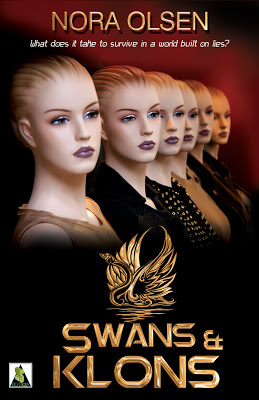
At Slate I told everyone to read Nora Olsen’s wonderful Swans and Klons.

Other Links

Paul Rosenberg on how the GOP knows nothing about food stamps (my cousin, David Simon, is cited!)

Kathryn Funkhouser on how people will pay to see female superheroes.
 

Swans+&+Klons+300+DPI

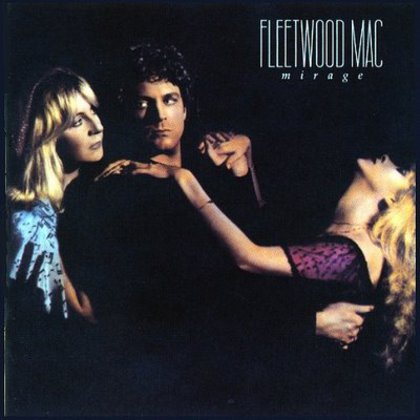
Music for Middle-Aged Snobs.

large_FleetwoodMac-Mirage

This ran a ways back on Splice Today.
________

Of all the classic Buckingham/Nicks period Fleetwood Mac albums, Mirage is probably the least necessary. Fleetwood Mac (1975) was the mercurial debut; Rumours (1977) the mega-commercial apotheosis; Tusk (1979) the sprawling avant double album mess; and Tango in the Night (1987) the long-awaited triumphant comeback. Which, again, leaves Mirage as that other album, over there, with songs on it and stuff. Why did they record that one again?

It’s certainly true that Mirage doesn’t have the urgency of the band’s earlier efforts. After the experimental excesses and (relative) commercial failure of Tusk, this follow up comes across as the band deliberately catering to expectations — serving up comfortable, predictable, easy-listening groove after easy listening groove. On “That’s Alright,” Stevie Nicks reigns in her witchy-woman earth-mother schtick and comes up with a shoulder-shrugging countrified ramblin’ ballad, part Emmylou, part Eagles, with Nicks’ nasal burr wandering away from its usual spiral of self-absorption to go sailing off into diffuse longing. Similarly, on “Book of Love,” Buckingham reigns in his coked-up, cracked-genius schtick and delivers, of all things, a heartfelt doo-wop tribute by way of Brian Wilson, complete with echoey faux Phil Spector production and those aching beach harmonies spiraling up over the bad-ass guitar solo. “Oh Diane”, too, seems to hark back decades — Buckingham’s melodramatic fruity vocals channeling Neil Diamond pop cabaret.

Christine McVie always fit easily into the adult-oriented format, so no reigning in is really required. Still, there’s perhaps some sense of settling down in that her best moments on record here are collaborative in a way that’s a little atypical for her songs. The album’s big hit, “Hold Me,” is built around the Paul-John tension between McVie’s peppy, poppy arrangement, and Buckingham’s strained backing vocals, which insistently suggest that that repeated “Hold Me” may be more desperate than affectionate.

It’s true that I’m picking and choosing tracks here to some extent. “Gypsy”, for example, finds Nicks back in full self-dramatizing warble, and Buckingham is in full jittery, unhinged, possibly-maybe-substance-enhanced cry on “Can’t Go Back.” But still, the album as a whole feels less ambitious and less unexpected; even Nicks and Buckingham being Nicks and Buckingham is a known quantity at this point, after all.

Perhaps the best example is the opening track, “Love in Store”. Again, it’s a McVie song, and she sings lead. The background, though, is handled not by Buckingham but by Stevie Nicks — a phenomenal harmony singer. There’s no sunny exterior/dark undercurrent here; instead, Nicks’ textured voice fits into McVie’s smooth alto, lending a grounded authority to the song’s airy, soaring nothings. “Never take your love away,” they chorus, and it sounds like they’re singing not to some random lucky guy, but to each other. In that context, the repeated refrain, “you’ve got lovin’ in store,” ends up flipping from single entendre to a kind of reverse entendre — not about sex, but about friendship — not singing as prelude to sex, but sex as metaphor for singing. A declaration of eternal lust mellows out into two friends sewing on the sofa, cheerfully, for all eternity.

Probably some folks will see that as a dis. Who wants to sew when you can fuck? Who wants easy listening when you can rock? I can’t speak for anyone else, of course, but for me as a fortysomething middle-aged guy— well, let’s just say I’m fulfilling my demographic destiny. Sometimes you want to rock, and sometimes you want the perfect soundtrack for getting in the Prius and driving through the city on a lovely autumn day on your way to pick up the kid. Dull people deserve good music too, damn it, and why can’t the set, the predictable, and the superfluous sometimes also have love in store?

Maus and Marketing

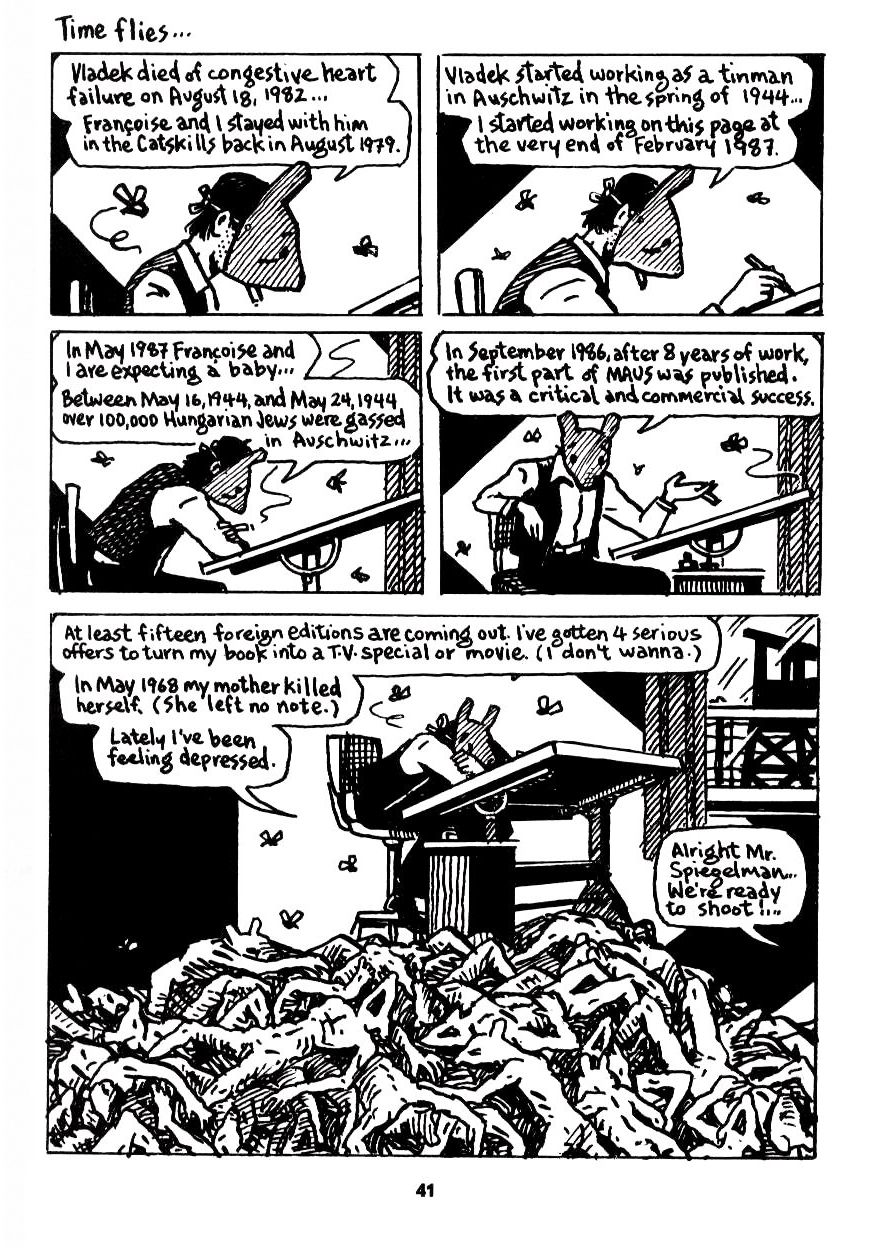
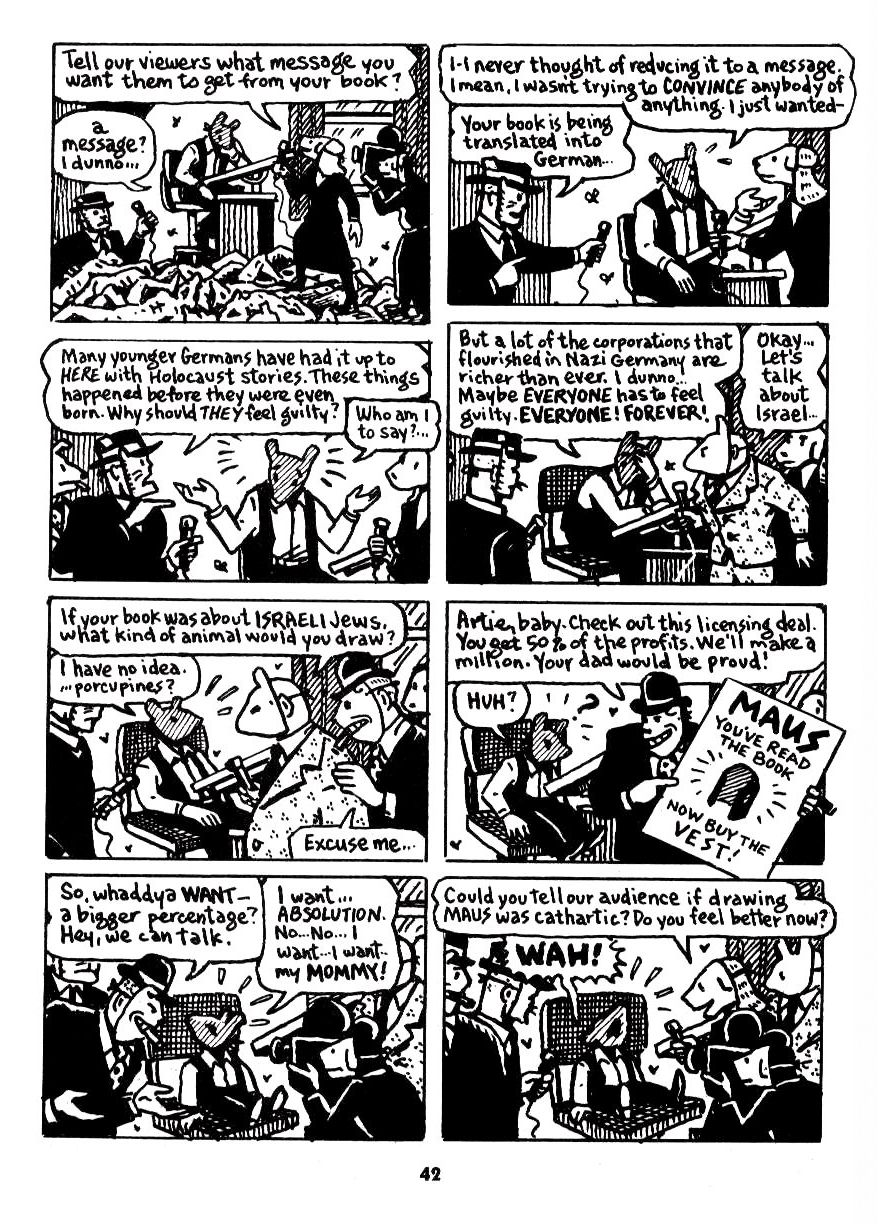
This is probably my least favorite page in Maus.
maus_2_038

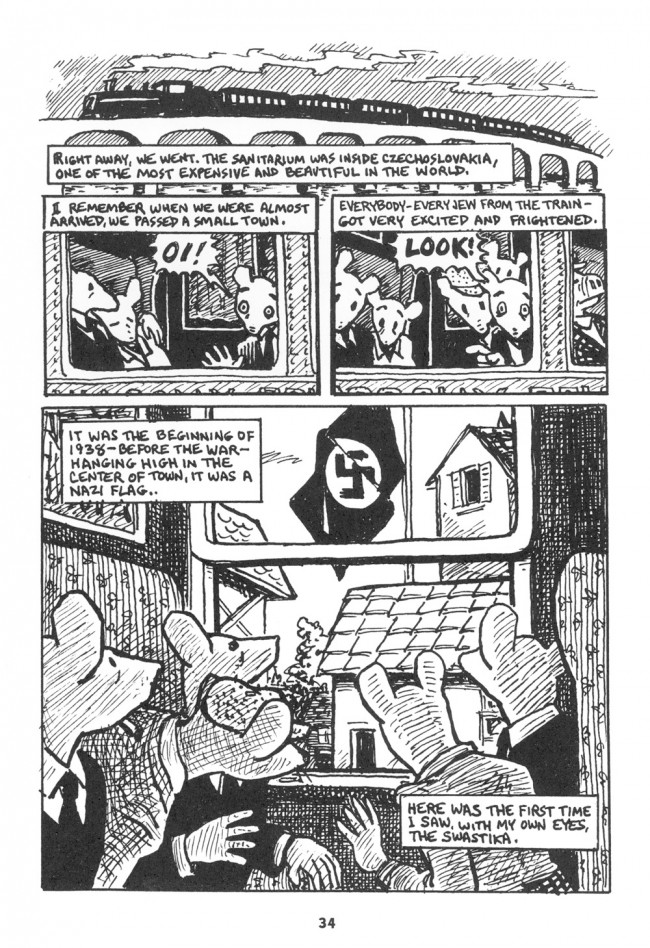
This page doesn’t have the design problems that I taked about over here, and, which Mahendra Singh elaborated on.
 

11-page-from-Maus-I-650x948

 
The second page is cramped and confused; the first is not a masterpiece of design or anything, but the simple four panel grid at the top is effective; the flies the visual tip off to the gruesome reveal of the corpses around the drawing board.

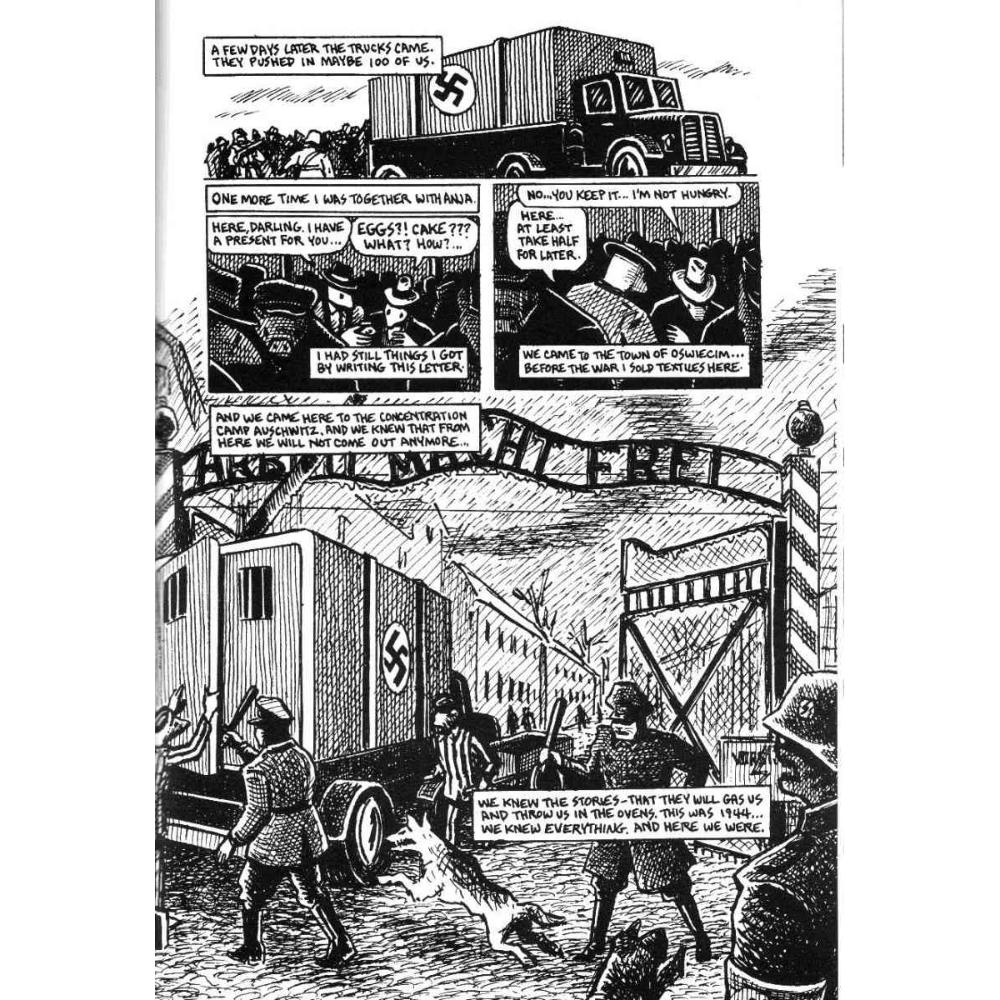
What’s interesting, though, is that, while one is sub-competent and the other is effective, both use the same basic formula. You also see it here:
 

the-complete-maus-art-spiegelman-edicion-25-aniversario_iZ20XvZxXpZ4XfZ133298867-449709627-4.jpgXsZ133298867xIM

 
In each, the page is set up as a reveal. The top visuals keep your eyes focused on neutral images, and then the bottom opens up into the horrible truth. That horrible truth is always the same truth; namely the Holocaust, symbolized with a crude obviousness either by the (poorly drawn) Nazi flag, or the Auschwitz gate, or (most viscerally) by a huge pile of dead bodies. the importance of the Holocaust is emphasized each time both by its position as revelation, and by its scale. In his page design, Spiegelman tells us, over and over, that the Holocaust is huge and that it leaps out at you.

That is not, I would argue, an especially insightful take on the Holocaust; it turns it into a pulp adrenaline rush. Those pages each seem like they’d work as well, or actually better, if you substituted Dr. Doom for the Holocaust in each case. IF you’re going to set up a supervillain behind the curtain melodrama, best to be talking about an actual supervillain. Hollywood effects work best with Hollywood content; trying to add drama to an actual genocide comes across as cheap and presumptuous.

Interestingly, Spiegelman himself is somewhat aware of this, and on the page I’ve shown here, and in the following page, he tries to address it.
 

maus_2_038
maus_2_039

Spiegelman here is discussing, and decrying, the Hollywoodization of his book. These pages are from the second part of Maus, after the first part had gone the pre-Internet version of viral. The “reveal” of the final panel is both of the corpses and of the book’s success — the foreign language editions, the TV and movie offers. You could see the bodies as symbols of Spiegelman’s innocent alt-comix purity — a kind of spiritual death, underlined by the reference to his mother’s suicide. The off-panel declaration that “We’re ready to shoot!” links the media explicitly to the Nazi murderers; Spiegelman, as tortured artist besieged by popularizers and reporters, is positioned as a tormented victim of the gas chambers.

Defenders of Maus will no doubt argue that these pages are ironized. For example, Eric Berlatsky (that’s my brother!) writes:

Spiegelman is sure to implicate himself when he depicts Artie at the outset of chapter two of Maus II. Sitting at his drawing table, in front of television interviewers, Artie discusses the commercial success of the first volume of his book while sitting atop a pile of anthropomorphic mouse corpses. He is depicted not as a mouse, but as a man wearing a mouse mask, performing Jewishness for commercial gain. The simultaneously humorous and threatening depiction of the American advertiser offering a license deal for Artie vests (“Maus. You’ve read the book now buy the vest!” [42]) indicates how Artie (and Spiegelman himself) uses the past not merely to recall it in the present, but for his own profit and on the backs of the Jews his book is purportedly “remembering.” Artie displays a questionable connection to the past in order to participate in the circulation of power and profit.

Eric, then, suggests that Spiegelman is intentionally undermining himself; that he’s implicating himself in the marketing of the book and the performance of Jewishness.

I’d agree that the page raises the questions that Eric discusses. But is the effect really to undermine Spiegelman? The sympathy in that second page remains resolutely with Artie, who is being “shot.” He is the sensitive artist/victim (reduced to actually infantilized crying at the end) while callous reporters and interlocutors try to make a buck or score stupid points off the corpses stacked around his desk. The shallowness and duplicity of the media is emphasized by Spiegelman’s use of masks here; because they are drawn in profile, where we can see the mask-strings, the reporters comes across as macabre and deceptive.

Spiegelman is drawn in profile on the first layout, too. You’re in his head though, and he’s alone; it doesn’t feel like he’s concealing something, but like he’s trapped; the mouse mask victimizes him, and connects him to the dead victims (who aren’t wearing masks.) And then from that bottom reveal and through the next page, Artie is drawn mostly looking out at the reader; you can’t really see the mask. It’s as if the dead bodies have made him a “real” Mouse. In addition, the presence of the reporters ends up being validating; the contrast between their clear masks and his “natural” features shows clearly who has the right to speak — they’re crass desire to commercialize the corpses around his desk positions Artie as feeling caretaker; the only one who truly understands the horror. Thus, the dialogue is mostly the reporters asking aggressive questions and Artie as genius artist undermining them with wit and humble brag, followed by sensitive breakdown. The low point is probably when Artie blithely suggests he would draw Israelis as porcupines — a smirking one-liner that both dismisses the very real problem that Israel poses for Spiegelman’s Jews-as-mice-as-victims metaphor and glibly ties into ugly Zionist narratives positioning Israeli aggression as righteous defense.

The real failure of these pages, though, is Spiegelman’s utter refusal to grapple with his own responsibility for the commodification he’s supposedly decrying. IF you really don’t want your Holocaust story to be easily consumable, there are ways of doing that, from Celan’s impenetrable poems silence to Philip K. Dick’s oblique, quiet puzzle-box The Man in the High Castle. The critical and commercial success of Maus is not an accident; it’s the result of the deliberately unchallenging way in which Spiegelman presented the material. And that makes his wailing about the burden of success (which he, again, explicitly compares to the horrors of Auschwitz) insupportably presumptuous. The page itself, with its build-up to the big gothic reveal, uses pulp tropes to dramatize the Holocaust. The quite clichéd juxtaposition of feeling artist and unfeeing reporters/media is also an easy cultural narrative. Even the revelation of Spiegelman as man, rather than as mouse, doesn’t so much undermine the iconography (we still get the shock of anthropomorphic corpses) as it shows us the hand behind the image. Tortured genius is hardly a new marketing meme.

In short, Maus, in numerous ways, is an effort of deliberate middle-brow popularization. And part of that popularization is the elevation of Spiegelman himself; the genius interpreter, speaking from his pain as corpses overwhelm his drawing board. The bitter irony of Maus’ success is that the book’s defenders end up in the position of Spiegelman’s masked Nazi-like philistines,scrabbling joyfully amidst the corpses. And from the pile, finally, they lift Artie himself, circled by flies, the genius who realized that if comics marketed genocide, genocide in return would market comics.