SPX: Different Shows for Different People

tumblr_inline_mrhtsxZ6Lc1qz4rgp

 
In a comment to my post from last week, R. Maheras wrote:

“I was at SPX today, and almost every complaint about homogenized superhero comics can probably be made about contemporary small press.

There’s a relative sameness pervading contemporary small press that I don’t remember seeing during the small press explosion of the 1980s.

Zombies, cutesy creatures/monsters, or reality-based angst comics seemed to be bulk of what’s available these days.

In the 1980s, I was snapping up dozens of small press comics every month. At SPX, While I spent about $120, I was hard-pressed to find stuff I wanted to sample. One of the more interesting things I found was actually what creator Pat Barrett himself only half-jokingly labeled a screed: “How to Make Comics the Whiner’s Way.” I thought it was actually a pretty good indictment of what appears to be a substantial faction of today’s small-pressers.”

I was also at SPX this weekend. This comment made me want to use my words and Noah was kind enough to put this up as a separate post instead of hiding it in the comments.

I’ve been going to SPX since 2002 – a few years covering the show for a small local magazine here in the DC area, then one year as a volunteer, and this was my sixth year selling my own comics as the man in the purple suit. (Full disclosure: I also maintain the SPX Good Eats Google Map.)

Over the course of the past decade, my wife and I have come up with a game at SPX. She goes off and finds stuff and I go off and find stuff. When we compare our finds, we ask each other “where did you get that?” It’s very obvious that what she finds interesting in comics is very different than what I find interesting in comics and we always spot very different things at the show, so much so that it’s almost like we’re at completely different shows. I tend to regard that as a feature, not a bug.

My wife picked up Pat Barrett’s book for me and she talked to him about it. He told her that it was written in response to people who knew they wanted to make comics but didn’t know what they wanted to create. Mind you, that’s hearsay so it’s impossible to say exactly what his intention was (and I argue that we should look at the primary source instead of the author’s intent anyway). Having read the book last night, I saw a very pointed sendup of “How-To” books, especially those that are aimed at teaching people how to draw. And yes, there was a lot snark aimed at autobiographical comics, which were all the vogue a few years ago.

One of the interesting things about comics these days is the conventional wisdom that if a comic isn’t about superheroes then it’s pretty much automatically not commercially viable. And that lack of concern about whether or not a book is going to sell has opened the floodgates to allow just about every kind of comic under the sun – both in terms of subject matter available, art style and format. And, as far as I’m concerned, the best thing about indie comics is the almost complete lack of homogenization or sameness on offer.

For example, on my row of tables (I was on what Rafer Roberts called “the fifty yard line” of the room) there were Warren Craghead and Simon Moreton’s minimalist comics, a gay porn space opera, my eclectic collection of books, video game inspired books, and a guy selling bad caricatures and an apology for a dollar. There was also a wide range of books available from the DC Conspiracy, Interrobang Studios, Nix Comics and the Spider Forest Webcomics Collective.

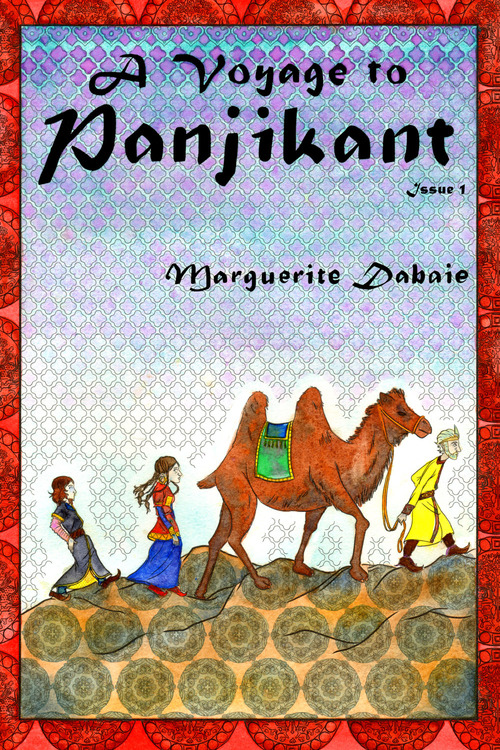
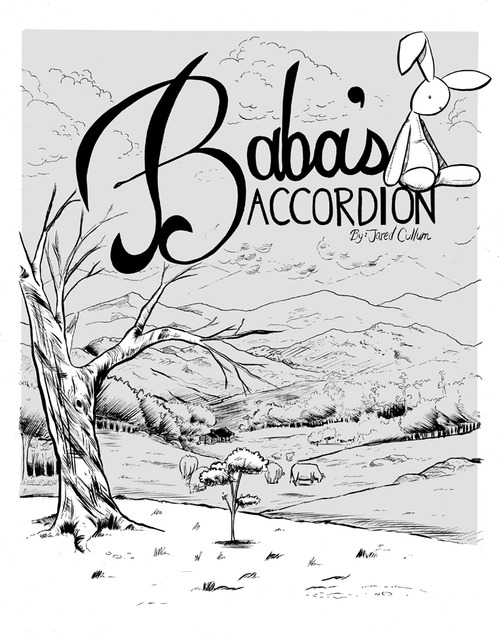
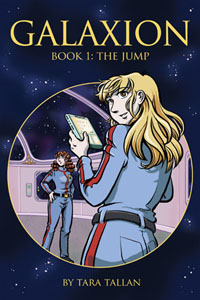
My must-buy book of the show this year was my friend Marguerite Debaie’s A Voyage to Panjikant, a meticulously researched historical fiction about traders living on the Silk Road in the Seventh Century. It’s a beautiful book that’s colored entirely in watercolor. I also picked up a space opera comic called Galaxion by Tara Tallan, simply because it looked interesting. I even went out of my way to pick up the few books from Frank Santoro’s Comics Workbook competition that were at the show – Jared Cullum’s Baba’s Accordion, Alexey Sokolin’s Freefall, and Alexander Rothman’s Vespers.
 

tumblr_mskygiZaat1seviqto1_500
 

Not a one of these are “[z]ombies, cutesy creatures/monsters, or reality-based angst comics,” but it’s easy to understand why it seems like that’s what the room had to offer. With such a large variety of material to choose from, it was impossible for any single individual to wrap their arms around everything that was available. I think a certain amount of confirmation bias does tend to creep into what people tend to see at shows like this when the options are so overwhelming. We see what we expect to see because there is no way to really carefully evaluate everything.
I saw volumes of Shakespeare that contained beautiful handcut paper illustrations. I saw a comic printed on a strip of canvas. I saw comics that were printed at mini comic size, traditional comics size, magazine size, square format, horizontal format, and were massively oversized. I saw comics that were photocopied and hand-stapled. I saw mass-printed books with beautiful production values. I saw parody books that were waiting patiently for cease-and-desist letters and wonderful original concepts.

And yes, I did see some zombie books because zombies are big in pop culture right now. I saw autobiographical comics because most first novels are bildungsromans and it shouldn’t surprise anyone that comics follow the same patterns as novels. And there is always a great deal of cutesy stuff on display because the one thing that always sells at a show of such magnitude is a quick, easy hook that makes you laugh and only costs a few bucks.
And yes, you could make some of the same complaints about the books available at SPX that can be made about superhero comics – some are poorly drawn, some are poorly written and some are not well thought out at all.

But you cannot complain that indie comics have crippling continuity issues that prevent newcomers from picking them up. You cannot complain that indie comics present a straight white male view of the world that is not friendly to women and minorities (in fact, there was a greater preponderance of books with the word “feminist” in the title this year than there has been in years past). You cannot complain that indie comics are dominated by white males (the creator split was about 50/50 gender-wise, not so much racially). You cannot complain that indie comics are mired in endless editor-driven events that force you to buy a dozen books to get the full story. You cannot complain that indie comics have devolved into corporate IP farms whose stewards are more interested in maintaining the long-term viability of characters than they are in character development.

The real joy of attending a show like SPX is that everyone in the room is there because they want to be – because they are desperately, passionately in love with the medium and the possibilities inherent in comics. And yes, the creators would really like to make money. But most of them know that they will probably not break even, but for some weird reason they show up anyway.
Given that half of the people exhibiting at SPX this year were there for their first time, it’s entirely possible that a good portion of them went for the easy options and chose the same basic topics that most newbies choose. But if that’s all you saw then you were not looking very hard because there was a lot of weird, crazy, interesting, creative, exciting stuff available. I had to stop browsing because I went over budget twice – and I intentionally avoided the big publisher tables. I’d even go so far as to say that there was a book in the room for just about anyone from any walk of life. And that’s absolutely not something that you can say about mainstream superhero comics.
 

cover-image-store_page-sm

Prehistory of the Superhero (Part 4): Elementary, my dear Morlock


Holmes and Moriarty at the Reichenbach Falls


“My mind,” he said, “rebels at stagnation. Give me problems, give me work, give me the most abstruse cryptogram or the most intricate analysis, and I am in my own proper atmosphere. I can dispense then with artificial stimulants. But I abhor the dull routine of existence. I crave for mental exaltation. That is why I have chosen my own particular profession, or rather created it, for I am the only one in the world”– Arthur Conan Doyle, The Sign of the Four


Enter the Detective

Science-fiction was not the only popular genre to soar into prominence in the 19th century. Crime fiction also evolved into a major purveyor of thrills; and, like science-fiction, would be an important source of tropes for the superhero.

Tales of crime had, of course, been told for many centuries before; however, behind a mask of conventional pieties, the reader’s sympathies tended to be guided towards the criminal. This is understandable in that the social structure was widely perceived as oppressive and unjust; the repression of crime was a corrupt and ineffective process accompanied by excessive harshness and cruelty– in 1800 England, one could be hanged for the theft of a handkerchief.

But the establishment of effective police forces, along with the evolution of penal and social reforms, gradually shifted sympathy to the crimefighter. In France, the 1828 memoirs of Vidocq (1775-1857) ,the first true-life detective to set pen to paper, were the inspiration for the whole fictional sub-genre of the police procedural, as later first expressed in the novels of Emile Gaboriau(1832–1873) starring Inspector LeCoq.

>Vidocq

Vidocq– criminal turned policeman

 
The policeman as hero, however, was not a universal taste. A new figure arose, like nothing existing in real life: the amateur detective.

The first of these was born from the pen of Edgar Allan Poe (1809–1849), in his 1841 short story The Murders in the Rue Morgue. Therein was introduced the Chevalier Charles Auguste Dupin, a reclusive aristocrat who seems to solve crimes purely for the pleasure of puzzle-solving. This was the template for the amateur sleuth, one who upheld the law without being of the law; thus, the reader was able to eat his anti-authoritarian cake and have it.

The superhero replicates this delicious ambiguity: an outsider fighting injustice with little help, or even outright hostility, from the official forces of law and order, who would like nothing better than to unmask and lock up Zorro orSpider-Man.

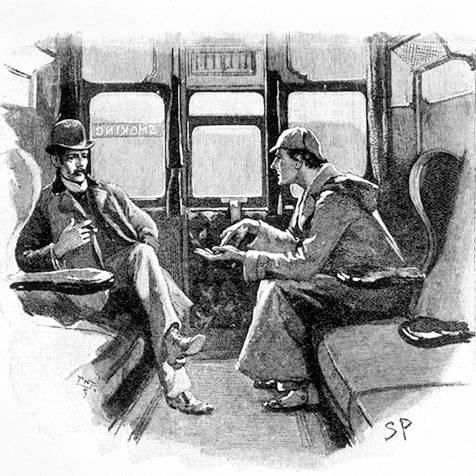
Of course, the most renowned detective of all was the immortal creation of Arthur Conan Doyle (1859 –1930):  Sherlock Holmes. Here we meet the superman as ultimate rationalist, before whose mind no mystery could stand; also a master of disguise, a formidable pugilist, a drug addict and crack violinist…the tradition of the eccentric hero has one of its most beguiling incarnations in him.

Dr Watson and Sherlock Holmes; illustration by Sydney Paget


For our purposes, we can note some aspects of the Holmes stories that are (in however distorted a manner) now commonplace in the superhero tale.

The mantle of ‘World’s Greatest Detective’ is often assumed by the masked crimefighter, notably Batman.

With Holmes’ companion (and narrator of his adventures) Doctor Watson, we have a codification of the sidekick– a useful stand-in for the reader, and recipient of much expository dialogue.

Illustrator Sydney Paget introduced the deerstalker cap, curved meerschaum pipe, and Inverness cape that became iconic attributes of the hero, after they were taken up in theatre and cinema adaptations: a hero would have a costume.

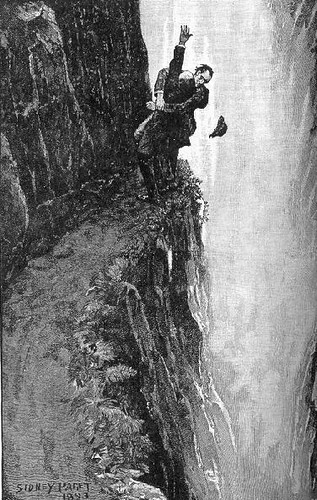
In the short story The Final Problem, Doyle killed off his hero; in The Empty House, he resurrected him. Longtime readers of superhero comics will recognise a depressing tradition.

And, lastly, in The Final Problem Doyle introduces another superman, Holmes’ evil equal, the ‘Player on the Other Side’: Professor Moriarty. Here is how Holmes describes him:

He is the Napoleon of crime, Watson. He is the organiser of half that is evil and of nearly all that is undetected in this great city. He is a genius, a philosopher, an abstract thinker. He has a brain of the first order. He sits motionless, like a spider in the centre of its web, but that web has a thousand radiations, and he knows well every quiver of each of them. He does little himself. He only plans. But his agents are numerous and splendidly organised. –from The Adventure of the Final Problem

(Note the invocation of Napoleon, whom we’ve pegged as the prototype of the modern superman in part 1 of this series of articles.)

Moriarty is the arch-enemy. Prior to this, there was room for only one superman per story; the adversaries of such as Monte CristoNemo or Roburwere rather blandly good or evil representatives of banal humanity. But here is the prototype for the superhero’s dedicated supervillain, as the Joker is to Batman or Lex Luthor to Superman or Dr Doom to the Fantastic Four.

Holmes and Moriarty! Pity they killed each other at the Reichenbach Falls, as illustrated below by Sydney Paget:

Crime fiction soon diversified into various sub-genres, often along class lines: the middle classes preferring “cosy” tales of detection, the working classes opting for increasingly sensationalist thrillers. It is from this second type that crime and superhero comics flowed; and the simplistic good guys vs bad guys set-up of the superhero comic also derives from this model.

The century wasn’t all given over to science and reason. Spiritualism spread far and wide, with mediums supposedly communicating with the dead or other preternatural spirits. The Society for Psychical Research was founded in London in 1882, to “scientifically” investigate ESP, hauntings, and other paranormal phenomena.

In fiction, this gave birth to the figure of the occult detective, investigator of the uncanny. The first is thought to be Sheridan Le Fanu‘s Dr. Martin Hesselius (1872), and the line has continued down to the present day via such classic characters as W.H.Hodgson‘s Carnacki the Ghost Finder, or Algernon Blackwood‘s John Silence. The occult detective is well represented among superheroes, by such as Dr Occult, the Phantom Stranger, John Constantine,HellboyDr Spectrum and Dr Strange.


One occult detective, Abraham Van Helsing, was the foe of the eponymous villain in Dracula, the classic 1897 horror novel by Bram Stoker (1847–1873). The title vampire has assumed the status of modern myth; a perverse and compelling version of the superman, he has a distant affiliation to such superheroes as Batman and the Spectre. (And, of course, Dracula is one of the great supervillain archetypes; indeed, he has himself fought Superman, Batman and Spider-Man.)
 

Der Uebermensch

“I teach you the superman. Man is something that shall be overcome. What have you done to overcome him? … All beings so far have created something beyond themselves; and do you want to be the ebb of this great flood, and even go back to the beasts rather than overcome man? What is ape to man? A laughing stock or painful embarrassment. And man shall be that to superman: a laughingstock or painful embarrassment. You have made your way from worm to man, and much in you is still worm. Once you were apes, and even now, too, man is more ape than any ape…. The superman is the meaning of the earth. Let your will say: the superman shall be the meaning of the earth…. Man is a rope, tied between beast and superman—a rope over an abyss … what is great in man is that he is a bridge and not an end.”

Thus spake the philosopher Friedrich Nietzsche (1844–1900) in Thus Spake Zarathustra. The concept of the superman was finally articulated, and promptly misinterpreted. It is not our concern to present the superman as Nietzche intended; rather, we note that history has sadly recorded how a twisted reading of Nietzsche, coupled with equally wrongheaded interpretations of Darwin’s theory of evolution, has led to such horrors as eugenics and Naziism.

This rather disquietingly chimes with the superman incarnations we’ve examined so far– fantasies of power answerable only to itself.

It seems odd that there be a direct link between Nietzche’s superman and the comic-book Superman, but such was the case, as we’ll see in a subsequent chapter.

Beyond the superman

>

A Martian tripod, from The War of the Worlds

 
We leave Europe with a look at one of the founding masters of science fiction.

Herbert George Wells (1866–1946) was one of the most influential thinkers and writers of the 20th century; a socialist, futurist, reformer, historian and social novelist. He is chiefly remembered today for his scientific romances, novels written over an astonishing ten-year burst of creativity: The Time Machine (1895), The Island of Doctor Moreau (1896), The Invisible Man (1897),The War of the Worlds (1897), When the Sleeper Wakes (1896), The First Men on the Moon (1901), The Food of the Gods (1904).

from the Classics Illustrated adaptation of ‘The Time Machine’; art by Lou Cameron

 
Wells’ tales contributed important themes and tropes to the bric-a-brac of science fiction and superhero comics: time travel (The Time Machine), invisibility (The Invisible Man), the superhumanly strong visitor from another world (The First Men on the Moon), lab-born mutant monsters (The Island of Doctor Moreau), extraterrestrial invasion (The War of the Worlds), and the all-too-prophetic atom bomb (The World Set Free).

Yet the early Wells is no apologist for the superhuman. Far from it! He was, to the contrary, a strong debunker of supermen.

Consider Griffin, The Invisible Man. A psychopathic genius with an astounding power– yet he is unable to prevail against ordinary shop-clerks and innkeepers, and ends up killed by ditchdiggers. Or Dr Moreau, a monster of cold scientific cruelty, who forces adoration of him as a god upon his beast-man creations, yet is killed by them.
^nbsp;

Art by Jim Steranko

 
The invading Martians in The War of the Worlds are as effortlessly superior to humans as we are to ants:

Yet across the gulf of space, minds that are to our minds as ours are to those of the beasts that perish, intellects vast and cool and unsympathetic, regarded this earth with envious eyes, and slowly and surely drew their plans against us. And early in the twentieth century came the great disillusionment.

These tentacled, abhuman monsters are the ultimate product of ‘progressive’ evolution– the true destiny of the superman. They are only halted by natural exposure to Earth germs.

And the Time Traveller finds no ‘men like gods’ (to use a titular Wellsian expression) in the distant future, but rather a human race devolved into the effete and brainless Eloi and the cannibalistic, nocturnal Morlocks:

I grieved to think how brief the dream of the human intellect had been. It had committed suicide. It had set itself steadfastly towards comfort and ease, a balanced society with security and permanency as its watchword, it had attained its hopes—to come to this at last.

The War in the Air (1908) finds the unstoppable German conquest by Zeppelin of America almost accidentally halted in its tracks by a silly fool of a Cockney bicycle repairman, who copied some secret plans of an airplane out of sheer boredom.

In his postwar utopias, Wells would abandon this tone of disillusionment for ponderous exaltation of technocratic futures; but these early scientific romances effectively deflate the very idea of the superman. Then why do I bring him up in this study of superhero prehistory?

Scholars of science fiction are given to dividing SF writers into gosh-wow, technophilic ‘Vernians’ and more thoughtful ‘Wellsians’. If we follow this dichotomy, the 20th century superhero definitely derives from Vernian fiction.

But I believe Wells’ skepticism indicates an important reason superheroes never really caught on in European popular culture, except as imports from the States, burlesques, or parodies, like the French Superdupont:
 

Superdupont meets Supe…ah, Zipperman; script by Jacques Lob, art by Neal Adams


…or the British Bananaman:

>

Art by Terry Anderson

 
…or the Italian Super West:
 

art by Mattioli


Europeans are skeptical about extraordinary individuals — the ‘tall poppy syndrome’– and supermen certainly fit the description. A superman is most likely to be a villain, like France’s arch-criminal Fantomas, created in 1911 by Pierre Souvestre and Marcel Allain.


And when Europeans did take the superman idea seriously — as did the Nazis — the results were hideous.

No, the modern superhero could only be born in that most modern of nations — a land where the individual could ambition to reach the very heavens , cheered on by his compatriots: the United States of America.

Next: Go West, Young Man


Isaac Butler on Perceiving Race

Isaac Butler from a recent comments thread drops some science on perceptions of race:

Basically, our brains have evolved to do an enormous amount of automatic processing of and reacting to simuli and life experience. They do this through a few different processes, but they mainly involve creating cateogories, associations between these categories and what get are called “schema,” which are essentially stories our brain tells itself without our conscious knowledge.

The associations and stories we have often involve categories of people, which we call stereotyping (it doesn’t have a negative connotation in psych circles). A lot of stereotyping is harmless. How do you know without having to think about it that a large, bald, fat human that’s crying probably doesn’t need a diaper change but a tiny, bald, fat human does? How do you know that a black rectangle that rings is a phone and not a wallet? it’s all these kinds of processes.

Anyway, not all of our associations are harmless or value neutral, often they involve preferences (when they’re positive) or biases (when they’re negative) about people in certain groups. Simply put, we have a story about them in our heads that we do not realize we have.

This whole phenomenon, one where our decision making and POV is affected by prejudices ovcuring at the unconscious level, is called Implicit BIas. It’s not limited to race and it’s not limited to the United States. It is, in fact, part of the human condition. It also isn’t a moral failing. The majority of white people in this country consciously hold egalitarian values. This is why explicit measures of bias and prejudice basically have no predicative value as to what people will actually do.

Implicit measures, on the other hand, do tend to predict behavior in experimental settings. The most famous of these is the IAT, which you can actually take yourself at projectimplicit.net. The IAT tests categorical associations through reaction times.

Anyway, this is long-winded, but there’s decades now of scientific evidence as to the validity of implicit bias, its predicative power, etc. and so forth. There is also considerable evidence that believing oneself to be objective actually causes people to act with more rather than less bias. There is some evidence that being aware of implicit bias, coupled with context-specific interventions, can help safeguard our decision making processes from implicit bias’s effects.

This is why color-blindness is such a pernitious idea. It’s actually the opposite of what we need. It’s the delusion that we’re objective. And what the Right does is talk about color-blindness through one side of its mouth while stoking White racial anxiety with the other. So they take race off the table as a valid topic for discussion (“playing the race card”) while also talking about it in ways guaranteed to panic Whites. For an example of this, look at Fox’s coverage of the Zimmerman verdict.


George Zimmerman

Utilitarian Review 9/14/13

gallhammer--large-msg-120068025406

Gallhammer

 
On HU

Featured Archive Post: Jones, One of the Jones Boys on visual aliens; characters drawn in a different style than everything around them.

Jack B. on Johnny Ryan and the appeal of bullying.

We’re going to have an indie comics vs. context death match roundtable.

RM Rhodes says stop complaining about Marvel and DC and vote with your feet.

Kailyn Kent on how the romance narrative eats Lucy in A Room With a View.

Richard Cook and I live-blogged the Presidential address on Syria.

Richard Cook with ads of food from comic books.

Me on seeing and not seeing race in the Pixies, Danity Kane, Johnny Ryan and Bloom County.

Chris Gavaler on superhero anatomy then and now.
 
Utilitarians Everywhere

At the Atlantic I wish people would talk about poems rather than poetry.

Also at the Atlantic I talk about the uncomfortable racist roots of anti-interventionism.

At the Chicago Reader I’ve got some previews of upcoming pomo museum shows.

At Splice I explain to the mainstream that black metal does not equal fascism necessarily (just genocide.)

I also argue that morally shaming people for not putting their kids in public school is not a good idea.
 
Other Links

An excerpt about being an ally to trans women from Julia Serano’s wonderful book Excluded.

Jeet Heer interviewed about his new book about Francoise Mouly.

Interesting piece at Slate refuting the case for charter schools and vouchers.

And Richard Dawkins once again brings shame to atheists everywhere. Thanks, Richard.

Quidditch By Dummies

This first appeared on Splice Today.
_______

I was supposed to go see the last Harry Potter movie with my utterly obsessed seven-year-old son. We got into the car to drive to the theater with our son gibbering on about Quidditch and Hogwarts and Voldemart, and then I pressed the power button on the Prius… and pfft. Nothing. The battery was dead.

Which is fairly typical of my entire experience with the Harry Potter franchise. Lots and lots of build-up followed by a big fat zilch. I don’t hate the Harry Potter books. I read the first four of them, and watched the first movie. My son’s obsession with them has moved rapidly from amusing to annoying to thoroughly oppressive, but still, it’s better than Thomas the Tank Engine or superheroes. The Potter books are at least marginally readable… especially since my son has learned to read himself and is going through them on his own.

Nevertheless, what bugs me about the series is that it should be better than just tolerable, and not just because the whole world is apeshit over it. The first book opens with a horrid family right out of Roald Dahl, and I quite like that lovely scene with the owls dropping drifts of letters addressed to our hero. The idea of a wizarding school seems pretty solid. And there are lots of excellent British children’s books series. If the How To Train Your Dragon books can be consistently top-notch, why not Harry Potter?

And the answer is: Quidditch. The notion of wizard-soccer on broomsticks is pretty clever, and I can certainly see the appeal for kids—who doesn’t want to fly? But the actual game is incredibly stupid. Most of Quidditch is devoted to goal scoring, but a huge bushel of points are awarded not for scoring goals, but for catching a special ball called the Snitch. Whoever catches the Snitch also ends the game—all of which means that, for most intents and purposes, the vast majority of the action taking place on (or above) the Quidditch field is pointless.

You can see why J.K. Rowling designed Quidditch as she did; the rules make the Seeker, who goes after the Snitch, by far the most important player on the field. Since Harry turns out to be a supremely gifted Seeker, all the matches end up being about Harry’s wonderfulness. This, observation of my son has informed me, has a huge appeal to the core under-nine audience. But for anyone else, Quidditch as repetitive occasion for transparent hagiography gets very old very quickly.

This is nit-picking to some extent. But it’s also emblematic. There are a lot of things like Quidditch in Harry Potter; places where Rowling failed to fit the pieces together right and the result is the irritating sound of audible grinding. A friend of mine pointed out that the thing that gets him is that Harry, when we first meet him, should be a volatile, unstable wreck. He was systematically emotionally abused by his foster parents, the Dursleys, throughout his childhood, and while nurture isn’t everything, it’s something. Kids treated that way have real problems; they don’t just shake it off in a few pages and become do-gooding everyboys with loads of inner resources.

The problem isn’t the scenario per se. As mentioned above, if the same story was told by Roald Dahl, you wouldn’t think about it for a second, any more than you ask questions about the actual logistics of building Mr. Wonka’s chocolate emporium. Instead, the difficulty is Rowling’s tonal control—or the lack thereof. Harry Potter comes out of the Lewis Carroll/E. Nesbit/Dahlian tradition of British nonsense, with its fantastical illogical goofiness. But Rowling also wants to create an epic battle between good and evil indebted to Lord of the Rings.

The result is a lurching hodgepodge; a magical world that isn’t internally or externally consistent, but is too concerned with it’s own inner-workings to ever really take flight into whimsy. The first book gets at some of the rush of wonder in classic fantasy… but as the kids learn more, magic is rapidly domesticated, turned into a series of recipes. You’re left with endless piles of prose explicating labyrinthine rules, most of which don’t even have the geeky satisfaction of making sense.

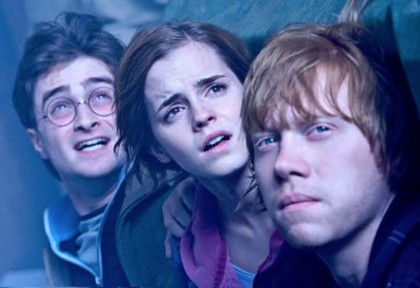
I know lots of folks say that the last movie is pretty good, and that the series in general becomes darker and more effective as it goes on. Maybe so, and maybe my car will work well enough to go see it. I’ve had enough exposure to the series, though, to feel fairly confident that wherever Harry Potter goes, he will go there with a pfft.
 

large_Final-Harry-Potter-Film-500x343

Superhero Anatomy

Mystique statue

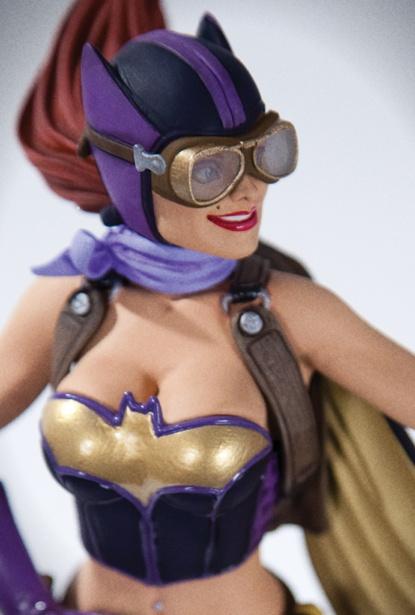
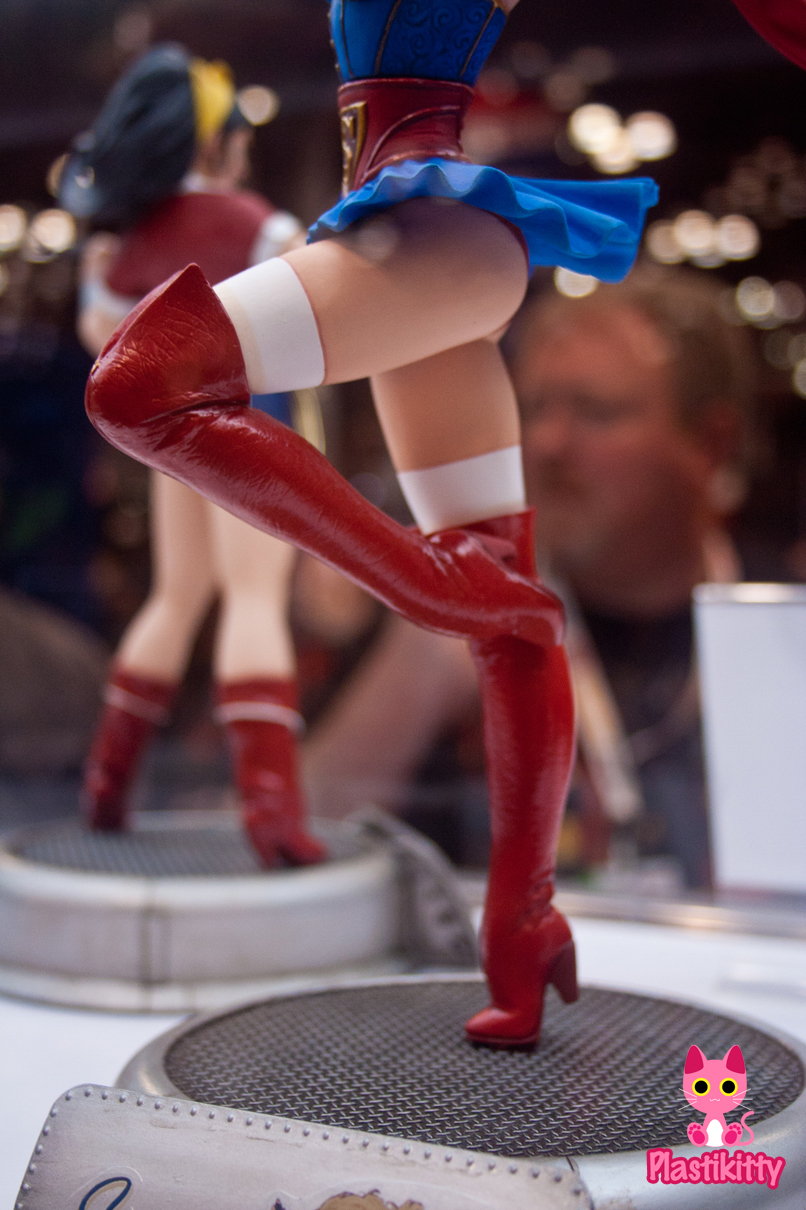
They don’t make superhero figures like they used to. I’m looking at Marvel’s latest Mystique statuette. Only a mutant could maintain proportions so inhuman. The shapeshifting supervillain has taken the form of a softporn supermodel, Marvel’s answer to DC’s so-called “Bombshell” series. Artist Ant Lucia says he took his inspiration from vintage pin-up illustrations. That explains why Batgirl’s breasts bulge from her barely trussed batbra. Supergirl isn’t bashful about her gravity-defying miniskirt either.

Batgirl bombshell statueSupergirl statue

These are definitely not the action figures of my youth. I stopped playing with those in 6th grade, when they became a major social liability. One of my much more popular classmates stared at me with pity when I mentioned reading a comic book. I imagined his expression if I’d admitted that superhero dolls were posed on my bedroom bookshelves at that very moment. We were supposed to be talking about girls.

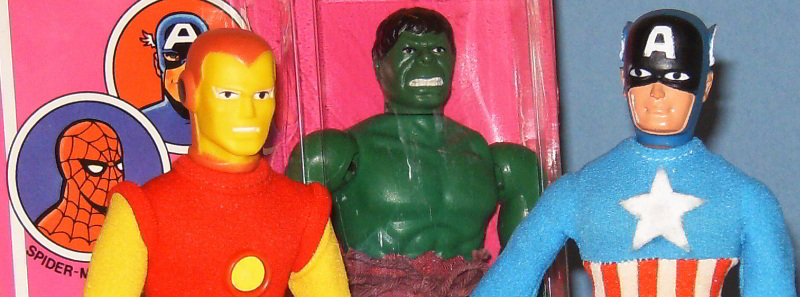
If I’ve done the math right, this is 1978. I’m twelve. On the cusp of puberty. Mego, which literally owned the superhero doll market through the 1970s, was struggling after blowing its chance to produce the Star Wars line. The company would be bankrupt by 1983, my senior year of high school. But in 1978, I was still a Mego boy.
 

Mego action figures

 
I apparently liked the color green: Hulk, Green Goblin, Lizard, Green Arrow. The orange-skinned Thing was in the mix too, but not much in the way of human flesh tones. DC Bombshells stand eleven inches high, so they would have dwarfed my little eight-inchers. My guys had interchangeable heads too. The bodies were identical. A single elastic band held limbs inside shoulder and hip joints. If a leg or arm broke off, the others did too. If the chest cracked, the elastic imploded the limbs into a center knot impossible for my preadolescent fingers to pry apart.

I liked their clothes the most. Cloth unitards with metal snaps up the back and removable plastic boots. I would undress them and recombine to invent new characters. Green Arrow in silver chainmail was “Invincible,” a sword-wielding superhero from some vaguely Medieval dimension. I didn’t play with girl clothes though. My doll collection included no female anatomy. Mego offered very few women, only Invisible Girl from the Marvel line-up (I considered myself too mature for DC). The males were sexless anyway. Not so much as a bulge or butt crack marring their identical plastic pelvises.

I also had to stop drawing superheroes, another former favorite childhood pastime. My understanding of anatomy had been questionable at best. My heroes (I only drew originals) defied da Vinci’s eight head height ratio. My imitation of Marvel footwear resulted in bulbous ankles and ballet-pointed toes. The pose was always the same: forward-facing, full-body portrait. Costumes changed but not my bodies.

My classmates preferred drawing female anatomy in the back of the science room. They argued vagina positioning, whether forward- or downward-facing. I did not offer an opinion. Someone performed shocked disgust when I was forced to admit to having never fondled a girl. My heroes had made only one investigative sortie into my older sister’s box of abandoned Barbies. They were nipple-less and closed-groined, and at just under a foot, too tall for my eight-inchers. The plastic bodies were ungiving anyway, and my interest only mild.

My daughter’s abandoned Spider-Man brags over a dozen points of articulation, including fingers, toes and torso. Like my Mego gang, her Barbie Batgirl has real clothes, but the others wear their costumes like skin. Her Mystique was naked but for her genitalia-disguising plastic fur, but there was no disguising those generous hips. She told me years later how much the doll disturbed her. Both her collection and the remains of mine migrated into a plastic bin that lived in my son’s closet for a few years and now in our attic. He hasn’t opened it in years. He’s in seventh grade now and would rather play Wii or read a book, a real book, not a comic book.

Little Billy Baston was eleven when he gained the powers of Shazam and turned into Captain Marvel. Mego made that doll too, but I didn’t care about DC characters. You couldn’t just say a magic word and be grown-up. It was a process, a series of choices and mishaps. The Thing got stuck with a new body, but he wasn’t happy about it. The Hulk didn’t ask to change either. The Lizard just wanted a new arm. Change happens whether you like it or not.

When my dad saw me boxing up my superheroes, he asked me why I’d suddenly declared myself too old for dolls. He’d seen me playing with them just a week before. When I told him, he nodded glumly. He looked disappointed, not in me but in the world.

I liked flying them around my bedroom, crashing them across the landscape of my bedspread. They were hard to pose, but if you were careful, if you balanced them just right, they could stand at the edge of a table or a corner of a bookshelf. Just stand there. Frozen. That tiny elastic cord pulling inside their chest. Always on the verge of imploding.
 

Hulk action figure

The End of Race

If you talk about white people, you’re not talking about race. If you talk about black people, you are. This is arguably the essence of racism; black people are an aberration or a disturbance; white people are natural. Therefore, to end racism, artists should treat black and white individuals exactly the same. If art doesn’t see color, then the art isn’t racist. QED.

This is the logic that Lamar one of the co-creators of the Pixies’ video “Bagboy,” used when he defended his decision to present a narrative in which a white kid gleefully and giddily trashes a house which, at the video’s conclusion, turns out to belong to a black woman who he has trussed up in her own bedroom.

We knew we were taking some risks when we made the video. When most people see a white kid (Nik’s little brother) and a black woman (my older sister) they can’t help but think “racist” and “misogynist”. This is pretty sad.

From the beginning, when we originally thought of the concept, it was never our intention to make it about a white kid terrorizing a helpless black family. I, myself, being black have gotten to the point where I don’t automatically see color in people. It’s the same for Nik. If the character’s races were switched you’d probably have the same amount of stuff to say about the video.

It’s 2013, at what point do we stop seeing everything as racist. At what point do we stop making things a bigger deal than they are.

The problem here, as Bert Stabler points out, is that claiming color-blindness doesn’t make the rest of the world color-blind. Declaring racism over doesn’t make it so, and there isn’t really any way to show a white kid terrorizing a back woman’s home without referencing the way that white people really have, in the recent past, conducted vicious campaigns of terror against black people for daring to move into middle class homes. The video doesn’t come off as color-blind; it comes off as thoughtless, or (as Bert suggests) as cynically courting controversy. Not seeing race now can’t erase a history of racism, especially when not seeing race seems to just result in you unthinkingly mimicking that history.

Danity Kane’s Ride For You does a much better job of suggesting that race doesn’t matter, though not exactly by ignoring race.

Towards the end of the video, the five female members of the interracial group pair up with various hot guys. Those pairings are integrated; there’s a black guy/white girl couple; a white guy/black girl couple, a back guy/black girl couple, and two white guy/white girl couples. This almost surely has to be a deliberate choice; Danity Kane is not a spontaneous punk rock kind of group,and everything else on the shoot, from the multiple costume changes to the round robin vocals, certainly seems focus-grouped within an inch of its life. Someone during the making of that video decided that they wanted to present a color blind world. But to do that, they had to admit (to themselves, and I think to the audience as well) that they could tell which of their singers (and which portion of their studly male window-dressing) were black, and which were white.

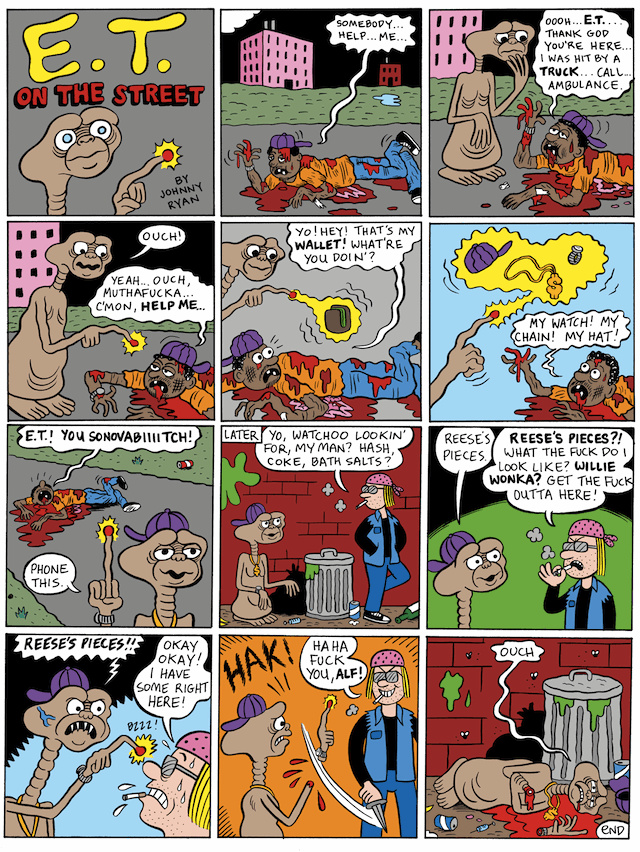
Johnny Ryan’s “E.T. on the Street” also is also quietly but deliberately conscious of race in the interest of avoiding stereotypes, though the success is more mixed.
 

a3173b135ccded00b232dd1fcfccdbaa

 
Laurel Lynn Leake dismisses this, arguing “That whole ET comic is just “what if ET was a bl- I mean, urban man! He would be a total greedy sociopathic asshole, amirite?!” And there’s certainly something to that argument. At the same time, though, you can see Ryan (usually thought of as eager to offend everyone) trying quite consciously to avoid offense. The black guy at the beginning of the comic isn’t a gangsta, and he hasn’t been shot — he’s been hit by a car, and E.T. robs him, not the other way around. Along the same lines, the violent thug at the end is white, not black. And, for that matter, E.T.’s race is unclear. Is he supposed to be black? Or is he supposed to be a tourist in a black neighborhood — ignoring the misery there, and then pretending (with that backwards baseball cap) to be one of the folks he’s just callously robbed? Is the joke that E.T. is a black man and is therefore an asshole? Or is the joke that he’s a white guy pretending to be black, and is therefore an asshole?

The strip is conscious enough of race to make that reading plausible, and, I think, even probable. But it’s not conscious enough to exactly make that reading the point, nor to do anything with it. The end could perhaps suggest something like Crane’s suggestion in the Blue Hotel that believing in stereotypical narratives can make those narratives close around you and destroy you. But E.T.’s motivations are too much of a cipher, and his fate too random, to really sustain that. If the first part of the strip seems to be willing to think about and talk about race, the second just shrugs, abandoning the theme of racial tourism for standard-issue tropes of ghetto violence, sanitized by making the perpetrator a white guy. It’s significantly more careful about racial issues than that Bagboy video. But since it doesn’t seem to want to follow through on them, you do end up feeling, as with the Lamar and Nik effort, that race is here evoked mostly for the sake of controversy.

And then there’s this. (Apologies for the crappy scan.)

bloom county021

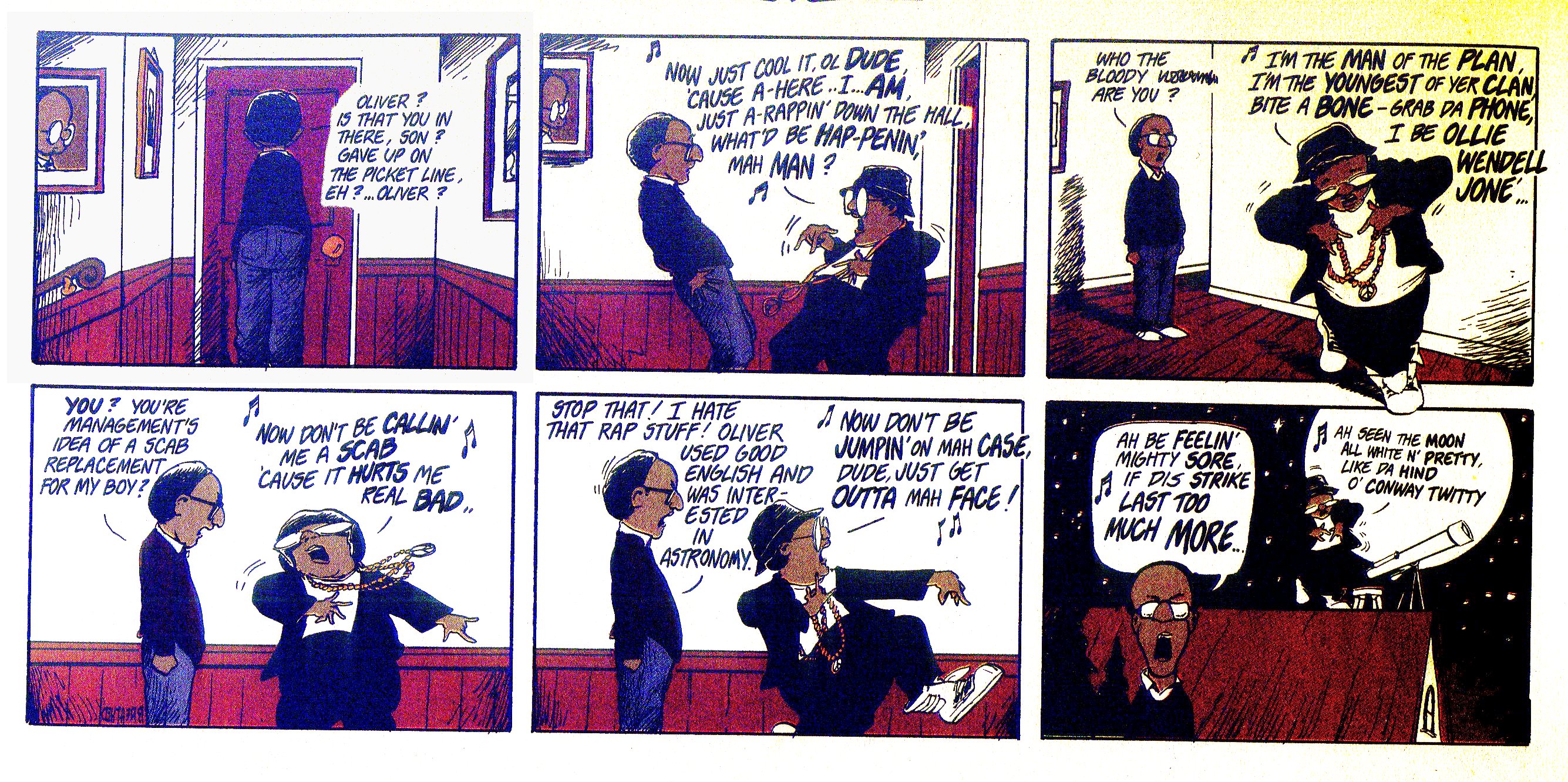
As with most of Berke Breathed’s Bloom County strips, this one is embedded in a lengthy and preposterous narrative. In this case, the Bloom County characters have all gone on strike to protest the shrinking space available for comics; management has hired scab replacements. Oliver Wendell Jones, the strip’s resident child-genius who also happens to be black (and whose picture you can see off to the side in the first panel), has been replaced by a ludicrous rap stereotype.

Part of the reason this strip works better than the other examples here is a function of time. Breathed isn’t working with a 3 minute video or with an isolated gag strip. Bloom County is a daily, and we know Oliver Wendell Jones like a friend. We know him so well, in fact, that he isn’t just a racial marker, as black people too often are in pop culture. Rather, Oliver is a particular person, who, like his dad says, speaks good English and loves astronomy and occasionally crashes the world’s computer networks. Breathed has put in the time to ensure that Jones is not a caricature, and as a result the reader can fully appreciate the travesty of having him replaced by one.

So in part the strip deals effectively with race because it worked to erase race. But that work, obviously, involved seeing race in the first place; making your black character a computer genius is a decision that has meaning. And the joke in this strip, too, requires seeing race, and acknowledging the way it turns individuals into the tropes we expect to see. Even Oliver’s dad, at the en, succumbs, and breaks out into rap, complete with bad grammar. In the meantime, his “son” is up on the roof, looking at the stars, and declaring

Ah seen the moon
All white n’ pretty
Like da hind
O’ Conway Twitty.

I don’t think it’s an accident that a strip about ridiculous totemic blackness ends with a ridiculous invocation of totemic whiteness. The round fat moon hoves into the panel, made visible by both telescope and verse, reminding us, perhaps, that if we must see blackness, the least we can do is remember to see whiteness as well.