The Comic Book Diet

wheatiesCereal
.

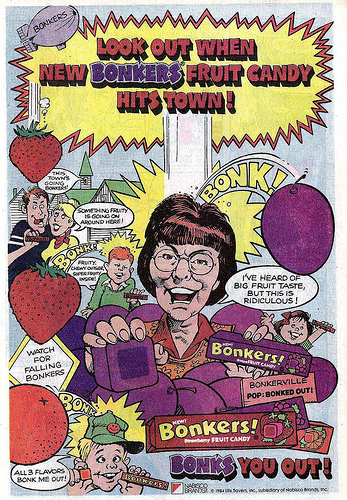
bonkers
Candy
.

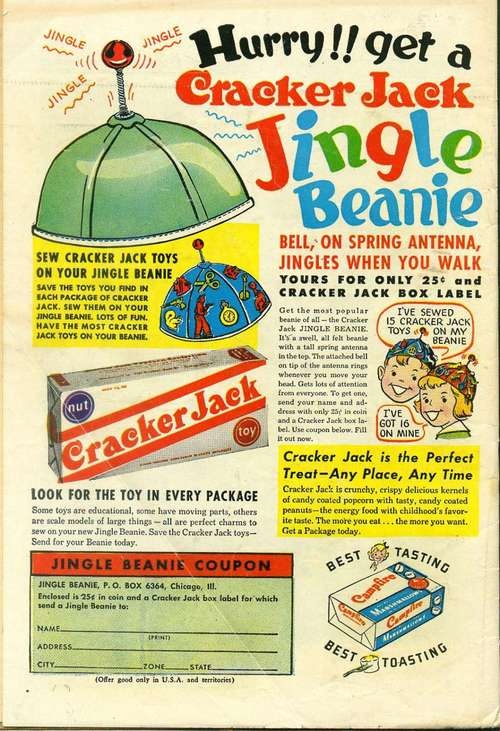
crackerjack
Cracker Jacks

.

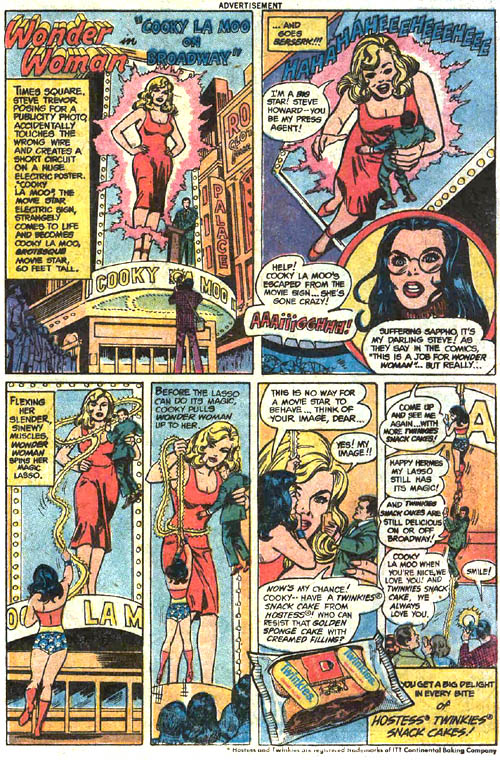
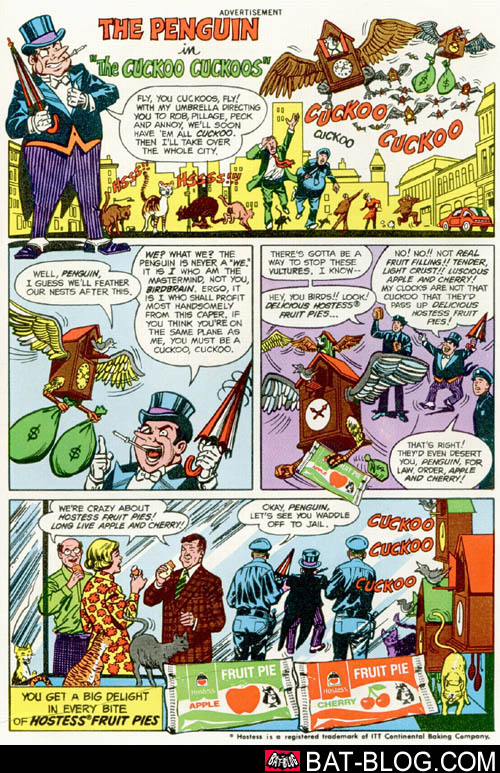
hostess

hostess2

Hostess Snacks (there are tons of these comics)

.

kinkylolly
Ice Cream

.

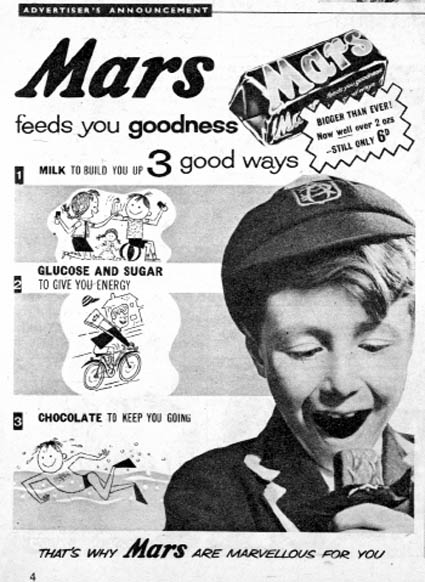
mars
Chocolate Bars

.

VLUU L100, M100  / Samsung L100, M100
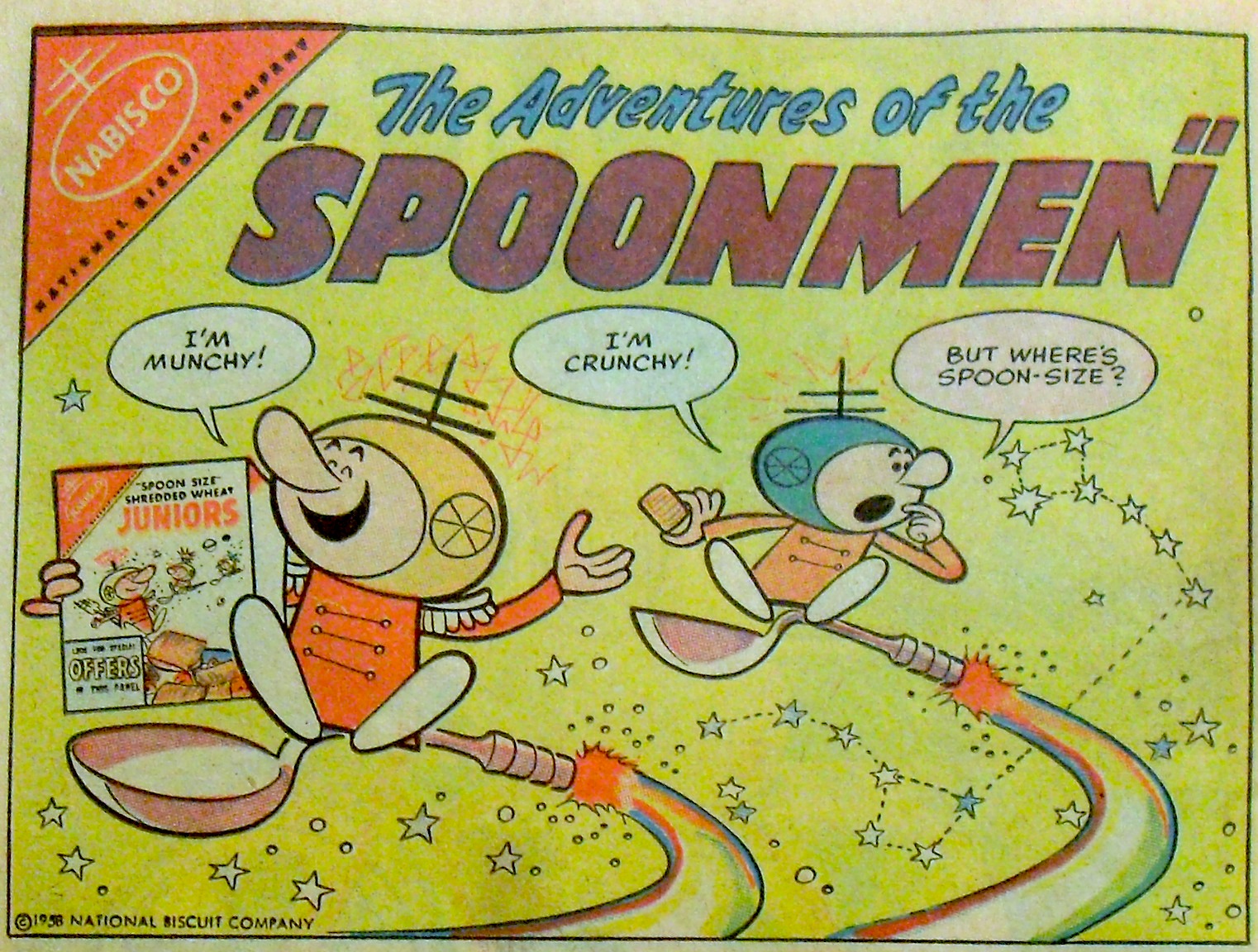
More Cereal

.

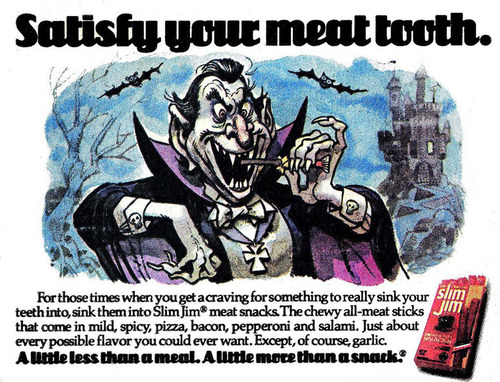
slimjim
Slim Jims (I hear they’re supposed to be good for you)

.

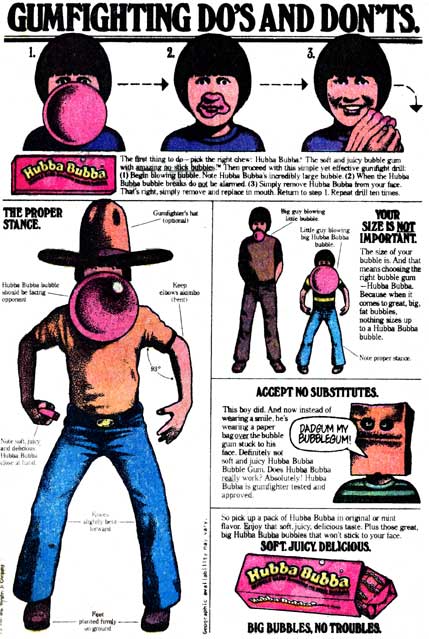
hubbabubba

Bubblegum

.

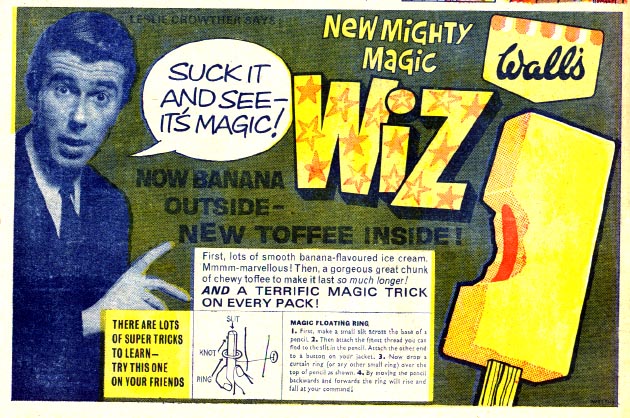
wiz
I’m not sure what this is, but it sounds disgusting…

.

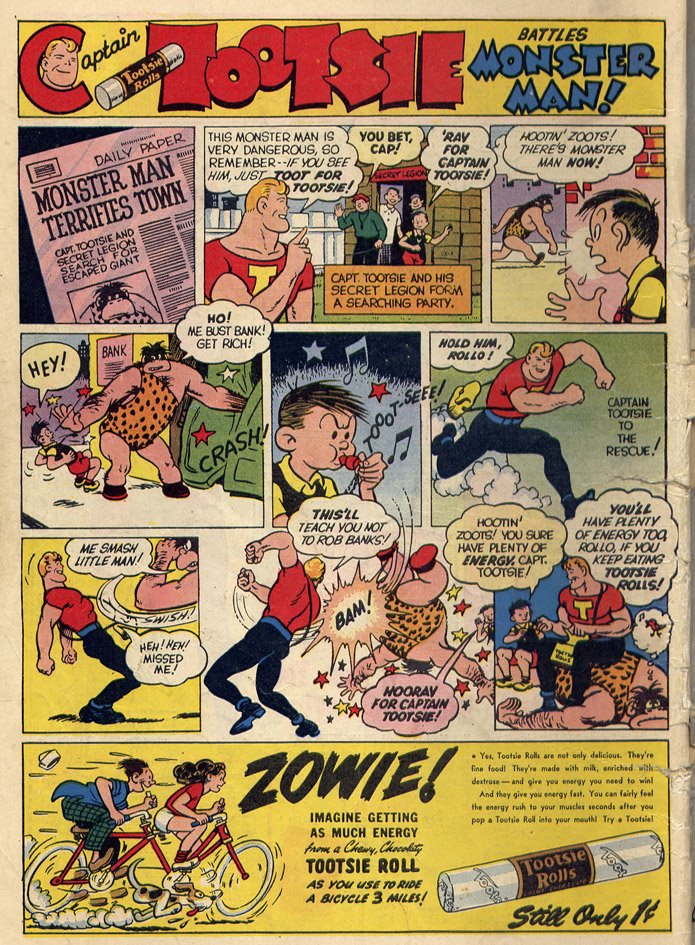
tootsie
Tootsie Rolls

.

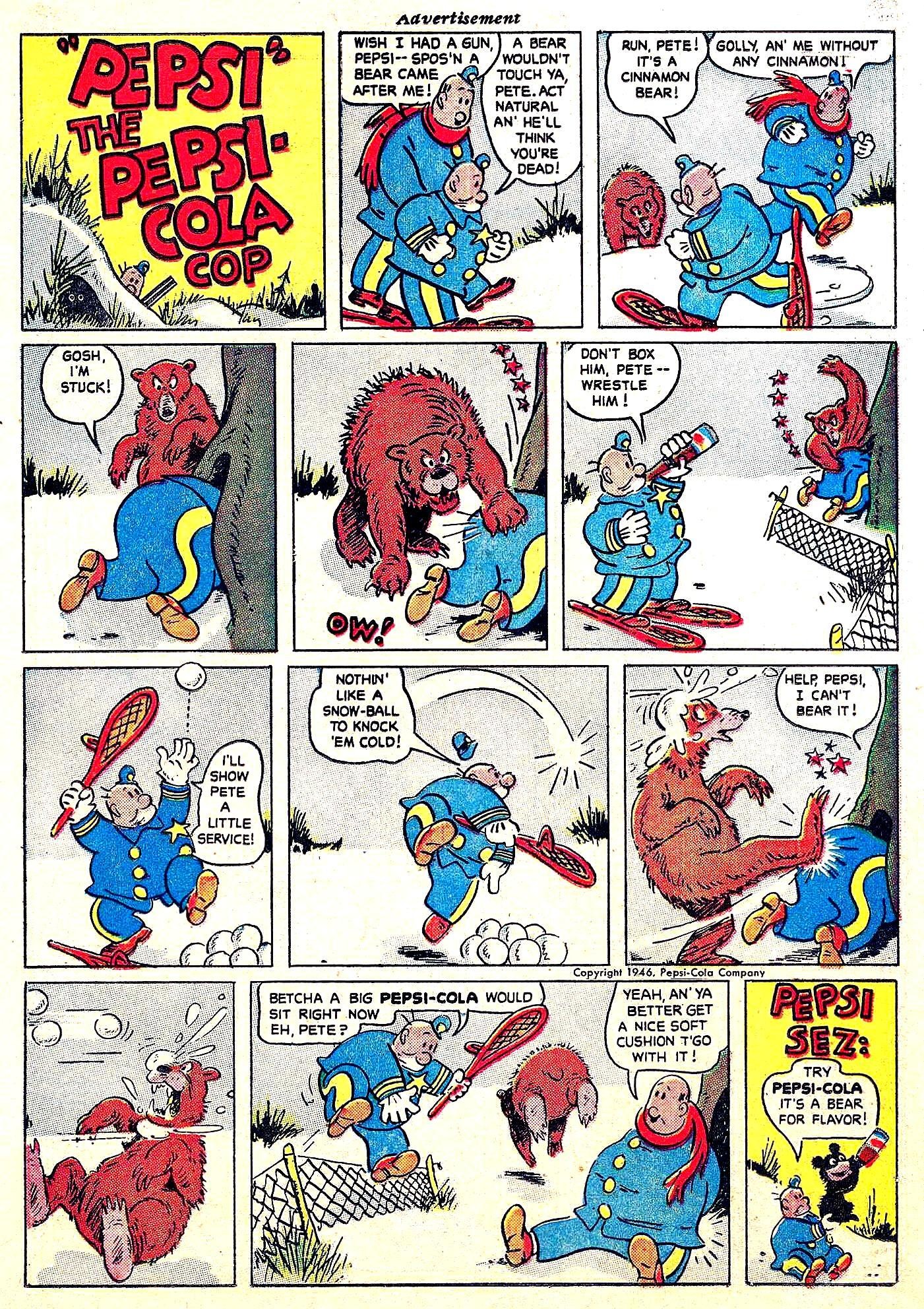
pepsi
And wash everything down with a cool, refreshing Pepsi

__________________________

Several of these were pulled from this blog, where there are a few more ads.
And Cracked.com writer Seanbaby has a website devoted to Hostess comics.

Can Comics Critics Be As Vapidly Ignorant as Political Pundits?: Live-Blogging the Presidential Address on Syria

syria292way_custom-ade1b7712443d957fcdace3a8bc4e16e97b493fe-s6-c30

The live blogging is below in comments (scroll down!)

Below is my concluding response to the speech:

All right. Well, as I said, that was a naueseating and unbelievably disingenuous performance. I guess it’s foolish to think that a President planning the incredibly serious step of dropping bombs on a foreign nation would try to lay out all the facts rather than doing some television courtroom bullshit complete with pictures of dead children and lowered, whispery, “I am sincere” voice.

At a minimum, any serious speech should have acknowledged that we don’t know for sure that Assad used the chemical weapons, and pointed out specifically that there’s a ton of evidence that the rebels did in fact use such weapons a few months back. It would also acknowledge that the “moderate” resistance barely exists, and that al Qaeda and other radical groups have a really good chance of taking over if Assad falls. And it wouldn’t pretend that somehow Assad using chemical weapons means that Iran is going to make a nuclear bomb and kill us all.

Of course, without all of that, there’s basically nothing left. Which to me means we shouldn’t be dropping bombs on Syria. But obviously, the President thinks we should. Why? I still don’t know. He can’t possibly believe the nonsense he was peddling, can he? He can’t be that much of a fool. I know it’s supposed to be all about Israel, but I don’t see what Israel gains by dropping bombs on Assad for maybe using chemical weapons in the interest of maybe slightly helping al-Qaeda take over in Syria.

Maybe someone else can figure it out. I’m just baffled and depressed.

And here’s Richard Cook’s response:

In the spirit of a 15 minute speech, I’ll lay out my opposition to the war as briefly as possible.

Attacking Syria would not be legal, not even if Congress gave him authorization. As I mentioned above, international treaties regarding the use of chemical weapons do not empower any nation to unilaterally enforce them. The use of force – outside of defense – is ultimately governed by the Security Council. Of course, China and Russia would never allow the president to wage a war of choice on Syria, which is why he’s prepared to violate international law (again).

Attacking Syria would not be prudent. There is no guarantee that we would successfully destroy all of Assad’s chemical weapons. We would invite retaliation by Syria or Hezbollah. If the bombing topples the Syrian government, we have no guarantee that the so-called moderate rebels will be able to govern the country. We may very well be helping extremist groups allied with al-Qaeda.

It would not be moral to bomb Syria, especially for the reasons that the president gives. We are allegedly punishing Syria for using chemical weapons, but who are we punishing? Top regime leaders? Military leaders? Their wives and kids and anyone else who happens to be in the room when the bombs hit? What if Assad decides to continue using chemical weapons? Or, more likely what if he just goes back to killing kids with bullets and bombs? What have we accomplished, other than making ourselves feel righteous?

Thanks everyone for reading, and especially Richard for live-blogging with us here. Feel free to leave any thoughts in comments.

A Secret Room With A View

lucy_honeychurch


In his essay “Secrets and Narrative Sequence,” Frank Kermode relates how a critic accused Joseph Conrad of writing Chance twice as long as it needed to be.  “Conrad replied sarcastically that yes, given a certain method, it ‘might have been written out on a cigarette paper.’”

Books naturally contain more writing than the plot requires. Kermode expands:

“even in a detective story, which has the maximum degree of specialized “hermeneutic” organisation, one can always find significant concentrations of interpretable material that has nothing to do with clues and solutions and that can, if we choose, be read farther than simply discarded, though propriety recommends the latter course.”

Also,

“Good readers may conspire to ignore these properties, but they are relevant to my main theme, which is the conflict between narrative sequence (or whatever it is that creates the ‘illusion of narrative sequence’) and what I shall loosely, but with pregnant intention, call ‘secrets.’”

Kermode’s essay primarily concerns itself with Conrad’s Under Western Eyes, and “the kinds of narrative upon which we conventionally place a higher value… [where] there is much more material that is less manifestly under the control of authority, less easily subordinated to ‘clearness and effect’ more palpably the enemy of order, of interpretative consensus, of message.” A.K.A., more secrets. In this light, ‘high’ literature is less a category than a tendency to problematize, interrupt or discard genre conventions which neatly guide the narrative from trope to trope, and finally to the corresponding take-away (love triumphs over all, crime doesn’t pay, ride off into the sunset, never trust a woman, etc.) Some authors, like James Joyce in Ulysses, conscientiously use secrets to write “a book to keep the professors busy.” Other, more dedicatedly popular writers, (Kermode especially cites Conrad, James Joyce, and E.M. Forster,) are “keenly aware of other possibilities, are often anxious to help readers behave as they wish to; they ‘foreground’ sequence and message. This cannot be done without backgrounding something, and indeed it is not uncommon for large parts of a novel to go virtually unread…”

Like a detective story, or a thriller, love stories demand certain ‘backgrounding’ of insignificant and ‘foregrounding’ of significant material, but by slightly different rules. Engaged readers sift through romance novels for evidence: providential signs, compatibility, the gauge of true happiness. This evidence is all that prevents readers from going insane over misunderstanding upon misunderstanding, obstacle upon obstacle. In mystery novels, there is a pleasure in the ambiguity, and an expectation of a surprise ending. Not so with a romance novel, where readers are encouraged to stake out their preferred ending from the get-go. Every twist is chained to an anticipated conclusion. Failure to get the protagonists together is at best a tragedy, and at worst, an unsatisfactory failure on the part of the author, who could not figure out the ‘true ending’ the characters deserve.  (Endings rife with life-affirming melancholy sit somewhere in the middle, and I suppose have fewer fans, and are remembered less well.)

This makes for a stressful, if rewarding reading experience. When the ending is truly in question, all ‘secrets’ which contradict the lovers’ eventual union must be ignored or under-read—otherwise they are distressing. These secrets are not the villainies of the plot, (a sympathetic third leg to the love-triangle, well-meaning family intervention, yet another innocent misunderstanding,) as these elements promote sequence rather than distract from it. Secrets interrupt and cancel the flow toward eventual togetherness, and cast doubt on its necessity.  E.M. Forster’s A Room With A View is rife with them.

A Room With A View unambiguously champions the union of Lucy and George, two young people who meet as tourists in Florence and are troubled by the repressive strictures of Edwardian society.  The book triumphs in that their relationship is overtly odd, surprising yet recognizable, and quite beautiful; the ‘secrets’ of A Room With A View are not the most interesting part of the book, or what can be said about it. However, like thorns on a rose stem, its secrets cut into the romantic ending with suggestions of frustration, loss and violence. Even more intriguingly, when Forster returned to the characters in an ‘appendix’ epilogue he wrote fifty years later, he chiefly expands upon the existence of these darker elements.

Spoiler alert: this essay mostly concerns itself with the ending of a short and very wonderful book, which is worth reading. It is available all over Kindle and the internet for free, and in most used bookstores for about a dollar. If a book is still too much of a commitment, there is a fantastic and simple, (and again, short,) film adaptation by Merchant Ivory on NetFlix InstantWatch, even though it excises and alters the ‘secretive’ parts of the book, in accordance to what Forster ‘foregrounded.’ Knowing the ending doesn’t completely destroy the pleasure of reading the book. At the same time, I’m afraid that the following interpretation could spoil the goodness of the union of George and Lucy, something I desperately hoped for while reading A Room With A View, even though I had a good idea that it was going to happen anyhow.

A Room With A View is told from third person perspective, with limited access to the internal thoughts of the main characters.  Readers are privileged with the viewpoints of some characters more than others, most often seeing inside the head of Lucy Honeychurch, the conflicted female protagonist, and the Reverend Mr. Beebe. Beebe is Lucy’s local vicar, who she esteems greatly, and who observes Lucy’s ‘progress’ throughout the book. Lucy struggles between worlds—the world of propriety and English manners which she understands and values, and the world of raw feeling, passion and human generosity, which confounds and fascinates her.  She participates in the latter mutely, unconsciously, when she plays the piano. As Mr. Beebe famously observes, “”If Miss Honeychurch ever takes to live as she plays, it will be very exciting both for us and for her.” If Lucy is the site of the book’s conflict, and voices Forster’s own struggles, Mr. Beebe is well-meaning if sardonic witness, and Forster’s observation of his own self.  In Part Two, readers also get access into Cecil, Lucy’s fiancé, a dandyish dupe she eventually leaves. Readers barely glimpse into the workings of George, Lucy’s paramour, until the last few pages, or Charlotte, Lucy’s cousin, another central character.

Lucy creates most of the obstacles in getting together with George—she rationalizes, underplays and represses her feelings for him. A Room With A View is a strange love story where the heroine is not in touch with some great passion she finds impossible to resist—Lucy does a great job of resisting it, and making herself unhappy. Lucy is a brilliant portrait of a young woman caught in the crossfires of her responsibilities to herself and to others, and unsure of the motivations of her unconscious, an idea just formulated at the time of the book’s writing. When George’s father, Mr. Emerson, a philosophic middle class Englishman with poor manners and eccentric habits, declares to Lucy almost out of the blue,

“Now don’t be stupid over this. I don’t require you to fall in love with my boy, but I do think you might try and understand him. You are nearer his age, and if you let yourself go I am sure you are sensible. You might help me. He has known so few women, and you have the time… You are inclined to get muddled, if I may judge from last night. Let yourself go. Pull out from the depths those thoughts that you do not understand, and spread them out in the sunlight and know the meaning of them. By understanding George you may learn to understand yourself. It will be good for both of you.”

Of course there’s wisdom in Mr. Emerson’s observations, but his commentary is impertinent, and agressive even by today’s standards. “Don’t be stupid,” whether said gently or violently, is a rebuff, and Mr. Emerson is only responding to something he believes Lucy has started to say, when she hadn’t said anything at all. Mr. Emerson alludes to their interaction the previous night. If Lucy had been muddled the night before, she had also been observant and open-minded, quietly cheering on the well-meaning Emersons as they navigated a snafu with her cousin Charlotte, when they attempted to do an unasked favor. Mr. Emerson does not just ask for Lucy’s sympathy, which he has, or her understanding, which he solicits, but her allegiance.

A Room With A View is overtly a story about Lucy’s self-realization, dramatized through her admission of love for George.  Underneath this, A Room With A View is also a story about the conquest of a girl’s inner life. As set up by Mr. Beebe in the opening pages. “I differ from [Mr. Emerson] on almost every point of any importance, and so, I expect— I may say I hope— you will differ.” It is not as if one ‘father’ figure has monstrous views about Lucy’s future. Both claim to understand Lucy; both know her very little. Yet the reader accesses Mr. Beebe, the loser of the fight, and Cecil, who also loses Lucy, and Lucy—who arguably loses herself.

A Room With a View has a rather cryptic happy ending. Lucy never admits, “I love George” of her own accord. In the penultimate scene, she finally acquiesces to Mr. Emerson’s relentless insistence that she does, through anger and tears, and finally a humiliated but happy acceptance. Not only does Mr. Beebe witness and play an active role in this argument, he expresses his grief that Lucy will marry George, (as opposed to remaining unmarried forever, which was his expressed preference,) and then is described to have “walked out and left them.” Mr. Emerson then says mystically,

“Ah, dear, if I were George, and gave you one kiss, it would make you brave. You have to go cold into a battle that needs warmth, out into the muddle that you have made yourself; and your mother and all your friends will despise you, oh, my darling, and rightly, if it is ever right to despise. George still dark, all the tussle and the misery without a word from him. Am I justified?” Into his own eyes tears came. “Yes, for we fight for more than Love or Pleasure; there is Truth. Truth counts, Truth does count.”

Lucy replies, consenting, “You kiss me, you kiss me. I will try.” This section completes the strange permeability between George and his father, and the lack of distinction between the two. It is no small wonder that this scene was shortened, fragmented and censored in the film adaptation, to better express the victory of Eternal Love between two young people.

In the final chapter, George and Lucy elope and return to the Florentine pension where they met. The reader is not greeted with a passionate, an exhilarated, or an active Lucy, but a Lucy who is darning George’s sock. For the most part, the reader is locked out of her thoughts. George is repeatedly described as a child, or in danger of contracting rheumatism, like his aged father. Perhaps Mr. Emerson was not recruiting a love for the mother-less George, who knew so few women—perhaps he was recruiting a mother.

Nonetheless, the last chapter is a deeply felt end to a love story. They make each other happy, they kiss, they smile, and share a humble acceptance that they were brought together by powers other than their own. We get access to George’s mind for the first time, and he reflects “All the fighting that mattered had been done by others—by Italy, by his father, by his wife.” Forster is the first to admit that, “When it came to a point, it was she who remembered the past, she into whose soul the iron had entered…”

If the reader’s copy of A Room With A View is cruel enough to also contain the appendix, this idyll is followed by a curt and baffling epilogue, written by a wearied Forster fifty years later. In it we find that Lucy and George enjoy six years of great happiness, which is ruined by the first World War. Lucy never recovers her relationship with her family, damaged by her elopement with George, and then by George’s conscientious objection. Her brother, who the book describes with much sweetness, ends up selling the family home so lovingly documented in the first book. Freddy is characterized damningly as an “unsuccessful yet prolific doctor, [who] could do no other than sell.” The couple struggles, and WWII breaks out.

“George instantly enlisted. Being both intelligent and passionate, he could distinguish between a Germany that was not much worse than England and a Germany that was devilish. At the age of fifty he could recognize in Hitlerism an enemy of the heart as well as of the head and the arts. He discovered that he loved fighting and had been starved by its absence, and also discovered that away from his wife he did not remain chaste.”

Forster goes on—Lucy and George’s flat is bombed, Lucy is said to lose everything, her daughter’s house is bombed, George is injured but at least survives and makes corporal…they are homeless at the end of the war, and the author has no idea where they’ve been living for the last twelve or so years. All in all, one hell of an epilogue.

The fighting quote above is striking, as it resonates so well with the last chapter of the book. Lucy is described as a mother, a domestic, and at times a rebellious player of Beethoven. Beethoven was the thing that distinguished her at the beginning of the book, and according to Mr. Beebe, the only thing that foretold of something greater. Strangely, it is still the only thing that distinguishes her by the end.

Beethoven is echoed at the end of the appendix, in a surprisingly lengthy, tender description of Cecil, Lucy’s spurned fiancé. Forster writes, “Cecil Vyse must not be omitted from this prophetic retrospect. He moved out of the Emersons’ circle but was not altogether out of mine.” He finishes the appendix with an anecdote,

“A quiet little party was held on the outskirts of that city, and someone wanted a little Beethoven. The hostess demurred. Hun music might compromise us. But a young officer spoke up. ‘No, it’s all right,’ he said, ‘a chap who knows about those things from the inside told me Beethoven’s definitely Belgian.’

The chap in question must have been Cecil. The mixture of mischief and culture is unmistakable. Our hostess was reassured, the ban was lifted, and the Moonlight Sonata shimmered into the desert.”

It is the only piece of the appendix that resembles the tone of the book in its poetry and humor.

Cecil was never a real rival for Lucy’s affection. Their relationship is portrayed as nothing but a mistake from the start. Cecil’s unsuitability is most often illustrated through his derision of Lucy’s family and home, which are dear to her and lovingly described—yet she loses these irrevorcably by marrying George. Lucy reiterates George’s attack of Cecil’s character as her justification for ending the marriage—she describes him severely as “the sort who can’t know any one intimately.”

Cecil uncharacteristically receives Lucy’s criticisms with acceptance, kindness and grace. It mirrors a ‘truth’ Mr. Beebe believes of Cecil, but also a truth he believes of Lucy, and at points, a truth that Lucy believes of herself.

Forster’s triangle of intimacy with Mr. Beebe, Cecil and Lucy is doomed. Lucy merges with the Emersons. While Beebe’s aversion for marriage isn’t qualified, Forster betrays no conviction in Lucy’s realization within the marriage, and no vision for how Lucy can acceptance of love without exterior force.  Yet for Lucy to have chosen Beebe’s preference—to remain unmarried and travel abroad with two old spinsters, eventually to turn into her Jungian shadow of a cousin, Charlotte—seems far below her powers as well. (This essay’s negligence of the character of Charlotte is criminal. A great many of the book’s secrets lay in her.)  It’s as if Lucy is eaten alive by the romantic narrative, and Forster is caught between a lady and a tiger. He resists for awhile, but can’t write Lucy out of the dilemma, and so he abandons her. In Mr. Beebe’s words, “[George] is no longer interesting to me,” and Forster writes him in the epilogue as gifted, but selfish and without poetry. Characters only hold interest for Forster in their isolation—leaving, or being left.  Sometimes I wish for a  “Gone With the Wind” option, where Lucy is abandoned by George for her painful indecision, and in which, as a consequence, Lucy never stops being Lucy, muddle and all.

 

Can We Have a Different Conversation?

I really don’t understand why people keep trying to tell Marvel and DC how to do business. These are wholly owned subsidiaries of major multi-national entertainment conglomerates with a poor track record of rewarding the contributions of the individual.

Marvel is owned by Disney – a company that has set industry best practices for selling product to little girls. Does anyone honestly believe that if Disney wanted Marvel to sell more product to that demographic that they would be unable to do so? Or is it more likely that Marvel represents Disney’s inroad into a male demographic?

DC just went through a major branding exercise, which is usually an expensive, complex multi-year process. Is it remotely possible that demographic targeting, genre diversity and price point optimization were not considered during the planning stages? Or is it more likely that DC specifically targeted the demographics that it wanted to target?

Not all comic book companies can be all things to all people. And it is increasingly obvious that Marvel and DC do not want to be anything but superhero publishers selling superhero comics to superhero readers through the supply chain that they have spent two plus decades optimizing to do so. And yes, this limits the amount of money they bring in from demographics outside what they consider to be their core target – straight white males.
But it’s not as if Marvel and DC are the only game in town.

It would be refreshing to see an article that started with “Marvel and DC are not producing the kinds of comics that appeal to other demographics” that went on to say “but there are other publishers that do and you should be supporting them” instead of presenting a carefully thought out argument about how Marvel and DC should completely change their business practices.
Corey Blake , for example, wrote an entire article that basically boils down to “Marvel should start acting more like Fantagraphics” without actually mentioning Fantagraphics – presumably because he still thinks that there are only two comic book publishers in existence instead of more than thirty.

If half of the energy spent tilting at the Big Two windmills was spent pointing out that there is already a pretty diverse selection of comics available for purchase, I think there would probably be more comics readers. But that wouldn’t be nearly as satisfying as bitching about the fact that homogenized corporate IP farms are not paying attention to other demographics, would it?

It’s easier to bemoan what could be than it is to celebrate what is because no real action is needed. “I tried to tell them what to do and they chose not to listen. What are you going to do?” Buy comics from someone else maybe?
A very common phrase that I have seen from some very smart people is “they’re leaving money on the table.” Presumably “they” are Marvel and DC, but “they” could very easily refer to anyone publishing comics that has not put together a comprehensive marketing campaign designed to combat the idea that comics is only superheroes aimed at straight white men.

Where most people see a problem on the part of Marvel and DC, I see opportunities for smaller, more agile publishers to sweep in and cater to these demographics who are clamoring for more diversity. After all, these comics already exist and I think it’s time to change the conversation.
 

DC Comics Batwoman

J.H. Williams III and W. Haden Blackman, the writers of Batwoman, just left the title after DC editorial refused to allow the character to marry her female fiance.


Indie Comics vs. Context — Death Match

Heidi over at the Beat had a post at the end of last week in which she argued that indie comics are rarely examined in cultural context.

And yet, it does seem that indie comics and cartoonists are rarely examined in a larger contextual way. This is possibly because the content involves a lot of what some call introspection, and others emo shoegazing—even the greatest one—and maybe because this kind of analysis if of a secondary interest of most of those creating and consuming indie comics? And to be fair, a lot of indie comics are created by an ethnically homogenous groups of suburban white kids. When they stray too far away from writing what they know, as Craig Thompson did with Habibi, the results aren’t awesome. Even a work as great as Building Stories is a personal story—on a most simplistic level, it’s telling us that it’s better to have a happy marriage than lie in bed every night wondering if you should kill yourself.

I disagree with the vast majority of what Heidi says in that post…but I don’t know that a fisking would really be that productive. So, instead, I thought it might be fun to take her post as a challenge, and try to do a roundtable on indie comics in social context.

What “social context” means is a little unclear; Heidi seems to be particularly focused on issues of racism, sexism, and gender, since she’s responding specifically to the recent discussion of Jason Karns work (Heidi has all the links on her post.) I’d certainly be interested in hearing folks talk about those issues in relation to indie cartoonists, but I’d think other approaches would be useful as well. For instance, looking at comics in terms of their relationship to visual art traditions, or to literary traditions, or, for that matter, to comics traditions, seems like it would qualify. Talking about comics in relation to historical events could work too. I’m sure folks could think of other possibilities.

The term “indie comics” also seems like it’s somewhat up for grabs. We’re trying to avoid mainstream superhero titles, obviously, and genre works (manga or otherwise) seem like they should be out too. Heidi expressed interest in focusing on more recent cartoonists (i.e., not Crumb, Clowes, etc. etc.), though again that’s maybe more something to think about than a hard and fast rule.

So…anybody in? I think I’d aim for early October or thereabouts. If you’re interested, let me know in comments, and maybe mention who you might write about if you have an inkling, since I think that would be a nice way to spark discussion and generate ideas.
 

201309050337

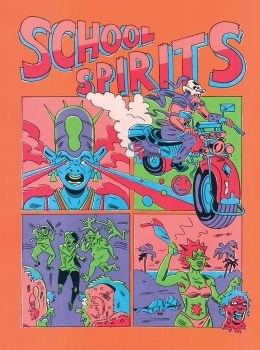
Anya Davidson’s School Spirits, which Heidi talks about at her post.
 

Utilitarian Review 9/7/13

On HU

Featured Archive Post: Jacob Canfield on Johnny Ryan, Benajamin Marra, and lazy thinking in comics criticism.

Piyali Bhattacharya with a short review of Bea Ridgway’s River of No Return.

I celebrate the glorious alienation of Chicago juke.

I explain why Shelby Lynne is not death metal.

Ng Suat Tong looks at Dan Clowes’ short story “Justin Damiano,” about critics and criticism.

Alex Buchet continues his pre-history of the superhero, with a focus on sci-fi from Verne to Vril.

I talk about Kazuo Umezu’s Butterfly Grave and how weak mothers eat their young.

Chris Gavaler on his mother’s superpowers and her aging.
 
Utilitarians Everywhere

At the Atlantic I interviewed Stanley Hauerwas about intervention in Syria.

At Reason I review a love letter to an Afghan warlord.

At Splice Today I talk about

— how the Internet hates you, and what to do about it.

Dungeons and Dragons and the rule of nerds.
 
Other Links

Robert Reece on black men’s bodies and the white female gaze.

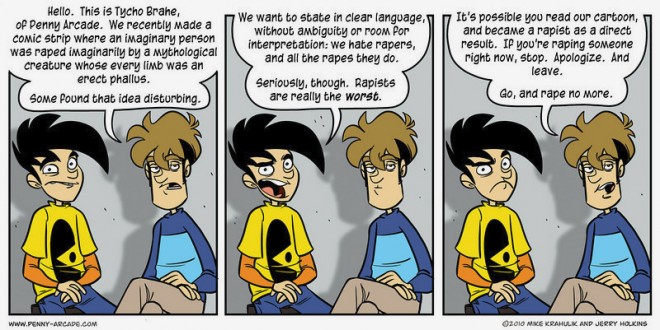
Elizabeth Sampat on why the guys who do Penny Arcade need a swift kick in the shins.
 
PENNY-660x330

Jack B. on Johnny Ryan and The Appeal of Bullying

Jack B. just left this lengthy comment on an old thread. I thought I’d highlight it here.
_________

This discussion interested me enough that I thought I’d try to revive it, lo these many months later.

Johnny Ryan’s comment about the bully’s perspective being more interesting than the victim’s perspective has always struck me as really insightful, especially as it comes from a guy whose work can be so dumb. There’s something kind of precious and self-pitting about art with a sweet, sensitive narrator/protagonist, whether it’s Craig Thompson in Blankets or Holden Caufield, that you don’t get when the narrator is Humbert Humbert or Alex in A Clockwork Orange (although the latter two characters are self-pitying themselves). I also agree with Ryan that Lucy is a good character—her dual role as the cause of Charlie Brown’s problems and his psychiatrist was one of the wittiest things about Peanuts. Noah, even before his excellent interview with Ryan, made the point that the strip would have been a drag if it had focused only on Charlie Brown and his melancholy, as some alt-comics Peanuts fans seem to do.

Jacob Canfield’s problems with Ryan seem to involve the victim/bully dichotomy in areas beyond art, and I think I might side with Ryan in some of those areas, too. Like a lot of left-leaning internet commentators, Jacob seems to think that “macho” is a bad thing and that straight white men should be very conscious of their privilege. But speaking as the wussiest “beta male” you could possibly imagine and as an upper-middle-class white person with a fair amount of guilt, I’m not so sure that it’s good to be like me. My experience is that self-confidence and male strength, even on the part of straight white males, is looked on favorably by almost everyone, including blacks and women, outside of left-leaning internet circles. I’m pretty sure that most black, blue-collar workers would prefer working with a confident, macho white guy than with a sensitive Caucasian who enjoys discussing his white male privilege, for example. By the way, Jacob’s line, “It makes comics critics look like macho assholes” struck me as unintentionally funny—they might look like assholes, but I doubt that they’ve ever looked macho to anyone other than Jacob.

I definitely don’t want to go too far in aesthetically favoring an “alpha” perspective over a “beta” one, though. P.J. O’Rourke once said something to the effect that Jewish American humor is pro-loser while Irish American humor is pro-winner, and he called The National Lampoon a breakthrough in that it succeeded with the latter for the first time in American pop-culture history. I don’t know if there’s anything to his history or his ethnic breakdown, as plenty of Jewish comics from Groucho on have been more aggressive than self-deprecating, but I will say that I love early Woody Allen and can’t stand what I’ve read of The National Lampoon or O’Rourke (I think I’d hate him even without the stupid right-wing politics). So I’m definitely not in the fratboy camp when it comes to humor.

And of course, when it comes to real life, siding with bullies over victims is pretty horrible. I would imagine that one of Johnny Ryan’s main influences is Howard Stern, and Ryan drew this poster of the regulars from The Howard Stern Show: http://www.flickr.com/photos/18176432@N00/990828987/in/photostream/. Those who are not familiar with Stern—or, as I prefer to call him, “Fartman”—may wonder about some of the people depicted on the poster, such as “Gary the Retard” and “Wendy the Retard.” These are actual mentally retarded people that Fartman has had on his show to make fun of; mocking disabled and generally fucked-up people is a major aspect of the show (there used to be a gigantic Wikipedia article describing this aspect in excruciating detail, but it’s been truncated into a tiny one at http://en.wikipedia.org/wiki/Wack_Pack). I seem to be alone in this, but I find it extremely disturbing that a guy who has publically picked on mentally retarded people to their faces on the air as an adult has gained Fartman’s level of mainstream acceptance. Whenever a coworker mentions liking him, I actually feel kind of queasy, as if they’re admitting that beneath a veneer of adult civility, they’re much worse than the most vicious junior-high bully you could possibly imagine. Beyond that, I really believe that the relatives of “Gary the Retard” and “Wendy the Retard” should have the legal right to murder everyone, including Johnny Ryan, who has publically fucked with their loved ones. On the other hand, I’m a big Eminem fan, and he’s made plenty of shitty jokes about Christopher Reeve and other unfortunates, so maybe I’m just a big hypocrite.

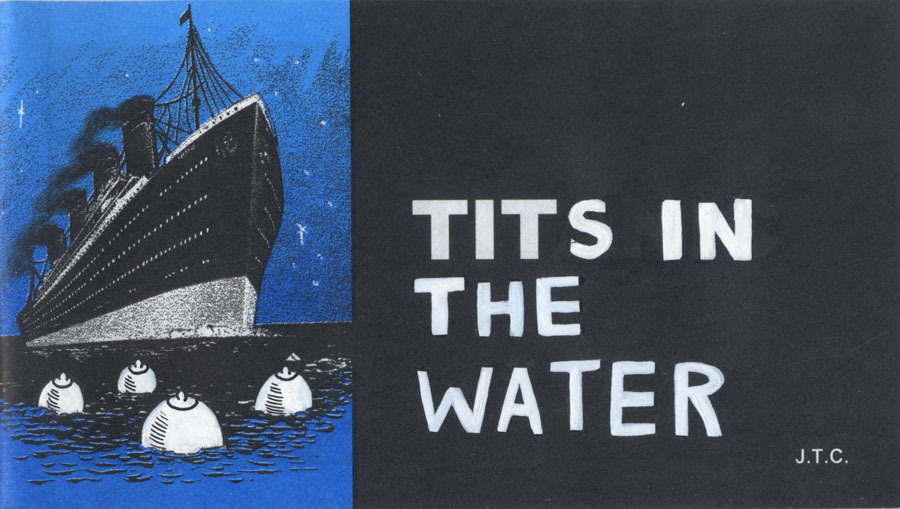
Some final thoughts on Ryan—maybe I shouldn’t have called for his murder, because I actually like his art a lot and find some of his comics extremely funny. I have to say, though, that I don’t think his overall batting average for comedy is so great. For example, I just looked through a bunch of his altered Chick tract covers (at http://www.vice.com/read/johnny-ryans-chick-tracts), and the vast majority of them didn’t make me laugh. However, looking through them was definitely worth it, as the ones that did make me laugh, like “The Letter” (http://www.vice.com/read/johnny-ryans-chick-tracts/115761), “The Contract” (http://www.vice.com/read/johnny-ryans-chick-tracts/115762), and one that suggests my favorite rapper will not go to Heaven (http://www.vice.com/read/johnny-ryans-chick-tracts/115796) made me laugh an awful lot. Batting average aside, he really hits a joke way out of the park every now and then.

Well, those are my thoughts. If no one finds this incredibly lengthy post worth replying to, I’m going to be extremely embarrassed.

 
255bd0c59a989cbe60888dd209d6aa93