Utilitarian Review 11/21/15

Screen Shot 2015-11-21 at 7.21.26 AMOn HU

Featured Archive Post: Me on Love and Rockets and nostalgia.

Marguerite Dabaie on the Lebanese comics anthology Samandal, which has been almost put out of business by charges of insulting Christianity.

Chris Gavaler on whether superheroes should have a license to kill.

Me on how school reform can’t fix schools.

Jimmy Johnson on the pop apocalypse and indigenous genocides.

Robert Stanley Martin with on sale dates of comics from the mid-1950s.
 
Utilitarians Everywhere

At the Guardian I wondered what a Thelma and Louise cast with guys would look like.

At the Establishment I wrote about

how trans women aren’t given a voice in the media on trans women’s issues.

—why we should consider Katniss a superhero.

At Ravishly I wrote about Lupita Nyong’o as CGI, and Star Wars’ history of not seeing blackness.

At Splice Today I wrote about

—how the artist’s identity is part of the art.

how inflated military budgets make us less safe.

—how 538 bungled their piece on Jindal’s exit from the race.
 
Other Links

Anil Dash on Jindal and the South Asian community.

From a bit back, Tara Burns on Katha Pollitt telling her she wasn’t the right kind of sex trafficking victim.
 

Screen Shot 2015-11-21 at 7.21.26 AM/p>

You Can’t Fix Schools By Fixing Schools

This first ran on Splice Today.
________

Fish gotta swim, birds gotta fly, educational reformers have to recommend educational reforms. Even when educational reformers know for a surety that educational reform is not going to work, and won’t even address the problems at hand, they still have to recommend educational reform. It’s in their nature.

Kevin Drum provides a striking example of this in a post from last week. Drum is discussing M. Night Shyamalan’s recent book on education, I Got Schooled: The Unlikely Story of How a Moonlighting Movie Maker Learned the Five Keys to Closing America’s Education Gap.

As Shyamalan discovered (and as Drum reiterates), the startling truth about the problem with our school system is that there isn’t any problem with our school system. Or, at least, there’s nothing wrong with our school system for white kids. In fact, as Drum says, “If you compare American white kids to, say, Finnish or Polish or German white kids, we do just as well.” Shyamalan goes further, and says ” Our white kids are getting taught the best public-school education on the planet. ” The entire reason we score low on national comparisons is because we do such a horrible job of educating inner city minority kids.

The issue, then, is not that we don’t know how to provide good schooling, or that we have bad teachers, or that our system isn’t rigorous enough. Rather, the problem is that we practice what Shyamalan calls “educational apartheid.” For some people, we provide schooling as good as anywhere in the world. And then, for some people, we don’t.

So, what is the solution to this problem? How can we start to give the best education in the world not just to the privileged few, but to everyone? Shyamalan provides a handful of suggestions, which Drum puts in a handy bulleted list.

  • Get rid of the bottom 2-3 percent of truly terrible teachers.
  • Make the principal the chief academic and head coach. Let another person handle school operations.
  • Constant feedback to teachers and students.
  • Small schools (not small classes).
  • Increased instructional time. Extend the school day and do away with summer vacation.

Drum says that these recommendations all sound reasonable, given his reading on the subject. But he doesn’t point out the most interesting thing about Shyamalan’s 5 points, which is that none of them address the problem he’s identified in any way shape or form.

Again, that problem, as defined by Shyamalan, and agreed to by Drum, is that we practice educational apartheid. Some people get resources and some people don’t. And yet, this list says nothing, zero, zilch, about trying to reallocate resources. It doesn’t talk about segregation. It doesn’t mention racism. It’s just a list of ways to improve education across the board. Get rid of bad teachers, it says. But there are good teachers and bad teachers everywhere, while low performance only occurs in some places. Change the role of the principal, it says. But principal’s jobs are more or less the same all over; how then will this address disparate outcomes? And so on. If there’s no problem in one place, and lots of problems in another place, addressing structural reforms that apply to everyone seems like a distraction from the main issue.

That issue being, again, that we don’t have any trouble educating wealthy white kids. We have trouble educating poor minority kids. And the cause of that trouble is not that the poor minority kids have worse teachers. It’s not that their principals’ job description needs to be tweaked. The cause of that trouble is that we have created communities that are systematically segregated for the express purpose of ignoring them and the children who live in them.

To see the extent of the disconnect between Shyamalan’s diagnosis and his prescription, consider Shyamalan’s suggestion that one way to improve education is with small schools. Small schools have been tried in Chicago. One of my friends worked as a teacher in a south side neighborhood where small schools were mandated. But the city was not interested in actually building more schools in these communities; that costs money, and the whole point of segregating the city is so that you don’t have to give money to the groups you have marginalized. So instead of building more small schools, the city simply kept the same building and declared that there were four small schools inside it, each with its own principal and administration. Instead of a smaller school, you got more bureaucracy — and a balkanized student body, set up to maximize bullying, inter-school animosity and violence.

In short, you can’t fix apartheid by mandating cleaner jails. You can only fix it with freedom and equality. As long as America is okay with segregation and racism, any educational reform policy (like small schools) will founder from lack of resources and thoroughgoing indifference. Shyamalan and Drum show us that the problem with schools has nothing to do with schools. Since they’re both ostensibly writing about education, though, they’re reluctant to take the next step, and admit that the solution to the problems with schools won’t have much to do with education reform.

Utilitarian Review 11/14/15

On HU

Featured Archive Post: Susan Kirtley praises Lynda Barry.

Me with a couple of hello songs for Adele.

Ng Suat Tong on Frazetta’s racist porn.

Chris Gavaler asks if Katniss Everdeen is a superhero.

Roy T. Cook on She-Hulk’s gender presentation.

Kael Salad on being a teacher and talking to students about pop culture you don’t like.

Robert Stanley Martin with on sale dates for comics in early 1950; lots of EC here.
 
Utilitarians Everywhere

At Playboy I wrote about

why Bernie Sanders’ focus on private prisons is a distraction.

—the WFA getting rid of the HP Lovecraft statue, and why they should honor Octavia Butler instead.

At the Guardian I wrote about

—imperial idiocy in Narcos and Our Brand Is Crisis.

Supergirl and how women aren’t allowed to enjoy superpowers.

At the Establishment I wrote about Britney, Taylor Swift, and selling your body vs. selling your soul.

On Splice Today I wrote about—

—how Katha Pollitt is happy to forgive mistakes of transphobes, less willing to forgive mistakes of trans activists.

—the Walking Dead, Spectre, and whether you should show the zombies mercy.

GOP lies about the economy and why many people don’t see them as lies.
 
Other Links

While I was sitting in the very same room with her, Tara Burns wrote up this interview with Margaret Cho.

From a bit back, this is a great piece by Dorian Linsky on the efforts to ban Birth of a Nation.

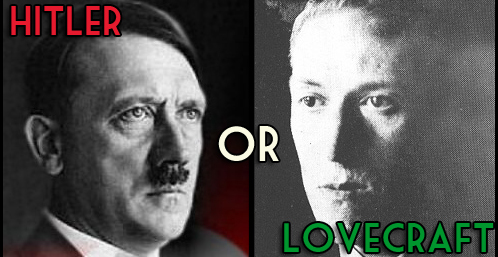
Zoe Quinn made a Lovecraft vs. Hitler quote game.
 

Screen Shot 2015-11-13 at 9.16.08 PM

Hello, Goodbye Adele

At Pitchfork this week I had a listicle of hello songs in response to Adele’s hello song. A couple go cut, and I thought they were vaguely amusing…so thought I’d decut them here. So, one more (or two more) brief hellos….
________

Beatles, “Hello Goodbye,” 1968


The Beatles – Hello Goodbye [HIGH QUALITY] by Electric_Eye

The Beatles refuse to leave you alone, no matter how much you beg them. This song sounds like the wind-up music for a lurid, smiling, stalker jack-in-the-box.

Lake Street Dive “Hello? Goodbye!” 2011

Boston-based Lake Shore Drive with a jazzy sideways Beatles tribute. Rachael Price belts and scats out the introvert answer record to all those extroverts chasing you down to greet you. “When you say hello I say goodbye.”

Utilitarian Review 11/7/15

On HU

Featured Archive Post: Kathryn Vanarendonk on metadialogue and Fringe.

Ng Suat Tong on Adrian Tomine’s disappointing career.

Chris Gavaler on is forthcoming book on superheroes, and Lesley Wheeler’s forthcoming book of poetry.

Philip Smith on translating Shakespeare to modern English, for better and worse.

mouse on the sexiness of Tony the Tiger.

Robert Stanley Martin with on sale dates of comics from the beginning of 1950 (EC gets rolling.)
 
Utilitarians Everywhere

At the Guardian I wrote about slave Leia and sexual confusion. (the commenters really hated this one.)

At Playboy I wrote about how James Bond would kill Edward Snowden.

At Quartz I wrote about Vesper Lynd and how Bond could have gotten better if interesting female leads were allowed.

At the Establishment I wrote about:

C.S. Lewis’ treatment of women in his fiction.

—how criminalizing her profession wouldn’t protect Kesha from sexual abuse.

Birth of a Nation and superhero narratives.

At Splice Today I wrote about:

Clinton’s gratuitous and awful support for the death penalty.

—how polls make us less informed about the presidential race.

—how the Trump is sad because the media loves Ben Carson.

At the Chicago Reader I wrote about psychedelic rockers Bright Light Social Hour.

At Pitchfork I did a playlist of songs that say Hello (in honor of Adele.)
 
Other Links

Matt Breunig on Clinton’s crappy record on poverty.

Bond being terrible to women by the numbers.

Anne Theriault on how repurposing tweets is not journalism.
 

gentle_giant_slave_leia_statue2_t500x404

Utilitarian Review 10/31/15

Wonder Woman News

Joan Ormrod reviewed my book at Cinema Journal (mostly behind paywall, but she likes it better than Lepore’s, which doesn’t happen that much!)

On HU

Patrick Carland on Zen Pencils and an orgy of hate.

Ng Suat Tong on Ed Brubaker’s pallid noir, The Fade Out.

Chris Gavaler on Supergirl vs the Marvel cinematic universe.

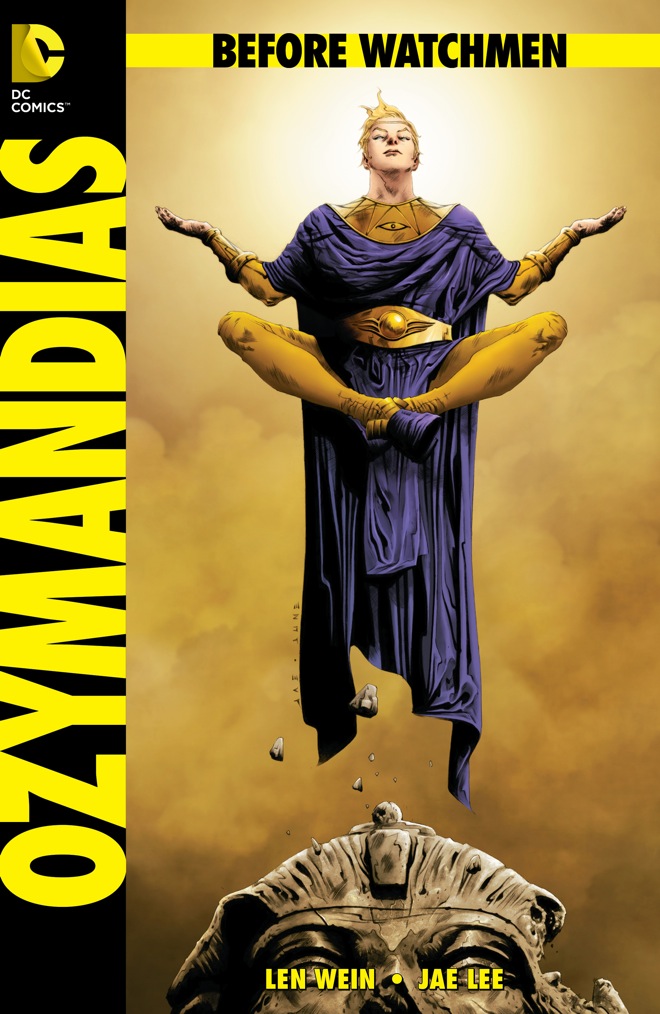
Me on the Before Watchmen debacle.

mouse says, yep, furry is about sex.

Robert Stanley Martin with on sale dates of comics from the end of 1949, including EC.
 
Utilitarians Everywhere

At the New Republic I wrote about how we need to do away with the term Human trafficking.

At the Guardian I wrote about why a Die Hard origin story is dumb.

At the LA Times I said you should let your kids watch screens already.

At Playboy I got to write about Carpenter’s The Thing and male paranoia about dissolving into orifice-laden ichor.

At the new website the Establishment, I wrote about

racism and killing women in Narcos.

Ex Machina, the Perfect Guy, and how it’s more highbrow to have women who aren’t real.

At Splice Today I wrote that

everyone wants to kill baby Hitler.

Rubio may be hurt by racism.

someone other than journalists should moderate debates.
 
Other Links

Josephine at Tits and Sass on Zola, social media and sex work horror stories.

Arthur Chu on the huge mess around the gaming panels at SXSW.

Daniel Larison on the GOP debates.

Emma Paling on Wikipedia’s hostility to women.

Katherine St. Asaph on how it’s okay to compare Joanna Newsome to other female performers.
 

Norris+thing

Who Watches Them Piss on the Watchmen?

WATCHMEN_2012_OZY_Cvr

This piece first ran at Slate.
_____

Even by the wretched standards of the entertainment industry, superhero comics are known for their dreadful labor practices. Jerry Siegel and Joe Shuster, the creators of Superman, famously sold the rights to the character to DC Comics for $130, and spent the latter part of their lives, and virtually all their money, fighting unsuccessfully to regain control of him. Similarly, Jack Kirby, the artist who co-created almost the entire roster of Marvel characters, was systematically stiffed by the company whose fortunes he made. Though most of the heroes in the Avengers film were Kirby creations, for example, his estate won’t receive a dime of the film’s $1 billion (and counting) in box office earnings.

In keeping with this depressing tradition, DC will, next week, begin releasing new comics based on Watchmen, Alan Moore and Dave Gibbon’s seminal 1986-87 series. Before Watchmen will include not one, not two, but seven new limited series, written and drawn by some of DC’s most popular creators, including Brian Azzarello, Darwyn Cooke, Amanda Conner, and Joe Kubert. Watchmen demonstrated to a mainstream audience that comics could be art, and became one of the most popular and critically acclaimed comics of the last 25 years. Up to now, it had also been one of the most sacrosanct. For over two decades, DC has resisted the urge to publish new material featuring Rorschach, Dr. Manhattan, or the Comedian.

You’ll notice the list of writers and artists involved with Before Watchmen includes neither Moore nor Gibbons. This is not unusual in superhero comics. Most work for DC and Marvel is created on a work-for-hire basis. Thus, the original creator of, say, Walrus Man will usually go into a deal with one of the big two comics publishers knowing that the Titan of Tusk will become the company’s property—his aquatic adventures to be written and drawn by whomever the corporate overlords deem fit.

What is unusual, though, is the vehemence with which the original creator has denounced Before Watchmen. It’s true that back in the ’80s, DC tried to get Moore and Gibbons on board for a sequel. That didn’t pan out, though, and in the ensuing decades, Moore’s relationship with DC has soured, to put it mildly. Among (many) other things, Moore became increasingly angry with the company over the handling of the rights to Watchmen itself. In the original contract, DC had written a provision stating that the comic and the characters would revert to Moore and Gibbons once the series went out of print. Moore had assumed that, as with all comics in those pre-“graphic novel” days, this would happen within a few years. Instead, of course, Watchmen was a massive hit—so massive that the trade paperback collection of Watchmen has been in constant publication, and probably always will be.

Gibbons has largely seemed content with DC’s perpetual ownership of Watchmen. Moore, though, is a different story. He refused to accept recompense for the 2009 Watchmen film, which he referred to (sight unseen) as “more regurgitated worms.” As for Before Watchmen, he made his position painfully clear in an interview: “I don’t want money. What I want is for this not to happen.”

Watchmen‘s canonical status, combined with Moore’s dissent, has led to an unusually vocal backlash against DC. Chris Roberson, a sometime DC writer, decided to stop accepting work from the company because of its record on creator’s rights. Cartoonist Roger Langridge, who wrote the acclaimed series Thor: The Mighty Avenger for Marvel, followed suit, explaining that “Marvel and DC are turning out to be quite problematic from an ethical point of view to continue working with.” And Bergen Street Comics in Brooklyn will not be carrying the Before Watchmen titles; in explanation, Bergen Street’s manager, the comics critic Tucker Stone, said, “This is just gross, and we don’t want to be part of this one.”

It would be nice to say that Roberson, Langridge, and Stone are at the forefront of an all-out revolt against DC and Marvel’s business practices. That’s not really the case, though. For the most part, DC and Marvel’s writers and artists are still writing and arting as they always have; comics stores are still carrying the comics; and fans are still buying. Yes, if you go stumbling about in the comments of mainstream comics blogs (here for instance), you’ll find some outrage on Moore’s behalf. But you’ll also find a significant number of folks who don’t care, and who are actively irritated that anyone thinks that maybe they should care: As one fan said, “Alan Moore is a very arrogant guy that really hasn’t done anything relevant in a very long time and should really spend more time creating and less being a cranky old guy in a pub.”

J. Michael Straczynski, one of the writers on Before Watchmen, summed things up for many when he asked rhetorically, “Did Alan Moore get screwed on his contract? Of course. Lots of people get screwed, but we still have Spider-Man and lots of other heroes.”

Straczynski’s contrast between Alan Moore (screwed!) and Spider-Man (still ours!) nicely sums up the fandom dynamics of superhero comics. Creators are there to churn out marketable, exploitable properties … and then disappear. And because the comics companies own the characters, and because they have substantial marketing departments, they’re in a position to make that disappearance stick. Who knows who created all those different Avengers? Who knows who created Wonder Woman? Who cares? We want our modern myths packaged and available at our corner store and on our movie screens. Also … toasters.

Why is Moore complaining? It’s not about the money, as he’s said. (That’s probably a big part of the reason people call him a crank.) But Moore created a group of characters and the world they live in; those characters still mean something to him. Now a company he believes has screwed him over gets to colonize and even define that world. For example: Moore’s comics have often been concerned with feminism, and one theme of Watchmen is that the superhero genre is built in part on retrograde sexual politics and thuggish rape fantasies.

And how does Before Watchmen address these issues? Like so.

If this were some piece of fan fiction detritus—naked Dr. Manhattan, porn-faced Silk Spectre!—it would be funny. But given that this is an “official” product, it starts to be harder to laugh it off.

Of course, this is one of the things that always happens with art. If you create a beloved character or story, others are going to honor it, parody it, use it, and abuse it. That’s why there’s fan fiction. Indeed, Moore and artist Melinda Gebbie literally defiled Dorothy Gale, Alice (of Wonderland), and Wendy Darling in their exuberantly pornographic Lost Girls. Given that, what does Moore have to complain about exactly?

What he has to complain about is that he doesn’t own his own characters … and the company that does own them is free to pursue any version of the characters it likes, whether honoring Moore’s original vision (as DC has been careful to assert) or turning it into bland, infinitely reproducible genre product (as many suspect they will). And DC has the marketing might to ensure that, in the end, its version will be the one that’s remembered. After the third or fourth Before Watchmen movie, which iteration of the characters will be most familiar to the public? Rorschach and Nite Owl and Dr. Manhattan have been raised from their resting place, and Moore—and the rest of us—now get to watch them stagger around, dripping bits of themselves across the decades, until everyone has utterly forgotten that they ever had souls.