Utilitarian Review 9/26/15

she-shreds-magazine-cover-issue-2

On HU

Robert Stanley Martin with on-sale dates of comics in late 1947.

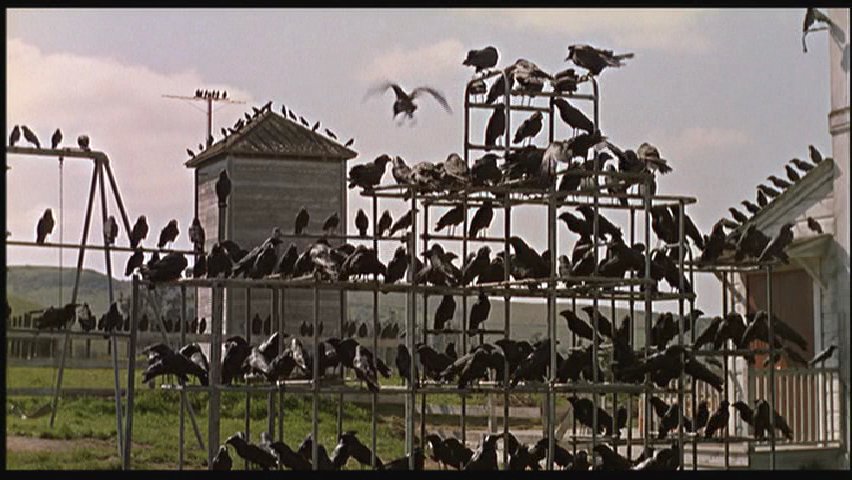
On how Hitchcock is the Birds.

Chris Gavaler on the superheroes of Patricia Highsmith.

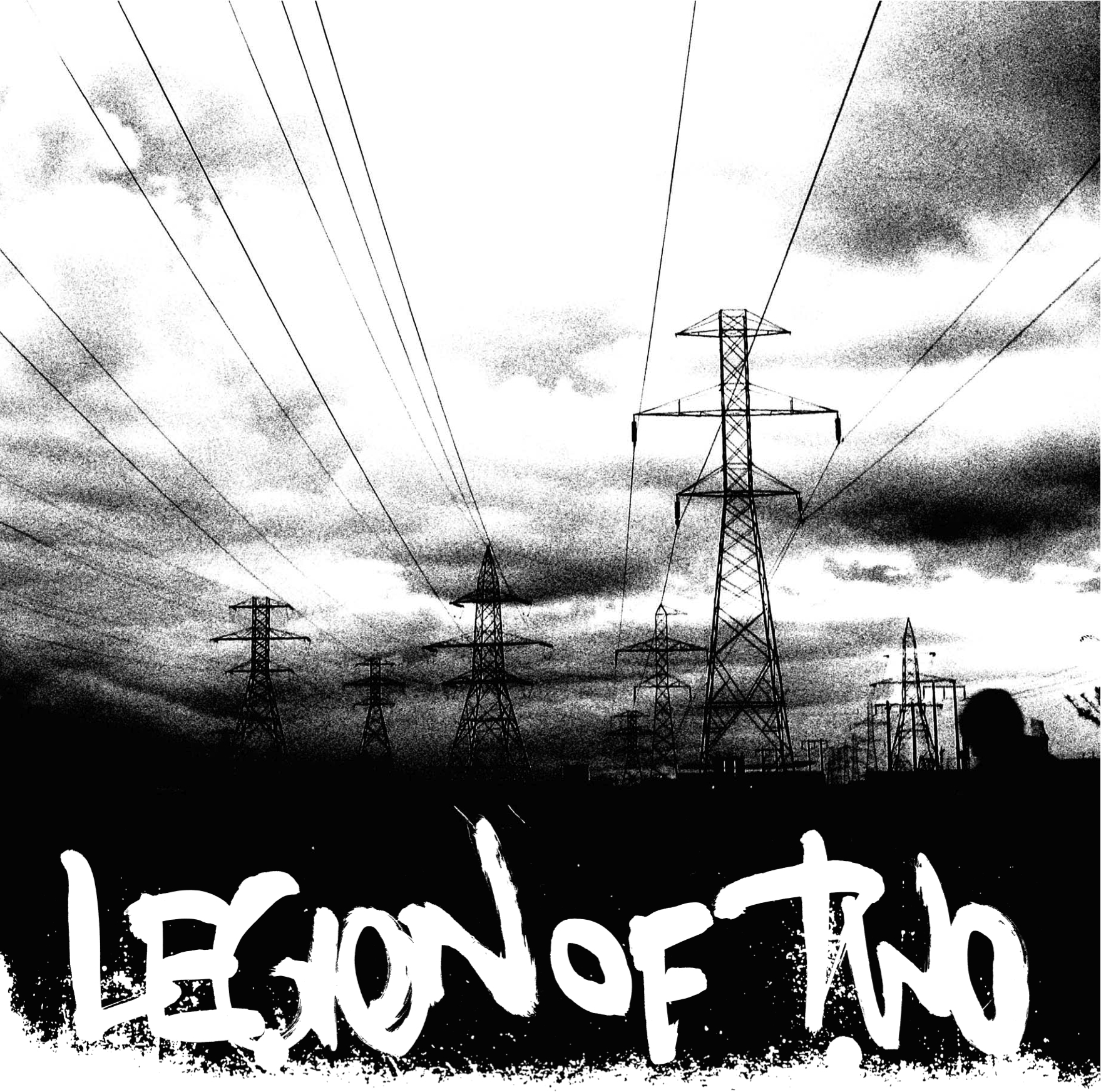
Little reviews of Legion of Two and Sonic Youth.

Phillip Smith on the morality, or lack therof, of the Lego concentration camp set.

On why exploitation rape/revenge is better than Bergman’s Virgin Spring.
 
Utilitarians Everywhere

At Playboy I wrote about PBR&B and condescending to R&B.

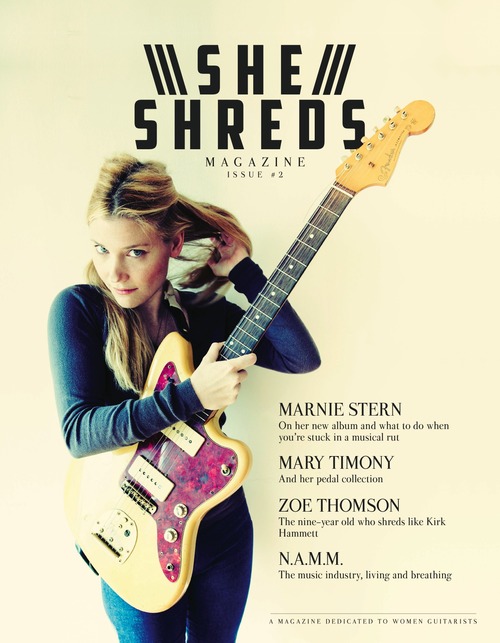
At the Guardian I wrote about She Shred magazine, and fighting the erasure of women guitarists.

At the New Republic I wrote about The Intern, and Hollywood’s gross celebration of working without pay.

At Splice Today I wrote about

the GOP’s inability to pander to women.

—Sonic Youth and Chuck D’s Kool Thing, and whether white people can make non-racist music videos.

—the first black Marvel superhero (not the Black Panther)
 
Other Links

Celebrate! Happy Birthday is in the public domain!

David Brothers on the importance of being careful in writing about race. It’s painful for me, since I’m one of his big negative examples, but he’s right. I should have been more careful.

Suffering With a Purpose

In the 70s, rape/revenge turned into a genre based on feministsploitation. Films like I Spit On Your Grave, Lipstick, and Ms. 45 presented rape as part of the structural oppression of women, and female revenge as a way to overthrow, and often literally castrate, the patriarchy. Even rape/revenge films that did not specifically use feminism as a lever, like Last House on the Left, spent significant time placing viewer identification with the women suffering violence. The film’s were certainly prurient and exploitive, but they also presented sexual violence as important,and its victims as not just sympathetic, but worthy of a privileged point of view and narrative place.

This is not the case for the Last House on the Left’s direct inspiration, The Virgin Spring. Ingmar Berman’s 1960 classic is a rape/revenge in terms of plot; set in medieval times, it is about a young girl who is raped and murdered by bandits on her way to church, and whose father then kills the murderers. But where the 70s rape/revenge films put feminism, Virgin Spring puts God.

Karin (Birgitta Pettersson) does get screentime in the first half of the film, it’s true—but her character amounts to little more than assurances that she is the perfect, perfectly innocent rape victim. She oversleeps and is a little spoiled, perhaps, but she is kind, loving, full of life, and trusting—she feeds the bandits her lunch because she wants to help strangers before she realizes they mean her ill.

All the depth, soul-searching, and internal conflict in the film is reserved for Karin’s friend and parents—and especially for her father, Tore, played by the even-then celebrated Max von Sydow. As far as the film is concerned, Karin’s assault is important less for its place in her life, than for its effect on her father and his relationship with God.

Since it’s a Bergman film, that relationship is fraught and dramatic. Tore chastises himself with branches before he goes forth to slay his daughter’s sleeping killers. In the final scene, after finding his child’s body, he staggers off to the side of the clearing, and looking away from the camera addresses the deity directly. “God, you saw it! God, you saw it!” he declares. An innocent died and God did nothing. Like Job’s, Tore’s loss is an object lesson in the problem of faith and evil. And then, after Tore pledges to build a church as expiation for his sin of violence, a spring miraculously begins to flow from the ground beneath Karin’s head. God did see, and Karin, we’re surely meant to believe, is in heaven. Karin’s death is first a dramatic moment in Tore’s internal life,and then a dramatic moment in God’s narrative of suffering and redemption.
 

03

 
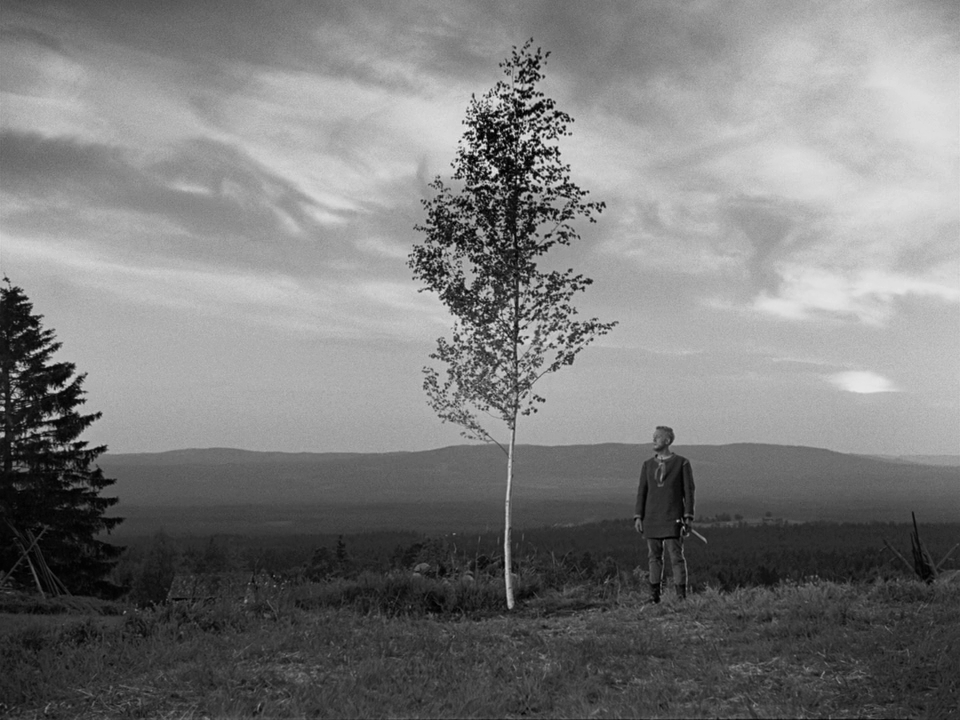
The cinematography throughout emphasizes the sense of a cold, but beautiful order beneath, and gazing upon, the tragedy. The dramatic image of Sydow standing beside, and then wrestling, with the tree serves as a metaphor for Tore’s isolation—and for the fact that God (the tree, the eye watching the tree) is there even in the bleakest landscape.

There’s no question that Virgin Spring is a striking film to look at. And it deals with big, important themes—God, justice, mercy, violence, the place of man in the cosmos. But still, the very elevation of theme and vision can start to seem unseemly, built as it is on the torture and death of a person whose suffering is decidedly tangential. When Sydow goes the full ham Shakespeare route and gazes at his hands to let us know that he’s disturbed about murdering the thugs the staginess becomes almost insupportable. We get it Mr. Bergman. We are watching something profound. How can Karin have suffered in vain if she lets us contemplate the beauty that is Sydow in full stricken emoting?

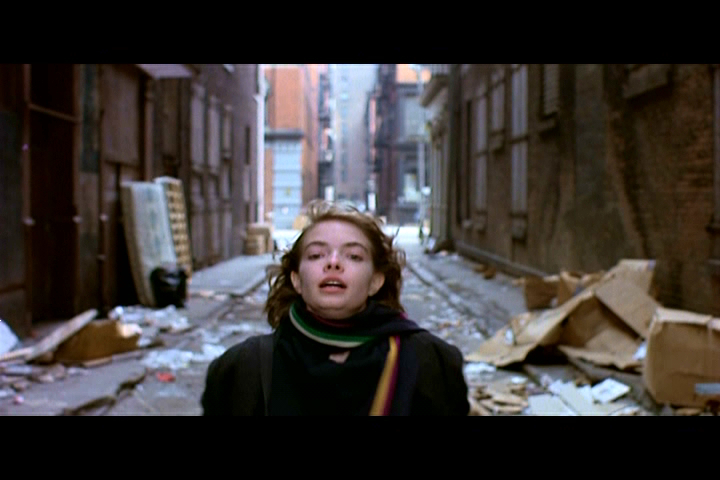
In comparison, the later rape/revenge exploitation, acknowledging its prurient investment in both sex and violence, seems relatively honest—and certainly less grandly distanced from the trauma. In the 70s rape/revenge, the camera is not at some perfect remove, but often chaotically close to the action, trying to keep up, or get out of the way (as in the still below from Ms. 45).
 

Ms-45-remembering-zoe-tamerlis-lund-9084702-720-480

 
Exploitation films are often criticized for having no higher purpose; for being exercises in sleaze, stimulation, and unpleasantness for their own sake. Virgin Spring makes me wonder, though, whether a higher purpose can in its own way be more indecent than sensationalism. Better to suffer for no reason, than so that God and dad and the filmmaker can be profound, and reconciled.
 

Legion of Two vs. Sonic Youth

These reviews ran way back when at Knoxville Metropulse; I think they’ve since gone off the web.
________________
 

ZIQ234_Legion_RIFFS

Legion of Two
Riffs
Planet Mu

I have to admit that cranky, middle-aged rock-critic me is not completely up-to-the-minute on this dubstep stuff the kids are so crazy about. Still, as a fan of black and doom metal, I felt right at home in Alan O’ Boyle and David Lacey’s trudging apocalypse. Sure, here the zombie Vikings have been replaced by giant, digitally controlled cement mixers crushing you beneath their inevitable tread, while the gutteral squawls of tortured werewolves have given way to hissing jets of infernal steam and the occasional free jazz ensemble being quietly and painfully assimilated in the background. And, yes, I’ll admit that there are a couple of nods to electronica’s blissful leanings, as at the beginning of “Turning Point,” where the swirling synths head for lighter, more Enya-friendly territory and the live percussion loosens up into a funkier stut.

Not that I have anything against that sort of thing.

Still, I was pleased when the last track demonstrated once and for all that the duo really do have as bleak and blackened a pair of hearts as any metalhead could ask for — “Cast Out Your Demons” descends into a hissing, howling ambient sludge, where even the ominously heavy percussion is swallowed up by ghostly shrieks and gaping despair. It kind of brings a tear to my aging eyes to realize that, even after all this time, the youth today still want to drown the world in its own boiling filth.

______________________
Sonic Youth
The Eternal

The last Sonic Youth album I spent any time at all with was Washing Machine from way, way back in 1995. The Eternal picks up exactly where we left off though…and that’s kind of a problem.

If any band was about sounding up to the minute, that band was the aptly named Sonic Youth. They were dissonant, they were cool as shit, and, most of all, they were surprising. Even on the post-classic period Washing Machine they seemed to be trying new things, as when they buried the album’s best pop hook in the 19 minute swathe of noise that was “The Diamond Sea.”

For an avant-band like Sonic Youth, that kind of “fuck-you” isn’t a bug; it’s the whole point. You’re there to have them set you back on your heels, either with the uncompromising but earthy squall of their early albums, or with the way they turned sneering political protest into breathy celebration and back again on Dirty’s “Swimsuit Issue.”

All of which is to say that The Eternal is the one thing that a Sonic Youth album should never be. It’s predictable. Not that it’s a Metallica-level embarrassment — “Leaky Lifeboat” has a pretty, almost classical picked motif; “Antenna” is catchy as hell. But the music doesn’t do anything the band wasn’t doing already fifteen years ago. Merle Haggard can get away with that sort of thing because his music is about tradition and fidelity. But Sonic Youth is about something else. And if you can’t stay young, “The Eternal” starts to sound like a very long and very tedious slog.

Hitchcock is the Birds

birds_shot4l

 
The usual symbolic interpretation of the deadly massed birds in Hitchcock’s 1963 film is that they’re a sign of the terrifying feminine, and/or grasping maternal. Melanie drives out to Bodega Bay to get her grasping playgirl claws into Mitch; Mitch’s mom freaks out much like the birds. The clash of terrifying female desire around this one good looking guy results in a nature freak out and violent squawking.

It seems like there might be a more direct way to read the birds though. In particular, Tippi Hedron has said that Hitchcock during the filming essentially stalked her; he made sexual advances, insisted on separating her from the rest of the actors, and was generally a crazed controlling jerk. He also famously in the attic scene actually tied birds to her to get the right shot; some of the blood on her you see was apparently real. She suffered multiple cuts and broke down in tears at one point. This is in the interest of the film, rather than in the interest of his being a creepy stalker, supposedly, but it seems like at some point the two stop being especially distinguishable. Hitchcock as stalker blurs into Hitchcock as perfectionist director; he gets to hurt and control Hedron wearing either (bird) hat.

The birds then are Hitchcock’s catspaw; he ties them to Hedron in an excess of jealous vindictiveness, to show her who’s boss. And if the birds function that way in that scene, why not throughout? Apparently Hitchcock warned Rod Taylor (who played Mitch) to stop cuddling Hedron as soon as Hitchcock yelled “cut”; there seems to have been some jealousy there. And similarly, the birds seem set up to punish Melanie for her sexual desire. The first attack occurs as she’s coming across the bay and about to meet up with Mitch for a potentially romantic chat. The escalating violence seems designed to prevent the further development of their relationship. Rather than excess maternal force, you could see the birds as an enactment of the paternal law; proscribing sexual activity in the jealous name of the father/director. As in all those slashers, the girl who has sex must die.

The Birds work well as a meta-patriarchal avatar precisely because their in-film motivation is so poorly defined. Why do the birds attack? The characters say repeatedly they don’t know, and no reason is offered. But of course there is a reason why the birds attack. It’s because Hitchcock tells them to. The fakeness of the birds (many of them were puppets, and you can tell) only adds in this reading to their symbolic resonance. Hitchcock has created these birds out of wholecloth for his sadistic purpose. That purpose is control, violence, order—the striking birds’-eye view shot of Bodega Bay with a street afire nicely melds the rage for order and destruction, or for destructive order, each person dying in agony in his or her place.

The birds then aren’t a symbol of inhuman mystery so much as they are a sign of a particularly human glee in fucking with other humans. Melanie and Mitch tease and play practical jokes on each other, but the biggest, meanest, most remorseless practical joke is the film itself, which flagrantly reaches into the romantic comedy that seems to be underway and fills it with bloody beaks and death just because it can. The birds are Hitchcock’s remorseless, bitter, bitterly excessive way of making sure yet another of his icy blondes gets what she deserves. Those long, sharp beaks aren’t maternal; they’re misogynist.

Utilitarian Review 9/18/15

On HU

Featured Archive Post: Qiana Whitted on blues comics.

Robert Stanley Martin with on sale dates of comics from mid 1947.

Chris Gavaler on discovering desire via Frazetta.

< href="https://www.hoodedutilitarian.com/2015/09/purity-culture-with-fangs/">Me on the film Teeth, and purity culture with fangs.

Me on spaghetti westerns, men, women, and guns.

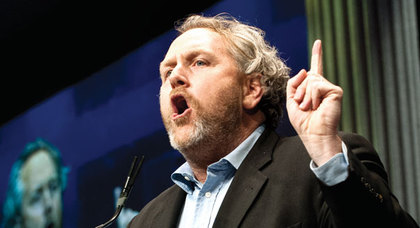
Me on Andrew Breitbart and his eulogists.
 
Utilitarians Everywhere

At Broadly I wrote about how criminalizing midwives hurts women and babies.

At Quartz I wrote about Amber Batts and how criminalization hurts sex workers.

At Playboy I wrote about how there is no evidence of a Ferguson Effect.

At Splice Today I wrote about

—how a Breitbart writer accidentally palled around with a terror suspect.

—how campaign finance reform isn’t a very exciting platform for Bernie Sanders.

At Ravishly I reviewed the Perfect Guy, which is pretty good if you think all men are evil and should die.

At the Reader I wrote a little review of the great Japanese goofball rockers Mugen Hoso.
 
Other Links

Jay Gwaltney on text sex games.

Fascinating interview with Timothy Snyder about the Holocaust and state institutions.

Sarah Nyberg on being a troll, and changing.

Molly Smith on decriminalizing sex work in Scotland.

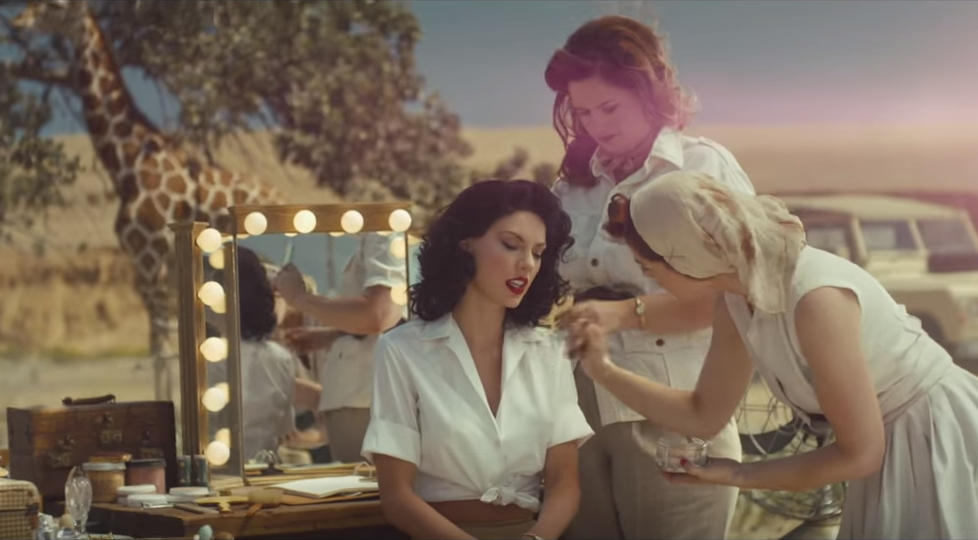
Aaron Bady on Taylor Swift and colonial fantasy.
 

screen-shot-2015-09-02-at-1-04-05-pm

Andrew Breitbart and His Eulogists

This first ran on Splice Today.
________________
 

large_120301_andrew_breitbart_shinkle_605

Rush Limbaugh made an ass of himself last week, as he often does. In consequence, the death of Andrew Breitbart had a half-life short even by the standards of the Internet news cycle. There’s apparently only room on the web for one right-wing pundit spat at a time. You can opine on Breitbart’s legacy or sneer at Rush’s misogyny, but doing both at once is too soul-killing for even the most soulless pundit.

The speed with which Breitbart’s communal eulogy has effervesced into its respective Internet archives is a strikingly neat self-refutation of its own main thesis. That main thesis is that Breitbart’s death was an event that should be of actual importance to some range of people who were not his friends or family. David Frum insists, “It is impossible to speak nothing of a man who traced such a spectacular course through the contemporary media,” and goes on to lament that “It’s difficult for me to assess Breitbart’s impact upon American media and American politics as anything other than poisonous.” Conor Friedersdorf characterizes him as “a singular figure unlike any other in American politics or Web publishing.”

Andrew Sullivan goes even further in his quest for meaning, arguing that Breitbart’s early death is a sign of the intense pressure faced by the new media blogocracy. Constantly checking Twitter and site stats, barking 24-7 after the latest culture war blip, Breitbart was, apparently, crucified upon the cruel cross of his Blackberry.

“Human beings were not created for that kind of constant unending stress, and the one thing you can say about Andrew is that he had fewer boundaries than others. He took it all so seriously, almost manically, in the end. The fight was everything. He felt. His anger was not feigned. He wanted to bleed and show the world the wounds. He wanted to scream. And he often did. And when you are on that much, and angry to that extent, and absorbed with that kind of constant mania, and obviously needing more and more validation, and on the online and real stage all the time, day and night, weekends and weekdays… well, it’s a frightening and dangerous way to live in the end. He is in that sense our first new-media culture-war fatality. I fear he won’t be the last.”

The title of Sullivan’s post is “Breitbart—And Us.” It’s a telling phrase. Because… who is that “us” exactly? When you first read it, it seems like it’s supposed to mean, you know, “us”—everybody and their siblings.

But by the end of the piece, it’s clear that we’re not talking about a universal “us.” Surely I can’t be the only one on the planet who doesn’t own a Blackberry. In fact, when Sullivan says “us,” then, what he actually means is “us, the really successful new media pundits.” Breitbart’s death is significant to Sullivan not because it offers some sort of universal warning about the human condition, but because Breitbart and Sullivan are (despite differences in politics) basically a lot alike. They’re extremely successful people in the same industry. It’s not exactly a revelation that driven people obsessed with their jobs are in danger of heart attacks. But it hits Sullivan close to home because Breitbart was a driven person not just in any job, but in the same job Sullivan has.

It’s natural enough to be interested in, and to want to talk about, your colleagues. It’s water-cooler gossip; everybody does it. But since pundits do so much talking in public, I think it can be easy for them to forget that their water-cooler gossip isn’t necessarily transcendentally important. I can’t say I followed Breitbart’s career closely. But you read his eulogies, and what do you get? A personally charming and generous muck-raking journalist with shoddy standards and a big mouth, who managed to land a big story or two, slander some innocent people, and mostly generate a lot of hot air. It’s a character that was hoary in 1951 when Kirk Douglas played it in Ace in the Hole. The fact that Breitbart was one of the people to bring the archetype into the digital era is of interest primarily to those in the industry. To everybody else, it’s just the latest iteration of a familiar truth; e.g., whatever venue you find them in, journalists are scum.

Andrew Sullivan likes to tout the digital media’s escape from the hidebound orthodoxies and navel-gazing of traditional media. But if the rapidly evaporating Breitbart furor shows anything, it’s not that the man was a visionary pioneer, or that he epitomized the decline of our culture, or that our age is more stressful than any other. Rather, it’s that online journalists are every bit as self-obsessed as their print forbearers.

Men, Women, and Guns

This first appeared on Splice Today.
______

 

django+shoots+first

 
Dorado Films recently bundled together two late sixties spaghetti westerns — Django Shoots First! and Gatling Gun — as a budget twofer. Outside the classic Sergio Leone films, I’m not that familiar with the spaghetti western genre, so I was interested to check it out. And it was indeed educational. Here’s some things I learned about men, women, and guns.

1. Men sweat. Women take bubble baths. — As you’d expect, men are dirty and stinky like men should be. In fact, Robert Woods, who plays hero Chris Tanner in Gatling Gun, has carefully applied sweat to the middle of the back of all his shirts to show that it is hot and that he sweats, though because he is a hero he does it in a predictable and orderly fashion.

A woman, though, does not sweat. Not even when her dad has just been shot dead in front of her and she’s tied up and forced to ride across the desert in long-sleeves and bustles. Her make-up doesn’t even run.

Therefore, somewhat counter-intuitively, women need to take baths all the time. Bubble baths are ideal because all those bubbles can hide that dashing stranger from the sheriff so the two of you can betray your husband. Alternately, the bubbles can help hide your naughty bits when the sweaty evil minions drown you in the tub.

2. Heroes don’t get shot. Women can’t shoot. — It’s not quite true to say that heroes don’t get shot. They do of course get the occasional flesh wound just to show they can take it. Django (Glenn Saxson) gets tagged a couple of times in Django Shoots First!, and in Gatling Gun Chris Tanner gets a really nasty wound in his hand and has to dig the bullet out because he’s just that tough. Still, in general, it’s kind of amazing how utterly (ahem) impotent guns are against these guys. Tanner even dodges a fusillade from a Gatling gun. That’s some poor shooting there, bad guys.

Women on the other hand don’t even get the privilege of missing the heroes. In Django, the scheming bitch, Jessica Cluster (Evelyn Stewart), steals her sweetie’s gun as she kisses him, and then she tells him he’s a weak, sentimental fool and she hates him, ha ha. He looks suitably castrated, she pulls the trigger…and there’s no ammo. He removed it because he’s smarter than her and only guys know which end of that thing is up anyway. Then he sets her up so another ex-lover kills her. How’s that for castration, bitch?

The same thing (more or less) happens in Gatling Gun…and even to the same actress! This time Evelyn Stewart is Belle Boyd. She keeps a small pistol under her pillow, and after Tanner kills everyone she knows, she (being justifiably upset) prepares to shoot him with said pistol. But! He took the opportunity to take all her ammo while he was having sex with her the previous afternoon — fucking her while fucking her, as it were. “When you sleep with a pistol under your pillow,” he tells her sententiously, “you should be careful who you choose as your bedmate.” Don’t cross dicks with me, sweetie.

You’d think she’d take that amiss, but instead at the end of the film she rides off into the sunset with him. Maybe because humiliation is sexy? Or because he was just that good in bed? Or, more probably, because the two other women in the film got killed, and the hero has to ride off into the sunset with somebody.

3. Misogyny will wipe away all your sins. Class prejudice and race prejudice are bad, and the best way to show they are bad is by associating them with women, because who trusts a women?

In Django, the misogyny-for-a-greater-good is relatively subtle, and even accomplished with a touch of humor. Django’s a down-at-the-heels drifter deadbeat who challenges the big-deal, well-dressed banker Mr. Cluster (Nando Gazzio) for dominance in the town. Jessica, the banker’s wife, is both a money-grubbing, castrating bitch (constantly demeaning her husband) and a snob (she sneers at waitress Lucy (Erika Blanc), provoking a catfight.) Jessica’s greed and desire for luxury map easily onto her upper-class evilness.

The duplicitous effeminacy of the swells is further emphasized at the film’s conclusion, when Django, now wealthy and married to Lucy, swaggers foppishly around the bank he owns. Suddenly, a rough and tumble outsider enters and threatens to do to Django what he did to Cluster. By marrying Lucy and settling down, Django’s been feminized — and now he’s the enemy!

Gatling Gun doesn’t bother with the tongue-in-cheek cutesiness. The evil half-breed Tapas (John Ireland) is in love/lust with Martha Simpson (Claudie Lange). He gives her money, but she still rejects him because she’s an unrepentant racist. Tanner sleeps with her himself to get information out of her. She spills the goods on Tapas…at which point Tanner turns on her, sneering at her for her unfaithfulness and her prejudice. In a final fuck-you, he tells her he himself is a quarter Cherokee. Shortly thereafter she gets killed as punishment for her sins, which include racism and having the temerity to bad-mouth one man to another man even if they hate each other. Whatever color, whatever creed, guys gotta stick together.

4. Look not to exploitation fare for enlightened gender politics. I did kind of know that one already, I’ll admit. Though, to be fair, I don’t know that the treatment of women is really much worse than what you find in most present-day action flicks. The spaghetti westerns are just — for better and/or worse — more honest about it.