P. Marie, Zoe Samudzi, and Julia Serano on Feminist Exclusion

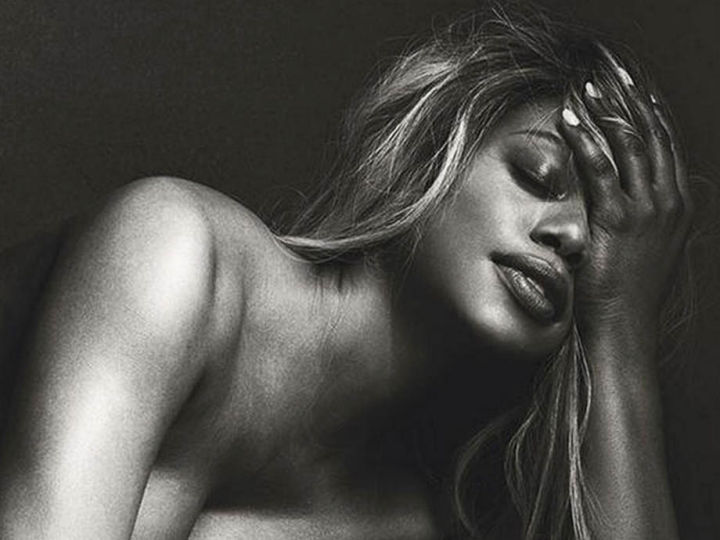
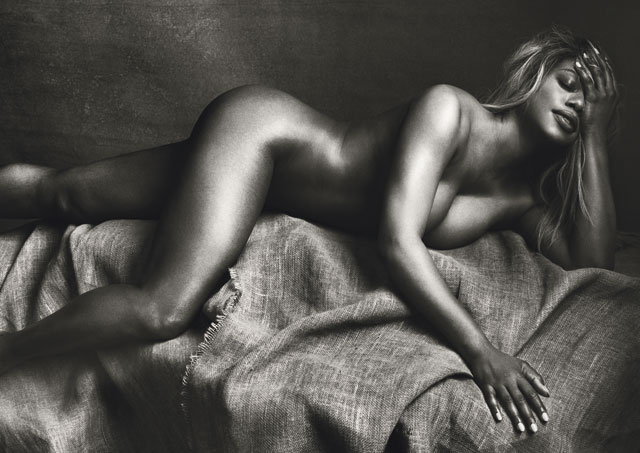
Last week I wrote a piece about Laverne Cox’s nude photoshoot for Allure and how various feminisms have often failed black women and trans women. The piece was in particular a response to a post by Meghan Murphy in which she criticized Cox in what I argued were transphobic, racist, and cruel terms.

For my essay I conducted several interviews — but as often happens, I was only able to use little bits of them. The interviews were all really thoughtful and enlightening, though, and it seemed a shame to waste them. So I asked folks if it would be okay to reprint them here, and everyone (including Playboy) kindly agreed. All the interviews are below, from shortest to longest responses, more or less. My questions are in italics; answers are of course by the interviewees.
_______
P. Marie is a former sex worker; she blogs a mix of trash, nail art, and selfies at pmariejust.tumblr.com and @_peech on twitter.

Why has feminism and radical feminism had trouble respecting black women?

As far as I can see, the problem can be boiled down to (among many things) entitlement and a sense of ownership. For decades, white feminism has said things like “being a voice for the voiceless” – essentially taking ownership of the voices (and bodies) of Black women, sex workers, and Transgender people through exclusion and subscribing to violent, racist, and transphobic rhetoric.

While at points in history, speaking up to protect others was necessary and desired by us from them, it’s now turned into a clear case of overbearing entitlement and greed for the spotlight. Opportunistic hatred is published quickly and easily by both news houses and blogs with large followings, giving bigoted white feminists a platform to share their trash with a digital megaphone.

The shame in all this is how difficult it seems for feminists as a community to see this happening as often as it does.

With dangerous ideas like “women born women”, the new emergence of the “rescue industry”, and anti sex work and anti black feminists these newest waves of feminism are going on the offensive and becoming more harmful by the day. The problem blooms larger when the actuality of “being the voice for the voiceless” is comprised solely of ignoring people who are willing to speak for themselves. Feminism isn’t helping anyone anymore – unless helping yourself to take the stage by way of abusing women you don’t like counts, and I don’t think it should.

Could you talk just briefly as a black woman and a sex worker what your reaction to the Laverne Cox photos are? Is it empowering or satisfying to see black women recognized as beautiful in that way? Do you see sexualized images of black women as a problem at all, or does it depend on agency/the situation?

As for my reaction to Laverne’s pictures, I feel a sense of happiness for her. She’s done interviews and spoken about her self esteem/appearance, and to see her be able to have those photos done and (very obviously) look and feel so beautiful, what a happy moment. It helps me as an individual when I see any Black woman feeling beautiful and sharing that with the world – reminding people we ARE beautiful, desirable, feminine, and strong – which is exactly, thankfully, what Laverne Cox has done for us.

When it comes to sexualized images of us, for me it’s all about agency! Did we consent? Are we respected? Is this our choice? Is this a collection of body parts or erased humanity? There are a lot of questions that run through my mind at that intersection of sex work and being a Black woman.

What Laverne Cox did put a smile on many faces and some hope in a lot of hearts. I think there are very few better things a person could do in life.
__________
Zoe Samudzi is a researcher and activist; she’s a project assistant at UCSF. You can follow her on twitter, @ztsamudzi.

Could you talk just briefly about how some strains of radical feminism have marginalized black women and trans women? Like, specifically, why does feminism have trouble embracing those groups? Are the reasons linked?

It isn’t just radical feminism, but also mainstream White Feminism that has targeted and excluded women of color, sex workers, trans women, and others marginalized identities. But these radical second wave feminisms emerged in reaction to traditional femininity, a part of which is female sexuality, which they characterized as “slavery to patriarchy.” These radical feminisms, in my opinion, don’t even feign inclusivity: there’s a very prescriptive understanding of what emancipation and liberation looks like and in the rejection of femininity, it fails to recognize women’s agency (including sexual agency). Couple this misogynistic demonization of femininity with the general devaluing of certain bodies and identities – black women, trans women, and sex workers most notably – and you have shaming, commentaries about “self-objectification” (actually the imposition of the male gaze) when women pose nude, refusal to recognise sex workers as agents, and so on. This exclusion and marginalisation links to white female entitlement and the refusal to de-center whiteness. White women have historically been perpetrators of violence against black women’s bodies, and the same entitlement and identity-centerdness in feminism has enabled them to proclaim themselves as the arbiters of womanhood. It’s also worth nothing that it isn’t just radical feminism that has marginalized trans women and sex workers: that has and does happen in black feminism/womanism, as well.

Do you see fashion images of black women as disempowering? empowering? Some mix of both? Do black women have a different relationship to objectification/sexualization than white women do?

I guess I don’t pay them much attention, but the models are gorgeous. Beyond being empowering or disempowering, I see fashion images of black women as promoting similar discouraging messages about body images as white ones. But black women lend an element of “cool” and afford a cultural capital to fashion that white models to not (they’re always thrown in there for some performance of athleticism or exoticism). The objectification of black women is both gendered and racialized: there’s not only a gendered sexualization, but also a fetishization as an exotic radicalised “other.”

I know you don’t identify as a feminist right now…I guess I wondered what feminism would have to do to get you back? What needs to change before you’d feel comfortable identifying as a feminist again?

I don’t think I’ll ever identify as a feminist again, though there’s a tremendous amount of scholarship in marginal feminisms (i.e. from sex workers, in transfeminism, from migrant/immigrant women, from disabled women, from women in the Global South, and so on). I’m not spending any more energy trying to convince white women that my identity is worthy: I’d rather invest my energy in gender politics grounded in intersectional understandings, as womanism is.
________

Julia Serano is a trans feminist and author. Her most recent book is Excluded: Making Feminist and Queer Movements More Inclusive.

Why has feminism been so resistant to including trans women?

There was a time when most feminists (like society at large) were very resistant toward trans women, largely because of misconceptions that people in general had about us. But with increasing trans awareness over the last ten or twenty years, most strands of feminism now acknowledge (and sometimes ally with) trans people and issues. One major exception has been trans-exclusive radical feminists (often called TERFs).

While they may differ to some degree in their perspectives, most TERFs subscribe to a single-issue view of sexism, where men are the oppressors and women are the oppressed, end of story. This rigidly binary view of sexism erases transgender perspectives. It leads TERFs to view trans men as “dupes” or “traitors” who have bought into patriarchy’s insistence that being a man is superior to being a woman. This framing also leads them to depict trans women as entitled men who are “infiltrating” women’s spaces and “parodying” women’s oppression, or as “gender-confused” or androgynous people who transition to female in some hapless attempt to “assimilate” into the gender binary. Which is so bizarre that they think that, because no one in the straight mainstream views out trans women as being well-respected legitimate gendered citizens!

Is that linked to, or how is it linked to, feminism’s discussions of objectification, or with its discomfort with sex workers/sexualized portrayals of women?

Yes. Their single-issue view of sexism (i.e., men are the oppressors and women are the oppressed, end of story) ignores intersectionality—the fact that there are many forms of sexism and marginalization that exacerbate one another, and that people who experience multiple forms of marginalization may view sexism (and feminist responses to sexism) very differently.

Some feminists (including many trans-exclusionary ones) forward the following overly simplistic argument: In patriarchy, men sexualize and objectify women, therefore women should avoid being sexualized and objectified, because it is inherently disempowering and anti-feminist. This seems to be the case that Meghan Murphy is making. But it ignores the fact that all women are not seen and interpreted the same in the eyes of society. If you happen to be a disabled woman, or a woman of color, or a queer or trans woman, or a sex worker, then you are also constantly receiving messages that you are *not* considered desirable or loveable according to society’s norms.

Feminists have long discussed the “virgin/whore” double-bind: If we express our sexualities and/or expose our bodies, many people will sexualize and objectify us. But if we repress our sexualities and hide our bodies, that also has negative ramifications, especially for those of us who are deemed to be non-normative or undesirable for some reason or another.

I completely understand why, in a world that constantly attempts to erase and eradicate trans women of color, Laverne Cox might feel that that photo-shoot might be empowering for her and for other trans women who share similar identities, backgrounds, or circumstances. This does not by any means imply that they are “buying into the system”—rather, it most likely means that they are navigating their own way through society’s mixed messages (e.g., women are seen as sexual objects, but at the same time, trans women and women of color are viewed as sexually deviant, undesirable, or sexual abominations).

Laverne Cox is an outspoken feminist who has been raising public awareness about sexism and multiple forms of marginalization for several years now. Given that history, Murphy’s response seemed especially condescending to me. It is okay for feminists to disagree. But when you accuse someone who is creating positive change in so many ways of “reinforcing” sexism (especially when they face obstacles that you do not have to face), then you should probably consider whether you are the one who is “holding back the movement” by excluding women who differ in their experiences from you.
 

laverne-cox-nude

Announcing…the Next Roundtable!

So, we’ve had a ton of suggestions as to what to do for the next roundtable, from Roz Chast’s new book to the Claremont X-Men to Mad Men. I have considered all the suggestions carefully, weighed the pros and cons, and decided on the next one true roundtable topic.

(Drumroll.)

Joss Whedon!

Okay, so no one actually suggested that we do a roundtable on Joss Whedon. But! I am morally certain lots of folks are interested in him, and I would like a better sense of his virtues and weaknesses.

In short, I am a not especially benevolent dictator, and I say Joss Whedon it is.

Unless no one will write about Joss Whedon, in which case we’ll have to pick something else, or shutter the blog, or take drastic measures. So! If you would like to avoid that horrible fate, whatever it is, say you will write about Joss Whedon in the comments, or email me or contact me psychically if you are able to do that.

Update: There seems some interest in this from folks who haven’t written here before, so I should probably explain that HU is an all volunteer endeavor, alas; we have no ads, no funding, and no one gets paid. So, if that does not dissuade you, we’d love to hear from new folks!
 

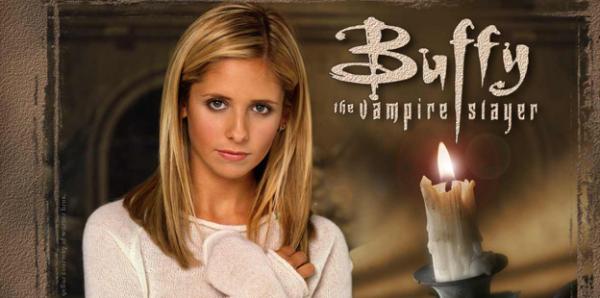
resizedimage600298-Standard-Image-Size-Buffy

Utilitarian Review 4/25/15

On HU

Featured Archive Post: Pam Rosenthal on Jo Baker’s Longbourn — literary fiction or romance?

Shonen Knife forever.

Ginsburg and Breyer have doomed us all.

Nate Atkinson wonders whether the superhero genre, or any genre, can be racist in itself.

Stephan Gary on ARTS video games, neoliberalism, and randomness.

Chris Gavaler on the X-files and super doctors.

The Premiere of Agents of Shield is really racist.

Episode 2 of Agents of SHIELD is also really racist. They’re on a role.
 
Utilitarians Everywhere

This was kind of an insane week. I had six pieces published in one day, which I think is a record…and the Playboy piece on Laverne Cox went semi-viral on twitter.

For Pacific Standard I wrote a piece on the importance of sex workers and former sex workers doing research on sex workers.

For Chicago Magazine I wrote about how Chicago’s torture reparations fit into the case for reparations for African-Americans.

At TNR I wondered why all the hate for Superman?

At the Life Sentence I explained why cozies are morally reprhensible.

At Reason I wrote about how Daredevil sacralizes torture.

For Playboy I wrote about:

—how the structure of twitter is optimized for abuse, and needs to be changes.

— how poptimism does’t limit music criticism; attention does.

Laverne Cox posing nude and how radical feminism often fails black women and trans women.

At Quartz I wrote about how searching for happiness makes you unhappy. Also evil.

At Ravishly

—I wrote about Daredevil and how white saviors need injustice.

—I argued that to puncture the cult of motherhood we need to value other relationships, not independence.

At Splice Today I wrote about how Orphan Black’s male clones are kind of boring stereotypes.
 
Other Links

I think with all the above I’m a little link-exhausted…but if you have pieces you’d like to share in comments, that’d be great.
 

c_fit,h_1280,q_80,w_720-http---images-origin.playboy.com-ogz4nxetbde6-4zvU9iSoJ2M2OGOSMcc2U6-8bbbc50932f148d9d10dfda1e538776f-main_Laverne-Cox

Waiting for Alan Rickman

Zoe Saldana as "Cataleya" in Columbia Pictures' COLOMBIANA.

 
This first ran on Splice Today.
_________

Good guy, bad guy. It’s what you do if you’re making a basic action/adventure movie. In Die Hard, you have John McClane as the hero…and the most interesting, most charismatic, most important secondary character is Alan Rickman having the time of his life as Hans Gruber. In Face/Off, you’ve got John Travolta as the good guy (or bad guy) and Nicholas Cage as the bad guy (or good guy), and who the hell can remember anybody else in that film? Superman’s got Lex Luther, Batman’s got the Joker, and Jennifer in I Spit on Your Grave has her evil rapists. Good guy, bad guy. A simple-minded formula for people who want to sit and watch simple-minded virtue triumph while things blow up. You give them what they want, and they are happy.

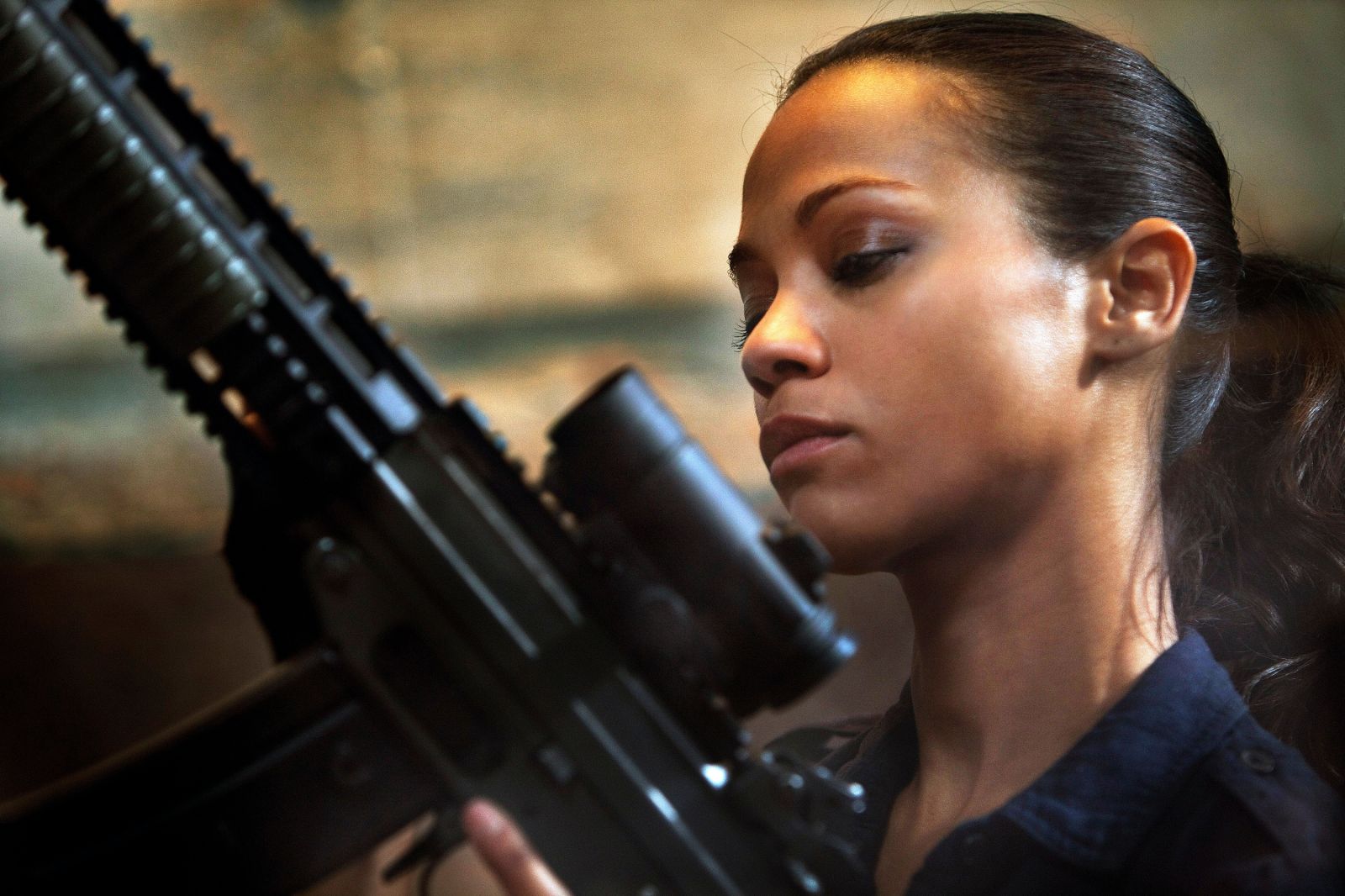
Olivier Megaton, director of Colombiana is not trying to be fancy. He wants to give you the good guy — he hired Zoe Saldana to play heroine Cattaleya, gave her lots of firepower, skintight outfits, and a tragic backstory, and sent her out there to right wrongs and/or cause explosions. And he wants to give you the bad guy too. Evil Colombian drug lord who murdered Cattaleya’s parents while she watched — offensively stereotypical, yes, but for that very reason an efficient fulfillment of narrative expectations. So you see crime lord Don Luis (Beto Benitas) and his henchmen Marco (Jordi Molia) pop up at the beginning all swarthy and sneering and you say, okay, so these are the guys we hate; for the balance of the film we’ll get to see them being sneaky and nasty and underhanded and ruthless and then at the end they’ll get their satisfying comeuppance. Thus it has ever been, thus it shall be.

Except…somewhere, somehow, something goes horribly wrong. Cattaleya, the good guy (or in this case good gal), wreaks horrible vengeance on slimy evildoers just the way she’s supposed to…but somehow the prime evildoers, the guys we’re supposed to love to hate, are brutally blindsided not by our heroine, but rather by a series of viciously sodden subplots. There’s lots of back and forth with Catalleya’s adoptive, tough, but tender-hearted uncle. There’s sexy shenanigans with the hot artist-guy boyfriend with the adorable sign between his ears proclaiming, “this space for rent.” There’s the earnest cop and his earnest cop sidekick who pursue Saldana by drinking coffee and looking at computer screens and talking into cell phones, or sometimes by doing all three while simultaneously reusing footage from every Hollywood film from the last decade.

By the time we’ve eliminated the uncle and watched the boyfriend take off his shirt and watched the cop and his subplot emit their last joint indifferent fart, Megaton has almost run through his hour and forty minutes, and there’s no time left for the baddies. The final apocalyptic fist fight between Cateelya and Marco is shot in kinetic jerky fast forward, presumably because the director was worried the clock would run out. And after that, the supposed criminal mastermind doesn’t even get a face-to-face confrontation. It’s like Saldana spent her life looking for revenge, and then just shrugged and said, “ah, to hell with it. I guess I’d rather whimper at that boring artist guy — or maybe talk tough to that cop, presuming I can tell him apart from all the other cops.”

The saddest part is that Colombiana has a real star; a hero with charisma and beauty and oodles of killer instinct. Not Saldana, alas, who has the intensity of a mildly weepy guppy, but Amandla Stenberg. Stenberg plays Cattaleya as a child with a restrained and canny brutality that brings the film’s first half to life despite the best efforts of every adult involved in the project. When the young actor impassively makes herself vomit, or declares to her uncle with utter conviction that she’s given up on being Xena Warrior Princess, and now she wants to be a killer, you know that here, at least, is a hero who deserves the best villain Hollywood can dish out.

Denied that, however, she should at least get the chance to kick Olivier Megaton a good crack in the shins on our behalf. Vengeance is beautiful.

Stealing Your Relics for Your Own Good

Agents of SHIELD returns

 
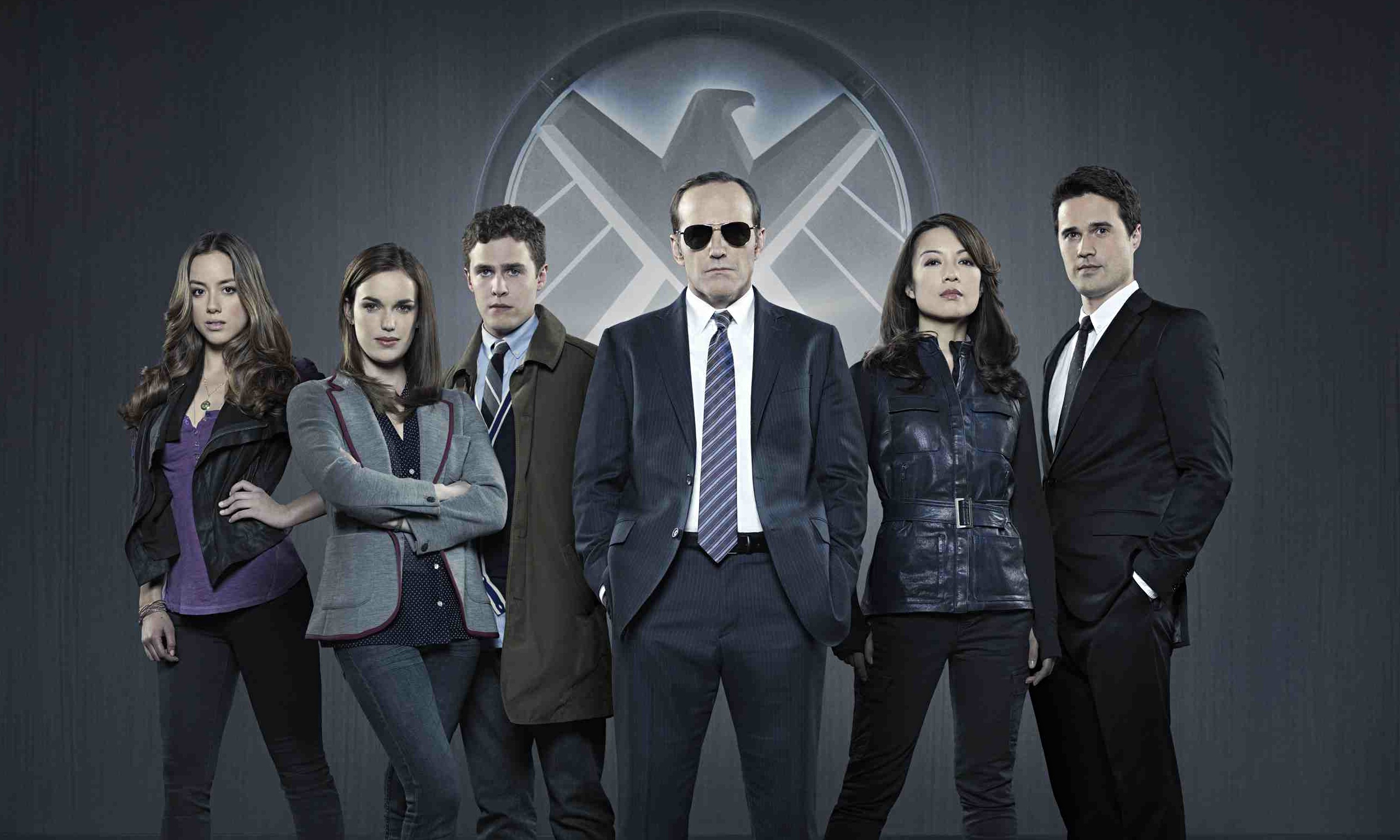
Well, I was supposed to have another post today, but it fell through…so. Second episode of Agents of SHIELD, just as racist as the first? Somewhat improbably, yes.

Our team heads off to Peru to find an object of great power, which they appropriate in the name of international law and harmony and because white people are the best ones to hold onto bombs, just ask Hiroshima. The Peruvians understandably don’t see it quite that way, and try to get the object for themselves. In particular, one of Coulson’s old flames, a (surprise!) hypersexualized Latina woman tries to use her wiles on him, but he’s too stoic and smart and white. The team sets aside its internal differences to self-actualize through the slaughter of the brown people whose stuff they’re stealing. Then at the end Samuel Jackson shows up and gives forth with the silly over the top indignation just to show that there’s no hard feelings from POC about the pillage and murder. Happy ending all around.

What’s interesting here is that this isn’t even really a superhero narrative. There aren’t any metahumans about; it’s a basic action-adventure narrative. Yet, the superhero filled world it exists in remains important — and part of the way it’s important is in the racism. Superhero genre default is that the powerful are good; the righteous who win are right. In the context of international security arrangements, this ends up meaning that stark imperial condescension is justified, and the bad guys are the indigenous people who object to having their borders violated and their resources robbed.Similarly, online activist Skye’s efforts to argue for people resisting oppression are pooh-poohed; rebellion against authority is portrayed as violent while the gun-wielding international agents with the flying fortress are just protectors.The connection between superpower narratives and the international superpower couldn’t be much more naked, or much more unquestioned.

Be White Or Explode

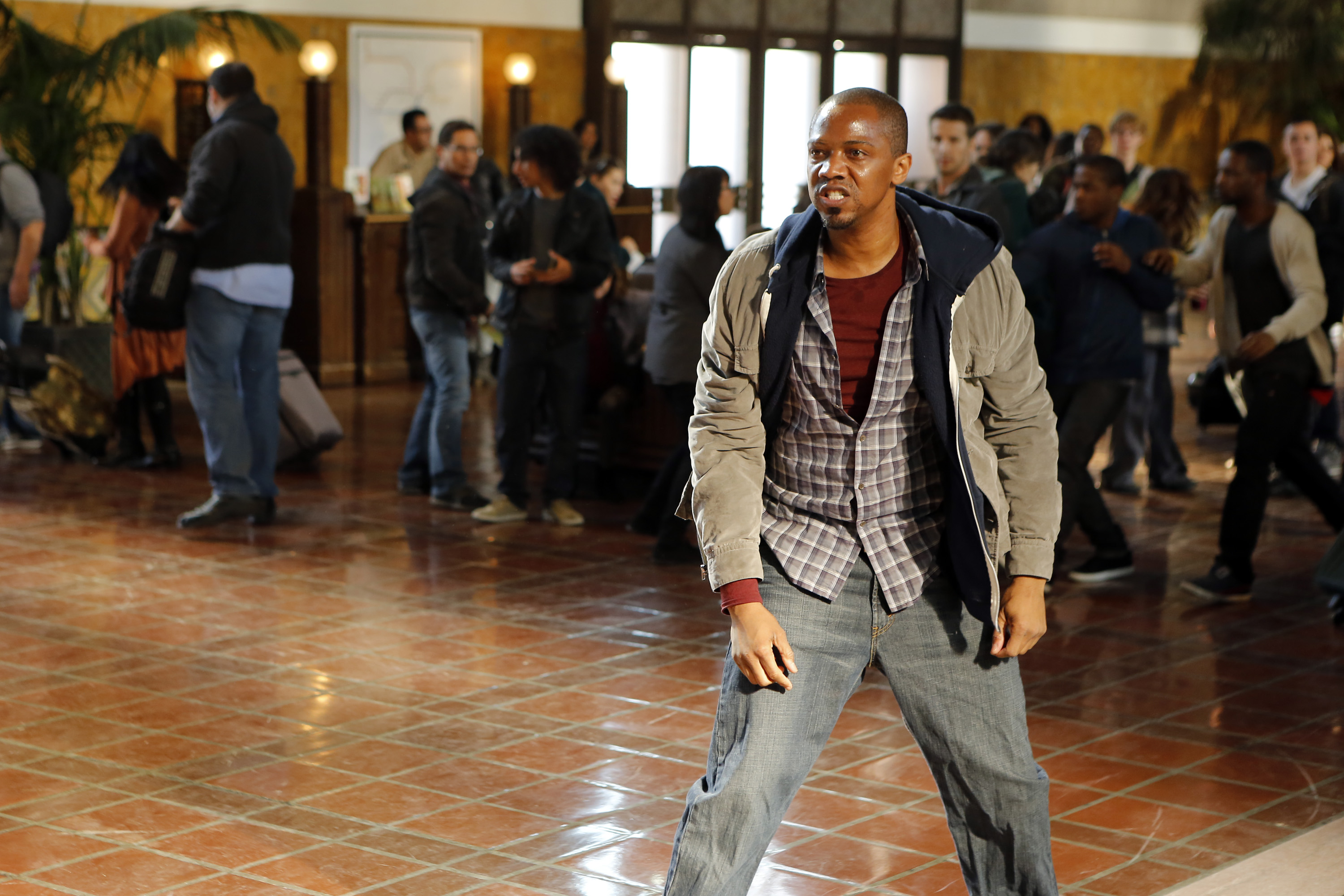
Agents of SHIELD starts out as a black superhero story. Mike Peterson (J. August Richards), a laid-off factory worker, is on the street with his son when a building nearby explodes (as they do.) He hears someone screaming for help inside, and uses super strength to smash handholds in the wall, climb up, and save the damsel in distress. He then leaps to the ground and slinks away, covering his head with his hoodie. He’s soon being referred to as the Hooded Hero.
 

J. AUGUST RICHARDS

This seemed like an intriguing development. No one had told me that AoS was based around the adventures of a super-powered, single-dad, working-class black man. Even the hoodie — a reference, intentional or otherwise, to Trayvon Martin’s death the year before the pilot aired — seemed potentially positive. The symbol of supposed black criminality reversed and turned into a heroic icon; that could work, maybe. Maybe?

Or then again not so much. As you know if you’ve seen any of the series at all, the Hooded Hero is not the hero. He’s just some schlubby plot point. He never gets to save anyone else. He volunteered to be a guinea pig for an experimental treatment after he was hurt on the job, and his powers are unstable. Soon he’s experiencing uncontrollable rages, beating up his old factory boss, and engaging in kidnapping, assault, and other nefarious super-villainesque deeds. It turns out even the woman he saved wasn’t an innocent, but the evil scientist herself. At the end he gives a speech about how people like him don’t get a fair shake, etc. etc., and the white guy hero without superpowers listens to him sympathetically and calms him down to where he can be ignominiously shot with some sort of sedative for his own good. Yay.

It all seems wearisomely familiar, doesn’t it? For me I was reminded of one of the first comics I think I ever read; an old Flash story from way back in the 1970s. The comic is about Ms. Flash; Patty Spivot is standing in Barry Allen’s lab when (improbably) another bolt of lightning hits, electrifying the shelves of chemicals and giving her superspeed just like Barry Allen had. She too decides to fight crime with her super-speed…except there’s a catch. Her powers are (wait for it) unstable; whenever she runs anywhere, she causes poison gas to seep into the air, or fires to break out. She doesn’t believe that she’s causing the damage, so Barry has to contain her and eventually figure out a way to depower her. Only guys can be Flash; empowered women are too dangerous. End of moral. (It was all an imaginary story anyway, so I guess you could see it as some sort of critique of Barry’s paranoid misogyny, if you felt like being kind.)

Just as the female Flash is a danger to us all, so, in AoS, is the black supehero. The Hooded Hero talks throughout the episode of his desire to be good, and he’s supposed to be a good man confused by the treatment he’s undergone. But that just emphasizes the disconnect between power and blackness. Good white people who get superpowers go off to save the day; the Hooded Hero proves his goodness by recognizing that he can’t do anything but stand there and let the white super-espionage dudes get a clear shot at him with their magic depowering gun.

You could argue I guess that the Hooded Hero doesn’t need to stand in for all black superheroes ever; he’s just one guy, after all. But the show stacks the deck by, inevitably, presenting him as the only black character around. Other than the wearisomely obligatory Asian martial arts expert, the entire SHIELD team is white. (Update: Skye, the superhacker, is bi-racial, with Chinese ancestry.) The climactic surrender scene, then, takes on racial overtones that the show is clearly not prepared to handle. Peterson rails against the giants, the people putting him down — which diagetically are supposed to be the superheroes. But as a lone black man facing a sea of white agents, it reads as a lament about whiteness. In that context, the denoument, in which the solution is for the black guy to trust patiently that the white cops shooting him are beneficent, seems almost unbelievably callous — especially, again, in light of the perhaps accidental but unavoidable resonance with Trayvon Martin.

None of this is particularly surprising given the crappy record of the superhero genre on race…but still, the gratuitous stupidity of it make you shake your head a little. Joss Whedon, who’s supposed to have a brain, directed — and yet, the best he could come up with is a parable about how black men with power need white agents of the state to shoot them for their own good? If this is how the series handles race, maybe it’s just as well that there aren’t any black continuing characters. Erasure is bad, but condescending disempowerment may just be worse.

Ginsburg and Breyer Have Doomed Us All

Ruth Bader Gisnburg was honored in Time this week, so there was a lot of Ginsburg love floating around. In response, I thought I’d reprint this Splice Today piece about how Ginsburg and Stephen Breyer should have retired, and now that they didn’t we’re all screwed.
__________

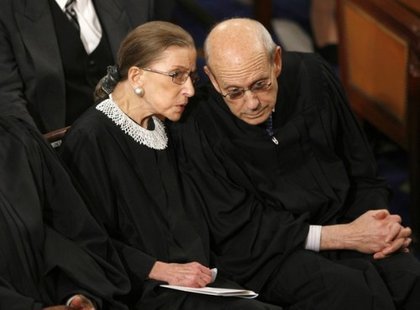
Justices Ginsburg and Bryer chat before Obama's address to a joint session of Congress in Washington

 
It’s increasingly likely that the 2014 midterms will result in a Republican Senate. It’s quite possible that a Republican will be elected in 2016. The government, therefore, is more progressive now than it will be for another six years. Ruth Bader Ginsburg is 81; Stephen Breyer is 75. They are both in good health, but when you get into your 70s and 80s, six years can cause major reversals. If they want their legacy to be carried on by other progressive justices, the smart thing for them to do is retire now. If they wait, and get sick in, say, four years, their replacements could be appointed by a Republican president, and the balance of the court tilted decisively conservative for who knows how long.

Judges who care about progressive goals should try to ensure continued progressive justices on the court. That’s a pretty simple calculus. But Dahlia Lithwick and Garrett Epps both disagree. Epps says that Ginsburg loves her work and that “the timing of judicial resignation is a complex mix of ego, ideas of mortality, political fealty, and dynamics within the Court”—which I’m sure is correct, but doesn’t either refute the electoral calculus, nor explain why it shouldn’t be taken into account. Lithwick, for her part, insists that “arguments about Ginsburg’s political judgment almost by necessity inflect upon her judgment as a whole, and yet nobody has advanced any argument for the proposition that Ginsburg’s judgment is failing.” The reasoning here is that Ginsburg is awesome, her faculties sharp, and that suggesting that she might possibly make an error, or even attempting to present arguments to sway her, is disrespectful. Ginsburg is the Pope; not only can’t you question her pronouncements after she’s made them, you can’t even offer an opinion on a matter where she hasn’t yet weighed in.

Ginsburg and Breyer are powerful and important people in the U.S. government, but they aren’t kings or popes. They’re public functionaries in a democracy—we pay their salaries. Moreover, as Jonathan Bernstein points out, the founders intended judges to be included in the democratic process. Federal judges are appointed by the executive and confirmed by the legislative branch. Executive and legislative elections therefore have a major effect on the judiciary. Pointing that out isn’t bad form or insufficiently respectful. It’s simply acknowledging how our Constitution works.

Of course, the Constitution also says that Supreme Court justices serve for life, or until they decide to retire. No one can make Ginsburg or Breyer leave; it’s a decision they’ll make for themselves. But part of democracy is a free press, and part of a free press is attempting, through argument and reason, to influence policy and political actors. And whether they want to be or not, Ginsburg and Breyer are political actors, and their decisions about when they will retire have enormous political consequences.

Epps says he thinks it’s “bad manners and bad psychology” for anyone to tell Ginsburg (or presumably Breyer) what to do. As far as the “bad psychology” goes, the idea that Ginsburg is some sort of cantankerous child who will stay in her seat just to spite some op-ed writer strikes me as insulting and ridiculous. And for the “bad manners”: well, democracy thrives on bad manners. Deference to power and reverence for position have their place, but in a democracy that should be fairly circumscribed. The Constitution says that Ginsburg and Breyer can hang on as long as they want or can. But it also says that people have the right, and arguably the responsibility, to point out what the political consequences of that political decision may be.