Prison and White People

This first ran on Splice Today.
_______

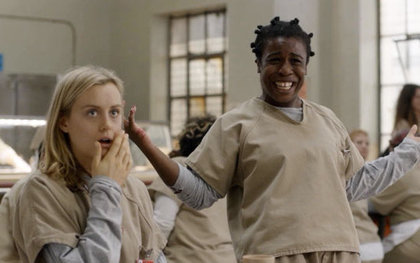
After the first season of Orange Is the New Black, some writers like Yasmin Nair criticized the show for its focus on, and subtle bias towards, white women, especially towards star Piper Chapman (Taylor Schilling). The second season addresses these complaints head on. In episode eight, Piper gets a furlough to visit her dying grandmother, despite the fact that many other prisoners, mostly black, have been refused furloughs to see ill loved ones. Piper becomes the (understandable) target of much resentment, and after getting angrier and angrier, she stands up in the cafeteria, apologizes on behalf of white people everywhere, tells them that even though her grandmother is white, she still loves her, and encourages her tormentors to “shut the fuck up.” After which, Suzanne (Uzo Duba), on behalf of the other inmates and (presumably) the viewing audience, throws cake at this privileged, whiny little ass. End of moral.

But in the book on which the memoir is based, Piper didn’t actually get furlough. She asked to see her grandmother die, but the state said, “no.” Piper in real life certainly was middle-class, and privileged in many ways—not many ex-prisoners go on to write famous memoirs that get turned into hit TV series.  But the privilege presented on the show in episode eight, what she’s punished for, wasn’t actually a privilege she had. On the contrary, she was, in this matter, treated just like every other prisoner; with callous, bland disregard and petty authoritarian vindictiveness.

You could say that this doesn’t really matter; the dramatic point is that Piper is middle-class and white and is therefore better off than her cellmates. The incident in the cafeteria demonstrates that; why nitpick about details?

I think it’s worth nitpicking about details, though, because the moral here about Piper’s privilege is a little confused. Specifically, the show seems in many instances so eager to pull Piper down a peg, and to show that she’s privileged, that it can elide the fact that, white as she is, she’s in prison. Moreover, she’s in prison on a decade-old charge of having transported heroin. She committed a pretty low-level crime a while back, and so she’s taken away from her family and robbed of her freedom. She may be privileged in comparison to some of the people in prison with her, but compared to many viewers (and not just white ones) her life, as chronicled in the show, sucks.

This isn’t to say that race is irrelevant. But for the real Piper, racism did not allow her to go see her grandmother: racism prevented her from seeing her grandmother. Racism was used against her, not in the sense that she was discriminated against because she was white, but because the mechanisms and institutions built to police black people ended up policing her.

Racism against black people has been used as an excuse to target certain white people throughout the history of the U.S. White abolitionists who opposed slavery were subject to violence along with blacks in the Cincinnati riots of 1836. During Reconstruction, Northerners who supported black rights could be attacked and killed—The KKK killed white and black civil rights workers. Gone With the Wind gleefully recounts the murder of a Yankee official during Reconstruction who dared tell black people they could marry whites. For that matter, whites who did want to marry blacks, like Richard Loving, faced harassment and discrimination. Even beyond that, Ta-Nehisi Coates points out that politicians who’ve been associated with black causes, whether the Republican Party before the Civil War or the Democratic Party in more recent years, have been subject to racist attacks. As Coates says, “Abraham Lincoln’s light skin did not save him from a racist political attack, any more than it saved him from a racist assassination plot.”

Piper (in real life and in the TV show) wasn’t a civil rights worker or a political figure. But the fact remains that our prison system, the largest in the world, has been justified and sustained by a cultural commitment to policing people of color. As many historians have argued, the war on crime was inaugurated by politicians like Barry Goldwater and Richard Nixon, who argued that civil rights demonstrations and movements were leading to a breakdown of law and order, the solution for which was more cops and more prisons. The result was an ongoing rhetoric of race-baiting around crime and imprisonment, exemplified by George H.W. Bush’s notorious 1988 Willie Horton ad. That rhetoric in turn fueled a 700 percent growth in prison population between 1970 and 2005.

In 2010 blacks were incarcerated at a rate of 2207 per 100,000 people and Latinos at the rate of 966 per 100,000, as opposed to only 380 per 100,000 for whites.

Nonetheless, there are still a lot of white people in prison: white males were 32.9 percent of the prison population in 2008, as opposed to 35.4 percent black males.  And a large number of those whites were in prison for the same reason as blacks—because America, in an excess of racial panic, has built a massive drug war and a massive prison system in an effort to police and control black people. America’s prison system disproportionately affects black people, through sentencing disparities for crack and other systemic biases. But the drug war machinery sometimes, almost incidentally, catches white people in its gears as well. The white rate of incarceration in the U.S., at 380 per 100,000, is still in the top 20 incarceration rates worldwide, and is twice as high as rates in England and Wales.

Since the moment it enshrined slavery in its Constitution, American authoritarianism has been built upon racism. Piper may be privileged in some ways, but at least for a while that racist authoritarianism has gotten her by the blonde locks as surely as it’s got her cellmates. Once you’ve built your prison, you can put anyone in it. Which is just one way that racism has made America less free, especially for black people, but not for them alone.
 

large_rsz_suzanne

Voices from the Archive: Caroline Small on Female Comics Creators

As I mentioned yesterday, Kelly Thompson is running a poll to make a list of the best female comics creators. I thought I’d reproduce one of Caroline Small’s comments on this topic from some time back. She’s responding to the late Kim Thompson. (The back and forth was actually on another site…click through to the thread if you want all the ins and outs.)

I’m guessing nobody’s still reading this thread but I’m going to do something contrarian and agree with Kim — although for reasons he might not like. I think he’s absolutely correct that any discussion like this is problematic without some discussion of the values that make work “great.” But to me, the reason that is so important is because, if the history of women’s writing is any comparison, the work of women cartoonists, considered altogether and on its own terms, without reference to the historical criteria used to evaluate (mostly male) cartoonists, may in fact challenge the assumptions and criteria that we use to evaluate the work that’s been done so far.

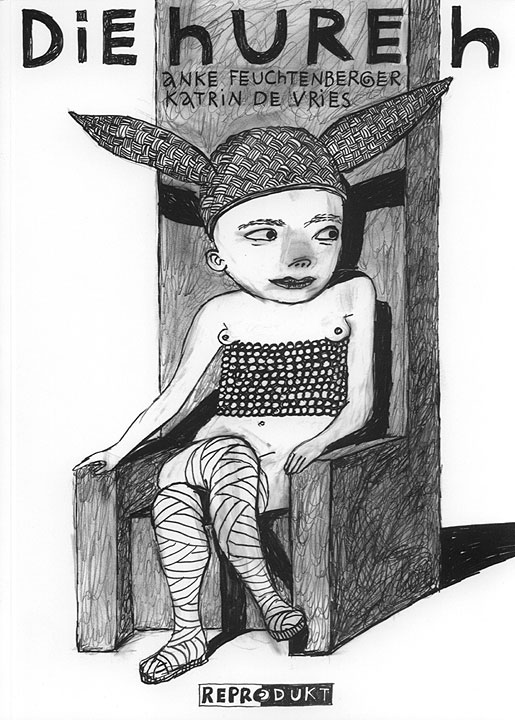
I’m a known partisan for Anke Feuchtenberger’s marvelous work. Having recently been introduced to Charlotte Salomon’s work I anticipate a similar feeling to emerge.

But a lot of people say artists like Feuchtenberger and Salomon are not “cartoonists” because they don’t work in quite the same aesthetic tradition as the ones in your list, Kim — even though Feuchtenberger at least describes herself as a cartoonist. When I start from their work as my aesthetic benchmark, more women emerge: Ana Hatherly, Elisa Galvez, Dominique Goblet.

The aesthetic tradition of “classical cartooning” (?) unfortunately hasn’t coincided historically with a very welcoming environment for women, one where we have lots of role models and fellow travelers to smooth the path, to provide encouragement and motivation and inspiration, and to create a sense of shared voice. That’s why I’m resistant to the 60-year metric. It doesn’t let the best work by women who have come of age after the advances of recent decades — advances Fantagraphics was part of — come to the surface for critical examination. I think if we limit ourselves to that historical precedent, we can’t, say, evaluate the work of innovative cartoonists like Cathy Malkusian or Lauren Weinstein in the context established by cartoonists like Feuchtenberger and Salomon. And I think reading them that way, instead of against, say, Herge or Herriman, leads to fascinating insights about the cartooning aesthetic and its possibilities — the comparison made me like Malkusian and Weinstein’s work much more than I did before I approached in from that perspective. It remains an open question what such comparisons would yield for reading Alison Bechdel or Lynda Barry or other women who work in the more traditional cartooning aesthetic.

Maybe it will in fact be 60 years before we can accurately say who the greatest women cartoonists will be, but I don’t think we should be afraid of recognizing and celebrating the work of women cartoonists as “great” until that time has passed. That’s largely abdicating any role that critics and criticism can play in making the environment of cartooning in the broad sense more nourishing for women cartoonists. If we need to codify and celebrate and advocate a separate tradition of “women’s cartooning” with its own aesthetic and cultural criteria in order to be able to roar these women’s names as greats in comics, then so be it. I think Herriman can stand the competition. Maybe we need another word for “comics artist” than just “cartoonist.” But what I think is sexist is the demand that women work in that tradition and only that tradition in order to be considered great.


9783931377861

Utilitarian Review 3/7/15

Wonder Woman News

I’m reading Wednesday, March 11, at 6:30 in Chicago at 57th Street Books.

I’m reading Saturday, March 14 from 4-5:30 at the Urbana Free Library down in Urbana, IL.

On HU

Featured Archive Post: Ilana Gershon on policing teachers on social media.

On how the Batman TV show never goes bad.

I compiled a list of my writing about misandry.

Adrian Bonenberger on Bill O’Reilly and why we like some liars and not others.

Tracy Q. Loxley compares Iggy Azalea and Vanilla Ice.

Donovan Grant on the new Captain America and the dream of a black superhero who doesn’t suck.

Chris Gavaler tells “12 Monkeys” how to fix their Time Machine.

Kristian Williams on John Constantine and the art of magic (and/or the magic of art.)
 
Utilitarians Everywhere

At Reason I wrote about the Homan Square black site and the history of police torture in Chicago.

At Ravishly I wrote about:

Spock’s sex appeal and the downsides of Vulcan masculinity.

Michelle Rodriguez, whiteness, and superheroes.

why superheroes of all sizes are better.

call-out culture, and how critics of it seem to assume that twitter is a left space (it isn’t.)

At Splice Today I reviewed a bunch of awesome metal albums.

At the Reader:

—I wrote about a nifty anniversary show at the Smart Gallery

— I reviewed D&D prog metal band Elder
 
Other Links

Russ Smith on how David Brooks is still awful.

You can buy a book for an incarcerated child.

Ta-Nehisi Coates on the Ferguson report and America’s history of stealing stuff from black people.

Aaron Bady on American academia’s ignorance of African literature.

Interesting piece on booking women authors on television talk shows.
 

john-constantine

Best Women Comic Creators

Kelly Thompson is running a poll to find the greatest female comics creators. You should go vote if you haven’t.

Here’s my list fwiw, from most best to slightly less best (they’re all writer/artists.)

1.Ariel Schrag
2.Edie Fake
3.Ai Yazawa
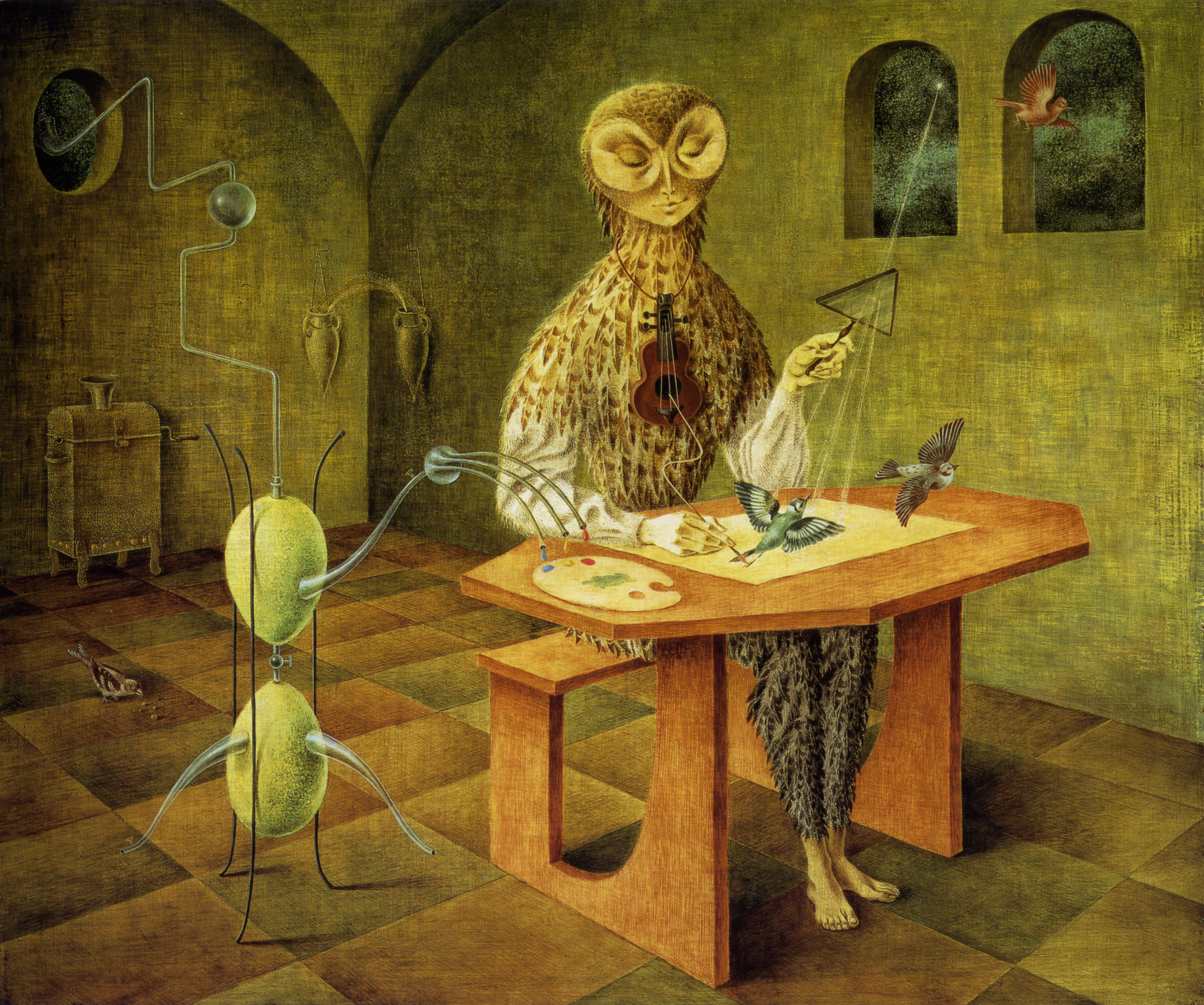
4.Remedios Varo
5.Lilli Carré
6.Moto Hagio
7.Tove Jansson
8.Rumiko Takahashi
9.Kara Walker
10.Marley

I tried not to think about this too, too much, since I tend to think these lists are pretty arbitrary anyway. Edie Fake uses the pronoun he, but he’s told me he identifies as a woman, so I think it makes sense to include him. Remdios Varo and Kara Walker aren’t usually thought of as comics people, but I think they’re work can both be seen in the tradition of cartooning. Lilli Carré’s most amazing work in comics is arguably in the gallery setting as well. Marley isn’t much known, but I adore it…and I think my essay about her may be the one Comixology column I haven’t brought over to HU? Maybe I’ll post it here tomorrow.

None of these are superhero creators or webcomics folks, so I doubt any of them will make the final CBR list (except maybe Rumiko Takahashi?), which I think will be tilted to capes and a Kate Beaton or two. I suspect Gail Simone will top the writers list…not sure who would win the artists? Amanda Connor maybe?

Folks might be interested in the list of female comics artists who made HU’s all time greatest list a few years back. Feel free to list your picks below if you’re so moved (but vote in the real poll too!)
 

Remedios_Varo_(388484001)

Misandry Everywhere

I’ve written a fair bit here and there about misandry and discrimination, prejudice, and violence directed against men. It seemed like it would be useful to have all the links collected in one place…so here they are, in roughly chronological order. I think this is everything, but if you see something I’ve missed, let me know.

Misandry and the Trayvon Martin Case

Misogyny Hurts Men Too

When Men Experience Sexism

On stereotypes of men in Orange Is the New Black

An interview with genocide scholar Adam Jones, who does a lot of work on violence against men.

What Hollywood Needs Is Fewer Strong Male Characters

On Andrea Dworkin, hating men, and the patriarchy.

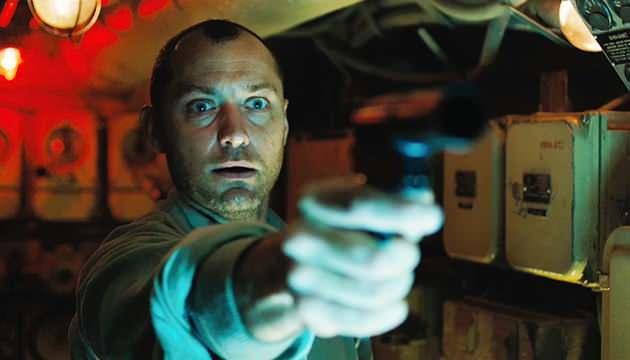
On the film Black Sea and the disposability of working-class men.
 

45b2fba2bd0e5a6899d730316b13bfc4fd2e2b51

Utilitarian Review 2/28/15

On HU

Featured Archive Post: Comics vs. fashion editorials.

James Lamb on why superhero diversity isn’t enough.

Me on Static and how if you see racism you’re a supervillain.

Tom Syverson on The Bachelor, hysteria, and the pain of being an object.

Chris Gavaler on Paradise Lost, the first superhero story.

R.M. Rhodes on the contribution of art director John Workman to Heavy Metal.

Me on X-Men: Days of Future Past and the coming post-racial genocide.

Shonté Daniels reviewed the game Hot Tin Roof.
 
Utilitarians Everywhere

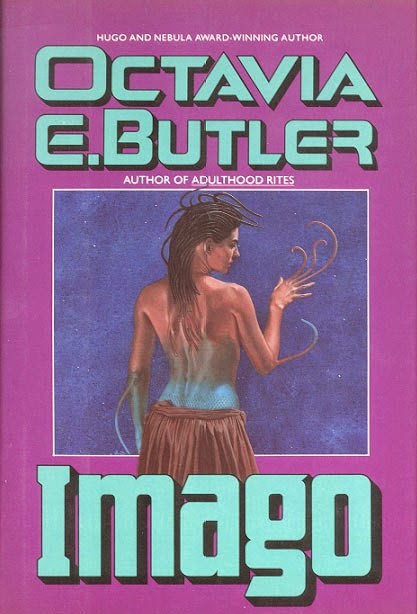
At the New Republic I wrote about the limits of diversity and how Octavia Butler created the greatest black superhero.

At Ravishly I wrote about:

—I interviewed Dee of blackrocktumblr about genre, rock, and race.

—I wrote about our forthcoming dog.

—I write about how writers aren’t romantic heroes.

At Splice I cheered Rahm not winning because he is a terrible mayor.
 
Other Links

Kenya Golden on Amber Rose.

Alyssa Rosenberg on barriers to the entertainment industry getting more diverse.

C.T. May on Harlequin and feminism.

New Open Mike Eagle EP
 

Imago

Batman Never Goes Bad

joker_surf

 
Various people had informed me that the Batmobile drove off a cliff in the third season of the Adam West TV series. Budgets plummeted, single episodes rather than two-parters became the norm, direction was lost, and sadness reigned even among the giggling villains. Matt Yockey argues that the growing political turmoil of the 60s made it harder for the show to sustain its delicate balance between conservatism and satirizing conservatism, leading to incoherence, dwindling market share, and falling quality.

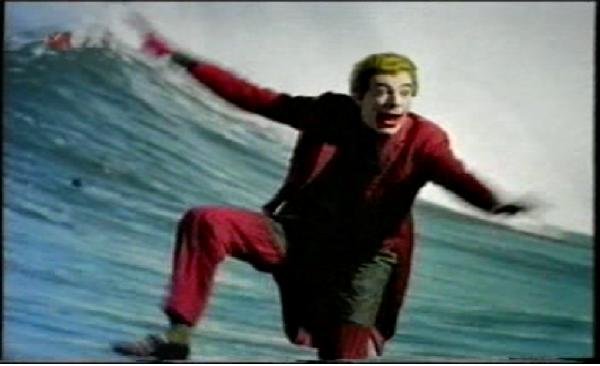
At least as far as the last goes, it ain’t necessarily Bat-so, though. The low points of the series aren’t in the third season, I don’t think — nothing is clearly worse than the first episode of the 2nd season, or than the limping crossover with the Green Hornet. There are certainly weak moments — the three-part trip to Londinium, largely composed of half-hearted jokes about how the British are so British, is pretty crappy, and the special sexism episode where Nora Clavicle takes over the police department is just about as offesnive as Chief Screaming Chicken. But, on the other hand, the shorter episode length and the sense of improvisatory confusion lends some episodes a manic genius rare in the rest of the series. The Joker surfing episode is particularly brilliant, abandoning all pretense of coherence as the Joker uses a machine to sap the abilities of a pro-surfer and challenges Batman to a surf-off because supervillains want to rule the beach? The whole episode seems like an excuse to get Chief O’Hara to declare, “Cowabunga, B’gora!”

So, if the quality doesn’t fall off, particularly, why do people insist it does? Hard to say…though I think there’s an impulse to try to find some aesthetic reason, or (with Yockey) some historical reason, or really any reason at all for the show’s meteoric ascent and equally meteoric fall. Everyone loved it, so the show must have been doing something right — then everybody stopped loving it, so the show must have been doing something wrong.

I do think popularity often has something to do with quality or aesthetic choices — but what or why is often hard to figure. Maybe Batman grabbed the zeigeist just right as Yockey suggests, and then the times passed it by. But then again, maybe people just got tired of it. Capitalism is prone to bubbles of various sorts; for a second there everyone wanted Batman, the way everyone wanted mortgage securities or tulips. Then people stopped wanting them. The tulips were never worth anything to begin with; Batman never changed in quality. But the market revalued them because that’s what the market does. It’s sort of like the Penguin infecting all the cash in Gotham city with a beetle-carried sleeping sickness. It doesn’t have to make much sense.