The Coming Post-Racial Genocide

maxresdefault
 
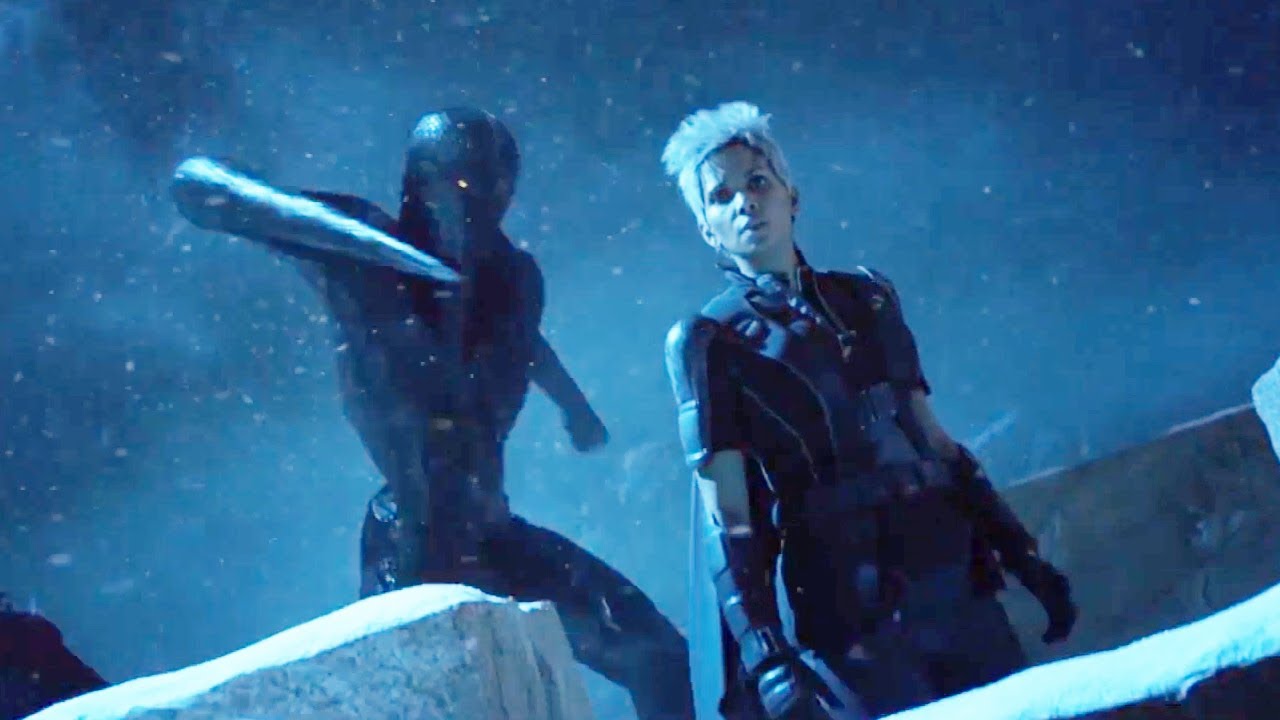
X-Men: Days of Future Past proves Bryan Singer’s genius as a director. You wouldn’t think that racial genocide could be boring, but Singer manages to make it so. Partially he does it through the standard repertoire of tedium; lax dialogue; a convoluted plot that goes nowhere in particular before flopping over and giving up; a style that leaves even moderately talented actors like Hugh Jackman and Jennifer Lawrence adrift and disconnected from any recognizable plot arc or emotion. The narrative calls for Jackman’s Wolverine to be mellow lest he zap out of the past into the future; he responds by alternating between bland-face and stressed-face throughout the film; you can hear the audible click as Singer asks him to switch them.

The central failure of the movie, though, is that it systematically tries to erase the thing it should be about. The storyline is about a future in which the X-Men are hunted down and killed by an inimical human race. It’s a movie about genocide. And yet, the mechanics of genocide figure nowhere in the film. Not a single person expresses hatred or prejudice towards mutants; even the evil scientist Trask, who builds the killer Sentinels, seems to have no particular dislike of mutants; instead he seems to see them as a convenient bonding moment for humanity; a way to unite the human species against a common foe. Trask is Ozymandias and he has no more ill-feeling towards the X-Men than Ozymandias had towards his giant squid. The closest anyone in the movie comes to an expression of racialized disgust at mutants is a nurse who comments to a disguised Mystique that having blue skin might make you feel bad about your appearance. Hardly the stuff of Nazi propaganda, there.

Just in case you missed the point that the genocide is really nothing personal, the script goes out of its way, over and over, to let you know that there were lots of good humans who fought with the mutants against the killer Sentinels. Also, to let said regular humans were thought to to be likely to have mutant kids. This then is a mutant genocide in which humans neither hate mutants nor really single them out for harm. And yet, it’s not like the film is especially squeamish in other matters; Wolverine murders several people in casual cold blood. Video game body count death tolls are fine, apparently, just as long as no one really means anything by it.

Over the course of the film you get to see Sentinels murder various X-Men multiple times. Each murder is then erased by mucking about in the past, so you get the visceral rush of seeing folks dismembered without having to worry overly about the consequences. That seems to be the movie’s whole purpose; to enjoy genocide unmixed with any historical or ideological resonance — to turn the Holocaust into an inoffensive special effects extravaganza. In the future, the movie promises, the past won’t matter, and superpowers will reign down death divorced from animus, or even really from brain functioning. Drones will watch drones blow up without hate, or apology. Or interest.
Static Vs. The Race Hustlers

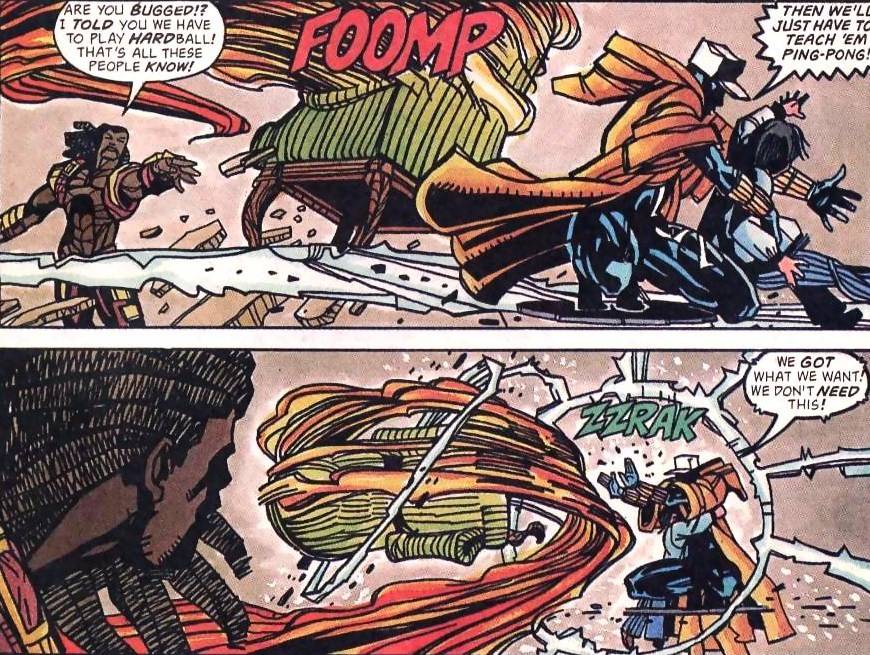
Last week I wrote a short post about Static Shock in which I argued that the book was mediocre genre product, but that at least it was mediocre genre product that made a gesture at diversity. Better non-racist mediocrity than racist mediocrity, I argued.

I still think that’s more or less the case…but is Static really not racist? It does have a black hero, definitely — but then, there are the black villains.

In particular, there’s Holocaust, the evil mastermind behind the first arc. Holocaust is a gangster, but he’s not just a gangster. He’s a gangster with a racial grievance. He tells Static that the hero is insufficiently appreciated. He adds that those on top in the world got there by “luck” — and not just luck, but privilege. “It’s connections. Who you know. Who your daddy knows. It’s birthright.”

But Holocaust, again, is the bad guy. His critique is part of his evilnness. The equality he wants is the opportunity to get cut in on the business of the Mafia; his vision of social justice is equality in the criminal underworld. He’s essentially a right-wing caricature of civil rights advocates; Al Sharpton as brutish, deceitful thug. When Holocaust starts to kill people, Static sees him for what he is, and abandons his evil advisor to return to his superheroic independent battle for law and order. The possibility that law and order might itself be part of a structural inequity is carefully kicked to the curb, revealed to be the seductive philosophy of an untrustworthy supervillain.
 

4301040-1028386-static_04_20

 
You couldn’t ask for a much clearer illustration of J. Lamb’s argument that the superhero genre is at its core anti-black, and that it therefore co-opts efforts at token diversity. The genre default is for law and order. Law and order, in the world outside superhero comics, is inextricable from America’s prison industrial complex and the conflation of black resistance struggles with black criminality. Static, a black hero, is defined as a “hero” only when he aligns himself with the white supremacist vision that sees structural critique as a cynical ruse.

I think it is possible for superhero comics to push back against that vision of heroism to some degree. Grant Morrison’s Doom Patrol does in some ways, for example. But Static is hampered by its indifferent quality; it’s not interested, willing, or able to rethink or challenge basic genre pleasures or narratives. Notwithstanding a patina of diversity, it seems like a superhero comic really does need to be better than mediocre if it’s going to provide a meaningful challenge to super-racism.

J. Lamb on Why Superhero Diversity Isn’t Enough

J. Lamb left this comment on my post about Static Shock and diversity in mediocre genre product; I thought I’d highlight it here.
&nbsp

“C’mon Noah, just drop the empty rhetoric and empty assertions about “quality” and simply concede my initial point: any conceivable writer writing a black superhero comic character is going to be told by a concerned person that they are doing it wrong.” – Pallas

I disagree with this assertion.

People are, as always, encouraged to write comics and other pop culture material that can be judged on its own merits. The difficulty I sketch above involves my assertion that writing a non-White superhero protagonist necessitates some interaction with/ consideration of the notion that the superhero concept itself is racialized. We’re talking about a genre developed when Jim Crow segregation provided the unchallenged public policy state and local American governments applied to Black citizens. We’re talking about a genre developed when successful navigation of American race politics for Black people likely meant that they or someone they know would endure domestic terrorism imposed by fellow citizens and unchallenged in the courts. Why must we believe that a literary genre developed during this time has not racial component, when practically all other American popular culture of the era does?

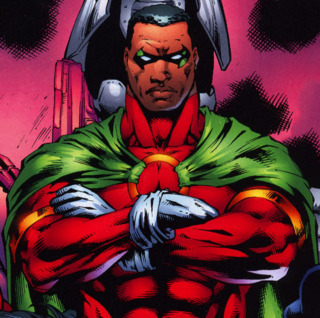
For me, it’s completely immaterial that the Milestone creators respected the superhero concept enough to offer Black superheroes; McDuffie et al. and their contributions should not be defied by present day observers. Icon’s an alien posing as Black Republican who adopts Superman’s public interaction (demigod savior/ crimefighter) to assist lower income Black Americans whose choices he often disdains. Where the books reflect on respectability politics and reduced economic opportunities for the Black underclass, the material works (at least in the issues I’ve read.)
 

3998727-638504-22

 
But when Icon cannot envision better conflict resolution solutions outside of punching the living daylights out of metahumans he doesn’t like — when Icon reverts to the moral position of a stereotypical superhero — the material’s innovation dies, and you’re left with run-of-the-mill 90’s superhero fights. That’s less interesting, and done better elsewhere.

It’s not about who characters like Rocket, Icon, and Static represent, or who the intended audience for their comics may have been (Moore wrote Watchmen for adolescent boys, too.) The question for any comic creator interested in developing a character of color should be “How does this character define their connection with this particular identity, and why should it matter to me?”

A serious attempt at answering this would prevent characters who are tangentially (insert minority status here) from standing in for meaningful diversity in panel, and would force comic narratives to stop ignoring meaningful diversity in favor of an inker’s burnt sienna hues alone. I’ve yet to find a superhero comic that accomplishes this feat effectively; just because the Milestone folk tried does not mean they succeeded.

So of course creators and their work will be evaluated, sometimes harshly. I recognize that for many, my position is heresy. But since Milestone, we’ve seen material like Captain America: Truth and Ms. Marvel and others. Gene Yang’s writing Superman soon, and David Walker will take on Cyborg. Plenty of comic creators will attempt to prove the superhero concept compatible with meaningful identity politics, and I wish them well. But too often the desire to see oneself in panel and on screen, the hope that at some point a person can stride into a comic book shop or turn on the CW and find a person of color in the gaudy lycra and skintight spandex of the superhero with neon strobes flashing from their fingertips overrides all other considerations among progressive comic fans. I oppose this.

Pallas, it’s completely fair to pan any comic for not being “super complex society changing treatise” serious about race. I should not have to assume that the characters of color I read about are only paint job Black. If so, then the audience for superhero diversity has all the ethical standing as the audience for an Al Jolson blackface revue, and I’m not paying $3.99 US for burnt cork comics.

Utilitarian Review 2/21/15

Wonder Woman News

I am reading at Women and Children First on Thursday at 7:30. Be there! (something compels you.)

Aimee Levitt with a brief review and a preview of the reading.

Catherine Kustanczy interviewed me for Mic.

On HU

Featured Archive Post: Dana Schechter on why Natural Snow Buildings is the best band you’ve never hear of.

Caroline Small on Delany and comics definitions.

Me on Static and diverse mediocre genre product.

Kim O’Connor on Michael DeForge’s First Year Healthy and mental illness.

Chris Gavaler on how the evil corporate Hydra monster has hijacked Marvel.

Osvaldo Oyola on romance comics and the weirdness of heteronormativity.

Ng Suat Tong on Dylan Horrocks’ mediocre Sam Zabel, and pens as penises.

Robert Stanley Martin on what’s been overlooked at the Oscars.
 
Utilitarians Everywhere

At the New Republic I said we should get rid of public intellectuals.

At the Atlantic I wrote about why we should keep the guilt in guilty pleasures.

At Pacific Standard I wrote about

— how copyright damages learning and how I had to use pirated scans to write my Wonder Woman book.

—who is and isn’t responsible in totalitarian regimes.

At Ravishly I wrote about:

—how scientists who fear alien invasion should read Octavia Butler.

—The hidden queer history of the blues.

— To Kill a Mockingbird and imagining that all the racists are poor people.

At Splice Today I wrote about how

Atheists should own their violence.

Scott Walker is scary, but not because he’s electable.
 
Other Links

Terrell Jermaine Starr on harassment of black women online.

Ta-Nehisi Coates remembers David Carr.

Aimee Levitt on chick lit, lit fic, and Single, Carefree, Mellow.

Mikki Kendall on why Mary Shelly isn’t the first sci-fi writer.
 

afe521e6-ed7e-4a42-8db6-673a4f203188

Diverse Mediocre Genre Product

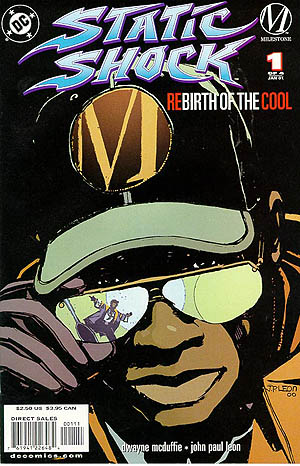
Static_Shock_-_Rebirth_of_the_Cool_(no.1_-_cover)

 
Static is the best known creation of the Milestone Comics label. Judging from the first collected volume, the rest of the line must be unmemorable indeed.

It doesn’t give me any joy to say that. Milestone’s efforts to create greater diversity in superhero comics were admirable and courageous, and I would like to be able to praise the results. But writers Dwayne McDuffie and Robert L. Washington III offer little in the way of innovation, or even interest. Static seems borrowed wholesale from Spider-Man — and not even from Lee/Ditko Spider-Man, but from the less interesting, less urgent, undifferentiated later rehashes. Static is a 15 year old trash-talking superhero. And…that’s really all there is to him. He experiences some minor relationship angst; flirts with some criminal acivity — but everything is resolved with little fuss or interest. Then the second bit of the first volume is given over to a largely incomprehensible and tedious crossover with a bunch of unmemorable other heroes. The goal is obviously to recreate the sense of a world of super-heroes you get in DC and Marvel — and I did get to feel just how utterly unapproachable those worlds must be to anyone coming to them cold without decades of background. I didn’t know who any of these people were, and there was no effort to make me care. The whole thing was almost impossibly pointless; random characters kept leaping up with no introduction to say something portentous before getting blasted. The whole exercise was dreary, joyless, and confused; not notably worse than the DC and Marvel competition of the day, but not any better either.

There’s a parallel with “Sleepy Hollow” perhaps, a current paranormal/crime television show notable for having a (relatively) diverse cast — and for not much else in terms of quality. I wish Sleepy Hollow was better, just like I wish Static Shock was better, because I appreciate their efforts to be more diverse and less racist than the competition, and I would like to be able to embrace them wholeheartedly.

But though I don’t really want to consume either Sleep Hollow or Static Shock, their badness is in its own way a kind of worthy breakthrough. Diversity shouldn’t have to mean greatness; most genre product is mediocre, and so, ideally, in a more diverse, less racist world, you’d have a lot more diverse mediocre genre product. White superheroes shouldn’t be the only ones who get to be poorly written and indifferently drawn; white actors shouldn’t be the only ones who get jobs in poorly conceived sit-com/adventure dreck. If we’re going to have mediocre entertainment, it should, at the least, be less racist mediocre entertainment. By the same token, I hope the new Spider-Man in the Marvel cinema franchise is played by a black actor. Someone is going to get to star in a massively overhyped bone-dumb nostalgia vehicle with explosions and moderately funny gags. Why should it always be a white guy?

Voices from the Archive: Caroline Small on Delany, Definitions, and Comics

DelanyKC
 
Caroline Small wrote an interesting commenton Samuel Delany’s view of comics and Scott McCloud; thought I’d reproduce it here.

Jeet and Noah: I guess I am still deeply skeptical about the assertion that Alan Moore and Neil Gaiman represent “Delany’s taste” in comics, rather than a strategic choice of writers to call attention to. I guess I just disagree that “taste” is what’s at stake here at all, or even that “taste” is a particularly useful category for understanding the role that Gaiman and Moore play in what Delany has to say about comics. (I realize I’m making a big deal out of something that I’m sure Jeet said casually, but it seems to me a particularly fecund slip…)

It’s not that I don’t agree to some extent: I find it deeply unpalatable when Delany uses words like “powerful, insightful and brilliant” to describe Scott McCloud. McCloud is the epitome of “middle-of-the-road” as far as I’m concerned. But I tend to read Delany’s praise as strategic rather than sycophantic.

I’m not sure what else from comics Delany could engage OTHER than Gaiman and Moore, given his project of deconstructing the binary between art and genre: despite those writers being palpably middlebrow (and with that I certainly agree), comics just doesn’t have a Marge Piercy or even a Sam Delany of its own that he could grapple with instead. And Gaiman/Moore have the strategic advantage, even over Piercy and Delany himself, of being very familiar to a great many people and therefore valuable as illustration. Jeet, are there comics creators/writers whom you think he should write about instead, that would be less disappointing, but still effectively work for his project?

I think the way I phrased my initial comment led to this notion that Delany exhibits some “highbrow” taste in literature, and that he hasn’t shown as sensitive an “ear” for comics. But — to use Jeet’s examples — Nabokov and Updike are really no less middlebrow than Gaiman and Moore. Delany’s fiction leaves no doubt that he reads and engages writers much much much more ambitious than Nabokov and Updike. But his project (and possibly but not necessarily his taste) dictates that he not privilege the highbrow at the expense of the lowbrow. I prefer to view him as capable of such great appreciation of human creativity that he privileges instead a synthesis of the entire spectrum: low, high, and middlebrow. There’s a “hippie appreciation” to his writing about art that I think has to be recognized and taken in context rather than at face value.

So for me the “disappointing” thing here is not that Delany has less sophisticated taste in comics than he does in literature: I don’t think we have access at all to his taste through his criticism, because he is far too fine a critic to be concerned with matters of taste.

What’s disappointing — although, really, it’s not so much disappointing as fascinating — is that as a writer he wasn’t able to make as much hay out of his perspective in comics as he was in fiction. Sam Delany’s prose SF really does participate in and advance his project of challenging the ways in which we presume genre cannot be art: Dhalgren is an essential, if not the essential, text for re-examining the conventional wisdom about how the strictures of genre characteristics preclude literary experimentation. But you both pointed out that his comics do not challenge the binary between genre and art in the same way. That’s interesting. Saying that he has middlebrow taste in comics is not sufficient to account for the fact that what Sam Delany has to offer can’t complicate and “elevate” graphic genre fiction in in the same way that it did prose genre fiction…

It’s a fun thread in general; Caro has some more thoughts, as do Robert Stanley Martin, Jeet Heer, and others.

Utilitarian Review 2/14/15

On HU

From the Archive: Aaron Costain on architecture and comics.

Christina Wintturi on why you can’t take the sex out of Barbie.

Me on Batgirl overturning the patriarchy.

Chris Gavaler on ouija boards and superpowers.

I interviewed Jordannah Elizabeth about her lovely new album.

Ibrahim Ineke on how the gothic and comics are intertwined.

On art, society, and fear of a Beyoncé think piece.

On how the right can’t even tell when it hates Jews anymore.
 
Utilitarians Everywhere

At Reason I wrote about how sex work stigma precedes criminalization, rather than the other way around.

At the Daily Beast I argued that Marvel comics aren’t better than the films in the handling of race.

At the Atlantic I reviewed Ted Gioia’s book on love songs (and Jessie J.)

At Ravishly I wrote about:

—the crappy cover for the new all-female Avengers title

Beyoncé and all the better versions of Precious Lord.

Dawn Richard and the reluctance to see black women as geniuses.

— being bored with your spouse.

At the Chicago Reader I did a review of a show on nudity.

At Splice I explained why Bobby Jindal insults John Boehner.
 
Other Links

Tessa Dare has a brilliant Taylor Swift fanfic.

Brianna Wu with some concrete actions folks can take to reduce harassment of women online.

Jessica Luther has a lengthy discussion of the implications of a Vanderbilt rape case.
 

jessie-j-who-you-are